Principles

Dancing in the Kingdom- Table of Contents

Dancing In the Kingdom – Part 3 – Dancing in the Kingdom– Chapter 18 – Entering the Dance

Principles

[Bible references: Genesis 1; Psalm 19:1-4; Isaiah 28:23-29; Romans 1:18-20; 2:14-15; 13:1-2; 1 Peter 2:13]

We cannot establish the kingdom of God nor overcome the powers of evil in our own power. While Jesus has overcome the powers of the world, we do not know when he will return to finish the deed to fully establish his kingdom and fully rid the world of the presence of evil. But we can continue to work on the mandates he gave us at the beginning and rephrased at the Great Commission to make disciples of all nations, teaching them to obey all that I have commanded you, which extends from our original directives to be fruitful and multiply and fill the earth, and to subdue it and rule over all the creatures.

From the beginning of the church, we can see that while some people were sent out with the express purpose of spreading the gospel, most people stayed within whatever vocation they had, living in their own communities, sharing their resources, and supporting one another. Those that stayed in their vocations, did not change their vocations although they may have changed the way they pursued their vocations.

Albert Wolters suggests several principles that can help guide the way in which we pursue our vocations:[1]

  • The universe that God created was good.
  • The structures/institutions created by people should reflect God’s character and his wisdom as revealed through creation and his word.
  • The structures/institutions created by people are vested with God’s authority.
  • The universe reveals God’s glory.
  • Wisdom is “ethical conformity to God’s creation.”
  • The will of God for our life can be known through his creation, our conscience, His word, spiritual discernment.
  • Since God’s initial creative activity in forming the universe, God has been creatively developing the universe either directly through his own work or indirectly through his people. Part of that development includes the development of societal and cultural institutions.
  • Even without the fall, people would still be expected to develop the garden and other aspects of civilization as part of our role in stewarding what God has given us
  • When Christ returns, He will restore the earth.[2]

Whether we are directly communicating the gospel in our vocation or not, we may hold the narrative of the gospel as public truth to be shared.[3] The first communicators of the gospel were eyewitnesses who could say, “That which we have seen and heard … we declare to you.” As the church, we are entrusted with the responsibility of sharing that same truth, not in a forceful way but in the way of Jesus and his apostles who affirmed what they knew and invited others to respond in dialog.


[1] Wolters, Albert M. Creation Regained: Biblical Basics for a Reformational Worldview, William B. Eerdmans Publishing 1985, 2005. eBook Chapter 2

[2] Wolters, Albert M. “Worldview and Textual Criticism in 2 Peter 3:10” Westminster Theological Journal 49 (1987) 405-413 allofliferedeemed.co.uk/Wolters/AMW2Peter3.pdf

[3] Newbigin, Leslie. . “An Introduction to the Theology of Religions: Biblical, Historical & Contemporary Perspectives” Gospel As Public Truth, Intervarsity Press 2003

Observe

Read Psalm 19:1-4. How can our work reflect the glory of God?

Reforming our loves

Dancing in the Kingdom- Table of Contents

Dancing In the Kingdom – Part 3 – Dancing in the Kingdom– Chapter 15 – Reforming our Souls

Reforming our Loves

[Bible references: Psalm 1; 42; 139:13-14; Proverbs 4:23; Matthew 5:3-12; 12:28; 13:1-22; Mark 4:11; 12:29-31; Luke 8:10, 10:8; 13:18-19; Ephesians 6:10-20; Philippians 1:9-11; 1 Peter 5:8-9]

We are shaped every day, whether we know it or not, by practices – rituals and liturgies that make us who we are. We receive these practices – which are often rote – not only from the church or the Scriptures but from our culture, from the “air around us.”[1]

The Hebrew word for “hear,” “shema,” implies not just hearing, but obedience. Hearing with our mind should be connected to obeying with our body. God has made us with heart, soul, mind, and strength. Descartes had said, “I think therefore I am,” but that, in and of itself, leaves out the totality of who we are. We are not just brains on a stick,[2] we are creatures with embodied souls, creatures made in the image of a loving God, whose love is not just expressed in a sentiment, but by everyday choices expressed in what He does and in what we do. 1 Corinthians 13 makes clear that nothing is worthwhile if there is not love expressed through our actions.

Unfortunately, as we have expressed in a previous chapter, our choices seem to always be shrouded in sinful behavior. Time after time, history has shown us that simply filling our mind with the truth of God is a good start but is not sufficient to prevent us doing wrong things. Although our love will not be perfect until we are completely transformed during our resurrection, that does not leave us with no means to order our loves in our current lives. For the time that we are in, God has provided us with various disciplines which can be used to train our habits and therefore train our loves.

Our hope is not just in the future. Jesus proclaimed two thousand years ago that the kingdom of God has come. Jesus’ work of restoration may not be completed but is already underway. We may sometimes fret that the work of restoration, within us and around us, does not happen quickly, but as we observe God’s character as manifested in the natural and spiritual world around us, God seems to relentlessly accomplish his work through processes of growth. God had specified that all birds of the air, fish of the sea, animals and even humans were, through normal processes, to multiply and fill the earth. God’s own plan of redemption worked through generations from Adam, through Noah, Abraham, Moses, and finally to Christ. Jesus even particularly specified that the kingdom of God is like a seed that over time will grow into a plant or tree.

As creatures made in the image of God, we are given the free will to participate in our own growth. But we should keep in mind that if our goal is to become more like Jesus, then we should expect that growing into the likeness of Christ will take time … will take normal processes of growth. But we also need to keep in mind that God’s work of restoration is not unopposed; there are spiritual forces at work against God and against us.

Ultimately, it is Christ who transforms us. But we can humbly submit ourselves to God and prepare the soil of our lives to receive His grace. Our growth will be impacted by our loves and desires, by our yearnings, hungering and thirsting,[3] by where we choose to feed ourselves, by the habits and liturgies we allow to shape our lives,[4] by the disciplines we submit to,[5] by how we center our lives,[6] by how we have integrated the love we have toward ourselves, our families, our communities, and God. In the meanwhile, we will face resistance from within and from outside ourselves. In the normal course of events, it will be a common experience to have times when God seems absent, but we must know how to stay the course.

Holding to our center, keeping our loves ordered, holding on to our identity in the face of the pressures of the world will take conscious effort and discipline. Of course, our discipleship is not just a matter of paying attention to our inner life but also in the expression of our inner life in our walk with others, inside and outside the church. Hopefully, within the church, we can find healthy mutual support as we share our complementary spiritual gifts with one another.

Spiritual Disciplines are those practices which keep us centered on Christ. There are books with various lists of spiritual disciplines available to help guide us and you will find them with slightly different approaches. For instance, in Richard Foster’s book, Celebration of Discipline,[7] the disciplines are divided into three categories: The inward disciplines (meditation, prayer, fasting, study), the outward disciplines (simplicity, solitude, submission, service) and the corporate disciplines (confession, worship, guidance, celebration).

Another approach to spiritual disciplines is to focus on deliberative lifestyles such as were originally developed for use in monasteries but have application in the everyday lifestyle. One such example is the Rule of St. Benedict.[8] The Rule reminds us that we do not need to go about looking for God, for He is everywhere, including right where you are in your time and your place, in the humdrum everyday tasks of life. Freedom in Christ is achieved through the submission to three vows: obedience, stability and conversatio morum (conversion of life). These vows present us with paradoxes: our need to be in the desert so that we can be more fully present in the marketplace, our need to have prayer alone so that we can be more present in common worship, our need to commit ourselves to stability so that we can be more fully open to change, our need to detach ourselves from things so that we can fully enjoy them. The intent of all these practices is to help us more fully center ourselves in Christ so that we can more fully love our community.

Whether we are following an intentional plan or not, our everyday habits and practices do shape our spiritual lives. Even the normal, incidental routines we do, such as brushing our teeth, can shape us in ways we don’t think about. But if we take the time, we have the opportunity of using those same routines to help transform us in the ways we want to. But if we want to give our everyday routines a chance to transform us in the way we want, we will need to practice ways of waiting, hoping, slowing down, and preparing.

“When I brush my teeth I am pushing back, in the smallest of ways, the death and chaos that will inevitably overtake my body. I am dust polishing dust. And yet I am not only dust. When God formed people from the dust, he breathed into us—through our lips and teeth—his very breath. So I will fight against my body’s fallenness. I will care for it as best I can, knowing that my body is sacred and that caring for it (and for the other bodies around me) is a holy act. I’ll hold on to the truth that my body, in all its brokenness, is beloved, and that one day it will be, like the resurrected body of Christ, glorious. Brushing my teeth, therefore, is a nonverbal prayer, an act of worship that claims the hope to come.” [9]

We need to be mindful that changes in our life are never neutral. We need to be intentional about choosing practices and patterns in our life that will transform us to be more in the image of Christ.

“Take heed, consider your temptations, watch diligently; there is a treachery, a deceit in sin that tends to the hardening of your hearts from the fear of God.” [10]

We need to be aware of how much our sin is actively working against us, hardening our hearts, and turning us in ways, even very subtle ways, against Christ. To be diligent in following Christ, we need to be diligent in practicing spiritual disciplines in one form or another.


[1] Warren, Tish Harrison. “Liturgy of the Ordinary: Sacred practices in everyday life.” InterVarsity Press 2016. eBook

[2] Smith, K.A. James “You Are What You Love: The Spiritual Power of Habit” Brazos Press 2016. eBook

[3] Smith, K.A. James. “You Are What You Love: The Spiritual Power of Habit” Brazos Press 2016. eBook

[4] Warren, Tish Harrison. “Liturgy of the Ordinary: Sacred Practices in Everyday Life” InterVarsity Press 2016. eBook

[5] Foster, Richard J. “Celebration of Discipline” Harper & Row Publishers ©1978

[6] De Waal, Esther. Seeking God The Liturgical Press. 2001; Tozer, A.W. “The Pursuit of God” Christian Publications, Inc. 1948

[7] Foster, Richard. Celebration of Discipline. Harper & Row Publishers ©1978

[8] Foster, Richard. Celebration of Discipline. Harper & Row Publishers ©1978

[9] Warren, Tish Harrison. Liturgy of the Ordinary: Sacred Practices in Everyday Life. InterVarsity Press 2016. eBook

[10] Owen, John. Mortification of Sin. In Believers The Necessity, Nature, And Means Of It: With A Resolution Of Sundry Cases Of Conscience Thereunto Belonging.” From The Works of John Owen Johnstone & Hunter Volume 6, 1850-3 www.monergism.com/thethreshold/sdg/owen/Mortification%20of%20Sin%20-%20John%20Owen.pdf

Observe

Read Psalm 1; Matthew 13:1-22. How do you prepare the soil of your heart so that you can spiritually flourish?

Mystery of sin, salvation, and sanctification

Dancing in the Kingdom- Table of Contents

Dancing In the Kingdom – Part 2 – The Kingdom Revealed – Chapter 13 – Distinctives within the body of Christ

Mystery of Sin, Salvation, and Sanctification

[Bible references: Ps 38:39; Is 12:2; 25:9; Zephaniah 3:17; Matthew 26:28; Luke 24:47; John 3:16; 10:9; Acts 2:38; 4:12; Romans 5; 6:23; 1 Corinthians 1:21; 15:2; Ephesians 2:8; 2 Tim 3:15]

How do we inherit sin?

There are two main views of how we inherit sin:

  • According to ancestral sin, Adam and Eve alone bear the full responsibility and guilt for the sin in the Garden, but we inherit mortality, the tendency to sin, and alienation from God and other people. Expulsion from the Garden was to prevent the humans from being eternally separated from God.
  • According to original sin, as Adam’s ancestors we inherit not only Adams’ sinful nature but his guilt as well. Expulsion from the garden was a punishment.

What did Jesus do to allow our relationship with him to be restored?[1]

By taking on human flesh the way that Jesus did and becoming fully human, he experienced all the temptations to sin that we face, but without succumbing to them. When he died on the cross as a perfect God-Man, he was able to overcome death and offer to restore our relationship with him. Different congregations have different ideas on how this transaction was able to actually work.

  • God paid a ransom to free us. Once the ransom was paid, justice was satisfied, and God was able to free us. There is a dispute about whether the ransom was paid to God or to the Devil.[2]
  • Christ is seen as the second Adam who is victorious where Adam failed and undoes what Adam did. The atonement of Christ has reversed the course of mankind from disobedience to obedience. Christ’s life recapitulated all the stages of human life and in doing so reversed the course of disobedience initiated by Adam.[3]
  • Just as Adam’s sins were imputed to us (original sin), when Jesus died on the cross, his righteousness was imputed to us.[4]
  • Christ suffered for everyone so that the Father could forgive the ones who repent and believe. Pardon and forgiveness cannot be brought to pass unless God’s righteous obligations as Moral Governor can be satisfied. Nor can it happen unless man is willing to repent and embrace the conditions of mercy. Man must identify himself in a committal of faith to the sufferings of Christ for his sins, as the only hope of his forgiveness and spiritual restoration from a state of ruin.[5]

What is the effect of sin on our bodies and on our world?

Despite the effects of sin, that we are image-bearers of God. This view creates a positive view of our bodies and is supportive of taking healthy care of our bodies and also the environment. However, there is a viewpoint originally developed by Greek philosophy that has continued to affect the church in many ways from the beginning is the idea that only spiritual things are good and physical things are bad.[6]

In regard to the body, this dualism leads to the view that sex is sinful and a general discomfort in talking about the body, preventing the church from counteracting the influence of the culture both within and outside the congregation. This dualism has led to many other errors as well, such as focusing on heaven as our final destination instead of a new creation, the need to deny oneself physical pleasure[7] in order to pursue the spiritual, and the neglect of our roles as stewards of our physical environment.

How are we saved from the consequences of our sins?

When the first people rebelled against God, they brought the penalty of death and eternal separation from God upon themselves. As descendants of those people, we inherited the corrupt nature that causes us to sin and therefore also brings the penalty of death and separation from God upon ourselves. Our salvation is only possible because of the death and resurrection of Jesus. The gift of salvation can be received when we confess our sins, acknowledge Jesus’ death on our behalf and accept God’s forgiveness for our own sins.

That said, there are two explanations about how we are saved that depend on how we think we inherited sin.

  • According to the doctrine of ancestral sin, salvation is a process of avoiding sin and becoming more like God,[8] a process which, for those who are baptized into Christ, will continue after our death and resurrection. God did not expel Adam and Eve out of the Garden of Eden and away from the Tree of Life as a punishment, but out of compassion, so that we would not be like the fallen angels and become immortal in sin.
  • According to the doctrine of original sin, Jesus’ death is considered to have paid the penalty for our sins. By receiving his forgiveness, we are legally justified before God, and he gives us his spirit so that we can begin the process of becoming more like him.

What is the role of grace in salvation?

In Reformed theology, God gives irresistible grace to those he chose before time began and gave them the will to respond to his call to repent so that they can be forgiven, and once forgiven, God will ensure that they will persevere in the faith.

In provisional theology all men are given a grace[9] that allows them free will to respond to God’s call to repent and be saved and also have God’s assurance that he will not let us go.[10]

In Arminian and Orthodox theology, it is by our free will that we accept God’s forgiveness and then also have the free will to abandon that faith later.

What does it mean to be saved by grace and yet have expectations to live righteously?

Some Christians think that once they are converted, that is they have received Christ’s gift of salvation, then they have done all they need to do. After that, some will either forget or neglect the entire process of being a disciple of Christ leaving the question of whether they were actually converted.

Some congregations believe that more than faith is required in order to receive salvation[11] and insist that salvation has not happened unless some specific things are done. The Orthodox tradition states that salvation is a process that begins with conversion but then continues with the process of becoming more like God. The Roman Catholic and Protestant traditions state that once we have been justified, then God can set us apart to be the type of people that he has intended us to be from the beginning.[12] In this condition, we can begin the process of growing in Christ, that is, becoming more like God.

We are living in the time between the first coming of Christ, where he conquered death and sin, and His second coming, when he will transform creation with a new heaven and earth, and we will have new resurrection bodies. In this in-between time, we still are living in corrupt bodies and in an earth corrupted by sin although we may have begun the process of being transformed more into the image of Christ. This does create some confusion.

Until the final resurrection we still sin and need to regularly be in an attitude of repentance, confessing our sin and turning back to God and acknowledging our need for God’s grace so that we can also be ready to give grace to others.

The Roman Catholics emphasize our need to not only confess our sins, but to do something tangible to express our repentance[13] and need to be purified more completely before we can appear before God. This requires a temporary stay in purgatory before we are allowed into heaven.

Viewing things in a more positive light, some congregations emphasize that while we may not actually free from sinning, that our hearts have been cleansed from sin by the grace of God.[14]

Since we are under grace, do the commandments still apply to us?

We are told that those who are born “of the Spirit” are not “under the law” because Jesus fulfilled the law. However, that does not mean that the law can be ignored. In fact, not only does the law provide guidance for us, but the expectations for our behavior are even more comprehensive. The New Testament explicitly tells us that:

  • hating our brother is equivalent to murdering our brother. 
  • we should not hate our enemy but love them.
  • looking at someone with lust is like committing adultery.
  • if we are forced to go one mile, then we should go two miles.

Our motivation should not come from trying to obey the external law “written in stone” but rather from the internal desires “written in our hearts” to love – love God and to love one another. To give a few examples: we should be.

  • Not driven to obey the Commandment to keep the Sabbath, but rather encouraged to live every day to God.
  • Not driven to obey the command to tithe, but rather encouraged to be generous.
  • Not driven to obey the command to not covet, but rather encouraged to promote the welfare of others.
  • Not driven to obey commandments, but rather encouraged to express the fruits of the Spirit.
  • Not driven to obey externally given commands, but rather encouraged to grow in our internal desire to love,
  • Not driven to avoid doing wrong, but rather encouraged to delight in finding the best way to do what is right

However, the relationship of the church to the law has been a point of contention in many congregations causing many congregations to adopt a legalistic framework. There is a tendency to consider the laws we call the Ten Commandments to be unlike the other laws in the Old Testament – to be “moral laws” that still apply. The New Testament, however, has not separated out the “moral law” from the rest of the laws (sometimes called civil and ceremonial laws) in the Old Testament. Some consider the Law to be good as it guides us away from idolatry, but others view the law to be bad as we should rather be relying on grace instead of the law which is considered to be oppressive.

The Ten Commandments, as we call them, are not numbered in the original texts (Exodus 20, Deuteronomy 5) but in the Biblical text are referred to as the Decalogue, which means “ten words.”[15] This has resulted in a couple of different numbering schemes for the “ten words.” One of the variations is influenced by iconoclasm, which makes “You shall not make any graven images …” the second commandment.


[1] Soteriology is the study of how we are saved

[2] Theopedia “Ransom”  Theopedia theopedia.com/ransom

[3] Theopedia “Recapitulation theory of atonement”  Theopedia theopedia.com/recapitulation-theory-of-atonement

[4] Theopedia “Penal substitutionary atonement”  Theopedia theopedia.com/penal-substitutionary-atonement

[5] Theopedia “Governmental theory of atonement” Theopedia theopedia.com/governmental-theory-of-atonement

[6] In Persia during the third century, Mani tried to synthesize all the known religions, including Gnosticism and Christianity into a religion known as Manichaeism. Gnostics think that there is a good spiritual world, and a bad physical world (aka Dualism).

[7] New Advent “Asceticism” New Advent newadvent.org/cathen/01767c.htm

[8] Theopedia “Theosis” Theopedia www.theopedia.com/theosis

[9] Prevenient grace means the grace of God that surrounds all, and is at work in all, even before we know or care about it.

[10] Spurgeon, C.H. “The Security of Believers – or, sheep who shall never perish”  Spurgeon Gems spurgeongems.org given 5 Sept 1889 www.spurgeongems.org/sermon/chs2120.pdf

[11] Theopedia “Legalism” Theopedia theopedia.com/legalism

[12] Sanctification is the process of being set apart for God’s use.

[13] Catholic Encyclopedia “Penance” Catholic Encyclopedia catholic.com/encyclopedia/Penance

[14] Theopedia. “Wesleyan perfectionism”  Theopedia www.theopedia.com/wesleyan-perfectionism. Wesleyan perfectionism, sometimes called entire sanctification, is a view held by John Wesley that taught that Christians could to some degree attain perfection in this life.

[15] Hale, Philip. “Numbering the Decalogue, Images, and Iconoclasm: A Historical and Theological Survey”  Nebraska Lutherans for Confessional Study, July 25, 2013

Observe

Read John 3:16; 10:9; Acts 2:38. How can we be reconciled to God?

Judgement Unfolds

Dancing in the Kingdom- Table of Contents

Dancing In the Kingdom – Part 1 – Shadows of the Kingdom – Chapter 9 – The Prophets and writings

Judgement Unfolds

[Bible references: I Kings 6:12; 2 Kings 17, 25; 2 Chronicles 36:15-16; Jeremiah 25:11-12]

The covenant God made with Israel had the proviso “if you follow my commands.” Israel continually demonstrated its inability to do that[1] and God’s judgment followed. The nation of Israel would suffer the consequences. The first sign of the consequences manifested itself in the splitting of Israel into two kingdoms.

After that, the northern kingdom of Israel was the first to collapse in 722 BC with the invasion of the Assyrians whose policy was to scatter the captured inhabitants throughout their empire and replace them with Assyrians. These northern tribes seem to have been totally assimilated into the Assyrian empire and would not be heard from again in history.

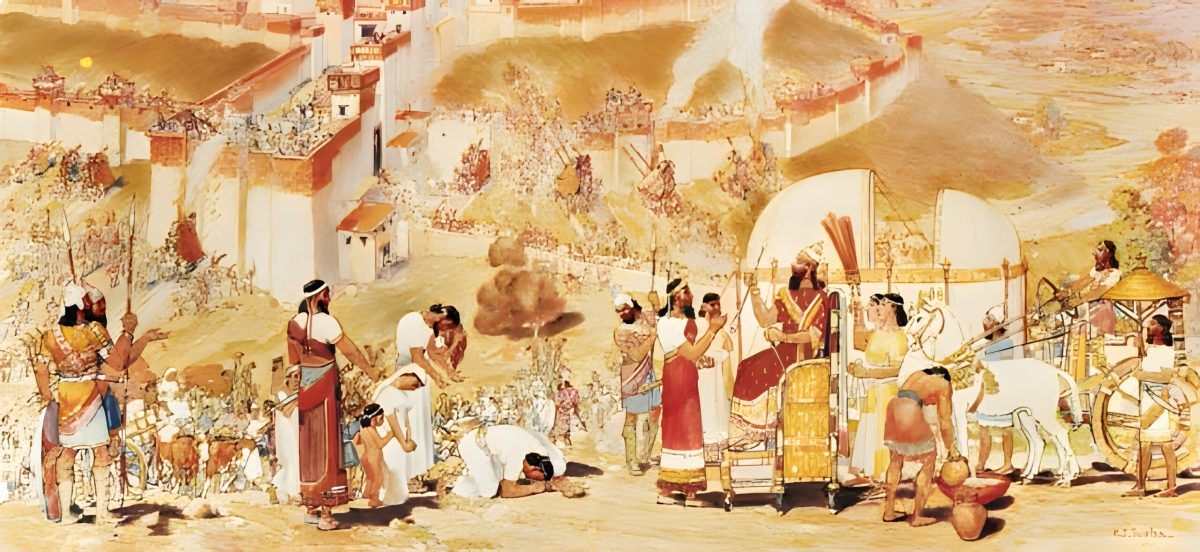
In 586 BC, the Babylonians conquered the southern kingdom of Judah. The best and the brightest of Judah were taken as captives to the capital of Babylonia for “retraining” so that they could contribute to the Babylonian society. It was at this point that the nation of Israel would now be referred to Jews. It was from this point on that, despite the return of some of the Jews to their homeland, most Jews would now be living outside their homeland.


[1] Margalit, Ruth. “In Search of David’s Lost Empire” The New Yorker 22 June 2020 www.newyorker.com/magazine/2020/06/29/in-search-of-king-davids-lost-empire; Syace, A.H. “Polytheism in Primitive Israel” The Jewish Quarterly Review Oct 1889, Vol 2. No. 1 pp.25-26 University of Pennsylvania Press www.jstor.org/stable/1450128; Zevit, Ziony. Review of “The Religions of Ancient Israel: A Parallactic Approach” by Hess, Richard. Vol 5. Denver Journal 2002 denverseminary.edu/the-denver-journal-article/the-religions-of-ancient-israel-a-parallactic-approach/ Israel’s susceptibility to idol worship was so extensive, that archeological evidence indicates continuous polytheism. 

Observe

Read Jeremiah 25:11-12. It seemed hopeless. The unfaithful nation of Israel was no more. But promises were made by a faithful God who would eventually restore them. What are God’s promises to us?

Faith and obedience

Dancing in the Kingdom- Table of Contents

Dancing In the Kingdom – Part 1 – Shadows of the Kingdom – Chapter 5– Patriarchs

Faith and obedience

[Bible references: Genesis 22:1-19; 1 Corinthians 10:13 ]

In one of the most controversial events, God called Abraham to take Isaac and go to a mountain, build an altar, and then offer Isaac as a sacrificial offering. Abraham must have severely tested, but Abraham did as he was told and went through the whole process to the point where he was about slay Isaac when God provided a substitute, a ram. Isaac would indeed be the next link in the genealogical chain connecting Abraham ultimately to the birth of the Messiah 2000 years later.

Observe

Read Genesis 22:1-19; 1 Corinthians 10:13. Theologians have wrestled with this passage in Genesis as we cannot fathom how God could command a human sacrifice, even if He knew how He would intervene before it would happen. How confident are you that God will provide for you in the midst of difficult decisions?

Reflecting God’s paradoxes

Dancing in the Kingdom- Table of Contents

Dancing In the Kingdom – Part 1 – Shadows of the Kingdom – Chapter 3 – The image-bearers

Reflecting God’s paradoxes

[Bible references: Genesis 1:26-32; 2:4-7,15-25; Matthew 22:36-40; John 15:8-11; Romans 8:20-21; Galatians 5:22-23]

Understanding the character of God, can help us understand what he has intended for creatures that are made in his image. Image-bearing creatures are not gods or duplicates of God, but they are imbued with the character of the God that made them.

It was into this good universe that God prepared beforehand that God created creatures to bear his image. Good creatures, image-bearers, who were given the task of taking care of the good creation that God blessed them with – and God declared his creation to be very good. The image-bearing creatures were created in the complex image of God – the one God who was a community within Himself, the God who was immensely creative, the God who was generous and loving beyond imagination, the God who is sovereign over the universe, the God who is above all things.

There was a danger in God creating image-bearers. To make creatures that were lovers – just as He was a lover – meant giving these image-bearers the freedom to choose whom or what to love. Since we are created as lovers, we are compelled to love, so when we choose to not love one thing  or one person it is only because we have chosen to love someone or something else. Because God’s image-bearers were the capstone of creation, their option to love something more than God risked an awful catastrophe, a catastrophe that could affect the entirety of creation itself. The good creation, all of it, would become not so good.

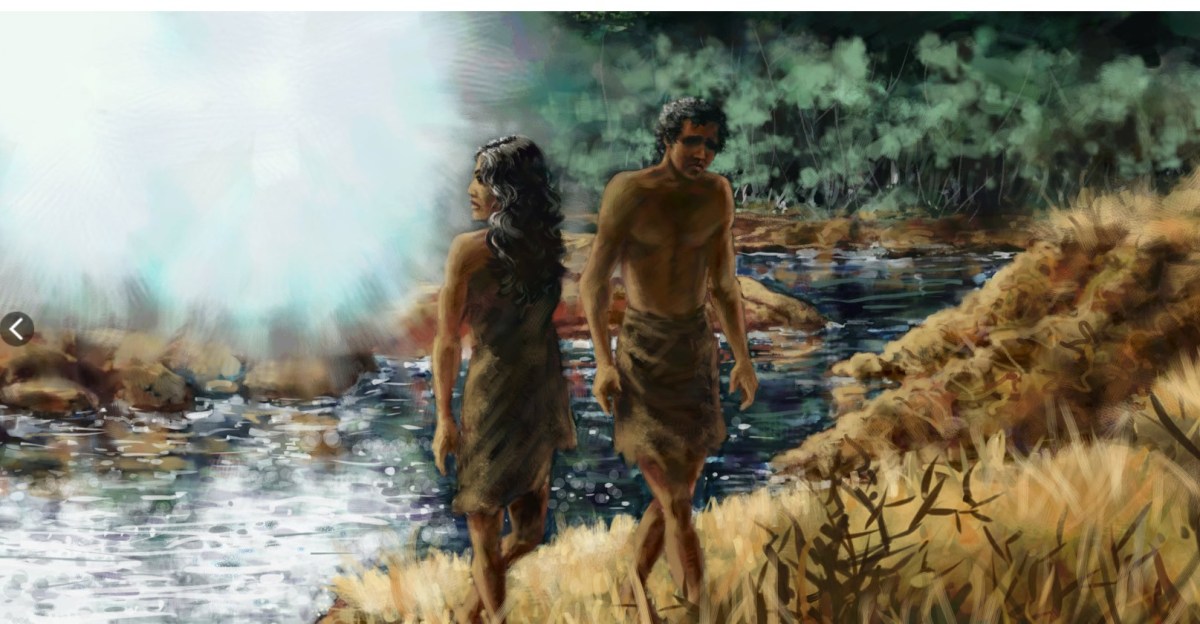
And so it was, after creation was prepared for God’s image-bearers, those creatures who were created in the image of the loving God were given instructions to be stewards of the world God had made. Everything was good, and the first human couple had free access to the provisions in the garden prepared for them. Only one restriction was placed before them, a restriction not meant to deprive them of anything good but meant to provide the opportunity to test their love, by testing their obedience to the one who created them.

We all now know that those creatures failed their test, and we daily experience the consequences of that failure. We also daily experience our own incapacity to restore holiness on our own efforts, our own inability to love God with all our heart and soul and mind and our own inability to fully love God or to fully love our neighbors as ourselves.

The mystery of who we are has to worked out between all the goodness we are endowed with as creatures who bear the image of God and all the evil we are encumbered with as creatures who innately rebel against that same God. Traces of heaven and hell run through each of us and are manifested in our everyday lives. The tongues we praise God with also curse our neighbor. The selflessness we display to others is corrupted by the selfish desires that emerge from the same heart.

Observe

Read Genesis 1:28; 2:15. What tasks did God provide for the humans?

Breath to breath

Dancing in the Kingdom- Table of Contents

Dancing In the Kingdom – Part 1 – Shadows of the Kingdom – Chapter 1 – Prelude

Breath to breath

[Bible ref: 2 Timothy 3:16; Romans 15:4; Hebrews 4:12; Psalm 19:7-11]

We say that the Bible is inspired, God-breathed. That is, God breathed His words to the human writers of the Bible, who then wrote down what “God breathed” into them. But how is that revelation, that communication, of God which was written by human authors, breathed into us so that we can respond to the hearing of God’s inspired word and live it out, breath it out if you will, out into the world around us as we participate with God in bringing His Kingdom into the world?

Old Testament authors used scrolls made of papyrus reeds to record his inspirations from God. But making copies of manuscripts was labor intensive and would take a long time, so most people did not have written copies of what Moses wrote. Most people only heard as others read it out loud. Reading out loud in community was the normal way to read until the invention of the printing press.

The people hearing the inspired word then learned to memorize and meditate on what they heard. The Hebrew word for “hear” is “shema.” Shema implies not just passively hearing or listening but also implies obedience. So, to “shema” the inspired Word is not just to hear it but to obey it.

When the New Testament manuscripts began to be produced, the copies could now be put into a codex, which is similar to modern-day books. The codex manuscripts were then more easily stored and carried. But again, few people had written copies and most people still relied on hearing the word and memorizing and meditating on it. The codex technology did allow for the integration of such things as parallel columns and reference notes for the few people who had access to the written Bibles.

The invention of the printing press in the 1400s now allowed copies to be easily and cheaply mass produced so that more people could now have access to the written Bible. It was at this time that the Biblical writings were now divided into chapters and verses. This allowed the average person to more easily refer to specific passages. Before the chapter and verse notations were added to the Bible, people could only refer to particular passages by quoting them – which was manageable if people were in the habit of memorizing those writings. Printed Bibles with chapters and verses now allowed people to use the Bible without as much need for memorizing Bible passages.

The Protestant Reformation’s rebellion against the authority of the (Roman Catholic) church was enabled by the availability of the Bible to the common person. In addition to Bibles, Bible reference books such as concordances and Bible dictionaries were produced, allowing the average person to study the Bible on their own.

When home computers became available in the 1980’s, electronic version of the Bible and Bible references were produced, making those resources more available to the average user. Access to the World Wide Web began in the 1990’s which made even more resources easily available. Mobile devices even added more convenient access beginning in the 2000’s. All these new technologies make it possible to learn and use the Bible in different ways.

In this digital era, I would encourage you to mix old and new, memorize not just search, meditate not just share, listen not just read, do not just hear. As you use different forms of media to encounter Scripture, reflect on them with others in your faith community and work together to make choices out of conviction rather than convenience alone.[1]

We now have many options available for connecting with the Biblical text. But knowing the Bible is not the same as engaging is spiritual disciplines to open oneself to being transformed and to better  know God and it’s not the same as participating with a community of believers building up one another.


[1] Dyer, John. “Bible Apps are the new Printing Press” Christianity Today www.christianitytoday.com/ct/2022/december/dyer-bible-apps-software-screen-printing-press.html

Observe

Read 2 Timothy 3:16. How does the definition of the Hebrew word, “shema,” fit with the statement in 2 Timothy 3:16?

Chapter 5 – Family to Nation

The Impossible Dance – Table of Contents

The Impossible Dance – Chapter 5 – Family to Nation

God working through broken individuals and communities

Although the all-powerful Creator and Sustainer of the universe is capable of simply doing things by a show of great power and irresistible force, he usually chooses to work through His image-bearers. He can work through individuals or groups, although even when he works through groups it’s typically through individuals within those groups. Most surprising is that even though all his image-bearers have flaws, God has still chosen to do His work within those flaws. Despite our persistent failures, not only does God patiently empower us to fulfill the responsibility of stewardship of Creation that He gave us from the beginning, but He also empowers us to participate in His work of restoring the universe.

Abraham

Walk of faith

Sometime after the scattering of nations, from the line of Shem and Noah, God called a man named Abram to leave his country in the Euphrates River Valley and go to a land “I will show you.” As Abram left his home country, at the age of seventy-five, God promised not only to bless Abram and his descendants but to bless the entire world though Abram. Despite his occasional failures, Abram (later named Abraham) was noted for his faith because he believed God and showed this by being obedient in following God’s instructions even when they didn’t make sense.

When God called Abram to journey to another land, we don’t know what earlier experience Abram or his family or any other citizens of Ur or Haran may have had with God. Was there any experience at all? If not, then with what confidence did Abram have that he was following God when he took that journey to the Promised Land? Then after Abram arrived in the Promised Land, what further questions may Abram have had when he experienced a deep drought in that same land, such that he needed to take a brief trip to Egypt?

After Yahweh told Abram, that he would make a great nation from him, Abram initially expressed his faith by his obedience when he took that journey to the Promised land. Again, when Yahweh showed him the stars and told him that his descendants would be as numerous as those stars, Abram believed, and Yahweh credited that to him as righteousness. Then Yahweh reiterated the promise again when Abram was 99 years old and changed Abram’s name (which meant exalted Father) to Abraham (Father of many nations).

God told Abraham that a great nation would come out of him and Sarah. Yet, this did not look promising when the only son born to Abraham and Sarah was Isaac who was not even born until Abraham was one hundred years old and Sarah was ninety. Isn’t it interesting that God told Abraham and Sarah to name their son, Isaac, which means “laughter.”?

Hospitality

One day, while Abraham was sitting in the entrance to his tent, he saw three visitors approaching and offered them water to wash their feet and then went to much effort to offer them something to eat and drink. As we read this description of Abraham’s greeting his visitors, it may sound extravagant to us, but would have been normal for the culture of the time. The normal custom was to regard visitors as those who have been sent by God.

Pleading to God

We don’t know the moment that Abraham recognized that one of the visitors was Yahweh, but it apparently happened by the time the visitors talked about Sodom and Gomorrah, which they were going to destroy. Concerned about his nephew Lot, who was living down there, Abraham made a plea to save the city if there were righteous people living in the city. At first, Abraham asked what if there were fifty righteous people living there, would they still destroy everyone there. When Yahweh said no, then Abraham asked, what about if there were 45 or 30 or 20 righteous people there. Each time, Yahweh said that he would not wipe out everybody if there were only that many righteous people there. As it turned out, God destroyed both Sodom and Gomorrah after He gave Lot and his daughters the chance to escape.

Faith and obedience

In one of the most controversial events, God called Abraham to take Isaac and go to a mountain, build an altar, and then offer Isaac as a sacrificial offering. Abraham must have severely tested, but Abraham obeyed God and went through the entire process to the point where he was about slay Isaac when God provided a substitute, a ram. Isaac would indeed be the next link in the genealogical chain connecting Abraham ultimately to the birth of the Messiah 2000 years later.

Slow and steady

The man who Yahweh would say would be the “father of many nations” had only one son born very late in his life and that son, Isaac, would have only twins. Even then, Esau and Jacob were born late in Isaac’s life, so the “father of many nations” would die only seeing two grandchildren.

Isaac

Ordinary believers

Meanwhile, the Biblical record for life of Isaac is unremarkable. God had blessed Isaac with wealth, however, the most notable events in his life were 1) failing just as his father Abraham had done in fearing that king Abimelech might kill him to get his wife, so he claimed that his wife was his sister and 2) when he was preparing to die, he got fooled by Jacob into giving Jacob the primary blessing instead of his older twin brother, Esau. Blessed, fallible, unremarkable, yet still used by Yahweh to accomplish Yahweh’s will.

Jacob

Deceit instead of faith

The biblical descriptions of Jacob and his twin brother Esau are not flattering. Esau is the older twin brother, but for a pot of porridge Esau was willing to give up his birthright. To seal the deal, Jacob and his mother, Rebekah, would conspire to deceive Isaac: They would take advantage of Isaac’s blindness by deceiving Isaac and setting it up for Jacob instead of Esau to receive the primary blessing from Isaac. This deceit happened even though when Rebekah was pregnant with the twins that Yahweh had told her that “the older would serve the younger,” so it is curious that Isaac still insisted on giving the primary blessing to Esau instead of Jacob and that Rebekah saw fit to use deceit to help Jacob receive that important blessing.

A higher order

The case of Jacob and Esau is not the only example where Yahweh would choose to upset the common order of things. In this case, it was side-stepping the normal primogeniture and instead have the older sibling serving the other sibling. In other times it would be stronger serving the weaker or having people outside the family displacing sins within the family. God repeats this pattern later by selecting Samuel to replace Eli instead of Eli’s sons, and in God selecting David to replace Saul instead of Saul’s son. And in all these cases, we see God preparing someone new to lead while he arranges to end another’s leadership.

Nation of wrestlers

After the deception of Isaac, Jacob’s would continue his pattern of deception. Yet, despite that character flaw, God would continue to bless Jacob with success just as he had blessed Abraham and Isaac. Jacob’s deceit with Isaac and Esau forced him to leave home and visit his uncle Laban, in Haran for many years. On the journey to Laban, Yahweh shared with Jacob the promise he made with Abraham and with Isaac, that “all the people on earth would be blessed through you.”

While staying with Laban, Jacob would continue his deceit to take advantage of Laban. Then years later, when Jacob left Laban to return to the promised land, God saw fit to engage with Jacob on both the journey to and from home. On the journey home, Jacob now has two wives and two concubines, thirteen children and a great wealth in flocks, herds, and servants. On that trip home, Jacob finds himself in a wrestling match with a man that Jacob learns was God. During that struggle, Jacob confessed his character by admitting that his name means “deceiver,” but then was given a new name, Israel (which means “wrestles with God”). Wrestling with God would become a hallmark of Israel’s descendants (that is, the nation of Israel) and is evident throughout the Old Testament.

Joseph

Discipline and character development

Of Jacob’s 12 sons, Joseph was the most notable. When Israel treated Joseph as his favorite son and then Joseph developing a sense of self-importance, Joseph created a sense of jealousy among his brothers. So, on one occasion while out tending flocks on one opportune occasion his jealous brothers sold him off to merchants traveling to Egypt. In Egypt, the merchants sold Joseph to a captain of the Pharaoh’s guard as a slave. While he was a slave to the captain, Yahweh caused Joseph to prosper in whatever he took care of, inspiring the captain to trust everything to Joseph. However, Joseph became imprisoned because of an unjust charge by the captain’s wife.

Bloom where you are

While Joseph was in prison, Yahweh continued to cause Joseph to prosper, inspiring the warden to entrust many things to Joseph. A couple of the prisoners, the cupbearer and baker for the Pharoah, had dreams to which Yahweh gave Joseph the interpretations. The predictions Joseph revealed to the prisoners did come true, the cupbearer was restored to his job, but the baker was executed. Sometime later, when the Pharaoh had dreams that he wanted to have interpreted, the cupbearer informed the Pharoah about Joseph. Through the help of Yahweh, Joseph was able to interpret those dreams. This led to the Pharoah making Joseph his second-in-command, putting Joseph in charge of overseeing the harvesting and storage of grain in preparation of a coming 7-year drought.

Dreams come true

The drought extended up to the Promised Land, Canaan, where Israel was living. This gave the opportunity for Joseph to invite Israel and all the rest of the family to come to Egypt where Joseph would make sure they were provided for. Joseph was able to see that while his brothers had intended to harm him, Yahweh was able to use for the good. In fact, this provided the setting that Yahweh had revealed to Abraham in a troubling dream, that “your descendants will be strangers in a land not their own.” For a moment, Egypt seemed to be promising, but it wasn’t the final destination. It particularly wasn’t the promised land. More than that, God warned that dark times lay ahead before they would arrive there.

Discipling (a nation)

Following the process of growth

After Joseph and the Pharaoh who knew him died, the growing nation of Israel became enslaved in the land of Egypt just as God had foretold to Abraham. There are various questions that surrounded the captivity of Israel in Egypt:

  • When there was a drought, why didn’t Yahweh provide for the Israelites in Canaan instead of having them go to Egypt?
  • If they needed to be in Egypt, why couldn’t the Pharoah continue to treat them as guests instead of enslaving them?

We know that Yahweh told Abraham that a great nation would come from him and that He would give them the land of Canaan to live in. But why the side-trip into Egypt and why the slavery? The only reason given to Abraham was that “the sin of the Amorites was not yet reached its full measure.” 

The reason given to Abraham for being in Egypt follows a general pattern. Although God occasionally supernaturally intervenes during events, it seems that God most often allows natural, normal processes to take place, whether they be physical, psychological, sociological etc. We see that process in living things – plants, and animals – as they grow through specific physical processes. Regarding, the great flood in Noah’s time, that only occurred after evil gradually, through normal psychological and sociological processes, eventually reached a particular threshold.

Fullness of time

The emerging story of the chosen people of God becoming a nation started slowly with Abraham, with one child of the promise, Isaac, who had two children, only one through whom the promise would come, Jacob. Finally, Jacob had thirteen children. But it would take time for that family to grow into a size that could be called a nation – and that took a couple hundred more years – in which time the “sin of the Amorites would reach their full measure.”

Although the Bible does not specifically mention it, there may have been other things that God was waiting to happen such as the development of the Israelite community and the consequent interaction of the Israelite community with the Egyptian community during the Israelite captivity. God allowed events to gradually unfold until “the fullness of time” came for God to orchestrate a dramatic release of the Israelite community. This event would serve as a foreshadowing of another event, the spiritual release of all peoples from slavery to sin.

So it was, that in the fullness of time, when the sin of the Amorites reached its full measure, Yahweh called Moses to release the enslaved Israelites from Egypt to bring Israel back to the Promised Land.

Discipline, Miracles, and Death

Miracles abounded.

There were the ten plagues that God brought upon the Egyptian captors to show the Pharoah that Yahweh was not just a local God in Canaan but that His power extended over all creation, even in the land of the Egyptian gods. In the process, the Pharoah’s own heart continued to harden against Yahweh to the point where God would seal the Pharoah’s fate and further harden the Pharoah’s heart. In the end, it took the killing of the firstborn of Egyptian families, including the family of the Pharoah to not only convince the Pharaoh to let people of Israel go, but the people of Egypt also supplied the people of Israel with great wealth as they left, with some Egyptians joining the people of Israel in their flight.

Then there was the miracles of the pillars of cloud and fire, which would continue until the nation entered the Promised Land, and the miracle which let Israel cross the Red Sea on dry land followed by the drowning of the Egyptian army. The Bible reveals the pattern of God punishing nations that He used to discipline the people of Israel.

Once on their way, the Israelites experienced more miracles, the mountain enshrouded in a cloud where Yahweh talked with Moses and delivered the Commandments and other rules, manna and quail falling from the sky, springs of water in the desert. Despite seeing all those miracles, Israel wasn’t ready to have Yahweh lead them into the Promised Land to face the obstacles there and so God had them encamp in the wilderness for 40 years until all the adults who refused to trust Yahweh died. So many deaths must have happened, but scripture barely mentions them. Here we will see, not for the last time, seeing miracles not only did not change hearts but that all our hearts seem predisposed to turn away from God.

Shadows of the Kingdom

The Tabernacle

During the time in the wilderness, God instructed the Israelites to build a tabernacle that would serve as the point of presence for Yahweh in the community. God’s presence within the Tabernacle would allow Israel to see God both as an unapproachable and transcendent God and as a personal, immanent God living among his people. In this way, the tabernacle would serve to display the shadow of a deeper reality.

The instructions are quite detailed. The materials used to build the tabernacle were gifts given to the Israelites as they left Egypt. God dedicated the workers for building the various parts of the tabernacle, filling them with his Spirit and then giving the skills and abilities they needed. God gave everything needed for the construction of the tabernacle. Between the detailed instructions, the materials provided by the Egyptians and the skills of the craftsmen, the tabernacle would be a beautiful work of art. Although the Israelites were told not to make graven images to worship as idols, that obviously did not mean that they couldn’t create works of art to be used to enable worship.

Sacrifice and Love

The amount of killing conducted in the tabernacle to fulfill the necessary sacrifices would be a constant, grisly reminder of the cost of our sin. There were sacrifices for many types of occasions: burnt (or ascension) offerings, sin offerings, guilt offerings and others. There was much bloodletting from the many animals sacrificed on the altar, a constant reminder of the cost of our sins.

In addition to the rules of the tabernacle, God also gave other rules that covered other areas of life. Most of us are familiar with the moral code we know as the ten Commandments, but there were many other laws that covered other situations as well. The 613 rules in the Old Testament can all be summarized in the commands: Love God with all your heart, soul, mind, and strength; Love your neighbor as yourself. Whether in the ten commandments or in the 613 rules, all the rules are predicated on love, thankfulness and pleasing one another. All the instructions point to practical ways for us to love God and one another.

God also gave detailed instructions about how and when to conduct the rituals surrounding the tabernacle. In the case of all the offerings, something had to die. The cost of sin was death, and it takes death to restore one’s relation with God. Moreover, the animals presented for sacrifice for the burnt offerings needed to be pure and without blemish or defect.

These “perfect” sacrifices were pointing to our ultimate need for a truly perfect sacrifice made on our behalf. The sacrifice would have to more than an animal with no visible blemishes. The sacrifice would have to be a perfect human whose identity would only be gradually prophetically revealed … by a new “Adam” who would succeed where the first Adam failed.

Sacrificial death, though, can take a different form than we expect. In Psalm 51, David declares,

“For you will not delight in sacrifice, or I would give it; you will not be pleased with a burnt offering. The sacrifices of God are a broken spirit; a broken and contrite heart, O God, you will not despise.” (Psalm 51:16-17 ESV)

and Micah declares.

“With what shall I come before the LORD, and bow myself before God on high? Shall I come before him with burnt offerings, with calves a year old? Will the LORD be pleased with thousands of rams, with ten thousands of rivers of oil? Shall I give my firstborn for my transgression, the fruit of my body for the sin of my soul?” He has told you, O man, what is good; and what does the LORD require of you but to do justice, and to love kindness, and to walk humbly with your God?” (Micah 6:6-8, ESV)

and later, the apostle Paul declares,

I appeal to you therefore, brothers, by the mercies of God, to present your bodies as a living sacrifice, holy and acceptable to God, which is your spiritual worship. Do not be conformed to this world, but be transformed by the renewal of your mind, that by testing you may discern what is the will of God, what is good and acceptable and perfect. (Romans 12:1-2, ESV)

I have been crucified with Christ. It is no longer I who live, but Christ who lives in me. And the life I now live in the flesh I live by faith in the Son of God, who loved me and gave himself for me. (Galatians 2:20, ESV)

These passages indicate a sacrifice of dying to oneself, of laying one’s own interests aside for the sake of another … for the sake of Christ. A sacrifice not to “make things right” with God but because things are right.

The Calendar and liturgy

What does it mean to for us be created in the image of a holy God? What do we mean when we say, “God is holy?” We first encounter the term in Genesis 2:3 when God indicates that the seventh day was made holy, the seventh day was to be set apart from the other days. When Moses encountered God’s presence in a burning bush, God told Moses to remove his sandals because the ground was holy. It was also God’s intention to make Israel a holy nation, set apart from other nations and through which He would bless all the nations on earth.

The nation of Israel established a couple of practices which distinguished them from the nations around them: the food, and the calendar. There were some restrictions of the food they could eat such as certain meats, fish, birds, and insects, but the calendar provides the most distinguishing difference. While some cultures had recognized a 7-day calendar, it was the Israelites who set aside the seventh day of the week as a Sabbath on which no work was supposed be done. But that is not the only distinguishing characteristic of the calendar.

In the present day we have a universal calendar, and we have a priority for journalistic chronology. That is, we remember historical events on the actual day that the events happened according to our calendar. It is important for us to track events in the chronological order in which they happened. However, there are a few exceptions that we should note. Sometimes we set our remembrance day according to our convenience – for instance, we always celebrate days such as Martin Luther King’s birthday, not on his actual birth date, but always on a Monday because of our priority for extended weekends.

For the Israelite calendar, the priority was not chronology but liturgy. The remembrance days for events were not set according to the actual historical date on which they occurred but were set according to the liturgical calendar. This practice become clear when you trace out the timing of events in the Pentateuch (first five books of the Hebrew Bible) and compare them to the remembrance dates. It was more important to have events in the context of God’s activity rather than the contexts of the events themselves.

This concept provides the background for celebration of the Sabbath. The Sabbath was such an important concept for the Jews, that God used the account of creation in Genesis 1 to present the concept of Sabbath. When we think about God’s creating activities, God did not need six days to complete His creation, nor did he need to rest. So why do set up the remembrance of God’s creation in a 7-day timeframe? Once again, the crucial point is not the chronology but the liturgy.

The crucial point about the creation event was not the event itself, but what it was for. The purpose of creation was to create a “temple,” a place where God could “rest,” that is, “be” with his people. That’s the main point. There are tasks to do of course as we join God in his creative work in the universe, but the point of the tasks is to be with God. When you look at Genesis 1-2, you will notice that the first six days have a defined beginning and end, an evening, and a morning. The seventh day does not have a defined closing – that implies that we are in the seventh day. This day we are in, the age we are in, is the “day” that we “rest” with God. God has intended that all our activities should be done with, at rest with, God.

This brings us to a second distinguishing characteristic of the Jewish Biblical calendar: the first month was during the spring equinox, harvesting time, whereas in the surrounding cultures the first month of the calendar was set in the fall equinox, crop planting time. The difference in meaning was that since Israel’s year started with God’s work, the year begins God’s provision of the harvest which fed the nation and provided seed for the fall. This contrasted to the surrounding cultures which began their calendar with their work, so their year began with their work that provided for the next harvest.

What can be confusing is that in current practice, Jews do not use the biblical (or liturgical) calendar but the civil calendar which places the first month in the fall instead of the spring. Christians do have an equivalent practice: our civil calendar begins in January, which was set by the Roman government and coincided with Roman elections whereas some in the Christian community observe a liturgical calendar which begins in the fall with the season of Advent.

The liturgical focus of the calendar with its de-emphasis of the chronology of historical events helps explain some interesting discontinuities and apparent conflicts in the Biblical text. If we interpret the events described in Exodus liturgically instead of chronologically, we can make better sense of the flow of Exodus.

One of the “apparent conflicts” occurs in Exodus 19, as the Israelites arrived at Mount Sinai. At the beginning of the chapter, Yahweh made a covenant like the one with Abraham and declared that they were to be a “kingdom of priests,” and that they were to prepare to go up the mountain after the sounding of the ram’s horn. And yet, at the end of the same chapter, Yahweh told Moses to not let the people, even the(people designated to be) priests, to go up the mountain. By noticing such apparent conflicts, we can better chronologically rearrange the events in Exodus so that they make better sense to chronologically minded folks such as we are.

A possible chronological arrangement of events looks like:

  • Covenant established – Exodus 19:1-25; 20:18-21
  • The initial, Abrahamic covenant was given followed by the Decalogue (10 Commandments) – Exodus 20:1-17; 20:22-23:33; 25:1-31:18
  • The golden calf incident – Exodus 32
  • A covenant renewal – Exodus 33-34
  • The code for priests – Exodus 35-Leviticus 16
  • An incident with goat idols – Leviticus 17:1-9
  • The Holiness code – Leviticus 17-25
  • Israel renews the covenant – Leviticus 26

While the rearrangement may help us make chronological sense of the text, in the end, the text in Exodus presents Israel as now being a nation with priests and the community centering its worship around a large tent called the Tabernacle. The liturgical intent of the text is to focus on the outcome, that Israel will be a nation with priests serving a holy God who may reside among them but who is not directly accessible.

Worship at the tabernacle was a community event. No one could do this by themselves. God assigned different people to do different tasks, which not only included direct involvement in worship but also in the care of the tabernacle and its furnishings. Even one’s individual sins required the use of priest to handle the sacrifice. Before the tabernacle, anyone could make offerings, but with the tabernacle, only designated priests could perform the sacrificial offerings.

The liturgical calendar also helps in understanding the creation account in Genesis 1. God did not need six chronological days to complete His creation. God established the six days for liturgical reasons: for establishing a week which consists of six workdays followed by a Sabbath as enunciated in Exodus 20:8-11. The Sabbath would be one of the markers that would set apart the Israelites from the other nations.

This arrangement continues the pattern of representing the holiness of God in creation. God’s image-bearing creatures are set aside from all other creatures; Sinful humans are separated from the Garden of Eden; Noah and his family are set aside in the ark from all other people; Abraham is set aside from all other people to usher in the blessing of all people; Moses is set apart from the other Israelites to see God face-to-face; the Levites are the tribe set apart from the other tribes to manage the care of the tabernacle; the priests are set apart from the other Levites to carry out the rituals in the tabernacle; the Sabbath from all the other days to remind us of God’s provision, in particular his provision for rest – and the list goes on.

Questions:

  1. Read Psalm 51:17; Isaiah 40:8; 58:12; Philippians 3:20-21. What should our attitude be as God fulfills his plans through us?
  2. Read Genesis 18:1-8; Hebrews 13:1-2. In the nomadic culture, hosts readily showed hospitality to any visitors because they were supposed to regard all visitors as being from God. What keeps us from exhibiting the same attitude?
  3. Read Genesis 24-25. We can never know how God will use the ordinary things in our lives to fulfill his purposes. How does that knowledge help you look at your own life?
  4. Read 1 Samuel 3-4; 1 Samuel 15-16. These passages illustrate how God continues to accomplish his will despite the messiness of our lives. How does that affect how you pray?
  5. Read Genesis 32:22-28. God would rename Jacob to Israel, which means “wrestles with God,” which would eventually become the name of the nation descended from Jacob, and the nation through which the Messiah would come. Can we be strong in our faith in God if we have not wrestled with God?
  6. Read Genesis 15:12-21; Exodus 1:1-22. We often don’t know the reasons for the difficult circumstances in life. How might Abram’s dream explain why God originally provided hospitality and refuge in Egypt but then allowed the Egyptians to enslave Israel?
  7. Read Exodus 8-10. In the narrative of the ten plagues, several times the Pharoah hardened his own heart, but then there came a time when Yahweh reinforced that trajectory and Yahweh hardened the Pharoah’s heart. What kind of warning might that be?
  8. Read Hebrews 8:5-6; 10:1-18, 1 Peter 2:9. God designed the Tabernacle to represent a greater reality. Our relationships among people also represent a greater reality. What is it?
  9. Read Psalm 51; Romans 12:1-2. We do not have a temple to make animal sacrifices. What we do have is the opportunity to offer ourselves as a daily sacrifice. What is meant by a broken spirit?
  10. Read Hebrews 10:19-39. The New Testament does not command Gentile believers to set aside people as priests nor to observe the Sabbath. However, we not to “neglect gathering together” so that we can “stir one another to love and good works,” and help each other persevere in our faith. How can we then help each other practice holiness by the setting aside of things in our life, to consecrate them to God?


Abraham

Dancing in the Kingdom – Table of Contents

Part 1 – Shadows of the Kingdom, Chapter 5 – Patriarchs

Walk of faith

[Bible references: Genesis 12:1-20; 15:1-6; 16:1-5; 17:1-14; 20:1-13; 22:1-18; 24:7; 28:16: 50:24; Romans 4:9; Hebrews 11:17]

Sometime after the scattering of nations, from the line of Shem and Noah, God called a man named Abram to leave his country in the Euphrates River Valley and go to a land “I will show you.” As Abram left his home country, at the age of seventy-five, God promised not only to bless Abram and his descendants but to bless the entire world though Abram. Despite his occasional failures, Abram (later named Abraham) is noted for his faith because he believed God and showed this by being obedient in following God’s instructions even when they didn’t make sense.

When God called Abram to journey to another land, we don’t know what earlier experience Abram or his family or any other citizens of Ur or Haran may have had with God. Was there any experience at all? If not, then with what confidence did Abram have that he was following God when he took that journey to the Promised Land?[1] Then after Abram arrived in the Promised Land, what further questions may Abram have had when he experienced a deep drought in that same land, such that he needed to take a brief trip to Egypt?

After Yahweh told Abram, that he would make a great nation from him, Abram initially expressed his faith by his obedience when he took that journey to the Promised land. Again, when Yahweh showed him the stars and told him that his descendants would be as numerous as those stars, Abram believed, and Yahweh credited that to him as righteousness. Then Yahweh reiterated the promise again when Abram was 99 years old and changed Abram’s name (which meant exalted Father) to Abraham (Father of many nations).

God told Abraham that a great nation would come out of him and Sarah. Yet, this did not look promising when the only son born to Abraham and Sarah was Isaac who was not even born until Abraham was one hundred years old and Sarah was ninety. No wonder that Isaac was given a name that means “laughter.”

Hospitality

[Bible references: Gen 18:1-8; Hebrew 13:1-2]

One day, while Abraham was sitting in the entrance to his tent, he saw three visitors approaching and offered them water to wash their feet and then went to much effort to offer them something to eat and drink. As we read this description of Abraham’s greeting his visitors, it may sound extravagant to us, but would have been normal for the culture of the time. The normal custom was to regard visitors as those who have been sent by God.[2]

Pleading to God

[Bible references: Gen 18:16-33]

We don’t know the moment that Abraham recognized that one of the visitors was Yahweh, but it apparently happened by the time the visitors talked about Sodom and Gomorrah, which they were going to destroy. Concerned about his nephew Lot, who was living down there, Abraham made a plea to save the city if there were righteous people living in the city. At first, Abraham asked what if there were fifty righteous people living there, would they still destroy everyone there. When Yahweh said no, then Abraham asked, what about if there were 45 or 30 or 20 righteous people there.[3] Each time, Yahweh said that he would not wipe out everybody if there were only that many righteous people there. As it turned out, both Sodom and Gomorrah were destroyed after Lot and his daughters were given the chance to escape.

Faith and obedience

[Bible references: Gen 22:1-19]

In one of the most controversial events, God called Abraham to take Isaac and go to a mountain, build an altar, and then offer Isaac as a sacrificial offering. Abraham must have severely tested, but Abraham did as he was told and went through the whole process to the point where he was about slay Isaac when God provided a substitute, a ram. Isaac would indeed be the next link in the genealogical chain connecting Abraham ultimately to the birth of the Messiah 2000 years later.

Slow and steady

[Bible references: Genesis 17:5; 21:4-5; 26:34; 2 Peter 3:8]

The man who Yahweh would say would be the “father of many nations” had only one son born very late in his life and that son, Isaac, would have only twins. Even then, Esau and Jacob were born late in Isaac’s life, so the “father of many nations” would die only seeing two grandchildren.


[1] Although the term “promised land” is not used directly as the place of where Abram and his descendants were called to settle down in, there are several references to the “land that is promised you.”

[2] Wight, Fred H. Manners and Customs of Bible Lands (Kindle Locations 863). 1953. Kindle Edition.

[3] De Young, Kevin. “Passionately Pleading with God is a Good Thing”

Reflect

Making long-term commitments is always an act of faith, because we never know what all the circumstances will be in the future. What long-term commitments have you made and held to even when you encountered circumstances you never planned on?

Observe

Read Genesis 12:1-20. This renowned Patriarch of faith, Abram, believed Yahweh, and left his homeland to some destination that Yahweh would show to him. When Abram arrived at the place Yahweh led him to, he built an altar and set up his tent. Good start at a life of faith. Sometime afterwards, Abraham winds up in Egypt where he is now afraid for his life and asks his beautiful wife Sarah to say that she’s his sister instead of his wife, so that they people won’t kill him to get her. This does lead to complications we won’t discuss here but just to point out that we, never mind Abram, are subject to a wavering faith. Do you have incidents in your life where your faith wavered?

Reflect

What kind of hospitality have you received that made you feel special?

Observe

Read Genesis 18:1-8; Hebrews 13:1-2. In the nomadic culture, hospitality was readily shown to any visitors as they were regarded as visitors from God. What keeps us from exhibiting the same attitude?

Reflect

What passionate concerns do you want to bring to God?

Observe

Read Genesis 18:16-33; 1 Samuel 7:1-9; 2 Chronicles 30:1-20; Nehemiah 1:1-2:10; Philippians 1:3-10. How are we encouraged to plead to God?

Reflect

The Hebrew word, “shema,” means not just “listen” but “listen and obey.” How often do we listen intently to a friend or loved one such that we are ready to provide for any need implied within the conversation?

Observe

Read Genesis 22:1-19; 1 Corinthians 10:13. Theologians have wrestled with this passage in Genesis as we cannot fathom how God could command a human sacrifice, even if He knew how He would intervene before it would happen. How confident are you that God will provide for you in the midst of difficult decisions?

Reflect

God answers prayers on his timeline, not ours. He will fulfill his purpose for us – also on his timeline. Does that make you frustrated or assured?

Observe

Read Genesis 17:5; 21:4-5; 25:19-26; 2 Peter 3:8. God renamed Abram to “Father of many nations.” Abraham. Abraham had one “child of the promise,” Isaac whose only children were twin born when Abraham was 160 years old.  How do you make sense of that in light of 2 Peter 3:8?

Reflecting God’s Paradoxes

Dancing in the Kingdom – Table of Contents

Part 1 – Shadows of the Kingdom, Chapter 3 – The Image-bearers

[Bible references: Genesis 1:26-32; 2:4-7,15-25; Matthew 22:36-40; John 15:8-11; Romans 8:20-21; Galatians 5:22-23]

Understanding the character of God, can help us understand what he has intended for creatures that are made in his image. Image-bearing creatures are not gods or duplicates of God, but they are imbued with the character of the God that made them. In this chapter we will explore some of the ways God intends for us to reflect his image. In later chapters, we will expound on those characteristics in more detail.

It was into this good universe that God prepared beforehand that God created creatures to bear his image. Good creatures, image-bearers, who were given the task of taking care of the good creation that God blessed them with – and God declared it to be very good. The image-bearing creatures were created in the complex image of God – the one God who was a community within Himself, the God who was immensely creative, the God who was generous and loving beyond imagination, the God who is sovereign over the universe, the God who is above all things.

There was a danger in God creating image-bearers. To make creatures that were lovers – just as He was a lover – meant giving these image-bearers the freedom to choose whom or what to love. We are unable to choose to not love but only who or what to love. Because God’s image-bearers were the capstone of creation, the option to another love than God, risked an awful catastrophe, a catastrophe that could affect the entirety of creation itself. The good creation, all of it, would become not so good.

And so it was, after creation was prepared for God’s image-bearers, those creatures who were created in the image of the loving God were given instructions to be stewards of the world God had made. Everything was good, and the first human couple had free access to the provisions in garden prepared for them. Only one restriction was placed before them, a restriction not meant to deprive them of anything good but meant to provide the opportunity to test their love, by testing their obedience to the one who created them.

We all now know that those creatures failed their test, and we daily experience the consequences of that failure. We also daily experience our own incapacity to restore holiness on our own efforts, our inability to love God with all our heart and soul and mind and our inability to fully love God or to fully love our neighbors as ourselves.

The mystery of who we are has to worked out between all the goodness we are endowed with as creatures who bear the image of God and all the evil we are encumbered with as creatures who innately rebel against that same God. Traces of heaven and hell run through each of us and are manifested in our everyday lives. The tongues we praise God with also curse our neighbor. The selflessness we display to others is corrupted by the selfish desires that emerge from the same heart.

Reflect

How is love dangerous?

Observe

Read Genesis 1:28; 2:15. What tasks did God provide for the humans?