Bible-centric disciplines

Dancing in the Kingdom- Table of Contents

Dancing In the Kingdom – Part 3 – Dancing in the Kingdom– Chapter 15 – Reforming our Souls

Bible-centric disciplines

[Bible references: Genesis 24:63; Joshua 1:8; Psalm 1:1-2; 19:14; 119:11, 127; Isaiah 66:2; Matthew 7:24-27; Luke 10:27; John 14:15, 21; 17:3; Acts 5:29; 17:11; Romans 10:17; 1 Timothy 4:15-16; 2 Timothy 2:15; 3:16-17; Philippians 4:8; Titus 3:1; James 1:22; Revelations 1:3]

“If we are ignorant of God’s Word, we will always be ignorant of God’s will.” [1]

“Delighting in God’s Word leads us to delight in God, and delight in God drives away fear.”[2]

“The Scriptures teach us the best way of living, the noblest way of suffering, and the most comfortable way of dying.” [3]

“We discover the will of God by a sensitive application of Scripture to our own lives.”[4]

The Bible is not God, it is His word to us. The end point of Bible disciplines is not to know the Bible, it is to know the God who gave us the Bible. There are various techniques available to us to let the Word of God to lead us to the one who is The Word.

Discipline of Hearing the Word

The Bible was written before the time of the printing press, therefore before the time when widely printed copies of the Bible were available. So, reading the Word of God was not possible for most people, only the hearing of it. Yet, even today, although we can read, study, memorize and meditate on the Word, the goal is to hear the voice of our Lover, the one who gave us the Word. Our relationship is not with the Bible, our relationship is with the Living God. We long to hear the voice of His Spirit speaking to us.

Whether we are reading, studying, or meditating on the Bible, we can pause to listen. What is God trying to say … to you … at that moment … in your situation. We need to develop skills of listening. We should develop the same skills in listening to God as we do listening to the people around us. We should distinguish between “hearing” and “listening.” In passive “hearing,” we find ourselves wanting to respond, to assert ourselves, trusting in ourselves instead fully listening to the work of God in another’s life before we hear a whole message. Listening to others requires discipline coupled with faith and grace. Listening to God’s voice requires patience, restraining our ready-made answers and waiting for His voice.

Discipline of Reading the Word

The discipline of reading the Bible vs. studying the Bible is that reading is for breadth and studying is for depth. It is through Bible reading that we may do short devotionals during the day or do reading programs that allow us to read the Bible (either the entire Bible or in parts) in a specified length of time. It is reading that allows to become familiar with larger parts of the Bible and to see whole context of different books of the Bible. But even as we are reading for breadth, it is the opportunity for us to listen to His voice speaking to us. Reading is done without an agenda, not looking for a particular thing, but prepared to hear God’s voice as we read.

  • Read for breadth –read long passages in the Bible.
  • Read consistently – Make a habit of continual reading.
  • Read without agenda – come with questions, not answers you want to justify.
  • Read prepared to listen – give time to reflect and listen to God’s voice.

Discipline of Studying the Word

All the examples listed below should give you the idea that there are many approaches to studying the Bible – use whatever approach or combination of approaches is suitable for what you want to accomplish.

  • Bible study by books. Use either the inductive[5] or synthetic[6] methods.
  • Bible Study by chapter. Read the entire book to understand context (kind of book, author, etc.), outline the chapter (look for details: comparisons, contrasts, etc.), Begin the task of interpreting: (Define unusual or significant words, understand geographical settings, read in various translations, use cross-references).
  • Bible study by paragraphs. Determine main thought, Rewrite the text, Make an outline, Use a concordance.
  • Bible study by verses. Identify the verbs, Identify the people, Identify ideas, Verse mapping.
  • Bible Study by words. Trace use of word in chapter or book, Use a concordance, Word study in Hebrew or Greek
  • Bible Study by topics. Use a topical study guide or a concordance to examine how a topic is addressed throughout scripture.
  • Bible Study through biography. Use a biographical study guide or a concordance to study the life of a Biblical character.
  • Bible study through journaling. Create a journal that records your thoughts as you study scripture.
  • Bible study through scripture writing. Scripture Writing is a wonderful way to solidify God’s word into your heart. For some, reading isn’t enough. There’s something about taking that God breathed scripture, writing it down and reinforcing it in your heart in a way that will help you memorize and digest it.

Discipline of Memorizing the word[7]

“Bible memorization is absolutely fundamental to spiritual formation. If I had to choose between all the disciplines of the spiritual life, I would choose Bible memorization, because it is a fundamental way of filling our minds with what it needs. This book of the law shall not depart out of your mouth. That’s where you need it! How does it get in your mouth? Memorization.”[8]

 “I know of no other single practice in the Christian life more rewarding, practically speaking, than memorizing Scripture … No other single exercise pays greater spiritual dividends! Your prayer life will be strengthened. Your witnessing will be sharper and much more effective. Your attitudes and outlook will begin to change. Your mind will become alert and observant. Your confidence and assurance will be enhanced. Your faith will be solidified.”[9]

Memorizing the Word allows us to meditate on it so that it can get more deeply into our hearts. We don’t all memorize equally well, but the goal is to get the Word in our heart whether it’s word for word out of a translation or not. Whether or not we memorize word for word, meditate on it so that it sinks into your heart so that it’s available in the moment of need. Here are some techniques for memorizing verses.

  • You can even turn verse into a prayer.
  • Memorize Verses in a Theme
  • Get a Partner to memorize with you
  • Write the Verses down and carry them with
  • Writing the verse in your own words.
  • Listen to the Verses through an audio Bible
  • Say Verses Out Loud
  • Use Music. Find verses that are set to music or create your own music
  • Break down the verse in shorter chunks and memorize a chunk at a time
  • Use physical motions to go with the verse.

Discipline of Meditating on the word

Christian meditation is the act of filling one’s mind with Scripture and dwelling on God and all that He offers to humanity. In the Bible, the words translated as “meditation” have a variety of definitions: mutter, speak quietly, and ponder, imagine, mourn, complain, study, talk, or utter. [10] You can see that meditation can take a variety of ways for us to interact with what we are reading or memorizing. It is this type of engagement with not just Scripture, but the God who gave us the Scripture that opens us up to transformation.

In Psalm 1, it is written that the ideal Bible reader is one who meditates on the Scripture day and night. In ancient Jewish culture, the followers of God would meditate on His word by speaking it to themselves over and over. They would dwell on the Scripture. As time went on, the definition of meditation changed slightly. During the times of the New Testament, both Jews and Gentiles were all coming to God. This is when meditation changed slightly because the word now had a Greek connotation and culture, rather than a Hebrew connotation and culture.

Apply your imagination and senses

Envision yourself personally engaged in the relationship or encounter or experience of which the text speaks. Hear the words as they are spoken. Feel the touch of Jesus on a diseased body. Taste and smell the fish and bread as they are served to the multitudes. See the truths that God has revealed by mentally recreating the scene with yourself present. There is nothing magical or mysterious in this. The purpose of the imagination is not, as some have argued, to create our own reality. Our imagination is a function of our minds whereby we experience more intimately and powerfully the reality God has created. As you are doing so, reflect on the truth of the Word; brood over the truth of the text; absorb it, soak in it, as you turn it over and over in your mind.

Forming our character

It is difficult to know when meditation moves into prayer. It isn’t really that important. But at some point, take the truth as the Holy Spirit has illumined it and pray it back to God, whether in petition, thanksgiving, or intercession. In other words, take Scripture and turn it into dialogue with God.

Where possible, and according to sound principles of biblical interpretation, replace proper names and personal pronouns with your own name. God never intended for his Word to float aimlessly in impersonal abstractions. He designed it for you and for me.

Then worship the Lord for who he is and what he has done and how it has been revealed in Scripture. Meditation ought always to lead us into adoration and celebration of God.

Finally, practice. Commit yourself to doing what the Word commands. The aim of meditation is moral transformation. The aim of contemplation is obedience. And in obedience is joy inexpressible and full of glory.

Discipline of Obeying the Word

“There will be no peace in any soul until it is willing to obey the voice of God.”[11]

“Faith never knows where it is being led, but it loves and knows the One who is leading.”[12]

“God has no more precious gift to a church or an age than a man who lives as an embodiment of his will, and inspires those around him with the faith of what grace can do.”[13]

When we truly love someone, we desire the best for them and are willing to inconvenience ourselves for their sake. There is a sense in which their desires become our desires. In such a situation, we do not find ourselves doing just the minimum for them, but to do all we can. When the object of our love is God, we respond to the overflowing love He has for us by returning His love. We do not “obey commands” just because He has authority, but because we care about what He cares about, and that care includes us and our best interests. The goal of obeying the Word is not obedience, but to respond in love to God’s desires.

It would be a mistake to learn a lot of Bible but fail to apply it to our lives. If we learn about the God who loves us and the kingdom He is establishing even right now, our response should include our desire to participate in bringing the kingdom of God on earth. Here are some responses we can think about towards that end:

  • Pray about how God can make us more like Him.
  • Think about what we learn about God and what kind of difference that should make in our life.
  • Think about what doctrines, warnings, promises did we learned and what our response should be.
  • THE 4-P APPLICATION – Problem: Identify something in our life that needs to change. Passage: Identify what verse or verses point out the problem in our life. Plan: Create a plan to work on that change in our life. Progress: Create a routine to check on the effectiveness or carry-through of our plan..

[1] Graham, Billy. “How do I know God’s will for my life” billygraham.org 27 May 2019 billygraham.org/answer/how-do-i-know-gods-will-for-my-life

[2] Jeremiah, David. What Are You Afraid Of? Facing Down Your Fears with Faith.” Lifeway Christian Resources 2014

[3] Flavel, John.

[4] Ferguson, Sinclair B. Banner of Truth Magazine Issue 219 December 1981

[5] Got Questions “What is inductive Bible Study?” Got Questions gotquestions.org/inducitive-Bible-study.html

[6] Guthrie, George H. “How to Do a Synthetic Bible Study” Inglewood Baptist Church http://storage.cloversites.com/inglewoodbaptistchurch/documents/Synthetic_Study.pdf

[7] Mathis, David. “5 Tips for Bible Memorization.” Crossway 23 June 2018 www.crossway.org/articles/5-tips-for-bible-memorization

[8] Willard, Dallas. “Spiritual Formation in Christ for the Whole Life and Whole Person” Vocatio, Vol. 12, no. 2, Spring, 2001, p. 7.

[9] Swindoll, Chuck. “Growing Strong in the Seasons of Life” Zondervan, 1994, p.61

[10] Peña, Madeline. “Christian Meditation: Definition, Biblical Examples, & More” Just Disciple justdisciple.com/christian-meditation

[11] Moody, D.L. “Steps in the Downfall of Israel” Northfield Echoes 1897 (p. 317)

[12] Chambers, Oswald. “My Utmost for His Highest”  1924 eBook p. 64

[13] Murray, Andrew. Leadership Vol. 7 No. 4. Fall 1986

Observe

Read Psalm 1:1-3; 2 Timothy 3 :16-17; Revelation 1:3. What should be our attitude about the Bible?


The Discipline of Simplicity/Stewardship

Dancing in the Kingdom- Table of Contents

Dancing In the Kingdom – Part 3 – Dancing in the Kingdom– Chapter 15 – Reforming our Souls

Discipline of Simplicity/Stewardship

[Bible references: Genesis 1:28; Psalm 33:5; Micah 6:8; Hosea 6:6; Matthew 25:35-40; Luke 16:13; John 13:34; 1 Corinthians 3:9; 4:2; 9:24-27; 2 Corinthians 1:12; 9:6-8; Galatians 6:6; Philippians 4: 4,8-13; 1 Timothy 5:8; 6:6-10, 17-19; Hebrews 3:5; 12:1-3; James 1:17; 1 Peter 4:10; 1 John 3:17]

The central point for the Discipline of simplicity is to seek the kingdom of God and the righteousness of His kingdom first – and then everything necessary will come in its proper order.[1]

There’s no point in simplifying your life if you are steering toward an end point that doesn’t matter to begin with.[2]

My schedule is far less about what I want to get done and far more about who I want to become.[3]

“We do not mean . . . that simplicity betrays itself in no visible signs, has not its own habits, its distinguishing tastes and ways; but this outward show, which may now and then be counterfeited, must not be confounded with its essence and its deep and wholly inward source. Simplicity is a state of mind. It dwells in the main intention of our lives. A man is simple when his chief care is the wish to be what he ought to be . . . And this is neither so easy nor so impossible as one might think. At bottom, it consists in putting our acts and aspirations in accordance with the law of our being, and consequently with the Eternal Intention which willed that we should be at all.”[4]

“If you want to have a spiritual life you must unify your life. A life is either all spiritual or not spiritual at all. No man can serve two masters. Your life is shaped by the end you live for.”[5]

It is not enough to simply pare down one’s possessions or schedule, because they can become their own ends or become undone because we have not dealt with our habit of filling our time or possessions with something else. To successfully practice simplicity, we must have a clear center, a clear purpose. It is from that purpose that we can decide how to spend our time and resources so that our decisions can be based on how they fit our priorities. An indicator of whether you achieved your purpose can be if you feel fragmented and restless. Without a clear purpose, short-term distractions and pleasures can hijack our progress towards our long-term goals. Therefore, the goal of simplicity is to gain integrity of spirit, reduce temptations, distractions, and the need/desire for things so that we can better serve God.

Setting our priorities

To reach these goals, we must do less of some things but more of others. True simplicity is doing less of what matters least, and more of what matters most. You don’t just empty your life of the bad, you fill it with the good. Having a purpose allows you to discern whether a particular area of life should be constricted or expanded; purpose produces priorities. Once our priorities are set then we can make meaningful decisions about our activities. We may need to declutter our lives: we may have too many things in our home, or too many activities in our lives. What detracts our attention from our priorities? What things should we say “no” to? What habits do we have that move us from our goals?

The discipline of simplicity includes determining who we want to be and setting goals to achieve that, then setting our priorities, and then arranging our use of time, money, our spiritual gifts, and our relationships to meet those priorities. Simplicity is the essence of stewardship.

Stewarding our resources

Once we have centered ourselves and established our priorities then we can focus on how to manage the limited resources that we must accomplish the responsibilities God has given us. It is easy to get overwhelmed by all the needs we see around us in the world, it seems that there are not enough resources to meet the needs of the world. That is why we need to figure out what responsibilities God has to us individually. Then we need to trust God to provide what we need to for those responsibilities (Philippians 4:19 And my God will supply every need of yours according to his riches in glory in Christ Jesus.)

If we have set our priorities properly, then our priorities should be aligned with God’s priorities and desires. In Gen 1:28, we can see that stewardship is the first assignment God gave humans, so part of what we need to consider is what individual things that we, as individuals, have been given stewardship responsibilities over. We also need to consider God’s desires for how we carry out those responsibilities. We know that His desires are for us to love God and neighbor, act with justice and mercy, have a generous and overflowing love towards others (including our families, our fellow believers, and those in need) and to take care of the world he has provided for us.

As His stewards, we need to consider how to use the blessings God had given us, to serve in the way he would have us do so that we bring glory to Him in all that we do. We are not just a person with a vocation, or just a member of a family, or just a church member, etc. We are a who not a what. We are people created by God to be in relation with him and with others, and with multiple obligations.


[1] Foster, Richard J. Celebration of Discipline Harper & Row Publishers ©1978 (p. 75)

[2] Hybels, Bill. Simplify: Ten Practices to Unclutter Your Soul.  Tyndale Momentum 2015

[3] Hybels, Bill. Simplify: Ten Practices to Unclutter Your Soul. Tyndale Momentum 2015

[4] Wagner, Charles. The Simple Life. McClure, Phillips & Co. 1901

[5] Merton, Thomas. Thoughts in Solitude.  Farrar, Straus, and Giroux 1999

Reflect

What habits in your life move you away from pursuing God?

Observe

Read 1 Corinthians 9:24-27. How would following the advice in this passage help us to be better stewards?

Fruits of the Disciplines

Dancing in the Kingdom- Table of Contents

Dancing In the Kingdom – Part 3 – Dancing in the Kingdom– Chapter 15 – Reforming our Souls

Fruits of the disciplines

[Bible references: Ruth 3:11; 1 Samuel 13:14; 2 Samuel 11; 1 Kings 22:35; 1 Kings 16:33; 1 Chronicles 29:17; Job 2:3; Psalm 15:1-2; 78:72; Proverbs 4:23; 10:9; 11:3; 17:3; Nehemiah 7:2; Daniel 1:8-9; Matthew 5-7; 12:33; 15:19-20; 23”27-28; Romans 5:3-4; 1 Corinthians 15:10, 33; Galatians 5:22–23; Colossians 3:12-15 23-24; Philippians 2:12–16; 4:8; 1 Tim 3:1-7; Titus 1:5-9;2:7-8; 1 Thessalonians 4:1; 1 Peter 1:6-7;’ 5:1-4; 2 Peter 1:3-8] 

Forming our dependence on the Holy Spirit

Practicing the disciplines opens us up to the work of the Holy Spirit within us, transforming our very inner character (moral qualities, ethical standards, and principles) into the likeness of Christ. Christian character is the product of the Holy Spirit. It is the Holy Spirit that produces the fruits of love, joy, peace, patience, kindness, gentleness, goodness, long suffering, and self-control. Although it is the Holy Spirit who transforms us, we are still called to work with and not against the Spirit. It is by His grace that we are transformed, and it is also by his grace that we can work with Him as He brings His kingdom into the world. Because the Spirit of God lives in us, He provides the grace and power that make godly living possible. We are encouraged to make use of this great power.

Forming our character/integrity

People of character are noted for their honesty, ethics, and charity. Descriptions such as “man of principle” and “woman of integrity” are assertions of character. A person’s character is the sum of his or her disposition, thoughts, intentions, desires, and actions.

It is good to remember that character is gauged by general tendencies, not on few isolated actions. We must look at our whole life. For example, King David was a man of good character although he sinned on occasion. And although King Ahab may have acted nobly once, he was still a man of overall bad character. Several people in the Bible are described as having noble character: Ruth, Hanani, David, and Job. These individuals’ lives were distinguished by persistent moral virtue.

People of good character are often described with terms like integrity, honesty, strong moral fiber, care and concern for others, and the like. Although their character is demonstrated in actions, true character resides in the heart. True godliness includes both right actions and right motives.

Forming our choices

Character is developed by our choices. Daniel “resolved not to defile himself” in Babylon (Daniel 1:8), and that godly choice was an important step in formulating an unassailable integrity in the young man’s life. Character, in turn, influences our choices.

We can develop character by controlling our thoughts, practicing Christian virtues, guarding our hearts, and keeping good company. Men and women of character will set a good example for others to follow, and their godly reputation will be evident to all.

Observe

Read 1 Peter 1:5-9. Which characteristic gives you the most problems?

Disciplines of our hearts

Dancing in the Kingdom- Table of Contents

Dancing In the Kingdom – Part 3 – Dancing in the Kingdom– Chapter 15 – Reforming our Souls

Disciplines of our hearts

[Bible references: Matthew 6:24; Romans 12:1-2; 1 Corinthians 3:16; 6:12-19; 9:25-27; 1 Timothy 4:7-8,12; 2 Timothy 3:16–17; Hebrews 4:1-11; 5:14; 2 Peter 1:3-25]

Anyone who remembers learning … remembers choosing to engage in repeated practice over and over and over precisely so that the rhythms become practices.[1]

Spiritual disciplines are personal and interpersonal practices (habits or activities – not attitudes or character qualities) that are taught or modelled in Scripture which promote spiritual growth among believers in the gospel of Jesus Christ. The spiritual disciplines derive from the gospel and take us deeper into an understanding of the gospel and they are the sufficient means by which we can know and experience God so that we can become more like Him.

“Spiritual discipline, then, is developing soul reflexes so that we know how to live. We discipline ourselves to develop soul memory in normal times so that we’ll be equipped for the times of high demand or deep crisis.”[2]

A few words of caution: Although spiritual disciplines are the means to godliness that does not mean that we are godly just because we practice them. The great error of the Pharisees was that they felt by merely doing these things they were godly. The disciplines are meant to provide opportunities for Christ to transform us – they are not meant to be a burden or an end in themselves. Although we engage in the disciplines to pursue God we should not rely on our effort or our strength, but by resting in power of the Spirit.

Although God will grant Christlikeness to us when Jesus returns, until then He intends for us to grow toward it. We aren’t merely to wait for holiness; we’re to pursue it.”[3]

“The Disciplines allow us to place ourselves before God so that he can transform us . . . The inner righteousness we seek is not something that is poured on our heads. God has ordained the Disciplines of the spiritual life as the means by which we place ourselves where he can bless us. In this regard it would be proper to speak of ‘the path of disciplined grace.’ It is ‘grace’ because it is free; it is ‘disciplined’ because there is something for us to do.” [4]

Maturity requires incremental growth, accumulation of experience

Before we begin to look at the specific disciplines available to us, we should consider their overall purpose. We are beings created in the image Christ, and although we are not Christ, we can become more like Him. Becoming like Christ is a process. We have examples all around us to show us that growth is a process. Plants start from a seed then, in time, grow and develop new parts until the plants become mature and can reproduce. The same with animals. These examples indicate to us that not only is growing a process but that there is an aspect to growth that is built in to automatically happen. Animals and plants, with proper nutrients and environment, will just naturally become mature.

Allowing intentional choices to become habits and the habits to shape our character

But image-bearers of Christ are not merely plants or animals. Our growth is dependent on the development of culture, which are aspects of our way of life that are not automatic but rather are chosen. We can make choices, moral choices, about what we think is important, to set priorities and values. Those choices started in a garden full of abundant food, but we had a choice to not eat the fruit from one particular tree, we had a choice to make based on love and obedience.

Allowing different disciplines to strengthen each other

The spiritual disciplines provide us with choices, to be intentional about how we want to grow. We will see that each discipline is dependent on the others, and each discipline can then weaken or strengthen the others. So, we may enter the disciplines at any point, but we should not neglect the others. We can choose to start from an area of strength or an area of weakness, but we should not neglect the other paths to growth.

The discipline of the soul is not disconnected from the discipline of the body

We are embodied creatures. As we engage in disciplines, we should consider the interplay of soul and body and how they affect each other. We see this effect when, on the one hand it is true that if we are feeling confident then our bodies tend to present a confident posture and on the other hand, it is also true that if we are not initially feeling confident then intentionally assuming a confident posture can produce the feeling of confidence. This leads us to the phrase, “fake it till you make it.” We should keep the interplay of spiritual and material, body, and soul, in mind as we engage in our spiritual disciplines.

Our bodies are the very temple of the Holy Spirit within us, and it is through our bodies that we exercise our faith – and through which we are capable of exercising immorality. To that end, the apostle Paul saw fit to discipline his body as part of his overall ministry.

Forming our virtues

Virtues are the qualities of Christ in our lives that are provided by Him: qualities such as compassion, kindness, humility, gentleness, patience, forgiveness. These qualities help us escape “the corruption that is in the world through lust. (KJV)” But although these qualities are given by Him, we are exhorted to strengthen those virtues with spiritual disciplines. For example, we should add virtue to our faith and virtue to our knowledge for knowledge without virtue only makes someone a walking textbook. Virtue helps add to our faith, to our knowledge, to our self-control, to our perseverance, to our godliness, to our brotherly kindness and to our brotherly love. It all hinges on godly virtues being added to our faith.

As Christians, we all want to grow in spiritual maturity and Christlikeness. Elders should be models of Christian maturity, qualified to the office primarily based on their character. While the Bible provides one quality related to skill (the ability to teach) and one related to the amount of time a man has been a Christian (not a recent convert), all the other qualifications are related to character. Yet while these traits are demanded of elders, they are not unique to elders. Elders are to be exemplars of the Christian graces which all Christians should aspire to. Every congregation is meant to be full of men and women who are above reproach, sober-minded, self-controlled, respectable, hospitable, sober, gentle, peacemaking, not lovers of money, mature, humble, and respected by outsiders.


[1] Smith, James K.A. “You Are What You Love: The Spiritual Power of Habit.” Brazos Press 2016. eBook

[2] Rumford, Douglas. SoulShaping. Tyndale House Publishers 1996

[3] Whitney, Donald S. Spiritual Disciplines for the Christian Life Navpress 2014

[4] Foster, Richard J. Celebration of Discipline Harper & Row Publishers ©1978

Observe

Read Romans 12:1-2; 1 Corinthians 9:25-27; 2 Timothy 3:16-17; Hebrews 4:9-11; 2 Peter 1:3-25. We are paradoxically called to both work and to rest. How do we do both at the same time?

Reforming our loves

Dancing in the Kingdom- Table of Contents

Dancing In the Kingdom – Part 3 – Dancing in the Kingdom– Chapter 15 – Reforming our Souls

Reforming our Loves

[Bible references: Psalm 1; 42; 139:13-14; Proverbs 4:23; Matthew 5:3-12; 12:28; 13:1-22; Mark 4:11; 12:29-31; Luke 8:10, 10:8; 13:18-19; Ephesians 6:10-20; Philippians 1:9-11; 1 Peter 5:8-9]

We are shaped every day, whether we know it or not, by practices – rituals and liturgies that make us who we are. We receive these practices – which are often rote – not only from the church or the Scriptures but from our culture, from the “air around us.”[1]

The Hebrew word for “hear,” “shema,” implies not just hearing, but obedience. Hearing with our mind should be connected to obeying with our body. God has made us with heart, soul, mind, and strength. Descartes had said, “I think therefore I am,” but that, in and of itself, leaves out the totality of who we are. We are not just brains on a stick,[2] we are creatures with embodied souls, creatures made in the image of a loving God, whose love is not just expressed in a sentiment, but by everyday choices expressed in what He does and in what we do. 1 Corinthians 13 makes clear that nothing is worthwhile if there is not love expressed through our actions.

Unfortunately, as we have expressed in a previous chapter, our choices seem to always be shrouded in sinful behavior. Time after time, history has shown us that simply filling our mind with the truth of God is a good start but is not sufficient to prevent us doing wrong things. Although our love will not be perfect until we are completely transformed during our resurrection, that does not leave us with no means to order our loves in our current lives. For the time that we are in, God has provided us with various disciplines which can be used to train our habits and therefore train our loves.

Our hope is not just in the future. Jesus proclaimed two thousand years ago that the kingdom of God has come. Jesus’ work of restoration may not be completed but is already underway. We may sometimes fret that the work of restoration, within us and around us, does not happen quickly, but as we observe God’s character as manifested in the natural and spiritual world around us, God seems to relentlessly accomplish his work through processes of growth. God had specified that all birds of the air, fish of the sea, animals and even humans were, through normal processes, to multiply and fill the earth. God’s own plan of redemption worked through generations from Adam, through Noah, Abraham, Moses, and finally to Christ. Jesus even particularly specified that the kingdom of God is like a seed that over time will grow into a plant or tree.

As creatures made in the image of God, we are given the free will to participate in our own growth. But we should keep in mind that if our goal is to become more like Jesus, then we should expect that growing into the likeness of Christ will take time … will take normal processes of growth. But we also need to keep in mind that God’s work of restoration is not unopposed; there are spiritual forces at work against God and against us.

Ultimately, it is Christ who transforms us. But we can humbly submit ourselves to God and prepare the soil of our lives to receive His grace. Our growth will be impacted by our loves and desires, by our yearnings, hungering and thirsting,[3] by where we choose to feed ourselves, by the habits and liturgies we allow to shape our lives,[4] by the disciplines we submit to,[5] by how we center our lives,[6] by how we have integrated the love we have toward ourselves, our families, our communities, and God. In the meanwhile, we will face resistance from within and from outside ourselves. In the normal course of events, it will be a common experience to have times when God seems absent, but we must know how to stay the course.

Holding to our center, keeping our loves ordered, holding on to our identity in the face of the pressures of the world will take conscious effort and discipline. Of course, our discipleship is not just a matter of paying attention to our inner life but also in the expression of our inner life in our walk with others, inside and outside the church. Hopefully, within the church, we can find healthy mutual support as we share our complementary spiritual gifts with one another.

Spiritual Disciplines are those practices which keep us centered on Christ. There are books with various lists of spiritual disciplines available to help guide us and you will find them with slightly different approaches. For instance, in Richard Foster’s book, Celebration of Discipline,[7] the disciplines are divided into three categories: The inward disciplines (meditation, prayer, fasting, study), the outward disciplines (simplicity, solitude, submission, service) and the corporate disciplines (confession, worship, guidance, celebration).

Another approach to spiritual disciplines is to focus on deliberative lifestyles such as were originally developed for use in monasteries but have application in the everyday lifestyle. One such example is the Rule of St. Benedict.[8] The Rule reminds us that we do not need to go about looking for God, for He is everywhere, including right where you are in your time and your place, in the humdrum everyday tasks of life. Freedom in Christ is achieved through the submission to three vows: obedience, stability and conversatio morum (conversion of life). These vows present us with paradoxes: our need to be in the desert so that we can be more fully present in the marketplace, our need to have prayer alone so that we can be more present in common worship, our need to commit ourselves to stability so that we can be more fully open to change, our need to detach ourselves from things so that we can fully enjoy them. The intent of all these practices is to help us more fully center ourselves in Christ so that we can more fully love our community.

Whether we are following an intentional plan or not, our everyday habits and practices do shape our spiritual lives. Even the normal, incidental routines we do, such as brushing our teeth, can shape us in ways we don’t think about. But if we take the time, we have the opportunity of using those same routines to help transform us in the ways we want to. But if we want to give our everyday routines a chance to transform us in the way we want, we will need to practice ways of waiting, hoping, slowing down, and preparing.

“When I brush my teeth I am pushing back, in the smallest of ways, the death and chaos that will inevitably overtake my body. I am dust polishing dust. And yet I am not only dust. When God formed people from the dust, he breathed into us—through our lips and teeth—his very breath. So I will fight against my body’s fallenness. I will care for it as best I can, knowing that my body is sacred and that caring for it (and for the other bodies around me) is a holy act. I’ll hold on to the truth that my body, in all its brokenness, is beloved, and that one day it will be, like the resurrected body of Christ, glorious. Brushing my teeth, therefore, is a nonverbal prayer, an act of worship that claims the hope to come.” [9]

We need to be mindful that changes in our life are never neutral. We need to be intentional about choosing practices and patterns in our life that will transform us to be more in the image of Christ.

“Take heed, consider your temptations, watch diligently; there is a treachery, a deceit in sin that tends to the hardening of your hearts from the fear of God.” [10]

We need to be aware of how much our sin is actively working against us, hardening our hearts, and turning us in ways, even very subtle ways, against Christ. To be diligent in following Christ, we need to be diligent in practicing spiritual disciplines in one form or another.


[1] Warren, Tish Harrison. “Liturgy of the Ordinary: Sacred practices in everyday life.” InterVarsity Press 2016. eBook

[2] Smith, K.A. James “You Are What You Love: The Spiritual Power of Habit” Brazos Press 2016. eBook

[3] Smith, K.A. James. “You Are What You Love: The Spiritual Power of Habit” Brazos Press 2016. eBook

[4] Warren, Tish Harrison. “Liturgy of the Ordinary: Sacred Practices in Everyday Life” InterVarsity Press 2016. eBook

[5] Foster, Richard J. “Celebration of Discipline” Harper & Row Publishers ©1978

[6] De Waal, Esther. Seeking God The Liturgical Press. 2001; Tozer, A.W. “The Pursuit of God” Christian Publications, Inc. 1948

[7] Foster, Richard. Celebration of Discipline. Harper & Row Publishers ©1978

[8] Foster, Richard. Celebration of Discipline. Harper & Row Publishers ©1978

[9] Warren, Tish Harrison. Liturgy of the Ordinary: Sacred Practices in Everyday Life. InterVarsity Press 2016. eBook

[10] Owen, John. Mortification of Sin. In Believers The Necessity, Nature, And Means Of It: With A Resolution Of Sundry Cases Of Conscience Thereunto Belonging.” From The Works of John Owen Johnstone & Hunter Volume 6, 1850-3 www.monergism.com/thethreshold/sdg/owen/Mortification%20of%20Sin%20-%20John%20Owen.pdf

Observe

Read Psalm 1; Matthew 13:1-22. How do you prepare the soil of your heart so that you can spiritually flourish?

Our limits

Dancing in the Kingdom- Table of Contents

Dancing In the Kingdom – Part 3 – Dancing in the Kingdom– Chapter 14 – Remembering our creation

Our Limits

[Bible References: Genesis 1-2; Deuteronomy 15:11; Psalm 40:17; 1 Corinthians 12]

As we seek to fulfill our cultural mandate, there are various constraints which control how we exercise our call.[1] First and foremost, as God’s image-bearers, we are to act in accordance with God’s character: holding to the balance and tension of acting with sovereignty and servitude, mercy and justice, playfulness, and orderliness, along with his attributes of overflowing goodness, generosity and peace, trustworthiness, faithfulness, self-sacrifice and forgiveness. Although we are not transcendent in the same way God is, as his image-bearers his character of transcendence can be reflected in the ways we manifest His other qualities: Our ability to creatively imagine the ways in which we establish dominion, live into our relationships, display fruitfulness, and fulfill our responsibilities as God’s image-bearers.

We also need to remember that there are limits with which we should exercise our responsibilities. God has given us finite resources of materials or time to work with along with the reminder of Sabbath to help us refocus, to remember that although we are designed to work that we are not designed solely for work. It is not work that gives us value, rather it is God who gives us value and our work only has value if it gives God the glory.

Part of our limits are tied to our embodiment. Our earthiness is a reminder of our dependance on the earth, each other, and God. Our earthiness should help us lean into the humility worthy of image-bearers of God. Our need to sleep is a constant reminder that we are not God who never sleeps.

The multi-faceted call God has given us, requires us as God’s stewards to weave together the call to glorify God, to bring to maturity God’s rule over the earth, to reflect God’s triunity within the community of his image-bearers. This call is not for us to fulfill individually, but rather together as the Body of Christ with whatever God provides.


[1] Theology of Work Commentary, “Genesis 1-11 and Work” Hendrickson Publishers Marketing 2015, 2016

Reflect

We have built-in limits to what we, in our bodies, can do. How do these limits remind us of our dependency on the earth where we live, on each other, and on God?

Observe

Read Deuteronomy 15:11; Ps 40:17; 1 Corinthians 12. Why do we need each other?

Discipline and character development

Dancing in the Kingdom- Table of Contents

Dancing In the Kingdom – Part 1 – Shadows of the Kingdom – Chapter 5– Patriarchs

Discipline and character development

[Bible references: Genesis 37:1-11, 28-36; 39:1-20: 50:20]

Of Jacob’s 12 sons, Joseph was the most notable. Joseph was treated as Jacob’s favorite son and consequently developed a sense of self-importance which caused his brothers to become jealous. That led his brothers to sell him off to merchants traveling to Egypt where Joseph was sold as a slave to a captain of the Pharaoh’s guard. Yahweh blessed Joseph as the captain’s slave so that Joseph prospered in whatever he took care of, inspiring the captain to trust everything to Joseph. However, an unjust charge by the captain’s wife caused Joseph to be imprisoned.

Observe

Read Genesis 37, 41, 40. Joseph’s discipline involved finding God in the midst of difficult circumstances and discovering how God could use him there. Are there any difficult circumstances you struggle with? [1]

[1] One goal in the Benedictine order is stability. The idea is that God is everywhere and if you can’t find him where you are then you won’t find him anywhere. deWaal, Esther. “Seeking God”)

Nation of wrestlers

Dancing in the Kingdom- Table of Contents

Dancing In the Kingdom – Part 1 – Shadows of the Kingdom – Chapter 5– Patriarchs

Nation of wrestlers

[Bible references: Genesis 31:25-45; 28:3-4; 27:42-45; 28:10-22; 32:22-32; 35:22-26; 30:21; 32:1-5]

After the deception of Isaac, Jacob’s would continue his pattern of deception. Yet, despite that character flaw, God would continue to bless Jacob with success just as he had blessed Abraham and Isaac. Jacob’s deceit with Isaac and Esau forced him to leave home and visit his uncle Laban, in Haran for many years. On the journey to Laban, Yahweh shared with Jacob the promise he made with Abraham and with Isaac, that “all the people on earth would be blessed through you.”

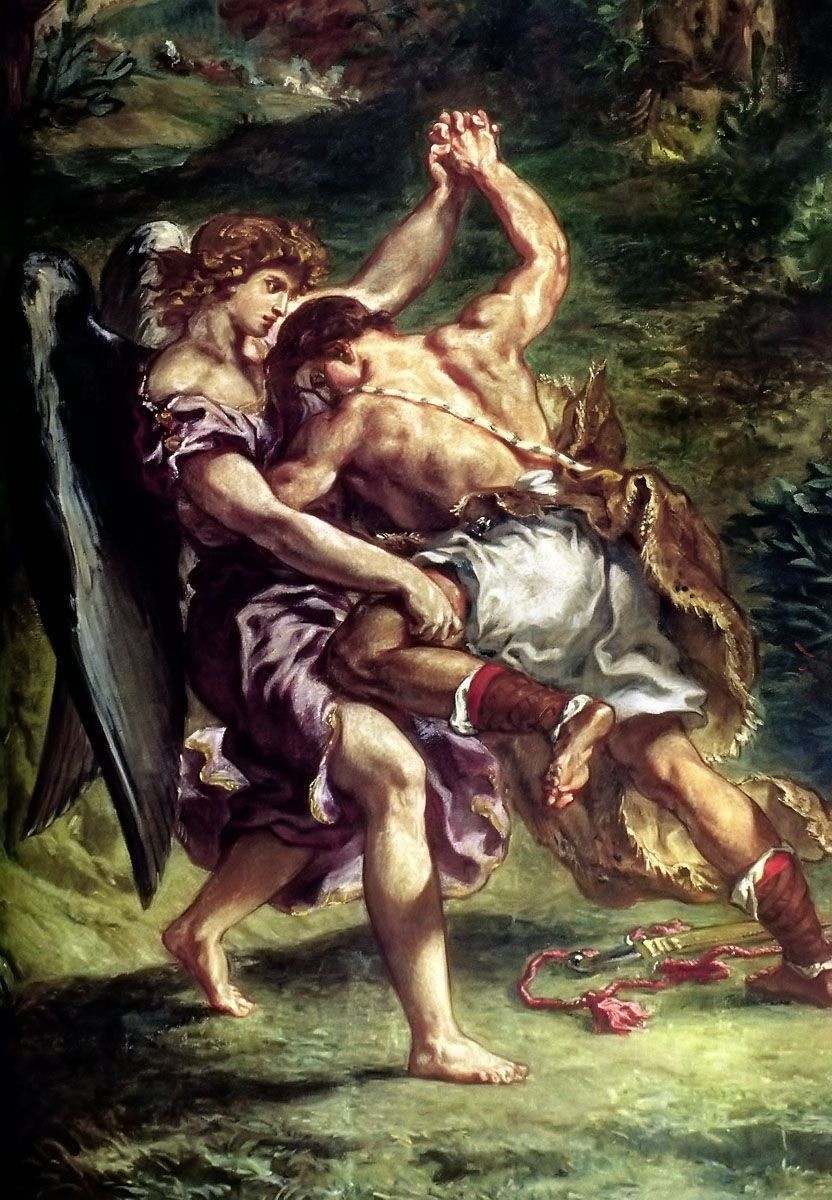
While staying with Laban, Jacob would continue his deceit to take advantage of Laban, although Laban would try return the favor. Jacob left Laban to return to the Promised Land, Jacob found himself in a wrestling match with a man that Jacob learns was God.[1] During that struggle, Jacob was forced to confess his character by admitting that his name means “deceiver,” after which the “deceiver” was given a new name, Israel (which means “wrestles with God”). Wrestling with God became a hallmark of Israel’s descendants.[2]


[1] Sproul, RC “A Wrestling People” Ligonier Ministries ligonier.org/learn/devotionals/wrestling-people

[2] Although there are many examples of people questioning God, the Psalms contain many examples.

Reflect

God is able to fulfill his purposes as we wrestle with him. Do you feel compelled to wrestle with God about anything?

Observe

Read Genesis 32:22-28. A rabbi once said that “In Judaism, not having questions is not a sign of faith but of lack of depth.” How does wrestling with God strengthen instead of weaken our faith?

Generous and overflowing shalom

Dancing in the Kingdom- Table of Contents

Dancing In the Kingdom – Part 1 – Shadows of the Kingdom – Chapter 2 – The God who created

[Bible references: Genesis 1; Psalm 69:16; Zechariah 8; Luke 15:11-32; Romans 1:20; 8:18-23; 2 Corinthians 3:18; 9:8; Revelation 21-22] 

When God created the universe, he was creating order out of disorder, assigning purposes for everything in the universe. When he assigned purposes to the places and things in the universe, when things functioned according to how he created them … they were “good.”[1]  And when in the midst of all those good things he placed image-bearing creatures that also reflected his character, everything was “very good.”

God is good because he delights in the existence of something other than himself.[2]

However, when in the midst of that very good universe, those image-bearers rebelled, they and the world they inhabited suffered the consequences. Yet, in spite of that rebellion, God relentlessly pursued those image-bearers with the intent of restoring not only them but restoring all of creation to the good condition that He originally intended. The Bible is the story of how God’s original purposes will be carried out despite the constant rebellion of his image-bearing creatures – and how the good and very good, creation will endure the brokenness of the rebellion to be finally restored to the good and very good purpose that God had intended.

Within that story of creation and the relentless pursuit which followed, God’s character is revealed as he poured himself out even to the point of taking on the form of a man and the giving of himself to the humility and suffering of being tortured to death on a cross. Even though all of creation is now marred by the rebellion, it is possible to examine the character of God as it is revealed in this outpouring of himself into his creation and into his image-bearers.

Revisiting Genesis 1:1, we see God creating … everything in the heavens and the earth. The rest of that passage shows the orderliness in how the creation happened. We see that as God creates each set of creatures or things that God declares them to be good. Then after God creates humans, he declares “it was very good.” We will see later in Genesis those things got messed up, but at this point the core of everything in the universe, everything was good and beautiful and working as it should. Certainly, as we look around us now, it would be hard to say that everything is working as it should, but at the beginning, everything was good.

That goodness was further amplified when, despite the rebellion of his image-bearers, God tirelessly invited them over-and-over again to come back to him even though they would continue rebelling over-and-over again. The generous invitation and re-invitation would be highlighted by Jesus’ parable which has been commonly called the “Prodigal Son” (Luke 15:11-32) in reference to the wastefully spending son. But the parable could equally be called the “Prodigal God”[3] in reference to the father who represents extravagant giving of God.

These continuous and generous offers from God are meant to draw us to himself so that he could restore to us the good and generous life that God has intended from the beginning, life free from suffering and pain, life full of joy and peace, wholeness and health, contentment and completeness,[4] which is all captured by the Hebrew word, shalom.

“The webbing together of God, humans, and all creation in justice, fulfillment, and delight is what the Hebrew prophets call shalom. We call it peace, but it means far more than mere peace of mind or a cease-fire between enemies. In the Bible, shalom means universal flourishing, wholeness, and delight — a rich state of affairs in which natural needs are satisfied and natural gifts fruitfully employed, a state of affairs that inspires joyful wonder as its Creator and Savior opens doors and welcomes the creatures in whom he delights.” [5]


[1] Walton, John, H. “The Lost World of Adam and Eve: Genesis 2-3 and the Human Origins Debate. (Proposition 5) InterVarsity Press. 2015 Kindle Edition. “good” refers to a condition in which something is functioning optimally as it was designed to do in an ordered system – it is working the way God intended”

[2] Weil, Simone.

[3] Keller, Timothy. “The Prodigal God” Riverhead Books 2008, www.timothykeller.com/books/the-prodigal-god

[4] Refiners Fire ‘Meaning of the word “Shalom;”’ Blue Letter Bible “Word search: Shalom” Refiners Fire www.therefinersfire.org/meaning_of_shalom.htm

[5] Plantinga Jr., Cornelius. “Not the Way It’s Supposed to Be: A Breviary of Sin,” Eerdmans Publishing Co – A. Kindle Edition. (p. 10)

Observe

Read 2 Corinthians 3:18. Discipleship is a process of “being transformed”. Ultimately it is something that happens to us – but it is something we can co-operate with by engaging is spiritual disciplines. What kinds of changes need to happen in our lives that would make it natural to invite someone else into discipleship?

Brooding, moving, dancing

Dancing in the Kingdom- Table of Contents

Dancing In the Kingdom – Part 1 – Shadows of the Kingdom – Chapter 1 – Prelude

Brooding, moving, dancing

[Bible references: Genesis 1; Jeremiah 29:11; Romans 8:19-21; Galatians 3:13-14; Ephesians 3:20; 1 Peter 5:10]

In the beginning, God created the heavens and the earth … and the Spirit of God brooded[1] over the face of the waters …

Like a bird sitting on eggs keeping them warm until the eggs would hatch and bring forth new birds, the Spirit hovered, brooded, over the earth ready to bring forth life of all sorts, but particularly creatures that would be like God, creatures that would reflect the character of God: transcendent, loving, wise, fruitful, etc. This is how the story begins, full of anticipation and hope for what must be a grand and wonderful future. But even before the story begins, we may contemplate another mystery, the mystery of how there can be one God and also three persons identified as God: God the Father, God the Son, and God the Holy Spirit. The early church[2] struggled with this concept and eventually, in the second century, a Christian apologist, Tertullian, coined the term “Trinity” to describe this 3 persons in 1 God concept.

However, that tidy little term can mask over the impossible to understand idea of God being one person and three persons at the same time. There is Greek word available to us that addresses the complexity of this three-in-oneness, “perichoresis[3] which comes from two Greek words which mean “around,” and “to give way” or “to make room.” This is meant to describe the interpenetration or mutual indwelling of Father, Son, and Holy Spirit.

“In that regard the term “perichoresis” (meaning “interpenetration,” “circumincession” or “mutual indwelling”) has been used theologically at least since the time of John of Damascus to refer to the way the three divine persons live in joyful, dynamic communion without merging, loss, or distinction. It is said to be derived from the Greek term perchoreuo meaning “to dance around.” However, the evidence indicates that the term is derived from the different though similar looking perichoreo which refers to “interpenetration” but does not refer to dancing…. this does not mean that the concept itself is inappropriate, as evidenced by those who appreciate its use in that way.” [4]

While this term may be partly helpful in understanding this impossible to understand concept, there is another word that is very similar to another Greek which means “to dance around,” which gives us a word picture of our living and complex God in which the Father, Son and Holy Spirit not only interpenetrate but interact with one another, in a freewheeling but synchronized dance. This means that, as God’s image-bearers, we can reflect the image of the loving, interpenetrating, interacting, and dancing God as we participate in His work of taking care of His Creation and of one another.[5]

This dance which started before Creation, has been joined by God’s image-bearers since the beginning of humanity. It is now our turn. We just need to learn the moves and join the dance.


[1]  Biblehub “Genesis 1:2” Bible Hub biblehub.com/commentaries/genesis/1-2.htm Most translations or this phase use the terms “hovering” or “moving,” but there is also a case for using the term, “brooding,” as in a bird sitting on a nest of eggs.

[2] Van Ee, Joshua J. “The Church in the Old Testament” Westminster Seminary California 9 Nov 2017 www.wscal.edu/blog/the-church-in-the-old-testament The term “church” as used in this book will refer to what may more properly be called the “new testament church.” I wish to make that distinction because the term “church” may be properly applied to all of those who are “called out” to follow Yahweh.

[3] Compelling Truth. “What is the meaning of ‘perichoresis’?” Compelling Truth www.compellingtruth.org/perichoresis.html

[4] Edgar, Brian. “The God Who Plays: A Playful Approach to Theology and Spirituality,” Cascade Books 2017 (e-book) Chapter 9: Kingdom: Playing with God, The Dance of Life

[5] Miller, Darrow. “Perichoresis: Great Dance of God and Creation” Darrow Miller and Friends 16 July 2018 darrowmillerandfriends.com/2018/07/16/perichoresis-great-dance-god-creation/

Observe

Read Genesis 1.  Think of the Spirit of God hovering, moving and brooding over the earth. In your imagination, think about a spiritual being “giving birth” to physical living things, what would you expect to happen?

Scope and direction of sin’s consequence

Dancing in the Kingdom- Table of Contents

Dancing In the Kingdom – Part 1 – Shadows of the Kingdom – Chapter 1 – Prelude

Scope and direction of sin’s consequence

[Bible references: Genesis 2:16-17; 3:14-15, 23; 6:5; Romans 8:19-28]

And so, it happened. The one thing that could create the ultimate catastrophe did happen. The good Creator, who only intended good things, allowed his image-bearers to give into their temptation, to put their own authority above His and violate the one restriction placed before them. This violation by the stewards of His creation broke everything: the relationship between themselves, the relationship between them and Him, the relationship between them and creation. All of creation was affected and is even now waiting for things to be made right again.

Everything in creation had been designed to be good, to reflect the good character of the good God. Creation was designed to be a place where God and his image-bearers could keep on creating good things and bring increasing glory to God. But now, although the ultimate structure of creation was still good, it was headed in the wrong direction. The broken universe would now cause things to move away from God’s glory.

“Anything in creation can be directed either toward ward or away from God – that is, directed either in obedience or disobedience to his law. This double direction applies not only to individual human beings but also to such cultural phenomena as technology, art, and scholarship, to such societal institutions as labor unions, schools, and corporations. and to such human functions as emotionality, sexuality, and rationality. To the degree that these realities fail to live up to God’s creational design for them, they are misdirected, abnormal, distorted. To the degree that they still conform to God’s design, they are in the grip of a countervailing force that curbs or counteracts the distortion. Direction therefore fore always involves two tendencies moving either for or against God.” [1]

In our current times, we can get things so quickly and easily compared to times in the past. We want what we want, and we want it now. Our desire to get what we want now overwhelms our capacity to think of others, as we put ourselves at the center of our part of the universe, replacing God with ourselves. In the case of the first humans, they wanted to grab knowledge and wisdom for themselves instead of waiting to receive it from God.

Everything was broken and separated from God. Spiritual death, the impaired relation between God and His image-bearers was immediate and would be mirrored by the physical death caused by separation of the people who would no longer have access to the Tree of Life. This was a great tragedy that could not be undone, not by the image bearers. But as we look around us, we can see that, despite the tragedy around us, things aren’t totally bad. Even though evil is very evident around us, there is still some goodness that is evident. It is in that observation that we can glimpse the possibility of hope.

God had ordained the penalty of death to be the consequence of turning away from him. Sin resulted in spiritual death, the immediate separation God’s image-bearers from God, nevertheless, the people did not die physically right away. Instead, what God did, was to apply discipline to his image-bearers. He also gave a hint of the solution to the problem created by sin, the first of many other hints that were to come.


[1] Wolters, Albert M. “Creation Regained: Biblical Basics for a Reformational Worldview (Kindle Locations 685-689). Kindle Edition.

Observe

Read Romans 8:19-28. How has sin affected you and the one’s you love?

Chapter 3 – The impossible creatures – Part 1

The Impossible Dance – Table of Contents

The Impossible Dance – Chapter 3 – The Impossible Creatures

As God’s image-bears, we can reflect the image of the loving, interpenetrating, interacting, and dancing God as we participate in His work of taking care of His Creation and of one another. This dance which started before Creation, has been joined by God’s image-bearers since the beginning of humanity. It is now our turn. We just need to learn the moves and join the dance. Ultimately, God did not need to create us or the universe, He did it out of a desire to share his love and delight. God’s creation was more an act of play than of work and He desires that we actively play with him, if you will, to dance with him in His Kingdom. The Kingdom Dance is not meant to be a solo effort, we are to dance with God and with his people.

Reflecting God’s paradoxes

Understanding the character of God, can help us understand what he has intended for creatures that are made in his image. Image-bearing creatures are not gods or duplicates of God, but they are imbued with the character of the God that made them. In this chapter we will explore some of the ways God intends for us to reflect his image. In later chapters, we will expound on those characteristics in more detail.

It was into this good universe that God prepared beforehand that God created creatures to bear his image. Good creatures, image-bearers, who were given the task of taking care of the good creation that God blessed them with – and God declared it to be very good. The image-bearing creatures were created in the complex image of God – the one God who was a community within Himself, the God who was immensely creative, the God who was generous and loving beyond imagination, the God who is sovereign over the universe, the God who is above all things.

There was a danger in God creating image-bearers. To make creatures that were lovers – just as He was a lover – meant giving these image-bearers the freedom to choose whom or what to love. We are unable to choose to not love but only who or what to love. Because God’s image-bearers were the capstone of creation, the option to another love than God, risked an awful catastrophe, a catastrophe that could affect the entirety of creation itself. The good creation, all of it, would become not so good.

And so it was, after creation was prepared for God’s image-bearers, those creatures who were created in the image of the loving God were given instructions to be stewards of the world God had made. Everything was good, and the first human couple had free access to the provisions in garden prepared for them. Only one restriction was placed before them, a restriction not meant to deprive them of anything good but meant to provide the opportunity to test their love, by testing their obedience to the one who created them.

We all now know that those creatures failed their test, and we daily experience the consequences of that failure. We also daily experience our own incapacity to restore holiness on our own efforts, our inability to love God with all our heart and soul and mind and our inability to fully love God or to fully love our neighbors as ourselves.

The mystery of who we are has to worked out between all the goodness we are endowed with as creatures who bear the image of God and all the evil we are encumbered with as creatures who innately rebel against that same God. Traces of heaven and hell run through each of us and our manifested in our everyday lives. The tongues we praise God with also curse our neighbor. The selflessness we display to others is corrupted by the selfish desires that emerge from the same heart.

Body, Soul and Spirit

The mystery of perichoresis which tries to describe the one person God consisting of the relation of the Father, Son and Holy Spirit may very well be the best approach to the mystery of God’s image-bearers. There are conflicting views on whether a person consists of a body and soul or body and spirit or body and soul and spirit. Are we two parts or three parts then which parts? A similar issue arises in the attempts to figure out the relation between the brain and consciousness. Although some researchers reductionistically think that consciousness is all biology and that we will be able to eventually build a computer with a conscious, it is likely that the mystery of perichoresis will prevail.

As image-bearers, being created as community of male and female points one way to the community of God as Father, Son and Holy Spirit, but also points in another way to their unity as represented by becoming “one flesh.” There is an element of equality with a difference between male and female as represented by the woman being created from, what has been commonly translated, a “rib” from Adam’s side. The equality becomes more apparent however, when we understand the word that has been translated as “rib” is more usually translated as “side” – as if Eve were constructed from a full half Adam’s side.

The mystery deepens further when we consider the sexual union of husband and wife. Our male and femaleness show us our human incompleteness without each other. In the joining of the male and female bodies we manifest a completeness. Humans are unlike all other creatures in that we are made in God’s image with body, soul and spirit, and our spirit is joined to God’s Spirit. Therefore, the sexual union of husband and wife, unlike other creatures, is described as becoming “one flesh.” The combination of spiritual union and physical union creates a living metaphor of the union of Christ with the Church. The love, intensity and passion of two different but complementary bodies united both in spirit and in “one flesh” is an extension of the perichoresis of the Trinity as the bodies of the image-bearers united in spirit with Christ become the body of Christ on earth, joined in love, intensity and passion, enjoying the overflowing goodness and shalom that God has intended for us.

We are created body, soul and spirit with the intention that when heaven and earth are rejoined, we will be restored body, soul and spirit (although it will be in resurrected bodies) in the new heaven and earth. It is also through our bodies that we are restored to Christ. And when fellow Christ-bearers assemble together, they are together the Body of Christ, with each person bringing different gifts to support and strengthen the others in the Body.

Transcendent and Immanent

God has placed each one of us in a particular time and place and with particular people. Within that time and place and people he has plans for us. Each of us has a particular mind and body with which we need to discern God’s calling for us in our time and place. Such plans are revealed in many places in scripture.

And though we are called to particular times, places and people, there are ways in which God’s transcendent character spills over onto us. The mark of his transcendence is even placed in each of our hearts. The expressions of transcendence are impossible to avoid in our day and age: Although we were not born with the ability to fly, we can fly to the moon, although we were not born to live under water, we are able to spend months at a time under water even at incredible depths, although we were not born to run like a cheetah, we don’t even think about climbing into a vehicle and going more than 60 miles an hour for hours at a time, we can also create works of art that show places we have never been, we can use the resources of the earth to generate more power than we can imagine … and the list goes on.

With our gift of transcendence, God has shown that he has set us aside as his representatives, “to be holy as he is holy.” We are not to merely live as earthly creatures but as creatures who represent the living God. The challenge before us is to discern, as God’s image-bearers, to what end God can use our particular bodies, emotions and minds in the particular family and community into which we are placed, to fulfill the purpose he has intended for each of us.

In Time and In an Eternal Future

Although we have not existed from all eternity, God created us with more than a mortal body. We are also endowed with a soul and a spirit that can be joined to God’s Spirit. In the present moment, our mortal bodies are created from the stuff of the earth, and we are born into particular times and places so that we may serve and enjoy God in those particular times and places.

Our creatureliness which sets us in a particular place and time with a particular body is an opportunity to appreciate our finiteness and God’s infiniteness, to cultivate a sense of dependence on God’s provision and our dependence on each other and within the context of those relationships to truly learn how to love.

Our creatureliness also forces us to deal with God’s ordering Creation through process. Everything, whether physical, social, emotional, intellectual or spiritual, is controlled by processes. Sometimes we desire to bypass those processes: we want to be instantly knowledgeable and wise and experts at what we do … and not dependent on anyone else. But it was precisely that kind of desire that led to our rebellion at the beginning of humanity.

As God’s image-bearing creatures, we not only have relationships with each other but also with our Creator. With other of God’s image-bearing creatures, our love can be expressed in our opportunities to support, uplift and encourage one other. God has no need of such support from us, but He offers us such support. When we recognize our dependence on Him, He gives us the ability to pray, to acknowledge our needs and to recognize His provision for us when He supplies our needs.

As we pray in our mortal bodies, we remember that although our mortal bodies will return to the dust from which we are made, our bodies will be resurrected when heaven and earth are reunited so that we, with soul and spirit and new body, will be able to enjoy God forever into the future.

In the meantime, while we await for our resurrection and to gaze on the beauty of the Lord (Psalm 27:4), we have reminders of our connection with our transcendent God in the beauty of His Creation and in our capacity to make things of beauty. Whether the beautiful things are of our creation or the Lord’s, they are a reflection of God’s own beauty.

Co-Sovereigns and Servants

God is the master of all creation, yet he has given to us the responsibility to take care of the earth. It is out of that mastery that we have managed to use the resources of the earth to create all the technological advances that we have. Unfortunately, in many cases we have abused our abilities; abusing not just the resources of the earth but often abusing each other.

In our sinfulness, we typically appeal to our call to sovereignty while forgetting our call to service. This very issue Jesus took care to remind us of on many occasions. If we mistreat the earth that we are placed in or if we mistreat others, then we dishonor not only the one in whose image we are made but even the other image-bearers of God. In fact, it is out of our call to sovereignty and service that we are called to love, to willingly give of ourselves to the service of God just as God gave of himself to us.

It is under the constraint of God’s love that he tells us to “subdue” and “have dominion” over his creation. As God’s stewards, our sovereignty means we have the responsibility to maintain the good in God’s creation, to bring order to it and to help his creatures flourish and fill the earth.

There are two dimensions to our responsibility to subdue and have dominion.

When Genesis 1 was written, it was hard work to cultivate the rocky soil and people had little control of the elements; people were more powerless than powerful. In that context we see the forceful aspect of radah (ruling the earth) that is evident in other instances in the Bible when that word is used. That is one dimension of our responsibility.

But another dimension of our responsibility to have “dominion” is tempered by gentleness, such as when God spoke through Ezekiel’s to the “shepherds of Israel” and reprimanded them for using cruelty and violence and caring more about themselves than the people they were responsible for, serving themselves instead of the people.

In our service, we are dependent one another. We were not made to be self-sufficient; we not only need to have a relationship with God but also with each other. God allowed the first man to see that he needed another human before God presented the man with a woman to be his ‘ezer kegnedo. In Hebrew, ‘ezer is usually translated as “helper” or “deliverer” and is most often used to describe God delivering his people; kegnedo is usually translated as “in front of” or “opposite” or “parallel to”.

Later on, in scripture we see that we are called to be a nation of priests and a body where all the different parts have a purpose as they work together. We are called not just to a restored relationship with the one who made us but are called together as a people to serve each other and to serve the world around us.

Merciful and Just

There is much in this world that is not just or righteous. As God’s servants, we are called to seek both. But just like the servant in the parable of the unmerciful servant we can forget the mercies shown to us when we are dealing with each other. There is much that makes us yearn for justice in a world filled with cruelty, but we need to remember that as God acted on his own demands of justice, he yet found a way to bestow great mercy on us.

The prophets of Israel, and even Jesus, condemned those people who acted in self-righteousness and did not seek justice and mercy for those around them. In our own search for justice, we should remember the entreaty in Micah 6:8, “What does the Lord require of you, but to do justly, love mercy, and walk humbly with your God.”

Playful and Orderly

There is much that is wrong in the world. People endure pain and suffering sometimes from natural happenings and sometimes from the actions of others. Evil seems persistent and never-ending. When we are called to serve God in this world, we can become overwhelmed by all the work that is to be done. Playfulness can seem out of place. Particularly, any playfulness that emerges from self-centeredness or obsessiveness.

Actually, that is the point we need to assert. Playfulness can be out of place in a world of sin and evil. But playfulness can also be a reminder that the reality in front of us is not the total reality. Our playfulness arises out of the relationship we have with God, the one who has overcome the evil in the world, who will end the suffering and who will restore us and world to be what he intended from the beginning. Playfulness arises out of the hope and joy we have in knowing that reality in front of us is not the whole reality.

Our imagination can be helpful in this play. As children, we can pretend there is another world and do something like taking a cardboard box and imagining it to be a spaceship and accepting the rules of living in that spaceship. Family traditions (or even community or national traditions) are a form of play, they do not serve a utilitarian purpose, but stem from the creative ways we wish to remember our unique heritage.

This same imaginative playfulness can be useful reminding us of the reality that lies behind our current reality. Our traditions of worship are a form of play, albeit a more serious play. Our worship traditions represent ways for us to remember our spiritual heritage or to provide imaginative ways to perform biblical sacraments about which we have sparse details on how to perform them. These traditions and liturgies help us point to that other reality, a new Kingdom that began breaking into this world with the incarnation of Jesus.

We hope to participate in the inbreaking of the new Kingdom by living according to its rules. When we pray or worship, we are participating in the rules of that new Kingdom. When we come to others and share with them the hope that we have, we are asking them to use their imagination to look beyond the current reality and envision the new Kingdom that is already here and is yet to come. When we accept contentment in all situations, when we trust in God, when we comfort others with the hope we have, we are living according to the rules of the new Kingdom.

It is also true, that In this present life there are endless encounters with grief. Although we acknowledge the pain and suffering of that grief, whether that grief is ours or others, we can encompass that grief with hope. Even amid grief we can choose to cling to God and to the hope He brings us. If we can live into the rules of the new Kingdom, we can have assurance that the current grief will pass and will be replaced by future joy and laughter and that every tear that we have cried and will cry and even now cry will be wiped away.

Our hope of the new Kingdom allows us to endure the current pain and suffering knowing that the hard experiences can be redeemed and to be used for good. God can take the pain and suffering we endure to transform us to be more like Christ, who himself suffered for us, transforming the very evil intended for him into the final victory that shall ultimately also make us victorious. This hopeful living then is also a form of play, accepting the rules of a reality we cannot see and choosing to live according to the rules of a Kingdom that we can only realize in part.

That playfulness also emerges in our creativity, which erupts early on in our lives as our desire as children to play and also in the desire we have as parents to play with our children. There is no doubt about how uniquely creative we are in the way we express ourselves, not only in all the various art forms we use but in the ways we can solve all sorts of problems – even to the creative ways we try to cover up our sins. No other creature can come close to expressing creativity the way we can.

Our ability to create and even detect order is also unmatched. Our ability to detect order is evident in the way we can detect patterns in sight or sound. The sense of order is evident in our ability to recognize faces, our ability to recognize the voices of our mothers or fathers as infants and even before we are born. Our sense of order is seen as we grow in our ability to recognize the patterns of letters and sounds and to recognize and respond to language – even languages.

Our sense of order becomes more evident in our ability to create order out of many abstract concepts such as math, science, philosophy and many other areas. It is our sense of order that allows us to create businesses, governments and civic organizations to make society productive. When we bring order to farmland, we increase the productivity of the farm.

The visible order within Creation inspired Christians in the past to study Creation. Order within Scripture helps the Bible to be meaningfully used as meditative literature. In the same way, order during worship also helps us to avoid confusion and to focus on God.

Reflecting God’s Paradoxes

Dancing in the Kingdom – Table of Contents

Part 1 – Shadows of the Kingdom, Chapter 3 – The Image-bearers

[Bible references: Genesis 1:26-32; 2:4-7,15-25; Matthew 22:36-40; John 15:8-11; Romans 8:20-21; Galatians 5:22-23]

Understanding the character of God, can help us understand what he has intended for creatures that are made in his image. Image-bearing creatures are not gods or duplicates of God, but they are imbued with the character of the God that made them. In this chapter we will explore some of the ways God intends for us to reflect his image. In later chapters, we will expound on those characteristics in more detail.

It was into this good universe that God prepared beforehand that God created creatures to bear his image. Good creatures, image-bearers, who were given the task of taking care of the good creation that God blessed them with – and God declared it to be very good. The image-bearing creatures were created in the complex image of God – the one God who was a community within Himself, the God who was immensely creative, the God who was generous and loving beyond imagination, the God who is sovereign over the universe, the God who is above all things.

There was a danger in God creating image-bearers. To make creatures that were lovers – just as He was a lover – meant giving these image-bearers the freedom to choose whom or what to love. We are unable to choose to not love but only who or what to love. Because God’s image-bearers were the capstone of creation, the option to another love than God, risked an awful catastrophe, a catastrophe that could affect the entirety of creation itself. The good creation, all of it, would become not so good.

And so it was, after creation was prepared for God’s image-bearers, those creatures who were created in the image of the loving God were given instructions to be stewards of the world God had made. Everything was good, and the first human couple had free access to the provisions in garden prepared for them. Only one restriction was placed before them, a restriction not meant to deprive them of anything good but meant to provide the opportunity to test their love, by testing their obedience to the one who created them.

We all now know that those creatures failed their test, and we daily experience the consequences of that failure. We also daily experience our own incapacity to restore holiness on our own efforts, our inability to love God with all our heart and soul and mind and our inability to fully love God or to fully love our neighbors as ourselves.

The mystery of who we are has to worked out between all the goodness we are endowed with as creatures who bear the image of God and all the evil we are encumbered with as creatures who innately rebel against that same God. Traces of heaven and hell run through each of us and are manifested in our everyday lives. The tongues we praise God with also curse our neighbor. The selflessness we display to others is corrupted by the selfish desires that emerge from the same heart.

Reflect

How is love dangerous?

Observe

Read Genesis 1:28; 2:15. What tasks did God provide for the humans?