Within our given environment, we create communities, culture, and institutions to support all that. Our homes, neighborhoods, towns, and cities reflect our potential to create either beauty or corruption. The power we have as bearers of God’s image which provides our God-given ability to transcend our environment, is the source of great good or great sin.
“And decades of persuasive experiments have shown that built environments can be a factor in shaping us in ways that have significant long-term implications, in educational or workplace performance, or our physical and mental health and wellness. The point is that architecture, an integral part of essentially all cultures, is one of many interacting cultural factors—like entertainment and marketing, politics, belief systems, or charismatic individuals, for example—that together, in large and small ways, are involved in shaping behavior and who we are over a lifetime.” [1]
“On the night of May 10, 1941, with one of the last bombs of the last serious raid, our House of Commons was destroyed by the violence of the enemy, and we have now to consider whether we should build it up again, and how, and when. We shape our buildings, and afterwards our buildings shape us.”[2]
We possess the abilities to create works of art, some of which are designed simply to be enjoyed or give us cause to think and some of which have practical uses such as buildings we live, work, or play in, the outdoor areas between those buildings that can serve to connect us together, the vehicles which transport us. These practical works of art also require feats of all sorts of engineering, technical and organizational skills.
It is also clear that those same abilities are regularly misused, and our constructions look less like works of art and more like works of neglect and corruption. Instead of works which build us up and add to the flourishing of all, our works sometimes are simply not as helpful as they can be and sometimes even outrightly abuse our environment as well as our fellow humans.[3] Poor building design sped up Covid spread.[4]
A Christian architect, Dave Greusel, suggests that we should construct our buildings with the attitude that they serve as “gifts to the community,” purposely constructed to advance God’s Kingdom, expressing grace, beauty, justice, creativity.[5] There are many different ways in which we enhance the quality of life not only within the buildings we create, but also the environment around those buildings, designing our spaces with consideration for how we live not only in, but around our buildings.
In the U.S., planning our cityscape around automobiles has seemed natural because of the way that our automotive technology has allowed us to flexibly expand in the large space afforded by our country. Sadly, that type of planning has caused us to sometimes neglect the way that life is normally lived with the communities of the city. Sometimes, it has been after the fact that cities have paid attention to how to better design the city spaces for people to navigate on foot or bicycle and to live in community.
Enacted space is “activated by the people using it.” that is, it is not enough to design particular spaces, but to make them attractive so that people use them. [6]
Additional features that can be considered for our spaces are how we situate housing for people and where they work, how we create enclosed spaces that give a sense of protection and safety, monuments that provide particular spaces with meaning and the thresholds (doorways or openings) between the building interiors and the spaces outside.[7]
“Connectivity is measured by the number of intersections per square mile. One hundred fifty connections per square-mile is considered to be the minimum for a vibrant community.” [8]
Dancing In the Kingdom – Part 3 – Dancing in the Kingdom–Chapter 18 – Entering the Dance
Re-envisioning our culture
[Bible references: Isaiah 61:1-11; Ezekiel 16:1-19; 1 Peter 3:1-22]
In Culture Care,[1] Fujimura tries to get us to think holistically, in terms of restoring beauty as a means of invigorating culture so that people can thrive. This “Generative Thinking” looks beyond the resources right in front of us and recognizes the transcendence of God in our midst, which then allows us to think and behave generously and then also allows us to think beyond the immediate future and instead think in terms of generations to come. This contrasts with the attitude that resources are scarce and therefore must be handled in utilitarian and economic ways.
As creatures made in the image of our transcendent God, we have been given the capability to detect that transcendence in the form of beauty. As creatures made in the image of our creator God, we have been given the ability to create beautiful artifacts. Beauty is a characteristic that points beyond creation itself, for beauty has no utilitarian value. The beauty we see around us reflects the generous and gratuitous nature of God who intends that we do more than just survive, but rather to flourish in the abundance of His provision. Even more than that, Beauty is a characteristic that encompasses more than what we can look at or hear, but it is enfolded in the spiritual values of justice and morality.
Although, we all have the capacity to create beauty, there are those people who are called to focus on making works of art. Fujimuraviews those artists as the catalysts, leaders that challenge us to think less colloquially but more imaginatively, to look beyond ourselves and our local groups and rather to look to the whole of society. Artists are positioned to do this, because their dispositions usually place them at the fringes of society where they can serve as “border-walkers”[2] allowing them to at once look at their own social group from the fringes and also to connect to other social groups. Fujimura then challenges the rest of society to create an environment for these artists, these “border-walkers,” to be trained in their roles and to thrive. Part of the challenge is to recognize that, for society to flourish, we need the art economy, which by definition is a non-utilitarian economy. Towards this end, artists should be trained to be effective stewards of their gifts and society needs to learn how to be stewards of the artists, by creating environments for art, and Beauty, to flourish. Fujimura proposes that art can even help us create a healing environment in our current culture wars. Participants in culture wars employ language that reduces the enemy to a caricature. Instead, culture should not be handled as a territory to be won or lost but a resource we are called to steward and cultivate. Artists can become known as “citizen artists” who lead in society with their imagination and their work – creating opportunities for genesis moments in culture – moments in which dialogue can happen, caricatures can be discarded, and deeper concerns can be addressed. But for this to happen, we need vision, courage, and perseverance and a focused effort to pay attention to the care and cultivation of the soul.
[1] Fujimura, Makoto. Culture Care: Reconnecting with beauty for our common life. Intervarsity Press 2014
[2] Also called “mearcstapas” in Beowulf, seventh century
Reflect
We may not all be artists, but we all have some creative capabilities as co-creators with God. We all have the capacity to create beauty: acts of generosity, bringing the life of the Spirit into a spiritually dark place, letting God’s love flow through you to another. How can you bring beauty into the world?
Observe
Read Ezekiel 16:1-19. It is probably not hard to envision the community outside the church as the “adulterous wife.” How can we “clothe” our community?
“One of the most important—and most neglected—elements in the beginnings of the interior life is the ability to respond to reality, to see the value and the beauty in ordinary things, to come alive to the splendor that is all around us.”[1]
But a true Christian experience would find, during some part of every day, the soul in a condition to love and praise God. To be in a praising state one must be in a most unselfish condition of mind; he must live relatively humble as before God; he must be sensitive to his obligations to God; he must have a faith that shall enable him to see God in the events which are transpiring about hi m. “a humble mind is the soil out of which thanks naturally grow.”[2]
“Dr. Atkinson writes that scans show that when people share positive emotions there is a natural sync up process … research shows tremendous benefit to the one who is expressing gratitude, in the manner of it is better to give than to even receive.”[3]
“You cannot control what happens to you in life, but you can always control what you will feel and do about what happens to you.” [4]
“Men are disturbed, not by things, but by the views they take of them.”[5]
Gratitude is the affirmation of the good things we have received from someone else. That feeling of gratitude results in the desire to either repay the giver or to pay forward to someone else with good things. Basic gratitude is a simple response to what we have received, but the spiritual discipline of gratitude is pro-active; it calls us to not depend on external circumstances but to train ourselves to intentionally look for reasons to be thankful in all situations; it calls us to pursue gratitude not just because it makes us feel good but because it is good for one’s family, community, and society. It is a virtue that is practiced, not just a feeling. The discipline of gratitude calls us to seek greater mindfulness and awareness, to be more present in the moment, to sharpen our powers of observation, to notice what others miss, to develop humility in recognition that the good in one’s life comes from outside the self, and to actively seek to reciprocate these gifts, returning goodness for goodness. Therefore, the goal of Gratefulness is to develop our ability to recognize and appreciate God’s provision.
The discipline of gratitude will be on guard against the various obstacles to feeling gratitude: our busyness and distraction, our ingrained penchant for noticing the negative over the positive, our tendency to adapt to the feelings of gratitude and allowing ourselves to become numbed to the reasons for our gratitude, and the possibility of feeling envy as we tend to compare what we have to what others have.
Counteracting those obstacles will require us to focus on things that will enhance our ability to keep alert, to see familiar things in a new way, to recognize the abundance of what we have rather than what we lack, to not forget all the good we have in our lives and to remember where it came from and how it made us feel.
[1] Merton, Thomas. No Man is an Island Mariner Books 2002 (pp. 33-34)
[2] Beecher, Henry Ward. The Life of H. W Beecher. Chapter 4. Plymouth Church (p. 77)
The marketing done in our consumer culture is designed to make us discontent, to make us desire things we don’t need. What desires are creating discontent in your life?
Observe
Read Psalm 136. This Psalm shows gratitude for what Yahweh had done for Israel in the past. Could you make a list of gratitude for what Yahweh has done in your life?
Dancing In the Kingdom – Part 3 – Dancing in the Kingdom–Chapter 14 – Remembering our creation
Our Mandate
[Bible references: Genesis 1:26-28; 2:18-25; 3:6; 39:22-23; Matthew 17:10-13; Acts 3:19-42; 1 Peter 5:10]
We have seen how our journey, the journey of God’s people, creatures made in God’s own image, began with our ordination in the Garden of Eden and we have seen what God has intended for our future. We have seen how that intention has not changed despite our rebellion which continues to this day, and how God has not ceased to work with us, His people, despite our persistent rebellion. We have seen God’s patience and tenderness in not totally abandoning us despite our rebellion and how He has called us generation after generation – from the patriarchs and prophets to the apostles and all who are called Christian – to join Him in His ongoing restoration of His Kingdom on earth.
As image-bearers, we still are charged with the work of stewarding His creation, However, we must be restored ourselves before we can fully join Him in His work. That work of restoration begins when the Holy Spirit comes within us to unite us to God and His community. That is the work God must do within us.
In the previous chapters, we have followed how God called his image-bearers to join in the work that he began and then how, through the years, his image-bearers have joined that work, sometimes successfully and sometimes not. In this chapter, as we prepare to consider how to move forward, we will revisit that multi-faceted call to rule over the earth, to be fruitful and multiply, to fill the earth and subdue it” and to cultivate[1] and keep it, to create beauty. This call to act as God’s stewards of His creation is a call to use our gifts of intelligence and creativity, to cultivate the resources of the earth to establish a godly culture and civilization. This call is sometimes called the “cultural mandate,” where our culture includes all the things we discover and make and pass on from one generation to the next: our food, language, sports, arts, businesses and their products, civic organizations, and governments, etc.
The charge to “have dominion over” and “subdue” the earth and all its creatures includes physical, cultural, and intellectual activities such as farming, mining, manufacturing, government, arts, civic organizations, education, sciences, technology, and many other activities. But the primary place of God’s kingdom is to restore the souls of men. All would be well if all souls were in right relation to God, everything else would fall into place. Evangelization of the souls of all men is the ultimate goal. But if we think of the ways in which God, out of his overflowing abundance, finally managed to touch our hearts, there were many steps and many different ways in which we were individually touched by the hand of God.
As God’s image-bearers we are uniquely equipped to imagine and discover what kind of possibilities can be made of the overflowing abundance of God, the physical resources He has provided for us: turning grain to bread, grapes to wine, oil to energy and plastics, iron ore to steel, limestone and shale and clay to cement, and many other things we have made from many types of resources. We are uniquely equipped to imagine and discover out of God’s overflowing abundance what kinds of ways we can organize ourselves to fulfill our responsibility to subdue and cultivate the earth by creating organizations such as businesses, civic and social organizations, political parties and non-profit organizations, governments and educational and religious institutions.[2] In all of these activities we can reflect God’s knowledge and wisdom by engaging in intellectual pursuits such as reading, writing, mathematics, sciences, philosophies, language arts, history, engineering, forensics, medicine, law, etc.
[2] Manahan, Ronald E. “A Re-Examination of the Cultural Mandate: An Analysis and Evaluation of the Dominion Materials” DocsbayGrace Theological Seminary dissertation May 1982 docsbay.net/A-Re-Examination-Of-The-Cultural-Mandate
Reflect
We were assigned priestly duties in the Garden of Eden. As believers, we are to be kingdom of priests. As God’s care for His Creation continues, so does our mandate. What things can you do (and are equipped to do), with God, to fulfill His mandate?
Observe
Read Genesis 1:26-28; 2:15; 39:22-23. How would the world be different if we fulfilled our duties towards creation in the same way the Joseph fulfilled his duties?
It is not just that the world is immensely complex, but it seems to contain unexplainable attributes like Beauty and Truth – and something about us seems designed to need to find a reason for our being and a sense of morality. The tools of philosophy and science have been very helpful in understanding our world – but those tools are limited. Philosophers are constrained by our limits to comprehend our world through using reason alone.
After surveying the significant problems we confront in trying to make sense of this world, [John] Lock remarked: “From all which it is easy to perceive what a darkness we are involved in, how little it is of Being, and the things that are, that we are capable to know.” … [Alexander] Pope concedes that this universe appears to be incoherent and ambiguous. Yet Pope insists that we have to acknowledge the frailty and fallibility of human moral and intellectual capacities in reaching this judgement. … [John Banville] . “I saw a certain kind of pathetic beauty in the obsessive search for a way to be in the world, in the existentialist search for something that would be authentic.” … was forced to deal with the irreducible fragility and provisionality of human knowledge. … The hope of finding the Enlightenment’s Holy Grail, the crystalline clarity of rationalist certainties, gradually gave way to a reluctant realisation of the irreducible complexity of the world, which simply could not be expressed in terms of the clear and necessary ideas that the Enlightenment expected and demanded.[1]
Scientists are equally constrained by our limits to comprehend our world through measurement and experiment alone.
Those who invoke the political nostrum “follow the science” need reminding it is an activity that’s never free of value judgement … scientific findings are empirically-based descriptions of the patterns and regularities that we find in the world around us. They are not the be all and end all of explanation. . They are local explanations of aspects of the world around us, that are provisional in nature…. Science does not say anything about the ‘meaning of life’, the nature of causation, the origins of the universe, whether there is ‘free will’, etc., until its findings are combined with additional premises in an argument. Arguments, being made as they are in human language, are strictly speaking, philosophical in nature … Scientific reasoning can never prove the truth or falsity of its own assumptions (which are values), nor can it have much to say at all about normative questions, only indirectly. A scientific argument can be used to support a premise used in a philosophical argument about some conclusion, but it cannot constitute the argument.[2]
When we look to find meanings in the context of Biblical cultures, we find differences between the Hebrew and Greek cultures. While each culture has its strengths, as we talked about in “Limits of theology” (p.161), the different languages can shape our thinking by focusing on different priorities. The following table presents some of those different focus points.
Hebrew culture
Greek culture
nephesh refers to whole being (soul and body are integrated
not just a soul that exists apart from the body,
shema = listen and obey
Akouo – listen, hear
objects described in terms of function
Objects describe in terms of physical description
supernatural and natural worlds are integrated
supernatural and natural worlds are separate
historical narrative is about meaning
historical narrative is about chronological sequences
material goods measure God’s blessings
material goods measure personal achievement
value is on what we do
value is on what we think
knowledge is about ethics and moral practices
knowledge is about intellectual categories
worship was a function of service, what we do in the body
worship was a function of service what we think
The Hebrew language has fewer words and focuses on creating stories and not creating descriptions. The fewer words that are used can have a wider range of meanings which the Hebrew writers of scripture use to create stories with intentional ambiguities and is sparse in details and descriptions. The Hebrew worldview assumes a world where the natural and supernatural are intertwined and there is an actively involved God. Hebrew ethics are focused on what is done than what is thought.
The Greek language is amenable to creating complex words and is amenable to developing philosophical and scientific thought. Greek story telling is full of details and descriptions and exact definitions. The Greek worldview separates the spiritual world and the physical world, where the spiritual world is considered the most important and that the activity of the gods does not necessarily affect events in the physical realm. Greek ethics are focused more on what is thought than what is done.
The church has been affected by the Greek way of thinking.[3] One idea, called Gnosticism, held that salvation could be obtained through secret knowledge; leading to the development of “secret” societies like the Rosicrucian’s where only those within the society have that knowledge. Another idea was dualism, where spiritual things are considered to be good and material things are considered to be bad. The consequences of that thinking have led to heretical teachings about the nature of Jesus, severe asceticism, unhealthy thinking about sexuality, neglecting our stewardship of creation, rejection of the arts, etc.
One reaction in the church against the Greek philosophies led to a type of anti-intellectualism called fideism,[4] which intended to focus exclusively on a type of faith that ignored the use of reason
The ideas of the Greek philosopher, Aristotle, would resurface later during the Renaissance led to the development of modern science. However, the church hindered the development of astronomy for a while when it stubbornly clung to Aristotle’s geocentric view of the universe.
The church was involved various attempts to reclaim the glories of the past and to elevate the human condition in what used to be called the dark ages.[6] The discovery and rediscovery of the writings of Greek, Latin and Muslim philosophers and scholars enriched the thinking within the Roman empire. The sum of all these eventually led to the period of “Enlightenment.”
9th Century Renaissance.[7] Monasteries were involved in the laborious process of preserving manuscripts by hand-copying them. However, for many years, some of the Latin and Greek classic writers were neglected in favor of Christian works. Charlemagne, the king of the Holy Roman Empire, was interested in giving everyone an education that included the Roman and Greek classic writings (such as the writings of Plato and Cicero). The main impact of this renaissance was on the development of literature.
12th Century Renaissance.[8] Christians escaping the spread the Muslim empire brought new Greek and Arabic writings to the West. These included the writings of Aristotle about logic and Arabic writings about natural philosophy and Latin works about law. This renaissance led to advances in social organization, the law, technology, intellectual pursuits and attempts to make Christianity more human which led a general spirit of optimism and desires for a more personal and intense religious experience.
14th century Renaissance.[9] The continued introduction of Greek texts from Christians fleeing the Ottoman Empire combined with the advent of the printing press made possible the wide publication of Greek ideas, particularly from Plato, whose ideas that some thought were more compatible with Christianity. These discoveries combined with discontent with the church led to the development of humanism, which elevated the capacity of humans. At first, humanism was very much a Christian topic but over time, humanism became an antithesis to Christianity.
18th century Enlightenment.[10] The invention of the printing press in AD 1439 further supported the spread of science as well as humanism and would also be central to the Protestant revolution in the 1500s. During the same period, developments in shipbuilding and technology enabled the development of European empire building and the success of that contributed to the age of Enlightenment (AD 1714-1789) with the emphasis on liberty, progress and reason having priority over theology. The Enlightenment version of humanism, (different than the Christian version of humanism) stated that people are essentially good and do not need God to progressively improve over time. This version impacts even our modern-day culture and sometimes the culture within the church.
Advances in knowledge is a good thing, but knowledge constrained by human pride does not lead to wisdom. The “Enlightenment” was the name given by people who were proud of the age where God was cast off and where human knowledge replaced the wisdom of God.
[Bible references: Matthew 5:6; 7:14; 11:29-30; Luke 17:10; John 6:35; Romans 3:28; Galatians 5:1; Ephesians 2:10; James 2:24]
Paradox: A seemingly absurd or contradictory statement or proposition which, when investigated, may prove to be well founded or true. (The Oxford Dictionary). A situation or statement that seems impossible or is difficult to understand because it contains two opposite facts or characteristics: (Cambridge Dictionary)
Religious truth often pivots on paradox … full truth about Jesus outruns the ability of human reason … all of the core truths of Christianity are twin realities, delicate paradoxes …it is dangerous to insist on flat yes-or-no answers to the big and perennial questions of life … we live in a fast-moving and rootless time when numerous theologians are trying to restate the Christian faith in relative and fluid terms that reflect the mood of our times more than biblical foundations (Callen, Barry L. Caught between Truths: The Central Paradoxes of Christian Faith, Emeth Press, 2007)
Embodying the gospel is … more than individualism. God is a social reality (trinity), faith should be a social reality, the best way to witness on behalf of the church is to be the church … More than rationalism. We are more than rational animals; rationality has its place but there is mystery that only faith can approach. Spiritual experience and interpretive concepts are reciprocally related. Doctrine is important but primacy is given to the transforming personal and community encounter with God in Jesus Christ … More than dualism. We are whole persons. Sin is both personal and systemic … More than knowledge. Knowledge, even biblical knowledge is not good in and of itself. Orthodoxy includes orthopraxy (Callen, Barry L. Caught between Truths: The Central Paradoxes of Christian Faith, Emeth Press, 2007)
The Bible is not written as a textbook that presents a list of topics and propositions. The views and values of the Bible are presented in the context of a story – a story of God and his image-bearers. The Bible’s focus is on relationships, and its views and values are found in the context of the stories of those relationships. Those stories sometimes reveal paradoxes.
One dimension of those paradoxes is revealed in how the values of the Bible are upside down compared to the views of the surrounding cultures. For instance, the Bible presents one God instead of many. The Bible presents a world of order which has a particular end in mind instead of repeated cycles of disorder with no end point in view.
Another dimension of those paradoxes are statements in the Bible which seem to contradict one another. Some examples are:[12]
• “We are worthless servants.” (Luke 17:10) “We are his workmanship.” (Ephesians 2:10)
• “Blessed are those who hunger.” (Matthew 5:6) “No one who comes to me will ever be hungry.” (John 6:35)
• “Take up my yoke and learn from me.” (Matthew 11:29) “Don’t submit again to a yoke.” (Galatians 5:1)
• “A person is justified by faith apart from works of the law.” (Romans 3:28) “A person is justified by works and not by faith alone.” (James 2:24)
• “My yoke is easy.” (Matthew 11:30) “How difficult the road that leads to life.” (Matthew 7:14)
Presenting values by means of paradoxes forces one to more completely understand those values by exploring them in different dimensions.
The church has a stake in human flourishing. The challenge for the church is to define and promote human flourishing (which we might otherwise describe as human well-being, human happiness) in accordance with biblical teaching, to present and commend its alternative approach to human flourishing in the face of competing cultural visions, and to embody human flourishing in the presence of God amid a culture of death and destruction. Christian theology has a role to play in assisting the church to meet this challenge.[1]
“God made us: invented us as a man invents an engine. A car is made to run on petrol, and it would not run properly on anything else. Now God designed the human machine to run on Himself. He Himself is the fuel our spirits were designed to burn, or the food our spirits were designed to feed on. There is no other. That is why it is just no good asking God to make us happy in our own way without bothering about religion. God cannot give us a happiness and peace apart from Himself because it is not there.”[2]
Goodness, generosity and shalom all fit together. We begin with the premise that we are representatives of the Prince of Peace. Scripture is full of encouragement for us to live in peace because it is through shalom that much else flows, including goodness and generosity. Goodness flows out of the shalom which is concerned with the overall well-being of others and is necessarily linked to justice, mercy, and humility – and we are not to be content with helping God to usher in only the minimal amounts of justice, mercy into the world but the fullness of justice and mercy that stems from the overflowing goodness of God.
Our Creator and Temple-maker intended for us to enjoy his overflowing love and goodness. He provided us with a place of abundance where all our needs could be met, where He had a purpose for us as His stewards and His co-creators and where we could enjoy him and enjoy each other. This overflowing can actually be overwhelming when we consider the breadth, the beauty, the abundance, and the complexity of this temple he has provided. And we can marvel at the breadth, the beauty, the abundance and the complexity of the skills and abilities He has provided for us as his stewards and co-creators. Just look at what He has done and what we have done with what He has given us!
Although we have not existed from all eternity, God created us with more than a mortal body. We are also endowed with a soul and a spirit that can be joined to God’s Spirit. In the present moment, our mortal bodies are created from the stuff of the earth, and we are born into particular times and places so that we may serve and enjoy God in those particular times and places.
God made us as creatures. And the good part about being a creature is we were made to be dependent upon God and, by our very design, also dependent on other people and the earth … Often what we’re missing is the good of dependence. We need to cultivate an awareness of how our dependence and our needs open avenues of love … What if we stopped thinking of life as to-dos and started thinking of it as relationships? When we’re so task-driven, it’s very hard to appreciate love, because love is incredibly inefficient … when we were younger, God didn’t expect us to be what we are now. He’s still taking his time, by his Spirit, to bring about order through developmental growth … Part of recognizing our limits is getting comfortable in God’s space and growing in dependance on him … Sometimes, I think we’re actually scared to death to pray, because if we actually take the time to get quiet, we might begin to fear that God’s not there or wonder whether he’s apathetic or just really angry. Only in prayer will we discover how compassionately God views us … cultivating the gift of encouraging and celebrating others. It’s a spiritual discipline, a healthy way of dying to yourself and encouraging others. We are all dying for someone to pay attention and notice our presence and being. When someone articulates that, it’s life-changing. [1]
Our creatureliness which sets us in a particular place and time with a particular body is an opportunity to appreciate our finiteness and God’s infiniteness, to cultivate a sense of dependence on God’s provision and our dependence on each other and within the context of those relationships to truly learn how to love.
Our creatureliness also forces us to deal with God’s ordering Creation through process. Everything, whether physical, social, emotional, intellectual, or spiritual, is controlled by processes. Sometimes we desire to bypass those processes: we want to be instantly knowledgeable and wise and experts at what we do … and not dependent on anyone else. But it was precisely that kind of desire that led to our rebellion at the beginning of humanity.
As God’s image-bearing creatures, we not only have relationships with each other but also with our Creator. In our relationships with God’s other image-bearing creatures, our love can be expressed in our opportunities to support, uplift, and encourage one other. God has no need of such support from us, but He offers us such support. When we recognize our dependence on Him, He gives us the ability to pray, to acknowledge our needs and to recognize His provision for us when He supplies our needs.
We think of prayer as mostly self-expressive—as a way to put words to our inner life … if we pray the prayers we’ve been given, regardless of how we feel about them or God at the time, we sometimes find, to our surprise, that they teach us how to believe … We sleep each night in our ordinary beds in our ordinary homes in our ordinary lives. And we do so in a universe filled to the brim with mystery and wonder. We always sleep in a crowded room in our crowded cosmos, so we ask for crazy things—that God send unimaginable supernatural beings to watch over us as we drool on our pillows … Sleep reminds us of how helpless we are, even merely to stay alive. In the Christian tradition, sleep has always been seen as a way we practice death. Both Jesus and Paul talk about death as a kind of sleep. Our nightly descent into unconsciousness is a daily memento mori, a reminder of our creatureliness, our limitations, and our weakness. [2]
As we pray in our mortal bodies, we remember that although our mortal bodies will return to the dust from which we are made, our bodies will be resurrected when heaven and earth are reunited so that we, with soul and spirit and new body, will be able to enjoy God forever into the future.
What is that phenomenon we call ‘beauty’ and why does it lie at the core of both collective civilization and individual desire, even as we value it precisely for existing outside of practicality? In his essay The Weight of Glory [A sermon given in Oxford in 1942], C.S. Lewis explains it as an echo of eternity, imprinted upon humanity as an indication of our origin and destiny.[3]
Indeed, our God is a God of beauty, and he has created us to enjoy his beauty. Art and our appreciation of it are among the great gifts God has given to us. Sure, like anything, it can be turned into an idol. But art, beauty, and appreciation for the finer things of culture are all good gifts from a good God. [4]
In the meantime, while we await for our resurrection and to “gaze on the beauty of the Lord” (Psalm 27:4), we have reminders of our connection with our transcendent God in the beauty of His Creation and in our capacity to make things of beauty. Whether the beautiful things are of our creation or the Lord’s, they reflect God’s own beauty.
The books or the music in which we thought the beauty was located will betray us if we trust to them; it was not in them, it only came through them, and what came through them was longing … they are not the thing itself; they are only the scent of a flower we have not found, the echo of a tune we have not heard, news from a country we have never yet visited … We do not want merely to see beauty … We want something else which can hardly be put into words—to be united with the beauty we see, to pass into it, to receive it into ourselves, to bathe in it, to become part of it.[5]
[5] Lewis, C.S. “The Weight of Glory” Theology Nov 1941
Observe
Read Ecclesiastes 3:1-22. In the midst of meditating on the limitations of life on earth, verse 11 slides in a reference to beauty and eternity. How does that verse impact the rest of the chapter?
Dancing In the Kingdom – Part 1 – Shadows of the Kingdom – Chapter 1 – Prelude
Dancing through the pain
[Bible references: Luke 17:20-21; Hebrews 12; Revelation 21:1-3; 22:1-5]
Right now, it might seem hard to see images of the Dance of God’s Kingdom. We look at the news and wonder where things are headed to. Sometimes we look at our own lives and wonder … If there is a God where is God? What’s His plan for the world – for the church – for us? Then we pick up a book called the Holy Bible and read the stories and wonder how they all fit together. Then we look at the church – well, churches, there are so many of them – and wonder why it’s so complicated and messy and wonder if anybody’s got it right. And, what about me, my story, my mess? How do I fit into it all that?
But hints of God’s activity with His people are there to be found. God has been working through and intervening in the lives of many people that have been dancing the Kingdom Dance through the years, bringing hope and healing to the world. Their stories can be found in the Bible and in the rest of history[1] and sometimes even inserted into the news of the day, in the middle of all the stories of our brokenness.
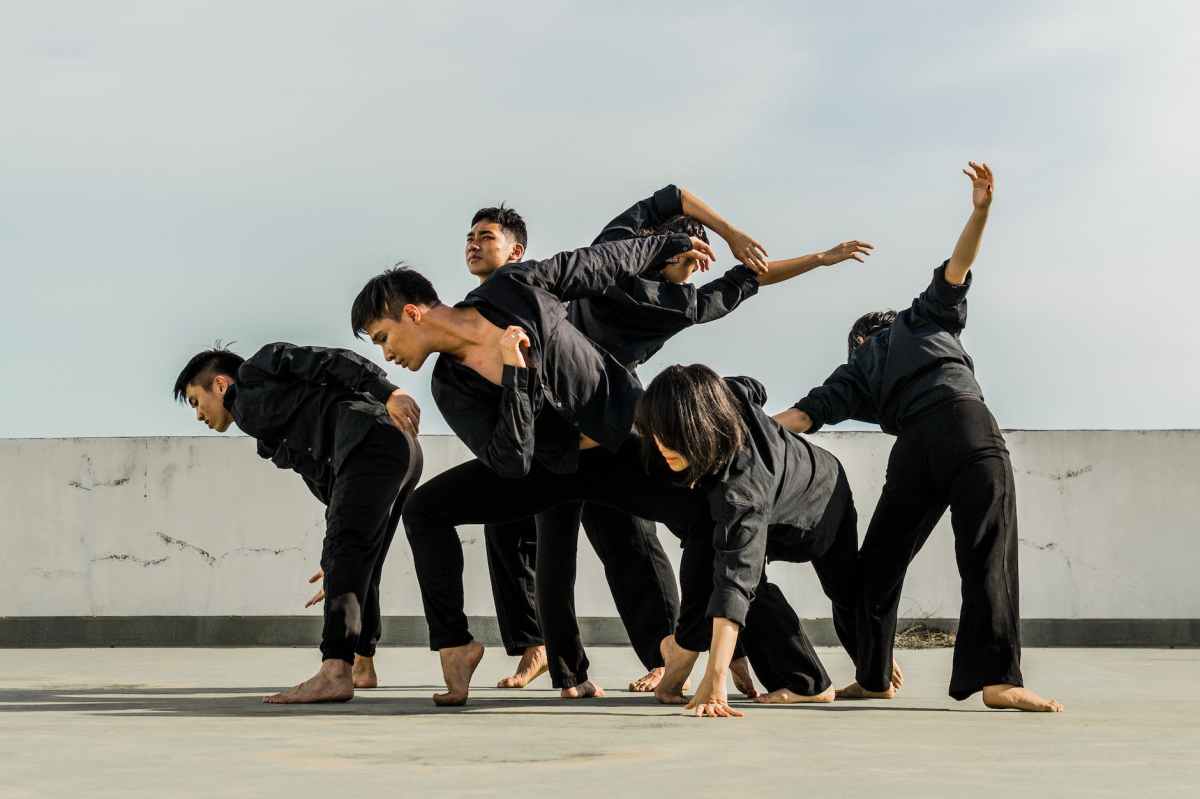
I dance because it makes me happy! My experience is that when I dance, I can express something from my heart to God that cannot be expressed in words. Dancing is a point of contact with God for me. It gives me an experience of God as the origin of creativity and beauty … “I dance because I want to spread a message of love, joy, hope and faith to the world … Among the dimensions added by the dance expression itself is the meta-message that there is room for the whole human being and life in its fullness in a Christian religious setting. Dance can teach children and adults a body-embracing way of living, believing and being in God’s world. One participant says that through dance in general, “we want to communicate heaven to people down here, the message of salvation, our freedom in God, the joy in God, and the joy of dancing with fellow Christians.” … Through dance these Christian dancers experience and practice their religion in a bodily way. This means that their spirituality takes an embodied form and that dance for them is not only a bodily practice, but also a spiritual one.[2]
Dancing seems to be a human attribute, not necessarily linked to just Christianity[3], it is a gift from God that can be used in the manner expressed here; to be a human means of expressing our God-given joy through our bodies. While dancing can be done alone, when done in community it can help to bind participants together. Joy and community are part of God’s purpose for us. We are tasked as God’s image-bearers to be his representatives and stewards. But our tasks are not to be burdensome but rather they are meant to be joyful. If you will, our tasks are meant to be a joyful dance we do with each other and with our Creator.
For us to dance the Kingdom Dance we don’t have everything figured out, He does. We don’t even have to worry about the results of the dance because the results are not dependent on us but on Him, who is working through us. As much as we have messed things up and will continue to do so, He will ultimately restore us and the rest of creation, making us all into what He had intended from the beginning.
Among all the creatures that God created, we are uniquely made, even if we are not the physical center of the universe as some people may have thought at one time. Through the pursuit of science, we now have instruments that make it very clear that we are not physically at the center of everything, not that we can prove anyway. We are only specks on a small planet spinning around a star in an apparently random solar system in an apparently random galaxy in a universe we cannot even see the edges of. Although we don’t know where the center is, the universe seems to have been created with us in mind. The properties of the universe, the physical constants, the atomic structures, were all created such that it would support our existence.[4] Interestingly, although we are creatures made of the stuff of the universe, not only can we study and reflect on the properties of that stuff, but we can also study and reflect on and even reflect the one who created us.
In the meantime, we do not know when He will return, and we find ourselves in the middle, in-between those two times, between the beginning of the restoration of God’s kingdom on earth and the time when it will be fully accomplished. In this in-between time, sometimes we see some signs of God’s restoration – and sometimes we can’t – and it’s hard to figure out what God is doing, especially when there are times that He seems to be absent. In those times, we need to call upon our faith to hold onto the hope that God is still working out His plans. We need to recall all the times that we did see Him at work, and then we also need to remember that getting to the end of the plans that He intends for us may require some pain on our part just as it required pain on His part. And like Him, our pain will be ultimately overwhelmed with the glory that will be revealed.
Our ultimate destination is not a mere returning to the way we started out, but to the full flourishing of our potential, where God will establish a kingdom of image-bearers released to display God’s character and reflect His glory.
“And salvation only does what it’s meant to do when those who have been saved, are being saved, and will one day fully be saved realize that they are saved not as souls but as wholes and not for themselves alone but for what God now longs to do through them. The point is this. When God saves people in this life, by working through his Spirit to bring them to faith and by leading them to follow Jesus in discipleship, prayer, holiness, hope, and love, such people are designed—it isn’t too strong a word—to be a sign and foretaste of what God wants to do for the entire cosmos. What’s more, such people are not just to be a sign and foretaste of that ultimate salvation; they are to be part of the means by which God makes this happen in both the present and the future. That is what Paul insists on when he says that the whole creation is waiting with eager longing not just for its own redemption, its liberation from corruption and decay, but for God’s children to be revealed.” [5]
With that in mind, we can not only wait and hope. We can participate with God in bringing His kingdom to earth and bringing a taste of healing and hope into a broken world that desperately needs it.
“Within the biblical story, the Christian discovers a constant call for justice on behalf of the weak and forgotten. In the biblical tradition, justice is an aspect of God’s shalom, a notion that carries with it the idea of completeness, soundness, well-being, and prosperity, and includes every aspect of life – personal, relational, and national.”[6]
The suffering and pain in the world can be overwhelming, challenging our ability to maintain hope and persist in our effort as we try to bring shalom. That challenge forces us to focus on the taste of shalom that God has given to us knowing that it is just a foretaste of the fullness of the shalom that awaits us in the fully restored earth.
[1] See Appendix G – The contributions of the Church for some examples
[2] Schurr, Hildegunn Marie T. “Dancing Towards Personal and Spiritual Growth” Nordic Journal of Dance – volume 3, 2012 (pp. 31-40)
[5] Wright, N.T. Surprised by Hope, Rethinking Heaven, The Resurrection and the Mission of the Church. Harper Collins 2008. Kindle Edition
[6] Katongole, Emmanuel. Rice, Chris. “Reconciling All Things: A Christian Vision for Justice, Peace and Healing,” Intervarsity Press, 2009 (p. 72)
Reflect
Think about how the universe seems designed for us, our capacity to think about and explore it and then think about our capacity to reflect on the One who created it all. What does that suggest to you about what God has intended for us?
Observe
Read Hebrews 12. What does this passage say about how we should be living now?
Dancing In the Kingdom – Part 1 – Shadows of the Kingdom – Chapter 1 – Prelude
Interlude
[Bible references: Psalm 19]
As I was working one warm summer night at a convenience store with the door open, it was not unexpected to see a moth fly in through the door. Normally, moths are attracted to light sources, but this time the moth was attracted to the white top of a garbage container. The moth was distracted by the light reflected off the garbage container. That describes a lot of human behavior; we get distracted by the pretty garbage.
Since the time of Adam and Eve we’ve had the temptation to place ourselves at the center of the universe, dismissing the idea that we did not create the natural beauty of the world around us but that we can possess and control it ourselves, that we are the masters of all we see. We are tempted to dismiss the reality that we are part of a universe we did not create with the idea that we can define the universe which we think revolves around us.
In the meantime, there is a story that began long ago when God brought into being creatures made in his image, a story about his plans for those creatures, plans for them to fill the earth and making the whole earth a place of love and goodness, but a place where that love and goodness would be disrupted by our rebellion. Fortunately, that disruption did not deter God from continuing his plans for his image-bearing creatures and that story is still in the making. That story is now our story.
What can get confused is that this story is contained in the Bible which is often presented as a disconnected story. The Old and New Testaments of the Bible can seem disconnected because of the cultural barriers between us and the testaments. Some people even think the God described in the Old Testament is different from the God in the New Testament.
That disconnect is exasperated by the long and messy history of the church. The church seems very divided on how to interpret those writings and how to live into them, leaving us with a confusion of various interpretations and practices that seem to contradict one another. How is one supposed to make sense of it all?
However, it is possible to obtain a clearer understanding of how both Testaments make one cohesive story, a story into which we can fit. When we see how the unified story than runs from Creation to Revelation, we can then see how we, as part of God’s church, are intended to participate in that story. God did not need to create us or the universe, He did it out of a desire to share his love and delight. God’s creation was more an act of play than of work and He desires that we actively play with him, if you will, to dance with him in His Kingdom.
The Kingdom Dance is not meant to be a solo effort, we are to dance with God and with his people. To that end, while this book can simply be read as a solo exercise, there are additional ways to engage with the material.
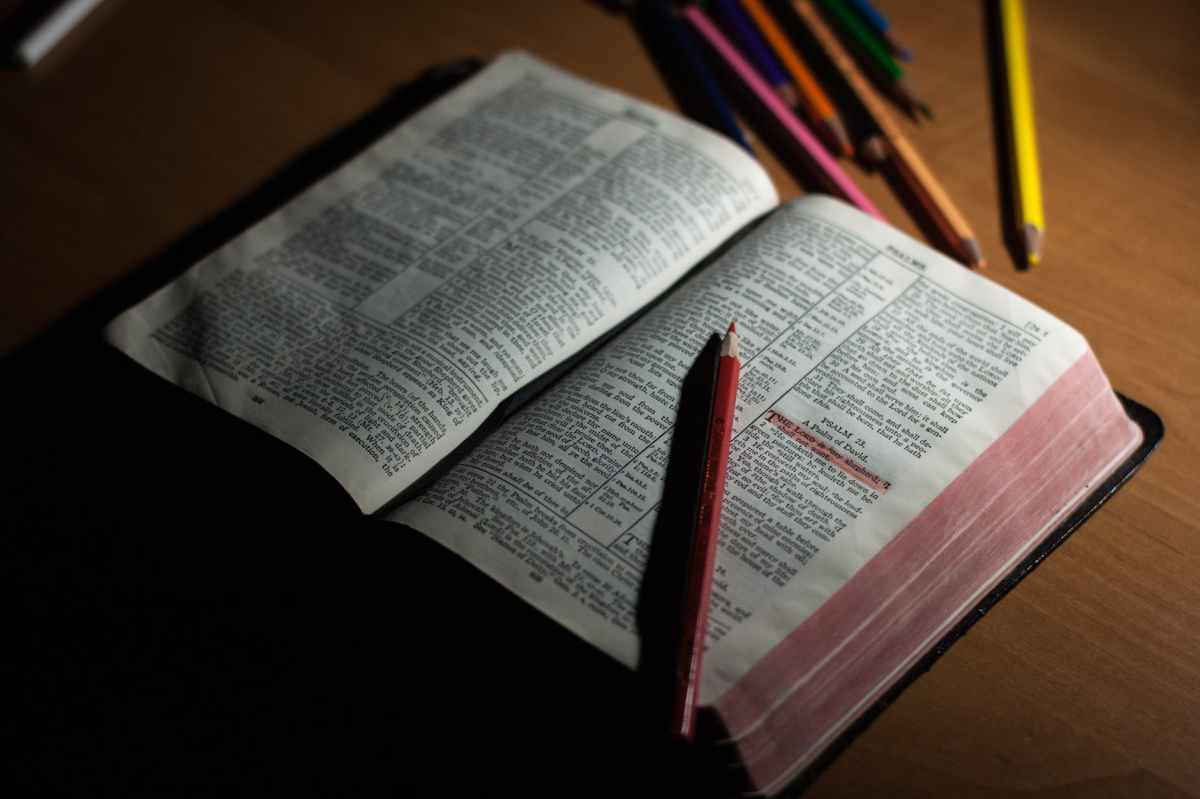
Biblical references are provided extensively through the book. They are there to support the text. If you read them, particularly the shorter passages, take the time to slow down and let God the Spirit speak to you. The Bible has been described as ancient Jewish Meditation Literature.[1] It is best read when you give yourself time to absorb it.
There are extensive footnotes throughout the book. Whenever possible, I have provided hyperlinks to online materials to make the additional materials easily available to you. If you spend time investigating the footnotes, you will notice that I am not drawing from only one Christian tradition, but from a variety of them, allowing the richness of the different traditions to form a more complete story. To form a more complete story I also, particularly in the beginning, will use materials from the “Second Book of God” that is, book of Creation.[2]
“God has, in fact, written two books, not just one. Of course, we are all familiar with the first book he wrote, namely Scripture. But he has written a second book called creation.”[3]
For those who are not practiced in studying the Bible, Appendix A gives a summary of techniques that could be used to help understand scripture. This may prove useful for understanding when you study the Biblical references given throughout this book.
Reading the material with a group can make the most impact. There are questions at the end of each chapter that ask you to reflect on the material and then read related biblical passages to think more deeply about various issues. These exercises and questions will help you engage with the material by first asking you to think about how each section applies to your life and secondly to share your thoughts with others in the group so that together you can more thoughtfully “Enter the Dance” with God, with all the others that have come before, with those that are coming now and with that will continue to come until Heaven and Earth are reunited.
Finally, the best participation will be not to just read and reflect, but to dance the Kingdom dance with God. Part 3 of this book will suggest ways to take part in his activity in bringing healing to the world he loves, broken now but to be finally and fully restored when He rejoins heaven and earth.
The Bible is a complex collection of literature, using many literary styles and techniques and it can be difficult to understand some parts, particularly when one part seems to contradict another. I have found a useful principal in studying the Bible which I call “Conflicts are Clues” which says that any apparent conflict or confusion in Scripture should be handled as clues to look further instead of thinking that the conflicts create contradictions which reduce the integrity of the Bible.
In our age, many regard science and theology to be in conflict. In years past, however, the issue was not about conflict but about which discipline rules over or undergirds all the other disciplines. These ideas were expressed in ways such as “theology is the queen of all sciences,” “math is the queen of all sciences,” “philosophy is the queen of all sciences,” “philosophy is the handmaid of all sciences.”
The biblical perspective is that God speaks to us both through two books, the book of Creation and the Bible. Theology’s main goal is to understand spiritual reality and science’s main goal is to understand physical reality, but both fields can inform the other about the nature of God.
This principle of “Conflicts are Clues” applies not just to the “First Book of God” (that is, Scripture) but also to the “Second Book of God” (that is, Creation) which is practiced by the testing and revisions of theories, but also between the Two Books. During the course of history, the study of the Two Books got separated and some of those in science rejected Scripture and some of those who were Christian rejected science, leaving conflicts unresolved as contradictions. But moving forward, this does not prevent us from considering apparent conflicts between the books as clues to be investigated further.
[3] Bacon, Francis. “The Two Books of Francis Bacon of the Proficience and Advancement of Learning, Divine and Human.” The First Book. Section.VI.Paragraph.16 1605
Observe
Read Psalm 19. This Psalm captures a response to what Francis Bacon called the two books of God: the Book of Creation and the Book of Scripture. How do you respond to the “two books”?
Goodness, generosity and shalom all fit together. We begin with the premise that we are representatives of the Prince of Peace. Scripture is full of encouragement for us to live in peace because it is through shalom that much else flows, including goodness and generosity. Goodness flows out of the shalom which is concerned with the overall well-being of others. It is goodness which governs justice, mercy, and humility – and does not allow us to be content with helping God to usher in only the minimal amounts of justice, mercy into the world but the fullness that stems from the overflowing goodness of God.
Our Creator and Temple-maker intended for us to enjoy his overflowing love and goodness. He provided us a place of abundance where he can meet all our needs, where He had a purpose for us as His stewards and His co-creators and where we could enjoy him and enjoy each other. This overflowing can be overwhelming when we consider the breadth, the beauty, the abundance, and the complexity of this temple he has provided. And we can marvel at the breadth, the beauty, the abundance and the complexity of the skills and abilities He has provided for us as his stewards and co-creators. Just look at what He has done and what we have done with what He has given us!
Trustworthy and Faithful
We can’t seem to avoid breaking promises; whether it’s the one’s others make to us or the ones that we make to others. We usually expect broken promises from some people because we know they lack sincerity. Then sometimes we experience broken promises because things happen beyond our control, circumstances change, priorities change, or other things happen. Yet, during all that, God calls us to be His ambassadors and to reflect his faithfulness to us. God calls us to faithfulness in all things, whether it’s in truth-telling, in love, in doing good, in prayer, in doing the work of the Lord, in confirming our calling, to mention a few. As we attempt to be faithful and trustworthy in all things and when we fall short – as we surely will – we can still point to the trustworthiness and faithfulness of the Lord. The point must always be to not point to ourselves but to the Lord – God calls us to trust Him, be dependent on Him, and to put our confidence in His faithfulness and His sacrifice on our behalf.
Self-Sacrificing and Forgiving
Our life in God does not begin with anything we have done but with the sacrifice made by Christ Jesus, the perfect sacrifice that He made on our behalf to reconcile us to God. When by baptism we join him in his death, He also unites us with him in his resurrection. It is that resurrection power that enables us to present ourselves as living sacrifices, to worship him by continually dying to our sinsand offering ourselves to the service of God and to others. And just as the mercies of God flow into our lives, so those mercies should flow over into the mercy we extend to others on God’s behalf.
Temple stewards
Although God’s first image-bearers had close, unhindered, intimate contact with their Creator, there was enough space given them to think freely, as if they were not being watched all the time. It was in this space that God gave us several mandates: procreation (be fruitful and multiply), stewardship (subdue the earth and have dominion over its creatures), and a cultural mandate (work it and take care of it). He gave us the assignment to be fruitful, to fill all the earth, discover its possibilities and care for the world in the same way that God would care for the world. Just as God continues to create more living things and sustain all that he has created, we as his co-regents, can join him in sustaining and creating those things entrusted to our care.
He also gave us the responsibility to subdue the earth and have dominion over its creatures. When there is resistance, we still have the responsibility to bring the rule of God to the world. Then He gave us the responsibility to work and take care of the earth, this will expand from taking care of the garden to taking care of all of God’s creations. Implied in all these things is that we should do everything in context of God’s love, to care for each other and to care for the earth and its creatures with the mind of the God who created us for love.
The work that He designed us to do was more than just tending the garden. In Genesis 2:15, God gave us a mandate to “work” and “take care of” the garden that He had created. These tasks within Ancient Near East culture, were more of a priestly nature, taking care of this temple where we reside with God.
We were to take care of this place which He designed to be a “very good” place for us to flourish in, creating whatever structures we needed to “increase in number, fill the earth and subdue it.” This task, this mandate, meant that we would eventually go beyond the capacity of gardening and create not just a bigger garden but cities, a flourishing civilization as pictured in Revelation 21 and 22.
When examined closely, we can see the breadth of what was committed to Adam and Eve. Subduing the earth would entail many physical, social, and intellectual activities. In the gardening we can see cultivation and farming; in taking care of the animals, we can see shepherding and domestication; in the naming of the animals, we can see a cultural and scientific activity which required understanding the nature and attributes of the animals and establishing authority over them. We can see that God had created things to be beautiful and, as his image-bearers, He expects us to also create beautiful things.
There is a sense in which we, as members of the Kingdom of God, now seem to be living in a foreign land. This puts us in a similar position as when the Babylonians took the Israelites into exile in Babylon. During their stay in Babylonia, God’s instructions were to settle down, build houses, get married, have children and to seek the prosperity of the city God sent them to, for “if it prospers, you too will prosper.”
But above all these things we can do, we should not lose focus on who we are. We are creatures designed by God to be like God to be in relationship with Him, the God who is a community in Himself: Father, Son, and Holy Spirit. We should do everything in context of who we are. Remembering that God designed us to be human “beings,” not human “doings.” This viewpoint become clear when we compare the Biblical view of creation to the view of other Ancient Near East cultures. For the surrounding cultures, the gods created human beings to feed and serve them, whereas the Biblical viewpoint sees God being the provider for the people.
Originally, we see Creation designed as a temple, a place for us to “be” with God. Later, Jesus refers to himself as the temple, a human in whom God resides, then after that Paul declares that our own bodies are a temple of the Holy Spirit. So here again, we see the mystery of perichoresis, where we are distinct from the Holy Spirit, yet the Holy Spirit becomes a part of who we are. In this we see the mystery of perichoresis unifying the persons within God, unifying the body, soul and spirit within humans, and unifying God and humans.
Questions:
What tasks did God provide for the humans?
What kind of tensions did our rebellion create between humans and between the humans and God?
Unlike other creatures whom God simply created as male and female, Genesis 2 gives a story of a man specifically made from the dust and a woman created from the side of the man. What do think was God’s purpose for describing the origin of his image-bearers?
How can we, within the finiteness of our lives and our intelligence, see how beauty points to eternity?
. While meditating on the limitations of life on earth, verse eleven slides in a reference to beauty and eternity. How does that verse impact the rest of the chapter?
Think about how love relates both to sovereignty and service. What implications does that have for how we treat others?
Think about how humility relates to both mercy and justice. What implications does that have for how we treat others?
Read Deuteronomy 12; 1 Corinthians 14. These chapters contain explicit instructions about how and how not to worship. Since we do not yet experience the fullness of the new Kingdom, how can our imagination help us more actively engage in worship?
Read Exodus 18:21; Luke 16:10-12. In what ways can we challenge ourselves to be more faithful?
Read Romans 12:1-21. Christ’s sacrifice for us included his death on the cross. What kind of sacrifice are we expected to make?
Although God’s first image-bearers had close, unhindered, intimate contact with their Creator, there was enough space given them to think freely, as if they were not being watched all the time. It was in this space that they – and we – were given several mandates: procreation (be fruitful and multiply), stewardship (subdue the earth and have dominion over its creatures), and a cultural mandate (work it and take care of it).[1] We were given the assignment to be fruitful, to fill all the earth, discover its possibilities and care for the world in the same way that God would care for the world.[2] Just as God continues to create more living things and sustain all that he has created, we as his co-regents[3], can join him in sustaining and creating those things entrusted to our care.
“There are two ways in which God imposes his law on the cosmos, two ways in which his will is done on earth as in heaven. He does it either directly, without mediation, or indirectly, through the involvement of human responsibility. Just as a human sovereign does certain things himself, but gives orders to his subordinates for other things, so with God himself. He put the planets in their orbits, bits, makes the seasons come and go at the proper time, makes seeds grow and animals reproduce, but entrusts to mankind the tasks of making tools, doing justice, producing art, and pursuing scholarship. In other words, God’s rule of law is immediate in the nonhuman realm but mediate in culture and society. In the human realm men and women become coworkers with God; as creatures made in God’s image they too have a kind of lordship over the earth, are God’s viceroys in creation.”[4]
We were also given the responsibility to subdue the earth and have dominion over its creatures. When there is resistance, we still have the responsibility to bring the rule of God to the world. Then we are given the responsibility to work and take care of the earth, this will expand from taking care of the garden to taking care of all of God’s creations. Implied in all these things is that we should do everything in context of God’s love, to care for each other and to care for the earth and its creatures with the mind of the God who created us for love.
The work that we were designed to do was more than just tending the garden. In Genesis 2:15, we were given a mandate to “work” and “take care of” the garden God had created. These tasks in light of Ancient Near East culture, were more of a priestly nature, taking care of this temple where we reside with God.
“The verbs ʿbd and šmr (NIV: “work” and “take care of”) are terms most frequently encountered in discussions of human service to God rather than descriptions of agricultural tasks… ‘bd can refer to … work connected with one’s vocation, to religious service deemed worship … šmr is used in the contexts of the Levitical responsibility of guarding sacred space, as well as in the sense of observing religious commands and responsibilities … it is likely that the tasks given to Adam are of a priestly nature: caring for sacred space. In ancient thinking, caring for sacred space was a way of upholding creation.”[5]
We were to take care of this place which was designed to be a “very good” place for us to flourish in, creating whatever structures we needed to “increase in number, fill the earth and subdue it.” This task, this mandate, meant that we would eventually go beyond the capacity of gardening and create not just a bigger garden but cities, a flourishing civilization as pictured in Revelation 21 and 22.[6]
When examined closely, we can see the breadth of what was committed to Adam and Eve. Subduing the earth would entail many physical, social, and intellectual activities. In the gardening we can see cultivation and farming; in taking care of the animals, we can see shepherding and domestication; in the naming of the animals, we can see a cultural and scientific activity which required understanding the nature and attributes of the animals and establishing authority over them. We can see that God had created things to be beautiful and as his image-bearers we would be expected to also create beautiful things.
In the new earth, nature’s comeliness will reach its pinnacle; the wilderness itself will burst into blossom, and streams will gush in the desert (Is 35). To complement all this natural beauty, human culture will flourish. All the great creativity of humankind-artistry in music, dance, painting, woodcrafts, sculpture, architecture and more-will be brought into the New Jerusalem (Is 60).[7]
There is a sense in which we, as members of the Kingdom of God, now seem to be living in a foreign land. This puts us in a similar position as the Israelites were when they were taken in exile into Babylonia. During their stay in Babylonia, God’s instructions were to settle down, build houses, get married, have children and to seek the prosperity of the city they were sent to, for “if it prospers, you too will prosper.”
But above all these things we can do, we should not lose focus on who we are. We are creatures designed by God to be like God to be in relationship with Him, the God who is a community in Himself: Father, Son, and Holy Spirit. Everything we do should be done in context of who we are. We should remember that we were designed to be human “beings,” not human “doings.” This viewpoint become clear when we compare the Biblical view of creation to the view of other Ancient Near East cultures. For the surrounding cultures humans beings were created to feed the gods and serve the gods who created them, whereas the Biblical viewpoint sees God being the provider for the people.[8]
Originally, we see Creation designed as a temple, a place for us to “be” with God. Later on, Jesus refers to himself as the temple, a human in whom God resides. Later on, Paul declares that our own bodies are a temple of the Holy Spirit. So here again, we see the mystery of perichoresis, where we are distinct from the Holy Spirit, yet the Holy Spirit becomes a part of who we are. In this we see the mystery of perichoresis unifying the persons within God, unifying the body, soul and spirit within humans, and unifying God and humans.
[1] Jacobsen, Eric O. The Space Between: A Christian Engagement with the Built Environment, Baker Academic, 2012, Page 20.
[3] Walton, John H. “The Lost World of Adam and Eve: Genesis 2-3 and the Human Origins Debate (Proposition 4) InterVarsity Press. 2015 Kindle Edition.
[4] Albert M. Wolters. Creation Regained: Biblical Basics for a Reformational Worldview (Locations 203-208) Wm. B. Eerdmans Publishing Co. 2005 Kindle Edition.
[5]Walton, John H. The Lost World of Adam and Eve: Genesis 2-3 and the Human Origins Debate (p. 105-106).InterVarsity Press. 2015 Kindle Edition.
[6] Busenitz, Nathan. “The New Jerusalem” Cripplegate, 8 April 2017 thecripplegate.com/the-new-jerusalem-2/
[7] Sherman, Amy L. Kingdom Calling: Vocational Stewardship for the Common Good. Intervarsity Press, 2011 eBook location 291
[8] Walton, John. “The Lost World of Adam and Eve,” I “Proposition 12: Adam is Assigned as Priest in Sacred Space, with Eve to Help” (p.104) InterVarsity Press. 2015 Kindle Edition.
Reflect
If the universe is God’s temple and we are now living in the 7th day, that is, the Sabbath, how are we supposed to live?
Observe
Read Genesis 1; 1 Corinthians 3:16; 6:19-20; 2 Corinthians 6:16. What difference does it make if the universe is God’s temple or that our bodies are God’s temple?
The church has a stake in human flourishing. The challenge for the church is to define and promote human flourishing (which we might otherwise describe as human well-being, human happiness) in accordance with biblical teaching, to present and commend its alternative approach to human flourishing in the face of competing cultural visions, and to embody human flourishing in the presence of God amid a culture of death and destruction. Christian theology has a role to play in assisting the church to meet this challenge.[1]
“God made us: invented us as a man invents an engine. A car is made to run on petrol, and it would not run properly on anything else. Now God designed the human machine to run on Himself. He Himself is the fuel our spirits were designed to burn, or the food our spirits were designed to feed on. There is no other. That is why it is just no good asking God to make us happy in our own way without bothering about religion. God cannot give us a happiness and peace apart from Himself because it is not there.”[2]
Goodness, generosity and shalom all fit together. We begin with the premise that we are representatives of the Prince of Peace. Scripture is full of encouragement for us to live in peace because it is through shalom that much else flows, including goodness and generosity. Goodness flows out of the shalom which is concerned with the overall well-being of others and is necessarily linked to justice, mercy, and humility – and we are not to be content with helping God to usher in only the minimal amounts of justice, mercy into the world but the fullness that stems from the overflowing goodness of God.
Our Creator and Temple-maker intended for us to enjoy his overflowing love and goodness. He provided us a place of abundance where all our needs could be met, where He had a purpose for us as His stewards and His co-creators and where we could enjoy him and enjoy each other. This overflowing can actually be overwhelming when we consider the breadth, the beauty, the abundance, and the complexity of this temple he has provided. And we can marvel at the breadth, the beauty, the abundance and the complexity of the skills and abilities He has provided for us as his stewards and co-creators. Just look at what He has done and what we have done with what He has given us!
Part 1 – Shadows of the Kingdom, Chapter 3 – The Image-bearers
[Bible references: Exodus 25-28; 1 Kings 5-6; Psalms 19; 37:4-5; Proverbs 3:5-6; 11:14; Ecclesiastes 3:1-27; John 10:27; Acts 16:6-10; Romans 1:8-10; 12:1-2; 1 Corinthians 2:9-10; 15:42-49; 1 Thessalonians 4:3; 1 Peter 4:10; 1 John 3:16] Gen 2:9; 1 Samuel 2:26; Ps 19:1-14; Ecc 3:-22; Matt 6:28; Romans 1:18-20; 1 Cor 3:7;15;42-49; 2 Cor 10:15; Eph 4:15; Col 1:6-10; 2 Thes 1:3; 2 Pet 3:18
Although we have not existed from all eternity, God created us with more than a mortal body. We are also endowed with a soul and a spirit that can be joined to God’s Spirit. In the present moment, our mortal bodies are created from the stuff of the earth, and we are born into particular times and places so that we may serve and enjoy God in those particular times and places.
… God made us as creatures. And the good part about being a creature is we were made to be dependent upon God and, by our very design, also dependent on other people and the earth … Often what we’re missing is the good of dependence. We need to cultivate an awareness of how our dependence and our needs open avenues of love … What if we stopped thinking of life as to-dos and started thinking of it as relationships? When we’re so task-driven, it’s very hard to appreciate love, because love is incredibly inefficient … 59
Our creatureliness which sets us in a particular place and time with a particular body is an opportunity to appreciate our finiteness and God’s infiniteness, to cultivate a sense of dependence on God’s provision and our dependence on each other and within the context of those relationships to truly learn how to love.
when we were younger, God didn’t expect us to be what we are now. He’s still taking his time, by his Spirit, to bring about order through developmental growth … Part of recognizing our limits is getting comfortable in God’s space and growing in dependance on him.59
Our creatureliness also forces us to deal with God’s ordering Creation through process. Everything, whether physical, social, emotional, intellectual or spiritual, is controlled by processes. Sometimes we desire to bypass those processes: we want to be instantly knowledgeable and wise and experts at what we do … and not dependent on anyone else. But it was precisely that kind of desire that led to our rebellion at the beginning of humanity.
Sometimes, I think we’re actually scared to death to pray, because if we actually take the time to get quiet, we might begin to fear that God’s not there or wonder whether he’s apathetic or just really angry. Only in prayer will we discover how compassionately God views us … cultivating the gift of encouraging and celebrating others. It’s a spiritual discipline, a healthy way of dying to yourself and encouraging others. We are all dying for someone to pay attention and notice our presence and being. When someone articulates that, it’s life-changing.[1]
As God’s image-bearing creatures, we not only have relationships with each other but also with our Creator. With other of God’s image-bearing creatures, our love can be expressed in our opportunities to support, uplift and encourage one other. God has no need of such support from us, but He offers us such support. When we recognize our dependence on Him, He gives us the ability to pray, to acknowledge our needs and to recognize His provision for us when He supplies our needs.
We think of prayer as mostly self-expressive—as a way to put words to our inner life … if we pray the prayers we’ve been given, regardless of how we feel about them or God at the time, we sometimes find, to our surprise, that they teach us how to believe … We sleep each night in our ordinary beds in our ordinary homes in our ordinary lives. And we do so in a universe filled to the brim with mystery and wonder. We always sleep in a crowded room in our crowded cosmos, so we ask for crazy things—that God send unimaginable supernatural beings to watch over us as we drool on our pillows … Sleep reminds us of how helpless we are, even merely to stay alive. In the Christian tradition, sleep has always been seen as a way we practice death. Both Jesus and Paul talk about death as a kind of sleep. Our nightly descent into unconsciousness is a daily memento mori, a reminder of our creatureliness, our limitations, and our weakness.[2]
As we pray in our mortal bodies, we remember that although our mortal bodies will return to the dust from which we are made, our bodies will be resurrected when heaven and earth are reunited so that we, with soul and spirit and new body, will be able to enjoy God forever into the future.
What is that phenomenon we call ‘beauty’ and why does it lie at the core of both collective civilisation and individual desire, even as we value it precisely for existing outside of practicality? In his essay The Weight of Glory [A sermon given in Oxford in 1942], C.S. Lewis explains it as an echo of eternity, imprinted upon humanity as an indication of our origin and destiny.[3]
Indeed, our God is a God of beauty, and he has created us to enjoy his beauty. Art and our appreciation of it are among the great gifts God has given to us. Sure, like anything, it can be turned into an idol. But art, beauty, and appreciation for the finer things of culture are all good gifts from a good God.[4]
In the meantime, while we await for our resurrection and to gaze on the beauty of the Lord (Psalm 27:4), we have reminders of our connection with our transcendent God in the beauty of His Creation and in our capacity to make things of beauty. Whether the beautiful things are of our creation or the Lord’s, they are a reflection of God’s own beauty.
The books or the music in which we thought the beauty was located will betray us if we trust to them; it was not in them, it only came through them, and what came through them was longing … they are not the thing itself; they are only the scent of a flower we have not found, the echo of a tune we have not heard, news from a country we have never yet visited … We do not want merely to see beauty … We want something else which can hardly be put into words—to be united with the beauty we see, to pass into it, to receive it into ourselves, to bathe in it, to become part of it.
[3] Wang, Irina “Beauty betrays eternity” Salt salt.london/articles/beauty-betrays-eternity/
[4] Meuhlenberg, Bill. “Art and the Christian”; Culture Watch 28 July 2011 billmuehlenberg.com/2011/07/28/art-and-the-christian/
Reflect
How does having an eternal future help us live in the world today?
Observe
Read Ecclesiastes 3:1-22. In the midst of meditating on the limitations of life on earth, verse 11 slides in a reference to beauty and eternity. How does that verse impact the rest of the chapter?







 Dancing In The Kingdom