Re-envisioning our given environment

Dancing in the Kingdom- Table of Contents

Dancing In the Kingdom – Part 3 – Dancing in the Kingdom– Chapter 18 – Entering the Dance

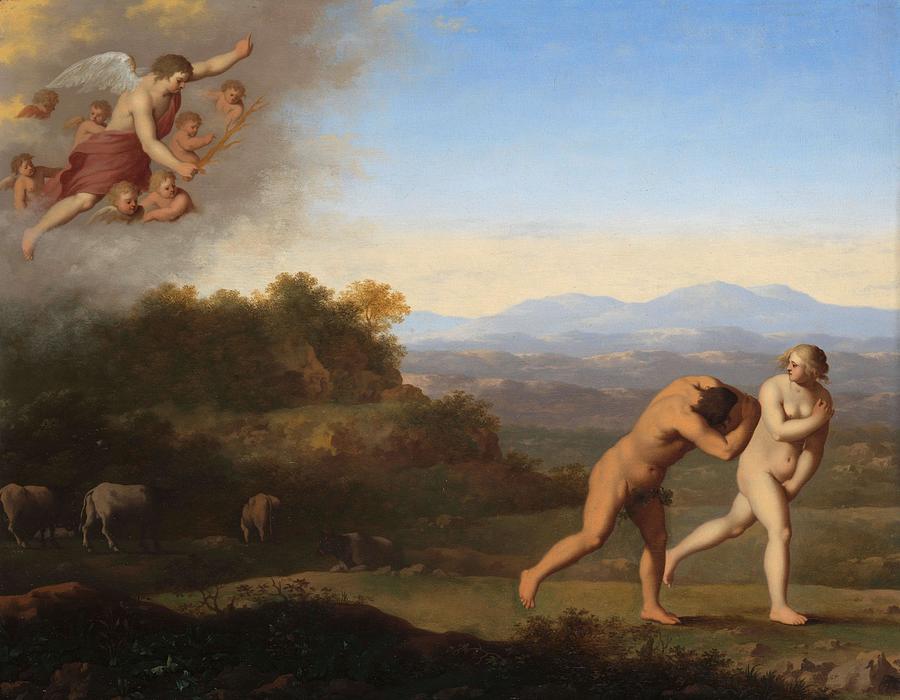
Re-envisioning our given environment

[Bible references: Genesis 1-2]

“An important distinction exists between the concepts of nature and creation. There is no concept of nature in the Old Testament. Nature, derived from the Greek worldview, is by scientific definition a self-sustaining system replete with its own internal laws. Creation, a biblical-theological concept, recognizes that creation is not self-sustaining but is continually dependent on the presence of God.” [1]

In Genesis we explored how God had fashioned the cosmos to be a temple, a place where he would meet with his image-bearing creatures. This cosmos, and in particular, this world that we live in, ultimately belongs to him, for he built it with materials that he provided.

It was his intention, though, to not only share this temple with us, but to give us responsibilities within it. We know the story of how we rebelled against the responsibilities he gave us, and we know of the outpouring of patient love which he has endured and continues to endure as he works out his plan to restore our relationship with him. He still intends the cosmos to be his temple where he meets with us.

The theme of the temple began in the first chapters of the Bible with the temple dedication, the temple sanctuary in the Garden of Eden, and the charge he gave to his image-bearers to be the stewards of his temple and to fill the earth, expanding the sanctuary, the place he meets with us, to fill the entire earth.

The temple theme concludes in the last chapters of the Bible, revealing our intended destination, not just a primeval garden, but a garden with a city. It’s a city he built, for we, in and of ourselves, cannot build a city where there are no tears of sorrow, where there is no rebellion, where we can experience the entire fulness of shalom.

We don’t know when that time will come, but we do know the responsibility he gave us from the beginning, to be the stewards of what he has given us, to nurture, sustain, care for, and protect the world he provided.


[1] Bukus, Russell A. “The Stewardship of Creation” The Center for Christian Ethics at Baylor University, 2002 www.baylor.edu/ifl/christianreflection/CreationarticleButkus.pdf

Observe

Read Genesis 1:26-30; 2:1-15.  How do we best take care of the space Yahweh provided for us, with his intentions for its flourishing and with our role as stewards of this space?

Not yet, but Already

Dancing in the Kingdom- Table of Contents

Dancing In the Kingdom – Part 3 – Dancing in the Kingdom– Chapter 17 – Finding our place

Not Yet, But Already

[Bible references: Matthew 6; John 15:1-17; 1 Corinthians 3; Revelation 21-22]

Sincere prayer has a habit of changing us. When we commune with God as a friend, we learn his business and desire to join in His work; the work of God calling people to Himself in love and bringing them healing. We also know His desire to restore the earth so that is rejoined to heaven, making the whole earth a temple, a place where he will be with all His people. When He came the first time, He began that work of restoration and when He comes again, He will complete it. In the meantime, He has left us here as His stewards. There are some things that only He can do, but that does not mean there is nothing for us to do. In this time where He has not yet returned, He has already begun a work that He invites us to join with Him, calling people to Him and restoring the earth, bringing healing, wholeness, and hope to the world.

The gifts He has given us can not only be used to serve and build up those already within the church community, but as Christ’s ambassadors, we can bring tangible signs of love and hope into the world around us, to show God’s love and care that He has for not only the smallest things in our lives but for all of creation. As we live in the world as it now is, we can bring the love of God into our relationships, our vocations, our hobbies, etc. Our efforts will be incomplete because Christ has not yet returned. But the work that we do now can demonstrate the hope and confidence that we have because Christ has already come.

There is a call for those who can carry a prophetic message, going and preaching the gospel to those outside the church. For those who do that work, they need to remember that when Jesus called us to go the fields that are “white unto harvest,” he implied that some preparation had been done beforehand, the crops were already planted, fertilized, weeded, and supplied with sun and water. Much work had been done and therefore the crops were ready for harvesting. While not all of us have the gift of evangelism or prophecy, we should be open to what we are called to do.

Observe

Read Matthew 6. How are giving, prayer and generosity linked?

Everything Belongs

Dancing in the Kingdom- Table of Contents

Dancing In the Kingdom – Part 3 – Dancing in the Kingdom– Chapter 16 – Fixing our eyes

Everything Belongs

[Bible references: Leviticus 27:30; Psalm 22:27-28; 2 Corinthians 4:1-18; Hebrews 12:1-29]

The gift that true contemplatives offer to themselves and society is that they know themselves as part of a much larger story … Only when we live and see through God can “everything belongs.” …All religious teachers have recognized that we human beings do not naturally see; we have to be taught how to see.[1]

In our last chapter, we looked at the spiritual disciplines which God can use to conform us more to His image. We saw that although those disciplines had an internal focus – they were meant to conform us as individuals. We saw that the disciplines have an external purpose – to enable us to build up others in the body of Christ. That prepares us now to extend our outward focus on God’s work in restoring His kingdom and the many ways in which we can participate with God in restoring the breadth and depth of His kingdom.

All of creation belongs to the Lord. All of creation was designed to be His temple – a place where God would be with His image-bearers. The care of all creation was given to His image-bearers because they themselves are temples of God in whom the Holy Spirit dwells and therefore able to be His stewards. Despite our rebellion, the responsibility given to us was not removed; even though both it and we are corrupted and even though we are unable to remove that corruption. Also, despite our rebellion, our Creator has not ceased to love us. In His inexhaustible compassion, he has not left us to ourselves but means to restore us, along with all of creation. He means to continue the project He began at the beginning of creation, the project of transforming us to become more like Him.


[1] Rohr, Richard. “Everything Belongs: The Gift of Contemplative Prayer.” The Crossroad Publishing Company 2003

Observe

Read Leviticus 27:30; Psalm 22:27-28. Everything, including us, belongs to God. How does that affect how we treat everyone and everything around us?

Discipline of Resting/Sabbath

Dancing in the Kingdom- Table of Contents

Dancing In the Kingdom – Part 3 – Dancing in the Kingdom– Chapter 15 – Reforming our Souls

Discipline of Resting/Sabbath

[Bible references: Exodus 20:8-11; Deuteronomy 5: 12-15; Mark 2:23-28; Hebrews 4:1-13]

We work to live

To understand the place of Sabbath we need to understand who we are and the place of our work (or play). The accumulation of archeological research in the last few decades has made it more possible to understand the Genesis creation account in the same way it was understood in the times of Moses. Creation was not primarily viewed as a physical event but rather the moment of being assigned a purpose. The creation account, understood this way, was a dedication of a temple, that is, a place where God would meet with his image-bearers. Those moments of dedication were done within the boundaries of days, “there was the evening and the morning.” After the temple was dedicated, it was now the time to live into the temple, to live into what it was designed for. The “rest” was not referring to a cessation of activity, but of doing the activity that the temple, in this case, the universe, was designed for.

The seventh day, as described in Genesis 2, was not assigned a beginning and an end. It was not designated with “and there was evening and there was morning.”  It continues now. Now is the time we live in the temple, doing that for which the temple was designed. Work has been designed for us, but we were not designed for work. Going back to Genesis 1 and 2, we see God was creating a place for him to reside and take control and for us to join him as co-regents. The seventh day, the sabbath, God had finished the dedication of the “temple,” but it was not a time where he ceased to do everything. Rather, it was the time where the “home” was now ready for God, and for us as co-regents, to begin the settling into our “home” and doing the things that our home was designed for. Jesus in John 5:1-7 clarified this idea where he explained, “My Father is always at his work to this very day, and I too am working.” Living into this sacred space would entail us taking part with God in his continual acts of creating and sustaining the universe. When Eve gave birth to Cain, she recognized that “I’ve created a man with Yahweh.”

The work that we were designed to do was more than just tending the garden. In Genesis 2:15, we were given a mandate to “work” and “take care of” the garden God had created. These tasks, again looked at in light of Ancient Near East culture, were more of a priestly nature, taking care of this temple where we reside with God. We were to take care of this place which was designed to be a “very good” place for us to flourish in, creating whatever structures we needed to “increase in number, fill the earth and subdue it.” This task, this mandate, meant that we would eventually go beyond the capacity of gardening and create not just a bigger garden but cities, a flourishing civilization as pictured in Revelation 21 and 22.

When examined closely, we can see the breadth of work committed to Adam and Eve. Subduing the earth would entail many physical, social, and intellectual activities. In the gardening we can see cultivation and farming; in taking care of the animals, we can see shepherding and domestication; in the naming of the animals, we can see a cultural and scientific activity which required understanding the nature and attributes of the animals and establishing authority over them. We can see that God had created things to be beautiful (Gen 3:6) and as his image-bearers we would be expected to also create beautiful things.

The introduction of sin has complicated this sense of work by corrupting the value of the good work that had been intended for us and by adding more types of work that are only necessary because we need to mitigate the effects of our sin (law enforcement, hospitals, military, etc.). But even to that work, we can join Christ in His work of redeeming creation.

We rest to remember

Having determined the nature and value of our work, we can now determine the place of sabbath rest. The discipline of Sabbath is a regular reminder that work may have a place for us, but we were created by God for God, we were not created by God for work. There is work designed by God for us to do, and even if we enjoy that work, we need the reminders that we were primarily made for our relationship with God. The Westminster Catechism states that we were designed to “enjoy God and glorify Him forever.” 

Our focus should be on God and not the work He has given us. In this world there is more than sufficient work to be done, but we are not created to be slaves to that work. The Sabbath is our opportunity to remember our dependence on God’s provision for us, leaning on His provision instead of our labors, trusting Him to provide for us instead of trusting in our work to provide for us. In that restful place we then have the opportunity to focus on our relationship with God. As Jesus pointed out, the Sabbath was made for us, for our benefit, for us to enjoy.

Observe

Read Exodus 20:8-11; Deuteronomy 5: 12-15; Mark 2:23-28; Hebrews 4:1-13. What is the reason for the Sabbath?

Mystery of the church

Dancing in the Kingdom- Table of Contents

Dancing In the Kingdom – Part 2 – The Kingdom Revealed – Chapter 13 – Distinctives within the body of Christ

Mystery of the church

[Bible references: Acts 2:42-47; 1 Corinthians 12:17, 27; 2 Corinthians 5:20; 1 Peter 2:9]

What is the church?

As commonly used in current times, the “church” is a building to go to. In biblical terms it referred to an assembly of believers (called out ones).[1] How we understand this idea can influence our behavior. There are a few biblical metaphors that describe the church.

  • The body of Christ – This metaphor brings the ideas: that Christ is the head of the church, and we are His presence in the world, that each of us has a unique role in bringing Christ’s presence in the world. Our unique roles are distinguished by the spiritual gifts imparted to each of us to enable us to build each other in our faith.
  • A holy priesthood – This metaphor brings the idea that we have a relationship with God and can act as intermediaries.
  • A temple – This metaphor describes each individual as a stone in the temple and that it is all of us together who make up the temple, that is, the place where God resides on earth.
  • Ambassadors – This metaphor highlights our role in representing God’s to those not reconciled to God.

In the beginning, the organization of the church was not given in detail but seemed to be a cohesive group that “devoted themselves to the apostles’ teaching and to fellowship, to the breaking of bread and to prayer … had everything in common … broke bread in their homes and ate together with glad and sincere hearts.”

Is the church more than a Jewish sect?

[Bible references: Romans 11:17; Ephesians 3:6]

At first the church was mainly a Jewish sect. Jesus focused his ministry within the borders of Israel and his disciples were mainly Jewish. After Jesus died, that situation did not change much until Jesus took definitive steps with Peter and Paul to reach the non-Jews (Gentiles). Until that happened, the church mainly consisted of Jews who happened to also be believers, and as Jews, kept up many Jewish practices. But when Gentiles started to be included, there was the question of whether they needed to become Jewish to belong. It took a council of the church to determine that Gentiles were not bound by the Jewish practices. But even after that council, the debate persisted.[2]

In the Old Testament, we are told that Israel will be a blessing to the rest of the world, but it was not revealed just how that would happen. In Ephesians 3, the apostle Paul explains that “through the gospel the Gentiles are heirs together with Israel, members together of one body, and sharers together in the promise in Christ Jesus.” And then in Romans 11, Paul explains that the Gentiles were “grafted” into the family of believing Jews, of whom Abraham is the root, so that the Gentiles may receive all the same blessings.

What is the visible and invisible church?

The invisible church consists of all those, past, present, and future, who have put their trust in Christ. Only God knows who they all are. The visible church is the groups of people gathered together as communities. Both believers and unbelievers may be in the visible church.

Some congregations/ denominations are very strict about how to interpret scripture and/or have a limited view of forgiveness, and so would put limits on who they would consider to be in the church.[3] Other congregations/denominations have an extreme view that all of society should be under Christian rule[4] and then misused Luke 14:23, “Go out into the highways and hedges and compel them to come in,” that they would even resort to torture in order to persuade a people to make a “confession of faith.” Then there are those who think that everyone will ultimately be saved.[5]

Who has authority in the church?

As the church grew and spread throughout the Roman Empire, the natural development was to “institutionalize” the church, trying to make the church more effective with more formal organization. While the apostles were still alive, it was possible to unify the church around the apostles, but of course that was temporary.

Over time, different governance models emerged within the church as there was no model within the church except for the synagogue. In the episcopal model, there is a single leader, or bishop, who oversees a group of congregations and selects the pastors for each congregation. In the presbyterian model, there is a “plurality” of elders, who oversee a congregation or a group of congregations – the congregation may elect their pastor, but the Presbytery has to approve whoever is selected. In the congregational model, the congregation itself is its ultimate overseer and selects its pastor.

Some congregations are independent from one another, and some are affiliated with other congregations. The affiliation may be a denomination where there is strong oversight by the denomination over the individual congregations, but some affiliations are mainly an association for the purpose of sharing resources, but the association has no oversight function.

Some congregations emphasize the importance of maintaining apostolic authority by maintaining the transfer of authority of the apostles and trace the leadership of the church from one generation to the next beginning with the apostles.[6] The Roman Catholic denomination further emphasizes their authority is transferred from the apostle Peter, whom they think was given the most authority from Jesus. Other denominations will maintain that they are apostolic because of their faithfulness to scripture and therefore to the apostolic teachings.

One issue related to authority within the church is related to gender roles. Due to apparent conflicts in some Bible passages, two main views have emerged regarding the role of women in the church On one side, there is no restriction of ministry roles because of gender, but on the other side, women are restricted from any role in which they have spiritual authority over men.

What is the role of elder, bishop, deacon, priest?

The New Testament doesn’t clearly specify how to organize a congregation and that has resulted in congregations organizing themselves in a variety of ways. The New Testament does show examples of elders (aka bishops) serving as spiritual leaders of a congregation and deacons serving the physical needs of the congregation. Priests, in the Old Testament performed duties for God on behalf of the other people. The New Testament talks about Christ being the high priest for all of us but then talks about all Christians as being priests since we all have direct access to God and our role as Christians is to present ourselves as a living sacrifice to God.

The first denominations that emerged did keep the title of a priest, no longer offering the Old Testament sacrifices but rather now sharing the sacrament of the Last Supper. The Orthodox and Catholic traditions consider the bishops who oversee the priests to be the elders of the denomination. The priests are chosen to serve the sacraments, although they also serve in other ways with deacons helping the priests in carrying out the liturgy in the worship service or serving in other ways as well. In this context, the spiritual leadership of bishops or priests is recognized by the use of honorific titles such as Reverend or Father.

Protestant traditions vary. Anglican and Episcopal congregations retain the title of priest, while in other Protestant traditions congregations are led by pastors or elders.[7]

In some congregations, the pastor is considered to be the elder and the lay leaders are considered to be deacons. In other congregations the pastor is considered to be a teaching elder (if that title is used) while the lay leaders are considered to be ruling elders, or just elders. Some congregations are governed primarily by the pastor, some by a group (plurality) of elders, and some by the congregation itself.

What is the function of a creed?

As explained at the beginning of this chapter, there is much of God that is beyond comprehension. So, when God revealed himself through the prophets, the revelations were more in the form of stories and the interactions of God with the world than a spelled-out theology. That type of revelation requires us to do some of amount of interpretation as we try to better understand God, and that process of interpretation has been the function of the church at large. However, some individuals in the church came up with teachings that seemed to be more than minor differences and actually opposed the more accepted teachings of the church. Those ideas were considered to be heretical. Over time, to combat the heresies that arose, the church developed abbreviated teachings of the church called creeds.

As conflicts within the church developed, different sets of creeds started to emerge. The Protestant section of the church caused even more divergence with the creation of more detailed creedal statements called “confessions of faith,” while other congregations claimed to be non-creedal, stating that the Bible as a whole was their creed because creedal statements are limited and could never present a comprehensive theology of the church.

How can broken people within broken congregations can be instruments of God?

[Bible references: Romans 7:7-25; 1 Timothy 5:10; 2 Timothy 2:21; 3:17; Ephesians 2:10; Colossians 1:10; Hebrews 13:21]

In this time between the Kingdom has come and is yet to come in full, even those of us who trust in Christ have wills that are internally divided between the desire to do good and the desire to do evil. Despite our brokenness, God still desires to use us to accomplish His will on earth. He did not remove the mandates given to us back in Genesis. We may be broken instruments, but God knows how to use broken instruments.

Is the church an Organism or an Organization?

[Bible references: Matthew 28:16-20; 1 Timothy 3:1-6; Titus 1:6-9; 1 Peter 5:1-3]

When Jesus gave the command to “go into all the world” he didn’t specify how to do it, particularly how they should organize themselves to do it. They were to be his body, that is, his hands, feet, legs, eyes, ears, etc. on the earth to continue to do what he had begun. He left no instructions that we know of on how to organize themselves to complete the mission.

The apostles did have the model of synagogue that they could refer to.[8] The first people they reached out to were already in synagogues. But the Bible makes no specific mention of them using that model to organize themselves. In the apostles’ letters to churches and individuals that we have preserved in the Bible, there are some details from which various organizational models have been proposed, ranging from congregation choosing their own leaders to leaders over the congregations choosing leaders for each congregation.

What the Bible is clear on, is the qualifications for those who would lead the church. Some of those qualifications are to be blameless, even tempered, hospitable, to love what is good, to be disciplined, and to encourage others with sound doctrine. The biblical focus seems not to be on how leaders organize their congregations but on the qualifications that those leaders should have.


[1] Biblehub. “1577. Ekklesia” Bible Hub biblehub.com/Greek/1577.htm

[2] Marcos, Juan. Gutierrez, Bejarano. “The Judaisms of Jesus’ Followers” (Chapter 10, The Church Fathers and Jesus Oriented Judaisms) Yaron Publishing, 2017. Nazarenes held orthodox beliefs except in their adherence to Jewish law. Not deemed heretical until the fourth century. Ebionites, possibly a splinter group from the Nazarenes held that circumcision is necessary for salvation.

[3] This “rigorist” viewpoint was held by various people such as the “Novationists” (third century) and “Donatists” (fourth century).

[4] This idea is known as Christendom. Mere Orthodoxy mereorthodoxy.com/christendom-1200-words-give-take/

[5] Encyclopedia Britannica, “Universalism” Encyclopedia Britannia www.britannica.com/place/Universalism

[6] Encyclopedia Britannia “Apostolic succession” Encyclopedia Britannia www.britannica.com/topic/apostolic-succession

[7] Whitaker, Alexander. “The Protestant Problem with Priesthood” The North American Anglican 8 June 2020 northamanglican.com/the-protestant-problem-with-priesthood; Patheos “Leadership”

[8] Burtchaell, James Tunstead. “From Synagogue to Church: Public Services and Offices in the Earliest Christian Communities” Cambridge University Press 1992 (pp.349-352)

Reflect

The quality of church governance is more dependent on the quality of the leaders than the type of governance structure. What qualities do you think church leaders should have?

Observe

Read 1 Corinthians 12:17, 27; 2 Corinthians 5:20; 1 Peter 2:9. How does the different metaphors for the church help you to understand the church?

Assembly of God’s people

Dancing in the Kingdom- Table of Contents

Dancing In the Kingdom – Part 2 – The Kingdom Revealed – Chapter 12 – Launching the church

Assembly of God’s people

[Bible references: Isaiah 54; Matthew 5:44-48; 16:18; 18:17; 28:16-20; Luke 17:3; Acts 2:42-47; 11:22; Romans 16:5; 1 Corinthians 12; 14:19, 26, 35; Ephesians 5:32; James 5:13-20]

God did not create us to be isolated individuals. In fact, He created us in His image, a mysterious Triune God who is at once a person, God, and is also a community: God the Father, God the Son, God the Holy Spirit. To help us understand this complexity, the Bible uses a couple of metaphors that are used to describe the church. Sometimes scripture describes the church as a building of which Christ is the cornerstone, sometimes as a body with many parts that are all necessary for each other, and sometimes as a bride with Christ as the Bridegroom. All these metaphors give us different ways to think of how we connect to each other.

In the Old Testament the Hebrew word for assembly is “qahal,” and in the New Testament it’s the Greek word, “ecclesia.” In both the Old and New Testaments there were people who believed in God. These days we call the assembly of God’s people the “church,” but where did that word come from.

The word “church” is derived from the Scottish work “kirk” which is derived from the Greek word “kuriakon” which means belonging to the Lord (Greek “kyrios”). In the Bible, this word was used a couple of time to refer to “the Lord’s” supper and “the Lord’s” day.  In this same expression, sometimes the building where those “who belong to the Lord” meet is also called the church, where it’s the building that belongs to the Lord.

The word “church” is used in a variety of ways: the whole body of Christians in one city; a particular local congregation; or the whole body of believers on earth (past, present and future). Throughout this book, the word ‘church,’ using the lower case ‘c,’ refers to this whole body of believers. It might be clearer if, perhaps, we used the term am Yahweh (“people of Yahweh”) (Numbers 11:29) to refer to all believers through time, through Old and New Testaments.

There are also other words in the Bible that are used to describe Christians in general:

  • Brethren – those who belong to a spiritual brotherhood or fellowship.
  • Believers – those whose doctrine is faith in the Lord Jesus Christ.
  • Saints – Those who are consecrated to God, holy ones who are separated from the world and dedicated to God
  • The Elect – those who are chosen by God
  • Disciples – those who follow Jesus to learn from him.
  • Christians – those who belong to Christ
  • Those of the Way – those who follow Christ, live like Him

There are also metaphors used to refer to the church:

  • The Body of Christ – which refers to the many inter-related functions of the people in the church. Related to this is the way we sometimes say the church ought to be regarded more as an organism rather than an organization.
  • The Temple of God – which sometimes refers to the entire church being built on the cornerstone, “Jesus,” and sometimes to the individual believers in whom the Holy Spirit resides.
  • The Bride of Christ – which refers to the intimate relationship we all have with Jesus.
  • Pillar and buttress of the truth – which refers to the need to behave correctly and defend the truth.

All of this is to say that there are many ways to refer to “the church,” depending on what one wants to emphasize. But it is clear that the mission of “the church” is to

“Go therefore and make disciples of all nations, baptizing them in the name of the Father and of the Son and of the Holy Spirit, teaching them to observe all that I have commanded you. And behold, I am with you always, to the end of the age.” (Matt 28:19-20).

Making disciples, being a disciple, is a life-long process. It includes many things, the commands given to Adam to steward the earth and create a culture that glorifies God, all the ways in which we can love God with all our heart, mind, soul and strength, all the ways in which we can love our neighbor – and even our enemy, all the ways in which we can be a part of our church community that builds one another up, and all the ways in we can worship God in all we do.

Toward that end, God has given spiritual gifts to each one of us, so that in context of the community we can build each other up and help each other grow into the unity of the faith.

 “Local congregations … must resume the practice of making the spiritual formation of their members into Christlikeness their primary goal, the aim which every one of its activities serve” [1]

God has not supplied one person with all the gifts but has divided them among the disciples in a community so that together we might build one another up. The church is a community designed to worship together, to share the sacraments, to build one another up and hold each other accountable.

It is in the context of living in community that we can grow in love towards others as we learn to sacrifice ourselves for the sake of others, even those with whom we disagree and with those who are unable to respond equally. Our attitude should be the same as the attitude of our “good and overflowing God” to generously reach out to others with the good news of the gospel.


[1] Willhoit, James C. “Spiritual formation as if the church mattered” Willhoit, James C. “Spiritual formation as if the church mattered” Baker Academic 2008

Reflect

What groups of people do you identify with?

Observe

Read James 5:13-20. What power is there when people pray together?

Paradise and resurrection

Dancing in the Kingdom- Table of Contents

Dancing In the Kingdom – Part 2 – The Kingdom Revealed – Chapter 11 – The Kingdom Enters

Paradise and Resurrection

[Bible references: Matthew 27:45-53; Luke 23:42-44; John 20; 1 Corinthians 15; 2 Corinthians 12:3-5; Revelation 2:6-8; 21:1-27; 22:1-5]

His final words were, “It is finished.” Later that day, the other criminals also died, and the confessed criminal joined Jesus in paradise (heaven), the place where God resided.[1] But that is not the end of the journey.

We have to confess that we don’t understand how this happens, but in heaven, God’s creatures, the angels, etc. do not have physical bodies. This however is the place where God’s image-bearing creatures initially go when they die.

There is much we can’t understand about heaven, which is probably less a place “up there” but more like an alternate dimension where God dwells. It seems to overlap with the physical universe such as it did at the Garden Eden or the Tabernacle or the Temple or the body of Jesus or in all who are “in Christ.”  It seems also to the place where those who are “in Christ” initially go after death, to be separated from the physical world until the final resurrection when the earth is transformed into a new earth and when we receive transformed bodies. It is in heaven where God’s creatures can be in unbroken communion with God. For those who have chosen to stay in rebellion against God, there desire will be their destiny, permanently separated from the source of goodness. [2]

The final step will occur sometime later, when not only will Jesus return to earth but heaven itself will be rejoined to earth. At that time, the resurrection of the dead will occur and then, in their new resurrected bodies, all the elect of God will dwell with God in the new earth while the rest will suffer eternal separation from the God who created them. We will discuss what that will look like in the last chapter.


[1] Got Questions “Where was Jesus for the three days between His death and resurrection” Got Questions www.gotquestions.org/where-was-Jesus.html; Compelling Truth “Is Paradise the same thing as heaven? What is paradise” Compelling Truth www.compellingtruth.org/paradise.html; Welllman, Jack. “Is Paradise and Heaven the same thing?” What Christians want to know www.whatchristianswanttoknow.com/is-paradise-and-heaven-the-same-thing/

[2] Migliore, Daniel Le. “Faith Seeking Understanding” William B. Eerdmans Publishing, third edition. 1991 (p. 8)

Observe

Read Matthew 27:45-53; John 20; 1 Corinthians 15; Revelation 21-22. What will our resurrected bodies be like?

Taxation and Representation

Dancing in the Kingdom- Table of Contents

Dancing In the Kingdom – Part 2 – The Kingdom Revealed– Chapter 10 – The Class of Apparitions

Taxation and Representation

[Bible references: Matthew 22:15-22; 17:24-27; Romans 13:1-7]

One of the issues at the beginning of the United States was a dispute over taxation without representation. The government in Rome set up a taxation system like all other governments in those days, the burden imposed by the taxes on the people was not a consideration. Furthermore, the tax collection that was done on behalf of the Roman government was handled by people that were often unscrupulous. When challenged about whether to pay those taxes, Jesus did not directly challenge the right of the government to collect taxes, but he used the image on the Roman coin to make a more significant point about idolatry.[1] The coin bears Caesar’s image (eikon) and belongs to that realm but God created us as his eikon and we belong to him.

The temple tax was established by Moses as a way of paying for the upkeep of the Tabernacle and was continued to support the upkeep of the Temple.[2] When challenged to pay the taxes by representatives of the temple, Jesus had a conversation with Peter which implied, that kings require taxes from strangers but not family, so as children of God, they did not need to pay the temple tax. Yet, so as not to cause offense, Jesus arranged to pay the taxes for Peter and himself anyway.


[1] By highlighting the physical features of the denarius used to pay the tax, Jesus gives us a number of things to think about. In the first place, the image of the emperor stamped into the coin’s surface, along with the blasphemous inscription with its claim to divinity2, call to mind the prohibition against images in the Decalogue (Exodus 20:4). By pointing out that his opponents possess and display such an object within the Temple grounds (21:23), Jesus seems to raise, not lower, the stakes of the conversation about money and human loyalty. The issue at stake here is nothing less than idolatry. (And this is not a problem that we can solve simply by printing different words on our currency — even words that confess our trust in God.) Furthermore, when we think about Jesus highlighting the physicality of that denarius — the coin stamped out by human hands for human purposes, and the image of Caesar imprinted on it — it’s hard to ignore the connection to those words from the beginning of Genesis about what God said the first time God stamped out a human being: “Let us make humankind in our image, according to our likeness” (Genesis 1:26). (Pape, Lance. “Commentary on Matthew 22:15-22”) Working Preacher www.workingpreacher.org/commentaries/revised-common-lectionary/ordinary; Donavan, Richard Niell. “Biblical Commentary (Bible Study) Matthew 22:15-22” Sermon Writer  sermonwriter.com/biblical-commentary/new-testament-matthew-2215-22/

[2] Smith, Dean “Why Did Jesus Pay the Temple tax?”; Keener, Craig S. “The IVP Bible Background Commentary New Testament Open the Word Sept 16, 2016, opentheword.org/2016/09/16/why-did-jesus-pay-the-temple-tax/ p. 92-93

Reflect

In our system of representative government, we don’t have a direct say in how our tax money gets used. Some people feel that some of our tax money is used for immoral purposes. What do you think our response should be?

Observe

Read Matthew 22:15-22; 17:24-27; Romans 13:1-7. What is the link between paying taxes and loving our neighbor?

Essenes

Dancing in the Kingdom- Table of Contents

Dancing In the Kingdom – Part 2 – The Kingdom Revealed– Chapter 10 – The Class of Apparitions

Essenes

[Bible references: Leviticus 11; 15:31; Ezra 10:11]

And when they prepare the table to dine or the new wine for drinking, the priest shall stretch out his hand as the first to bless the first fruits of the bread {or the new wine for drinking, the priest shall stretch out his hand as the first to bless the first fruits of the bread} and of the new wine. [1]

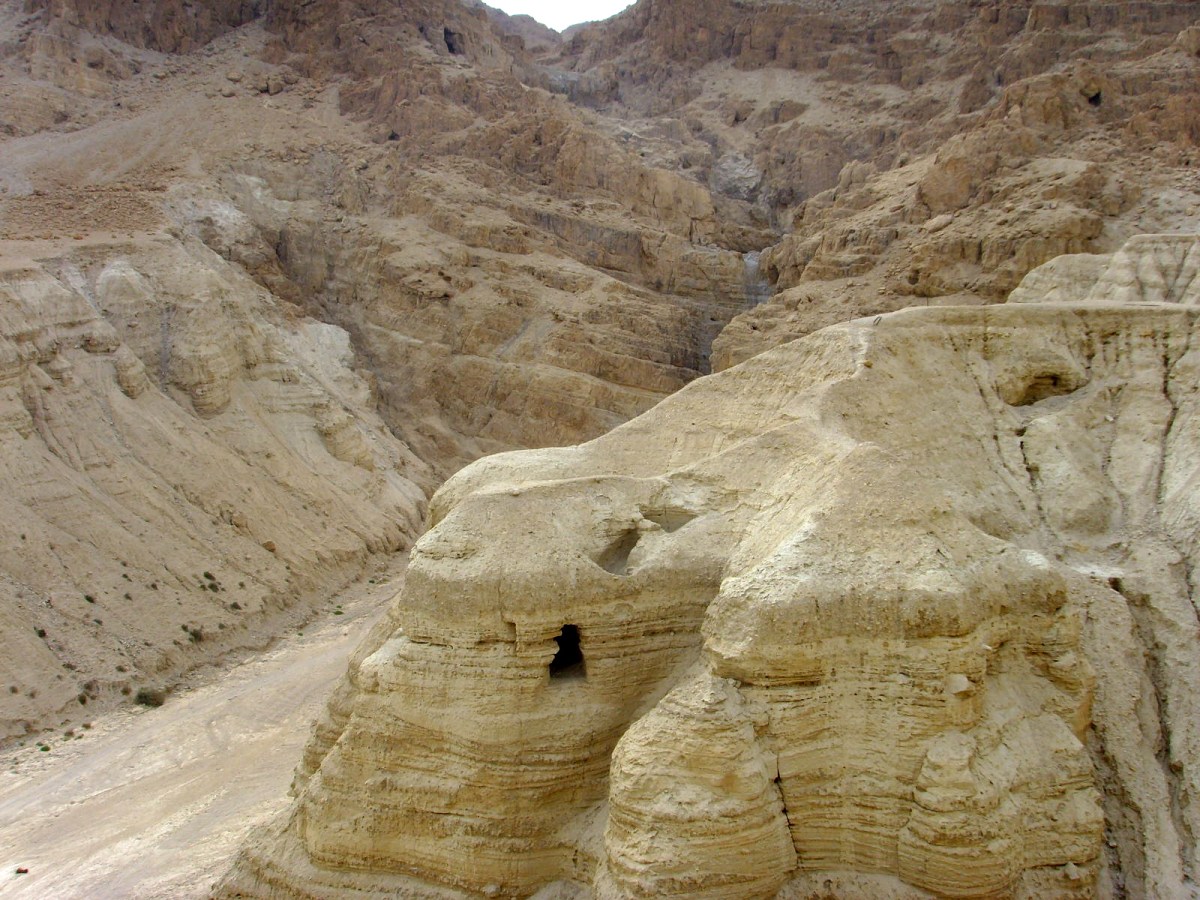
The origin of the Essenes[2] is somewhat mysterious and was largely unknown until the discovery of the Dead Sea Scrolls[3]. The Essenes were a sect that isolated themselves in the desert and maintained minimal contact with outsiders. They are possibly an offshoot of the “Hasideans” (aka “the pious ones”), mentioned in 1 Maccabees. They considered the temple and its practices to be corrupted and considered themselves to be the ‘chosen ones’ who would be saved at the end times. They lived communally and celibately and had a 3-year probationary process before accepting new members. There are unproven speculations that John the Baptist and Jesus were affiliated with the Essenes.

Although there is no direct evidence of Jesus interacting with the Essenes, the criticisms that Jesus raised against the Pharisees were similar to the criticisms that the Essenes had. Later on, as we examine the practices of the early church, we will also see parallels to the Essenes. Jesus’ followers and the Essenes anticipated an eschatological restoration of Israel, and both groups also believed in the necessity of national purification.


[1]  Martinez, Florentino Garcia. “The Dead Sea Scrolls Translated,” Community Rule 1QS Column 6:4-6 (p79)

[2] Riches, John. “The World of Jesus: First Century Judaism in Crisis,” Cambridge University Press, 1990; Gutierrez, Juan Marcos Bejarano. “The Judaisms of Jesus’ Followers” Yaron Publishing, 2017; Gutierrez, Juan Marcos Bejarano. “Forgotten Origins” Yaron Publishing, 2017; Crossan, John Dominic. “The Birth of Christianity” HarperSanFrancisco 1999; NIV Cultural Backgrounds Study Bible, Zondervan 2016 Kindle book (locations 214907, 22713); NIV First-Century Study Bible, Biblica 1973 Kindle book (Location: 91578)

[3][3] The Dead Sea Scrolls are considered by many to be the most significant archaeological find of the 20th century. From 1947 to 1956, thousands of scroll fragments were uncovered from the caves near Qumran, located on the northwestern shore of the Dead Sea. (Biblical Archaeology Society, “What are the Dead Sea Scrolls”  www.biblicalarchaeology.org/daily/biblical-artifacts/dead-sea-scrolls/what_are_the_dead_sea_scrolls.

Observe

Read Leviticus 11; 15:31; Ezra 10:11. The Israelites could not follow all the laws concerning cleanliness without keeping some degree of separation from cultures around them. But it seems that the Israelites kept getting drawn away from following Yahweh. What temptations draw Christians away from following Yahweh?

Clash of empires

Dancing in the Kingdom- Table of Contents

Dancing In the Kingdom – Part 2 – The Kingdom Revealed– Chapter 10 – The Class of Apparitions

Clash of empires

[Bible references: Daniel 11]

The Promised Land was on a tract of land that served as a trade route between Africa, Asia and Europe and so was much desired by empires that emerged in that area of the world.

  • ASSYRIAN EMPIRE:  The Northern 10 tribes were conquered by the Assyrians (722 BC). Most of the Northern tribes were scattered throughout the Assyrian empire never to be heard from again in history, but some of the poorest were left behind. The Assyrians then brought in some of their own tribes to rule the area, diluting the culture of the conquered tribes when the remaining Israelites intermarried with the Assyrians.
  • BABYLONIAN EMPIRE: The Babylonian Empire then overtook the Assyrian empire and then conquered the Southern two tribes, Judah, and Benjamin, and in a couple of waves, took the best and brightest of those tribes into captivity in 605 BC and then in 586 BC. It was at this time that the Israelites, now predominately from the tribe of Judah, were called Jews.
  • PERSIAN EMPIRE: In 537 BC, the Persian empire then overtook the Babylonian empire and allowed the exiled Jews to return. After being settled in for many years, only of the Jews returned to the “Promised Land.” Most of the Jews decided to stay in Babylonia. So ever since the time of captivity, the majority of Jews have lived outside their homeland.
    • The Jews who returned from Babylon rejected the Samaritan Jews because the Samaritan Jews intermarried with foreigners.
    • The temple, now called the second temple, was rebuilt between 586-515 BC. The second temple was not built in as grand a fashion as the temple Solomon built. Neither did the Glory of the Lord enter the second temple as it did in the Tabernacle or in Solomon’s temple.
    • In 430 BC Nehemiah and Malachi were the last books written for the Hebrew scriptures.
  • GREEK EMPIRE:[1] The Greeks, under Alexander the Great, start their empire building in 336 BC, capturing Israel in 332 BC. Alexander tried to export the Greek language and culture[2] onto conquered territories. When Alexander died in 323 BC the Greek empire was split up under four of his generals. Israel is caught in a tug-of-war between two of the generals:
    • PTOLEMAIC EMPIRE: Ptolemy in Egypt first ruled over the Jews in 308 BC. The Ptolemaic kings, who had a great library in Egypt, added to it by commissioning a translation of the Hebrew texts (including Hebrew scriptures) in Greek– this translation, done around 250 BC is known as the Septuagint.[3]
    • SELUCID EMPIRE: In 195 BC, Seleucus ruled over Israel. When the Seleucids ruled over the Jews, they began a campaign to force the Greek culture onto the Jews and consequently trying to eliminate the Jewish culture. This eventually escalated onto desecrating the Jewish temple and then trying to force the Jewish leaders to participate by slaughtering pigs on the altar.
  • HASMONEAN KINGDOM: The effort by the Seleucids to eliminate the Jewish culture caused a rebellion in 166 BC begun by Mattathias the Hasmonean when he killed the Jew who was going to perform the sacrifice and then killed the official directing the sacrifice. Mattathias then fled into the wilderness with his family and began a rebellion which in 142 BC succeeded in overcoming the Seleucids and establishing an independent Jewish kingdom.
  • ROMAN EMPIRE: General Pompey captured Jerusalem in 63 BC. The Roman Empire continued to use Greek as the international language but did allow local cultures to persist as long as they did not oppose Roman rule.
    • The Hasmoneans were originally allowed to rule under the protection of Rome.
    • The Hasmonean dynasty ended when King Herod (the Great) was installed in 40 BC. Herod began many building projects including the rebuilding of the Temple, which began to be built in 18 BC and was not completed until after the reign of Herod the Great in AD 63

[1] Guzik, David. “Daniel 11 – Antiochus and Antichrist revisited” Enduring Word enduringword.com/bible-commentary/daniel-11; Truth According to Scripture. “Coffman’s Commentaries on the Bible, Daniel 11” Truth According to Scripture www.truthaccordingtoscripture.com/commentaries/bcc/daniel-11.php#.ZApRkkPMI2w

[2] It may surprise you that Greeks don’t call themselves “Greek”. Instead Greeks refer to themselves as “Έλληνες”— Hellenes. The word “Greek” comes from the Latin “Graeci”, and through Roman influence has become the common root of the word for Greek people and culture in most languages…. “Hellenism”, however, is something bigger. From ancient times, the language, culture, and values of the Hellenes has significantly impacted the world. Throughout history non-Hellenic people have adopted and assimilated the values and aesthetics of the Hellenes. Through this contact, the culture of the Hellenes has not only transformed other cultures, but has been transformed itself. This relationship is Hellenism. In fact, an openness to new ideas and embracing beauty and truth wherever you find it are fundamental features of Hellenism (National Hellenic Museum “What is Hellenism” )

[3] Reeves, Ryan, “What is the Septuagint?” ?”  The Gospel Coalition August 12, 2018, thegospelcoalition.org/blogs/ryan-reeves/what-is-the-septuagint

Observe

Read Daniel 11. This so accurately reflects the actual history of the Persian, Greek and Roman empires that many think it must have been written after the events occurred. But in fact, the book of Daniel was translated into the Greek version of the Bible, the Septuagint, 200 years before Christ.

The Tabernacle and the Temple

Dancing in the Kingdom- Table of Contents

Dancing In the Kingdom – Part 1 – Shadows of the Kingdom – Chapter 9 – The Prophets and writings

The Tabernacle and the Temple

[Bible references: I Kings 6-8; 7:13-51; 1 Chronicles 6:31-32; 2 Chronicles 6:18; Amos 9:11-15; Acts 15:1-21]

During the time of Solomon, the temple was built to replace the tabernacle. All the furnishings except the ark itself were built by a foreigner named Hiram from Tyre. The original furnishings of the tabernacle were probably put into storage in the temple. Although the temple was much more grandiose than the tabernacle, Solomon recognized that it still could not hold God. Solomon’s temple was eventually destroyed by the Babylonians.[1]

The interesting thing with this history is that during the time of King David all the rituals of Moses were carried out at the tabernacle in Gibeon where there was no ark (and therefore no “presence of God”), while the ark itself, with the presence of God, was in Jerusalem where there was a service of joy, dancing and singing instead of the ritual sacrifices. Also, the ark was no longer concealed in the Holy of Holies where there was limited access, it was now in a place where everyone could access it.

This brings us to the prophet Amos who prophesied that God was going to destroy most of Israel, except for a remnant, but that David’s tabernacle will be restored – not the one at Gibeon, not the temple Solomon built, but David’s tabernacle. This scripture passage in the Old Testament was quoted in Acts 15 where it was determined that Amos was referring to Gentiles now being accepted into the kingdom of God. The tabernacle of Moses and the temple of Solomon were restricted to the nation of Israel, but God was now going to make himself available to the whole world, Jews and Gentiles alike.


[1] Jewish Bible Quarterly “Reconstructing the Destruction of the Tabernacle at Shiloh” Jewish Bible Quarterly January – March 2016 jbqnew.jewishbible.org/jbq-past-issues/2016/441-january-march-2016/reconstructing-destruction-tabernacle-shiloh/

Observe

Read Amos 9:11-15; Acts 15:1-21. How was Amos’ prophecy used by the apostles to allow Gentiles into the church without needing to submit to Jewish practices?

Solomon

Dancing in the Kingdom- Table of Contents

Dancing In the Kingdom – Part 1 – Shadows of the Kingdom – Chapter 8– Kings and kingdoms

Solomon

[Bible references: Deuteronomy 17:14-17; 2 Samuel 7; 1 Kings 3:1-15; 8:27; 11:1-13; 1 Chronicles 22; 2 Chronicles 6]

Solomon had a great start. David gave him materials with which he could start building the temple. Solomon’s heart was humble enough to ask Yahweh for wisdom above all things, for which God blessed Solomon not only with great wisdom but with great wealth besides. The one weakness in all this provision was that Solomon, like other Oriental kings, accumulated wives and concubines. And because Solomon loved his wives who came from other cultures more than Yahweh, he not only tolerated their idol worship but took part in that idol worship as well. One thing that Solomon ignored despite his great wisdom, was the warning, written in Deuteronomy, for kings not to accumulate great wealth and many wives. One early sign of his failure may have occurred during his prayer of dedication for the new temple when, despite the use of wealth from donations or taxes and despite the slave labor and labor from other countries, he still said, “the temple I built.”

Reflect

By putting the love of his wives above the love of God, Solomon’s judgement became clouded. This is the problem wealth always brings us. How does this influence what you pray for?

Observe

Read 2 Chronicles 6:33. What could have been wrong about Solomon praying about the temple “I built?”

Living temples

Dancing in the Kingdom- Table of Contents

Dancing In the Kingdom – Part 1 – Shadows of the Kingdom – Chapter 3 – The image-bearers

Living temples

[Bible references: Genesis 1; 3:6; Isaiah 35; 54:10; 60; Jeremiah 29:1-23; John 2:19-21; 1 Corinthians 3:16; 6:19-20; 2 Corinthians 6:16; Ephesians 2:21; Revelations 15:8; 21:22]

Although God’s first image-bearers had close, unhindered, intimate contact with their Creator, there was enough space given them to think freely, as if they were not being watched all the time. It was in this space that they – and we – were given several blessings: the freedom to procreate (be fruitful and multiply), to oversee God’s creation (subdue the earth and have dominion over its creatures), and to nurture God’s creation (work it and take care of it).[1] We were given the assignment to be fruitful, to fill all the earth, discover its possibilities and care for the world in the same way that God would care for the world.[2] Just as God continues to create more living things and sustain all that he has created, we as his co-regents[3], can join him in sustaining and creating those things entrusted to our care.

  “There are two ways in which God imposes his law on the cosmos, two ways in which his will is done on earth as in heaven. He does it either directly, without mediation, or indirectly, through the involvement of human responsibility. Just as a human sovereign does certain things himself, but gives orders to his subordinates for other things, so with God himself. He put the planets in their orbits, makes the seasons come and go at the proper time, makes seeds grow and animals reproduce, but entrusts to mankind the tasks of making tools, doing justice, producing art, and pursuing scholarship. In other words, God’s rule of law is immediate in the nonhuman realm but mediate in culture and society. In the human realm men and women become coworkers with God; as creatures made in God’s image, they too have a kind of lordship over the earth, are God’s viceroys in creation.” [4]

We were also given the responsibility to subdue the earth and have dominion over its creatures. When there is resistance, we still have the responsibility to bring the rule of God to the world. Then we are given the responsibility to work and take care of the earth, starting in the Garden of Eden and then expanding to all of God’s creation. Implied in all these things is that we should do everything in context of God’s love, to care for each other and to care for the earth and its creatures with the mind of the God who created us for love.

The work that we were designed to do was more than just tending the garden. In Genesis 2:15, we were given a mandate to “work” and “take care of” the garden God had created. These tasks in light of Ancient Near East culture, were more of a priestly nature, taking care of this temple where we reside with God.

“The verbs ʿbd and šmr (NIV: “work” and “take care of”) are terms most frequently encountered in discussions of human service to God rather than descriptions of agricultural tasks… ‘bd can refer to … work connected with one’s vocation, to religious service deemed worship … šmr is used in the contexts of the priestly responsibility of guarding sacred space, as well as in the sense of observing religious commands and responsibilities … it is likely that the tasks given to Adam are of a priestly nature: caring for sacred space. In ancient thinking, caring for sacred space was a way of upholding creation.”[5]

We were to take care of this place which was designed to be a “very good” place for us to flourish in, creating whatever structures we needed to “increase in number, fill the earth and subdue it.” This task, this mandate, meant that we would eventually go beyond the capacity of gardening and create not just a bigger garden but cities, a flourishing civilization as pictured in Revelation 21 and 22.[6]

When examined closely, we can see the breadth of what was committed to Adam and Eve. Subduing the earth would entail many physical, social, and intellectual activities. In the gardening we can see cultivation and farming; in taking care of the animals, we can see shepherding and domestication; in the naming of the animals, we can see a cultural and scientific activity which required understanding the nature and attributes of the animals and establishing authority over them. We can see that God had created things to be beautiful and as his image-bearers we would be expected to also create beautiful things.

As we look forward to the new earth which will manifest when Jesus comes again, nature’s comeliness will reach its pinnacle; the wilderness itself will burst into blossom, and streams will gush in the desert. To complement all this natural beauty, human culture will flourish. All the great creativity of humankind-artistry in music, dance, painting, woodcrafts, sculpture, architecture and more-will be brought into the New Jerusalem.[7]

There is a sense in which we, as members of the Kingdom of God, now seem to be living in a foreign land. This puts us in a position similar to the Israelites when they were taken in exile into Babylonia. During their stay in Babylonia, God’s instructions were to settle down, build houses, get married, have children and to seek the prosperity of the city they were sent to, for “if it prospers, you too will prosper.”

But above all these things we can do, we should not lose focus on who we are. We are creatures designed by God to be like God to be in relationship with Him, the God who is a community in Himself: Father, Son, and Holy Spirit. Everything we do should be done in context of who we are. We should remember that we were designed to be human “beings,” not human “doings.” This viewpoint become clear when we compare the Biblical view of creation to the view of other Ancient Near East cultures. For the surrounding cultures humans beings were created to feed the gods and serve the gods who created them, whereas the Biblical viewpoint sees God being the provider for the people.[8]

Originally, we see Creation designed as a temple, a place for us to “be” with God. Later on, Jesus refers to himself as the temple, a human in whom God resides. Later on, Paul declares that our own bodies are a temple of the Holy Spirit. So here again, we see the mystery of perichoresis, where we are distinct from the Holy Spirit, yet the Holy Spirit becomes a part of who we are. In this we see the mystery of perichoresis unifying the persons within God, unifying the body, soul and spirit within humans, and unifying God and humans.


[1] Jacobsen, Eric O. The Space Between: A Christian Engagement with the Built Environment, Baker Academic, 2012, (Page 20 )

[2] Crouch, Andy. “What is the Cultural Mandate” The Village Church, 6 Jan 2017 www.tvcresources.net/resource-library/talks/what-is-the-cultural-mandate

[3] Walton, John H. “The Lost World of Adam and Eve: Genesis 2-3 and the Human Origins Debate (Proposition 4) InterVarsity Press. 2015 Kindle Edition

[4] Albert M. Wolters. Creation Regained: Biblical Basics for a Reformational Worldview William B. Eerdmans Publishing 1985, 2005. eBook(Locations 203-208)

[5] Walton, John H. The Lost World of Adam and Eve: Genesis 2-3 and the Human Origins Debate Edition(p. 105-106).

122 Buzenitz, Nathan. “The New Jerusalem”

[7] Sherman, Amy L. Kingdom Calling: Vocational Stewardship for the Common Good. Intervarsity Press, 2011 eBook location 291

[8] Walton, John. “The Lost World of Adam and Eve,” I “Proposition 12: Adam is Assigned as Priest in Sacred Space, with Eve to Help” (p.104)

Observe

Read Genesis 1; 1 Corinthians 3:16; 6:19-20; 2 Corinthians 6:16. What difference does it make if the universe is God’s temple or that our bodies are God’s temple?

The Temple Maker

Dancing in the Kingdom- Table of Contents

Dancing In the Kingdom – Part 1 – Shadows of the Kingdom – Chapter 2 – The God who created

The Temple Maker

[Bible references: Genesis 1-2; Exodus 26; 1 Kings 6; Job; Psalm 8; 95; 100; 104 and others; Proverbs 8:22-31; Isaiah 44:21-28; 45:5-12; 51:4-12; 55:6-13; Matthew 26:61; I Corinthians 6:19-20; Revelation 21-22]

There has been much debate about how to interpret the creation account. There have been various attempts to understand creation as physical processes that had occurred (over shorter or longer periods, depending on your analysis) because in our current cultural context we default to thinking of creation in physical, scientific terms. But what if (surprise! surprise!) we consider the biblical text to be a theological text instead of a scientific one, about functional origins and not about material origins.[1]

The cosmos can only function as sacred space once God has inhabited it and people in his image are there. God is declaring purpose for the cosmos as an ordered space for people and as sacred space where he will dwell. This is what defines the divine activity …Adopting and promoting a vision and mission statement will not change how the institution operates. But it articulates a purpose and identity that may not have been realized or present before and proclaims that as its purpose. Genesis 1 is doing something similar. It is articulating a purpose through a mission statement (people living out their designated role as the image of God) and a vision statement (seeing the world around us as sacred space where God is living among his people and being in relationship with them). .[2]

In the last few decades, research has uncovered much more about the culture in the Ancient Near East than ever before. It has been discovered that in Ancient Near East cultures, the Genesis account would not have interpreted the creation account in terms of physical processes but rather in terms of assigning meaning and purpose. So, as we read the Creation account in Genesis 1, on the first three days the spaces of light and dark, waters above and below, and the land are being assigned a purpose. The next three days the populations of those spaces are assigned a purpose: the sun and the moon and stars, the birds and fish, the land animals.

In this perspective, the story of creation is seen more as a story about the dedication of a temple, where the universe and the world were dedicated as a sacred space, a space where God would dwell with his people. Therefore, the seventh day is when God rested from the act of dedicating the earth, which would now be the place where He would now live with his image-bearers. If you read Genesis 1-2, you will see that, unlike the other days, there is no “there was evening and there was morning.” That is because we are living in the seventh day.

The completion of God’s temple would be later remembered by the seventh day celebration of the Sabbath. Although God’s temple was completed by the seventh day, it was not a time where God ceased to do everything. The still continuing seventh day is the time when the “temple” which is our “home” is completed so that God and we, as his co-regents, can settle in and do the things that our home was designed for. Jesus in John 5:1-7 clarified this idea where he explained, “My Father is always at his work to this very day, and I too am working.” Living into this sacred space would entail us taking part with God in his continual acts of creating and sustaining the universe. That is the perspective of Eve, when she gave birth to Cain, she recognized that “I’ve created a man with Yahweh.”[3]

In Genesis 2, the focus moves to the humans God created and how they were to function in that sacred space where the Garden of Eden is the center. Genesis 2 is also where God’s name, “Yahweh,” begins to be used. Genesis 1 introduces the God as the Creator of the universe whereas Genesis 2 introduces the God who in establishing a personal relationship with the people he created uses a personal name.[4]

The cosmos that God created was intended to be a temple, the place where He would meet with his people. The temple/creation imagery permeates and unites all of scripture from the first book, Genesis, to the last book, Revelation. The temple/creation theme shows up in places like in the stories of Noah, Moses, and Abraham, in the construction of the Tabernacle and the Temple, in Job’s dialog with Yahweh, in the poetry of Psalms[5], in prophecies of Isaiah, in the body Jesus and in us as his Body and finally in the depiction of reuniting of heaven and earth. Each instance shows its own unique aspect of the temple, so that when combined with each other, they show a more complete picture of how God meets with us and provides for us and what he has intended for us. We see a complex picture of the temple as a physical place in Creation and at the same time the temple is within us, inside the bodies of all of those who call on his name. In both those cases we can see the provision of God who 1) abundantly fills all of Creation in ways that exceed our imagination and exceed the capacity of any book to tell and, 2) abundantly fills us with His strength and His Spirit so that we can fulfill the desire He has for us to “cultivate and keep” the abundant place He has provided for us.

One of the benefits of considering only the theological aspects of the Creation accounts, or the why of creation, is that we don’t have to be as highly concerned about the how of creation, or the scientific/physical accounts of creation. When scientific creation accounts are proposed and are not perceived to be correct because they don’t seem to theologically fit, we don’t need to despair. It may be that the various proposed scientific explanations simply don’t theologically fit because they just don’t or because we just don’t understand just how they could theologically fit. We know that the sciences are limited and that theories will change as more discoveries are made. Sometimes those theories may seem to move closer or further from our limited theological understandings, but our theology is not constrained by whatever the current science may indicate. In the meanwhile, we are free to explore the science and wonder in awe and marvel at just how God managed to do it all while humbly admitting that we don’t have the mind of God and how much higher his ways are than our ways.


[1] Walton, John. “The Lost World of Adam and Eve,” Proposition 3, InterVarsity Press. 2015 Kindle Edition. pp. 35-45; Driver, Cory. “Commentary on Genesis 1:1-5” Working Preacher 10 Jan 2021 www.workingpreacher.org/commentaries/revised-common-lectionary/baptism-of-our-lord-2/commentary-on-genesis-11-5-5; Carlson, Reed. “Commentary on Genesis 1:1-2:4a 12” Working Preacher Sept 2011 www.workingpreacher.org/commentaries/narrative-lectionary/creation-by-the-word/commentary-on-genesis-11-24a-5; Throntveit, Mark. “Commentary on Genesis 1:1-2:4a; or 1:1-5,26-2:4a 1 Working Preacher 1 Sept 2011 www.workingpreacher.org/commentaries/narrative-lectionary/creation/commentary-on-genesis-11-31-21-4

[2] Walton, John. “Material or Function in Genesis 1? John Walton Responds” Biologos 3 Apr 2015 biologos.org/series/reflections-on-the-lost-world-of-genesis-1-by-john-walton/articles/material-or-function-in-genesis-1-john-walton-responds

[3] Friedman, Richard Elliot, Commentary on the Torah, Harper Collins, 2003 Location 6942 of 37412

[4] There will be more discussion on that name in “Hope in the Brokenness,” Chapter 4

[5] Muran, Alexej. “The Creation Theme in Selected Psalms” Geoscience Research Institute 1 May 2015 www.grisda.org/the-creation-theme-in-selected-psalms

Reflect

Does viewing the universe as a temple affect the way we look at it?

Observe

Read Proverbs 8. This proverb personifies God’s wisdom. Read how God is describing how His wisdom is built into the very framework and fabric of this temple we call Creation. How can we sense God’s presence with us because of how His wisdom should be speaking to us?

A brief account

Dancing in the Kingdom- Table of Contents

Dancing In the Kingdom – Part 1 – Shadows of the Kingdom – Chapter 1 – Prelude

A brief account

[Bible references: Acts 17:22-31]

The following is an Extremely Brief Account of the Very Long Story.

There was, and is, and will be, a complex person we call God, who exists as three people that we have come to know as the Father, Son, and Holy Spirit. God decided that he wanted to expand the love that was shared between the Father, Son, and Holy Spirit. To that end, he created an entire universe so that on one of its planets he could create an abundance of living creatures.

On that planet, he created special creatures, humans, who were made in his image such that they could love him in the way that he loved them. This universe then, would be a form of temple, a place where God can meet with his people. The garden he placed them in was where the dimensions of heaven and earth overlapped. The garden was a place where God’s good and beautiful kingdom of heaven was fully present.

Of course, these humans were not duplicate spiritual beings who were gods themselves, but physical creatures who had enough of God’s characteristics so that they could love in the way God loved. But love is a voluntary thing that we must choose to do, we cannot love unless we have the option to not love.

God placed his first people in a garden and gave them an assignment. They were to be his representatives, priests if you will, in this garden. They were to take care of it as His representatives, His stewards in the garden. Their long-term task was to multiply and fill the earth so that the whole earth would become the place where God could meet with all his people. The entire earth was intended to be filled with God’s abundant provision for his people who would then take care of what God provided, and all the while giving and receiving and sharing the love which God would freely bestow. In this way, the kingdom of heaven would overlap with the entire kingdom of earth and God would freely mingle with his people.

The option to love or not love was provided by a test of trust. There was in the garden a tree whose fruit not only looked appealing but promised to provide the gift of all knowledge if one ate it. The humans were told to trust God and not eat the fruit of that tree. Eating that fruit would not only provide certain knowledge but would also provide death.

The results of that test are now apparent all around us. Death comes to us not only in the form of physical death, the separation of our souls from physical life, but also in the form of spiritual death, the lack of love which separates us from each other and from God. Fortunately, our current situation is not our destiny – and that is what the rest of the story is about.

God intended that death would not merely be a penalty for not trusting (or loving) but would also be the very mechanism by which he would restore us to himself. From the descendants of the first people, God separated out a family through which he would bring blessing to the entire world. Through that family that a nation would be raised and through that nation the eternal God would choose a family to accomplish the inconceivable. In that chosen family, the eternal God would cause himself to be conceived within the womb of a woman who would then give birth to a being who was both fully God and fully human. He would then be raised as a human and eventually would suffer death by execution as a human and then be resurrected as a human.

In that resurrected human body, the eternal God would return to heaven, but before doing so, he invited us, in essence, to represent Him on earth by becoming part of his body on earth. By trusting him and accepting his Spirit, we could join with him in His death and resurrection by dying to our own self-interests and uniting with his loving interests.

He then promised to return to us again in bodily form, at which time the kingdoms of heaven and earth will again overlap. Heaven will be rejoined to earth to fulfill the intention God had from the beginning. But meanwhile, in this time between His incarnation and His eventual return, we are still called to be stewards of our currently broken world, bringing slivers of the light and hope of heaven into a world now very dark with evil and suffering and pain.

Observe

Read Acts 17:22-31. How could we use Paul’s gospel message to people we speak to today?

Exile and return

Dancing in the Kingdom- Table of Contents

Dancing In the Kingdom – Part 1 – Shadows of the Kingdom – Chapter 1 – Prelude

Exile and return

[Bible references: Jeremiah, Lamentations, Ezekiel, Daniel, Esther, Ezra, Nehemiah]                                     

When Assyria captured the Northern kingdom, they took most of the inhabitants and scattered them throughout the empire and replaced them with people from elsewhere in the empire. The result was that the 10 northern tribes were integrated into the Assyrian empire and were never heard from again as a people group.

Babylon overran the Assyrians and also captured the Southern kingdom. The practice of the Babylonians was to take the best and brightest, bring them to their capital and train them to work for the Babylonian empire. A couple of the prominent people taken were Daniel and Ezekiel. 

Since it was primarily the people of Judah that were captured and the other kingdoms had essentially disappeared, the people of Israel now became known as Jews. It was while in captivity, that the Jews got serious about preserving their culture. It was while in captivity that they worked on 1) identifying which writings they had would be considered as scripture and 2) developing cultural patterns that would allow them to preserve their identity. It was in captivity that synagogues developed as a way of continuing to worship without the availability of the temple. Interestingly, it also showed how they knew that they could function under the Law of Moses without a temple and therefore without the system of animal sacrifices.

The Babylonian kingdom was then overrun by the Persian empire. The policy of the Persian empire was to allow the captured peoples that were exiled to Babylonia, to return to their homeland. The first returnees rebuilt the temple that was destroyed by the Babylonians, although the new temple was not as grand as it had been before. Later, Ezra would return to re-establish the Law and then Nehemiah would return to rebuild the wall around Jerusalem.

Observe

Read Jeremiah 18:1-10. How does God interact with our decisions?

Chapter 7 – The Prophets and Writings

The Impossible Dance – Table of Contents

The Impossible Dance – Chapter 6 – A Nation Settles

Messengers of a Greater Power

During the entire time when Israel had kings, it also had prophets. Some prophets like and Elijah and Elisha did not leave any writings, although sixteen prophets did. The prophets focused more on “forth-telling” (telling about changes that the kings and/or the people needed to make immediately) than “fore-telling” (telling about some future events) and were a constant reminder that God was acting in ways that transcended the earthly kingdom. Sometimes the prophets were there to encourage and sometimes to challenge the kings: The prophet Samuel anointed Saul as king, then later had to let Saul know that God had rejected him. Samuel also anointed David as king. Later, the prophet Nathan let David know that God was aware of David’s sin with Bathsheba.

The Prophets of the Old Testament were precursors of the prophetic ministry of Jesus. And now the Church, as the Body of Christ, has the privilege of carrying on that ministry.

Challenging Unfaithfulness

Sometimes the prophet’s warnings would be not just for the kings but for everyone in the kingdom. The messages from the prophets often mixed the foretelling of the consequences for rejecting God with the hope that God will someday make things right. The most common offense cited by the prophets was the people’s lack of justice and how their ritual sacrifices were useless if they ignored justice. There were also diatribes against false prophets and against making idols. The most common metaphor used to describe Israel’s unfaithfulness to God and his commands was prostitution, even to the point where God told the prophet, Hosea, to marry an adulterous woman to be a visible reminder for Israel.

Lament and Anger

God’s response through the prophets was to lament. There is even one entire book lamenting what happened to Israel. The lamenting would include pleas for Israel to repent and turn back to God. But then Israel’s continued sin would then be followed by God’s anger and God’s promise to root out, pull down and destroy Israel or any other nation around Israel that engaged in sin. Sometimes God used other nations to discipline Israel followed by threats to those same nations for their sinful own behavior.

Future Hope

But in the end was God’s promise to restore his kingdom and bless all those who repent. God even sent one prophet, Jonah, to a Gentile nation to call them to repent or be destroyed. When they did repent, God held back his punishment – although history tells us that God destroyed them when they went back to their old ways.

The strange story of the ark and the tabernacle

The Ark in the Promised Land

After Israel entered the Promised Land, Israel placed the tabernacle and all its furnishings in Gilgal. After Israel had settled in the land, the tabernacle was then set up in Shiloh where it stayed for two hundred years. During the time of Samuel, Samuel’s sons, without consulting God, removed the ark from the tabernacle to take it into battle with the Philistines who not only won the battle but took the ark with them. The Philistines found that although Yahweh did not see fit to help Israel win the battle, Yahweh did create issues with the Philistines. The Philistines responded by moving the ark a couple of times, but the problems did not disappear and so they sent the ark back to Israel.

The ark initially ended up in Beth Shemesh, but after 70 people died when they tried to look in the ark, the people of Beth Shemesh sent the ark to Kiriath Jearim where it stayed for 20 years. The Bible is not explicit about when it happened, but sometime during the reign of King Saul, the tabernacle, sans the ark, was moved to Nob and then to Gibeon.

After David established the capital in Jerusalem, King David set up his own tabernacle and then moved the ark there. In moving the ark, David had to learn a lesson. He first tried to have the ark carried in a cart, but when the ark started to slip out of the cart, the people died who touched the ark to prevent it from slipping out. So, the ark ended up in Obed-Edom’s house for a while. Hophni and Phineas learned the hard way that you don’t necessarily take the presence of God when you take the ark, but David learned the hard way that you can’t ignore the presence of God when you take the ark. David was successful in moving the ark to Jerusalem after he had the ark moved according to the instructions God had given Moses.

The Tabernacle and the Temple.

When Solomon was king, he oversaw the building of a temple to replace the tabernacle. A foreigner from Tyre named Hiram built all the furnishings except the ark itself. The original furnishings of the tabernacle were possibly put into storage in the temple. Even though the temple was much more grandiose than the tabernacle, Solomon recognized that it still could not hold God. Some years later, the Babylonians would destroy Solomon’s temple.

The interesting thing with this history is that during the time of King David all the rituals of Moses were conducted at the tabernacle in Gibeon where there was no ark and no presence of God, while the ark itself, with the presence of God, was in Jerusalem where there was a service of joy, dancing and singing instead of the ritual sacrifices. Also, the ark was no longer concealed in the Holy of Holies where there was limited access, it was now in a place where everyone could access it.

This brings us to the prophet Amos who prophesied that God was going to destroy most of Israel, except for a remnant, and that He would restore David’s tabernacle– not the one at Gibeon, not the temple Solomon built, but David’s tabernacle. In Acts 15, the Bible records that the apostles quoted this passage from Amos because they determined that Amos was referring to Gentiles now being accepted into the kingdom of God. The tabernacle of Moses and the temple of Solomon were restricted to the nation of Israel, but God was now going to make himself available to the entire world, Jews, and Gentiles alike.

Diaspora

The term “diaspora” usually refers to a group of people that has been scattered from a specific location. In this case, the term refers to the scattering of Jews from the Promised land. But this particular diaspora is only a part of God’s larger plans for His people.

Our God is a God of overflowing love. His love caused Him to create us so that His love could overflow from Himself to us. He wanted His image-bearers to accomplish His mission of overflowing love and overflow from Eden to fill the entire earth. When we rebelled against His overflowing desire so that we could make a name for ourselves instead, He confused our language at Babel so that we would continue to flow out over the earth. When God wanted to prepare His Holy Nation for His mission, He scattered them to Egypt. When Israel rebelled against His mission of overflowing love, He scattered them from the Promised Land. The Son of God came in overflowing love to offer Himself in sacrifice in order to restore us to Himself. When the scattered Jews from many nations gathered for Pentecost, God reversed the action of Babel, and the apostles shared His message of overflowing love in many languages so that the message would be carried to the Jews in many nations. To continue the overflow, God guided Peter and Paul so that His love could flow out to the Gentiles as well. God further ensured the flowing out by using the Romans to scatter both Jews and Christians from Jerusalem. To this day, when our focus is more on building our Christian institutions, becoming too ingrown, God continues to scatter His people so that His message of overflowing love will reach more people in more places across the earth.

This program of overflowing creates a Dynamic Tension between our scattering and our unity. It would be well if our scattering were motivated by love so that we would continue to stay unified as we scatter. Sadly though, our scattering is often due to divisiveness rather than love, countermanding the intent that the world will recognize that we are disciples of Jesus because of our love.

Judgement Unfolds

The covenant God made with Israel had the proviso “if you follow my commands.” Israel continually demonstrated its inability to do that by its continuous practice of polytheism and God’s judgement followed. The nation of Israel would suffer the consequences. The first sign of the consequences manifested itself in the splitting of Israel into two kingdoms.

After that, the northern kingdom of Israel was the first to collapse in 535BC with the invasion of the Assyrians whose policy was to scatter the captured inhabitants throughout their empire and replace them with Assyrians. These northern tribes seem to have been totally assimilated into the Assyrian empire and they would not be heard from again in history.

In 722BC, the Babylonians conquered the southern kingdom of Judah and took the best and the brightest of Judah as captives to the capital of Babylonia for “retraining” so that they could contribute to the Babylonian society. It was at this point that the nation of Israel would now be referred to as Jews. It was from this point on that, despite the return of some of the Jews to their homeland, most Jews would now be living outside their homeland.

Worship in exile

During this exile, the Jews as they would now be called, had to become more deliberate if they were going to preserve their culture. It was during this time that the Jews would begin to collect all their writings in order to begin to determine what would be their scripture. They had the writings of Moses, but they had to determine what else should be included in their scripture.

During this time, they focused more seriously on worshipping Yahweh. Before this time, the biblical and archeological records indicate that Israel had a habit of adopting the worship of any idols of the culture they were in contact with. But now they had to preserve their culture while living amid a dominant foreign culture. Although the origins are a little obscure, as temple worship was no longer available, synagogues as a permanent institution developed during the exile.

The books of Daniel, Esther and Ezekiel give examples of how the Jews were able to thrive, even while experiencing opposition, while the nation was in exile: Daniel as an exceptional administrator, Esther as queen to the emperor and Ezekiel as a prophet.

From this time forward, most Jews have remained outside their homeland with no access to the one temple in Jerusalem. It was during this time that the Jews created local synagogues, with worship now focused either in the home or at the synagogue.

Return

Assyria scattered the Northern Kingdom then the Babylonians overran Assyria, captured Jerusalem, and took the prominent citizens into exile. After the 70 years in captivity prescribed by God had passed, the Persians overran Babylonia and allowed the Jews to return to their homeland. The first batch of returnees went back with Zerubbabel to Jerusalem to rebuild the temple. A second batch would go back to Jerusalem with Ezra who confronted the Jews about their failure to keep separate from the nations around them. A while later, Nehemiah would go back to Jerusalem to rebuild the walls. And yet, with all the returnees, the majority of the Jews chose to remain in Babylonia – and even today, most Jews live outside the Promised Land.

In another reminder of God’s provision, the rulers of the Persian empire strongly supported the Jews as they returned to Jerusalem, giving them what they needed. God even provided prophets to encourage the Jews.

In a reminder of the times when Moses collected contributions to build the tabernacle, contributions that the Egyptians gave to the Israelites as they fled Egypt, the people returning to the Promised Land with Zerubbabel willingly contributed from the provisions that the Persians gave to them for the rebuilding of the temple.

In a reminder of their own inability to follow Yahweh, when the Jews first returned to the Promised Land they ended up once more intermarrying with the non-Jews and following the practice of idol worship. So, when Ezra came to Jerusalem, he had to lead the Jews to repentance and to put away their foreign wives.

Then, in the end, God would send one last prophet, Malachi, who had words of condemnation of Israel for all the sins committed and of the promise to restore everything because that is what he promised. After the prophet Malachi, God did not raise up another prophet for Israel until Jesus came. That prophetic silence would last four hundred years.

Songs and reflections of the heart 

As creatures made in the image of the Creator, it is self-evident that we cannot avoid creating. We are also creatures that are born to worship, as even our popular culture makes very evident. When we put those together, we get a work like the Psalms, a book of poetry which was set to music. The psalms are a collection of praise songs written by various people. They are songs that reflect the thoughts of those people experiencing life with all its emotions in a broken world.

In addition to musical notations, several psalms have notations indicating the events which inspired the writing of those psalms. Some of the psalms have notations indicating the kind of occasions in which the psalms would be used. As poetry, the psalms use various poetic devices such as parallelism, acrostics, and figures of speech.

The Psalms express various themes such as the character of God, the experience of people, the worship of God, lament, petitions for help, confession of sin, praise and thanksgiving, expressions of wisdom. The emotions expressed in the Psalms are sometimes very raw with feelings of abandonment, questions of God’s provision, hatred, and vengeance. Yet all these expressions are included in that book of praise songs. The inclusion of the full range of human expression is an acknowledgement of the reality of the human experience and an affirmation of being honest with God about our feelings while placing all of that in the context of a just and merciful God who is worthy of praise.

The Psalms are not the only place where one can find poetry in the Old Testament. Poetry can also be found in various portions of other books of the Bible. There is even one book of the Bible that is entirely a poem/song, The Song of Solomon (aka Song of Songs) which is a positive and passionate expression of marital love.

Wisdom can also be found in the Psalms and other places as well. The pair of books, Proverbs and Ecclesiastes, show the benefits of and limits of wisdom. Solomon was the author of Ecclesiastes and was the primary author of Proverbs. In 1 Kings 3-4, God grants Solomon’s request for wisdom to rule the nation, but God also grants Solomon much more. Proverbs reflects that wisdom as a collection of rules to live a good life. On the other hand, Ecclesiastes reflects the limits of wisdom in finding the meaning of life.

Silence and waiting

After the time of Nehemiah and Malachi, there were no more explicit words of prophecy from Yahweh until the coming of Jesus. And in this time of silence from God, there was much turmoil.

  • The Greek Empire would overtake the Persian Empire and therefore Israel.
  • When the Greeks desecrated the temple, there was a revolt led by a Jewish family, the Hasmoneans, who successfully overthrew the Greeks. Hanukah is a celebration of the miracle that took place in the temple.
  • The Roman Empire would overtake the Greek Empire and the Hasmonean kingdom in Israel. Despite the Romans taking over, the Greek language and culture became part of the infrastructure of the Roman Empire.
  • The exact origins are unknown, but some of the Jews would adopt the Greek culture, becoming Hellenized. The aristocratic leaders of these Hellenized Jews would become the Sadducees. In opposition to the corruption of Judaism brought in by the Sadducees, a group known as the Pharisees arose. These two groups were still active when Jesus broke into history.

In the midst of God’s apparent silence, all this activity indicates that God is still working. Several times in the Old Testament, God pointed out that, despite everything else going on, there was still a remnant of people with which he was still working. No matter what the situation is, no matter how good or how bad things seem to be, God is always working on his plans, and he is always preparing, however quietly and behind the scenes, for the next step.

Questions:

  1. Read Zechariah 7. What words of warning does Zechariah pass on to the people who were not faithful to God?
  2. Read Isaiah 10:5-11. Here, God is chastising a “godless” nation, Assyria, which He used to discipline His own chosen nation, Israel, which had also behaved godlessly. Both nations will suffer the anger of God. God uses both nations to accomplish His will. What is the warning and hope in that for us?
  3. Read 1 Samuel 4:1-11; 2 Samuel 6:1-7. What do these passages tell you about the presence of God?
  4. Read Jeremiah 25:11-12. It seemed hopeless. The unfaithful nation of Israel was no more. But a faithful God made promises to eventually restore them. What are God’s promises to us?
  5. Read Jeremiah 29:1-23. What did Jeremiah say that the exiles were to do while they were in exile?

Chapter 2 – The Impossible God – Part 2

The Impossible Dance – Table of Contents

The Impossible Dance – Chapter 2 – The Impossible God

The Good and Overflowing God

Generous and Overflowing Shalom

When God created the universe, he was creating order out of disorder, assigning purposes for everything in the universe. When things functioned according to how he created them … they were “good.”  And when in the midst of all those good things he placed image-bearing creatures that also reflected his character, everything was “very good.”

However, when in the midst of that very good universe, those image-bearers rebelled, they and the world they inhabited suffered the consequences. Yet, despite that rebellion, God relentlessly pursued those image-bearers with the intent of restoring not only them but restoring all of creation as well to the good condition that He originally intended. The Bible is the story of how God’s original purposes will be carried out despite the constant rebellion of his image-bearing creatures – and how the good and very good, creation will endure the brokenness of the rebellion to be finally restored to the good and very good purpose that God had intended.

Within that story of creation and the relentless pursuit which followed, God’s character is revealed as he pours himself out even to the point of taking on the form of a man and the giving of himself to the humility and suffering of being tortured to death on a cross. Even though all of creation is now marred by the rebellion, it is possible to examine the character of God as it is revealed in this outpouring of himself into his creation and into his image-bearers.

Revisiting Genesis 1:1, we see God creating … everything in the heavens and the earth. The rest of that passage shows the orderliness in how the creation happened. We see that as God creates each set of creatures or things that God declares them to be good. Then after God creates humans, he declares “it was very good.” We will see later in Genesis those things got messed up, but at this point the core of everything in the universe, everything was good and beautiful and working as it should. Certainly, as we look around us now, it would be hard to say that everything is working as it should, but at the beginning, everything was good.

That goodness was further amplified when, despite the rebellion of his image-bearers, God tirelessly invited them over-and-over again to come back to him even though they would continue rebelling over-and-over again. The generous invitation and re-invitation would be highlighted by Jesus’ parable which has been commonly called the “Prodigal Son” (Luke 15:11-32) in reference to the wastefully spending son. But the parable could equally be called the “Prodigal God” in reference to the father who represents extravagant giving of God.

These continuous and generous offers from God are meant to draw us to himself so that he could restore to us the good and generous life that God has intended from the beginning, life free from suffering and pain, life full of joy and peace, wholeness and health, contentment and completeness, which is all captured by the Hebrew word, shalom.

Trustworthy and Faithful

God has continued to offer us lives of goodness, generosity and shalom despite our continued waywardness. Our opportunity to experience the faithfulness of God comes as we hold to his promises … even when we fail to hold to his promises. Scripture is full of passages of God’s commitment to faithfulness despite the lack of our own and those examples are helpful for us to hold onto as we experience our own trials and difficulties in life.

Self-sacrificing and Forgiving

God’s faithfulness to us is sealed in the love he showed to us by the ultimate sacrifice he made on our behalf. His commitment of love towards us could not be made any more clearly than through the excruciating death he suffered when he allowed us to put him on the cross in order that he should bear the penalties of our sins. And it is through His suffering and dying that he can offer us forgiveness for the rebelliousness of our spirits and the sins we have committed.

The Temple Maker

There has been much debate about how to interpret the creation account. There have been various attempts to understand creation as physical processes that had occurred (over shorter or longer periods, depending on your analysis) because in our current cultural context we default to thinking of creation in physical, scientific terms. But what if (surprise! surprise!) we consider the biblical text to be a theological text instead of a scientific one, about functional origins and not about material origins.

In the last few decades, research has uncovered much more about the culture in the Ancient Near East than ever before. It has been discovered that in Ancient Near East cultures, the Genesis account would not have interpreted the creation account in terms of physical processes but rather in terms of assigning purpose. So as we read the Creation account in Genesis 1, on the first three days the spaces of light and dark, waters above and below, and the land are being assigned a purpose. The next three days the populations of those spaces are assigned a purpose: the sun and the moon and stars, the birds and fish, the land animals.

In this perspective, the story of creation is seen more as a story about the dedication of a temple, where the universe and the world were dedicated as a sacred space, a space where God would dwell with his people. The seventh day indicates that the dedication is complete and so God is able to rest from the act of dedicating His temple, the earth, which would now be the place where He would now live with his image-bearers within that space. If you read Genesis 1-2, you will see that, unlike the other days, there is no “there was evening and there was morning.” That is because we are living in the seventh day.

The seventh day would be later remembered by the celebration of the Sabbath. It was by the seventh day that God had finished the dedication of the “temple” but it was not a time where he ceased to do everything. Rather, it was the time where the “home” was now ready for God to live in, and for us as co-regents, to begin the settling into our “home” and doing the things that our home was designed for. Jesus in John 5:1-7 clarified this idea where he explained, “My Father is always at his work to this very day, and I too am working.” Living into this sacred space would entail us taking part with God in his continual acts of creating and sustaining the universe. That is the perspective of Eve, when she gave birth to Cain, she recognized that “I’ve created a man with Yahweh.”

In Genesis 2, the focus moves to the humans God created and how they were to function in that sacred space where the Garden of Eden is the center. Genesis 2 is also where God’s name, “Yahweh,” begins to be used. Genesis 1 introduces the God as the Creator of the universe whereas Genesis 2 introduces the God who in establishing a personal relationship with the people he created uses a personal name.

The cosmos that God created was intended to be the place where He would meet with his people. Therefore, the Creation, the Cosmos, was intended to be a temple. The temple/creation imagery permeates and unites all of scripture from Genesis to Revelation. The temple/creation theme shows up in places like in the stories of Noah and Moses and Abraham, in the construction of the Tabernacle and the Temple, in Job’s dialog with Yahweh, in the poetry of Psalms, in prophecies of Isaiah, in the body Jesus and in us as his Body and finally in the depiction of reuniting of heaven and earth. Each instance shows its own unique aspect of the temple, so that when combined with each other, they show a more complete picture of how God meets with us and provides for us and what he has intended for us. We see a complex picture of the temple as a physical place in Creation and at the same time the temple is within us, inside the bodies of all of those who call on his name. In both those cases we can see the provision of God who 1) abundantly fills all of Creation in ways that exceed our imagination and exceed the capacity of any book to tell and, 2) abundantly fills us with His strength and His Spirit so that we can fulfill the desire He has for us to “cultivate and keep” the abundant place He has provided for us.

One of the benefits of considering only the theological aspects of the Creation accounts, or the why of creation, is that we don’t have to be as highly concerned about the how of creation, or the scientific/physical accounts of creation. When scientific creation accounts are proposed and are not perceived to be correct because they don’t seem to theologically fit, we don’t need to despair. It may be that the various proposed scientific explanations simply don’t theologically fit because either they just don’t fit or because we just don’t understand just how they could theologically fit. We know that the sciences are limited and that theories will change as more discoveries are made. Sometimes those theories may seem to move closer or further from our limited theological understandings, but our theology is not constrained by whatever the current science may indicate. In the meanwhile, we are free to explore the science and wonder in awe and marvel at just how God managed to do it all while humbly admitting that we don’t have the mind of God and how much higher his ways are than our ways.

Questions:

  1. Read Psalms 103 and 104 as a pair. How does the attitude expressed at the beginning and end of these Psalms challenge us to look beyond our current situation and beyond the things that we do not understand when we see God’s handiwork?
  2. Read Genesis 1:1-2; Deuteronomy 6:4; Isaiah 48:14-16; Matthew 3:16-17.  How could you explain the Trinity to other people?
  3. Read Psalm 139:2-3; Jeremiah 23:23-24; Matthew 10:29-31; Acts 17:27. What does it mean to you that God is intimately concerned about your life?
  4. Read Psalm 102.  Reflect on how both anguish and hope are expressed. What speaks to you from that Psalm? How does God’s unchangeability provide hope in the midst of difficult circumstances?
  5. Read Isaiah 52:13-15; Philippians 2:5-11. If Jesus is our example of leadership, what should our leadership look like in practice?
  6. Read Deuteronomy 7:8; 2 Chronicles 2:11; Jeremiah 31:3. The Hebrew word for “love” in these passages is the same as used in the Song of Solomon describing marital love. How does that affect the way you perceive God’s mercy, grace, righteousness and wrath?
  7. Read 2 Corinthians 3:18. Discipleship is a process of “being transformed”. Ultimately it is something that happens to us – but it is something we can co-operate with by engaging is spiritual disciplines. What kinds of changes need to happen in our lives that would make it natural to invite someone else into discipleship?
  8. Read Zechariah 8. Zechariah’s prophecies were written it the nation of Israel many years after the nation had been taken in exile. How do you think these promises of God would have had on the exiles?
  9. Read Acts 2. Picture yourself as a witness in the setting of this passage as one of the travelers from out of town. How would you respond?
  10. Read Genesis 1-2, Psalms 8 and 104, Proverbs 8.  Read the creation story as a temple dedication story, where a temple is a place for people to meet with God, a place for religious or spiritual rituals and activities as people engage with God. If the universe was designed as a temple, how should we respond?

The Temple Maker

Dancing in the Kingdom – Table of Contents

Part 1 – Shadows of the Kingdom, Chapter 2 – The God who created

[Bible references: Genesis 1; Exodus 26; 1 Kings 6; Job; Psalm 8; 95; 100; 104 and others; Proverbs 8:22-31; Isaiah 44-55; Matthew 26:61; I Corinthians 6:19-20; Revelation 21-22]

There has been much debate about how to interpret the creation account. There have been various attempts to understand creation as physical processes that had occurred (over shorter or longer periods, depending on your analysis) because in our current cultural context we default to thinking of creation in physical, scientific terms. But what if (surprise! surprise!) we consider the biblical text to be a theological text instead of a scientific one, about functional origins and not about material origins.[1]

In the last few decades, research has uncovered much more about the culture in the Ancient Near East than ever before. It has been discovered that in Ancient Near East cultures, the Genesis account would not have interpreted the creation account in terms of physical processes but rather in terms of assigning purpose. So as we read the Creation account in Genesis 1, on the first three days the spaces of light and dark, waters above and below, and the land are being assigned a purpose. The next three days the populations of those spaces are assigned a purpose: the sun and the moon and stars, the birds and fish, the land animals.

In this perspective, the story of creation is seen more as a story about the dedication of a temple, where the universe and the world were dedicated as a sacred space, a space where God would dwell with his people. Therefore, the seventh day, is when God rested from the act of dedicating the earth, which would now be the place where He would now live with his image-bearers within that space. If you read Genesis 1-2, you will see that, unlike the other days, there is no “there was evening and there was morning.” That is because we are living in the seventh day.

The seventh day would be later remembered by the celebration of the Sabbath. It was by the seventh day that God had finished the dedication of the “temple” but it was not a time where he ceased to do everything. Rather, it was the time where the “home” was now ready for God to live in, and for us as co-regents, to begin the settling into our “home” and doing the things that our home was designed for. Jesus in John 5:1-7 clarified this idea where he explained, “My Father is always at his work to this very day, and I too am working.” Living into this sacred space would entail us taking part with God in his continual acts of creating and sustaining the universe. That is the perspective of Eve, when she gave birth to Cain, she recognized that “I’ve created a man with Yahweh.”[2]

In Genesis 2, the focus moves to the humans God created and how they were to function in that sacred space where the Garden of Eden is the center. Genesis 2 is also where God’s name, “Yahweh,” begins to be used. Genesis 1 introduces the God as the Creator of the universe whereas Genesis 2 introduces the God who in establishing a personal relationship with the people he created uses a personal name.[3]

The cosmos that God created was intended to be the place where He would meet with his people. Therefore, the Creation, the Cosmos, was intended to be a temple. The temple/creation imagery permeates and unites all of scripture from the first book, Genesis, to the last book, Revelation. The temple/creation theme shows up in places like in the stories of Noah and Moses and Abraham, in the construction of the Tabernacle and the Temple, in Job’s dialog with Yahweh, in the poetry of Psalms[4], in prophecies of Isaiah, in the body Jesus and in us as his Body and finally in the depiction of reuniting of heaven and earth. Each instance shows its own unique aspect of the temple, so that when combined with each other, they show a more complete picture of how God meets with us and provides for us and what he has intended for us. We see a complex picture of the temple as a physical place in Creation and at the same time the temple is within us, inside the bodies of all of those who call on his name. In both those cases we can see the provision of God who 1) abundantly fills all of Creation in ways that exceed our imagination and exceed the capacity of any book to tell and, 2) abundantly fills us with His strength and His Spirit so that we can fulfill the desire He has for us to “cultivate and keep” the abundant place He has provided for us. One of the benefits of considering only the theological aspects of the Creation accounts, or the why of creation, is that we don’t have to be as highly concerned about the how of creation, or the scientific/physical accounts of creation. When scientific creation accounts are proposed and are not perceived to be correct because they don’t seem to theologically fit, we don’t need to despair. It may be that the various proposed scientific explanations simply don’t theologically fit because they just don’t or because we just don’t understand just how they could theologically fit. We know that the sciences are limited and that theories will change as more discoveries are made. Sometimes those theories may seem to move closer or further from our limited theological understandings, but our theology is not constrained by whatever the current science may indicate. In the meanwhile, we are free to explore the science and wonder in awe and marvel at just how God managed to do it all while humbly admitting that we don’t have the mind of God and how much higher his ways are than our ways.


[1] Walton, John. “The Lost World of Adam and Eve,” Proposition 3, pp. 35-45; Driver, Cory. “Commentary on Genesis 1:1-5” Working Preacher 10 Jan 2021;  www.workingpreacher.org/commentaries/revised-common-lectionary/baptism-of-our-lord-2/commentary-on-genesis-11-5-5 ; Carlson, Reed. “Commentary on Genesis 1:1-2:4a 12 Working Preacher Sept 2011www.workingpreacher.org/commentaries/narrative-lectionary/creation-by-the-word/commentary-on-genesis-11-24a-5 ; Throntveit, Mark. “Commentary on Genesis 1:1-2:4a; or 1:1-5,26-2:4a 1 Working Preacher 1 Sept 2011www.workingpreacher.org/commentaries/narrative-lectionary/creation/commentary-on-genesis-11-31-21-4

[2] Friedman, Richard Elliot, Commentary on the Torah, Location 6942 of 37412

[3] There will be more discussion on that name in “Hope in the Brokenness,” p 36

[4] Muran, Alexej. “The Creation Theme in Selected Psalms” Geoscience Research Institute 1 May 2015 http://www.grisda.org/the-creation-theme-in-selected-psalms

Reflect

Does viewing the universe as a temple affect the way we look at it?

Observe

Read Genesis 1-2, Psalms 8 and 104, Proverbs 8.  Read the creation story as a temple dedication story, where a temple is a place for people to meet with God, a place for religious or spiritual rituals and activities as people engage with God. If the universe was designed as a temple, how should we respond?