Relation to Yahweh

Dancing in the Kingdom- Table of Contents

Dancing In the Kingdom – Part 3 – Dancing in the Kingdom– Chapter 17 – Finding our place

Relation to Yahweh

[Bible references: Exodus 6:1-6; 1 Corinthians 13:12]

Most English translations of the Bible obscure a very significant relationship. In Exodus 6, the Creator revealed himself to Moses as Yahweh for the first time in history. Our translations mask the personal nature of the name when they translate that name with the title, LORD. However, if when reading the Old Testament replacing the word LORD with the name, Yahweh, we will discover, particularly in the Psalms, a very personal relationship between us and Yahweh.

Not only is God not some impersonal force but He is a person with whom we can have a relationship. In fact, He created us to have a special relationship with Him. As such, the meaning of our lives cannot be found solely within ourselves as if we were isolated creatures or self-contained universes. We are image-bearers of Yahweh, the person who is a community, we are designed to be people in community. And since we are created as an outpouring of the love that was shared between the Father, Son, and Holy Spirit, we should outpour that very same love in our relationship with Yahweh and with each other.

We were created to be co-creators with Yahweh. Not that we have the same kind of powers, but we can use the materials and abilities He has supplied for us to create families, cities, nations, art, tools, and many other types of things. It was intended that our creations would glorify Him.

We know that we are not able to love Yahweh in the same way He loves us. Firstly, He is the Creator, and we are the creatures. Secondly, ever since our Rebellion, we were born in a corrupt state with a tendency to rebel against our Creator. Therefore, to discover the meaning of our lives, we need to search out the essence of the love of Yahweh toward us. In Chapter 15, we explored the various spiritual disciplines which could be helpful in guiding us in the search of who Yahweh is and how he loves us.

Even though our rebellion against Yahweh has harmed our relationship with Him, he continues to love us and has made provision for our relationship with Him to be restored. It is also because of his love, that he has had great patience to endure our constant rebelling and he is constantly working to draw us back to him. Our relationship with Yahweh does not require us to do great things or to do sufficient good things to outweigh the bad things we do. We “merely” need to be born again, to have his Spirit join with our spirit. When we are born of the Spirit, that is when we are born again, then we are not only image-bearers, but children of our heavenly Father. And one day, we will know him fully even as we are fully known by Him.

Observe

Read Exodus 6:1-6. What is the difference between knowing God as “God Almighty” (El Shaddai) vs. “Yahweh?”

Paradox of responsibility

Dancing in the Kingdom- Table of Contents

Dancing In the Kingdom – Part 2 – The Kingdom Revealed – Chapter 12 – Launching the church

Paradox of responsibility

[Bible references: Jeremiah 3:1-9; 31:1-4; Zechariah 8:16; Ephesians 4; Philippians 2:1-18]

This then is our paradox; we are given the responsibility of correctly handling the Truth of God even when we cannot completely understand what that Truth is. For instance, how can we understand that there is one person, God, and yet have God revealed in three personalities:  God the Father, God the Son and God the Holy Spirit? How can the God who exists outsides the confines of time and space, confine Himself to a particular space and time and come to be born and then to live and die as a normal human being? How can these things be?

As we look across the breadth of the history of the church, we see the church wrestling with these paradoxes and others. The result of that wrestling sometimes has gotten downright ugly with the church sometimes quite literally killing each other about it, not only with those outside the church but within it. In fact, if one were to look across the world at the state of Christianity, it might seem to one of the most fractious and divided groups ever.

How can it be that God would entrust this church with the task of bringing that His Truth to others and from one generation to the next, the church that has from time to time seemed to fail the apostle Paul’s challenge to be “one in the Spirit.”

Reflect

When children are not compliant as they grow up, do we just give up on them?

Observe

Read Zechariah 8:16; Ephesians 4; Philippians 2:1-18. What should the church look like as it handles its responsibility to presenting the truth of God to each other and to the world?

Body, soul and spirit

Dancing in the Kingdom- Table of Contents

Dancing In the Kingdom – Part 1 – Shadows of the Kingdom – Chapter 3 – The image-bearers

Body, soul and spirit

[Bible references: Genesis 2; Matthew 3:16-17; 19:6; Acts 2:42-47; Romans 5:5; 1 Corinthians 3:16-17; 6:19-20; 12:4-30; 2 Corinthians 9:6-8; Colossians 1:18; Revelation 21-22]

The mystery of perichoresis which tries to describe the one person God consisting of the relation of the Father, Son and Holy Spirit may very well be the best approach to understanding the mystery of God’s image-bearers. There are conflicting views on whether a person consists of a body and soul or body and spirit or body, soul, and spirit. Are we two parts or three parts then which parts? A similar issue arises in the attempts to figure out the relation between the brain and consciousness.[1] Some researchers think that consciousness is only due to biology and that we will be able to eventually build a computer with a conscious, but it is likely that the mystery of perichoresis will prevail.

As image-bearers, being created as community of male and female points one way to the community of God as Father, Son, and Holy Spirit, but also points in another way to their unity as represented by becoming “one flesh.” The term, “one flesh,” refers to the way in which the sexual union of husband and wife signifies the reconnection of Adam and Eve. Genesis 4:1 says that “Adam knew [Hebrew yada]Eve, his wife and she conceived …” The term yada is rich in meaning; it does not refer to knowing information about, but to know intimately on an emotional level. Also significantly, in the Ancient Near East, yada was used to indicate a covenant relationship.[2] All this together heightens the sexual intimacy to much more than a simple physical relationship.

In Genesis 2:22, most English translations translate the Hebrew word צלע (tsela) as “rib” but it more properly means “side.” Adam’s own words clarify that Eve came from one of his sides when he declared of his wife, “Finally, this is bone of my bone and flesh of my flesh!” (Gen 2:23). Had Eve been created from the man’s rib alone, Adam would only have been able to say that she was “bone of his bone.” As Adam’s bone and flesh, the woman is the man’s “other half.”

So, Adam’s “deep sleep” (תרדמה, tardemah) was probably like a hospital patient’s sleep via anesthesia, more like a vision in which God removed half of Adams’ body to create Eve, she is metaphorically then, Adam’s other (better?) “half”. This vision then would present the woman as an equal to Adam.[3]

So the sexual union husband and wife reunites the two halve as husband and wife become “one flesh.”[4] Our male and femaleness show us our human incompleteness without each other. The joining of the male and female bodies brings completeness.

This completeness does not just happen at a physical level. Humans are unlike all other creatures in that we are made in God’s image with body, soul and spirit, and our spirit is joined to God’s Spirit. So as husband and wife become “one flesh,” they create a living metaphor of the union of Christ with the church. The love, intensity, and passion of two different but complementary bodies united both in spirit and in “one flesh” is an extension of the perichoresis of the Trinity as the bodies of the image-bearers united in spirit with Christ become the body of Christ on earth, joined in love, intensity, and passion, enjoying the overflowing goodness and shalom that God has intended for us.

We are created body, soul, and spirit with the intention that when heaven and earth are rejoined, we will be restored body, soul, and spirit (although it will be in resurrected bodies) in the new heaven and earth. It is also through our bodies that we are restored to Christ. When he took on flesh.

God created the flesh of man, which the Son assumes in the Incarnation, all so that he might save the flesh of man.

Tertullian states this idea straightforwardly: caro salutis cardo, the flesh is the hinge of salvation …Thus, our bodies are not meat-suits to be discarded or clusters of atoms that will disintegrate and disappear. They are made to last, because God’s kingdom will last, taking up from this world all that is good and preserving it. All that is made in and through Christ – including the body – will find its ultimate meaning in him. “My soul longs, yea, faints for the courts of the Lord; my heart and flesh sing for joy to the living God” (Ps. 84:2 RSV).[5]

When fellow Christ-bearers assemble together, they are together the Body of Christ, with each person bringing different gifts to support and strengthen the others in the Body. By wedding himself to humanity, Christ truly becomes “one flesh” with them (Ephesians 5:30–32), making them his members, “the body of Christ” (1 Corinthians 12:27), with Christ as their Head (Colossians 1:18). Head and body are joined through the “bond of charity,” the love that has been “shed abroad in our hearts” by the Holy Spirit (Romans 5:5). The union of love between Head and body is so close that “Head and body speak as one,” because they are “no longer two, but one flesh” (Matthew 19:6).[6]


[1] Tolson, Jay. “Is There Room for the Soul?” CBS News 15 Oct 2006 www.cbsnews.com/news/is-there-room-for-the-soul/

[2] Hegg, Tim. “As a Covenant Term in the Bible and the Ancient Near East” Torah Resource torahresource.com/hebrew-word-yada/

[3] Schaser, Nicholas J. “Splitting the Adam” Israel Bible Weekly 23 July 2021 weekly.israelbiblecenter.com/splitting-the-adam/

[4] Schaser, Nicholas J. “Did Eve Come From Adam’s “Rib?” Israel Bible Weekly 8 May 2021 weekly.israelbiblecenter.com/eve-come-adams-rib/

[5] Franks, Angela. “What’s a Body For?” Plough Quarterly 6 Aug 2018

[6] Colbrook, Niamh. “Inhabiting Our Feeling Bodies” Comment Essay 26 Aug 2021 comment.org/inhabiting-our-feeling-bodies

Reflect

If God’s love is expressed through our current bodies which were used to shape our character, do you think that it is possible that our resurrected bodies will retain aspects of our current bodies which have shaped us in the same way that Jesus’ resurrection body still bore his scars?

Observe

Read 1 Corinthians 3:16-17; 12:4-30. Together we are God’s temple and together we share the Spirit and His gifts. What do we miss if we try to be a Christian apart from other Christians?

The plural God in the New Testament

Dancing in the Kingdom- Table of Contents

Dancing In the Kingdom – Part 1 – Shadows of the Kingdom – Chapter 2 – The God who created

The plural God in the New Testament

The Father, Son and Holy Spirit are all God

[Bible references: John 14:26; 1 Corinthians 1:1; 8:6; Colossians 2:9]

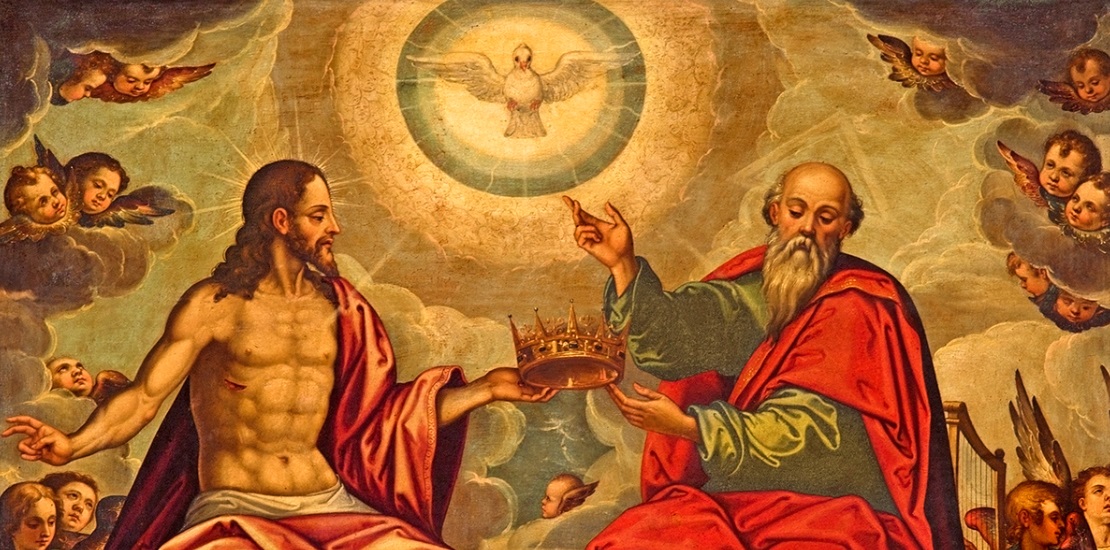
There is one person God (1 Corinthians 1:1) and yet there is God the Father (1 Corinthians 8:6), God the Son (Colossians 2:9) and God the Holy Spirit (John 14:26)

Father, Son and Holy Spirit are people with intellect, emotion and will

[Bible references: Genesis 1:3 Psalm 78:14; 135:14; 139:17; Isaiah 1:18; John 14:26; Romans 15:30; 1 Corinthians 1:1; 12:11; Colossians 1:16; Hebrews 12:2]

Scripture reveals that the Father (Genesis 1:3 Psalm 135:14; Isaiah 1:18), the Son (Colossians 1:16; Hebrews 12:2) and the Holy Spirit (John 14:26; Romans 15:30; 1 Corinthians 12:11) each have the property of intellect, emotions and will, which indicate that the properties of all people. We also can state that God is a person (Psalm 139:17; 78:14; 1 Corinthians 1:1)

Observe

Read John 14:26; 1 Corinthians 1:1; 8:6; Colossians 2:9. How do we explain that there is one God but the Father, Son and Holy Spirit are God?

The “impossible” Trinity and the nature of God

Dancing in the Kingdom- Table of Contents

Dancing In the Kingdom – Part 1 – Shadows of the Kingdom – Chapter 2 – The God who created

The “impossible” Trinity and the nature of God

[Bible references: Exodus 3:1-4:17]

It didn’t take long for the church to develop different ways to try to understand how there is only One God but there also is God the Father, God the Son, and God the Holy Spirit[1]. Can Jesus or the Holy Spirit be God if there is only one God? How can Jesus be God and human? Are the Father, Son and Holy Spirit three persons, or three representations of God? What is a person? If we accept that people have souls with minds, wills, and emotions, what does that mean about God? Yahweh seems to have a mind, will and emotions. We can also ascribe mind, will and emotions to God the Father, God the Son and God the Holy Spirit.

There is no logical human explanation and yet the church has managed to split over how to explain this. One explanation is that God is one in Essence, and three in Person. The complication is that Yahweh has the characteristic of a person, but do we say that Yahweh is an essence and not a person? The Bible doesn’t explain what we call the Trinity, it just reveals that there apparently is one God, who seems to have the characteristics of a person and apparently also three persons in God the Father and God the Son and God the Holy Spirit.

The doctrine of the Trinity is impossible to fully understand. How can there be the one person God and yet we have three persons: God the Father, God the Son and God the Holy Spirit? And how do the Father, Son and Holy Spirit relate to each other? How do we explain Jesus? If he is God, then how can God, who exists outside of and is independent of the universe He created, yet become a part of it, taking on flesh and blood? These problems have caused endless debate and division within the church, resulting in schisms that persist to this day.

The Bible doesn’t even try to explain this situation, it just hints at it in some spots and presents it in others. The New Testament church didn’t even try to clarify it for a hundred years. And when the church did begin the process of trying to define and explain it, the conversation got complicated by Greek philosophy and language differences between Greek and Latin. When Jesus stated that He was equal with the Father, many Jews considered it blasphemy. After all, as part of their discipleship process, one of the most important scripture verses that they memorized was the Sh’ma, “Hear O Israel, the LORD our God, the LORD is one.” What separated Israel from the cultures around them was that Israel professed to have one God but those around them had many gods.


[1] Ligonier Editorial. “The Trinity” Ligonier www.ligonier.org/guides/the-trinity; Taylor, Justin. “What do we mean by Person and Essence in the Doctrine of the Trinity” Gospel Coalition www.thegospelcoalition.org/blogs/justin-taylor/what-do-we-mean-by-person-and-essence-in-the-doctrine-of-the-trinity/; Perman, Matt. “Understanding the Trinity: How Can God Be Three Persons in One?” Cru www.cru.org/us/en/train-and-grow/spiritual-growth/core-christian-beliefs/understanding-the-trinity.html; Encyclopedia.com “Person (In Theology)” Encylcopedia.com www.encyclopedia.com/religion/encyclopedias-almanacs-transcripts-and-maps/person-theology

Observe

Read Exodus 3:1-4:17. We know from Moses’ story that he knew about his Hebrew roots, although the stories of Abraham, Isaac and Jacob probably sounded like fantastic stories to a people living in captivity. Would your response be like Moses?

Brooding, moving, dancing

Dancing in the Kingdom- Table of Contents

Dancing In the Kingdom – Part 1 – Shadows of the Kingdom – Chapter 1 – Prelude

Brooding, moving, dancing

[Bible references: Genesis 1; Jeremiah 29:11; Romans 8:19-21; Galatians 3:13-14; Ephesians 3:20; 1 Peter 5:10]

In the beginning, God created the heavens and the earth … and the Spirit of God brooded[1] over the face of the waters …

Like a bird sitting on eggs keeping them warm until the eggs would hatch and bring forth new birds, the Spirit hovered, brooded, over the earth ready to bring forth life of all sorts, but particularly creatures that would be like God, creatures that would reflect the character of God: transcendent, loving, wise, fruitful, etc. This is how the story begins, full of anticipation and hope for what must be a grand and wonderful future. But even before the story begins, we may contemplate another mystery, the mystery of how there can be one God and also three persons identified as God: God the Father, God the Son, and God the Holy Spirit. The early church[2] struggled with this concept and eventually, in the second century, a Christian apologist, Tertullian, coined the term “Trinity” to describe this 3 persons in 1 God concept.

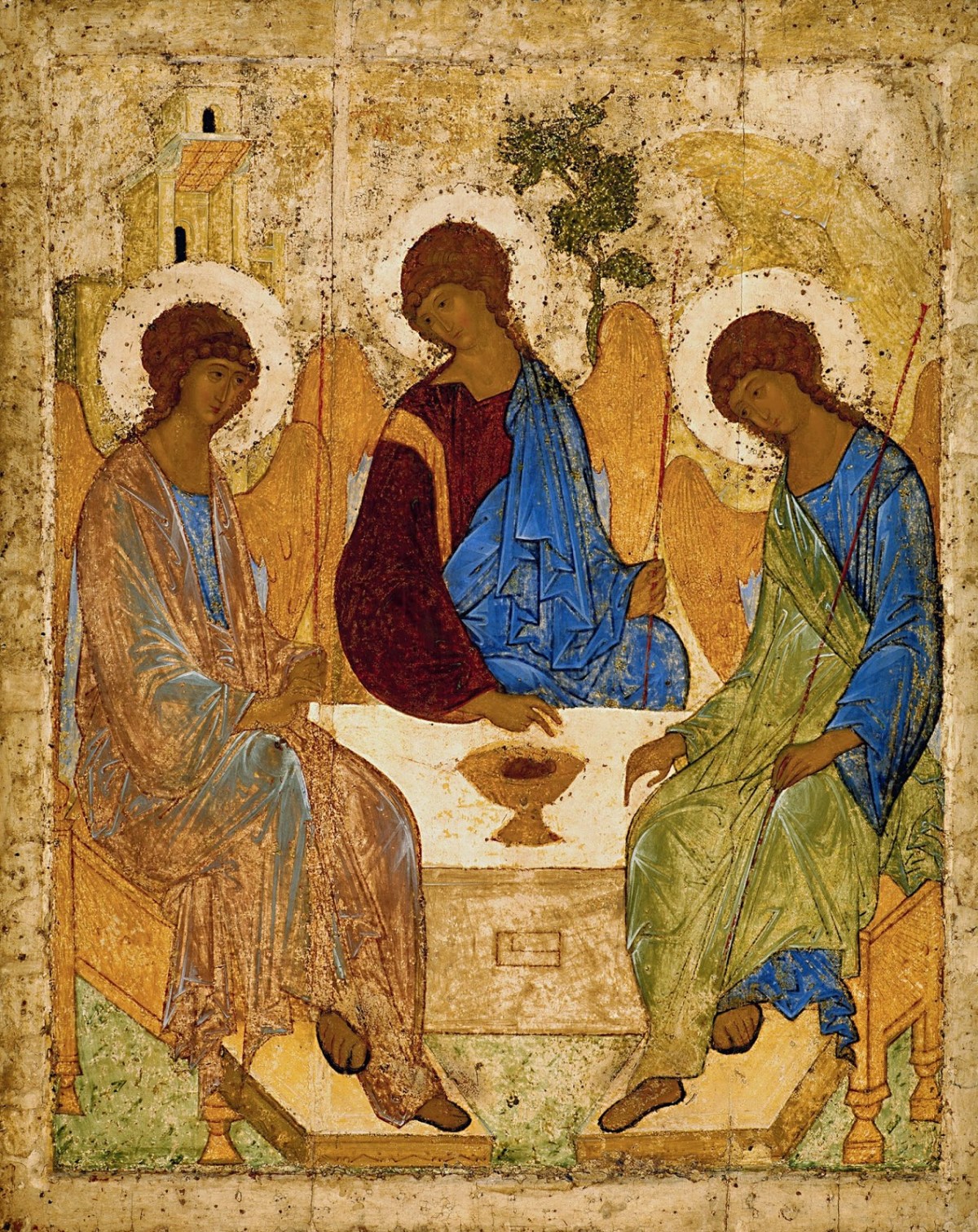
However, that tidy little term can mask over the impossible to understand idea of God being one person and three persons at the same time. There is Greek word available to us that addresses the complexity of this three-in-oneness, “perichoresis[3] which comes from two Greek words which mean “around,” and “to give way” or “to make room.” This is meant to describe the interpenetration or mutual indwelling of Father, Son, and Holy Spirit.

“In that regard the term “perichoresis” (meaning “interpenetration,” “circumincession” or “mutual indwelling”) has been used theologically at least since the time of John of Damascus to refer to the way the three divine persons live in joyful, dynamic communion without merging, loss, or distinction. It is said to be derived from the Greek term perchoreuo meaning “to dance around.” However, the evidence indicates that the term is derived from the different though similar looking perichoreo which refers to “interpenetration” but does not refer to dancing…. this does not mean that the concept itself is inappropriate, as evidenced by those who appreciate its use in that way.” [4]

While this term may be partly helpful in understanding this impossible to understand concept, there is another word that is very similar to another Greek which means “to dance around,” which gives us a word picture of our living and complex God in which the Father, Son and Holy Spirit not only interpenetrate but interact with one another, in a freewheeling but synchronized dance. This means that, as God’s image-bearers, we can reflect the image of the loving, interpenetrating, interacting, and dancing God as we participate in His work of taking care of His Creation and of one another.[5]

This dance which started before Creation, has been joined by God’s image-bearers since the beginning of humanity. It is now our turn. We just need to learn the moves and join the dance.


[1]  Biblehub “Genesis 1:2” Bible Hub biblehub.com/commentaries/genesis/1-2.htm Most translations or this phase use the terms “hovering” or “moving,” but there is also a case for using the term, “brooding,” as in a bird sitting on a nest of eggs.

[2] Van Ee, Joshua J. “The Church in the Old Testament” Westminster Seminary California 9 Nov 2017 www.wscal.edu/blog/the-church-in-the-old-testament The term “church” as used in this book will refer to what may more properly be called the “new testament church.” I wish to make that distinction because the term “church” may be properly applied to all of those who are “called out” to follow Yahweh.

[3] Compelling Truth. “What is the meaning of ‘perichoresis’?” Compelling Truth www.compellingtruth.org/perichoresis.html

[4] Edgar, Brian. “The God Who Plays: A Playful Approach to Theology and Spirituality,” Cascade Books 2017 (e-book) Chapter 9: Kingdom: Playing with God, The Dance of Life

[5] Miller, Darrow. “Perichoresis: Great Dance of God and Creation” Darrow Miller and Friends 16 July 2018 darrowmillerandfriends.com/2018/07/16/perichoresis-great-dance-god-creation/

Observe

Read Genesis 1.  Think of the Spirit of God hovering, moving and brooding over the earth. In your imagination, think about a spiritual being “giving birth” to physical living things, what would you expect to happen?

A brief account

Dancing in the Kingdom- Table of Contents

Dancing In the Kingdom – Part 1 – Shadows of the Kingdom – Chapter 1 – Prelude

A brief account

[Bible references: Acts 17:22-31]

The following is an Extremely Brief Account of the Very Long Story.

There was, and is, and will be, a complex person we call God, who exists as three people that we have come to know as the Father, Son, and Holy Spirit. God decided that he wanted to expand the love that was shared between the Father, Son, and Holy Spirit. To that end, he created an entire universe so that on one of its planets he could create an abundance of living creatures.

On that planet, he created special creatures, humans, who were made in his image such that they could love him in the way that he loved them. This universe then, would be a form of temple, a place where God can meet with his people. The garden he placed them in was where the dimensions of heaven and earth overlapped. The garden was a place where God’s good and beautiful kingdom of heaven was fully present.

Of course, these humans were not duplicate spiritual beings who were gods themselves, but physical creatures who had enough of God’s characteristics so that they could love in the way God loved. But love is a voluntary thing that we must choose to do, we cannot love unless we have the option to not love.

God placed his first people in a garden and gave them an assignment. They were to be his representatives, priests if you will, in this garden. They were to take care of it as His representatives, His stewards in the garden. Their long-term task was to multiply and fill the earth so that the whole earth would become the place where God could meet with all his people. The entire earth was intended to be filled with God’s abundant provision for his people who would then take care of what God provided, and all the while giving and receiving and sharing the love which God would freely bestow. In this way, the kingdom of heaven would overlap with the entire kingdom of earth and God would freely mingle with his people.

The option to love or not love was provided by a test of trust. There was in the garden a tree whose fruit not only looked appealing but promised to provide the gift of all knowledge if one ate it. The humans were told to trust God and not eat the fruit of that tree. Eating that fruit would not only provide certain knowledge but would also provide death.

The results of that test are now apparent all around us. Death comes to us not only in the form of physical death, the separation of our souls from physical life, but also in the form of spiritual death, the lack of love which separates us from each other and from God. Fortunately, our current situation is not our destiny – and that is what the rest of the story is about.

God intended that death would not merely be a penalty for not trusting (or loving) but would also be the very mechanism by which he would restore us to himself. From the descendants of the first people, God separated out a family through which he would bring blessing to the entire world. Through that family that a nation would be raised and through that nation the eternal God would choose a family to accomplish the inconceivable. In that chosen family, the eternal God would cause himself to be conceived within the womb of a woman who would then give birth to a being who was both fully God and fully human. He would then be raised as a human and eventually would suffer death by execution as a human and then be resurrected as a human.

In that resurrected human body, the eternal God would return to heaven, but before doing so, he invited us, in essence, to represent Him on earth by becoming part of his body on earth. By trusting him and accepting his Spirit, we could join with him in His death and resurrection by dying to our own self-interests and uniting with his loving interests.

He then promised to return to us again in bodily form, at which time the kingdoms of heaven and earth will again overlap. Heaven will be rejoined to earth to fulfill the intention God had from the beginning. But meanwhile, in this time between His incarnation and His eventual return, we are still called to be stewards of our currently broken world, bringing slivers of the light and hope of heaven into a world now very dark with evil and suffering and pain.

Observe

Read Acts 17:22-31. How could we use Paul’s gospel message to people we speak to today?