Re-envisioning our inhabited environment

Dancing in the Kingdom- Table of Contents

Dancing In the Kingdom – Part 3 – Dancing in the Kingdom– Chapter 18 – Entering the Dance

Re-envisioning our inhabited environment

[Bible references: Exodus 25:1-9; 31:1-11; 35:30-36:7; Isaiah 65:17-25; Revelation 21:24-26]

Within our given environment, we create communities, culture, and institutions to support all that. Our homes, neighborhoods, towns, and cities reflect our potential to create either beauty or corruption. The power we have as bearers of God’s image which provides our God-given ability to transcend our environment, is the source of great good or great sin.

“And decades of persuasive experiments have shown that built environments can be a factor in shaping us in ways that have significant long-term implications, in educational or workplace performance, or our physical and mental health and wellness. The point is that architecture, an integral part of essentially all cultures, is one of many interacting cultural factors—like entertainment and marketing, politics, belief systems, or charismatic individuals, for example—that together, in large and small ways, are involved in shaping behavior and who we are over a lifetime.” [1]

“On the night of May 10, 1941, with one of the last bombs of the last serious raid, our House of Commons was destroyed by the violence of the enemy, and we have now to consider whether we should build it up again, and how, and when. We shape our buildings, and afterwards our buildings shape us.”[2]

We possess the abilities to create works of art, some of which are designed simply to be enjoyed or give us cause to think and some of which have practical uses such as buildings we live, work, or play in, the outdoor areas between those buildings that can serve to connect us together, the vehicles which transport us. These practical works of art also require feats of all sorts of engineering, technical and organizational skills.

It is also clear that those same abilities are regularly misused, and our constructions look less like works of art and more like works of neglect and corruption. Instead of works which build us up and add to the flourishing of all, our works sometimes are simply not as helpful as they can be and sometimes even outrightly abuse our environment as well as our fellow humans.[3] Poor building design sped up Covid spread.[4]

 A Christian architect, Dave Greusel, suggests that we should construct our buildings with the attitude that they serve as “gifts to the community,” purposely constructed to advance God’s Kingdom, expressing grace, beauty, justice, creativity.[5] There are many different ways in which we enhance the quality of life not only within the buildings we create, but also the environment around those buildings, designing our spaces with consideration for how we live not only in, but around our buildings.

In the U.S., planning our cityscape around automobiles has seemed natural because of the way that our automotive technology has allowed us to flexibly expand in the large space afforded by our country. Sadly, that type of planning has caused us to sometimes neglect the way that life is normally lived with the communities of the city. Sometimes, it has been after the fact that cities have paid attention to how to better design the city spaces for people to navigate on foot or bicycle and to live in community.

Enacted space is “activated by the people using it.” that is, it is not enough to design particular spaces, but to make them attractive so that people use them. [6]

Additional features that can be considered for our spaces are how we situate housing for people and where they work, how we create enclosed spaces that give a sense of protection and safety, monuments that provide particular spaces with meaning and the thresholds (doorways or openings) between the building interiors and the spaces outside.[7]

“Connectivity is measured by the number of intersections per square mile. One hundred fifty connections per square-mile is considered to be the minimum for a vibrant community.” [8]


[1] Hart, Robert Lamb. “How Buildings Shape Us” Common Edge commonedge.org/how-buildings-shape-us

[2]Churchill, Winston. Made in a speech in the House of Commons on October 28,1943 about replacing the bombed-out House of Commons chamber. Quote given Automated Buildings automatedbuildings.com/news/aug20/articles/lynxspring/200721102909lynxspring.html

[3] Rethinking the Future. “Some Examples of Bad Architecture Ideas” Rethinking the Future www.re-thinkingthefuture.com/article/some-examples-of-bad-architecture-ideas; Staczek, David. “Is Bad Architecture Harmful to Our Health” Architizer architizer.com/blog/inspiration/stories/bad-architecture-harmful-to-health; Husock, Howard. “How Public Housing Harms Cities” City Journal Winter 2003 www.city-journal.org/html/how-public-housing-harms-cities-12410.html

[4] Ing, Will. Architects’ Journal 3 Oct 2021; www.architectsjournal.co.uk/news/poor-building-design-sped-up-covid-spread-says-academic 2021

[5] Greusel, Dave. “Architecture for Human Flourishing” Denver Institute for Faith and Work 15 Apr 2015 denverinstitute.org/david-greusel-architecture-for-human-flourishing-videos

[6] Jacobsen, Eric O. The Space Between  A Christian Engagement with the Built Environment” Baker Academic, 2012 (p. 17).

[7] Jacobsen, Eric O. The Space Between  A Christian Engagement with the Built Environment” Baker Academic, 2012 (Chapter 2)

[8] Jacobsen, Eric O. The Space Between  A Christian Engagement with the Built Environment” Baker Academic, 2012 (p. 43)

Reflect

As you consider the town or city you live in, what might be done better to make the places we live and work to be a gift to the entire community?

Observe

Read Isaiah 65:17-25. How can we build things that point to our future hope?

Top-down strategy

Dancing in the Kingdom- Table of Contents

Dancing In the Kingdom – Part 3 – Dancing in the Kingdom– Chapter 18 – Entering the Dance

Top-down strategy

[Bible references: Numbers 22-24; Deuteronomy 8; Psalm 27; Nehemiah 1-2; 1 Timothy 4:3; stories of King David and Solomon (2 Samuel; 1 Kings 1-11)]

The top-down strategy tries to reach individuals by affecting the culture. Even if people don’t respond to the cultural change, God can be glorified by the display of his kingdom values in society.

James Hunter examined how culture changes and saw the mixed results of the bottom-up approach. He saw that some small groups of people (e.g., gays, Jews) have had a relatively large impact on the culture while larger groups (e.g., evangelicals) are losing their impact on the culture. Hunter discovered that cultures usually are changed from the top-down, most influenced by elites who are somewhat outside the center of influence but having a network of connections to other elites and who can withstand the resistance from the centers of influence.

Culture is about how societies define reality—what is good, bad, right, wrong, real, unreal, important, unimportant, and so on. This capacity is not evenly distributed in a society but is concentrated in certain institutions and among certain leadership groups and that cultural change is most enduring when it penetrates the structure of our imagination, frameworks of knowledge and discussion, the perception of everyday reality.[1]

Very few Christians are in a position to exercise a top-down strategy. The few people who do have such influence are typically subject to the temptations that come with such power, and all too often succumb to sin and become disqualified or become abusive in the exercise of such power.


[1] Hunter, James Davison. To Change the World: The Irony, Tragedy, and Possibility of Christianity in the Late Modern World. Oxford University Press 2010

Observe

Read Nehemiah 1-2. What factors were involved in Nehemiah’s influence on King Artaxerxes?

Reforming our loves

Dancing in the Kingdom- Table of Contents

Dancing In the Kingdom – Part 3 – Dancing in the Kingdom– Chapter 15 – Reforming our Souls

Reforming our Loves

[Bible references: Psalm 1; 42; 139:13-14; Proverbs 4:23; Matthew 5:3-12; 12:28; 13:1-22; Mark 4:11; 12:29-31; Luke 8:10, 10:8; 13:18-19; Ephesians 6:10-20; Philippians 1:9-11; 1 Peter 5:8-9]

We are shaped every day, whether we know it or not, by practices – rituals and liturgies that make us who we are. We receive these practices – which are often rote – not only from the church or the Scriptures but from our culture, from the “air around us.”[1]

The Hebrew word for “hear,” “shema,” implies not just hearing, but obedience. Hearing with our mind should be connected to obeying with our body. God has made us with heart, soul, mind, and strength. Descartes had said, “I think therefore I am,” but that, in and of itself, leaves out the totality of who we are. We are not just brains on a stick,[2] we are creatures with embodied souls, creatures made in the image of a loving God, whose love is not just expressed in a sentiment, but by everyday choices expressed in what He does and in what we do. 1 Corinthians 13 makes clear that nothing is worthwhile if there is not love expressed through our actions.

Unfortunately, as we have expressed in a previous chapter, our choices seem to always be shrouded in sinful behavior. Time after time, history has shown us that simply filling our mind with the truth of God is a good start but is not sufficient to prevent us doing wrong things. Although our love will not be perfect until we are completely transformed during our resurrection, that does not leave us with no means to order our loves in our current lives. For the time that we are in, God has provided us with various disciplines which can be used to train our habits and therefore train our loves.

Our hope is not just in the future. Jesus proclaimed two thousand years ago that the kingdom of God has come. Jesus’ work of restoration may not be completed but is already underway. We may sometimes fret that the work of restoration, within us and around us, does not happen quickly, but as we observe God’s character as manifested in the natural and spiritual world around us, God seems to relentlessly accomplish his work through processes of growth. God had specified that all birds of the air, fish of the sea, animals and even humans were, through normal processes, to multiply and fill the earth. God’s own plan of redemption worked through generations from Adam, through Noah, Abraham, Moses, and finally to Christ. Jesus even particularly specified that the kingdom of God is like a seed that over time will grow into a plant or tree.

As creatures made in the image of God, we are given the free will to participate in our own growth. But we should keep in mind that if our goal is to become more like Jesus, then we should expect that growing into the likeness of Christ will take time … will take normal processes of growth. But we also need to keep in mind that God’s work of restoration is not unopposed; there are spiritual forces at work against God and against us.

Ultimately, it is Christ who transforms us. But we can humbly submit ourselves to God and prepare the soil of our lives to receive His grace. Our growth will be impacted by our loves and desires, by our yearnings, hungering and thirsting,[3] by where we choose to feed ourselves, by the habits and liturgies we allow to shape our lives,[4] by the disciplines we submit to,[5] by how we center our lives,[6] by how we have integrated the love we have toward ourselves, our families, our communities, and God. In the meanwhile, we will face resistance from within and from outside ourselves. In the normal course of events, it will be a common experience to have times when God seems absent, but we must know how to stay the course.

Holding to our center, keeping our loves ordered, holding on to our identity in the face of the pressures of the world will take conscious effort and discipline. Of course, our discipleship is not just a matter of paying attention to our inner life but also in the expression of our inner life in our walk with others, inside and outside the church. Hopefully, within the church, we can find healthy mutual support as we share our complementary spiritual gifts with one another.

Spiritual Disciplines are those practices which keep us centered on Christ. There are books with various lists of spiritual disciplines available to help guide us and you will find them with slightly different approaches. For instance, in Richard Foster’s book, Celebration of Discipline,[7] the disciplines are divided into three categories: The inward disciplines (meditation, prayer, fasting, study), the outward disciplines (simplicity, solitude, submission, service) and the corporate disciplines (confession, worship, guidance, celebration).

Another approach to spiritual disciplines is to focus on deliberative lifestyles such as were originally developed for use in monasteries but have application in the everyday lifestyle. One such example is the Rule of St. Benedict.[8] The Rule reminds us that we do not need to go about looking for God, for He is everywhere, including right where you are in your time and your place, in the humdrum everyday tasks of life. Freedom in Christ is achieved through the submission to three vows: obedience, stability and conversatio morum (conversion of life). These vows present us with paradoxes: our need to be in the desert so that we can be more fully present in the marketplace, our need to have prayer alone so that we can be more present in common worship, our need to commit ourselves to stability so that we can be more fully open to change, our need to detach ourselves from things so that we can fully enjoy them. The intent of all these practices is to help us more fully center ourselves in Christ so that we can more fully love our community.

Whether we are following an intentional plan or not, our everyday habits and practices do shape our spiritual lives. Even the normal, incidental routines we do, such as brushing our teeth, can shape us in ways we don’t think about. But if we take the time, we have the opportunity of using those same routines to help transform us in the ways we want to. But if we want to give our everyday routines a chance to transform us in the way we want, we will need to practice ways of waiting, hoping, slowing down, and preparing.

“When I brush my teeth I am pushing back, in the smallest of ways, the death and chaos that will inevitably overtake my body. I am dust polishing dust. And yet I am not only dust. When God formed people from the dust, he breathed into us—through our lips and teeth—his very breath. So I will fight against my body’s fallenness. I will care for it as best I can, knowing that my body is sacred and that caring for it (and for the other bodies around me) is a holy act. I’ll hold on to the truth that my body, in all its brokenness, is beloved, and that one day it will be, like the resurrected body of Christ, glorious. Brushing my teeth, therefore, is a nonverbal prayer, an act of worship that claims the hope to come.” [9]

We need to be mindful that changes in our life are never neutral. We need to be intentional about choosing practices and patterns in our life that will transform us to be more in the image of Christ.

“Take heed, consider your temptations, watch diligently; there is a treachery, a deceit in sin that tends to the hardening of your hearts from the fear of God.” [10]

We need to be aware of how much our sin is actively working against us, hardening our hearts, and turning us in ways, even very subtle ways, against Christ. To be diligent in following Christ, we need to be diligent in practicing spiritual disciplines in one form or another.


[1] Warren, Tish Harrison. “Liturgy of the Ordinary: Sacred practices in everyday life.” InterVarsity Press 2016. eBook

[2] Smith, K.A. James “You Are What You Love: The Spiritual Power of Habit” Brazos Press 2016. eBook

[3] Smith, K.A. James. “You Are What You Love: The Spiritual Power of Habit” Brazos Press 2016. eBook

[4] Warren, Tish Harrison. “Liturgy of the Ordinary: Sacred Practices in Everyday Life” InterVarsity Press 2016. eBook

[5] Foster, Richard J. “Celebration of Discipline” Harper & Row Publishers ©1978

[6] De Waal, Esther. Seeking God The Liturgical Press. 2001; Tozer, A.W. “The Pursuit of God” Christian Publications, Inc. 1948

[7] Foster, Richard. Celebration of Discipline. Harper & Row Publishers ©1978

[8] Foster, Richard. Celebration of Discipline. Harper & Row Publishers ©1978

[9] Warren, Tish Harrison. Liturgy of the Ordinary: Sacred Practices in Everyday Life. InterVarsity Press 2016. eBook

[10] Owen, John. Mortification of Sin. In Believers The Necessity, Nature, And Means Of It: With A Resolution Of Sundry Cases Of Conscience Thereunto Belonging.” From The Works of John Owen Johnstone & Hunter Volume 6, 1850-3 www.monergism.com/thethreshold/sdg/owen/Mortification%20of%20Sin%20-%20John%20Owen.pdf

Observe

Read Psalm 1; Matthew 13:1-22. How do you prepare the soil of your heart so that you can spiritually flourish?

Mystery of worship

Dancing in the Kingdom- Table of Contents

Dancing In the Kingdom – Part 2 – The Kingdom Revealed – Chapter 13 – Distinctives within the body of Christ

Mystery of worship

[Bible references: Deuteronomy 4:15-24; 12:1-32; Romans 12:1-21; 1 Corinthians 14:1-40; 1 Timothy 2:1-15; Hebrews 12:1-39]

What are proper ways of worship?

In Hebrew, the word for worship means “to bow down, to prostrate oneself” or to “lay flat on the ground.”  In Greek, the words for worship mean to “kiss the hand, to fall on the knees,” or to “prostrate oneself” “to pay homage” or “to render religious honor.”  These things can be done in the context of a “worship service” on a Sunday or in any activities throughout the week. Activities in work or play can be done in an attitude of worship.

There are some differences in belief about the role of arts in worship: Is music or artwork or dancing permissible, or what kind of music or artwork or dancing is permissible? Part of the differences are due to whether activities are permissive unless specified otherwise in the Bible or activities are not allowed unless specified in the Bible.[1] Some of those differences emerged in the way some of the Protestants perceived abuses of the arts in the Roman Catholic denomination. Despite these disagreements, there are some hymns that have been widely accepted across many denominations. In a similar fashion, many congregations/denominations have adopted the contemporary style music, although in some congregations that style of music has created divisions. Music can be important as an alternate means of expressing theology.

Icons are a specialized type of artwork that represent sacred objects or honored saints in the church. The icons were used as a visual method of teaching and were particularly important when literacy rates were low. Icons are meant to take the place of the physical presence of admired saints, and because of this, Roman Catholic and Orthodox congregants will bow to or kiss the icons as if they were bowing to or kissing the actual revered saints. This is not meant to worship the icons but to show respect.[2]

Prayer can be done formally, informally, individually, or corporately. There are different viewpoints about whether praying to the saints – asking them to pray for us – is acceptable. There are also differences about whether mystical experiences in prayer are proper.

What about Mary?

The mother of Jesus is in the middle of one of the great mysteries: How is it possible for the infinite God to become a human even from the point of conception? Related to that question are other questions: Why was Mary selected? How was it possible for her to conceive Jesus? Were there any special qualities for Mary to have in order to become the mother of Jesus, the Son of God? Did she actually become the Mother of God?[3]

The Roman Catholics consider that Mary was conceived without original sin.[4] Both the Roman Catholic and the Orthodox denomination’s view that Mary did not die but fell asleep,[5] and then was physically assumed into heaven.[6] The Protestants mainly reject these views and because of their reaction to the corruption of the Roman Catholic denomination have generally not held Mary in as high esteem.

What are liturgies?

Liturgy is derived from the Greek “public work” or “public ministry.” Within the church it has been usually applied to the worship service (for most congregations) on Sundays. For some congregations it specifies the service where Communion[7]  is performed. In some instances, the term has been used to specify worship services that have a formal structure. Sometimes, in order to delineate services that are more formal from services that are less formal, the terms “high church” and “low church” are used. In the “high church” setting the liturgy will be specified particularly as the Liturgy of the Word and Liturgy of the Eucharist. Used more loosely, the term can be used to specify any type of public service, whether it is in gathered worship or scattered worship,[8] whether it’s in front of other people or simply front of God (who is always there). In some evangelical denominations, liturgy is seen as something we do for God, but in other cases, liturgy is seen as a setting where God meets us, and we respond.

What about the Sabbath?

From the Creation account, we see that the point of creation was to create a temple, a place for God to be with His image-bearing creatures. The “seventh day” was meant to indicate that the temple was now complete, and that God’s image-bearing creatures could fulfill the role of being God’s representatives on earth, to take care of the earth as his priests.

Unfortunately, our human rebellion separated us from God, and our role as his stewards of his creation became corrupted. The Sabbath liturgy was introduced to Israel as a weekly reminder to them of their priority to have a relationship with God; that they, as God’s chosen nation, could rest from their weekly labor because God would provide for them. This weekly setting aside of labor was a gift from God, still enjoyed by Jews to this day.

The early church consisted of mostly Jews who still celebrated the seventh-day Sabbath, but quickly also adopted the first day, the Lord’s Day, as a celebration of the resurrection of Jesus. The Bible never required Gentiles to celebrate the Sabbath. Even if we regard the laws that applied to Noah to be also applicable to Gentiles, none of those laws prescribe Sabbath observances. As the church developed, different congregations developed different practices regarding the Sabbath. While the trend was towards Sunday gatherings to worship, some groups, who could be called Sabbatarians, applied Sabbath restrictions to Sunday. Others allowed for more freedom with a focus on the celebration of the joy of Christ’s resurrection, with the thought that all people who have the Spirit of God are Christ’s temple and we do his work each day of the week.


[1] Got Questions. “Regulative vs. normative principle of worship – which viewpoint is correct?” Got Questions www.gotquestions.org/regulative-normative-worship.html

[2] OrthodoxWiki “Veneration” OrthodoxWiki orthodoxwiki.org/Veneration

[3] OrthodoxWiki “Theotokos” OrthodoxWiki orthodoxwiki.org/theotokos

[4] Catholic Encyclopedia “Immaculate Conception” New Advent www.newadvent.org/cathen/07674d.htm

[5] OrthodoxWiki “Dormition” OrthodoxWiki orthodoxwiki.org/Dormition

[6] Sri, Edward. “The Assumption of Mary” Franciscan Spirit Blog www.franciscanmedia.org/franciscan-spirit-blog/the-assumption-of-mary

[7] Also known as the Eucharist or Thanksgiving

[8] Warren, Tish Harrison. Liturgy of the Ordinary: Sacred Practices in Everyday Life. InterVarsity Press 2016. eBook Chapter 7

Mystery of sin, salvation, and sanctification

Dancing in the Kingdom- Table of Contents

Dancing In the Kingdom – Part 2 – The Kingdom Revealed – Chapter 13 – Distinctives within the body of Christ

Mystery of Sin, Salvation, and Sanctification

[Bible references: Ps 38:39; Is 12:2; 25:9; Zephaniah 3:17; Matthew 26:28; Luke 24:47; John 3:16; 10:9; Acts 2:38; 4:12; Romans 5; 6:23; 1 Corinthians 1:21; 15:2; Ephesians 2:8; 2 Tim 3:15]

How do we inherit sin?

There are two main views of how we inherit sin:

  • According to ancestral sin, Adam and Eve alone bear the full responsibility and guilt for the sin in the Garden, but we inherit mortality, the tendency to sin, and alienation from God and other people. Expulsion from the Garden was to prevent the humans from being eternally separated from God.
  • According to original sin, as Adam’s ancestors we inherit not only Adams’ sinful nature but his guilt as well. Expulsion from the garden was a punishment.

What did Jesus do to allow our relationship with him to be restored?[1]

By taking on human flesh the way that Jesus did and becoming fully human, he experienced all the temptations to sin that we face, but without succumbing to them. When he died on the cross as a perfect God-Man, he was able to overcome death and offer to restore our relationship with him. Different congregations have different ideas on how this transaction was able to actually work.

  • God paid a ransom to free us. Once the ransom was paid, justice was satisfied, and God was able to free us. There is a dispute about whether the ransom was paid to God or to the Devil.[2]
  • Christ is seen as the second Adam who is victorious where Adam failed and undoes what Adam did. The atonement of Christ has reversed the course of mankind from disobedience to obedience. Christ’s life recapitulated all the stages of human life and in doing so reversed the course of disobedience initiated by Adam.[3]
  • Just as Adam’s sins were imputed to us (original sin), when Jesus died on the cross, his righteousness was imputed to us.[4]
  • Christ suffered for everyone so that the Father could forgive the ones who repent and believe. Pardon and forgiveness cannot be brought to pass unless God’s righteous obligations as Moral Governor can be satisfied. Nor can it happen unless man is willing to repent and embrace the conditions of mercy. Man must identify himself in a committal of faith to the sufferings of Christ for his sins, as the only hope of his forgiveness and spiritual restoration from a state of ruin.[5]

What is the effect of sin on our bodies and on our world?

Despite the effects of sin, that we are image-bearers of God. This view creates a positive view of our bodies and is supportive of taking healthy care of our bodies and also the environment. However, there is a viewpoint originally developed by Greek philosophy that has continued to affect the church in many ways from the beginning is the idea that only spiritual things are good and physical things are bad.[6]

In regard to the body, this dualism leads to the view that sex is sinful and a general discomfort in talking about the body, preventing the church from counteracting the influence of the culture both within and outside the congregation. This dualism has led to many other errors as well, such as focusing on heaven as our final destination instead of a new creation, the need to deny oneself physical pleasure[7] in order to pursue the spiritual, and the neglect of our roles as stewards of our physical environment.

How are we saved from the consequences of our sins?

When the first people rebelled against God, they brought the penalty of death and eternal separation from God upon themselves. As descendants of those people, we inherited the corrupt nature that causes us to sin and therefore also brings the penalty of death and separation from God upon ourselves. Our salvation is only possible because of the death and resurrection of Jesus. The gift of salvation can be received when we confess our sins, acknowledge Jesus’ death on our behalf and accept God’s forgiveness for our own sins.

That said, there are two explanations about how we are saved that depend on how we think we inherited sin.

  • According to the doctrine of ancestral sin, salvation is a process of avoiding sin and becoming more like God,[8] a process which, for those who are baptized into Christ, will continue after our death and resurrection. God did not expel Adam and Eve out of the Garden of Eden and away from the Tree of Life as a punishment, but out of compassion, so that we would not be like the fallen angels and become immortal in sin.
  • According to the doctrine of original sin, Jesus’ death is considered to have paid the penalty for our sins. By receiving his forgiveness, we are legally justified before God, and he gives us his spirit so that we can begin the process of becoming more like him.

What is the role of grace in salvation?

In Reformed theology, God gives irresistible grace to those he chose before time began and gave them the will to respond to his call to repent so that they can be forgiven, and once forgiven, God will ensure that they will persevere in the faith.

In provisional theology all men are given a grace[9] that allows them free will to respond to God’s call to repent and be saved and also have God’s assurance that he will not let us go.[10]

In Arminian and Orthodox theology, it is by our free will that we accept God’s forgiveness and then also have the free will to abandon that faith later.

What does it mean to be saved by grace and yet have expectations to live righteously?

Some Christians think that once they are converted, that is they have received Christ’s gift of salvation, then they have done all they need to do. After that, some will either forget or neglect the entire process of being a disciple of Christ leaving the question of whether they were actually converted.

Some congregations believe that more than faith is required in order to receive salvation[11] and insist that salvation has not happened unless some specific things are done. The Orthodox tradition states that salvation is a process that begins with conversion but then continues with the process of becoming more like God. The Roman Catholic and Protestant traditions state that once we have been justified, then God can set us apart to be the type of people that he has intended us to be from the beginning.[12] In this condition, we can begin the process of growing in Christ, that is, becoming more like God.

We are living in the time between the first coming of Christ, where he conquered death and sin, and His second coming, when he will transform creation with a new heaven and earth, and we will have new resurrection bodies. In this in-between time, we still are living in corrupt bodies and in an earth corrupted by sin although we may have begun the process of being transformed more into the image of Christ. This does create some confusion.

Until the final resurrection we still sin and need to regularly be in an attitude of repentance, confessing our sin and turning back to God and acknowledging our need for God’s grace so that we can also be ready to give grace to others.

The Roman Catholics emphasize our need to not only confess our sins, but to do something tangible to express our repentance[13] and need to be purified more completely before we can appear before God. This requires a temporary stay in purgatory before we are allowed into heaven.

Viewing things in a more positive light, some congregations emphasize that while we may not actually free from sinning, that our hearts have been cleansed from sin by the grace of God.[14]

Since we are under grace, do the commandments still apply to us?

We are told that those who are born “of the Spirit” are not “under the law” because Jesus fulfilled the law. However, that does not mean that the law can be ignored. In fact, not only does the law provide guidance for us, but the expectations for our behavior are even more comprehensive. The New Testament explicitly tells us that:

  • hating our brother is equivalent to murdering our brother. 
  • we should not hate our enemy but love them.
  • looking at someone with lust is like committing adultery.
  • if we are forced to go one mile, then we should go two miles.

Our motivation should not come from trying to obey the external law “written in stone” but rather from the internal desires “written in our hearts” to love – love God and to love one another. To give a few examples: we should be.

  • Not driven to obey the Commandment to keep the Sabbath, but rather encouraged to live every day to God.
  • Not driven to obey the command to tithe, but rather encouraged to be generous.
  • Not driven to obey the command to not covet, but rather encouraged to promote the welfare of others.
  • Not driven to obey commandments, but rather encouraged to express the fruits of the Spirit.
  • Not driven to obey externally given commands, but rather encouraged to grow in our internal desire to love,
  • Not driven to avoid doing wrong, but rather encouraged to delight in finding the best way to do what is right

However, the relationship of the church to the law has been a point of contention in many congregations causing many congregations to adopt a legalistic framework. There is a tendency to consider the laws we call the Ten Commandments to be unlike the other laws in the Old Testament – to be “moral laws” that still apply. The New Testament, however, has not separated out the “moral law” from the rest of the laws (sometimes called civil and ceremonial laws) in the Old Testament. Some consider the Law to be good as it guides us away from idolatry, but others view the law to be bad as we should rather be relying on grace instead of the law which is considered to be oppressive.

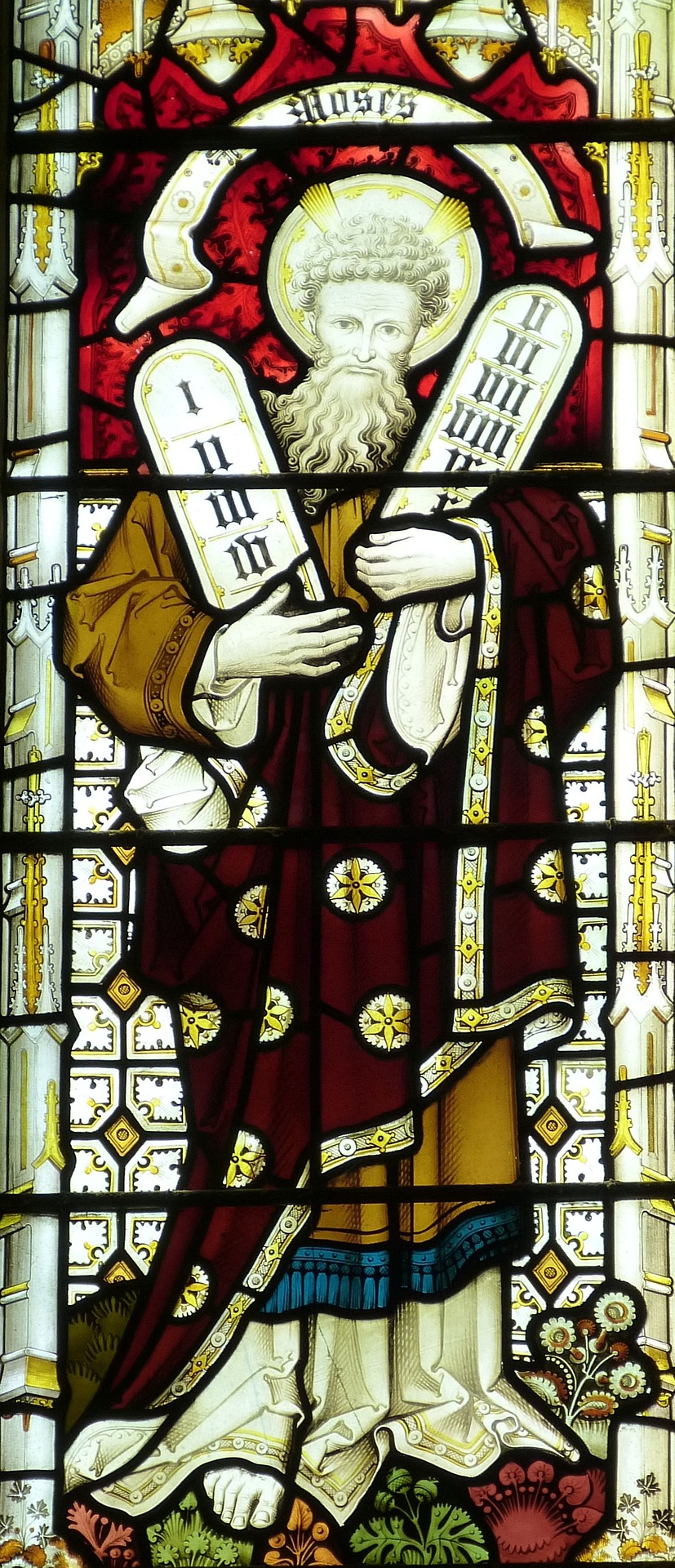
The Ten Commandments, as we call them, are not numbered in the original texts (Exodus 20, Deuteronomy 5) but in the Biblical text are referred to as the Decalogue, which means “ten words.”[15] This has resulted in a couple of different numbering schemes for the “ten words.” One of the variations is influenced by iconoclasm, which makes “You shall not make any graven images …” the second commandment.


[1] Soteriology is the study of how we are saved

[2] Theopedia “Ransom”  Theopedia theopedia.com/ransom

[3] Theopedia “Recapitulation theory of atonement”  Theopedia theopedia.com/recapitulation-theory-of-atonement

[4] Theopedia “Penal substitutionary atonement”  Theopedia theopedia.com/penal-substitutionary-atonement

[5] Theopedia “Governmental theory of atonement” Theopedia theopedia.com/governmental-theory-of-atonement

[6] In Persia during the third century, Mani tried to synthesize all the known religions, including Gnosticism and Christianity into a religion known as Manichaeism. Gnostics think that there is a good spiritual world, and a bad physical world (aka Dualism).

[7] New Advent “Asceticism” New Advent newadvent.org/cathen/01767c.htm

[8] Theopedia “Theosis” Theopedia www.theopedia.com/theosis

[9] Prevenient grace means the grace of God that surrounds all, and is at work in all, even before we know or care about it.

[10] Spurgeon, C.H. “The Security of Believers – or, sheep who shall never perish”  Spurgeon Gems spurgeongems.org given 5 Sept 1889 www.spurgeongems.org/sermon/chs2120.pdf

[11] Theopedia “Legalism” Theopedia theopedia.com/legalism

[12] Sanctification is the process of being set apart for God’s use.

[13] Catholic Encyclopedia “Penance” Catholic Encyclopedia catholic.com/encyclopedia/Penance

[14] Theopedia. “Wesleyan perfectionism”  Theopedia www.theopedia.com/wesleyan-perfectionism. Wesleyan perfectionism, sometimes called entire sanctification, is a view held by John Wesley that taught that Christians could to some degree attain perfection in this life.

[15] Hale, Philip. “Numbering the Decalogue, Images, and Iconoclasm: A Historical and Theological Survey”  Nebraska Lutherans for Confessional Study, July 25, 2013

Observe

Read John 3:16; 10:9; Acts 2:38. How can we be reconciled to God?

The darkness

Dancing in the Kingdom- Table of Contents

Dancing In the Kingdom – Part 2 – The Kingdom Revealed – Chapter 11 – The Kingdom Enters

The Darkness

[Bible references: Matthew 17:11; 27:45-46; Luke 23:43; John 16; 19:25-27; 23:44-46; Romans 1-3]

Jesus’ trials were performed in the dark of night, physically and spiritually. He was condemned by the Jewish rulers who were spiritually blind and then allowed to be crucified by the equally blind Roman rulers and even deserted by the disciples he spent three years training. He was condemned by a world who did not deserve him; the whole world was guilty of turning away from him. The world he loved, and for which he would suffer and die, was not deserving of his mercy and grace. The world itself and all the creatures who bore the image of God were corrupted by sin and truly separated from the one who never stopped loving them all. The Creator literally put his life on the line to break the hold of sin in the world so that the world and image-bearing creatures could be restored to what he had intended from the beginning.

The darkness that hung over the world at that moment was a darkness that Jesus had come to defeat. The darkness would only last for a while more. So, with that in mind, even as he was hanging on the cross, Jesus was fixed on the future. He assigned one of his disciples to take care of his mother, Mary. When one of the criminals who were crucified with him, recognized Jesus as God and confessed his guilt, Jesus assured that man, “Today you shall be with me in paradise.” Jesus had chosen to be born the same way as his image-bearing creatures so that he might come to this moment of suffering and dying on our behalf; for this was the way to defeat the hold of sin and death, not only over our lives but over all of creation as well.

Observe

Read John 16. As John is writing about these events, he is careful to detail how the events correspond to the prophecies in Scripture. What is important about making that kind of connection?

Passion unto death

Dancing in the Kingdom- Table of Contents

Dancing In the Kingdom – Part 2 – The Kingdom Revealed – Chapter 11 – The Kingdom Enters

Passion unto death

[Bible references: Genesis 3:12; Matthew 16:21-23; 21:4-5; 26-27; Mark 9:30-37; Luke 22:54-62; John 1:14; 12:12-19; Romans 1:18-32; 5:20; 6:23; Ephesians 2:1-10]

There is a sense in which each moment of history is equally important to the next. Each moment is a moment which God pursues us as he guides us to our ultimate flourishing. There is no reason to suppose that our continuing flourishing will cease once heaven and earth are reunited, but we should expect that our flourishing will continue as a manifestation of his glory.

However, in our current state of affairs in which earth is broken from heaven, there are moments, epiphanies, in which heaven more noticeably breaks through. There are moments in which angels are more visible or in which Yahweh reveals himself through his prophets. Even more remarkable is the moment in which Yahweh submitted himself to taking on human form, even to the point of being conceived as an embryo inside the body of a human woman and then enduring the normal process of physically growing to become a human adult. Yet even that was not sufficient. Yahweh may have taken the form of a human, but it wasn’t a glorified human,[1] not yet the human as he intends for us to be.

To do that would require him to suffer the shame and justice that we ourselves have earned. The sin that brought us death would have to overcome by a sacrifice that would bring us life. In becoming human, Jesus identified himself with us, but in order for us to become like him he would have to make us ready to receive his spirit. We were helpless to make ourselves acceptable to God, to make ourselves free from sin and its consequences. Bonhoeffer once related his prison experience to Advent. He could not free himself – he needed someone to come from the outside to rescue him.[2] And that is our dilemma, we need someone to come from the outside to rescue us. The covenant revealed to Moses was given to increase our sin, to make it more evident than before about our inability to rescue ourselves. We were condemned by our sin to remain separated from God.

We saw in the previous chapter, that the world was very much like it is now, full of factions and frictions, the powerful and the poor, and everyone waiting and wanting the world to be a better place. The world into which Jesus was born was as broken as it is now. Jesus came into this world with a message of love and hope and with acts of healing and casting out of demons, but that would not be enough. Sin and death had a power over the world that needed to be broken. To rescue the world, to restore it to what it was intended to be, sin and death would need to be defeated. And there was no one who could carry out the rescue except God.

It was as true then as it is now, ever since Adam and Eve, people look at the problems around them and think that the problem lies somewhere else besides inside them. In particular, the more factions and frictions there are, the easier it is to find someone else to point to. So, when Jesus came, teaching, healing, and identifying with the common people more than the elite, it seemed that the more Jesus revealed himself the more the people seemed to think that Jesus would be the one – to rescue them from the Roman government.

Even Jesus’ chosen twelve disciples, the ones who would spend three years with him day and night … even they couldn’t understand the type of rescue they would need. Jesus would explain many times about what he needed to do, but the disciples couldn’t understand. The truth is, though, that even as we look back and see what Jesus had to do, we also have a hard time fully understanding just how desperately that we need rescuing. We don’t understand the depths of our own depravity.

When Jesus approached Jerusalem with his disciples for the last time, some of the disciples argued about which of them was the greatest, or who would sit next to Jesus on his throne. When Jesus showed his power with his resurrection of Lazarus, the crowds got more excited about the possibility of Jesus throwing out the Roman government and then they gave him a grand entry into Jerusalem. However, Jesus refused to act as they wanted, and the crowds eventually turned against Jesus. Even one of the disciples, Judas Iscariot, gave up on Jesus and agreed to betray him to the Sanhedrin. Then, when Jesus was arrested, the rest of the disciples went into hiding. Even Peter, who tried to follow the lynching party at a distance, refused to be identified with Jesus.


[1] Got Questions “How does the Bible describe glorified bodies we will possess in heaven?” Got Questions www.gotquestions.org/glorified-bodies.html

[2] Kincaid, Elisabeth Rain, “Bonhoeffer: Advent is Like a Prison Cell” Christianity Today www.christianitytoday.com/women/2018/december/bonhoeffer-advent-is-like-prison-cell.html

Observe

Read John 12:12-19. In this scene, the crowd is expecting a rescue from the Romans,  the Pharisees are worried about their competition becoming too popular, and the disciples are not comprehending what is happening. How did the disciples eventually understand what was happening?

The Kingdom is near again

Dancing in the Kingdom- Table of Contents

Dancing In the Kingdom – Part 2 – The Kingdom Revealed – Chapter 11 – The Kingdom Enters

The Kingdom is near again

[Bible references: Matthew 3:1-2; 4:12-17; 26:61]

There was a common message that John preached – and that Jesus preached after John was arrested, – “Repent, for the kingdom of heaven is near.” The kingdom of heaven once overlapped the earth within the Garden of Eden and then again on the mercy seat within the Holy of Holies in the tabernacle at which time we had limited access because of our sin. Before the temple was built to replace the tabernacle, there was a period during David’s reign when the ark was not kept in Moses’ tabernacle but in Jerusalem where everyone had access (See Chapter 9, The strange story of the ark and the tabernacle). When the temple was built, the ark was placed inside the Holy of Holies once again, and again, only the high priest had could have access. But now the kingdom of heaven was present within Jesus,[1] and as with David’s tabernacle, everyone would have access again.


[1] The Bible Project “Heaven and Earth” Bible Project www.pursuegod.org/biblical-themes-an-animated-explanation-of-heaven-earth

Read Matthew 26:61. Jesus refers to his body as the temple, the place where God dwells. Jesus was, of course, accessible to everyone around him. Jesus was Immanuel, God with us. Jesus’ very presence was an invasion of the Kingdom of God on earth, and whose power was shown in the healings Jesus performed. Is that presence of the kingdom available now?

Looking for Messiah

Dancing in the Kingdom- Table of Contents

Dancing In the Kingdom – Part 2 – The Kingdom Revealed – Chapter 11 – The Kingdom Enters

Looking for Messiah

[Bible references: 1 Samuel 8:5; 2 Samuel 7:12-13; Isaiah 9:6-7; 52:13-53:12; Matthew 2:2; 3:16; Luke 1:23-33; 1 Peter 2:24; John 6:15; 1 John 5:1-13]

During all the messy history, Yahweh was working to bring his plan into fruition. His end goal was to create a new heaven and a new earth but there were things that needed to happen first, including the removal of the power of sin over his people. His solution was to lay aside some of his power and enter history as a human, not only so that he could identify with his image-bearers but so that we would be challenged to choose his authority as a matter of faith – not a blind faith, but a faith based upon recognizing God’s work.

In the writings of Hebrew scripture there were clues and prophecies about the Redeemer that Yahweh would provide: the Redeemer that would be anointed by God, the Redeemer would rescue people from sin and the Redeemer would restore their relationship with Yahweh. The charts in Appendix D show many of those prophecies. These prophecies created an air of expectation. While it’s easier for us who are looking back to see how Jesus fulfilled the Old Testament prophecies, at the time that Jesus was born there were differing expectations about how those prophecies would be fulfilled.

One thousand years previous to Jesus’ birth, the Israelites thought that their problem was that they didn’t have a king “like everybody else” Now once again, many still thought that their problem was still a political one and that what they needed was the kind of Messiah that would throw out the Roman government.[1] (There were also some other various controversies swirling around which we will discuss in more detail in the next chapter.) Nevertheless, people were looking for a Messiah.


[1] Bible Study Tools “John 6:15” Bible Study Tools www.biblestudytools.com/commentaries/gills-exposition-of-the-bible/john-6-15.html

Observe

Read 2 Samuel 7:12-13; Isaiah 9:6-7; 52:13-53:12; Matt 3:16; Luke 1:23-33; 1 Peter 2:24. What kind of Messiah was expected to come?

Repentance

Dancing in the Kingdom- Table of Contents

Dancing In the Kingdom – Part 1 – Shadows of the Kingdom – Chapter 8– Kings and kingdoms

Repentance

[Bible references: 1 Samuel 13:14; 2 Samuel 11:1-27; 12:1-14; Psalm 51:1-19; Acts 13:22]

There were a couple of instances where David committed sin but, unlike Saul before him, David responded to Yahweh’s rebuke with repentance. The most egregious sin David committed was to have an affair with Bathsheba, the wife of one of his soldiers, getting her pregnant. Then when he failed to cover it up, he arranged for that soldier to be killed on the front lines. When the prophet, Nathan, confronted David about the sin, David repented and confessed his sin. The baby born from that affair died shortly after being born, but later David would have another child with Bathsheba, Solomon, setting up the next part of the story line.

Observe

Read 1 Samuel 13:14; Acts 13:22. Of the three kings of the united kingdom of Israel, only David had a pattern of recognizing his sins and repenting. He was also known as a man “after God’s own heart.”[1]


[1] Edmondson, Ron. “10 Reasons David is Called “A Man After God’s Own Heart” Bible Study Tools www.biblestudytools.com/blogs/ron-edmondson/10-reasons-david-is-called-a-man-after-god-s-own-heart.html; Got Questions “How could David be considered to be a man after God’s own heart?” Got Questions. www.gotquestions.org/man-after-God-heart.html

The God of War

Dancing in the Kingdom- Table of Contents

Dancing In the Kingdom – Part 1 – Shadows of the Kingdom – Chapter 7– Settlement

The God of War

[Bible references: Exodus 22:21-22; Leviticus 19:33–34; Deuteronomy 10:17–19; 24:19; Joshua 6:17-21; 1 Samuel 15:1-3; Psalm 10:14–18; 68:5; 146:9; 2 Thessalonians 1:5-10; Hebrews 10:30; Revelations 19:17-21]

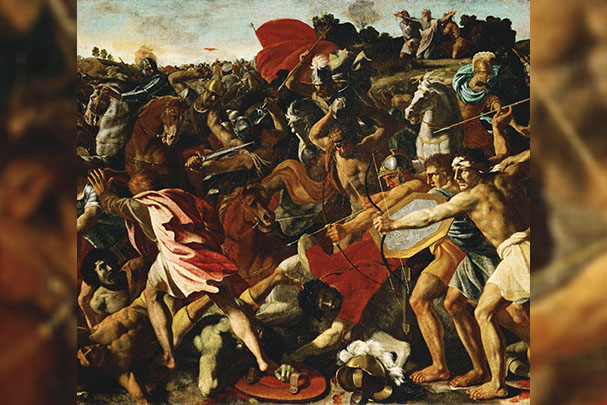
One of the troublesome tensions of the Christian faith is how to reconcile our picture of Jesus who’s come to bring us peace with the picture of the “pre-Jesus” God who seems so violent. In particular, the God who commanded Israel to “totally destroy,” to leave no one alive in the cities of the “Promised Land” they were to inhabit.

It has been so hard to reconcile the two images of the God, one of the Old Testament that engaged in violence and the second of one of the New Testament who came to “bring peace,” that from the earliest days of the church some Christians felt compelled to abandon the Old Testament altogether. There are several issues that affect how we deal with this problem.

There are less differences between how God is revealed in the Old vs. New Testaments than many think. (See Chapter 2; Paradoxes and Mysteries; Gracious, Merciful and Just). If we have a problem with God in the Old Testament, then we have a problem in the New Testament as well. Both Testaments together provide the full story of the Gospel and a full picture of God.

We need to see all suffering and death in context of Jesus’ suffering and death by execution. Jesus is God the Son, present from before Creation, the God of Creation, the God of Abraham, Moses and Israel, and the God who commanded Israel to cherem the people in Canaan. Jesus cannot be separated from all the activity ascribed to God’s activity in the Old Testament. The Wonderful Counselor, Mighty God, Everlasting Father, Prince of Peace that we are more comfortable dealing with, is only available because of all that He had done beginning with Creation, extending through history of the patriarchs and Israel and eventually his own incarnation, suffering and death.

We need to accept that there is much that we do not know. This comes to us in a couple of different ways. We must deal with our cultural separation from the unfamiliar ancient near east culture and a knowledge of God that is far beyond our comprehension. We also need to take Yahweh’s criticism of Job seriously, and Yahweh’s admonition to Isaiah that  “my ways are higher than your ways.” Then we also must be careful to not accuse Yahweh of injustice when there is so much that do not understand.

The totality of destruction implied by cherem catches our attention, but this is only a specific, though perhaps extreme, case of the question, “Why does God allow bad things to happen to good people?” The answer to the everyday issue of why “innocent” people suffer, is the same answer that underlies the killing of people that we assume are innocent.

Our sanitized culture makes it difficult for us in the modern day who live in a time where we do not witness the slaughter of animals we eat. We have a hard time associating with those who lived in the time when there was the ritual slaughter of animals, not for the sake of food but for the sake of sins. We have not had to watch the slaughter of animals and contemplate the awfulness of our sin and of God’s hatred of sin because of its awful effect on us. We are then even further separated from the concept of a God so jealous for us that he would even offer himself to be slaughtered on our behalf.

Our perception is further sanitized because we live in a world that has been cleansed by the effect of the grace of Christian values (OK, we have to admit that the church has not always lived up to its professed values) and the ameliorative effects of technology and medicine. It has been the Christian value of life that confronted the once common practice of abandoning babies on the street to die and made it rare. It has been Christian values that have elevated the status of women and children. It has been Christian values that led to the development of modern science. So many of what are now commonly accepted values in Western civilization, were adopted from Christian values, but it’s easy to forget where those values came from.

Yet another level of sanitization occurs when we don’t consider the extent of our own sin and depravity in context of the extent of the holiness of God. A contrast that caused the prophet Isaiah to proclaim, “Woe is me. I am a man of unclean lips from a people of unclean lips.”

We also are forgetful of the mercies of God. 1) Jonah was perturbed when Yahweh responded to the repentance shown by the Ninevites by not bringing about the threatened destruction. 2) The mercies shown to many of the idolatrous kings of Israel when they repented.[1] 3) In the case of Israel entering the Promised Land, we don’t know what kind of warnings the Canaanites may have received prior to the “total destruction” of their cities. We do know that Yahweh patiently waited until he “sin of the Amorites would reach their full measure.” The Canaanites may have had sufficient warning to change their ways (and they had, among other abhorrent practices, that of sacrificing their children to the flames) and yet they didn’t. While we, in our time, may think of the “total destruction” as genocide, it may be instead an act of mercy – reducing the pain and suffering that would otherwise go on.

Sparing the lives of the “innocent” within the borders of the Israel did lead to the Israelites to continue the reprehensible practices of the Canaanite religions, prolonging the suffering that Yahweh wanted to put an end to. Israel was susceptibility to fall into the sin of the nations around them and was warned that allowing the original inhabitants to live alongside of them, would cause the Israelites to adopt the same abhorrent practices – which is what happened.

God had already used the forces of nature to directly carry out his cherem version of justice (ex: The Great Flood which killed all people except Noah and his family, the crossing of the Red Sea in which innumerable Egyptian soldiers died). With the formation of the nation of Israel, God now had human agents to act on His behalf. When God commanded Israel to invoke cherem, they were acting as his agent to execute a type of justice that God had already been practicing.

How innocent were the Canaanites: men, women, and children? We can’t argue from silence that the Canaanites did not have a chance to respond to God’s warnings. We do know that God waited several hundred years before executing his judgement.

It is not just in the Old Testament that we witness immense suffering. All around us today and through the years before, there has been great suffering among God’s image-bearers caused by our own violence or the violence of natural events or the violence of birth defects. All these can cause us to question, “Why, God?”

These issues and many others cause us to grapple with how God is implicated in the violent activity and the suffering endured by those we consider to be innocent. We are not left with comfortable answers. But we also need to remember, that if we have a “God” we think we totally understand, then it is not God that we are really understanding. Also, if we have a “God” that we are fully comfortable with, then we are not fully dealing with the holiness of God and the totality of our sin.

Jesus dealt with the totality of our sin by his suffering and excruciating death. It is only by the violence endured by Jesus that He has become our Prince of Peace. This is the lens through which we must see the violence around us. But even with that lens, we are not likely to have a ‘satisfactory’ answer. Even with that lens we will still struggle.

Time and time again, we see ordinary people approaching God with raw honesty about human suffering. And God responds to them, because they reflect his own lionheart that’s hell-bent against evil and death. God wants our protest against the evil and pain in this world. … To be a Christian is never to be apathetic toward evil and suffering, nor to avoid protesting God. Instead, we are told to work out our faith in “fear and trembling,” which includes unflinching lament at all the evil and death in this world. We are meant to hold our hands open in foolish faith, to watch and wait with hopeful expectation for God to show up in surprising ways—to remind us that he is good and powerful and that he will grant us his own steadfast courage. We are called to the daring and bold love of God in Jesus Christ, who stopped at nothing—not even death on a cross—to fight and win back the glory and goodness of God’s original creation.[2]

Perhaps we are meant to struggle, to lament about all that’s wrong, evil, awful, terrible, sad, and more that our hearts can bear. But in our lament, not to give up the hope that is also in our hearts, the hope that God our Father is alive, that our Father cares so deeply that He gave His Son, that miracles still do happen and that we can expect God to show up in our midst.


[1] Rishawy, Derek. “God’s mercies aren’t so new”  Christianity Today 17 Mar 2020 www.christianitytoday.com/ct/2020/april/gods-mercies-arent-so-new-rishmawy.html

[2] Hill, Preston. “Have Christians Forgotten How to Fight with God?” Christianity Today 21 Dec 2021 www.christianitytoday.com/ct/2021/december-web-only/problem-of-evil-christianity-faith-wrestling-with-god.html

Reflect

What have been your conflicting ideas between the Old and New Testaments?

Observe

Read 2 Thessalonians 1:5-10; Revelations 19:17-21. Why does God’s justice need to be meted out with violence?

Sacrifice and death

Dancing in the Kingdom- Table of Contents

Dancing In the Kingdom – Part 1 – Shadows of the Kingdom – Chapter 6– A nation emerges

Sacrifice and death

[Bible references: Genesis 4:4; 8:20; 36-39; Leviticus 1-7; Psalm 51; Romans 12:1-2; Hebrews 7:27-28]

God also gave detailed instructions about how and when to conduct the rituals surrounding the tabernacle. Burnt offerings[1] had been offered before the tabernacle was built but now there were additional offerings to be made.[2] In the case of all the offerings, something had to die. The cost of sin was death, and it takes death to restore one’s relation with God. Moreover, the animals presented for sacrifice for the burnt offerings needed to be pure and without blemish or defect.

These “perfect” sacrifices were pointing to our ultimate need for a truly perfect sacrifice made on our behalf. The sacrifice would have to be more than an animal with no visible blemishes. The sacrifice would have to be made by a perfect human whose identity would gradually and prophetically be revealed … a new “Adam” who would succeed where the first Adam failed.

Sacrificial death, though, can take a different form than we expect. In Psalm 51, David declares,

“For you will not delight in sacrifice, or I would give it; you will not be pleased with a burnt offering. The sacrifices of God are a broken spirit; a broken and contrite heart, O God, you will not despise.” (Psalm 51:16-17 ESV)

and Micah declares.

“With what shall I come before the LORD, and bow myself before God on high? Shall I come before him with burnt offerings, with calves a year old? Will the LORD be pleased with thousands of rams, with ten thousands of rivers of oil? Shall I give my firstborn for my transgression, the fruit of my body for the sin of my soul?” He has told you, O man, what is good; and what does the LORD require of you but to do justice, and to love kindness, and to walk humbly with your God?” (Micah 6:6-8, ESV)

and later, the apostle Paul declares,

“I appeal to you therefore, brothers, by the mercies of God, to present your bodies as a living sacrifice, holy and acceptable to God, which is your spiritual worship. Do not be conformed to this world, but be transformed by the renewal of your mind, that by testing you may discern what is the will of God, what is good, acceptable, and perfect. (Romans 12:1-2, ESV)

I have been crucified with Christ. It is no longer I who live, but Christ who lives in me. And the life I now live in the flesh I live by faith in the Son of God, who loved me and gave himself for me. (Galatians 2:20, ESV)

These passages indicate a sacrifice of dying to oneself, of laying one’s own interests aside for the sake of another … for the sake of Christ. A sacrifice not made to “make things right” with God but rather a sacrifice made because things are right.


[1] Hal, Doulos. The Fire Sacrifices and Offerings of Israel – The Burnt Offering” Impact Bible.org blogs 4 Apr 2020 blogs.bible.org/the-five-fire-sacrifices-and-offerings-of-israel-the-burnt-offering. Burnt offerings are sometimes called whole offerings (because none of the offering is put aside for eating) or ascent offerings.

[2] Tam, Stephen, “The Five Offerings in the Old Testament” Moses Tabernacle 2003-2018 www3.telus.net/public/kstam/en/tabernacle/details/offerings.htm ; Bible.org “The Law of Burnt Offerings” Bible.org bible.org/seriespage/law-burnt-offerings-leviticus-11-17

Observe

Read Psalm 51; Romans 12:1-2. We do not have a temple to make animal sacrifices. What we do have is the opportunity to offer ourselves as a daily sacrifice. What is meant by a broken spirit?

Law and Love

Dancing in the Kingdom- Table of Contents

Dancing In the Kingdom – Part 1 – Shadows of the Kingdom – Chapter 6– A nation emerges

Law and Love

[Bible references: Exodus 20:1-17; Leviticus 1-7; 19:18, 34; Deuteronomy 4:27-31; 6:1-6; Matthew 22:37-40; John 13:35; 1 Timothy 1:5]

The amount of killing carried out in the tabernacle to fulfill the necessary sacrifices would be a constant, grisly reminder of the cost of our sin. There were sacrifices to be made for many types of occasions: burnt (or ascension) offerings, sin offerings, guilt offerings and others. There was much bloodletting from the many animals sacrificed on the altar, a constant reminder of the cost of our sins.

In addition to the rules of the tabernacle, God also gave other rules that covered other areas of life. Most of us are familiar with the moral code we know as the ten Commandments, but there were many other laws that covered other situations as well. Of the 603 other rules (mitzvot) that can be found,[1] they can all be summarized in the commands: Love God with all your heart, soul, mind, and strength; Love your neighbor as yourself. Whether in the ten commandments or in the other 603 mitzvot, all the rules are predicated on love, thankfulness and pleasing one another. All the instructions point to practical ways for us to love God and one another.[2]


[1] Judaism 101, “List of the 613 Commandments” Judaism 101 www.jewfaq.org/613.htm

[2] Isaacs, Ronald H. “Rabbinic Reasons for the Mitzvot” myjewishlearning.com www.myjewishlearning.com/article/rabbinic-reasons-for-the-mitzvot/; Messianic Jewish Bible Society “Love and the Hebrew language” Messianic Jewish Bible Society free.messianicbible.com/feature/love-and-the-hebrew-language/; Levinson, John D. “The Shema and the Commandment to Love God in its ancient context” The Torah www.thetorah.com/article/the-shema-and-the-commandment-to-love-god-in-its-ancient-contexts

Reflect

If you had to live through the experience of seeing many animals slaughtered as sacrifices for the sake your sins and others’ sins, how would that affect your thinking?

Observe

Read Leviticus:19:18, 34; Deuteronomy 4:27-31. What practical things do these passages suggest about how to love?

Fullness of time

Dancing in the Kingdom- Table of Contents

Dancing In the Kingdom – Part 1 – Shadows of the Kingdom – Chapter 6– A nation emerges

Fullness of time

[Bible references: Genesis 15:16; Exodus 2-4; 7-11; Galatians 4:1-7; Ephesians 1:1-14]

The emerging story of the chosen people of God becoming a nation started slowly: Abraham and one child of the promise, Isaac, who had two children, only one through which the promise would come, Jacob, who then had had thirteen children. But it would take time for that family to grow into a size that could be called a nation – and that took a couple hundred more years – in which time the “sin of the Amorites would reach their full measure.”

Although the Bible does not specifically mention it, there may have been other things that God was waiting to happen such as the development of the Israelite community and the consequent interaction of the Israelite community with the Egyptian community during the Israelite captivity. God allowed events to gradually unfold until “the fullness of time” came for God to orchestrate a dramatic release of the Israelite community. This event would serve as a foreshadowing of another event, the spiritual release of all peoples from slavery to sin.

So it was, that in the fullness of time, when the sin of the Amorites reached its full measure,[1] Yahweh called Moses to release the enslaved Israelites from Egypt to bring Israel back to the Promised Land.


[1] White, James Emery. “Is God a Moral Monster? The Slaughter of the Canaanites” Church&Culture 22 Oct 2020 www.churchandculture.org/blog/2020/10/22/is-god-a-moral-monster

Reflect

Often, when we are younger, we think we know everything. But most of the time, we discover over time that we need maturing – to grow in wisdom – a process that takes time and experience. What things have you learned through time and experience?

Observe

Read Genesis 15:16; Galatians 4:1-7. What do these verses tell us about God’s sense of timing?

Scope and direction of sin’s consequence

Dancing in the Kingdom- Table of Contents

Dancing In the Kingdom – Part 1 – Shadows of the Kingdom – Chapter 1 – Prelude

Scope and direction of sin’s consequence

[Bible references: Genesis 2:16-17; 3:14-15, 23; 6:5; Romans 8:19-28]

And so, it happened. The one thing that could create the ultimate catastrophe did happen. The good Creator, who only intended good things, allowed his image-bearers to give into their temptation, to put their own authority above His and violate the one restriction placed before them. This violation by the stewards of His creation broke everything: the relationship between themselves, the relationship between them and Him, the relationship between them and creation. All of creation was affected and is even now waiting for things to be made right again.

Everything in creation had been designed to be good, to reflect the good character of the good God. Creation was designed to be a place where God and his image-bearers could keep on creating good things and bring increasing glory to God. But now, although the ultimate structure of creation was still good, it was headed in the wrong direction. The broken universe would now cause things to move away from God’s glory.

“Anything in creation can be directed either toward ward or away from God – that is, directed either in obedience or disobedience to his law. This double direction applies not only to individual human beings but also to such cultural phenomena as technology, art, and scholarship, to such societal institutions as labor unions, schools, and corporations. and to such human functions as emotionality, sexuality, and rationality. To the degree that these realities fail to live up to God’s creational design for them, they are misdirected, abnormal, distorted. To the degree that they still conform to God’s design, they are in the grip of a countervailing force that curbs or counteracts the distortion. Direction therefore fore always involves two tendencies moving either for or against God.” [1]

In our current times, we can get things so quickly and easily compared to times in the past. We want what we want, and we want it now. Our desire to get what we want now overwhelms our capacity to think of others, as we put ourselves at the center of our part of the universe, replacing God with ourselves. In the case of the first humans, they wanted to grab knowledge and wisdom for themselves instead of waiting to receive it from God.

Everything was broken and separated from God. Spiritual death, the impaired relation between God and His image-bearers was immediate and would be mirrored by the physical death caused by separation of the people who would no longer have access to the Tree of Life. This was a great tragedy that could not be undone, not by the image bearers. But as we look around us, we can see that, despite the tragedy around us, things aren’t totally bad. Even though evil is very evident around us, there is still some goodness that is evident. It is in that observation that we can glimpse the possibility of hope.

God had ordained the penalty of death to be the consequence of turning away from him. Sin resulted in spiritual death, the immediate separation God’s image-bearers from God, nevertheless, the people did not die physically right away. Instead, what God did, was to apply discipline to his image-bearers. He also gave a hint of the solution to the problem created by sin, the first of many other hints that were to come.


[1] Wolters, Albert M. “Creation Regained: Biblical Basics for a Reformational Worldview (Kindle Locations 685-689). Kindle Edition.

Observe

Read Romans 8:19-28. How has sin affected you and the one’s you love?

Turning from shalom

Dancing in the Kingdom – Table of Contents

Part 1 – Shadows of the Kingdom, Chapter 4 – Deforming the intended direction for creation

[Bible references: Psalm 53:1-3]

Although we try to cling to the hope of God and our final restoration, we, in our sin, face a world that is broken by sin. While waiting for the restoration of creation, we find ourselves continually turning from God and rather towards bringing further destruction into God’s good creation. We seem to be constantly bent on turning from shalom and towards a substitute that gives us pain and despair. The history of the world is filled with the flourishing of evil and injustice. The consequence of choosing to go our own way has put us on a path where we continue to separate ourselves from the source of goodness and shalom. Indeed, we find ourselves on a path of destruction despite God’s continual provision for us as he continuously and unrelenting pursues us and pours out his limitless grace. And so it is, that we find ourselves in a world where both good and evil abound, where the good things God created are corrupted continuing to turn us away from God.[1]

Rampant evil

[Bible references: Genesis 6, 9]

So that we can know what terrible direction we are headed without that intervening grace, God initially allowed his image-bearers to live long lifespans. The long lifespans seemed to postpone the penalty for sin such a long time by delaying the penalty of physical death, that the image-bearers behaved as if there were no consequences for their God-defiant behavior. The result was rampant unrestrained evil that infected nearly everyone, causing God to destroy all but one family. Sadly, even with that severe penalty, it would not be long before our God-defiant behavior would threaten to be our undoing again, but God would continue intervening with grace as He would gradually work out His plan to restore us to Himself beginning with the rainbow as a sign of hope.

Tower of Babel

[Bible references: Genesis 11:1-8; Genesis 12:1-3]

Despite the catastrophic destruction that destroyed all people except Noah and his family, the image-bearers’ defiance would emerge again when, thinking themselves to be wiser than God, they refused to spread out over the earth as God had commanded and then proceeded to build a tower as a monument to themselves. God’s response was very measured. By causing them to speak different languages so that they could no longer communicate with each other, the image-bearers would no longer be able to come together to complete the tower, rather they were now forced to divide into seventy different groups and spread out across the earth as God had intended. This breakup would lead to the creation of different nations – and eventually lead to God’s working out His solution to our predicament by the calling out from one of the nations, one man through whom God would begin His work of restoration.


[1] Brister, Tim. “6 Destructive Ways We Minimize Our Own Sin”

Reflect

Think about some things that should be inherently good but are used for evil purposes.

Observe

Read Gen 3:1. We often know in our mind what God’s instruction is when we are tempted to do our own thing apart from God’s instruction. We somehow find a way to justify our actions by questioning God’s authority. Does this give us a strategy for dealing with temptation?

Reflect

If there were no consequences for bad behavior, what do you think the world would be like?

Observe

Read Genesis 6 and 9. God sent a flood to deal with the rampant sin in the world but it wasnot long after the flood that signs of human rebellion sprung up again in Noah’s family. What kind of trajectory did this indicate for humanity?

Reflect

Even within a family, different experiences cause people to think differently causing conflict. They all use the same words but have different thoughts about what is right. Larger problems occur when people grow up in entirely different environments. When people use different languages, those different languages amplify the differences in how people think. In your own situation, what different cultures do you interact with and how do you process conflicts with people in those cultures?

Observe

Read Genesis 11:4. The construction of the tower at Babel was not a positive development, but God’s plans won’t be thwarted. What confidence does that give us about the difficult situations we see around us today?

Sins consequences

Dancing in the Kingdom – Table of Contents

Part 1 – Shadows of the Kingdom, Chapter 4 – Deforming the intended direction for creation

[Bible references: Genesis 3; 6:5; Romans 8:19-22; Ephesians 2:10]

And so, it happened. The one thing that could create the ultimate catastrophe did happen. The good Creator, who only intended good things, allowed his image-bearers to give into their temptation, to put their own authority above His and violate the one restriction placed before them. This violation by the stewards of His creation broke everything: the relationship between themselves, the relation between them and Him, the relation between them and creation. All of creation was affected and is even now waiting for things to be made right again.

Everything in creation had been designed to be good, to reflect the good character of the good God. Creation was designed to be a place where God and his image-bearers could keep on creating good things and bring increasing glory to God. But now, although the ultimate structure of creation was still good, it was headed in the wrong direction. The broken universe would now cause things to move away from God’s glory.

“Anything in creation can be directed either toward or away from God – that is, directed either in obedience or disobedience to his law. This double direction applies not only to individual human beings but also to such cultural phenomena such as technology, art, and scholarship, to such societal institutions as labor unions, schools, and corporations. and to such human functions as emotionality, sexuality, and rationality. To the degree that these realities fail to live up to God’s creational design for them, they are misdirected, abnormal, distorted. To the degree that they still conform to God’s design, they are in the grip of a countervailing force that curbs or counteracts the distortion. Direction therefore involves two tendencies moving either for or against God.” [1]

The brokenness started with the decision that would be repeated again and again. Even in a time like now, where we can get things so quickly and easily compared to times in the past, we want what we want, and we want it now. And the desire to get what we want now overwhelms our capacity to think of others, as we put ourselves at the center of our part of the universe, replacing God with ourselves. In the case of the first humans, they wanted to grab knowledge and wisdom for themselves instead of waiting to receive it from God.

The failure to resist the temptation to grab what we want instead of waiting to receive what we want from God would only be successfully resisted by Jesus. So, after the rebellion occurred, the earth would remain separated from the Kingdom of God until Jesus began His restoration of the Kingdom. So, until that time the place of human habitation would be separate from the place where God’s good rule and reign is absolute. And it will not be until heaven and earth will be fully reunited, that we will fully experience the overflowing shalom that God has intended for us. Until that time, the broken earth will be separated from heaven and allowed to sink into disorder and chaos. Until that time, the overflowing goodness and shalom that God had provided will be masked by the brokenness of not just Creation but also by the brokenness of the co-creators. Look at what we have done!

We were meant to be in communion with each other and with God. We were meant to be “gardening” with God to make our place, a place of thriving and abundance in concord with the type of thriving and abundance with which God originally made the universe. God intended for us to be connected to Him and filled with His Spirit so that we would be fully enabled and prepared to be co-creators with Him of good works. But our rebellion has separated us from the one who is the source of goodness. In that sense, since the time of Adam, we are less human than we should be.


[1] Wolters, Albert M. Creation Regained: Biblical Basics for a Reformational Worldview (Locations 685-689)

Reflect

In what ways do we replace God’s authority with something else?

Observe

Read Gen 3:14-15, 20-21; Psalm 4:1, 8. The world around us is filled with problems. What signs of hope do we have?