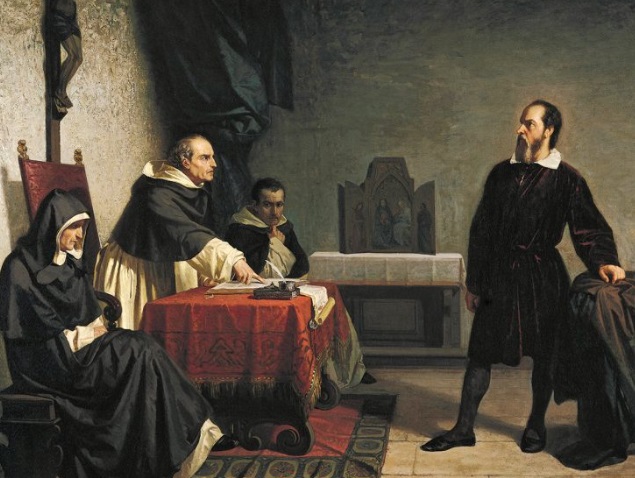
Doctrine and the knowledge of God

Dancing in the Kingdom- Table of Contents

Dancing In the Kingdom – Part 2 – The Kingdom Revealed – Chapter 12 – Launching the church

Doctrine and the knowledge of God

[Bible references: 1 Corinthians 1:10; 8:1-13; Romans 12:1-8; 15:5-6; Philippians 1:27; 2:2-5; 1 Peter 3:8]

We can see the apostle Paul tackling the issue of doctrine and the knowledge of God in the book of Romans, written in the context of much hostility between Jew and Gentile, where he explains in many different ways how the doctrine of the faith actually binds Jew and Gentile together. Then towards the end of that lengthy exposition he says to be of one mind and accept one another in the same way as Christ who came to serve us and has accepted us.

Unfortunately, in our attempts to become more knowledgeable about doctrine, we get off-balance, forgetting that “love builds up” and instead get caught in the trap of “knowledge puffs up,” starting to think of ourselves “more highly than we ought.” In those same passages that remind us of that trap, we are also reminded of our responsibility to remember God’s grace to us and to remember that we all belong to the same Body of Christ.

Our knowledge gets distorted when we focus on the knowledge of the Biblical text and not the knowledge of the God who gave us the text. Our knowledge of doctrine should not become an end to itself. Our habitual forgetfulness to seek our unity in Christ has led to the claim that “doctrine divides.”  However, doctrine, as the properly taught knowledge of God, should lead to unity.

Observe

Read Romans 12:1-8. How can this passage help us handle issues of doctrine?

Paradox of responsibility

Dancing in the Kingdom- Table of Contents

Dancing In the Kingdom – Part 2 – The Kingdom Revealed – Chapter 12 – Launching the church

Paradox of responsibility

[Bible references: Jeremiah 3:1-9; 31:1-4; Zechariah 8:16; Ephesians 4; Philippians 2:1-18]

This then is our paradox; we are given the responsibility of correctly handling the Truth of God even when we cannot completely understand what that Truth is. For instance, how can we understand that there is one person, God, and yet have God revealed in three personalities:  God the Father, God the Son and God the Holy Spirit? How can the God who exists outsides the confines of time and space, confine Himself to a particular space and time and come to be born and then to live and die as a normal human being? How can these things be?

As we look across the breadth of the history of the church, we see the church wrestling with these paradoxes and others. The result of that wrestling sometimes has gotten downright ugly with the church sometimes quite literally killing each other about it, not only with those outside the church but within it. In fact, if one were to look across the world at the state of Christianity, it might seem to one of the most fractious and divided groups ever.

How can it be that God would entrust this church with the task of bringing that His Truth to others and from one generation to the next, the church that has from time to time seemed to fail the apostle Paul’s challenge to be “one in the Spirit.”

Reflect

When children are not compliant as they grow up, do we just give up on them?

Observe

Read Zechariah 8:16; Ephesians 4; Philippians 2:1-18. What should the church look like as it handles its responsibility to presenting the truth of God to each other and to the world?

General Issues with Violence

Dancing in the Kingdom- Table of Contents

Dancing In the Kingdom – Part 2 – The Kingdom Revealed – Chapter 11 – The Kingdom Enters

General Issues with Violence

[Bible references: Isaiah 10:5-12; 40:1-2; 48:8-11; 55:8; Jeremiah 25:12-14; 30:24; Zechariah 1:14-15]

In many ways, our modern-day sanitized culture puts a distance between us and some of the everyday realities of violence. Some examples: Buying packaged meat from the butcher, without seeing the slaughter of the animals, People dying in the hospital and sent to the morgue instead of allowing us the honor hosting the dead at home.

For those of us who have more privileged lives where we don’t directly experience violence done to us or loved ones, many have problems with a judgmental God. But those who are oppressed and do directly experience violence done to them or their loved one’s desire God’s judgment and His righteousness.

God’s acts of violence are not part of his nature but are a reaction to acts of human violence. The purpose of God’s violence is to restore justice in his creation.

When God’s assigned His image-bearers the responsibility of stewardship over His creation, that assignment did not end with our rebellion. To that end, Yahweh’s preferred method of working in the world is through His image-bearers. Even when Yahweh wishes to use violence to restore justice, He often uses human agents. Those agents however often exceed the charge given them, creating much of the abusive violence we see in the Old Testament. However, when that happens, God disciplines those same agents.

Even with all these explanations we should expect that, in the end, God’s violence is a mystery we cannot fathom. We cannot grasp why God allows violence to persist on earth.

Reflect

Is it possible for God’s justice to not use violence against those who unrepentantly use violence against God’s other image-bearers?

Observe

Read Isaiah 55:8; Jeremiah 25:12-14; 30:24. Is there a warning for all of us here?

God working through broken individuals and communities

Dancing in the Kingdom- Table of Contents

Dancing In the Kingdom – Part 1 – Shadows of the Kingdom – Chapter 5– Patriarchs

God working through broken individuals and communities

[Bible references: Genesis 20; Psalm 51:17; Isaiah 40:8; 58:1-14; Jeremiah 5:19; Philippians 3:20-21]

Although the all-powerful Creator and Sustainer of the universe is capable of simply doing things by a show of great power and irresistible force,[1] he usually chooses to work through His image-bearers.[2] He can work through individuals or groups, although even when he works through groups it’s typically through individuals within those groups.[3] Most surprising is that even though all his image-bearers have flaws, God has still chosen to do His work within those flaws.[4] Despite our persistent failures, not only does God patiently empower us to fulfill the responsibility of stewardship of Creation that He gave us from the beginning, but He also empowers us to participate in His work of restoring the universe.


[1] Spurgeon, C.H. “The Power of Christ Illustrated by the Resurrection” Biblehub biblehub.com/library/spurgeon/spurgeons_sermons_volume_17_1871/the_power_of_christ_illustrated.htm

[2] Welchel, Hugh, “Three Key Passages Concerning Stewardship in the Bible” The Institute of Faith, Works & Economics 19 Oct 2016 tifwe.org/stewardship-in-the-bible

[3] Cole, Stephen J. “Lesson 51: How God Uses Ordinary People (Genesis 26:1-35)” Bible.org 29 Aug 2013 bible.org/seriespage/lesson-51-how-god-uses-ordinary-people-genesis-261-35

[4] Wilson, Jarrid, “God Uses Flawed People To Share Hope To a Flawed World” jarridwilson.com 16 Mar 2014 jarridwilson.com/god-uses-flawed-people-to-share-hope-to-a-flawed-world/

Reflect

What does it mean to you that the One who has all knowledge prefers to carry out his plans for us through us who not only have incomplete knowledge but have corrupted intentions?

Observe

Read Isaiah 58:1-14.This passage describes the difference between who we are now and what we should be. What can we be doing better?

Living temples

Dancing in the Kingdom- Table of Contents

Dancing In the Kingdom – Part 1 – Shadows of the Kingdom – Chapter 3 – The image-bearers

Living temples

[Bible references: Genesis 1; 3:6; Isaiah 35; 54:10; 60; Jeremiah 29:1-23; John 2:19-21; 1 Corinthians 3:16; 6:19-20; 2 Corinthians 6:16; Ephesians 2:21; Revelations 15:8; 21:22]

Although God’s first image-bearers had close, unhindered, intimate contact with their Creator, there was enough space given them to think freely, as if they were not being watched all the time. It was in this space that they – and we – were given several blessings: the freedom to procreate (be fruitful and multiply), to oversee God’s creation (subdue the earth and have dominion over its creatures), and to nurture God’s creation (work it and take care of it).[1] We were given the assignment to be fruitful, to fill all the earth, discover its possibilities and care for the world in the same way that God would care for the world.[2] Just as God continues to create more living things and sustain all that he has created, we as his co-regents[3], can join him in sustaining and creating those things entrusted to our care.

  “There are two ways in which God imposes his law on the cosmos, two ways in which his will is done on earth as in heaven. He does it either directly, without mediation, or indirectly, through the involvement of human responsibility. Just as a human sovereign does certain things himself, but gives orders to his subordinates for other things, so with God himself. He put the planets in their orbits, makes the seasons come and go at the proper time, makes seeds grow and animals reproduce, but entrusts to mankind the tasks of making tools, doing justice, producing art, and pursuing scholarship. In other words, God’s rule of law is immediate in the nonhuman realm but mediate in culture and society. In the human realm men and women become coworkers with God; as creatures made in God’s image, they too have a kind of lordship over the earth, are God’s viceroys in creation.” [4]

We were also given the responsibility to subdue the earth and have dominion over its creatures. When there is resistance, we still have the responsibility to bring the rule of God to the world. Then we are given the responsibility to work and take care of the earth, starting in the Garden of Eden and then expanding to all of God’s creation. Implied in all these things is that we should do everything in context of God’s love, to care for each other and to care for the earth and its creatures with the mind of the God who created us for love.

The work that we were designed to do was more than just tending the garden. In Genesis 2:15, we were given a mandate to “work” and “take care of” the garden God had created. These tasks in light of Ancient Near East culture, were more of a priestly nature, taking care of this temple where we reside with God.

“The verbs ʿbd and šmr (NIV: “work” and “take care of”) are terms most frequently encountered in discussions of human service to God rather than descriptions of agricultural tasks… ‘bd can refer to … work connected with one’s vocation, to religious service deemed worship … šmr is used in the contexts of the priestly responsibility of guarding sacred space, as well as in the sense of observing religious commands and responsibilities … it is likely that the tasks given to Adam are of a priestly nature: caring for sacred space. In ancient thinking, caring for sacred space was a way of upholding creation.”[5]

We were to take care of this place which was designed to be a “very good” place for us to flourish in, creating whatever structures we needed to “increase in number, fill the earth and subdue it.” This task, this mandate, meant that we would eventually go beyond the capacity of gardening and create not just a bigger garden but cities, a flourishing civilization as pictured in Revelation 21 and 22.[6]

When examined closely, we can see the breadth of what was committed to Adam and Eve. Subduing the earth would entail many physical, social, and intellectual activities. In the gardening we can see cultivation and farming; in taking care of the animals, we can see shepherding and domestication; in the naming of the animals, we can see a cultural and scientific activity which required understanding the nature and attributes of the animals and establishing authority over them. We can see that God had created things to be beautiful and as his image-bearers we would be expected to also create beautiful things.

As we look forward to the new earth which will manifest when Jesus comes again, nature’s comeliness will reach its pinnacle; the wilderness itself will burst into blossom, and streams will gush in the desert. To complement all this natural beauty, human culture will flourish. All the great creativity of humankind-artistry in music, dance, painting, woodcrafts, sculpture, architecture and more-will be brought into the New Jerusalem.[7]

There is a sense in which we, as members of the Kingdom of God, now seem to be living in a foreign land. This puts us in a position similar to the Israelites when they were taken in exile into Babylonia. During their stay in Babylonia, God’s instructions were to settle down, build houses, get married, have children and to seek the prosperity of the city they were sent to, for “if it prospers, you too will prosper.”

But above all these things we can do, we should not lose focus on who we are. We are creatures designed by God to be like God to be in relationship with Him, the God who is a community in Himself: Father, Son, and Holy Spirit. Everything we do should be done in context of who we are. We should remember that we were designed to be human “beings,” not human “doings.” This viewpoint become clear when we compare the Biblical view of creation to the view of other Ancient Near East cultures. For the surrounding cultures humans beings were created to feed the gods and serve the gods who created them, whereas the Biblical viewpoint sees God being the provider for the people.[8]

Originally, we see Creation designed as a temple, a place for us to “be” with God. Later on, Jesus refers to himself as the temple, a human in whom God resides. Later on, Paul declares that our own bodies are a temple of the Holy Spirit. So here again, we see the mystery of perichoresis, where we are distinct from the Holy Spirit, yet the Holy Spirit becomes a part of who we are. In this we see the mystery of perichoresis unifying the persons within God, unifying the body, soul and spirit within humans, and unifying God and humans.


[1] Jacobsen, Eric O. The Space Between: A Christian Engagement with the Built Environment, Baker Academic, 2012, (Page 20 )

[2] Crouch, Andy. “What is the Cultural Mandate” The Village Church, 6 Jan 2017 www.tvcresources.net/resource-library/talks/what-is-the-cultural-mandate

[3] Walton, John H. “The Lost World of Adam and Eve: Genesis 2-3 and the Human Origins Debate (Proposition 4) InterVarsity Press. 2015 Kindle Edition

[4] Albert M. Wolters. Creation Regained: Biblical Basics for a Reformational Worldview William B. Eerdmans Publishing 1985, 2005. eBook(Locations 203-208)

[5] Walton, John H. The Lost World of Adam and Eve: Genesis 2-3 and the Human Origins Debate Edition(p. 105-106).

122 Buzenitz, Nathan. “The New Jerusalem”

[7] Sherman, Amy L. Kingdom Calling: Vocational Stewardship for the Common Good. Intervarsity Press, 2011 eBook location 291

[8] Walton, John. “The Lost World of Adam and Eve,” I “Proposition 12: Adam is Assigned as Priest in Sacred Space, with Eve to Help” (p.104)

Observe

Read Genesis 1; 1 Corinthians 3:16; 6:19-20; 2 Corinthians 6:16. What difference does it make if the universe is God’s temple or that our bodies are God’s temple?


Reprise with variations

Dancing in the Kingdom- Table of Contents

Dancing In the Kingdom – Part 1 – Shadows of the Kingdom – Chapter 1 – Prelude

Reprise with variations

[Bible references:  Genesis 1; Psalm 8; 111; Exodus 8:16-19; John 21:1-14; Romans 8:19-22; 1 Corinthians 15; 1 Thessalonians 4; 5; 2 Peter 3; Revelation 21-22]

“The creation of the world seems to have been especially for this end, that the eternal Son of God might obtain a spouse towards whom he might fully exercise the infinite benevolence of his nature, and to whom he might, as it were, open and pour forth all that immense fountain of condescension, love, and grace that was in his heart, and that in this way God might be glorified. [1]

God created the universe for his glory, and within that, humans were created to experience the true joy of living, to bear the fruit of His nature, to reflect His presence. We are designed to be image-bearers of God himself, stewards of the creation He inserted us into as we reflect the very character of God. The exercise of stewardship is seen in the process of “subduing” and “having dominion” over the earth (its creatures and it resources), and in being “fruitful” and filling the earth. God’s initial reaction to creating us was, “It was very good.” His intent was that we would fill and take care of the earth, all the while reflecting His character to each other and to His creation.

In the beginning, heaven and earth were joined at the Garden of Eden. It was a place where the Creator could have communion with his image-bearers and walk in the garden with them. The garden was the perfect place for the image-bearers to develop and begin working out the intended future of filling the earth and ruling over it as co-regents with God.

He gave us unimaginable delight and freedom, but that very freedom He gave us was joined to a responsibility, a responsibility that was wrongly used and caused immense far-reaching damage – damage we could not possibly undo – the whole universe is groaning, waiting for to be restored. Our pride-laden rebellion damaged the relationships between each other, between us and God, between us and the world and even between heaven and earth; but God had a plan from the beginning, a plan which is now underway, to ultimately restore what was lost and undo that damage[2] and bring us to our intended destination – an earth filled with and ruled by image-bearers and where heaven and earth are rejoined so that the image-bearers can walk with God once again.

“Jesus’ own teaching during his brief public career simply reinforced the Jewish picture. He redefined a lot of ideas that were current at the time – notably, of course, kingdom of God itself, explained in many coded parables and symbolic actions that God’s sovereign, saving rule was now breaking in, even though it didn’t look like what his contemporaries had imagined and wanted.”[3]

Ultimately, we will be freed from the bondages of sin and death and all the relationships that are now damaged will be restored. In fact, in a timeline that we cannot fully grasp, God waited from the beginnings of mankind until 2000 years ago to defeat the power of sin and death and begin the process of restoring His kingdom on earth. Then He told us that someday, he will complete that process and he will return in the fullness of his glory to fully restore all things at that time. We just don’t know when that will be.

Our hope looks at the resurrection of Jesus as a harbinger of the resurrection that awaits all those of us who will be united with Him in our own transformed bodies in the new heavens and the new earth.

‘… what is the ultimate Christian hope? …what hope is there for change, rescue , transformation, new possibilities within the world in the present … if the Christian hope is for God’s new creation, for “new heavens and new earth,” and if that hope has already come to life in Jesus of Nazareth, then there is every reason to join the two questions together … “God’s kingdom” in the preaching of Jesus refers not to postmortem destiny, not to our escape from this world into another one, but to God’s sovereign rule coming “on earth as it is in heaven.” [4]

Furthermore, our hope doesn’t ask for us to simply wait for that time when the Kingdom of God is fully restored, but that we can be part of God’s plan to bring the Kingdom of God into our broken world.


[1] Edwards, Jonathan, “Works of Jonathan Edwards, Volume Two,” SERMON II. THE CHURCH’S MARRIAGE TO HER SONS, AND TO HER GOD. Ed. John E. Smith, Yale University Press, 2009(p. 62)

[2] Bible Project “Pursuing God, Heaven and Earth,” Bible Project www.pursuegod.org/biblical-themes-an-animated-explanation-of-heaven-earth

[3] Wright, N.T. “Surprised by Hope: Rethinking Heaven, The Resurrection, and the Mission of the Church” Harper Collins 2008. Kindle Edition(p. 18).

[4] Wright, N.T. “Surprised by Hope” Harper Collins 2008. Kindle Edition (pp. 4-5, 18)

Reflect

Speaking strictly from what we know from science, we seem to be random life forms on a random planet in a random spot in the universe. In that perspective, having an anthropocentric view of the universe seems absurd. But knowing what the Creator of heaven and earth has revealed to us, the universe was designed to be inhabited … by us! How does that change your view of the universe?

Observe

Read John 21:1-14. What does this passage suggest about our resurrection bodies?

God working through broken individuals and communities

Dancing in the Kingdom – Table of Contents

Part 1 – Shadows of the Kingdom, Chapter 5 – Patriarchs

[Bible references: Psalm 51:17; Isaiah 49:8; 58:12; Jeremiah 59:19; Philippians 3:20-21]

Although the all-powerful Creator and Sustainer of the universe is capable of simply doing things by a show of great power and irresistible force,[1] he usually chooses to work through His image-bearers.[2] He can work through individuals or groups, although even when he works through groups it’s typically through individuals within those groups.[3] Most surprising is that even though all his image-bearers have flaws, God has still chosen to do His work within those flaws.[4] Despite our persistent failures, not only does God patiently empower us to fulfill the responsibility of stewardship of Creation that He gave us from the beginning, but He also empowers us to participate in His work of restoring the universe.


[1] Spurgeon, C.H. “The Power of Christ Illustrated by the Resurrection”  19 January 1871 Biblehub biblehub.com/library/spurgeon/spurgeons_sermons_volume_17_1871/the_power_of_christ_illustrated.htm. 

[2] Welchel, Hugh, “Three Key Passages Concerning Stewardship in the Bible” The Institute of Faith, Works & Economics 19 Oct 2016 tifwe.org/stewardship-in-the-bible

[3] Cole, Stephen J. “Lesson 51: How God Uses Ordinary People (Genesis 26:1-35)” Bible.org 29 Aug 2013 bible.org/seriespage/lesson-51-how-god-uses-ordinary-people-genesis-261-35

[4] Wilson, Jarrid, “God Uses Flawed People To Share Hope To a Flawed World” jarridwilson.com 16 Mar 2014 jarridwilson.com/god-uses-flawed-people-to-share-hope-to-a-flawed-world/

Reflect

What does it mean to you that the One who has all knowledge prefers to carry out his plans for us through us who not only have incomplete knowledge but have corrupted intentions?

Observe

Read Psalm 51:17; Isaiah 40:8; 58:12; Philippians 3:20-21. What should our attitude be as God carries out his plans through us?