Ministry of Reconciliation

Dancing in the Kingdom- Table of Contents

Dancing In the Kingdom – Part 3 – Dancing in the Kingdom– Chapter 16 – Fixing our eyes

Ministry of Reconciliation

[Bible references: Matthew 10; Mark 1:40-45; 5:1-20; Acts 2:42-47; 3:20-26; 17:16-34; Romans 8:18-39; 12; 2 Corinthians 5:18-20; Ephesians 4:1-16; 6:18-20; Philippians 3:25-21; 1 Thessalonians 5:11-28; John 13:34-35; Revelation 21:1-2]

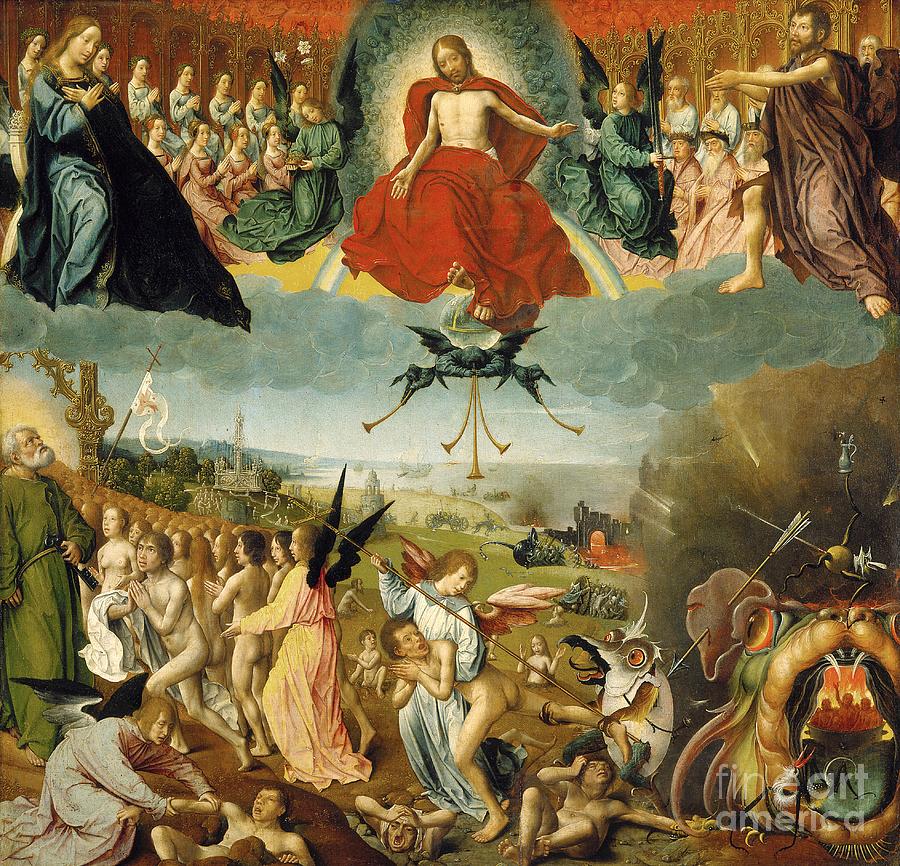
When Jesus came the first time, people were looking for a Messiah to overthrow the Roman government, but Jesus’ message was to repent and be baptized for the forgiveness of sin. That is the message we need to respond to and the message we need to bring to others. The gospel is the good news of forgiveness that we can receive if we respond by repentance. The gospel is the good news of God’s Kingdom come to earth to transform us as well as all of creation so that heaven and earth can be fully joined as God had intended from the beginning.

Once we have become transformed, we are able to invite others to repent and accept the grace of God in transforming their lives as well and then join us in the work of discipleship and restoring the world beginning with the call to reconciliation, that is to engage in the work of evangelism. Some people are better equipped to do evangelism than others, but that does not leave the rest of us with no part in the work.

Evangelism, like other aspects in the life of the church, is a work of the body of the church. It is also a work of the Spirit. Evangelism involves persuading, proclaiming, and teaching the gospel and is a call for others to come to Christ, His Body, and to discipleship. We do not convert people to Christ, which is the work of the Spirit; but we are called to join Spirit in His work in the world. The church is called to be the church and display the gospel at work; the gospel which calls us to be transformed, calls us unity with others in the body of Christ and calls us to join Christ’s work of reconciliation and restoration.

That means that we all have a part to play in the body of Christ, to help build one another up so that we may all become mature members of the body of Christ, displaying the love of the transcendent God towards each other. If we are each transformed by Christ, then we should be able to “give a reason for the hope” we have. A hope that we can hold onto even as we live amid a church that is transformed and yet broken by sin.

The call to discipleship is a call to reconcile all the parts of our lives to the Lordship of Christ. This includes not only all our relationships, particularly with those in the body of Christ, but all of our stewardship responsibilities for all of creation. The evangel, the good news, is not just that our personal relationship with God can be restored, but that all of creation will be restored.

It is for the sake of love that God suffered for us that he might redeem us. The greatest commandments that He gave to his image-bearers, were about love: loving God and loving our neighbor. The good news is about that love – a love that reaches out to us and through us amidst all our brokenness. a love expressed in word and deed.

The remaining parts of this book are about the breadth of expressing that love. Certainly, if we love someone who does has not heard the gospel, it would be loving to share that news with them. And if we are truly loving that other, the words of that news should be happening amid all we do to show that love in our deeds as well as in our words. It may be that the deeds of love will help open-up hearts to hear about that love; a love that reflects God’s prodigal love for each of us, a love that desires to take care of all that God has given us – God’s creation and God’s creatures, God’s image-bearers, and the gifts he has given each one of us. God’s extravagant love should be reflected in the way we love God with all our heart, mind, soul and strength and the way we love our neighbor as ourselves.

God’s image-bearers, the ones who call him Lord and Father, are God’s chosen vehicles to proclaim and demonstrate his love as his ambassadors. God’s proclamation and demonstration of love is not constrained by our different personalities and circumstances, for our limitations are not his limitations but rather our weaknesses are His strength, and our little demonstrations of love are the reflections of His powerful love to us and to the world.

Within ourselves, we may be small and insignificant, but we are not just isolated individuals. We are part of Christ’s body, physical manifestations of Christ

  • Past, present, and future
  • Around the world
  • In all our different ways with whatever resources Christ has given us
  • In whatever place and time he chose for us, with whatever strengths and weaknesses we have

We are the creatures whom God has empowered to rule the earth as his gardener-priests. That empowerment has not changed even though we are broken people living in a broken world. The charge he had given us still remains. Therefore, within our brokenness we need to take whatever Christ has given us and proclaim and demonstrate God’s unsurpassed, overwhelming love to the world, a love that not only wants to reconcile all people but literally all the world to Himself … to reunite heaven and earth.

 The challenge we have as God’s ambassadors, is for us to be proclaiming and living the gospel amid the cultures that are sometimes indifferent and sometimes hostile. Therefore, in our tasks, if we are to be effective ambassadors then we must be, “wise as serpents and innocent as doves,” as we try to discern how to effectively persuade others to follow Jesus. Of course, keeping in mind that it is not we who ultimately persuade others to follow Christ, rather that is the work of the Holy Spirit. But how can we participate with the Holy Spirit?

Different people are persuaded by different means. Sometimes, people are persuaded by logic as we could see in the life of the apostle Paul. Sometimes people are persuaded by personal relationships and are drawn by a personality that looks attractive as we could see in the lives of people who were drawn to Jesus. Sometimes people are persuaded by seeing something different in the life another.

With that in mind, then how do we put ourselves in the place where we are most effective? The answer is: the church. The church is the body of Christ whose members are called to build up one another and to demonstrate a love for one another such that others will recognize us as belonging to Christ. When the church gathers to worship and express it’s love to God, that same desire should lead to expressions of love to one another which pour out into love of neighbor as the church scatters during the week. That desire to love should then draw us to desire to learn how to love in the best way possible. Love leads to love. The love of God leads us to love, love of one another and a love of the world that God loves.

Exactly how that love will flow depends on the particulars of each individual in their particular circumstances. We are all born with different personalities and different bodies, and are equipped differently according to the Holy Spirit, and find ourselves in different cultures within the church and within our communities. Some individuals will find themselves in a very individual ministry and some will be called to a broader ministry to the world. Also, different church communities will even find different approaches in how they interact with the cultures around them.[1]


[1] Finn, Nathan A, Whitfield, Keith S. “Spirituality for the Sent” Chapter 5 Missional Spirituality and Cultural Engagement IVP Academic 2017

Reflect

Discipleship is a process of “being transformed” (2 Corinthians 3:18). Ultimately it is something that happens to us – but it is something we can co-operate with by engaging is spiritual disciplines. What kinds of changes need to happen in our lives that would make it natural to invite someone else into discipleship?

Observe

Read Romans 12. How do we help those around us to be reconciled to each other and to God?

Our limits

Dancing in the Kingdom- Table of Contents

Dancing In the Kingdom – Part 3 – Dancing in the Kingdom– Chapter 14 – Remembering our creation

Our Limits

[Bible References: Genesis 1-2; Deuteronomy 15:11; Psalm 40:17; 1 Corinthians 12]

As we seek to fulfill our cultural mandate, there are various constraints which control how we exercise our call.[1] First and foremost, as God’s image-bearers, we are to act in accordance with God’s character: holding to the balance and tension of acting with sovereignty and servitude, mercy and justice, playfulness, and orderliness, along with his attributes of overflowing goodness, generosity and peace, trustworthiness, faithfulness, self-sacrifice and forgiveness. Although we are not transcendent in the same way God is, as his image-bearers his character of transcendence can be reflected in the ways we manifest His other qualities: Our ability to creatively imagine the ways in which we establish dominion, live into our relationships, display fruitfulness, and fulfill our responsibilities as God’s image-bearers.

We also need to remember that there are limits with which we should exercise our responsibilities. God has given us finite resources of materials or time to work with along with the reminder of Sabbath to help us refocus, to remember that although we are designed to work that we are not designed solely for work. It is not work that gives us value, rather it is God who gives us value and our work only has value if it gives God the glory.

Part of our limits are tied to our embodiment. Our earthiness is a reminder of our dependance on the earth, each other, and God. Our earthiness should help us lean into the humility worthy of image-bearers of God. Our need to sleep is a constant reminder that we are not God who never sleeps.

The multi-faceted call God has given us, requires us as God’s stewards to weave together the call to glorify God, to bring to maturity God’s rule over the earth, to reflect God’s triunity within the community of his image-bearers. This call is not for us to fulfill individually, but rather together as the Body of Christ with whatever God provides.


[1] Theology of Work Commentary, “Genesis 1-11 and Work” Hendrickson Publishers Marketing 2015, 2016

Reflect

We have built-in limits to what we, in our bodies, can do. How do these limits remind us of our dependency on the earth where we live, on each other, and on God?

Observe

Read Deuteronomy 15:11; Ps 40:17; 1 Corinthians 12. Why do we need each other?

Limits of theology

Dancing in the Kingdom- Table of Contents

Dancing In the Kingdom – Part 2 – The Kingdom Revealed – Chapter 13 – Distinctives within the body of Christ

The limits of theology

[Bible references: Isaiah 55:1-13; John 8:43;21-30; 41-48; Acts 1:1-11]

The church is the body of the incomprehensible Christ, and this incomprehensibility creates tension because many of us who are in this body think we understand different aspects of God. Somehow, we end up disagreeing on issues that each of us thinks should be clear to everyone else, resulting in us taking sides and dividing because: not only can’t we understand everything about God, but we are also subject to our personal human frailties (e.g., sins, particular inclinations and weaknesses), the cultures we live in and the languages we speak (which inform the way we interpret scripture) and the events around us (e.g., wars, revolutions, politics, etc.). Those frailties have led to a rather mixed history of how the church has lived into what it knows about the gospel. Sometimes we seem like the Indian fable about six blind men and the elephant,[1] we end up seeing God from such different places that we seem to be describing a different God.

Language may not determine thought, but it focuses perception and attention on particular aspects of reality, structures and thereby enhances cognitive processes, and even to some extent regulates social relationships. Our language reflects and at the same time shapes our thoughts and, ultimately, our culture, which in turn shapes our thoughts and language.[2]

Our culture and our language are inseparably bound together, they affect how we think and how we perceive the world and, particularly, they tend to cause misunderstandings when people from two or more different language/cultural groups communicate with each other.[3] In the case of the church, there were four major languages involved at the beginning: Aramaic, the local language of the Jews in Israel and the region to its east; Greek, the international language of the Roman Empire; Latin, the legal language of the Roman Empire; and Hebrew, the language in which the Old Testament was written.

The majority of the church first developed in the Roman Empire. While the legal language of the empire was Latin, the international language of the empire was Greek, and it was Greek culture that had been strongly adopted within the empire. Even the cultural influences of Plato, Zeno, Aristotle, and Epicurus persisted affecting the development of the church and its values.

Aramaic was the language of the “Church of the East” which developed primarily outside the Roman Empire. In addition to some isolation because of the language differences, it was further isolated by being outside the Roman Empire.

Even within the same people group, misunderstandings occur when people from one time period are interpreting information from an earlier time period. All these factors were in play at the time the church was forming. For example

  • The scripture from the Old Testament was written over a 1400-year time period with different authors using different literary styles.
  • As the church grew across the world, different cultural issues arose.
  • and the New Testament documents written about them were high-context documents but were being interpreted with low-context.[4]

There are also other issues creating internal tensions within the church. We also have a natural propensity to segregate ourselves into different groups. All our communities also experience cultural changes.

The game plan for spreading the gospel throughout the world didn’t follow any typical conventions. The people Jesus selected to be apostles did not receive any training in building organizations, neither did he tell them to plan for the long-term survival of the church that they were charged to begin building. The key instruction that they did receive was “wait,” that is, wait for the Holy Spirit. Jesus may have a master plan, but he only let them know (just as he lets us know) one step at a time. Naturally then, we respond to his revealed plan only one broken step after another and, as we do, we discover our need to lean on him as we work through our frailties and sin. The plan is and was for us to follow the Great Commandment and the Great Commission and the Holy Spirit. Not much detail, no written instructions, sometimes confusing, but that was the plan. Some would characterize the apparent plan as “Love people and tell them about Jesus.”


[1] All About Philosophy “Blind Men and the Elephant” www.allaboutphilosophy.org/blind-men-and-the-elephant.htm ; Saxe, John Godfrey. “The Blind Men and the Elephant” Poetry.com www.poetry.com/poem/101535/the-blind-men-and-the-elephant

[2] Burton, Neel. “How the Language You Speak Influences the Way You Think” Psychology Today www.psychologytoday.com/us/blog/hide-and-seek/201808/how-the-language-you-speak-influences-the-way-you-think

[3] White, James Emery, “the Greek, the Latin and the Hebrew” Crosswalk.com 2 Sept 2008 www.crosswalk.com/blogs/dr-james-emery-white/the-greek-the-latin-and-the-hebrew-11581208.html; Leveridge, Aubrey Neil, “The Relationship between Language and Culture and the implications for language teaching” TEFL.net Sept 2008 www.tefl.net/elt/articles/teacher-technique/language-culture

[4] High context communication occurs when people are in a shared environment with common values, history, etc. where many things are not said because it is assumed that the other person already knows and assumes those things as well. In low context communication, there is much less assumed about what the other person knows and so many more details are included in the communication.

Observe

Read Acts 1:1-11. When it comes to leading the church, what are the strengths and weaknesses of relying on the Spirit?

In time and In an eternal future

Dancing in the Kingdom- Table of Contents

Dancing In the Kingdom – Part 1 – Shadows of the Kingdom – Chapter 3 – The image-bearers

In time and in an eternal future

[Bible references: Genesis 2:9; Exodus 25-28; 1 Kings 5-6; Psalms 19; Ecclesiastes 3:1-22; Matthew 6:28]

Although we have not existed from all eternity, God created us with more than a mortal body. We are also endowed with a soul and a spirit that can be joined to God’s Spirit. In the present moment, our mortal bodies are created from the stuff of the earth, and we are born into particular times and places so that we may serve and enjoy God in those particular times and places.

God made us as creatures. And the good part about being a creature is we were made to be dependent upon God and, by our very design, also dependent on other people and the earth … Often what we’re missing is the good of dependence. We need to cultivate an awareness of how our dependence and our needs open avenues of love … What if we stopped thinking of life as to-dos and started thinking of it as relationships? When we’re so task-driven, it’s very hard to appreciate love, because love is incredibly inefficient … when we were younger, God didn’t expect us to be what we are now. He’s still taking his time, by his Spirit, to bring about order through developmental growth … Part of recognizing our limits is getting comfortable in God’s space and growing in dependance on him … Sometimes, I think we’re actually scared to death to pray, because if we actually take the time to get quiet, we might begin to fear that God’s not there or wonder whether he’s apathetic or just really angry. Only in prayer will we discover how compassionately God views us … cultivating the gift of encouraging and celebrating others. It’s a spiritual discipline, a healthy way of dying to yourself and encouraging others. We are all dying for someone to pay attention and notice our presence and being. When someone articulates that, it’s life-changing. [1]

Our creatureliness which sets us in a particular place and time with a particular body is an opportunity to appreciate our finiteness and God’s infiniteness, to cultivate a sense of dependence on God’s provision and our dependence on each other and within the context of those relationships to truly learn how to love.

Our creatureliness also forces us to deal with God’s ordering Creation through process. Everything, whether physical, social, emotional, intellectual, or spiritual, is controlled by processes. Sometimes we desire to bypass those processes: we want to be instantly knowledgeable and wise and experts at what we do … and not dependent on anyone else. But it was precisely that kind of desire that led to our rebellion at the beginning of humanity.

As God’s image-bearing creatures, we not only have relationships with each other but also with our Creator. In our relationships with God’s other image-bearing creatures, our love can be expressed in our opportunities to support, uplift, and encourage one other. God has no need of such support from us, but He offers us such support. When we recognize our dependence on Him, He gives us the ability to pray, to acknowledge our needs and to recognize His provision for us when He supplies our needs.

We think of prayer as mostly self-expressive—as a way to put words to our inner life … if we pray the prayers we’ve been given, regardless of how we feel about them or God at the time, we sometimes find, to our surprise, that they teach us how to believe … We sleep each night in our ordinary beds in our ordinary homes in our ordinary lives. And we do so in a universe filled to the brim with mystery and wonder. We always sleep in a crowded room in our crowded cosmos, so we ask for crazy things—that God send unimaginable supernatural beings to watch over us as we drool on our pillows … Sleep reminds us of how helpless we are, even merely to stay alive. In the Christian tradition, sleep has always been seen as a way we practice death. Both Jesus and Paul talk about death as a kind of sleep. Our nightly descent into unconsciousness is a daily memento mori, a reminder of our creatureliness, our limitations, and our weakness. [2]

As we pray in our mortal bodies, we remember that although our mortal bodies will return to the dust from which we are made, our bodies will be resurrected when heaven and earth are reunited so that we, with soul and spirit and new body, will be able to enjoy God forever into the future.

What is that phenomenon we call ‘beauty’ and why does it lie at the core of both collective civilization and individual desire, even as we value it precisely for existing outside of practicality? In his essay The Weight of Glory [A sermon given in Oxford in 1942], C.S. Lewis explains it as an echo of eternity, imprinted upon humanity as an indication of our origin and destiny.[3]

Indeed, our God is a God of beauty, and he has created us to enjoy his beauty. Art and our appreciation of it are among the great gifts God has given to us. Sure, like anything, it can be turned into an idol. But art, beauty, and appreciation for the finer things of culture are all good gifts from a good God. [4]

In the meantime, while we await for our resurrection and to “gaze on the beauty of the Lord” (Psalm 27:4), we have reminders of our connection with our transcendent God in the beauty of His Creation and in our capacity to make things of beauty. Whether the beautiful things are of our creation or the Lord’s, they reflect God’s own beauty.

The books or the music in which we thought the beauty was located will betray us if we trust to them; it was not in them, it only came through them, and what came through them was longing … they are not the thing itself; they are only the scent of a flower we have not found, the echo of a tune we have not heard, news from a country we have never yet visited … We do not want merely to see beauty … We want something else which can hardly be put into words—to be united with the beauty we see, to pass into it, to receive it into ourselves, to bathe in it, to become part of it.[5]


[1] Straza, Erin. “Learning to Love Your Limits” Christianity Today 13 Dec 2021 www.christianitytoday.com/ct/2022/january-february/youre-only-human-kelly-kapic-limits-god-design.html Interview with Covenant College theologian Kelly M. Kapic’s about his latest book, “You’re Only Human: How Your Limits Reflect God’s Design and Why That’s Good News.”

[2] Warren, Tish Harrison. “The Cosmos is More Crowded Than You Think” Christianity Today 14 Dec 2021 www.christianitytoday.com/ct/2022/january-february/prayer-night-tish-harrison-warren-angels-crowded-cosmos.html

[3] Wang, Irina “Beauty betrays eternity” Salt salt.london/articles/beauty-betrays-eternity

[4] Meuhlenberg, Bill. “Art and the Christian” Culture Watch 28 July 2011 billmuehlenberg.com/2011/07/28/art-and-the-christian/

[5] Lewis, C.S. “The Weight of Glory” Theology Nov 1941

Observe

Read Ecclesiastes 3:1-22.  In the midst of meditating on the limitations of life on earth, verse 11 slides in a reference to beauty and eternity. How does that verse impact the rest of the chapter?

Chapter 3 – The impossible creatures – Part 1

The Impossible Dance – Table of Contents

The Impossible Dance – Chapter 3 – The Impossible Creatures

As God’s image-bears, we can reflect the image of the loving, interpenetrating, interacting, and dancing God as we participate in His work of taking care of His Creation and of one another. This dance which started before Creation, has been joined by God’s image-bearers since the beginning of humanity. It is now our turn. We just need to learn the moves and join the dance. Ultimately, God did not need to create us or the universe, He did it out of a desire to share his love and delight. God’s creation was more an act of play than of work and He desires that we actively play with him, if you will, to dance with him in His Kingdom. The Kingdom Dance is not meant to be a solo effort, we are to dance with God and with his people.

Reflecting God’s paradoxes

Understanding the character of God, can help us understand what he has intended for creatures that are made in his image. Image-bearing creatures are not gods or duplicates of God, but they are imbued with the character of the God that made them. In this chapter we will explore some of the ways God intends for us to reflect his image. In later chapters, we will expound on those characteristics in more detail.

It was into this good universe that God prepared beforehand that God created creatures to bear his image. Good creatures, image-bearers, who were given the task of taking care of the good creation that God blessed them with – and God declared it to be very good. The image-bearing creatures were created in the complex image of God – the one God who was a community within Himself, the God who was immensely creative, the God who was generous and loving beyond imagination, the God who is sovereign over the universe, the God who is above all things.

There was a danger in God creating image-bearers. To make creatures that were lovers – just as He was a lover – meant giving these image-bearers the freedom to choose whom or what to love. We are unable to choose to not love but only who or what to love. Because God’s image-bearers were the capstone of creation, the option to another love than God, risked an awful catastrophe, a catastrophe that could affect the entirety of creation itself. The good creation, all of it, would become not so good.

And so it was, after creation was prepared for God’s image-bearers, those creatures who were created in the image of the loving God were given instructions to be stewards of the world God had made. Everything was good, and the first human couple had free access to the provisions in garden prepared for them. Only one restriction was placed before them, a restriction not meant to deprive them of anything good but meant to provide the opportunity to test their love, by testing their obedience to the one who created them.

We all now know that those creatures failed their test, and we daily experience the consequences of that failure. We also daily experience our own incapacity to restore holiness on our own efforts, our inability to love God with all our heart and soul and mind and our inability to fully love God or to fully love our neighbors as ourselves.

The mystery of who we are has to worked out between all the goodness we are endowed with as creatures who bear the image of God and all the evil we are encumbered with as creatures who innately rebel against that same God. Traces of heaven and hell run through each of us and our manifested in our everyday lives. The tongues we praise God with also curse our neighbor. The selflessness we display to others is corrupted by the selfish desires that emerge from the same heart.

Body, Soul and Spirit

The mystery of perichoresis which tries to describe the one person God consisting of the relation of the Father, Son and Holy Spirit may very well be the best approach to the mystery of God’s image-bearers. There are conflicting views on whether a person consists of a body and soul or body and spirit or body and soul and spirit. Are we two parts or three parts then which parts? A similar issue arises in the attempts to figure out the relation between the brain and consciousness. Although some researchers reductionistically think that consciousness is all biology and that we will be able to eventually build a computer with a conscious, it is likely that the mystery of perichoresis will prevail.

As image-bearers, being created as community of male and female points one way to the community of God as Father, Son and Holy Spirit, but also points in another way to their unity as represented by becoming “one flesh.” There is an element of equality with a difference between male and female as represented by the woman being created from, what has been commonly translated, a “rib” from Adam’s side. The equality becomes more apparent however, when we understand the word that has been translated as “rib” is more usually translated as “side” – as if Eve were constructed from a full half Adam’s side.

The mystery deepens further when we consider the sexual union of husband and wife. Our male and femaleness show us our human incompleteness without each other. In the joining of the male and female bodies we manifest a completeness. Humans are unlike all other creatures in that we are made in God’s image with body, soul and spirit, and our spirit is joined to God’s Spirit. Therefore, the sexual union of husband and wife, unlike other creatures, is described as becoming “one flesh.” The combination of spiritual union and physical union creates a living metaphor of the union of Christ with the Church. The love, intensity and passion of two different but complementary bodies united both in spirit and in “one flesh” is an extension of the perichoresis of the Trinity as the bodies of the image-bearers united in spirit with Christ become the body of Christ on earth, joined in love, intensity and passion, enjoying the overflowing goodness and shalom that God has intended for us.

We are created body, soul and spirit with the intention that when heaven and earth are rejoined, we will be restored body, soul and spirit (although it will be in resurrected bodies) in the new heaven and earth. It is also through our bodies that we are restored to Christ. And when fellow Christ-bearers assemble together, they are together the Body of Christ, with each person bringing different gifts to support and strengthen the others in the Body.

Transcendent and Immanent

God has placed each one of us in a particular time and place and with particular people. Within that time and place and people he has plans for us. Each of us has a particular mind and body with which we need to discern God’s calling for us in our time and place. Such plans are revealed in many places in scripture.

And though we are called to particular times, places and people, there are ways in which God’s transcendent character spills over onto us. The mark of his transcendence is even placed in each of our hearts. The expressions of transcendence are impossible to avoid in our day and age: Although we were not born with the ability to fly, we can fly to the moon, although we were not born to live under water, we are able to spend months at a time under water even at incredible depths, although we were not born to run like a cheetah, we don’t even think about climbing into a vehicle and going more than 60 miles an hour for hours at a time, we can also create works of art that show places we have never been, we can use the resources of the earth to generate more power than we can imagine … and the list goes on.

With our gift of transcendence, God has shown that he has set us aside as his representatives, “to be holy as he is holy.” We are not to merely live as earthly creatures but as creatures who represent the living God. The challenge before us is to discern, as God’s image-bearers, to what end God can use our particular bodies, emotions and minds in the particular family and community into which we are placed, to fulfill the purpose he has intended for each of us.

In Time and In an Eternal Future

Although we have not existed from all eternity, God created us with more than a mortal body. We are also endowed with a soul and a spirit that can be joined to God’s Spirit. In the present moment, our mortal bodies are created from the stuff of the earth, and we are born into particular times and places so that we may serve and enjoy God in those particular times and places.

Our creatureliness which sets us in a particular place and time with a particular body is an opportunity to appreciate our finiteness and God’s infiniteness, to cultivate a sense of dependence on God’s provision and our dependence on each other and within the context of those relationships to truly learn how to love.

Our creatureliness also forces us to deal with God’s ordering Creation through process. Everything, whether physical, social, emotional, intellectual or spiritual, is controlled by processes. Sometimes we desire to bypass those processes: we want to be instantly knowledgeable and wise and experts at what we do … and not dependent on anyone else. But it was precisely that kind of desire that led to our rebellion at the beginning of humanity.

As God’s image-bearing creatures, we not only have relationships with each other but also with our Creator. With other of God’s image-bearing creatures, our love can be expressed in our opportunities to support, uplift and encourage one other. God has no need of such support from us, but He offers us such support. When we recognize our dependence on Him, He gives us the ability to pray, to acknowledge our needs and to recognize His provision for us when He supplies our needs.

As we pray in our mortal bodies, we remember that although our mortal bodies will return to the dust from which we are made, our bodies will be resurrected when heaven and earth are reunited so that we, with soul and spirit and new body, will be able to enjoy God forever into the future.

In the meantime, while we await for our resurrection and to gaze on the beauty of the Lord (Psalm 27:4), we have reminders of our connection with our transcendent God in the beauty of His Creation and in our capacity to make things of beauty. Whether the beautiful things are of our creation or the Lord’s, they are a reflection of God’s own beauty.

Co-Sovereigns and Servants

God is the master of all creation, yet he has given to us the responsibility to take care of the earth. It is out of that mastery that we have managed to use the resources of the earth to create all the technological advances that we have. Unfortunately, in many cases we have abused our abilities; abusing not just the resources of the earth but often abusing each other.

In our sinfulness, we typically appeal to our call to sovereignty while forgetting our call to service. This very issue Jesus took care to remind us of on many occasions. If we mistreat the earth that we are placed in or if we mistreat others, then we dishonor not only the one in whose image we are made but even the other image-bearers of God. In fact, it is out of our call to sovereignty and service that we are called to love, to willingly give of ourselves to the service of God just as God gave of himself to us.

It is under the constraint of God’s love that he tells us to “subdue” and “have dominion” over his creation. As God’s stewards, our sovereignty means we have the responsibility to maintain the good in God’s creation, to bring order to it and to help his creatures flourish and fill the earth.

There are two dimensions to our responsibility to subdue and have dominion.

When Genesis 1 was written, it was hard work to cultivate the rocky soil and people had little control of the elements; people were more powerless than powerful. In that context we see the forceful aspect of radah (ruling the earth) that is evident in other instances in the Bible when that word is used. That is one dimension of our responsibility.

But another dimension of our responsibility to have “dominion” is tempered by gentleness, such as when God spoke through Ezekiel’s to the “shepherds of Israel” and reprimanded them for using cruelty and violence and caring more about themselves than the people they were responsible for, serving themselves instead of the people.

In our service, we are dependent one another. We were not made to be self-sufficient; we not only need to have a relationship with God but also with each other. God allowed the first man to see that he needed another human before God presented the man with a woman to be his ‘ezer kegnedo. In Hebrew, ‘ezer is usually translated as “helper” or “deliverer” and is most often used to describe God delivering his people; kegnedo is usually translated as “in front of” or “opposite” or “parallel to”.

Later on, in scripture we see that we are called to be a nation of priests and a body where all the different parts have a purpose as they work together. We are called not just to a restored relationship with the one who made us but are called together as a people to serve each other and to serve the world around us.

Merciful and Just

There is much in this world that is not just or righteous. As God’s servants, we are called to seek both. But just like the servant in the parable of the unmerciful servant we can forget the mercies shown to us when we are dealing with each other. There is much that makes us yearn for justice in a world filled with cruelty, but we need to remember that as God acted on his own demands of justice, he yet found a way to bestow great mercy on us.

The prophets of Israel, and even Jesus, condemned those people who acted in self-righteousness and did not seek justice and mercy for those around them. In our own search for justice, we should remember the entreaty in Micah 6:8, “What does the Lord require of you, but to do justly, love mercy, and walk humbly with your God.”

Playful and Orderly

There is much that is wrong in the world. People endure pain and suffering sometimes from natural happenings and sometimes from the actions of others. Evil seems persistent and never-ending. When we are called to serve God in this world, we can become overwhelmed by all the work that is to be done. Playfulness can seem out of place. Particularly, any playfulness that emerges from self-centeredness or obsessiveness.

Actually, that is the point we need to assert. Playfulness can be out of place in a world of sin and evil. But playfulness can also be a reminder that the reality in front of us is not the total reality. Our playfulness arises out of the relationship we have with God, the one who has overcome the evil in the world, who will end the suffering and who will restore us and world to be what he intended from the beginning. Playfulness arises out of the hope and joy we have in knowing that reality in front of us is not the whole reality.

Our imagination can be helpful in this play. As children, we can pretend there is another world and do something like taking a cardboard box and imagining it to be a spaceship and accepting the rules of living in that spaceship. Family traditions (or even community or national traditions) are a form of play, they do not serve a utilitarian purpose, but stem from the creative ways we wish to remember our unique heritage.

This same imaginative playfulness can be useful reminding us of the reality that lies behind our current reality. Our traditions of worship are a form of play, albeit a more serious play. Our worship traditions represent ways for us to remember our spiritual heritage or to provide imaginative ways to perform biblical sacraments about which we have sparse details on how to perform them. These traditions and liturgies help us point to that other reality, a new Kingdom that began breaking into this world with the incarnation of Jesus.

We hope to participate in the inbreaking of the new Kingdom by living according to its rules. When we pray or worship, we are participating in the rules of that new Kingdom. When we come to others and share with them the hope that we have, we are asking them to use their imagination to look beyond the current reality and envision the new Kingdom that is already here and is yet to come. When we accept contentment in all situations, when we trust in God, when we comfort others with the hope we have, we are living according to the rules of the new Kingdom.

It is also true, that In this present life there are endless encounters with grief. Although we acknowledge the pain and suffering of that grief, whether that grief is ours or others, we can encompass that grief with hope. Even amid grief we can choose to cling to God and to the hope He brings us. If we can live into the rules of the new Kingdom, we can have assurance that the current grief will pass and will be replaced by future joy and laughter and that every tear that we have cried and will cry and even now cry will be wiped away.

Our hope of the new Kingdom allows us to endure the current pain and suffering knowing that the hard experiences can be redeemed and to be used for good. God can take the pain and suffering we endure to transform us to be more like Christ, who himself suffered for us, transforming the very evil intended for him into the final victory that shall ultimately also make us victorious. This hopeful living then is also a form of play, accepting the rules of a reality we cannot see and choosing to live according to the rules of a Kingdom that we can only realize in part.

That playfulness also emerges in our creativity, which erupts early on in our lives as our desire as children to play and also in the desire we have as parents to play with our children. There is no doubt about how uniquely creative we are in the way we express ourselves, not only in all the various art forms we use but in the ways we can solve all sorts of problems – even to the creative ways we try to cover up our sins. No other creature can come close to expressing creativity the way we can.

Our ability to create and even detect order is also unmatched. Our ability to detect order is evident in the way we can detect patterns in sight or sound. The sense of order is evident in our ability to recognize faces, our ability to recognize the voices of our mothers or fathers as infants and even before we are born. Our sense of order is seen as we grow in our ability to recognize the patterns of letters and sounds and to recognize and respond to language – even languages.

Our sense of order becomes more evident in our ability to create order out of many abstract concepts such as math, science, philosophy and many other areas. It is our sense of order that allows us to create businesses, governments and civic organizations to make society productive. When we bring order to farmland, we increase the productivity of the farm.

The visible order within Creation inspired Christians in the past to study Creation. Order within Scripture helps the Bible to be meaningfully used as meditative literature. In the same way, order during worship also helps us to avoid confusion and to focus on God.

Playful and Orderly

Dancing in the Kingdom – Table of Contents

Part 1 – Shadows of the Kingdom, Chapter 3 – The Image-bearers

[Bible references: Deuteronomy 12:1-33:18; Exodus 35:30-38; 2 Kings 17:1-41; Nehemiah 8:1-9:38; Psalm 100; John 4:23-24; Acts 6:1-7; 15:1-35; Romans 12:1-2; 1 Corinthians 14:1-40]

There is much that is wrong in the world. People endure pain and suffering sometimes from natural happenings and sometimes from the actions of others. Evil seems persistent and never-ending. When we are called to serve God in this world, we can become overwhelmed by all the work that is to be done. Playfulness can seem out of place. Particularly, any playfulness that emerges from self-centeredness or obsessiveness.

Actually, that is the point we need to assert. Playfulness can be out of place in a world of sin and evil. But playfulness can also be a reminder that the reality in front of us is not the total reality. Our playfulness arises out of the relationship we have with God, the one who has overcome the evil in the world, who will end the suffering and who will restore us and world to be what he intended from the beginning. Playfulness arises out of the hope and joy we have in knowing that reality in front of us is not the whole reality.

Our imagination can be helpful in this play. As children, we can pretend there is another world and do something like taking a cardboard box and imagining it to be a spaceship and accepting the rules of living in that spaceship. Family traditions (or even community or national traditions) are a form of play, they do not serve a utilitarian purpose, but stem from the creative ways we wish to remember our unique heritage.

This same imaginative playfulness can be useful reminding us of the reality that lies behind our current reality. Our traditions of worship are a form of play, albeit a more serious play. Our worship traditions represent ways for us to remember our spiritual heritage or to provide imaginative ways to perform biblical sacraments about which we have sparse details on how to perform them. These traditions and liturgies help us point to that other reality, a new Kingdom that began breaking into this world with the incarnation of Jesus.

Christian worship was in fact and from the beginning a festival:  the festival of Christ’s resurrection from the dead … Easter begins with a feast, for Easter is a feast and makes the life of those who celebrate it a festal life … Jesus himself compared the presence of God, which he proclaimed and lived, with the rejoicing over a marriage.  His earthly life was a festal life, even if it ended in suffering and death … the early Christians have understood his raising from the dead and the presence of the now-exalted Christ as the beginning of an unending joy and a happiness without end … the risen Christ as ‘the first among those who had fallen asleep’ and as the leader of life; as the leader in the mystic dance and himself as the bride who dances with the others, as the church father Hippolytus put it.  Long before the somber dances of death were painted in medieval times of plague, the figure of the resurrection dance can be seen in the old churches.  The modern Shaker song ‘The Lord of the Dance’ brings out very well the dancing Christ:

I am the life that’ll never, never die;

I’ll live in you if you’ll live in me,

I am the Lord of the Dance, said he.[1]

We hope to participate in the inbreaking of the new Kingdom by living according to its rules. When we pray or worship, we are participating in the rules of that new Kingdom. When we come to others and share with them the hope that we have, we are asking them to use their imagination to look beyond the current reality and envision the new Kingdom that is already here and is yet to come. When we accept contentment in all situations, when we trust in God, when we comfort others with the hope we have, we are living according to the rules of the new Kingdom.[2]

It is also true, that In this present life there are endless encounters with grief. Although we acknowledge the pain and suffering of that grief, whether that grief is ours or others, we can encompass that grief with hope. Even amid grief we can choose to cling to God and to the hope He brings us. If we can live into the rules of the new Kingdom, we can have assurance that the current grief will pass and will be replaced by future joy and laughter and that every tear that we have cried and will cry and even now cry will be wiped away.

Our hope of the new Kingdom allows us to endure the current pain and suffering knowing that the hard experiences can be redeemed and to be used for good. God can take the pain and suffering we endure to transform us to be more like Christ, who himself suffered for us, transforming the very evil intended for him into the final victory that shall ultimately also make us victorious. This hopeful living then is also a form of play, accepting the rules of a reality we cannot see and choosing to live according to the rules of a Kingdom that we can only realize in part.

That playfulness also emerges in our creativity, which erupts early on in our lives as our desire as children to play and also in the desire we have as parents to play with our children.[3] There is no doubt about how uniquely creative we are in the way we express ourselves, not only in all the various art forms we use but in the ways we can solve all sorts of problems[4] – even to the creative ways we try to cover up our sins.[5] No other creature can come close to expressing creativity the way we can.

Our ability to create and even detect order is also unmatched.[6] Our ability to detect order is evident in the way we can detect patterns in sight or sound. The sense of order is evident in our ability to recognize faces, our ability to recognize the voices of our mothers or fathers as infants and even before we are born.[7] Our sense of order is seen as we grow in our ability to recognize the patterns of letters and sounds and to recognize and respond to language – even languages.

Our sense of order becomes more evident in our ability to create order out of many abstract concepts such as math, science, philosophy and many other areas.[8] It is our sense of order that allows us to create businesses, governments and civic organizations to make society productive. When we bring order to farmland, we increase the productivity of the farm.

The visible order within Creation inspired Christians in the past to study Creation. Order within Scripture helps the Bible to be meaningfully used as meditative literature. In the same way, order during worship also helps us to avoid confusion and to focus on God.


[1] Moltmann, Jürgen. “The Living God and the Fullness of Life” ,” trans. Margaret Kohl Westminster John Knox Press, 2015, p.192; Carter, Sydney. Lyrics “Lord of the Dance” (1963),

Tune “Simple Gifts” Brackett Jr., Joseph. (1848)

[2] Edgar, Brian. “The God Who Plays: A Playful Approach to Theology and Spirituality” Cascade Books 2017 (e-book)

[3] Gowman, Vince. “Playful quotes for the child in your heart” Vince Gowman http://www.vincegowmon.com/playful-quotes-for-the-child-in-your-heart/

[4] Baumgartner, Jeffrey. “The Basics of Creative Problem Solving – CPS”  ” Innovation Management, innovationmanagement.se/imtool-articles/the-basics-of-creative-problem-solving-cps/

[5] Brister, Tim. “6 Destructive Ways We Minimize Our Own Sin” Bible Study Tools http://www.biblestudytools.com/bible-study/topical-studies/6-destructive-ways-we-minimize-our-own-sin.html.

[6] Basulto, Dominic. “Humans Are the World’s Best Pattern-Recognition Machines, But for How Long?” Big Think 24 July 2013 bigthink.com/endless-innovation/humans-are-the-worlds-best-pattern-recognition-machines-but-for-how-long.

[7] Pfaff, Leslie Garisto. “6 things you may not know your baby can do” Parents http://www.parents.com/baby/development/intellectual/6-things-you-may-not-know-your-baby-can-do/

[8] Armstrong, David. “Christianity Absolutely Critical to Origin of Science” Patheos, 18 Oct 2015, http://www.patheos.com/blogs/davearmstrong/2015/10/christianity-crucial-to-the-origin-of-science.html

Reflect

Our ability to play arises out of how we bear the image of God. How does our playfulness persist even in the midst of all the problems in the world?

Observe

Read Deuteronomy 12; 1 Corinthians 14. These chapters contain explicit instructions about how and how not to worship.  Since we do not yet experience the fullness of the new Kingdom, how can our imagination help us more actively engage in worship?

In Time and In an Eternal Future

Dancing in the Kingdom – Table of Contents

Part 1 – Shadows of the Kingdom, Chapter 3 – The Image-bearers

[Bible references: Exodus 25-28; 1 Kings 5-6; Psalms 19; 37:4-5; Proverbs 3:5-6; 11:14; Ecclesiastes 3:1-27; John 10:27; Acts 16:6-10; Romans 1:8-10; 12:1-2; 1 Corinthians 2:9-10; 15:42-49; 1 Thessalonians 4:3; 1 Peter 4:10; 1 John 3:16] Gen 2:9; 1 Samuel 2:26; Ps 19:1-14; Ecc 3:-22; Matt 6:28; Romans 1:18-20; 1 Cor 3:7;15;42-49; 2 Cor 10:15; Eph 4:15; Col 1:6-10; 2 Thes 1:3; 2 Pet 3:18

Although we have not existed from all eternity, God created us with more than a mortal body. We are also endowed with a soul and a spirit that can be joined to God’s Spirit. In the present moment, our mortal bodies are created from the stuff of the earth, and we are born into particular times and places so that we may serve and enjoy God in those particular times and places.

… God made us as creatures. And the good part about being a creature is we were made to be dependent upon God and, by our very design, also dependent on other people and the earth … Often what we’re missing is the good of dependence. We need to cultivate an awareness of how our dependence and our needs open avenues of love … What if we stopped thinking of life as to-dos and started thinking of it as relationships? When we’re so task-driven, it’s very hard to appreciate love, because love is incredibly inefficient … 59

Our creatureliness which sets us in a particular place and time with a particular body is an opportunity to appreciate our finiteness and God’s infiniteness, to cultivate a sense of dependence on God’s provision and our dependence on each other and within the context of those relationships to truly learn how to love.

when we were younger, God didn’t expect us to be what we are now. He’s still taking his time, by his Spirit, to bring about order through developmental growth … Part of recognizing our limits is getting comfortable in God’s space and growing in dependance on him.59

Our creatureliness also forces us to deal with God’s ordering Creation through process. Everything, whether physical, social, emotional, intellectual or spiritual, is controlled by processes. Sometimes we desire to bypass those processes: we want to be instantly knowledgeable and wise and experts at what we do … and not dependent on anyone else. But it was precisely that kind of desire that led to our rebellion at the beginning of humanity.

Sometimes, I think we’re actually scared to death to pray, because if we actually take the time to get quiet, we might begin to fear that God’s not there or wonder whether he’s apathetic or just really angry. Only in prayer will we discover how compassionately God views us … cultivating the gift of encouraging and celebrating others. It’s a spiritual discipline, a healthy way of dying to yourself and encouraging others. We are all dying for someone to pay attention and notice our presence and being. When someone articulates that, it’s life-changing.[1]

As God’s image-bearing creatures, we not only have relationships with each other but also with our Creator. With other of God’s image-bearing creatures, our love can be expressed in our opportunities to support, uplift and encourage one other. God has no need of such support from us, but He offers us such support. When we recognize our dependence on Him, He gives us the ability to pray, to acknowledge our needs and to recognize His provision for us when He supplies our needs.

We think of prayer as mostly self-expressive—as a way to put words to our inner life … if we pray the prayers we’ve been given, regardless of how we feel about them or God at the time, we sometimes find, to our surprise, that they teach us how to believe … We sleep each night in our ordinary beds in our ordinary homes in our ordinary lives. And we do so in a universe filled to the brim with mystery and wonder. We always sleep in a crowded room in our crowded cosmos, so we ask for crazy things—that God send unimaginable supernatural beings to watch over us as we drool on our pillows … Sleep reminds us of how helpless we are, even merely to stay alive. In the Christian tradition, sleep has always been seen as a way we practice death. Both Jesus and Paul talk about death as a kind of sleep. Our nightly descent into unconsciousness is a daily memento mori, a reminder of our creatureliness, our limitations, and our weakness. [2]

As we pray in our mortal bodies, we remember that although our mortal bodies will return to the dust from which we are made, our bodies will be resurrected when heaven and earth are reunited so that we, with soul and spirit and new body, will be able to enjoy God forever into the future.

What is that phenomenon we call ‘beauty’ and why does it lie at the core of both collective civilisation and individual desire, even as we value it precisely for existing outside of practicality? In his essay The Weight of Glory [A sermon given in Oxford in 1942], C.S. Lewis explains it as an echo of eternity, imprinted upon humanity as an indication of our origin and destiny.[3]

Indeed, our God is a God of beauty, and he has created us to enjoy his beauty. Art and our appreciation of it are among the great gifts God has given to us. Sure, like anything, it can be turned into an idol. But art, beauty, and appreciation for the finer things of culture are all good gifts from a good God. [4]

In the meantime, while we await for our resurrection and to gaze on the beauty of the Lord (Psalm 27:4), we have reminders of our connection with our transcendent God in the beauty of His Creation and in our capacity to make things of beauty. Whether the beautiful things are of our creation or the Lord’s, they are a reflection of God’s own beauty.

The books or the music in which we thought the beauty was located will betray us if we trust to them; it was not in them, it only came through them, and what came through them was longing … they are not the thing itself; they are only the scent of a flower we have not found, the echo of a tune we have not heard, news from a country we have never yet visited … We do not want merely to see beauty … We want something else which can hardly be put into words—to be united with the beauty we see, to pass into it, to receive it into ourselves, to bathe in it, to become part of it.


[1] Straza, Erin. “Learning How to Love Your Limits” Christianity Today 13 Dec 2021 http://www.christianitytoday.com/ct/2022/january-february/youre-only-human-kelly-kapic-limits-god-design.html Interview with Covenant College theologian Kelly M. Kapic’s about his latest book, “You’re Only Human: How Your Limits Reflect God’s Design and Why That’s Good News.”

[2] Warren, Tish Harrison. “The Cosmos is More Crowded Than You Think” Christianity Today 14 Dec 2021 http://www.christianitytoday.com/ct/2022/january-february/prayer-night-tish-harrison-warren-angels-crowded-cosmos.html

[3] Wang, Irina “Beauty betrays eternity” Salt salt.london/articles/beauty-betrays-eternity/

[4] Meuhlenberg, Bill. “Art and the Christian”; Culture Watch 28 July 2011 billmuehlenberg.com/2011/07/28/art-and-the-christian/

Reflect

How does having an eternal future help us live in the world today?

Observe

Read Ecclesiastes 3:1-22.  In the midst of meditating on the limitations of life on earth, verse 11 slides in a reference to beauty and eternity. How does that verse impact the rest of the chapter?