Discovering how we are formed

Dancing in the Kingdom- Table of Contents

Dancing In the Kingdom – Part 3 – Dancing in the Kingdom– Chapter 15 – Reforming our Souls

Discovering how we are formed – for each other

[Bible references: Romans 12, 1 Corinthians 12, 13:1-3; Ephesians 3:6-8; Ephesians 4, 1 Peter 4:7-10]

Once we have centered ourselves on Christ and have learned to submit to God and to one another, we are in a good place to evaluate the unique ways in which God has formed us.[1] One of the more holistic tools developed by Saddleback Church provides an evaluation of several aspects of how we are formed: the spiritual gifts, the desires, the abilities, the personality, and the experience God gives us.

The reality is that much is life is filled with, “I just gotta do what I gotta do.” Parenting is like that, housekeeping is like that, etc. Diapers need to be changed, the house needs to be cleaned, the bills must be paid, grocery shopping needs to be done, etc. Much of life is filled with responsibilities that need to be done regardless of what capacity we think we may have. There may be no luxury of just doing “what I think I am best at.”

But where it is possible, when we gather in a sharing community, there is the opportunity to allocate different tasks to those people who are best equipped for it. God has intended that we be in such communities, so described in scripture as “the body of Christ,” where different people serve in different functions. At such times, there are opportunities for us to discover in what unique ways God has designed us so that we may serve each other in the best way possible.

Scripture reveals that all who are in Christ are indwelt by the Holy Spirit, and that the Spirit has given us various gifts that we can use to help build up other members of the body of Christ. A few Bible passages give us an idea of the kinds of gifts of some of these gifts, but the lists are not exhaustive: exhortation, giving. leadership, mercy, prophecy, service, teaching, administration, apostle, discernment, faith, healing, helps, knowledge, miracles, prophecy, teaching, tongues, tongues, interpretation, wisdom, evangelism, pastor, teaching, celibacy, hospitality, missionary, voluntary poverty.

One way to discover what gifts we may have, is by serving in our community. As we serve in various ways, we may discover that God has particularly blessed our service in various ways. Sometimes others may point out those abilities or gifts to us. Another way to discover our gifts is to read about those gifts and certain gifts may become apparent to us that way. Another way is to take a questionnaire and the results of that questionnaire may reveal certain gifts to us. It may be helpful to take such a questionnaire with someone else because they may have different insights into the questions.

As we mature and encounter different life experiences, we may discover that different gifts emerge or that God has provided differently for us in our different circumstances. God knows us and our circumstances and may provide differently as we change, and our circumstances change.


[1] Links to various assessment tools: Spiritual gifts: Carver, Jeff. “Spiritual Gifts Test – Adult Version”Spiritual Gifts Test spiritualgiftstest.com/spiritual-gifts-test-adult-version ; Granger Community Church. “Spiritual Gifts Test” Granger Community Church spiritualgiftstest.com/spiritual-gifts-test-landing; Ministry Tools Resource Center. “Take Online Spiritual Gifts Test Inventory Assessment” Ministry Tools Resource Center mintools.com/spiritual-gifts-test.htm; Rock Church, “Gifts Test” Rock Church giftstest.com. Personality test sites: Hayes, Robert. “The Best Free Enneagram Tests You Can Take Online” Tech Junkie www.techjunkie.com/best-free-enneagram-tests; Truity Psychometrics. “The Enneagram Personality Test” Truity Psychometrics www.truity.com/test/enneagram-personality-test; Barkers, Ewald. “Eclectic Energies Enneagram Tests (Free) Eclectic Energies www.eclecticenergies.com/enneagram/test; Shape test: Hill, Kevin M. “S.H.A.P.E. Test” Free Shape Test www.freeshapetest.com; Saddleback Church “You Were SHAPED for Serving God” Saddleback Church www.ministryideas.com/doc/shape_discovery_tool.pdf


Mystery of faith

Dancing in the Kingdom- Table of Contents

Dancing In the Kingdom – Part 2 – The Kingdom Revealed – Chapter 13 – Distinctives within the body of Christ

Mystery of faith

[Bible references: Exodus 31:1-11; Isaiah 1:18; Romans 1; 3:24; 4:16; 5:2-21; 6:15; 11:5-6; 2 Corinthians 6:1; Galatians 5; Ephesians 1; 2 Hebrews 12:1-39]

Faith and grace

If we try to systemize grace and faith, we find some saying that God will only give some people a special grace that allows them (and only them) to have faith to receive God’s forgiveness and some will say everyone is given that grace. Fortunately, receiving God’s grace is not dependent on our understanding. We only need to acknowledge it is only by God’s grace that we can be forgiven, and it is by God’s grace that we can be saved through faith.

After we “make a decision” to receive grace through faith, some will have the attitude that, “I’m saved, there is nothing more to do.” This attitude is sometime characterized as getting “fire insurance” or a “get out of hell free” card or as “easy believism.” This puts emphasis on “making a decision to accept Christ as our Savior” as if that was the main point.

While acknowledging Jesus as our Savior is a good thing, we should not put to the side that our decision should also acknowledge that Jesus is also our Lord and therefore our decision includes following Him as a disciple.

Faith and reason

Scripture is full of exhortations for us to use our reasoning. In Isaiah 1:18, Yahweh invites us to reason together with Him. In Romans 1, Paul tells us that we can even discern the truth of God’s invisible qualities, that they are clearly seen in the world around us. The scriptures are full of examples of God pleading with us, appealing with us to do the right things.

Scripture also encourages us to walk and live by faith, to trust God by faith, to obey God by faith, that we need to come to him by faith, that our righteousness comes by faith – and that faith is having confidence in what we hope for and assurance about what we do not see.

To hold these in tension, we cannot go to either extreme of abandoning our intellect or abandoning faith, rather we must go trust God to act in the future based on what we have seen him do in the past or present.

Faith and Creeds

It would seem nice if we could make a simple statement like, “The Bible says it and I believe it,” and not be misunderstood. But it’s not so simple. That’s because the Bible is not a straightforward text of moralizing or instructions. It’s a collection of stories, poetry, bits of wisdom, letters written from one person to another or to a group, prophecy, etc.  So biblical interpretation is not a task to be done lightly. Instead, it requires that we look at every verse in the context of the passage that it’s in, who wrote it and to whom and in the context of the entirety of scripture.[1] 

To address that problem, many congregations have found it expedient to clarify what they believe by using certain creeds or statements of faith. But then we run into the problem of the creeds or statement are not saying enough about the entirety of the faith of the congregation. So other congregations avoid creedal statements altogether and simply say that the Bible as a whole describes their faith.[2]

Faith and expressions of the Gospel

Living out the Gospel can encompass all parts of our lives, but for various reasons, different parts of the church at different times have chosen to focus on different aspects of the Gospel, often creating an imbalance in how the Gospel is lived out. Overfocusing on the intellectual aspects of faith led to a movement to focus instead on internalizing one’s faith and personal walk with God. Overfocusing on one’s personal walk with God led to a movement to put more of a focus on the public aspect of faith and the need for social justice. A desire to “return” to the faith of the New Testament church led to a desire to live out the “whole Gospel,” emphasizing the power of the Spirit as expressed by miracles, healings and speaking in tongues. Of course, the “whole gospel” actually encompasses all aspects and loving God with all our hearts, minds, soul and spirit.

Faith and Art

[Bible references: Exodus 28:3; 31:1-11; 35:10-33; 1 Kings 7:13-14; Proverbs 8:30; 22:29; Isaiah 54:16; Zechariah 1:20]

Expressing our faith through art had been common since God instructed people gifted in arts and crafts to build the Tabernacle. During New Testament times, poverty and persecution limited the amount of artwork, and that artwork was largely symbolic. But after the legalization of Christianity, expressions of the faith blossomed in both art and architecture. The eastern church started to express its faith through special artwork called icons which were highly revered. However, when a volcano erupted in AD 726, superstitions within the empire created a movement to rejected artwork[3] which did not finally end until AD 834[4]. To this day, different segments of the church either accept or reject the use of artwork.

Faith and perceptions of God in the Old and New Testament

At first glance, it could seem like God in the Old Testament is different than God in the New Testament. In the Old Testament the stress seems to be on the holiness of God and his distance from us while in the New Testament the stress seems to be on the love of God and his closeness to us. God in the Old Testament seems to act violently while in the New Testament He seems to act humbly and peaceably. This apparent dichotomy has created much consternation, causing some people to reject or ignore the Old Testament and only focus on the New Testament. But God is the same today, yesterday, and tomorrow. God never changes. More careful reading will show that the Old and New Testaments are not so different, and the characteristics we see of God in one testament can be found in the other testament.


[1] The discipline of “hermeneutics” or “bible interpretation” gives guidance on how to properly interpret the scriptures.

[2] These congregations are called noncreedal congregations.

[3] iconoclasm

[4] Art in Context, “Early Christian Art – Christian Artwork and Biblical Paintings” Artincontext artincontext.org/christian-art/ ; Joy of Museums “Christian Art and Biblical Paintings” Joy of Museums joyofmuseums.com/most-popular/popular-christian-art/

The gifts of the faith

Dancing in the Kingdom- Table of Contents

Dancing In the Kingdom – Part 2 – The Kingdom Revealed – Chapter 12 – Launching the church

The gifts of the faith

[Bible references: Romans 12:1-8, 1 Corinthians 7:7-8; 12; 13:1-3; Ephesians 3:6-8; 4; 1 Peter. 4:7-11]

One way to discover what gifts we may have is by serving in our community. As we serve in various ways, we may discover that God has particularly blessed our service in various ways. Sometimes others may point out those abilities or gifts to us. Another way to discover our gifts is to read about those gifts and certain gifts may become apparent to us that way. Another way is take a questionnaire and the results of that questionnaire may reveal certain gifts to us. It may be helpful to take such a questionnaire with someone else because they may have different insights into the questions.

As we mature and encounter different life experiences, we may discover that different gifts emerge or that God has provided differently for us in our different circumstances. God knows us and our circumstances and may provide differently as we change and our circumstances change.

To strengthen the spiritual gift questionnaires, Saddleback Church has created the SHAPE assessment tool. What this tool does, is combine the spiritual gifts assessment with other things that define us: these factors are Spiritual gifts, Heart (our desires), Abilities (talents we have), Personality (who we are) and Experience (the things we’ve lived through).[1]

Scripture reveals that all who are in Christ are indwelt by the Holy Spirit, and that the Spirit has given us various gifts that we can use to help build up other members of the body of Christ. A couple of Bible passages listed in the table below mention some of these gifts (the lists are not exhaustive):

Romans 12
exhortation
giving
leadership
mercy
prophecy
service
teaching  
1 Corinthians 12
administration
apostle
discernment
faith
healing
helps
knowledge
miracles
prophecy
teaching
tongues
interpretation
wisdom
Ephesians 4
Apostle
Evangelist
Pastor
Prophecy
teaching    
Misc. Passages                                                                                celibacy (1 Cor. 7:7-8)
hospitality (1 Pet. 4:9-10)
martyrdom (1 Cor. 13:1-3)
missionary (Eph. 3:6-8)
voluntary poverty (1 Cor. 13:1-3)  
Biblical lists of spiritual gifts

[1] Saddleback Church “Shape Guides” Saddleback Church www.ministryideas.com/doc/shape_discovery_tool.pdf; Hill, Kevin M. “S.H.A.P.E. Test” Free Shape Test www.freeshapetest.com;

Reflect

What abilities do you have that benefits other people?

Observe

Read 1 Peter 4:7-11. What is our motivation for exercising our spiritual gifts?

The Spirit and the story

Dancing in the Kingdom- Table of Contents

Dancing In the Kingdom – Part 2 – The Kingdom Revealed – Chapter 12 – Launching the church

The Spirit and the Story

[Bible references: Exodus 18:13-26; Joel 2:28-32; Psalm 16; Luke 16:19-31; John 16:13; Acts 2:1-4; 6:1-7]

During Jesus’ three years of ministry, His teaching about the Kingdom of God coming to earth was accompanied by signs: miracles of healing, cleansing, and raising the dead, and by forgiveness of sins. The miracles affirmed the message. With the introduction of the church as the vehicle by which the gospel would be spread, more signs and miracles were called for.

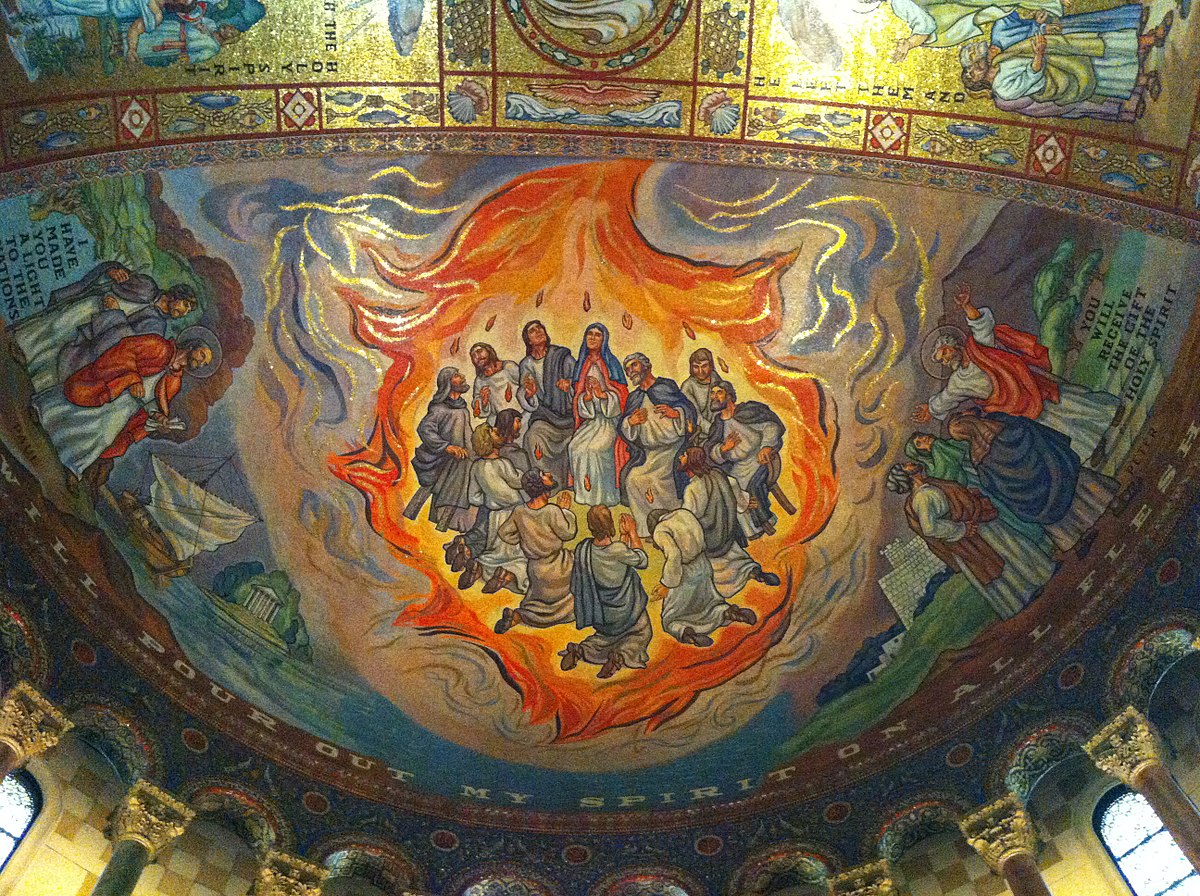
On Pentecost, Jews from all over the Roman Empire gathered in Jerusalem. Many were in the upper room with the apostles, when the Holy Spirit visibly empowered the apostles with tongues of fire, a violent wind, and the reversal of the tower of Babel as people of many different language groups were able to hear the apostles speak in their native tongues. These signs caused much excitement and wonder as the people responded to the work of God. As was true during the time of Jesus’ ministry, there were some who were ready to hear the gospel and others who were not. Those who were ready to hear the apostles’ message were able to understand the apostles’ message while those who were not ready did not understand the signs and resorted to mocking the apostles as if they were drunkards. This was no different than the time of Jesus’ ministry, the signs of the kingdom caused some to respond with increased faith while others responded with unbelief and hardened hearts.

As Jesus had promised, the Holy Spirit gave the apostles the words to explain what was happening. Peter quoted from the book of Joel about how the Spirit would be poured out causing all kinds of people to prophecy: sons and daughters, old men, and young men. Then Peter also quoted from David’s Psalms as he wove together the story of how all these things fit into the story of Jesus’ life, death, and resurrection. Those who were ready to hear the gospel asked what their response should be. Peter told them to repent, be baptized and then they too could receive the gift of the Holy Spirit. Since many of these people were from the Jewish diaspora, they, now filled with the Holy Spirit, would have been able to return to their homes to continue to spread the gospel, although it seems that some people from the diaspora stayed in Jerusalem.

We have sparse details of the life of the church, but there are a few things we know which are described quite succinctly in Acts 2:42-47:

And they devoted themselves to the apostles’ teaching and the fellowship, to the breaking of bread and the prayers. And awe came upon every soul, and many wonders and signs were being done through the apostles. And all who believed were together and had all things in common. And they were selling their possessions and belongings and distributing the proceeds to all, as any had need. And day by day, attending the temple together and breaking bread in their homes, they received their food with glad and generous hearts, praising God and having favor with all the people. And the Lord added to their number day by day those who were being saved.

With the rapid increase in disciples came some logistical problems as well. The miracles of the Spirit did not end the day-to-day problems of communicating between different cultural groups within the church. In the normal practice of sharing goods within the church and within that the need to take care of widows and orphans, there came a point where the Greek-speaking widows from outside Israel were not getting the same care as the Hebrew speaking widows. Because the apostles wanted to focus on teaching and prayer, they gathered the church to address the issue. The church resolved the issue by selecting seven men to oversee the distribution of goods. However, this would not be the last time that language and culture barriers would affect life of the church.

Observe

Read Exodus 18:13-26; Acts 6:1-7. What do these passages say about effective leadership?

The kingdom arrives

Dancing in the Kingdom- Table of Contents

Dancing In the Kingdom – Part 2 – The Kingdom Revealed – Chapter 11 – The Kingdom Enters

The Kingdom Arrives

[Bible references: Isaiah 61:1-2; Matthew 8:16, 28-34; 9:6; 10:1; 28:18; Luke 4:14, 18-19, 32; 5:21; 6:6-7; 7:1-10, 29-30; 9:1-6; John 5:14; 10:11-18; 14:9; Acts 10:38; 1 Corinthians 15:24]

When Jesus broke into history, we no longer saw the kingdom of God overlapping the earth in a place as in the Garden of Eden or a place in the Holy of Holies. This time the kingdom of God had entered by a person, Jesus, who was anointed with the power of the Spirit. His next goal then was to invade the earth with his kingdom by that same Spirit entering our lives, by the overlapping of Heaven and Earth within each of us as Heaven and Earth overlapped within Jesus.

“God’s kingdom” in the preaching of Jesus refers not to postmortem destiny, not to our escape from this world into another one, but to God’s sovereign rule coming “on earth as it is in heaven.” [1]

When Jesus began his ministry, he quoted from the book of Isaiah to declare how he had come to fulfill that prophecy. Then there were many times throughout his ministry when he declared the reason he had come.

Left to our own resources, we cannot, on our own, correct our relationship to Yahweh; we cannot find our way back to a good relationship with him. We are lost to sin and unable to find our way back to Yahweh, the good shepherd.

Even though His power was evident in the teachings alone, His power was testified to by healing all sorts of diseases[2] including physical or spiritual blindness, casting out spirits (all these things that not only Jesus did but his disciples as well), proclaiming freedom for those in prisons, and setting the oppressed free. But even above providing hope and healing, Jesus offered forgiveness for sin and admonitions to turn away from sin. Jesus came to make us whole in body, mind, and spirit, to experience shalom. Sadly, even though some Gentiles recognized Jesus’ power and authority, some of the chief priests and elders did not want to recognize it themselves, remaining trapped and oppressed in their sin.


[1] Wright, N.T. Surprised by Hope: Rethinking Heaven, the Resurrection, and the Mission of the Church Harper Collins 2008. Kindle Edition (p 19.).

[2] Walk with the WiseEvery instance of Jesus Healing in the Bible: What they all had in common” Walk with the Wise walkwiththewise.org/every-instance-of-jesus-healing-in-the-bible-what-they-had-in-common

Reflect

How do we participate with Jesus in bringing His Kingdom to the earth?

Observe

Read Matthew 10:1; 28:18-20; Luke 9:1-6. How do we participate with Jesus in bringing His Kingdom to the earth?

Strange interlude: captivity

Dancing in the Kingdom – Table of Contents

Part 1 – Shadows of the Kingdom, Chapter 6 – A Nation Emerges

Process is important

[Bible references: Genesis 15:12-21; Exodus 1:1-22]

After Joseph and the Pharaoh who knew him died, the growing nation of Israel became enslaved in the land of Egypt just as it had been foretold to Abraham. There are various questions that surrounded the captivity of Israel in Egypt:

  • When there was a drought, why didn’t Yahweh provide for the Israelites in Canaan instead of having them go to Egypt?
  • If they needed to be in Egypt, why did they need to be enslaved instead of just living there as guests?

We know that Yahweh told Abraham that a great nation would come from him and that they would be given the land of Canaan to live in. But why the side-trip into Egypt and why the slavery? The only reason given to Abraham was that “the sin of the Amorites was not yet reached its full measure.” 

The reason given to Abraham for being in Egypt follows a general pattern. Although God occasionally supernaturally intervenes in the course of events, it seems that God most often allows natural, normal processes to take place, whether they be physical, psychological, sociological etc. We see that process in living things – plants, and animals – as they grow through specific physical processes[1]. Regarding, the great flood in Noah’s time, that only occurred after evil gradually, through normal psychological and sociological processes, eventually reached a particular threshold.


[1] Natural, physical processes are so well fixed and so well understood that they have become known as scientific laws.

Reflect

Joseph’s discipline involved finding God in the midst of difficult circumstances and discovering how God could use him there. Are there any difficult circumstances you struggle with? Have you found God at work in your life in those circumstances?

Observe

Read Genesis 15:12-21; Exodus 1:1-22. We often don’t know the reasons for the difficult circumstances in life. How might Abram’s dream explain why God originally provided hospitality and refuge in Egypt but then allowed Israel to be enslaved?

The Impossible Story

The Impossible Dance – Table of Contents

The Impossible Dance – Chapter 1 – Mystery and Confusion

A few thousand years ago, someone began writing a story, a different story than the others in circulation at the time. Those other stories were about gods who, except for being immortal, acted just like the humans with all their faults and shortcomings. And those stories headed nowhere. Nothing got better. But this new story was not about many gods but one God. This new story explained that even though things were originally good, there is a mess now, but there is a plan to make it better.

Intriguingly, although this story was begun by one human author, the story would continue to be written by many other human authors, different authors who spoke different languages and who lived at different times over the course of 1500 years. What held it all together was the divine author whose Spirit was breathed into each human author. What began as a set of writings by one human author, eventually became a book, a literary masterpiece with common themes, but also with complex literary devices, inter-textual references, poetry and songs, and different kinds of narratives about events before the writers lived, or about events witnessed by the different writers, or prophetic narratives about God’s judgments and His plans in either the immediate or far-off future.

This long, complex story told in these many texts revealed a God who has remained faithful despite our distracted and discontented ways.  These texts were compiled into the book we now call the Bible, divided into sections we call the Old Testament and New Testament. Sadly, for many people, the Old and New Testaments of the Bible can seem disconnected. Some have even proposed that the God described in the Old Testament portion is different from the God in the New Testament. The apparent disconnection is partly due to the issue of the cultural barriers between us and the Bible, particularly, the Old Testament.

Unfortunately, there is a further disconnect we also need to address.  Between us and the biblical writings is the long and messy history of the Church. The Church seems very divided on how to interpret those writings and how to live into them. It is downright confusing to sort out all the various interpretations and practices that seem to contradict one another.

Another area of tension for many is what is perceived to be a conflict between science and theology. In years past, however, the issue was not about conflict but about which discipline rules over or undergirds all the other disciplines. These ideas were expressed in ways such as “theology is the queen of all sciences,” “math is the queen of all sciences,” “philosophy is the queen of all sciences,” “philosophy is the handmaid of all sciences.” Regardless of whether we seek truth through science and/or theology, God is the author of both Creation and the Bible, God speaks to us both through both books. Theology’s main goal is to understand spiritual reality and science’s main goal is to understand physical reality, but both fields can inform the other about the nature of God.