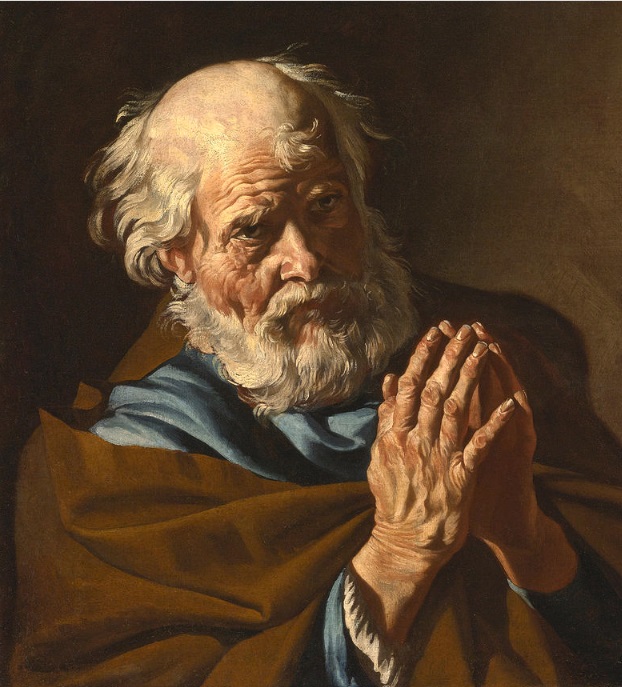
Disciplines of the faith

Dancing in the Kingdom- Table of Contents

Dancing In the Kingdom – Part 2 – The Kingdom Revealed – Chapter 12 – Launching the church

Disciplines of the faith

[Bible references: Joshua 1:8; Psalm 1:1-2; 19:14; 37:7; 40:1; 133:1; Proverbs 1:1-9; Matthew 4:19; 5:8, 14-16; 6:1-18,30-33; 9:1311:29; 12:7,32; 23:12,23; Mark 12:30; Luke 16:13; John 4:22-24; 13:1-17; 17:23; Acts 1:8; 2:42; 10:43; 13:28; 14:23; 26:18; Romans 8:25; 9:15-18; 10:14-18; 12:9-12; 13:1-5; 1 Corinthians 1:9; 13:4; 2 Corinthians 1:12; 9:6-13; 11:2-3; Ephesians 1:10; 4:2-3, 11-14; 5:1-4,21; 6:18; Philippians 1:10; 2:15; 4:4-8; Colossians 4:2-6; 1 Timothy 2:1-2; 4:1-5; 6:6-8; 2 Timothy 2:15; Hebrews 4:1-11; 12:11; 13:4; James 3:17; 4:10; 5:16; 1 Peter 4:10; 1 John 1:3-7,9]

Fruits, whether of the Spirit or of a plant, do not develop without time and nurturing. God’s intentions are clear from His design of Creation, that everything in Creation is designed to operate by built-in processes. The normality and regularity of those processes inspired Christians investigating natural phenomena to develop what we now call the modern scientific method.[1]

In the same way that natural phenomena are subject to natural processes, spiritual phenomena are subject to spiritual processes, and those processes are the normal way God chooses to work through us and grow us into creatures who increasingly resemble Him. It is therefore recognized that the most effective way for Him to work with us is for us to engage in the practice of spiritual disciplines, which are habits that we try to build into our lives which invite God to transform us. When we practice spiritual disciplines, we voluntarily make ourselves available to yield to God and to give Him the opportunity to shape us. The resulting change, our transformation, is His work. The disciplines we practice are merely the means by which we cooperate with him. There are various ways we can categorize these disciplines (inward vs. outward, etc.) although various disciplines are not perfectly one category or another. One way to categorize the disciplines, which is shown below, is to describe disciplines in which we abstain from things (disciplines of abstinence) and those in which we engage with others (disciplines of engagement).

Disciplines of Abstinence:

  • meditation (silence, solitude, journaling)[2]
  • fasting[3]
  • submission (obedience)
  • patience
  • humility
  • Sabbath (rest)
  • purity of heart (chastity)
  • secrecy
  • simplicity

Disciplines of engagement:

  • service
  • confession (self-examination)
  • worship
  • celebration[4]
  • unity
  • forgiveness
  • mercy
  • stewardship (generosity, giving)
  • fellowship
  • evangelism
  • studying the Bible
  • thanksgiving
  • prayer

We should not think of disciplines as processes which deprive us of enjoyment, or which reduce the flourishing that God has intended for us. Rather, the disciplines can make our lives more enjoyable and enhance our flourishing. Because we, like all creatures, are made in a particular way, we will be better off if we stay in the environments for which we are designed. For instance, trains are built to best run when they are on railroad tracks, off the tracks they can hardly operate, but on the tracks, they can operate at their best. In the same way, spiritual disciplines put us in the best environment for us to thrive according to the way we are designed.


[1] Hannam, James. “How Christianity led to the rise of modern science” Christian Research Institute www.equip.org/articles/christianity-led-rise-modern-science

[2] Mathis, David. “Journaling as a path to joy” Desiring God”Desiring God www.desiringgod.org/articles/journal-as-a-pathway-to-joy; Chechowich, Dr. Faye. “Journaling as a Spiritual Discipline” BibleGateway www.biblegateway.com/resources/scripture-engagement/journaling-scripture/spiritual-discipline

[3] Mathis, David “Fasting for Beginners” Desiring God 26 Aug 2015 www.desiringgod.org/articles/fasting-for-beginners

[4] Heath, Elaine. “The Spiritual Discipline of Celebration” Ministry Matters 24 Dec 2019 www.ministrymatters.com/all/entry/9930/the-spiritual-discipline-of-celebration

Reflect

Some disciplines will come easier than others, but they all need to be practiced if we are to flourish in each area. Which area do you need to grow in?

Observe

Read Joshua 1:8; Psalm 1:1-2; 19:14; 37:7; 40:1; 133:1. What are some of the disciplines that mark a life of faith?

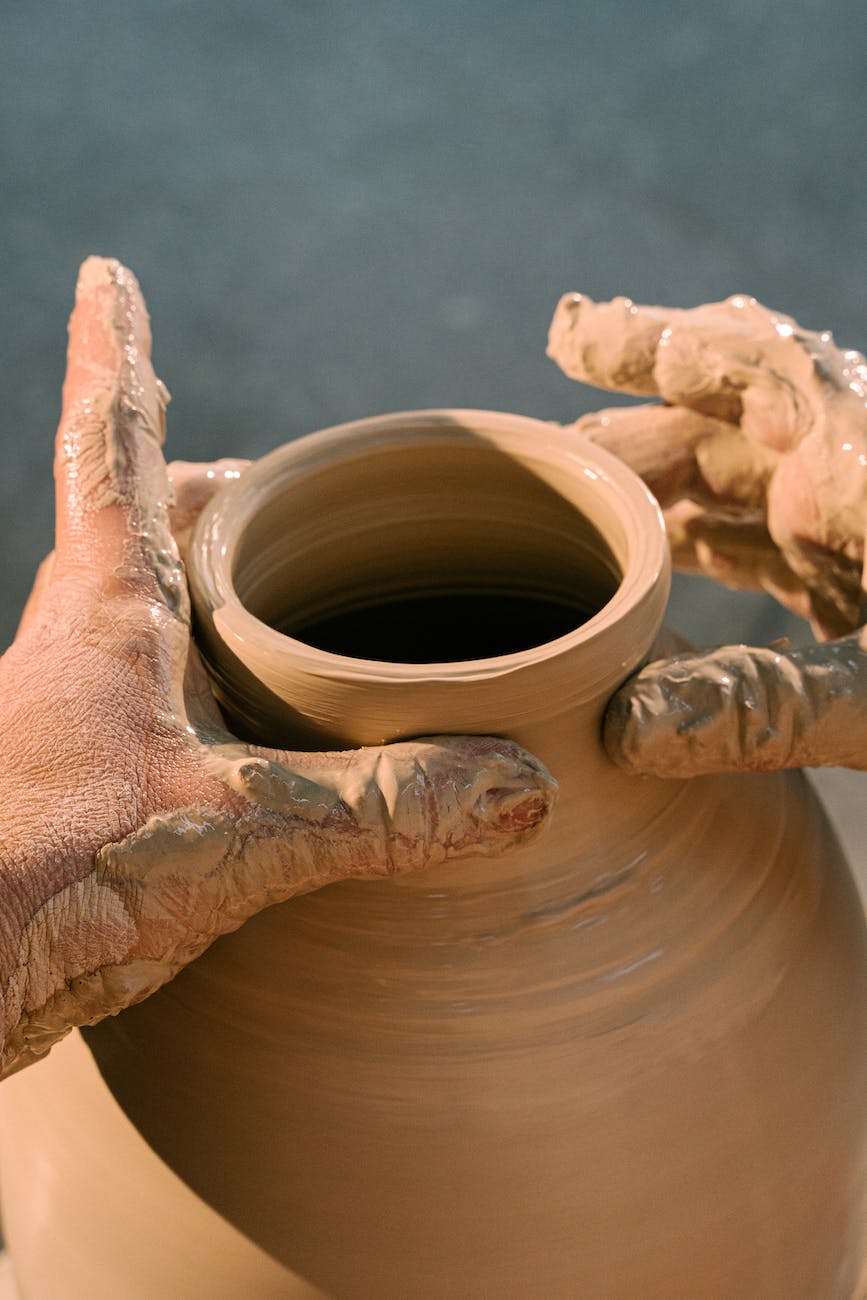
Looking back – Signs and shadows of the kingdom

Dancing in the Kingdom- Table of Contents

Dancing In the Kingdom – Part 2 – The Kingdom Revealed – Chapter 11 – The Kingdom Enters

Looking back – Signs and shadows of the kingdom

[Bible references: Genesis 6:5-7; Exodus 25:17-22; Leviticus 16; Joshua 24:19; 2 Kings 17:6; 2 Chronicles 36:17-24; Ezra 1-2; Psalm 14:2; 53:6; Isaiah 43; Jeremiah 29:10; 31:31-39; Matthew 4:12-17; Romans 7:7-24; 8:20-22; Colossians 2:16-17; Hebrews 8:5; 10:1, 5-10; Revelation 21-22]

In the beginning, God created a good earth. Within that good earth, Yahweh created a special place, the Garden of Eden, where he could meet and live with the creatures who bore his image. The Garden was a place where the heaven and earth overlapped, a place where the goodness of Yahweh overflowed, a place of shalom, a place where his image-bearers were intended to thrive and develop as co-creators with Yahweh and ultimately create a civilization that would cover all the earth to the glory of God.

“Perhaps the most fitting symbol of the development of creation from the primordial past to the eschatological future is the fact that the Bible begins with a garden and ends with a city – a city filled with “the glory and the honor of the nations.”[1]

However, the image-bearers put Yahweh’s authority to the side and rebelled against him. The rebellion disrupted the union of the Yahweh’s kingdom with his creatures and all of creation was put into disorder. Human space and Yahweh’s space were separated and all of creation was damaged, including not only the relations between Yahweh and his image-bearers but between the image-bearers themselves.

In the Bible, the themes of heaven and earth can be thought of as heaven being God’s space and the earth being the human space. It may be helpful to think of these spaces as different dimensions. In the Garden of Eden these spaces overlapped, allowing God and man could dwell together. In the garden the humans were to be partners with God taking care of this garden, however they decided to do things their own way rather than God’s. This resulted in the humans being ejected from the space where heaven and earth overlapped, and the remaining story of the Bible is about how God is once again going to bring heaven and earth back together.[2]

The image-bearers found themselves in an increasingly vicious cycle of violence and corruption causing God to restart his project by creating a great flood. Fortunately, out of his deep love for his rebellious image-bearers, Yahweh was resolved to overcome the violence and oppression and had a plan to reunite heaven and earth, extending his kingdom over all the earth.

Yahweh set processes in place that would begin with Abraham and Sarah, continue through to the other patriarchs, and then continue with the nation of Israel. Under Moses’ leadership and with the guidance of the Holy Spirit, the tabernacle was constructed to be the place where heaven and earth would overlap within the Holy of Holies. The temple was decorated and designed to make people feel like they were going back to the garden.

The difficulty was that God’s space is perfect, pure, just, and holy but the human space is full of sin and corruption. This problem was somewhat resolved through the sacrifice of animals, where the animal absorbed the sin of the people and died in their place, creating a limited clean space. Within the Holy of Holies, the mercy seat on the ark was where God’s presence would be but could only be accessed once a year by the high priest.

However, the tabernacle with all its rituals were designed to only be a shadow of things in heaven and a shadow of the things that were coming, a shadow of how Yahweh’s relationship with his image-bearers would be restored and all of earth would be joined with Yahweh’s kingdom in heaven as was intended from the beginning.

In the meanwhile, in those shadows of the coming kingdom, Yahweh worked within the nation of Israel, his chosen people, to gradually reveal signs of his intended restoration. Within those shadows, the people of Israel could see the futility of their own efforts to reconcile with Yahweh despite their denial of the reality of Joshua’s words, “You are not able to serve Yahweh.” Within those shadows, the nation of Israel would rebel against the kingship of Yahweh, rejecting his reign and insisting on creating their own kingdom, like “all the other nations.”

The nation was reminded time after time that the law was good, but they were not, that their continual animal sacrifices were never a permanent solution to reconciling with Yahweh, that they needed a redeemer, they needed a change of heart. Prophets were raised up to warn the people of the consequences of their continual rebellion, but they also delivered messages of hope that, despite their rebellion, God would restore his people to himself.

Then the promised judgment for their rebellion came: Most of the nation was lost to history as ten tribes of Israel were scattered through the Assyrian empire, which would be followed by the temple being destroyed and with a remnant of the remaining tribes being sent into exile in Babylon. If there was any hope that the ritual sacrifices at the temple could reconcile the people with Yahweh, now even that possibility was taken away. The restoration of their own kingdom seemed to be in doubt, never mind the kingdom of Yahweh.

However, the exile was promised to be temporary. After 70 years, the exiled nation had the opportunity to return to the Promised Land and rebuild the temple. Once the temple was rebuilt it was now possible for the temple worship to continue and even for their government to be restarted, although it would be under the auspices of a foreign nation. Yet in all that happened, one thing had not changed; the hearts of the image-bearers had not changed. There was still a need for a redeemer.


167 Wolters, Albert M. Creation Regained: Biblical Basics for a Reformational Worldview William B. Eerdmans Publishing 1985, 2005. eBook (Kindle Locations 581-583)

[2] Bible Project “Heaven and Earth” Bible Project thebibleproject.com/explore/heaven-earth

Process is important

Dancing in the Kingdom- Table of Contents

Dancing In the Kingdom – Part 1 – Shadows of the Kingdom – Chapter 6– A nation emerges

Process is important

[Bible references: Genesis 15:12-21; Exodus 1:1-22; 11:1-10; 12:31-37]

After Joseph and the Pharaoh who knew him died, the growing nation of Israel became enslaved in the land of Egypt just as it had been foretold to Abraham. There are various questions that surrounded the captivity of Israel in Egypt:

  • When there was a drought, why didn’t Yahweh provide for the Israelites in Canaan instead of having them go to Egypt?
  • If they needed to be in Egypt, why did they need to be enslaved instead of just living there as guests?

We know that Yahweh told Abraham that a great nation would come from him and that they would be given the land of Canaan to live in. But why the side-trip into Egypt and why the slavery? The only reason given to Abraham was that “the sin of the Amorites was not yet reached its full measure.” 

The reason given to Abraham for being in Egypt follows a general pattern. Although God occasionally supernaturally intervenes in the course of events, it seems that God most often allows natural, normal processes to take place, whether they be physical, psychological, sociological etc. We see that process in living things: plants, animals, and even ecosystems grow through specific physical processes[1]. Even the great flood in Noah’s time only occurred after evil gradually, through normal psychological and sociological processes, eventually reached a particular threshold.


[1] Natural, physical processes are so well fixed and so well understood that they have become known as scientific laws.

Reflect

Joseph’s discipline involved finding God in the midst of difficult circumstances and discovering how God could use him there. Are there any difficult circumstances you struggle with? Have you found God at work in your life in those circumstances?

Observe

Read Exodus 11:1-10; 12:31-37. How did Yahweh provide for Israel as they left Egypt?

Dynamic Tension

Dancing in the Kingdom- Table of Contents

Dancing In the Kingdom – Part 1 – Shadows of the Kingdom – Chapter 2 – The God who created

[Bible references: Luke 17:1-10; Ephesians 2;1-10]

Dynamic Tension

When we encounter Biblical statements that seem to conflict with each other, we need to hold to one of the principles of biblical interpretation, we need to examine any interpretation in the light of all other scripture – that is, let scripture interpret scripture. Even so, our best interpretations may still leave us with tensions between apparently conflicting statements. In those cases, we should acknowledge and accept those tensions rather than try to force those statements to a particular resolution.

The study of biology may provide good analogues in dealing with those tensions. For instance, in biological life, it seems that there are no simple formulas, no simple rules. While there are underlying precisely defined processes like the laws of chemistry and physics, there are also overlying complex and variable biological processes that are adaptable to circumstances around them.

Even more, living organisms by themselves are noted by intricately balanced but unstable processes that, if the balance between processes fails, there is a most certain death. One of the standard definitions of life is that living things must evade the decay to equilibrium while at the same time maintaining internal order and organization.[1]  One example that we live with all the time is with our skin – every day our skin is shedding cells and creating new cells such that, on average, every 27 days an entire layer of skin is being replaced. Our skin seems “stable” and seems to stay the same even though entire layers of skin are constantly being replaced.

That type of process holds true for all the processes happening in all the cells of living organisms; The internal structures seem to be stable, while matter and energy are constantly flowing through them and the materials within the internal structures are being constantly refreshed. More remarkably, if we examine all of this activity, we discover that this activity is sustained by an array of complex sets of interdependent processes where one set of processes feeds off the by-products of other processes and visa-versa. All this activity is delicate in one sense, if some processes fail at one point the result can be death. In another sense, the processes are flexible, allowing an organism to live in a wide variety of circumstances (environments). Thus, we have a paradox of systems that are simultaneously fragile and robust.

This dynamic tension can be seen on another level with the interactions of bone and muscle. In a given skeletal muscle, some fibers are attached to one bone in one direction and some fibers are attached to another bone in another direction. For instance, in your bicep muscles, some fibers attach to the shoulder and the other fibers attach to the elbow. As the fibers within a muscle pull against one another the bones they are attached to move. You can see this activity when you “make a muscle.” As you draw your forearm towards your shoulder, you see the biceps start to bulge in the middle as the opposing fibers pull into each other.

Exactly which way the bones move is determined by the creature that controls the muscles as the creature interacts with the environment, determining what direction to go or what task to do. While it seems at one level that in a given muscle the fibers are working against one another and seem to work opposite to one another, they are in fact on a larger scale working with each other to accomplish particular tasks.

All of this seems to reflect what we see in spiritual life. On one level, the attributes we see in the living God, His holiness, grace, etc. never change although they are constantly interacting with different circumstances. As circumstances change, although it may seem that God’s responses may change, it is not because God has changed, only that God’s dynamic response to different circumstances, whether globally or locally, has changed.

So, as we consider this, it may seem that some of God’s characteristics conflict with each other or seem to pull against one another. For instance, how is God’s perfect desire for justice able to be reconciled with God’s grace? Or how is it that He can be the Lord of all and able to also be the Servant of all? In fact, God is interacting with the world, determining what He wants to do and then coordinating His attributes to do what He desires. For example, although God’s authority and servanthood seem to be in tension with one another, He is coordinating them to deal with our individual circumstances. These apparent tensions are resolved, strengthened and harmonized in God himself.

I call this interaction, Dynamic Tension; a process controlled by a person or an organism in which the attributes seem to be pulling in different directions but are in fact working in concert with one another to accomplish particular goals. These tensions carry over into many areas of theology. We see that as different congregations wrestle with apparently conflicting issues, they make decisions based on their particular situations. Different congregations in different situations will come to different resolutions.

We are blessed to have both God’s creation itself and God’s revelation available to us as we try to try to learn about the living Creator. Fortunately, it is to our blessing that we don’t have to know everything about God for us to know or understand him, because we can at best only know Him in part. But meanwhile we have some paradoxes about God for us to examine and we will start exploring some of those paradoxes now.

“… many of the great theologians and leaders of the church—including Justin Martyr, Irenaeus of Lyons, Origen of Alexandria, Augustine of Hippo, Thomas Aquinas, Martin Luther, John Calvin, and John Wesley—in various ways believed that Creation bears witness to the glory and truth of its Creator and that this witness is fully compatible with the witness of Scripture.” [2]


[1] Weber, Bruce. “Life” Stanford Encyclopedia of Philosophy 7 Nov 2011, plato.stanford.edu/entries/life

[2] Mann, Mark H. “The Church Fathers and Two Books Theology” Biologos 4 Nov 2012 biologos.org/articles/the-church-fathers-and-two-books-theology

Observe

Read Luke 17:1-10; Ephesians 2:1-10. Verse 10 in both of these passages seems to say the opposite thing. How does the context of Luke 17:10 and Ephesians 2:10 help to resolve these two verses?

In Time and In an Eternal Future

Dancing in the Kingdom – Table of Contents

Part 1 – Shadows of the Kingdom, Chapter 3 – The Image-bearers

[Bible references: Exodus 25-28; 1 Kings 5-6; Psalms 19; 37:4-5; Proverbs 3:5-6; 11:14; Ecclesiastes 3:1-27; John 10:27; Acts 16:6-10; Romans 1:8-10; 12:1-2; 1 Corinthians 2:9-10; 15:42-49; 1 Thessalonians 4:3; 1 Peter 4:10; 1 John 3:16] Gen 2:9; 1 Samuel 2:26; Ps 19:1-14; Ecc 3:-22; Matt 6:28; Romans 1:18-20; 1 Cor 3:7;15;42-49; 2 Cor 10:15; Eph 4:15; Col 1:6-10; 2 Thes 1:3; 2 Pet 3:18

Although we have not existed from all eternity, God created us with more than a mortal body. We are also endowed with a soul and a spirit that can be joined to God’s Spirit. In the present moment, our mortal bodies are created from the stuff of the earth, and we are born into particular times and places so that we may serve and enjoy God in those particular times and places.

… God made us as creatures. And the good part about being a creature is we were made to be dependent upon God and, by our very design, also dependent on other people and the earth … Often what we’re missing is the good of dependence. We need to cultivate an awareness of how our dependence and our needs open avenues of love … What if we stopped thinking of life as to-dos and started thinking of it as relationships? When we’re so task-driven, it’s very hard to appreciate love, because love is incredibly inefficient … 59

Our creatureliness which sets us in a particular place and time with a particular body is an opportunity to appreciate our finiteness and God’s infiniteness, to cultivate a sense of dependence on God’s provision and our dependence on each other and within the context of those relationships to truly learn how to love.

when we were younger, God didn’t expect us to be what we are now. He’s still taking his time, by his Spirit, to bring about order through developmental growth … Part of recognizing our limits is getting comfortable in God’s space and growing in dependance on him.59

Our creatureliness also forces us to deal with God’s ordering Creation through process. Everything, whether physical, social, emotional, intellectual or spiritual, is controlled by processes. Sometimes we desire to bypass those processes: we want to be instantly knowledgeable and wise and experts at what we do … and not dependent on anyone else. But it was precisely that kind of desire that led to our rebellion at the beginning of humanity.

Sometimes, I think we’re actually scared to death to pray, because if we actually take the time to get quiet, we might begin to fear that God’s not there or wonder whether he’s apathetic or just really angry. Only in prayer will we discover how compassionately God views us … cultivating the gift of encouraging and celebrating others. It’s a spiritual discipline, a healthy way of dying to yourself and encouraging others. We are all dying for someone to pay attention and notice our presence and being. When someone articulates that, it’s life-changing.[1]

As God’s image-bearing creatures, we not only have relationships with each other but also with our Creator. With other of God’s image-bearing creatures, our love can be expressed in our opportunities to support, uplift and encourage one other. God has no need of such support from us, but He offers us such support. When we recognize our dependence on Him, He gives us the ability to pray, to acknowledge our needs and to recognize His provision for us when He supplies our needs.

We think of prayer as mostly self-expressive—as a way to put words to our inner life … if we pray the prayers we’ve been given, regardless of how we feel about them or God at the time, we sometimes find, to our surprise, that they teach us how to believe … We sleep each night in our ordinary beds in our ordinary homes in our ordinary lives. And we do so in a universe filled to the brim with mystery and wonder. We always sleep in a crowded room in our crowded cosmos, so we ask for crazy things—that God send unimaginable supernatural beings to watch over us as we drool on our pillows … Sleep reminds us of how helpless we are, even merely to stay alive. In the Christian tradition, sleep has always been seen as a way we practice death. Both Jesus and Paul talk about death as a kind of sleep. Our nightly descent into unconsciousness is a daily memento mori, a reminder of our creatureliness, our limitations, and our weakness. [2]

As we pray in our mortal bodies, we remember that although our mortal bodies will return to the dust from which we are made, our bodies will be resurrected when heaven and earth are reunited so that we, with soul and spirit and new body, will be able to enjoy God forever into the future.

What is that phenomenon we call ‘beauty’ and why does it lie at the core of both collective civilisation and individual desire, even as we value it precisely for existing outside of practicality? In his essay The Weight of Glory [A sermon given in Oxford in 1942], C.S. Lewis explains it as an echo of eternity, imprinted upon humanity as an indication of our origin and destiny.[3]

Indeed, our God is a God of beauty, and he has created us to enjoy his beauty. Art and our appreciation of it are among the great gifts God has given to us. Sure, like anything, it can be turned into an idol. But art, beauty, and appreciation for the finer things of culture are all good gifts from a good God. [4]

In the meantime, while we await for our resurrection and to gaze on the beauty of the Lord (Psalm 27:4), we have reminders of our connection with our transcendent God in the beauty of His Creation and in our capacity to make things of beauty. Whether the beautiful things are of our creation or the Lord’s, they are a reflection of God’s own beauty.

The books or the music in which we thought the beauty was located will betray us if we trust to them; it was not in them, it only came through them, and what came through them was longing … they are not the thing itself; they are only the scent of a flower we have not found, the echo of a tune we have not heard, news from a country we have never yet visited … We do not want merely to see beauty … We want something else which can hardly be put into words—to be united with the beauty we see, to pass into it, to receive it into ourselves, to bathe in it, to become part of it.


[1] Straza, Erin. “Learning How to Love Your Limits” Christianity Today 13 Dec 2021 http://www.christianitytoday.com/ct/2022/january-february/youre-only-human-kelly-kapic-limits-god-design.html Interview with Covenant College theologian Kelly M. Kapic’s about his latest book, “You’re Only Human: How Your Limits Reflect God’s Design and Why That’s Good News.”

[2] Warren, Tish Harrison. “The Cosmos is More Crowded Than You Think” Christianity Today 14 Dec 2021 http://www.christianitytoday.com/ct/2022/january-february/prayer-night-tish-harrison-warren-angels-crowded-cosmos.html

[3] Wang, Irina “Beauty betrays eternity” Salt salt.london/articles/beauty-betrays-eternity/

[4] Meuhlenberg, Bill. “Art and the Christian”; Culture Watch 28 July 2011 billmuehlenberg.com/2011/07/28/art-and-the-christian/

Reflect

How does having an eternal future help us live in the world today?

Observe

Read Ecclesiastes 3:1-22.  In the midst of meditating on the limitations of life on earth, verse 11 slides in a reference to beauty and eternity. How does that verse impact the rest of the chapter?

Playful and Orderly

Dancing in the Kingdom – Table of Contents

Part 1 – Shadows of the Kingdom, Chapter 2 – The God who created

[Bible references: Genesis 1; 3:6; 51:6; Job 26:7-14; Psalm 102:25-28; 104:26; Proverbs 8:30-31; Jeremiah 9:24; Zechariah 8:4; Romans 1:20; 5:12-20]

It would be more conventional to title this section, “Creative and Orderly,” but the creativity is just a part of broader category of play. Although many experts disagree on how to define play[1], we may think of play as activity which is typically not productive and is done only because one wants to do it and is usually a fun activity involving other people and will typically help people bond together.

When it comes to the Creation, God did not have to create anything. God did not need the universe or anything in it – not the planets, nor the stars, nor the creatures. God created the heavens and the earth for the delight of it, and He did it because He wanted to share heaven and earth with his image-bearers. This spirit of playfulness is reflected in many of God’s creatures[2] including Leviathan and humans. God’s playfulness also shows up in other interesting places in the Bible.

When Job complains about the difficulties he is going through, God seems to admonish him by “putting Job in his place” and citing all the ways in which God’s ways are higher than Job’s ways. But God does not follow through with any discipline of Job but rather begins the process of restoring Job’s fortunes. In response, Job confesses, “I spoke of things I did not understand … I retract my words and I repent in dust and ashes.” … And yet, Job changes an interesting behavior – he no longer rose early in the morning to offer burnt offerings for all of his children, worrying that “perhaps they have sinned.” Job seems to have understood what Shams-ud-din Muhammed wrote later on:

the difference between our life and a saint’s is that the saint knows that the spiritual path is like a chess game with God and that God has made such a fantastic move that the saint trips over joy in surrender whereas we think we have a thousand serious moves.[3]

Another instance of playing occurs in Mark 6, when Jesus takes a late-night walk on a very windy lake, walking as if to go by his disciples. Of course, they were initially terrified, thinking they were seeing a ghost. But he got in the boat and the waters calmed down. He could have calmed the waters down before the disciples started to go on the lake. He could have chosen another way to make his point … but he decided to do it that way.

God’s creativity can be seen within the created world in the extremely diverse types of plants and animals: differences in colors and shapes; different ways of digesting food; different ways of moving and observing the environment to name a few. The creativity we see is awesome. From out of nothingness, from no previous model, God created a whole system of particles and energy fields that interact with each other to form the building blocks of subatomic particles which are used to form atoms, which are used to form molecules of all sorts of complexity, which are then used to form planets and stars (actually, the fusion reaction in stars is used to create larger molecules from smaller ones). And at least one planet was used to create living things like plants and animals in all their complexity and then those living things were used to create communities (ecosystems) that allowed living things to thrive and flourish.

Yet, within the overwhelming creativity displayed within all the diversity of living things there is an order that is controlled by a set of ordered processes, some of which we call scientific (natural) laws. Christians, like Francis Bacon, pursued these laws as an extension of God’s moral laws in the universe, which then led to the development of modern science.[4] It is within science that we examine orderly processes at work that we call the natural laws which describe how all physical things behave: like the forces of gravity, electrical forces, etc.

There is no disobeying these natural laws. If you think that you can try to violate them, you’d be wrong. For instance, if you are on earth and stand on the top of a table and then jump off with the assumption that you will not be subject to gravity but rather float around without falling to the floor, you’d be wrong. You can’t violate gravity. You can try to set up circumstances that will cause other forces to come into play – such as airplanes do when they use aerodynamic forces that counteract gravity – but you simply can’t violate gravity, and there will be consequences if you try.

By observing the laws of the created order, we can ascertain some aspects of the character of God. The natural laws that govern how things are supposed to behave reveals a God who expects things to behave, and that violations are not tolerated. But when image-bearers were brought into the world there was a new level of complexity added to this physical model constrained by natural, physical laws.

On the one hand, we image-bearers are physical creatures and are therefore subject to the natural laws, but on the other hand we image-bearers were created to reflect God’s transcendence and were even given dominion over the creation into which God had placed us. Within that capacity, we image-bearers were given a moral freedom, the freedom to choose between good and evil. This freedom could not be given without some risk, because in order for image-bearers to be able to reflect God’s character of being good and choosing to do good there must be the possibility for the image-bearers to be able to choose to not be good.

And just as there are natural, physical laws that govern how physical things behave with consequences for trying to violate those laws, God has also imposed spiritual, moral laws to govern how the image-bearers ought to behave in the good universe He created with consequences for violating those moral laws. Sometimes the sin of one generation is passed down to the next. But regardless of whether a particular sin is passed to from one generation to another, the penalty for sin is physical and spiritual death.


[1] Edgar, Brian. “The God Who Plays: A Playful Approach to Theology and Spirituality” Chapter 5: Theology: Ludic(rous) Thinking, Theories of Play

[2] Yu, Alan. “Which animals play, and why?” WHYY 15 Aug 2019 whyy.org/segments/which-animals-play-and-why/

[3] Hafiz (or Shams-ud-din Muhammad Tripping over Joy from reference Edgar, Brian “The God Who Plays: A Playful Approach to Theology and Spirituality” Chapter 4: Spirituality: Playing with friends, Competing with God

[4] Harrison, Peter, “Christianity and the rise of western science” ABC Religion and Ethics, 8 May 2012, www.abc.net.au/religion/articles/2012/05/08/3498202.htm; Armstrong, David, “Christianity Crucial to the origin of science,” Patheos, 18 Oct 2015, www.patheos.com/blogs/davearmstrong/2015/10/christianity-crucial-to-the-origin-of-science.html; Hannam, James. “How Christianity Led to the Rise of Modern Science” Equip.Org, 17 Jan 2017, http://www.equip.org/article/christianity-led-rise-modern-science

Reflect

As you view the world, what seems more apparent to you, creativity or order?

Observe

Read Romans 1:18-32.  Reflect on how natural laws reflect the character of God. Based just on natural laws, what kind of character does that reveal about God?

Dynamic Tension

Dancing in the Kingdom – Table of Contents

Part 1 – Shadows of the Kingdom, Chapter 2 – The God who created

Throughout the Bible there are statements that seem to conflict with each other. Since one of the principles of biblical interpretation is to examine any statement in the light of all scripture, the best option for understanding the tension between apparently conflicting statements would be to simply accept the tensions between those paradoxical statements rather than to resolve every issue to an understanding to a particular point.

The study of biology may provide good analogues in dealing with those tensions. For instance, in biological life, it seems that there are no simple formulas, no simple rules. Although, on the one hand, there are underlying precisely defined processes like the laws of chemistry and physics, on the other hand, there are overlying complex and variable biological processes that are adaptable to circumstances around them.

Even more, living organisms by themselves are noted by intricately balanced but unstable processes that, if the balance between processes fails, there is a most certain death. One of the standard definitions of life is that living things must evade the decay to equilibrium while at the same time maintaining internal order and organization.[1]  One example that we live with all the time is with our skin – every day our skin is shedding cells and creating new ones such that, on average, every 27 days a entire layer of skin is being replaced. Our skin seems “stable” and seems to stay the same even though entire layers of skin are constantly being replaced

That type of process holds true for all the processes happening in all the cells of living organisms; The internal structures seem to be stable, while matter and energy are constantly flowing through them and the materials within the internal structures are being constantly refreshed. More remarkably, if we examine all of this activity, we discover that this activity is sustained by an array of complex sets of interdependent processes where one set of processes feeds off the by-products of other processes and visa-versa. All this activity is delicate in one sense, if some processes fail at one point the result can be death. In another sense, the processes are flexible, allowing an organism to live in a wide variety of circumstances (environments). Thus, we have a paradox of systems that are simultaneously fragile and robust.

This dynamic tension can be seen on another level with the interactions of bone and muscle. In a given skeletal muscle, some fibers are attached to one bone in one direction and some fibers are attached to another bone in another direction. For instance, in your bicep muscles, some fibers attach to the shoulder and the other fibers attach to the elbow. As the fibers within a muscle pull against one another the bones they are attached to move. You can see this activity when you “make a muscle.” As you draw your forearm towards your shoulder, you see the biceps start to bulge in the middle as the opposing fibers pull into each other.

Exactly which way the bones move is determined by the creature that controls the muscles, as the creature interacts with the environment, determining what direction to go or what task to do. While it seems at one level that in a given muscle the fibers are working against one another and seem to work opposite to one another, they are in fact on a larger scale working with each other to accomplish particular tasks.

All of this seems to reflect what we see in spiritual life. On one level, the attributes we see in the living God, His holiness, grace, etc. never change although they are constantly interacting with different circumstances. As circumstances change, although it may seem that God’s responses may change, it is not because God has changed, only that God’s dynamic response to different circumstances, whether globally or locally, has changed.

So, as we consider this, it may seem that some of God’s characteristics conflict with each other or are pulling against one another. For instance, how is God’s perfect desire for justice able to be reconciled with God’s grace? Or how is it that He can be the Lord of all and able to also be the Servant of all? In fact, God is interacting with the world, determining what He wants to do and then coordinating His attributes to do what He desires. For example, although God’s authority and servanthood seem to be in tension with one another, He is coordinating them to deal with our individual circumstances.  At some point He sees the need to demonstrate more authority and at other times, more servanthood.

I call this interaction, Dynamic Tension; a process controlled by a person or an organism in which the attributes seem to be pulling in different directions but are in fact working in concert with one another to accomplish particular goals. These tensions carry over into many areas of theology. We see that as different congregations wrestle with apparently conflicting issues they make decisions based on their particular situations. Different congregations in different situations will come to different resolutions.

We are blessed to have both God’s creation itself and God’s revelation available to us as we try to try to learn about the living Creator. Fortunately, it is to our blessing that we don’t have to know everything about God for us to know or understand him, because we can at best only know Him in part. But meanwhile we have some paradoxes about God for us to examine and we will start exploring some of those paradoxes now.

“… many of the great theologians and leaders of the Church—including Justin Martyr, Irenaeus of Lyons, Origen of Alexandria, Augustine of Hippo, Thomas Aquinas, Martin Luther, John Calvin, and John Wesley—in various ways believed that Creation bears witness to the glory and truth of its Creator and that this witness is fully compatible with the witness of Scripture.” [2]


[1] Weber, Bruce. “Life” Stanford Encyclopedia of Philosophy 7 Nov 2011, plato.stanford.edu/entries/life

[2]  Mann, Mark H. “The Church Fathers and Two Books Theology” Biologos 4 Nov 2012 biologos.org/articles/the-church-fathers-and-two-books-theology

Reflect

What are some paradoxes that you see in the world around you?[1]  What paradoxes do you see in the Bible?[2]


[1] Mental Floss, “10 Paradoxes that will boggle your mind” http://www.mentalfloss.com/article/59040/10-mind-boggling-paradoxes

[2] Lifeway Research “14 Biblical Paradoxes Every Christian Should Know” lifewayresearch.com/2019/03/19/14-biblical-paradoxes-every-christian-should-know