The Spirit and the story

Dancing in the Kingdom- Table of Contents

Dancing In the Kingdom – Part 2 – The Kingdom Revealed – Chapter 12 – Launching the church

The Spirit and the Story

[Bible references: Exodus 18:13-26; Joel 2:28-32; Psalm 16; Luke 16:19-31; John 16:13; Acts 2:1-4; 6:1-7]

During Jesus’ three years of ministry, His teaching about the Kingdom of God coming to earth was accompanied by signs: miracles of healing, cleansing, and raising the dead, and by forgiveness of sins. The miracles affirmed the message. With the introduction of the church as the vehicle by which the gospel would be spread, more signs and miracles were called for.

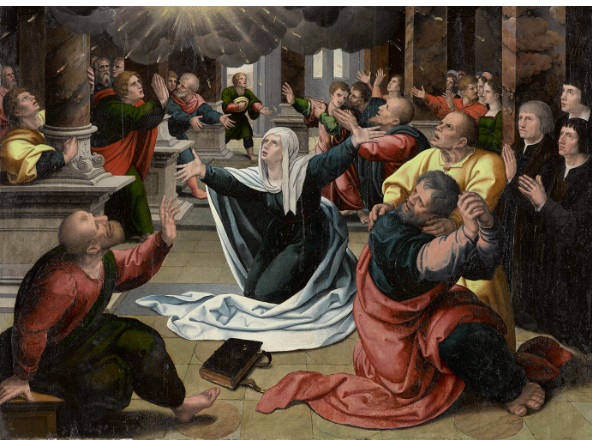
On Pentecost, Jews from all over the Roman Empire gathered in Jerusalem. Many were in the upper room with the apostles, when the Holy Spirit visibly empowered the apostles with tongues of fire, a violent wind, and the reversal of the tower of Babel as people of many different language groups were able to hear the apostles speak in their native tongues. These signs caused much excitement and wonder as the people responded to the work of God. As was true during the time of Jesus’ ministry, there were some who were ready to hear the gospel and others who were not. Those who were ready to hear the apostles’ message were able to understand the apostles’ message while those who were not ready did not understand the signs and resorted to mocking the apostles as if they were drunkards. This was no different than the time of Jesus’ ministry, the signs of the kingdom caused some to respond with increased faith while others responded with unbelief and hardened hearts.

As Jesus had promised, the Holy Spirit gave the apostles the words to explain what was happening. Peter quoted from the book of Joel about how the Spirit would be poured out causing all kinds of people to prophecy: sons and daughters, old men, and young men. Then Peter also quoted from David’s Psalms as he wove together the story of how all these things fit into the story of Jesus’ life, death, and resurrection. Those who were ready to hear the gospel asked what their response should be. Peter told them to repent, be baptized and then they too could receive the gift of the Holy Spirit. Since many of these people were from the Jewish diaspora, they, now filled with the Holy Spirit, would have been able to return to their homes to continue to spread the gospel, although it seems that some people from the diaspora stayed in Jerusalem.

We have sparse details of the life of the church, but there are a few things we know which are described quite succinctly in Acts 2:42-47:

And they devoted themselves to the apostles’ teaching and the fellowship, to the breaking of bread and the prayers. And awe came upon every soul, and many wonders and signs were being done through the apostles. And all who believed were together and had all things in common. And they were selling their possessions and belongings and distributing the proceeds to all, as any had need. And day by day, attending the temple together and breaking bread in their homes, they received their food with glad and generous hearts, praising God and having favor with all the people. And the Lord added to their number day by day those who were being saved.

With the rapid increase in disciples came some logistical problems as well. The miracles of the Spirit did not end the day-to-day problems of communicating between different cultural groups within the church. In the normal practice of sharing goods within the church and within that the need to take care of widows and orphans, there came a point where the Greek-speaking widows from outside Israel were not getting the same care as the Hebrew speaking widows. Because the apostles wanted to focus on teaching and prayer, they gathered the church to address the issue. The church resolved the issue by selecting seven men to oversee the distribution of goods. However, this would not be the last time that language and culture barriers would affect life of the church.

Observe

Read Exodus 18:13-26; Acts 6:1-7. What do these passages say about effective leadership?

The Spirit and the power

Dancing in the Kingdom- Table of Contents

Dancing In the Kingdom – Part 2 – The Kingdom Revealed – Chapter 12 – Launching the church

The Spirit and the power

[Bible references: Genesis 25-19-21; 1 Samuel 1;1-20; 2 Samuel 7; Proverbs 2:1-5; Matthew 7:7-8; Mark 11:12-26; Luke 11:113; 12-26; John 20:21-23; 3:14-16; Acts 1:1-14; 2:1-41; 1 Peter 5:6-7]

There are remarkable parallels between Genesis 2:7 and John 20:22. We see from Chapter 2 that in Genesis 2, God breathed life into Adam who was then commissioned to take care of the sacred space that God had created. That sacred space was initially identified as the Garden of Eden, but we know from Genesis 1 that God had dedicated the entire universe as his temple. We also know that since God’s image-bearers were given the commission to “be fruitful and fill the earth” that the sacred space allotted to the care of the image-bearers was intended to be the entire earth.

After the resurrection, when Jesus met with the apostles in a locked room, He breathed on (or into) them.[1] This is the same word used in the Septuagint version of the Old Testament describing God breathing life into Adam and thereby giving him life. Immediately after this gesture, Jesus instructed the apostles to “Receive the Holy Spirit” who were then commissioned to continue the task that Jesus had begun.[2]

“The very same Greek verb (here only in N.T.) is used by the LXX. in Genesis 2:7 (Wis 15:11) of breathing life into Adam. This Gospel of the new Creation looks back at its close, as at its beginning (John 1:1), to the first Creation. We are probably to regard the breath here not merely as the emblem of the Spirit (John 3:8), but as the means by which the Spirit was imparted to them. ‘Receive ye,’ combined with the action of breathing, implies this. This is all the more clear in the Greek, because pneuma means both ‘breath’ and ‘spirit,’ a point which cannot be preserved in English; but at least ‘Spirit’ is better than ‘Ghost’ We have here, therefore, an anticipation and earnest of Pentecost; just as Christ’s bodily return from the grave and temporary manifestation to them was an anticipation of His spiritual return and abiding Presence with them ‘even unto the end of the world.’” [3]

Previously, in John’s gospel, we saw that “the Son of Man must be lifted up, that everyone who believes may have eternal life in him.” Now that Jesus was crucified and was soon ascend to heaven, the apostles were given the task of sharing the gospel so that people may believe unto eternal life. It is at this moment, in the locked room, that the apostles were given the commission to share the news of forgiveness.

Ten days after Jesus ascended, fifty days after Passover, the disciples were gathered in Jerusalem, waiting for “what the Father had promised.” It was the time of Shavuot, which was known in Greek as the Pentecost. Shavuot is one of three pilgrimage festivals where Jews are supposed to travel to Jerusalem so Jews from all over the Roman Empire were in Jerusalem.

It was at this gathering that Spirit came upon the disciples in great power, revealing the fulfillment of Shavuot. While the disciples were gathered in a room, the Holy Spirit manifested himself with a great wind and tongues of fire that touched the apostles. The apostles then proceeded to prophecy and the people who were there from around the world were able to hear them speaking in their own languages. On that day 3000 people accepted Jesus as their Lord.

The full meaning of Passover and Shavuot was now revealed.

  • Jesus was executed on Passover, a holiday commemorating the celebration of freedom from slavery in Egypt which was observed by the slaying of the Passover lamb whose blood protected all the Israelites from the angel of death who had killed all the firstborn children in Egypt.
  • The miraculous outpouring of the Holy Spirit on the apostles which enabled them to speak in many different languages occurred on Shavuot, which had many different meanings for the Jews. Shavuot was associate with:

  • the giving of the commandments 50 days after the liberation from Egypt. Now the commandments were written on hearts instead of stone.
    • the first harvest of crops in the year, with those first portions being given to God, the provider of harvest. There were now 3000 souls harvested for God.
    • marriage, where Passover was considered the betrothal and Shavuot the marriage where the bride and groom commit themselves to each other. The period in-between the betrothal and marriage can be considered as a time of testing and waiting as the bride and groom prepare for life together. With His sacrifice, Jesus, the Bridegroom committed himself to the Church, His Bride.

Waiting. The virtue we want to bypass. Yet even though God has set seasons and times before us and insists on letting his ordained processes complete, from the beginning, we have wanted things immediately and we have been paying the price ever since. But there was a process God wanted to complete. After His resurrection, Jesus waited for the apostles to gather before He came to them, Jesus waited for many days to go by while He interacted with various groups of his disciples, then after His ascension, Jesus waited for his disciples to stay in Jerusalem, while they waited for the “gift His Father promised … to be baptized with the Holy Spirit.” And so, the apostles waited and prayed.


[1] Biblehub ἐνεφύσησεν Bible Hub biblehub.com/greek/enephyse_sen_1720.htm

[2] Scrivener, Glen. “What does John 20:21-23 mean” Christ the Truth christthetruth.net/2013/03/26/what-does-john-2021-23-mean; Skinner, Matt. “Commentary on John 20:19-23” Working Preacher www.workingpreacher.org/preaching.aspx?commentary_id=887; Lewis, Karoline. “Commentary on John 20:19-23” Working Preacher www.workingpreacher.org/preaching.aspx?commentary_id=76; Flattery, George. “John 20:19-23 Receive the Holy Spirit” Global Christian globalchristiancenter.com/sermons/dr-g-flattery-sermons-on-gospel-of-john/26192-john-2019-23-receive-the-holy-spirit

[3] Biblehub “John 20:22”Cambridge Bible for Schools and Colleges biblehub.com/commentaries/john/20-22.htm

Reflect

There are times when we need to take action and times when we need to wait for maturity or for “the fullness of time.” How can we discern the difference?

Observe

Read Mark 11:12-26; Luke 11:1-13. What should we expect when we pray?

Diaspora

Dancing in the Kingdom- Table of Contents

Dancing In the Kingdom – Part 1 – Shadows of the Kingdom – Chapter 9 – The Prophets and writings

Diaspora

[Bible references: John 13:35]

The term “diaspora” is usually reserved to refer to a group of people that has been scattered from a single location. In this case, the term is used to refer to the scattering of Jews from the Promised land. But this particular diaspora is only a part of God’s larger plans for His people.

Our God is a God of overflowing love. His love caused Him to create us so that His love could overflow from Himself to us. He wanted His image-bearers to carry out His mission of overflowing love and overflow from Eden to fill the entire earth. When we rebelled against His overflowing desire so that we could make a name for ourselves instead, He confused our language at Babel so that we would continue to flow out over the earth. When God wanted to prepare His Holy Nation for His mission, He scattered them to Egypt. When Israel rebelled against His mission of overflowing love, He scattered them from the Promised Land. The Son of God came in overflowing love to offer Himself in sacrifice in order to restore us to Himself. When the scattered Jews from many nations gathered for Pentecost, God reversed the action of Babel, and His message of overflowing love was shared in many languages so that the message of overflowing love would be carried to the Jews in many nations. To continue the overflow, God worked with Peter and Paul so that His love could flow out to the Gentiles as well. God further ensured the flowing out by using the Romans to scatter both Jews and Christians from Jerusalem. To this day, when our focus is more on building our Christian institutions, becoming too ingrown, God continues to scatter His people so that His message of overflowing love will reach more people in more places across the earth.

This program of overflowing creates a Dynamic Tension between our scattering and our unity. It would be well if our scattering was motivated by love so that we would continue to stay unified as we scatter. It would be well if our scattering was to reflect and uplift the different cultural groups within the church. Sadly though, our scattering is often due to divisiveness rather than love, contrary to the intent that the world will recognize that we are disciples of Jesus because of our love.

Observe

Read John 13:35. How is our love strengthened by our learning to love people different from ourselves?

New Testament Church

Dancing in the Kingdom- Table of Contents

Dancing In the Kingdom – Part 1 – Shadows of the Kingdom – Chapter 1 – Prelude

New Testament Church

[Bible references: Acts 1-7]                             

Jesus’ ministry was primarily to the Jews. After Jesus resurrection and return to heaven, the disciples, following Jesus’ instructions, waited for the Holy Spirit to come upon them. That did not happen until ten days after Jesus’ ascension to heaven during the feast of Pentecost.

With the power of the Holy Spirit, the church expanded. For nearly 14 years the focus was on expanding the church through the Jewish community, so the church primarily consisted of Jews who became followers of Christ. The church then was filled with practicing Jews who were also Christians.

 But then God intervened twice to refocus the church expansion to include the Gentiles. In the first case, through visions, God arranged a meeting between the apostle Peter and a centurion named Cornelius. In the second case, God called someone who was a persecutor of the church, Saul, to be an apostle to the Gentiles.

As Gentiles came into a church filled with practicing Jews, some people in the church thought that the Gentiles should also become Jewish in order to then become Christians. But in a church council, the church confirmed that Gentiles did not have to become Jews in order to follow Christ. James, acting as the leader of the council, quoted Amos 9:11-14, to confirm the ministry to the Gentiles.

Observe

Read Acts 2:42-47; 6:1-7. What would you be willing to do in order to be in a church like the one described here?

Chapter 7 – The Prophets and Writings

The Impossible Dance – Table of Contents

The Impossible Dance – Chapter 6 – A Nation Settles

Messengers of a Greater Power

During the entire time when Israel had kings, it also had prophets. Some prophets like and Elijah and Elisha did not leave any writings, although sixteen prophets did. The prophets focused more on “forth-telling” (telling about changes that the kings and/or the people needed to make immediately) than “fore-telling” (telling about some future events) and were a constant reminder that God was acting in ways that transcended the earthly kingdom. Sometimes the prophets were there to encourage and sometimes to challenge the kings: The prophet Samuel anointed Saul as king, then later had to let Saul know that God had rejected him. Samuel also anointed David as king. Later, the prophet Nathan let David know that God was aware of David’s sin with Bathsheba.

The Prophets of the Old Testament were precursors of the prophetic ministry of Jesus. And now the Church, as the Body of Christ, has the privilege of carrying on that ministry.

Challenging Unfaithfulness

Sometimes the prophet’s warnings would be not just for the kings but for everyone in the kingdom. The messages from the prophets often mixed the foretelling of the consequences for rejecting God with the hope that God will someday make things right. The most common offense cited by the prophets was the people’s lack of justice and how their ritual sacrifices were useless if they ignored justice. There were also diatribes against false prophets and against making idols. The most common metaphor used to describe Israel’s unfaithfulness to God and his commands was prostitution, even to the point where God told the prophet, Hosea, to marry an adulterous woman to be a visible reminder for Israel.

Lament and Anger

God’s response through the prophets was to lament. There is even one entire book lamenting what happened to Israel. The lamenting would include pleas for Israel to repent and turn back to God. But then Israel’s continued sin would then be followed by God’s anger and God’s promise to root out, pull down and destroy Israel or any other nation around Israel that engaged in sin. Sometimes God used other nations to discipline Israel followed by threats to those same nations for their sinful own behavior.

Future Hope

But in the end was God’s promise to restore his kingdom and bless all those who repent. God even sent one prophet, Jonah, to a Gentile nation to call them to repent or be destroyed. When they did repent, God held back his punishment – although history tells us that God destroyed them when they went back to their old ways.

The strange story of the ark and the tabernacle

The Ark in the Promised Land

After Israel entered the Promised Land, Israel placed the tabernacle and all its furnishings in Gilgal. After Israel had settled in the land, the tabernacle was then set up in Shiloh where it stayed for two hundred years. During the time of Samuel, Samuel’s sons, without consulting God, removed the ark from the tabernacle to take it into battle with the Philistines who not only won the battle but took the ark with them. The Philistines found that although Yahweh did not see fit to help Israel win the battle, Yahweh did create issues with the Philistines. The Philistines responded by moving the ark a couple of times, but the problems did not disappear and so they sent the ark back to Israel.

The ark initially ended up in Beth Shemesh, but after 70 people died when they tried to look in the ark, the people of Beth Shemesh sent the ark to Kiriath Jearim where it stayed for 20 years. The Bible is not explicit about when it happened, but sometime during the reign of King Saul, the tabernacle, sans the ark, was moved to Nob and then to Gibeon.

After David established the capital in Jerusalem, King David set up his own tabernacle and then moved the ark there. In moving the ark, David had to learn a lesson. He first tried to have the ark carried in a cart, but when the ark started to slip out of the cart, the people died who touched the ark to prevent it from slipping out. So, the ark ended up in Obed-Edom’s house for a while. Hophni and Phineas learned the hard way that you don’t necessarily take the presence of God when you take the ark, but David learned the hard way that you can’t ignore the presence of God when you take the ark. David was successful in moving the ark to Jerusalem after he had the ark moved according to the instructions God had given Moses.

The Tabernacle and the Temple.

When Solomon was king, he oversaw the building of a temple to replace the tabernacle. A foreigner from Tyre named Hiram built all the furnishings except the ark itself. The original furnishings of the tabernacle were possibly put into storage in the temple. Even though the temple was much more grandiose than the tabernacle, Solomon recognized that it still could not hold God. Some years later, the Babylonians would destroy Solomon’s temple.

The interesting thing with this history is that during the time of King David all the rituals of Moses were conducted at the tabernacle in Gibeon where there was no ark and no presence of God, while the ark itself, with the presence of God, was in Jerusalem where there was a service of joy, dancing and singing instead of the ritual sacrifices. Also, the ark was no longer concealed in the Holy of Holies where there was limited access, it was now in a place where everyone could access it.

This brings us to the prophet Amos who prophesied that God was going to destroy most of Israel, except for a remnant, and that He would restore David’s tabernacle– not the one at Gibeon, not the temple Solomon built, but David’s tabernacle. In Acts 15, the Bible records that the apostles quoted this passage from Amos because they determined that Amos was referring to Gentiles now being accepted into the kingdom of God. The tabernacle of Moses and the temple of Solomon were restricted to the nation of Israel, but God was now going to make himself available to the entire world, Jews, and Gentiles alike.

Diaspora

The term “diaspora” usually refers to a group of people that has been scattered from a specific location. In this case, the term refers to the scattering of Jews from the Promised land. But this particular diaspora is only a part of God’s larger plans for His people.

Our God is a God of overflowing love. His love caused Him to create us so that His love could overflow from Himself to us. He wanted His image-bearers to accomplish His mission of overflowing love and overflow from Eden to fill the entire earth. When we rebelled against His overflowing desire so that we could make a name for ourselves instead, He confused our language at Babel so that we would continue to flow out over the earth. When God wanted to prepare His Holy Nation for His mission, He scattered them to Egypt. When Israel rebelled against His mission of overflowing love, He scattered them from the Promised Land. The Son of God came in overflowing love to offer Himself in sacrifice in order to restore us to Himself. When the scattered Jews from many nations gathered for Pentecost, God reversed the action of Babel, and the apostles shared His message of overflowing love in many languages so that the message would be carried to the Jews in many nations. To continue the overflow, God guided Peter and Paul so that His love could flow out to the Gentiles as well. God further ensured the flowing out by using the Romans to scatter both Jews and Christians from Jerusalem. To this day, when our focus is more on building our Christian institutions, becoming too ingrown, God continues to scatter His people so that His message of overflowing love will reach more people in more places across the earth.

This program of overflowing creates a Dynamic Tension between our scattering and our unity. It would be well if our scattering were motivated by love so that we would continue to stay unified as we scatter. Sadly though, our scattering is often due to divisiveness rather than love, countermanding the intent that the world will recognize that we are disciples of Jesus because of our love.

Judgement Unfolds

The covenant God made with Israel had the proviso “if you follow my commands.” Israel continually demonstrated its inability to do that by its continuous practice of polytheism and God’s judgement followed. The nation of Israel would suffer the consequences. The first sign of the consequences manifested itself in the splitting of Israel into two kingdoms.

After that, the northern kingdom of Israel was the first to collapse in 535BC with the invasion of the Assyrians whose policy was to scatter the captured inhabitants throughout their empire and replace them with Assyrians. These northern tribes seem to have been totally assimilated into the Assyrian empire and they would not be heard from again in history.

In 722BC, the Babylonians conquered the southern kingdom of Judah and took the best and the brightest of Judah as captives to the capital of Babylonia for “retraining” so that they could contribute to the Babylonian society. It was at this point that the nation of Israel would now be referred to as Jews. It was from this point on that, despite the return of some of the Jews to their homeland, most Jews would now be living outside their homeland.

Worship in exile

During this exile, the Jews as they would now be called, had to become more deliberate if they were going to preserve their culture. It was during this time that the Jews would begin to collect all their writings in order to begin to determine what would be their scripture. They had the writings of Moses, but they had to determine what else should be included in their scripture.

During this time, they focused more seriously on worshipping Yahweh. Before this time, the biblical and archeological records indicate that Israel had a habit of adopting the worship of any idols of the culture they were in contact with. But now they had to preserve their culture while living amid a dominant foreign culture. Although the origins are a little obscure, as temple worship was no longer available, synagogues as a permanent institution developed during the exile.

The books of Daniel, Esther and Ezekiel give examples of how the Jews were able to thrive, even while experiencing opposition, while the nation was in exile: Daniel as an exceptional administrator, Esther as queen to the emperor and Ezekiel as a prophet.

From this time forward, most Jews have remained outside their homeland with no access to the one temple in Jerusalem. It was during this time that the Jews created local synagogues, with worship now focused either in the home or at the synagogue.

Return

Assyria scattered the Northern Kingdom then the Babylonians overran Assyria, captured Jerusalem, and took the prominent citizens into exile. After the 70 years in captivity prescribed by God had passed, the Persians overran Babylonia and allowed the Jews to return to their homeland. The first batch of returnees went back with Zerubbabel to Jerusalem to rebuild the temple. A second batch would go back to Jerusalem with Ezra who confronted the Jews about their failure to keep separate from the nations around them. A while later, Nehemiah would go back to Jerusalem to rebuild the walls. And yet, with all the returnees, the majority of the Jews chose to remain in Babylonia – and even today, most Jews live outside the Promised Land.

In another reminder of God’s provision, the rulers of the Persian empire strongly supported the Jews as they returned to Jerusalem, giving them what they needed. God even provided prophets to encourage the Jews.

In a reminder of the times when Moses collected contributions to build the tabernacle, contributions that the Egyptians gave to the Israelites as they fled Egypt, the people returning to the Promised Land with Zerubbabel willingly contributed from the provisions that the Persians gave to them for the rebuilding of the temple.

In a reminder of their own inability to follow Yahweh, when the Jews first returned to the Promised Land they ended up once more intermarrying with the non-Jews and following the practice of idol worship. So, when Ezra came to Jerusalem, he had to lead the Jews to repentance and to put away their foreign wives.

Then, in the end, God would send one last prophet, Malachi, who had words of condemnation of Israel for all the sins committed and of the promise to restore everything because that is what he promised. After the prophet Malachi, God did not raise up another prophet for Israel until Jesus came. That prophetic silence would last four hundred years.

Songs and reflections of the heart 

As creatures made in the image of the Creator, it is self-evident that we cannot avoid creating. We are also creatures that are born to worship, as even our popular culture makes very evident. When we put those together, we get a work like the Psalms, a book of poetry which was set to music. The psalms are a collection of praise songs written by various people. They are songs that reflect the thoughts of those people experiencing life with all its emotions in a broken world.

In addition to musical notations, several psalms have notations indicating the events which inspired the writing of those psalms. Some of the psalms have notations indicating the kind of occasions in which the psalms would be used. As poetry, the psalms use various poetic devices such as parallelism, acrostics, and figures of speech.

The Psalms express various themes such as the character of God, the experience of people, the worship of God, lament, petitions for help, confession of sin, praise and thanksgiving, expressions of wisdom. The emotions expressed in the Psalms are sometimes very raw with feelings of abandonment, questions of God’s provision, hatred, and vengeance. Yet all these expressions are included in that book of praise songs. The inclusion of the full range of human expression is an acknowledgement of the reality of the human experience and an affirmation of being honest with God about our feelings while placing all of that in the context of a just and merciful God who is worthy of praise.

The Psalms are not the only place where one can find poetry in the Old Testament. Poetry can also be found in various portions of other books of the Bible. There is even one book of the Bible that is entirely a poem/song, The Song of Solomon (aka Song of Songs) which is a positive and passionate expression of marital love.

Wisdom can also be found in the Psalms and other places as well. The pair of books, Proverbs and Ecclesiastes, show the benefits of and limits of wisdom. Solomon was the author of Ecclesiastes and was the primary author of Proverbs. In 1 Kings 3-4, God grants Solomon’s request for wisdom to rule the nation, but God also grants Solomon much more. Proverbs reflects that wisdom as a collection of rules to live a good life. On the other hand, Ecclesiastes reflects the limits of wisdom in finding the meaning of life.

Silence and waiting

After the time of Nehemiah and Malachi, there were no more explicit words of prophecy from Yahweh until the coming of Jesus. And in this time of silence from God, there was much turmoil.

  • The Greek Empire would overtake the Persian Empire and therefore Israel.
  • When the Greeks desecrated the temple, there was a revolt led by a Jewish family, the Hasmoneans, who successfully overthrew the Greeks. Hanukah is a celebration of the miracle that took place in the temple.
  • The Roman Empire would overtake the Greek Empire and the Hasmonean kingdom in Israel. Despite the Romans taking over, the Greek language and culture became part of the infrastructure of the Roman Empire.
  • The exact origins are unknown, but some of the Jews would adopt the Greek culture, becoming Hellenized. The aristocratic leaders of these Hellenized Jews would become the Sadducees. In opposition to the corruption of Judaism brought in by the Sadducees, a group known as the Pharisees arose. These two groups were still active when Jesus broke into history.

In the midst of God’s apparent silence, all this activity indicates that God is still working. Several times in the Old Testament, God pointed out that, despite everything else going on, there was still a remnant of people with which he was still working. No matter what the situation is, no matter how good or how bad things seem to be, God is always working on his plans, and he is always preparing, however quietly and behind the scenes, for the next step.

Questions:

  1. Read Zechariah 7. What words of warning does Zechariah pass on to the people who were not faithful to God?
  2. Read Isaiah 10:5-11. Here, God is chastising a “godless” nation, Assyria, which He used to discipline His own chosen nation, Israel, which had also behaved godlessly. Both nations will suffer the anger of God. God uses both nations to accomplish His will. What is the warning and hope in that for us?
  3. Read 1 Samuel 4:1-11; 2 Samuel 6:1-7. What do these passages tell you about the presence of God?
  4. Read Jeremiah 25:11-12. It seemed hopeless. The unfaithful nation of Israel was no more. But a faithful God made promises to eventually restore them. What are God’s promises to us?
  5. Read Jeremiah 29:1-23. What did Jeremiah say that the exiles were to do while they were in exile?

Diaspora

Dancing in the Kingdom – Table of contents

Part 1 – Shadows of the Kingdom, Chapter 9 – The Prophets and Writings

Intro

The term “diaspora” is usually reserved to refer to a group of people that has been scattered from a single location. In this case, the term is used to refer to the scattering of Jews from the Promised land. But this particular diaspora is only a part of God’s larger plans for His people.

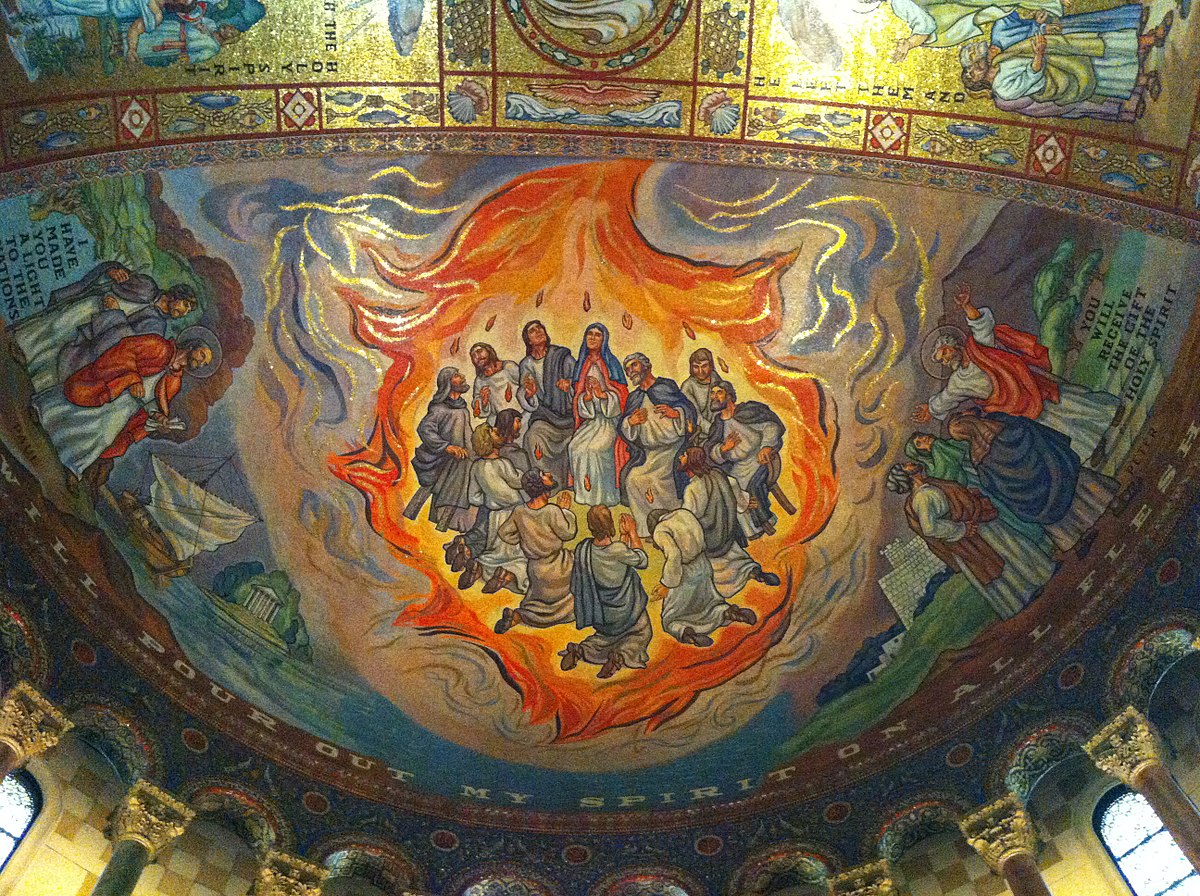
Our God is a God of overflowing love. His love caused Him to create us so that His love could overflow from Himself to us. He wanted His image-bearers to carry out His mission of overflowing love and overflow from Eden to fill the entire earth. When we rebelled against His overflowing desire so that we could make a name for ourselves instead, He confused our language at Babel so that we would continue to flow out over the earth. When God wanted to prepare His Holy Nation for His mission, He scattered them to Egypt. When Israel rebelled against His mission of overflowing love, He scattered them from the Promised Land. The Son of God came in overflowing love to offer Himself in sacrifice in order to restore us to Himself. When the scattered Jews from many nations gathered for Pentecost, God reversed the action of Babel, and His message of overflowing love was shared in many languages so that the message of overflowing love would be carried to the Jews in many nations. To continue the overflow, God worked with Peter and Paul so that His love could flow out to the Gentiles as well. God further ensured the flowing out by using the Romans to scatter both Jews and Christians from Jerusalem. To this day, when our focus is more on building our Christian institutions, becoming too ingrown, God continues to scatter His people so that His message of overflowing love will reach more people in more places across the earth.

This program of overflowing creates a Dynamic Tension between our scattering and our unity. It would be well if our scattering was motivated by love so that we would continue to stay unified as we scatter. Sadly though, our scattering is often due to divisiveness rather than love, countermanding the intent that the world will recognize that we are disciples of Jesus because of our love.

Judgement Unfolds

[Bible references: I Kings 6:12; 2 Kings 17, 25; 2 Chronicles 36:15-16]

The covenant God made with Israel had the proviso “if you follow my commands.” Israel continually demonstrated its inability to do that[1] and God’s judgement followed. The nation of Israel would suffer the consequences. The first sign of the consequences manifested itself in the splitting of Israel into two kingdoms.

After that, the northern kingdom of Israel was the first to collapse in 535BC with the invasion of the Assyrians whose policy was to scatter the captured inhabitants throughout their empire and replace them with Assyrians. These northern tribes seem to have been totally assimilated into the Assyrian empire and would not be heard from again in history.

In 722BC, the Babylonians conquered the southern kingdom of Judah. The best and the brightest of Judah were taken as captives to the capital of Babylonia for “retraining” so that they could contribute to the Babylonian society. It was at this point that the nation of Israel would now be referred to Jews. It was from this point on that, despite the return of some of the Jews to their homeland, most Jews would now be living outside their homeland.

Worship in exile

[Bible references: Jeremiah 29:1-23; Daniel; Esther; Ezekiel]

During this exile, the Jews as they would now be called, had to become more deliberate if they were going to preserve their culture. It was during this time that the Jews would begin to collect all their writings in order to begin to determine what would be their scripture. They had the writings of Moses, but they had to determine what else should be included.[2]

During this time, they focused more seriously on worshipping Yahweh. Before this time, the biblical and archeological records indicate that Israel had a habit of adopting the worship of any idols of the culture they were in contact with.[3] But now they had to preserve their culture while living amid a dominant foreign culture. Although the origins are a little obscure, as temple worship was no longer available, synagogues as a permanent institution developed during the exile.[4]

The books of Daniel, Esther and Ezekiel give examples of how the Jews were able to thrive, even while experiencing opposition, while the nation was in exile: Daniel as an exceptional administrator, Esther as queen to the emperor and Ezekiel as a prophet.

From this time forward, most Jews have remained outside their homeland with no access to the one temple in Jerusalem. It was during this time that local synagogues were created, with worship now being focused either in the home or at the synagogue.


[1] Margalit, Ruth. “In Search of David’s Lost Empire;”Syace, A.H. “Polytheism in Primitive Israel;” Zevit, Ziony. Review of “The Religions of Ancient Israel: A Parallactic Approach” by Hess. Richard Israel’s susceptibility to idol worship was so extensive, that archeological evidence indicates continuous polytheism  

[2] Waltke, Bruce. “How We Got Our Old Testament;” Hirsch, Emil G. Blau L, Kohler, Kaufmann. Schmidt, Nathaniel “Bible Canon:”

[3] Gayle, Damien. “How idolatry continued in the Kingdom of Judah: Israeli dig uncovers temple and icons dating back to Old Testament era”

[4] Bacher, Wilhelm and Dembitz, Lewis N. “Synagogue”

Intro

Reflect

Biological life flourishes because of its diversity. Different types of plants and animals allow life to exist and even thrive in extremely different types of environments. How do different types of personalities allow groups of people to thrive?

Observe

Read John 13:35. How is our love strengthened by our learning to love people different from ourselves?

Judgement unfolds

Reflect

From the beginning of humanity we have resisted other people having authority over us. What can help us trust other authority?

Observe

Read Jeremiah 25:11-12. It seemed hopeless. The unfaithful nation of Israel was no more. But promises were made by a faithful God who would eventually restore them. What are God’s promises to us?

Worship in exile

Reflect

Synagogues were an innovation not even hinted at by Moses. Later on, Jesus gave no suggestion that He had a problem with synagogues. What does that suggest about innovations in the worship style of different congregations?

Observe

Read Jeremiah 29:1-23. What did Jeremiah say that the exiles were to do while they were in exile?