Reforming our loves

Dancing in the Kingdom- Table of Contents

Dancing In the Kingdom – Part 3 – Dancing in the Kingdom– Chapter 15 – Reforming our Souls

Reforming our Loves

[Bible references: Psalm 1; 42; 139:13-14; Proverbs 4:23; Matthew 5:3-12; 12:28; 13:1-22; Mark 4:11; 12:29-31; Luke 8:10, 10:8; 13:18-19; Ephesians 6:10-20; Philippians 1:9-11; 1 Peter 5:8-9]

We are shaped every day, whether we know it or not, by practices – rituals and liturgies that make us who we are. We receive these practices – which are often rote – not only from the church or the Scriptures but from our culture, from the “air around us.”[1]

The Hebrew word for “hear,” “shema,” implies not just hearing, but obedience. Hearing with our mind should be connected to obeying with our body. God has made us with heart, soul, mind, and strength. Descartes had said, “I think therefore I am,” but that, in and of itself, leaves out the totality of who we are. We are not just brains on a stick,[2] we are creatures with embodied souls, creatures made in the image of a loving God, whose love is not just expressed in a sentiment, but by everyday choices expressed in what He does and in what we do. 1 Corinthians 13 makes clear that nothing is worthwhile if there is not love expressed through our actions.

Unfortunately, as we have expressed in a previous chapter, our choices seem to always be shrouded in sinful behavior. Time after time, history has shown us that simply filling our mind with the truth of God is a good start but is not sufficient to prevent us doing wrong things. Although our love will not be perfect until we are completely transformed during our resurrection, that does not leave us with no means to order our loves in our current lives. For the time that we are in, God has provided us with various disciplines which can be used to train our habits and therefore train our loves.

Our hope is not just in the future. Jesus proclaimed two thousand years ago that the kingdom of God has come. Jesus’ work of restoration may not be completed but is already underway. We may sometimes fret that the work of restoration, within us and around us, does not happen quickly, but as we observe God’s character as manifested in the natural and spiritual world around us, God seems to relentlessly accomplish his work through processes of growth. God had specified that all birds of the air, fish of the sea, animals and even humans were, through normal processes, to multiply and fill the earth. God’s own plan of redemption worked through generations from Adam, through Noah, Abraham, Moses, and finally to Christ. Jesus even particularly specified that the kingdom of God is like a seed that over time will grow into a plant or tree.

As creatures made in the image of God, we are given the free will to participate in our own growth. But we should keep in mind that if our goal is to become more like Jesus, then we should expect that growing into the likeness of Christ will take time … will take normal processes of growth. But we also need to keep in mind that God’s work of restoration is not unopposed; there are spiritual forces at work against God and against us.

Ultimately, it is Christ who transforms us. But we can humbly submit ourselves to God and prepare the soil of our lives to receive His grace. Our growth will be impacted by our loves and desires, by our yearnings, hungering and thirsting,[3] by where we choose to feed ourselves, by the habits and liturgies we allow to shape our lives,[4] by the disciplines we submit to,[5] by how we center our lives,[6] by how we have integrated the love we have toward ourselves, our families, our communities, and God. In the meanwhile, we will face resistance from within and from outside ourselves. In the normal course of events, it will be a common experience to have times when God seems absent, but we must know how to stay the course.

Holding to our center, keeping our loves ordered, holding on to our identity in the face of the pressures of the world will take conscious effort and discipline. Of course, our discipleship is not just a matter of paying attention to our inner life but also in the expression of our inner life in our walk with others, inside and outside the church. Hopefully, within the church, we can find healthy mutual support as we share our complementary spiritual gifts with one another.

Spiritual Disciplines are those practices which keep us centered on Christ. There are books with various lists of spiritual disciplines available to help guide us and you will find them with slightly different approaches. For instance, in Richard Foster’s book, Celebration of Discipline,[7] the disciplines are divided into three categories: The inward disciplines (meditation, prayer, fasting, study), the outward disciplines (simplicity, solitude, submission, service) and the corporate disciplines (confession, worship, guidance, celebration).

Another approach to spiritual disciplines is to focus on deliberative lifestyles such as were originally developed for use in monasteries but have application in the everyday lifestyle. One such example is the Rule of St. Benedict.[8] The Rule reminds us that we do not need to go about looking for God, for He is everywhere, including right where you are in your time and your place, in the humdrum everyday tasks of life. Freedom in Christ is achieved through the submission to three vows: obedience, stability and conversatio morum (conversion of life). These vows present us with paradoxes: our need to be in the desert so that we can be more fully present in the marketplace, our need to have prayer alone so that we can be more present in common worship, our need to commit ourselves to stability so that we can be more fully open to change, our need to detach ourselves from things so that we can fully enjoy them. The intent of all these practices is to help us more fully center ourselves in Christ so that we can more fully love our community.

Whether we are following an intentional plan or not, our everyday habits and practices do shape our spiritual lives. Even the normal, incidental routines we do, such as brushing our teeth, can shape us in ways we don’t think about. But if we take the time, we have the opportunity of using those same routines to help transform us in the ways we want to. But if we want to give our everyday routines a chance to transform us in the way we want, we will need to practice ways of waiting, hoping, slowing down, and preparing.

“When I brush my teeth I am pushing back, in the smallest of ways, the death and chaos that will inevitably overtake my body. I am dust polishing dust. And yet I am not only dust. When God formed people from the dust, he breathed into us—through our lips and teeth—his very breath. So I will fight against my body’s fallenness. I will care for it as best I can, knowing that my body is sacred and that caring for it (and for the other bodies around me) is a holy act. I’ll hold on to the truth that my body, in all its brokenness, is beloved, and that one day it will be, like the resurrected body of Christ, glorious. Brushing my teeth, therefore, is a nonverbal prayer, an act of worship that claims the hope to come.” [9]

We need to be mindful that changes in our life are never neutral. We need to be intentional about choosing practices and patterns in our life that will transform us to be more in the image of Christ.

“Take heed, consider your temptations, watch diligently; there is a treachery, a deceit in sin that tends to the hardening of your hearts from the fear of God.” [10]

We need to be aware of how much our sin is actively working against us, hardening our hearts, and turning us in ways, even very subtle ways, against Christ. To be diligent in following Christ, we need to be diligent in practicing spiritual disciplines in one form or another.


[1] Warren, Tish Harrison. “Liturgy of the Ordinary: Sacred practices in everyday life.” InterVarsity Press 2016. eBook

[2] Smith, K.A. James “You Are What You Love: The Spiritual Power of Habit” Brazos Press 2016. eBook

[3] Smith, K.A. James. “You Are What You Love: The Spiritual Power of Habit” Brazos Press 2016. eBook

[4] Warren, Tish Harrison. “Liturgy of the Ordinary: Sacred Practices in Everyday Life” InterVarsity Press 2016. eBook

[5] Foster, Richard J. “Celebration of Discipline” Harper & Row Publishers ©1978

[6] De Waal, Esther. Seeking God The Liturgical Press. 2001; Tozer, A.W. “The Pursuit of God” Christian Publications, Inc. 1948

[7] Foster, Richard. Celebration of Discipline. Harper & Row Publishers ©1978

[8] Foster, Richard. Celebration of Discipline. Harper & Row Publishers ©1978

[9] Warren, Tish Harrison. Liturgy of the Ordinary: Sacred Practices in Everyday Life. InterVarsity Press 2016. eBook

[10] Owen, John. Mortification of Sin. In Believers The Necessity, Nature, And Means Of It: With A Resolution Of Sundry Cases Of Conscience Thereunto Belonging.” From The Works of John Owen Johnstone & Hunter Volume 6, 1850-3 www.monergism.com/thethreshold/sdg/owen/Mortification%20of%20Sin%20-%20John%20Owen.pdf

Observe

Read Psalm 1; Matthew 13:1-22. How do you prepare the soil of your heart so that you can spiritually flourish?
Mystery of wisdom

Dancing in the Kingdom- Table of Contents

Dancing In the Kingdom – Part 2 – The Kingdom Revealed – Chapter 13 – Distinctives within the body of Christ

Mystery of wisdom

[Bible references: Exodus 28:3; Deuteronomy 34:9; 1 Kins 3-4; 11:11-16; Psalm 49:3; 90:12; 111:10; Proverbs 1-4; 8; 1 Corinthians 1:18-31; Colossians 2:1-5; 3:15-17; James 1; 3:13-18]

The limits of reason

It is not just that the world is immensely complex, but it seems to contain unexplainable attributes like Beauty and Truth – and something about us seems designed to need to find a reason for our being and a sense of morality. The tools of philosophy and science have been very helpful in understanding our world – but those tools are limited. Philosophers are constrained by our limits to comprehend our world through using reason alone.

After surveying the significant problems we confront in trying to make sense of this world, [John] Lock remarked: “From all which it is easy to perceive what a darkness we are involved in, how little it is of Being, and the things that are, that we are capable to know.” … [Alexander] Pope concedes that this universe appears to be incoherent and ambiguous. Yet Pope insists that we have to acknowledge the frailty and fallibility of human moral and intellectual capacities in reaching this judgement. … [John Banville] . “I saw a certain kind of pathetic beauty in the obsessive search for a way to be in the world, in the existentialist search for something that would be authentic.” …  was forced to deal with the irreducible fragility and provisionality of human knowledge. … The hope of finding the Enlightenment’s Holy Grail, the crystalline clarity of rationalist certainties, gradually gave way to a reluctant realisation of the irreducible complexity of the world, which simply could not be expressed in terms of the clear and necessary ideas that the Enlightenment expected and demanded.[1]

Scientists are equally constrained by our limits to comprehend our world through measurement and experiment alone.

Those who invoke the political nostrum “follow the science” need reminding it is an activity that’s never free of value judgement … scientific findings are empirically-based descriptions of the patterns and regularities that we find in the world around us. They are not the be all and end all of explanation. . They are local explanations of aspects of the world around us, that are provisional in nature…. Science does not say anything about the ‘meaning of life’, the nature of causation, the origins of the universe, whether there is ‘free will’, etc., until its findings are combined with additional premises in an argument. Arguments, being made as they are in human language, are strictly speaking, philosophical in nature … Scientific reasoning can never prove the truth or falsity of its own assumptions (which are values), nor can it have much to say at all about normative questions, only indirectly. A scientific argument can be used to support a premise used in a philosophical argument about some conclusion, but it cannot constitute the argument.[2]

When we look to find meanings in the context of Biblical cultures, we find differences between the Hebrew and Greek cultures. While each culture has its strengths, as we talked about in “Limits of theology” (p.161), the different languages can shape our thinking by focusing on different priorities. The following table presents some of those different focus points.

Hebrew cultureGreek culture
nephesh refers to whole being (soul and body are integratednot just a soul that exists apart from the body,
shema = listen and obeyAkouo – listen, hear
objects described in terms of functionObjects describe in terms of physical description
supernatural and natural worlds are integratedsupernatural and natural worlds are separate
historical narrative is about meaninghistorical narrative is about chronological sequences
material goods measure God’s blessingsmaterial goods measure personal achievement
value is on what we dovalue is on what we think
knowledge is about ethics and moral practicesknowledge is about intellectual categories
worship was a function of service, what we do in the bodyworship was a function of service what we think

The Hebrew language has fewer words and focuses on creating stories and not creating descriptions. The fewer words that are used can have a wider range of meanings which the Hebrew writers of scripture use to create stories with intentional ambiguities and is sparse in details and descriptions. The Hebrew worldview assumes a world where the natural and supernatural are intertwined and there is an actively involved God. Hebrew ethics are focused on what is done than what is thought.

The Greek language is amenable to creating complex words and is amenable to developing philosophical and scientific thought. Greek story telling is full of details and descriptions and exact definitions. The Greek worldview separates the spiritual world and the physical world, where the spiritual world is considered the most important and that the activity of the gods does not necessarily affect events in the physical realm. Greek ethics are focused more on what is thought than what is done.

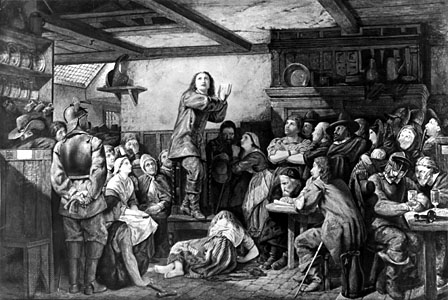
The church has been affected by the Greek way of thinking.[3] One idea, called Gnosticism, held that salvation could be obtained through secret knowledge; leading to the development of “secret” societies like the Rosicrucian’s where only those within the society have that knowledge. Another idea was dualism, where spiritual things are considered to be good and material things are considered to be bad. The consequences of that thinking have led to heretical teachings about the nature of Jesus, severe asceticism, unhealthy thinking about sexuality, neglecting our stewardship of creation, rejection of the arts, etc.

One reaction in the church against the Greek philosophies led to a type of anti-intellectualism called fideism,[4] which intended to focus exclusively on a type of faith that ignored the use of reason

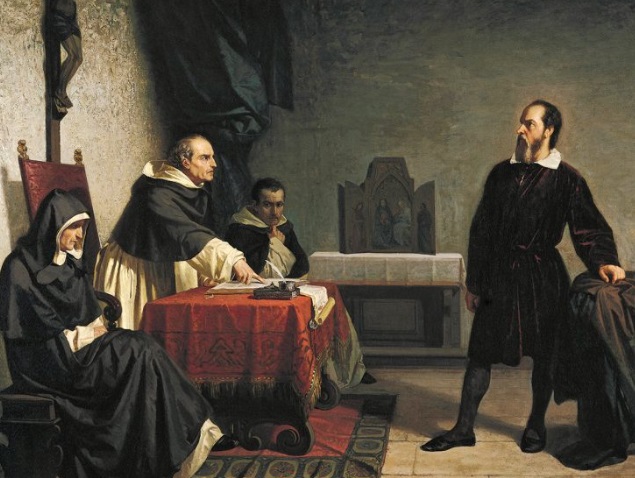
The ideas of the Greek philosopher, Aristotle, would resurface later during the Renaissance led to the development of modern science.  However, the church hindered the development of astronomy for a while when it stubbornly clung to Aristotle’s geocentric view of the universe.

The limits of enlightenment[5]

[Bible references: Ps 111:10; Proverbs 2; 11:2; 1 Cor 1:18-31; James 3:13-18]

The church was involved various attempts to reclaim the glories of the past and to elevate the human condition in what used to be called the dark ages.[6] The discovery and rediscovery of the writings of Greek, Latin and Muslim philosophers and scholars enriched the thinking within the Roman empire. The sum of all these eventually led to the period of “Enlightenment.”

  1. 9th Century Renaissance.[7] Monasteries were involved in the laborious process of preserving manuscripts by hand-copying them. However, for many years, some of the Latin and Greek classic writers were neglected in favor of Christian works. Charlemagne, the king of the Holy Roman Empire, was interested in giving everyone an education that included the Roman and Greek classic writings (such as the writings of Plato and Cicero). The main impact of this renaissance was on the development of literature.
  2. 12th Century Renaissance.[8] Christians escaping the spread the Muslim empire brought new Greek and Arabic writings to the West. These included the writings of Aristotle about logic and Arabic writings about natural philosophy and Latin works about law. This renaissance led to advances in social organization, the law, technology, intellectual pursuits and attempts to make Christianity more human which led a general spirit of optimism and desires for a more personal and intense religious experience.
  3. 14th century Renaissance.[9] The continued introduction of Greek texts from Christians fleeing the Ottoman Empire combined with the advent of the printing press made possible the wide publication of Greek ideas, particularly from Plato, whose ideas that some thought were more compatible with Christianity. These discoveries combined with discontent with the church led to the development of humanism, which elevated the capacity of humans. At first, humanism was very much a Christian topic but over time, humanism became an antithesis to Christianity.
  4. 18th century Enlightenment.[10] The invention of the printing press in AD 1439 further supported the spread of science as well as humanism and would also be central to the Protestant revolution in the 1500s. During the same period, developments in shipbuilding and technology enabled the development of European empire building and the success of that contributed to the age of Enlightenment (AD 1714-1789) with the emphasis on liberty, progress and reason having priority over theology. The Enlightenment version of humanism, (different than the Christian version of humanism) stated that people are essentially good and do not need God to progressively improve over time. This version impacts even our modern-day culture and sometimes the culture within the church.

Advances in knowledge is a good thing, but knowledge constrained by human pride does not lead to wisdom. The “Enlightenment” was the name given by people who were proud of the age where God was cast off and where human knowledge replaced the wisdom of God.

Accepting paradox[11]

[Bible references: Matthew 5:6; 7:14; 11:29-30; Luke 17:10; John 6:35; Romans 3:28; Galatians 5:1; Ephesians 2:10; James 2:24]

Paradox: A seemingly absurd or contradictory statement or proposition which, when investigated, may prove to be well founded or true. (The Oxford Dictionary). A situation or statement that seems impossible or is difficult to understand because it contains two opposite facts or characteristics: (Cambridge Dictionary)

Religious truth often pivots on paradox … full truth about Jesus outruns the ability of human reason … all of the core truths of Christianity are twin realities, delicate paradoxes …it is dangerous to insist on flat yes-or-no answers to the big and perennial questions of life … we live in a fast-moving and rootless time when numerous theologians are trying to restate the Christian faith in relative and fluid terms that reflect the mood of our times more than biblical foundations (Callen, Barry L. Caught between Truths: The Central Paradoxes of Christian Faith, Emeth Press, 2007)

Embodying the gospel is … more than individualism. God is a social reality (trinity), faith should be a social reality, the best way to witness on behalf of the church is to be the church … More than rationalism. We are more than rational animals; rationality has its place but there is mystery that only faith can approach. Spiritual experience and interpretive concepts are reciprocally related. Doctrine is important but primacy is given to the transforming personal and community encounter with God in Jesus Christ … More than dualism. We are whole persons. Sin is both personal and systemic … More than knowledge. Knowledge, even biblical knowledge is not good in and of itself. Orthodoxy includes orthopraxy (Callen, Barry L. Caught between Truths: The Central Paradoxes of Christian Faith, Emeth Press, 2007)

The Bible is not written as a textbook that presents a list of topics and propositions. The views and values of the Bible are presented in the context of a story – a story of God and his image-bearers. The Bible’s focus is on relationships, and its views and values are found in the context of the stories of those relationships. Those stories sometimes reveal paradoxes.

One dimension of those paradoxes is revealed in how the values of the Bible are upside down compared to the views of the surrounding cultures. For instance, the Bible presents one God instead of many. The Bible presents a world of order which has a particular end in mind instead of repeated cycles of disorder with no end point in view.

Another dimension of those paradoxes are statements in the Bible which seem to contradict one another. Some examples are:[12]

• “We are worthless servants.” (Luke 17:10) “We are his workmanship.” (Ephesians 2:10)

• “Blessed are those who hunger.” (Matthew 5:6) “No one who comes to me will ever be hungry.” (John 6:35)

• “Take up my yoke and learn from me.” (Matthew 11:29) “Don’t submit again to a yoke.” (Galatians 5:1)

• “A person is justified by faith apart from works of the law.” (Romans 3:28) “A person is justified by works and not by faith alone.” (James 2:24)

• “My yoke is easy.” (Matthew 11:30) “How difficult the road that leads to life.” (Matthew 7:14)

Presenting values by means of paradoxes forces one to more completely understand those values by exploring them in different dimensions.


[1] McGrath, Alister. “On Truth, Mystery and the Limits of Human Understanding” Religion and Ethics www.abc.net.au/religion/on-truth-mystery-and-the-limits-of-human-understanding/10096364

[2] Copeland, Peter. “Knowing the Limits of Science” Convivium www.convivium.ca/articles/knowing-the-limits-of-science

[3] Got Questions “What is Hellenism, and how did it influence the early church?” Got Questionswww.gotquestions.org/Hellenism.html

[4] Got Questions “What is Fideism?” Got Questions www.gotquestions.org/fideism.html

[5] Dartmouth. “Medieval Book Production and Monastic Life” Dartmouth sites.dartmouth.edu/ancientbooks/2016/05/24/medieval-book-production-and-monastic-life/; Kreis, Stephen. “Lecture 26 – The 12th Century Renaissance” Mr Mccubbins Classroom folder mccubbin.weebly.com/uploads/2/3/1/5/23153786/lecture_26__the_12th_century_renaissance.pdf

[6] Hughes, Tristan. “Why Was 900 Years of European History Called ‘the Dark Ages’?” Historyhit www.historyhit.com/why-were-the-early-middle-ages-called-the-dark-ages/

[7] Kulik, Rebecca M. Carolingian Renaissance Britannica www.britannica.com/topic/Carolingian-Renaissance

[8] Reeves, Andrew. “The twelfth-century renaissance” LibreTexts, humanities human.libretexts.org/Bookshelves/History/World_History/Book%3A_World_History_-_Cultures_States_and_Societies_to_1500_(Berger_et_al.)/12%3A_Western_Europe_and_Byzantium_circa_1000-1500_CE/12.15%3A_The_Twelfth-Century_Renaissance

[9] Cartwright, Mark. “Renaissance Humanism” World Historywww.worldhistory.org/Renaissance_Humanism/

[10] Encyclopedia.com “The Renaissance and Enlightenment” Encyclopedia.com www.encyclopedia.com/humanities/encyclopedias-almanacs-transcripts-and-maps/renaissance-and-enlightenment

[11] Moen, Skip. “Paradox” Skipmoen Hebrew Word Study skipmoen.com/2020/10/paradox/

[12] Wilson, Aaron. Lifeway Research research.lifeway.com/2019/03/19/14-biblical-paradoxes-every-christian-should-know/

Reflect

Does a person need great knowledge to be wise?

Observe

Read 1 Kings 3:1-28 and 1 Kings 11:1-13. How does someone with Solomon’s wisdom make the kind of failure he did concerning women?

Mystery of God

Dancing in the Kingdom- Table of Contents

Dancing In the Kingdom – Part 2 – The Kingdom Revealed – Chapter 13 – Distinctives within the body of Christ

Mystery of God

[Bible references: Deuteronomy 6:4; Isaiah 55:8; Luke 3:21-22; John 10:30; 1 Corinthians 2:11-14; Philippians 2:5-11; 1 Timothy 3:15-16; 1 Peter 4:14; 1 John 1:6-8; 2:18-22]

How is it that there is only one God and yet Jesus is God, and the Holy Spirit is God, and the Father is God?

The Bible reveals but doesn’t explain this paradox. From the beginning of the Old Testament there is an explicit teaching that “The Lord our God, the Lord is one,” a teaching that contrasted with all the other cultures around at the time. And yet, from the beginning of the Old Testament we have hints that this One God is complicated. The New Testament gets more explicit about the situation but still does not explain it. This paradox, that there was a person, God, and that there are three persons (Father, Son, Holy Spirit) who are equally God, was given a name, Trinity.[1] The Greek side of the church uses a term, “perichoresis” to describe the interpenetration, etc. of the persons of the Trinity.

But just because a name was given to this paradox did not make it easy to accept. Various explanations were given to explain how this worked and how the three persons related to each other. Discussions involved how to define terms like person, substance and nature.

The following list shows a few of some different explanations that have been espoused but are considered to be heretical:

  • The three persons are three different modes of God expressing himself,[2]
  • The belief that God is only one person,[3]
  • Jesus was created and was less than the Father,[4]
  • God the Son and God the Holy Spirit are subordinate to God the Father not merely relationally, but also in nature and being.[5] This eventually led to the belief that neither Jesus nor the Holy Spirit are truly God.[6]

How can Jesus both be God and human?

There are two views held: 1) the one person Jesus has two natures, human and divine, combined in one person, or 2) the one person Jesus has one nature in which his divinity and humanity are combined, [7] In either case Jesus is made of the same substance as God[8].

There were controversies over whether that God could have suffered,[9] that Jesus only seemed to suffer,[10] or whether a human like Mary could have given birth to God.[11] 

So exactly what is the relation of the Holy Spirit to God the Father and God the Son?

There is a question about whether the Spirit proceeds from just the Father or the Father and the Son. This question was captured in a statement in the Nicene-Constantinople Creed which originally stated, “And we believe in the Holy Spirit, the Lord, and Giver of Life, Who proceeds from the Father ….” In disagreement with the Eastern Orthodox side of the church, the Roman Catholics felt the need to add the words “and the Son.” [12]

How does one develop knowledge of God?[13]

We need to distinguish that we are not trying to know about God as much as to know God, the person. We get to know a person by more than studying about a person, but rather spending time and doing things with that person. We are not a just a student, but a disciple.

When to comes to knowing about God, we find that He has revealed himself to all people through his creation and through our ability to reason.[14] That type of knowledge is not the same as knowing God as a person. To know God as a person, we need to be in his presence and allow him to reveal himself to us. We can do this through prayer, meditation, or scripture. Sometimes God will spiritually reveal himself to us or sometimes he will act through miracles. Other times we interact with God as we do things in His name.[15]

Whether we are learning through general or special revelation,[16] in either case, we are finite creatures trying to understand the infinite God, which is a task we can only do in part. But either way, the knowledge we seek is not an end itself but is for the sake of our relationship with God.

The following examples are some of the particular ways different parts of the church have practiced the pursuit of knowing God:

  • Eastern Orthodox traditions recognize our utter limits in knowing God through negative theology – that is, God’s infinite qualities are so far from our comprehension that it makes more sense to define what we know God is not, instead of trying to define what God is.[17]
  • Many traditions, including the Eastern Orthodox, posit the impossibility of our finite minds to be able to know God by intellectual means and we need to extend our knowledge of God through various spiritual practices such as fasting, prayer and meditation.
    • In the early church, an innovation introduced by Montanus[18] promoted revelations from the Holy Spirit. This caused the church to back away from any other innovations in theology.
    • Quakers have emphasized quieting oneself and waiting for God to reveal himself through the “inner light” that is available to all people.
  • The Eastern Orthodox tradition emphasizes the necessity of becoming transformed by God to become more like him to know God.[19]
  • In a reaction to an overemphasis on knowing God through intellectual means, a movement developed which emphasized spiritual disciplines such as Bible study and prayer.[20]
  • Some in the church over-emphasized knowing God by faith, leading to an anti-intellectual strain in the church. This despite the Christian heritage which did much to support the life of the mind. Christians founded universities, were some of the first to use science to investigate the natural world and have invested much towards loving God with “all our minds.”
  • Some in the church stressed the mysteries of God and the need to develop the more mystical disciplines of prayer, meditation, and contemplation.

[1] In AD 185, Irenaeus claimed that this concept was the teaching of the apostles, but it wasn’t until AD200 that Tertullian created the term, Trinity. Tertullian was responding to the teaching of modalism.

[2] Theopedia “Modalism” Theopedia theopedia.com/modalism

[3] Theopedia “Monarchianism” Theopedia theopedia.com/monarchism

[4] Arian (AD 256–336) was a presbyter in Alexandria. He did have some success in persuading people of his view and for a while it became quite a controversy in the church, but it was eventually denounced.

[5] Theopedia “Subordinationism” Theopedia theopedia.com/subordinationism”

[6] Theopedia “Unitarianism” Theopedia theopedia.com/Unitarianism

[7] Plante, Evan. “What is the difference between Dyophysitism and Miaphysitism?” Mainsail Ministries mainsailministries.org/index.php/q-a-a-god-bible-theology-culture/105-what-is-the-difference-between-dyophysitism-and-miaphysitism.html Dyophysitism (Christ has two natures, fully human and fully God) is the view of the Protestant, Roman Catholic and Eastern Orthodox. denominations. Miaphysitism (Christ has one nature that is both human and divine) is the view of the Oriental Orthodox denomination.

[8] Homoousios – In Greek, the argument looked even more subtle. Was Jesus made of the same substance (homoousios) as God or a similar substance (homoiousios).

[9] OrthodoxWiki “Nestorianism” OrthodoxWiki orthodoxwiki.org/Nestorianism

[10] OrthodoxWiki “Docetism” OrthodoxWiki orthodoxwiki.org/Docetism

[11] Theotokos means “God-bearer”

[12] This additional phrase, referred to as the “filioque” is held by the Roman Catholics and the Protestants but the original wording is held by the Eastern Orthodox.

[13] Epistemology is the study of how we can know things.

[14] This is sometimes called “general revelation.” Trying to understand God this way can be called “natural theology.”

[15] These different ways of knowing God by being with him in these activities is sometimes called “special” or ”divine revelation.”

[16] Got Questions “What is general revelation and special revelation?” Got Questions www.gotquestions.org/general-special-revelation.html

[17] OrthodoxWiki “Apophatic theology” OrthodoxWiki orthodoxwiki.org/Apophatictheology

[18] Early Christian History “Montanus” Early Christian History www.earlychristianhistory.info/montanus.html

[19] Theopedia “Theosis” Theopedia www.theopedia.com/theosis

[20] Theopedia “Pietism” Theopedia www.theopedia.com/pietism

Reflect

We truly have reached the limitations of our knowledge of God when we consider both the concept of the Trinity and the concept of Jesus being both fully God and fully human. How do you handle that limitation?

Observe

Read Philippians 2:5-11; 1 Timothy 3:15-16; 1 John 1:6-8; 2:18-22. What does it  mean to us that God came to us in human form as Jesus?

Paradox of responsibility

Dancing in the Kingdom- Table of Contents

Dancing In the Kingdom – Part 2 – The Kingdom Revealed – Chapter 12 – Launching the church

Paradox of responsibility

[Bible references: Jeremiah 3:1-9; 31:1-4; Zechariah 8:16; Ephesians 4; Philippians 2:1-18]

This then is our paradox; we are given the responsibility of correctly handling the Truth of God even when we cannot completely understand what that Truth is. For instance, how can we understand that there is one person, God, and yet have God revealed in three personalities:  God the Father, God the Son and God the Holy Spirit? How can the God who exists outsides the confines of time and space, confine Himself to a particular space and time and come to be born and then to live and die as a normal human being? How can these things be?

As we look across the breadth of the history of the church, we see the church wrestling with these paradoxes and others. The result of that wrestling sometimes has gotten downright ugly with the church sometimes quite literally killing each other about it, not only with those outside the church but within it. In fact, if one were to look across the world at the state of Christianity, it might seem to one of the most fractious and divided groups ever.

How can it be that God would entrust this church with the task of bringing that His Truth to others and from one generation to the next, the church that has from time to time seemed to fail the apostle Paul’s challenge to be “one in the Spirit.”

Reflect

When children are not compliant as they grow up, do we just give up on them?

Observe

Read Zechariah 8:16; Ephesians 4; Philippians 2:1-18. What should the church look like as it handles its responsibility to presenting the truth of God to each other and to the world?

Transcendent and Immanent

Dancing in the Kingdom- Table of Contents

Dancing In the Kingdom – Part 1 – Shadows of the Kingdom – Chapter 2 – The God who created

Transcendent and Immanent

[Bible references: Genesis 1; Psalm 139:2-3; Isaiah 6:1-5; 40:21-31; Jeremiah 23:23-24; Matthew 10:29-31; Acts 17:27; Romans 8:29; Philippians 2:5-11; Colossians 1:17; Hebrews 1:3]

Genesis tells us there was a time when the universe, the heavens, and the earth, began to exist. Before that moment of time, they did not exist – but before that beginning there was God and then God created the universe. From that starting point, we can see the transcendent nature of God. He was not part of the universe but apart from the universe. Fortunately, we are not simply left with a God who is unreachably “out there” leaving us to fend for ourselves. In some incomprehensible fashion, while God is “out there” existing outside of Creation, He is simultaneously inside Creation … everywhere at once.[1]

This paradox of God’s transcendence (existing outside of Creation) and immanence (existing everywhere within Creation) has sometimes bewildered many who try to examine it through sheer logic.

God is other and set apart from everything else, that he is in a class by himself. God is not just quantitatively greater than us, but qualitatively different in his greatness. He is transcendent, infinitely above or beyond us. The true God is distinct, set apart, from all that he has made as the only truly self-sufficient Being. All his creatures depend on him; he alone exists from within himself. “And the true God is distinct, set apart, from all that is evil. His moral perfection is absolute. His character as expressed in his will forms the absolute standard of moral excellence. God is holy, the absolute point of reference for all that exists and is good. Across the board he is to be contrasted with his creatures. At heart he is a glowing-white center of absolute purity … But thankfully for us, God is not just transcendent; he is also immanent. Simply put, God is near. God is wholly present with and active in the created order. God is near us, present with us, active on earth and involved in our world. He is present and active in nature, in history, in our lives. He acts in this world and dwells with his people … Both truths must be affirmed. The two ideas must be kept together in biblical balance. Only Christianity has the right mix. Pantheism denies God’s transcendence. Deism denies God’s immanence. Only Christianity affirms both, especially as seen in the incarnation. [2]

As we unwrap the significance of this paradox, we discover many interesting attributes of God. Here are a few:

Regarding God’s Transcendence

  • God’s existence apart from creation, and apart from the brokenness of the world is described as his holiness. This holiness is so profound that mortal, sinful people (as we all are) could not stand to be his presence.
    • God’s omnipotence is seen in his ability to not only create the universe, but in his ability to sustain it.

    • God’s omniscience is seen in his knowledge about the hairs on our head, our everyday actions and even in our destiny.
  • God is omnipresent, present everywhere all at once.

Regarding God’s Immanence

  • Although God is apart from the universe, He is the one who holds the universe together.
  • God is present throughout the earth and available to all who call for him and even to those who are not calling for him.

In the chapters ahead, we will examine many of the ways God has inserted himself into the middle of creation and even address how God is involved in ways we can’t even imagine.


[1] Compelling Truth. “What is the meaning of ‘perichoresis’?” Compelling Truth www.compellingtruth.org/perichoresis.html

[2] Meuhlenberg, Bill. “On God’s Immanence and Transcendence, Culture Watch, 5 Aug 2013 billmuehlenberg.com/2013/08/05/on-gods-immanence-and-transcendence . The first portion is a quote from Thomas Trevethan

Reflect

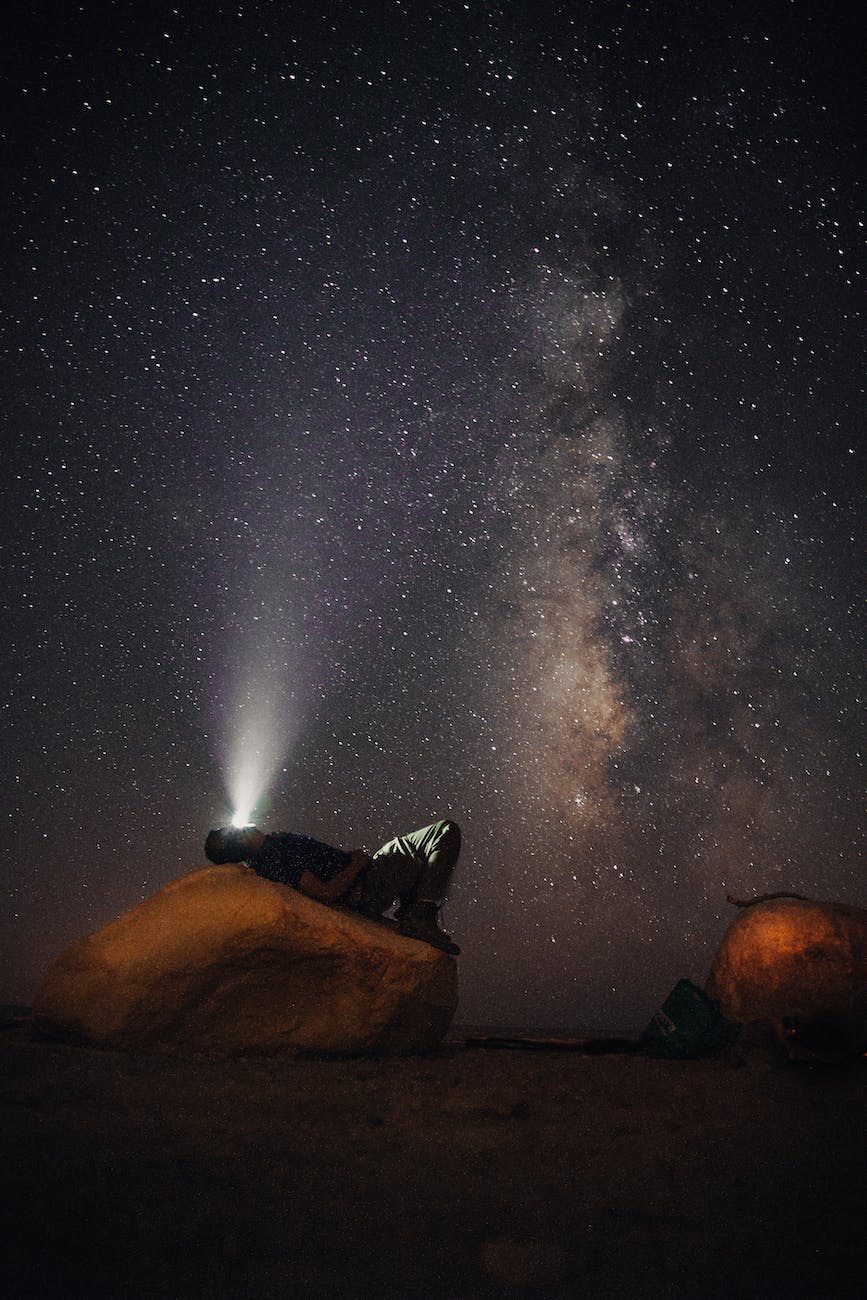
If you’ve had a chance to look at the stars at night or at large landscape scene that’s miles long, what goes through your mind? (e.g., Getty Images, “Stars in the sky”; Fine Art America, Landscape photographs fineartamerica.com/art/photographs/landscape )


Observe

Read Isaiah 40:21-31. How does knowing s knowing Yahweh give us hope?

Dynamic Tension

Dancing in the Kingdom- Table of Contents

Dancing In the Kingdom – Part 1 – Shadows of the Kingdom – Chapter 2 – The God who created

[Bible references: Luke 17:1-10; Ephesians 2;1-10]

Dynamic Tension

When we encounter Biblical statements that seem to conflict with each other, we need to hold to one of the principles of biblical interpretation, we need to examine any interpretation in the light of all other scripture – that is, let scripture interpret scripture. Even so, our best interpretations may still leave us with tensions between apparently conflicting statements. In those cases, we should acknowledge and accept those tensions rather than try to force those statements to a particular resolution.

The study of biology may provide good analogues in dealing with those tensions. For instance, in biological life, it seems that there are no simple formulas, no simple rules. While there are underlying precisely defined processes like the laws of chemistry and physics, there are also overlying complex and variable biological processes that are adaptable to circumstances around them.

Even more, living organisms by themselves are noted by intricately balanced but unstable processes that, if the balance between processes fails, there is a most certain death. One of the standard definitions of life is that living things must evade the decay to equilibrium while at the same time maintaining internal order and organization.[1]  One example that we live with all the time is with our skin – every day our skin is shedding cells and creating new cells such that, on average, every 27 days an entire layer of skin is being replaced. Our skin seems “stable” and seems to stay the same even though entire layers of skin are constantly being replaced.

That type of process holds true for all the processes happening in all the cells of living organisms; The internal structures seem to be stable, while matter and energy are constantly flowing through them and the materials within the internal structures are being constantly refreshed. More remarkably, if we examine all of this activity, we discover that this activity is sustained by an array of complex sets of interdependent processes where one set of processes feeds off the by-products of other processes and visa-versa. All this activity is delicate in one sense, if some processes fail at one point the result can be death. In another sense, the processes are flexible, allowing an organism to live in a wide variety of circumstances (environments). Thus, we have a paradox of systems that are simultaneously fragile and robust.

This dynamic tension can be seen on another level with the interactions of bone and muscle. In a given skeletal muscle, some fibers are attached to one bone in one direction and some fibers are attached to another bone in another direction. For instance, in your bicep muscles, some fibers attach to the shoulder and the other fibers attach to the elbow. As the fibers within a muscle pull against one another the bones they are attached to move. You can see this activity when you “make a muscle.” As you draw your forearm towards your shoulder, you see the biceps start to bulge in the middle as the opposing fibers pull into each other.

Exactly which way the bones move is determined by the creature that controls the muscles as the creature interacts with the environment, determining what direction to go or what task to do. While it seems at one level that in a given muscle the fibers are working against one another and seem to work opposite to one another, they are in fact on a larger scale working with each other to accomplish particular tasks.

All of this seems to reflect what we see in spiritual life. On one level, the attributes we see in the living God, His holiness, grace, etc. never change although they are constantly interacting with different circumstances. As circumstances change, although it may seem that God’s responses may change, it is not because God has changed, only that God’s dynamic response to different circumstances, whether globally or locally, has changed.

So, as we consider this, it may seem that some of God’s characteristics conflict with each other or seem to pull against one another. For instance, how is God’s perfect desire for justice able to be reconciled with God’s grace? Or how is it that He can be the Lord of all and able to also be the Servant of all? In fact, God is interacting with the world, determining what He wants to do and then coordinating His attributes to do what He desires. For example, although God’s authority and servanthood seem to be in tension with one another, He is coordinating them to deal with our individual circumstances. These apparent tensions are resolved, strengthened and harmonized in God himself.

I call this interaction, Dynamic Tension; a process controlled by a person or an organism in which the attributes seem to be pulling in different directions but are in fact working in concert with one another to accomplish particular goals. These tensions carry over into many areas of theology. We see that as different congregations wrestle with apparently conflicting issues, they make decisions based on their particular situations. Different congregations in different situations will come to different resolutions.

We are blessed to have both God’s creation itself and God’s revelation available to us as we try to try to learn about the living Creator. Fortunately, it is to our blessing that we don’t have to know everything about God for us to know or understand him, because we can at best only know Him in part. But meanwhile we have some paradoxes about God for us to examine and we will start exploring some of those paradoxes now.

“… many of the great theologians and leaders of the church—including Justin Martyr, Irenaeus of Lyons, Origen of Alexandria, Augustine of Hippo, Thomas Aquinas, Martin Luther, John Calvin, and John Wesley—in various ways believed that Creation bears witness to the glory and truth of its Creator and that this witness is fully compatible with the witness of Scripture.” [2]


[1] Weber, Bruce. “Life” Stanford Encyclopedia of Philosophy 7 Nov 2011, plato.stanford.edu/entries/life

[2] Mann, Mark H. “The Church Fathers and Two Books Theology” Biologos 4 Nov 2012 biologos.org/articles/the-church-fathers-and-two-books-theology

Observe

Read Luke 17:1-10; Ephesians 2:1-10. Verse 10 in both of these passages seems to say the opposite thing. How does the context of Luke 17:10 and Ephesians 2:10 help to resolve these two verses?

Paradoxes and Mysteries

Dancing in the Kingdom- Table of Contents

Dancing In the Kingdom – Part 1 – Shadows of the Kingdom – Chapter 2 – The God who created

Paradoxes and Mysteries

[Bible references: Genesis 1-2; Job 9; Psalm 8; 19; 103, 104; 139; Proverbs 8; Job 38-39; Isaiah 55:9]

When we look at a work of art, what can we tell about the artist? What can we find from the skill in using materials, the subject matter, the emotional content, the values? We may be able to figure out a few things, but all-in-all we can discern very little. To learn much more we need the artist to reveal not just more about the artwork but also about him or herself.

“People always want to know what inspires you to make art … think beyond the artist statement. Artists are living beings with thoughts, feelings, and ideas … explain who you really are” [1]

 “Besides making art, storytelling skills are the most valuable in achieving a gratifying journey as an artist. Your storytelling skills enhance your ability to achieve your goals. Art and stories, both written and told, are powerful tools to touch people. When art and stories are woven to work together, they create a compelling experience for artists and their followers.”[2]

So, as we begin to explore what we can know about the Creator, we also begin by looking at his artwork (that is, the creation)[3] but then we need to hear what the Creator has revealed about himself to us (that is, through the Holy Bible).[4]

So, let us begin by looking at the living things God created. Sometimes, we think we can look around us and figure out what is living and what is not; but when look at the spectrum of living things, especially through the eyes of the scientists who specialize in it, it becomes more difficult to try to come up with a definition for life. In fact, one organization catalogued over one hundred definitions[5] … and none of those definitions satisfy everybody. What does that say about the one who created those living things?

If we get so confused about what was created, it is likely that we will get confused about the Creator. When Job challenged God, Yahweh responded, “Where were you when I laid the foundations of the earth?” In Isaiah, God explicitly says, “My ways are higher than your ways.” There simply are things about God that are beyond our comprehension, mysteries, which should give us a spirit of humility.

Because much about God is mysterious and beyond understanding, we naturally find that the Creator is full of paradoxes: characteristics that seem to oppose each other. When we do encounter apparently conflicting statements about God, we must hold those qualities in tension with each other. Sometimes we might not totally understand how these characteristics can all be true together, but that is what we should expect. If we cannot fully comprehend the creation, why should we think that we can fully comprehend the Creator. We should also consider that if we ever think that we totally understand the Creator of the universe then we probably are not understanding things correctly – we are probably creating a god in our own image rather than the other way around.

This inability to totally understand God leaves us often making speculations as we try to find a way to reason things about God. We then have to be careful, if we make dogma out of our speculations, we will likely create all sorts of arguments with each other. We will see in future chapters that various theologians and congregations have sometimes split up over some of those very issues which no one can fully understand.


[1] Sayej, Nadjz. “How Artists Use Video Storytelling to Connect with Their Audience” Artrepeneur, 21 Feb 2018, abj.artrepreneur.com/video-storytelling

[2] Davey, Barney. “Personal Storytelling for Artists & Creatives” Marketing Courses, mymarketingcourses.com/p/personal-storytelling

[3] Ross, Hugh. “The Major Biblical Creation Texts/Creation Accounts” Reasons to Believe 1 Aug 2008 reasons.org/explore/publications/articles/the-major-biblical-creation-texts-creation-accounts

[4] Rusbult, Craig. “How should we interpret the Two Books of God, in Scripture & Nature” American Scientific Affiliation www.asa3.org/ASA/education/origins/two-books.htm

[5] Chamary, JV. “A Biologist Explains: What is Life”, Forbes 27 Mar 2019; Zimmer, Carl. “What is Life? Its Vast Diversity Defies Easy Definition” Quantamagazine, www.quantamagazine.org/what-is-life-its-vast-diversity-defies-easy-definition-20210309/

Reflect

Observe

What speaks to you, or confuses you about God’s character when you look at Creation?

Read Psalms 8; 139. The One who created the outermost part of the universe also knows the innermost part our lives. What difference should that make in our lives?

Reflecting God’s Paradoxes

Dancing in the Kingdom – Table of Contents

Part 1 – Shadows of the Kingdom, Chapter 3 – The Image-bearers

[Bible references: Genesis 1:26-32; 2:4-7,15-25; Matthew 22:36-40; John 15:8-11; Romans 8:20-21; Galatians 5:22-23]

Understanding the character of God, can help us understand what he has intended for creatures that are made in his image. Image-bearing creatures are not gods or duplicates of God, but they are imbued with the character of the God that made them. In this chapter we will explore some of the ways God intends for us to reflect his image. In later chapters, we will expound on those characteristics in more detail.

It was into this good universe that God prepared beforehand that God created creatures to bear his image. Good creatures, image-bearers, who were given the task of taking care of the good creation that God blessed them with – and God declared it to be very good. The image-bearing creatures were created in the complex image of God – the one God who was a community within Himself, the God who was immensely creative, the God who was generous and loving beyond imagination, the God who is sovereign over the universe, the God who is above all things.

There was a danger in God creating image-bearers. To make creatures that were lovers – just as He was a lover – meant giving these image-bearers the freedom to choose whom or what to love. We are unable to choose to not love but only who or what to love. Because God’s image-bearers were the capstone of creation, the option to another love than God, risked an awful catastrophe, a catastrophe that could affect the entirety of creation itself. The good creation, all of it, would become not so good.

And so it was, after creation was prepared for God’s image-bearers, those creatures who were created in the image of the loving God were given instructions to be stewards of the world God had made. Everything was good, and the first human couple had free access to the provisions in garden prepared for them. Only one restriction was placed before them, a restriction not meant to deprive them of anything good but meant to provide the opportunity to test their love, by testing their obedience to the one who created them.

We all now know that those creatures failed their test, and we daily experience the consequences of that failure. We also daily experience our own incapacity to restore holiness on our own efforts, our inability to love God with all our heart and soul and mind and our inability to fully love God or to fully love our neighbors as ourselves.

The mystery of who we are has to worked out between all the goodness we are endowed with as creatures who bear the image of God and all the evil we are encumbered with as creatures who innately rebel against that same God. Traces of heaven and hell run through each of us and are manifested in our everyday lives. The tongues we praise God with also curse our neighbor. The selflessness we display to others is corrupted by the selfish desires that emerge from the same heart.

Reflect

How is love dangerous?

Observe

Read Genesis 1:28; 2:15. What tasks did God provide for the humans?

Paradoxes and Mysteries

Dancing in the Kingdom – Table of Contents

Part 1 – Shadows of the Kingdom, Chapter 2 – The God who created

[Bible references: Genesis 1-2; Job 9; Psalm 8; 19; 104; 139; Proverbs 8; Job 38-39; Isaiah 55:9]

When we look at a work of art, what can we tell about the artist? What can we find from the skill in using materials, the subject matter, the emotional content, the values? We may be able to figure out a few things, but all-in-all we can discern very little. To learn much more we need the artist to reveal not just more about the artwork but also about him or herself.

People always want to know what inspires you to make art … think beyond the artist statement. Artists are living beings with thoughts, feelings, and ideas … explain who you really are” [1]

 “Besides making art, storytelling skills are the most valuable in achieving a gratifying journey as an artist. Your storytelling skills enhance your ability to achieve your goals. Art and stories, both written and told, are powerful tools to touch people. When art and stories are woven to work together, they create a compelling experience for artists and their followers”.[2]

So, as we begin to explore what we can know about the Creator, we also begin by looking at his artwork (that is, the creation)[3] but then we need to hear what the Creator has revealed about himself to us (that is, through the Holy Bible).[4]

So, let us begin by looking at the living things God created. Sometimes, we think we can look around us and figure out what is living and what is not; but when look at the spectrum of living things, especially through the eyes of the scientists who specialize in it, it becomes more difficult to try to come up with a definition for life. In fact, one organization catalogued over 100 definitions[5] … and none of those definitions satisfy everybody. What does that say about the one who created those living things?

If we get so confused about what was created, it is likely that we will get confused about the Creator. When Job challenged God, Yahweh responded, “Where were you when I laid the foundations of the earth?” In Isaiah, God explicitly says, “My ways are higher than your ways.” There simply are things about God that are beyond our comprehension, mysteries, which should give us a spirit of humility.

Because much about God is mysterious and beyond understanding, we naturally find that the Creator is full of paradoxes: with characteristics that seem to oppose each other. When we do encounter apparently conflicting statements about God, we must hold those qualities in tension with each other. Sometimes we might not totally understand how these characteristics can all be true together, but that is what we should expect. If we cannot fully comprehend the creation, why should we think that we can fully comprehend the Creator. We should also consider that if we ever think that we totally understand the Creator of the universe then we probably are not understanding things correctly – we are probably creating a god in our own image rather than the other way around.

This inability to totally understand God forces us to make speculations as we try to find a way to reason things about God. We do have to be careful though, for we will create all sorts of arguments with each other if we insist on certain speculations as the defined truth of God. It might be that if we study those revelations of God that we can draw some conclusions, but we need to be careful about making dogma out of something that we don’t fully understand. Unfortunately, we will see in future chapters that various theologians and congregations have sometimes split up over some of those very issues which no one can fully understand.


[1] Sayej, Nadjz. “How Artists Use Video Storytelling to Connect with Their Audience” artrepreneur, 21 Feb 2018, abj.artrepreneur.com/video-storytelling

[2] Davey, Barney. “Personal Storytelling for Artists & Creatives” Marketing Courses, mymarketingcourses.com/p/personal-storytelling

[3] Ross, Hugh. “The Major Biblical Creation Texts/Creation Accounts” Reasons to Believe 1 Aug 2008 reasons.org/explore/publications/articles/the-major-biblical-creation-texts-creation-accounts

[4] Rusbult, Craig. “How should we interpret the Two Books of God, in Scripture & Nature” American Scientific Affiliation http://www.asa3.org/ASA/education/origins/two-books.htm

[5] Chamary, JV. “A Biologist Explains: What is Life?”; Zimmer, Carl. “What is Life? It’s Vast Diversity Defies Easy Definition” Forbes 27 Mar 2019 http://www.forbes.com/sites/jvchamary/2019/03/27/what-is-life/?sh=22008ddb1c77

Reflect

What speaks to you, or confuses you about God’s character when you look at Creation?

Observe

Read Psalms 103 and 104 as a pair. How does the attitude expressed at the beginning and end of these Psalms challenge us to look beyond our current situation and beyond the things that we do not understand when we see God’s handiwork?