
Discovering how we are formed

Dancing in the Kingdom- Table of Contents

Dancing In the Kingdom – Part 3 – Dancing in the Kingdom– Chapter 15 – Reforming our Souls

Discovering how we are formed – for each other

[Bible references: Romans 12, 1 Corinthians 12, 13:1-3; Ephesians 3:6-8; Ephesians 4, 1 Peter 4:7-10]

Once we have centered ourselves on Christ and have learned to submit to God and to one another, we are in a good place to evaluate the unique ways in which God has formed us.[1] One of the more holistic tools developed by Saddleback Church provides an evaluation of several aspects of how we are formed: the spiritual gifts, the desires, the abilities, the personality, and the experience God gives us.

The reality is that much is life is filled with, “I just gotta do what I gotta do.” Parenting is like that, housekeeping is like that, etc. Diapers need to be changed, the house needs to be cleaned, the bills must be paid, grocery shopping needs to be done, etc. Much of life is filled with responsibilities that need to be done regardless of what capacity we think we may have. There may be no luxury of just doing “what I think I am best at.”

But where it is possible, when we gather in a sharing community, there is the opportunity to allocate different tasks to those people who are best equipped for it. God has intended that we be in such communities, so described in scripture as “the body of Christ,” where different people serve in different functions. At such times, there are opportunities for us to discover in what unique ways God has designed us so that we may serve each other in the best way possible.

Scripture reveals that all who are in Christ are indwelt by the Holy Spirit, and that the Spirit has given us various gifts that we can use to help build up other members of the body of Christ. A few Bible passages give us an idea of the kinds of gifts of some of these gifts, but the lists are not exhaustive: exhortation, giving. leadership, mercy, prophecy, service, teaching, administration, apostle, discernment, faith, healing, helps, knowledge, miracles, prophecy, teaching, tongues, tongues, interpretation, wisdom, evangelism, pastor, teaching, celibacy, hospitality, missionary, voluntary poverty.

One way to discover what gifts we may have, is by serving in our community. As we serve in various ways, we may discover that God has particularly blessed our service in various ways. Sometimes others may point out those abilities or gifts to us. Another way to discover our gifts is to read about those gifts and certain gifts may become apparent to us that way. Another way is to take a questionnaire and the results of that questionnaire may reveal certain gifts to us. It may be helpful to take such a questionnaire with someone else because they may have different insights into the questions.

As we mature and encounter different life experiences, we may discover that different gifts emerge or that God has provided differently for us in our different circumstances. God knows us and our circumstances and may provide differently as we change, and our circumstances change.


[1] Links to various assessment tools: Spiritual gifts: Carver, Jeff. “Spiritual Gifts Test – Adult Version”Spiritual Gifts Test spiritualgiftstest.com/spiritual-gifts-test-adult-version ; Granger Community Church. “Spiritual Gifts Test” Granger Community Church spiritualgiftstest.com/spiritual-gifts-test-landing; Ministry Tools Resource Center. “Take Online Spiritual Gifts Test Inventory Assessment” Ministry Tools Resource Center mintools.com/spiritual-gifts-test.htm; Rock Church, “Gifts Test” Rock Church giftstest.com. Personality test sites: Hayes, Robert. “The Best Free Enneagram Tests You Can Take Online” Tech Junkie www.techjunkie.com/best-free-enneagram-tests; Truity Psychometrics. “The Enneagram Personality Test” Truity Psychometrics www.truity.com/test/enneagram-personality-test; Barkers, Ewald. “Eclectic Energies Enneagram Tests (Free) Eclectic Energies www.eclecticenergies.com/enneagram/test; Shape test: Hill, Kevin M. “S.H.A.P.E. Test” Free Shape Test www.freeshapetest.com; Saddleback Church “You Were SHAPED for Serving God” Saddleback Church www.ministryideas.com/doc/shape_discovery_tool.pdf
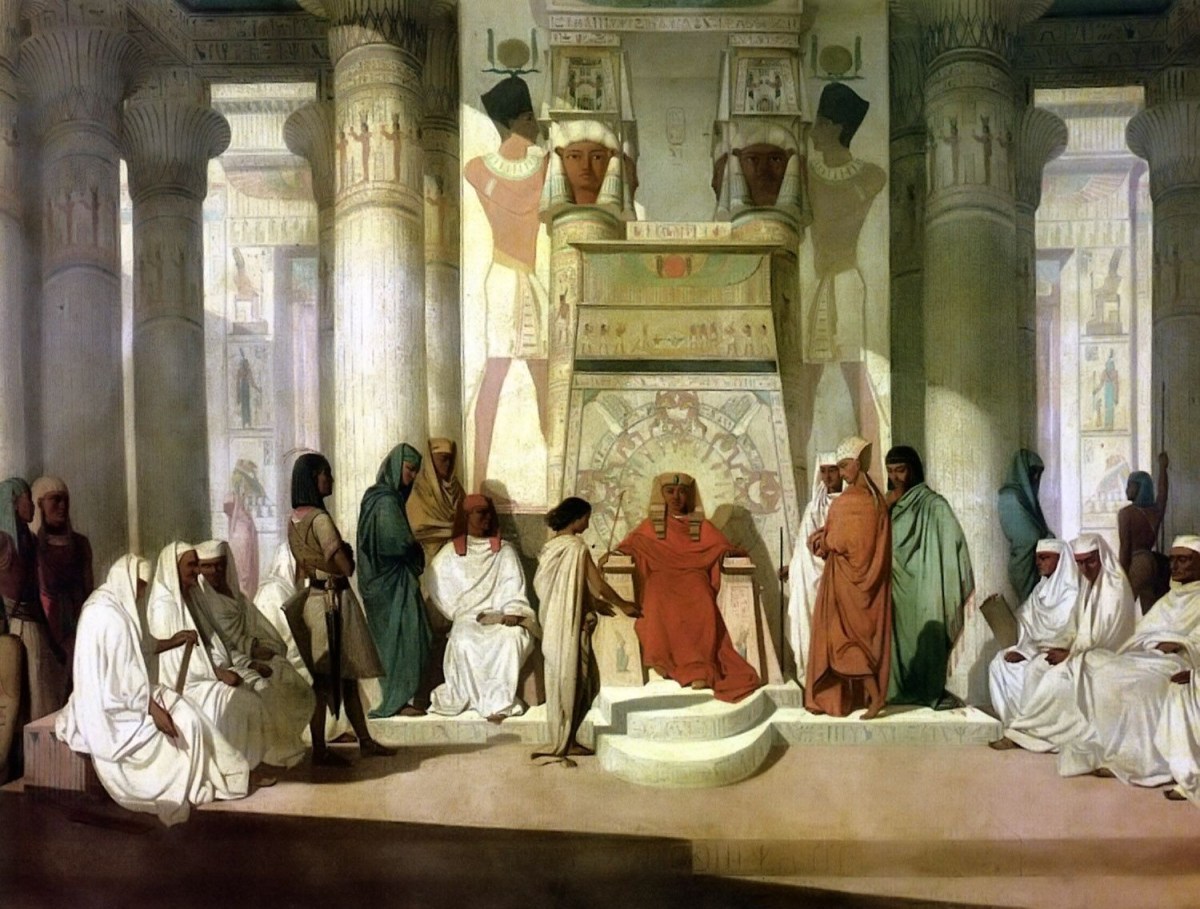
Bloom where you are

Dancing in the Kingdom- Table of Contents

Dancing In the Kingdom – Part 1 – Shadows of the Kingdom – Chapter 5– Patriarchs

Bloom where you are

[Bible references: Genesis 39:21-23; 40; 41]

While Joseph was in prison, Yahweh continued to cause Joseph to prosper, inspiring the warden to entrust many things to Joseph. A couple of the prisoners had dreams to which Yahweh gave Joseph the interpretations. The predictions Joseph revealed to the prisoners did come true. Sometime later, when the Pharaoh had dreams that he wanted to have interpreted, he was informed about Joseph. Through the help of Yahweh, Joseph was able to interpret the Pharoah’s dreams as well. This led to Joseph being put in second-in-command to the Pharaoh through which he was able to oversee the harvesting and the storage of grain in preparation of a coming seven-year drought.

Observe

Read Genesis 37; 39-41. Because Joseph was the oldest son of Jacob’s favorite wife, Jacob made Joseph his favorite son – and spoiled him. It didn’t help when Joseph flaunted some dreams in front of his brothers who then found an opportunity to sell him as a slave. How did the hardship of slavery mold Joseph’s character?

Dynamic Tension

Dancing in the Kingdom- Table of Contents

Dancing In the Kingdom – Part 1 – Shadows of the Kingdom – Chapter 2 – The God who created

[Bible references: Luke 17:1-10; Ephesians 2;1-10]

Dynamic Tension

When we encounter Biblical statements that seem to conflict with each other, we need to hold to one of the principles of biblical interpretation, we need to examine any interpretation in the light of all other scripture – that is, let scripture interpret scripture. Even so, our best interpretations may still leave us with tensions between apparently conflicting statements. In those cases, we should acknowledge and accept those tensions rather than try to force those statements to a particular resolution.

The study of biology may provide good analogues in dealing with those tensions. For instance, in biological life, it seems that there are no simple formulas, no simple rules. While there are underlying precisely defined processes like the laws of chemistry and physics, there are also overlying complex and variable biological processes that are adaptable to circumstances around them.

Even more, living organisms by themselves are noted by intricately balanced but unstable processes that, if the balance between processes fails, there is a most certain death. One of the standard definitions of life is that living things must evade the decay to equilibrium while at the same time maintaining internal order and organization.[1]  One example that we live with all the time is with our skin – every day our skin is shedding cells and creating new cells such that, on average, every 27 days an entire layer of skin is being replaced. Our skin seems “stable” and seems to stay the same even though entire layers of skin are constantly being replaced.

That type of process holds true for all the processes happening in all the cells of living organisms; The internal structures seem to be stable, while matter and energy are constantly flowing through them and the materials within the internal structures are being constantly refreshed. More remarkably, if we examine all of this activity, we discover that this activity is sustained by an array of complex sets of interdependent processes where one set of processes feeds off the by-products of other processes and visa-versa. All this activity is delicate in one sense, if some processes fail at one point the result can be death. In another sense, the processes are flexible, allowing an organism to live in a wide variety of circumstances (environments). Thus, we have a paradox of systems that are simultaneously fragile and robust.

This dynamic tension can be seen on another level with the interactions of bone and muscle. In a given skeletal muscle, some fibers are attached to one bone in one direction and some fibers are attached to another bone in another direction. For instance, in your bicep muscles, some fibers attach to the shoulder and the other fibers attach to the elbow. As the fibers within a muscle pull against one another the bones they are attached to move. You can see this activity when you “make a muscle.” As you draw your forearm towards your shoulder, you see the biceps start to bulge in the middle as the opposing fibers pull into each other.

Exactly which way the bones move is determined by the creature that controls the muscles as the creature interacts with the environment, determining what direction to go or what task to do. While it seems at one level that in a given muscle the fibers are working against one another and seem to work opposite to one another, they are in fact on a larger scale working with each other to accomplish particular tasks.

All of this seems to reflect what we see in spiritual life. On one level, the attributes we see in the living God, His holiness, grace, etc. never change although they are constantly interacting with different circumstances. As circumstances change, although it may seem that God’s responses may change, it is not because God has changed, only that God’s dynamic response to different circumstances, whether globally or locally, has changed.

So, as we consider this, it may seem that some of God’s characteristics conflict with each other or seem to pull against one another. For instance, how is God’s perfect desire for justice able to be reconciled with God’s grace? Or how is it that He can be the Lord of all and able to also be the Servant of all? In fact, God is interacting with the world, determining what He wants to do and then coordinating His attributes to do what He desires. For example, although God’s authority and servanthood seem to be in tension with one another, He is coordinating them to deal with our individual circumstances. These apparent tensions are resolved, strengthened and harmonized in God himself.

I call this interaction, Dynamic Tension; a process controlled by a person or an organism in which the attributes seem to be pulling in different directions but are in fact working in concert with one another to accomplish particular goals. These tensions carry over into many areas of theology. We see that as different congregations wrestle with apparently conflicting issues, they make decisions based on their particular situations. Different congregations in different situations will come to different resolutions.

We are blessed to have both God’s creation itself and God’s revelation available to us as we try to try to learn about the living Creator. Fortunately, it is to our blessing that we don’t have to know everything about God for us to know or understand him, because we can at best only know Him in part. But meanwhile we have some paradoxes about God for us to examine and we will start exploring some of those paradoxes now.

“… many of the great theologians and leaders of the church—including Justin Martyr, Irenaeus of Lyons, Origen of Alexandria, Augustine of Hippo, Thomas Aquinas, Martin Luther, John Calvin, and John Wesley—in various ways believed that Creation bears witness to the glory and truth of its Creator and that this witness is fully compatible with the witness of Scripture.” [2]


[1] Weber, Bruce. “Life” Stanford Encyclopedia of Philosophy 7 Nov 2011, plato.stanford.edu/entries/life

[2] Mann, Mark H. “The Church Fathers and Two Books Theology” Biologos 4 Nov 2012 biologos.org/articles/the-church-fathers-and-two-books-theology

Observe

Read Luke 17:1-10; Ephesians 2:1-10. Verse 10 in both of these passages seems to say the opposite thing. How does the context of Luke 17:10 and Ephesians 2:10 help to resolve these two verses?