Passion unto death

Dancing in the Kingdom- Table of Contents

Dancing In the Kingdom – Part 2 – The Kingdom Revealed – Chapter 11 – The Kingdom Enters

Passion unto death

[Bible references: Genesis 3:12; Matthew 16:21-23; 21:4-5; 26-27; Mark 9:30-37; Luke 22:54-62; John 1:14; 12:12-19; Romans 1:18-32; 5:20; 6:23; Ephesians 2:1-10]

There is a sense in which each moment of history is equally important to the next. Each moment is a moment which God pursues us as he guides us to our ultimate flourishing. There is no reason to suppose that our continuing flourishing will cease once heaven and earth are reunited, but we should expect that our flourishing will continue as a manifestation of his glory.

However, in our current state of affairs in which earth is broken from heaven, there are moments, epiphanies, in which heaven more noticeably breaks through. There are moments in which angels are more visible or in which Yahweh reveals himself through his prophets. Even more remarkable is the moment in which Yahweh submitted himself to taking on human form, even to the point of being conceived as an embryo inside the body of a human woman and then enduring the normal process of physically growing to become a human adult. Yet even that was not sufficient. Yahweh may have taken the form of a human, but it wasn’t a glorified human,[1] not yet the human as he intends for us to be.

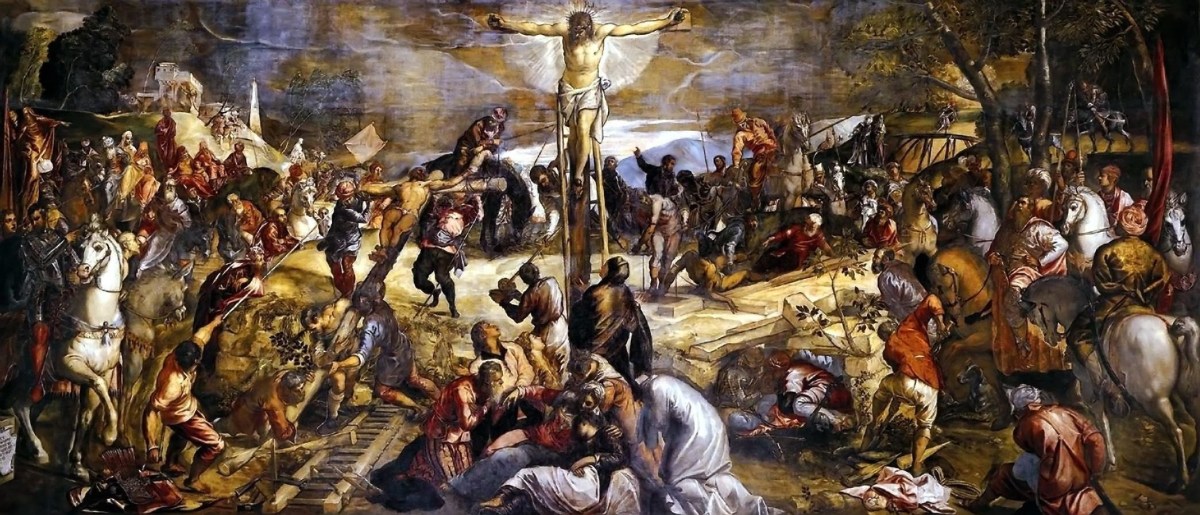
To do that would require him to suffer the shame and justice that we ourselves have earned. The sin that brought us death would have to overcome by a sacrifice that would bring us life. In becoming human, Jesus identified himself with us, but in order for us to become like him he would have to make us ready to receive his spirit. We were helpless to make ourselves acceptable to God, to make ourselves free from sin and its consequences. Bonhoeffer once related his prison experience to Advent. He could not free himself – he needed someone to come from the outside to rescue him.[2] And that is our dilemma, we need someone to come from the outside to rescue us. The covenant revealed to Moses was given to increase our sin, to make it more evident than before about our inability to rescue ourselves. We were condemned by our sin to remain separated from God.

We saw in the previous chapter, that the world was very much like it is now, full of factions and frictions, the powerful and the poor, and everyone waiting and wanting the world to be a better place. The world into which Jesus was born was as broken as it is now. Jesus came into this world with a message of love and hope and with acts of healing and casting out of demons, but that would not be enough. Sin and death had a power over the world that needed to be broken. To rescue the world, to restore it to what it was intended to be, sin and death would need to be defeated. And there was no one who could carry out the rescue except God.

It was as true then as it is now, ever since Adam and Eve, people look at the problems around them and think that the problem lies somewhere else besides inside them. In particular, the more factions and frictions there are, the easier it is to find someone else to point to. So, when Jesus came, teaching, healing, and identifying with the common people more than the elite, it seemed that the more Jesus revealed himself the more the people seemed to think that Jesus would be the one – to rescue them from the Roman government.

Even Jesus’ chosen twelve disciples, the ones who would spend three years with him day and night … even they couldn’t understand the type of rescue they would need. Jesus would explain many times about what he needed to do, but the disciples couldn’t understand. The truth is, though, that even as we look back and see what Jesus had to do, we also have a hard time fully understanding just how desperately that we need rescuing. We don’t understand the depths of our own depravity.

When Jesus approached Jerusalem with his disciples for the last time, some of the disciples argued about which of them was the greatest, or who would sit next to Jesus on his throne. When Jesus showed his power with his resurrection of Lazarus, the crowds got more excited about the possibility of Jesus throwing out the Roman government and then they gave him a grand entry into Jerusalem. However, Jesus refused to act as they wanted, and the crowds eventually turned against Jesus. Even one of the disciples, Judas Iscariot, gave up on Jesus and agreed to betray him to the Sanhedrin. Then, when Jesus was arrested, the rest of the disciples went into hiding. Even Peter, who tried to follow the lynching party at a distance, refused to be identified with Jesus.


[1] Got Questions “How does the Bible describe glorified bodies we will possess in heaven?” Got Questions www.gotquestions.org/glorified-bodies.html

[2] Kincaid, Elisabeth Rain, “Bonhoeffer: Advent is Like a Prison Cell” Christianity Today www.christianitytoday.com/women/2018/december/bonhoeffer-advent-is-like-prison-cell.html

Observe

Read John 12:12-19. In this scene, the crowd is expecting a rescue from the Romans,  the Pharisees are worried about their competition becoming too popular, and the disciples are not comprehending what is happening. How did the disciples eventually understand what was happening?

Messy family life

Dancing in the Kingdom- Table of Contents

Dancing In the Kingdom – Part 1 – Shadows of the Kingdom – Chapter 8– Kings and kingdoms

[Bible references: Deuteronomy 17:14-20; 2 Samuel 13:1-21; 2 Samuel 13:23-29; 15:7-23]

David did have many wives and concubines, but unlike Solomon, the king who reigned after him, David’s polygamy would not lead him to worshiping other gods. The Bible doesn’t explicitly condemn David for his polygamy, but it seemed to exasperate a weakness in David. David had many children through his wives and concubines, but he failed to discipline them. His inability to discipline his sons resulted in rape of one of his daughters by one of his sons, who was murdered by another son to avenge the rape, and who then attempted to dethrone David. This all meant that the path to succession to David’s throne would not be straightforward, but in the end, David selected his son Solomon to succeed him.

Observe

Read Deuteronomy 17:14-20. What should a king do to keep himself from going astray?

Reflecting God’s paradoxes

Dancing in the Kingdom- Table of Contents

Dancing In the Kingdom – Part 1 – Shadows of the Kingdom – Chapter 3 – The image-bearers

Reflecting God’s paradoxes

[Bible references: Genesis 1:26-32; 2:4-7,15-25; Matthew 22:36-40; John 15:8-11; Romans 8:20-21; Galatians 5:22-23]

Understanding the character of God, can help us understand what he has intended for creatures that are made in his image. Image-bearing creatures are not gods or duplicates of God, but they are imbued with the character of the God that made them.

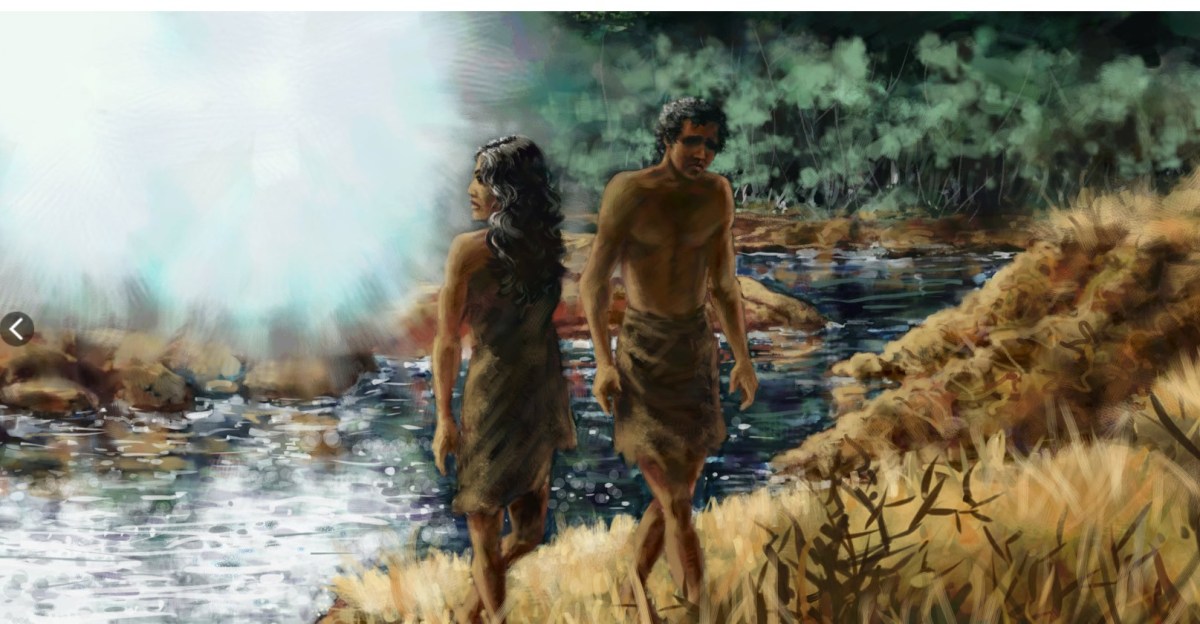
It was into this good universe that God prepared beforehand that God created creatures to bear his image. Good creatures, image-bearers, who were given the task of taking care of the good creation that God blessed them with – and God declared his creation to be very good. The image-bearing creatures were created in the complex image of God – the one God who was a community within Himself, the God who was immensely creative, the God who was generous and loving beyond imagination, the God who is sovereign over the universe, the God who is above all things.

There was a danger in God creating image-bearers. To make creatures that were lovers – just as He was a lover – meant giving these image-bearers the freedom to choose whom or what to love. Since we are created as lovers, we are compelled to love, so when we choose to not love one thing  or one person it is only because we have chosen to love someone or something else. Because God’s image-bearers were the capstone of creation, their option to love something more than God risked an awful catastrophe, a catastrophe that could affect the entirety of creation itself. The good creation, all of it, would become not so good.

And so it was, after creation was prepared for God’s image-bearers, those creatures who were created in the image of the loving God were given instructions to be stewards of the world God had made. Everything was good, and the first human couple had free access to the provisions in the garden prepared for them. Only one restriction was placed before them, a restriction not meant to deprive them of anything good but meant to provide the opportunity to test their love, by testing their obedience to the one who created them.

We all now know that those creatures failed their test, and we daily experience the consequences of that failure. We also daily experience our own incapacity to restore holiness on our own efforts, our own inability to love God with all our heart and soul and mind and our own inability to fully love God or to fully love our neighbors as ourselves.

The mystery of who we are has to worked out between all the goodness we are endowed with as creatures who bear the image of God and all the evil we are encumbered with as creatures who innately rebel against that same God. Traces of heaven and hell run through each of us and are manifested in our everyday lives. The tongues we praise God with also curse our neighbor. The selflessness we display to others is corrupted by the selfish desires that emerge from the same heart.

Observe

Read Genesis 1:28; 2:15. What tasks did God provide for the humans?

Paradoxes and Mysteries

Dancing in the Kingdom- Table of Contents

Dancing In the Kingdom – Part 1 – Shadows of the Kingdom – Chapter 2 – The God who created

Paradoxes and Mysteries

[Bible references: Genesis 1-2; Job 9; Psalm 8; 19; 103, 104; 139; Proverbs 8; Job 38-39; Isaiah 55:9]

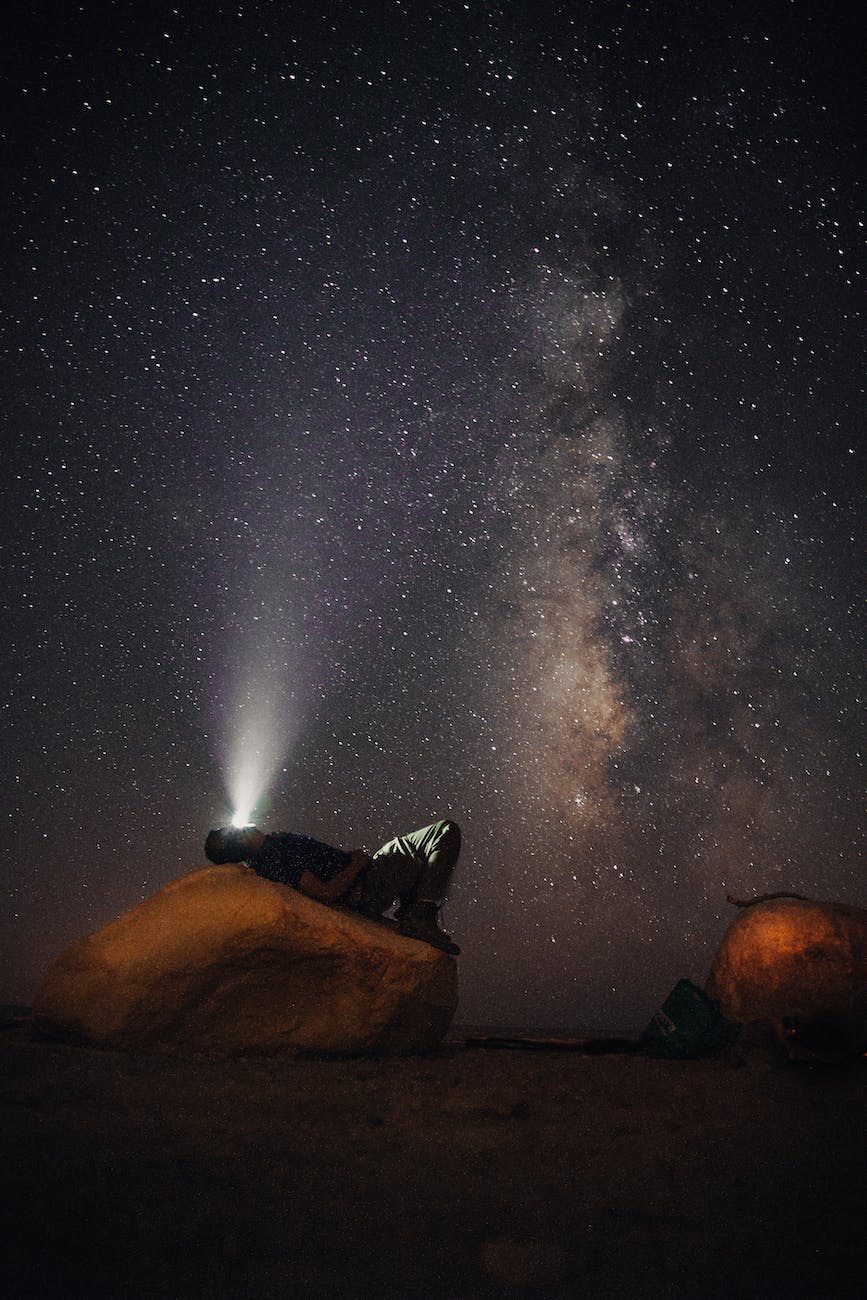
When we look at a work of art, what can we tell about the artist? What can we find from the skill in using materials, the subject matter, the emotional content, the values? We may be able to figure out a few things, but all-in-all we can discern very little. To learn much more we need the artist to reveal not just more about the artwork but also about him or herself.

“People always want to know what inspires you to make art … think beyond the artist statement. Artists are living beings with thoughts, feelings, and ideas … explain who you really are” [1]

 “Besides making art, storytelling skills are the most valuable in achieving a gratifying journey as an artist. Your storytelling skills enhance your ability to achieve your goals. Art and stories, both written and told, are powerful tools to touch people. When art and stories are woven to work together, they create a compelling experience for artists and their followers.”[2]

So, as we begin to explore what we can know about the Creator, we also begin by looking at his artwork (that is, the creation)[3] but then we need to hear what the Creator has revealed about himself to us (that is, through the Holy Bible).[4]

So, let us begin by looking at the living things God created. Sometimes, we think we can look around us and figure out what is living and what is not; but when look at the spectrum of living things, especially through the eyes of the scientists who specialize in it, it becomes more difficult to try to come up with a definition for life. In fact, one organization catalogued over one hundred definitions[5] … and none of those definitions satisfy everybody. What does that say about the one who created those living things?

If we get so confused about what was created, it is likely that we will get confused about the Creator. When Job challenged God, Yahweh responded, “Where were you when I laid the foundations of the earth?” In Isaiah, God explicitly says, “My ways are higher than your ways.” There simply are things about God that are beyond our comprehension, mysteries, which should give us a spirit of humility.

Because much about God is mysterious and beyond understanding, we naturally find that the Creator is full of paradoxes: characteristics that seem to oppose each other. When we do encounter apparently conflicting statements about God, we must hold those qualities in tension with each other. Sometimes we might not totally understand how these characteristics can all be true together, but that is what we should expect. If we cannot fully comprehend the creation, why should we think that we can fully comprehend the Creator. We should also consider that if we ever think that we totally understand the Creator of the universe then we probably are not understanding things correctly – we are probably creating a god in our own image rather than the other way around.

This inability to totally understand God leaves us often making speculations as we try to find a way to reason things about God. We then have to be careful, if we make dogma out of our speculations, we will likely create all sorts of arguments with each other. We will see in future chapters that various theologians and congregations have sometimes split up over some of those very issues which no one can fully understand.


[1] Sayej, Nadjz. “How Artists Use Video Storytelling to Connect with Their Audience” Artrepeneur, 21 Feb 2018, abj.artrepreneur.com/video-storytelling

[2] Davey, Barney. “Personal Storytelling for Artists & Creatives” Marketing Courses, mymarketingcourses.com/p/personal-storytelling

[3] Ross, Hugh. “The Major Biblical Creation Texts/Creation Accounts” Reasons to Believe 1 Aug 2008 reasons.org/explore/publications/articles/the-major-biblical-creation-texts-creation-accounts

[4] Rusbult, Craig. “How should we interpret the Two Books of God, in Scripture & Nature” American Scientific Affiliation www.asa3.org/ASA/education/origins/two-books.htm

[5] Chamary, JV. “A Biologist Explains: What is Life”, Forbes 27 Mar 2019; Zimmer, Carl. “What is Life? Its Vast Diversity Defies Easy Definition” Quantamagazine, www.quantamagazine.org/what-is-life-its-vast-diversity-defies-easy-definition-20210309/

Reflect

Observe

What speaks to you, or confuses you about God’s character when you look at Creation?

Read Psalms 8; 139. The One who created the outermost part of the universe also knows the innermost part our lives. What difference should that make in our lives?