Reconciliation

Dancing in the Kingdom- Table of Contents

Dancing In the Kingdom – Part 3 – Dancing in the Kingdom– Chapter 18 – Entering the Dance

Reconciliation

[Bible references: Luke 19:11-27; John 13:34-35; 14:15-31; 16:7-15, 33; Romans 5:1-11]

Keeping in mind that we serve as Christ’s ambassadors to the world with the message of reconciliation, Emmanuel Katongole and Chris Rice have summarized ten aspects of that reconciliation:[1]

  • Reconciliation is God’s gift to the world. Healing of the world’s deep brokenness does not begin with us and our action, but with God and God’s gift of new creation.
  • Reconciliation is not a theory, achievement, technique, or event, It is a continuous process, a dance if you will, with our fellow image-bearers.
  • The end toward which the journey of reconciliation leads is the shalom of God’s new creation — a future not yet fully realized, but holistic in its transformation of the personal, social, and structural dimensions of life.
  • The journey of reconciliation requires the discipline of lament.
  • In a broken world God is always planting seeds of hope, though often not in the places we expect or even desire.
  • There is no reconciliation without memory, because there is no hope for a peaceful tomorrow that does not seriously engage both the pain of the past and the call to forgive.
  • Reconciliation needs the church, but not as just another social agency or NGO,
  • The ministry of reconciliation requires and calls forth a specific type of leadership that is able to unite a deep vision with the concrete skills, virtues, and habits necessary for the long and often lonesome journey of reconciliation.
  • There is no reconciliation without conversion, the constant journey with God into a future of new people and new loyalties.
  • Imagination and conversion are the very heart and soul of reconciliation.

The heart of reconciliation is love. When we love and reconcile one another with others in the body of Christ, that is, if we can love the people we don’t like and become reconciled, that becomes the visible grace of God that can even be recognized by those outside the church and draws them to that same love and grace of God. Our task from the beginning was to serve the earth. Jesus lived that out, not by growing crops but by healing the sick and loving the outcasts. We continue that task by “Dancing in the Kingdom,” expanding God’s flourishing glory as we respond to Jesus’ call to us to “occupy till I come.”


[1] Katongole, Emmanuel & Rice, Chris. Reconciling All Things: A Christian Vision for Justice, Peace, and Healing Intervarsity Press, 2009

Observe

Read Romans 5:1-11. How do we prepare ourselves for the work of reconciliation?

vocational stewardship

Dancing in the Kingdom- Table of Contents

Dancing In the Kingdom – Part 3 – Dancing in the Kingdom– Chapter 18 – Entering the Dance

Vocational stewardship

[Bible references: Ephesians 6:5-9; Colossians 3:1-17]

In-between those basic strategies, the question we all need to discover is, within the context we find ourselves in, what are the practical ways for us to use the gifts and talents God has equipped us with. For some of us, we can find ways to use our gifts and talents directly within the church. But all work, whether done in the church or outside can be done as unto the Lord. For others, Amy Sherman has identified four different strategies outside the church itself for us to consider.[1]

  • Promote the kingdom in and through your daily work
  • Volunteer your skills to an agency outside your employer.
  • Launch your own social enterprise
  • Participate in your church’s targeted initiative.

Whatever strategy we use, the goal is to bring hope to the world around us by bringing in Kingdom values of justice, righteousness, and peace.[2]

We do have to consider the reality that many of us have jobs that consign workers to demeaning labor: either doing tasks that treat workers as if they were biological robots on an assembly line doing repetitive tasks, or just doing unskilled tasks that require no creativity and that fail to regard the humanity of those workers.[3] Then sometimes, we simply find ourselves in a job which could easily be more meaningful if we were appreciated. What should we do then? Dorothy Sayers’ position is that we should have the same attitude as given to us in Genesis 2, we should serve the work. We can hope that the work was designed to serve the community, so that in serving the work we serve the community.

“The only true way of serving the community is to be truly in sympathy with the community, to be oneself part of the community and then to serve the work without giving the community another thought. Then the work will endure, because it will be true to itself. It is the work that serves the community; the business of the worker is to serve the work.”[4]


[1] Sherman, Amy. Kingdom Calling: Vocational Stewardship for the Common Good. Intervarsity Press, 2011 eBook Chapters 9-13

[2] Sherman, Amy. Kingdom Calling: Vocational Stewardship for the Common Good. Intervarsity Press, 2011 eBook Chapter 1

[3] Smith, James K.A. “The Beauty of Work, the Injustice of Toil” Comment comment.org/the-beauty-of-work-the-injustice-of-toil/

[4] Sayers, Dorothy. “Why Work” in Letters to a Diminished Church: Passionate Arguments for the Relevance of Christian Doctrine Villanova University www1.villanova.edu/content/dam/villanova/mission/faith/Why%20Work%20by%20Dorothy%20Sayers.pdf

Reflect

How might you use your vocational stewardship?

Observe

Read Ephesians 6:5-9. How do we serve “as unto the Lord” at whatever our vocation is?

Not yet, but Already

Dancing in the Kingdom- Table of Contents

Dancing In the Kingdom – Part 3 – Dancing in the Kingdom– Chapter 17 – Finding our place

Not Yet, But Already

[Bible references: Matthew 6; John 15:1-17; 1 Corinthians 3; Revelation 21-22]

Sincere prayer has a habit of changing us. When we commune with God as a friend, we learn his business and desire to join in His work; the work of God calling people to Himself in love and bringing them healing. We also know His desire to restore the earth so that is rejoined to heaven, making the whole earth a temple, a place where he will be with all His people. When He came the first time, He began that work of restoration and when He comes again, He will complete it. In the meantime, He has left us here as His stewards. There are some things that only He can do, but that does not mean there is nothing for us to do. In this time where He has not yet returned, He has already begun a work that He invites us to join with Him, calling people to Him and restoring the earth, bringing healing, wholeness, and hope to the world.

The gifts He has given us can not only be used to serve and build up those already within the church community, but as Christ’s ambassadors, we can bring tangible signs of love and hope into the world around us, to show God’s love and care that He has for not only the smallest things in our lives but for all of creation. As we live in the world as it now is, we can bring the love of God into our relationships, our vocations, our hobbies, etc. Our efforts will be incomplete because Christ has not yet returned. But the work that we do now can demonstrate the hope and confidence that we have because Christ has already come.

There is a call for those who can carry a prophetic message, going and preaching the gospel to those outside the church. For those who do that work, they need to remember that when Jesus called us to go the fields that are “white unto harvest,” he implied that some preparation had been done beforehand, the crops were already planted, fertilized, weeded, and supplied with sun and water. Much work had been done and therefore the crops were ready for harvesting. While not all of us have the gift of evangelism or prophecy, we should be open to what we are called to do.

Observe

Read Matthew 6. How are giving, prayer and generosity linked?

The Discipline of Liturgy

Dancing in the Kingdom- Table of Contents

Dancing In the Kingdom – Part 3 – Dancing in the Kingdom– Chapter 15 – Reforming our Souls

Discipline of Liturgy

[Bible references: Exodus 12:1-28; Psalm 39:4-7; 90:9-12; Ecclesiastes 12:1]

I don’t know why so many Christian groups think they need to reinvent the wheel when it comes to “discipleship programs.” This time-tested annual pattern for the life of individual believers and the Church together that is focused on Christ, organized around the Gospel, and grounded in God’s grace, is sheer genius. It is simple enough for a child. It offers enough opportunities for creativity and flexibility that it need never grow old. Each year offers a wonderful template for learning to walk with Christ more deeply in the Gospel which brings us faith, hope, and love.[1]

Teaching and learning that are attuned to the spiritual power of habit recognize the power of little things, the formative power of micro practices. Little things repeated over time in community have a formative effect.[2]

In one sense, a liturgy is a ritual, or a script, used by a congregation to format its worship services. In that regard, all congregations are liturgical no matter how formal or informal. In another sense, a liturgy is a “work of the people” which emphasizes the participation of the congregation during the worship service. The goal of the liturgy is to place the whole of our lives, including our schedules, our possessions, and our efforts, in submission to Christ.

That means that we should consider not just what we do on Sundays in the corporate setting of the church, but as individuals, we have our own individual liturgies through the week as well. We should pay attention to the ‘work’ we do as individuals as we live our lives, the ways we worship as we go about our daily lives, the tasks we do and the habits we practice. How do we, in fact, place the whole of our lives, our schedules, our possessions and our efforts, in submission to Christ? That is the point of our liturgy and all the other disciplines we incorporate into our lives.

The liturgical year

The liturgical year is an ancient, time-tested method of discipleship. In addition to the weekly Lord’s Day reminder/celebration of the resurrection of Christ, the liturgical calendar provides a way of refocusing our attention on the spiritual aspects of life. The focus on the Christian story and celebrations provides an opportunity to be shaped by our counter-cultural message rather than the so-called secular message and celebrations. The liturgy of Word and Sacrament has varied through different times and places, but the ancient liturgical calendar provides one way for us to engage as in a concert in a practice that unites us to the one holy, catholic church, past, present, and future.

Sacred Time

Interestingly, the Jews have a liturgical calendar that is different than their “secular” calendar, in the same way that we keep a liturgical calendar that is different from the secular calendar. The calendar of the Canaanite culture of the Old Testament started at the beginning of the wet season which began in the fall. That was the time when seeds would be planted. The Biblical calendar starts in the spring at the beginning of the harvesting season. While the Canaanite culture begins the year with the work that they do to reap a harvest later, the Israelite culture begins their year harvesting the crops (that God provided) and from which they would have seeds to plant later. The difference highlights whose work has preeminence. The “Gentile” calendars are similar. The secular year begins in January as the date when the Roman consuls would begin their terms of office whereas, the Christian liturgical year builds our focus around the life and ministry of Jesus.

There is an intriguing way in which the Jewish culture uses its calendar compared to how we now use it. Whereas, in our present culture we, with a few exceptions, remember historical events according to the actual historical dates that event occurred set. There are exceptions, like Martin Luther King’s birthday which is set to be always celebrated on a Monday, regardless of his actual birthdate. The long weekend has preeminence over the actual birthdate.

This shift of preeminence helps explain what seems to be certain discrepancies in how things are recorded in the Bible. These apparent discrepancies include: the timing of travel to Sinai from Egypt, the construction of the tabernacle, the timing of events in Deuteronomy, even the timing of events in Holy Week. These apparent discrepancies can be explained when we look at them within the biblical framework.

The Bible’s liturgical calendar always celebrates historic events in the same way we handle our exceptions. In the Biblical framework, it is more important to remember events according to the liturgical calendar rather than the actual historic chronology, to frame events in a spiritual context rather than in an historical context.

This includes the events of creation. The modern debates concerning whether creation happened in six 24-hour earth days or six longer eras – or whatever – can be put aside as only scientific concern but not necessary as biblical concerns. The purpose of the liturgical calendar is to help us place everything, both in time and space, both physical and spiritual, in God’s domain. This includes us and the little piece of time and space that we occupy. Therefore, all things, including all our time, our possessions, and our efforts, are under the domain of God. The discipline of the liturgy then provides the larger context in which we can pursue all our spiritual disciplines


[1] Spencer, “Chaplain” Michael. Internet Monk Archives imonk.blog/2010/11/15/church-year-spirituality

[2] Smith, James K.A. “You Are What You Love: The Spiritual Power of Habit.” Brazos Press 2016. eBook

Reflect

The sacred calendar reminds us that all time is sacred. In which parts of your day are you most likely to need reminding of that sacredness?

Observe

Read Exodus 12:1-28. Yahweh is establishing a new calendar for the Israelite. What is the purpose of creating a new calendar?

Lamenting our brokenness

Dancing in the Kingdom- Table of Contents

Dancing In the Kingdom – Part 3 – Dancing in the Kingdom– Chapter 14 – Remembering our creation

Lamenting our Brokenness[1]

[Bible references: Psalm 90; Lamentations 1-2; Matthew 26:36-46; 27:33-53; Luke 22:15; 1 Corinthians 14:12; Hebrews 12:2]

God made a good world, a world full of his glory. Sometimes, we can look at the beauty, the immenseness, the intricacy of what he has made all around us and be filled with awe and wonder. Unfortunately, what is also visible are the many ways in which things are not as they should be. As we consider all that we see and contemplate the kind of end that God intended, we find ourselves looking at a world that seems to be headed in the wrong direction. Instead of increasing shalom, there is violence, hatred, fear, disease, and brokenness. Pain. Shattered dreams. Loss of hope.

There are times when the brokenness around us and within us can overwhelm us. There may be times when God seems absent for long periods of times. This intense absence has brought some people to what they call the Dark Night of the Soul.[2]

The brokenness around us affects everyone, although some experience the brokenness more harshly than others. The Psalms are full of complaining about how the pain of sins’ consequences don’t seem to affect everyone equally. In Lamentations, that pain is captured in personification – the pain of an adulterous woman who is naked, unclean, scorned, and shamed, a victim of rape, a slave, helpless, isolated, unclean. Just as we all bear the guilt of sinful disobedience against God and neighbor. Not only do we bear the guilt of active rebellion against God, but we also bear the shame of being sinned against.

Throughout its history, the church has been concerned with the sin of people but has largely overlooked an important factor in human evil: the pain of the victims of sin. The victims of various types of wrongdoing express the ineffable experience of deep bitterness and helplessness. Such an experience of pain is called han in the Far East. Han can be defined as the critical wound of the heart generated by unjust psychosomatic repression, as well as by social, political, economic, and cultural oppression. It is entrenched in the hearts of the victims of sin and violence, and is expressed through such diverse reactions as sadness, helplessness, hopelessness, resentment, hatred, and the will to revenge.[3]

None of this is comfortable, our tendency is to use whatever devices we can to cover our feelings. We want to run and cling to the hope and joy of Christ, to rush past our uncomfortable guilt and shame. There is a part of us that would be happy to join Christ in His work in the world, as long as we can skip the confession of sin and guilt, but in doing so we would skip the richness of God’s mercy and the gift of shalom.

The depths of joy and hope are not just feelings for us to receive and enjoy. Rather, the depths of joy and hope are only found in acts of the will, in a persistent choosing to abandon our interests and instead to follow God.

Knowing what was before Him, Jesus chose to push His glory to the side and to take on the form of a human with all its physical inconveniences, to endure the ridicule of people who were not fit to tie his sandals, to spend years training 12 disciples all of whom he knew would abandon him in the time of his greatest suffering as he endured the agony of the cross. But in all of this, as he shared the last meal with his disciples before his time of passion, he could say, “I have eagerly desired to eat this Passover with you before my suffering.” The great joy that awaited Jesus and His disciples would be preceded by deep sorrow and great suffering.

“Throughout 1946 and 1947, Mother Teresa experienced a profound union with Christ. But soon after she left the convent and began her work among the destitute and dying on the street, the visions and locutions ceased, and she experienced a spiritual darkness that would remain with her until her death. It is hard to know what is more to be marveled at: that this twentieth-century commander of a worldwide apostolate and army of charity should have been a visionary contemplative at heart; or that she should have persisted in radiating invincible faith and love while suffering inwardly from the loss of spiritual consolation” [4]

As we consider in which ways we are called to “Dance in the Kingdom” with God, we need to keep the proper perspective. God’s work is to reconcile people and all of Creation to Himself. Whatever task He gives us to engage in, it will only ever be a portion of God’s work. Whatever task He has called us to is sufficient for us and He will supply whatever we need to accomplish the tasks He has provided. While some are called to do “bigger” tasks than others, we need to humbly accept whatever tasks God has called us to do. We also need to humbly submit to our need for one another and our need to combine whatever spiritual gifts God has given to us with the gifts He has given others as we build up one another. In the task of building up one another, we need to address another humility.

Our sin and our woundedness are deeper than we imagine. As we confess and acknowledge the sins we have committed and the shame we experience when others have sinned against us, our proper response is lament. We can neither undo what we have done nor what has been done to us. But we can take the next step. The path to restoration and reconciliation leads through a lament that must confront our brokenness and acknowledge the pain. In our lament we can recognize how we are corrupted by sin and that we are accountable for all the suffering caused by our sin.

For us to experience healing of shalom, we need to acknowledge the suffering we have caused, encounter the truth about our sins, and challenge the privileges we may have had over others. Shalom requires lament, a reminder not likely needed for those whose lives are marked by the injustice thrust upon them but is likely needed for those whose lives are marked by privilege.

“Lament in the Bible is a liturgical response to the reality of suffering and engages God in the context of pain and trouble. The hope of lament is that God would respond to the human suffering that is communicated through lament.”[5]


[1] Plantinga, Cornelius. Not the Way It’s Supposed to Be Eerdmans Publishing Co – A. Kindle Edition; Wolters, Albert M. Creation Regained Biblical Basics for a Reformational Worldview  William B. Eerdmans Publishing 1985, 2005. eBook

[2] Rah, Soong-Chan, “Prophetic Lament: A Call for Justice in Troubled Times” Intervarsity Press, 2015; Zaleski, Carol. “Dark Night of Mother Theresa;” St. John of the Cross, Dark Night of the Soul First Things, www.firstthings.com/article/2003/05/the-dark-night-of-mother-teresa

[3] Park, Andrew S. “The Wounded Heart of God: The Asian Concept of Han and the Christian Doctrine of Sin” Abingdon February 1, 1993

[4] Zaleski, Carol. “The Dark Night of Mother Teresa’s Soul” First Things, www.firstthings.com/article/2003/05/the-dark-night-of-mother-teresa

[5] Rah, Soong Chan. “Prophetic Lament: A Call for Justice in Troubled Times” Intervarsity Press, 2015

Reflect

What kinds of brokenness in the world do you notice the most?  For what do you lament?

Observe

Read Psalm 90. Is there any lament that touches your heart?

Mystery of our role in the world

Dancing in the Kingdom- Table of Contents

Dancing In the Kingdom – Part 2 – The Kingdom Revealed – Chapter 13 – Distinctives within the body of Christ

Mystery of our role in the world

[Bible references: Genesis 1:26-28; 2:15; Deuteronomy 18:14-22; Proverbs 31:4-9; Isaiah 1:17-20; Jeremiah 7:16-17; 21:11-14; 22:1-5; Amos 7; Micah 6:8; 1 Corinthians 14; 2 Corinthians 6:14-17; 2 Peter 3:10-12]

What is the prophetic role of the church?

In the Old Testament, two words are used to describe the prophet. The earlier of the two is the word ro’eh, which roughly means ‘the one who sees.’ Later, the more common word used for a prophet is nabi, which can be loosely translated as ‘the one who speaks,’ particularly on behalf of another… a prophet is one who sees a different world, and says a different word … A Prophetic church … sees Jesus as King and His Kingdom arriving here and now … Speaks the truth to power …points towards the day when the Kingdom comes in fulness … [1]

As the Body of Christ, the church serves to encourage the weak, bring hope to those without hope, to “comfort the afflicted and afflict the comforted”[2], to warn the powerful, and to call all to repentance, justice, mercy, and humility.

The actual practice of the church through the years has been inconsistent. There have been times where believers were willing to speak for Christ despite the threat of death, were willing to sacrifice time and resources to provide for the poor, were willing to speak out and take action to defend the helpless. But there also have been times when believers closed their community off from outsiders, defended and encouraged the oppressors, showed hatred towards, and persecuted those who were different.

In what ways should Christians be involved in “guarding the sacred
space” [3] entrusted to us?

“Culture care is to provide for our culture’s “soul,” … a well-nurtured culture becomes an environment in which people and creativity thrive.” [4]

Our sacred space includes the “natural world” of God’s direct creation and the cultural world of the society we have created. However, those Christians who either have a Gnostic[5] of the world or who focus on the apparent destruction of the world in 2 Peter 3:10-12, there is no value in trying to redeem either the physical realm around us, or the culture around us.[6]

How should Christians respond to the community around them, particularly the unbelievers?

The caution in 2 Corinthians 6:14-17 cautioning Christians against yoking with unbelievers has led to a variety of responses. One set of responses leads to some form of separation of the church community from the surrounding culture.

  • Creating communities that are isolated in whole or part from the culture around them, such as with the Amish and Mennonites.
  • Other variants of this are the creation of monasteries or convents, where the “spiritual community” where the participants can focus on “spiritual” activities.[7]

Monastic communities were developed as a criticism of the church’s decision to become a large scale, inclusive organization.

  • Some congregations have even separated themselves from other believers whom they consider heretical, or even from other believers whom associate with any heretical congregations,[8] although some congregations desire to be cooperative in some extent with other congregations they are not in total agreement with.[9]
  • Some Christian communities are in outright opposition to the culture around them, creating a “culture war” or “Christ against culture” mentality.[10] Some Christian communities such as the Brethren, Quakers, Mennonites, Amish, Wesleyan Methodists, and Seventh Day Adventists are opposed to particular issues such as the appropriateness of Christians to be involved in the military or with violence in general[11] with others think war, or violence, is justified in certain circumstances.[12]

Moving in the other direction, congregations find themselves adopting the values of the surrounding culture,[13] sometimes to the point of adopting the power narratives of the government.

The intertwining of church and state began with Emperor Constantine, who not only allowed Christianity to be tolerated, but inserted his secular power into the church[14]. There are those who insist that secular law should conform to biblical values,[15] which can result in the conflation of nationalism with patriotism to the point of imposing some variation of Christian values on a pluralistic society.[16] This conflation happened regularly throughout history, particularly in the first millennium of the church because the religion of a nation was seen as a community value (i.e. no one had their own individual religion, the individual simply assumed the religion of the entire community). In practice, it was the local king who determined the religion of his kingdom. The linkage of nation and religion was prevalent until the end of the Holy Roman Empire and continued beyond. One variant of this viewpoint interprets the phrase, “compel them to come in,” (Luke 14:23) to authorize the use of physical force to “compel” people to become Christians.

In between those views of the separation from the state and intertwining with the state is the view that since all humans are image bearers tasked with stewardship of the world, and that we can work co-operatively with non-believers in those tasks in which we have a common interest.


[1] Packiam, Gary. “What does it mean to be a prophetic church?” ChurchLeaders churchleaders.com/pastors/pastor-articles/339974-what-does-it-mean-to-be-a-prophetic-church.html

[2] Deis, Robert. Thisdayinquotes July 30, 2020 www.thisdayinquotes.com/2020/07/comfort-afflicted-and-afflict.html  This often used phrase was originally penned by Finley Peter Dunne on Oct 5, 1902.   The full quote as Dunne wrote it is: “Th’ newspaper does ivrything f’r us. It runs th’ polis foorce an’ th’ banks, commands th’ milishy, conthrols th’ ligislachure, baptizes th’ young, marries th’ foolish, comforts th’ afflicted, afflicts th’ comfortable, buries th’ dead an’ roasts thim aftherward.” Originally published in the column, “Mr. Dooley on Newspaper publicity”

[3] Walton, John H. “The Lost Word of Adam and Eve” InterVarsity Press. 2015 Kindle Edition (pp.104-105)

[4] Fujimura, Makoto. Culture Care, “Chapter 2 Culture Care Defined” Intervarsity Press 2014

[5] Theopedia “Gnosticism” Theopedia www.theopedia.com/gnosticism

[6] The overall concept of being stewards of what God has provided for us is sometimes called “Creation Care.”

[7] McCulloch, Diarmaid. Christianity The First Three Thousand Years.  Viking Press. 2009 (p. 200)

[8] Van Gelderen, John. “Separation: Primary Vs. Secondary” Revival Focus 30 May 2018 Revival Focus www.revivalfocus.org/separation-primary-vs-secondary

[9] Theopedia “Ecumenism” Theopedia theopedia.com/ecumenism

[10] Stanley, Chris. “The 5 views of Christ and Culture” Culture Redeemed cultureredeemed.com/the-5-views-of-christ-and-culture

[11] This viewpoint is known as pacifism.

[12] Mosley, Alexander. “Just War Theory” Internet Encyclopedia of Philosophy iep.utm.edu/justwar/

[13] Theopedia “Syncretism” Theopedia theopedia.com/syncretism

[14] : McCulloch, Diarmaid. Christianity the First Three Thousand Year “Chapter 6. The Imperial Church” Viking Press. 2009 Shortly after Constantine issued the Edict of Toleration, the Church found itself embroiled in an internal dispute which caused Constantine to call a council of bishops to resolve the issue. This precedent combined with those in the Church who sought the favor of the emperor began an intertwining of church and state.

[15] Theopedia “Theonomy” Theopedia theopedia.com/theonomy

[16] Encyclopedia Britannica “Christendom”  Encyclopedia Britannia Britannica.com/place/Christendom

Reflect

How should the church be involved in taking care of our “sacred space?” Should congregations join with non-Christians in that effort?

Observe

Read Deuteronomy 18:14-22; Proverbs 31:4-9; Isaiah 1:17-20; Jeremiah 7:16-17; 21:11-14; 22:1-5; Amos 7; Micah 6:8; 1 Corinthians 14. What is the prophetic role of the church?

The kingdom arrives

Dancing in the Kingdom- Table of Contents

Dancing In the Kingdom – Part 2 – The Kingdom Revealed – Chapter 11 – The Kingdom Enters

The Kingdom Arrives

[Bible references: Isaiah 61:1-2; Matthew 8:16, 28-34; 9:6; 10:1; 28:18; Luke 4:14, 18-19, 32; 5:21; 6:6-7; 7:1-10, 29-30; 9:1-6; John 5:14; 10:11-18; 14:9; Acts 10:38; 1 Corinthians 15:24]

When Jesus broke into history, we no longer saw the kingdom of God overlapping the earth in a place as in the Garden of Eden or a place in the Holy of Holies. This time the kingdom of God had entered by a person, Jesus, who was anointed with the power of the Spirit. His next goal then was to invade the earth with his kingdom by that same Spirit entering our lives, by the overlapping of Heaven and Earth within each of us as Heaven and Earth overlapped within Jesus.

“God’s kingdom” in the preaching of Jesus refers not to postmortem destiny, not to our escape from this world into another one, but to God’s sovereign rule coming “on earth as it is in heaven.” [1]

When Jesus began his ministry, he quoted from the book of Isaiah to declare how he had come to fulfill that prophecy. Then there were many times throughout his ministry when he declared the reason he had come.

Left to our own resources, we cannot, on our own, correct our relationship to Yahweh; we cannot find our way back to a good relationship with him. We are lost to sin and unable to find our way back to Yahweh, the good shepherd.

Even though His power was evident in the teachings alone, His power was testified to by healing all sorts of diseases[2] including physical or spiritual blindness, casting out spirits (all these things that not only Jesus did but his disciples as well), proclaiming freedom for those in prisons, and setting the oppressed free. But even above providing hope and healing, Jesus offered forgiveness for sin and admonitions to turn away from sin. Jesus came to make us whole in body, mind, and spirit, to experience shalom. Sadly, even though some Gentiles recognized Jesus’ power and authority, some of the chief priests and elders did not want to recognize it themselves, remaining trapped and oppressed in their sin.


[1] Wright, N.T. Surprised by Hope: Rethinking Heaven, the Resurrection, and the Mission of the Church Harper Collins 2008. Kindle Edition (p 19.).

[2] Walk with the WiseEvery instance of Jesus Healing in the Bible: What they all had in common” Walk with the Wise walkwiththewise.org/every-instance-of-jesus-healing-in-the-bible-what-they-had-in-common

Reflect

How do we participate with Jesus in bringing His Kingdom to the earth?

Observe

Read Matthew 10:1; 28:18-20; Luke 9:1-6. How do we participate with Jesus in bringing His Kingdom to the earth?

Future Hope

Dancing in the Kingdom- Table of Contents

Dancing In the Kingdom – Part 1 – Shadows of the Kingdom – Chapter 9 – The Prophets and writings

Future Hope

[Bible references: Jeremiah 29:10-15; Jonah]

But in the end was God’s promise to restore his kingdom and bless all those who repent. One prophet was even sent to a Gentile nation to call them to repent or be destroyed. When they did repent, God held back his punishment – although history tells us that they would go back to their old ways, and eventually be destroyed. But a greater hope lay beyond that.

Reflect

Despite Israel’s constant failure, God’s plan was to discipline, not destroy, them. Their discipline would eventually be followed by God’s plan to provide the Messiah, the Savior of the world. What might that mean about God’s plan for you?

Observe

Read Jeremiah 29:10-15. The hope presented here seems to be a temporary one, but does it point to a hope beyond that?

Rampant evil

Dancing in the Kingdom- Table of Contents

Dancing In the Kingdom – Part 1 – Shadows of the Kingdom – Chapter 4– Retreating to chaos

Rampant evil

[Bible references: Genesis 6, 9]

So that we can know what terrible direction we are headed without that intervening grace, God initially allowed his image-bearers to live long lifespans. It seems that long lifespans delayed the penalty of physical death such a long time that the image-bearers behaved as if there were no consequences for their God-defiant behavior. The result was rampant unrestrained evil that infected nearly everyone, causing God to send a flood to destroy all but one family. Sadly, even with that severe penalty, it would not be long before our God-defiant behavior would threaten to be our undoing again, but God would continue intervening with grace as He would gradually work out His plan to restore us to Himself beginning with the rainbow as a sign of hope.

Observe

Read Genesis 6 and 9. God sent a flood to deal with the rampant sin in the world but it wasnot long after the flood that signs of human rebellion sprung up again in Noah’s family. What kind of trajectory did this indicate for humanity?

The plan to restore creation

Dancing in the Kingdom- Table of Contents

Dancing In the Kingdom – Part 1 – Shadows of the Kingdom – Chapter 4– Retreating to chaos

[Bible references: Genesis 3:13-15; 50:20; Isaiah 53; Micah 6:8; Zechariah 7:9; Matthew 10:28-31; Luke 19:11-27; 1 Corinthians 12; Galatians 3:13-14,23-29; Ephesians 1:11-12; Hebrews 1:1-3]

The apparent penalty for sin, physical death, was actually a blessing. Unlike the angels who rebelled against God, death provided the rebellious image-bearers a means of avoiding an eternity separated from the source of goodness and grace. But for the image-bearers, death provided a means where not only they but all of creation could be rescued from decay and death.

The plan of restoration slowly unfolded in ways that would sometimes be baffling and confusing and on a timetable that is beyond our comprehension. Over time though, God gradually revealed how he intended to restore our relation to him, to end our pain and suffering, and to overcome the evil that seems to pervade everything.

God started the process of revealing hints of how he would restore creation right at the beginning. God gave the initial clue in the curse given to the serpent, although the hint must have been a cryptic comment to His newly broken image-bearers. But since we have the privilege of looking back, we can see that God’s then cryptic reference was to the death and suffering of the character revealed in the Old Testament as the Messiah. As time went on, the Creator gradually revealed more and more clues about the plans He had to restore His creation. This gradual revelation was, and still is, a painfully slow time of waiting as we suffer the consequences of broken relations and a broken creation.

Fortunately, as we have waited in our broken universe, God’s grace has continued to intervene throughout history so that things are not as bad as they could possibly be. Our rebellion has not deterred God from providing for our everyday needs nor has he ceased to work on his plan to rejoin heaven and earth.

Meanwhile, God invites us to take part with him in the continued creation of the universe, bringing healing, health and hope directly into the midst of our now broken world, a task that he and we will continue until God fully restores his kingdom. Towards that end, he has provided spiritual gifts, gifts that we can share with one another, to build up one another and to bless the world as his ambassadors.

There are many things about the plans of God that we do not understand. God’s plans for us seem to be drawn out over a long time in which there is much suffering and pain. But even the suffering and pain we endure can be redeemed to help us become more like the Desire of our Hearts, the One who gave all Himself so that we all may become more like Him.

Reflect

What would the world look like if there was no goodness?

Observe

Read Isaiah 53. What did God need to do to restore our relation with Him?

Hope in the brokenness

Dancing in the Kingdom- Table of Contents

Dancing In the Kingdom – Part 1 – Shadows of the Kingdom – Chapter 4– Retreating to chaos

Hope in the brokenness

[Bible references: Genesis 2:16-17; 3:14-15, 23; Psalm 4; 102; Isaiah 1:26; Jeremiah 29:11; Acts:318-26; Galatians 3:13-14; Ephesians 1:11-12; Romans 5:12; 8:18-3; Hebrews 1:1-4]

Grief is the normal response to loss or separation. We may grieve when we lose dreams, jobs, health, family members or friends and many other things. Death is separation. Physical death is the separation of the soul from the body. Spiritual death is the separation of the soul from God.

The first humans voluntarily separated themselves from God so that they could grab what they wanted. This was spiritual death. When the non-physical angels rebelled against God, they too suffered spiritual death. For the angels, the separation was permanent with no hope of reconciliation with their Creator. But the first humans were given the possibility of hope.

Humans were also physical creatures, with mortal bodies, physical bodies that could die. Indeed, the humans needed access to the Tree of Life in order to keep on living. When the humans rebelled, they immediately suffered spiritual death. When the humans were also denied access to the Tree of Life, then their physical death was ensured. Spiritual death followed by physical death. A double grief. But the double grief contained the possibility of hope.

The consequences of rebellions created a great tragedy that could not be undone, not by the image bearers. But even so, as we look around us, we can see that despite the tragedy around us, things aren’t totally bad. Even though evil is very evident around us, goodness is also evident. It is in that observation that we can glimpse the possibility of hope. Amidst the consequences of rebellion, there are hints of hope.

When God confronted the first humans with the consequences for their rebellion, He also gave them a hint of the undoing of death, a solution to the problem created by sin. This hint would only be the first of many other hints to come that we can see revealed in the Biblical text.

We can also see evidence for hope in the continued creation by God, as he continues to sustain the universe he created, continuing to create new living things, plants, and animals alike. There is also hope hidden in the mandate given to the image-bearers. Their mandate of stewardship of God’s creation was still in force, although there would now be suffering involved in the fulfillment of the mandate. There was hope hidden in the name of God’s Son.[1] There was also a strange hope in the banishment from the Tree of Life; the consequence of physical death would provide a way to free us from an eternity of being separated from God and open a way for our redemption.

The sacrifice of Jesus followed a life in which Jesus successfully waited to receive those things that His Father intended to give, resisting the temptation to grab those things for himself. In his life and death, Jesus successfully accomplished what Adam and all those who came after Adam had not.

In the beginning, we were eager to grasp for ourselves wisdom and the knowledge of good and evil on our own terms. What we didn’t plan on was the consequences that would follow. Sometimes God gives us what we think we want even though it would bring us the suffering that God was trying to steer us from. It’s a continuing pattern we see from the beginning until now, that it is not always a good thing when we get what we think we want.[2]

But Jesus life did not end with his crucifixion. Jesus’ resurrection was the proof of redemption and of the hope of restoration. Sin had corrupted all of creation and all of creation is groaning and awaiting its restoration.

The universe is not what it’s supposed to be. We are not what we are supposed to be. We are creatures created with the imprint of the image of God but broken in body, soul and spirit. Our brokenness shows up in our actions, words and thoughts. Our brokenness shows up in the way we are treated and the way we treat others. And our brokenness even shows up in the bodies we are born with. But in His death and resurrection, God is able to redeem and restore all of us, all of who we are, all of what we have done, all of what has been done to us, and even all of creation. God is able to use all of our suffering and use it for our good, making something beautiful out of what was broken.


[1] See Chapter 2, The Mystery of God’s Name

[2] See Chapter 8. Rejecting God as King

Reflect

It’s not hard to see signs of brokenness around us. Are there any signs of hope that can be seen?

Observe

Read Isaiah 1:26; Jeremiah 29:11; Matthew 17:11; Acts 3:18-26; Galatians 3:13-14; Ephesians 1:11-12;. Throughout the Bible, God has chosen to share his future plans in pieces at a time. What those plans are, have been the subject of much debate within the church. What is your understanding of God’s plans for the future?

Playful and orderly

Dancing in the Kingdom- Table of Contents

Dancing In the Kingdom – Part 1 – Shadows of the Kingdom – Chapter 3 – The image-bearers

Playful and orderly

[Bible references: Deuteronomy 12; Exodus 35:30-38; 2 Kings 17:1-41; Nehemiah 8:1-9:38; Psalm 100; John 4:23-24; Acts 6:1-7; 15:1-35; Romans 12:1-2; 1 Corinthians 14:1-40]

There is much that is wrong in the world. People endure pain and suffering sometimes from natural happenings and sometimes from the actions of others. Evil seems persistent and never-ending. When we are called to serve God in this world, we can become overwhelmed by all the work that is to be done. Playfulness can seem out of place. Particularly, any playfulness that emerges from self-centeredness or obsessiveness.

Actually, that is the point we need to assert. Playfulness can be out of place in a world of sin and evil. But playfulness can also be a reminder that the reality in front of us is not the total reality. Our playfulness arises out of the relationship we have with God, the one who has overcome the evil in the world, who will end the suffering and who will restore us and world to be what he intended from the beginning. Playfulness arises out of the hope and joy we have in knowing that the reality in front of us is not the whole reality.

Our imagination can be helpful in this play. As children, we can pretend there is another world and do something like taking a cardboard box and imagining it to be a spaceship and accepting the rules of living in that spaceship. Family traditions (or even community or national traditions) are a form of play, they do not serve a utilitarian purpose, but stem from the creative ways we wish to remember our unique heritage.

This same imaginative playfulness can be useful in reminding us of the reality that lies behind our current reality. Our traditions of worship are a form of play, albeit a more serious play. Our worship traditions represent ways for us to remember our spiritual heritage or to provide imaginative ways to perform biblical sacraments about which we have sparse details on how to perform them. These traditions and liturgies help us point to that other reality, a new Kingdom that began breaking into this world with the incarnation of Jesus.

Christian worship was in fact and from the beginning a festival:  the festival of Christ’s resurrection from the dead … Easter begins with a feast, for Easter is a feast and makes the life of those who celebrate it a festal life … Jesus himself compared the presence of God, which he proclaimed and lived, with the rejoicing over a marriage. His earthly life was a festal life, even if it ended in suffering and death … the early Christians have understood his raising from the dead and the presence of the now-exalted Christ as the beginning of an unending joy and a happiness without end … the risen Christ as ‘the first among those who had fallen asleep’ and as the leader of life; as the leader in the mystic dance and himself as the bride who dances with the others, as the church father Hippolytus put it.  Long before the somber dances of death were painted in medieval times of plague, the figure of the resurrection dance can be seen in the old churches. The modern Shaker song ‘The Lord of the Dance’ brings out very well the dancing Christ:

I am the life that’ll never, never die;
I’ll live in you if you’ll live in me,
I am the Lord of the Dance, said he.[1]

We hope to participate in the inbreaking of the new Kingdom by living according to its rules. When we pray or worship, we are participating in the rules of that new Kingdom. When we come to others and share with them the hope that we have, we ask them to use their imagination to look beyond the current reality and envision the new Kingdom that is already here and is yet to come. When we accept contentment in all situations, when we trust in God, when we comfort others with the hope we have, we are living according to the rules of the new Kingdom.[2]

It is also true, that In this present life there are endless encounters with grief. Although we acknowledge the pain and suffering of that grief, whether that grief is ours or others, we can encompass that grief with hope. Even amid grief we can choose to cling to God and to the hope He brings us. If we can live under the rules of the new Kingdom, we can have assurance that the current grief will pass and will be replaced by future joy and laughter and that every tear that we have cried and will cry and even now cry will be wiped away.

Our hope of the new Kingdom allows us to endure the current pain and suffering knowing that the hard experiences can be redeemed and to be used for good. God can take the pain and suffering we endure to transform us to be more like Christ, who himself suffered for us, transforming the very evil intended for him into the final victory that shall ultimately also make us victorious. This hopeful living then is also a form of play, accepting the rules of a reality we cannot see and choosing to live according to the rules of a Kingdom that we can only realize in part.

That playfulness also emerges in our creativity, which erupts early on in our lives as our desire as children to play and also in the desire we have as parents to play with our children.[3] There is no doubt about how uniquely creative we are in the way we express ourselves, not only in all the various art forms we use but in the ways we can solve all sorts of problems[4] – even to the creative ways we try to cover up our sins.[5] No other creature can come close to expressing creativity the way we can.

Our ability to create and even detect order is also unmatched.[6] Our ability to detect order is evident in the way we can detect patterns in sight or sound. The sense of order is evident in our ability to recognize faces, our ability to recognize the voices of our mothers or fathers as infants and even before we are born.[7] Our sense of order is seen as we grow in our ability to recognize the patterns of letters and sounds and to recognize and respond to language – even languages.

Our sense of order becomes more evident in our ability to create order out of many abstract concepts such as math, science, philosophy, and many other areas.[8] It is our sense of order that allows us to create businesses, governments, and civic organizations to make society productive. When we bring order to farmland, we increase the productivity of the farm.

The visible order within Creation inspired Christians in the past to study Creation. Order within Scripture helps the Bible to be meaningfully used as meditative literature. In the same way, order during worship also helps us to avoid confusion and to focus on God.


[1] Moltmann, Jürgen. “The Living God and the Fullness of Life” trans. Margaret Kohl Westminster John Knox Press, 2015, p.192; Carter, Sydney. Lyrics “Lord of the Dance” (1963) Genius genius.com/Sydney-carter-lord-of-the-dance-lyrics; Tune “Simple Gifts” Brackett Jr., Joseph. (1848) Praise gathering www.praisegathering.com/media-files/pdf/a08380_lyrics.pdf

[2] Edgar, Brian. “The God Who Plays: A Playful Approach to Theology and Spirituality” Cascade Books 2017 (e-book)

[3] Gowman, Vince. “Playful quotes for the child in your heart” Vince Gowman www.vincegowmon.com/playful-quotes-for-the-child-in-your-heart/

[4] Baumgartner, Jeffrey. “The Basics of Creative Problem Solving – CPS” Innovation Management, innovationmanagement.se/imtool-articles/the-basics-of-creative-problem-solving-cps/

[5] Brister, Tim. “6 Destructive Ways We Minimize Our Own Sin” Bible Study Tools www.biblestudytools.com/bible-study/topical-studies/6-destructive-ways-we-minimize-our-own-sin.html

[6] Basulto, Dominic. “Humans Are the World’s Best Pattern-Recognition Machines, But for How Long?” Big Think 24 July 2013 bigthink.com/endless-innovation/humans-are-the-worlds-best-pattern-recognition-machines-but-for-how-long

[7] Pfaff, Leslie Garisto. “6 things you may not know your baby can do” Parents www.parents.com/baby/development/intellectual/6-things-you-may-not-know-your-baby-can-do/

[8] Armstrong, David. “Christianity Absolutely Critical to Origin of Science” Patheos, 18 Oct 2015, www.patheos.com/blogs/davearmstrong/2015/10/christianity-crucial-to-the-origin-of-science.html

Observe

Read Deuteronomy 12; 1 Corinthians 14. These chapters contain explicit instructions about how and how not to worship.  Since we do not yet experience the fullness of the new Kingdom, how can our imagination help us more actively engage in worship?

Dancing through the pain

Dancing in the Kingdom- Table of Contents

Dancing In the Kingdom – Part 1 – Shadows of the Kingdom – Chapter 1 – Prelude

Dancing through the pain

[Bible references: Luke 17:20-21; Hebrews 12; Revelation 21:1-3; 22:1-5]

Right now, it might seem hard to see images of the Dance of God’s Kingdom. We look at the news and wonder where things are headed to. Sometimes we look at our own lives and wonder … If there is a God where is God? What’s His plan for the world – for the church – for us? Then we pick up a book called the Holy Bible and read the stories and wonder how they all fit together. Then we look at the church – well, churches, there are so many of them – and wonder why it’s so complicated and messy and wonder if anybody’s got it right. And, what about me, my story, my mess? How do I fit into it all that?

But hints of God’s activity with His people are there to be found. God has been working through and intervening in the lives of many people that have been dancing the Kingdom Dance through the years, bringing hope and healing to the world. Their stories can be found in the Bible and in the rest of history[1] and sometimes even inserted into the news of the day, in the middle of all the stories of our brokenness.

I dance because it makes me happy! My experience is that when I dance, I can express something from my heart to God that cannot be expressed in words. Dancing is a point of contact with God for me. It gives me an experience of God as the origin of creativity and beauty … “I dance because I want to spread a message of love, joy, hope and faith to the world … Among the dimensions added by the dance expression itself is the meta-message that there is room for the whole human being and life in its fullness in a Christian religious setting. Dance can teach children and adults a body-embracing way of living, believing and being in God’s world. One participant says that through dance in general, “we want to communicate heaven to people down here, the message of salvation, our freedom in God, the joy in God, and the joy of dancing with fellow Christians.” … Through dance these Christian dancers experience and practice their religion in a bodily way. This means that their spirituality takes an embodied form and that dance for them is not only a bodily practice, but also a spiritual one.[2]

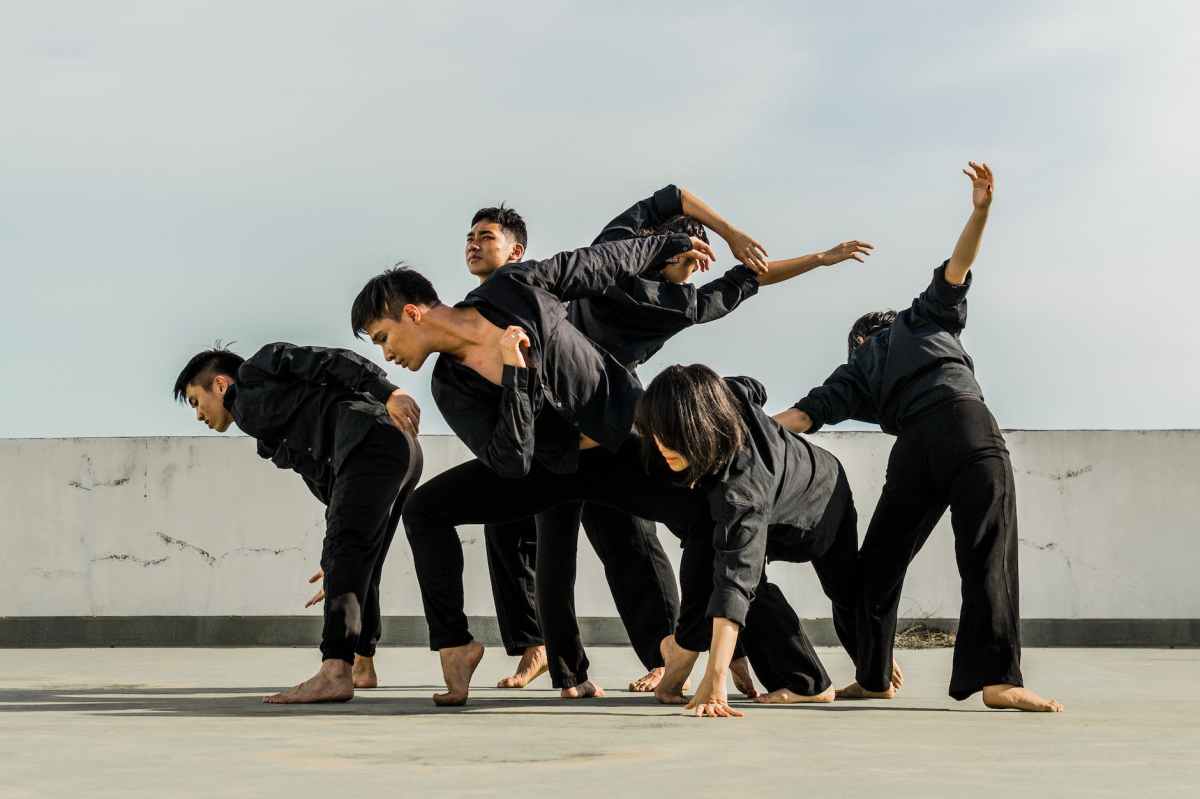
Dancing seems to be a human attribute, not necessarily linked to just Christianity[3], it is a gift from God that can be used in the manner expressed here; to be a human means of expressing our God-given joy through our bodies. While dancing can be done alone, when done in community it can help to bind participants together. Joy and community are part of God’s purpose for us. We are tasked as God’s image-bearers to be his representatives and stewards. But our tasks are not to be burdensome but rather they are meant to be joyful. If you will, our tasks are meant to be a joyful dance we do with each other and with our Creator.

For us to dance the Kingdom Dance we don’t have everything figured out, He does. We don’t even have to worry about the results of the dance because the results are not dependent on us but on Him, who is working through us. As much as we have messed things up and will continue to do so, He will ultimately restore us and the rest of creation, making us all into what He had intended from the beginning.

Among all the creatures that God created, we are uniquely made, even if we are not the physical center of the universe as some people may have thought at one time. Through the pursuit of science, we now have instruments that make it very clear that we are not physically at the center of everything, not that we can prove anyway. We are only specks on a small planet spinning around a star in an apparently random solar system in an apparently random galaxy in a universe we cannot even see the edges of. Although we don’t know where the center is, the universe seems to have been created with us in mind. The properties of the universe, the physical constants, the atomic structures, were all created such that it would support our existence.[4] Interestingly, although we are creatures made of the stuff of the universe, not only can we study and reflect on the properties of that stuff, but we can also study and reflect on and even reflect the one who created us.

In the meantime, we do not know when He will return, and we find ourselves in the middle, in-between those two times, between the beginning of the restoration of God’s kingdom on earth and the time when it will be fully accomplished. In this in-between time, sometimes we see some signs of God’s restoration – and sometimes we can’t – and it’s hard to figure out what God is doing, especially when there are times that He seems to be absent. In those times, we need to call upon our faith to hold onto the hope that God is still working out His plans. We need to recall all the times that we did see Him at work, and then we also need to remember that getting to the end of the plans that He intends for us may require some pain on our part just as it required pain on His part. And like Him, our pain will be ultimately overwhelmed with the glory that will be revealed.

Our ultimate destination is not a mere returning to the way we started out, but to the full flourishing of our potential, where God will establish a kingdom of image-bearers released to display God’s character and reflect His glory.

“And salvation only does what it’s meant to do when those who have been saved, are being saved, and will one day fully be saved realize that they are saved not as souls but as wholes and not for themselves alone but for what God now longs to do through them. The point is this. When God saves people in this life, by working through his Spirit to bring them to faith and by leading them to follow Jesus in discipleship, prayer, holiness, hope, and love, such people are designed—it isn’t too strong a word—to be a sign and foretaste of what God wants to do for the entire cosmos. What’s more, such people are not just to be a sign and foretaste of that ultimate salvation; they are to be part of the means by which God makes this happen in both the present and the future. That is what Paul insists on when he says that the whole creation is waiting with eager longing not just for its own redemption, its liberation from corruption and decay, but for God’s children to be revealed.” [5]

With that in mind, we can not only wait and hope. We can participate with God in bringing His kingdom to earth and bringing a taste of healing and hope into a broken world that desperately needs it.

“Within the biblical story, the Christian discovers a constant call for justice on behalf of the weak and forgotten. In the biblical tradition, justice is an aspect of God’s shalom, a notion that carries with it the idea of completeness, soundness, well-being, and prosperity, and includes every aspect of life – personal, relational, and national.”[6]

The suffering and pain in the world can be overwhelming, challenging our ability to maintain hope and persist in our effort as we try to bring shalom. That challenge forces us to focus on the taste of shalom that God has given to us knowing that it is just a foretaste of the fullness of the shalom that awaits us in the fully restored earth.


[1] See Appendix G – The contributions of the Church for some examples

[2] Schurr, Hildegunn Marie T. “Dancing Towards Personal and Spiritual Growth” Nordic Journal of Dance – volume 3, 2012 (pp. 31-40)

[3] La Mothe, Kimerer. “The dancing species: how moving together in time helps make us human” Aeon aeon.co/ideas/the-dancing-species-how-moving-together-in-time-helps-make-us-human

[4] Slezak, Michael. “The human universe: Was the cosmos made for us?” New Scientist, 29 April 2015. www.newscientist.com/article/mg22630190-400-the-human-universe-was-the-cosmos-made-for-us

[5] Wright, N.T. Surprised by Hope, Rethinking Heaven, The Resurrection and the Mission of the Church. Harper Collins 2008. Kindle Edition

[6] Katongole, Emmanuel. Rice, Chris. “Reconciling All Things: A Christian Vision for Justice, Peace and Healing,” Intervarsity Press, 2009 (p. 72)

Reflect

Think about how the universe seems designed for us, our capacity to think about and explore it and then think about our capacity to reflect on the One who created it all. What does that suggest to you about what God has intended for us?

Observe

Read Hebrews 12. What does this passage say about how we should be living now?

Brooding, moving, dancing

Dancing in the Kingdom- Table of Contents

Dancing In the Kingdom – Part 1 – Shadows of the Kingdom – Chapter 1 – Prelude

Brooding, moving, dancing

[Bible references: Genesis 1; Jeremiah 29:11; Romans 8:19-21; Galatians 3:13-14; Ephesians 3:20; 1 Peter 5:10]

In the beginning, God created the heavens and the earth … and the Spirit of God brooded[1] over the face of the waters …

Like a bird sitting on eggs keeping them warm until the eggs would hatch and bring forth new birds, the Spirit hovered, brooded, over the earth ready to bring forth life of all sorts, but particularly creatures that would be like God, creatures that would reflect the character of God: transcendent, loving, wise, fruitful, etc. This is how the story begins, full of anticipation and hope for what must be a grand and wonderful future. But even before the story begins, we may contemplate another mystery, the mystery of how there can be one God and also three persons identified as God: God the Father, God the Son, and God the Holy Spirit. The early church[2] struggled with this concept and eventually, in the second century, a Christian apologist, Tertullian, coined the term “Trinity” to describe this 3 persons in 1 God concept.

However, that tidy little term can mask over the impossible to understand idea of God being one person and three persons at the same time. There is Greek word available to us that addresses the complexity of this three-in-oneness, “perichoresis[3] which comes from two Greek words which mean “around,” and “to give way” or “to make room.” This is meant to describe the interpenetration or mutual indwelling of Father, Son, and Holy Spirit.

“In that regard the term “perichoresis” (meaning “interpenetration,” “circumincession” or “mutual indwelling”) has been used theologically at least since the time of John of Damascus to refer to the way the three divine persons live in joyful, dynamic communion without merging, loss, or distinction. It is said to be derived from the Greek term perchoreuo meaning “to dance around.” However, the evidence indicates that the term is derived from the different though similar looking perichoreo which refers to “interpenetration” but does not refer to dancing…. this does not mean that the concept itself is inappropriate, as evidenced by those who appreciate its use in that way.” [4]

While this term may be partly helpful in understanding this impossible to understand concept, there is another word that is very similar to another Greek which means “to dance around,” which gives us a word picture of our living and complex God in which the Father, Son and Holy Spirit not only interpenetrate but interact with one another, in a freewheeling but synchronized dance. This means that, as God’s image-bearers, we can reflect the image of the loving, interpenetrating, interacting, and dancing God as we participate in His work of taking care of His Creation and of one another.[5]

This dance which started before Creation, has been joined by God’s image-bearers since the beginning of humanity. It is now our turn. We just need to learn the moves and join the dance.


[1]  Biblehub “Genesis 1:2” Bible Hub biblehub.com/commentaries/genesis/1-2.htm Most translations or this phase use the terms “hovering” or “moving,” but there is also a case for using the term, “brooding,” as in a bird sitting on a nest of eggs.

[2] Van Ee, Joshua J. “The Church in the Old Testament” Westminster Seminary California 9 Nov 2017 www.wscal.edu/blog/the-church-in-the-old-testament The term “church” as used in this book will refer to what may more properly be called the “new testament church.” I wish to make that distinction because the term “church” may be properly applied to all of those who are “called out” to follow Yahweh.

[3] Compelling Truth. “What is the meaning of ‘perichoresis’?” Compelling Truth www.compellingtruth.org/perichoresis.html

[4] Edgar, Brian. “The God Who Plays: A Playful Approach to Theology and Spirituality,” Cascade Books 2017 (e-book) Chapter 9: Kingdom: Playing with God, The Dance of Life

[5] Miller, Darrow. “Perichoresis: Great Dance of God and Creation” Darrow Miller and Friends 16 July 2018 darrowmillerandfriends.com/2018/07/16/perichoresis-great-dance-god-creation/

Observe

Read Genesis 1.  Think of the Spirit of God hovering, moving and brooding over the earth. In your imagination, think about a spiritual being “giving birth” to physical living things, what would you expect to happen?

Reprise with variations

Dancing in the Kingdom- Table of Contents

Dancing In the Kingdom – Part 1 – Shadows of the Kingdom – Chapter 1 – Prelude

Reprise with variations

[Bible references:  Genesis 1; Psalm 8; 111; Exodus 8:16-19; John 21:1-14; Romans 8:19-22; 1 Corinthians 15; 1 Thessalonians 4; 5; 2 Peter 3; Revelation 21-22]

“The creation of the world seems to have been especially for this end, that the eternal Son of God might obtain a spouse towards whom he might fully exercise the infinite benevolence of his nature, and to whom he might, as it were, open and pour forth all that immense fountain of condescension, love, and grace that was in his heart, and that in this way God might be glorified. [1]

God created the universe for his glory, and within that, humans were created to experience the true joy of living, to bear the fruit of His nature, to reflect His presence. We are designed to be image-bearers of God himself, stewards of the creation He inserted us into as we reflect the very character of God. The exercise of stewardship is seen in the process of “subduing” and “having dominion” over the earth (its creatures and it resources), and in being “fruitful” and filling the earth. God’s initial reaction to creating us was, “It was very good.” His intent was that we would fill and take care of the earth, all the while reflecting His character to each other and to His creation.

In the beginning, heaven and earth were joined at the Garden of Eden. It was a place where the Creator could have communion with his image-bearers and walk in the garden with them. The garden was the perfect place for the image-bearers to develop and begin working out the intended future of filling the earth and ruling over it as co-regents with God.

He gave us unimaginable delight and freedom, but that very freedom He gave us was joined to a responsibility, a responsibility that was wrongly used and caused immense far-reaching damage – damage we could not possibly undo – the whole universe is groaning, waiting for to be restored. Our pride-laden rebellion damaged the relationships between each other, between us and God, between us and the world and even between heaven and earth; but God had a plan from the beginning, a plan which is now underway, to ultimately restore what was lost and undo that damage[2] and bring us to our intended destination – an earth filled with and ruled by image-bearers and where heaven and earth are rejoined so that the image-bearers can walk with God once again.

“Jesus’ own teaching during his brief public career simply reinforced the Jewish picture. He redefined a lot of ideas that were current at the time – notably, of course, kingdom of God itself, explained in many coded parables and symbolic actions that God’s sovereign, saving rule was now breaking in, even though it didn’t look like what his contemporaries had imagined and wanted.”[3]

Ultimately, we will be freed from the bondages of sin and death and all the relationships that are now damaged will be restored. In fact, in a timeline that we cannot fully grasp, God waited from the beginnings of mankind until 2000 years ago to defeat the power of sin and death and begin the process of restoring His kingdom on earth. Then He told us that someday, he will complete that process and he will return in the fullness of his glory to fully restore all things at that time. We just don’t know when that will be.

Our hope looks at the resurrection of Jesus as a harbinger of the resurrection that awaits all those of us who will be united with Him in our own transformed bodies in the new heavens and the new earth.

‘… what is the ultimate Christian hope? …what hope is there for change, rescue , transformation, new possibilities within the world in the present … if the Christian hope is for God’s new creation, for “new heavens and new earth,” and if that hope has already come to life in Jesus of Nazareth, then there is every reason to join the two questions together … “God’s kingdom” in the preaching of Jesus refers not to postmortem destiny, not to our escape from this world into another one, but to God’s sovereign rule coming “on earth as it is in heaven.” [4]

Furthermore, our hope doesn’t ask for us to simply wait for that time when the Kingdom of God is fully restored, but that we can be part of God’s plan to bring the Kingdom of God into our broken world.


[1] Edwards, Jonathan, “Works of Jonathan Edwards, Volume Two,” SERMON II. THE CHURCH’S MARRIAGE TO HER SONS, AND TO HER GOD. Ed. John E. Smith, Yale University Press, 2009(p. 62)

[2] Bible Project “Pursuing God, Heaven and Earth,” Bible Project www.pursuegod.org/biblical-themes-an-animated-explanation-of-heaven-earth

[3] Wright, N.T. “Surprised by Hope: Rethinking Heaven, The Resurrection, and the Mission of the Church” Harper Collins 2008. Kindle Edition(p. 18).

[4] Wright, N.T. “Surprised by Hope” Harper Collins 2008. Kindle Edition (pp. 4-5, 18)

Reflect

Speaking strictly from what we know from science, we seem to be random life forms on a random planet in a random spot in the universe. In that perspective, having an anthropocentric view of the universe seems absurd. But knowing what the Creator of heaven and earth has revealed to us, the universe was designed to be inhabited … by us! How does that change your view of the universe?

Observe

Read John 21:1-14. What does this passage suggest about our resurrection bodies?

Looking back – signs and shadows of the kingdom

Dancing in the Kingdom – Table of contents

Part 2 – The kingdom revealed, Chapter 10 – The kingdom enters – hope revealed, unleashing shalom

[Bible references: Genesis 6:5-7; Exodus 25:17-22; Leviticus 16; Joshua 24:19; 2 Kings 17:6; 2 Chronicles 36:17-24; Ezra 1-2; Psalm 14:2; 53:6; Isaiah 43; Jeremiah 29:10; 31:31-39; Matthew 4:12-17; Romans 7:7-24; 8:20-22; Colossians 2:16-17; Hebrews 8:5; 10:1, 5-10; Revelation 21-22]

In the beginning, God created a good earth. Within that good earth, Yahweh created a special place, the Garden of Eden, where he could meet and live with the creatures that bore his image. The Garden was a place where the heaven and earth overlapped, a place where the goodness of Yahweh overflowed, a place of shalom, a place where his image-bearers were intended to thrive and develop as co-creators with Yahweh and ultimately create a civilization that would cover all the earth to the glory of God.

Perhaps the most fitting symbol of the development of creation from the primordial past to the eschatological future is the fact that the Bible begins with a garden and ends with a city – a city filled with “the glory and the honor of the nations.[1]

However, the image-bearers put Yahweh’s authority to the side and rebelled against him. The rebellion disrupted the union of the Yahweh’s kingdom with his creatures and all of creation was put into disorder. Human space and Yahweh’s space were separated and all of creation was damaged, including not only the relations between Yahweh and his image-bearers but between the image-bearers themselves.

In the Bible, the themes of heaven and earth can be thought of as heaven being God’s space and the earth being the human space. It may be helpful to think of them as different dimensions that overlap. In this case, the Garden of Eden was where the two spaces overlapped, and God and man could dwell together. In the garden the humans were to be partners with God taking care of this garden, however they decided to do things their own way rather than God’s. This resulted in the humans being ejected from the space where heaven and earth overlapped, and the remaining story of the Bible is about how God is once again going to bring heaven and earth back together.[2]

The image-bearers found themselves in an increasingly vicious cycle of violence and corruption which was so thorough that God needed to restart his project and caused a great flood. Fortunately, out of his deep love for his rebellious image-bearers, Yahweh had a solution in mind, a plan to reunite heaven and earth, extending his kingdom over all the earth.

Yahweh set processes in place that led to Abraham and Sarah, continued through to the other patriarchs, and then continued with the nation of Israel. Under Moses’ leadership and with the guidance of the Holy Spirit, the tabernacle was constructed to be the place where heaven and earth would overlap within the Holy of Holies. The temple was decorated and designed to make people feel like they were going back to the garden.

The difficulty was that God’s space is perfect, pure, just, and holy but the human space is full of sin and corruption. This problem was somewhat resolved through the sacrifice of animals, where the animal absorbed the sin of the people and died in their place, creating a clean space, but that clean space was limited. Within the Holy of Holies, the mercy seat on the ark was where God’s presence would be but could only be accessed once a year by the high priest.

However, the tabernacle with all its rituals were designed to only be a shadow of things in heaven and a shadow of the things that were coming. Yahweh’s relationship with his image-bearers were to be ultimately restored and all of earth would be joined with Yahweh’s kingdom in heaven as was intended from the beginning.

In the meanwhile, in those shadows of the coming kingdom, Yahweh worked within the nation of Israel, his chosen people, to gradually reveal signs of his intended restoration. Within those shadows, the people of Israel could see the futility of their own efforts to reconcile with Yahweh despite their denial of the reality of Joshua’s words, “You are not able to serve Yahweh.” Within those shadows, the nation of Israel would rebel against the kingship of Yahweh, rejecting his reign and insisting on creating their own kingdom, like “all the other nations.”

The nation was reminded time after time that the law was good, but they were not, that their continual animal sacrifices were never a permanent solution to reconciling with Yahweh, that they needed a redeemer, they needed a change of heart. Prophets were raised up to warn the people of the consequences of their continual rebellion, but they also delivered messages of hope that, despite their rebellion, God would restore his people to himself.

Then the promised judgement for their rebellion came: Most of the nation was lost to history as ten tribes of Israel were scattered through the Assyrian empire, and then the temple was destroyed, and a remnant of the remaining tribes were sent into exile in Babylon. If there was any hope that the ritual sacrifices at the temple could reconcile the people with Yahweh, now even that possibility was taken away. The restoration of their own kingdom seemed to be in doubt, never mind the kingdom of Yahweh.

However, the exile was promised to be temporary. After 70 years, the exiled nation had the opportunity to return to the Promised Land and rebuild the temple. Once the temple was rebuilt it was now possible for the temple worship to continue and even for their government to be restarted, although it would be under the auspices of a foreign nation. Yet in all that happened, one thing had not changed; the hearts of the image-bearers had not changed. There was still a need for a redeemer. Yahweh left clues through the prophets and the writings of his people about what to look for in the redeemer – but after Malachi, the last prophet that Yahweh would speak through, there would be a wait of four hundred years.


109 Wolters, Albert M. Creation Regained: Biblical Basics for a Reformational Worldview (Kindle Locations 581-583)

[2] Bible Project “Heaven and Earth”

Reflect

God works his plans out in his own time but the processes that he uses take place in our time: Animals and plants grow from seed to mature adult according to biological processes. We grow from child to adult according to normal biological, psychological, and sociological processes. Civilizations mature according to normal technological, psychological, and sociological processes. God was going to send the long-awaited Messiah after certain events occurred. What do you have a hard time waiting for?

Observe

Read Matthew 4:12-17; Colossians 2:16-17. The Old Testament laws, sacrifices and rituals were shadows of what?

Chapter 7 – The Prophets and Writings

The Impossible Dance – Table of Contents

The Impossible Dance – Chapter 6 – A Nation Settles

Messengers of a Greater Power

During the entire time when Israel had kings, it also had prophets. Some prophets like and Elijah and Elisha did not leave any writings, although sixteen prophets did. The prophets focused more on “forth-telling” (telling about changes that the kings and/or the people needed to make immediately) than “fore-telling” (telling about some future events) and were a constant reminder that God was acting in ways that transcended the earthly kingdom. Sometimes the prophets were there to encourage and sometimes to challenge the kings: The prophet Samuel anointed Saul as king, then later had to let Saul know that God had rejected him. Samuel also anointed David as king. Later, the prophet Nathan let David know that God was aware of David’s sin with Bathsheba.

The Prophets of the Old Testament were precursors of the prophetic ministry of Jesus. And now the Church, as the Body of Christ, has the privilege of carrying on that ministry.

Challenging Unfaithfulness

Sometimes the prophet’s warnings would be not just for the kings but for everyone in the kingdom. The messages from the prophets often mixed the foretelling of the consequences for rejecting God with the hope that God will someday make things right. The most common offense cited by the prophets was the people’s lack of justice and how their ritual sacrifices were useless if they ignored justice. There were also diatribes against false prophets and against making idols. The most common metaphor used to describe Israel’s unfaithfulness to God and his commands was prostitution, even to the point where God told the prophet, Hosea, to marry an adulterous woman to be a visible reminder for Israel.

Lament and Anger

God’s response through the prophets was to lament. There is even one entire book lamenting what happened to Israel. The lamenting would include pleas for Israel to repent and turn back to God. But then Israel’s continued sin would then be followed by God’s anger and God’s promise to root out, pull down and destroy Israel or any other nation around Israel that engaged in sin. Sometimes God used other nations to discipline Israel followed by threats to those same nations for their sinful own behavior.

Future Hope

But in the end was God’s promise to restore his kingdom and bless all those who repent. God even sent one prophet, Jonah, to a Gentile nation to call them to repent or be destroyed. When they did repent, God held back his punishment – although history tells us that God destroyed them when they went back to their old ways.

The strange story of the ark and the tabernacle

The Ark in the Promised Land

After Israel entered the Promised Land, Israel placed the tabernacle and all its furnishings in Gilgal. After Israel had settled in the land, the tabernacle was then set up in Shiloh where it stayed for two hundred years. During the time of Samuel, Samuel’s sons, without consulting God, removed the ark from the tabernacle to take it into battle with the Philistines who not only won the battle but took the ark with them. The Philistines found that although Yahweh did not see fit to help Israel win the battle, Yahweh did create issues with the Philistines. The Philistines responded by moving the ark a couple of times, but the problems did not disappear and so they sent the ark back to Israel.

The ark initially ended up in Beth Shemesh, but after 70 people died when they tried to look in the ark, the people of Beth Shemesh sent the ark to Kiriath Jearim where it stayed for 20 years. The Bible is not explicit about when it happened, but sometime during the reign of King Saul, the tabernacle, sans the ark, was moved to Nob and then to Gibeon.

After David established the capital in Jerusalem, King David set up his own tabernacle and then moved the ark there. In moving the ark, David had to learn a lesson. He first tried to have the ark carried in a cart, but when the ark started to slip out of the cart, the people died who touched the ark to prevent it from slipping out. So, the ark ended up in Obed-Edom’s house for a while. Hophni and Phineas learned the hard way that you don’t necessarily take the presence of God when you take the ark, but David learned the hard way that you can’t ignore the presence of God when you take the ark. David was successful in moving the ark to Jerusalem after he had the ark moved according to the instructions God had given Moses.

The Tabernacle and the Temple.

When Solomon was king, he oversaw the building of a temple to replace the tabernacle. A foreigner from Tyre named Hiram built all the furnishings except the ark itself. The original furnishings of the tabernacle were possibly put into storage in the temple. Even though the temple was much more grandiose than the tabernacle, Solomon recognized that it still could not hold God. Some years later, the Babylonians would destroy Solomon’s temple.

The interesting thing with this history is that during the time of King David all the rituals of Moses were conducted at the tabernacle in Gibeon where there was no ark and no presence of God, while the ark itself, with the presence of God, was in Jerusalem where there was a service of joy, dancing and singing instead of the ritual sacrifices. Also, the ark was no longer concealed in the Holy of Holies where there was limited access, it was now in a place where everyone could access it.

This brings us to the prophet Amos who prophesied that God was going to destroy most of Israel, except for a remnant, and that He would restore David’s tabernacle– not the one at Gibeon, not the temple Solomon built, but David’s tabernacle. In Acts 15, the Bible records that the apostles quoted this passage from Amos because they determined that Amos was referring to Gentiles now being accepted into the kingdom of God. The tabernacle of Moses and the temple of Solomon were restricted to the nation of Israel, but God was now going to make himself available to the entire world, Jews, and Gentiles alike.

Diaspora

The term “diaspora” usually refers to a group of people that has been scattered from a specific location. In this case, the term refers to the scattering of Jews from the Promised land. But this particular diaspora is only a part of God’s larger plans for His people.

Our God is a God of overflowing love. His love caused Him to create us so that His love could overflow from Himself to us. He wanted His image-bearers to accomplish His mission of overflowing love and overflow from Eden to fill the entire earth. When we rebelled against His overflowing desire so that we could make a name for ourselves instead, He confused our language at Babel so that we would continue to flow out over the earth. When God wanted to prepare His Holy Nation for His mission, He scattered them to Egypt. When Israel rebelled against His mission of overflowing love, He scattered them from the Promised Land. The Son of God came in overflowing love to offer Himself in sacrifice in order to restore us to Himself. When the scattered Jews from many nations gathered for Pentecost, God reversed the action of Babel, and the apostles shared His message of overflowing love in many languages so that the message would be carried to the Jews in many nations. To continue the overflow, God guided Peter and Paul so that His love could flow out to the Gentiles as well. God further ensured the flowing out by using the Romans to scatter both Jews and Christians from Jerusalem. To this day, when our focus is more on building our Christian institutions, becoming too ingrown, God continues to scatter His people so that His message of overflowing love will reach more people in more places across the earth.

This program of overflowing creates a Dynamic Tension between our scattering and our unity. It would be well if our scattering were motivated by love so that we would continue to stay unified as we scatter. Sadly though, our scattering is often due to divisiveness rather than love, countermanding the intent that the world will recognize that we are disciples of Jesus because of our love.

Judgement Unfolds

The covenant God made with Israel had the proviso “if you follow my commands.” Israel continually demonstrated its inability to do that by its continuous practice of polytheism and God’s judgement followed. The nation of Israel would suffer the consequences. The first sign of the consequences manifested itself in the splitting of Israel into two kingdoms.

After that, the northern kingdom of Israel was the first to collapse in 535BC with the invasion of the Assyrians whose policy was to scatter the captured inhabitants throughout their empire and replace them with Assyrians. These northern tribes seem to have been totally assimilated into the Assyrian empire and they would not be heard from again in history.

In 722BC, the Babylonians conquered the southern kingdom of Judah and took the best and the brightest of Judah as captives to the capital of Babylonia for “retraining” so that they could contribute to the Babylonian society. It was at this point that the nation of Israel would now be referred to as Jews. It was from this point on that, despite the return of some of the Jews to their homeland, most Jews would now be living outside their homeland.

Worship in exile

During this exile, the Jews as they would now be called, had to become more deliberate if they were going to preserve their culture. It was during this time that the Jews would begin to collect all their writings in order to begin to determine what would be their scripture. They had the writings of Moses, but they had to determine what else should be included in their scripture.

During this time, they focused more seriously on worshipping Yahweh. Before this time, the biblical and archeological records indicate that Israel had a habit of adopting the worship of any idols of the culture they were in contact with. But now they had to preserve their culture while living amid a dominant foreign culture. Although the origins are a little obscure, as temple worship was no longer available, synagogues as a permanent institution developed during the exile.

The books of Daniel, Esther and Ezekiel give examples of how the Jews were able to thrive, even while experiencing opposition, while the nation was in exile: Daniel as an exceptional administrator, Esther as queen to the emperor and Ezekiel as a prophet.

From this time forward, most Jews have remained outside their homeland with no access to the one temple in Jerusalem. It was during this time that the Jews created local synagogues, with worship now focused either in the home or at the synagogue.

Return

Assyria scattered the Northern Kingdom then the Babylonians overran Assyria, captured Jerusalem, and took the prominent citizens into exile. After the 70 years in captivity prescribed by God had passed, the Persians overran Babylonia and allowed the Jews to return to their homeland. The first batch of returnees went back with Zerubbabel to Jerusalem to rebuild the temple. A second batch would go back to Jerusalem with Ezra who confronted the Jews about their failure to keep separate from the nations around them. A while later, Nehemiah would go back to Jerusalem to rebuild the walls. And yet, with all the returnees, the majority of the Jews chose to remain in Babylonia – and even today, most Jews live outside the Promised Land.

In another reminder of God’s provision, the rulers of the Persian empire strongly supported the Jews as they returned to Jerusalem, giving them what they needed. God even provided prophets to encourage the Jews.

In a reminder of the times when Moses collected contributions to build the tabernacle, contributions that the Egyptians gave to the Israelites as they fled Egypt, the people returning to the Promised Land with Zerubbabel willingly contributed from the provisions that the Persians gave to them for the rebuilding of the temple.

In a reminder of their own inability to follow Yahweh, when the Jews first returned to the Promised Land they ended up once more intermarrying with the non-Jews and following the practice of idol worship. So, when Ezra came to Jerusalem, he had to lead the Jews to repentance and to put away their foreign wives.

Then, in the end, God would send one last prophet, Malachi, who had words of condemnation of Israel for all the sins committed and of the promise to restore everything because that is what he promised. After the prophet Malachi, God did not raise up another prophet for Israel until Jesus came. That prophetic silence would last four hundred years.

Songs and reflections of the heart 

As creatures made in the image of the Creator, it is self-evident that we cannot avoid creating. We are also creatures that are born to worship, as even our popular culture makes very evident. When we put those together, we get a work like the Psalms, a book of poetry which was set to music. The psalms are a collection of praise songs written by various people. They are songs that reflect the thoughts of those people experiencing life with all its emotions in a broken world.

In addition to musical notations, several psalms have notations indicating the events which inspired the writing of those psalms. Some of the psalms have notations indicating the kind of occasions in which the psalms would be used. As poetry, the psalms use various poetic devices such as parallelism, acrostics, and figures of speech.

The Psalms express various themes such as the character of God, the experience of people, the worship of God, lament, petitions for help, confession of sin, praise and thanksgiving, expressions of wisdom. The emotions expressed in the Psalms are sometimes very raw with feelings of abandonment, questions of God’s provision, hatred, and vengeance. Yet all these expressions are included in that book of praise songs. The inclusion of the full range of human expression is an acknowledgement of the reality of the human experience and an affirmation of being honest with God about our feelings while placing all of that in the context of a just and merciful God who is worthy of praise.

The Psalms are not the only place where one can find poetry in the Old Testament. Poetry can also be found in various portions of other books of the Bible. There is even one book of the Bible that is entirely a poem/song, The Song of Solomon (aka Song of Songs) which is a positive and passionate expression of marital love.

Wisdom can also be found in the Psalms and other places as well. The pair of books, Proverbs and Ecclesiastes, show the benefits of and limits of wisdom. Solomon was the author of Ecclesiastes and was the primary author of Proverbs. In 1 Kings 3-4, God grants Solomon’s request for wisdom to rule the nation, but God also grants Solomon much more. Proverbs reflects that wisdom as a collection of rules to live a good life. On the other hand, Ecclesiastes reflects the limits of wisdom in finding the meaning of life.

Silence and waiting

After the time of Nehemiah and Malachi, there were no more explicit words of prophecy from Yahweh until the coming of Jesus. And in this time of silence from God, there was much turmoil.

  • The Greek Empire would overtake the Persian Empire and therefore Israel.
  • When the Greeks desecrated the temple, there was a revolt led by a Jewish family, the Hasmoneans, who successfully overthrew the Greeks. Hanukah is a celebration of the miracle that took place in the temple.
  • The Roman Empire would overtake the Greek Empire and the Hasmonean kingdom in Israel. Despite the Romans taking over, the Greek language and culture became part of the infrastructure of the Roman Empire.
  • The exact origins are unknown, but some of the Jews would adopt the Greek culture, becoming Hellenized. The aristocratic leaders of these Hellenized Jews would become the Sadducees. In opposition to the corruption of Judaism brought in by the Sadducees, a group known as the Pharisees arose. These two groups were still active when Jesus broke into history.

In the midst of God’s apparent silence, all this activity indicates that God is still working. Several times in the Old Testament, God pointed out that, despite everything else going on, there was still a remnant of people with which he was still working. No matter what the situation is, no matter how good or how bad things seem to be, God is always working on his plans, and he is always preparing, however quietly and behind the scenes, for the next step.

Questions:

  1. Read Zechariah 7. What words of warning does Zechariah pass on to the people who were not faithful to God?
  2. Read Isaiah 10:5-11. Here, God is chastising a “godless” nation, Assyria, which He used to discipline His own chosen nation, Israel, which had also behaved godlessly. Both nations will suffer the anger of God. God uses both nations to accomplish His will. What is the warning and hope in that for us?
  3. Read 1 Samuel 4:1-11; 2 Samuel 6:1-7. What do these passages tell you about the presence of God?
  4. Read Jeremiah 25:11-12. It seemed hopeless. The unfaithful nation of Israel was no more. But a faithful God made promises to eventually restore them. What are God’s promises to us?
  5. Read Jeremiah 29:1-23. What did Jeremiah say that the exiles were to do while they were in exile?

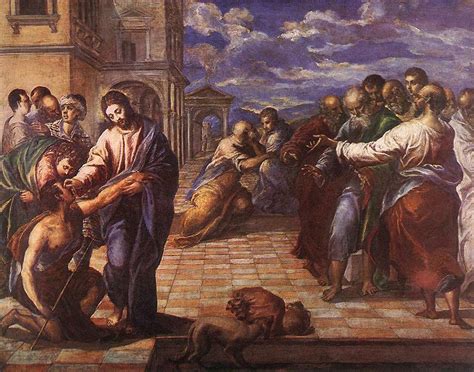
Messengers of a Greater Power

Dancing in the Kingdom – Table of contents

Part 1 – Shadows of the Kingdom, Chapter 9 – The Prophets and Writings

[Bible references: 1 Samuel 9-10; 13:8-14; 2 Samuel 12; Jeremiah 2:28]

During the entire time when Israel had kings, it also had prophets. Some prophets like and Elijah and Elisha did not leave any writings, although sixteen prophets did.[1] The prophets focused more on “forth-telling” (telling about changes that the kings and/or the people needed to make immediately) than “fore-telling” (telling about some future events) and were a constant reminder that God was acting in ways that transcended the earthly kingdom. Sometimes the prophets were there to encourage and sometimes to challenge the kings: The prophet Samuel was used to anoint Saul as king, then later had to let Saul know that God had rejected him. Samuel was also used to anoint David as king. Later, the prophet Nathan was used to let David know that God was aware of David’s sin with Bathsheba.

When we look at Jesus’ life and ministry, we see that he is uncompromisingly prophetic in a whole host of ways:

  • He is the revelation of the Father: he perfectly shows us what God is like.
  • He is the Word of God in flesh.
  • He is the mediator of the New Covenant between God and people.
  • He confronts evil and breaks the power of sin.
  • He calls people to return to God and live righteously.
  • He speaks truth to power (both religious and secular).
  • He only does what he sees the Father doing.
  • He is led by the Spirit and ministers in the power of the Spirit.
  • He prioritizes prayer and worship.
  • He speaks prophetically of the future.
  • He discerns the hearts and minds of people.
  • He challenges injustice and unrighteousness.

Jesus is the perfect expression of the prophet and so gives us the blueprint for a mature, holistic, multi-faceted way of being the prophetic church. We need to be prophetic in the way that Jesus was prophetic. Not just as individuals but as a Body with a collective prophetic consciousness.[2]

The Prophets of the Old Testament were precursors of the prophetic ministry of Jesus. And now the Church, as the Body of Christ, has the privilege of carrying on that ministry.

Challenging Unfaithfulness

[Bible references: Deuteronomy 16:18-20; 2 Chronicles 29:6; Isaiah 1; 56:1; Jeremiah 5:31; 28; Hosea 1:2; Amos 9:1-15; Zechariah 7]

Sometimes the prophet’s warnings would be not just for the kings but for everyone in the kingdom. The messages from the prophets often mixed the foretelling of the consequences for rejecting God with the hope that God will someday make things right. The most common offense cited by the prophets was the people’s lack of justice and the uselessness of their ritual sacrifices if justice was ignored. There were also diatribes against false prophets and against making idols. The most common metaphor used to describe Israel’s unfaithfulness to God and his commands was prostitution, even to the point where one prophet, Hosea, was told to marry an adulterous woman to be a visible reminder for Israel.

Lament and Anger

[Bible references: Lamentations; Genesis 15:12-15; Isaiah 10:5-11; 13:1-22; 15-1622:19; Micah 5:14]

God’s response through the prophets was to lament. There is even one entire book lamenting what happened to Israel. The lamenting would include calls for Israel to repent and turn back to God. The pleas for repentance would then be followed by God’s anger and God’s promise to root out, pull down and destroy Israel or any other nation around Israel that was involved in sin.[3] Sometimes God used other nations to discipline Israel but that was usually followed with threats to those same nations for their own behavior.

Future Hope

[Bible references: Jeremiah 29:11; Jonah]

But in the end was God’s promise to restore his kingdom and bless all those who repent. One prophet was even sent to a Gentile nation to call them to repent or be destroyed. When they did repent, God held back his punishment – although history tells us that they would go back to their old ways, and they would eventually be destroyed.


[1] Isaiah, Jeremiah, Ezekiel, Daniel, Hosea, Joel, Amos, Obadiah, Jonah, Micah, Nahum, Habakkuk, Zephaniah, Haggai, Zechariah, Malachi

[2] Accessible Prophecy, “Understanding the Prophetic Function” /

[3] Ex: Prophecy against Assyria (Isaiah 10:5-11), Babylon (Isaiah 13,), Moab (Isaiah 15-16) and others

Messengers of a greater power

Reflect

Based on what we know about the role of prophets, how should today’s churches carry out the prophetic function within our church or within our surrounding culture?

Observe

Read 1 Corinthians 2:6-16; 2 Corinthians 4:1-12. The Church is the visible representation of the Body of Christ, as such one of the Church’s prophetic functions is to reveal God to the world. How can we do that?

Challenging unfaithfulness

Reflect

Israel’s unfaithfulness to God was often referred to as prostitution. Does this help put your own unfaithfulness to God in perspective?

Observe

Read Zechariah 7. What words of warning are given to the people who were not faithful to God?

Lament and anger

Reflect

How does knowing God’s attitude towards sin affect our attitudes?

Observe

Read Isaiah 10:5-11. Here, God is chastising a “godless” nation, Assyria, which He used to discipline His own chosen nation, Israel, which had also behaving godlessly. Both nations will suffer the anger of God. Both nations are used to carry out His will. What is the warning and hope in that for us?

Future hope

Reflect

Despite Israel’s constant failure, God’s plan was to discipline, not destroy, them. Their discipline would eventually be followed by God’s plan to provide the Messiah, the Savior of the world. What might that mean about God’s plan for you?

Observe

Read Jonah 1-4. Assyria was a fierce nation that was severely violent in its conquering of other nations. Yet, God saw fit to use Jonah to call the city of Nineveh to repentance and then held back his threatened destruction when they responded in repentance.  How do you respond to this act of mercy?

Hope in the brokenness

Dancing in the Kingdom – Table of Contents

Part 1 – Shadows of the Kingdom, Chapter 4 – Deforming the intended direction for creation

[Bible references: Genesis 2:16-17; 3:14-15, 23; Psalm 4; Hebrews 1:1-4]

Everything was broken and separated from God. Spiritual death, the impaired relation between God and His image-bearers was immediate and would be mirrored by the physical death caused by separation of the people who would no longer have access to the Tree of Life. This was a great tragedy that could not be undone, not by the image bearers. But as we look around us, we can see that, despite the tragedy around us, things aren’t totally bad. Even though evil is very evident around us, goodness is also evident. It is in that observation that we can glimpse the possibility of hope.

God had ordained the penalty of death, spiritual and physical, to be the consequence of turning away from him. Spiritual death, the separation God’s image-bearers from God happened immediately, but physical death, the separation of soul and body, did not happen right away. What God did, was to apply discipline to his image-bearers. He also gave a hint of the solution to the problem created by sin, the first of many other hints that were to come.

There was also evidence for hope in the continued creation by God, as he continued to sustain the universe he created, and within that universe He continued to create new living things, plants, and animals alike. Related to that hope, was that the mandate given to the image-bearers was still in force, although there would now be suffering involved in the fulfillment of the mandate.

There was also hope hidden in God’s very name. The name given to us, which was given to Moses and first revealed in Genesis 2, is “Yahweh” (Hebrew, יהוה). In the ancient Hebrew, the characters would have looked a little different and each character would represent an object or action.[1] In Hebrew, the characters are read from right to left. The first character (י) represents a hand or arm and could also represent work or worship. The character (ה) represents a man with arms raised and could also represent displaying or revealing something. The (ו) character represents a nail or tent peg and could also represent fastening something together. So, embedded in the name יהוה is the message “hand revealed nail revealed” – a foretelling of Jesus’ sacrifice on the cross.

The sacrifice of Jesus followed a life in which Jesus successfully waited to receive those things that His Father intended to give, resisting the temptation to grab those things for himself. In his life and death, Jesus successfully accomplished what Adam and all those who came after Adam had not.

In the beginning, we were eager to grasp for ourselves wisdom and the knowledge of good and evil on our own terms. What we didn’t plan on the consequences that would follow. Sometimes God gives us what we think we want even though it would bring us the suffering that God was trying to steer us from. It’s a continuing pattern we see from the beginning until now, that it is not always a good thing when we get what we think we want.


[1] Benner, Jeff A. “Hebrew Alphabet Chart”

Reflect

It’s not hard to see signs of brokenness around us. Are there any signs of hope that can be seen?

Observe

Read Galatians 3:13-14; Ephesians 1:11-12; Jeremiah 29:11; Isaiah 1:26; Matthew 17:11; Acts 3:18-26. Throughout the Bible, God has chosen to share his future plans in pieces at a time. Because of that, what exactly those plans are, have been the subject of much debate within the church. What is your understanding of God’s plans for the future?

Playful and Orderly

Dancing in the Kingdom – Table of Contents

Part 1 – Shadows of the Kingdom, Chapter 3 – The Image-bearers

[Bible references: Deuteronomy 12:1-33:18; Exodus 35:30-38; 2 Kings 17:1-41; Nehemiah 8:1-9:38; Psalm 100; John 4:23-24; Acts 6:1-7; 15:1-35; Romans 12:1-2; 1 Corinthians 14:1-40]

There is much that is wrong in the world. People endure pain and suffering sometimes from natural happenings and sometimes from the actions of others. Evil seems persistent and never-ending. When we are called to serve God in this world, we can become overwhelmed by all the work that is to be done. Playfulness can seem out of place. Particularly, any playfulness that emerges from self-centeredness or obsessiveness.

Actually, that is the point we need to assert. Playfulness can be out of place in a world of sin and evil. But playfulness can also be a reminder that the reality in front of us is not the total reality. Our playfulness arises out of the relationship we have with God, the one who has overcome the evil in the world, who will end the suffering and who will restore us and world to be what he intended from the beginning. Playfulness arises out of the hope and joy we have in knowing that reality in front of us is not the whole reality.

Our imagination can be helpful in this play. As children, we can pretend there is another world and do something like taking a cardboard box and imagining it to be a spaceship and accepting the rules of living in that spaceship. Family traditions (or even community or national traditions) are a form of play, they do not serve a utilitarian purpose, but stem from the creative ways we wish to remember our unique heritage.

This same imaginative playfulness can be useful reminding us of the reality that lies behind our current reality. Our traditions of worship are a form of play, albeit a more serious play. Our worship traditions represent ways for us to remember our spiritual heritage or to provide imaginative ways to perform biblical sacraments about which we have sparse details on how to perform them. These traditions and liturgies help us point to that other reality, a new Kingdom that began breaking into this world with the incarnation of Jesus.

Christian worship was in fact and from the beginning a festival:  the festival of Christ’s resurrection from the dead … Easter begins with a feast, for Easter is a feast and makes the life of those who celebrate it a festal life … Jesus himself compared the presence of God, which he proclaimed and lived, with the rejoicing over a marriage.  His earthly life was a festal life, even if it ended in suffering and death … the early Christians have understood his raising from the dead and the presence of the now-exalted Christ as the beginning of an unending joy and a happiness without end … the risen Christ as ‘the first among those who had fallen asleep’ and as the leader of life; as the leader in the mystic dance and himself as the bride who dances with the others, as the church father Hippolytus put it.  Long before the somber dances of death were painted in medieval times of plague, the figure of the resurrection dance can be seen in the old churches.  The modern Shaker song ‘The Lord of the Dance’ brings out very well the dancing Christ:

I am the life that’ll never, never die;

I’ll live in you if you’ll live in me,

I am the Lord of the Dance, said he.[1]

We hope to participate in the inbreaking of the new Kingdom by living according to its rules. When we pray or worship, we are participating in the rules of that new Kingdom. When we come to others and share with them the hope that we have, we are asking them to use their imagination to look beyond the current reality and envision the new Kingdom that is already here and is yet to come. When we accept contentment in all situations, when we trust in God, when we comfort others with the hope we have, we are living according to the rules of the new Kingdom.[2]

It is also true, that In this present life there are endless encounters with grief. Although we acknowledge the pain and suffering of that grief, whether that grief is ours or others, we can encompass that grief with hope. Even amid grief we can choose to cling to God and to the hope He brings us. If we can live into the rules of the new Kingdom, we can have assurance that the current grief will pass and will be replaced by future joy and laughter and that every tear that we have cried and will cry and even now cry will be wiped away.

Our hope of the new Kingdom allows us to endure the current pain and suffering knowing that the hard experiences can be redeemed and to be used for good. God can take the pain and suffering we endure to transform us to be more like Christ, who himself suffered for us, transforming the very evil intended for him into the final victory that shall ultimately also make us victorious. This hopeful living then is also a form of play, accepting the rules of a reality we cannot see and choosing to live according to the rules of a Kingdom that we can only realize in part.

That playfulness also emerges in our creativity, which erupts early on in our lives as our desire as children to play and also in the desire we have as parents to play with our children.[3] There is no doubt about how uniquely creative we are in the way we express ourselves, not only in all the various art forms we use but in the ways we can solve all sorts of problems[4] – even to the creative ways we try to cover up our sins.[5] No other creature can come close to expressing creativity the way we can.

Our ability to create and even detect order is also unmatched.[6] Our ability to detect order is evident in the way we can detect patterns in sight or sound. The sense of order is evident in our ability to recognize faces, our ability to recognize the voices of our mothers or fathers as infants and even before we are born.[7] Our sense of order is seen as we grow in our ability to recognize the patterns of letters and sounds and to recognize and respond to language – even languages.

Our sense of order becomes more evident in our ability to create order out of many abstract concepts such as math, science, philosophy and many other areas.[8] It is our sense of order that allows us to create businesses, governments and civic organizations to make society productive. When we bring order to farmland, we increase the productivity of the farm.

The visible order within Creation inspired Christians in the past to study Creation. Order within Scripture helps the Bible to be meaningfully used as meditative literature. In the same way, order during worship also helps us to avoid confusion and to focus on God.


[1] Moltmann, Jürgen. “The Living God and the Fullness of Life” ,” trans. Margaret Kohl Westminster John Knox Press, 2015, p.192; Carter, Sydney. Lyrics “Lord of the Dance” (1963),

Tune “Simple Gifts” Brackett Jr., Joseph. (1848)

[2] Edgar, Brian. “The God Who Plays: A Playful Approach to Theology and Spirituality” Cascade Books 2017 (e-book)

[3] Gowman, Vince. “Playful quotes for the child in your heart” Vince Gowman http://www.vincegowmon.com/playful-quotes-for-the-child-in-your-heart/

[4] Baumgartner, Jeffrey. “The Basics of Creative Problem Solving – CPS”  ” Innovation Management, innovationmanagement.se/imtool-articles/the-basics-of-creative-problem-solving-cps/

[5] Brister, Tim. “6 Destructive Ways We Minimize Our Own Sin” Bible Study Tools http://www.biblestudytools.com/bible-study/topical-studies/6-destructive-ways-we-minimize-our-own-sin.html.

[6] Basulto, Dominic. “Humans Are the World’s Best Pattern-Recognition Machines, But for How Long?” Big Think 24 July 2013 bigthink.com/endless-innovation/humans-are-the-worlds-best-pattern-recognition-machines-but-for-how-long.

[7] Pfaff, Leslie Garisto. “6 things you may not know your baby can do” Parents http://www.parents.com/baby/development/intellectual/6-things-you-may-not-know-your-baby-can-do/

[8] Armstrong, David. “Christianity Absolutely Critical to Origin of Science” Patheos, 18 Oct 2015, http://www.patheos.com/blogs/davearmstrong/2015/10/christianity-crucial-to-the-origin-of-science.html

Reflect

Our ability to play arises out of how we bear the image of God. How does our playfulness persist even in the midst of all the problems in the world?

Observe

Read Deuteronomy 12; 1 Corinthians 14. These chapters contain explicit instructions about how and how not to worship.  Since we do not yet experience the fullness of the new Kingdom, how can our imagination help us more actively engage in worship?