Created as parts of a body

Dancing in the Kingdom- Table of Contents

Dancing In the Kingdom – Part 3 – Dancing in the Kingdom– Chapter 17 – Finding our place

Created as parts of a body

[Bible references: Romans 12:3-8; 1 Corinthians 12; Ephesians 4:1-16]

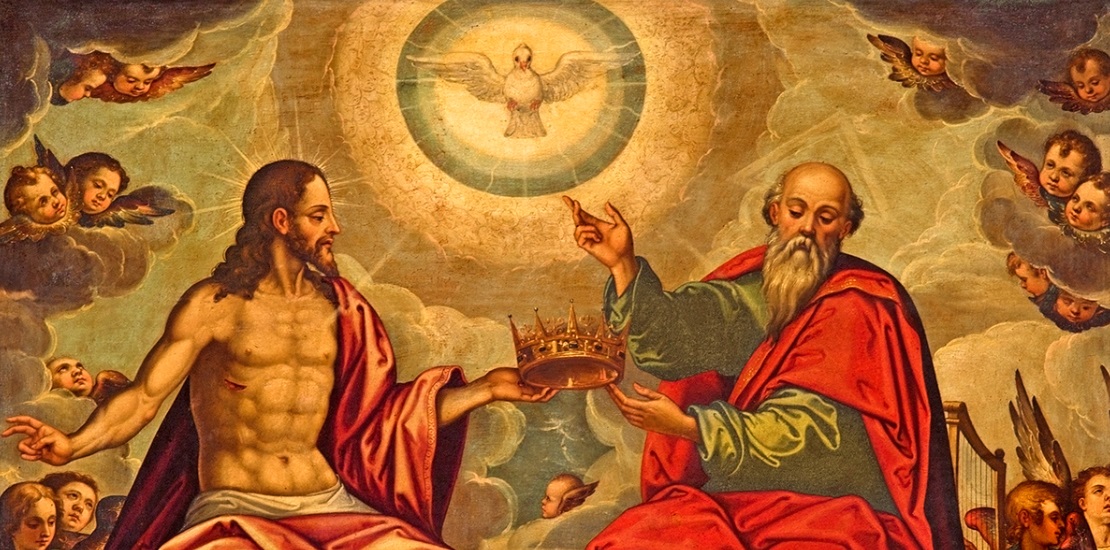
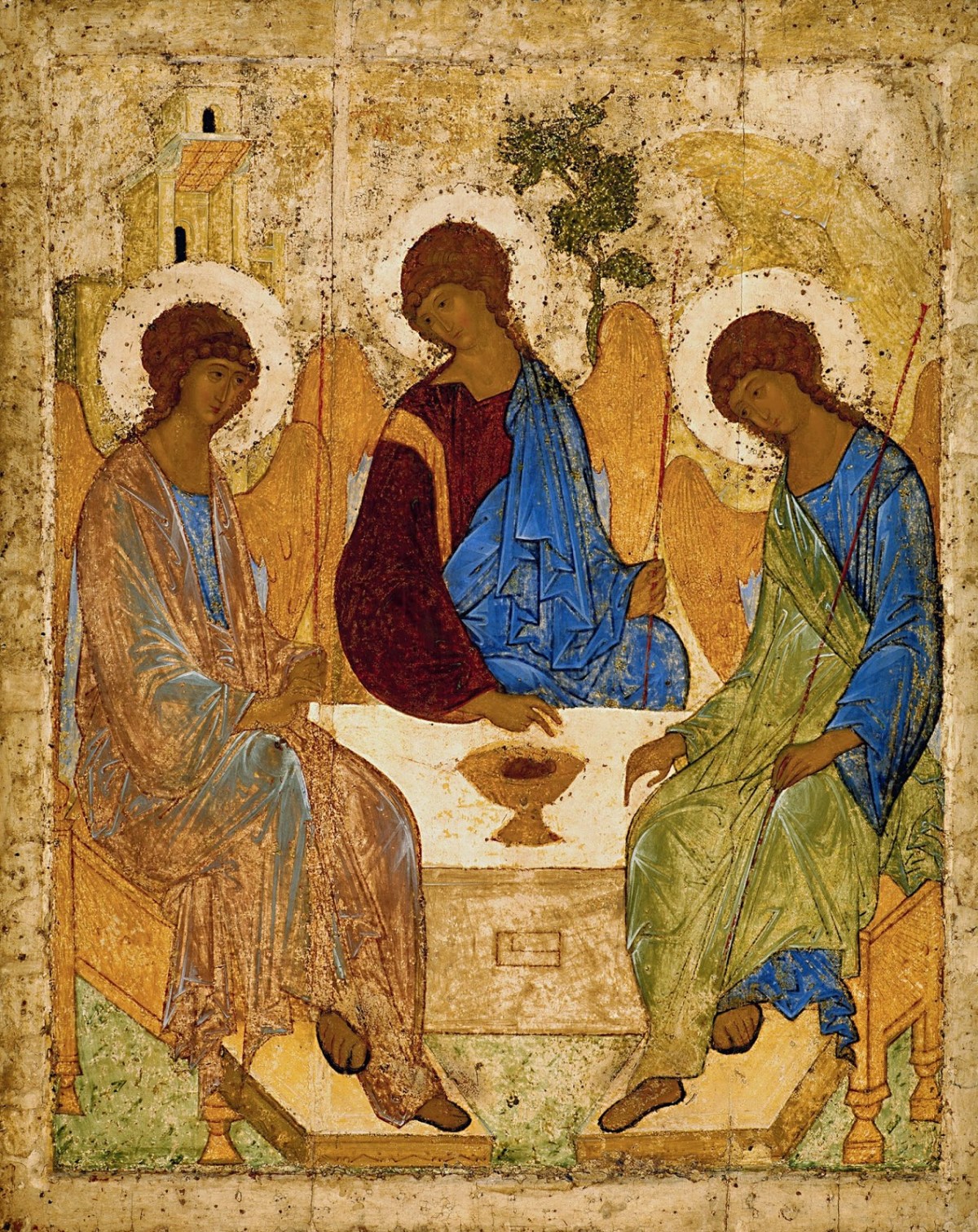
We were created to be connected. We have individual identities and desires, but we were created for love by the God of love. As God’s image-bearers, we are intended to love one another just as love is shared between Father, Son, and Holy Spirit. The greatest commandments are to love God and to love our neighbor. We are told that the world will know us by our love.

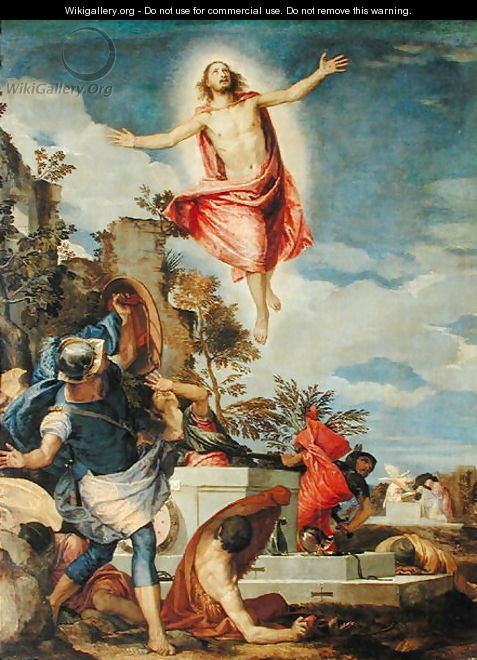
Through a process we cannot understand, the Son of God, Jesus, the Christ, appeared in the flesh two thousand years ago. After His resurrection and He “returned to heaven,” He then sent the Holy Spirit who entered into His disciples. His disciples then, as Christ’s ambassadors, became His body, creatures filled with His very Spirit who were then His feet and hands, even His voice, on the earth. And it is through His body that we and others may come to know about Christ. Sometimes we come to know Christ directly through a member of His body or indirectly by what someone recorded for us. And when we respond to His call through the body of Christ, we also become part of that same great body.

We come to Christ in response to His Spirit connecting with our spirit. But the means of that connection is through the Body of Christ. As we understand how even the set of writings, we call the Bible, was written and compiled by that great body, we can grasp the dependence that we have on His body to even to come to Him. That dependence does not end after we respond to Him but enters us into an interdependence with each other: We are dependent on each other to more fully learn how to love God and love neighbor, we are dependent on each other to build each other up.

Reflect

How can you foster the need that the church has for us to be interdependent with each other?

Observe

Read 1 Corinthians 12. If someone tries to be a “part time” church member, how does that affect everyone else?

Relation to Yahweh

Dancing in the Kingdom- Table of Contents

Dancing In the Kingdom – Part 3 – Dancing in the Kingdom– Chapter 17 – Finding our place

Relation to Yahweh

[Bible references: Exodus 6:1-6; 1 Corinthians 13:12]

Most English translations of the Bible obscure a very significant relationship. In Exodus 6, the Creator revealed himself to Moses as Yahweh for the first time in history. Our translations mask the personal nature of the name when they translate that name with the title, LORD. However, if when reading the Old Testament replacing the word LORD with the name, Yahweh, we will discover, particularly in the Psalms, a very personal relationship between us and Yahweh.

Not only is God not some impersonal force but He is a person with whom we can have a relationship. In fact, He created us to have a special relationship with Him. As such, the meaning of our lives cannot be found solely within ourselves as if we were isolated creatures or self-contained universes. We are image-bearers of Yahweh, the person who is a community, we are designed to be people in community. And since we are created as an outpouring of the love that was shared between the Father, Son, and Holy Spirit, we should outpour that very same love in our relationship with Yahweh and with each other.

We were created to be co-creators with Yahweh. Not that we have the same kind of powers, but we can use the materials and abilities He has supplied for us to create families, cities, nations, art, tools, and many other types of things. It was intended that our creations would glorify Him.

We know that we are not able to love Yahweh in the same way He loves us. Firstly, He is the Creator, and we are the creatures. Secondly, ever since our Rebellion, we were born in a corrupt state with a tendency to rebel against our Creator. Therefore, to discover the meaning of our lives, we need to search out the essence of the love of Yahweh toward us. In Chapter 15, we explored the various spiritual disciplines which could be helpful in guiding us in the search of who Yahweh is and how he loves us.

Even though our rebellion against Yahweh has harmed our relationship with Him, he continues to love us and has made provision for our relationship with Him to be restored. It is also because of his love, that he has had great patience to endure our constant rebelling and he is constantly working to draw us back to him. Our relationship with Yahweh does not require us to do great things or to do sufficient good things to outweigh the bad things we do. We “merely” need to be born again, to have his Spirit join with our spirit. When we are born of the Spirit, that is when we are born again, then we are not only image-bearers, but children of our heavenly Father. And one day, we will know him fully even as we are fully known by Him.

Observe

Read Exodus 6:1-6. What is the difference between knowing God as “God Almighty” (El Shaddai) vs. “Yahweh?”

The Kingdom is Come and Not Yet

Dancing in the Kingdom- Table of Contents

Dancing In the Kingdom – Part 3 – Dancing in the Kingdom– Chapter 16 – Fixing our eyes

The Kingdom is Come and Not Yet

[Bible references: Matthew 6:9-13; 28:36-49; Romans 12:2; James 1:27; Revelation 21-22]

When Jesus came the first time, his healings and teachings began the ushering in of the Kingdom of God, a task He will complete when He returns to fully restore His Kingdom. When Jesus came the first time, He was resurrected, but when He comes a second time, there will be a new heaven and earth, and everyone will be resurrected. But what about now?

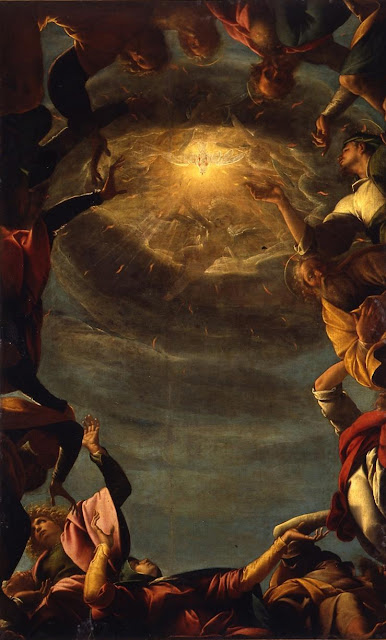
When Jesus ascended to heaven, he told the disciples to wait for the baptism of the Holy Spirit. It was then, through the power of the Holy Spirit, that the disciples of Jesus began the process of continuing the task of bringing Heaven to earth. In this in-between time, God is at work through the Holy Spirit, continuing to bring people to Himself, continuing to build His kingdom. The task that lies before us is to join Him in His work. The prayer He gave for us to say says, “your kingdom come, your will be done, on earth as it is in heaven.” This prayer asks that His kingdom be brought to earth, the Kingdom of justice and mercy.

Empowered by the indwelling of the Holy Spirit, it is our opportunity to do our part, with whatever ability He has given us, to work with Him in bringing His justice and mercy on earth: to look after the widows, orphans, the helpless, and the marginalized; to have compassion; to not lie about others; hate evil, love good; maintain justice in the courts; bringing the good news of Jesus to all. This is simply doing the task assigned to us from the beginning: to fill the earth and subdue it as his co-regents, to take care of the earth as farmer-priests representing Him on earth.

Our final destiny is not to a disembodied existence, but to a new, transformed body, transformed in the way that Jesus was when he was resurrected. Earth itself will also be transformed, with its corruption being removed, not back into a Garden of Eden, but into the earth as it was meant to become, filled, and civilized, with a new Jerusalem being brought from heaven to earth. We are not being sent to heaven; heaven will be coming to us.

Knowing that this end is coming upon us, in the present age we can be motivated to express our hope by living out our hope as in mentioned in The Lord’s Prayer, “thy kingdom come, thy will be done, on earth as it is in heaven.” This encourages us to do what we can to help usher in God’s kingdom now, if only in part. The full entry of the kingdom will not happen until the Lord returns and establishes a new heaven and earth, but we do not need to wait hopelessly as if there is nothing we can do. God has given everyone in his church gifts with which we can build each other up and take charge as His stewards of the earth.

But the task of transforming the earth needs to begin within us. We need to be transformed. In our sin, it is our tendency to always point to other things for the cause of the problems we see. But the cause of the corruption we see elsewhere begins with the corruption within ourselves.

“The line separating good and evil passes not through states, nor between classes, nor between political parties either – but right through every human heart…even within hearts overwhelmed by evil, one small bridgehead of good is retained. And even in the best of all hearts, there remains…an uprooted small corner of evil. [1]


[1] Solzhenitsyn, Aleksandr. “The Gulag Archipelago” Vintage Publishing 1974

Reflect

Reflect

In this time that we live in, the Kingdom of God has come but not yet completely. Our hearts reflect this time with our mixed desires – at once delighting in God’s law and at the same time waging war against that same law. The corruption in our hearts is reflected in the corruption we see in the world. How does that impact how we approach our task to join God in bringing His Kingdom into the world?

Observe

Read Revelation 21:22-24. Try to imagine what it means that “the kings of the earth will bring their splendor into the city.” What would that look like?

Everything Belongs

Dancing in the Kingdom- Table of Contents

Dancing In the Kingdom – Part 3 – Dancing in the Kingdom– Chapter 16 – Fixing our eyes

Everything Belongs

[Bible references: Leviticus 27:30; Psalm 22:27-28; 2 Corinthians 4:1-18; Hebrews 12:1-29]

The gift that true contemplatives offer to themselves and society is that they know themselves as part of a much larger story … Only when we live and see through God can “everything belongs.” …All religious teachers have recognized that we human beings do not naturally see; we have to be taught how to see.[1]

In our last chapter, we looked at the spiritual disciplines which God can use to conform us more to His image. We saw that although those disciplines had an internal focus – they were meant to conform us as individuals. We saw that the disciplines have an external purpose – to enable us to build up others in the body of Christ. That prepares us now to extend our outward focus on God’s work in restoring His kingdom and the many ways in which we can participate with God in restoring the breadth and depth of His kingdom.

All of creation belongs to the Lord. All of creation was designed to be His temple – a place where God would be with His image-bearers. The care of all creation was given to His image-bearers because they themselves are temples of God in whom the Holy Spirit dwells and therefore able to be His stewards. Despite our rebellion, the responsibility given to us was not removed; even though both it and we are corrupted and even though we are unable to remove that corruption. Also, despite our rebellion, our Creator has not ceased to love us. In His inexhaustible compassion, he has not left us to ourselves but means to restore us, along with all of creation. He means to continue the project He began at the beginning of creation, the project of transforming us to become more like Him.


[1] Rohr, Richard. “Everything Belongs: The Gift of Contemplative Prayer.” The Crossroad Publishing Company 2003

Observe

Read Leviticus 27:30; Psalm 22:27-28. Everything, including us, belongs to God. How does that affect how we treat everyone and everything around us?

Fruits of the Disciplines

Dancing in the Kingdom- Table of Contents

Dancing In the Kingdom – Part 3 – Dancing in the Kingdom– Chapter 15 – Reforming our Souls

Fruits of the disciplines

[Bible references: Ruth 3:11; 1 Samuel 13:14; 2 Samuel 11; 1 Kings 22:35; 1 Kings 16:33; 1 Chronicles 29:17; Job 2:3; Psalm 15:1-2; 78:72; Proverbs 4:23; 10:9; 11:3; 17:3; Nehemiah 7:2; Daniel 1:8-9; Matthew 5-7; 12:33; 15:19-20; 23”27-28; Romans 5:3-4; 1 Corinthians 15:10, 33; Galatians 5:22–23; Colossians 3:12-15 23-24; Philippians 2:12–16; 4:8; 1 Tim 3:1-7; Titus 1:5-9;2:7-8; 1 Thessalonians 4:1; 1 Peter 1:6-7;’ 5:1-4; 2 Peter 1:3-8] 

Forming our dependence on the Holy Spirit

Practicing the disciplines opens us up to the work of the Holy Spirit within us, transforming our very inner character (moral qualities, ethical standards, and principles) into the likeness of Christ. Christian character is the product of the Holy Spirit. It is the Holy Spirit that produces the fruits of love, joy, peace, patience, kindness, gentleness, goodness, long suffering, and self-control. Although it is the Holy Spirit who transforms us, we are still called to work with and not against the Spirit. It is by His grace that we are transformed, and it is also by his grace that we can work with Him as He brings His kingdom into the world. Because the Spirit of God lives in us, He provides the grace and power that make godly living possible. We are encouraged to make use of this great power.

Forming our character/integrity

People of character are noted for their honesty, ethics, and charity. Descriptions such as “man of principle” and “woman of integrity” are assertions of character. A person’s character is the sum of his or her disposition, thoughts, intentions, desires, and actions.

It is good to remember that character is gauged by general tendencies, not on few isolated actions. We must look at our whole life. For example, King David was a man of good character although he sinned on occasion. And although King Ahab may have acted nobly once, he was still a man of overall bad character. Several people in the Bible are described as having noble character: Ruth, Hanani, David, and Job. These individuals’ lives were distinguished by persistent moral virtue.

People of good character are often described with terms like integrity, honesty, strong moral fiber, care and concern for others, and the like. Although their character is demonstrated in actions, true character resides in the heart. True godliness includes both right actions and right motives.

Forming our choices

Character is developed by our choices. Daniel “resolved not to defile himself” in Babylon (Daniel 1:8), and that godly choice was an important step in formulating an unassailable integrity in the young man’s life. Character, in turn, influences our choices.

We can develop character by controlling our thoughts, practicing Christian virtues, guarding our hearts, and keeping good company. Men and women of character will set a good example for others to follow, and their godly reputation will be evident to all.

Observe

Read 1 Peter 1:5-9. Which characteristic gives you the most problems?

Interlude

Dancing in the Kingdom- Table of Contents

Dancing In the Kingdom – Part 2 – The Kingdom Revealed – Chapter 13 – Distinctives within the body of Christ

Interlude

Many years ago, I was in a committee meeting with a group of people in a congregation, when the pastor started to walk by. He turned when he saw us, walked in with a warm effusive smile, and said, “Don’t you just love the church?” Then he turned around and went on his way.

I had been involved in the church for several years at that point, had served on the Elder board of a previous congregation, but had moved and now was involved in a different congregation. I had been in church leadership for long enough to be aware of the many difficulties to be found within congregations. Leading church congregations is difficult, particularly for the pastor.

And so it was, that at that moment in time, that question pierced my heart. I was certainly devoted to the church, but love the church in the way that the question was asked? And I knew that the long-serving pastor had been facing even more difficulties than I had – but I didn’t love the church – not like that. And at that moment, I did not know how to get to that kind of love.

Many years passed after that, and that moment became long forgotten.

The church had grown in size and staff. Then one day I was one of many people who experienced a betrayal of trust that hurt very deeply, causing many people to leave the congregation. Though I didn’t leave, I was still in a deep pain that lasted for years. But in those following years, I found myself in a position where I had the opportunity to help guide the congregation through a renewal process that made it healthier – and also made me healthier.

It was after all that process, that I remembered the incident of the question, “Don’t you just love the church?” But this time, by a path I had not chosen, I could say, “Yes.” I have learned to love the church. It was within the suffering and within the acceptance that although the church had problems, I too had problems.

Whether we are inside the church or outside the church looking in, we need to be careful where we point our fingers at the problems we identify. Like many in Israel in the time of the Judges, or many Jews in the time of Jesus, we like to point to somewhere else besides ourselves, like at the government, and say we need a new government, we need a new king. But the problem is actually within each of us. We all need a new heart.

We need the courage and humility of the prophet Isaiah, who when confronted with the presence of the Almighty God, said, “Woe to me! … I am a man of unclean lips and I live among a people of unclean lips.” Isaiah stood with his people in humility.

Maybe all the pain I suffered was due to the hardness of my heart which needed softening. But it took suffering for me to learn to truly love myself which then allowed me to truly love the church. That love gives me the freedom to look at all the issues of the church in all its brokenness and accept that I stand among the brokenness. And we are all fully loved and the One who made us, loves us, and guides us (though we don’t always follow).

Sometimes I cry when reading about the cruelty committed by the church I love, because we, the church, were so swayed by idols that we forgot our first love and our desire to bear the fruits of the Spirit. I also sometimes wonder if, in the same way that people like Simeon and Anna carried the hope of the Messiah amidst an unbelieving nation, that other mostly unnamed people walk among us, carrying the hope of the gospel amidst an unbelieving church.

Yet, we have the assurance that the One who has guided us, guides us still. So, as we begin to consider the myriad ways that different congregations within the church address the questions and practices of the church and have disagreements with each other about the way to address those questions and practices, we can be confident that the one who loves us all has not abandoned us and patiently, faithfully, persistently still calls us to follow Him. We have the assurance that all of us are created in His image and are bound together with common needs, that different languages are His idea despite the apparent confusions we have in understanding one another, that He is the provider of our intellect and is able to meet us in the midst our limited understandings, and that He provides His Spirit to guide us even in the midst of our confusions.

All the obstacles we have and the messes we see are continual reminders that the hope we have is not in the seemingly desperately confused church but rather in Him who provides for and guides us.

Paradox of responsibility

Dancing in the Kingdom- Table of Contents

Dancing In the Kingdom – Part 2 – The Kingdom Revealed – Chapter 12 – Launching the church

Paradox of responsibility

[Bible references: Jeremiah 3:1-9; 31:1-4; Zechariah 8:16; Ephesians 4; Philippians 2:1-18]

This then is our paradox; we are given the responsibility of correctly handling the Truth of God even when we cannot completely understand what that Truth is. For instance, how can we understand that there is one person, God, and yet have God revealed in three personalities:  God the Father, God the Son and God the Holy Spirit? How can the God who exists outsides the confines of time and space, confine Himself to a particular space and time and come to be born and then to live and die as a normal human being? How can these things be?

As we look across the breadth of the history of the church, we see the church wrestling with these paradoxes and others. The result of that wrestling sometimes has gotten downright ugly with the church sometimes quite literally killing each other about it, not only with those outside the church but within it. In fact, if one were to look across the world at the state of Christianity, it might seem to one of the most fractious and divided groups ever.

How can it be that God would entrust this church with the task of bringing that His Truth to others and from one generation to the next, the church that has from time to time seemed to fail the apostle Paul’s challenge to be “one in the Spirit.”

Reflect

When children are not compliant as they grow up, do we just give up on them?

Observe

Read Zechariah 8:16; Ephesians 4; Philippians 2:1-18. What should the church look like as it handles its responsibility to presenting the truth of God to each other and to the world?

Kingdom of God

Dancing in the Kingdom- Table of Contents

Dancing In the Kingdom – Part 2 – The Kingdom Revealed – Chapter 12 – Launching the church

Kingdom of God

[Bible references: Matthew 4:12-23; 5:43-48; 6:31-34; 13:1-9; Mark 1:15; 4:1-33; Luke 4:17-22; 17:20-21; 18:16-18; 1 John 5:3-5; Romans 14:17]

“The primary idea of the Kingdom of God in Scripture is that of the rule of God established and acknowledged in the hearts of sinners by the powerful regenerating influence of the Holy Spirit, insuring them of the inestimable blessings of salvation, — a rule that is realized in principle on earth, but will not reach its culmination until the visible and glorious return of Jesus Christ.”[1]

The Kingdom of God (Kingdom of Heaven) is broadly wherever the rule of God is in the universe[2] or spiritually in the hearts of those who do His will. Although the Kingdom of God has arrived already, it has not yet arrived in its fulness. That won’t happen until Christ returns. There are some who make the Kingdom of God synonymous with the institutional church, however, the church itself belongs to the Kingdom. When Christians do anything under the authority of God, then they are making manifest the Kingdom of God[3]. Believers belong to the Kingdom when they receive God as their ruler, and they belong to the church in the separateness from the world in devotion to God and in their union with one another. As a church they are called to be God’s instrument in bringing in the Kingdom.

The Kingdom then is not defined by any physical location, nor does it have physical boundaries, rather it exists wherever God’s rule is in heaven or in earth. At the beginning of his ministry Jesus declared that the Kingdom has come near and then he described it in terms of healing the sick, loving enemies as well as neighbors, righteousness, freedom for prisoners, giving sight to the blind, and setting the oppressed free, that it must be received as a child, that it requires repentance to receive it, that it’s like a seed on the ground that falls on various kinds of soil.


[1] Louis Berkoff. Systematic Theology William B. Eerdmans 1974 (Kindle Locations 14321-14324)

[2] Bible Study Tools “Kingdom of God” Biblestudytools www.biblestudytools.com/bible-study/explore-the-bible/what-is-meant-by-the-kingdom-of-god-10-things-to-know.html

[3] Christianity.com “What is the Kingdom of God? Understanding its Meaning” Christianity.com www.christianity.com/wiki/god/what-is-the-kingdom-of-god-understanding-it-s-meaning.html

Observe

Read Luke 17:20-21. Where do you see the Kingdom of God?

The Spirit and the servant-leaders

Dancing in the Kingdom- Table of Contents

Dancing In the Kingdom – Part 2 – The Kingdom Revealed – Chapter 12 – Launching the church

The Spirit and the Servant-Leaders

[Bible references: Matthew 23:8-11; Acts 1:12-26; 2:42-47; 4:32-37; 6:1-6; 8:14-17; 9:26-31; 11:1-18; 13:1-3; 15;1-29, 36-41; Galatians 2:1-14]

God had created the church as a community: a community to share life and resources, to support one another, to share the gospel and send out missionaries, and to pray together and make decisions together. It was as a community, a council of apostles, that they:

  • Chose Mattias to replace Judas Iscariot
  • Chose seven men to oversee the daily distribution of resources among the church
  • Accepted Saul into their ranks as an apostle.
  • Decided that the gospel was to be shared among the Samaritans and the Gentiles
  • Decided that Gentiles did not have to become circumcised to become believers.

It is normal that within the community decision-making, disagreements were a part of the discussion and those disagreements needed to be worked out. For example, there was at least one occasion where Paul had to correct Peter’s concession to the circumcision group within the community who were denying grace of the gospel. In the end though, the apostles’ decision-making included God, so their decisions always included prayer.

Outside the venue of the council, there were other disagreements as well, including one where Paul and Barnabas disagreed about whether to take Mark along on a mission trip. That result ended up with Barnabas and Paul splitting up and with Barnabas taking Mark with him.

Observe

Read Matthew 23:8-11; Acts 1:12-26; 2:42-47; 6:1-6; 13:1-3. What do these passages say about church leadership?

The Spirit and the scattering

Dancing in the Kingdom- Table of Contents

Dancing In the Kingdom – Part 2 – The Kingdom Revealed – Chapter 12 – Launching the church

The Spirit and the Scattering

[Bible references: Acts 5:12-16; 6:1-15; 7:1-60; 8:1-3, 14-24; 10; 9:1-19; 13:16-47; 17:16-31]

Since Jesus focused his effort almost exclusively on the Jewish population, it was natural that in the early years of the church, nearly all the believers were Jewish. It also happened that the apostles started off by focusing on the area around Jerusalem. So, while the believers were Jewish, the opposition to the believers was primarily Jewish as well; particularly, the Sanhedrin which was heavily controlled by the non-resurrection-believing Sadducees. It was difficult for the Sanhedrin to control the apostles because their miraculous healings made them exceedingly popular among the people. Even the deacon, Stephen, who was performing signs and wonders was creating a problem for the Sadducees. So some men created a conspiracy against Stephen, creating lies that resulted in Stephen becoming the first recorded martyr for the faith. Stephen was quite eloquent in defending the faith before the Sanhedrin, laying out the history of Israel and then accusing the Sanhedrin of continuing the persecution of God’s prophets. This enraged the Sanhedrin so much, that even after Stephen was put to death, the persecution of the church began in earnest, causing the first scattering of the church, although the apostles remained in Jerusalem.

With the scattering came new opportunities and challenges. When it was discovered that the Samaritans had received the gospel, the apostles gladly received the news. But when some of the Samaritans received the Holy Spirit, there were some kinds of signs (we aren’t told what they were) that excited a magician, who was one of the ones who received Christ. The magician then offered money to the apostles so that he could get the power to lay his hands on people and give them the Holy Spirit. The apostles had to strongly rebuke him. He repented – but this was a sign of how things could go astray.

After sending the gospel to the Samaritans, the next step was to reach out to the Gentiles. This step was initiated by God who first worked with the apostle Peter and a devout Gentile man named Cornelius. God had given visions to both Cornelius and Peter to create a reason for them to meet. When Cornelius visibly received the gift of the Holy Spirit, Peter was convinced that the gospel was meant for the Gentiles as well.

To further spread the gospel among the Gentiles, God called Saul, a well-educated man who was familiar not only with the Jews but also with the Gentiles. Saul was a zealous Pharisee, whose zeal originally caused him to participate in the persecution of the church, but God used that same zeal to make Saul (also called Paul) not only one of the primary missionaries to the Gentiles but also a writer of half of the documents that comprise the New Testament. Even though Saul became converted after the ascension of Jesus, it was Jesus himself who encountered Saul who was on his way to persecute the Christians, making Saul a direct witness to the ministry of Jesus.

Whether the gospel was shared with the Jews or with the Gentiles there was a story to tell. The Jews needed to understand how the story of Jesus fit into their history – their story – and the Gentiles needed to know how it fit into their story. We all have a worldview – a story of the world that we use to interpret the world around us – and the gospel is most effectively shared when there’s a way to reach inside the others’ worldview.

Observe

Read Acts 13:1647; 17:16-31. What was the difference between how Paul told the gospel to people in the synagogue vs. the people in the Athens marketplace?

The Spirit and the story

Dancing in the Kingdom- Table of Contents

Dancing In the Kingdom – Part 2 – The Kingdom Revealed – Chapter 12 – Launching the church

The Spirit and the Story

[Bible references: Exodus 18:13-26; Joel 2:28-32; Psalm 16; Luke 16:19-31; John 16:13; Acts 2:1-4; 6:1-7]

During Jesus’ three years of ministry, His teaching about the Kingdom of God coming to earth was accompanied by signs: miracles of healing, cleansing, and raising the dead, and by forgiveness of sins. The miracles affirmed the message. With the introduction of the church as the vehicle by which the gospel would be spread, more signs and miracles were called for.

On Pentecost, Jews from all over the Roman Empire gathered in Jerusalem. Many were in the upper room with the apostles, when the Holy Spirit visibly empowered the apostles with tongues of fire, a violent wind, and the reversal of the tower of Babel as people of many different language groups were able to hear the apostles speak in their native tongues. These signs caused much excitement and wonder as the people responded to the work of God. As was true during the time of Jesus’ ministry, there were some who were ready to hear the gospel and others who were not. Those who were ready to hear the apostles’ message were able to understand the apostles’ message while those who were not ready did not understand the signs and resorted to mocking the apostles as if they were drunkards. This was no different than the time of Jesus’ ministry, the signs of the kingdom caused some to respond with increased faith while others responded with unbelief and hardened hearts.

As Jesus had promised, the Holy Spirit gave the apostles the words to explain what was happening. Peter quoted from the book of Joel about how the Spirit would be poured out causing all kinds of people to prophecy: sons and daughters, old men, and young men. Then Peter also quoted from David’s Psalms as he wove together the story of how all these things fit into the story of Jesus’ life, death, and resurrection. Those who were ready to hear the gospel asked what their response should be. Peter told them to repent, be baptized and then they too could receive the gift of the Holy Spirit. Since many of these people were from the Jewish diaspora, they, now filled with the Holy Spirit, would have been able to return to their homes to continue to spread the gospel, although it seems that some people from the diaspora stayed in Jerusalem.

We have sparse details of the life of the church, but there are a few things we know which are described quite succinctly in Acts 2:42-47:

And they devoted themselves to the apostles’ teaching and the fellowship, to the breaking of bread and the prayers. And awe came upon every soul, and many wonders and signs were being done through the apostles. And all who believed were together and had all things in common. And they were selling their possessions and belongings and distributing the proceeds to all, as any had need. And day by day, attending the temple together and breaking bread in their homes, they received their food with glad and generous hearts, praising God and having favor with all the people. And the Lord added to their number day by day those who were being saved.

With the rapid increase in disciples came some logistical problems as well. The miracles of the Spirit did not end the day-to-day problems of communicating between different cultural groups within the church. In the normal practice of sharing goods within the church and within that the need to take care of widows and orphans, there came a point where the Greek-speaking widows from outside Israel were not getting the same care as the Hebrew speaking widows. Because the apostles wanted to focus on teaching and prayer, they gathered the church to address the issue. The church resolved the issue by selecting seven men to oversee the distribution of goods. However, this would not be the last time that language and culture barriers would affect life of the church.

Observe

Read Exodus 18:13-26; Acts 6:1-7. What do these passages say about effective leadership?

The Spirit and the power

Dancing in the Kingdom- Table of Contents

Dancing In the Kingdom – Part 2 – The Kingdom Revealed – Chapter 12 – Launching the church

The Spirit and the power

[Bible references: Genesis 25-19-21; 1 Samuel 1;1-20; 2 Samuel 7; Proverbs 2:1-5; Matthew 7:7-8; Mark 11:12-26; Luke 11:113; 12-26; John 20:21-23; 3:14-16; Acts 1:1-14; 2:1-41; 1 Peter 5:6-7]

There are remarkable parallels between Genesis 2:7 and John 20:22. We see from Chapter 2 that in Genesis 2, God breathed life into Adam who was then commissioned to take care of the sacred space that God had created. That sacred space was initially identified as the Garden of Eden, but we know from Genesis 1 that God had dedicated the entire universe as his temple. We also know that since God’s image-bearers were given the commission to “be fruitful and fill the earth” that the sacred space allotted to the care of the image-bearers was intended to be the entire earth.

After the resurrection, when Jesus met with the apostles in a locked room, He breathed on (or into) them.[1] This is the same word used in the Septuagint version of the Old Testament describing God breathing life into Adam and thereby giving him life. Immediately after this gesture, Jesus instructed the apostles to “Receive the Holy Spirit” who were then commissioned to continue the task that Jesus had begun.[2]

“The very same Greek verb (here only in N.T.) is used by the LXX. in Genesis 2:7 (Wis 15:11) of breathing life into Adam. This Gospel of the new Creation looks back at its close, as at its beginning (John 1:1), to the first Creation. We are probably to regard the breath here not merely as the emblem of the Spirit (John 3:8), but as the means by which the Spirit was imparted to them. ‘Receive ye,’ combined with the action of breathing, implies this. This is all the more clear in the Greek, because pneuma means both ‘breath’ and ‘spirit,’ a point which cannot be preserved in English; but at least ‘Spirit’ is better than ‘Ghost’ We have here, therefore, an anticipation and earnest of Pentecost; just as Christ’s bodily return from the grave and temporary manifestation to them was an anticipation of His spiritual return and abiding Presence with them ‘even unto the end of the world.’” [3]

Previously, in John’s gospel, we saw that “the Son of Man must be lifted up, that everyone who believes may have eternal life in him.” Now that Jesus was crucified and was soon ascend to heaven, the apostles were given the task of sharing the gospel so that people may believe unto eternal life. It is at this moment, in the locked room, that the apostles were given the commission to share the news of forgiveness.

Ten days after Jesus ascended, fifty days after Passover, the disciples were gathered in Jerusalem, waiting for “what the Father had promised.” It was the time of Shavuot, which was known in Greek as the Pentecost. Shavuot is one of three pilgrimage festivals where Jews are supposed to travel to Jerusalem so Jews from all over the Roman Empire were in Jerusalem.

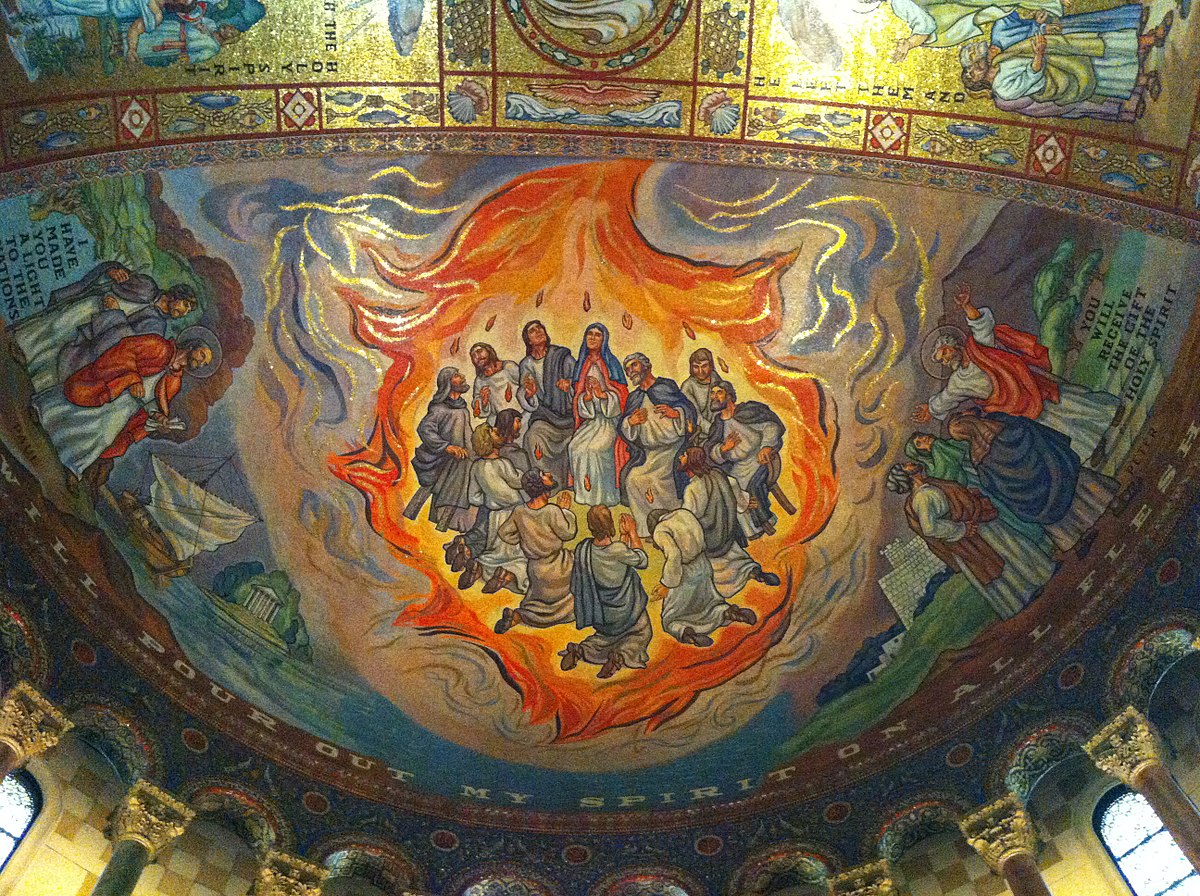
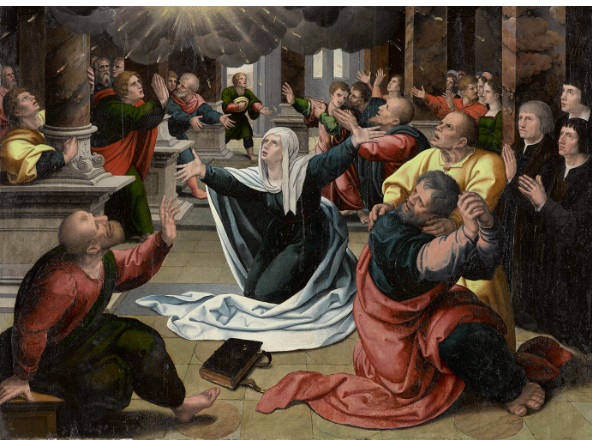
It was at this gathering that Spirit came upon the disciples in great power, revealing the fulfillment of Shavuot. While the disciples were gathered in a room, the Holy Spirit manifested himself with a great wind and tongues of fire that touched the apostles. The apostles then proceeded to prophecy and the people who were there from around the world were able to hear them speaking in their own languages. On that day 3000 people accepted Jesus as their Lord.

The full meaning of Passover and Shavuot was now revealed.

  • Jesus was executed on Passover, a holiday commemorating the celebration of freedom from slavery in Egypt which was observed by the slaying of the Passover lamb whose blood protected all the Israelites from the angel of death who had killed all the firstborn children in Egypt.
  • The miraculous outpouring of the Holy Spirit on the apostles which enabled them to speak in many different languages occurred on Shavuot, which had many different meanings for the Jews. Shavuot was associate with:

  • the giving of the commandments 50 days after the liberation from Egypt. Now the commandments were written on hearts instead of stone.
    • the first harvest of crops in the year, with those first portions being given to God, the provider of harvest. There were now 3000 souls harvested for God.
    • marriage, where Passover was considered the betrothal and Shavuot the marriage where the bride and groom commit themselves to each other. The period in-between the betrothal and marriage can be considered as a time of testing and waiting as the bride and groom prepare for life together. With His sacrifice, Jesus, the Bridegroom committed himself to the Church, His Bride.

Waiting. The virtue we want to bypass. Yet even though God has set seasons and times before us and insists on letting his ordained processes complete, from the beginning, we have wanted things immediately and we have been paying the price ever since. But there was a process God wanted to complete. After His resurrection, Jesus waited for the apostles to gather before He came to them, Jesus waited for many days to go by while He interacted with various groups of his disciples, then after His ascension, Jesus waited for his disciples to stay in Jerusalem, while they waited for the “gift His Father promised … to be baptized with the Holy Spirit.” And so, the apostles waited and prayed.


[1] Biblehub ἐνεφύσησεν Bible Hub biblehub.com/greek/enephyse_sen_1720.htm

[2] Scrivener, Glen. “What does John 20:21-23 mean” Christ the Truth christthetruth.net/2013/03/26/what-does-john-2021-23-mean; Skinner, Matt. “Commentary on John 20:19-23” Working Preacher www.workingpreacher.org/preaching.aspx?commentary_id=887; Lewis, Karoline. “Commentary on John 20:19-23” Working Preacher www.workingpreacher.org/preaching.aspx?commentary_id=76; Flattery, George. “John 20:19-23 Receive the Holy Spirit” Global Christian globalchristiancenter.com/sermons/dr-g-flattery-sermons-on-gospel-of-john/26192-john-2019-23-receive-the-holy-spirit

[3] Biblehub “John 20:22”Cambridge Bible for Schools and Colleges biblehub.com/commentaries/john/20-22.htm

Reflect

There are times when we need to take action and times when we need to wait for maturity or for “the fullness of time.” How can we discern the difference?

Observe

Read Mark 11:12-26; Luke 11:1-13. What should we expect when we pray?

No detailed strategic plan, but promises and presence

Dancing in the Kingdom- Table of Contents

Dancing In the Kingdom – Part 2 – The Kingdom Revealed – Chapter 12 – Launching the church

No detailed strategic plan, but promises and presence

[Bible references: Genesis 12:1-4; Matthew 13:15; 26:56; 26:69-74; 28:16-20; Mark 16:1-3; John 20:19; 12:31-36; Acts 1:4-9]

When Jesus had ascended to heaven, he had left a group of bewildered disciples who had no idea about the kind of enterprise they were going to launch. They were all missing pieces of the puzzle. Although Jesus had been explicit about his suffering and dying and resurrecting, the disciples did not fully grasp what had happened until they witnessed his appearance after the resurrection. A few days before his crucifixion, when he told about the death he would die, i.e., “when I am lifted up” which people knew meant crucifixion, the people protested saying they knew that the Law said the Christ remains forever, so how could that be?

Even the chosen apostles were unprepared. Upon Jesus being arrested, they fled and hid and, in the case of Peter, even denied knowing Jesus. They fearfully gathered behind locked doors, not knowing their next steps. Even those women who were close to Jesus thought they needed to anoint his deceased body. The words of the prophet Isaiah, “He has blinded their eyes and hardened their heart, lest they see with their eyes and understand with their heart,” seemed to apply just as fully to Jesus’ closest disciples.

What the evidence displays is that the program and order of Christian communities originate in direct continuity with the synagogue communities of Israel … These communities had assemblies, elders, presiding elders, deacons and a full program of worship, common policy-making, social welfare and interurban alliances. They lacked the authorization to govern themselves on behalf of the empire. But in other respects they developed patterns of community organization that were traditional to their Jewish origins and members.[1]

Even after his resurrection, when Jesus appeared again, he apparently did not give any instructions about how to organize the church, particularly for the next 2000+ years. The evidence we do have shows that early church organizational structure was based on the organizational structure of the synagogue. In fact, the first explicitly Christian assemblies were split offs from the Jewish assemblies. What they did have, and what they and their successors did build on, was the liturgical and governmental structure of the synagogue.

Jesus instigated no characteristic new organization or anarchy among those who shared faith in him. They proceeded from where they found themselves. And they found themselves in the synagogue. The synagogue became the church, not by dint of a new social format, but in virtue of new convictions within its members. It developed and adapted and consolidated and searched for its own authenticity. We claim here only that to study the energetic development we must know that it proceeded form the organization of the synagogue. [2]

In fact, there seemed to be some hints that the final consummation of the kingdom would occur in their earthly lifetimes. The main preparation of his disciples seems to have been spending time with Jesus, listening to Jesus’ descriptions of the kingdom of God and seeing (and sometimes participating with) Jesus in the inbreaking of the Kingdom through teaching, healing, compassion, and casting out demons.

After the resurrection Jesus spent times with various groups of his disciples during the next forty days. Then just before he was to “ascend to heaven,” he gave his apostles one last charge. “But you will receive power when the Holy Spirit has come upon you, and you will be my witnesses in Jerusalem and in all Judea and Samaria and to the end of the earth. Make disciples of all nations, baptizing them in the name of the Father, Son, and Holy Spirit, teaching them to observe all that I have commanded you. And behold, I am with you always, to the end of the age.”

Before he was to visibly leave the earth, he had given the promise to be with them … always. The living God was not going to be present in a physical body nor would the living God leave any instructions in a written document, instead the living God would be present by means of the Holy Spirit.


[1] Burtchaell, James Tunstead. “From Synagogue to Church: Public Services and Offices in the Earliest Christian Communities” Cambridge University Press 1992 (pp. 334-336)

[2] Burtchaell, James Tunstead. “From Synagogue to Church: Public Services and Offices in the Earliest Christian Communities” Cambridge University Press 1992 (pp.349-352)

Looking back – Signs and shadows of the kingdom

Dancing in the Kingdom- Table of Contents

Dancing In the Kingdom – Part 2 – The Kingdom Revealed – Chapter 11 – The Kingdom Enters

Looking back – Signs and shadows of the kingdom

[Bible references: Genesis 6:5-7; Exodus 25:17-22; Leviticus 16; Joshua 24:19; 2 Kings 17:6; 2 Chronicles 36:17-24; Ezra 1-2; Psalm 14:2; 53:6; Isaiah 43; Jeremiah 29:10; 31:31-39; Matthew 4:12-17; Romans 7:7-24; 8:20-22; Colossians 2:16-17; Hebrews 8:5; 10:1, 5-10; Revelation 21-22]

In the beginning, God created a good earth. Within that good earth, Yahweh created a special place, the Garden of Eden, where he could meet and live with the creatures who bore his image. The Garden was a place where the heaven and earth overlapped, a place where the goodness of Yahweh overflowed, a place of shalom, a place where his image-bearers were intended to thrive and develop as co-creators with Yahweh and ultimately create a civilization that would cover all the earth to the glory of God.

“Perhaps the most fitting symbol of the development of creation from the primordial past to the eschatological future is the fact that the Bible begins with a garden and ends with a city – a city filled with “the glory and the honor of the nations.”[1]

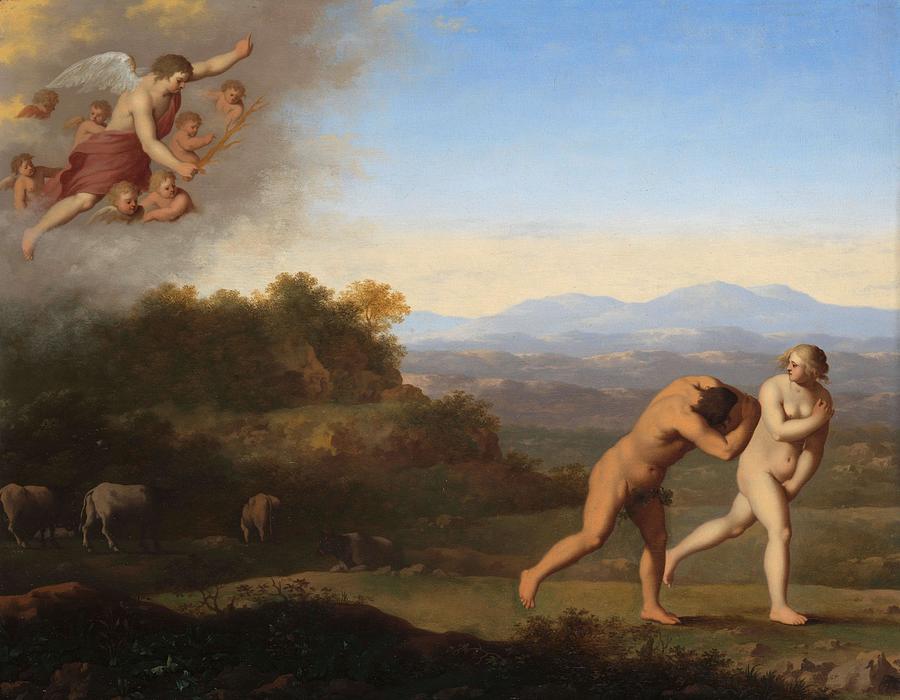
However, the image-bearers put Yahweh’s authority to the side and rebelled against him. The rebellion disrupted the union of the Yahweh’s kingdom with his creatures and all of creation was put into disorder. Human space and Yahweh’s space were separated and all of creation was damaged, including not only the relations between Yahweh and his image-bearers but between the image-bearers themselves.

In the Bible, the themes of heaven and earth can be thought of as heaven being God’s space and the earth being the human space. It may be helpful to think of these spaces as different dimensions. In the Garden of Eden these spaces overlapped, allowing God and man could dwell together. In the garden the humans were to be partners with God taking care of this garden, however they decided to do things their own way rather than God’s. This resulted in the humans being ejected from the space where heaven and earth overlapped, and the remaining story of the Bible is about how God is once again going to bring heaven and earth back together.[2]

The image-bearers found themselves in an increasingly vicious cycle of violence and corruption causing God to restart his project by creating a great flood. Fortunately, out of his deep love for his rebellious image-bearers, Yahweh was resolved to overcome the violence and oppression and had a plan to reunite heaven and earth, extending his kingdom over all the earth.

Yahweh set processes in place that would begin with Abraham and Sarah, continue through to the other patriarchs, and then continue with the nation of Israel. Under Moses’ leadership and with the guidance of the Holy Spirit, the tabernacle was constructed to be the place where heaven and earth would overlap within the Holy of Holies. The temple was decorated and designed to make people feel like they were going back to the garden.

The difficulty was that God’s space is perfect, pure, just, and holy but the human space is full of sin and corruption. This problem was somewhat resolved through the sacrifice of animals, where the animal absorbed the sin of the people and died in their place, creating a limited clean space. Within the Holy of Holies, the mercy seat on the ark was where God’s presence would be but could only be accessed once a year by the high priest.

However, the tabernacle with all its rituals were designed to only be a shadow of things in heaven and a shadow of the things that were coming, a shadow of how Yahweh’s relationship with his image-bearers would be restored and all of earth would be joined with Yahweh’s kingdom in heaven as was intended from the beginning.

In the meanwhile, in those shadows of the coming kingdom, Yahweh worked within the nation of Israel, his chosen people, to gradually reveal signs of his intended restoration. Within those shadows, the people of Israel could see the futility of their own efforts to reconcile with Yahweh despite their denial of the reality of Joshua’s words, “You are not able to serve Yahweh.” Within those shadows, the nation of Israel would rebel against the kingship of Yahweh, rejecting his reign and insisting on creating their own kingdom, like “all the other nations.”

The nation was reminded time after time that the law was good, but they were not, that their continual animal sacrifices were never a permanent solution to reconciling with Yahweh, that they needed a redeemer, they needed a change of heart. Prophets were raised up to warn the people of the consequences of their continual rebellion, but they also delivered messages of hope that, despite their rebellion, God would restore his people to himself.

Then the promised judgment for their rebellion came: Most of the nation was lost to history as ten tribes of Israel were scattered through the Assyrian empire, which would be followed by the temple being destroyed and with a remnant of the remaining tribes being sent into exile in Babylon. If there was any hope that the ritual sacrifices at the temple could reconcile the people with Yahweh, now even that possibility was taken away. The restoration of their own kingdom seemed to be in doubt, never mind the kingdom of Yahweh.

However, the exile was promised to be temporary. After 70 years, the exiled nation had the opportunity to return to the Promised Land and rebuild the temple. Once the temple was rebuilt it was now possible for the temple worship to continue and even for their government to be restarted, although it would be under the auspices of a foreign nation. Yet in all that happened, one thing had not changed; the hearts of the image-bearers had not changed. There was still a need for a redeemer.


167 Wolters, Albert M. Creation Regained: Biblical Basics for a Reformational Worldview William B. Eerdmans Publishing 1985, 2005. eBook (Kindle Locations 581-583)

[2] Bible Project “Heaven and Earth” Bible Project thebibleproject.com/explore/heaven-earth

In time and In an eternal future

Dancing in the Kingdom- Table of Contents

Dancing In the Kingdom – Part 1 – Shadows of the Kingdom – Chapter 3 – The image-bearers

In time and in an eternal future

[Bible references: Genesis 2:9; Exodus 25-28; 1 Kings 5-6; Psalms 19; Ecclesiastes 3:1-22; Matthew 6:28]

Although we have not existed from all eternity, God created us with more than a mortal body. We are also endowed with a soul and a spirit that can be joined to God’s Spirit. In the present moment, our mortal bodies are created from the stuff of the earth, and we are born into particular times and places so that we may serve and enjoy God in those particular times and places.

God made us as creatures. And the good part about being a creature is we were made to be dependent upon God and, by our very design, also dependent on other people and the earth … Often what we’re missing is the good of dependence. We need to cultivate an awareness of how our dependence and our needs open avenues of love … What if we stopped thinking of life as to-dos and started thinking of it as relationships? When we’re so task-driven, it’s very hard to appreciate love, because love is incredibly inefficient … when we were younger, God didn’t expect us to be what we are now. He’s still taking his time, by his Spirit, to bring about order through developmental growth … Part of recognizing our limits is getting comfortable in God’s space and growing in dependance on him … Sometimes, I think we’re actually scared to death to pray, because if we actually take the time to get quiet, we might begin to fear that God’s not there or wonder whether he’s apathetic or just really angry. Only in prayer will we discover how compassionately God views us … cultivating the gift of encouraging and celebrating others. It’s a spiritual discipline, a healthy way of dying to yourself and encouraging others. We are all dying for someone to pay attention and notice our presence and being. When someone articulates that, it’s life-changing. [1]

Our creatureliness which sets us in a particular place and time with a particular body is an opportunity to appreciate our finiteness and God’s infiniteness, to cultivate a sense of dependence on God’s provision and our dependence on each other and within the context of those relationships to truly learn how to love.

Our creatureliness also forces us to deal with God’s ordering Creation through process. Everything, whether physical, social, emotional, intellectual, or spiritual, is controlled by processes. Sometimes we desire to bypass those processes: we want to be instantly knowledgeable and wise and experts at what we do … and not dependent on anyone else. But it was precisely that kind of desire that led to our rebellion at the beginning of humanity.

As God’s image-bearing creatures, we not only have relationships with each other but also with our Creator. In our relationships with God’s other image-bearing creatures, our love can be expressed in our opportunities to support, uplift, and encourage one other. God has no need of such support from us, but He offers us such support. When we recognize our dependence on Him, He gives us the ability to pray, to acknowledge our needs and to recognize His provision for us when He supplies our needs.

We think of prayer as mostly self-expressive—as a way to put words to our inner life … if we pray the prayers we’ve been given, regardless of how we feel about them or God at the time, we sometimes find, to our surprise, that they teach us how to believe … We sleep each night in our ordinary beds in our ordinary homes in our ordinary lives. And we do so in a universe filled to the brim with mystery and wonder. We always sleep in a crowded room in our crowded cosmos, so we ask for crazy things—that God send unimaginable supernatural beings to watch over us as we drool on our pillows … Sleep reminds us of how helpless we are, even merely to stay alive. In the Christian tradition, sleep has always been seen as a way we practice death. Both Jesus and Paul talk about death as a kind of sleep. Our nightly descent into unconsciousness is a daily memento mori, a reminder of our creatureliness, our limitations, and our weakness. [2]

As we pray in our mortal bodies, we remember that although our mortal bodies will return to the dust from which we are made, our bodies will be resurrected when heaven and earth are reunited so that we, with soul and spirit and new body, will be able to enjoy God forever into the future.

What is that phenomenon we call ‘beauty’ and why does it lie at the core of both collective civilization and individual desire, even as we value it precisely for existing outside of practicality? In his essay The Weight of Glory [A sermon given in Oxford in 1942], C.S. Lewis explains it as an echo of eternity, imprinted upon humanity as an indication of our origin and destiny.[3]

Indeed, our God is a God of beauty, and he has created us to enjoy his beauty. Art and our appreciation of it are among the great gifts God has given to us. Sure, like anything, it can be turned into an idol. But art, beauty, and appreciation for the finer things of culture are all good gifts from a good God. [4]

In the meantime, while we await for our resurrection and to “gaze on the beauty of the Lord” (Psalm 27:4), we have reminders of our connection with our transcendent God in the beauty of His Creation and in our capacity to make things of beauty. Whether the beautiful things are of our creation or the Lord’s, they reflect God’s own beauty.

The books or the music in which we thought the beauty was located will betray us if we trust to them; it was not in them, it only came through them, and what came through them was longing … they are not the thing itself; they are only the scent of a flower we have not found, the echo of a tune we have not heard, news from a country we have never yet visited … We do not want merely to see beauty … We want something else which can hardly be put into words—to be united with the beauty we see, to pass into it, to receive it into ourselves, to bathe in it, to become part of it.[5]


[1] Straza, Erin. “Learning to Love Your Limits” Christianity Today 13 Dec 2021 www.christianitytoday.com/ct/2022/january-february/youre-only-human-kelly-kapic-limits-god-design.html Interview with Covenant College theologian Kelly M. Kapic’s about his latest book, “You’re Only Human: How Your Limits Reflect God’s Design and Why That’s Good News.”

[2] Warren, Tish Harrison. “The Cosmos is More Crowded Than You Think” Christianity Today 14 Dec 2021 www.christianitytoday.com/ct/2022/january-february/prayer-night-tish-harrison-warren-angels-crowded-cosmos.html

[3] Wang, Irina “Beauty betrays eternity” Salt salt.london/articles/beauty-betrays-eternity

[4] Meuhlenberg, Bill. “Art and the Christian” Culture Watch 28 July 2011 billmuehlenberg.com/2011/07/28/art-and-the-christian/

[5] Lewis, C.S. “The Weight of Glory” Theology Nov 1941

Observe

Read Ecclesiastes 3:1-22.  In the midst of meditating on the limitations of life on earth, verse 11 slides in a reference to beauty and eternity. How does that verse impact the rest of the chapter?

Body, soul and spirit

Dancing in the Kingdom- Table of Contents

Dancing In the Kingdom – Part 1 – Shadows of the Kingdom – Chapter 3 – The image-bearers

Body, soul and spirit

[Bible references: Genesis 2; Matthew 3:16-17; 19:6; Acts 2:42-47; Romans 5:5; 1 Corinthians 3:16-17; 6:19-20; 12:4-30; 2 Corinthians 9:6-8; Colossians 1:18; Revelation 21-22]

The mystery of perichoresis which tries to describe the one person God consisting of the relation of the Father, Son and Holy Spirit may very well be the best approach to understanding the mystery of God’s image-bearers. There are conflicting views on whether a person consists of a body and soul or body and spirit or body, soul, and spirit. Are we two parts or three parts then which parts? A similar issue arises in the attempts to figure out the relation between the brain and consciousness.[1] Some researchers think that consciousness is only due to biology and that we will be able to eventually build a computer with a conscious, but it is likely that the mystery of perichoresis will prevail.

As image-bearers, being created as community of male and female points one way to the community of God as Father, Son, and Holy Spirit, but also points in another way to their unity as represented by becoming “one flesh.” The term, “one flesh,” refers to the way in which the sexual union of husband and wife signifies the reconnection of Adam and Eve. Genesis 4:1 says that “Adam knew [Hebrew yada]Eve, his wife and she conceived …” The term yada is rich in meaning; it does not refer to knowing information about, but to know intimately on an emotional level. Also significantly, in the Ancient Near East, yada was used to indicate a covenant relationship.[2] All this together heightens the sexual intimacy to much more than a simple physical relationship.

In Genesis 2:22, most English translations translate the Hebrew word צלע (tsela) as “rib” but it more properly means “side.” Adam’s own words clarify that Eve came from one of his sides when he declared of his wife, “Finally, this is bone of my bone and flesh of my flesh!” (Gen 2:23). Had Eve been created from the man’s rib alone, Adam would only have been able to say that she was “bone of his bone.” As Adam’s bone and flesh, the woman is the man’s “other half.”

So, Adam’s “deep sleep” (תרדמה, tardemah) was probably like a hospital patient’s sleep via anesthesia, more like a vision in which God removed half of Adams’ body to create Eve, she is metaphorically then, Adam’s other (better?) “half”. This vision then would present the woman as an equal to Adam.[3]

So the sexual union husband and wife reunites the two halve as husband and wife become “one flesh.”[4] Our male and femaleness show us our human incompleteness without each other. The joining of the male and female bodies brings completeness.

This completeness does not just happen at a physical level. Humans are unlike all other creatures in that we are made in God’s image with body, soul and spirit, and our spirit is joined to God’s Spirit. So as husband and wife become “one flesh,” they create a living metaphor of the union of Christ with the church. The love, intensity, and passion of two different but complementary bodies united both in spirit and in “one flesh” is an extension of the perichoresis of the Trinity as the bodies of the image-bearers united in spirit with Christ become the body of Christ on earth, joined in love, intensity, and passion, enjoying the overflowing goodness and shalom that God has intended for us.

We are created body, soul, and spirit with the intention that when heaven and earth are rejoined, we will be restored body, soul, and spirit (although it will be in resurrected bodies) in the new heaven and earth. It is also through our bodies that we are restored to Christ. When he took on flesh.

God created the flesh of man, which the Son assumes in the Incarnation, all so that he might save the flesh of man.

Tertullian states this idea straightforwardly: caro salutis cardo, the flesh is the hinge of salvation …Thus, our bodies are not meat-suits to be discarded or clusters of atoms that will disintegrate and disappear. They are made to last, because God’s kingdom will last, taking up from this world all that is good and preserving it. All that is made in and through Christ – including the body – will find its ultimate meaning in him. “My soul longs, yea, faints for the courts of the Lord; my heart and flesh sing for joy to the living God” (Ps. 84:2 RSV).[5]

When fellow Christ-bearers assemble together, they are together the Body of Christ, with each person bringing different gifts to support and strengthen the others in the Body. By wedding himself to humanity, Christ truly becomes “one flesh” with them (Ephesians 5:30–32), making them his members, “the body of Christ” (1 Corinthians 12:27), with Christ as their Head (Colossians 1:18). Head and body are joined through the “bond of charity,” the love that has been “shed abroad in our hearts” by the Holy Spirit (Romans 5:5). The union of love between Head and body is so close that “Head and body speak as one,” because they are “no longer two, but one flesh” (Matthew 19:6).[6]


[1] Tolson, Jay. “Is There Room for the Soul?” CBS News 15 Oct 2006 www.cbsnews.com/news/is-there-room-for-the-soul/

[2] Hegg, Tim. “As a Covenant Term in the Bible and the Ancient Near East” Torah Resource torahresource.com/hebrew-word-yada/

[3] Schaser, Nicholas J. “Splitting the Adam” Israel Bible Weekly 23 July 2021 weekly.israelbiblecenter.com/splitting-the-adam/

[4] Schaser, Nicholas J. “Did Eve Come From Adam’s “Rib?” Israel Bible Weekly 8 May 2021 weekly.israelbiblecenter.com/eve-come-adams-rib/

[5] Franks, Angela. “What’s a Body For?” Plough Quarterly 6 Aug 2018

[6] Colbrook, Niamh. “Inhabiting Our Feeling Bodies” Comment Essay 26 Aug 2021 comment.org/inhabiting-our-feeling-bodies

Reflect

If God’s love is expressed through our current bodies which were used to shape our character, do you think that it is possible that our resurrected bodies will retain aspects of our current bodies which have shaped us in the same way that Jesus’ resurrection body still bore his scars?

Observe

Read 1 Corinthians 3:16-17; 12:4-30. Together we are God’s temple and together we share the Spirit and His gifts. What do we miss if we try to be a Christian apart from other Christians?

The plural God in the New Testament

Dancing in the Kingdom- Table of Contents

Dancing In the Kingdom – Part 1 – Shadows of the Kingdom – Chapter 2 – The God who created

The plural God in the New Testament

The Father, Son and Holy Spirit are all God

[Bible references: John 14:26; 1 Corinthians 1:1; 8:6; Colossians 2:9]

There is one person God (1 Corinthians 1:1) and yet there is God the Father (1 Corinthians 8:6), God the Son (Colossians 2:9) and God the Holy Spirit (John 14:26)

Father, Son and Holy Spirit are people with intellect, emotion and will

[Bible references: Genesis 1:3 Psalm 78:14; 135:14; 139:17; Isaiah 1:18; John 14:26; Romans 15:30; 1 Corinthians 1:1; 12:11; Colossians 1:16; Hebrews 12:2]

Scripture reveals that the Father (Genesis 1:3 Psalm 135:14; Isaiah 1:18), the Son (Colossians 1:16; Hebrews 12:2) and the Holy Spirit (John 14:26; Romans 15:30; 1 Corinthians 12:11) each have the property of intellect, emotions and will, which indicate that the properties of all people. We also can state that God is a person (Psalm 139:17; 78:14; 1 Corinthians 1:1)

Observe

Read John 14:26; 1 Corinthians 1:1; 8:6; Colossians 2:9. How do we explain that there is one God but the Father, Son and Holy Spirit are God?

The “impossible” Trinity and the nature of God

Dancing in the Kingdom- Table of Contents

Dancing In the Kingdom – Part 1 – Shadows of the Kingdom – Chapter 2 – The God who created

The “impossible” Trinity and the nature of God

[Bible references: Exodus 3:1-4:17]

It didn’t take long for the church to develop different ways to try to understand how there is only One God but there also is God the Father, God the Son, and God the Holy Spirit[1]. Can Jesus or the Holy Spirit be God if there is only one God? How can Jesus be God and human? Are the Father, Son and Holy Spirit three persons, or three representations of God? What is a person? If we accept that people have souls with minds, wills, and emotions, what does that mean about God? Yahweh seems to have a mind, will and emotions. We can also ascribe mind, will and emotions to God the Father, God the Son and God the Holy Spirit.

There is no logical human explanation and yet the church has managed to split over how to explain this. One explanation is that God is one in Essence, and three in Person. The complication is that Yahweh has the characteristic of a person, but do we say that Yahweh is an essence and not a person? The Bible doesn’t explain what we call the Trinity, it just reveals that there apparently is one God, who seems to have the characteristics of a person and apparently also three persons in God the Father and God the Son and God the Holy Spirit.

The doctrine of the Trinity is impossible to fully understand. How can there be the one person God and yet we have three persons: God the Father, God the Son and God the Holy Spirit? And how do the Father, Son and Holy Spirit relate to each other? How do we explain Jesus? If he is God, then how can God, who exists outside of and is independent of the universe He created, yet become a part of it, taking on flesh and blood? These problems have caused endless debate and division within the church, resulting in schisms that persist to this day.

The Bible doesn’t even try to explain this situation, it just hints at it in some spots and presents it in others. The New Testament church didn’t even try to clarify it for a hundred years. And when the church did begin the process of trying to define and explain it, the conversation got complicated by Greek philosophy and language differences between Greek and Latin. When Jesus stated that He was equal with the Father, many Jews considered it blasphemy. After all, as part of their discipleship process, one of the most important scripture verses that they memorized was the Sh’ma, “Hear O Israel, the LORD our God, the LORD is one.” What separated Israel from the cultures around them was that Israel professed to have one God but those around them had many gods.


[1] Ligonier Editorial. “The Trinity” Ligonier www.ligonier.org/guides/the-trinity; Taylor, Justin. “What do we mean by Person and Essence in the Doctrine of the Trinity” Gospel Coalition www.thegospelcoalition.org/blogs/justin-taylor/what-do-we-mean-by-person-and-essence-in-the-doctrine-of-the-trinity/; Perman, Matt. “Understanding the Trinity: How Can God Be Three Persons in One?” Cru www.cru.org/us/en/train-and-grow/spiritual-growth/core-christian-beliefs/understanding-the-trinity.html; Encyclopedia.com “Person (In Theology)” Encylcopedia.com www.encyclopedia.com/religion/encyclopedias-almanacs-transcripts-and-maps/person-theology

Observe

Read Exodus 3:1-4:17. We know from Moses’ story that he knew about his Hebrew roots, although the stories of Abraham, Isaac and Jacob probably sounded like fantastic stories to a people living in captivity. Would your response be like Moses?

Brooding, moving, dancing

Dancing in the Kingdom- Table of Contents

Dancing In the Kingdom – Part 1 – Shadows of the Kingdom – Chapter 1 – Prelude

Brooding, moving, dancing

[Bible references: Genesis 1; Jeremiah 29:11; Romans 8:19-21; Galatians 3:13-14; Ephesians 3:20; 1 Peter 5:10]

In the beginning, God created the heavens and the earth … and the Spirit of God brooded[1] over the face of the waters …

Like a bird sitting on eggs keeping them warm until the eggs would hatch and bring forth new birds, the Spirit hovered, brooded, over the earth ready to bring forth life of all sorts, but particularly creatures that would be like God, creatures that would reflect the character of God: transcendent, loving, wise, fruitful, etc. This is how the story begins, full of anticipation and hope for what must be a grand and wonderful future. But even before the story begins, we may contemplate another mystery, the mystery of how there can be one God and also three persons identified as God: God the Father, God the Son, and God the Holy Spirit. The early church[2] struggled with this concept and eventually, in the second century, a Christian apologist, Tertullian, coined the term “Trinity” to describe this 3 persons in 1 God concept.

However, that tidy little term can mask over the impossible to understand idea of God being one person and three persons at the same time. There is Greek word available to us that addresses the complexity of this three-in-oneness, “perichoresis[3] which comes from two Greek words which mean “around,” and “to give way” or “to make room.” This is meant to describe the interpenetration or mutual indwelling of Father, Son, and Holy Spirit.

“In that regard the term “perichoresis” (meaning “interpenetration,” “circumincession” or “mutual indwelling”) has been used theologically at least since the time of John of Damascus to refer to the way the three divine persons live in joyful, dynamic communion without merging, loss, or distinction. It is said to be derived from the Greek term perchoreuo meaning “to dance around.” However, the evidence indicates that the term is derived from the different though similar looking perichoreo which refers to “interpenetration” but does not refer to dancing…. this does not mean that the concept itself is inappropriate, as evidenced by those who appreciate its use in that way.” [4]

While this term may be partly helpful in understanding this impossible to understand concept, there is another word that is very similar to another Greek which means “to dance around,” which gives us a word picture of our living and complex God in which the Father, Son and Holy Spirit not only interpenetrate but interact with one another, in a freewheeling but synchronized dance. This means that, as God’s image-bearers, we can reflect the image of the loving, interpenetrating, interacting, and dancing God as we participate in His work of taking care of His Creation and of one another.[5]

This dance which started before Creation, has been joined by God’s image-bearers since the beginning of humanity. It is now our turn. We just need to learn the moves and join the dance.


[1]  Biblehub “Genesis 1:2” Bible Hub biblehub.com/commentaries/genesis/1-2.htm Most translations or this phase use the terms “hovering” or “moving,” but there is also a case for using the term, “brooding,” as in a bird sitting on a nest of eggs.

[2] Van Ee, Joshua J. “The Church in the Old Testament” Westminster Seminary California 9 Nov 2017 www.wscal.edu/blog/the-church-in-the-old-testament The term “church” as used in this book will refer to what may more properly be called the “new testament church.” I wish to make that distinction because the term “church” may be properly applied to all of those who are “called out” to follow Yahweh.

[3] Compelling Truth. “What is the meaning of ‘perichoresis’?” Compelling Truth www.compellingtruth.org/perichoresis.html

[4] Edgar, Brian. “The God Who Plays: A Playful Approach to Theology and Spirituality,” Cascade Books 2017 (e-book) Chapter 9: Kingdom: Playing with God, The Dance of Life

[5] Miller, Darrow. “Perichoresis: Great Dance of God and Creation” Darrow Miller and Friends 16 July 2018 darrowmillerandfriends.com/2018/07/16/perichoresis-great-dance-god-creation/

Observe

Read Genesis 1.  Think of the Spirit of God hovering, moving and brooding over the earth. In your imagination, think about a spiritual being “giving birth” to physical living things, what would you expect to happen?

A brief account

Dancing in the Kingdom- Table of Contents

Dancing In the Kingdom – Part 1 – Shadows of the Kingdom – Chapter 1 – Prelude

A brief account

[Bible references: Acts 17:22-31]

The following is an Extremely Brief Account of the Very Long Story.

There was, and is, and will be, a complex person we call God, who exists as three people that we have come to know as the Father, Son, and Holy Spirit. God decided that he wanted to expand the love that was shared between the Father, Son, and Holy Spirit. To that end, he created an entire universe so that on one of its planets he could create an abundance of living creatures.

On that planet, he created special creatures, humans, who were made in his image such that they could love him in the way that he loved them. This universe then, would be a form of temple, a place where God can meet with his people. The garden he placed them in was where the dimensions of heaven and earth overlapped. The garden was a place where God’s good and beautiful kingdom of heaven was fully present.

Of course, these humans were not duplicate spiritual beings who were gods themselves, but physical creatures who had enough of God’s characteristics so that they could love in the way God loved. But love is a voluntary thing that we must choose to do, we cannot love unless we have the option to not love.

God placed his first people in a garden and gave them an assignment. They were to be his representatives, priests if you will, in this garden. They were to take care of it as His representatives, His stewards in the garden. Their long-term task was to multiply and fill the earth so that the whole earth would become the place where God could meet with all his people. The entire earth was intended to be filled with God’s abundant provision for his people who would then take care of what God provided, and all the while giving and receiving and sharing the love which God would freely bestow. In this way, the kingdom of heaven would overlap with the entire kingdom of earth and God would freely mingle with his people.

The option to love or not love was provided by a test of trust. There was in the garden a tree whose fruit not only looked appealing but promised to provide the gift of all knowledge if one ate it. The humans were told to trust God and not eat the fruit of that tree. Eating that fruit would not only provide certain knowledge but would also provide death.

The results of that test are now apparent all around us. Death comes to us not only in the form of physical death, the separation of our souls from physical life, but also in the form of spiritual death, the lack of love which separates us from each other and from God. Fortunately, our current situation is not our destiny – and that is what the rest of the story is about.

God intended that death would not merely be a penalty for not trusting (or loving) but would also be the very mechanism by which he would restore us to himself. From the descendants of the first people, God separated out a family through which he would bring blessing to the entire world. Through that family that a nation would be raised and through that nation the eternal God would choose a family to accomplish the inconceivable. In that chosen family, the eternal God would cause himself to be conceived within the womb of a woman who would then give birth to a being who was both fully God and fully human. He would then be raised as a human and eventually would suffer death by execution as a human and then be resurrected as a human.

In that resurrected human body, the eternal God would return to heaven, but before doing so, he invited us, in essence, to represent Him on earth by becoming part of his body on earth. By trusting him and accepting his Spirit, we could join with him in His death and resurrection by dying to our own self-interests and uniting with his loving interests.

He then promised to return to us again in bodily form, at which time the kingdoms of heaven and earth will again overlap. Heaven will be rejoined to earth to fulfill the intention God had from the beginning. But meanwhile, in this time between His incarnation and His eventual return, we are still called to be stewards of our currently broken world, bringing slivers of the light and hope of heaven into a world now very dark with evil and suffering and pain.

Observe

Read Acts 17:22-31. How could we use Paul’s gospel message to people we speak to today?