Reclaiming the institutional church

Dancing in the Kingdom- Table of Contents

Dancing In the Kingdom – Part 3 – Dancing in the Kingdom– Chapter 18 – Entering the Dance

Reclaiming the institutional church

[Bible references: Matthew 5:1-16, 38-48; Luke 6:1-49; John 13:1-17, 34-35]

There are many people who claim to love Jesus but not His church (which is his body). But we need to keep in mind that every accusation we may choose to hold against the church is against us personally. The church is comprised of sinful people, and that includes us. The church has done inappropriate things in the past and so have we. As part of our, and the church’s, sinful behavior is the ease with which we focus on the things that have gone wrong while forgetting to examine the “log” in our own eye. A quote from an old cartoon strip is appropriate here, “We have met the enemy and he is us.”[1]

The second thing we need to hold onto is that as Jesus loved the world enough to die for – and redeem – the very people who rejected him. That includes the church – which includes us. If we are commanded to love our enemies, what should our attitudes be towards the group that we are part of? It is normal for us to have higher expectations towards our own family than those who are outside the family. Because of that, it is normal for us to be disappointed by or hurt more easily by people within our family than by anyone else.

Those hurts and disappointments can lead to us overlooking all the ways in which the church has, in its broken way, still managed to fulfill at least some of the intentions God has had for the church. Within the very messiness of church history, the church had not totally neglected its ability to show love to one another and to reach in love to those outside the church. It is through the church that we have the Bible and faithful Christians through the years that created hospitals and orphanages, taken care of the widows and others who need care. It is the church that made it possible for us to hear about the gospel and respond to Christ’s invitation to follow him.

The church is the body of Christ. We serve as the hands and feet, etc. of Christ, doing together what is not possible to do by ourselves. In the apostle Paul’s articulation of the Body of Christ, he notes how we all serve as different parts of the body, helping each other grow by serving in the unique ways God has prepared for us. Furthermore, Christ has told us that we will be recognized as his disciples by how we serve one another in love. This is one of the grand themes of the Bible, God has reached out to us in love, and we can respond by loving him in return; also loving one another. It is through our reflection of his love that others will respond to God in love as well.

On this side of the second coming of Christ, we all remain broken and so our institutions will remain broken. But that does not mean that Christ is unable to use us (as individuals or as part of an institutional church) for his purposes and that does not mean that the goodness of Christ is unable to be reflected through us as individuals or groups or through the institutions we create as his co-heirs to bring mercy and justice to his image-bearers and the world he has prepared for us.

In formal or informal ways, we create the institutional church to help us more effectively serve one another within the Body of Christ and to serve others outside the Body of Christ. As we take an historical look at the expected mixed record of the Body of Christ’s broken church (and, we must remember, our personal records as well), we need to cling to Christ, His love, His sustenance, and forgiveness us for all the ways we have failed to love each other within the church and outside the church.


[1] Kelly, Walt, From a Pogo strip, 22 Apr 1970 www.thisdayinquotes.com/2011/04/we-have-met-enemy-and-he-is-us.html

Reflect

Sometimes our church organizations can be hard to love. Nevertheless, we cannot truly love Christ without loving his church. How could you better express love for your local congregation this year?

Observe

Read John 13:1-17. How can we love and serve the church as Jesus showed us?

Paradox of responsibility

Dancing in the Kingdom- Table of Contents

Dancing In the Kingdom – Part 2 – The Kingdom Revealed – Chapter 12 – Launching the church

Paradox of responsibility

[Bible references: Jeremiah 3:1-9; 31:1-4; Zechariah 8:16; Ephesians 4; Philippians 2:1-18]

This then is our paradox; we are given the responsibility of correctly handling the Truth of God even when we cannot completely understand what that Truth is. For instance, how can we understand that there is one person, God, and yet have God revealed in three personalities:  God the Father, God the Son and God the Holy Spirit? How can the God who exists outsides the confines of time and space, confine Himself to a particular space and time and come to be born and then to live and die as a normal human being? How can these things be?

As we look across the breadth of the history of the church, we see the church wrestling with these paradoxes and others. The result of that wrestling sometimes has gotten downright ugly with the church sometimes quite literally killing each other about it, not only with those outside the church but within it. In fact, if one were to look across the world at the state of Christianity, it might seem to one of the most fractious and divided groups ever.

How can it be that God would entrust this church with the task of bringing that His Truth to others and from one generation to the next, the church that has from time to time seemed to fail the apostle Paul’s challenge to be “one in the Spirit.”

Reflect

When children are not compliant as they grow up, do we just give up on them?

Observe

Read Zechariah 8:16; Ephesians 4; Philippians 2:1-18. What should the church look like as it handles its responsibility to presenting the truth of God to each other and to the world?

Passion unto death

Dancing in the Kingdom- Table of Contents

Dancing In the Kingdom – Part 2 – The Kingdom Revealed – Chapter 11 – The Kingdom Enters

Passion unto death

[Bible references: Genesis 3:12; Matthew 16:21-23; 21:4-5; 26-27; Mark 9:30-37; Luke 22:54-62; John 1:14; 12:12-19; Romans 1:18-32; 5:20; 6:23; Ephesians 2:1-10]

There is a sense in which each moment of history is equally important to the next. Each moment is a moment which God pursues us as he guides us to our ultimate flourishing. There is no reason to suppose that our continuing flourishing will cease once heaven and earth are reunited, but we should expect that our flourishing will continue as a manifestation of his glory.

However, in our current state of affairs in which earth is broken from heaven, there are moments, epiphanies, in which heaven more noticeably breaks through. There are moments in which angels are more visible or in which Yahweh reveals himself through his prophets. Even more remarkable is the moment in which Yahweh submitted himself to taking on human form, even to the point of being conceived as an embryo inside the body of a human woman and then enduring the normal process of physically growing to become a human adult. Yet even that was not sufficient. Yahweh may have taken the form of a human, but it wasn’t a glorified human,[1] not yet the human as he intends for us to be.

To do that would require him to suffer the shame and justice that we ourselves have earned. The sin that brought us death would have to overcome by a sacrifice that would bring us life. In becoming human, Jesus identified himself with us, but in order for us to become like him he would have to make us ready to receive his spirit. We were helpless to make ourselves acceptable to God, to make ourselves free from sin and its consequences. Bonhoeffer once related his prison experience to Advent. He could not free himself – he needed someone to come from the outside to rescue him.[2] And that is our dilemma, we need someone to come from the outside to rescue us. The covenant revealed to Moses was given to increase our sin, to make it more evident than before about our inability to rescue ourselves. We were condemned by our sin to remain separated from God.

We saw in the previous chapter, that the world was very much like it is now, full of factions and frictions, the powerful and the poor, and everyone waiting and wanting the world to be a better place. The world into which Jesus was born was as broken as it is now. Jesus came into this world with a message of love and hope and with acts of healing and casting out of demons, but that would not be enough. Sin and death had a power over the world that needed to be broken. To rescue the world, to restore it to what it was intended to be, sin and death would need to be defeated. And there was no one who could carry out the rescue except God.

It was as true then as it is now, ever since Adam and Eve, people look at the problems around them and think that the problem lies somewhere else besides inside them. In particular, the more factions and frictions there are, the easier it is to find someone else to point to. So, when Jesus came, teaching, healing, and identifying with the common people more than the elite, it seemed that the more Jesus revealed himself the more the people seemed to think that Jesus would be the one – to rescue them from the Roman government.

Even Jesus’ chosen twelve disciples, the ones who would spend three years with him day and night … even they couldn’t understand the type of rescue they would need. Jesus would explain many times about what he needed to do, but the disciples couldn’t understand. The truth is, though, that even as we look back and see what Jesus had to do, we also have a hard time fully understanding just how desperately that we need rescuing. We don’t understand the depths of our own depravity.

When Jesus approached Jerusalem with his disciples for the last time, some of the disciples argued about which of them was the greatest, or who would sit next to Jesus on his throne. When Jesus showed his power with his resurrection of Lazarus, the crowds got more excited about the possibility of Jesus throwing out the Roman government and then they gave him a grand entry into Jerusalem. However, Jesus refused to act as they wanted, and the crowds eventually turned against Jesus. Even one of the disciples, Judas Iscariot, gave up on Jesus and agreed to betray him to the Sanhedrin. Then, when Jesus was arrested, the rest of the disciples went into hiding. Even Peter, who tried to follow the lynching party at a distance, refused to be identified with Jesus.


[1] Got Questions “How does the Bible describe glorified bodies we will possess in heaven?” Got Questions www.gotquestions.org/glorified-bodies.html

[2] Kincaid, Elisabeth Rain, “Bonhoeffer: Advent is Like a Prison Cell” Christianity Today www.christianitytoday.com/women/2018/december/bonhoeffer-advent-is-like-prison-cell.html

Observe

Read John 12:12-19. In this scene, the crowd is expecting a rescue from the Romans,  the Pharisees are worried about their competition becoming too popular, and the disciples are not comprehending what is happening. How did the disciples eventually understand what was happening?

The kingdom arrives

Dancing in the Kingdom- Table of Contents

Dancing In the Kingdom – Part 2 – The Kingdom Revealed – Chapter 11 – The Kingdom Enters

The Kingdom Arrives

[Bible references: Isaiah 61:1-2; Matthew 8:16, 28-34; 9:6; 10:1; 28:18; Luke 4:14, 18-19, 32; 5:21; 6:6-7; 7:1-10, 29-30; 9:1-6; John 5:14; 10:11-18; 14:9; Acts 10:38; 1 Corinthians 15:24]

When Jesus broke into history, we no longer saw the kingdom of God overlapping the earth in a place as in the Garden of Eden or a place in the Holy of Holies. This time the kingdom of God had entered by a person, Jesus, who was anointed with the power of the Spirit. His next goal then was to invade the earth with his kingdom by that same Spirit entering our lives, by the overlapping of Heaven and Earth within each of us as Heaven and Earth overlapped within Jesus.

“God’s kingdom” in the preaching of Jesus refers not to postmortem destiny, not to our escape from this world into another one, but to God’s sovereign rule coming “on earth as it is in heaven.” [1]

When Jesus began his ministry, he quoted from the book of Isaiah to declare how he had come to fulfill that prophecy. Then there were many times throughout his ministry when he declared the reason he had come.

Left to our own resources, we cannot, on our own, correct our relationship to Yahweh; we cannot find our way back to a good relationship with him. We are lost to sin and unable to find our way back to Yahweh, the good shepherd.

Even though His power was evident in the teachings alone, His power was testified to by healing all sorts of diseases[2] including physical or spiritual blindness, casting out spirits (all these things that not only Jesus did but his disciples as well), proclaiming freedom for those in prisons, and setting the oppressed free. But even above providing hope and healing, Jesus offered forgiveness for sin and admonitions to turn away from sin. Jesus came to make us whole in body, mind, and spirit, to experience shalom. Sadly, even though some Gentiles recognized Jesus’ power and authority, some of the chief priests and elders did not want to recognize it themselves, remaining trapped and oppressed in their sin.


[1] Wright, N.T. Surprised by Hope: Rethinking Heaven, the Resurrection, and the Mission of the Church Harper Collins 2008. Kindle Edition (p 19.).

[2] Walk with the WiseEvery instance of Jesus Healing in the Bible: What they all had in common” Walk with the Wise walkwiththewise.org/every-instance-of-jesus-healing-in-the-bible-what-they-had-in-common

Reflect

How do we participate with Jesus in bringing His Kingdom to the earth?

Observe

Read Matthew 10:1; 28:18-20; Luke 9:1-6. How do we participate with Jesus in bringing His Kingdom to the earth?

Clash of sects

Dancing in the Kingdom- Table of Contents

Dancing In the Kingdom – Part 2 – The Kingdom Revealed– Chapter 10 – The Class of Apparitions

Clash of sects

[Bible references: John 2:18]

By the time Jesus entered history, several different types of groups had emerged among the Jews. When groups clash, the victors of those conflicts are the ones that write and preserve their own version of history and may also destroy any records of their enemies, there tends not to be much material about non-victor groups that survives for us to look at. Even so, there is some amount of evidence available for us to examine their views. Many of the views held by the Jewish sects will be seen again within Christian sects and even within groups today.

Observe

Read John 11:8-36. What kinds of things can we do to make people notice how much you love?

Turning from shalom

Dancing in the Kingdom- Table of Contents

Dancing In the Kingdom – Part 1 – Shadows of the Kingdom – Chapter 4– Retreating to chaos

Turning from shalom

[Bible references: Genesis 3; Psalm 53:1-3]

Although we try to cling to the hope of God and our final restoration, we, in our sin, face a world that is broken by sin. While waiting for the restoration of creation, we find ourselves continually turning from God and to bringing further destruction into God’s good creation. We seem to be constantly bent on turning from shalom and substitutes that give us pain and despair. The history of the world is filled with the flourishing of evil and injustice. The consequence of choosing to go our own way has put us on a path where we continue to separate ourselves from the source of goodness and shalom. Indeed, we find ourselves on a path of destruction despite God’s continual provision for us as he continuously and unrelenting pursues us and pours out his limitless grace. And so it is, that we find ourselves in a world where both good and evil abound, where the good things God created are corrupted, and we continue to turn away from God.[1]


[1] Brister, Tim. “6 Destructive Ways We Minimize Our Own Sin” Bible Study Tools www.biblestudytools.com/bible-study/topical-studies/6-destructive-ways-we-minimize-our-own-sin.html

Reflect

Think about some things that should be inherently good but are used for evil purposes.

Observe

Read Psalm 53:1-3. What is the only way for us to seek what is good?

Dancing through the pain

Dancing in the Kingdom- Table of Contents

Dancing In the Kingdom – Part 1 – Shadows of the Kingdom – Chapter 1 – Prelude

Dancing through the pain

[Bible references: Luke 17:20-21; Hebrews 12; Revelation 21:1-3; 22:1-5]

Right now, it might seem hard to see images of the Dance of God’s Kingdom. We look at the news and wonder where things are headed to. Sometimes we look at our own lives and wonder … If there is a God where is God? What’s His plan for the world – for the church – for us? Then we pick up a book called the Holy Bible and read the stories and wonder how they all fit together. Then we look at the church – well, churches, there are so many of them – and wonder why it’s so complicated and messy and wonder if anybody’s got it right. And, what about me, my story, my mess? How do I fit into it all that?

But hints of God’s activity with His people are there to be found. God has been working through and intervening in the lives of many people that have been dancing the Kingdom Dance through the years, bringing hope and healing to the world. Their stories can be found in the Bible and in the rest of history[1] and sometimes even inserted into the news of the day, in the middle of all the stories of our brokenness.

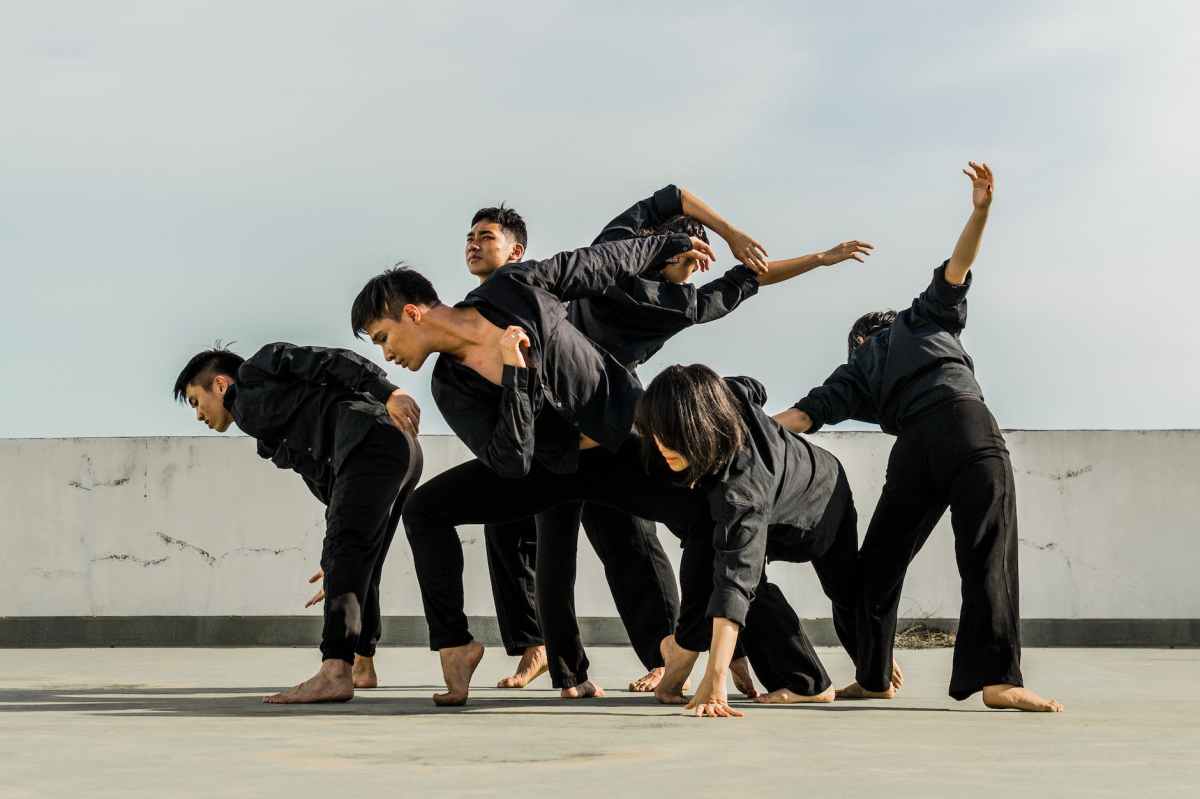
I dance because it makes me happy! My experience is that when I dance, I can express something from my heart to God that cannot be expressed in words. Dancing is a point of contact with God for me. It gives me an experience of God as the origin of creativity and beauty … “I dance because I want to spread a message of love, joy, hope and faith to the world … Among the dimensions added by the dance expression itself is the meta-message that there is room for the whole human being and life in its fullness in a Christian religious setting. Dance can teach children and adults a body-embracing way of living, believing and being in God’s world. One participant says that through dance in general, “we want to communicate heaven to people down here, the message of salvation, our freedom in God, the joy in God, and the joy of dancing with fellow Christians.” … Through dance these Christian dancers experience and practice their religion in a bodily way. This means that their spirituality takes an embodied form and that dance for them is not only a bodily practice, but also a spiritual one.[2]

Dancing seems to be a human attribute, not necessarily linked to just Christianity[3], it is a gift from God that can be used in the manner expressed here; to be a human means of expressing our God-given joy through our bodies. While dancing can be done alone, when done in community it can help to bind participants together. Joy and community are part of God’s purpose for us. We are tasked as God’s image-bearers to be his representatives and stewards. But our tasks are not to be burdensome but rather they are meant to be joyful. If you will, our tasks are meant to be a joyful dance we do with each other and with our Creator.

For us to dance the Kingdom Dance we don’t have everything figured out, He does. We don’t even have to worry about the results of the dance because the results are not dependent on us but on Him, who is working through us. As much as we have messed things up and will continue to do so, He will ultimately restore us and the rest of creation, making us all into what He had intended from the beginning.

Among all the creatures that God created, we are uniquely made, even if we are not the physical center of the universe as some people may have thought at one time. Through the pursuit of science, we now have instruments that make it very clear that we are not physically at the center of everything, not that we can prove anyway. We are only specks on a small planet spinning around a star in an apparently random solar system in an apparently random galaxy in a universe we cannot even see the edges of. Although we don’t know where the center is, the universe seems to have been created with us in mind. The properties of the universe, the physical constants, the atomic structures, were all created such that it would support our existence.[4] Interestingly, although we are creatures made of the stuff of the universe, not only can we study and reflect on the properties of that stuff, but we can also study and reflect on and even reflect the one who created us.

In the meantime, we do not know when He will return, and we find ourselves in the middle, in-between those two times, between the beginning of the restoration of God’s kingdom on earth and the time when it will be fully accomplished. In this in-between time, sometimes we see some signs of God’s restoration – and sometimes we can’t – and it’s hard to figure out what God is doing, especially when there are times that He seems to be absent. In those times, we need to call upon our faith to hold onto the hope that God is still working out His plans. We need to recall all the times that we did see Him at work, and then we also need to remember that getting to the end of the plans that He intends for us may require some pain on our part just as it required pain on His part. And like Him, our pain will be ultimately overwhelmed with the glory that will be revealed.

Our ultimate destination is not a mere returning to the way we started out, but to the full flourishing of our potential, where God will establish a kingdom of image-bearers released to display God’s character and reflect His glory.

“And salvation only does what it’s meant to do when those who have been saved, are being saved, and will one day fully be saved realize that they are saved not as souls but as wholes and not for themselves alone but for what God now longs to do through them. The point is this. When God saves people in this life, by working through his Spirit to bring them to faith and by leading them to follow Jesus in discipleship, prayer, holiness, hope, and love, such people are designed—it isn’t too strong a word—to be a sign and foretaste of what God wants to do for the entire cosmos. What’s more, such people are not just to be a sign and foretaste of that ultimate salvation; they are to be part of the means by which God makes this happen in both the present and the future. That is what Paul insists on when he says that the whole creation is waiting with eager longing not just for its own redemption, its liberation from corruption and decay, but for God’s children to be revealed.” [5]

With that in mind, we can not only wait and hope. We can participate with God in bringing His kingdom to earth and bringing a taste of healing and hope into a broken world that desperately needs it.

“Within the biblical story, the Christian discovers a constant call for justice on behalf of the weak and forgotten. In the biblical tradition, justice is an aspect of God’s shalom, a notion that carries with it the idea of completeness, soundness, well-being, and prosperity, and includes every aspect of life – personal, relational, and national.”[6]

The suffering and pain in the world can be overwhelming, challenging our ability to maintain hope and persist in our effort as we try to bring shalom. That challenge forces us to focus on the taste of shalom that God has given to us knowing that it is just a foretaste of the fullness of the shalom that awaits us in the fully restored earth.


[1] See Appendix G – The contributions of the Church for some examples

[2] Schurr, Hildegunn Marie T. “Dancing Towards Personal and Spiritual Growth” Nordic Journal of Dance – volume 3, 2012 (pp. 31-40)

[3] La Mothe, Kimerer. “The dancing species: how moving together in time helps make us human” Aeon aeon.co/ideas/the-dancing-species-how-moving-together-in-time-helps-make-us-human

[4] Slezak, Michael. “The human universe: Was the cosmos made for us?” New Scientist, 29 April 2015. www.newscientist.com/article/mg22630190-400-the-human-universe-was-the-cosmos-made-for-us

[5] Wright, N.T. Surprised by Hope, Rethinking Heaven, The Resurrection and the Mission of the Church. Harper Collins 2008. Kindle Edition

[6] Katongole, Emmanuel. Rice, Chris. “Reconciling All Things: A Christian Vision for Justice, Peace and Healing,” Intervarsity Press, 2009 (p. 72)

Reflect

Think about how the universe seems designed for us, our capacity to think about and explore it and then think about our capacity to reflect on the One who created it all. What does that suggest to you about what God has intended for us?

Observe

Read Hebrews 12. What does this passage say about how we should be living now?

A meaning in the patterns

Dancing in the Kingdom- Table of Contents

Dancing In the Kingdom – Preface

A meaning in the patterns

One of the patterns of history is that humans have been a mess since the beginning of humanity. The mess shows up throughout biblical history, church history, and even today. Another pattern is how God has been working his plan throughout that messy history – and his plan uses those messy humans to carry out his plan. The charge He gave to the first humans to be stewards of His creation was never revoked. Neither was His love and faithfulness that has persisted despite the persistent rebellion of generations of His image-bearers. And biblical history and church history and the history we make today reveals the pattern of His continued faithfulness.

Patterns of history

Dancing in the Kingdom- Table of Contents

Dancing In the Kingdom – Preface

Patterns of history

[Bible references: Ecclesiastes 1:9; Judges 1-21]

But when we look for patterns of love, we find them to be obscured and confused. Our rebellion against God keeps leading us to destructive, even self-destructive behavior. The signs of rebellion are everywhere.

As we examine human history for signs of progress, we instead find ourselves repeating patterns of destructive rebellion that keep us from progressing.[1] But overlaid on those patterns, we find that other patterns have been laid out for us; Patterns that lead beyond our self-destruction; Patterns laid out from creation that lead us through the times of our rebellion to the restoration of heaven and earth.

If we are honest with ourselves, we can admit that we also feel the continuous inward push against authority, even when we know that such authority is designed to be helpful, and even when we know that our rebellion will make things worse. The world around us reveals that the rebellion is universal – and devastating. The violence of wars and famine covers the world. Those in positions of authority are continually subject to the temptation to abuse that authority and to the illusion that the ability to exert force means that they are in control of their life.

But we can also see countervailing forces to that rebellion. Selflessness erupts around us with bursts of kindness and compassion, showing that love is still possible even in the most difficult of times.

The history of humankind reveals a constant battle between the forces of rebellion and selflessness. Sometimes one force seems to momentarily prevail against the other, but in the long run, nothing seems to change. Historical cycles seem to just keep on going, optimism gives way to pessimism which gives way to optimism, nations rise and fall, one after another. While history never exactly repeats itself, the patterns are there.[2]


[1] Verstappen, Stefan. “Historical Cycles: are we doomed to repeat the past?”; Hanson, Victor Davis. “Repeating historical patterns rooted in human nature”; Stratton, Geoff. “How Civilizations Fall: A Theory of Catabolic Collapse”

[2] Dyer, Geoff. “The day that killed optimism”; Digital History Reader. “Module 4: The End of Optimism? The Great Depression in Europe”; Acreman, Thomas. “Western Civilization prior to World War I”; McKay, Brett & Kate. “How the Generational Cycle of History Explains Our Current Crisis”; IGI Global. “Civilization Life Cycle: Introduction”;