
Disciplines of our hearts

Dancing in the Kingdom- Table of Contents

Dancing In the Kingdom – Part 3 – Dancing in the Kingdom– Chapter 15 – Reforming our Souls

Disciplines of our hearts

[Bible references: Matthew 6:24; Romans 12:1-2; 1 Corinthians 3:16; 6:12-19; 9:25-27; 1 Timothy 4:7-8,12; 2 Timothy 3:16–17; Hebrews 4:1-11; 5:14; 2 Peter 1:3-25]

Anyone who remembers learning … remembers choosing to engage in repeated practice over and over and over precisely so that the rhythms become practices.[1]

Spiritual disciplines are personal and interpersonal practices (habits or activities – not attitudes or character qualities) that are taught or modelled in Scripture which promote spiritual growth among believers in the gospel of Jesus Christ. The spiritual disciplines derive from the gospel and take us deeper into an understanding of the gospel and they are the sufficient means by which we can know and experience God so that we can become more like Him.

“Spiritual discipline, then, is developing soul reflexes so that we know how to live. We discipline ourselves to develop soul memory in normal times so that we’ll be equipped for the times of high demand or deep crisis.”[2]

A few words of caution: Although spiritual disciplines are the means to godliness that does not mean that we are godly just because we practice them. The great error of the Pharisees was that they felt by merely doing these things they were godly. The disciplines are meant to provide opportunities for Christ to transform us – they are not meant to be a burden or an end in themselves. Although we engage in the disciplines to pursue God we should not rely on our effort or our strength, but by resting in power of the Spirit.

Although God will grant Christlikeness to us when Jesus returns, until then He intends for us to grow toward it. We aren’t merely to wait for holiness; we’re to pursue it.”[3]

“The Disciplines allow us to place ourselves before God so that he can transform us . . . The inner righteousness we seek is not something that is poured on our heads. God has ordained the Disciplines of the spiritual life as the means by which we place ourselves where he can bless us. In this regard it would be proper to speak of ‘the path of disciplined grace.’ It is ‘grace’ because it is free; it is ‘disciplined’ because there is something for us to do.” [4]

Maturity requires incremental growth, accumulation of experience

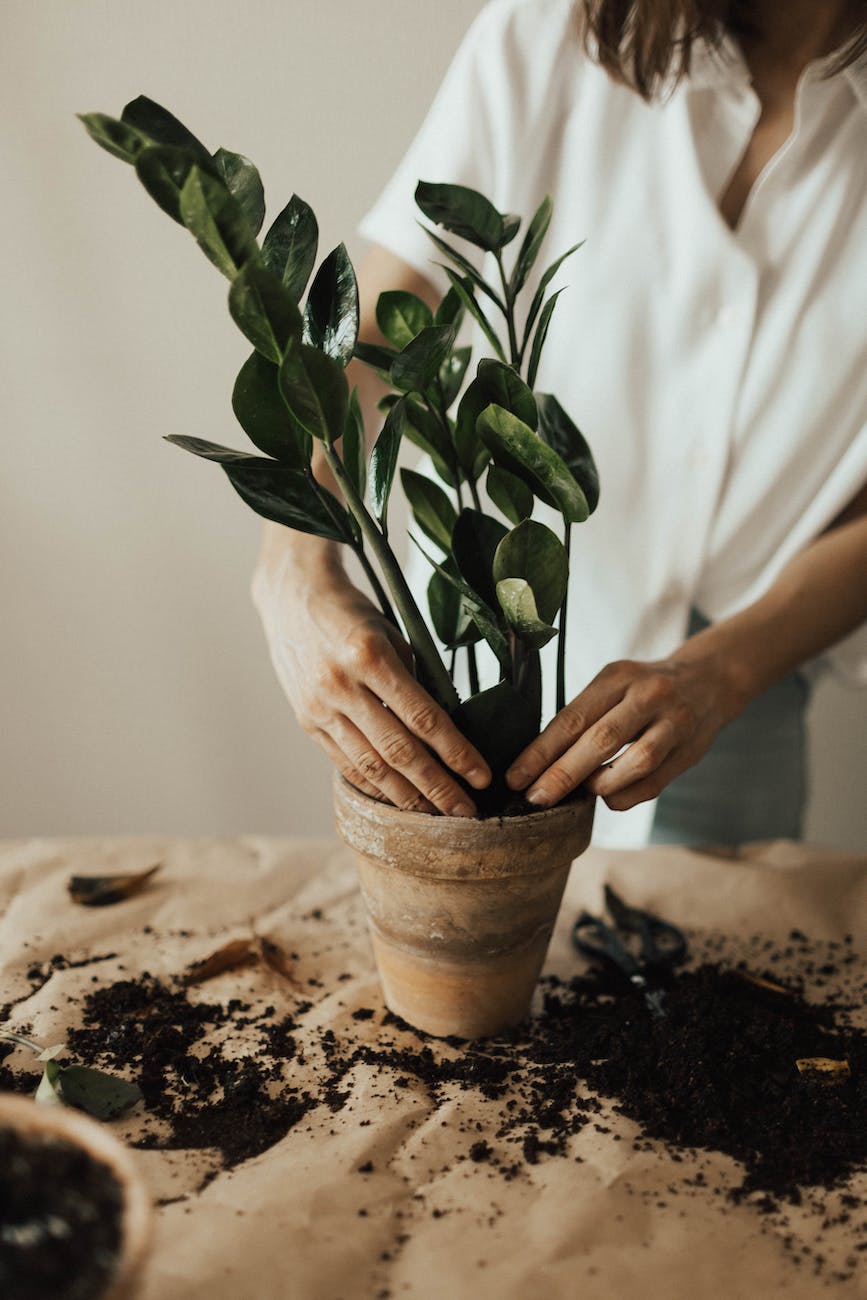
Before we begin to look at the specific disciplines available to us, we should consider their overall purpose. We are beings created in the image Christ, and although we are not Christ, we can become more like Him. Becoming like Christ is a process. We have examples all around us to show us that growth is a process. Plants start from a seed then, in time, grow and develop new parts until the plants become mature and can reproduce. The same with animals. These examples indicate to us that not only is growing a process but that there is an aspect to growth that is built in to automatically happen. Animals and plants, with proper nutrients and environment, will just naturally become mature.

Allowing intentional choices to become habits and the habits to shape our character

But image-bearers of Christ are not merely plants or animals. Our growth is dependent on the development of culture, which are aspects of our way of life that are not automatic but rather are chosen. We can make choices, moral choices, about what we think is important, to set priorities and values. Those choices started in a garden full of abundant food, but we had a choice to not eat the fruit from one particular tree, we had a choice to make based on love and obedience.

Allowing different disciplines to strengthen each other

The spiritual disciplines provide us with choices, to be intentional about how we want to grow. We will see that each discipline is dependent on the others, and each discipline can then weaken or strengthen the others. So, we may enter the disciplines at any point, but we should not neglect the others. We can choose to start from an area of strength or an area of weakness, but we should not neglect the other paths to growth.

The discipline of the soul is not disconnected from the discipline of the body

We are embodied creatures. As we engage in disciplines, we should consider the interplay of soul and body and how they affect each other. We see this effect when, on the one hand it is true that if we are feeling confident then our bodies tend to present a confident posture and on the other hand, it is also true that if we are not initially feeling confident then intentionally assuming a confident posture can produce the feeling of confidence. This leads us to the phrase, “fake it till you make it.” We should keep the interplay of spiritual and material, body, and soul, in mind as we engage in our spiritual disciplines.

Our bodies are the very temple of the Holy Spirit within us, and it is through our bodies that we exercise our faith – and through which we are capable of exercising immorality. To that end, the apostle Paul saw fit to discipline his body as part of his overall ministry.

Forming our virtues

Virtues are the qualities of Christ in our lives that are provided by Him: qualities such as compassion, kindness, humility, gentleness, patience, forgiveness. These qualities help us escape “the corruption that is in the world through lust. (KJV)” But although these qualities are given by Him, we are exhorted to strengthen those virtues with spiritual disciplines. For example, we should add virtue to our faith and virtue to our knowledge for knowledge without virtue only makes someone a walking textbook. Virtue helps add to our faith, to our knowledge, to our self-control, to our perseverance, to our godliness, to our brotherly kindness and to our brotherly love. It all hinges on godly virtues being added to our faith.

As Christians, we all want to grow in spiritual maturity and Christlikeness. Elders should be models of Christian maturity, qualified to the office primarily based on their character. While the Bible provides one quality related to skill (the ability to teach) and one related to the amount of time a man has been a Christian (not a recent convert), all the other qualifications are related to character. Yet while these traits are demanded of elders, they are not unique to elders. Elders are to be exemplars of the Christian graces which all Christians should aspire to. Every congregation is meant to be full of men and women who are above reproach, sober-minded, self-controlled, respectable, hospitable, sober, gentle, peacemaking, not lovers of money, mature, humble, and respected by outsiders.


[1] Smith, James K.A. “You Are What You Love: The Spiritual Power of Habit.” Brazos Press 2016. eBook

[2] Rumford, Douglas. SoulShaping. Tyndale House Publishers 1996

[3] Whitney, Donald S. Spiritual Disciplines for the Christian Life Navpress 2014

[4] Foster, Richard J. Celebration of Discipline Harper & Row Publishers ©1978

Observe

Read Romans 12:1-2; 1 Corinthians 9:25-27; 2 Timothy 3:16-17; Hebrews 4:9-11; 2 Peter 1:3-25. We are paradoxically called to both work and to rest. How do we do both at the same time?

Reforming our loves

Dancing in the Kingdom- Table of Contents

Dancing In the Kingdom – Part 3 – Dancing in the Kingdom– Chapter 15 – Reforming our Souls

Reforming our Loves

[Bible references: Psalm 1; 42; 139:13-14; Proverbs 4:23; Matthew 5:3-12; 12:28; 13:1-22; Mark 4:11; 12:29-31; Luke 8:10, 10:8; 13:18-19; Ephesians 6:10-20; Philippians 1:9-11; 1 Peter 5:8-9]

We are shaped every day, whether we know it or not, by practices – rituals and liturgies that make us who we are. We receive these practices – which are often rote – not only from the church or the Scriptures but from our culture, from the “air around us.”[1]

The Hebrew word for “hear,” “shema,” implies not just hearing, but obedience. Hearing with our mind should be connected to obeying with our body. God has made us with heart, soul, mind, and strength. Descartes had said, “I think therefore I am,” but that, in and of itself, leaves out the totality of who we are. We are not just brains on a stick,[2] we are creatures with embodied souls, creatures made in the image of a loving God, whose love is not just expressed in a sentiment, but by everyday choices expressed in what He does and in what we do. 1 Corinthians 13 makes clear that nothing is worthwhile if there is not love expressed through our actions.

Unfortunately, as we have expressed in a previous chapter, our choices seem to always be shrouded in sinful behavior. Time after time, history has shown us that simply filling our mind with the truth of God is a good start but is not sufficient to prevent us doing wrong things. Although our love will not be perfect until we are completely transformed during our resurrection, that does not leave us with no means to order our loves in our current lives. For the time that we are in, God has provided us with various disciplines which can be used to train our habits and therefore train our loves.

Our hope is not just in the future. Jesus proclaimed two thousand years ago that the kingdom of God has come. Jesus’ work of restoration may not be completed but is already underway. We may sometimes fret that the work of restoration, within us and around us, does not happen quickly, but as we observe God’s character as manifested in the natural and spiritual world around us, God seems to relentlessly accomplish his work through processes of growth. God had specified that all birds of the air, fish of the sea, animals and even humans were, through normal processes, to multiply and fill the earth. God’s own plan of redemption worked through generations from Adam, through Noah, Abraham, Moses, and finally to Christ. Jesus even particularly specified that the kingdom of God is like a seed that over time will grow into a plant or tree.

As creatures made in the image of God, we are given the free will to participate in our own growth. But we should keep in mind that if our goal is to become more like Jesus, then we should expect that growing into the likeness of Christ will take time … will take normal processes of growth. But we also need to keep in mind that God’s work of restoration is not unopposed; there are spiritual forces at work against God and against us.

Ultimately, it is Christ who transforms us. But we can humbly submit ourselves to God and prepare the soil of our lives to receive His grace. Our growth will be impacted by our loves and desires, by our yearnings, hungering and thirsting,[3] by where we choose to feed ourselves, by the habits and liturgies we allow to shape our lives,[4] by the disciplines we submit to,[5] by how we center our lives,[6] by how we have integrated the love we have toward ourselves, our families, our communities, and God. In the meanwhile, we will face resistance from within and from outside ourselves. In the normal course of events, it will be a common experience to have times when God seems absent, but we must know how to stay the course.

Holding to our center, keeping our loves ordered, holding on to our identity in the face of the pressures of the world will take conscious effort and discipline. Of course, our discipleship is not just a matter of paying attention to our inner life but also in the expression of our inner life in our walk with others, inside and outside the church. Hopefully, within the church, we can find healthy mutual support as we share our complementary spiritual gifts with one another.

Spiritual Disciplines are those practices which keep us centered on Christ. There are books with various lists of spiritual disciplines available to help guide us and you will find them with slightly different approaches. For instance, in Richard Foster’s book, Celebration of Discipline,[7] the disciplines are divided into three categories: The inward disciplines (meditation, prayer, fasting, study), the outward disciplines (simplicity, solitude, submission, service) and the corporate disciplines (confession, worship, guidance, celebration).

Another approach to spiritual disciplines is to focus on deliberative lifestyles such as were originally developed for use in monasteries but have application in the everyday lifestyle. One such example is the Rule of St. Benedict.[8] The Rule reminds us that we do not need to go about looking for God, for He is everywhere, including right where you are in your time and your place, in the humdrum everyday tasks of life. Freedom in Christ is achieved through the submission to three vows: obedience, stability and conversatio morum (conversion of life). These vows present us with paradoxes: our need to be in the desert so that we can be more fully present in the marketplace, our need to have prayer alone so that we can be more present in common worship, our need to commit ourselves to stability so that we can be more fully open to change, our need to detach ourselves from things so that we can fully enjoy them. The intent of all these practices is to help us more fully center ourselves in Christ so that we can more fully love our community.

Whether we are following an intentional plan or not, our everyday habits and practices do shape our spiritual lives. Even the normal, incidental routines we do, such as brushing our teeth, can shape us in ways we don’t think about. But if we take the time, we have the opportunity of using those same routines to help transform us in the ways we want to. But if we want to give our everyday routines a chance to transform us in the way we want, we will need to practice ways of waiting, hoping, slowing down, and preparing.

“When I brush my teeth I am pushing back, in the smallest of ways, the death and chaos that will inevitably overtake my body. I am dust polishing dust. And yet I am not only dust. When God formed people from the dust, he breathed into us—through our lips and teeth—his very breath. So I will fight against my body’s fallenness. I will care for it as best I can, knowing that my body is sacred and that caring for it (and for the other bodies around me) is a holy act. I’ll hold on to the truth that my body, in all its brokenness, is beloved, and that one day it will be, like the resurrected body of Christ, glorious. Brushing my teeth, therefore, is a nonverbal prayer, an act of worship that claims the hope to come.” [9]

We need to be mindful that changes in our life are never neutral. We need to be intentional about choosing practices and patterns in our life that will transform us to be more in the image of Christ.

“Take heed, consider your temptations, watch diligently; there is a treachery, a deceit in sin that tends to the hardening of your hearts from the fear of God.” [10]

We need to be aware of how much our sin is actively working against us, hardening our hearts, and turning us in ways, even very subtle ways, against Christ. To be diligent in following Christ, we need to be diligent in practicing spiritual disciplines in one form or another.


[1] Warren, Tish Harrison. “Liturgy of the Ordinary: Sacred practices in everyday life.” InterVarsity Press 2016. eBook

[2] Smith, K.A. James “You Are What You Love: The Spiritual Power of Habit” Brazos Press 2016. eBook

[3] Smith, K.A. James. “You Are What You Love: The Spiritual Power of Habit” Brazos Press 2016. eBook

[4] Warren, Tish Harrison. “Liturgy of the Ordinary: Sacred Practices in Everyday Life” InterVarsity Press 2016. eBook

[5] Foster, Richard J. “Celebration of Discipline” Harper & Row Publishers ©1978

[6] De Waal, Esther. Seeking God The Liturgical Press. 2001; Tozer, A.W. “The Pursuit of God” Christian Publications, Inc. 1948

[7] Foster, Richard. Celebration of Discipline. Harper & Row Publishers ©1978

[8] Foster, Richard. Celebration of Discipline. Harper & Row Publishers ©1978

[9] Warren, Tish Harrison. Liturgy of the Ordinary: Sacred Practices in Everyday Life. InterVarsity Press 2016. eBook

[10] Owen, John. Mortification of Sin. In Believers The Necessity, Nature, And Means Of It: With A Resolution Of Sundry Cases Of Conscience Thereunto Belonging.” From The Works of John Owen Johnstone & Hunter Volume 6, 1850-3 www.monergism.com/thethreshold/sdg/owen/Mortification%20of%20Sin%20-%20John%20Owen.pdf

Observe

Read Psalm 1; Matthew 13:1-22. How do you prepare the soil of your heart so that you can spiritually flourish?

Growth in the faith

Dancing in the Kingdom- Table of Contents

Dancing In the Kingdom – Part 2 – The Kingdom Revealed – Chapter 12 – Launching the church

Growth in the faith

[Bible references: Genesis 2:9; 1 Samuel 2:6; Isaiah 61:1-11; 1 Corinthians 3:7; Ephesians 4:15-16; Colossians 1:10]

In the book of creation, God has shown us that it is a normal process for living things, plants and animals, to grow from seed to maturity and to the production of new seeds. That gives us a template for the process of spiritual growth as well, not only for us as individuals but for the church as a whole. When Christ planted His church, it took time for the church to study the mysteries of the faith and then to develop its doctrines and teachings about things such as the mysteries of who God is, who we are as individuals and how we can grow in our knowledge of Christ. This process would happen in the context of changing situations and emerging challenges such as growing numbers of new members in the church and the expansion of the church into new territories which add growing numbers of new languages to think and communicate in. Adding new languages and cultures makes things more complex, but at the same time provides the church new opportunities for learning and growing in the faith.[1]


[1] Richards, Olly. “9 Surprising Health Benefits of Learning a Foreign Language” Story Learning storylearning.com/blog/9-health-benefits-of-learning-a-foreign-language

Observe

Read Isaiah 61:1-11. What seeds are being referred to in Isaiah 61:11?

In time and In an eternal future

Dancing in the Kingdom- Table of Contents

Dancing In the Kingdom – Part 1 – Shadows of the Kingdom – Chapter 3 – The image-bearers

In time and in an eternal future

[Bible references: Genesis 2:9; Exodus 25-28; 1 Kings 5-6; Psalms 19; Ecclesiastes 3:1-22; Matthew 6:28]

Although we have not existed from all eternity, God created us with more than a mortal body. We are also endowed with a soul and a spirit that can be joined to God’s Spirit. In the present moment, our mortal bodies are created from the stuff of the earth, and we are born into particular times and places so that we may serve and enjoy God in those particular times and places.

God made us as creatures. And the good part about being a creature is we were made to be dependent upon God and, by our very design, also dependent on other people and the earth … Often what we’re missing is the good of dependence. We need to cultivate an awareness of how our dependence and our needs open avenues of love … What if we stopped thinking of life as to-dos and started thinking of it as relationships? When we’re so task-driven, it’s very hard to appreciate love, because love is incredibly inefficient … when we were younger, God didn’t expect us to be what we are now. He’s still taking his time, by his Spirit, to bring about order through developmental growth … Part of recognizing our limits is getting comfortable in God’s space and growing in dependance on him … Sometimes, I think we’re actually scared to death to pray, because if we actually take the time to get quiet, we might begin to fear that God’s not there or wonder whether he’s apathetic or just really angry. Only in prayer will we discover how compassionately God views us … cultivating the gift of encouraging and celebrating others. It’s a spiritual discipline, a healthy way of dying to yourself and encouraging others. We are all dying for someone to pay attention and notice our presence and being. When someone articulates that, it’s life-changing. [1]

Our creatureliness which sets us in a particular place and time with a particular body is an opportunity to appreciate our finiteness and God’s infiniteness, to cultivate a sense of dependence on God’s provision and our dependence on each other and within the context of those relationships to truly learn how to love.

Our creatureliness also forces us to deal with God’s ordering Creation through process. Everything, whether physical, social, emotional, intellectual, or spiritual, is controlled by processes. Sometimes we desire to bypass those processes: we want to be instantly knowledgeable and wise and experts at what we do … and not dependent on anyone else. But it was precisely that kind of desire that led to our rebellion at the beginning of humanity.

As God’s image-bearing creatures, we not only have relationships with each other but also with our Creator. In our relationships with God’s other image-bearing creatures, our love can be expressed in our opportunities to support, uplift, and encourage one other. God has no need of such support from us, but He offers us such support. When we recognize our dependence on Him, He gives us the ability to pray, to acknowledge our needs and to recognize His provision for us when He supplies our needs.

We think of prayer as mostly self-expressive—as a way to put words to our inner life … if we pray the prayers we’ve been given, regardless of how we feel about them or God at the time, we sometimes find, to our surprise, that they teach us how to believe … We sleep each night in our ordinary beds in our ordinary homes in our ordinary lives. And we do so in a universe filled to the brim with mystery and wonder. We always sleep in a crowded room in our crowded cosmos, so we ask for crazy things—that God send unimaginable supernatural beings to watch over us as we drool on our pillows … Sleep reminds us of how helpless we are, even merely to stay alive. In the Christian tradition, sleep has always been seen as a way we practice death. Both Jesus and Paul talk about death as a kind of sleep. Our nightly descent into unconsciousness is a daily memento mori, a reminder of our creatureliness, our limitations, and our weakness. [2]

As we pray in our mortal bodies, we remember that although our mortal bodies will return to the dust from which we are made, our bodies will be resurrected when heaven and earth are reunited so that we, with soul and spirit and new body, will be able to enjoy God forever into the future.

What is that phenomenon we call ‘beauty’ and why does it lie at the core of both collective civilization and individual desire, even as we value it precisely for existing outside of practicality? In his essay The Weight of Glory [A sermon given in Oxford in 1942], C.S. Lewis explains it as an echo of eternity, imprinted upon humanity as an indication of our origin and destiny.[3]

Indeed, our God is a God of beauty, and he has created us to enjoy his beauty. Art and our appreciation of it are among the great gifts God has given to us. Sure, like anything, it can be turned into an idol. But art, beauty, and appreciation for the finer things of culture are all good gifts from a good God. [4]

In the meantime, while we await for our resurrection and to “gaze on the beauty of the Lord” (Psalm 27:4), we have reminders of our connection with our transcendent God in the beauty of His Creation and in our capacity to make things of beauty. Whether the beautiful things are of our creation or the Lord’s, they reflect God’s own beauty.

The books or the music in which we thought the beauty was located will betray us if we trust to them; it was not in them, it only came through them, and what came through them was longing … they are not the thing itself; they are only the scent of a flower we have not found, the echo of a tune we have not heard, news from a country we have never yet visited … We do not want merely to see beauty … We want something else which can hardly be put into words—to be united with the beauty we see, to pass into it, to receive it into ourselves, to bathe in it, to become part of it.[5]


[1] Straza, Erin. “Learning to Love Your Limits” Christianity Today 13 Dec 2021 www.christianitytoday.com/ct/2022/january-february/youre-only-human-kelly-kapic-limits-god-design.html Interview with Covenant College theologian Kelly M. Kapic’s about his latest book, “You’re Only Human: How Your Limits Reflect God’s Design and Why That’s Good News.”

[2] Warren, Tish Harrison. “The Cosmos is More Crowded Than You Think” Christianity Today 14 Dec 2021 www.christianitytoday.com/ct/2022/january-february/prayer-night-tish-harrison-warren-angels-crowded-cosmos.html

[3] Wang, Irina “Beauty betrays eternity” Salt salt.london/articles/beauty-betrays-eternity

[4] Meuhlenberg, Bill. “Art and the Christian” Culture Watch 28 July 2011 billmuehlenberg.com/2011/07/28/art-and-the-christian/

[5] Lewis, C.S. “The Weight of Glory” Theology Nov 1941

Observe

Read Ecclesiastes 3:1-22.  In the midst of meditating on the limitations of life on earth, verse 11 slides in a reference to beauty and eternity. How does that verse impact the rest of the chapter?