Principles

Dancing in the Kingdom- Table of Contents

Dancing In the Kingdom – Part 3 – Dancing in the Kingdom– Chapter 18 – Entering the Dance

Principles

[Bible references: Genesis 1; Psalm 19:1-4; Isaiah 28:23-29; Romans 1:18-20; 2:14-15; 13:1-2; 1 Peter 2:13]

We cannot establish the kingdom of God nor overcome the powers of evil in our own power. While Jesus has overcome the powers of the world, we do not know when he will return to finish the deed to fully establish his kingdom and fully rid the world of the presence of evil. But we can continue to work on the mandates he gave us at the beginning and rephrased at the Great Commission to make disciples of all nations, teaching them to obey all that I have commanded you, which extends from our original directives to be fruitful and multiply and fill the earth, and to subdue it and rule over all the creatures.

From the beginning of the church, we can see that while some people were sent out with the express purpose of spreading the gospel, most people stayed within whatever vocation they had, living in their own communities, sharing their resources, and supporting one another. Those that stayed in their vocations, did not change their vocations although they may have changed the way they pursued their vocations.

Albert Wolters suggests several principles that can help guide the way in which we pursue our vocations:[1]

  • The universe that God created was good.
  • The structures/institutions created by people should reflect God’s character and his wisdom as revealed through creation and his word.
  • The structures/institutions created by people are vested with God’s authority.
  • The universe reveals God’s glory.
  • Wisdom is “ethical conformity to God’s creation.”
  • The will of God for our life can be known through his creation, our conscience, His word, spiritual discernment.
  • Since God’s initial creative activity in forming the universe, God has been creatively developing the universe either directly through his own work or indirectly through his people. Part of that development includes the development of societal and cultural institutions.
  • Even without the fall, people would still be expected to develop the garden and other aspects of civilization as part of our role in stewarding what God has given us
  • When Christ returns, He will restore the earth.[2]

Whether we are directly communicating the gospel in our vocation or not, we may hold the narrative of the gospel as public truth to be shared.[3] The first communicators of the gospel were eyewitnesses who could say, “That which we have seen and heard … we declare to you.” As the church, we are entrusted with the responsibility of sharing that same truth, not in a forceful way but in the way of Jesus and his apostles who affirmed what they knew and invited others to respond in dialog.


[1] Wolters, Albert M. Creation Regained: Biblical Basics for a Reformational Worldview, William B. Eerdmans Publishing 1985, 2005. eBook Chapter 2

[2] Wolters, Albert M. “Worldview and Textual Criticism in 2 Peter 3:10” Westminster Theological Journal 49 (1987) 405-413 allofliferedeemed.co.uk/Wolters/AMW2Peter3.pdf

[3] Newbigin, Leslie. . “An Introduction to the Theology of Religions: Biblical, Historical & Contemporary Perspectives” Gospel As Public Truth, Intervarsity Press 2003

Observe

Read Psalm 19:1-4. How can our work reflect the glory of God?

Re-envisioning our inhabited environment

Dancing in the Kingdom- Table of Contents

Dancing In the Kingdom – Part 3 – Dancing in the Kingdom– Chapter 18 – Entering the Dance

Re-envisioning our inhabited environment

[Bible references: Exodus 25:1-9; 31:1-11; 35:30-36:7; Isaiah 65:17-25; Revelation 21:24-26]

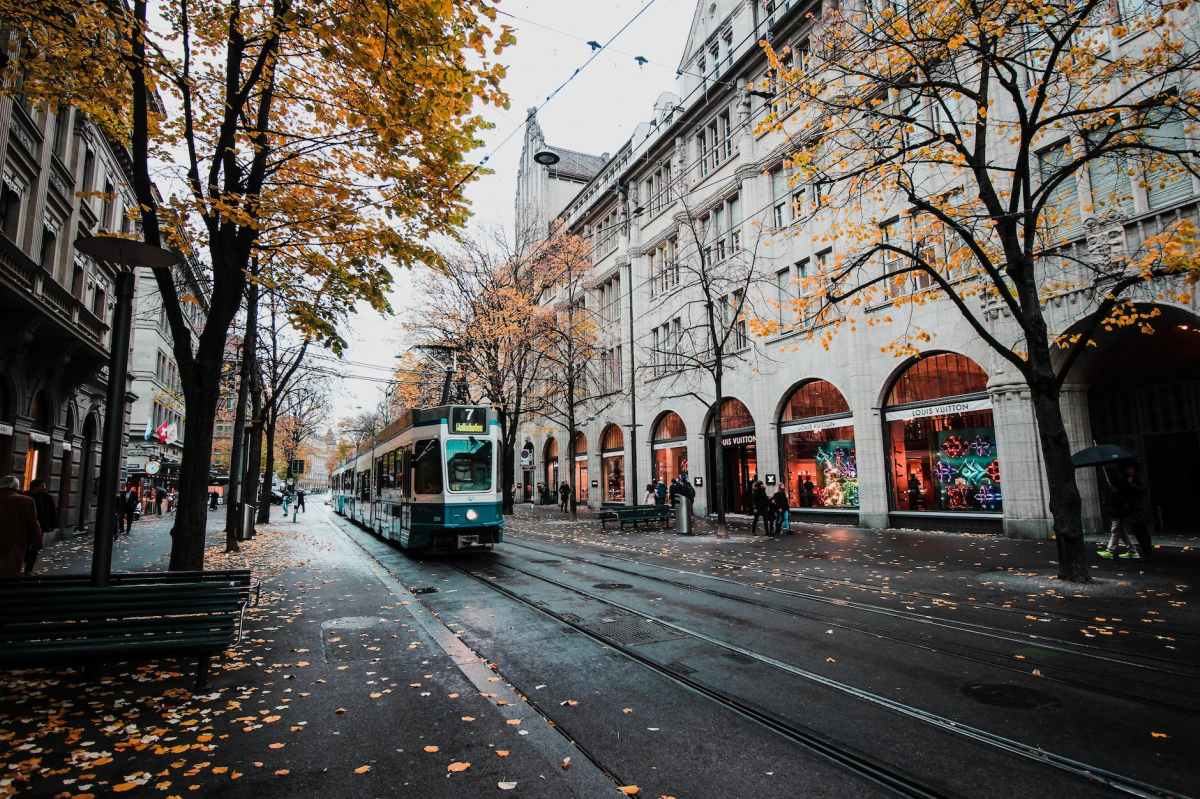
Within our given environment, we create communities, culture, and institutions to support all that. Our homes, neighborhoods, towns, and cities reflect our potential to create either beauty or corruption. The power we have as bearers of God’s image which provides our God-given ability to transcend our environment, is the source of great good or great sin.

“And decades of persuasive experiments have shown that built environments can be a factor in shaping us in ways that have significant long-term implications, in educational or workplace performance, or our physical and mental health and wellness. The point is that architecture, an integral part of essentially all cultures, is one of many interacting cultural factors—like entertainment and marketing, politics, belief systems, or charismatic individuals, for example—that together, in large and small ways, are involved in shaping behavior and who we are over a lifetime.” [1]

“On the night of May 10, 1941, with one of the last bombs of the last serious raid, our House of Commons was destroyed by the violence of the enemy, and we have now to consider whether we should build it up again, and how, and when. We shape our buildings, and afterwards our buildings shape us.”[2]

We possess the abilities to create works of art, some of which are designed simply to be enjoyed or give us cause to think and some of which have practical uses such as buildings we live, work, or play in, the outdoor areas between those buildings that can serve to connect us together, the vehicles which transport us. These practical works of art also require feats of all sorts of engineering, technical and organizational skills.

It is also clear that those same abilities are regularly misused, and our constructions look less like works of art and more like works of neglect and corruption. Instead of works which build us up and add to the flourishing of all, our works sometimes are simply not as helpful as they can be and sometimes even outrightly abuse our environment as well as our fellow humans.[3] Poor building design sped up Covid spread.[4]

 A Christian architect, Dave Greusel, suggests that we should construct our buildings with the attitude that they serve as “gifts to the community,” purposely constructed to advance God’s Kingdom, expressing grace, beauty, justice, creativity.[5] There are many different ways in which we enhance the quality of life not only within the buildings we create, but also the environment around those buildings, designing our spaces with consideration for how we live not only in, but around our buildings.

In the U.S., planning our cityscape around automobiles has seemed natural because of the way that our automotive technology has allowed us to flexibly expand in the large space afforded by our country. Sadly, that type of planning has caused us to sometimes neglect the way that life is normally lived with the communities of the city. Sometimes, it has been after the fact that cities have paid attention to how to better design the city spaces for people to navigate on foot or bicycle and to live in community.

Enacted space is “activated by the people using it.” that is, it is not enough to design particular spaces, but to make them attractive so that people use them. [6]

Additional features that can be considered for our spaces are how we situate housing for people and where they work, how we create enclosed spaces that give a sense of protection and safety, monuments that provide particular spaces with meaning and the thresholds (doorways or openings) between the building interiors and the spaces outside.[7]

“Connectivity is measured by the number of intersections per square mile. One hundred fifty connections per square-mile is considered to be the minimum for a vibrant community.” [8]


[1] Hart, Robert Lamb. “How Buildings Shape Us” Common Edge commonedge.org/how-buildings-shape-us

[2]Churchill, Winston. Made in a speech in the House of Commons on October 28,1943 about replacing the bombed-out House of Commons chamber. Quote given Automated Buildings automatedbuildings.com/news/aug20/articles/lynxspring/200721102909lynxspring.html

[3] Rethinking the Future. “Some Examples of Bad Architecture Ideas” Rethinking the Future www.re-thinkingthefuture.com/article/some-examples-of-bad-architecture-ideas; Staczek, David. “Is Bad Architecture Harmful to Our Health” Architizer architizer.com/blog/inspiration/stories/bad-architecture-harmful-to-health; Husock, Howard. “How Public Housing Harms Cities” City Journal Winter 2003 www.city-journal.org/html/how-public-housing-harms-cities-12410.html

[4] Ing, Will. Architects’ Journal 3 Oct 2021; www.architectsjournal.co.uk/news/poor-building-design-sped-up-covid-spread-says-academic 2021

[5] Greusel, Dave. “Architecture for Human Flourishing” Denver Institute for Faith and Work 15 Apr 2015 denverinstitute.org/david-greusel-architecture-for-human-flourishing-videos

[6] Jacobsen, Eric O. The Space Between  A Christian Engagement with the Built Environment” Baker Academic, 2012 (p. 17).

[7] Jacobsen, Eric O. The Space Between  A Christian Engagement with the Built Environment” Baker Academic, 2012 (Chapter 2)

[8] Jacobsen, Eric O. The Space Between  A Christian Engagement with the Built Environment” Baker Academic, 2012 (p. 43)

Reflect

As you consider the town or city you live in, what might be done better to make the places we live and work to be a gift to the entire community?

Observe

Read Isaiah 65:17-25. How can we build things that point to our future hope?

Listening to our culture

Dancing in the Kingdom- Table of Contents

Dancing In the Kingdom – Part 3 – Dancing in the Kingdom– Chapter 17 – Finding our place

Listening to our culture

[Bible references: Proverbs 12:15; Isaiah 5:20; Luke 10:25-37; Acts 17:16-34; Galatians 5:16-23; James 1:29; 1 John 4:1]

Outside of providing a healthy, flourishing place within the church community, how can we be more deliberate in engaging with those outside the church. Like the Apostle Paul engaging with the citizens of Athens, we must know what it is we believe then take the time to understand what the others believe and what their needs are so that we can begin the conversation. We can speak better after we have listened.

Listening to voices from outside the church can be challenging because their value systems and world views are so different. We saw in Chapter 13 how different experiences and viewpoints within the church have affected how they answer the various questions asked by the church. We do need to be aware of the different values and world views because, on the one hand, they may add useful understanding to our faith, then on the other hand, they can also distort the values and world views we have within the church.

“A newly released survey reveals that the ideologies of postmodernism and secular humanism have a noticeable influence on how Americans make decisions. The Cultural Research Center at Arizona Christian University released the eighth report of its 2021 American Worldview Inventory Tuesday. The report was based on responses collected from 2,000 American adults in February as part of a more extensive survey with a margin of error of +/- 2 percentage points. The survey found that although 2% of Americans have adopted secular humanism as their dominant worldview, a significantly higher share of the population (16%) actively embrace principles associated with the worldview. Similarly, while just 1% of Americans have adopted postmodernism as their dominant worldview, 16% frequently make decisions indicating that the philosophy plays an important role in shaping their day-to-day actions.” [1]

What is apparent from the study done by the Cultural Research Center at Arizona Christian University, is that there is a small percentage of Americans who are aligned with one particular ideology, but many of us, including many within the church, have adapted only various pieces of various ideologies. Before we figure on how to bring the gospel to or culture, we may first need to understand how our culture has affects our understanding of the gospel[2] so we can communicate clearly about what the gospel is.

According to Timothy Sheriden and Michael Goheen, there are four theological considerations:

“The first is an understanding of the gospel as the good news of the kingdom …God is restoring his gracious and loving rule over the whole of creation and every aspect of human life. … The second is an understanding of the comprehensive and restorative nature of salvation … the whole of human life … the restoration of this creation … The third is the lordship of Jesus Christ … He is more than a personal savior; he is Lord of all. Fourth, the church is the new humanity that shares in the future life of the kingdom now, as sign, foretaste, and instrument.” [3]

Once we are clear on what the gospel message is, then we are prepared to first express love by listening to our “neighbor,”[4] so that we then address our neighbor’s needs as we share the gospel. The very short following list highlights just a very few of the predominant cultural ideologies that have influenced our neighbors.

  • The church should not influence the government.
  • Religious ideas are to be kept as private ideas not to be discussed in public
  • Rejection of any knowledge other than what is available by science.
  • Humanity is always getting better.
  • All knowledge, hence, all truth, is relative.

When we talk with fellow image-bearers of God, we need to remember our common humanity,[5] that despite our differences there are many things that we share together. We were all intended to create good, and we are all broken in our attempts to do that good. Our society tends to put labels on ideas, such as those listed above, but those labels tend to be unhelpful because we then create divisiveness by using them to label people.

Whatever ideologies we may encounter in our conversations, we should remember that people are usually not as responsive to attacks on their ideas when they feel they are being listened to. When we are listened to, we may find each other more receptive as we each express our convictions sincerely in context of a polite conversation.

One way of loving our neighbor is suggested by Richard Mouw. Convicted Civility,[6] is a civility that begins with kindness, grace, patience, generosity, and caring for the other paired with a conviction that is not being relativistic, but truthful about what you don’t approve. Jesus showed most of his criticism to people within the religious establishment but was gracious to the “sinners.”


[1] Foley, Ryan. “Postmodernism, secularism have increasing influence over Americans’ decision-making: report” Christian Post, 10/22/2021 www.christianpost.com/news/peoples-choices-influenced-by-postmodernism-secularism-report.html

[2] Mattera, Joseph. “Why Your Faith is More Influenced by Culture than the Bible” JosephMattera.org 31 Aug 2017 josephmattera.org/faith-influenced-culture-bible

[3] Finn, Nathan A, Whitfield, Keith S. “Chapter 5 Missional Spirituality and Cultural Engagement” IVP Academic 2017IVP Academic 2017

[4] This parable helps us to understand that our “neighbor” includes anyone we encounter.

[5] Warren, Tish Harrison. “We Need to Talk How Americans Can Learn to Live Together Again” New York Times, 10/24/2021

[6] Mouw, Richard J. Uncommon Decency: Christian Civility in an Uncivil World. IVP Books 2010

Observe

Read Luke 10:25-37. Jesus told the story with characters his audience could identify with. What characters would you choose to tell the same kind of story today?

New Jerusalem’s Urban Garden

Dancing in the Kingdom- Table of Contents

Dancing In the Kingdom – Part 3 – Dancing in the Kingdom– Chapter 16 – Fixing our eyes

New Jerusalem’s Urban Garden

[Bible references: Genesis 1-2; 1 Corinthians 12; 14;1 Peter 1, 4; Revelation 21-22]

In the now-broken earth, many people think of human civilization only as a corruption and pollution of the earth, that the earth was only meant to be pristine – as it supposedly was before humans started to mess it up. While we certainly have abused the earth in many ways, that does not mean all aspects of human civilization are inherently bad. When we use our God-given capabilities to join God in His kingdom building, that is good. Many of the things that we design, create and build are inherently good. The problem lies in our corruption and the world’s corruption that causes us to misuse every good thing.

When we were charged with filling and subduing the earth, it did not mean that we were to simply expand the Garden of Eden. God had given us many gifts to use, including tremendous creative abilities. We were given various spiritual gifts for the purpose of building one another up; we were given artistic gifts to make articles for the Tabernacle and Temple; we were given gifts of singing, making musical instruments and craftsmanship, hunting, trading, sailing – in general, making the things of civilization.

Those same gifts are available for current task of participating with God in the process of bringing His Kingdom to earth, a process that shall lead to ultimate uniting of heaven and earth, a process that leads not to the original Garden of Eden, but of an urban garden attached to the new Jerusalem.

It is undeniable that, despite the corruption we see, God has provided us an abundance of creative skills for displaying His transcendence and glory in our art, technology, engineering, and sciences. He has also given us social and political skills to create human public and private institutions that can organize our abilities to do good.

But it does not take much observation to also notice the corruption that has permeated our society. It can seem hard to determine if we have misused more than properly used the gifts and abilities God has given us. Nevertheless, as God’s co-regents we have been given a sacred obligation to nurture the place he gave us in anticipation of God’s final restoration of the earth.

Reflect

How can you use the gifts and skills that God has given you to help give people hope for the future?

Observe

Read 1 Peter 1. If our mind is set on seeing Christ soon, how shall we prepare?

Lamenting our brokenness

Dancing in the Kingdom- Table of Contents

Dancing In the Kingdom – Part 3 – Dancing in the Kingdom– Chapter 14 – Remembering our creation

Lamenting our Brokenness[1]

[Bible references: Psalm 90; Lamentations 1-2; Matthew 26:36-46; 27:33-53; Luke 22:15; 1 Corinthians 14:12; Hebrews 12:2]

God made a good world, a world full of his glory. Sometimes, we can look at the beauty, the immenseness, the intricacy of what he has made all around us and be filled with awe and wonder. Unfortunately, what is also visible are the many ways in which things are not as they should be. As we consider all that we see and contemplate the kind of end that God intended, we find ourselves looking at a world that seems to be headed in the wrong direction. Instead of increasing shalom, there is violence, hatred, fear, disease, and brokenness. Pain. Shattered dreams. Loss of hope.

There are times when the brokenness around us and within us can overwhelm us. There may be times when God seems absent for long periods of times. This intense absence has brought some people to what they call the Dark Night of the Soul.[2]

The brokenness around us affects everyone, although some experience the brokenness more harshly than others. The Psalms are full of complaining about how the pain of sins’ consequences don’t seem to affect everyone equally. In Lamentations, that pain is captured in personification – the pain of an adulterous woman who is naked, unclean, scorned, and shamed, a victim of rape, a slave, helpless, isolated, unclean. Just as we all bear the guilt of sinful disobedience against God and neighbor. Not only do we bear the guilt of active rebellion against God, but we also bear the shame of being sinned against.

Throughout its history, the church has been concerned with the sin of people but has largely overlooked an important factor in human evil: the pain of the victims of sin. The victims of various types of wrongdoing express the ineffable experience of deep bitterness and helplessness. Such an experience of pain is called han in the Far East. Han can be defined as the critical wound of the heart generated by unjust psychosomatic repression, as well as by social, political, economic, and cultural oppression. It is entrenched in the hearts of the victims of sin and violence, and is expressed through such diverse reactions as sadness, helplessness, hopelessness, resentment, hatred, and the will to revenge.[3]

None of this is comfortable, our tendency is to use whatever devices we can to cover our feelings. We want to run and cling to the hope and joy of Christ, to rush past our uncomfortable guilt and shame. There is a part of us that would be happy to join Christ in His work in the world, as long as we can skip the confession of sin and guilt, but in doing so we would skip the richness of God’s mercy and the gift of shalom.

The depths of joy and hope are not just feelings for us to receive and enjoy. Rather, the depths of joy and hope are only found in acts of the will, in a persistent choosing to abandon our interests and instead to follow God.

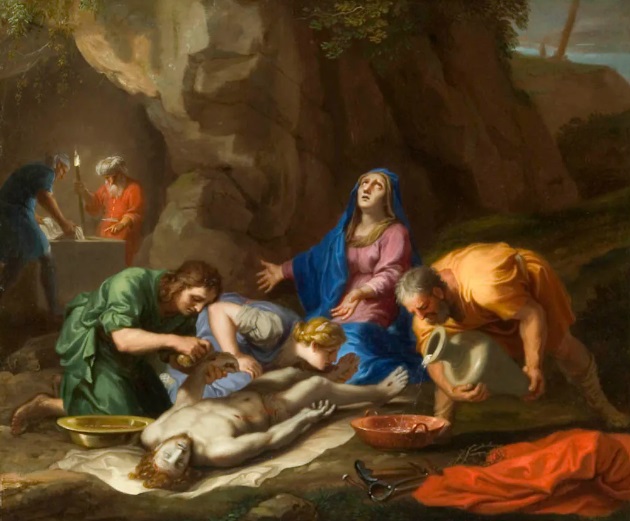
Knowing what was before Him, Jesus chose to push His glory to the side and to take on the form of a human with all its physical inconveniences, to endure the ridicule of people who were not fit to tie his sandals, to spend years training 12 disciples all of whom he knew would abandon him in the time of his greatest suffering as he endured the agony of the cross. But in all of this, as he shared the last meal with his disciples before his time of passion, he could say, “I have eagerly desired to eat this Passover with you before my suffering.” The great joy that awaited Jesus and His disciples would be preceded by deep sorrow and great suffering.

“Throughout 1946 and 1947, Mother Teresa experienced a profound union with Christ. But soon after she left the convent and began her work among the destitute and dying on the street, the visions and locutions ceased, and she experienced a spiritual darkness that would remain with her until her death. It is hard to know what is more to be marveled at: that this twentieth-century commander of a worldwide apostolate and army of charity should have been a visionary contemplative at heart; or that she should have persisted in radiating invincible faith and love while suffering inwardly from the loss of spiritual consolation” [4]

As we consider in which ways we are called to “Dance in the Kingdom” with God, we need to keep the proper perspective. God’s work is to reconcile people and all of Creation to Himself. Whatever task He gives us to engage in, it will only ever be a portion of God’s work. Whatever task He has called us to is sufficient for us and He will supply whatever we need to accomplish the tasks He has provided. While some are called to do “bigger” tasks than others, we need to humbly accept whatever tasks God has called us to do. We also need to humbly submit to our need for one another and our need to combine whatever spiritual gifts God has given to us with the gifts He has given others as we build up one another. In the task of building up one another, we need to address another humility.

Our sin and our woundedness are deeper than we imagine. As we confess and acknowledge the sins we have committed and the shame we experience when others have sinned against us, our proper response is lament. We can neither undo what we have done nor what has been done to us. But we can take the next step. The path to restoration and reconciliation leads through a lament that must confront our brokenness and acknowledge the pain. In our lament we can recognize how we are corrupted by sin and that we are accountable for all the suffering caused by our sin.

For us to experience healing of shalom, we need to acknowledge the suffering we have caused, encounter the truth about our sins, and challenge the privileges we may have had over others. Shalom requires lament, a reminder not likely needed for those whose lives are marked by the injustice thrust upon them but is likely needed for those whose lives are marked by privilege.

“Lament in the Bible is a liturgical response to the reality of suffering and engages God in the context of pain and trouble. The hope of lament is that God would respond to the human suffering that is communicated through lament.”[5]


[1] Plantinga, Cornelius. Not the Way It’s Supposed to Be Eerdmans Publishing Co – A. Kindle Edition; Wolters, Albert M. Creation Regained Biblical Basics for a Reformational Worldview  William B. Eerdmans Publishing 1985, 2005. eBook

[2] Rah, Soong-Chan, “Prophetic Lament: A Call for Justice in Troubled Times” Intervarsity Press, 2015; Zaleski, Carol. “Dark Night of Mother Theresa;” St. John of the Cross, Dark Night of the Soul First Things, www.firstthings.com/article/2003/05/the-dark-night-of-mother-teresa

[3] Park, Andrew S. “The Wounded Heart of God: The Asian Concept of Han and the Christian Doctrine of Sin” Abingdon February 1, 1993

[4] Zaleski, Carol. “The Dark Night of Mother Teresa’s Soul” First Things, www.firstthings.com/article/2003/05/the-dark-night-of-mother-teresa

[5] Rah, Soong Chan. “Prophetic Lament: A Call for Justice in Troubled Times” Intervarsity Press, 2015

Reflect

What kinds of brokenness in the world do you notice the most?  For what do you lament?

Observe

Read Psalm 90. Is there any lament that touches your heart?

Living temples

Dancing in the Kingdom- Table of Contents

Dancing In the Kingdom – Part 1 – Shadows of the Kingdom – Chapter 3 – The image-bearers

Living temples

[Bible references: Genesis 1; 3:6; Isaiah 35; 54:10; 60; Jeremiah 29:1-23; John 2:19-21; 1 Corinthians 3:16; 6:19-20; 2 Corinthians 6:16; Ephesians 2:21; Revelations 15:8; 21:22]

Although God’s first image-bearers had close, unhindered, intimate contact with their Creator, there was enough space given them to think freely, as if they were not being watched all the time. It was in this space that they – and we – were given several blessings: the freedom to procreate (be fruitful and multiply), to oversee God’s creation (subdue the earth and have dominion over its creatures), and to nurture God’s creation (work it and take care of it).[1] We were given the assignment to be fruitful, to fill all the earth, discover its possibilities and care for the world in the same way that God would care for the world.[2] Just as God continues to create more living things and sustain all that he has created, we as his co-regents[3], can join him in sustaining and creating those things entrusted to our care.

  “There are two ways in which God imposes his law on the cosmos, two ways in which his will is done on earth as in heaven. He does it either directly, without mediation, or indirectly, through the involvement of human responsibility. Just as a human sovereign does certain things himself, but gives orders to his subordinates for other things, so with God himself. He put the planets in their orbits, makes the seasons come and go at the proper time, makes seeds grow and animals reproduce, but entrusts to mankind the tasks of making tools, doing justice, producing art, and pursuing scholarship. In other words, God’s rule of law is immediate in the nonhuman realm but mediate in culture and society. In the human realm men and women become coworkers with God; as creatures made in God’s image, they too have a kind of lordship over the earth, are God’s viceroys in creation.” [4]

We were also given the responsibility to subdue the earth and have dominion over its creatures. When there is resistance, we still have the responsibility to bring the rule of God to the world. Then we are given the responsibility to work and take care of the earth, starting in the Garden of Eden and then expanding to all of God’s creation. Implied in all these things is that we should do everything in context of God’s love, to care for each other and to care for the earth and its creatures with the mind of the God who created us for love.

The work that we were designed to do was more than just tending the garden. In Genesis 2:15, we were given a mandate to “work” and “take care of” the garden God had created. These tasks in light of Ancient Near East culture, were more of a priestly nature, taking care of this temple where we reside with God.

“The verbs ʿbd and šmr (NIV: “work” and “take care of”) are terms most frequently encountered in discussions of human service to God rather than descriptions of agricultural tasks… ‘bd can refer to … work connected with one’s vocation, to religious service deemed worship … šmr is used in the contexts of the priestly responsibility of guarding sacred space, as well as in the sense of observing religious commands and responsibilities … it is likely that the tasks given to Adam are of a priestly nature: caring for sacred space. In ancient thinking, caring for sacred space was a way of upholding creation.”[5]

We were to take care of this place which was designed to be a “very good” place for us to flourish in, creating whatever structures we needed to “increase in number, fill the earth and subdue it.” This task, this mandate, meant that we would eventually go beyond the capacity of gardening and create not just a bigger garden but cities, a flourishing civilization as pictured in Revelation 21 and 22.[6]

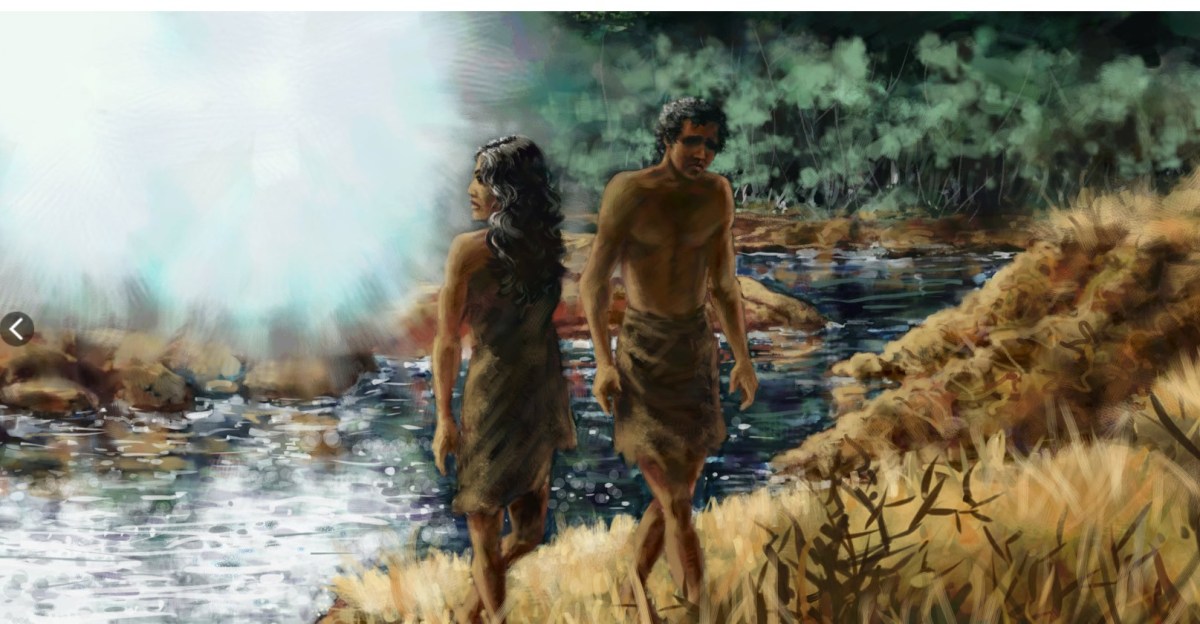
When examined closely, we can see the breadth of what was committed to Adam and Eve. Subduing the earth would entail many physical, social, and intellectual activities. In the gardening we can see cultivation and farming; in taking care of the animals, we can see shepherding and domestication; in the naming of the animals, we can see a cultural and scientific activity which required understanding the nature and attributes of the animals and establishing authority over them. We can see that God had created things to be beautiful and as his image-bearers we would be expected to also create beautiful things.

As we look forward to the new earth which will manifest when Jesus comes again, nature’s comeliness will reach its pinnacle; the wilderness itself will burst into blossom, and streams will gush in the desert. To complement all this natural beauty, human culture will flourish. All the great creativity of humankind-artistry in music, dance, painting, woodcrafts, sculpture, architecture and more-will be brought into the New Jerusalem.[7]

There is a sense in which we, as members of the Kingdom of God, now seem to be living in a foreign land. This puts us in a position similar to the Israelites when they were taken in exile into Babylonia. During their stay in Babylonia, God’s instructions were to settle down, build houses, get married, have children and to seek the prosperity of the city they were sent to, for “if it prospers, you too will prosper.”

But above all these things we can do, we should not lose focus on who we are. We are creatures designed by God to be like God to be in relationship with Him, the God who is a community in Himself: Father, Son, and Holy Spirit. Everything we do should be done in context of who we are. We should remember that we were designed to be human “beings,” not human “doings.” This viewpoint become clear when we compare the Biblical view of creation to the view of other Ancient Near East cultures. For the surrounding cultures humans beings were created to feed the gods and serve the gods who created them, whereas the Biblical viewpoint sees God being the provider for the people.[8]

Originally, we see Creation designed as a temple, a place for us to “be” with God. Later on, Jesus refers to himself as the temple, a human in whom God resides. Later on, Paul declares that our own bodies are a temple of the Holy Spirit. So here again, we see the mystery of perichoresis, where we are distinct from the Holy Spirit, yet the Holy Spirit becomes a part of who we are. In this we see the mystery of perichoresis unifying the persons within God, unifying the body, soul and spirit within humans, and unifying God and humans.


[1] Jacobsen, Eric O. The Space Between: A Christian Engagement with the Built Environment, Baker Academic, 2012, (Page 20 )

[2] Crouch, Andy. “What is the Cultural Mandate” The Village Church, 6 Jan 2017 www.tvcresources.net/resource-library/talks/what-is-the-cultural-mandate

[3] Walton, John H. “The Lost World of Adam and Eve: Genesis 2-3 and the Human Origins Debate (Proposition 4) InterVarsity Press. 2015 Kindle Edition

[4] Albert M. Wolters. Creation Regained: Biblical Basics for a Reformational Worldview William B. Eerdmans Publishing 1985, 2005. eBook(Locations 203-208)

[5] Walton, John H. The Lost World of Adam and Eve: Genesis 2-3 and the Human Origins Debate Edition(p. 105-106).

122 Buzenitz, Nathan. “The New Jerusalem”

[7] Sherman, Amy L. Kingdom Calling: Vocational Stewardship for the Common Good. Intervarsity Press, 2011 eBook location 291

[8] Walton, John. “The Lost World of Adam and Eve,” I “Proposition 12: Adam is Assigned as Priest in Sacred Space, with Eve to Help” (p.104)

Observe

Read Genesis 1; 1 Corinthians 3:16; 6:19-20; 2 Corinthians 6:16. What difference does it make if the universe is God’s temple or that our bodies are God’s temple?


Reflecting God’s paradoxes

Dancing in the Kingdom- Table of Contents

Dancing In the Kingdom – Part 1 – Shadows of the Kingdom – Chapter 3 – The image-bearers

Reflecting God’s paradoxes

[Bible references: Genesis 1:26-32; 2:4-7,15-25; Matthew 22:36-40; John 15:8-11; Romans 8:20-21; Galatians 5:22-23]

Understanding the character of God, can help us understand what he has intended for creatures that are made in his image. Image-bearing creatures are not gods or duplicates of God, but they are imbued with the character of the God that made them.

It was into this good universe that God prepared beforehand that God created creatures to bear his image. Good creatures, image-bearers, who were given the task of taking care of the good creation that God blessed them with – and God declared his creation to be very good. The image-bearing creatures were created in the complex image of God – the one God who was a community within Himself, the God who was immensely creative, the God who was generous and loving beyond imagination, the God who is sovereign over the universe, the God who is above all things.

There was a danger in God creating image-bearers. To make creatures that were lovers – just as He was a lover – meant giving these image-bearers the freedom to choose whom or what to love. Since we are created as lovers, we are compelled to love, so when we choose to not love one thing  or one person it is only because we have chosen to love someone or something else. Because God’s image-bearers were the capstone of creation, their option to love something more than God risked an awful catastrophe, a catastrophe that could affect the entirety of creation itself. The good creation, all of it, would become not so good.

And so it was, after creation was prepared for God’s image-bearers, those creatures who were created in the image of the loving God were given instructions to be stewards of the world God had made. Everything was good, and the first human couple had free access to the provisions in the garden prepared for them. Only one restriction was placed before them, a restriction not meant to deprive them of anything good but meant to provide the opportunity to test their love, by testing their obedience to the one who created them.

We all now know that those creatures failed their test, and we daily experience the consequences of that failure. We also daily experience our own incapacity to restore holiness on our own efforts, our own inability to love God with all our heart and soul and mind and our own inability to fully love God or to fully love our neighbors as ourselves.

The mystery of who we are has to worked out between all the goodness we are endowed with as creatures who bear the image of God and all the evil we are encumbered with as creatures who innately rebel against that same God. Traces of heaven and hell run through each of us and are manifested in our everyday lives. The tongues we praise God with also curse our neighbor. The selflessness we display to others is corrupted by the selfish desires that emerge from the same heart.

Observe

Read Genesis 1:28; 2:15. What tasks did God provide for the humans?

Generous and overflowing shalom

Dancing in the Kingdom- Table of Contents

Dancing In the Kingdom – Part 1 – Shadows of the Kingdom – Chapter 2 – The God who created

[Bible references: Genesis 1; Psalm 69:16; Zechariah 8; Luke 15:11-32; Romans 1:20; 8:18-23; 2 Corinthians 3:18; 9:8; Revelation 21-22] 

When God created the universe, he was creating order out of disorder, assigning purposes for everything in the universe. When he assigned purposes to the places and things in the universe, when things functioned according to how he created them … they were “good.”[1]  And when in the midst of all those good things he placed image-bearing creatures that also reflected his character, everything was “very good.”

God is good because he delights in the existence of something other than himself.[2]

However, when in the midst of that very good universe, those image-bearers rebelled, they and the world they inhabited suffered the consequences. Yet, in spite of that rebellion, God relentlessly pursued those image-bearers with the intent of restoring not only them but restoring all of creation to the good condition that He originally intended. The Bible is the story of how God’s original purposes will be carried out despite the constant rebellion of his image-bearing creatures – and how the good and very good, creation will endure the brokenness of the rebellion to be finally restored to the good and very good purpose that God had intended.

Within that story of creation and the relentless pursuit which followed, God’s character is revealed as he poured himself out even to the point of taking on the form of a man and the giving of himself to the humility and suffering of being tortured to death on a cross. Even though all of creation is now marred by the rebellion, it is possible to examine the character of God as it is revealed in this outpouring of himself into his creation and into his image-bearers.

Revisiting Genesis 1:1, we see God creating … everything in the heavens and the earth. The rest of that passage shows the orderliness in how the creation happened. We see that as God creates each set of creatures or things that God declares them to be good. Then after God creates humans, he declares “it was very good.” We will see later in Genesis those things got messed up, but at this point the core of everything in the universe, everything was good and beautiful and working as it should. Certainly, as we look around us now, it would be hard to say that everything is working as it should, but at the beginning, everything was good.

That goodness was further amplified when, despite the rebellion of his image-bearers, God tirelessly invited them over-and-over again to come back to him even though they would continue rebelling over-and-over again. The generous invitation and re-invitation would be highlighted by Jesus’ parable which has been commonly called the “Prodigal Son” (Luke 15:11-32) in reference to the wastefully spending son. But the parable could equally be called the “Prodigal God”[3] in reference to the father who represents extravagant giving of God.

These continuous and generous offers from God are meant to draw us to himself so that he could restore to us the good and generous life that God has intended from the beginning, life free from suffering and pain, life full of joy and peace, wholeness and health, contentment and completeness,[4] which is all captured by the Hebrew word, shalom.

“The webbing together of God, humans, and all creation in justice, fulfillment, and delight is what the Hebrew prophets call shalom. We call it peace, but it means far more than mere peace of mind or a cease-fire between enemies. In the Bible, shalom means universal flourishing, wholeness, and delight — a rich state of affairs in which natural needs are satisfied and natural gifts fruitfully employed, a state of affairs that inspires joyful wonder as its Creator and Savior opens doors and welcomes the creatures in whom he delights.” [5]


[1] Walton, John, H. “The Lost World of Adam and Eve: Genesis 2-3 and the Human Origins Debate. (Proposition 5) InterVarsity Press. 2015 Kindle Edition. “good” refers to a condition in which something is functioning optimally as it was designed to do in an ordered system – it is working the way God intended”

[2] Weil, Simone.

[3] Keller, Timothy. “The Prodigal God” Riverhead Books 2008, www.timothykeller.com/books/the-prodigal-god

[4] Refiners Fire ‘Meaning of the word “Shalom;”’ Blue Letter Bible “Word search: Shalom” Refiners Fire www.therefinersfire.org/meaning_of_shalom.htm

[5] Plantinga Jr., Cornelius. “Not the Way It’s Supposed to Be: A Breviary of Sin,” Eerdmans Publishing Co – A. Kindle Edition. (p. 10)

Observe

Read 2 Corinthians 3:18. Discipleship is a process of “being transformed”. Ultimately it is something that happens to us – but it is something we can co-operate with by engaging is spiritual disciplines. What kinds of changes need to happen in our lives that would make it natural to invite someone else into discipleship?

Interlude

Dancing in the Kingdom- Table of Contents

Dancing In the Kingdom – Part 1 – Shadows of the Kingdom – Chapter 1 – Prelude

Interlude

[Bible references: Psalm 19]

As I was working one warm summer night at a convenience store with the door open, it was not unexpected to see a moth fly in through the door. Normally, moths are attracted to light sources, but this time the moth was attracted to the white top of a garbage container. The moth was distracted by the light reflected off the garbage container. That describes a lot of human behavior; we get distracted by the pretty garbage.

Since the time of Adam and Eve we’ve had the temptation to place ourselves at the center of the universe, dismissing the idea that we did not create the natural beauty of the world around us but that we can possess and control it ourselves, that we are the masters of all we see. We are tempted to dismiss the reality that we are part of a universe we did not create with the idea that we can define the universe which we think revolves around us.

In the meantime, there is a story that began long ago when God brought into being creatures made in his image, a story about his plans for those creatures, plans for them to fill the earth and making the whole earth a place of love and goodness, but a place where that love and goodness would be disrupted by our rebellion. Fortunately, that disruption did not deter God from continuing his plans for his image-bearing creatures and that story is still in the making. That story is now our story.

What can get confused is that this story is contained in the Bible which is often presented as a disconnected story. The Old and New Testaments of the Bible can seem disconnected because of the cultural barriers between us and the testaments. Some people even think the God described in the Old Testament is different from the God in the New Testament.

That disconnect is exasperated by the long and messy history of the church. The church seems very divided on how to interpret those writings and how to live into them, leaving us with a confusion of various interpretations and practices that seem to contradict one another. How is one supposed to make sense of it all?

However, it is possible to obtain a clearer understanding of how both Testaments make one cohesive story, a story into which we can fit. When we see how the unified story than runs from Creation to Revelation, we can then see how we, as part of God’s church, are intended to participate in that story. God did not need to create us or the universe, He did it out of a desire to share his love and delight. God’s creation was more an act of play than of work and He desires that we actively play with him, if you will, to dance with him in His Kingdom.

The Kingdom Dance is not meant to be a solo effort, we are to dance with God and with his people. To that end, while this book can simply be read as a solo exercise, there are additional ways to engage with the material.

  • Biblical references are provided extensively through the book. They are there to support the text. If you read them, particularly the shorter passages, take the time to slow down and let God the Spirit speak to you. The Bible has been described as ancient Jewish Meditation Literature.[1] It is best read when you give yourself time to absorb it.
  • There are extensive footnotes throughout the book. Whenever possible, I have provided hyperlinks to online materials to make the additional materials easily available to you. If you spend time investigating the footnotes, you will notice that I am not drawing from only one Christian tradition, but from a variety of them, allowing the richness of the different traditions to form a more complete story. To form a more complete story I also, particularly in the beginning, will use materials from the “Second Book of God” that is, book of Creation.[2]

“God has, in fact, written two books, not just one. Of course, we are all familiar with the first book he wrote, namely Scripture. But he has written a second book called creation.”[3]

  • For those who are not practiced in studying the Bible, Appendix A gives a summary of techniques that could be used to help understand scripture. This may prove useful for understanding when you study the Biblical references given throughout this book.
  • Reading the material with a group can make the most impact. There are questions at the end of each chapter that ask you to reflect on the material and then read related biblical passages to think more deeply about various issues. These exercises and questions will help you engage with the material by first asking you to think about how each section applies to your life and secondly to share your thoughts with others in the group so that together you can more thoughtfully “Enter the Dance” with God, with all the others that have come before, with those that are coming now and with that will continue to come until Heaven and Earth are reunited.
  • Finally, the best participation will be not to just read and reflect, but to dance the Kingdom dance with God. Part 3 of this book will suggest ways to take part in his activity in bringing healing to the world he loves, broken now but to be finally and fully restored when He rejoins heaven and earth.

The Bible is a complex collection of literature, using many literary styles and techniques and it can be difficult to understand some parts, particularly when one part seems to contradict another. I have found a useful principal in studying the Bible which I call “Conflicts are Clues” which says that any apparent conflict or confusion in Scripture should be handled as clues to look further instead of thinking that the conflicts create contradictions which reduce the integrity of the Bible.

In our age, many regard science and theology to be in conflict. In years past, however, the issue was not about conflict but about which discipline rules over or undergirds all the other disciplines. These ideas were expressed in ways such as “theology is the queen of all sciences,” “math is the queen of all sciences,” “philosophy is the queen of all sciences,” “philosophy is the handmaid of all sciences.”

The biblical perspective is that God speaks to us both through two books, the book of Creation and the Bible. Theology’s main goal is to understand spiritual reality and science’s main goal is to understand physical reality, but both fields can inform the other about the nature of God.

This principle of “Conflicts are Clues” applies not just to the “First Book of God” (that is, Scripture) but also to the “Second Book of God” (that is, Creation) which is practiced by the testing and revisions of theories, but also between the Two Books. During the course of history, the study of the Two Books got separated and some of those in science rejected Scripture and some of those who were Christian rejected science, leaving conflicts unresolved as contradictions. But moving forward, this does not prevent us from considering apparent conflicts between the books as clues to be investigated further.


[1] Bible Project “Ancient Jewish Meditation Literature” Bible Project bibleproject.com/explore/video/bible-jewish-meditation-literature-h2r/

[2] Rusbult, Craig. “How should we interpret the Two Books of God, in Scripture & Nature” American Scientific Affiliation www.asa3.org/ASA/education/origins/two-books.htm

[3] Bacon, Francis. “The Two Books of Francis Bacon of the Proficience and Advancement of Learning, Divine and Human.” The First Book. Section.VI.Paragraph.16 1605

Observe

Read Psalm 19. This Psalm captures a response to what Francis Bacon called the two books of God:  the Book of Creation and the Book of Scripture. How do you respond to the “two books”?

Scope and direction of sin’s consequence

Dancing in the Kingdom- Table of Contents

Dancing In the Kingdom – Part 1 – Shadows of the Kingdom – Chapter 1 – Prelude

Scope and direction of sin’s consequence

[Bible references: Genesis 2:16-17; 3:14-15, 23; 6:5; Romans 8:19-28]

And so, it happened. The one thing that could create the ultimate catastrophe did happen. The good Creator, who only intended good things, allowed his image-bearers to give into their temptation, to put their own authority above His and violate the one restriction placed before them. This violation by the stewards of His creation broke everything: the relationship between themselves, the relationship between them and Him, the relationship between them and creation. All of creation was affected and is even now waiting for things to be made right again.

Everything in creation had been designed to be good, to reflect the good character of the good God. Creation was designed to be a place where God and his image-bearers could keep on creating good things and bring increasing glory to God. But now, although the ultimate structure of creation was still good, it was headed in the wrong direction. The broken universe would now cause things to move away from God’s glory.

“Anything in creation can be directed either toward ward or away from God – that is, directed either in obedience or disobedience to his law. This double direction applies not only to individual human beings but also to such cultural phenomena as technology, art, and scholarship, to such societal institutions as labor unions, schools, and corporations. and to such human functions as emotionality, sexuality, and rationality. To the degree that these realities fail to live up to God’s creational design for them, they are misdirected, abnormal, distorted. To the degree that they still conform to God’s design, they are in the grip of a countervailing force that curbs or counteracts the distortion. Direction therefore fore always involves two tendencies moving either for or against God.” [1]

In our current times, we can get things so quickly and easily compared to times in the past. We want what we want, and we want it now. Our desire to get what we want now overwhelms our capacity to think of others, as we put ourselves at the center of our part of the universe, replacing God with ourselves. In the case of the first humans, they wanted to grab knowledge and wisdom for themselves instead of waiting to receive it from God.

Everything was broken and separated from God. Spiritual death, the impaired relation between God and His image-bearers was immediate and would be mirrored by the physical death caused by separation of the people who would no longer have access to the Tree of Life. This was a great tragedy that could not be undone, not by the image bearers. But as we look around us, we can see that, despite the tragedy around us, things aren’t totally bad. Even though evil is very evident around us, there is still some goodness that is evident. It is in that observation that we can glimpse the possibility of hope.

God had ordained the penalty of death to be the consequence of turning away from him. Sin resulted in spiritual death, the immediate separation God’s image-bearers from God, nevertheless, the people did not die physically right away. Instead, what God did, was to apply discipline to his image-bearers. He also gave a hint of the solution to the problem created by sin, the first of many other hints that were to come.


[1] Wolters, Albert M. “Creation Regained: Biblical Basics for a Reformational Worldview (Kindle Locations 685-689). Kindle Edition.

Observe

Read Romans 8:19-28. How has sin affected you and the one’s you love?

Confronting our freedom

Dancing in the Kingdom- Table of Contents

Dancing In the Kingdom – Part 1 – Shadows of the Kingdom – Chapter 1 – Prelude

Confronting our freedom

[Bible references: Genesis 3:1-24; Deuteronomy 7:6-14; 30:18-20; Joshua 24:14-16; John 7:17; 15:16]

To be creatures designed in the image of the transcendent creative, loving God, we needed a kind of independence so that we could choose to love – or not love – and to be free to imagine and create wildly new and different things as proper for God’s image-bearing creatures. We were free to do this in a place where everything was very good and designed so that we could flourish. However, that very freedom which gave image bearers the possibilities of independent thoughts, also gave those image-bearers the opportunity to also confront temptation.

While the image-bearers were given the opportunity to meet with God and to walk with him in a specially designed garden, they were also allowed the opportunity for questions. They could even question the motives of the God who made them: 

  • Was something good being withheld from them?
  • Were they being deprived of some power?
  • What would be available to them if they violated the restriction?
  • Would they actually die?
  • What special knowledge were they being deprived of – particularly this knowledge of good and evil?
  • Everything they had encountered had been good, why would their thinking about violating this one restriction not be good?
  • Was the Creator so good anyway?”

Observe

Read Deuteronomy 7:7; 30:18-20; Joshua 24:14-16. The ability to love is not possible without the ability to choose. What did the Israelites choose to love (or not love)?

Sins consequences

Dancing in the Kingdom – Table of Contents

Part 1 – Shadows of the Kingdom, Chapter 4 – Deforming the intended direction for creation

[Bible references: Genesis 3; 6:5; Romans 8:19-22; Ephesians 2:10]

And so, it happened. The one thing that could create the ultimate catastrophe did happen. The good Creator, who only intended good things, allowed his image-bearers to give into their temptation, to put their own authority above His and violate the one restriction placed before them. This violation by the stewards of His creation broke everything: the relationship between themselves, the relation between them and Him, the relation between them and creation. All of creation was affected and is even now waiting for things to be made right again.

Everything in creation had been designed to be good, to reflect the good character of the good God. Creation was designed to be a place where God and his image-bearers could keep on creating good things and bring increasing glory to God. But now, although the ultimate structure of creation was still good, it was headed in the wrong direction. The broken universe would now cause things to move away from God’s glory.

“Anything in creation can be directed either toward or away from God – that is, directed either in obedience or disobedience to his law. This double direction applies not only to individual human beings but also to such cultural phenomena such as technology, art, and scholarship, to such societal institutions as labor unions, schools, and corporations. and to such human functions as emotionality, sexuality, and rationality. To the degree that these realities fail to live up to God’s creational design for them, they are misdirected, abnormal, distorted. To the degree that they still conform to God’s design, they are in the grip of a countervailing force that curbs or counteracts the distortion. Direction therefore involves two tendencies moving either for or against God.” [1]

The brokenness started with the decision that would be repeated again and again. Even in a time like now, where we can get things so quickly and easily compared to times in the past, we want what we want, and we want it now. And the desire to get what we want now overwhelms our capacity to think of others, as we put ourselves at the center of our part of the universe, replacing God with ourselves. In the case of the first humans, they wanted to grab knowledge and wisdom for themselves instead of waiting to receive it from God.

The failure to resist the temptation to grab what we want instead of waiting to receive what we want from God would only be successfully resisted by Jesus. So, after the rebellion occurred, the earth would remain separated from the Kingdom of God until Jesus began His restoration of the Kingdom. So, until that time the place of human habitation would be separate from the place where God’s good rule and reign is absolute. And it will not be until heaven and earth will be fully reunited, that we will fully experience the overflowing shalom that God has intended for us. Until that time, the broken earth will be separated from heaven and allowed to sink into disorder and chaos. Until that time, the overflowing goodness and shalom that God had provided will be masked by the brokenness of not just Creation but also by the brokenness of the co-creators. Look at what we have done!

We were meant to be in communion with each other and with God. We were meant to be “gardening” with God to make our place, a place of thriving and abundance in concord with the type of thriving and abundance with which God originally made the universe. God intended for us to be connected to Him and filled with His Spirit so that we would be fully enabled and prepared to be co-creators with Him of good works. But our rebellion has separated us from the one who is the source of goodness. In that sense, since the time of Adam, we are less human than we should be.


[1] Wolters, Albert M. Creation Regained: Biblical Basics for a Reformational Worldview (Locations 685-689)

Reflect

In what ways do we replace God’s authority with something else?

Observe

Read Gen 3:14-15, 20-21; Psalm 4:1, 8. The world around us is filled with problems. What signs of hope do we have?

Generous and Overflowing Shalom

Dancing in the Kingdom – Table of Contents

Part 1 – Shadows of the Kingdom, Chapter 2 – The God who created

[Bible references: Genesis 1; Psalm 69:16; Zechariah 8; Luke 15:11-32; Romans 1:20; 8:18-23; 2 Corinthians 9:8; Revelation 21-22] 

When God created the universe, he was creating order out of disorder, assigning purposes for everything in the universe. When he assigned purposes to the places and things in the universe, when things functioned according to how he created them … they were “good.”[1]  And when in the midst of all those good things he placed image-bearing creatures that also reflected his character, everything was “very good.”

God is good because he delights in the existence of something other than himself.[2]

However, when in the midst of that very good universe, those image-bearers rebelled, they and the world they inhabited suffered the consequences. Yet, in spite of that rebellion, God relentlessly pursued those image-bearers with the intent of restoring not only them but restoring all of creation as well to the good condition that He originally intended. The Bible is the story of how God’s original purposes will be carried out despite the constant rebellion of his image-bearing creatures – and how the good and very good, creation will endure the brokenness of the rebellion to be finally restored to the good and very good purpose that God had intended.

Within that story of creation and the relentless pursuit which followed, God’s character is revealed as he pours himself out even to the point of taking on the form of a man and the giving of himself to the humility and suffering of being tortured to death on a cross. Even though all of creation is now marred by the rebellion, it is possible to examine the character of God as it is revealed in this outpouring of himself into his creation and into his image-bearers.

Revisiting Genesis 1:1, we see God creating … everything in the heavens and the earth. The rest of that passage shows the orderliness in how the creation happened. We see that as God creates each set of creatures or things that God declares them to be good. Then after God creates humans, he declares “it was very good.” We will see later in Genesis those things got messed up, but at this point the core of everything in the universe, everything was good and beautiful and working as it should. Certainly, as we look around us now, it would be hard to say that everything is working as it should, but at the beginning, everything was good.

That goodness was further amplified when, despite the rebellion of his image-bearers, God tirelessly invited them over-and-over again to come back to him even though they would continue rebelling over-and-over again. The generous invitation and re-invitation would be highlighted by Jesus’ parable which has been commonly called the “Prodigal Son” (Luke 15:11-32) in reference to the wastefully spending son. But the parable could equally be called the “Prodigal God”[3] in reference to the father who represents extravagant giving of God.

These continuous and generous offers from God are meant to draw us to himself so that he could restore to us the good and generous life that God has intended from the beginning, life free from suffering and pain, life full of joy and peace, wholeness and health, contentment and completeness,[4] which is all captured by the Hebrew word, shalom.

“The webbing together of God, humans, and all creation in justice, fulfillment, and delight is what the Hebrew prophets call shalom. We call it peace, but it means far more than mere peace of mind or a cease-fire between enemies. In the Bible, shalom means universal flourishing, wholeness, and delight — a rich state of affairs in which natural needs are satisfied and natural gifts fruitfully employed, a state of affairs that inspires joyful wonder as its Creator and Savior opens doors and welcomes the creatures in whom he delights.” [5]


[1] Walton, John, H. “The Lost World of Adam and Eve: Genesis 2-3 and the Human Origins Debate. (Proposition 5) “good” refers to a condition in which something is functioning optimally as it was designed to do in an ordered system – it is working the way God intended”

[2] Weil, Simone.

[3] Keller, Timothy, The Prodigal God

[4] Refiners Fire ‘Meaning of the word “Shalom;”’ Blue Letter Bible “Word search: Shalom” www.therefinersfire.org/meaning_of_shalom.htm

[5] Plantinga Jr., Cornelius. “Not the Way It’s Supposed to Be: A Breviary of Sin,” Eerdmans Publishing Co – A. Kindle Edition p. 10

Reflect

How do you define “good?”

Observe

Read 2 Corinthians 3:18. Discipleship is a process of “being transformed”. Ultimately it is something that happens to us – but it is something we can co-operate with by engaging is spiritual disciplines. What kinds of changes need to happen in our lives that would make it natural to invite someone else into discipleship?

Transcendent and Immanent

Dancing in the Kingdom – Table of Contents

Part 1 – Shadows of the Kingdom, Chapter 2 – The God who created

[Bible references: Genesis 1; Psalm 139:2-3; Isaiah 6:1-5; 40:22-23; Jeremiah 23:23-24; Matthew 10:30; Acts 17:27; Romans 8:29; Philippians 2:5-11; Colossians 1:17; Hebrews 1:3]

Genesis tells us there was a time when the universe, the heavens and the earth, began to exist. Before that moment of time, they did not exist – but before that beginning there was God and then God created the universe. From that starting point, we can see the transcendent nature of God. He was not part of the universe but apart from the universe. No matter what happens in the universe or to the universe, those things do not affect God who is separate from all that. Fortunately, we are not simply left with a God who is unreachably “out there” leaving us to fend for ourselves. In some incomprehensible fashion, while God is “out there” existing outside of Creation, He is simultaneously inside Creation … everywhere at once.[1]

This paradox of God’s transcendence (existing outside of Creation) and imminence (existing everywhere within Creation) has sometimes bewildered many who try to examine it through sheer logic.

God is other and set apart from everything else, that he is in a class by himself. God is not just quantitatively greater than us, but qualitatively different in his greatness. He is transcendent, infinitely above or beyond us. The true God is distinct, set apart, from all that he has made as the only truly self-sufficient Being. All his creatures depend on him; he alone exists from within himself. “And the true God is distinct, set apart, from all that is evil. His moral perfection is absolute. His character as expressed in his will forms the absolute standard of moral excellence. God is holy, the absolute point of reference for all that exists and is good. Across the board he is to be contrasted with his creatures. At heart he is a glowing-white center of absolute purity …

But thankfully for us, God is not just transcendent; he is also immanent. Simply put, God is near. God is wholly present with and active in the created order. God is near us, present with us, active on earth and involved in our world. He is present and active in nature, in history, in our lives. He acts in this world and dwells with his people …

Both truths must be affirmed. The two ideas must be kept together in biblical balance. Only Christianity has the right mix. Pantheism denies God’s transcendence. Deism denies God’s immanence. Only Christianity affirms both, especially as we see in the incarnation. [2]

As we unwrap the significance of this paradox, we discover many interesting attributes of God. Here are a few:

  • Regarding God’s Transcendence
    • God’s existence apart from creation, and apart from the brokenness of the world is described as his holiness. This holiness is so profound that mortal, sinful people (as we all are) could not stand to be his presence.
    • God’s omnipotence is seen in his ability to not only create the universe, but in his ability to sustain it.
    • God’s omniscience is seen in his knowledge about the hairs on our head, our everyday actions and even in our destiny
    • God is omnipresent
  • Regarding God’s Immanence
    • Although God is apart from the universe, He is the one who holds the universe together
    • God is present throughout the earth and available to all who call for him and even to those who are not calling for him

In the chapters ahead, we will examine many of the ways God has inserted himself into the middle of creation and even address how God is involved in ways we can’t even imagine.


[1] Compelling Truth. “What is the meaning of ‘perichoresis’?” www.compellingtruth.org/perichoresis.html

[2] Muehlenbert, Bill. “On God’s Immanence and Transcendence Culture Watch, 5 Aug 2013 billmuehlenberg.com/2013/08/05/on-gods-immanence-and-transcendence/. The first portion is a quote from Thomas Trevethan

Reflect

If you’ve had a chance to look at the stars at night or at large landscape scene that’s miles long, what goes through your mind?[1]

Observe

Read Psalm 139:2-3; Jeremiah 23:23-24; Matthew 10:29-31; Acts 17:27. What does it mean to you that God is intimately concerned about your life?


[1] Getty Images, Stars in the sky http://www.gettyimages.com/photos/stars-in-the-sky ; Fine Art America, Landscape photographs fineartamerica.com/art/photographs/landscape