
Re-envisioning our culture

Dancing in the Kingdom- Table of Contents

Dancing In the Kingdom – Part 3 – Dancing in the Kingdom– Chapter 18 – Entering the Dance

Re-envisioning our culture

[Bible references: Isaiah 61:1-11; Ezekiel 16:1-19; 1 Peter 3:1-22]

In Culture Care,[1] Fujimura tries to get us to think holistically, in terms of restoring beauty as a means of invigorating culture so that people can thrive. This “Generative Thinking” looks beyond the resources right in front of us and recognizes the transcendence of God in our midst, which then allows us to think and behave generously and then also allows us to think beyond the immediate future and instead think in terms of generations to come. This contrasts with the attitude that resources are scarce and therefore must be handled in utilitarian and economic ways.

As creatures made in the image of our transcendent God, we have been given the capability to detect that transcendence in the form of beauty. As creatures made in the image of our creator God, we have been given the ability to create beautiful artifacts. Beauty is a characteristic that points beyond creation itself, for beauty has no utilitarian value. The beauty we see around us reflects the generous and gratuitous nature of God who intends that we do more than just survive, but rather to flourish in the abundance of His provision. Even more than that, Beauty is a characteristic that encompasses more than what we can look at or hear, but it is enfolded in the spiritual values of justice and morality.

Although, we all have the capacity to create beauty, there are those people who are called to focus on making works of art. Fujimuraviews those artists as the catalysts, leaders that challenge us to think less colloquially but more imaginatively, to look beyond ourselves and our local groups and rather to look to the whole of society. Artists are positioned to do this, because their dispositions usually place them at the fringes of society where they can serve as “border-walkers”[2] allowing them to at once look at their own social group from the fringes and also to connect to other social groups. Fujimura then challenges the rest of society to create an environment for these artists, these “border-walkers,” to be trained in their roles and to thrive. Part of the challenge is to recognize that, for society to flourish, we need the art economy, which by definition is a non-utilitarian economy. Towards this end, artists should be trained to be effective stewards of their gifts and society needs to learn how to be stewards of the artists, by creating environments for art, and Beauty, to flourish. Fujimura proposes that art can even help us create a healing environment in our current culture wars. Participants in culture wars employ language that reduces the enemy to a caricature. Instead, culture should not be handled as a territory to be won or lost but a resource we are called to steward and cultivate. Artists can become known as “citizen artists” who lead in society with their imagination and their work – creating opportunities for genesis moments in culture – moments in which dialogue can happen, caricatures can be discarded, and deeper concerns can be addressed. But for this to happen, we need vision, courage, and perseverance and a focused effort to pay attention to the care and cultivation of the soul.


[1] Fujimura, Makoto. Culture Care: Reconnecting with beauty for our common life.  Intervarsity Press 2014

[2] Also called “mearcstapas” in Beowulf, seventh century

Reflect

We may not all be artists, but we all have some creative capabilities as co-creators with God. We all have the capacity to create beauty: acts of generosity, bringing the life of the Spirit into a spiritually dark place, letting God’s love flow through you to another. How can you bring beauty into the world?

Observe

Read Ezekiel 16:1-19. It is probably not hard to envision the community outside the church as the “adulterous wife.” How can we “clothe” our community?

Reflecting God’s paradoxes

Dancing in the Kingdom- Table of Contents

Dancing In the Kingdom – Part 1 – Shadows of the Kingdom – Chapter 3 – The image-bearers

Reflecting God’s paradoxes

[Bible references: Genesis 1:26-32; 2:4-7,15-25; Matthew 22:36-40; John 15:8-11; Romans 8:20-21; Galatians 5:22-23]

Understanding the character of God, can help us understand what he has intended for creatures that are made in his image. Image-bearing creatures are not gods or duplicates of God, but they are imbued with the character of the God that made them.

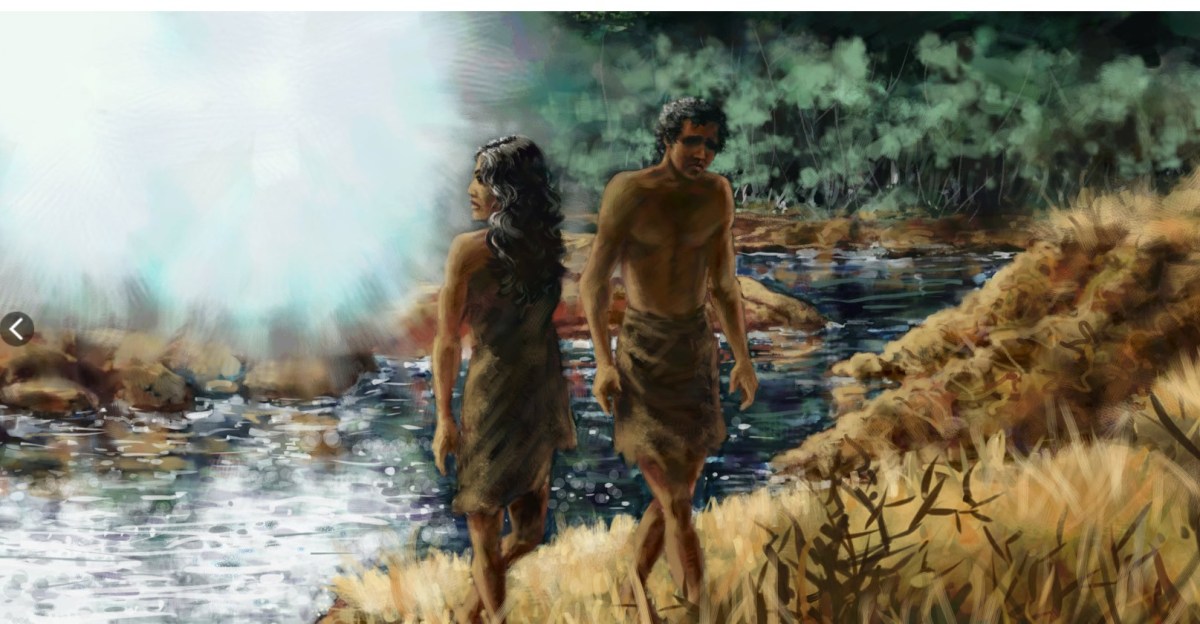
It was into this good universe that God prepared beforehand that God created creatures to bear his image. Good creatures, image-bearers, who were given the task of taking care of the good creation that God blessed them with – and God declared his creation to be very good. The image-bearing creatures were created in the complex image of God – the one God who was a community within Himself, the God who was immensely creative, the God who was generous and loving beyond imagination, the God who is sovereign over the universe, the God who is above all things.

There was a danger in God creating image-bearers. To make creatures that were lovers – just as He was a lover – meant giving these image-bearers the freedom to choose whom or what to love. Since we are created as lovers, we are compelled to love, so when we choose to not love one thing  or one person it is only because we have chosen to love someone or something else. Because God’s image-bearers were the capstone of creation, their option to love something more than God risked an awful catastrophe, a catastrophe that could affect the entirety of creation itself. The good creation, all of it, would become not so good.

And so it was, after creation was prepared for God’s image-bearers, those creatures who were created in the image of the loving God were given instructions to be stewards of the world God had made. Everything was good, and the first human couple had free access to the provisions in the garden prepared for them. Only one restriction was placed before them, a restriction not meant to deprive them of anything good but meant to provide the opportunity to test their love, by testing their obedience to the one who created them.

We all now know that those creatures failed their test, and we daily experience the consequences of that failure. We also daily experience our own incapacity to restore holiness on our own efforts, our own inability to love God with all our heart and soul and mind and our own inability to fully love God or to fully love our neighbors as ourselves.

The mystery of who we are has to worked out between all the goodness we are endowed with as creatures who bear the image of God and all the evil we are encumbered with as creatures who innately rebel against that same God. Traces of heaven and hell run through each of us and are manifested in our everyday lives. The tongues we praise God with also curse our neighbor. The selflessness we display to others is corrupted by the selfish desires that emerge from the same heart.

Observe

Read Genesis 1:28; 2:15. What tasks did God provide for the humans?

Generous and overflowing shalom

Dancing in the Kingdom- Table of Contents

Dancing In the Kingdom – Part 1 – Shadows of the Kingdom – Chapter 2 – The God who created

[Bible references: Genesis 1; Psalm 69:16; Zechariah 8; Luke 15:11-32; Romans 1:20; 8:18-23; 2 Corinthians 3:18; 9:8; Revelation 21-22] 

When God created the universe, he was creating order out of disorder, assigning purposes for everything in the universe. When he assigned purposes to the places and things in the universe, when things functioned according to how he created them … they were “good.”[1]  And when in the midst of all those good things he placed image-bearing creatures that also reflected his character, everything was “very good.”

God is good because he delights in the existence of something other than himself.[2]

However, when in the midst of that very good universe, those image-bearers rebelled, they and the world they inhabited suffered the consequences. Yet, in spite of that rebellion, God relentlessly pursued those image-bearers with the intent of restoring not only them but restoring all of creation to the good condition that He originally intended. The Bible is the story of how God’s original purposes will be carried out despite the constant rebellion of his image-bearing creatures – and how the good and very good, creation will endure the brokenness of the rebellion to be finally restored to the good and very good purpose that God had intended.

Within that story of creation and the relentless pursuit which followed, God’s character is revealed as he poured himself out even to the point of taking on the form of a man and the giving of himself to the humility and suffering of being tortured to death on a cross. Even though all of creation is now marred by the rebellion, it is possible to examine the character of God as it is revealed in this outpouring of himself into his creation and into his image-bearers.

Revisiting Genesis 1:1, we see God creating … everything in the heavens and the earth. The rest of that passage shows the orderliness in how the creation happened. We see that as God creates each set of creatures or things that God declares them to be good. Then after God creates humans, he declares “it was very good.” We will see later in Genesis those things got messed up, but at this point the core of everything in the universe, everything was good and beautiful and working as it should. Certainly, as we look around us now, it would be hard to say that everything is working as it should, but at the beginning, everything was good.

That goodness was further amplified when, despite the rebellion of his image-bearers, God tirelessly invited them over-and-over again to come back to him even though they would continue rebelling over-and-over again. The generous invitation and re-invitation would be highlighted by Jesus’ parable which has been commonly called the “Prodigal Son” (Luke 15:11-32) in reference to the wastefully spending son. But the parable could equally be called the “Prodigal God”[3] in reference to the father who represents extravagant giving of God.

These continuous and generous offers from God are meant to draw us to himself so that he could restore to us the good and generous life that God has intended from the beginning, life free from suffering and pain, life full of joy and peace, wholeness and health, contentment and completeness,[4] which is all captured by the Hebrew word, shalom.

“The webbing together of God, humans, and all creation in justice, fulfillment, and delight is what the Hebrew prophets call shalom. We call it peace, but it means far more than mere peace of mind or a cease-fire between enemies. In the Bible, shalom means universal flourishing, wholeness, and delight — a rich state of affairs in which natural needs are satisfied and natural gifts fruitfully employed, a state of affairs that inspires joyful wonder as its Creator and Savior opens doors and welcomes the creatures in whom he delights.” [5]


[1] Walton, John, H. “The Lost World of Adam and Eve: Genesis 2-3 and the Human Origins Debate. (Proposition 5) InterVarsity Press. 2015 Kindle Edition. “good” refers to a condition in which something is functioning optimally as it was designed to do in an ordered system – it is working the way God intended”

[2] Weil, Simone.

[3] Keller, Timothy. “The Prodigal God” Riverhead Books 2008, www.timothykeller.com/books/the-prodigal-god

[4] Refiners Fire ‘Meaning of the word “Shalom;”’ Blue Letter Bible “Word search: Shalom” Refiners Fire www.therefinersfire.org/meaning_of_shalom.htm

[5] Plantinga Jr., Cornelius. “Not the Way It’s Supposed to Be: A Breviary of Sin,” Eerdmans Publishing Co – A. Kindle Edition. (p. 10)

Observe

Read 2 Corinthians 3:18. Discipleship is a process of “being transformed”. Ultimately it is something that happens to us – but it is something we can co-operate with by engaging is spiritual disciplines. What kinds of changes need to happen in our lives that would make it natural to invite someone else into discipleship?

Reflecting God’s Paradoxes

Dancing in the Kingdom – Table of Contents

Part 1 – Shadows of the Kingdom, Chapter 3 – The Image-bearers

[Bible references: Genesis 1:26-32; 2:4-7,15-25; Matthew 22:36-40; John 15:8-11; Romans 8:20-21; Galatians 5:22-23]

Understanding the character of God, can help us understand what he has intended for creatures that are made in his image. Image-bearing creatures are not gods or duplicates of God, but they are imbued with the character of the God that made them. In this chapter we will explore some of the ways God intends for us to reflect his image. In later chapters, we will expound on those characteristics in more detail.

It was into this good universe that God prepared beforehand that God created creatures to bear his image. Good creatures, image-bearers, who were given the task of taking care of the good creation that God blessed them with – and God declared it to be very good. The image-bearing creatures were created in the complex image of God – the one God who was a community within Himself, the God who was immensely creative, the God who was generous and loving beyond imagination, the God who is sovereign over the universe, the God who is above all things.

There was a danger in God creating image-bearers. To make creatures that were lovers – just as He was a lover – meant giving these image-bearers the freedom to choose whom or what to love. We are unable to choose to not love but only who or what to love. Because God’s image-bearers were the capstone of creation, the option to another love than God, risked an awful catastrophe, a catastrophe that could affect the entirety of creation itself. The good creation, all of it, would become not so good.

And so it was, after creation was prepared for God’s image-bearers, those creatures who were created in the image of the loving God were given instructions to be stewards of the world God had made. Everything was good, and the first human couple had free access to the provisions in garden prepared for them. Only one restriction was placed before them, a restriction not meant to deprive them of anything good but meant to provide the opportunity to test their love, by testing their obedience to the one who created them.

We all now know that those creatures failed their test, and we daily experience the consequences of that failure. We also daily experience our own incapacity to restore holiness on our own efforts, our inability to love God with all our heart and soul and mind and our inability to fully love God or to fully love our neighbors as ourselves.

The mystery of who we are has to worked out between all the goodness we are endowed with as creatures who bear the image of God and all the evil we are encumbered with as creatures who innately rebel against that same God. Traces of heaven and hell run through each of us and are manifested in our everyday lives. The tongues we praise God with also curse our neighbor. The selflessness we display to others is corrupted by the selfish desires that emerge from the same heart.

Reflect

How is love dangerous?

Observe

Read Genesis 1:28; 2:15. What tasks did God provide for the humans?