Discipline of Worship/Celebration

Dancing in the Kingdom- Table of Contents

Dancing In the Kingdom – Part 3 – Dancing in the Kingdom– Chapter 15 – Reforming our Souls

Discipline of Worship/Celebration

[Bible references: Deuteronomy 12; Isaiah 6:1-13; Matthew 6:25-34; John 4:23-24; Psalm 29; 95:1-7; 102; Romans 12:1-2]

“Authentic worship will impel us to join in the Lamb’s war against demonic powers everywhere—on the personal level, on the social level, on the institutional level. Jesus, the Lamb of God, is our Commander-in-Chief. We receive his orders for service and go …”[1]

 “The pervasive sinfulness of human beings becomes evident when contrasted with the radiant holiness of God. Our fickleness becomes apparent once we see God’s faithfulness. To understand his grace is to understand our guilt” [2]

God does so many things in our lives, and when we build up worship as a spiritual discipline, we learn to identify what He has done and honor him in appropriate ways. The first step it to give glory to God for all things in our lives. When we have privileges, they come from God. When we are bountiful, it comes from God. When we see something beautiful or good, we need to thank God for those things. God shows us His ways through others, and by giving Him the glory, we are worshiping him.

Another way to respond to God is to sacrifice. Sometimes honoring God means giving up things we think we’re enjoying but may not be edifying. We sacrifice our time by volunteering, and we sacrifice our money to help those in need, we sacrifice our ear to those who need us to listen. Sacrifice doesn’t always mean grand gestures. Sometimes it’s small sacrifices that allow us to worship God in our actions.

The spiritual discipline of worship can be beautiful and fun. The obvious form of worship, celebrating together and singing in church, can be a great time. Some people dance. Worshiping God can be both fun and serious. Laughter and celebration are ways to worship God.

As we practice the spiritual discipline of worship, we learn to experience God in His Glory. We easily identify His works in our lives. We seek out our time with God in prayer or conversation. We never feel alone because we always know God is right there with us. Worship is an ongoing experience and connection with God.

Worship is probably the most familiar of the Spiritual Disciplines. What does it mean to practice worship as a Spiritual Discipline? We all worship something; it’s only a question of what it will be. The number one topic of the Bible is our worship of God. The Israelites were constantly getting into trouble because of one thing — idolatry — the worship of something other than God. If we really believe that God is who he says he is then we will worship him, not out of a sense of duty, but because of who he is — then our worship will overflow into all other activities.

The celebration of worship is great when it just flows out of the moment we are in. The discipline of worship is necessary when we don’t feel the overflow but begin by forcing ourselves to begin to worship anyways. It might be that as we begin to worship our spirit will respond in earnestness. But even if our spirit does not seem to respond at the moment, we may continue the discipline because God is worthy despite how we feel.


[1] Foster, Richard. “Celebration of Discipline”  Harper & Row Publishers ©1978 p. 148

[2] Foster, Richard. “Celebration of Discipline”  Harper & Row Publishers ©1978 p. 160

Observe

Read Psalm 95; 102. These two Psalms begin from two different experiences. What do they have in common?

Our limits

Dancing in the Kingdom- Table of Contents

Dancing In the Kingdom – Part 3 – Dancing in the Kingdom– Chapter 14 – Remembering our creation

Our Limits

[Bible References: Genesis 1-2; Deuteronomy 15:11; Psalm 40:17; 1 Corinthians 12]

As we seek to fulfill our cultural mandate, there are various constraints which control how we exercise our call.[1] First and foremost, as God’s image-bearers, we are to act in accordance with God’s character: holding to the balance and tension of acting with sovereignty and servitude, mercy and justice, playfulness, and orderliness, along with his attributes of overflowing goodness, generosity and peace, trustworthiness, faithfulness, self-sacrifice and forgiveness. Although we are not transcendent in the same way God is, as his image-bearers his character of transcendence can be reflected in the ways we manifest His other qualities: Our ability to creatively imagine the ways in which we establish dominion, live into our relationships, display fruitfulness, and fulfill our responsibilities as God’s image-bearers.

We also need to remember that there are limits with which we should exercise our responsibilities. God has given us finite resources of materials or time to work with along with the reminder of Sabbath to help us refocus, to remember that although we are designed to work that we are not designed solely for work. It is not work that gives us value, rather it is God who gives us value and our work only has value if it gives God the glory.

Part of our limits are tied to our embodiment. Our earthiness is a reminder of our dependance on the earth, each other, and God. Our earthiness should help us lean into the humility worthy of image-bearers of God. Our need to sleep is a constant reminder that we are not God who never sleeps.

The multi-faceted call God has given us, requires us as God’s stewards to weave together the call to glorify God, to bring to maturity God’s rule over the earth, to reflect God’s triunity within the community of his image-bearers. This call is not for us to fulfill individually, but rather together as the Body of Christ with whatever God provides.


[1] Theology of Work Commentary, “Genesis 1-11 and Work” Hendrickson Publishers Marketing 2015, 2016

Reflect

We have built-in limits to what we, in our bodies, can do. How do these limits remind us of our dependency on the earth where we live, on each other, and on God?

Observe

Read Deuteronomy 15:11; Ps 40:17; 1 Corinthians 12. Why do we need each other?

The context of theology

Dancing in the Kingdom- Table of Contents

Dancing In the Kingdom – Part 2 – The Kingdom Revealed – Chapter 13 – Distinctives within the body of Christ

The Context of Theology

[Bible references: Matthew 22:37-39; John 13:34-35; 15:1-17; Romans 12:3-8; 1 Corinthians 12; 13; Ephesians 4:11-16]

More than doctrine

Everybody has an opinion of some sort when it comes to ideas about God. That is, everybody practices theology. According to one classical definition, theology is “faith seeking understanding.”[1] The only question is. whether our theology is good or bad. That said, there are some who may question whether or not to make a big deal of theology because it seems to create such divisiveness and others think that we should just keep everything as simple as possible.

We were created by God with mind, body, and soul – and it is through all those means that we can come to know God. The formal field of study that we call “theology” has often been restricted to academia, focusing on the intellectual – the mind; but as beings created in the image of God it would be a mistake to restrict our theology to just our mind. It is through our whole being that we can come to know and be transformed by God. Jesus once said that this transformed people would be recognized not by their knowledge, but by their love. Although it is beneficial if our love is informed by our knowledge, love is expressed in its action. In fact, Jesus identified the greatest commandments as loving God and loving our neighbors. Therefore, the practice of following Jesus (aka discipleship) is something we practice in community.

Once we understand all this, that our understanding of God requires the effort of our whole being, then we can see that while theology may have an academic component, it is more than an intellectual exercise. In fact, our soul, or spirit, is the first place in our being to examine our theology. Our theology is lacking if our God’s love is not overflowing through us into the rest of our lives.

To evaluate what our overflowing love might look like, we can consider the descriptions we find for the “fruit of the spirit” as shown in Galatians 5 and in 1 Corinthians 13: love, joy, peace, patience, kindness, goodness, faithfulness, gentleness, and self-control, does not envy or boast, is not proud, rude or self-seeking, is not easily angered, takes no account of wrongs, takes no pleasure in evil, rejoices in truth, bears all things, believes all things, hopes all things, endures all things. We can also consider how we express our love through the various gifts of God that He provides each one of us for the purpose of building each other up in the faith: wisdom, knowledge, faith, healing, miracles, prophets, discernments, tongues and their interpretation, leadership, serving, exhortation, giving, mercy, helps apostle, prophet, pastor, teacher.

It is interesting that many non-Christians, even those with limited knowledge of the Bible or of the church, are able to critique Christians by contrasting Christians with Christ. They may possibly misunderstand Christ, but because they have been designed as image-bearers of God, even they have some basis to compare the behavior of others to Christ.

The whole of faith

Meanwhile, in this in-between time, even disciples of Jesus are affected by sin and our theology is subject to corruption. We misuse theology in various ways: sometimes using it as a tool to achieve something else such as gaining power or justifying bad attitudes (e.g., arrogance or hatred), sometimes by focusing on just the academic side while neglecting the spiritual or practical aspects; or sometimes neglecting the academic side and try to avoid the truth or complexities of theology and simply stop asking questions, preferring instead to yield to fideism, which can be described as the “exclusive or basic reliance of faith alone” [2]

A robust faith is not a blind faith, but rather a thinking faith, a faith with eyes wide open to the realities of life’s circumstances and the reality of God’s providence,[3] a faith that seeks God with our whole self: body, mind, and spirit. So, we should not ignore the academic side of our faith or our theology. The process of taking all the knowledge we have gathered about God and then using that to “build up into an organic and consistent whole all our knowledge of God and of the relations between God and the universe” is called systematic theology.[4]

The all-encompassing nature of systematic theology requires care. Scientific models are helpful in understanding natural phenomena but are limited in predicting future behavior because the models are only approximations of the phenomena they describe. Similarly, our systematic theologies are helpful in understanding the infinite God and his works, but we need to be aware of its limitations. One of those limitations is how our perceptions are influenced by our particular personality, our particular environment/culture, our particular language, and our particular historical context.[5]

The problem of the other

Ever since the creation of humanity, we have continually chosen to idolize ourselves and to not love God, which also meant we have chosen to not love others. This mindset then causes us to blame whatever problems we have on others or even to blame God. It is this sort of mindset that would cause the New Testament church to disconnect itself from its Judaic heritage, setting the church up for continued divisiveness in the future. So it is worth exploring what led to the church to the severing its Judaic roots.

We know that Jesus spoke of how scriptures – and he could only be referring to what we call the Old Testament scriptures – pointed to him and his ministry, and how he was the fulfillment of those scriptures. That would mean that Jesus’ ministry was a continuation of God’s love and grace as set out in the Old Testament. Later on, as the ministry of the church strongly expanded to Gentiles, the apostle Paul spelled out that the Gentiles in the church were like the branch of a wild olive tree being grafted into nurtured tree; the tree being the Jews that were in the church and whose roots went back to the Old Testament people of faith. Paul then warned the Gentiles not to become arrogant about any of the other branches that were broken off because God is capable of grafting the original branches back onto the tree.

As the ministry to the Gentiles proceeded and expanded, Christian Jews still met in the temple and the synagogues with the non-Christian Jews, increasing their ministry there even as many of the non-Christian Jews strongly resisted. But there were two events that would change the trajectory of the church.

In AD 66 the zealots started to revolt against the Roman government. The Christians in Jerusalem want to avoid getting caught up in the rebellions and moved to Pella, causing tension between the zealots and the Christians. After the rebellion was defeated by the Romans in AD 70, the temple was destroyed and the Jews were scattered, but now there was increased tension between the Christian and non-Christian Jews.

Later on, in AD 132, a zealot nicknamed Bar Kokhba (meaning “son of the star”) arose to start another rebellion. He, with the support of a prominent rabbi, declared himself a messiah. Now, the Christian Jews not only did not want to participate in a rebellion, but they had to refuse to acknowledge a messiah other than Jesus. And the zealots, who supported Bar Kokhba, declared Bar Kokhba as messiah, thus rejecting Jesus as messiah, which quickly led to a hardening of those non-Christian Jews against the church, making them more resistant than before to the gospel. When the Romans defeated the zealots, Jews were now banned on penalty of death, from entering Jerusalem.

After this point, when leaders in the church tried to reach the Jews with the gospel, they encountered hardened hearts. However, instead of the recognizing that it had been foretold that Jews hearts would be hardened until the time of the Gentiles was over, the leaders in the church now arrogantly hardened their own hearts and became increasingly anti-Semitic. This resulted in the church increasingly turning away from their own roots and thus becoming susceptible to increasing influence of Greek philosophy. This would create dramatic effects in the development of theology in such areas as the rejection of the human body and sexuality as evil and sinful, and the conversion of asceticism from a form of spiritual discipline to a rejection of the pleasures God created as good things.[6]

The limits of language

Early on, in church history, there was an attempt to overcome the problem of the language barrier in the church. It was thought that the church could be united if theologians across the church world could use a common theological language. This attempt in the 5th century, when the languages included Aramaic, Greek, and Latin as well as all the local languages, did make it easier to find solutions to theological problems, but the negative consequence was that differences in theological views became heightened, leading to what may be the inevitable schisms in the church.

Theologians believed that one faith has to be expressed in one language … Distortion of language, they believed, inevitably leads to distortion of the common faith … ‘Byzantine scholasticism’ emerged in the post-Cyrillian era. This shift had both positive and negative consequences. The positive ones were that theologians started speaking one language. This helped them to easier find solutions to theological problems … The negative consequences of language-centrism were that when theologians disagreed on terms or categories, the regarded their disagreements about theological formulas as essential theological difference. This became one of the most important reasons of the church schism in the post-Cyrillian era.[7]

We cannot approach any field of study as a blank slate. All of our particular factors contribute to which particular theological method people may choose to use. Charles Hodge identified three general classes of methods used within the field of systematic theology: Speculative, Mystical, and Inductive.[8] Given all of that, we can see that there can be many approaches to even framing the questions we might ask about God, never mind the types of answers towards which we may lean. Engaging in the quest of trying to understand the current multi-faceted state of the current church can be overwhelming and most people don’t have the time to study a typical church history book of 800-1000 pages. To make this task more bearable, the approach here will not be to present a comprehensive study but to develop an overview of the church by focusing on 1) the internal and external issues that affected the development of the church, and 2) the main questions that the church has asked and briefly sharing the different answers formulated by different congregations.


[1] Migliore, Daniel L. “Faith Seeking Understanding”  William B. Eerdmans Publishing, third edition. 1991

[2] Amesbury, Richard. “Fideism” Stanford Encyclopedia of Philosophy ©2016 plato.stanford.edu/entries/fideism

[3] Migliore, Daniel L. “Faith Seeking Understanding” William B. Eerdmans Publishing, third edition. 1991 (pp. 3-5)

[4] Bible Study Tools “Chapter III – Method of Theology” Bible Study Tools www.biblestudytools.com/classics/strong-systematic-theology/part-i-prolegomena/chapter-iii-method-of-theology.html

[5] Migliore, Daniel L. “Faith Seeking Understanding” William B. Eerdmans Publishing, third edition. 1991 (p.205) Confession of Jesus Christ takes place in particular historical and cultural contexts … our response to questions of who we say Jesus Christ is and how he helps us will be s shaped in important ways by the particular contexts in which these questions arise … all theology is contextual

[6] Dualism rejects the physical world as evil or not desirable. “Mystery of Wisdom.” (p. 166)

[7] Hovorun, Cyril. Studia Patristica Vol. LVIII, Volume 6: Neoplatonism and Patristics, Peters 2013.  Importance of Neoplatonism on Formation of Theological Language” (p. 17-28)

[8] Hodge, Charles, “Systematic Theology” (Chapter I: On Method) Eerdmans Publishing Company, (Chapter I: On Method) 1940

Reflect

How can love affect your ability to know someone?

Observe

Read John 15:1-17; Ephesians 4:11-16. How do these passages relate to each other?

Desires and truths of the faith

Dancing in the Kingdom- Table of Contents

Dancing In the Kingdom – Part 2 – The Kingdom Revealed – Chapter 12 – Launching the church

Desires and Fruits of Faith

[Bible references: Psalm 1:1-3; John 15:1-5; 1 Corinthians 13; Galatians 5:22-23; Ephesians 4:11-16; Colossians 1:10; James 2:14-26]

A part of faith is the mental assent to the truth of who Jesus is who we are, but that is just the beginning. If the assent is real, then faith should include a submission of the will which will then lead to a lifestyle that demonstrates trusting in Jesus and submitting to His Lordship. This faith should affect who we are and should show up in our behavior as Jesus starts the process of transforming our character. The fruits of the Spirit ought to be increasingly visible in our lives. Becoming a mature Christian ought to seen in the maturity of the fruits of the Spirit in our lives.

For us to grow and mature, and produce spiritual fruits, we need to think like a farmer; growing fruit requires feeding and nurturing. To this end, Jesus cautions us to remember that we are like branches on a vine, we need to stay connected to him to grow. Staying connected to God however is not an easy thing for us as we tend to be like sheep mindlessly wandering around. Thankfully, we have a God who has never stopped pursuing us.[1]

Our dance with God is a dance where He works on the process of transforming our lives to look more like Him. Our personalities will not all be the same, but there are certain characteristics that should become more evident in our lives. One concise list of those characteristics can be found in a short sentence within the letter to the Galatians, “But the fruit of the Spirit is love, joy, peace, forbearance, kindness, goodness, faithfulness, gentleness, and self-control. Against such things there is no law.” (Galatians 5:22-23). The first and most primary characteristic is that of love, a fuller expression of which can be found in 1 Corinthians 13. The epitome of love is described in John 15:13, “Greater love has no one than this, that someone lay down his life for his friends.” God created us out of the outpouring of His love, and He has created us to be in His image. Love is the characteristic that permeates all of God’s other characteristics and it should be the driving force in all we do.


[1] Compelling Truth “Does God Pursue Us?” Compelling Truth www.compellingtruth.org/does-God-pursue-us.html

Reflect

Our lives should be increasingly marked by a love that has responded to the love of God. We should not be driven by fear or hatred or legalism. In what ways do we seem to be motivated by something other than love?

Observe

Read Psalm 1; John 15:1-5; 1 Corinthians 13. What should mark a life of faith?

Trustworthy and faithful

Dancing in the Kingdom- Table of Contents

Dancing In the Kingdom – Part 1 – Shadows of the Kingdom – Chapter 3 – The image-bearers

Trustworthy and faithful

[Bible references: Exodus 18:21; Deuteronomy 7:9; Psalm 86:15; 111:7; 117:2; Proverbs 20:6; Luke 16:10-12; 1 Timothy 1:15; Hebrews 11:1-40; Revelation 21:5]

We can’t seem to avoid breaking promises; whether it’s the promises  others make to us or the promises that we make to others. We usually expect broken promises from some people because we know they lack sincerity. Then sometimes we experience broken promises because things happen beyond our control, circumstances change, priorities are changed, or other things happen. Yet, in the midst of all that, we are called as God’s ambassadors to reflect his faithfulness to us. We are called to faithfulness in all things, whether it’s in truth-telling, in love, in doing good, in prayer, in doing the work of the Lord, or in confirming our calling, to mention a few. As we attempt to be faithful and trustworthy in all things and fall short – as we surely will – we can still point to the trustworthiness and faithfulness of the Lord. The point must always be to not point to ourselves but to the Lord – we are called to trust Him, be dependent on Him, put our confidence in His faithfulness and His sacrifice on our behalf.

Observe

Read Exodus 18:21; Luke 16:10-12. In what ways can we be challenged to be more faithful?

Self-sacrificing and forgiving

Dancing in the Kingdom- Table of Contents

Dancing In the Kingdom – Part 1 – Shadows of the Kingdom – Chapter 2 – The God who created

Self-sacrificing and forgiving

[Bible references: Acts 2:14-41; Hebrews 10:1-18; 1 John 2:1-14]

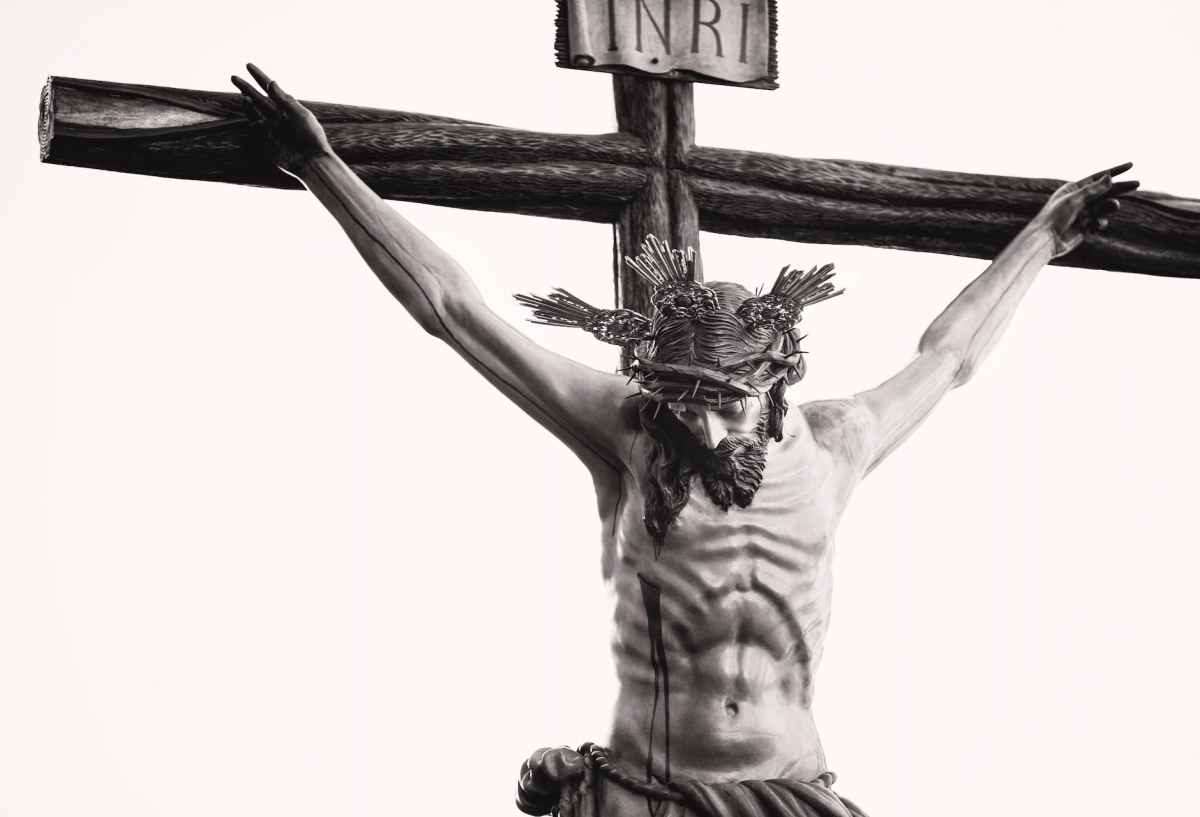
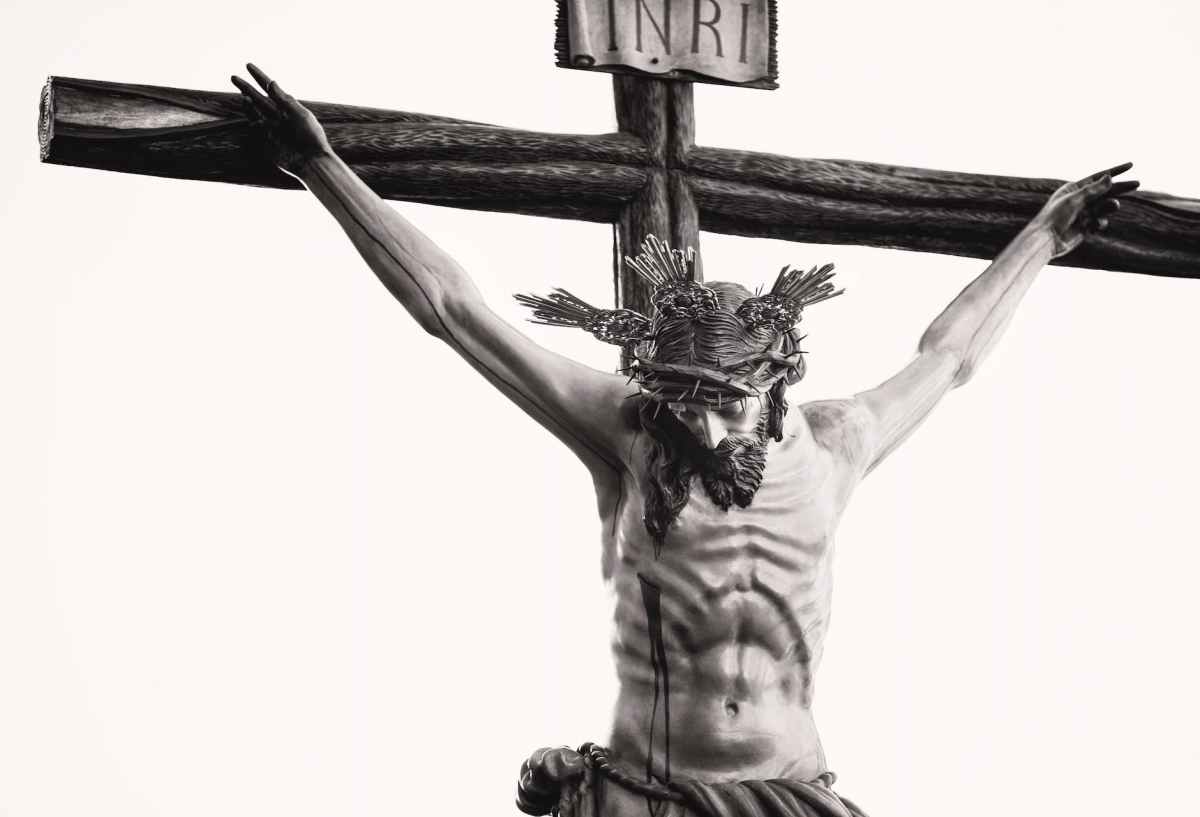
God’s faithfulness to us is sealed in the love he showed to us by the ultimate sacrifice he made on our behalf. His commitment of love towards us could not be made any more clearly than through the excruciating death he suffered when he allowed us to put him on the cross in order that he should bear the penalties of our sins. And it is through His suffering and dying that he can offer us forgiveness for the rebelliousness of our spirits and the sins we have committed.

Observe

Read Acts 2. Picture yourself as a witness in the setting of this passage as one of the travelers from out of town. How would you respond?

A meaning in the patterns

Dancing in the Kingdom- Table of Contents

Dancing In the Kingdom – Preface

A meaning in the patterns

One of the patterns of history is that humans have been a mess since the beginning of humanity. The mess shows up throughout biblical history, church history, and even today. Another pattern is how God has been working his plan throughout that messy history – and his plan uses those messy humans to carry out his plan. The charge He gave to the first humans to be stewards of His creation was never revoked. Neither was His love and faithfulness that has persisted despite the persistent rebellion of generations of His image-bearers. And biblical history and church history and the history we make today reveals the pattern of His continued faithfulness.

Chapter 7 – The Prophets and Writings

The Impossible Dance – Table of Contents

The Impossible Dance – Chapter 6 – A Nation Settles

Messengers of a Greater Power

During the entire time when Israel had kings, it also had prophets. Some prophets like and Elijah and Elisha did not leave any writings, although sixteen prophets did. The prophets focused more on “forth-telling” (telling about changes that the kings and/or the people needed to make immediately) than “fore-telling” (telling about some future events) and were a constant reminder that God was acting in ways that transcended the earthly kingdom. Sometimes the prophets were there to encourage and sometimes to challenge the kings: The prophet Samuel anointed Saul as king, then later had to let Saul know that God had rejected him. Samuel also anointed David as king. Later, the prophet Nathan let David know that God was aware of David’s sin with Bathsheba.

The Prophets of the Old Testament were precursors of the prophetic ministry of Jesus. And now the Church, as the Body of Christ, has the privilege of carrying on that ministry.

Challenging Unfaithfulness

Sometimes the prophet’s warnings would be not just for the kings but for everyone in the kingdom. The messages from the prophets often mixed the foretelling of the consequences for rejecting God with the hope that God will someday make things right. The most common offense cited by the prophets was the people’s lack of justice and how their ritual sacrifices were useless if they ignored justice. There were also diatribes against false prophets and against making idols. The most common metaphor used to describe Israel’s unfaithfulness to God and his commands was prostitution, even to the point where God told the prophet, Hosea, to marry an adulterous woman to be a visible reminder for Israel.

Lament and Anger

God’s response through the prophets was to lament. There is even one entire book lamenting what happened to Israel. The lamenting would include pleas for Israel to repent and turn back to God. But then Israel’s continued sin would then be followed by God’s anger and God’s promise to root out, pull down and destroy Israel or any other nation around Israel that engaged in sin. Sometimes God used other nations to discipline Israel followed by threats to those same nations for their sinful own behavior.

Future Hope

But in the end was God’s promise to restore his kingdom and bless all those who repent. God even sent one prophet, Jonah, to a Gentile nation to call them to repent or be destroyed. When they did repent, God held back his punishment – although history tells us that God destroyed them when they went back to their old ways.

The strange story of the ark and the tabernacle

The Ark in the Promised Land

After Israel entered the Promised Land, Israel placed the tabernacle and all its furnishings in Gilgal. After Israel had settled in the land, the tabernacle was then set up in Shiloh where it stayed for two hundred years. During the time of Samuel, Samuel’s sons, without consulting God, removed the ark from the tabernacle to take it into battle with the Philistines who not only won the battle but took the ark with them. The Philistines found that although Yahweh did not see fit to help Israel win the battle, Yahweh did create issues with the Philistines. The Philistines responded by moving the ark a couple of times, but the problems did not disappear and so they sent the ark back to Israel.

The ark initially ended up in Beth Shemesh, but after 70 people died when they tried to look in the ark, the people of Beth Shemesh sent the ark to Kiriath Jearim where it stayed for 20 years. The Bible is not explicit about when it happened, but sometime during the reign of King Saul, the tabernacle, sans the ark, was moved to Nob and then to Gibeon.

After David established the capital in Jerusalem, King David set up his own tabernacle and then moved the ark there. In moving the ark, David had to learn a lesson. He first tried to have the ark carried in a cart, but when the ark started to slip out of the cart, the people died who touched the ark to prevent it from slipping out. So, the ark ended up in Obed-Edom’s house for a while. Hophni and Phineas learned the hard way that you don’t necessarily take the presence of God when you take the ark, but David learned the hard way that you can’t ignore the presence of God when you take the ark. David was successful in moving the ark to Jerusalem after he had the ark moved according to the instructions God had given Moses.

The Tabernacle and the Temple.

When Solomon was king, he oversaw the building of a temple to replace the tabernacle. A foreigner from Tyre named Hiram built all the furnishings except the ark itself. The original furnishings of the tabernacle were possibly put into storage in the temple. Even though the temple was much more grandiose than the tabernacle, Solomon recognized that it still could not hold God. Some years later, the Babylonians would destroy Solomon’s temple.

The interesting thing with this history is that during the time of King David all the rituals of Moses were conducted at the tabernacle in Gibeon where there was no ark and no presence of God, while the ark itself, with the presence of God, was in Jerusalem where there was a service of joy, dancing and singing instead of the ritual sacrifices. Also, the ark was no longer concealed in the Holy of Holies where there was limited access, it was now in a place where everyone could access it.

This brings us to the prophet Amos who prophesied that God was going to destroy most of Israel, except for a remnant, and that He would restore David’s tabernacle– not the one at Gibeon, not the temple Solomon built, but David’s tabernacle. In Acts 15, the Bible records that the apostles quoted this passage from Amos because they determined that Amos was referring to Gentiles now being accepted into the kingdom of God. The tabernacle of Moses and the temple of Solomon were restricted to the nation of Israel, but God was now going to make himself available to the entire world, Jews, and Gentiles alike.

Diaspora

The term “diaspora” usually refers to a group of people that has been scattered from a specific location. In this case, the term refers to the scattering of Jews from the Promised land. But this particular diaspora is only a part of God’s larger plans for His people.

Our God is a God of overflowing love. His love caused Him to create us so that His love could overflow from Himself to us. He wanted His image-bearers to accomplish His mission of overflowing love and overflow from Eden to fill the entire earth. When we rebelled against His overflowing desire so that we could make a name for ourselves instead, He confused our language at Babel so that we would continue to flow out over the earth. When God wanted to prepare His Holy Nation for His mission, He scattered them to Egypt. When Israel rebelled against His mission of overflowing love, He scattered them from the Promised Land. The Son of God came in overflowing love to offer Himself in sacrifice in order to restore us to Himself. When the scattered Jews from many nations gathered for Pentecost, God reversed the action of Babel, and the apostles shared His message of overflowing love in many languages so that the message would be carried to the Jews in many nations. To continue the overflow, God guided Peter and Paul so that His love could flow out to the Gentiles as well. God further ensured the flowing out by using the Romans to scatter both Jews and Christians from Jerusalem. To this day, when our focus is more on building our Christian institutions, becoming too ingrown, God continues to scatter His people so that His message of overflowing love will reach more people in more places across the earth.

This program of overflowing creates a Dynamic Tension between our scattering and our unity. It would be well if our scattering were motivated by love so that we would continue to stay unified as we scatter. Sadly though, our scattering is often due to divisiveness rather than love, countermanding the intent that the world will recognize that we are disciples of Jesus because of our love.

Judgement Unfolds

The covenant God made with Israel had the proviso “if you follow my commands.” Israel continually demonstrated its inability to do that by its continuous practice of polytheism and God’s judgement followed. The nation of Israel would suffer the consequences. The first sign of the consequences manifested itself in the splitting of Israel into two kingdoms.

After that, the northern kingdom of Israel was the first to collapse in 535BC with the invasion of the Assyrians whose policy was to scatter the captured inhabitants throughout their empire and replace them with Assyrians. These northern tribes seem to have been totally assimilated into the Assyrian empire and they would not be heard from again in history.

In 722BC, the Babylonians conquered the southern kingdom of Judah and took the best and the brightest of Judah as captives to the capital of Babylonia for “retraining” so that they could contribute to the Babylonian society. It was at this point that the nation of Israel would now be referred to as Jews. It was from this point on that, despite the return of some of the Jews to their homeland, most Jews would now be living outside their homeland.

Worship in exile

During this exile, the Jews as they would now be called, had to become more deliberate if they were going to preserve their culture. It was during this time that the Jews would begin to collect all their writings in order to begin to determine what would be their scripture. They had the writings of Moses, but they had to determine what else should be included in their scripture.

During this time, they focused more seriously on worshipping Yahweh. Before this time, the biblical and archeological records indicate that Israel had a habit of adopting the worship of any idols of the culture they were in contact with. But now they had to preserve their culture while living amid a dominant foreign culture. Although the origins are a little obscure, as temple worship was no longer available, synagogues as a permanent institution developed during the exile.

The books of Daniel, Esther and Ezekiel give examples of how the Jews were able to thrive, even while experiencing opposition, while the nation was in exile: Daniel as an exceptional administrator, Esther as queen to the emperor and Ezekiel as a prophet.

From this time forward, most Jews have remained outside their homeland with no access to the one temple in Jerusalem. It was during this time that the Jews created local synagogues, with worship now focused either in the home or at the synagogue.

Return

Assyria scattered the Northern Kingdom then the Babylonians overran Assyria, captured Jerusalem, and took the prominent citizens into exile. After the 70 years in captivity prescribed by God had passed, the Persians overran Babylonia and allowed the Jews to return to their homeland. The first batch of returnees went back with Zerubbabel to Jerusalem to rebuild the temple. A second batch would go back to Jerusalem with Ezra who confronted the Jews about their failure to keep separate from the nations around them. A while later, Nehemiah would go back to Jerusalem to rebuild the walls. And yet, with all the returnees, the majority of the Jews chose to remain in Babylonia – and even today, most Jews live outside the Promised Land.

In another reminder of God’s provision, the rulers of the Persian empire strongly supported the Jews as they returned to Jerusalem, giving them what they needed. God even provided prophets to encourage the Jews.

In a reminder of the times when Moses collected contributions to build the tabernacle, contributions that the Egyptians gave to the Israelites as they fled Egypt, the people returning to the Promised Land with Zerubbabel willingly contributed from the provisions that the Persians gave to them for the rebuilding of the temple.

In a reminder of their own inability to follow Yahweh, when the Jews first returned to the Promised Land they ended up once more intermarrying with the non-Jews and following the practice of idol worship. So, when Ezra came to Jerusalem, he had to lead the Jews to repentance and to put away their foreign wives.

Then, in the end, God would send one last prophet, Malachi, who had words of condemnation of Israel for all the sins committed and of the promise to restore everything because that is what he promised. After the prophet Malachi, God did not raise up another prophet for Israel until Jesus came. That prophetic silence would last four hundred years.

Songs and reflections of the heart 

As creatures made in the image of the Creator, it is self-evident that we cannot avoid creating. We are also creatures that are born to worship, as even our popular culture makes very evident. When we put those together, we get a work like the Psalms, a book of poetry which was set to music. The psalms are a collection of praise songs written by various people. They are songs that reflect the thoughts of those people experiencing life with all its emotions in a broken world.

In addition to musical notations, several psalms have notations indicating the events which inspired the writing of those psalms. Some of the psalms have notations indicating the kind of occasions in which the psalms would be used. As poetry, the psalms use various poetic devices such as parallelism, acrostics, and figures of speech.

The Psalms express various themes such as the character of God, the experience of people, the worship of God, lament, petitions for help, confession of sin, praise and thanksgiving, expressions of wisdom. The emotions expressed in the Psalms are sometimes very raw with feelings of abandonment, questions of God’s provision, hatred, and vengeance. Yet all these expressions are included in that book of praise songs. The inclusion of the full range of human expression is an acknowledgement of the reality of the human experience and an affirmation of being honest with God about our feelings while placing all of that in the context of a just and merciful God who is worthy of praise.

The Psalms are not the only place where one can find poetry in the Old Testament. Poetry can also be found in various portions of other books of the Bible. There is even one book of the Bible that is entirely a poem/song, The Song of Solomon (aka Song of Songs) which is a positive and passionate expression of marital love.

Wisdom can also be found in the Psalms and other places as well. The pair of books, Proverbs and Ecclesiastes, show the benefits of and limits of wisdom. Solomon was the author of Ecclesiastes and was the primary author of Proverbs. In 1 Kings 3-4, God grants Solomon’s request for wisdom to rule the nation, but God also grants Solomon much more. Proverbs reflects that wisdom as a collection of rules to live a good life. On the other hand, Ecclesiastes reflects the limits of wisdom in finding the meaning of life.

Silence and waiting

After the time of Nehemiah and Malachi, there were no more explicit words of prophecy from Yahweh until the coming of Jesus. And in this time of silence from God, there was much turmoil.

  • The Greek Empire would overtake the Persian Empire and therefore Israel.
  • When the Greeks desecrated the temple, there was a revolt led by a Jewish family, the Hasmoneans, who successfully overthrew the Greeks. Hanukah is a celebration of the miracle that took place in the temple.
  • The Roman Empire would overtake the Greek Empire and the Hasmonean kingdom in Israel. Despite the Romans taking over, the Greek language and culture became part of the infrastructure of the Roman Empire.
  • The exact origins are unknown, but some of the Jews would adopt the Greek culture, becoming Hellenized. The aristocratic leaders of these Hellenized Jews would become the Sadducees. In opposition to the corruption of Judaism brought in by the Sadducees, a group known as the Pharisees arose. These two groups were still active when Jesus broke into history.

In the midst of God’s apparent silence, all this activity indicates that God is still working. Several times in the Old Testament, God pointed out that, despite everything else going on, there was still a remnant of people with which he was still working. No matter what the situation is, no matter how good or how bad things seem to be, God is always working on his plans, and he is always preparing, however quietly and behind the scenes, for the next step.

Questions:

  1. Read Zechariah 7. What words of warning does Zechariah pass on to the people who were not faithful to God?
  2. Read Isaiah 10:5-11. Here, God is chastising a “godless” nation, Assyria, which He used to discipline His own chosen nation, Israel, which had also behaved godlessly. Both nations will suffer the anger of God. God uses both nations to accomplish His will. What is the warning and hope in that for us?
  3. Read 1 Samuel 4:1-11; 2 Samuel 6:1-7. What do these passages tell you about the presence of God?
  4. Read Jeremiah 25:11-12. It seemed hopeless. The unfaithful nation of Israel was no more. But a faithful God made promises to eventually restore them. What are God’s promises to us?
  5. Read Jeremiah 29:1-23. What did Jeremiah say that the exiles were to do while they were in exile?

Messengers of a Greater Power

Dancing in the Kingdom – Table of contents

Part 1 – Shadows of the Kingdom, Chapter 9 – The Prophets and Writings

[Bible references: 1 Samuel 9-10; 13:8-14; 2 Samuel 12; Jeremiah 2:28]

During the entire time when Israel had kings, it also had prophets. Some prophets like and Elijah and Elisha did not leave any writings, although sixteen prophets did.[1] The prophets focused more on “forth-telling” (telling about changes that the kings and/or the people needed to make immediately) than “fore-telling” (telling about some future events) and were a constant reminder that God was acting in ways that transcended the earthly kingdom. Sometimes the prophets were there to encourage and sometimes to challenge the kings: The prophet Samuel was used to anoint Saul as king, then later had to let Saul know that God had rejected him. Samuel was also used to anoint David as king. Later, the prophet Nathan was used to let David know that God was aware of David’s sin with Bathsheba.

When we look at Jesus’ life and ministry, we see that he is uncompromisingly prophetic in a whole host of ways:

  • He is the revelation of the Father: he perfectly shows us what God is like.
  • He is the Word of God in flesh.
  • He is the mediator of the New Covenant between God and people.
  • He confronts evil and breaks the power of sin.
  • He calls people to return to God and live righteously.
  • He speaks truth to power (both religious and secular).
  • He only does what he sees the Father doing.
  • He is led by the Spirit and ministers in the power of the Spirit.
  • He prioritizes prayer and worship.
  • He speaks prophetically of the future.
  • He discerns the hearts and minds of people.
  • He challenges injustice and unrighteousness.

Jesus is the perfect expression of the prophet and so gives us the blueprint for a mature, holistic, multi-faceted way of being the prophetic church. We need to be prophetic in the way that Jesus was prophetic. Not just as individuals but as a Body with a collective prophetic consciousness.[2]

The Prophets of the Old Testament were precursors of the prophetic ministry of Jesus. And now the Church, as the Body of Christ, has the privilege of carrying on that ministry.

Challenging Unfaithfulness

[Bible references: Deuteronomy 16:18-20; 2 Chronicles 29:6; Isaiah 1; 56:1; Jeremiah 5:31; 28; Hosea 1:2; Amos 9:1-15; Zechariah 7]

Sometimes the prophet’s warnings would be not just for the kings but for everyone in the kingdom. The messages from the prophets often mixed the foretelling of the consequences for rejecting God with the hope that God will someday make things right. The most common offense cited by the prophets was the people’s lack of justice and the uselessness of their ritual sacrifices if justice was ignored. There were also diatribes against false prophets and against making idols. The most common metaphor used to describe Israel’s unfaithfulness to God and his commands was prostitution, even to the point where one prophet, Hosea, was told to marry an adulterous woman to be a visible reminder for Israel.

Lament and Anger

[Bible references: Lamentations; Genesis 15:12-15; Isaiah 10:5-11; 13:1-22; 15-1622:19; Micah 5:14]

God’s response through the prophets was to lament. There is even one entire book lamenting what happened to Israel. The lamenting would include calls for Israel to repent and turn back to God. The pleas for repentance would then be followed by God’s anger and God’s promise to root out, pull down and destroy Israel or any other nation around Israel that was involved in sin.[3] Sometimes God used other nations to discipline Israel but that was usually followed with threats to those same nations for their own behavior.

Future Hope

[Bible references: Jeremiah 29:11; Jonah]

But in the end was God’s promise to restore his kingdom and bless all those who repent. One prophet was even sent to a Gentile nation to call them to repent or be destroyed. When they did repent, God held back his punishment – although history tells us that they would go back to their old ways, and they would eventually be destroyed.


[1] Isaiah, Jeremiah, Ezekiel, Daniel, Hosea, Joel, Amos, Obadiah, Jonah, Micah, Nahum, Habakkuk, Zephaniah, Haggai, Zechariah, Malachi

[2] Accessible Prophecy, “Understanding the Prophetic Function” /

[3] Ex: Prophecy against Assyria (Isaiah 10:5-11), Babylon (Isaiah 13,), Moab (Isaiah 15-16) and others

Messengers of a greater power

Reflect

Based on what we know about the role of prophets, how should today’s churches carry out the prophetic function within our church or within our surrounding culture?

Observe

Read 1 Corinthians 2:6-16; 2 Corinthians 4:1-12. The Church is the visible representation of the Body of Christ, as such one of the Church’s prophetic functions is to reveal God to the world. How can we do that?

Challenging unfaithfulness

Reflect

Israel’s unfaithfulness to God was often referred to as prostitution. Does this help put your own unfaithfulness to God in perspective?

Observe

Read Zechariah 7. What words of warning are given to the people who were not faithful to God?

Lament and anger

Reflect

How does knowing God’s attitude towards sin affect our attitudes?

Observe

Read Isaiah 10:5-11. Here, God is chastising a “godless” nation, Assyria, which He used to discipline His own chosen nation, Israel, which had also behaving godlessly. Both nations will suffer the anger of God. Both nations are used to carry out His will. What is the warning and hope in that for us?

Future hope

Reflect

Despite Israel’s constant failure, God’s plan was to discipline, not destroy, them. Their discipline would eventually be followed by God’s plan to provide the Messiah, the Savior of the world. What might that mean about God’s plan for you?

Observe

Read Jonah 1-4. Assyria was a fierce nation that was severely violent in its conquering of other nations. Yet, God saw fit to use Jonah to call the city of Nineveh to repentance and then held back his threatened destruction when they responded in repentance.  How do you respond to this act of mercy?

Trustworthy and Faithful

Dancing in the Kingdom – Table of Contents

Part 1 – Shadows of the Kingdom, Chapter 3 – The Image-bearers

[Bible references: Exodus 18:21; Deuteronomy 7:9; Psalm 93:5; 86:15; 111:7; 117:2; Proverbs 20:6; Luke 16:10-12; 1 Timothy 1:15; Hebrews 11:1-40; Revelation 21:5]

We can’t seem to avoid breaking promises; whether it’s the one’s others make to us or the ones that we make to others. We usually expect broken promises from some people because we know they lack sincerity. Then sometimes we experience broken promises because things happen beyond our control, circumstances change, priorities are changed, or other things happen. Yet, in the midst of all that, we are called as God’s ambassadors to reflect his faithfulness to us. We are called to faithfulness in all things, whether it’s in truth-telling, in love, in doing good, in prayer, in doing the work of the Lord, in confirming our calling, to mention a few. As we attempt to be faithful and trustworthy in all things and when we fall short – as we surely will – we can still point to the trustworthiness and faithfulness of the Lord. The point must always be to not point to ourselves but to the Lord – we are called to trust Him, be dependent on Him, put our confidence in His faithfulness and His sacrifice on our behalf.

Reflect

In what ways can we be challenged to be more faithful?

Observe

Read Exodus 18:21; Luke 16:10-12. In what ways can we be challenged to be more faithful?

Chapter 2 – The Impossible God – Part 2

The Impossible Dance – Table of Contents

The Impossible Dance – Chapter 2 – The Impossible God

The Good and Overflowing God

Generous and Overflowing Shalom

When God created the universe, he was creating order out of disorder, assigning purposes for everything in the universe. When things functioned according to how he created them … they were “good.”  And when in the midst of all those good things he placed image-bearing creatures that also reflected his character, everything was “very good.”

However, when in the midst of that very good universe, those image-bearers rebelled, they and the world they inhabited suffered the consequences. Yet, despite that rebellion, God relentlessly pursued those image-bearers with the intent of restoring not only them but restoring all of creation as well to the good condition that He originally intended. The Bible is the story of how God’s original purposes will be carried out despite the constant rebellion of his image-bearing creatures – and how the good and very good, creation will endure the brokenness of the rebellion to be finally restored to the good and very good purpose that God had intended.

Within that story of creation and the relentless pursuit which followed, God’s character is revealed as he pours himself out even to the point of taking on the form of a man and the giving of himself to the humility and suffering of being tortured to death on a cross. Even though all of creation is now marred by the rebellion, it is possible to examine the character of God as it is revealed in this outpouring of himself into his creation and into his image-bearers.

Revisiting Genesis 1:1, we see God creating … everything in the heavens and the earth. The rest of that passage shows the orderliness in how the creation happened. We see that as God creates each set of creatures or things that God declares them to be good. Then after God creates humans, he declares “it was very good.” We will see later in Genesis those things got messed up, but at this point the core of everything in the universe, everything was good and beautiful and working as it should. Certainly, as we look around us now, it would be hard to say that everything is working as it should, but at the beginning, everything was good.

That goodness was further amplified when, despite the rebellion of his image-bearers, God tirelessly invited them over-and-over again to come back to him even though they would continue rebelling over-and-over again. The generous invitation and re-invitation would be highlighted by Jesus’ parable which has been commonly called the “Prodigal Son” (Luke 15:11-32) in reference to the wastefully spending son. But the parable could equally be called the “Prodigal God” in reference to the father who represents extravagant giving of God.

These continuous and generous offers from God are meant to draw us to himself so that he could restore to us the good and generous life that God has intended from the beginning, life free from suffering and pain, life full of joy and peace, wholeness and health, contentment and completeness, which is all captured by the Hebrew word, shalom.

Trustworthy and Faithful

God has continued to offer us lives of goodness, generosity and shalom despite our continued waywardness. Our opportunity to experience the faithfulness of God comes as we hold to his promises … even when we fail to hold to his promises. Scripture is full of passages of God’s commitment to faithfulness despite the lack of our own and those examples are helpful for us to hold onto as we experience our own trials and difficulties in life.

Self-sacrificing and Forgiving

God’s faithfulness to us is sealed in the love he showed to us by the ultimate sacrifice he made on our behalf. His commitment of love towards us could not be made any more clearly than through the excruciating death he suffered when he allowed us to put him on the cross in order that he should bear the penalties of our sins. And it is through His suffering and dying that he can offer us forgiveness for the rebelliousness of our spirits and the sins we have committed.

The Temple Maker

There has been much debate about how to interpret the creation account. There have been various attempts to understand creation as physical processes that had occurred (over shorter or longer periods, depending on your analysis) because in our current cultural context we default to thinking of creation in physical, scientific terms. But what if (surprise! surprise!) we consider the biblical text to be a theological text instead of a scientific one, about functional origins and not about material origins.

In the last few decades, research has uncovered much more about the culture in the Ancient Near East than ever before. It has been discovered that in Ancient Near East cultures, the Genesis account would not have interpreted the creation account in terms of physical processes but rather in terms of assigning purpose. So as we read the Creation account in Genesis 1, on the first three days the spaces of light and dark, waters above and below, and the land are being assigned a purpose. The next three days the populations of those spaces are assigned a purpose: the sun and the moon and stars, the birds and fish, the land animals.

In this perspective, the story of creation is seen more as a story about the dedication of a temple, where the universe and the world were dedicated as a sacred space, a space where God would dwell with his people. The seventh day indicates that the dedication is complete and so God is able to rest from the act of dedicating His temple, the earth, which would now be the place where He would now live with his image-bearers within that space. If you read Genesis 1-2, you will see that, unlike the other days, there is no “there was evening and there was morning.” That is because we are living in the seventh day.

The seventh day would be later remembered by the celebration of the Sabbath. It was by the seventh day that God had finished the dedication of the “temple” but it was not a time where he ceased to do everything. Rather, it was the time where the “home” was now ready for God to live in, and for us as co-regents, to begin the settling into our “home” and doing the things that our home was designed for. Jesus in John 5:1-7 clarified this idea where he explained, “My Father is always at his work to this very day, and I too am working.” Living into this sacred space would entail us taking part with God in his continual acts of creating and sustaining the universe. That is the perspective of Eve, when she gave birth to Cain, she recognized that “I’ve created a man with Yahweh.”

In Genesis 2, the focus moves to the humans God created and how they were to function in that sacred space where the Garden of Eden is the center. Genesis 2 is also where God’s name, “Yahweh,” begins to be used. Genesis 1 introduces the God as the Creator of the universe whereas Genesis 2 introduces the God who in establishing a personal relationship with the people he created uses a personal name.

The cosmos that God created was intended to be the place where He would meet with his people. Therefore, the Creation, the Cosmos, was intended to be a temple. The temple/creation imagery permeates and unites all of scripture from Genesis to Revelation. The temple/creation theme shows up in places like in the stories of Noah and Moses and Abraham, in the construction of the Tabernacle and the Temple, in Job’s dialog with Yahweh, in the poetry of Psalms, in prophecies of Isaiah, in the body Jesus and in us as his Body and finally in the depiction of reuniting of heaven and earth. Each instance shows its own unique aspect of the temple, so that when combined with each other, they show a more complete picture of how God meets with us and provides for us and what he has intended for us. We see a complex picture of the temple as a physical place in Creation and at the same time the temple is within us, inside the bodies of all of those who call on his name. In both those cases we can see the provision of God who 1) abundantly fills all of Creation in ways that exceed our imagination and exceed the capacity of any book to tell and, 2) abundantly fills us with His strength and His Spirit so that we can fulfill the desire He has for us to “cultivate and keep” the abundant place He has provided for us.

One of the benefits of considering only the theological aspects of the Creation accounts, or the why of creation, is that we don’t have to be as highly concerned about the how of creation, or the scientific/physical accounts of creation. When scientific creation accounts are proposed and are not perceived to be correct because they don’t seem to theologically fit, we don’t need to despair. It may be that the various proposed scientific explanations simply don’t theologically fit because either they just don’t fit or because we just don’t understand just how they could theologically fit. We know that the sciences are limited and that theories will change as more discoveries are made. Sometimes those theories may seem to move closer or further from our limited theological understandings, but our theology is not constrained by whatever the current science may indicate. In the meanwhile, we are free to explore the science and wonder in awe and marvel at just how God managed to do it all while humbly admitting that we don’t have the mind of God and how much higher his ways are than our ways.

Questions:

  1. Read Psalms 103 and 104 as a pair. How does the attitude expressed at the beginning and end of these Psalms challenge us to look beyond our current situation and beyond the things that we do not understand when we see God’s handiwork?
  2. Read Genesis 1:1-2; Deuteronomy 6:4; Isaiah 48:14-16; Matthew 3:16-17.  How could you explain the Trinity to other people?
  3. Read Psalm 139:2-3; Jeremiah 23:23-24; Matthew 10:29-31; Acts 17:27. What does it mean to you that God is intimately concerned about your life?
  4. Read Psalm 102.  Reflect on how both anguish and hope are expressed. What speaks to you from that Psalm? How does God’s unchangeability provide hope in the midst of difficult circumstances?
  5. Read Isaiah 52:13-15; Philippians 2:5-11. If Jesus is our example of leadership, what should our leadership look like in practice?
  6. Read Deuteronomy 7:8; 2 Chronicles 2:11; Jeremiah 31:3. The Hebrew word for “love” in these passages is the same as used in the Song of Solomon describing marital love. How does that affect the way you perceive God’s mercy, grace, righteousness and wrath?
  7. Read 2 Corinthians 3:18. Discipleship is a process of “being transformed”. Ultimately it is something that happens to us – but it is something we can co-operate with by engaging is spiritual disciplines. What kinds of changes need to happen in our lives that would make it natural to invite someone else into discipleship?
  8. Read Zechariah 8. Zechariah’s prophecies were written it the nation of Israel many years after the nation had been taken in exile. How do you think these promises of God would have had on the exiles?
  9. Read Acts 2. Picture yourself as a witness in the setting of this passage as one of the travelers from out of town. How would you respond?
  10. Read Genesis 1-2, Psalms 8 and 104, Proverbs 8.  Read the creation story as a temple dedication story, where a temple is a place for people to meet with God, a place for religious or spiritual rituals and activities as people engage with God. If the universe was designed as a temple, how should we respond?

Trustworthy and Faithful

Dancing in the Kingdom – Table of Contents

Part 1 – Shadows of the Kingdom, Chapter 2 – The God who created

[Bible references: Exodus 34:6; Deuteronomy 7:9; Psalm 38:5; 100; Hebrews 10:23]

God has continued to offer us lives of goodness, generosity and shalom despite our continued waywardness. Our opportunity to experience the faithfulness of God comes as we hold to his promises … even when we fail to hold to his promises. Scripture is full of passages of God’s commitment to faithfulness despite the lack of our own[1] and those examples are helpful for us to hold onto as we experience our own trials and difficulties in life.

The faithfulness of God is starkly evident in His relationship with the Hebrew/Jewish people. God made a land covenant with Abraham (patriarch of many nations) and has never withdrawn what He has promised. Though the Jewish people have been scattered around the world, God promised they would return to the land He promised Abraham, Isaac, Jacob, and all their descendants (Zechariah 8:7-8) …

More examples of God’s faithfulness … Noah … Ishmael … Moses … Jacob …

God’s faithful promise was fulfilled in the New Testament when He sent Jesus to atone for our sins. No matter what sins we have committed, no matter how “bad” we are, God is faithful to forgive us if we accept Jesus and repent of our sins. [2]


[1] Got Questions “How Can I Trust in the Faithfulness of God, Got Questions www.gotquestions.org/faithfulness-of-God.html ; ” Christiansen, Connie Ruth. “The Story Behind The Hymn: Great Is They Faithfulness” Independent Baptist http://www.independentbaptist.com/great-is-thy-faithfulness

[2] All About God “Faithfulness of God” allaboutgod.com/faithfulness-of-god.htm

Reflect

Our current society reflects the costs of lack of trust, of broken promises, of a lack of mutual concern for each other. What are those costs?

Observe

Read Zechariah 8. Zechariah’s prophecies were written it the nation of Israel many years after the nation had been taken in exile. How do you think these promises of God would have had on the exiles?