Re-envisioning our culture

Dancing in the Kingdom- Table of Contents

Dancing In the Kingdom – Part 3 – Dancing in the Kingdom– Chapter 18 – Entering the Dance

Re-envisioning our culture

[Bible references: Isaiah 61:1-11; Ezekiel 16:1-19; 1 Peter 3:1-22]

In Culture Care,[1] Fujimura tries to get us to think holistically, in terms of restoring beauty as a means of invigorating culture so that people can thrive. This “Generative Thinking” looks beyond the resources right in front of us and recognizes the transcendence of God in our midst, which then allows us to think and behave generously and then also allows us to think beyond the immediate future and instead think in terms of generations to come. This contrasts with the attitude that resources are scarce and therefore must be handled in utilitarian and economic ways.

As creatures made in the image of our transcendent God, we have been given the capability to detect that transcendence in the form of beauty. As creatures made in the image of our creator God, we have been given the ability to create beautiful artifacts. Beauty is a characteristic that points beyond creation itself, for beauty has no utilitarian value. The beauty we see around us reflects the generous and gratuitous nature of God who intends that we do more than just survive, but rather to flourish in the abundance of His provision. Even more than that, Beauty is a characteristic that encompasses more than what we can look at or hear, but it is enfolded in the spiritual values of justice and morality.

Although, we all have the capacity to create beauty, there are those people who are called to focus on making works of art. Fujimuraviews those artists as the catalysts, leaders that challenge us to think less colloquially but more imaginatively, to look beyond ourselves and our local groups and rather to look to the whole of society. Artists are positioned to do this, because their dispositions usually place them at the fringes of society where they can serve as “border-walkers”[2] allowing them to at once look at their own social group from the fringes and also to connect to other social groups. Fujimura then challenges the rest of society to create an environment for these artists, these “border-walkers,” to be trained in their roles and to thrive. Part of the challenge is to recognize that, for society to flourish, we need the art economy, which by definition is a non-utilitarian economy. Towards this end, artists should be trained to be effective stewards of their gifts and society needs to learn how to be stewards of the artists, by creating environments for art, and Beauty, to flourish. Fujimura proposes that art can even help us create a healing environment in our current culture wars. Participants in culture wars employ language that reduces the enemy to a caricature. Instead, culture should not be handled as a territory to be won or lost but a resource we are called to steward and cultivate. Artists can become known as “citizen artists” who lead in society with their imagination and their work – creating opportunities for genesis moments in culture – moments in which dialogue can happen, caricatures can be discarded, and deeper concerns can be addressed. But for this to happen, we need vision, courage, and perseverance and a focused effort to pay attention to the care and cultivation of the soul.


[1] Fujimura, Makoto. Culture Care: Reconnecting with beauty for our common life.  Intervarsity Press 2014

[2] Also called “mearcstapas” in Beowulf, seventh century

Reflect

We may not all be artists, but we all have some creative capabilities as co-creators with God. We all have the capacity to create beauty: acts of generosity, bringing the life of the Spirit into a spiritually dark place, letting God’s love flow through you to another. How can you bring beauty into the world?

Observe

Read Ezekiel 16:1-19. It is probably not hard to envision the community outside the church as the “adulterous wife.” How can we “clothe” our community?

Bottom-up strategy

Dancing in the Kingdom- Table of Contents

Dancing In the Kingdom – Part 3 – Dancing in the Kingdom– Chapter 18 – Entering the Dance

Bottom-up strategy

[Bible references: Romans 5:1-11; 10:11-15; 1 Corinthians 13; 2 Corinthians 8:1-14; 1 John 4:21]

There are two strands of strategy that can be seen in attempts of Christians to influence culture. In the bottom-up type of strategy, Christians reach out to individuals, with the thought that “transformed people transform cultures.”

“Discipled leaders transform cultures through their own transformed lives” [1]

But the evidence shows mixed results. For example, in America, as late as 2015, 89 percent of the people believed in God, but in government, academia, popular entertainment, were in process of becoming increasingly materialistic and secular. On the other hand, we see that Jews, who have never comprised more than 3.5 percent of the population, have had very strong contributions to many areas such as science, literature, music, and film.[2]

“The share of U.S. adults who say they believe in God, while still remarkably high by comparison with other advanced industrial countries, has declined modestly, from approximately 92% to 89%, since Pew Research Center conducted its first Landscape Study in 2007” [3]

We should keep in mind that historical records are not good at showing how the quiet contributions of individual Christians have made a difference in lives of other individuals who were not in positions of power, nor how such combined contributions may have impacted parts of society until such changes affect those in power. That does not mean that bottom-up transformation is without merit.

We certainly should not forget the importance of conventional methods of evangelism and missions which focus on outreach to individuals at all levels of society. After all, the change we most want to see are the hearts of individuals changed in direct response to the gospel message. In that regard, we are more concerned about heart transformations than the cultural transformation that should result from heart transformations.

Another bottom-up strategy in that regard is for a local church to “preach” to the culture around it by simply living as a Christian community, drawing individuals who respond to seeing how the Christian life can be lived out.


[1] Poore, Preston. “Transforming Culture through a Transformed Life” Preston Poore and Associates, 31 May 2020 prestonpoore.com/transforming-culture-through-a-transformed-life

[2] Hollinger, David. Science Jews, and Secular Culture Princeton University Press, 1996

[3] Pew Research Center. “U.S. Public Becoming Less Religious”3 Nov 2015 www.pewforum.org/2015/11/03/u-s-public-becoming-less-religious

Observe

Read Romans 5:1-11. How can the Christian life impact those who see it?

Listening to our culture

Dancing in the Kingdom- Table of Contents

Dancing In the Kingdom – Part 3 – Dancing in the Kingdom– Chapter 17 – Finding our place

Listening to our culture

[Bible references: Proverbs 12:15; Isaiah 5:20; Luke 10:25-37; Acts 17:16-34; Galatians 5:16-23; James 1:29; 1 John 4:1]

Outside of providing a healthy, flourishing place within the church community, how can we be more deliberate in engaging with those outside the church. Like the Apostle Paul engaging with the citizens of Athens, we must know what it is we believe then take the time to understand what the others believe and what their needs are so that we can begin the conversation. We can speak better after we have listened.

Listening to voices from outside the church can be challenging because their value systems and world views are so different. We saw in Chapter 13 how different experiences and viewpoints within the church have affected how they answer the various questions asked by the church. We do need to be aware of the different values and world views because, on the one hand, they may add useful understanding to our faith, then on the other hand, they can also distort the values and world views we have within the church.

“A newly released survey reveals that the ideologies of postmodernism and secular humanism have a noticeable influence on how Americans make decisions. The Cultural Research Center at Arizona Christian University released the eighth report of its 2021 American Worldview Inventory Tuesday. The report was based on responses collected from 2,000 American adults in February as part of a more extensive survey with a margin of error of +/- 2 percentage points. The survey found that although 2% of Americans have adopted secular humanism as their dominant worldview, a significantly higher share of the population (16%) actively embrace principles associated with the worldview. Similarly, while just 1% of Americans have adopted postmodernism as their dominant worldview, 16% frequently make decisions indicating that the philosophy plays an important role in shaping their day-to-day actions.” [1]

What is apparent from the study done by the Cultural Research Center at Arizona Christian University, is that there is a small percentage of Americans who are aligned with one particular ideology, but many of us, including many within the church, have adapted only various pieces of various ideologies. Before we figure on how to bring the gospel to or culture, we may first need to understand how our culture has affects our understanding of the gospel[2] so we can communicate clearly about what the gospel is.

According to Timothy Sheriden and Michael Goheen, there are four theological considerations:

“The first is an understanding of the gospel as the good news of the kingdom …God is restoring his gracious and loving rule over the whole of creation and every aspect of human life. … The second is an understanding of the comprehensive and restorative nature of salvation … the whole of human life … the restoration of this creation … The third is the lordship of Jesus Christ … He is more than a personal savior; he is Lord of all. Fourth, the church is the new humanity that shares in the future life of the kingdom now, as sign, foretaste, and instrument.” [3]

Once we are clear on what the gospel message is, then we are prepared to first express love by listening to our “neighbor,”[4] so that we then address our neighbor’s needs as we share the gospel. The very short following list highlights just a very few of the predominant cultural ideologies that have influenced our neighbors.

  • The church should not influence the government.
  • Religious ideas are to be kept as private ideas not to be discussed in public
  • Rejection of any knowledge other than what is available by science.
  • Humanity is always getting better.
  • All knowledge, hence, all truth, is relative.

When we talk with fellow image-bearers of God, we need to remember our common humanity,[5] that despite our differences there are many things that we share together. We were all intended to create good, and we are all broken in our attempts to do that good. Our society tends to put labels on ideas, such as those listed above, but those labels tend to be unhelpful because we then create divisiveness by using them to label people.

Whatever ideologies we may encounter in our conversations, we should remember that people are usually not as responsive to attacks on their ideas when they feel they are being listened to. When we are listened to, we may find each other more receptive as we each express our convictions sincerely in context of a polite conversation.

One way of loving our neighbor is suggested by Richard Mouw. Convicted Civility,[6] is a civility that begins with kindness, grace, patience, generosity, and caring for the other paired with a conviction that is not being relativistic, but truthful about what you don’t approve. Jesus showed most of his criticism to people within the religious establishment but was gracious to the “sinners.”


[1] Foley, Ryan. “Postmodernism, secularism have increasing influence over Americans’ decision-making: report” Christian Post, 10/22/2021 www.christianpost.com/news/peoples-choices-influenced-by-postmodernism-secularism-report.html

[2] Mattera, Joseph. “Why Your Faith is More Influenced by Culture than the Bible” JosephMattera.org 31 Aug 2017 josephmattera.org/faith-influenced-culture-bible

[3] Finn, Nathan A, Whitfield, Keith S. “Chapter 5 Missional Spirituality and Cultural Engagement” IVP Academic 2017IVP Academic 2017

[4] This parable helps us to understand that our “neighbor” includes anyone we encounter.

[5] Warren, Tish Harrison. “We Need to Talk How Americans Can Learn to Live Together Again” New York Times, 10/24/2021

[6] Mouw, Richard J. Uncommon Decency: Christian Civility in an Uncivil World. IVP Books 2010

Observe

Read Luke 10:25-37. Jesus told the story with characters his audience could identify with. What characters would you choose to tell the same kind of story today?

Flourishing community

Dancing in the Kingdom- Table of Contents

Dancing In the Kingdom – Part 3 – Dancing in the Kingdom– Chapter 17 – Finding our place

Flourishing community

[Bible references: Proverbs 17:17; 27:10; Ecclesiastes 4:9-10; Romans 12; Philippian 4:4-9; Hebrews 10:19-25; 13:2;1 Peter 1:12 22; 4:9; 2 Peter 1:3-11]

One mark of the Kingdom of God is the presence of communities that flourish. In this in-between time, these communities will not be any more perfect than the individuals within the community. But there are practices that we can engage in that will help our communities flourish. How we share our lives as individuals, congregations, or families will either draw people in or push them away. Within the culture that surrounds us, there are many practices that serve to isolate individuals, creating loneliness and emotional fragility. However, within the context of healthy congregations, there are various practices that serve not only to build us up within the church community but can also impact the communities around us. Christine Pohl has identified four characteristics that will sustain flourishing communities:[1]

  1. Gratefulness: As much as we are aware of how God has provided for us and we are secure in that knowledge, our gratitude can flourish. When we have gratitude, our lives will be enhanced by being more likely to notice what is good and beautiful around us. When our hearts are grateful, we are enabled to increase our ability to love and to offer grace to one another.

“Be thankful for the smallest blessing, and you will deserve to receive greater. Value the least gifts no less than the greatest, and simple graces as especial favors. If you remember the dignity of the Giver, no gift will seem small or mean, for nothing can be valueless that is given by the most high God.” [2]

2. Making and keeping promises: We arrange much of our lives according to our expectations of others’ behavior and the promises they make. Broken promises lead to a sense of betrayal and disappointment to the loss of integrity of the promise maker. On the other hand, promises that are kept strengthen our commitment and love with one another and provides stability for the community.[3]

“The history of the human race, as well as the story of any one life, might be told in terms of commitments. . .  At the heart of this history . . . lies a sometimes hidden narrative of promises, pledges, oaths, compacts, committed beliefs, and projected visions.” [4]

3. Truth-filled lives:[5] Without expectations of truth, there can be no trust. One need only to look at the broken social and political environment that we have today and see the consequences of a society in which trust is broken.

4. Hospitality:[6] To be truly hospitable is to recognize each other’s common humanity, to set aside the priorities of efficiency and instead, to care for and nurture one another, to prioritize our needs for rest and renewal. According to a tradition in Africa, no one individual is a host but the rather it is the community that offers hospitality.

“Welcome is one of the signs that a community is alive. To invite others to live with us is a sign that we aren’t afraid, that we have a treasure of truth and of peace to share.;” Ogletree, Thomas. Hospitality to the Stranger (Fortress Press, 1985) “to be moral is to be hospitable to the stranger.” [7]

All the characteristics mentioned above should ideally be present in the Christian community. When we notice their absence from the communities around us, we can see the destruction created by their absence. A healthy church then has the opportunity to bring a healing influence into the communities around us. As Leslie Newbigin has stated, “the presence of a new reality will be made known by the acts that originate from it.”[8]

One of the challenges/opportunities for the church is to maintain those healthy characteristics across all the boundaries of the different groups within the church so that there is healthy interaction between married and single adults, between adults and children, between different ethnic groups. Paying attention to those interactions within the church will help to navigate those interactions with those outside the church.

Linked to the gift of hospitality is the gift of friendship. Because this gift is costly in the amount of time and energy that we devote to someone else, exercising this gift outside the bounds of the church will usually require significant intentionality,


[1] Pohl, Living into Community, Cultivating Practices that Sustain us William B. Eerdmans Publishing Company 2012. eBook

[2] Kempis, Thomas à. The Imitation of Christ early 15th century (Chapter 35)

[3] Arendt, Hannah. The Human Condition University of Chicago Press, 1958, p.244

[4] Farley, Margaret A. Personal Commitments: Beginning, Keeping, Changing Harper & Row, 1986,pp. 12-13, 34, 38

[5] Aquinas, Thomas, Summa Theologica, Vol 2, Question109: “Of Truth”

[6] Vanier, Jean, Community and Growth 1979

[7] Turyomumazima, Bonaventure, “Africa Files – Christ in Africa: Stranger, Guest, Host” www.africafiles.org/printableversion.asp?id=14009 (no longer available); De Vries, Roland. Becoming a Guest: Christology and Ecclesiological Identity Erudit Volume 25, Numero 2, 2017 p. 165-184 www.erudit.org/fr/revues/theologi/2017-v25-n2-theologi04371/1056942ar (p. 165-184)

[8] Chilcote, Paul and Warner, Laceye” The Study of Evangelism: Exploring a Missional Practice of the Church. Wm B Eerdmans Publishing Co. 2008 Chapter Four, Leslie Newbigin. Evangelism in the context of secularization.

Reflect

Of the characteristics mentioned by Pohl, which are evident in your local church community? 

Observe

Read 2 Peter 1:3-11. What would a community look like if everyone was living out this passage?

Reforming our loves

Dancing in the Kingdom- Table of Contents

Dancing In the Kingdom – Part 3 – Dancing in the Kingdom– Chapter 15 – Reforming our Souls

Reforming our Loves

[Bible references: Psalm 1; 42; 139:13-14; Proverbs 4:23; Matthew 5:3-12; 12:28; 13:1-22; Mark 4:11; 12:29-31; Luke 8:10, 10:8; 13:18-19; Ephesians 6:10-20; Philippians 1:9-11; 1 Peter 5:8-9]

We are shaped every day, whether we know it or not, by practices – rituals and liturgies that make us who we are. We receive these practices – which are often rote – not only from the church or the Scriptures but from our culture, from the “air around us.”[1]

The Hebrew word for “hear,” “shema,” implies not just hearing, but obedience. Hearing with our mind should be connected to obeying with our body. God has made us with heart, soul, mind, and strength. Descartes had said, “I think therefore I am,” but that, in and of itself, leaves out the totality of who we are. We are not just brains on a stick,[2] we are creatures with embodied souls, creatures made in the image of a loving God, whose love is not just expressed in a sentiment, but by everyday choices expressed in what He does and in what we do. 1 Corinthians 13 makes clear that nothing is worthwhile if there is not love expressed through our actions.

Unfortunately, as we have expressed in a previous chapter, our choices seem to always be shrouded in sinful behavior. Time after time, history has shown us that simply filling our mind with the truth of God is a good start but is not sufficient to prevent us doing wrong things. Although our love will not be perfect until we are completely transformed during our resurrection, that does not leave us with no means to order our loves in our current lives. For the time that we are in, God has provided us with various disciplines which can be used to train our habits and therefore train our loves.

Our hope is not just in the future. Jesus proclaimed two thousand years ago that the kingdom of God has come. Jesus’ work of restoration may not be completed but is already underway. We may sometimes fret that the work of restoration, within us and around us, does not happen quickly, but as we observe God’s character as manifested in the natural and spiritual world around us, God seems to relentlessly accomplish his work through processes of growth. God had specified that all birds of the air, fish of the sea, animals and even humans were, through normal processes, to multiply and fill the earth. God’s own plan of redemption worked through generations from Adam, through Noah, Abraham, Moses, and finally to Christ. Jesus even particularly specified that the kingdom of God is like a seed that over time will grow into a plant or tree.

As creatures made in the image of God, we are given the free will to participate in our own growth. But we should keep in mind that if our goal is to become more like Jesus, then we should expect that growing into the likeness of Christ will take time … will take normal processes of growth. But we also need to keep in mind that God’s work of restoration is not unopposed; there are spiritual forces at work against God and against us.

Ultimately, it is Christ who transforms us. But we can humbly submit ourselves to God and prepare the soil of our lives to receive His grace. Our growth will be impacted by our loves and desires, by our yearnings, hungering and thirsting,[3] by where we choose to feed ourselves, by the habits and liturgies we allow to shape our lives,[4] by the disciplines we submit to,[5] by how we center our lives,[6] by how we have integrated the love we have toward ourselves, our families, our communities, and God. In the meanwhile, we will face resistance from within and from outside ourselves. In the normal course of events, it will be a common experience to have times when God seems absent, but we must know how to stay the course.

Holding to our center, keeping our loves ordered, holding on to our identity in the face of the pressures of the world will take conscious effort and discipline. Of course, our discipleship is not just a matter of paying attention to our inner life but also in the expression of our inner life in our walk with others, inside and outside the church. Hopefully, within the church, we can find healthy mutual support as we share our complementary spiritual gifts with one another.

Spiritual Disciplines are those practices which keep us centered on Christ. There are books with various lists of spiritual disciplines available to help guide us and you will find them with slightly different approaches. For instance, in Richard Foster’s book, Celebration of Discipline,[7] the disciplines are divided into three categories: The inward disciplines (meditation, prayer, fasting, study), the outward disciplines (simplicity, solitude, submission, service) and the corporate disciplines (confession, worship, guidance, celebration).

Another approach to spiritual disciplines is to focus on deliberative lifestyles such as were originally developed for use in monasteries but have application in the everyday lifestyle. One such example is the Rule of St. Benedict.[8] The Rule reminds us that we do not need to go about looking for God, for He is everywhere, including right where you are in your time and your place, in the humdrum everyday tasks of life. Freedom in Christ is achieved through the submission to three vows: obedience, stability and conversatio morum (conversion of life). These vows present us with paradoxes: our need to be in the desert so that we can be more fully present in the marketplace, our need to have prayer alone so that we can be more present in common worship, our need to commit ourselves to stability so that we can be more fully open to change, our need to detach ourselves from things so that we can fully enjoy them. The intent of all these practices is to help us more fully center ourselves in Christ so that we can more fully love our community.

Whether we are following an intentional plan or not, our everyday habits and practices do shape our spiritual lives. Even the normal, incidental routines we do, such as brushing our teeth, can shape us in ways we don’t think about. But if we take the time, we have the opportunity of using those same routines to help transform us in the ways we want to. But if we want to give our everyday routines a chance to transform us in the way we want, we will need to practice ways of waiting, hoping, slowing down, and preparing.

“When I brush my teeth I am pushing back, in the smallest of ways, the death and chaos that will inevitably overtake my body. I am dust polishing dust. And yet I am not only dust. When God formed people from the dust, he breathed into us—through our lips and teeth—his very breath. So I will fight against my body’s fallenness. I will care for it as best I can, knowing that my body is sacred and that caring for it (and for the other bodies around me) is a holy act. I’ll hold on to the truth that my body, in all its brokenness, is beloved, and that one day it will be, like the resurrected body of Christ, glorious. Brushing my teeth, therefore, is a nonverbal prayer, an act of worship that claims the hope to come.” [9]

We need to be mindful that changes in our life are never neutral. We need to be intentional about choosing practices and patterns in our life that will transform us to be more in the image of Christ.

“Take heed, consider your temptations, watch diligently; there is a treachery, a deceit in sin that tends to the hardening of your hearts from the fear of God.” [10]

We need to be aware of how much our sin is actively working against us, hardening our hearts, and turning us in ways, even very subtle ways, against Christ. To be diligent in following Christ, we need to be diligent in practicing spiritual disciplines in one form or another.


[1] Warren, Tish Harrison. “Liturgy of the Ordinary: Sacred practices in everyday life.” InterVarsity Press 2016. eBook

[2] Smith, K.A. James “You Are What You Love: The Spiritual Power of Habit” Brazos Press 2016. eBook

[3] Smith, K.A. James. “You Are What You Love: The Spiritual Power of Habit” Brazos Press 2016. eBook

[4] Warren, Tish Harrison. “Liturgy of the Ordinary: Sacred Practices in Everyday Life” InterVarsity Press 2016. eBook

[5] Foster, Richard J. “Celebration of Discipline” Harper & Row Publishers ©1978

[6] De Waal, Esther. Seeking God The Liturgical Press. 2001; Tozer, A.W. “The Pursuit of God” Christian Publications, Inc. 1948

[7] Foster, Richard. Celebration of Discipline. Harper & Row Publishers ©1978

[8] Foster, Richard. Celebration of Discipline. Harper & Row Publishers ©1978

[9] Warren, Tish Harrison. Liturgy of the Ordinary: Sacred Practices in Everyday Life. InterVarsity Press 2016. eBook

[10] Owen, John. Mortification of Sin. In Believers The Necessity, Nature, And Means Of It: With A Resolution Of Sundry Cases Of Conscience Thereunto Belonging.” From The Works of John Owen Johnstone & Hunter Volume 6, 1850-3 www.monergism.com/thethreshold/sdg/owen/Mortification%20of%20Sin%20-%20John%20Owen.pdf

Observe

Read Psalm 1; Matthew 13:1-22. How do you prepare the soil of your heart so that you can spiritually flourish?


Our limits

Dancing in the Kingdom- Table of Contents

Dancing In the Kingdom – Part 3 – Dancing in the Kingdom– Chapter 14 – Remembering our creation

Our Limits

[Bible References: Genesis 1-2; Deuteronomy 15:11; Psalm 40:17; 1 Corinthians 12]

As we seek to fulfill our cultural mandate, there are various constraints which control how we exercise our call.[1] First and foremost, as God’s image-bearers, we are to act in accordance with God’s character: holding to the balance and tension of acting with sovereignty and servitude, mercy and justice, playfulness, and orderliness, along with his attributes of overflowing goodness, generosity and peace, trustworthiness, faithfulness, self-sacrifice and forgiveness. Although we are not transcendent in the same way God is, as his image-bearers his character of transcendence can be reflected in the ways we manifest His other qualities: Our ability to creatively imagine the ways in which we establish dominion, live into our relationships, display fruitfulness, and fulfill our responsibilities as God’s image-bearers.

We also need to remember that there are limits with which we should exercise our responsibilities. God has given us finite resources of materials or time to work with along with the reminder of Sabbath to help us refocus, to remember that although we are designed to work that we are not designed solely for work. It is not work that gives us value, rather it is God who gives us value and our work only has value if it gives God the glory.

Part of our limits are tied to our embodiment. Our earthiness is a reminder of our dependance on the earth, each other, and God. Our earthiness should help us lean into the humility worthy of image-bearers of God. Our need to sleep is a constant reminder that we are not God who never sleeps.

The multi-faceted call God has given us, requires us as God’s stewards to weave together the call to glorify God, to bring to maturity God’s rule over the earth, to reflect God’s triunity within the community of his image-bearers. This call is not for us to fulfill individually, but rather together as the Body of Christ with whatever God provides.


[1] Theology of Work Commentary, “Genesis 1-11 and Work” Hendrickson Publishers Marketing 2015, 2016

Reflect

We have built-in limits to what we, in our bodies, can do. How do these limits remind us of our dependency on the earth where we live, on each other, and on God?

Observe

Read Deuteronomy 15:11; Ps 40:17; 1 Corinthians 12. Why do we need each other?

Our provision

Dancing in the Kingdom- Table of Contents

Dancing In the Kingdom – Part 3 – Dancing in the Kingdom– Chapter 14 – Remembering our creation

Our Provision

[Bible References: Genesis 1:29; Genesis 2:8-9; Psalm 3:5; 55:4-22; 1 Timothy 6:17-19; Hebrews 1:3; 1 Peter 4:7-11]

In all of this, as his image-bearers we are to remember that we need God’s provision to do our work. He is the creator of life and reproduction; sun, moon, earth, and stars; light and darkness; intelligence and wisdom; love, joy, and peace. He is the one who always goes before us and watches over us as a father watches his children.

Within all of these possibilities, we can work with God to fill the earth with his glory and influence people towards him. Our Cultural Mandate can be linked to the Great Commission and the task of evangelization, where we can use the full range of our abilities to point people to the God who is able to redeem us all.[1]

Unfortunately, just as we can engage in obedient culture making, we can also turn from God and engage in disobedient culture making,[2] turning ourselves and others away from God. Because of our rebellion against God, our cultural tasks can take on a different dimension.


[1] Manahan, Ronald E. “A Re-examination of the Cultural Mandate: An analysis and Evaluation of the Dominion Materials” Docsbay Grace Theological Seminary dissertation May 1982 docsbay.net/A-Re-Examination-Of-The-Cultural-Mandate

[2] Koyzis, David T. “What the Cultural Mandate is Not”  First Things www.firstthings.com/blogs/firstthoughts/2011/11/what-the-cultural-mandate-is-not

Reflect

If we base the possibilities of what we can do only our own strength and abilities, we will be limited. What stewardship project should you be considering based on what you can do with God’s help?

Observe

Read Psalm 3:5; 55:22. If we are confident that God will supply all our needs, how should we handle our possessions?

Our relationships

Dancing in the Kingdom- Table of Contents

Dancing In the Kingdom – Part 3 – Dancing in the Kingdom– Chapter 14 – Remembering our creation

Our Relationships

[Bible references: 1 Peter 4:7-11]

All of these activities are done in context of our relation to God, to each other, and to our land. God has created us in His image, in the image of a triune God in which Father, Son and Holy Spirit exist as three persons united into one. Within that framework, God created us as male and female, each created as creatures made in God’s image yet different from and interdependent upon each other. When God made a woman for Adam, He specified that the woman would be an ‘ezer kegnedo,’[1] a strength corresponding to him. God created us from the dust of the earth, so although we are stewards of the earth, we are also dependent on the earth. In the earth, God has provided for us the resources we need to do our tasks. In all these relationships, God has intended that we are to live in unity with Him, with one another and with our environment.

Over time, our unity in all these areas got more complicated as our numbers grew. We needed to create organizations which necessarily became more complex as our societies grew and as our collective impact on the earth became more substantial. We needed extra discipline to maintain our relationship with God. We also needed to develop more skills in diplomacy, administration, and hospitality as we deal with more and different people. We needed to pay closer attention to the effects of our culture on the earth and its creatures to minimize the damage from so many people using our physical resources.

All of our work, our stewardship, is intended to have a direction, to bring maturity, fruitfulness, and growth to God’s work. The work we were charged to begin in the Garden of Eden was designed to end in the filling and subduing of the earth, in the cultivation of the whole earth where heaven and earth overlap so that work and worship are the same thing.[2]


[1] God’s Word to Women. “Ezer Kenegdo” God’s Word to Women godswordtowomen.org/ezerkenegdo.htm; Francois, Mark Steven. “(Ezer Kenegdo) in Genesis 2:18” Between the Perfect and the Doomed markfrancois.wordpress.com/2013/07/22/%D7%A2%D6%B5%D7%96%D6%B6%D7%A8-%D7%9B%D6%B0%D6%BC%D7%A0%D6%B6%D7%92%D6%B0%D7%93%D6%B4%D6%BC%D7%95%D6%B9-ezer-kenegdo-in-genesis-218/

[2] Huber, Dave. “Avodah Word Study” EFCA Today Summer 2012 www.efcatoday.org/story/avodah-word-study

Observe

Read 1 Peter 4:7-11. What are we charged to do?

Our Mandate

Dancing in the Kingdom- Table of Contents

Dancing In the Kingdom – Part 3 – Dancing in the Kingdom– Chapter 14 – Remembering our creation

Our Mandate

[Bible references: Genesis 1:26-28; 2:18-25; 3:6; 39:22-23; Matthew 17:10-13; Acts 3:19-42; 1 Peter 5:10]

We have seen how our journey, the journey of God’s people, creatures made in God’s own image, began with our ordination in the Garden of Eden and we have seen what God has intended for our future. We have seen how that intention has not changed despite our rebellion which continues to this day, and how God has not ceased to work with us, His people, despite our persistent rebellion. We have seen God’s patience and tenderness in not totally abandoning us despite our rebellion and how He has called us generation after generation – from the patriarchs and prophets to the apostles and all who are called Christian – to join Him in His ongoing restoration of His Kingdom on earth.

As image-bearers, we still are charged with the work of stewarding His creation, However, we must be restored ourselves before we can fully join Him in His work. That work of restoration begins when the Holy Spirit comes within us to unite us to God and His community. That is the work God must do within us.

In the previous chapters, we have followed how God called his image-bearers to join in the work that he began and then how, through the years, his image-bearers have joined that work, sometimes successfully and sometimes not. In this chapter, as we prepare to consider how to move forward, we will revisit that multi-faceted call to rule over the earth, to be fruitful and multiply, to fill the earth and subdue it” and to cultivate[1] and keep it, to create beauty. This call to act as God’s stewards of His creation is a call to use our gifts of intelligence and creativity, to cultivate the resources of the earth to establish a godly culture and civilization. This call is sometimes called the “cultural mandate,” where our culture includes all the things we discover and make and pass on from one generation to the next: our food, language, sports, arts, businesses and their products, civic organizations, and governments, etc.

The charge to “have dominion over” and “subdue” the earth and all its creatures includes physical, cultural, and intellectual activities such as farming, mining, manufacturing, government, arts, civic organizations, education, sciences, technology, and many other activities. But the primary place of God’s kingdom is to restore the souls of men. All would be well if all souls were in right relation to God, everything else would fall into place. Evangelization of the souls of all men is the ultimate goal. But if we think of the ways in which God, out of his overflowing abundance, finally managed to touch our hearts, there were many steps and many different ways in which we were individually touched by the hand of God.

As God’s image-bearers we are uniquely equipped to imagine and discover what kind of possibilities can be made of the overflowing abundance of  God, the physical resources He has provided for us: turning grain to bread, grapes to wine, oil to energy and plastics, iron ore to steel, limestone and shale and clay to cement, and many other things we have made from many types of resources. We are uniquely equipped to imagine and discover out of God’s overflowing abundance what kinds of ways we can organize ourselves to fulfill our responsibility to subdue and cultivate the earth by creating organizations such as businesses, civic and social organizations, political parties and non-profit organizations, governments and educational and religious institutions.[2] In all of these activities we can reflect God’s knowledge and wisdom by engaging in intellectual pursuits such as reading, writing, mathematics, sciences, philosophies, language arts, history, engineering, forensics, medicine, law, etc.  


[1] Huber, Dave. “Avodah Word Study” EFCA Today Summer 2012 www.efcatoday.org/story/avodah-word-study

[2] Manahan, Ronald E. “A Re-Examination of the Cultural Mandate: An Analysis and Evaluation of the Dominion Materials” Docsbay Grace Theological Seminary dissertation May 1982 docsbay.net/A-Re-Examination-Of-The-Cultural-Mandate

Reflect

We were assigned priestly duties in the Garden of Eden. As believers, we are to be kingdom of priests. As God’s care for His Creation continues, so does our mandate. What things can you do (and are equipped to do), with God, to fulfill His mandate?

Observe

Read Genesis 1:26-28; 2:15; 39:22-23. How would the world be different if we fulfilled our duties towards creation in the same way the Joseph fulfilled his duties?

Mystery of our role in the world

Dancing in the Kingdom- Table of Contents

Dancing In the Kingdom – Part 2 – The Kingdom Revealed – Chapter 13 – Distinctives within the body of Christ

Mystery of our role in the world

[Bible references: Genesis 1:26-28; 2:15; Deuteronomy 18:14-22; Proverbs 31:4-9; Isaiah 1:17-20; Jeremiah 7:16-17; 21:11-14; 22:1-5; Amos 7; Micah 6:8; 1 Corinthians 14; 2 Corinthians 6:14-17; 2 Peter 3:10-12]

What is the prophetic role of the church?

In the Old Testament, two words are used to describe the prophet. The earlier of the two is the word ro’eh, which roughly means ‘the one who sees.’ Later, the more common word used for a prophet is nabi, which can be loosely translated as ‘the one who speaks,’ particularly on behalf of another… a prophet is one who sees a different world, and says a different word … A Prophetic church … sees Jesus as King and His Kingdom arriving here and now … Speaks the truth to power …points towards the day when the Kingdom comes in fulness … [1]

As the Body of Christ, the church serves to encourage the weak, bring hope to those without hope, to “comfort the afflicted and afflict the comforted”[2], to warn the powerful, and to call all to repentance, justice, mercy, and humility.

The actual practice of the church through the years has been inconsistent. There have been times where believers were willing to speak for Christ despite the threat of death, were willing to sacrifice time and resources to provide for the poor, were willing to speak out and take action to defend the helpless. But there also have been times when believers closed their community off from outsiders, defended and encouraged the oppressors, showed hatred towards, and persecuted those who were different.

In what ways should Christians be involved in “guarding the sacred
space” [3] entrusted to us?

“Culture care is to provide for our culture’s “soul,” … a well-nurtured culture becomes an environment in which people and creativity thrive.” [4]

Our sacred space includes the “natural world” of God’s direct creation and the cultural world of the society we have created. However, those Christians who either have a Gnostic[5] of the world or who focus on the apparent destruction of the world in 2 Peter 3:10-12, there is no value in trying to redeem either the physical realm around us, or the culture around us.[6]

How should Christians respond to the community around them, particularly the unbelievers?

The caution in 2 Corinthians 6:14-17 cautioning Christians against yoking with unbelievers has led to a variety of responses. One set of responses leads to some form of separation of the church community from the surrounding culture.

  • Creating communities that are isolated in whole or part from the culture around them, such as with the Amish and Mennonites.
  • Other variants of this are the creation of monasteries or convents, where the “spiritual community” where the participants can focus on “spiritual” activities.[7]

Monastic communities were developed as a criticism of the church’s decision to become a large scale, inclusive organization.

  • Some congregations have even separated themselves from other believers whom they consider heretical, or even from other believers whom associate with any heretical congregations,[8] although some congregations desire to be cooperative in some extent with other congregations they are not in total agreement with.[9]
  • Some Christian communities are in outright opposition to the culture around them, creating a “culture war” or “Christ against culture” mentality.[10] Some Christian communities such as the Brethren, Quakers, Mennonites, Amish, Wesleyan Methodists, and Seventh Day Adventists are opposed to particular issues such as the appropriateness of Christians to be involved in the military or with violence in general[11] with others think war, or violence, is justified in certain circumstances.[12]

Moving in the other direction, congregations find themselves adopting the values of the surrounding culture,[13] sometimes to the point of adopting the power narratives of the government.

The intertwining of church and state began with Emperor Constantine, who not only allowed Christianity to be tolerated, but inserted his secular power into the church[14]. There are those who insist that secular law should conform to biblical values,[15] which can result in the conflation of nationalism with patriotism to the point of imposing some variation of Christian values on a pluralistic society.[16] This conflation happened regularly throughout history, particularly in the first millennium of the church because the religion of a nation was seen as a community value (i.e. no one had their own individual religion, the individual simply assumed the religion of the entire community). In practice, it was the local king who determined the religion of his kingdom. The linkage of nation and religion was prevalent until the end of the Holy Roman Empire and continued beyond. One variant of this viewpoint interprets the phrase, “compel them to come in,” (Luke 14:23) to authorize the use of physical force to “compel” people to become Christians.

In between those views of the separation from the state and intertwining with the state is the view that since all humans are image bearers tasked with stewardship of the world, and that we can work co-operatively with non-believers in those tasks in which we have a common interest.


[1] Packiam, Gary. “What does it mean to be a prophetic church?” ChurchLeaders churchleaders.com/pastors/pastor-articles/339974-what-does-it-mean-to-be-a-prophetic-church.html

[2] Deis, Robert. Thisdayinquotes July 30, 2020 www.thisdayinquotes.com/2020/07/comfort-afflicted-and-afflict.html  This often used phrase was originally penned by Finley Peter Dunne on Oct 5, 1902.   The full quote as Dunne wrote it is: “Th’ newspaper does ivrything f’r us. It runs th’ polis foorce an’ th’ banks, commands th’ milishy, conthrols th’ ligislachure, baptizes th’ young, marries th’ foolish, comforts th’ afflicted, afflicts th’ comfortable, buries th’ dead an’ roasts thim aftherward.” Originally published in the column, “Mr. Dooley on Newspaper publicity”

[3] Walton, John H. “The Lost Word of Adam and Eve” InterVarsity Press. 2015 Kindle Edition (pp.104-105)

[4] Fujimura, Makoto. Culture Care, “Chapter 2 Culture Care Defined” Intervarsity Press 2014

[5] Theopedia “Gnosticism” Theopedia www.theopedia.com/gnosticism

[6] The overall concept of being stewards of what God has provided for us is sometimes called “Creation Care.”

[7] McCulloch, Diarmaid. Christianity The First Three Thousand Years.  Viking Press. 2009 (p. 200)

[8] Van Gelderen, John. “Separation: Primary Vs. Secondary” Revival Focus 30 May 2018 Revival Focus www.revivalfocus.org/separation-primary-vs-secondary

[9] Theopedia “Ecumenism” Theopedia theopedia.com/ecumenism

[10] Stanley, Chris. “The 5 views of Christ and Culture” Culture Redeemed cultureredeemed.com/the-5-views-of-christ-and-culture

[11] This viewpoint is known as pacifism.

[12] Mosley, Alexander. “Just War Theory” Internet Encyclopedia of Philosophy iep.utm.edu/justwar/

[13] Theopedia “Syncretism” Theopedia theopedia.com/syncretism

[14] : McCulloch, Diarmaid. Christianity the First Three Thousand Year “Chapter 6. The Imperial Church” Viking Press. 2009 Shortly after Constantine issued the Edict of Toleration, the Church found itself embroiled in an internal dispute which caused Constantine to call a council of bishops to resolve the issue. This precedent combined with those in the Church who sought the favor of the emperor began an intertwining of church and state.

[15] Theopedia “Theonomy” Theopedia theopedia.com/theonomy

[16] Encyclopedia Britannica “Christendom”  Encyclopedia Britannia Britannica.com/place/Christendom

Reflect

How should the church be involved in taking care of our “sacred space?” Should congregations join with non-Christians in that effort?

Observe

Read Deuteronomy 18:14-22; Proverbs 31:4-9; Isaiah 1:17-20; Jeremiah 7:16-17; 21:11-14; 22:1-5; Amos 7; Micah 6:8; 1 Corinthians 14. What is the prophetic role of the church?

Mystery of our humanity

Dancing in the Kingdom- Table of Contents

Dancing In the Kingdom – Part 2 – The Kingdom Revealed – Chapter 13 – Distinctives within the body of Christ

Mystery of our humanity

[Bible references: Genesis 1:26-28; 2:18-25; Isaiah 59:1-21; Matthew 5:32; 19:4-6; John 8:31-47; Romans 5:12-21; 6:1-23; 7:1-25; 8:18-25; 12:3-8; I Corinthians 2:14; 7:1-40; 12:1-31; Ephesians 2:1-3; 4:11-16; 5:21-33; Hebrews 3:12-14; 3:4]

What is the role of spiritual gifts?

God gives spiritual gifts that to different individuals for the building of the body of Christ. These gifts include exhortation, giving, leadership, mercy, prophecy, service, teaching, administration, apostle, discernment, faith, healings, helps, knowledge, miracles, prophecy, teaching, tongues, tongues interpretation, wisdom, apostle, evangelism, pastor, prophecy, teaching, celibacy, hospitality, martyrdom, missionary, voluntary poverty. Different congregations stress different sets of gifts and some congregations will claim that some of the gifts have ceased.

What are the roles of families, marriage, and singleness?

There is a sense in which the church family transcends the biological family. The church family consists of every baptized adult, single or married and all adults can be considered as a parent to all those who are baptized after their own baptism. In a healthy congregation, the single and married adults socialize and serve together.[1]

There has been some contention regarding the roles of male and female. In some congregations, male and female are considered to be equal in all ways, but in others, they consider men and women to have equal value but complementary roles in marriage and within the congregation, where women are not allowed to have authority over men.[2]

Some congregations exalt the value of marriage and the value of procreation. Certainly, marriage reflects the Trinity, but the exaltation of marriage is sometimes done to the denigration of singleness, where the unmarried are not considered to be as mature or fulfilled as the married. In the other direction, singleness is sometimes held in high view, as the unmarried are seen as available to serve the church more whole-heartedly without the distractions that come with marriage. This view is particularly seen in the Roman Catholic denomination where convents and monasteries are available for the unmarried to serve the church and where unmarried men are available to serve as priests and bishops.

What is the role of sexuality?

Most of the church has regarded heterosexual sex within the bond of marriage and celibacy outside of marriage to be the norm, but an increasing number of congregations have become affirming of same-sex marriage. Added to that, post-modern thinking has led to the degradation of gender identification according to biological characteristics while promoting gender identification according to cultural or personal feelings. This transition has led to a rejection of the traditional male/female identification in favor of an unending array gender identities and to an increasing acceptance of transsexuality even within parts of the church.

Some congregations have fallen into the habit of choosing to simply reject people who don’t conform to the overall culture of the congregation, with this rejection being amplified by those people who don’t conform to the congregation’s sexual or gender norms. This is contrasted to other congregations that while not affirming non-heterosexual sexuality or the non-binary gender identification, desire to show acceptance to people who experience same-sex attraction or gender dysphoria without outrightly affirming same-sex marriage or gender transitioning.

How is our sexuality not just a physical issue but also a spiritual one?

There is a profound difference between human sexuality and the sexuality of other creatures. Because humans are made in the image of God, the union of husband and wife reflects the union of Christ and the church. The physical and emotional intimacy and intensity reflects of the intimacy and intensity between Christ and the church. The love and sacrifice of Christ for the church should be reflected in the love and sacrifice of the husband for his wife. The sexual union is not just a physical union, but it is a spiritual one.


[1] Hackman, Gordon. “Hauerwas on Marriage, Singleness, and the Church as First Family”North of the Tracks 3 Mar 2007 gordonhackman.blogspot.com/2007/03/hauerwas-on-marriage-singleness-and.html ; Griffith, Ryan. “Single in a Church of Families” Desiring God 16 July 2021 www.desiringgod.org/articles/single-in-a-church-of-families; Ware, Graham. “Marriage, Singleness, “Family Values,” and the Church” Pass the Salt Shaker 19 Mar 2015 www.desiringgod.org/articles/single-in-a-church-of-families; Treweek, Dani. “Singleness Lessons I Learned from the Early Church” Christianity Today 2 December 2021 www.christianitytoday.com/ct/2021/december-web-only/celibacy-singleness-early-church-lessons.html

[2] Roat, Alyssa. “What are Complementarianism and Egalitarianism? What’s the Difference?” Christianity.com www.christianity.com/wiki/christian-terms/what-are-complementarianism-and-egalitarianism-what-s-the-difference.html

Observe

Read I Corinthians 12:1-31. How does the distribution of spiritual gifts relate to the church as a body?

Historical issues affecting the church

Dancing in the Kingdom- Table of Contents

Dancing In the Kingdom – Part 2 – The Kingdom Revealed – Chapter 13 – Distinctives within the body of Christ

Historical issues affecting the church

[Bible references: Matthew 5:14-16; 13; 24; 26:6-13; John 15; 17; Romans 12;  1 Corinthians 1:26-31; 3-7; Ephesians 6:10-20; Colossians 2; 1 John 4]

Overcurrents – Historical issues outside the church that impact the development of the church.

The development of the church doesn’t happen in a vacuum, it happens in the midst of governments rising and falling, conflicts within and between nations, in the culture of the people around the church influencing the culture within the church, in the plagues and catastrophes and other events that happen to society. Within those events, sometimes it’s the world that impacts the church and sometimes it is the church that impacts the culture around it.

The church initially developed during the time of Pax Romana in which a stable empire and its infrastructure enabled the missionary efforts of the apostles and others. That same empire was also responsible for various persecutions of the church. However, the response of the church to those persecutions sometimes profoundly impacted not only by those who became witnesses of God’s glory displayed by the courage of the martyrs, but also the courage of those who risked their own health and well-being to give aid to the helpless and sick.

Those persecutions unfortunately created tension within the church as it had to deal with those who succumbed to the pressure of the persecution and denied Christ (a problem that would occur in future persecutions in other places and times). Some persecutions almost totally eradicated Christian populations. This happened with the Church of the East which almost entirely disappeared in the 14th century. This happened even though the church, which was established in Persia in AD 410, grew to be the largest denomination in the world and whose influence extended to the east coast of China.

In the age of our hyper-individualism, it seems strange for us to imagine that it has been common throughout history for communities to identify themselves with a single religious identity. In the time of the early church, Christianity did not conform to the Roman religion which was cause for the persecution of the church. However, when Constantine became emperor of Rome (AD 306-337) and identified himself with Christianity, the church now found itself tied to the secular power of the government which changed dynamics within the church, with people now seeking identity with the church as a way of seeking power. Later on, as kings broke away from the empire and nation-states began to form (beginning in AD 1848), the religious ties to the state were often hijacked in order to accomplish the goals of the individual secular governments.

As the church spread, the different cultural environments and different languages spoken within the church created problems. Prominently, the Latin language and culture caused different developments than within the Greek language and culture. Emperor Constantine’s decision to create a separate capitol in Constantinople (AD 324) laid the groundwork for the creation of a bifurcated (Eastern and Western) Roman Empire. The Latin/Greek language problem worsened when the Western Roman Empire was overtaken by invaders from the north (AD 410), creating further isolation between East and West, and would eventually result in the formal East/West Schism in AD 1054.

Larger cultural events impacted the church as well. The contributions of Greek philosophers Plato and Aristotle impacted the development of science and philosophy for many years. The contributions of Greece and Rome would be redeveloped during the Middle Ages in the development of sciences, although the church’s attachment to Aristotle’s geocentrism would hinder the development of astronomy for a while.

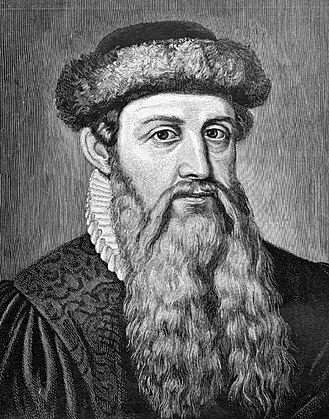
The invention of the printing press in 1439 supported the spread of ideas in science and humanism and would also be central to the Protestant revolution in the 1500s. During the same period, developments in shipbuilding and technology enabled the development of European empire and contributed to the age of Enlightenment (1714-1789) with the emphasis on reason having priority over theology, liberty, and progress[1].

Undercurrents – Issues within the church that have had a wide impact throughout the church

Christianity introduced new ways of thinking of the world, but those ideas did not change all patterns of thinking all at once. They needed a chance to develop and mature and then over time would challenge the older ways of thinking as the new patterns were gradually absorbed. In our current post-Christian era, new ways of thinking are developing, but the pattern continues. The now older Christian ideas are providing some of the framework for the current post-Christian ideas to build on, although the Christian contributions may not be recognized.

In that regard, as we examine the patterns of thought in Christian history, we find that there are various classic Greek ideas which have influenced the church. One of the classic Greek contributions, Platonism, developed into what has been termed Gnosticism. Within Gnosticism, one idea was that salvation is obtained through secret knowledge; this has led to the development of “secret” societies like the Freemason’s where only those within the society have that knowledge. Another gnostic idea is known as dualism, where spiritual things are considered to be good and material things are considered to be bad. The consequences of that thinking have led to heretical teachings about the nature of Jesus, severe asceticism, unhealthy thinking about sexuality, neglecting our stewardship of creation, rejection of the arts, etc.

Many disagreements have occurred through the years about the role of faith in respect to reason and revelation. When trying to balance these ideas with one another, some espoused fideism (in which faith is independent of and hostile to reason), some espoused special revelation (i.e., prophecies) over rationalism, and some espoused rationalism over faith or prophecies. These imbalances eventually fed into the conflict of faith vs. science in the 1800s highlighted by Darwin’s contribution to the evolution of species.[2]

There have been various moments in church life where there seems to have been a loss of focus on how Christianity is supposed to be lived out in our daily lives. When religious practices were perceived to be over-intellectualized, various pietistic movements were started where attention was paid to the spiritual aspects of the faith and on the transformation of our daily lives.

As the church grew it was natural that different personalities combined with different languages and cultures would result in differing ideas the nature of God and practice of Christianity. After all the apostles had died, the church had to learn how to determine which differences were acceptable and which differences were not. When someone’s practices seemed inappropriate the council would generate rules to address those practices. When ideas were taught that seemed to conflict with core beliefs of the church, the council created creedal statements, such as the Apostle’s Creed or Nicene Creed. The Creeds[3] were not designed to be all-inclusive statements of belief but were rather designed to address the emerging heresies of the moment.

Church developments outside the bounds of the Roman Empire, and eventually the fracturing of the Roman Empire itself, led to the fracturing of the church as well. The difficulty and sometimes outright inability of the church to hold a single large ecumenical council representing the whole church has contributed to the many branches of the church that can be seen today.

During the era of Enlightenment, reasoning and rationality were emphasized while the supernatural was rejected. In regard to the Bible, this meant that any miraculous events described in the Bible including miracles, healings, divine revelation, or God being active in any way in the world were rejected.

There was a view which postulated that God had created the world but then let it run according to natural laws without any further interference. This same viewpoint along with the acceptance of evolution, led to an evolutionary perception of historical and social development that led to the rejection of the traditional viewpoint of biblical development. One idea that became very popular in the 1800s (and is still popular today) was the idea that the Bible was created by piecing together various texts during Israel’s time of exile.[4]

Steering Currents

We should not assume that the church is dragged helplessly by overcurrents and undercurrents. Through all those influences, the Spirit of God is at work in the church. If the church sometimes behaves badly, it is a reminder that it is not the church that is the Savior of the world, that distinction belongs to God alone. Occasionally, even the church forgets that she is in daily need of a Savior as she brings the gospel to the world. Christ is the faithful one, not the church.

Those of us who are members of the visible church don’t even know with certainty which members of the visible church truly belong to Christ and who does not. Only God knows that. Only God knows whether we have the right balance of beliefs and practices,[5] and we most likely don’t. God’s ways are higher than the ways of those who are in the church as well as outside the church. This should call us to humility. But it should also call us to assurance that God is working His plan and His church even if we are broken and sometimes failing. The hope that we bring to the world is that God still works within us despite our weakness and failures.

In our unfaithfulness, we need to remember the words of Jeremiah. After many chapters of God accusing his chosen people, Israel, of prostituting herself to the love of other gods, at the end, God said, “Return, O virgin Israel …” Again, it is our faithful Yahweh who persists in seeking and holding onto us, despite our unfaithfulness – and yet He will cleanse us and put our unfaithful ways behind us. This is the good news that the church can receive and pass on to those not yet in the church. Our faithful Yahweh has not left us or abandoned us but leads us, able to redeem us even in our rebellion.

God loves His church, and He will restore us. We are therefore in no position to not love the church that God loves. He has not abandoned us but calls us by His Spirit. I have often said, “It is a miracle that the gospel has survived the church.” It is a miracle, and the miracle continues as it already has through the centuries. God will use the church and guide the church, despite herself. And there is the promise from Jesus to His followers, “Very truly I tell you, whoever believes in me will do the works I have been doing, and they will do even greater things than these, because I am going to the Father.


[1] Martin, Bruce. “Science and Faith: The Enlightenment;” Encyclopedia.com “Enlightenment and Empire” Explorations in Life, Theology, and Creation rossway.net/science-and-faith-the-enlightenment

[2] Darwin, Charles. “On the Origin of Species” John Murray 1859

[3] See Appendix I – Creeds of the Church

[4] Graf-Wellhausen Documentary Hypothesis University of Maryland Department of Computer Science www.cs.umd.edu/~mvz/bible/doc-hyp.pdf

[5] orthodoxy and orthopraxy Learn Religion www.learnreligions.com/orthopraxy-vs-orthodoxy-95857

Observe

Read John 17:13-25. In His love towards us, God has created many things in the world for us to enjoy. However, the world’s hatred of the things of God is sometimes masked by the sweet enticements that lure us away the love of God towards the love of those things. How do we discern when we are being lured away from God?

General Issues with Violence

Dancing in the Kingdom- Table of Contents

Dancing In the Kingdom – Part 2 – The Kingdom Revealed – Chapter 11 – The Kingdom Enters

General Issues with Violence

[Bible references: Isaiah 10:5-12; 40:1-2; 48:8-11; 55:8; Jeremiah 25:12-14; 30:24; Zechariah 1:14-15]

In many ways, our modern-day sanitized culture puts a distance between us and some of the everyday realities of violence. Some examples: Buying packaged meat from the butcher, without seeing the slaughter of the animals, People dying in the hospital and sent to the morgue instead of allowing us the honor hosting the dead at home.

For those of us who have more privileged lives where we don’t directly experience violence done to us or loved ones, many have problems with a judgmental God. But those who are oppressed and do directly experience violence done to them or their loved one’s desire God’s judgment and His righteousness.

God’s acts of violence are not part of his nature but are a reaction to acts of human violence. The purpose of God’s violence is to restore justice in his creation.

When God’s assigned His image-bearers the responsibility of stewardship over His creation, that assignment did not end with our rebellion. To that end, Yahweh’s preferred method of working in the world is through His image-bearers. Even when Yahweh wishes to use violence to restore justice, He often uses human agents. Those agents however often exceed the charge given them, creating much of the abusive violence we see in the Old Testament. However, when that happens, God disciplines those same agents.

Even with all these explanations we should expect that, in the end, God’s violence is a mystery we cannot fathom. We cannot grasp why God allows violence to persist on earth.

Reflect

Is it possible for God’s justice to not use violence against those who unrepentantly use violence against God’s other image-bearers?

Observe

Read Isaiah 55:8; Jeremiah 25:12-14; 30:24. Is there a warning for all of us here?

Clash of cultures

Dancing in the Kingdom- Table of Contents

Dancing In the Kingdom – Part 2 – The Kingdom Revealed– Chapter 10 – The Class of Apparitions

Clash of cultures

As we can see in the previous section, the Jewish culture in Israel had no less diversity than we do today.[1] Various cultural groups within Israel had their diversity of viewpoints, but as is common today, there were many people who likely could identify with more than one group. In this next section we will look at some of the cultural issues that were present then and are still present today and we will pursue some of these ideas in later chapters.


[1] Gutierrez, Juan Marcos Bejarano. “The Judaisms of Jesus’ Followers: An introduction to Early Christianity in its Jewish Context” Yaron Publishing, 2017 (Locations: 187, 741, 1914, 2560)

Reflect

What are the reasons for some of the cultural tensions today and what are the different ways people handle them?

Proxy wars

Dancing in the Kingdom- Table of Contents

Dancing In the Kingdom – Part 2 – The Kingdom Revealed– Chapter 10 – The Class of Apparitions

Proxy wars

[Bible references: 2 Kings 17:1-6; 25:1-21; Jeremiah 1:14-16; Daniel 1:1-6; Ezra 1:1-4; 6:12; Ephesians 6:10-20]

Since the time of Adam and Eve a war has been underway. God’s Kingdom has found itself in a war with Kingdom of darkness, battling over the souls of God’s image-bearers. We cannot directly see the clash of spiritual kingdoms, but we see it indirectly, sometimes in clashes between image-bearers and sometimes within ourselves. The apostle Paul reminds us, though, that our struggle is not against “flesh and blood” but rather the “spiritual forces of evil.”

Even so, the spiritual war is played out in the human realm where we brokenly pursue love apart from God, hoping to find love somewhere else, whether in power, traditions, possessions, other people, etc. We then find that when we look for love other places than God, we are then confronted by fears which inevitably result in clashes, especially in times of change.

A great time of change was about to occur as the time approached for Jesus’ incarnation. There were clashes between empires that overran the Promised Land, clashes between groups of people in that land, and clashes of values between and within those groups.

As the time of Jesus’ incarnation approached, the residents of the Promised Land, begin to speak Aramaic instead of the Bible’s language of Hebrew. When the Greek empire moved in it tried to supplant all the local languages and cultures, resulting in an effort to the translate all the Hebrew writings into Greek, producing among many things, the Greek version of the Hebrew scripture called the Septuagint. The Septuagint became a major reference not only for the non-Hebrew speaking Jews but also for the church, particularly as the church became more Gentile. This change accelerated the loss of the Hebrew understandings of Scripture.

When the Roman empire overtook the Greek Empire, it initially allowed the use of Greek as the international language but would set up a clash later when the empire would replace Greek with Latin as its preferred language. The changes in languages and cultures became part of the clash over which writings should be considered as part of what will be called the Old Testament scriptures.

The Greek Church maintained the use of the Septuagint as it’s Old Testament, while the Latin speaking Roman-Catholic Church used only parts of the Septuagint. Later on, the Protestants rejected the Septuagint and only used the Hebrew writings that were approved by Jews in the early centuries A.D.[1]

The books used by the Roman Catholic and Orthodox Churches but not used by the Protestants are sometimes referred to as the Apocrypha (hidden) or the Deuterocanonical (second canon) books. Although the Protestants may disagree about whether those books are inspired, there is useful information in those books that help explain the culture of the world that Jesus was born into.


[1] Nelson, Ryan. “What is the Masoretic Text? The Beginner’s Guide” The Beginner’s Guide to the Bible overviewbible.com/Masoretic-text

Observe

Read Ephesians 6:10-20. What difference does it make if you are aware that the conflicts present in the world around us are manifestations of spiritual warfare?

Worship in exile

Dancing in the Kingdom- Table of Contents

Dancing In the Kingdom – Part 1 – Shadows of the Kingdom – Chapter 9 – The Prophets and writings

Worship in exile

[Bible references: Jeremiah 29:1-23; Daniel; Esther; Ezekiel]

During this exile, the Jews, as they would now be called, had to become more deliberate if they were going to preserve their culture. It was during this time that the Jews would begin to collect all their writings in order to begin to determine what would be their scripture. They had the writings of Moses, but they had to determine what else should be included.[1]

During this time, they focused more seriously on worshipping Yahweh. Before this time, the biblical and archeological records indicate that Israel had a habit of adopting the worship of any idols of the culture they were in contact with.[2] But now they had to preserve their culture while living amid a dominant foreign culture.

The books of Daniel, Esther and Ezekiel give examples of how the Jews were able to thrive, even while experiencing opposition while the nation was in exile: Daniel as an exceptional administrator, Esther as queen to the emperor and Ezekiel as a prophet.

From this time forward, most Jews have remained outside their homeland with no access to the one temple in Jerusalem. It was during this time that local synagogues were created, with worship now being focused either in the home or at the synagogue.[3]


[1] Waltke, Bruce. “How We Got Our Old Testament” Christianity Today, Christian History www.christianitytoday.com/history/issues/issue-43/how-we-got-our-old-testament.html; Hirsch, Emil G. Blau L, Kohler, Kaufmann. Schmidt, Nathaniel “Bible Canon” My Jewish Encyclopedia, www.jewishencyclopedia.com/articles/3259-bible-canon

[2] Gayle, Damien. “How idolatry continued in the Kingdom of Judah: Israeli dig uncovers temple and icons dating back to Old Testament era” Dailymail.com 27 Dec 2012 www.dailymail.co.uk/sciencetech/article-2253695/How-idolatry-continued-Kingdom-Judah-Israeli-dig-uncovers-temple-icons-dating-Old-Testament-era.html

[3] Bacher, Wilhelm and Dembitz, Lewis N. “Synagogue” Jewish Encyclopedia www.jewishencyclopedia.com/articles/14160-synagogue

Observe

Read Jeremiah 29:1-23. What did Jeremiah say that the exiles were to do while they were in exile?

The God of War

Dancing in the Kingdom- Table of Contents

Dancing In the Kingdom – Part 1 – Shadows of the Kingdom – Chapter 7– Settlement

The God of War

[Bible references: Exodus 22:21-22; Leviticus 19:33–34; Deuteronomy 10:17–19; 24:19; Joshua 6:17-21; 1 Samuel 15:1-3; Psalm 10:14–18; 68:5; 146:9; 2 Thessalonians 1:5-10; Hebrews 10:30; Revelations 19:17-21]

One of the troublesome tensions of the Christian faith is how to reconcile our picture of Jesus who’s come to bring us peace with the picture of the “pre-Jesus” God who seems so violent. In particular, the God who commanded Israel to “totally destroy,” to leave no one alive in the cities of the “Promised Land” they were to inhabit.

It has been so hard to reconcile the two images of the God, one of the Old Testament that engaged in violence and the second of one of the New Testament who came to “bring peace,” that from the earliest days of the church some Christians felt compelled to abandon the Old Testament altogether. There are several issues that affect how we deal with this problem.

There are less differences between how God is revealed in the Old vs. New Testaments than many think. (See Chapter 2; Paradoxes and Mysteries; Gracious, Merciful and Just). If we have a problem with God in the Old Testament, then we have a problem in the New Testament as well. Both Testaments together provide the full story of the Gospel and a full picture of God.

We need to see all suffering and death in context of Jesus’ suffering and death by execution. Jesus is God the Son, present from before Creation, the God of Creation, the God of Abraham, Moses and Israel, and the God who commanded Israel to cherem the people in Canaan. Jesus cannot be separated from all the activity ascribed to God’s activity in the Old Testament. The Wonderful Counselor, Mighty God, Everlasting Father, Prince of Peace that we are more comfortable dealing with, is only available because of all that He had done beginning with Creation, extending through history of the patriarchs and Israel and eventually his own incarnation, suffering and death.

We need to accept that there is much that we do not know. This comes to us in a couple of different ways. We must deal with our cultural separation from the unfamiliar ancient near east culture and a knowledge of God that is far beyond our comprehension. We also need to take Yahweh’s criticism of Job seriously, and Yahweh’s admonition to Isaiah that  “my ways are higher than your ways.” Then we also must be careful to not accuse Yahweh of injustice when there is so much that do not understand.

The totality of destruction implied by cherem catches our attention, but this is only a specific, though perhaps extreme, case of the question, “Why does God allow bad things to happen to good people?” The answer to the everyday issue of why “innocent” people suffer, is the same answer that underlies the killing of people that we assume are innocent.

Our sanitized culture makes it difficult for us in the modern day who live in a time where we do not witness the slaughter of animals we eat. We have a hard time associating with those who lived in the time when there was the ritual slaughter of animals, not for the sake of food but for the sake of sins. We have not had to watch the slaughter of animals and contemplate the awfulness of our sin and of God’s hatred of sin because of its awful effect on us. We are then even further separated from the concept of a God so jealous for us that he would even offer himself to be slaughtered on our behalf.

Our perception is further sanitized because we live in a world that has been cleansed by the effect of the grace of Christian values (OK, we have to admit that the church has not always lived up to its professed values) and the ameliorative effects of technology and medicine. It has been the Christian value of life that confronted the once common practice of abandoning babies on the street to die and made it rare. It has been Christian values that have elevated the status of women and children. It has been Christian values that led to the development of modern science. So many of what are now commonly accepted values in Western civilization, were adopted from Christian values, but it’s easy to forget where those values came from.

Yet another level of sanitization occurs when we don’t consider the extent of our own sin and depravity in context of the extent of the holiness of God. A contrast that caused the prophet Isaiah to proclaim, “Woe is me. I am a man of unclean lips from a people of unclean lips.”

We also are forgetful of the mercies of God. 1) Jonah was perturbed when Yahweh responded to the repentance shown by the Ninevites by not bringing about the threatened destruction. 2) The mercies shown to many of the idolatrous kings of Israel when they repented.[1] 3) In the case of Israel entering the Promised Land, we don’t know what kind of warnings the Canaanites may have received prior to the “total destruction” of their cities. We do know that Yahweh patiently waited until he “sin of the Amorites would reach their full measure.” The Canaanites may have had sufficient warning to change their ways (and they had, among other abhorrent practices, that of sacrificing their children to the flames) and yet they didn’t. While we, in our time, may think of the “total destruction” as genocide, it may be instead an act of mercy – reducing the pain and suffering that would otherwise go on.

Sparing the lives of the “innocent” within the borders of the Israel did lead to the Israelites to continue the reprehensible practices of the Canaanite religions, prolonging the suffering that Yahweh wanted to put an end to. Israel was susceptibility to fall into the sin of the nations around them and was warned that allowing the original inhabitants to live alongside of them, would cause the Israelites to adopt the same abhorrent practices – which is what happened.

God had already used the forces of nature to directly carry out his cherem version of justice (ex: The Great Flood which killed all people except Noah and his family, the crossing of the Red Sea in which innumerable Egyptian soldiers died). With the formation of the nation of Israel, God now had human agents to act on His behalf. When God commanded Israel to invoke cherem, they were acting as his agent to execute a type of justice that God had already been practicing.

How innocent were the Canaanites: men, women, and children? We can’t argue from silence that the Canaanites did not have a chance to respond to God’s warnings. We do know that God waited several hundred years before executing his judgement.

It is not just in the Old Testament that we witness immense suffering. All around us today and through the years before, there has been great suffering among God’s image-bearers caused by our own violence or the violence of natural events or the violence of birth defects. All these can cause us to question, “Why, God?”

These issues and many others cause us to grapple with how God is implicated in the violent activity and the suffering endured by those we consider to be innocent. We are not left with comfortable answers. But we also need to remember, that if we have a “God” we think we totally understand, then it is not God that we are really understanding. Also, if we have a “God” that we are fully comfortable with, then we are not fully dealing with the holiness of God and the totality of our sin.

Jesus dealt with the totality of our sin by his suffering and excruciating death. It is only by the violence endured by Jesus that He has become our Prince of Peace. This is the lens through which we must see the violence around us. But even with that lens, we are not likely to have a ‘satisfactory’ answer. Even with that lens we will still struggle.

Time and time again, we see ordinary people approaching God with raw honesty about human suffering. And God responds to them, because they reflect his own lionheart that’s hell-bent against evil and death. God wants our protest against the evil and pain in this world. … To be a Christian is never to be apathetic toward evil and suffering, nor to avoid protesting God. Instead, we are told to work out our faith in “fear and trembling,” which includes unflinching lament at all the evil and death in this world. We are meant to hold our hands open in foolish faith, to watch and wait with hopeful expectation for God to show up in surprising ways—to remind us that he is good and powerful and that he will grant us his own steadfast courage. We are called to the daring and bold love of God in Jesus Christ, who stopped at nothing—not even death on a cross—to fight and win back the glory and goodness of God’s original creation.[2]

Perhaps we are meant to struggle, to lament about all that’s wrong, evil, awful, terrible, sad, and more that our hearts can bear. But in our lament, not to give up the hope that is also in our hearts, the hope that God our Father is alive, that our Father cares so deeply that He gave His Son, that miracles still do happen and that we can expect God to show up in our midst.


[1] Rishawy, Derek. “God’s mercies aren’t so new”  Christianity Today 17 Mar 2020 www.christianitytoday.com/ct/2020/april/gods-mercies-arent-so-new-rishmawy.html

[2] Hill, Preston. “Have Christians Forgotten How to Fight with God?” Christianity Today 21 Dec 2021 www.christianitytoday.com/ct/2021/december-web-only/problem-of-evil-christianity-faith-wrestling-with-god.html

Reflect

What have been your conflicting ideas between the Old and New Testaments?

Observe

Read 2 Thessalonians 1:5-10; Revelations 19:17-21. Why does God’s justice need to be meted out with violence?

Living temples

Dancing in the Kingdom- Table of Contents

Dancing In the Kingdom – Part 1 – Shadows of the Kingdom – Chapter 3 – The image-bearers

Living temples

[Bible references: Genesis 1; 3:6; Isaiah 35; 54:10; 60; Jeremiah 29:1-23; John 2:19-21; 1 Corinthians 3:16; 6:19-20; 2 Corinthians 6:16; Ephesians 2:21; Revelations 15:8; 21:22]

Although God’s first image-bearers had close, unhindered, intimate contact with their Creator, there was enough space given them to think freely, as if they were not being watched all the time. It was in this space that they – and we – were given several blessings: the freedom to procreate (be fruitful and multiply), to oversee God’s creation (subdue the earth and have dominion over its creatures), and to nurture God’s creation (work it and take care of it).[1] We were given the assignment to be fruitful, to fill all the earth, discover its possibilities and care for the world in the same way that God would care for the world.[2] Just as God continues to create more living things and sustain all that he has created, we as his co-regents[3], can join him in sustaining and creating those things entrusted to our care.

  “There are two ways in which God imposes his law on the cosmos, two ways in which his will is done on earth as in heaven. He does it either directly, without mediation, or indirectly, through the involvement of human responsibility. Just as a human sovereign does certain things himself, but gives orders to his subordinates for other things, so with God himself. He put the planets in their orbits, makes the seasons come and go at the proper time, makes seeds grow and animals reproduce, but entrusts to mankind the tasks of making tools, doing justice, producing art, and pursuing scholarship. In other words, God’s rule of law is immediate in the nonhuman realm but mediate in culture and society. In the human realm men and women become coworkers with God; as creatures made in God’s image, they too have a kind of lordship over the earth, are God’s viceroys in creation.” [4]

We were also given the responsibility to subdue the earth and have dominion over its creatures. When there is resistance, we still have the responsibility to bring the rule of God to the world. Then we are given the responsibility to work and take care of the earth, starting in the Garden of Eden and then expanding to all of God’s creation. Implied in all these things is that we should do everything in context of God’s love, to care for each other and to care for the earth and its creatures with the mind of the God who created us for love.

The work that we were designed to do was more than just tending the garden. In Genesis 2:15, we were given a mandate to “work” and “take care of” the garden God had created. These tasks in light of Ancient Near East culture, were more of a priestly nature, taking care of this temple where we reside with God.

“The verbs ʿbd and šmr (NIV: “work” and “take care of”) are terms most frequently encountered in discussions of human service to God rather than descriptions of agricultural tasks… ‘bd can refer to … work connected with one’s vocation, to religious service deemed worship … šmr is used in the contexts of the priestly responsibility of guarding sacred space, as well as in the sense of observing religious commands and responsibilities … it is likely that the tasks given to Adam are of a priestly nature: caring for sacred space. In ancient thinking, caring for sacred space was a way of upholding creation.”[5]

We were to take care of this place which was designed to be a “very good” place for us to flourish in, creating whatever structures we needed to “increase in number, fill the earth and subdue it.” This task, this mandate, meant that we would eventually go beyond the capacity of gardening and create not just a bigger garden but cities, a flourishing civilization as pictured in Revelation 21 and 22.[6]

When examined closely, we can see the breadth of what was committed to Adam and Eve. Subduing the earth would entail many physical, social, and intellectual activities. In the gardening we can see cultivation and farming; in taking care of the animals, we can see shepherding and domestication; in the naming of the animals, we can see a cultural and scientific activity which required understanding the nature and attributes of the animals and establishing authority over them. We can see that God had created things to be beautiful and as his image-bearers we would be expected to also create beautiful things.

As we look forward to the new earth which will manifest when Jesus comes again, nature’s comeliness will reach its pinnacle; the wilderness itself will burst into blossom, and streams will gush in the desert. To complement all this natural beauty, human culture will flourish. All the great creativity of humankind-artistry in music, dance, painting, woodcrafts, sculpture, architecture and more-will be brought into the New Jerusalem.[7]

There is a sense in which we, as members of the Kingdom of God, now seem to be living in a foreign land. This puts us in a position similar to the Israelites when they were taken in exile into Babylonia. During their stay in Babylonia, God’s instructions were to settle down, build houses, get married, have children and to seek the prosperity of the city they were sent to, for “if it prospers, you too will prosper.”

But above all these things we can do, we should not lose focus on who we are. We are creatures designed by God to be like God to be in relationship with Him, the God who is a community in Himself: Father, Son, and Holy Spirit. Everything we do should be done in context of who we are. We should remember that we were designed to be human “beings,” not human “doings.” This viewpoint become clear when we compare the Biblical view of creation to the view of other Ancient Near East cultures. For the surrounding cultures humans beings were created to feed the gods and serve the gods who created them, whereas the Biblical viewpoint sees God being the provider for the people.[8]

Originally, we see Creation designed as a temple, a place for us to “be” with God. Later on, Jesus refers to himself as the temple, a human in whom God resides. Later on, Paul declares that our own bodies are a temple of the Holy Spirit. So here again, we see the mystery of perichoresis, where we are distinct from the Holy Spirit, yet the Holy Spirit becomes a part of who we are. In this we see the mystery of perichoresis unifying the persons within God, unifying the body, soul and spirit within humans, and unifying God and humans.


[1] Jacobsen, Eric O. The Space Between: A Christian Engagement with the Built Environment, Baker Academic, 2012, (Page 20 )

[2] Crouch, Andy. “What is the Cultural Mandate” The Village Church, 6 Jan 2017 www.tvcresources.net/resource-library/talks/what-is-the-cultural-mandate

[3] Walton, John H. “The Lost World of Adam and Eve: Genesis 2-3 and the Human Origins Debate (Proposition 4) InterVarsity Press. 2015 Kindle Edition

[4] Albert M. Wolters. Creation Regained: Biblical Basics for a Reformational Worldview William B. Eerdmans Publishing 1985, 2005. eBook(Locations 203-208)

[5] Walton, John H. The Lost World of Adam and Eve: Genesis 2-3 and the Human Origins Debate Edition(p. 105-106).

122 Buzenitz, Nathan. “The New Jerusalem”

[7] Sherman, Amy L. Kingdom Calling: Vocational Stewardship for the Common Good. Intervarsity Press, 2011 eBook location 291

[8] Walton, John. “The Lost World of Adam and Eve,” I “Proposition 12: Adam is Assigned as Priest in Sacred Space, with Eve to Help” (p.104)

Observe

Read Genesis 1; 1 Corinthians 3:16; 6:19-20; 2 Corinthians 6:16. What difference does it make if the universe is God’s temple or that our bodies are God’s temple?

The Temple Maker

Dancing in the Kingdom- Table of Contents

Dancing In the Kingdom – Part 1 – Shadows of the Kingdom – Chapter 2 – The God who created

The Temple Maker

[Bible references: Genesis 1-2; Exodus 26; 1 Kings 6; Job; Psalm 8; 95; 100; 104 and others; Proverbs 8:22-31; Isaiah 44:21-28; 45:5-12; 51:4-12; 55:6-13; Matthew 26:61; I Corinthians 6:19-20; Revelation 21-22]

There has been much debate about how to interpret the creation account. There have been various attempts to understand creation as physical processes that had occurred (over shorter or longer periods, depending on your analysis) because in our current cultural context we default to thinking of creation in physical, scientific terms. But what if (surprise! surprise!) we consider the biblical text to be a theological text instead of a scientific one, about functional origins and not about material origins.[1]

The cosmos can only function as sacred space once God has inhabited it and people in his image are there. God is declaring purpose for the cosmos as an ordered space for people and as sacred space where he will dwell. This is what defines the divine activity …Adopting and promoting a vision and mission statement will not change how the institution operates. But it articulates a purpose and identity that may not have been realized or present before and proclaims that as its purpose. Genesis 1 is doing something similar. It is articulating a purpose through a mission statement (people living out their designated role as the image of God) and a vision statement (seeing the world around us as sacred space where God is living among his people and being in relationship with them). .[2]

In the last few decades, research has uncovered much more about the culture in the Ancient Near East than ever before. It has been discovered that in Ancient Near East cultures, the Genesis account would not have interpreted the creation account in terms of physical processes but rather in terms of assigning meaning and purpose. So, as we read the Creation account in Genesis 1, on the first three days the spaces of light and dark, waters above and below, and the land are being assigned a purpose. The next three days the populations of those spaces are assigned a purpose: the sun and the moon and stars, the birds and fish, the land animals.

In this perspective, the story of creation is seen more as a story about the dedication of a temple, where the universe and the world were dedicated as a sacred space, a space where God would dwell with his people. Therefore, the seventh day is when God rested from the act of dedicating the earth, which would now be the place where He would now live with his image-bearers. If you read Genesis 1-2, you will see that, unlike the other days, there is no “there was evening and there was morning.” That is because we are living in the seventh day.

The completion of God’s temple would be later remembered by the seventh day celebration of the Sabbath. Although God’s temple was completed by the seventh day, it was not a time where God ceased to do everything. The still continuing seventh day is the time when the “temple” which is our “home” is completed so that God and we, as his co-regents, can settle in and do the things that our home was designed for. Jesus in John 5:1-7 clarified this idea where he explained, “My Father is always at his work to this very day, and I too am working.” Living into this sacred space would entail us taking part with God in his continual acts of creating and sustaining the universe. That is the perspective of Eve, when she gave birth to Cain, she recognized that “I’ve created a man with Yahweh.”[3]

In Genesis 2, the focus moves to the humans God created and how they were to function in that sacred space where the Garden of Eden is the center. Genesis 2 is also where God’s name, “Yahweh,” begins to be used. Genesis 1 introduces the God as the Creator of the universe whereas Genesis 2 introduces the God who in establishing a personal relationship with the people he created uses a personal name.[4]

The cosmos that God created was intended to be a temple, the place where He would meet with his people. The temple/creation imagery permeates and unites all of scripture from the first book, Genesis, to the last book, Revelation. The temple/creation theme shows up in places like in the stories of Noah, Moses, and Abraham, in the construction of the Tabernacle and the Temple, in Job’s dialog with Yahweh, in the poetry of Psalms[5], in prophecies of Isaiah, in the body Jesus and in us as his Body and finally in the depiction of reuniting of heaven and earth. Each instance shows its own unique aspect of the temple, so that when combined with each other, they show a more complete picture of how God meets with us and provides for us and what he has intended for us. We see a complex picture of the temple as a physical place in Creation and at the same time the temple is within us, inside the bodies of all of those who call on his name. In both those cases we can see the provision of God who 1) abundantly fills all of Creation in ways that exceed our imagination and exceed the capacity of any book to tell and, 2) abundantly fills us with His strength and His Spirit so that we can fulfill the desire He has for us to “cultivate and keep” the abundant place He has provided for us.

One of the benefits of considering only the theological aspects of the Creation accounts, or the why of creation, is that we don’t have to be as highly concerned about the how of creation, or the scientific/physical accounts of creation. When scientific creation accounts are proposed and are not perceived to be correct because they don’t seem to theologically fit, we don’t need to despair. It may be that the various proposed scientific explanations simply don’t theologically fit because they just don’t or because we just don’t understand just how they could theologically fit. We know that the sciences are limited and that theories will change as more discoveries are made. Sometimes those theories may seem to move closer or further from our limited theological understandings, but our theology is not constrained by whatever the current science may indicate. In the meanwhile, we are free to explore the science and wonder in awe and marvel at just how God managed to do it all while humbly admitting that we don’t have the mind of God and how much higher his ways are than our ways.


[1] Walton, John. “The Lost World of Adam and Eve,” Proposition 3, InterVarsity Press. 2015 Kindle Edition. pp. 35-45; Driver, Cory. “Commentary on Genesis 1:1-5” Working Preacher 10 Jan 2021 www.workingpreacher.org/commentaries/revised-common-lectionary/baptism-of-our-lord-2/commentary-on-genesis-11-5-5; Carlson, Reed. “Commentary on Genesis 1:1-2:4a 12” Working Preacher Sept 2011 www.workingpreacher.org/commentaries/narrative-lectionary/creation-by-the-word/commentary-on-genesis-11-24a-5; Throntveit, Mark. “Commentary on Genesis 1:1-2:4a; or 1:1-5,26-2:4a 1 Working Preacher 1 Sept 2011 www.workingpreacher.org/commentaries/narrative-lectionary/creation/commentary-on-genesis-11-31-21-4

[2] Walton, John. “Material or Function in Genesis 1? John Walton Responds” Biologos 3 Apr 2015 biologos.org/series/reflections-on-the-lost-world-of-genesis-1-by-john-walton/articles/material-or-function-in-genesis-1-john-walton-responds

[3] Friedman, Richard Elliot, Commentary on the Torah, Harper Collins, 2003 Location 6942 of 37412

[4] There will be more discussion on that name in “Hope in the Brokenness,” Chapter 4

[5] Muran, Alexej. “The Creation Theme in Selected Psalms” Geoscience Research Institute 1 May 2015 www.grisda.org/the-creation-theme-in-selected-psalms

Reflect

Does viewing the universe as a temple affect the way we look at it?

Observe

Read Proverbs 8. This proverb personifies God’s wisdom. Read how God is describing how His wisdom is built into the very framework and fabric of this temple we call Creation. How can we sense God’s presence with us because of how His wisdom should be speaking to us?