Re-envisioning our given environment

Dancing in the Kingdom- Table of Contents

Dancing In the Kingdom – Part 3 – Dancing in the Kingdom– Chapter 18 – Entering the Dance

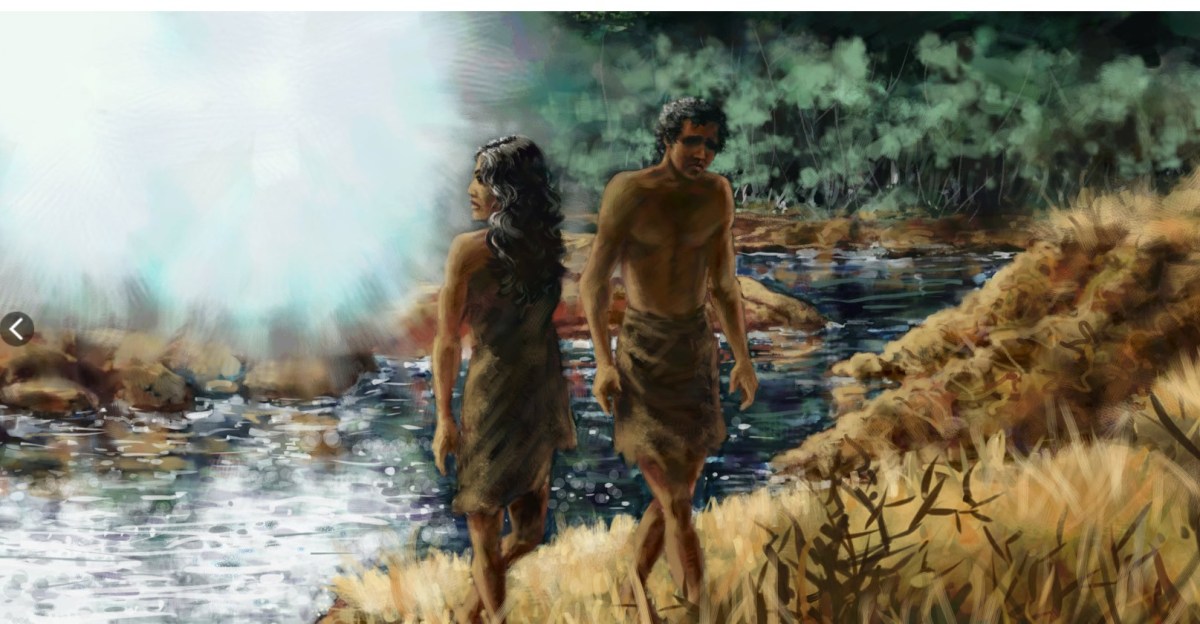
Re-envisioning our given environment

[Bible references: Genesis 1-2]

“An important distinction exists between the concepts of nature and creation. There is no concept of nature in the Old Testament. Nature, derived from the Greek worldview, is by scientific definition a self-sustaining system replete with its own internal laws. Creation, a biblical-theological concept, recognizes that creation is not self-sustaining but is continually dependent on the presence of God.” [1]

In Genesis we explored how God had fashioned the cosmos to be a temple, a place where he would meet with his image-bearing creatures. This cosmos, and in particular, this world that we live in, ultimately belongs to him, for he built it with materials that he provided.

It was his intention, though, to not only share this temple with us, but to give us responsibilities within it. We know the story of how we rebelled against the responsibilities he gave us, and we know of the outpouring of patient love which he has endured and continues to endure as he works out his plan to restore our relationship with him. He still intends the cosmos to be his temple where he meets with us.

The theme of the temple began in the first chapters of the Bible with the temple dedication, the temple sanctuary in the Garden of Eden, and the charge he gave to his image-bearers to be the stewards of his temple and to fill the earth, expanding the sanctuary, the place he meets with us, to fill the entire earth.

The temple theme concludes in the last chapters of the Bible, revealing our intended destination, not just a primeval garden, but a garden with a city. It’s a city he built, for we, in and of ourselves, cannot build a city where there are no tears of sorrow, where there is no rebellion, where we can experience the entire fulness of shalom.

We don’t know when that time will come, but we do know the responsibility he gave us from the beginning, to be the stewards of what he has given us, to nurture, sustain, care for, and protect the world he provided.


[1] Bukus, Russell A. “The Stewardship of Creation” The Center for Christian Ethics at Baylor University, 2002 www.baylor.edu/ifl/christianreflection/CreationarticleButkus.pdf

Observe

Read Genesis 1:26-30; 2:1-15.  How do we best take care of the space Yahweh provided for us, with his intentions for its flourishing and with our role as stewards of this space?

Listening to our culture

Dancing in the Kingdom- Table of Contents

Dancing In the Kingdom – Part 3 – Dancing in the Kingdom– Chapter 17 – Finding our place

Listening to our culture

[Bible references: Proverbs 12:15; Isaiah 5:20; Luke 10:25-37; Acts 17:16-34; Galatians 5:16-23; James 1:29; 1 John 4:1]

Outside of providing a healthy, flourishing place within the church community, how can we be more deliberate in engaging with those outside the church. Like the Apostle Paul engaging with the citizens of Athens, we must know what it is we believe then take the time to understand what the others believe and what their needs are so that we can begin the conversation. We can speak better after we have listened.

Listening to voices from outside the church can be challenging because their value systems and world views are so different. We saw in Chapter 13 how different experiences and viewpoints within the church have affected how they answer the various questions asked by the church. We do need to be aware of the different values and world views because, on the one hand, they may add useful understanding to our faith, then on the other hand, they can also distort the values and world views we have within the church.

“A newly released survey reveals that the ideologies of postmodernism and secular humanism have a noticeable influence on how Americans make decisions. The Cultural Research Center at Arizona Christian University released the eighth report of its 2021 American Worldview Inventory Tuesday. The report was based on responses collected from 2,000 American adults in February as part of a more extensive survey with a margin of error of +/- 2 percentage points. The survey found that although 2% of Americans have adopted secular humanism as their dominant worldview, a significantly higher share of the population (16%) actively embrace principles associated with the worldview. Similarly, while just 1% of Americans have adopted postmodernism as their dominant worldview, 16% frequently make decisions indicating that the philosophy plays an important role in shaping their day-to-day actions.” [1]

What is apparent from the study done by the Cultural Research Center at Arizona Christian University, is that there is a small percentage of Americans who are aligned with one particular ideology, but many of us, including many within the church, have adapted only various pieces of various ideologies. Before we figure on how to bring the gospel to or culture, we may first need to understand how our culture has affects our understanding of the gospel[2] so we can communicate clearly about what the gospel is.

According to Timothy Sheriden and Michael Goheen, there are four theological considerations:

“The first is an understanding of the gospel as the good news of the kingdom …God is restoring his gracious and loving rule over the whole of creation and every aspect of human life. … The second is an understanding of the comprehensive and restorative nature of salvation … the whole of human life … the restoration of this creation … The third is the lordship of Jesus Christ … He is more than a personal savior; he is Lord of all. Fourth, the church is the new humanity that shares in the future life of the kingdom now, as sign, foretaste, and instrument.” [3]

Once we are clear on what the gospel message is, then we are prepared to first express love by listening to our “neighbor,”[4] so that we then address our neighbor’s needs as we share the gospel. The very short following list highlights just a very few of the predominant cultural ideologies that have influenced our neighbors.

  • The church should not influence the government.
  • Religious ideas are to be kept as private ideas not to be discussed in public
  • Rejection of any knowledge other than what is available by science.
  • Humanity is always getting better.
  • All knowledge, hence, all truth, is relative.

When we talk with fellow image-bearers of God, we need to remember our common humanity,[5] that despite our differences there are many things that we share together. We were all intended to create good, and we are all broken in our attempts to do that good. Our society tends to put labels on ideas, such as those listed above, but those labels tend to be unhelpful because we then create divisiveness by using them to label people.

Whatever ideologies we may encounter in our conversations, we should remember that people are usually not as responsive to attacks on their ideas when they feel they are being listened to. When we are listened to, we may find each other more receptive as we each express our convictions sincerely in context of a polite conversation.

One way of loving our neighbor is suggested by Richard Mouw. Convicted Civility,[6] is a civility that begins with kindness, grace, patience, generosity, and caring for the other paired with a conviction that is not being relativistic, but truthful about what you don’t approve. Jesus showed most of his criticism to people within the religious establishment but was gracious to the “sinners.”


[1] Foley, Ryan. “Postmodernism, secularism have increasing influence over Americans’ decision-making: report” Christian Post, 10/22/2021 www.christianpost.com/news/peoples-choices-influenced-by-postmodernism-secularism-report.html

[2] Mattera, Joseph. “Why Your Faith is More Influenced by Culture than the Bible” JosephMattera.org 31 Aug 2017 josephmattera.org/faith-influenced-culture-bible

[3] Finn, Nathan A, Whitfield, Keith S. “Chapter 5 Missional Spirituality and Cultural Engagement” IVP Academic 2017IVP Academic 2017

[4] This parable helps us to understand that our “neighbor” includes anyone we encounter.

[5] Warren, Tish Harrison. “We Need to Talk How Americans Can Learn to Live Together Again” New York Times, 10/24/2021

[6] Mouw, Richard J. Uncommon Decency: Christian Civility in an Uncivil World. IVP Books 2010

Observe

Read Luke 10:25-37. Jesus told the story with characters his audience could identify with. What characters would you choose to tell the same kind of story today?

Discipline of Resting/Sabbath

Dancing in the Kingdom- Table of Contents

Dancing In the Kingdom – Part 3 – Dancing in the Kingdom– Chapter 15 – Reforming our Souls

Discipline of Resting/Sabbath

[Bible references: Exodus 20:8-11; Deuteronomy 5: 12-15; Mark 2:23-28; Hebrews 4:1-13]

We work to live

To understand the place of Sabbath we need to understand who we are and the place of our work (or play). The accumulation of archeological research in the last few decades has made it more possible to understand the Genesis creation account in the same way it was understood in the times of Moses. Creation was not primarily viewed as a physical event but rather the moment of being assigned a purpose. The creation account, understood this way, was a dedication of a temple, that is, a place where God would meet with his image-bearers. Those moments of dedication were done within the boundaries of days, “there was the evening and the morning.” After the temple was dedicated, it was now the time to live into the temple, to live into what it was designed for. The “rest” was not referring to a cessation of activity, but of doing the activity that the temple, in this case, the universe, was designed for.

The seventh day, as described in Genesis 2, was not assigned a beginning and an end. It was not designated with “and there was evening and there was morning.”  It continues now. Now is the time we live in the temple, doing that for which the temple was designed. Work has been designed for us, but we were not designed for work. Going back to Genesis 1 and 2, we see God was creating a place for him to reside and take control and for us to join him as co-regents. The seventh day, the sabbath, God had finished the dedication of the “temple,” but it was not a time where he ceased to do everything. Rather, it was the time where the “home” was now ready for God, and for us as co-regents, to begin the settling into our “home” and doing the things that our home was designed for. Jesus in John 5:1-7 clarified this idea where he explained, “My Father is always at his work to this very day, and I too am working.” Living into this sacred space would entail us taking part with God in his continual acts of creating and sustaining the universe. When Eve gave birth to Cain, she recognized that “I’ve created a man with Yahweh.”

The work that we were designed to do was more than just tending the garden. In Genesis 2:15, we were given a mandate to “work” and “take care of” the garden God had created. These tasks, again looked at in light of Ancient Near East culture, were more of a priestly nature, taking care of this temple where we reside with God. We were to take care of this place which was designed to be a “very good” place for us to flourish in, creating whatever structures we needed to “increase in number, fill the earth and subdue it.” This task, this mandate, meant that we would eventually go beyond the capacity of gardening and create not just a bigger garden but cities, a flourishing civilization as pictured in Revelation 21 and 22.

When examined closely, we can see the breadth of work committed to Adam and Eve. Subduing the earth would entail many physical, social, and intellectual activities. In the gardening we can see cultivation and farming; in taking care of the animals, we can see shepherding and domestication; in the naming of the animals, we can see a cultural and scientific activity which required understanding the nature and attributes of the animals and establishing authority over them. We can see that God had created things to be beautiful (Gen 3:6) and as his image-bearers we would be expected to also create beautiful things.

The introduction of sin has complicated this sense of work by corrupting the value of the good work that had been intended for us and by adding more types of work that are only necessary because we need to mitigate the effects of our sin (law enforcement, hospitals, military, etc.). But even to that work, we can join Christ in His work of redeeming creation.

We rest to remember

Having determined the nature and value of our work, we can now determine the place of sabbath rest. The discipline of Sabbath is a regular reminder that work may have a place for us, but we were created by God for God, we were not created by God for work. There is work designed by God for us to do, and even if we enjoy that work, we need the reminders that we were primarily made for our relationship with God. The Westminster Catechism states that we were designed to “enjoy God and glorify Him forever.” 

Our focus should be on God and not the work He has given us. In this world there is more than sufficient work to be done, but we are not created to be slaves to that work. The Sabbath is our opportunity to remember our dependence on God’s provision for us, leaning on His provision instead of our labors, trusting Him to provide for us instead of trusting in our work to provide for us. In that restful place we then have the opportunity to focus on our relationship with God. As Jesus pointed out, the Sabbath was made for us, for our benefit, for us to enjoy.

Observe

Read Exodus 20:8-11; Deuteronomy 5: 12-15; Mark 2:23-28; Hebrews 4:1-13. What is the reason for the Sabbath?

Our Mandate

Dancing in the Kingdom- Table of Contents

Dancing In the Kingdom – Part 3 – Dancing in the Kingdom– Chapter 14 – Remembering our creation

Our Mandate

[Bible references: Genesis 1:26-28; 2:18-25; 3:6; 39:22-23; Matthew 17:10-13; Acts 3:19-42; 1 Peter 5:10]

We have seen how our journey, the journey of God’s people, creatures made in God’s own image, began with our ordination in the Garden of Eden and we have seen what God has intended for our future. We have seen how that intention has not changed despite our rebellion which continues to this day, and how God has not ceased to work with us, His people, despite our persistent rebellion. We have seen God’s patience and tenderness in not totally abandoning us despite our rebellion and how He has called us generation after generation – from the patriarchs and prophets to the apostles and all who are called Christian – to join Him in His ongoing restoration of His Kingdom on earth.

As image-bearers, we still are charged with the work of stewarding His creation, However, we must be restored ourselves before we can fully join Him in His work. That work of restoration begins when the Holy Spirit comes within us to unite us to God and His community. That is the work God must do within us.

In the previous chapters, we have followed how God called his image-bearers to join in the work that he began and then how, through the years, his image-bearers have joined that work, sometimes successfully and sometimes not. In this chapter, as we prepare to consider how to move forward, we will revisit that multi-faceted call to rule over the earth, to be fruitful and multiply, to fill the earth and subdue it” and to cultivate[1] and keep it, to create beauty. This call to act as God’s stewards of His creation is a call to use our gifts of intelligence and creativity, to cultivate the resources of the earth to establish a godly culture and civilization. This call is sometimes called the “cultural mandate,” where our culture includes all the things we discover and make and pass on from one generation to the next: our food, language, sports, arts, businesses and their products, civic organizations, and governments, etc.

The charge to “have dominion over” and “subdue” the earth and all its creatures includes physical, cultural, and intellectual activities such as farming, mining, manufacturing, government, arts, civic organizations, education, sciences, technology, and many other activities. But the primary place of God’s kingdom is to restore the souls of men. All would be well if all souls were in right relation to God, everything else would fall into place. Evangelization of the souls of all men is the ultimate goal. But if we think of the ways in which God, out of his overflowing abundance, finally managed to touch our hearts, there were many steps and many different ways in which we were individually touched by the hand of God.

As God’s image-bearers we are uniquely equipped to imagine and discover what kind of possibilities can be made of the overflowing abundance of  God, the physical resources He has provided for us: turning grain to bread, grapes to wine, oil to energy and plastics, iron ore to steel, limestone and shale and clay to cement, and many other things we have made from many types of resources. We are uniquely equipped to imagine and discover out of God’s overflowing abundance what kinds of ways we can organize ourselves to fulfill our responsibility to subdue and cultivate the earth by creating organizations such as businesses, civic and social organizations, political parties and non-profit organizations, governments and educational and religious institutions.[2] In all of these activities we can reflect God’s knowledge and wisdom by engaging in intellectual pursuits such as reading, writing, mathematics, sciences, philosophies, language arts, history, engineering, forensics, medicine, law, etc.  


[1] Huber, Dave. “Avodah Word Study” EFCA Today Summer 2012 www.efcatoday.org/story/avodah-word-study

[2] Manahan, Ronald E. “A Re-Examination of the Cultural Mandate: An Analysis and Evaluation of the Dominion Materials” Docsbay Grace Theological Seminary dissertation May 1982 docsbay.net/A-Re-Examination-Of-The-Cultural-Mandate

Reflect

We were assigned priestly duties in the Garden of Eden. As believers, we are to be kingdom of priests. As God’s care for His Creation continues, so does our mandate. What things can you do (and are equipped to do), with God, to fulfill His mandate?

Observe

Read Genesis 1:26-28; 2:15; 39:22-23. How would the world be different if we fulfilled our duties towards creation in the same way the Joseph fulfilled his duties?

Disciplines of the faith

Dancing in the Kingdom- Table of Contents

Dancing In the Kingdom – Part 2 – The Kingdom Revealed – Chapter 12 – Launching the church

Disciplines of the faith

[Bible references: Joshua 1:8; Psalm 1:1-2; 19:14; 37:7; 40:1; 133:1; Proverbs 1:1-9; Matthew 4:19; 5:8, 14-16; 6:1-18,30-33; 9:1311:29; 12:7,32; 23:12,23; Mark 12:30; Luke 16:13; John 4:22-24; 13:1-17; 17:23; Acts 1:8; 2:42; 10:43; 13:28; 14:23; 26:18; Romans 8:25; 9:15-18; 10:14-18; 12:9-12; 13:1-5; 1 Corinthians 1:9; 13:4; 2 Corinthians 1:12; 9:6-13; 11:2-3; Ephesians 1:10; 4:2-3, 11-14; 5:1-4,21; 6:18; Philippians 1:10; 2:15; 4:4-8; Colossians 4:2-6; 1 Timothy 2:1-2; 4:1-5; 6:6-8; 2 Timothy 2:15; Hebrews 4:1-11; 12:11; 13:4; James 3:17; 4:10; 5:16; 1 Peter 4:10; 1 John 1:3-7,9]

Fruits, whether of the Spirit or of a plant, do not develop without time and nurturing. God’s intentions are clear from His design of Creation, that everything in Creation is designed to operate by built-in processes. The normality and regularity of those processes inspired Christians investigating natural phenomena to develop what we now call the modern scientific method.[1]

In the same way that natural phenomena are subject to natural processes, spiritual phenomena are subject to spiritual processes, and those processes are the normal way God chooses to work through us and grow us into creatures who increasingly resemble Him. It is therefore recognized that the most effective way for Him to work with us is for us to engage in the practice of spiritual disciplines, which are habits that we try to build into our lives which invite God to transform us. When we practice spiritual disciplines, we voluntarily make ourselves available to yield to God and to give Him the opportunity to shape us. The resulting change, our transformation, is His work. The disciplines we practice are merely the means by which we cooperate with him. There are various ways we can categorize these disciplines (inward vs. outward, etc.) although various disciplines are not perfectly one category or another. One way to categorize the disciplines, which is shown below, is to describe disciplines in which we abstain from things (disciplines of abstinence) and those in which we engage with others (disciplines of engagement).

Disciplines of Abstinence:

  • meditation (silence, solitude, journaling)[2]
  • fasting[3]
  • submission (obedience)
  • patience
  • humility
  • Sabbath (rest)
  • purity of heart (chastity)
  • secrecy
  • simplicity

Disciplines of engagement:

  • service
  • confession (self-examination)
  • worship
  • celebration[4]
  • unity
  • forgiveness
  • mercy
  • stewardship (generosity, giving)
  • fellowship
  • evangelism
  • studying the Bible
  • thanksgiving
  • prayer

We should not think of disciplines as processes which deprive us of enjoyment, or which reduce the flourishing that God has intended for us. Rather, the disciplines can make our lives more enjoyable and enhance our flourishing. Because we, like all creatures, are made in a particular way, we will be better off if we stay in the environments for which we are designed. For instance, trains are built to best run when they are on railroad tracks, off the tracks they can hardly operate, but on the tracks, they can operate at their best. In the same way, spiritual disciplines put us in the best environment for us to thrive according to the way we are designed.


[1] Hannam, James. “How Christianity led to the rise of modern science” Christian Research Institute www.equip.org/articles/christianity-led-rise-modern-science

[2] Mathis, David. “Journaling as a path to joy” Desiring God”Desiring God www.desiringgod.org/articles/journal-as-a-pathway-to-joy; Chechowich, Dr. Faye. “Journaling as a Spiritual Discipline” BibleGateway www.biblegateway.com/resources/scripture-engagement/journaling-scripture/spiritual-discipline

[3] Mathis, David “Fasting for Beginners” Desiring God 26 Aug 2015 www.desiringgod.org/articles/fasting-for-beginners

[4] Heath, Elaine. “The Spiritual Discipline of Celebration” Ministry Matters 24 Dec 2019 www.ministrymatters.com/all/entry/9930/the-spiritual-discipline-of-celebration

Reflect

Some disciplines will come easier than others, but they all need to be practiced if we are to flourish in each area. Which area do you need to grow in?

Observe

Read Joshua 1:8; Psalm 1:1-2; 19:14; 37:7; 40:1; 133:1. What are some of the disciplines that mark a life of faith?

Looking back – Signs and shadows of the kingdom

Dancing in the Kingdom- Table of Contents

Dancing In the Kingdom – Part 2 – The Kingdom Revealed – Chapter 11 – The Kingdom Enters

Looking back – Signs and shadows of the kingdom

[Bible references: Genesis 6:5-7; Exodus 25:17-22; Leviticus 16; Joshua 24:19; 2 Kings 17:6; 2 Chronicles 36:17-24; Ezra 1-2; Psalm 14:2; 53:6; Isaiah 43; Jeremiah 29:10; 31:31-39; Matthew 4:12-17; Romans 7:7-24; 8:20-22; Colossians 2:16-17; Hebrews 8:5; 10:1, 5-10; Revelation 21-22]

In the beginning, God created a good earth. Within that good earth, Yahweh created a special place, the Garden of Eden, where he could meet and live with the creatures who bore his image. The Garden was a place where the heaven and earth overlapped, a place where the goodness of Yahweh overflowed, a place of shalom, a place where his image-bearers were intended to thrive and develop as co-creators with Yahweh and ultimately create a civilization that would cover all the earth to the glory of God.

“Perhaps the most fitting symbol of the development of creation from the primordial past to the eschatological future is the fact that the Bible begins with a garden and ends with a city – a city filled with “the glory and the honor of the nations.”[1]

However, the image-bearers put Yahweh’s authority to the side and rebelled against him. The rebellion disrupted the union of the Yahweh’s kingdom with his creatures and all of creation was put into disorder. Human space and Yahweh’s space were separated and all of creation was damaged, including not only the relations between Yahweh and his image-bearers but between the image-bearers themselves.

In the Bible, the themes of heaven and earth can be thought of as heaven being God’s space and the earth being the human space. It may be helpful to think of these spaces as different dimensions. In the Garden of Eden these spaces overlapped, allowing God and man could dwell together. In the garden the humans were to be partners with God taking care of this garden, however they decided to do things their own way rather than God’s. This resulted in the humans being ejected from the space where heaven and earth overlapped, and the remaining story of the Bible is about how God is once again going to bring heaven and earth back together.[2]

The image-bearers found themselves in an increasingly vicious cycle of violence and corruption causing God to restart his project by creating a great flood. Fortunately, out of his deep love for his rebellious image-bearers, Yahweh was resolved to overcome the violence and oppression and had a plan to reunite heaven and earth, extending his kingdom over all the earth.

Yahweh set processes in place that would begin with Abraham and Sarah, continue through to the other patriarchs, and then continue with the nation of Israel. Under Moses’ leadership and with the guidance of the Holy Spirit, the tabernacle was constructed to be the place where heaven and earth would overlap within the Holy of Holies. The temple was decorated and designed to make people feel like they were going back to the garden.

The difficulty was that God’s space is perfect, pure, just, and holy but the human space is full of sin and corruption. This problem was somewhat resolved through the sacrifice of animals, where the animal absorbed the sin of the people and died in their place, creating a limited clean space. Within the Holy of Holies, the mercy seat on the ark was where God’s presence would be but could only be accessed once a year by the high priest.

However, the tabernacle with all its rituals were designed to only be a shadow of things in heaven and a shadow of the things that were coming, a shadow of how Yahweh’s relationship with his image-bearers would be restored and all of earth would be joined with Yahweh’s kingdom in heaven as was intended from the beginning.

In the meanwhile, in those shadows of the coming kingdom, Yahweh worked within the nation of Israel, his chosen people, to gradually reveal signs of his intended restoration. Within those shadows, the people of Israel could see the futility of their own efforts to reconcile with Yahweh despite their denial of the reality of Joshua’s words, “You are not able to serve Yahweh.” Within those shadows, the nation of Israel would rebel against the kingship of Yahweh, rejecting his reign and insisting on creating their own kingdom, like “all the other nations.”

The nation was reminded time after time that the law was good, but they were not, that their continual animal sacrifices were never a permanent solution to reconciling with Yahweh, that they needed a redeemer, they needed a change of heart. Prophets were raised up to warn the people of the consequences of their continual rebellion, but they also delivered messages of hope that, despite their rebellion, God would restore his people to himself.

Then the promised judgment for their rebellion came: Most of the nation was lost to history as ten tribes of Israel were scattered through the Assyrian empire, which would be followed by the temple being destroyed and with a remnant of the remaining tribes being sent into exile in Babylon. If there was any hope that the ritual sacrifices at the temple could reconcile the people with Yahweh, now even that possibility was taken away. The restoration of their own kingdom seemed to be in doubt, never mind the kingdom of Yahweh.

However, the exile was promised to be temporary. After 70 years, the exiled nation had the opportunity to return to the Promised Land and rebuild the temple. Once the temple was rebuilt it was now possible for the temple worship to continue and even for their government to be restarted, although it would be under the auspices of a foreign nation. Yet in all that happened, one thing had not changed; the hearts of the image-bearers had not changed. There was still a need for a redeemer.


167 Wolters, Albert M. Creation Regained: Biblical Basics for a Reformational Worldview William B. Eerdmans Publishing 1985, 2005. eBook (Kindle Locations 581-583)

[2] Bible Project “Heaven and Earth” Bible Project thebibleproject.com/explore/heaven-earth

Songs and reflections of the heart

Dancing in the Kingdom- Table of Contents

Dancing In the Kingdom – Part 1 – Shadows of the Kingdom – Chapter 9 – The Prophets and writings

Songs and reflections of the heart 

[Bible references: Psalm 1, 2, 3, 8, 11, 32;l Song of Songs]

As creatures made in the image of the Creator, it is self-evident that we cannot avoid creating. We are also creatures that are born to worship, as evidenced by our popular culture. When we put those together, we get a work like the Psalms,[1] a book of poetry which was set to music. The psalms are a collection of praise songs written by various people, songs that reflect the thoughts of those people experiencing life with all its emotions in a broken world.

In addition to musical notations, several psalms have notations indicating the events which inspired the writing of those psalms or the kind of occasion that the psalms are used for. As poetry, the psalms use various poetic devices such as parallelism, acrostics, and figures of speech.[2]

The Psalms express various themes such as the character of God, the experience of people, the worship of God, lament, petitions for help, confession of sin, praise and thanksgiving, expressions of wisdom.[3] The emotions expressed in the Psalms are sometimes very raw with feelings of abandonment, questions of God’s provision, hatred, and vengeance. The inclusion of the full range of human expression is an acknowledgement of the reality of the human experience and an affirmation of being honest with God about our feelings while placing all of that in the context of a just and merciful God who is worthy of praise.

The Psalms are not the only place where poetry can be found in the Old Testament. There is poetry that can also be found in various portions of other books of the Bible. There is even one book of the Bible that is entirely a poem/song, The Song of Solomon (aka Song of Songs) which is a positive and passionate expression of marital love.

In addition to the expressions of wisdom that are found in the Psalms, there are other places where expressions of wisdom are found. The pair of books, Proverbs and Ecclesiastes, show the benefits of and limits of wisdom. Solomon was the author of Ecclesiastes and was the primary author of Proverbs. In 1 Kings 3-4, Solomon requests and is granted much wisdom to rule the nation of Israel. That wisdom is reflected in Proverbs as a collection of rules to live a good life. On the other hand, Ecclesiastes reflects the limits of wisdom in finding the meaning of life.


[1] The Hebrew name of the book is Tehillim, which means praise songs.

[2] Cole, Steven J. “Psalms An Overview: God’s Inspired Hymnbook;” Nally, Joseph R. “Overview of the Book of Psalms” Bible.org bible.org/seriespage/psalms-overview-god%E2%80%99s-inspired-hymnbook 

[3] Postoff, Matt. “Categorizing the Psalms” Fellowship Bible Church of Ann Arbor 21 Nov 2014 fbcaa.org/MAPBlog/PsalmsCategories.pdf

Reflect

In this day, we create songs and books of wisdom. We may not be writing scripture itself, but we are expressing ourselves in worship in the way that God has designed us. How do you express yourself to God?

Observe

Read Song of Songs. This passage is not discussed much in the church while our culture defines sexuality on its own terms. How can the church use this book?

The God of War

Dancing in the Kingdom- Table of Contents

Dancing In the Kingdom – Part 1 – Shadows of the Kingdom – Chapter 7– Settlement

The God of War

[Bible references: Exodus 22:21-22; Leviticus 19:33–34; Deuteronomy 10:17–19; 24:19; Joshua 6:17-21; 1 Samuel 15:1-3; Psalm 10:14–18; 68:5; 146:9; 2 Thessalonians 1:5-10; Hebrews 10:30; Revelations 19:17-21]

One of the troublesome tensions of the Christian faith is how to reconcile our picture of Jesus who’s come to bring us peace with the picture of the “pre-Jesus” God who seems so violent. In particular, the God who commanded Israel to “totally destroy,” to leave no one alive in the cities of the “Promised Land” they were to inhabit.

It has been so hard to reconcile the two images of the God, one of the Old Testament that engaged in violence and the second of one of the New Testament who came to “bring peace,” that from the earliest days of the church some Christians felt compelled to abandon the Old Testament altogether. There are several issues that affect how we deal with this problem.

There are less differences between how God is revealed in the Old vs. New Testaments than many think. (See Chapter 2; Paradoxes and Mysteries; Gracious, Merciful and Just). If we have a problem with God in the Old Testament, then we have a problem in the New Testament as well. Both Testaments together provide the full story of the Gospel and a full picture of God.

We need to see all suffering and death in context of Jesus’ suffering and death by execution. Jesus is God the Son, present from before Creation, the God of Creation, the God of Abraham, Moses and Israel, and the God who commanded Israel to cherem the people in Canaan. Jesus cannot be separated from all the activity ascribed to God’s activity in the Old Testament. The Wonderful Counselor, Mighty God, Everlasting Father, Prince of Peace that we are more comfortable dealing with, is only available because of all that He had done beginning with Creation, extending through history of the patriarchs and Israel and eventually his own incarnation, suffering and death.

We need to accept that there is much that we do not know. This comes to us in a couple of different ways. We must deal with our cultural separation from the unfamiliar ancient near east culture and a knowledge of God that is far beyond our comprehension. We also need to take Yahweh’s criticism of Job seriously, and Yahweh’s admonition to Isaiah that  “my ways are higher than your ways.” Then we also must be careful to not accuse Yahweh of injustice when there is so much that do not understand.

The totality of destruction implied by cherem catches our attention, but this is only a specific, though perhaps extreme, case of the question, “Why does God allow bad things to happen to good people?” The answer to the everyday issue of why “innocent” people suffer, is the same answer that underlies the killing of people that we assume are innocent.

Our sanitized culture makes it difficult for us in the modern day who live in a time where we do not witness the slaughter of animals we eat. We have a hard time associating with those who lived in the time when there was the ritual slaughter of animals, not for the sake of food but for the sake of sins. We have not had to watch the slaughter of animals and contemplate the awfulness of our sin and of God’s hatred of sin because of its awful effect on us. We are then even further separated from the concept of a God so jealous for us that he would even offer himself to be slaughtered on our behalf.

Our perception is further sanitized because we live in a world that has been cleansed by the effect of the grace of Christian values (OK, we have to admit that the church has not always lived up to its professed values) and the ameliorative effects of technology and medicine. It has been the Christian value of life that confronted the once common practice of abandoning babies on the street to die and made it rare. It has been Christian values that have elevated the status of women and children. It has been Christian values that led to the development of modern science. So many of what are now commonly accepted values in Western civilization, were adopted from Christian values, but it’s easy to forget where those values came from.

Yet another level of sanitization occurs when we don’t consider the extent of our own sin and depravity in context of the extent of the holiness of God. A contrast that caused the prophet Isaiah to proclaim, “Woe is me. I am a man of unclean lips from a people of unclean lips.”

We also are forgetful of the mercies of God. 1) Jonah was perturbed when Yahweh responded to the repentance shown by the Ninevites by not bringing about the threatened destruction. 2) The mercies shown to many of the idolatrous kings of Israel when they repented.[1] 3) In the case of Israel entering the Promised Land, we don’t know what kind of warnings the Canaanites may have received prior to the “total destruction” of their cities. We do know that Yahweh patiently waited until he “sin of the Amorites would reach their full measure.” The Canaanites may have had sufficient warning to change their ways (and they had, among other abhorrent practices, that of sacrificing their children to the flames) and yet they didn’t. While we, in our time, may think of the “total destruction” as genocide, it may be instead an act of mercy – reducing the pain and suffering that would otherwise go on.

Sparing the lives of the “innocent” within the borders of the Israel did lead to the Israelites to continue the reprehensible practices of the Canaanite religions, prolonging the suffering that Yahweh wanted to put an end to. Israel was susceptibility to fall into the sin of the nations around them and was warned that allowing the original inhabitants to live alongside of them, would cause the Israelites to adopt the same abhorrent practices – which is what happened.

God had already used the forces of nature to directly carry out his cherem version of justice (ex: The Great Flood which killed all people except Noah and his family, the crossing of the Red Sea in which innumerable Egyptian soldiers died). With the formation of the nation of Israel, God now had human agents to act on His behalf. When God commanded Israel to invoke cherem, they were acting as his agent to execute a type of justice that God had already been practicing.

How innocent were the Canaanites: men, women, and children? We can’t argue from silence that the Canaanites did not have a chance to respond to God’s warnings. We do know that God waited several hundred years before executing his judgement.

It is not just in the Old Testament that we witness immense suffering. All around us today and through the years before, there has been great suffering among God’s image-bearers caused by our own violence or the violence of natural events or the violence of birth defects. All these can cause us to question, “Why, God?”

These issues and many others cause us to grapple with how God is implicated in the violent activity and the suffering endured by those we consider to be innocent. We are not left with comfortable answers. But we also need to remember, that if we have a “God” we think we totally understand, then it is not God that we are really understanding. Also, if we have a “God” that we are fully comfortable with, then we are not fully dealing with the holiness of God and the totality of our sin.

Jesus dealt with the totality of our sin by his suffering and excruciating death. It is only by the violence endured by Jesus that He has become our Prince of Peace. This is the lens through which we must see the violence around us. But even with that lens, we are not likely to have a ‘satisfactory’ answer. Even with that lens we will still struggle.

Time and time again, we see ordinary people approaching God with raw honesty about human suffering. And God responds to them, because they reflect his own lionheart that’s hell-bent against evil and death. God wants our protest against the evil and pain in this world. … To be a Christian is never to be apathetic toward evil and suffering, nor to avoid protesting God. Instead, we are told to work out our faith in “fear and trembling,” which includes unflinching lament at all the evil and death in this world. We are meant to hold our hands open in foolish faith, to watch and wait with hopeful expectation for God to show up in surprising ways—to remind us that he is good and powerful and that he will grant us his own steadfast courage. We are called to the daring and bold love of God in Jesus Christ, who stopped at nothing—not even death on a cross—to fight and win back the glory and goodness of God’s original creation.[2]

Perhaps we are meant to struggle, to lament about all that’s wrong, evil, awful, terrible, sad, and more that our hearts can bear. But in our lament, not to give up the hope that is also in our hearts, the hope that God our Father is alive, that our Father cares so deeply that He gave His Son, that miracles still do happen and that we can expect God to show up in our midst.


[1] Rishawy, Derek. “God’s mercies aren’t so new”  Christianity Today 17 Mar 2020 www.christianitytoday.com/ct/2020/april/gods-mercies-arent-so-new-rishmawy.html

[2] Hill, Preston. “Have Christians Forgotten How to Fight with God?” Christianity Today 21 Dec 2021 www.christianitytoday.com/ct/2021/december-web-only/problem-of-evil-christianity-faith-wrestling-with-god.html

Reflect

What have been your conflicting ideas between the Old and New Testaments?

Observe

Read 2 Thessalonians 1:5-10; Revelations 19:17-21. Why does God’s justice need to be meted out with violence?

A set-apart people

Dancing in the Kingdom- Table of Contents

Dancing In the Kingdom – Part 1 – Shadows of the Kingdom – Chapter 6– A nation emerges

A set-apart people

[Bible references: Exodus 23; Leviticus 11, 17; Deuteronomy 14; Hebrews 4:1-13; 10:24-25]

What does it mean to be created in the image of a holy God? What do we mean when we say, “God is holy?” We first encounter the term in Genesis 2:3 when God indicates that the seventh day will be made holy, the seventh day was to be set apart from the other days. When Moses encountered God’s presence in a burning bush, Moses was told to remove his sandals because the ground was holy. It was also God’s intention to make Israel a holy nation, set apart from other nations and through which all the nations on earth would be blessed.

There were a couple of ways in which the nation of Israel would be greatly distinguished from the nations around them, the food, and the calendar. There were some restrictions on the food they could eat (such as certain meats, fish, birds, and insects) and how they had to prepare their food that would have prevented them from intermingling with the peoples around them. But the calendar provides an even more distinguishing difference. While some cultures had recognized a seven-day calendar, it was the Israelites who set aside the seventh day of the week as a Sabbath on which no work was supposed be done. But that is not the only distinguishing characteristic of the calendar.

In the present day we have a universal calendar, and we prioritize journalistic chronology. That is, we remember historical events on the particular day that the events happened according to our calendar. For us, it is important for us to track events in the chronological order in which they happened. However, there are a few exceptions that we should note. Sometimes we don’t set aside remembrance days according to the actual date of the event but rather according to other values – for instance, we always celebrate days such as Martin Luther King’s birthday, not on his actual birth date, but always on a Monday because of our priority for extended weekends.

For the Israelite calendar, the priority was not chronology but liturgy. The remembrance days for events were not set according to the actual historical date on which they occurred but were set according to the liturgical calendar. This practice become clear when you trace out the timing of events in the Pentateuch (first five books of the Hebrew Bible) and compare them to the remembrance dates. It was more important to have events in the context of God’s activity rather than the contexts of the events themselves.

This concept provides the background for celebration of the Sabbath. The Sabbath was such an important concept for the Jews, that the account of creation in Genesis 1 was used to present the concept of Sabbath.[1] When we think about God’s creating activities, God did not need six days to carry out creation, nor did he need to stop working. So why do set up the remembrance of God’s creation in a seven-day timeframe? Once again, the important point is not the chronology but the liturgy.

The important point about the creation event was not the event itself, but what it was for. The purpose of creation was to create a “temple,” a place where God could be with his people. That’s the main point. “Resting” on the seventh day is not about “not working,” because God has not stopped doing things. The point of “resting” is to focus on doing what the temple was all about, which is to be with His people. For us to practice the Sabbath, the point is to be with God and join him in his creative work in the universe – the point is to be with God. When you look at Genesis 1-2, you will notice that the first six days have a defined beginning and end, an evening, and a morning. The seventh day, however, does not have a defined beginning and ending – that implies that we are in the seventh day. This “day,” or age, that we are in, is the “day” that we “rest” with God. It was intended at the beginning that all our activities done with, “at rest with,” God.

This brings us to a second distinguishing characteristic of the Jewish Biblical calendar: the first month was during the spring equinox, harvesting time, whereas in the surrounding cultures the first month of the calendar was set in the fall equinox, crop planting time. The difference in meaning was that since Israel’s year started with God’s work, the year begins God’s provision of the harvest which fed the nation and provided seed for the fall. This contrasted to the surrounding cultures which began their calendar with their work, so their year began with their work that provided for the next harvest.[2]

What can be confusing is that in current practice, Jews do not use the biblical (or liturgical) calendar but the civil calendar which places the first month in the fall instead of the spring. Christians do have an equivalent practice: our civil calendar begins in January, which was set by the Roman government and coincided with Roman elections whereas some in the Christian community observe a liturgical calendar which begins in the fall with the season of Advent.

The liturgical focus of the calendar with its de-emphasis of the chronology of historical events helps explain some interesting discontinuities and apparent conflicts in the Biblical text. If we allow the events described in Exodus to be interpreted liturgically instead of chronologically, we can make better sense of the flow of Exodus.

One of the “apparent conflicts” occurs in Exodus 19 when the Israelites arrived at Mount Sinai. At the beginning of the chapter, Yahweh made a covenant similar to the one with Abraham and declared that they were to be a “kingdom of priests,” and that all the Israelites were to prepare to go up the mountain after the sounding of the ram’s horn. And yet, at the end of the same chapter, Yahweh told Moses to not let the people, except thepeople designated to be priests, to go up the mountain. By noticing such apparent conflicts, we can better chronologically rearrange the events in Exodus so that they make better sense to chronologically minded folks such as we are.

A possible chronological arrangement of events looks like:[3]

  • The initial, Abrahamic-like covenant was given (including building earthen altars) followed by the Decalogue (10 Commandments).
  • The golden calf incident occurred.
  • There was a covenant renewal.
  • The code for priests was given along with instructions for building a tabernacle.
  • Another incident with idols, this time goats, was documented.
  • A Holiness code was given to the people.
  • The covenant is renewed again.

While the rearrangement may help us who are chronologically minded make better sense of the text, in the end we are left with Israel now being a nation with priests and the community centering its worship around a large tent called the Tabernacle. The liturgical intent of the text as it is written, is to focus on the immediate outcome, that Israel will be a nation under the Mosaic covenant, a nation with priests serving a holy God who may reside among them but who is not directly accessible. This is the necessary outcome until the Redeemer comes. The obscured intent was that Israel was meant to be a nation under the Abrahamic covenant, a nation of priests of faith, but now a nation that could not materialize until after the Redeemer comes. That is the present intent of the Christian community, by recognizing Jesus as our  Redeemer we can be a “nation” of priests serving a holy God who resides among us.

Worship at the tabernacle was a community event. No one could do this by themselves. Different people were assigned to different tasks, which not only included direct involvement in worship but also in the care of the tabernacle and its furnishings. Even one’s individual sins required the use of priest to handle the sacrifice. Before the tabernacle, offerings could be made by anyone, but with the tabernacle, only designated priests could perform the sacrificial offerings.

This arrangement continues the pattern of representing the holiness of God in creation. God’s image-bearing creatures are set aside from all other creatures; Sinful humans are separated from the Garden of Eden; Noah and his family are set aside in the ark from all other people; Abraham is set aside from all other people to usher in the blessing of all people; Moses is set apart from the other Israelites to see God face-to-face; the Levites are the tribe set apart from the other tribes to manage the care of the tabernacle; the priests are set apart from the other Levites to carry out the rituals in the tabernacle; the Sabbath is set apart from all the other days as a reminder of God’s provision– and the list goes on.


[1] LeFebvre, Michael. “The Liturgy of Creation: Understanding Calendars in Old Testament Context” Intervarsity Press 2019

[2] LeFebvre, Michael. “The Liturgy of Creation: Understanding Calendars in Old Testament Context” Intervarsity Press 2019

[3] Sailhammer, John. “Introduction to Old Testament Theology” (Appendix B) Random Publishing Theology 1995

Reflect

What does it mean that we are created in the image of a holy God?

Observe

Read Exodus 23:10-13. What is the purpose of the Sabbath observance?

The plan to restore creation

Dancing in the Kingdom- Table of Contents

Dancing In the Kingdom – Part 1 – Shadows of the Kingdom – Chapter 4– Retreating to chaos

[Bible references: Genesis 3:13-15; 50:20; Isaiah 53; Micah 6:8; Zechariah 7:9; Matthew 10:28-31; Luke 19:11-27; 1 Corinthians 12; Galatians 3:13-14,23-29; Ephesians 1:11-12; Hebrews 1:1-3]

The apparent penalty for sin, physical death, was actually a blessing. Unlike the angels who rebelled against God, death provided the rebellious image-bearers a means of avoiding an eternity separated from the source of goodness and grace. But for the image-bearers, death provided a means where not only they but all of creation could be rescued from decay and death.

The plan of restoration slowly unfolded in ways that would sometimes be baffling and confusing and on a timetable that is beyond our comprehension. Over time though, God gradually revealed how he intended to restore our relation to him, to end our pain and suffering, and to overcome the evil that seems to pervade everything.

God started the process of revealing hints of how he would restore creation right at the beginning. God gave the initial clue in the curse given to the serpent, although the hint must have been a cryptic comment to His newly broken image-bearers. But since we have the privilege of looking back, we can see that God’s then cryptic reference was to the death and suffering of the character revealed in the Old Testament as the Messiah. As time went on, the Creator gradually revealed more and more clues about the plans He had to restore His creation. This gradual revelation was, and still is, a painfully slow time of waiting as we suffer the consequences of broken relations and a broken creation.

Fortunately, as we have waited in our broken universe, God’s grace has continued to intervene throughout history so that things are not as bad as they could possibly be. Our rebellion has not deterred God from providing for our everyday needs nor has he ceased to work on his plan to rejoin heaven and earth.

Meanwhile, God invites us to take part with him in the continued creation of the universe, bringing healing, health and hope directly into the midst of our now broken world, a task that he and we will continue until God fully restores his kingdom. Towards that end, he has provided spiritual gifts, gifts that we can share with one another, to build up one another and to bless the world as his ambassadors.

There are many things about the plans of God that we do not understand. God’s plans for us seem to be drawn out over a long time in which there is much suffering and pain. But even the suffering and pain we endure can be redeemed to help us become more like the Desire of our Hearts, the One who gave all Himself so that we all may become more like Him.

Reflect

What would the world look like if there was no goodness?

Observe

Read Isaiah 53. What did God need to do to restore our relation with Him?

Spurning love

Dancing in the Kingdom- Table of Contents

Dancing In the Kingdom – Part 1 – Shadows of the Kingdom – Chapter 4– Retreating to chaos

Spurning love

[Bible references: Genesis 3:1-7]

God created His image-bearing creatures so that they could receive love and respond in love. He provided those creatures with an ideal environment in which to thrive. These creatures knew the One who created and loved them and yet they chose to reject that love. As the descendants of the original image-bearers, we know that impulse all too well, the compelling urge to distrust others and to rely on our own resources, the desire to clutch power to ourselves and reject any claim to another’s authority over us. These urges and desires seem to overwhelm the opportunity to receive the love offered to us and thus removing our ability to respond by offering love.

We are marked by our continued failure to resist the temptation to grab what we want instead of waiting to receive what we want from God. In spurning God’s love, in rebelling against His authority, we break the bonds that hold us to each other and to God, and in doing so breaking what bound the Kingdom of Heaven to Creation.

In all of human history, Jesus was the only one able to successfully resist the temptation to grab for himself instead of waiting for the Father to provide. His success began the restoration of the Kingdom of Heaven on earth, a restoration that will not be complete until He comes again to fully reunite Heaven and Earth. Until heaven and earth are fully reunited, we will not fully experience the overflowing shalom that God has intended for us. Until that time, the broken earth will be separated from heaven and allowed to sink into disorder and chaos. Until that time, the overflowing goodness and shalom that God had provided will be masked by the brokenness of not just Creation but also by the brokenness of the co-creators. Look at what we have done!

We were meant to be in communion with each other and with God. We were meant to be “gardening” with God to make our place, a place of thriving and abundance in concord with the type of thriving and abundance with which God originally made the universe. God intended for us to be connected to Him and to be filled with His Spirit so that we would be fully enabled to be co-creators with Him of good works. But until then, we are in a state of rebellion, separated from the one who is the source of goodness. In that sense, we are less human than we should be.

Reflect

It seems to be part of human nature, to be suspicious of those things or those people who are different than us. The question is, when does doubting someone else’s motives become an act of sin?

Observe

Read Genesis 3:1-7. What hidden desires may cause us to distrust someone?

Generous and overflowing shalom

Dancing in the Kingdom- Table of Contents

Dancing In the Kingdom – Part 1 – Shadows of the Kingdom – Chapter 3 – The image-bearers

Generous and overflowing shalom

[Bible references: Deuteronomy 30:9; Psalm 37; 65; 72; 92; Isaiah 9:6; John 10:10; 14:25-31; 20:19-23; Philippians 4:4-9]

The church has a stake in human flourishing. The challenge for the church is to define and promote human flourishing (which we might otherwise describe as human well-being, human happiness) in accordance with biblical teaching, to present and commend its alternative approach to human flourishing in the face of competing cultural visions, and to embody human flourishing in the presence of God amid a culture of death and destruction. Christian theology has a role to play in assisting the church to meet this challenge.[1]

“God made us: invented us as a man invents an engine. A car is made to run on petrol, and it would not run properly on anything else. Now God designed the human machine to run on Himself. He Himself is the fuel our spirits were designed to burn, or the food our spirits were designed to feed on. There is no other. That is why it is just no good asking God to make us happy in our own way without bothering about religion. God cannot give us a happiness and peace apart from Himself because it is not there.”[2]

Goodness, generosity and shalom all fit together. We begin with the premise that we are representatives of the Prince of Peace. Scripture is full of encouragement for us to live in peace because it is through shalom that much else flows, including goodness and generosity. Goodness flows out of the shalom which is concerned with the overall well-being of others and is necessarily linked to justice, mercy, and humility – and we are not to be content with helping God to usher in only the minimal amounts of justice, mercy into the world but the fullness of justice and mercy that stems from the overflowing goodness of God.

Our Creator and Temple-maker intended for us to enjoy his overflowing love and goodness. He provided us with a place of abundance where all our needs could be met, where He had a purpose for us as His stewards and His co-creators and where we could enjoy him and enjoy each other. This overflowing can actually be overwhelming when we consider the breadth, the beauty, the abundance, and the complexity of this temple he has provided. And we can marvel at the breadth, the beauty, the abundance and the complexity of the skills and abilities He has provided for us as his stewards and co-creators. Just look at what He has done and what we have done with what He has given us!


[1] Swain, Scott. “Psalm 19 and human flourishing” Reformation21 www.reformation21.org/blogs/psalm-19-and-human-flourishing.php

[2] Lewis, C.S. “Mere Christianity” Samizdat 2014 (p. 31)

Reflect

In what ways can the shalom of God flow over from our lives to the lives of others?

Observe

Read Psalm 37. How do we experience shalom when we see injustice?

In time and In an eternal future

Dancing in the Kingdom- Table of Contents

Dancing In the Kingdom – Part 1 – Shadows of the Kingdom – Chapter 3 – The image-bearers

In time and in an eternal future

[Bible references: Genesis 2:9; Exodus 25-28; 1 Kings 5-6; Psalms 19; Ecclesiastes 3:1-22; Matthew 6:28]

Although we have not existed from all eternity, God created us with more than a mortal body. We are also endowed with a soul and a spirit that can be joined to God’s Spirit. In the present moment, our mortal bodies are created from the stuff of the earth, and we are born into particular times and places so that we may serve and enjoy God in those particular times and places.

God made us as creatures. And the good part about being a creature is we were made to be dependent upon God and, by our very design, also dependent on other people and the earth … Often what we’re missing is the good of dependence. We need to cultivate an awareness of how our dependence and our needs open avenues of love … What if we stopped thinking of life as to-dos and started thinking of it as relationships? When we’re so task-driven, it’s very hard to appreciate love, because love is incredibly inefficient … when we were younger, God didn’t expect us to be what we are now. He’s still taking his time, by his Spirit, to bring about order through developmental growth … Part of recognizing our limits is getting comfortable in God’s space and growing in dependance on him … Sometimes, I think we’re actually scared to death to pray, because if we actually take the time to get quiet, we might begin to fear that God’s not there or wonder whether he’s apathetic or just really angry. Only in prayer will we discover how compassionately God views us … cultivating the gift of encouraging and celebrating others. It’s a spiritual discipline, a healthy way of dying to yourself and encouraging others. We are all dying for someone to pay attention and notice our presence and being. When someone articulates that, it’s life-changing. [1]

Our creatureliness which sets us in a particular place and time with a particular body is an opportunity to appreciate our finiteness and God’s infiniteness, to cultivate a sense of dependence on God’s provision and our dependence on each other and within the context of those relationships to truly learn how to love.

Our creatureliness also forces us to deal with God’s ordering Creation through process. Everything, whether physical, social, emotional, intellectual, or spiritual, is controlled by processes. Sometimes we desire to bypass those processes: we want to be instantly knowledgeable and wise and experts at what we do … and not dependent on anyone else. But it was precisely that kind of desire that led to our rebellion at the beginning of humanity.

As God’s image-bearing creatures, we not only have relationships with each other but also with our Creator. In our relationships with God’s other image-bearing creatures, our love can be expressed in our opportunities to support, uplift, and encourage one other. God has no need of such support from us, but He offers us such support. When we recognize our dependence on Him, He gives us the ability to pray, to acknowledge our needs and to recognize His provision for us when He supplies our needs.

We think of prayer as mostly self-expressive—as a way to put words to our inner life … if we pray the prayers we’ve been given, regardless of how we feel about them or God at the time, we sometimes find, to our surprise, that they teach us how to believe … We sleep each night in our ordinary beds in our ordinary homes in our ordinary lives. And we do so in a universe filled to the brim with mystery and wonder. We always sleep in a crowded room in our crowded cosmos, so we ask for crazy things—that God send unimaginable supernatural beings to watch over us as we drool on our pillows … Sleep reminds us of how helpless we are, even merely to stay alive. In the Christian tradition, sleep has always been seen as a way we practice death. Both Jesus and Paul talk about death as a kind of sleep. Our nightly descent into unconsciousness is a daily memento mori, a reminder of our creatureliness, our limitations, and our weakness. [2]

As we pray in our mortal bodies, we remember that although our mortal bodies will return to the dust from which we are made, our bodies will be resurrected when heaven and earth are reunited so that we, with soul and spirit and new body, will be able to enjoy God forever into the future.

What is that phenomenon we call ‘beauty’ and why does it lie at the core of both collective civilization and individual desire, even as we value it precisely for existing outside of practicality? In his essay The Weight of Glory [A sermon given in Oxford in 1942], C.S. Lewis explains it as an echo of eternity, imprinted upon humanity as an indication of our origin and destiny.[3]

Indeed, our God is a God of beauty, and he has created us to enjoy his beauty. Art and our appreciation of it are among the great gifts God has given to us. Sure, like anything, it can be turned into an idol. But art, beauty, and appreciation for the finer things of culture are all good gifts from a good God. [4]

In the meantime, while we await for our resurrection and to “gaze on the beauty of the Lord” (Psalm 27:4), we have reminders of our connection with our transcendent God in the beauty of His Creation and in our capacity to make things of beauty. Whether the beautiful things are of our creation or the Lord’s, they reflect God’s own beauty.

The books or the music in which we thought the beauty was located will betray us if we trust to them; it was not in them, it only came through them, and what came through them was longing … they are not the thing itself; they are only the scent of a flower we have not found, the echo of a tune we have not heard, news from a country we have never yet visited … We do not want merely to see beauty … We want something else which can hardly be put into words—to be united with the beauty we see, to pass into it, to receive it into ourselves, to bathe in it, to become part of it.[5]


[1] Straza, Erin. “Learning to Love Your Limits” Christianity Today 13 Dec 2021 www.christianitytoday.com/ct/2022/january-february/youre-only-human-kelly-kapic-limits-god-design.html Interview with Covenant College theologian Kelly M. Kapic’s about his latest book, “You’re Only Human: How Your Limits Reflect God’s Design and Why That’s Good News.”

[2] Warren, Tish Harrison. “The Cosmos is More Crowded Than You Think” Christianity Today 14 Dec 2021 www.christianitytoday.com/ct/2022/january-february/prayer-night-tish-harrison-warren-angels-crowded-cosmos.html

[3] Wang, Irina “Beauty betrays eternity” Salt salt.london/articles/beauty-betrays-eternity

[4] Meuhlenberg, Bill. “Art and the Christian” Culture Watch 28 July 2011 billmuehlenberg.com/2011/07/28/art-and-the-christian/

[5] Lewis, C.S. “The Weight of Glory” Theology Nov 1941

Observe

Read Ecclesiastes 3:1-22.  In the midst of meditating on the limitations of life on earth, verse 11 slides in a reference to beauty and eternity. How does that verse impact the rest of the chapter?

Reflecting God’s paradoxes

Dancing in the Kingdom- Table of Contents

Dancing In the Kingdom – Part 1 – Shadows of the Kingdom – Chapter 3 – The image-bearers

Reflecting God’s paradoxes

[Bible references: Genesis 1:26-32; 2:4-7,15-25; Matthew 22:36-40; John 15:8-11; Romans 8:20-21; Galatians 5:22-23]

Understanding the character of God, can help us understand what he has intended for creatures that are made in his image. Image-bearing creatures are not gods or duplicates of God, but they are imbued with the character of the God that made them.

It was into this good universe that God prepared beforehand that God created creatures to bear his image. Good creatures, image-bearers, who were given the task of taking care of the good creation that God blessed them with – and God declared his creation to be very good. The image-bearing creatures were created in the complex image of God – the one God who was a community within Himself, the God who was immensely creative, the God who was generous and loving beyond imagination, the God who is sovereign over the universe, the God who is above all things.

There was a danger in God creating image-bearers. To make creatures that were lovers – just as He was a lover – meant giving these image-bearers the freedom to choose whom or what to love. Since we are created as lovers, we are compelled to love, so when we choose to not love one thing  or one person it is only because we have chosen to love someone or something else. Because God’s image-bearers were the capstone of creation, their option to love something more than God risked an awful catastrophe, a catastrophe that could affect the entirety of creation itself. The good creation, all of it, would become not so good.

And so it was, after creation was prepared for God’s image-bearers, those creatures who were created in the image of the loving God were given instructions to be stewards of the world God had made. Everything was good, and the first human couple had free access to the provisions in the garden prepared for them. Only one restriction was placed before them, a restriction not meant to deprive them of anything good but meant to provide the opportunity to test their love, by testing their obedience to the one who created them.

We all now know that those creatures failed their test, and we daily experience the consequences of that failure. We also daily experience our own incapacity to restore holiness on our own efforts, our own inability to love God with all our heart and soul and mind and our own inability to fully love God or to fully love our neighbors as ourselves.

The mystery of who we are has to worked out between all the goodness we are endowed with as creatures who bear the image of God and all the evil we are encumbered with as creatures who innately rebel against that same God. Traces of heaven and hell run through each of us and are manifested in our everyday lives. The tongues we praise God with also curse our neighbor. The selflessness we display to others is corrupted by the selfish desires that emerge from the same heart.

Observe

Read Genesis 1:28; 2:15. What tasks did God provide for the humans?

The Temple Maker

Dancing in the Kingdom- Table of Contents

Dancing In the Kingdom – Part 1 – Shadows of the Kingdom – Chapter 2 – The God who created

The Temple Maker

[Bible references: Genesis 1-2; Exodus 26; 1 Kings 6; Job; Psalm 8; 95; 100; 104 and others; Proverbs 8:22-31; Isaiah 44:21-28; 45:5-12; 51:4-12; 55:6-13; Matthew 26:61; I Corinthians 6:19-20; Revelation 21-22]

There has been much debate about how to interpret the creation account. There have been various attempts to understand creation as physical processes that had occurred (over shorter or longer periods, depending on your analysis) because in our current cultural context we default to thinking of creation in physical, scientific terms. But what if (surprise! surprise!) we consider the biblical text to be a theological text instead of a scientific one, about functional origins and not about material origins.[1]

The cosmos can only function as sacred space once God has inhabited it and people in his image are there. God is declaring purpose for the cosmos as an ordered space for people and as sacred space where he will dwell. This is what defines the divine activity …Adopting and promoting a vision and mission statement will not change how the institution operates. But it articulates a purpose and identity that may not have been realized or present before and proclaims that as its purpose. Genesis 1 is doing something similar. It is articulating a purpose through a mission statement (people living out their designated role as the image of God) and a vision statement (seeing the world around us as sacred space where God is living among his people and being in relationship with them). .[2]

In the last few decades, research has uncovered much more about the culture in the Ancient Near East than ever before. It has been discovered that in Ancient Near East cultures, the Genesis account would not have interpreted the creation account in terms of physical processes but rather in terms of assigning meaning and purpose. So, as we read the Creation account in Genesis 1, on the first three days the spaces of light and dark, waters above and below, and the land are being assigned a purpose. The next three days the populations of those spaces are assigned a purpose: the sun and the moon and stars, the birds and fish, the land animals.

In this perspective, the story of creation is seen more as a story about the dedication of a temple, where the universe and the world were dedicated as a sacred space, a space where God would dwell with his people. Therefore, the seventh day is when God rested from the act of dedicating the earth, which would now be the place where He would now live with his image-bearers. If you read Genesis 1-2, you will see that, unlike the other days, there is no “there was evening and there was morning.” That is because we are living in the seventh day.

The completion of God’s temple would be later remembered by the seventh day celebration of the Sabbath. Although God’s temple was completed by the seventh day, it was not a time where God ceased to do everything. The still continuing seventh day is the time when the “temple” which is our “home” is completed so that God and we, as his co-regents, can settle in and do the things that our home was designed for. Jesus in John 5:1-7 clarified this idea where he explained, “My Father is always at his work to this very day, and I too am working.” Living into this sacred space would entail us taking part with God in his continual acts of creating and sustaining the universe. That is the perspective of Eve, when she gave birth to Cain, she recognized that “I’ve created a man with Yahweh.”[3]

In Genesis 2, the focus moves to the humans God created and how they were to function in that sacred space where the Garden of Eden is the center. Genesis 2 is also where God’s name, “Yahweh,” begins to be used. Genesis 1 introduces the God as the Creator of the universe whereas Genesis 2 introduces the God who in establishing a personal relationship with the people he created uses a personal name.[4]

The cosmos that God created was intended to be a temple, the place where He would meet with his people. The temple/creation imagery permeates and unites all of scripture from the first book, Genesis, to the last book, Revelation. The temple/creation theme shows up in places like in the stories of Noah, Moses, and Abraham, in the construction of the Tabernacle and the Temple, in Job’s dialog with Yahweh, in the poetry of Psalms[5], in prophecies of Isaiah, in the body Jesus and in us as his Body and finally in the depiction of reuniting of heaven and earth. Each instance shows its own unique aspect of the temple, so that when combined with each other, they show a more complete picture of how God meets with us and provides for us and what he has intended for us. We see a complex picture of the temple as a physical place in Creation and at the same time the temple is within us, inside the bodies of all of those who call on his name. In both those cases we can see the provision of God who 1) abundantly fills all of Creation in ways that exceed our imagination and exceed the capacity of any book to tell and, 2) abundantly fills us with His strength and His Spirit so that we can fulfill the desire He has for us to “cultivate and keep” the abundant place He has provided for us.

One of the benefits of considering only the theological aspects of the Creation accounts, or the why of creation, is that we don’t have to be as highly concerned about the how of creation, or the scientific/physical accounts of creation. When scientific creation accounts are proposed and are not perceived to be correct because they don’t seem to theologically fit, we don’t need to despair. It may be that the various proposed scientific explanations simply don’t theologically fit because they just don’t or because we just don’t understand just how they could theologically fit. We know that the sciences are limited and that theories will change as more discoveries are made. Sometimes those theories may seem to move closer or further from our limited theological understandings, but our theology is not constrained by whatever the current science may indicate. In the meanwhile, we are free to explore the science and wonder in awe and marvel at just how God managed to do it all while humbly admitting that we don’t have the mind of God and how much higher his ways are than our ways.


[1] Walton, John. “The Lost World of Adam and Eve,” Proposition 3, InterVarsity Press. 2015 Kindle Edition. pp. 35-45; Driver, Cory. “Commentary on Genesis 1:1-5” Working Preacher 10 Jan 2021 www.workingpreacher.org/commentaries/revised-common-lectionary/baptism-of-our-lord-2/commentary-on-genesis-11-5-5; Carlson, Reed. “Commentary on Genesis 1:1-2:4a 12” Working Preacher Sept 2011 www.workingpreacher.org/commentaries/narrative-lectionary/creation-by-the-word/commentary-on-genesis-11-24a-5; Throntveit, Mark. “Commentary on Genesis 1:1-2:4a; or 1:1-5,26-2:4a 1 Working Preacher 1 Sept 2011 www.workingpreacher.org/commentaries/narrative-lectionary/creation/commentary-on-genesis-11-31-21-4

[2] Walton, John. “Material or Function in Genesis 1? John Walton Responds” Biologos 3 Apr 2015 biologos.org/series/reflections-on-the-lost-world-of-genesis-1-by-john-walton/articles/material-or-function-in-genesis-1-john-walton-responds

[3] Friedman, Richard Elliot, Commentary on the Torah, Harper Collins, 2003 Location 6942 of 37412

[4] There will be more discussion on that name in “Hope in the Brokenness,” Chapter 4

[5] Muran, Alexej. “The Creation Theme in Selected Psalms” Geoscience Research Institute 1 May 2015 www.grisda.org/the-creation-theme-in-selected-psalms

Reflect

Does viewing the universe as a temple affect the way we look at it?

Observe

Read Proverbs 8. This proverb personifies God’s wisdom. Read how God is describing how His wisdom is built into the very framework and fabric of this temple we call Creation. How can we sense God’s presence with us because of how His wisdom should be speaking to us?

Generous and overflowing shalom

Dancing in the Kingdom- Table of Contents

Dancing In the Kingdom – Part 1 – Shadows of the Kingdom – Chapter 2 – The God who created

[Bible references: Genesis 1; Psalm 69:16; Zechariah 8; Luke 15:11-32; Romans 1:20; 8:18-23; 2 Corinthians 3:18; 9:8; Revelation 21-22] 

When God created the universe, he was creating order out of disorder, assigning purposes for everything in the universe. When he assigned purposes to the places and things in the universe, when things functioned according to how he created them … they were “good.”[1]  And when in the midst of all those good things he placed image-bearing creatures that also reflected his character, everything was “very good.”

God is good because he delights in the existence of something other than himself.[2]

However, when in the midst of that very good universe, those image-bearers rebelled, they and the world they inhabited suffered the consequences. Yet, in spite of that rebellion, God relentlessly pursued those image-bearers with the intent of restoring not only them but restoring all of creation to the good condition that He originally intended. The Bible is the story of how God’s original purposes will be carried out despite the constant rebellion of his image-bearing creatures – and how the good and very good, creation will endure the brokenness of the rebellion to be finally restored to the good and very good purpose that God had intended.

Within that story of creation and the relentless pursuit which followed, God’s character is revealed as he poured himself out even to the point of taking on the form of a man and the giving of himself to the humility and suffering of being tortured to death on a cross. Even though all of creation is now marred by the rebellion, it is possible to examine the character of God as it is revealed in this outpouring of himself into his creation and into his image-bearers.

Revisiting Genesis 1:1, we see God creating … everything in the heavens and the earth. The rest of that passage shows the orderliness in how the creation happened. We see that as God creates each set of creatures or things that God declares them to be good. Then after God creates humans, he declares “it was very good.” We will see later in Genesis those things got messed up, but at this point the core of everything in the universe, everything was good and beautiful and working as it should. Certainly, as we look around us now, it would be hard to say that everything is working as it should, but at the beginning, everything was good.

That goodness was further amplified when, despite the rebellion of his image-bearers, God tirelessly invited them over-and-over again to come back to him even though they would continue rebelling over-and-over again. The generous invitation and re-invitation would be highlighted by Jesus’ parable which has been commonly called the “Prodigal Son” (Luke 15:11-32) in reference to the wastefully spending son. But the parable could equally be called the “Prodigal God”[3] in reference to the father who represents extravagant giving of God.

These continuous and generous offers from God are meant to draw us to himself so that he could restore to us the good and generous life that God has intended from the beginning, life free from suffering and pain, life full of joy and peace, wholeness and health, contentment and completeness,[4] which is all captured by the Hebrew word, shalom.

“The webbing together of God, humans, and all creation in justice, fulfillment, and delight is what the Hebrew prophets call shalom. We call it peace, but it means far more than mere peace of mind or a cease-fire between enemies. In the Bible, shalom means universal flourishing, wholeness, and delight — a rich state of affairs in which natural needs are satisfied and natural gifts fruitfully employed, a state of affairs that inspires joyful wonder as its Creator and Savior opens doors and welcomes the creatures in whom he delights.” [5]


[1] Walton, John, H. “The Lost World of Adam and Eve: Genesis 2-3 and the Human Origins Debate. (Proposition 5) InterVarsity Press. 2015 Kindle Edition. “good” refers to a condition in which something is functioning optimally as it was designed to do in an ordered system – it is working the way God intended”

[2] Weil, Simone.

[3] Keller, Timothy. “The Prodigal God” Riverhead Books 2008, www.timothykeller.com/books/the-prodigal-god

[4] Refiners Fire ‘Meaning of the word “Shalom;”’ Blue Letter Bible “Word search: Shalom” Refiners Fire www.therefinersfire.org/meaning_of_shalom.htm

[5] Plantinga Jr., Cornelius. “Not the Way It’s Supposed to Be: A Breviary of Sin,” Eerdmans Publishing Co – A. Kindle Edition. (p. 10)

Observe

Read 2 Corinthians 3:18. Discipleship is a process of “being transformed”. Ultimately it is something that happens to us – but it is something we can co-operate with by engaging is spiritual disciplines. What kinds of changes need to happen in our lives that would make it natural to invite someone else into discipleship?

Playful and orderly

Dancing in the Kingdom- Table of Contents

Dancing In the Kingdom – Part 1 – Shadows of the Kingdom – Chapter 2 – The God who created

[Bible references: Genesis 1; 3:6; Job 26:7-14; Psalm 102:25-28; 104:26; Proverbs 8:30-31; Jeremiah 9:24; Zechariah 8:4; Romans 1:18-32; 5:12-20]

It would be more conventional to title this section, “Creative and Orderly,” but creativity is just a part of broader category of play. Although many experts disagree on how to define play[1], we may think of play as activity which is typically not productive and is done only because one wants to do it and is usually a fun activity involving other people and will typically help people bond together.

When it comes to the Creation, God did not have to create anything. God did not need the universe or anything in it – not the planets, nor the stars, nor the creatures. God created the heavens and the earth for the delight of it, and He did it because He wanted to share heaven and earth with his image-bearers. This spirit of playfulness is reflected in many of God’s creatures[2] including Leviathan and humans. God’s playfulness also shows up in other interesting places in the Bible.

When Job complains about the difficulties he is going through, God seems to admonish him by “putting Job in his place” and citing all the ways in which God’s ways are higher than Job’s ways. But God does not follow through with any discipline of Job but rather begins the process of restoring Job’s fortunes. In response, Job confesses, “I spoke of things I did not understand … I retract my words and I repent in dust and ashes.” … And yet, Job changes an interesting behavior – he no longer rose early in the morning to offer burnt offerings for all of his children, worrying that “perhaps they have sinned.” Job seems to have understood what Shams-ud-din Muhammed wrote later on:

the difference between our life and a saint’s is that the saint knows that the spiritual path is like a chess game with God and that God has made such a fantastic move that the saint trips over joy in surrender whereas we think we have a thousand serious moves.[3]

Another instance of playing occurs in Mark 6, when Jesus takes a late-night walk on a very windy lake, walking as if to go by his disciples. Of course, they were initially terrified, thinking they were seeing a ghost. But he got in the boat and the waters calmed down. He could have calmed the waters down before the disciples started to go on the lake. He could have chosen another way to make his point … but he decided to do it that way.

God’s creativity can be seen within the created world in the extremely diverse types of plants and animals: differences in colors and shapes; different ways of digesting food; different ways of moving and observing the environment to name a few. The creativity we see is awesome. From out of nothingness, from no previous model, God created a whole system of particles and energy fields that interact with each other to form the building blocks of subatomic particles which are used to form atoms, which are used to form molecules of all sorts of complexity, which are then used to form planets and stars (actually, the fusion reaction in stars is used to create larger molecules from smaller ones). And at least one planet was used to create living things like plants and animals in all their complexity and then those living things were used to create communities (ecosystems) that allowed living things to thrive and flourish.

Yet, within the overwhelming creativity displayed within all the diversity of living things there is an order that is imposed by natural processes, sometimes called scientific laws. Christians, like Francis Bacon, pursued these laws as an extension of God’s moral laws in the universe, which then led to the development of modern science.[4] It is within science that we examine orderly processes at work that we call the natural laws which describe how all physical things behave: like the forces of gravity, electrical forces, etc.

There is no disobeying these natural laws. If you think that you can try to violate them, you’d be wrong. For instance, if you are on earth and stand on the top of a table and then jump off with the assumption that you will not be subject to gravity but rather float around without falling to the floor, you’d be wrong. You can’t violate gravity. You can try to set up circumstances that will cause other forces to come into play – such as airplanes do when they use aerodynamic forces that counteract gravity – but you simply can’t violate gravity, and there will be consequences if you try.

By observing the laws of the created order, we can ascertain some aspects of the character of God. The natural laws that govern how things are supposed to behave reveals a God who expects things to behave, and that violations are not tolerated. But when image-bearers were brought into the world there was a new level of complexity added to this physical model constrained by natural, physical laws. Because image-bearers were created to reflect God’s transcendence, those image bearers were given moral freedom, the ability to accept or reject God’s rule, the ability to choose to be good or not good. And just like attempts to violate physical laws have consequences, so do attempts to violate moral laws. However, the framework that provides order is also the scaffolding for creativity and play. The order that allows us to study God’s ordered creation also allows us to observe the activity of the living God when He does the unexpected.


[1] Edgar, Brian. “The God Who Plays: A Playful Approach to Theology and Spirituality” Chapter 5: Theology: Ludic(rous) Thinking, Theories of Play Cascade Books 2017 (e-book)

[2] Yu, Alan. “Which animals play, and why?” WHYY 15 Aug 2019 whyy.org/segments/which-animals-play-and-why/

[3] Hafiz (or Shams-ud-din Muhammad Tripping over Joy (translated by Daniel Ladinsky) (c. 1320-1389) wrote about God as his Friend, the Beloved, the Beautiful One. from reference by Edgar, Brian “The God Who Plays: A Playful Approach to Theology and Spirituality” Chapter 4: Spirituality: Playing with friends, Competing with God

[4] Harrison, Peter, “Christianity and the rise of western science” ABC Religion and Ethics, 8 May 2012, www.abc.net.au/religion/articles/2012/05/08/3498202.htm; Armstrong, David, “Christianity Crucial to the origin of science,” Patheos, 18 Oct 2015, www.patheos.com/blogs/davearmstrong/2015/10/christianity-crucial-to-the-origin-of-science.html; Hannam, James. “How Christianity Led to the Rise of Modern Science” Christian Research Institute www.equip.org/articles/christianity-led-rise-modern-science/

Observe

Read Romans 1:18-32.  Reflect on how natural laws reflect the character of God. Based just on natural laws, what kind of character does that reveal about God?

Transcendent and Immanent

Dancing in the Kingdom- Table of Contents

Dancing In the Kingdom – Part 1 – Shadows of the Kingdom – Chapter 2 – The God who created

Transcendent and Immanent

[Bible references: Genesis 1; Psalm 139:2-3; Isaiah 6:1-5; 40:21-31; Jeremiah 23:23-24; Matthew 10:29-31; Acts 17:27; Romans 8:29; Philippians 2:5-11; Colossians 1:17; Hebrews 1:3]

Genesis tells us there was a time when the universe, the heavens, and the earth, began to exist. Before that moment of time, they did not exist – but before that beginning there was God and then God created the universe. From that starting point, we can see the transcendent nature of God. He was not part of the universe but apart from the universe. Fortunately, we are not simply left with a God who is unreachably “out there” leaving us to fend for ourselves. In some incomprehensible fashion, while God is “out there” existing outside of Creation, He is simultaneously inside Creation … everywhere at once.[1]

This paradox of God’s transcendence (existing outside of Creation) and immanence (existing everywhere within Creation) has sometimes bewildered many who try to examine it through sheer logic.

God is other and set apart from everything else, that he is in a class by himself. God is not just quantitatively greater than us, but qualitatively different in his greatness. He is transcendent, infinitely above or beyond us. The true God is distinct, set apart, from all that he has made as the only truly self-sufficient Being. All his creatures depend on him; he alone exists from within himself. “And the true God is distinct, set apart, from all that is evil. His moral perfection is absolute. His character as expressed in his will forms the absolute standard of moral excellence. God is holy, the absolute point of reference for all that exists and is good. Across the board he is to be contrasted with his creatures. At heart he is a glowing-white center of absolute purity … But thankfully for us, God is not just transcendent; he is also immanent. Simply put, God is near. God is wholly present with and active in the created order. God is near us, present with us, active on earth and involved in our world. He is present and active in nature, in history, in our lives. He acts in this world and dwells with his people … Both truths must be affirmed. The two ideas must be kept together in biblical balance. Only Christianity has the right mix. Pantheism denies God’s transcendence. Deism denies God’s immanence. Only Christianity affirms both, especially as seen in the incarnation. [2]

As we unwrap the significance of this paradox, we discover many interesting attributes of God. Here are a few:

Regarding God’s Transcendence

  • God’s existence apart from creation, and apart from the brokenness of the world is described as his holiness. This holiness is so profound that mortal, sinful people (as we all are) could not stand to be his presence.
    • God’s omnipotence is seen in his ability to not only create the universe, but in his ability to sustain it.

    • God’s omniscience is seen in his knowledge about the hairs on our head, our everyday actions and even in our destiny.
  • God is omnipresent, present everywhere all at once.

Regarding God’s Immanence

  • Although God is apart from the universe, He is the one who holds the universe together.
  • God is present throughout the earth and available to all who call for him and even to those who are not calling for him.

In the chapters ahead, we will examine many of the ways God has inserted himself into the middle of creation and even address how God is involved in ways we can’t even imagine.


[1] Compelling Truth. “What is the meaning of ‘perichoresis’?” Compelling Truth www.compellingtruth.org/perichoresis.html

[2] Meuhlenberg, Bill. “On God’s Immanence and Transcendence, Culture Watch, 5 Aug 2013 billmuehlenberg.com/2013/08/05/on-gods-immanence-and-transcendence . The first portion is a quote from Thomas Trevethan

Reflect

If you’ve had a chance to look at the stars at night or at large landscape scene that’s miles long, what goes through your mind? (e.g., Getty Images, “Stars in the sky”; Fine Art America, Landscape photographs fineartamerica.com/art/photographs/landscape )


Observe

Read Isaiah 40:21-31. How does knowing s knowing Yahweh give us hope?

Brooding, moving, dancing

Dancing in the Kingdom- Table of Contents

Dancing In the Kingdom – Part 1 – Shadows of the Kingdom – Chapter 1 – Prelude

Brooding, moving, dancing

[Bible references: Genesis 1; Jeremiah 29:11; Romans 8:19-21; Galatians 3:13-14; Ephesians 3:20; 1 Peter 5:10]

In the beginning, God created the heavens and the earth … and the Spirit of God brooded[1] over the face of the waters …

Like a bird sitting on eggs keeping them warm until the eggs would hatch and bring forth new birds, the Spirit hovered, brooded, over the earth ready to bring forth life of all sorts, but particularly creatures that would be like God, creatures that would reflect the character of God: transcendent, loving, wise, fruitful, etc. This is how the story begins, full of anticipation and hope for what must be a grand and wonderful future. But even before the story begins, we may contemplate another mystery, the mystery of how there can be one God and also three persons identified as God: God the Father, God the Son, and God the Holy Spirit. The early church[2] struggled with this concept and eventually, in the second century, a Christian apologist, Tertullian, coined the term “Trinity” to describe this 3 persons in 1 God concept.

However, that tidy little term can mask over the impossible to understand idea of God being one person and three persons at the same time. There is Greek word available to us that addresses the complexity of this three-in-oneness, “perichoresis[3] which comes from two Greek words which mean “around,” and “to give way” or “to make room.” This is meant to describe the interpenetration or mutual indwelling of Father, Son, and Holy Spirit.

“In that regard the term “perichoresis” (meaning “interpenetration,” “circumincession” or “mutual indwelling”) has been used theologically at least since the time of John of Damascus to refer to the way the three divine persons live in joyful, dynamic communion without merging, loss, or distinction. It is said to be derived from the Greek term perchoreuo meaning “to dance around.” However, the evidence indicates that the term is derived from the different though similar looking perichoreo which refers to “interpenetration” but does not refer to dancing…. this does not mean that the concept itself is inappropriate, as evidenced by those who appreciate its use in that way.” [4]

While this term may be partly helpful in understanding this impossible to understand concept, there is another word that is very similar to another Greek which means “to dance around,” which gives us a word picture of our living and complex God in which the Father, Son and Holy Spirit not only interpenetrate but interact with one another, in a freewheeling but synchronized dance. This means that, as God’s image-bearers, we can reflect the image of the loving, interpenetrating, interacting, and dancing God as we participate in His work of taking care of His Creation and of one another.[5]

This dance which started before Creation, has been joined by God’s image-bearers since the beginning of humanity. It is now our turn. We just need to learn the moves and join the dance.


[1]  Biblehub “Genesis 1:2” Bible Hub biblehub.com/commentaries/genesis/1-2.htm Most translations or this phase use the terms “hovering” or “moving,” but there is also a case for using the term, “brooding,” as in a bird sitting on a nest of eggs.

[2] Van Ee, Joshua J. “The Church in the Old Testament” Westminster Seminary California 9 Nov 2017 www.wscal.edu/blog/the-church-in-the-old-testament The term “church” as used in this book will refer to what may more properly be called the “new testament church.” I wish to make that distinction because the term “church” may be properly applied to all of those who are “called out” to follow Yahweh.

[3] Compelling Truth. “What is the meaning of ‘perichoresis’?” Compelling Truth www.compellingtruth.org/perichoresis.html

[4] Edgar, Brian. “The God Who Plays: A Playful Approach to Theology and Spirituality,” Cascade Books 2017 (e-book) Chapter 9: Kingdom: Playing with God, The Dance of Life

[5] Miller, Darrow. “Perichoresis: Great Dance of God and Creation” Darrow Miller and Friends 16 July 2018 darrowmillerandfriends.com/2018/07/16/perichoresis-great-dance-god-creation/

Observe

Read Genesis 1.  Think of the Spirit of God hovering, moving and brooding over the earth. In your imagination, think about a spiritual being “giving birth” to physical living things, what would you expect to happen?

Reprise with variations

Dancing in the Kingdom- Table of Contents

Dancing In the Kingdom – Part 1 – Shadows of the Kingdom – Chapter 1 – Prelude

Reprise with variations

[Bible references:  Genesis 1; Psalm 8; 111; Exodus 8:16-19; John 21:1-14; Romans 8:19-22; 1 Corinthians 15; 1 Thessalonians 4; 5; 2 Peter 3; Revelation 21-22]

“The creation of the world seems to have been especially for this end, that the eternal Son of God might obtain a spouse towards whom he might fully exercise the infinite benevolence of his nature, and to whom he might, as it were, open and pour forth all that immense fountain of condescension, love, and grace that was in his heart, and that in this way God might be glorified. [1]

God created the universe for his glory, and within that, humans were created to experience the true joy of living, to bear the fruit of His nature, to reflect His presence. We are designed to be image-bearers of God himself, stewards of the creation He inserted us into as we reflect the very character of God. The exercise of stewardship is seen in the process of “subduing” and “having dominion” over the earth (its creatures and it resources), and in being “fruitful” and filling the earth. God’s initial reaction to creating us was, “It was very good.” His intent was that we would fill and take care of the earth, all the while reflecting His character to each other and to His creation.

In the beginning, heaven and earth were joined at the Garden of Eden. It was a place where the Creator could have communion with his image-bearers and walk in the garden with them. The garden was the perfect place for the image-bearers to develop and begin working out the intended future of filling the earth and ruling over it as co-regents with God.

He gave us unimaginable delight and freedom, but that very freedom He gave us was joined to a responsibility, a responsibility that was wrongly used and caused immense far-reaching damage – damage we could not possibly undo – the whole universe is groaning, waiting for to be restored. Our pride-laden rebellion damaged the relationships between each other, between us and God, between us and the world and even between heaven and earth; but God had a plan from the beginning, a plan which is now underway, to ultimately restore what was lost and undo that damage[2] and bring us to our intended destination – an earth filled with and ruled by image-bearers and where heaven and earth are rejoined so that the image-bearers can walk with God once again.

“Jesus’ own teaching during his brief public career simply reinforced the Jewish picture. He redefined a lot of ideas that were current at the time – notably, of course, kingdom of God itself, explained in many coded parables and symbolic actions that God’s sovereign, saving rule was now breaking in, even though it didn’t look like what his contemporaries had imagined and wanted.”[3]

Ultimately, we will be freed from the bondages of sin and death and all the relationships that are now damaged will be restored. In fact, in a timeline that we cannot fully grasp, God waited from the beginnings of mankind until 2000 years ago to defeat the power of sin and death and begin the process of restoring His kingdom on earth. Then He told us that someday, he will complete that process and he will return in the fullness of his glory to fully restore all things at that time. We just don’t know when that will be.

Our hope looks at the resurrection of Jesus as a harbinger of the resurrection that awaits all those of us who will be united with Him in our own transformed bodies in the new heavens and the new earth.

‘… what is the ultimate Christian hope? …what hope is there for change, rescue , transformation, new possibilities within the world in the present … if the Christian hope is for God’s new creation, for “new heavens and new earth,” and if that hope has already come to life in Jesus of Nazareth, then there is every reason to join the two questions together … “God’s kingdom” in the preaching of Jesus refers not to postmortem destiny, not to our escape from this world into another one, but to God’s sovereign rule coming “on earth as it is in heaven.” [4]

Furthermore, our hope doesn’t ask for us to simply wait for that time when the Kingdom of God is fully restored, but that we can be part of God’s plan to bring the Kingdom of God into our broken world.


[1] Edwards, Jonathan, “Works of Jonathan Edwards, Volume Two,” SERMON II. THE CHURCH’S MARRIAGE TO HER SONS, AND TO HER GOD. Ed. John E. Smith, Yale University Press, 2009(p. 62)

[2] Bible Project “Pursuing God, Heaven and Earth,” Bible Project www.pursuegod.org/biblical-themes-an-animated-explanation-of-heaven-earth

[3] Wright, N.T. “Surprised by Hope: Rethinking Heaven, The Resurrection, and the Mission of the Church” Harper Collins 2008. Kindle Edition(p. 18).

[4] Wright, N.T. “Surprised by Hope” Harper Collins 2008. Kindle Edition (pp. 4-5, 18)

Reflect

Speaking strictly from what we know from science, we seem to be random life forms on a random planet in a random spot in the universe. In that perspective, having an anthropocentric view of the universe seems absurd. But knowing what the Creator of heaven and earth has revealed to us, the universe was designed to be inhabited … by us! How does that change your view of the universe?

Observe

Read John 21:1-14. What does this passage suggest about our resurrection bodies?