Paradox of responsibility

Dancing in the Kingdom- Table of Contents

Dancing In the Kingdom – Part 2 – The Kingdom Revealed – Chapter 12 – Launching the church

Paradox of responsibility

[Bible references: Jeremiah 3:1-9; 31:1-4; Zechariah 8:16; Ephesians 4; Philippians 2:1-18]

This then is our paradox; we are given the responsibility of correctly handling the Truth of God even when we cannot completely understand what that Truth is. For instance, how can we understand that there is one person, God, and yet have God revealed in three personalities:  God the Father, God the Son and God the Holy Spirit? How can the God who exists outsides the confines of time and space, confine Himself to a particular space and time and come to be born and then to live and die as a normal human being? How can these things be?

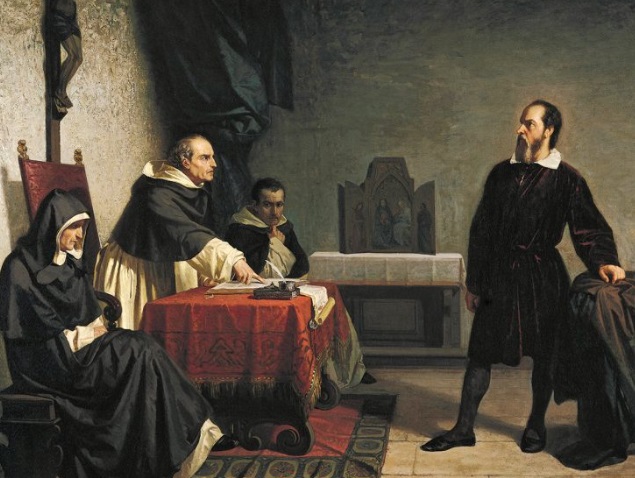
As we look across the breadth of the history of the church, we see the church wrestling with these paradoxes and others. The result of that wrestling sometimes has gotten downright ugly with the church sometimes quite literally killing each other about it, not only with those outside the church but within it. In fact, if one were to look across the world at the state of Christianity, it might seem to one of the most fractious and divided groups ever.

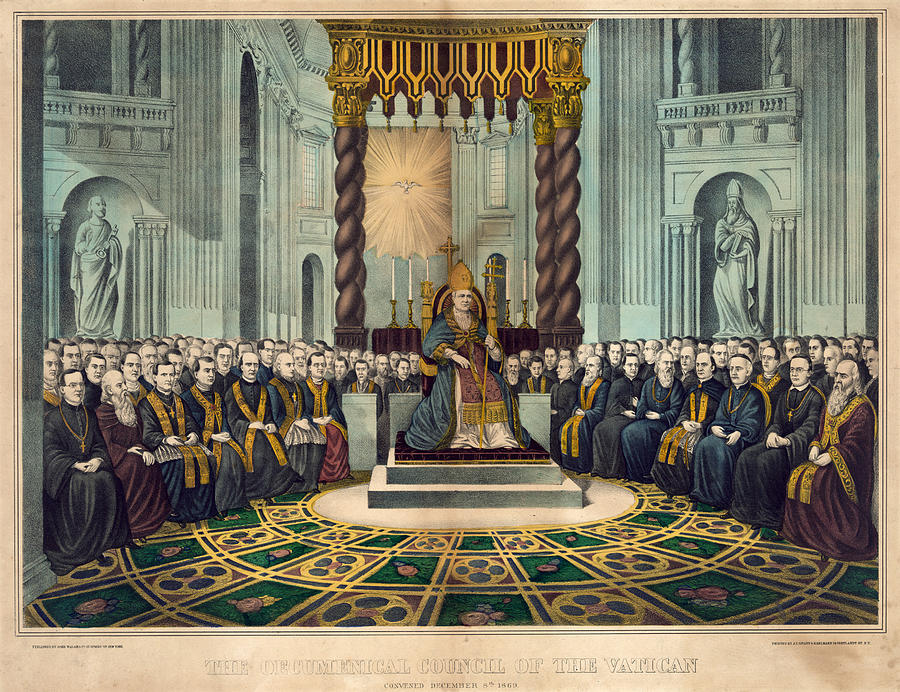
How can it be that God would entrust this church with the task of bringing that His Truth to others and from one generation to the next, the church that has from time to time seemed to fail the apostle Paul’s challenge to be “one in the Spirit.”

Reflect

When children are not compliant as they grow up, do we just give up on them?

Observe

Read Zechariah 8:16; Ephesians 4; Philippians 2:1-18. What should the church look like as it handles its responsibility to presenting the truth of God to each other and to the world?

Playful and orderly

Dancing in the Kingdom- Table of Contents

Dancing In the Kingdom – Part 1 – Shadows of the Kingdom – Chapter 2 – The God who created

[Bible references: Genesis 1; 3:6; Job 26:7-14; Psalm 102:25-28; 104:26; Proverbs 8:30-31; Jeremiah 9:24; Zechariah 8:4; Romans 1:18-32; 5:12-20]

It would be more conventional to title this section, “Creative and Orderly,” but creativity is just a part of broader category of play. Although many experts disagree on how to define play[1], we may think of play as activity which is typically not productive and is done only because one wants to do it and is usually a fun activity involving other people and will typically help people bond together.

When it comes to the Creation, God did not have to create anything. God did not need the universe or anything in it – not the planets, nor the stars, nor the creatures. God created the heavens and the earth for the delight of it, and He did it because He wanted to share heaven and earth with his image-bearers. This spirit of playfulness is reflected in many of God’s creatures[2] including Leviathan and humans. God’s playfulness also shows up in other interesting places in the Bible.

When Job complains about the difficulties he is going through, God seems to admonish him by “putting Job in his place” and citing all the ways in which God’s ways are higher than Job’s ways. But God does not follow through with any discipline of Job but rather begins the process of restoring Job’s fortunes. In response, Job confesses, “I spoke of things I did not understand … I retract my words and I repent in dust and ashes.” … And yet, Job changes an interesting behavior – he no longer rose early in the morning to offer burnt offerings for all of his children, worrying that “perhaps they have sinned.” Job seems to have understood what Shams-ud-din Muhammed wrote later on:

the difference between our life and a saint’s is that the saint knows that the spiritual path is like a chess game with God and that God has made such a fantastic move that the saint trips over joy in surrender whereas we think we have a thousand serious moves.[3]

Another instance of playing occurs in Mark 6, when Jesus takes a late-night walk on a very windy lake, walking as if to go by his disciples. Of course, they were initially terrified, thinking they were seeing a ghost. But he got in the boat and the waters calmed down. He could have calmed the waters down before the disciples started to go on the lake. He could have chosen another way to make his point … but he decided to do it that way.

God’s creativity can be seen within the created world in the extremely diverse types of plants and animals: differences in colors and shapes; different ways of digesting food; different ways of moving and observing the environment to name a few. The creativity we see is awesome. From out of nothingness, from no previous model, God created a whole system of particles and energy fields that interact with each other to form the building blocks of subatomic particles which are used to form atoms, which are used to form molecules of all sorts of complexity, which are then used to form planets and stars (actually, the fusion reaction in stars is used to create larger molecules from smaller ones). And at least one planet was used to create living things like plants and animals in all their complexity and then those living things were used to create communities (ecosystems) that allowed living things to thrive and flourish.

Yet, within the overwhelming creativity displayed within all the diversity of living things there is an order that is imposed by natural processes, sometimes called scientific laws. Christians, like Francis Bacon, pursued these laws as an extension of God’s moral laws in the universe, which then led to the development of modern science.[4] It is within science that we examine orderly processes at work that we call the natural laws which describe how all physical things behave: like the forces of gravity, electrical forces, etc.

There is no disobeying these natural laws. If you think that you can try to violate them, you’d be wrong. For instance, if you are on earth and stand on the top of a table and then jump off with the assumption that you will not be subject to gravity but rather float around without falling to the floor, you’d be wrong. You can’t violate gravity. You can try to set up circumstances that will cause other forces to come into play – such as airplanes do when they use aerodynamic forces that counteract gravity – but you simply can’t violate gravity, and there will be consequences if you try.

By observing the laws of the created order, we can ascertain some aspects of the character of God. The natural laws that govern how things are supposed to behave reveals a God who expects things to behave, and that violations are not tolerated. But when image-bearers were brought into the world there was a new level of complexity added to this physical model constrained by natural, physical laws. Because image-bearers were created to reflect God’s transcendence, those image bearers were given moral freedom, the ability to accept or reject God’s rule, the ability to choose to be good or not good. And just like attempts to violate physical laws have consequences, so do attempts to violate moral laws. However, the framework that provides order is also the scaffolding for creativity and play. The order that allows us to study God’s ordered creation also allows us to observe the activity of the living God when He does the unexpected.


[1] Edgar, Brian. “The God Who Plays: A Playful Approach to Theology and Spirituality” Chapter 5: Theology: Ludic(rous) Thinking, Theories of Play Cascade Books 2017 (e-book)

[2] Yu, Alan. “Which animals play, and why?” WHYY 15 Aug 2019 whyy.org/segments/which-animals-play-and-why/

[3] Hafiz (or Shams-ud-din Muhammad Tripping over Joy (translated by Daniel Ladinsky) (c. 1320-1389) wrote about God as his Friend, the Beloved, the Beautiful One. from reference by Edgar, Brian “The God Who Plays: A Playful Approach to Theology and Spirituality” Chapter 4: Spirituality: Playing with friends, Competing with God

[4] Harrison, Peter, “Christianity and the rise of western science” ABC Religion and Ethics, 8 May 2012, www.abc.net.au/religion/articles/2012/05/08/3498202.htm; Armstrong, David, “Christianity Crucial to the origin of science,” Patheos, 18 Oct 2015, www.patheos.com/blogs/davearmstrong/2015/10/christianity-crucial-to-the-origin-of-science.html; Hannam, James. “How Christianity Led to the Rise of Modern Science” Christian Research Institute www.equip.org/articles/christianity-led-rise-modern-science/

Observe

Read Romans 1:18-32.  Reflect on how natural laws reflect the character of God. Based just on natural laws, what kind of character does that reveal about God?

Reprise with variations

Dancing in the Kingdom- Table of Contents

Dancing In the Kingdom – Part 1 – Shadows of the Kingdom – Chapter 1 – Prelude

Reprise with variations

[Bible references:  Genesis 1; Psalm 8; 111; Exodus 8:16-19; John 21:1-14; Romans 8:19-22; 1 Corinthians 15; 1 Thessalonians 4; 5; 2 Peter 3; Revelation 21-22]

“The creation of the world seems to have been especially for this end, that the eternal Son of God might obtain a spouse towards whom he might fully exercise the infinite benevolence of his nature, and to whom he might, as it were, open and pour forth all that immense fountain of condescension, love, and grace that was in his heart, and that in this way God might be glorified. [1]

God created the universe for his glory, and within that, humans were created to experience the true joy of living, to bear the fruit of His nature, to reflect His presence. We are designed to be image-bearers of God himself, stewards of the creation He inserted us into as we reflect the very character of God. The exercise of stewardship is seen in the process of “subduing” and “having dominion” over the earth (its creatures and it resources), and in being “fruitful” and filling the earth. God’s initial reaction to creating us was, “It was very good.” His intent was that we would fill and take care of the earth, all the while reflecting His character to each other and to His creation.

In the beginning, heaven and earth were joined at the Garden of Eden. It was a place where the Creator could have communion with his image-bearers and walk in the garden with them. The garden was the perfect place for the image-bearers to develop and begin working out the intended future of filling the earth and ruling over it as co-regents with God.

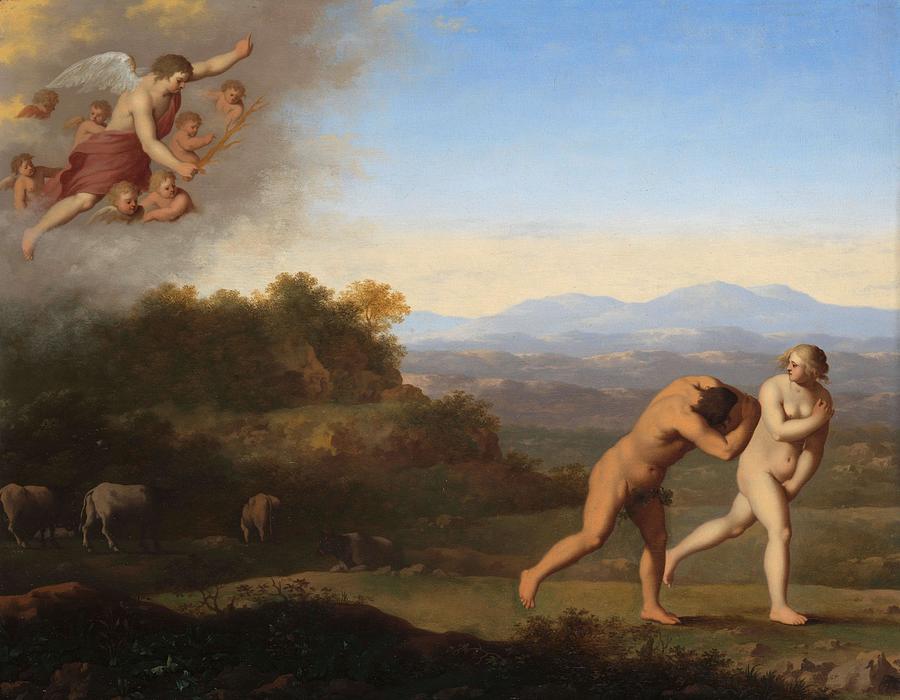
He gave us unimaginable delight and freedom, but that very freedom He gave us was joined to a responsibility, a responsibility that was wrongly used and caused immense far-reaching damage – damage we could not possibly undo – the whole universe is groaning, waiting for to be restored. Our pride-laden rebellion damaged the relationships between each other, between us and God, between us and the world and even between heaven and earth; but God had a plan from the beginning, a plan which is now underway, to ultimately restore what was lost and undo that damage[2] and bring us to our intended destination – an earth filled with and ruled by image-bearers and where heaven and earth are rejoined so that the image-bearers can walk with God once again.

“Jesus’ own teaching during his brief public career simply reinforced the Jewish picture. He redefined a lot of ideas that were current at the time – notably, of course, kingdom of God itself, explained in many coded parables and symbolic actions that God’s sovereign, saving rule was now breaking in, even though it didn’t look like what his contemporaries had imagined and wanted.”[3]

Ultimately, we will be freed from the bondages of sin and death and all the relationships that are now damaged will be restored. In fact, in a timeline that we cannot fully grasp, God waited from the beginnings of mankind until 2000 years ago to defeat the power of sin and death and begin the process of restoring His kingdom on earth. Then He told us that someday, he will complete that process and he will return in the fullness of his glory to fully restore all things at that time. We just don’t know when that will be.

Our hope looks at the resurrection of Jesus as a harbinger of the resurrection that awaits all those of us who will be united with Him in our own transformed bodies in the new heavens and the new earth.

‘… what is the ultimate Christian hope? …what hope is there for change, rescue , transformation, new possibilities within the world in the present … if the Christian hope is for God’s new creation, for “new heavens and new earth,” and if that hope has already come to life in Jesus of Nazareth, then there is every reason to join the two questions together … “God’s kingdom” in the preaching of Jesus refers not to postmortem destiny, not to our escape from this world into another one, but to God’s sovereign rule coming “on earth as it is in heaven.” [4]

Furthermore, our hope doesn’t ask for us to simply wait for that time when the Kingdom of God is fully restored, but that we can be part of God’s plan to bring the Kingdom of God into our broken world.


[1] Edwards, Jonathan, “Works of Jonathan Edwards, Volume Two,” SERMON II. THE CHURCH’S MARRIAGE TO HER SONS, AND TO HER GOD. Ed. John E. Smith, Yale University Press, 2009(p. 62)

[2] Bible Project “Pursuing God, Heaven and Earth,” Bible Project www.pursuegod.org/biblical-themes-an-animated-explanation-of-heaven-earth

[3] Wright, N.T. “Surprised by Hope: Rethinking Heaven, The Resurrection, and the Mission of the Church” Harper Collins 2008. Kindle Edition(p. 18).

[4] Wright, N.T. “Surprised by Hope” Harper Collins 2008. Kindle Edition (pp. 4-5, 18)

Reflect

Speaking strictly from what we know from science, we seem to be random life forms on a random planet in a random spot in the universe. In that perspective, having an anthropocentric view of the universe seems absurd. But knowing what the Creator of heaven and earth has revealed to us, the universe was designed to be inhabited … by us! How does that change your view of the universe?

Observe

Read John 21:1-14. What does this passage suggest about our resurrection bodies?

Interlude

Dancing in the Kingdom- Table of Contents

Dancing In the Kingdom – Part 1 – Shadows of the Kingdom – Chapter 1 – Prelude

Interlude

[Bible references: Psalm 19]

As I was working one warm summer night at a convenience store with the door open, it was not unexpected to see a moth fly in through the door. Normally, moths are attracted to light sources, but this time the moth was attracted to the white top of a garbage container. The moth was distracted by the light reflected off the garbage container. That describes a lot of human behavior; we get distracted by the pretty garbage.

Since the time of Adam and Eve we’ve had the temptation to place ourselves at the center of the universe, dismissing the idea that we did not create the natural beauty of the world around us but that we can possess and control it ourselves, that we are the masters of all we see. We are tempted to dismiss the reality that we are part of a universe we did not create with the idea that we can define the universe which we think revolves around us.

In the meantime, there is a story that began long ago when God brought into being creatures made in his image, a story about his plans for those creatures, plans for them to fill the earth and making the whole earth a place of love and goodness, but a place where that love and goodness would be disrupted by our rebellion. Fortunately, that disruption did not deter God from continuing his plans for his image-bearing creatures and that story is still in the making. That story is now our story.

What can get confused is that this story is contained in the Bible which is often presented as a disconnected story. The Old and New Testaments of the Bible can seem disconnected because of the cultural barriers between us and the testaments. Some people even think the God described in the Old Testament is different from the God in the New Testament.

That disconnect is exasperated by the long and messy history of the church. The church seems very divided on how to interpret those writings and how to live into them, leaving us with a confusion of various interpretations and practices that seem to contradict one another. How is one supposed to make sense of it all?

However, it is possible to obtain a clearer understanding of how both Testaments make one cohesive story, a story into which we can fit. When we see how the unified story than runs from Creation to Revelation, we can then see how we, as part of God’s church, are intended to participate in that story. God did not need to create us or the universe, He did it out of a desire to share his love and delight. God’s creation was more an act of play than of work and He desires that we actively play with him, if you will, to dance with him in His Kingdom.

The Kingdom Dance is not meant to be a solo effort, we are to dance with God and with his people. To that end, while this book can simply be read as a solo exercise, there are additional ways to engage with the material.

  • Biblical references are provided extensively through the book. They are there to support the text. If you read them, particularly the shorter passages, take the time to slow down and let God the Spirit speak to you. The Bible has been described as ancient Jewish Meditation Literature.[1] It is best read when you give yourself time to absorb it.
  • There are extensive footnotes throughout the book. Whenever possible, I have provided hyperlinks to online materials to make the additional materials easily available to you. If you spend time investigating the footnotes, you will notice that I am not drawing from only one Christian tradition, but from a variety of them, allowing the richness of the different traditions to form a more complete story. To form a more complete story I also, particularly in the beginning, will use materials from the “Second Book of God” that is, book of Creation.[2]

“God has, in fact, written two books, not just one. Of course, we are all familiar with the first book he wrote, namely Scripture. But he has written a second book called creation.”[3]

  • For those who are not practiced in studying the Bible, Appendix A gives a summary of techniques that could be used to help understand scripture. This may prove useful for understanding when you study the Biblical references given throughout this book.
  • Reading the material with a group can make the most impact. There are questions at the end of each chapter that ask you to reflect on the material and then read related biblical passages to think more deeply about various issues. These exercises and questions will help you engage with the material by first asking you to think about how each section applies to your life and secondly to share your thoughts with others in the group so that together you can more thoughtfully “Enter the Dance” with God, with all the others that have come before, with those that are coming now and with that will continue to come until Heaven and Earth are reunited.
  • Finally, the best participation will be not to just read and reflect, but to dance the Kingdom dance with God. Part 3 of this book will suggest ways to take part in his activity in bringing healing to the world he loves, broken now but to be finally and fully restored when He rejoins heaven and earth.

The Bible is a complex collection of literature, using many literary styles and techniques and it can be difficult to understand some parts, particularly when one part seems to contradict another. I have found a useful principal in studying the Bible which I call “Conflicts are Clues” which says that any apparent conflict or confusion in Scripture should be handled as clues to look further instead of thinking that the conflicts create contradictions which reduce the integrity of the Bible.

In our age, many regard science and theology to be in conflict. In years past, however, the issue was not about conflict but about which discipline rules over or undergirds all the other disciplines. These ideas were expressed in ways such as “theology is the queen of all sciences,” “math is the queen of all sciences,” “philosophy is the queen of all sciences,” “philosophy is the handmaid of all sciences.”

The biblical perspective is that God speaks to us both through two books, the book of Creation and the Bible. Theology’s main goal is to understand spiritual reality and science’s main goal is to understand physical reality, but both fields can inform the other about the nature of God.

This principle of “Conflicts are Clues” applies not just to the “First Book of God” (that is, Scripture) but also to the “Second Book of God” (that is, Creation) which is practiced by the testing and revisions of theories, but also between the Two Books. During the course of history, the study of the Two Books got separated and some of those in science rejected Scripture and some of those who were Christian rejected science, leaving conflicts unresolved as contradictions. But moving forward, this does not prevent us from considering apparent conflicts between the books as clues to be investigated further.


[1] Bible Project “Ancient Jewish Meditation Literature” Bible Project bibleproject.com/explore/video/bible-jewish-meditation-literature-h2r/

[2] Rusbult, Craig. “How should we interpret the Two Books of God, in Scripture & Nature” American Scientific Affiliation www.asa3.org/ASA/education/origins/two-books.htm

[3] Bacon, Francis. “The Two Books of Francis Bacon of the Proficience and Advancement of Learning, Divine and Human.” The First Book. Section.VI.Paragraph.16 1605

Observe

Read Psalm 19. This Psalm captures a response to what Francis Bacon called the two books of God:  the Book of Creation and the Book of Scripture. How do you respond to the “two books”?

A brief account

Dancing in the Kingdom- Table of Contents

Dancing In the Kingdom – Part 1 – Shadows of the Kingdom – Chapter 1 – Prelude

A brief account

[Bible references: Acts 17:22-31]

The following is an Extremely Brief Account of the Very Long Story.

There was, and is, and will be, a complex person we call God, who exists as three people that we have come to know as the Father, Son, and Holy Spirit. God decided that he wanted to expand the love that was shared between the Father, Son, and Holy Spirit. To that end, he created an entire universe so that on one of its planets he could create an abundance of living creatures.

On that planet, he created special creatures, humans, who were made in his image such that they could love him in the way that he loved them. This universe then, would be a form of temple, a place where God can meet with his people. The garden he placed them in was where the dimensions of heaven and earth overlapped. The garden was a place where God’s good and beautiful kingdom of heaven was fully present.

Of course, these humans were not duplicate spiritual beings who were gods themselves, but physical creatures who had enough of God’s characteristics so that they could love in the way God loved. But love is a voluntary thing that we must choose to do, we cannot love unless we have the option to not love.

God placed his first people in a garden and gave them an assignment. They were to be his representatives, priests if you will, in this garden. They were to take care of it as His representatives, His stewards in the garden. Their long-term task was to multiply and fill the earth so that the whole earth would become the place where God could meet with all his people. The entire earth was intended to be filled with God’s abundant provision for his people who would then take care of what God provided, and all the while giving and receiving and sharing the love which God would freely bestow. In this way, the kingdom of heaven would overlap with the entire kingdom of earth and God would freely mingle with his people.

The option to love or not love was provided by a test of trust. There was in the garden a tree whose fruit not only looked appealing but promised to provide the gift of all knowledge if one ate it. The humans were told to trust God and not eat the fruit of that tree. Eating that fruit would not only provide certain knowledge but would also provide death.

The results of that test are now apparent all around us. Death comes to us not only in the form of physical death, the separation of our souls from physical life, but also in the form of spiritual death, the lack of love which separates us from each other and from God. Fortunately, our current situation is not our destiny – and that is what the rest of the story is about.

God intended that death would not merely be a penalty for not trusting (or loving) but would also be the very mechanism by which he would restore us to himself. From the descendants of the first people, God separated out a family through which he would bring blessing to the entire world. Through that family that a nation would be raised and through that nation the eternal God would choose a family to accomplish the inconceivable. In that chosen family, the eternal God would cause himself to be conceived within the womb of a woman who would then give birth to a being who was both fully God and fully human. He would then be raised as a human and eventually would suffer death by execution as a human and then be resurrected as a human.

In that resurrected human body, the eternal God would return to heaven, but before doing so, he invited us, in essence, to represent Him on earth by becoming part of his body on earth. By trusting him and accepting his Spirit, we could join with him in His death and resurrection by dying to our own self-interests and uniting with his loving interests.

He then promised to return to us again in bodily form, at which time the kingdoms of heaven and earth will again overlap. Heaven will be rejoined to earth to fulfill the intention God had from the beginning. But meanwhile, in this time between His incarnation and His eventual return, we are still called to be stewards of our currently broken world, bringing slivers of the light and hope of heaven into a world now very dark with evil and suffering and pain.

Observe

Read Acts 17:22-31. How could we use Paul’s gospel message to people we speak to today?

The paradox of authority

Dancing in the Kingdom- Table of Contents

Dancing In the Kingdom – Part 1 – Shadows of the Kingdom – Chapter 1 – Prelude

The paradox of authority

[Bible references: Jeremiah 29:7; Matthew 18:16-20, 21:22-24; 28:16-20; Romans 13:1-3; 1 Corinthians 2:6-13; 13:9-11; 1 Timothy 3:1-12; 1 Peter 2:12-14]

On the one hand, we consider scripture to be inspired by God and therefore to be authoritative and a means by which God can speak to each of us. On the other hand, scripture was determined by the operation and traditions of the church because the church, as the Body of Christ was given the authority to preserve, teach and preach God’s Word.[1] This process creates a tension concerning authority when there is an apparent conflict between the authority of scripture and the traditions of the church. One of those conflicts resulted in the Protestant Reformation when the Reformers, seeing the corruption inside the Roman Catholic Church, wanted to place the Bible’s authority over the traditions of the Church.[2]


[1] Terry, Tom. “The Power and the Authority of the Church” Preachitteachit, preachitteachit.org/archives/12186; Uttinger, Greg “The Power and Authority of the Church” Chalcedon Foundation, chalcedon.edu/resources/articles/the-power-and-authority-of-the-church

[2] History.com “The Reformation” History.com, www.history.com/topics/religion/reformation

Reflect

When you assemble a gathering of imperfect Christians, they will make an imperfect congregation. And yet, as a part of the Body of Christ, they have the authority to preserve, teach and preach God’s Word. In our current day, many people are dissatisfied with the organized church. Why do you think this is?

Observe

Read Matthew 28:16-20; Romans 13:1-3. What do we do if there is a conflict between the authority of the government with our authority as Jesus’ disciples to make disciples?

Patterns of community

Dancing in the Kingdom- Table of Contents

Dancing In the Kingdom – Preface

Patterns of community

[Bible ref: Hebrews 10:23-25]

After decades of learning the Bible and church history, I could see the pattern of how the everything connected all the way from Genesis to Revelation and to all of church history, past and present. In preparing this project, all those patterns were reinforced in ways I never expected. One of the patterns that we see from the beginning is the use of stories. God is complicated and we are complicated, and we find that stories are sometimes the best way to explain everything from who God is to who we are.

To best understand the complications of who God is and who we are, this book is best processed in a small group setting so that we can work our own ideas with the ideas from other people. Furthermore, in our Western culture which prioritizes individuality, we sometimes find it hard to see the significance of the Biblical texts being addressed to the church rather to individuals within the church. We can better understand the texts if we can grasp that aspect.
Lastly, as we study the Bible, we need to remember that the goal of any Bible study is not to love the Bible but rather the One who gave it to us. That means, though, that we should love the church, which is Christ’s Body, Christ’s assembly of believers whom He loves.

And that love is not just an emotion or an idea, but a lifestyle of joy and self-sacrifice, receiving and giving, caring in word and deed, engaging with an interdependent community and with God in a dance, the Kingdom Dance, participating with God in restoring the Kingdom, turning the mourning of a broken world into the joy of a reunited heaven and earth.

Reflections – The Life Map exercise

The first step to see how our life’s story fits into God’s story, is to take the time to see how God may have already been working in your life. Plan on at least a half hour for this exercise.

Brainstorming:

Use only single words, short phrases or quick sketches to make these lists. Jot these items down as they come to you.

  • Make a list of significant things (events, people, places, etc.) in your life. People may include family members, influential people, teachers, authors, or influencers. Places may include where you’ve lived, places you’ve visited, places you want to go. Events may include family life and traditions, marriages, divorces, education, church, social organizations, jobs, or hobbies.
  • Make a list of successes or failures. These can include things that delighted you or disappointed you, relationships, things that you’ve done or things that have happened to you.

Rearrange the items in these lists in chronological order. Take some time to think of how God may have directed you in the midst of your story and talk to him about it. Think of how you would tell this story to other people.

There are other resources on the internet about make Life Maps:

Revisit in the future: As you work your way through Dancing in the Kingdom, you may want to further reflect on or revise your Life Map.

Patterns in the text

Dancing in the Kingdom- Table of Contents

Dancing In the Kingdom – Preface

Patterns in the text

[Bible references: 2 Samuel 11]

It should not be a surprise that although the Bible has some facts about the nature of the world, it is not a science text. Neither should it be a surprise that although the bible contains narratives of historical events, that it is not a history book. It should make sense that the Bible is primarily a theological text. When read carefully, the biblical text reveals patterns, patterns that are not only in the text (and they are abundant), but patterns for us to live into.

The careful attention to the sevenfold structure indicates that Genesis in its final form is a liturgical text. We may go further and state that, in fact, Genesis 1 reads as a sort of liturgical hymn.[1]

One of the problems that has obscured our understanding of the biblical text is the way we tend to read that text through modern western eyes instead of how the text was meant to be read when it was written 2000-3500 years ago. The historical accounts contained in the Hebrew Bible are not framed in a modern historical chronological framework, but are historical accounts written in a theological framework.

Biblical authority is tied inseparably to the author’s intention … when we read Genesis, we are reading an ancient document and should begin by using the assumptions that would be appropriate for the ancient world. We must understand how the ancients thought and what ideas underlay their communications … although the Bible is written for us (indeed, for everyone), it is not written to us … If we read modern ideas into the text, we skirt the authority of the text and in effect compromise it.[2]

This is not to say that the chronological and other details or those accounts did not happen as recounted but were framed for us to remember within a theological framework. The Bible is, in fact, a sophisticated book using literary techniques that were ahead of its time.

The Bible’s verbal artistry, without precedent in literary history and unrivaled since, operates by passing off its art for artlessness, its sequential linkages and supra-sequential echoes for unadorned parataxis, its density of evocation for chronicle-like thinness and transparency. Yet those who are take in will rarely fell the difference, however much they may miss, because they will not feel out of their depth.[3]

One such technique that is remarkably present in the book of Mark,[4] but also is used in the Hebrew Bible, is the technique of inserting a story within a story, and done is such a way, that sometimes it is obvious that the way the story is presented is not the exact chronological sequence of events.

Another technique is the heavy use of patterns such as the pattern of 7[5]. In Genesis 1 there are several items that occur 7 (or a multiple of 7) times:

  • 7 words in Gen 1:1,
  • 14 words in Gen 1:2,
  • 7 commands “let there be”
  • 7 paragraphs in Gen 1:1-2:3 marked by the phrase “evening and morning,” 
  • With the concluding (7th) paragraph begins with 3 lines of 7 words
  • the words “God” appears (7×5) 35 times, “land” (7×3) 21 times, “skies” (7×3) 21 times.

The ubiquitous use of these patterns can make one wonder whether such details exactly portray what really happened or whether the narrator of the Biblical text adapted the details to make a particular theological point. While it is impossible to verify what actually happened, we don’t need to question the reality of the basic events recounted but we can accept the events as given, trying to understand the theological points being presented. So, as we encounter patterns within the historical accounts, we should keep in mind that events are not necessarily organized in a chronological framework, but rather organized in a thematic framework, where themes are used to organize how events are presented, in our case, theological themes. The chronological context of the biblical narration is secondary to theological themes.

In modern days, we sometimes remember events, not on the actual calendar date of the events but according to some other scheme, like we want to remember the event on a Monday because of the priority of the weekend. It is similar In Biblical texts, where events are remembered in a theological context. This is particularly evident in Exodus where theologians through the years have recognized that the events are not narrated in the actual chronological order. [6]

Another aspect to consider is that the Hebrew Bible, more typically referred to by Christians as the Old Testament, is a collection of Ancient Near East texts that were originally not so much designed to be read but rather to as to be listened to and meditated upon. If we examine those texts in that light, we can see how literary techniques are used to connect passages together and deepen the meaning each text.[7]

As you study scripture, be on the lookout for themes that get repeated.

———————

You will find that there are patterns in this book as well. They are there for a reason. There are many ways to tell our own story and God’s story and one goal is to give everyone an opportunity to see different ways to see God’s story so that we can figure out how to fit our story into God’s story. It turns out that most of us learn best by hearing stories which is why TV channels are primarily filled with different kinds of stories. So we can best understand God’s story if we can see how our story fits into it.


[1] Morrow, Jeff. “Creation as Temple-Building and Work as Liturgy in Genesis 1-3” Wisdom in Torah Seton Hall University www.wisdomintorah.com/wp-content/uploads/Creation-as-Temple-Building-and-Work-as-Liturgy-in-Genesis-1-31.pdf

[2] Walton, John. “The Lost World of Adam and Eve: Proposition 1: Genesis is an Ancient Document” InterVarsity Press. 2015 Kindle Edition.

[3] Sternberg, Meir. “The Poetics of Biblical Narrative” Ecosophia 2004 www.ecosophia.net/civilizations-fall-theory-catabolic-collapse

[4] Edwards, James R. “Markan Sandwiches: The Significance of Interpolations in Markan Narratives” 1989 Novum Testamentum XXXI, 3 193-216 jbburnett.com/resources/mark/Edwards_Markan-Sandwiches.pdf

[5] Rodriguez, Angel Manuel. “Genesis 1 and the building of the Israelite sanctuary” Ministry: International Journal for Pastors Feb 2002 www.ministrymagazine.org/archive/2002/02/genesis-1-and-the-building-of-the-israelite-sanctuary.html

[6] Sailhammer, John. “Introduction to Old Testament Theology: Appendix B: Compositional Strategies in the Pentateuch ” Zondervan 2010.  This thematic arrangement is also evident in the different Gospel accounts where the different authors related the events of Jesus’ life according to their own particular theological context.

[7] Palmer, Stephen. “Biblical Chiasm Exchange”; Christadelphians www.chiasmusxchange.com. One of the common literary techniques is the use of Chiasms. This website shows the extensive use of chiasms throughout both the Old and New Testaments.