Patterns in the text

Dancing in the Kingdom- Table of Contents

Dancing In the Kingdom – Preface

Patterns in the text

[Bible references: 2 Samuel 11]

It should not be a surprise that although the Bible has some facts about the nature of the world, it is not a science text. Neither should it be a surprise that although the bible contains narratives of historical events, that it is not a history book. It should make sense that the Bible is primarily a theological text. When read carefully, the biblical text reveals patterns, patterns that are not only in the text (and they are abundant), but patterns for us to live into.

The careful attention to the sevenfold structure indicates that Genesis in its final form is a liturgical text. We may go further and state that, in fact, Genesis 1 reads as a sort of liturgical hymn.[1]

One of the problems that has obscured our understanding of the biblical text is the way we tend to read that text through modern western eyes instead of how the text was meant to be read when it was written 2000-3500 years ago. The historical accounts contained in the Hebrew Bible are not framed in a modern historical chronological framework, but are historical accounts written in a theological framework.

Biblical authority is tied inseparably to the author’s intention … when we read Genesis, we are reading an ancient document and should begin by using the assumptions that would be appropriate for the ancient world. We must understand how the ancients thought and what ideas underlay their communications … although the Bible is written for us (indeed, for everyone), it is not written to us … If we read modern ideas into the text, we skirt the authority of the text and in effect compromise it.[2]

This is not to say that the chronological and other details or those accounts did not happen as recounted but were framed for us to remember within a theological framework. The Bible is, in fact, a sophisticated book using literary techniques that were ahead of its time.

The Bible’s verbal artistry, without precedent in literary history and unrivaled since, operates by passing off its art for artlessness, its sequential linkages and supra-sequential echoes for unadorned parataxis, its density of evocation for chronicle-like thinness and transparency. Yet those who are take in will rarely fell the difference, however much they may miss, because they will not feel out of their depth.[3]

One such technique that is remarkably present in the book of Mark,[4] but also is used in the Hebrew Bible, is the technique of inserting a story within a story, and done is such a way, that sometimes it is obvious that the way the story is presented is not the exact chronological sequence of events.

Another technique is the heavy use of patterns such as the pattern of 7[5]. In Genesis 1 there are several items that occur 7 (or a multiple of 7) times:

  • 7 words in Gen 1:1,
  • 14 words in Gen 1:2,
  • 7 commands “let there be”
  • 7 paragraphs in Gen 1:1-2:3 marked by the phrase “evening and morning,” 
  • With the concluding (7th) paragraph begins with 3 lines of 7 words
  • the words “God” appears (7×5) 35 times, “land” (7×3) 21 times, “skies” (7×3) 21 times.

The ubiquitous use of these patterns can make one wonder whether such details exactly portray what really happened or whether the narrator of the Biblical text adapted the details to make a particular theological point. While it is impossible to verify what actually happened, we don’t need to question the reality of the basic events recounted but we can accept the events as given, trying to understand the theological points being presented. So, as we encounter patterns within the historical accounts, we should keep in mind that events are not necessarily organized in a chronological framework, but rather organized in a thematic framework, where themes are used to organize how events are presented, in our case, theological themes. The chronological context of the biblical narration is secondary to theological themes.

In modern days, we sometimes remember events, not on the actual calendar date of the events but according to some other scheme, like we want to remember the event on a Monday because of the priority of the weekend. It is similar In Biblical texts, where events are remembered in a theological context. This is particularly evident in Exodus where theologians through the years have recognized that the events are not narrated in the actual chronological order. [6]

Another aspect to consider is that the Hebrew Bible, more typically referred to by Christians as the Old Testament, is a collection of Ancient Near East texts that were originally not so much designed to be read but rather to as to be listened to and meditated upon. If we examine those texts in that light, we can see how literary techniques are used to connect passages together and deepen the meaning each text.[7]

As you study scripture, be on the lookout for themes that get repeated.

———————

You will find that there are patterns in this book as well. They are there for a reason. There are many ways to tell our own story and God’s story and one goal is to give everyone an opportunity to see different ways to see God’s story so that we can figure out how to fit our story into God’s story. It turns out that most of us learn best by hearing stories which is why TV channels are primarily filled with different kinds of stories. So we can best understand God’s story if we can see how our story fits into it.


[1] Morrow, Jeff. “Creation as Temple-Building and Work as Liturgy in Genesis 1-3” Wisdom in Torah Seton Hall University www.wisdomintorah.com/wp-content/uploads/Creation-as-Temple-Building-and-Work-as-Liturgy-in-Genesis-1-31.pdf

[2] Walton, John. “The Lost World of Adam and Eve: Proposition 1: Genesis is an Ancient Document” InterVarsity Press. 2015 Kindle Edition.

[3] Sternberg, Meir. “The Poetics of Biblical Narrative” Ecosophia 2004 www.ecosophia.net/civilizations-fall-theory-catabolic-collapse

[4] Edwards, James R. “Markan Sandwiches: The Significance of Interpolations in Markan Narratives” 1989 Novum Testamentum XXXI, 3 193-216 jbburnett.com/resources/mark/Edwards_Markan-Sandwiches.pdf

[5] Rodriguez, Angel Manuel. “Genesis 1 and the building of the Israelite sanctuary” Ministry: International Journal for Pastors Feb 2002 www.ministrymagazine.org/archive/2002/02/genesis-1-and-the-building-of-the-israelite-sanctuary.html

[6] Sailhammer, John. “Introduction to Old Testament Theology: Appendix B: Compositional Strategies in the Pentateuch ” Zondervan 2010.  This thematic arrangement is also evident in the different Gospel accounts where the different authors related the events of Jesus’ life according to their own particular theological context.

[7] Palmer, Stephen. “Biblical Chiasm Exchange”; Christadelphians www.chiasmusxchange.com. One of the common literary techniques is the use of Chiasms. This website shows the extensive use of chiasms throughout both the Old and New Testaments.

Patterns of history

Dancing in the Kingdom- Table of Contents

Dancing In the Kingdom – Preface

Patterns of history

[Bible references: Ecclesiastes 1:9; Judges 1-21]

But when we look for patterns of love, we find them to be obscured and confused. Our rebellion against God keeps leading us to destructive, even self-destructive behavior. The signs of rebellion are everywhere.

As we examine human history for signs of progress, we instead find ourselves repeating patterns of destructive rebellion that keep us from progressing.[1] But overlaid on those patterns, we find that other patterns have been laid out for us; Patterns that lead beyond our self-destruction; Patterns laid out from creation that lead us through the times of our rebellion to the restoration of heaven and earth.

If we are honest with ourselves, we can admit that we also feel the continuous inward push against authority, even when we know that such authority is designed to be helpful, and even when we know that our rebellion will make things worse. The world around us reveals that the rebellion is universal – and devastating. The violence of wars and famine covers the world. Those in positions of authority are continually subject to the temptation to abuse that authority and to the illusion that the ability to exert force means that they are in control of their life.

But we can also see countervailing forces to that rebellion. Selflessness erupts around us with bursts of kindness and compassion, showing that love is still possible even in the most difficult of times.

The history of humankind reveals a constant battle between the forces of rebellion and selflessness. Sometimes one force seems to momentarily prevail against the other, but in the long run, nothing seems to change. Historical cycles seem to just keep on going, optimism gives way to pessimism which gives way to optimism, nations rise and fall, one after another. While history never exactly repeats itself, the patterns are there.[2]


[1] Verstappen, Stefan. “Historical Cycles: are we doomed to repeat the past?”; Hanson, Victor Davis. “Repeating historical patterns rooted in human nature”; Stratton, Geoff. “How Civilizations Fall: A Theory of Catabolic Collapse”

[2] Dyer, Geoff. “The day that killed optimism”; Digital History Reader. “Module 4: The End of Optimism? The Great Depression in Europe”; Acreman, Thomas. “Western Civilization prior to World War I”; McKay, Brett & Kate. “How the Generational Cycle of History Explains Our Current Crisis”; IGI Global. “Civilization Life Cycle: Introduction”;

Pattern finding creatures

Dancing in the Kingdom- Table of Contents

Dancing In the Kingdom – Preface

[Bible references: Genesis 1:26-28; 2:15; Psalm 33:1-22]

Pattern finding creatures

Humans are particularly good at finding patterns[1], even to the point of finding what appear to be patterns when there are none.[2] The pattern finding ability gives us the ability to learn various languages even while we are young children. We have the capability of visualizing someone’s prominent features, drawing those features in simple but exaggerated ways as a caricature, and then other people are able recognize who the caricatures represent.[3] This pattern finding (and conversely, pattern creating) ability extends into all sorts of areas and at many levels of abstraction.

Our exceptional pattern-finding, pattern-creating ability comes from our role as creatures who are privileged to bear within our own being, patterns of the image of the very One who designed and created the cosmos, who gave us the ability to love even as He loves. We are also given the ability to be stewards for the Creator, assisting Him in work of creating a flourishing, ordered and amazingly complex world.[4]


[1] Barkman, Robert C. “Why the Human Brain Is So Good at Detecting Patterns” ” Psychology Today 19 May 2021 www.psychologytoday.com/us/blog/singular-perspective/202105/why-the-human-brain-is-so-good-detecting-patterns

[2] Peterson, Ashley L. “What is … Aophenia (Finding Patterns Where None Exist) Mental Health @ Home 10 Dec 2021 mentalhealthathome.org/2021/12/10/what-is-apophenia

[3] Lorussa, Lorenzo., Lorch, Marjorie., Wade, Nick. “Seeing Caricatures” Neuroscience by Caricature in Europe throughout the ages neuro-caricatures.anaath.at/seeing-caricatures

[4] Ritenbaugh, Richard T. “What the Bible says about Stewardship” Bible Tools www.bibletools.org/index.cfm/fuseaction/Topical.show/RTD/cgg/ID/2166/Stewardship.htm

Patterns of love

The young women will dance for joy, and the men—old and young—will join in the celebration. I will turn their mourning into joy. I will comfort them and exchange their sorrow for rejoicing. (Jeremiah 31:13, New Living Translation)

Dancing in the Kingdom- Table of Contents

Dancing In the Kingdom – Preface

Patterns of love

[Bible references: Exodus 34:6; Numbers 14:19; Deuteronomy 4:37; 5:10; 6:5; 7:8-9; 10:12, 15; 13:1-4; 30:6,16-20; 1Kings 8:23; Nehemiah 9:17, 32; Psalm 17:7; 23:6; 33:18; 36:5; 103:1-17; Lamentations 3:22, 32]

The theme is love

The hardest thing to understand is the one thing we need to understand for the world to be understandable, to make us understandable, and it provides the themes for what we write the most poetry and songs and fiction about. And it’s even the hidden feature behind many non-fiction books.

We have this desire to express love and be loved but most of the time we are confused about what love actually is. We sometimes get analytical about it but only to wind up with a mix of

  • it’s an emotion that happens to us,
  • it’s something we choose to do,
  • we just fall in it,
  • we have to grow into it

We can’t pin it down, but it’s so much of who we are that we end up writing stories about it. The interesting thing about those stories is that we are creatures who desire to love and be loved but we all seem to be broken when we try to give and receive that love.

That brings us to another thing that seems so hard. Most of us are aware of this thing called “the Bible” or “the Holy Bible” but there seem to be confusing things about that Bible that seem to lead to many ways of trying to interpret it—and if “experts” can’t agree about it what chance do most of us have?

The Bible is about love as well, but it doesn’t get analytical about it, it basically just tells stories:

  • stories about God and the creatures he designed for love,
  • the Kingdom he desired to build with them,
  • how that love got broken,
  • and how God put a plan in place to restore that love and restore His Kingdom.

From the beginning, the Bible lays out patterns of all the practical ways to live out the Christian faith today. These patterns can be followed through the Bible itself as well as through church history. At one level, those patterns make it possible for the average reader to discover the Bible’s basic meanings while, at another level, scholars can discover the Bible’s richly intricately woven literary text and its patterns of clues and links that can lead to deeper understandings of God, of His Creation and of us.

The goal is of this book is to allow a more average reader to begin to uncover some of the literary richness of the Bible and see how the patterns laid out in Genesis trace not just through the rest of the Bible but also through church history and even provide guidance for us to live today.

Once we begin the process of finding pattern and discovering their meanings, we can discover that God of Creation has provided abundant patterns that could fill an encyclopedia, more than enough to fill our lifetimes. The full complexity of who God is, of His Creation and who we are is beyond our grasp, but He created us to be His Friends and the Stewards of His Creation. We can look forward to a joyous eternity of discovering and living out all He has laid out before us.

For people who want to love

Many of us look at the Bible and we can love some things … but other things are not so easy. Most of the time we find it easy to love Jesus … most of the time. But some things that the apostle Paul writes about? And the Old Testament can be tough; some things are so violent and there are those religious practices that we can’t relate to.  Are they even relevant?

How are we to understand how the apparent conflicts in the Bible: the stories of an angry God in the Old Testament and the merciful Jesus in the New Testament, the violence in the Old Testament and the message of peace in the New Testament; a story of creation that doesn’t seem to match the findings of science; the meaning of the laws in the Old Testament when the New Testament tells us we are not under the law; why Christianity of the New Testament seems so disconnected from our Jewish roots in the Old Testament.

And then, if we can get by all that and learn how to love the Bible, how do we move beyond that and love the church when so many people over so many years seemed to do so many wrong things. And even if we manage to love some of our people in the church, all those other people in the church are hard to love. It doesn’t help that over the years it has seemed that the church has divided up into so many denominations that we can’t even count them never mind trying to get to the point where we could love them.

On top of all this, who has the time to do all the reading to put all this together enough so that we can understand how the processes God’ started with image-bearing creatures in Genesis follow through to Revelation and then through church history to the processes and problems we can follow today.

From a writer who loves

More than 45 years ago, I was, in one moment, in such a bitter spirit that my brother warned his Christian friends to stay away from me, then in another moment I found myself sneaking into his room to start reading some of my brother’s books like Basic Christianity, Mere Christianity, Knowing God, and Evidence that Demands a Verdict. Somewhere in that reading my heart softened until I acknowledged Jesus as my Lord. Somewhere in that reading I also seemed to grasp that the story of Jesus began in Genesis and that the Old and New Testaments made a complete set.

In my first year as a Christian, I found myself in a small group that took an entire year to work their way through the four-page book of Philippians because Philippians seemed to be a portal to many other parts of Scripture and also to their lives. Also, in that first year (in fact, the first semester of that year), I had a Sunday School teacher who assigned a five-page writing assignment on one of the attributes of God. I didn’t know any better about how unusual all of that was. I just soaked it all in.

Since then, I’ve had the opportunity for more than 45 years to serve the church in different ways including church governance and teaching different levels of Sunday School and Bible studies. I was ever curious to learn and to read about the Bible and the church because to me it always seemed that there must be a whole story to connect from Genesis to today even if I didn’t know all the pieces.

It seemed like such a large task. I also had a large problem which I will share later in the book. As we all know, the ones you love the most can hurt you the most. And so, in the reality of church family, as in all families, there is ample opportunity to get hurt. It is in the processing of that hurt that gave me a chance to learn how to truly love the church.

The impetus for this book started in 2017, when I participated in a 9-month (12 if you include the pre-class summer reading) journey in theology. The course was designed to provide, through group discussions, readings and practice of the spiritual disciplines an

“understanding of the scope of the Good News of Jesus Christ: By his death and resurrection, his renewing his people and the world. We want participants to see how their individual faith stories are part of the larger story of God’s redemption so that they find new freedom and boldness to serve the church and to engage every aspect of culture.”[1]

The intensive course required 4000 pages of reading, but I even read more. I also had the desire to bring this kind of knowledge to others who did not have the time for such expansive reading. It is therefore, the intention of this book to provide a manageable way for the average person to explore breadth and continuity of the biblical story, how that story has been expressed by the church through the years and how our individual stories can fits into that original story, so that we can look forward to participating with God in bringing His kingdom into the world.

This book can be read at different levels. To make this book more accessible, most theological terminology is minimized while at the same time terms that are commonly used (e.g., church, bible, etc.) are explained. People who have less background or have less time can get all the essential information by simply reading through the text without using footnotes or appendices. Those who have more background or have more time can explore the Bible references, appendices and more than 500 footnotes. Again, to make the book accessible, the footnotes point to online resources whenever possible.

For deeper exploration, discussion points are available at the end the chapters which have thought provoking questions designed for group study, challenging readers to engage scripture and their own thoughts and to share thoughtful responses within a group. This approach recognizes the value we have as interdependent parts of the Body of Christ and the value we each have as creative and capable image-bearers of God.

There is also a journal available, Dance Steps, for a day-by-day closer reading of the book and how it may apply to your life.

I bring no special academic credentials to this project. I do bring a love of the church, of teaching, and of reading widely. The research needed to create even this short book is shown by the extensive footnotes referring to experts from many different fields such as biblical studies, ancient near east languages and cultures, linguistics, church history, anthropology, psychology, science, Judaism, philosophy, etc.

I love the Bible, the church and the One who gave us both. I love reading, and teaching and the One who gave me both abilities.


[1] The class, called Brooklyn Fellows, was offered by a church network, Resurrection Brooklyn in Brooklyn NY. Special thanks to Marc Choi who led the class and my fellow students who gave their time and attention to all the necessary reading and gave their input and questions. The journey of the church network that gave rise to Brooklyn Fellows has ended, but God continues his work through those people.

Looking back – signs and shadows of the kingdom

Dancing in the Kingdom – Table of contents

Part 2 – The kingdom revealed, Chapter 10 – The kingdom enters – hope revealed, unleashing shalom

[Bible references: Genesis 6:5-7; Exodus 25:17-22; Leviticus 16; Joshua 24:19; 2 Kings 17:6; 2 Chronicles 36:17-24; Ezra 1-2; Psalm 14:2; 53:6; Isaiah 43; Jeremiah 29:10; 31:31-39; Matthew 4:12-17; Romans 7:7-24; 8:20-22; Colossians 2:16-17; Hebrews 8:5; 10:1, 5-10; Revelation 21-22]

In the beginning, God created a good earth. Within that good earth, Yahweh created a special place, the Garden of Eden, where he could meet and live with the creatures that bore his image. The Garden was a place where the heaven and earth overlapped, a place where the goodness of Yahweh overflowed, a place of shalom, a place where his image-bearers were intended to thrive and develop as co-creators with Yahweh and ultimately create a civilization that would cover all the earth to the glory of God.

Perhaps the most fitting symbol of the development of creation from the primordial past to the eschatological future is the fact that the Bible begins with a garden and ends with a city – a city filled with “the glory and the honor of the nations.[1]

However, the image-bearers put Yahweh’s authority to the side and rebelled against him. The rebellion disrupted the union of the Yahweh’s kingdom with his creatures and all of creation was put into disorder. Human space and Yahweh’s space were separated and all of creation was damaged, including not only the relations between Yahweh and his image-bearers but between the image-bearers themselves.

In the Bible, the themes of heaven and earth can be thought of as heaven being God’s space and the earth being the human space. It may be helpful to think of them as different dimensions that overlap. In this case, the Garden of Eden was where the two spaces overlapped, and God and man could dwell together. In the garden the humans were to be partners with God taking care of this garden, however they decided to do things their own way rather than God’s. This resulted in the humans being ejected from the space where heaven and earth overlapped, and the remaining story of the Bible is about how God is once again going to bring heaven and earth back together.[2]

The image-bearers found themselves in an increasingly vicious cycle of violence and corruption which was so thorough that God needed to restart his project and caused a great flood. Fortunately, out of his deep love for his rebellious image-bearers, Yahweh had a solution in mind, a plan to reunite heaven and earth, extending his kingdom over all the earth.

Yahweh set processes in place that led to Abraham and Sarah, continued through to the other patriarchs, and then continued with the nation of Israel. Under Moses’ leadership and with the guidance of the Holy Spirit, the tabernacle was constructed to be the place where heaven and earth would overlap within the Holy of Holies. The temple was decorated and designed to make people feel like they were going back to the garden.

The difficulty was that God’s space is perfect, pure, just, and holy but the human space is full of sin and corruption. This problem was somewhat resolved through the sacrifice of animals, where the animal absorbed the sin of the people and died in their place, creating a clean space, but that clean space was limited. Within the Holy of Holies, the mercy seat on the ark was where God’s presence would be but could only be accessed once a year by the high priest.

However, the tabernacle with all its rituals were designed to only be a shadow of things in heaven and a shadow of the things that were coming. Yahweh’s relationship with his image-bearers were to be ultimately restored and all of earth would be joined with Yahweh’s kingdom in heaven as was intended from the beginning.

In the meanwhile, in those shadows of the coming kingdom, Yahweh worked within the nation of Israel, his chosen people, to gradually reveal signs of his intended restoration. Within those shadows, the people of Israel could see the futility of their own efforts to reconcile with Yahweh despite their denial of the reality of Joshua’s words, “You are not able to serve Yahweh.” Within those shadows, the nation of Israel would rebel against the kingship of Yahweh, rejecting his reign and insisting on creating their own kingdom, like “all the other nations.”

The nation was reminded time after time that the law was good, but they were not, that their continual animal sacrifices were never a permanent solution to reconciling with Yahweh, that they needed a redeemer, they needed a change of heart. Prophets were raised up to warn the people of the consequences of their continual rebellion, but they also delivered messages of hope that, despite their rebellion, God would restore his people to himself.

Then the promised judgement for their rebellion came: Most of the nation was lost to history as ten tribes of Israel were scattered through the Assyrian empire, and then the temple was destroyed, and a remnant of the remaining tribes were sent into exile in Babylon. If there was any hope that the ritual sacrifices at the temple could reconcile the people with Yahweh, now even that possibility was taken away. The restoration of their own kingdom seemed to be in doubt, never mind the kingdom of Yahweh.

However, the exile was promised to be temporary. After 70 years, the exiled nation had the opportunity to return to the Promised Land and rebuild the temple. Once the temple was rebuilt it was now possible for the temple worship to continue and even for their government to be restarted, although it would be under the auspices of a foreign nation. Yet in all that happened, one thing had not changed; the hearts of the image-bearers had not changed. There was still a need for a redeemer. Yahweh left clues through the prophets and the writings of his people about what to look for in the redeemer – but after Malachi, the last prophet that Yahweh would speak through, there would be a wait of four hundred years.


109 Wolters, Albert M. Creation Regained: Biblical Basics for a Reformational Worldview (Kindle Locations 581-583)

[2] Bible Project “Heaven and Earth”

Reflect

God works his plans out in his own time but the processes that he uses take place in our time: Animals and plants grow from seed to mature adult according to biological processes. We grow from child to adult according to normal biological, psychological, and sociological processes. Civilizations mature according to normal technological, psychological, and sociological processes. God was going to send the long-awaited Messiah after certain events occurred. What do you have a hard time waiting for?

Observe

Read Matthew 4:12-17; Colossians 2:16-17. The Old Testament laws, sacrifices and rituals were shadows of what?

Chapter 7 – The Prophets and Writings

The Impossible Dance – Table of Contents

The Impossible Dance – Chapter 6 – A Nation Settles

Messengers of a Greater Power

During the entire time when Israel had kings, it also had prophets. Some prophets like and Elijah and Elisha did not leave any writings, although sixteen prophets did. The prophets focused more on “forth-telling” (telling about changes that the kings and/or the people needed to make immediately) than “fore-telling” (telling about some future events) and were a constant reminder that God was acting in ways that transcended the earthly kingdom. Sometimes the prophets were there to encourage and sometimes to challenge the kings: The prophet Samuel anointed Saul as king, then later had to let Saul know that God had rejected him. Samuel also anointed David as king. Later, the prophet Nathan let David know that God was aware of David’s sin with Bathsheba.

The Prophets of the Old Testament were precursors of the prophetic ministry of Jesus. And now the Church, as the Body of Christ, has the privilege of carrying on that ministry.

Challenging Unfaithfulness

Sometimes the prophet’s warnings would be not just for the kings but for everyone in the kingdom. The messages from the prophets often mixed the foretelling of the consequences for rejecting God with the hope that God will someday make things right. The most common offense cited by the prophets was the people’s lack of justice and how their ritual sacrifices were useless if they ignored justice. There were also diatribes against false prophets and against making idols. The most common metaphor used to describe Israel’s unfaithfulness to God and his commands was prostitution, even to the point where God told the prophet, Hosea, to marry an adulterous woman to be a visible reminder for Israel.

Lament and Anger

God’s response through the prophets was to lament. There is even one entire book lamenting what happened to Israel. The lamenting would include pleas for Israel to repent and turn back to God. But then Israel’s continued sin would then be followed by God’s anger and God’s promise to root out, pull down and destroy Israel or any other nation around Israel that engaged in sin. Sometimes God used other nations to discipline Israel followed by threats to those same nations for their sinful own behavior.

Future Hope

But in the end was God’s promise to restore his kingdom and bless all those who repent. God even sent one prophet, Jonah, to a Gentile nation to call them to repent or be destroyed. When they did repent, God held back his punishment – although history tells us that God destroyed them when they went back to their old ways.

The strange story of the ark and the tabernacle

The Ark in the Promised Land

After Israel entered the Promised Land, Israel placed the tabernacle and all its furnishings in Gilgal. After Israel had settled in the land, the tabernacle was then set up in Shiloh where it stayed for two hundred years. During the time of Samuel, Samuel’s sons, without consulting God, removed the ark from the tabernacle to take it into battle with the Philistines who not only won the battle but took the ark with them. The Philistines found that although Yahweh did not see fit to help Israel win the battle, Yahweh did create issues with the Philistines. The Philistines responded by moving the ark a couple of times, but the problems did not disappear and so they sent the ark back to Israel.

The ark initially ended up in Beth Shemesh, but after 70 people died when they tried to look in the ark, the people of Beth Shemesh sent the ark to Kiriath Jearim where it stayed for 20 years. The Bible is not explicit about when it happened, but sometime during the reign of King Saul, the tabernacle, sans the ark, was moved to Nob and then to Gibeon.

After David established the capital in Jerusalem, King David set up his own tabernacle and then moved the ark there. In moving the ark, David had to learn a lesson. He first tried to have the ark carried in a cart, but when the ark started to slip out of the cart, the people died who touched the ark to prevent it from slipping out. So, the ark ended up in Obed-Edom’s house for a while. Hophni and Phineas learned the hard way that you don’t necessarily take the presence of God when you take the ark, but David learned the hard way that you can’t ignore the presence of God when you take the ark. David was successful in moving the ark to Jerusalem after he had the ark moved according to the instructions God had given Moses.

The Tabernacle and the Temple.

When Solomon was king, he oversaw the building of a temple to replace the tabernacle. A foreigner from Tyre named Hiram built all the furnishings except the ark itself. The original furnishings of the tabernacle were possibly put into storage in the temple. Even though the temple was much more grandiose than the tabernacle, Solomon recognized that it still could not hold God. Some years later, the Babylonians would destroy Solomon’s temple.

The interesting thing with this history is that during the time of King David all the rituals of Moses were conducted at the tabernacle in Gibeon where there was no ark and no presence of God, while the ark itself, with the presence of God, was in Jerusalem where there was a service of joy, dancing and singing instead of the ritual sacrifices. Also, the ark was no longer concealed in the Holy of Holies where there was limited access, it was now in a place where everyone could access it.

This brings us to the prophet Amos who prophesied that God was going to destroy most of Israel, except for a remnant, and that He would restore David’s tabernacle– not the one at Gibeon, not the temple Solomon built, but David’s tabernacle. In Acts 15, the Bible records that the apostles quoted this passage from Amos because they determined that Amos was referring to Gentiles now being accepted into the kingdom of God. The tabernacle of Moses and the temple of Solomon were restricted to the nation of Israel, but God was now going to make himself available to the entire world, Jews, and Gentiles alike.

Diaspora

The term “diaspora” usually refers to a group of people that has been scattered from a specific location. In this case, the term refers to the scattering of Jews from the Promised land. But this particular diaspora is only a part of God’s larger plans for His people.

Our God is a God of overflowing love. His love caused Him to create us so that His love could overflow from Himself to us. He wanted His image-bearers to accomplish His mission of overflowing love and overflow from Eden to fill the entire earth. When we rebelled against His overflowing desire so that we could make a name for ourselves instead, He confused our language at Babel so that we would continue to flow out over the earth. When God wanted to prepare His Holy Nation for His mission, He scattered them to Egypt. When Israel rebelled against His mission of overflowing love, He scattered them from the Promised Land. The Son of God came in overflowing love to offer Himself in sacrifice in order to restore us to Himself. When the scattered Jews from many nations gathered for Pentecost, God reversed the action of Babel, and the apostles shared His message of overflowing love in many languages so that the message would be carried to the Jews in many nations. To continue the overflow, God guided Peter and Paul so that His love could flow out to the Gentiles as well. God further ensured the flowing out by using the Romans to scatter both Jews and Christians from Jerusalem. To this day, when our focus is more on building our Christian institutions, becoming too ingrown, God continues to scatter His people so that His message of overflowing love will reach more people in more places across the earth.

This program of overflowing creates a Dynamic Tension between our scattering and our unity. It would be well if our scattering were motivated by love so that we would continue to stay unified as we scatter. Sadly though, our scattering is often due to divisiveness rather than love, countermanding the intent that the world will recognize that we are disciples of Jesus because of our love.

Judgement Unfolds

The covenant God made with Israel had the proviso “if you follow my commands.” Israel continually demonstrated its inability to do that by its continuous practice of polytheism and God’s judgement followed. The nation of Israel would suffer the consequences. The first sign of the consequences manifested itself in the splitting of Israel into two kingdoms.

After that, the northern kingdom of Israel was the first to collapse in 535BC with the invasion of the Assyrians whose policy was to scatter the captured inhabitants throughout their empire and replace them with Assyrians. These northern tribes seem to have been totally assimilated into the Assyrian empire and they would not be heard from again in history.

In 722BC, the Babylonians conquered the southern kingdom of Judah and took the best and the brightest of Judah as captives to the capital of Babylonia for “retraining” so that they could contribute to the Babylonian society. It was at this point that the nation of Israel would now be referred to as Jews. It was from this point on that, despite the return of some of the Jews to their homeland, most Jews would now be living outside their homeland.

Worship in exile

During this exile, the Jews as they would now be called, had to become more deliberate if they were going to preserve their culture. It was during this time that the Jews would begin to collect all their writings in order to begin to determine what would be their scripture. They had the writings of Moses, but they had to determine what else should be included in their scripture.

During this time, they focused more seriously on worshipping Yahweh. Before this time, the biblical and archeological records indicate that Israel had a habit of adopting the worship of any idols of the culture they were in contact with. But now they had to preserve their culture while living amid a dominant foreign culture. Although the origins are a little obscure, as temple worship was no longer available, synagogues as a permanent institution developed during the exile.

The books of Daniel, Esther and Ezekiel give examples of how the Jews were able to thrive, even while experiencing opposition, while the nation was in exile: Daniel as an exceptional administrator, Esther as queen to the emperor and Ezekiel as a prophet.

From this time forward, most Jews have remained outside their homeland with no access to the one temple in Jerusalem. It was during this time that the Jews created local synagogues, with worship now focused either in the home or at the synagogue.

Return

Assyria scattered the Northern Kingdom then the Babylonians overran Assyria, captured Jerusalem, and took the prominent citizens into exile. After the 70 years in captivity prescribed by God had passed, the Persians overran Babylonia and allowed the Jews to return to their homeland. The first batch of returnees went back with Zerubbabel to Jerusalem to rebuild the temple. A second batch would go back to Jerusalem with Ezra who confronted the Jews about their failure to keep separate from the nations around them. A while later, Nehemiah would go back to Jerusalem to rebuild the walls. And yet, with all the returnees, the majority of the Jews chose to remain in Babylonia – and even today, most Jews live outside the Promised Land.

In another reminder of God’s provision, the rulers of the Persian empire strongly supported the Jews as they returned to Jerusalem, giving them what they needed. God even provided prophets to encourage the Jews.

In a reminder of the times when Moses collected contributions to build the tabernacle, contributions that the Egyptians gave to the Israelites as they fled Egypt, the people returning to the Promised Land with Zerubbabel willingly contributed from the provisions that the Persians gave to them for the rebuilding of the temple.

In a reminder of their own inability to follow Yahweh, when the Jews first returned to the Promised Land they ended up once more intermarrying with the non-Jews and following the practice of idol worship. So, when Ezra came to Jerusalem, he had to lead the Jews to repentance and to put away their foreign wives.

Then, in the end, God would send one last prophet, Malachi, who had words of condemnation of Israel for all the sins committed and of the promise to restore everything because that is what he promised. After the prophet Malachi, God did not raise up another prophet for Israel until Jesus came. That prophetic silence would last four hundred years.

Songs and reflections of the heart 

As creatures made in the image of the Creator, it is self-evident that we cannot avoid creating. We are also creatures that are born to worship, as even our popular culture makes very evident. When we put those together, we get a work like the Psalms, a book of poetry which was set to music. The psalms are a collection of praise songs written by various people. They are songs that reflect the thoughts of those people experiencing life with all its emotions in a broken world.

In addition to musical notations, several psalms have notations indicating the events which inspired the writing of those psalms. Some of the psalms have notations indicating the kind of occasions in which the psalms would be used. As poetry, the psalms use various poetic devices such as parallelism, acrostics, and figures of speech.

The Psalms express various themes such as the character of God, the experience of people, the worship of God, lament, petitions for help, confession of sin, praise and thanksgiving, expressions of wisdom. The emotions expressed in the Psalms are sometimes very raw with feelings of abandonment, questions of God’s provision, hatred, and vengeance. Yet all these expressions are included in that book of praise songs. The inclusion of the full range of human expression is an acknowledgement of the reality of the human experience and an affirmation of being honest with God about our feelings while placing all of that in the context of a just and merciful God who is worthy of praise.

The Psalms are not the only place where one can find poetry in the Old Testament. Poetry can also be found in various portions of other books of the Bible. There is even one book of the Bible that is entirely a poem/song, The Song of Solomon (aka Song of Songs) which is a positive and passionate expression of marital love.

Wisdom can also be found in the Psalms and other places as well. The pair of books, Proverbs and Ecclesiastes, show the benefits of and limits of wisdom. Solomon was the author of Ecclesiastes and was the primary author of Proverbs. In 1 Kings 3-4, God grants Solomon’s request for wisdom to rule the nation, but God also grants Solomon much more. Proverbs reflects that wisdom as a collection of rules to live a good life. On the other hand, Ecclesiastes reflects the limits of wisdom in finding the meaning of life.

Silence and waiting

After the time of Nehemiah and Malachi, there were no more explicit words of prophecy from Yahweh until the coming of Jesus. And in this time of silence from God, there was much turmoil.

  • The Greek Empire would overtake the Persian Empire and therefore Israel.
  • When the Greeks desecrated the temple, there was a revolt led by a Jewish family, the Hasmoneans, who successfully overthrew the Greeks. Hanukah is a celebration of the miracle that took place in the temple.
  • The Roman Empire would overtake the Greek Empire and the Hasmonean kingdom in Israel. Despite the Romans taking over, the Greek language and culture became part of the infrastructure of the Roman Empire.
  • The exact origins are unknown, but some of the Jews would adopt the Greek culture, becoming Hellenized. The aristocratic leaders of these Hellenized Jews would become the Sadducees. In opposition to the corruption of Judaism brought in by the Sadducees, a group known as the Pharisees arose. These two groups were still active when Jesus broke into history.

In the midst of God’s apparent silence, all this activity indicates that God is still working. Several times in the Old Testament, God pointed out that, despite everything else going on, there was still a remnant of people with which he was still working. No matter what the situation is, no matter how good or how bad things seem to be, God is always working on his plans, and he is always preparing, however quietly and behind the scenes, for the next step.

Questions:

  1. Read Zechariah 7. What words of warning does Zechariah pass on to the people who were not faithful to God?
  2. Read Isaiah 10:5-11. Here, God is chastising a “godless” nation, Assyria, which He used to discipline His own chosen nation, Israel, which had also behaved godlessly. Both nations will suffer the anger of God. God uses both nations to accomplish His will. What is the warning and hope in that for us?
  3. Read 1 Samuel 4:1-11; 2 Samuel 6:1-7. What do these passages tell you about the presence of God?
  4. Read Jeremiah 25:11-12. It seemed hopeless. The unfaithful nation of Israel was no more. But a faithful God made promises to eventually restore them. What are God’s promises to us?
  5. Read Jeremiah 29:1-23. What did Jeremiah say that the exiles were to do while they were in exile?

Return, Songs, Silence

Dancing in the Kingdom – Table of contents

Part 1 – Shadows of the Kingdom, Chapter 9 – The Prophets and Writings

Return

[Bible references: 2 Chronicles 36:23; Ezra 1, 2; 6; 7; 9-10; Nehemiah 1-2; Haggai; Zechariah 8; Malachi 1:6-14; 2:10-16; 3:6-9; 4:6]

Assyria scattered the Northern Kingdom then the Babylonians overran Assyria, captured Jerusalem, and took the prominent citizens into exile. After the 70 years in captivity prescribed by God had passed, the Persians overran Babylonia and allowed the Jews to return to their homeland. The first batch of returnees went back with Zerubbabel to Jerusalem to rebuild the temple. A second batch would go back to Jerusalem with Ezra who confronted the Jews about their failure to keep separate from the nations around them. A while later, Nehemiah would go back to Jerusalem to rebuild the walls. And yet, with all the returnees, the majority of the Jews chose to remain in Babylonia – and even today, most Jews live outside the Promised Land.[1]

In another reminder of God’s provision, in all the returns to Jerusalem, the rulers of the Persian empire strongly supported the returns of the Jews who were given what they needed. God even provided prophets to encourage the Jews.

In a reminder of the times when contributions were needed to build the tabernacle, those who did choose to return to the Promised Land with Zerubbabel willingly contributed from the provisions given to them by the Persians to the rebuilding of the temple.

In a reminder of their own abilities to follow Yahweh, when the Jews first returned to the Promised Land they ended up once more intermarrying with the non-Jews and practicing their idol worship. So, when Ezra came to Jerusalem, he had to lead the Jews to repentance and to put away their foreign wives.

Then, in the end, God would send one last prophet, Malachi, who had words of condemnation of Israel for all the sins committed and of the promise to restore everything because that is what he promised. After the prophet Malachi, God did not raise up another prophet for Israel until Jesus came. That prophetic silence would last four hundred years.

Songs and reflections of the heart 

[Bible references: Psalm 1, 2, 3, 8, 11, 32]

As creatures made in the image of the Creator, it is self-evident that we cannot avoid creating. We are also creatures that are born to worship, as even our popular culture makes very evident. When we put those together, we get a work like the Psalms,[2] a book of poetry which was set to music. The psalms are a collection of praise songs written by various people. They are songs that reflect the thoughts of those people experiencing life with all its emotions in a broken world.

In addition to musical notations, several psalms have notations indicating the events which inspired the writing of those psalms. Some of the psalms have notations indicating the kind of occasion that the psalms are used for. As poetry, the psalms use various poetic devices such as parallelism, acrostics, and figures of speech.[3]

The Psalms express various themes such as the character of God, the experience of people, the worship of God, lament, petitions for help, confession of sin, praise and thanksgiving, expressions of wisdom.[4] The emotions expressed in the Psalms are sometimes very raw with feelings of abandonment, questions of God’s provision, hatred, and vengeance. Yet all these expressions are included in that book of praise songs. The inclusion of the full range of human expression is an acknowledgement of the reality of the human experience and an affirmation of being honest with God about our feelings while placing all of that in the context of a just and merciful God who is worthy of praise.

The Psalms are not the only place where poetry can be found in the Old Testament. There is poetry that can also be found in various portions of other books of the Bible. There is even one book of the Bible that is entirely a poem/song, The Song of Solomon (aka Song of Songs) which is a positive and passionate expression of marital love.

In addition to the expressions of wisdom that are found in the Psalms, there are other places where expressions of wisdom are found. The pair of books, Proverbs and Ecclesiastes, show the benefits of and limits of wisdom. Solomon was the author of Ecclesiastes and was the primary author of Proverbs. In 1 Kings 3-4, Solomon requests and is granted much wisdom to rule the nation of Israel. That wisdom is reflected in Proverbs as a collection of rules to live a good life. On the other hand, Ecclesiastes reflects the limits of wisdom in finding the meaning of life.

Silence and waiting

[Bible references: Genesis 45:7; 2 Kings 19:30; Psalm 62:1]

After the time of Nehemiah and Malachi, there were no more explicit words of prophecy from Yahweh until the coming of Jesus. And in this time of silence from God, there was much turmoil.

  • The Greek Empire would overtake the Persian Empire and therefore Israel.
  • When the Greeks desecrated the temple, there was a revolt led by a Jewish family, the Hasmoneans, who successfully overthrew the Greeks. Hanukah is a celebration of the miracle that took place in the temple.[5]
  • The Roman Empire would overtake the Greek Empire and the Hasmonean kingdom in Israel. Despite the Romans taking over, the Greek language and culture became part of the infrastructure of the Roman Empire.
  • The exact origins are unknown, but some of the Jews would adopt the Greek culture, becoming Hellenized. The aristocratic leaders of these Hellenized Jews would become the Sadducees. In opposition to the corruption of Judaism brought in by the Sadducees, a group known as the Pharisees arose. These two groups were still active when Jesus broke into history.[6]

In the midst of God’s apparent silence, all this activity indicates that God is still working. Several times in the Old Testament, God pointed out that, despite everything else going on, there was still a remnant of people with which he was still working. No matter what the situation is, no matter how good or how bad things seem to be, God is always working on his plans, and he is always preparing, however quietly and behind the scenes, for the next step.


[1] Jewish Virtual Library “Vital Statistics: Jewish Population of the World (1882 – Present)” d

[2] The Hebrew name of the book is Tehillim, which means praise songs.

[3] Cole, Steven J. “Psalms An Overview: God’s Inspired Hymnbook;” Nally, Joseph R. “Overview of the Book of Psalms”

[4] Postoff, Matt. “Categorizing the Psalms” f

[5] Ross, Lesli Koppelman, “The Hasmonean Dynasty”

[6] Dixon, Austin. “History of Scribes, Pharisees, and Sadducees”

Return

Reflect

Despite the discipline of God, after the nation of Israel was allowed to return to the homeland, it still would have problems with unfaithfulness and God would stop speaking to them for 400 years. How does God speak to us today?

Observe

Read Malachi 4:1-6. This is the last passage written by the last prophet before Jesus would come. Even now at Passover celebrations, a place is set at the table for “Elijah.” In the Christian understanding, who is the “Elijah” that was prophesied to come?

Songs and reflections of the heart 

Reflect

In this day, we create songs and books of wisdom. We may not be writing scripture itself, but we are expressing ourselves in worship in the way that God has designed us. How do you express yourself to God?

Observe

Read Psalms 1, 2, 3, 8, 11, 32. These Psalms represent the some of the major types of Psalms. How would you categorize them?

Silence and waiting

Reflect

Do you see signs of God at work today?

Observe

Read 2 Kings 19:29-31; Genesis 45:4-7; Ezra 9:7-9; Isaiah 10:20-22; 11:1-10; 53. The Assyrians had already conquered the Northern Kingdom and were now surrounding the capital of the southern kingdom, Jerusalem, threatening to overwhelm it. Looking back, we now know that two hundred years later the Babylonians would succeed where the Assyrians would not. What is Yahweh’s hint of his plan?

Diaspora

Dancing in the Kingdom – Table of contents

Part 1 – Shadows of the Kingdom, Chapter 9 – The Prophets and Writings

Intro

The term “diaspora” is usually reserved to refer to a group of people that has been scattered from a single location. In this case, the term is used to refer to the scattering of Jews from the Promised land. But this particular diaspora is only a part of God’s larger plans for His people.

Our God is a God of overflowing love. His love caused Him to create us so that His love could overflow from Himself to us. He wanted His image-bearers to carry out His mission of overflowing love and overflow from Eden to fill the entire earth. When we rebelled against His overflowing desire so that we could make a name for ourselves instead, He confused our language at Babel so that we would continue to flow out over the earth. When God wanted to prepare His Holy Nation for His mission, He scattered them to Egypt. When Israel rebelled against His mission of overflowing love, He scattered them from the Promised Land. The Son of God came in overflowing love to offer Himself in sacrifice in order to restore us to Himself. When the scattered Jews from many nations gathered for Pentecost, God reversed the action of Babel, and His message of overflowing love was shared in many languages so that the message of overflowing love would be carried to the Jews in many nations. To continue the overflow, God worked with Peter and Paul so that His love could flow out to the Gentiles as well. God further ensured the flowing out by using the Romans to scatter both Jews and Christians from Jerusalem. To this day, when our focus is more on building our Christian institutions, becoming too ingrown, God continues to scatter His people so that His message of overflowing love will reach more people in more places across the earth.

This program of overflowing creates a Dynamic Tension between our scattering and our unity. It would be well if our scattering was motivated by love so that we would continue to stay unified as we scatter. Sadly though, our scattering is often due to divisiveness rather than love, countermanding the intent that the world will recognize that we are disciples of Jesus because of our love.

Judgement Unfolds

[Bible references: I Kings 6:12; 2 Kings 17, 25; 2 Chronicles 36:15-16]

The covenant God made with Israel had the proviso “if you follow my commands.” Israel continually demonstrated its inability to do that[1] and God’s judgement followed. The nation of Israel would suffer the consequences. The first sign of the consequences manifested itself in the splitting of Israel into two kingdoms.

After that, the northern kingdom of Israel was the first to collapse in 535BC with the invasion of the Assyrians whose policy was to scatter the captured inhabitants throughout their empire and replace them with Assyrians. These northern tribes seem to have been totally assimilated into the Assyrian empire and would not be heard from again in history.

In 722BC, the Babylonians conquered the southern kingdom of Judah. The best and the brightest of Judah were taken as captives to the capital of Babylonia for “retraining” so that they could contribute to the Babylonian society. It was at this point that the nation of Israel would now be referred to Jews. It was from this point on that, despite the return of some of the Jews to their homeland, most Jews would now be living outside their homeland.

Worship in exile

[Bible references: Jeremiah 29:1-23; Daniel; Esther; Ezekiel]

During this exile, the Jews as they would now be called, had to become more deliberate if they were going to preserve their culture. It was during this time that the Jews would begin to collect all their writings in order to begin to determine what would be their scripture. They had the writings of Moses, but they had to determine what else should be included.[2]

During this time, they focused more seriously on worshipping Yahweh. Before this time, the biblical and archeological records indicate that Israel had a habit of adopting the worship of any idols of the culture they were in contact with.[3] But now they had to preserve their culture while living amid a dominant foreign culture. Although the origins are a little obscure, as temple worship was no longer available, synagogues as a permanent institution developed during the exile.[4]

The books of Daniel, Esther and Ezekiel give examples of how the Jews were able to thrive, even while experiencing opposition, while the nation was in exile: Daniel as an exceptional administrator, Esther as queen to the emperor and Ezekiel as a prophet.

From this time forward, most Jews have remained outside their homeland with no access to the one temple in Jerusalem. It was during this time that local synagogues were created, with worship now being focused either in the home or at the synagogue.


[1] Margalit, Ruth. “In Search of David’s Lost Empire;”Syace, A.H. “Polytheism in Primitive Israel;” Zevit, Ziony. Review of “The Religions of Ancient Israel: A Parallactic Approach” by Hess. Richard Israel’s susceptibility to idol worship was so extensive, that archeological evidence indicates continuous polytheism  

[2] Waltke, Bruce. “How We Got Our Old Testament;” Hirsch, Emil G. Blau L, Kohler, Kaufmann. Schmidt, Nathaniel “Bible Canon:”

[3] Gayle, Damien. “How idolatry continued in the Kingdom of Judah: Israeli dig uncovers temple and icons dating back to Old Testament era”

[4] Bacher, Wilhelm and Dembitz, Lewis N. “Synagogue”

Intro

Reflect

Biological life flourishes because of its diversity. Different types of plants and animals allow life to exist and even thrive in extremely different types of environments. How do different types of personalities allow groups of people to thrive?

Observe

Read John 13:35. How is our love strengthened by our learning to love people different from ourselves?

Judgement unfolds

Reflect

From the beginning of humanity we have resisted other people having authority over us. What can help us trust other authority?

Observe

Read Jeremiah 25:11-12. It seemed hopeless. The unfaithful nation of Israel was no more. But promises were made by a faithful God who would eventually restore them. What are God’s promises to us?

Worship in exile

Reflect

Synagogues were an innovation not even hinted at by Moses. Later on, Jesus gave no suggestion that He had a problem with synagogues. What does that suggest about innovations in the worship style of different congregations?

Observe

Read Jeremiah 29:1-23. What did Jeremiah say that the exiles were to do while they were in exile?

The Strange Story of the Ark and the Tabernacle

Dancing in the Kingdom – Table of contents

The Ark in the Promised Land

[Bible references: Joshua 4-5; 18:1; 1 Samuel 4-6; 6:19; 21-22; 1 Kings 8:27; 1 Chronicles 21:29; 2 Chronicles 1:13; 1 Samuel 4:1-11; 2 Samuel 6:5-7; 12-13]

After Israel entered the Promised Land, the tabernacle and all its furnishings were originally placed in Gilgal.[1] After the land was settled the tabernacle was then set up in Shiloh where it stayed for two hundred years. During the time of Samuel, Samuel’s sons, without consulting God, removed the ark from the tabernacle to take it into battle with the Philistines who not only won the battle but took the ark with them. The Philistines found that although Yahweh did not see fit to help Israel win the battle, Yahweh did create issues with the Philistines. The Philistines responded by moving the ark a couple of times, but the problems did not disappear and so the ark was sent back to Israel.

The ark initially ended up in Beth Shemesh, but after 70 people died when they tried to look in the ark, the people of Beth Shemesh sent the ark to Kiriath Jearim where it stayed for 20 years. The Bible is not explicit about when it happened, but sometime during the reign of King Saul, the tabernacle, sans the ark, was moved to Nob and then to Gibeon.

After David established the capital in Jerusalem, King David set up his own tabernacle and then moved the ark there. In moving the ark, David had to learn a lesson. He first tried to have the ark carried in a cart, but when the ark started to slip out of the cart, the people died who touched the ark to prevent it from slipping out. So, the ark ended up in Obed-Edom’s house for a while. Hophni and Phineas learned the hard way that you don’t necessarily take the presence of God when you take the ark, but David learned the hard way that you can’t ignore the presence of God when you take the ark. David was successful in moving the ark to Jerusalem after he had the ark moved according to the instructions God had given Moses.

The Tabernacle and the Temple.

[Bible references: I Kings 6-8; 7:13-51; 1 Chronicles 6:31-32; 2 Chronicles 6:18; Amos 9:11-15; Acts 15:1-21]

During the time of Solomon, the temple was built to replace the tabernacle. All the furnishings except the ark itself were built by a foreigner from Tyre named Hiram. The original furnishings of the tabernacle were probably put into storage in the temple. Although the temple was much more grandiose than the tabernacle, Solomon recognized that it still could not hold God. Solomon’s temple was eventually destroyed by the Babylonians.[2]

The interesting thing with this history is that during the time of King David all the rituals of Moses were carried out at the tabernacle in Gibeon where there was no ark and no presence of God, while the ark itself, with the presence of God, was in Jerusalem where there was a service of joy, dancing and singing instead of the ritual sacrifices. Also, the ark was no longer concealed in the Holy of Holies where there was limited access, it was now in a place where everyone could access it.

This brings us to the prophet Amos who prophesied that God was going to destroy most of Israel, except for a remnant, and that David’s tabernacle will be restored – not the one at Gibeon, not the temple Solomon built, but David’s tabernacle. This scripture passage in the Old Testament was quoted in Acts 15 where it was determined that Amos was referring to Gentiles now being accepted into the kingdom of God. The tabernacle of Moses and the temple of Solomon were restricted to the nation of Israel, but God was now going to make himself available to the whole world, Jews, and Gentiles alike.


[1] Joshua 4-5 – Although the tabernacle is not specifically mentioned, Gilgal seems to be the place where Israel settled until the land was divided and is where Passover was celebrated. In Joshua 9, Gilgal is where the Gibeonites come to make a treaty with Israel.

[2] Jewish Bible Quarterly “Reconstructing the Destruction of the Tabernacle at Shiloh”

The ark in the Promised Land

Reflect

Some people use objects or rituals as “good luck charms.” How does the story of the ark relate to that? Have you used a “charm” instead seeking the will of God?

Observe

Read 1 Samuel 4:1-11; 2 Samuel 6:1-7. What do these passages tell you about the presence of God?

The tabernacle and temple

Reflect

What does the story of the “Tabernacle of David” mean for today’s worship services?

Observe

Read Amos 9:11-15; Acts 15:1-21. How was Amos’ prophecy used by the apostles to allow Gentiles into the church without needing to submit to Jewish practices?

Messengers of a Greater Power

Dancing in the Kingdom – Table of contents

Part 1 – Shadows of the Kingdom, Chapter 9 – The Prophets and Writings

[Bible references: 1 Samuel 9-10; 13:8-14; 2 Samuel 12; Jeremiah 2:28]

During the entire time when Israel had kings, it also had prophets. Some prophets like and Elijah and Elisha did not leave any writings, although sixteen prophets did.[1] The prophets focused more on “forth-telling” (telling about changes that the kings and/or the people needed to make immediately) than “fore-telling” (telling about some future events) and were a constant reminder that God was acting in ways that transcended the earthly kingdom. Sometimes the prophets were there to encourage and sometimes to challenge the kings: The prophet Samuel was used to anoint Saul as king, then later had to let Saul know that God had rejected him. Samuel was also used to anoint David as king. Later, the prophet Nathan was used to let David know that God was aware of David’s sin with Bathsheba.

When we look at Jesus’ life and ministry, we see that he is uncompromisingly prophetic in a whole host of ways:

  • He is the revelation of the Father: he perfectly shows us what God is like.
  • He is the Word of God in flesh.
  • He is the mediator of the New Covenant between God and people.
  • He confronts evil and breaks the power of sin.
  • He calls people to return to God and live righteously.
  • He speaks truth to power (both religious and secular).
  • He only does what he sees the Father doing.
  • He is led by the Spirit and ministers in the power of the Spirit.
  • He prioritizes prayer and worship.
  • He speaks prophetically of the future.
  • He discerns the hearts and minds of people.
  • He challenges injustice and unrighteousness.

Jesus is the perfect expression of the prophet and so gives us the blueprint for a mature, holistic, multi-faceted way of being the prophetic church. We need to be prophetic in the way that Jesus was prophetic. Not just as individuals but as a Body with a collective prophetic consciousness.[2]

The Prophets of the Old Testament were precursors of the prophetic ministry of Jesus. And now the Church, as the Body of Christ, has the privilege of carrying on that ministry.

Challenging Unfaithfulness

[Bible references: Deuteronomy 16:18-20; 2 Chronicles 29:6; Isaiah 1; 56:1; Jeremiah 5:31; 28; Hosea 1:2; Amos 9:1-15; Zechariah 7]

Sometimes the prophet’s warnings would be not just for the kings but for everyone in the kingdom. The messages from the prophets often mixed the foretelling of the consequences for rejecting God with the hope that God will someday make things right. The most common offense cited by the prophets was the people’s lack of justice and the uselessness of their ritual sacrifices if justice was ignored. There were also diatribes against false prophets and against making idols. The most common metaphor used to describe Israel’s unfaithfulness to God and his commands was prostitution, even to the point where one prophet, Hosea, was told to marry an adulterous woman to be a visible reminder for Israel.

Lament and Anger

[Bible references: Lamentations; Genesis 15:12-15; Isaiah 10:5-11; 13:1-22; 15-1622:19; Micah 5:14]

God’s response through the prophets was to lament. There is even one entire book lamenting what happened to Israel. The lamenting would include calls for Israel to repent and turn back to God. The pleas for repentance would then be followed by God’s anger and God’s promise to root out, pull down and destroy Israel or any other nation around Israel that was involved in sin.[3] Sometimes God used other nations to discipline Israel but that was usually followed with threats to those same nations for their own behavior.

Future Hope

[Bible references: Jeremiah 29:11; Jonah]

But in the end was God’s promise to restore his kingdom and bless all those who repent. One prophet was even sent to a Gentile nation to call them to repent or be destroyed. When they did repent, God held back his punishment – although history tells us that they would go back to their old ways, and they would eventually be destroyed.


[1] Isaiah, Jeremiah, Ezekiel, Daniel, Hosea, Joel, Amos, Obadiah, Jonah, Micah, Nahum, Habakkuk, Zephaniah, Haggai, Zechariah, Malachi

[2] Accessible Prophecy, “Understanding the Prophetic Function” /

[3] Ex: Prophecy against Assyria (Isaiah 10:5-11), Babylon (Isaiah 13,), Moab (Isaiah 15-16) and others

Messengers of a greater power

Reflect

Based on what we know about the role of prophets, how should today’s churches carry out the prophetic function within our church or within our surrounding culture?

Observe

Read 1 Corinthians 2:6-16; 2 Corinthians 4:1-12. The Church is the visible representation of the Body of Christ, as such one of the Church’s prophetic functions is to reveal God to the world. How can we do that?

Challenging unfaithfulness

Reflect

Israel’s unfaithfulness to God was often referred to as prostitution. Does this help put your own unfaithfulness to God in perspective?

Observe

Read Zechariah 7. What words of warning are given to the people who were not faithful to God?

Lament and anger

Reflect

How does knowing God’s attitude towards sin affect our attitudes?

Observe

Read Isaiah 10:5-11. Here, God is chastising a “godless” nation, Assyria, which He used to discipline His own chosen nation, Israel, which had also behaving godlessly. Both nations will suffer the anger of God. Both nations are used to carry out His will. What is the warning and hope in that for us?

Future hope

Reflect

Despite Israel’s constant failure, God’s plan was to discipline, not destroy, them. Their discipline would eventually be followed by God’s plan to provide the Messiah, the Savior of the world. What might that mean about God’s plan for you?

Observe

Read Jonah 1-4. Assyria was a fierce nation that was severely violent in its conquering of other nations. Yet, God saw fit to use Jonah to call the city of Nineveh to repentance and then held back his threatened destruction when they responded in repentance.  How do you respond to this act of mercy?

The Divided Kingdom

Dancing in the Kingdom – Table of contents

Part 1 – Shadows of the Kingdom, Chapter 8 – Kings and Kingdoms

[Bible references: I Kings 11:11-13, 26-40; 12:1-24]

Solomon’s divided heart ended up dividing the kingdom. When Solomon’s son Rehoboam succeeded him on the throne, Rehoboam foolishly followed the advice to increase taxes, causing a revolt. Yahweh, who knows all things, had already selected Jeroboam to lead the revolt. The result was that ten tribes (the Northern kingdom, commonly called Israel) followed Jeroboam, leaving only two tribes (the Southern kingdom, commonly called Judah) to follow Rehoboam. With only a few exceptions, most of the kings in the divided kingdom participated in idolatry and the associated practices of the surrounding communities, earning God’s wrath. These two kingdoms were in continual conflict with each other until each came to an ignominious end.

Reflect

God’s discipline of Israel was a slow process as God was at work carrying out his plans for them. Does it comfort you to know that in all circumstances God is carrying out his will for you?

Observe

Read 1 Kings 11:11-13. What does this passage say about the messes we make and God’s plans for our lives?


Solomon

Dancing in the Kingdom – Table of contents

Part 1 – Shadows of the Kingdom, Chapter 8 – Kings and Kingdoms

[Bible references: Deuteronomy 17:14-17; 2 Samuel 7; 1 Kings 3:1-15; 8:27; 11:1-13; 1 Chronicles 22]

Solomon had a great start. David gave him materials with which he could start building the temple. Solomon’s heart was humble enough to ask Yahweh for wisdom above all things, for which God blessed Solomon not only with great wisdom but with great wealth besides. The one weakness in all this provision was that Solomon, like other Oriental kings, accumulated wives, and concubines. The problem was that Solomon loved his wives who came from other cultures more than Yahweh. Because of that, he not only tolerated their idol worship but took part in that idol worship as well. One thing that Solomon ignored despite his great wisdom, was the warning for kings not to accumulate great wealth and many wives. One early sign of his failure may have occurred during his prayer of dedication for the new temple when, despite the use of wealth from donations or taxes and despite the slave labor and labor from other countries, he still said, “the temple I built.”

Reflect

By putting the love of his wives above the love of God, Solomon’s judgement became clouded. This is the problem wealth always brings us. How does this influence what you pray for?

Observe

Read Deuteronomy 17:14-20; 1 Kings 3:4-15; 11:1-6. What did Solomon do or fail to do that caused him to fail?

David

Dancing in the Kingdom – Table of contents

Part 1 – Shadows of the Kingdom, Chapter 8 – Kings and Kingdoms

[Bible references: 1 Samuel 13:14; 26:11; 1 Samuel 24:1-7; 26:1-12; Acts 13:22]

Meanwhile, God had selected David, someone who was described as “a man after God’s own heart,” to be the next king. However, David’s reign did not begin until many years later. This meant there was going to be a long and difficult in-between time of testing:

  • Saul’s heart continued to be tested as he was rejected by God, but it would be a long time before the end of his reign. In the meanwhile, he had his duties to perform.
  • David had been anointed to be the next king, but it would be many years before it happened. In the meanwhile, there would be much conflict in which David had to trust God and do what he thought he needed to do. David didn’t test God by unnecessarily putting himself in harm’s way, rather he looked to God for wisdom and acted accordingly. When David had opportunities to kill King Saul, he refused to do so and instead waited for God to act.

This is the area where we typically fail: Adam and Eve could not wait for God to give them knowledge so they grabbed for it; Abraham and Sarah could not wait for God to give them a son through Sarah and so they used Hagar; Jacob could not wait for his inheritance so he and Rebekah had to trick Isaac; Moses could not wait for God to provide water by just speaking to the rock and so he had to strike it. In contrast, to be obedient, David was willing to wait for God to replace Saul and did not take advantage of the opportunities he had to kill him.

Friendship

[Bible references: 1 Samuel 18-20; Proverbs 17:17]

In this difficult period, David would form with Saul’s son, Jonathan, the best friendship he ever had. Jonathan recognized that his own father, Saul, was rejected as king, but instead of jealously trying to hold onto what he could not have, he accepted David as the heir to the throne.[1] In fact, Jonathan was crucial to David’s survival.

The war King

[Bible references: 2 Samuel 2-5, 11:1]

In time, Saul did die, and David became king, although it would be in phases. Initially there was a civil war as people that were loyal to Saul did not pledge loyalty to David but to another king. As in many conflicts, in addition to the overt conflict, there was much subterfuge and political intrigue as well which would have consequences later. Then, even after uniting the kingdom, David had to lead Israel through constant warfare as he expanded the kingdom. So even though David was called and anointed to be king, that did not mean that there was a clear path to becoming king and it did not mean that there would be no conflicts once he became king. It also did not mean that David would be perfect.

Repentance

[Bible references: 2 Samuel 12:1-14; Psalm 51:1]

There were a couple of instances where David committed sin but, unlike Saul before him, David responded to Yahweh’s rebuke with repentance. The most egregious sin David committed was to have an affair with Bathsheba, the wife of one of his soldiers, getting her pregnant. Then when he failed to cover it up, he arranged for that soldier to be killed on the front lines. When the prophet, Nathan, confronted David about the sin, David repented and confessed his sin. The baby born from that affair died shortly after being born, but later David would have another child with Bathsheba, Solomon, setting up the next story line.

Messy family life

[Bible references: Deuteronomy 17:14-20; 2 Samuel 13:1-21; 2 Samuel 13:23-29; 15:7-23]

David did have many wives and concubines, but unlike Solomon, the king who reigned after him, David’s polygamy had not led him to worshiping other gods. The Bible doesn’t condemn David for his polygamy, but it seemed to exasperate a weakness in David. David had many children through his wives and concubines, but he failed to discipline them. His inability to discipline his sons resulted in rape of one of his daughters by one of his sons, who was murdered by another son to avenge the rape, and then attempted to dethrone David. This all meant that the path to succession to David’s throne would not be straightforward, but in the end, David selected his son Solomon to succeed him.


[1] This brings to mind, a quote from a missionary, Jim Elliot. “He is no fool who gives up what he cannot keep, to gain that which he cannot lose.”

Saul

Dancing in the Kingdom – Table of contents

Part 1 – Shadows of the Kingdom, Chapter 8 – Kings and Kingdoms

[Bible references: 1 Samuel 9:2; 13:1-14; 15:15; 1 Kings 13:6]

God gave Israel a king in the mold of other kings. In physical appearance, King Saul was a tall, handsome son of a powerful man, but spiritually, Saul would continue the national habit of “doing what was right in his own sight.” In fact, there were times when Saul was talking to Samuel that Saul made references to “Yahweh your God” instead of “Yahweh our God.” (That phrase had also been used by Jacob before his wresting match with God and would be used again by King Jeroboam at a later time.) Saul had ceased to trust in God. There would also be other times when, instead of leaning on God for victory, Saul would also resort to making foolish, rash vows.

Saul barely began his 40-year ministry as king before Samuel had to inform him that God had rejected him as king. Although that rejection happened early in his career, God did not replace Saul until much later. Saul would have to endure the knowledge that God had rejected him for the rest of his career, which was most of his career, as king. That may have been a factor in him becoming more unstable as time went on. Yet despite his rejection by God, he did have some success in conducting war against Israel’s enemies, but Saul’s standing with God did not change.

Reflect

When Israel got what they thought they wanted, “a king like everyone else,” they – and Saul – had to endure the consequences of that decision. How do we avoid that mistake?

Observe

Read 1 Samuel 13:1-14; 15:15. Why do you think that Saul could not wait for Samuel to come to offer sacrifices? Compare that to Adam and Eve’s sin.

Rejecting God as King

Dancing in the Kingdom – Table of contents

Part 1 – Shadows of the Kingdom, Chapter 8 – Kings and Kingdoms

[Bible references: Judges 21:25; 2:10-23; 1 Samuel 8:1-22; Psalm 81:8-16]

Ever since the time of Adam and Eve, we have had a problem of thinking that we know better than God. After Israel started to settle into the Promised Land, that same problem appeared again with the diagnoses, “everyone did what was right in his own eyes.” It was that problem that caused the cycle of God disciplining Israel by allowing them to be dominated by one of the nations, which then caused the people to cry for help, after which God raised up a leader who overcame the dominating nation, then once Israel is freed up, they turned from Yahweh and the cycle repeated.

Eventually, Israel figured that they thought they knew what the problem was … that they needed a king … like everyone else. When the prophet, Samuel, was old and people became uncomfortable with Samuel’s sons leading the nation (Note: It seemed that Samuel had the same kind of problem with his sons as Eli had with his), the people rebelled against God and asked the prophet Samuel to ask God to give them a king. Samuel was troubled because he knew that their diagnosis was wrong. Yahweh confirmed that when he told Samuel that the real problem was not that they rejected Samuel, but rather they’ve rejected Yahweh as king. Unexpectedly, Yahweh said that he would grant their wish anyway. They will get a king (!!!) … like everyone else!!!. One of the lessons from this event is that we need to be careful; in our rebellion, God may condemn us to what we want.

Reflect

What kind of results are we expecting when we elect someone just because we don’t like the alternative?

Observe

Read 1 Samuel 8. Knowing that God may discipline us by giving us what we want instead of what we need, how should we then pray?

Chapter 6 – A Nation Settles

The Impossible Dance – Table of Contents

The Impossible Dance – Chapter 6 – A Nation Settles

Courage and memory

When the people of Israel first approached the Promised Land, Moses chose twelve spies to scout out the land. Joshua and Caleb were the only two spies that did not bring back a report of discouragement. The discouragement brought by the other ten spies caused all the people of Israel to rebel against God as they forgot all the miracles of God’s provision in their flight from Egypt. This resulted in God subjecting the people of Israel to encamping in the wilderness for forty years. All the adults except for Joshua and Caleb, were subject to die in the wilderness before the people of Israel would enter the promised land.

Therefore, God chose Joshua to lead the people into the Promised Land at the end of the forty years. As before, the nation of Israel would encounter other people already living in the land, so Israel would need to fight for the land; it would not be easy. Before Joshua led his people into the land, God repeatedly said to Joshua, “Be strong and of good courage … do not be terrified or discouraged.” Then as a refresher, God also performed miracles as the people entered the land, causing the Jordan River to cease flowing to allow the people to cross on dry land – repeating the miracle of the parting of the sea as they fled Egypt.

Before Israel even left Egypt, the Egyptian people gave the Israelites gold and other wealth that was not theirs, the water from miraculously made springs and the manna that fell from the sky was not theirs. Now the homes and fields that God gave them to capture were the provision of God as well.

God’s fullness, his followers’ emptiness

God’s provision though was going to require their involvement. It would start with the way they crossed the Jordan River where the people carrying the ark needed to get their feet wet in the river before it would stop flowing. And since this time, the river would now be the boundary of their new land, God told the people to set up a monument of twelve stones to be a reminder God’s provision. The next miracle which came soon after was the crumbling of the walls of Jericho which occurred after seven days of marching around the city. That miracle would be followed by others as the people of Israel continued to capture the cities.

According to the message that Yahweh shared with Abraham, the entry of Israel into the Promised Land meant that the sin of the Amorites had now reached its full measure. As with the time of Noah, that full measure would now end in the destruction of the inhabitants of the land, this time by the people of Israel. The danger to Israel would be, that if the current inhabitants of the land with their idolatries and atrocities, which included burning their children alive to sacrifice them to their gods, were allowed to live among the people of Israel, the people of Israel would be tempted to also turn from God.

So, beginning at Jericho, the people of Israel to instructed to “totally destroy” (Hebrew “herem”) the inhabitants of the city. God would repeat this instruction at other times as well. But Israel did not always follow these instructions with the consequent result that Israel continuously fell into the idolatries of the current inhabitants.

Before Joshua died, he challenged the people to serve Yahweh and the people responded that they would choose to serve Yahweh. Joshua replied that they could not serve Yahweh, the God who is so holy. Nevertheless, the people responded that they would serve Yahweh. Joshua then said that they were “witnesses against themselves.” They would be. In the end, they did not follow God’s commands to defeat the tribes in the Promised Land. They did not “completely destroy” the cities as God told them to do. Israel therefore allowed themselves to be subject to continual temptation to sin by turning from worshipping God and towards worshipping idols, participating the same atrocities that God found so reprehensible.

The God of War

One of the troublesome tensions of the Christian faith is how to reconcile our picture of Jesus who came to bring us peace with the picture of the “pre-Jesus” God who seems so violent. In particular, the God who commanded Israel to “totally destroy,” to leave no one alive in the cities of the “promised land” they were to inhabit.

It has been so hard to reconcile the two images of the God, one of the Old Testament that engaged in violence and the second of one of the New Testament who came to “bring peace,” that from the earliest days of the church some Christians felt compelled to abandon the Old Testament altogether. There are several issues that come affect how we deal with this problem.

There are less differences between God’s portrayal in the Old vs. New Testaments than many think. (See Chapter 2; Paradoxes and Mysteries; Gracious, Merciful and Just). If we have a problem with God in the Old Testament, then we have a problem in the New Testament as well. Both Testaments together provide the full story of the Gospel and a full picture of God.

We need to see all suffering and death in context of Jesus’ suffering and death by execution. Jesus is God the Son, present from before Creation, the God of Creation, the God of Abraham, Moses and Israel, and the God who commanded Israel to herem (“totally destroy”) the people in Canaan. We cannot separate Jesus from all the activity ascribed to God’s activity in the Old Testament. The Wonderful Counselor, Mighty God, Everlasting Father, Prince of Peace that we are more comfortable dealing with, is only available because of all that He had done beginning with Creation, extending through history of the patriarchs and Israel and eventually his own incarnation, suffering and death.

We need to accept that there is much that we do not know. This comes at us a couple of different ways. We must deal with our cultural separation from the times before Jesus, there are things going on with the ancient near east culture that we don’t know. We also must deal with a knowledge of God that is far beyond ours. We need to take seriously Yahweh’s criticism of Job, and of Yahweh’s admonition to Isaiah, “my ways are higher than your ways,” we must be careful to accuse Yahweh of injustice because there is much that do not understand.

The totality of destruction implied by herem catches our attention, but this is only a specific, though perhaps extreme, case of the question, “Why does God allow bad things to happen to good people?” The answer to the everyday issue of why “innocent” people suffer, is the same answer that underlies the killing of people that we assume are innocent.

Our modern-day culture is in many ways sanitized compared to the Biblical culture. Because most of us do not witness the slaughter of animals we eat, we have a challenging time associating with those who lived in the time where there was the ritual slaughter of animals, not for the sake of food but for the sake of sins. We have not had to watch the slaughter of animals and contemplate the awfulness of our sin and of God’s hatred of sin because of its awful effect on us. All that makes is difficult for us to grasp the concept of a God so jealous for us that he would even offer himself to be slaughtered on our behalf.

Add to that difficulty is the reality, that although the church has not always lived up to its professed values, we still amazingly live in a world that has been cleansed by the effect of the grace of Christian values, even if the world is unable to recognize how our current values had their roots in Christian values. It was the Christian value of life that confronted the once customary practice of abandoning babies on the street to die and so today it is rare. It has been Christian values that have elevated the status of women and children. It has been Christian values that led to the development of modern science, technology, and medicine.

Yet another level of “sanitization” occurs when we don’t consider the extent of our own sin and depravity in context of the extent of the holiness of God. A contrast that caused the prophet Isaiah to proclaim, “Woe is me. I am a man of unclean lips from a people of unclean lips.” Hiding our own sins darkens our view, hiding the extent of sin around us.

We also are forgetful of the mercies of God. 1) Jonah was perturbed when Yahweh responded to the repentance shown by the Ninevites by not bringing about the threatened destruction. 2) The mercies shown to many of the idolatrous kings of Israel when they repented. 3) In the case of Israel entering the Promised Land, we don’t know what kind of warnings the Canaanites may have received prior to the “total destruction” of their cities. We do know that Yahweh patiently waited until he “sin of the Amorites would reach their full measure.” The Canaanites may have had sufficient warning to change their ways (and they had, among other abhorrent practices, that of sacrificing their children to the flames) and yet they didn’t. While we, in our time, may think of the “total destruction” as genocide, it may be instead an act of mercy – reducing the pain and suffering that would otherwise go on.

Sparing the lives of the “innocent” within the borders of the Israel did lead to the Israelites to continue the reprehensible practices of the Canaanite religions, prolonging the suffering that Yahweh wanted to put an end to. Israel’s fell into the sin of the nations around them, even after God warned them that allowing the original inhabitants to live alongside of them would cause the Israelites to adopt the same abhorrent practices – which is what happened.

God had already used the forces of nature to directly perform his herem version of justice (ex: The Great Flood which killed all people except Noah and his family, the crossing of the Red Sea in which innumerable Egyptian soldiers died). God’s commanding Israel to invoke herem was now calling Israel to serve as his agent in executing a type of justice that God had already been practicing.

How innocent were the Canaanites: men, women, and children? We can’t argue from silence that the Canaanites did not have a chance to respond to God’s warnings. We do know that God waited several hundred years before executing his judgement.

It is not just in the Old Testament that we witness immense suffering. All around us today and through the years before, there has been great suffering among God’s image-bearers caused by our own violence or the violence of natural events or the violence of birth defects. All these can cause us to question, “Why, God?”

All these are various issues, and likely not the only issues, to consider while grappling both with God’s implication in violent activity and with the suffering endured by those people who we consider to be innocent. These issues, even all taken together, will not necessarily provide us comfortable answers. But we also need to remember, that if we have a “God” we think we totally understand, then it is not God that we are really understanding. Also, if we have a “God” that we are fully comfortable with, then we are not fully dealing with the holiness of God and the totality of our sin.

Jesus dealt with the totality of our sin by his suffering and excruciating death. It is only by the violence endured by Jesus that He has become our Prince of Peace. And in the end, when Jesus returns, His promise to bring peace will include herem, the total destruction of sin and death. The Biblical images of that time are of much violence. This then, is the lens through which we must see the violence around us. But even with that lens, we are not likely to have a ‘satisfactory’ answer. Even with that lens we will still struggle.

Perhaps we are meant to struggle, to lament about all that’s wrong, evil, awful, terrible, sad, and more that our hearts can bear. But in our lament, not to give up the hope that is also in our hearts, the hope that God our Father is alive, that our Father cares so deeply that He gave His Son, that miracles still do happen and that we can expect God to show up in our midst.

Judges and the Cycle of sin

Israel’s action reveals to us what happens if we fail to totally destroy the sin around us. Because Israel had not been faithful to “totally destroy” the people whose land they conquered, the foretold consequence became true, Israel became ensnared in the horrid idol worship practices of those people. Everyone did what was right in their own eyes.

To discipline his people, God allowed the peoples surrounding Israel to plundered Israel until they cried for mercy. God then raised up leaders called judges to successfully fight off the oppressors and Israel would respond by turning from idol worship, but only for a while. Eventually Israel would fall away from Yahweh once again and the cycle of oppression, rescue, and falling away would repeat.

God raising his people

During the time of the judges, while the nation of Israel struggled and failed to follow God, we find that God was raising judges in response to Israel’s cry for help in their ongoing cycle of sin, God was also quietly working the background through individuals to fulfill His larger plan.

During the period of the Judges, God used drought to cause Elimelech and his wife Naomi and their two sons to move to Moab. Both of her sons got married in Moab and one of them married a woman named Ruth. When Naomi’s husband and sons died, Naomi moved back home to Israel. While Ruth could have stayed in Moab, Ruth desired to follow Naomi and particularly to follow Naomi’s God. God used that act of faith to arrange for Ruth to meet and married Boaz, and thus inserting a Moabite woman into the lineage of people who would become the ancestors of Jesus.

There is a recurring story that began in Genesis with Abraham and Sarah, where God working through women who have difficulties in pregnancy. In the time of Judges, the woman was Hannah. In her struggle to become pregnant, Hannah leaned on God. One day, while she was praying at the tabernacle, the priest, Eli, saw her and asked God to grant Hannah her wish. Shortly thereafter, Hannah became pregnant and gave birth to a son, Samuel. In an act of gratefulness, after giving birth to Samuel, Hannah committed Samuel to serve at the tabernacle with Eli. Little did Eli know at the time that God would raise up Samuel to be a priest in place of his sons. When Eli’s sons had become corrupt and unfit to serve as priests, God worked with Hannah’s fervent worship to raise up Samuel and eventually called Samuel to replace Eli as priest. Samuel ended up being a prophet for Israel and served as the last of the judges.

The Cycle of Sin Continues

While Eli was priest, there came a time when Israel had to fight the Philistines, a nation with iron instruments that was exceedingly difficult to fight. After the Philistines routed Israel in one battle, Eli’s sons thought that the solution for victory was to take the ark with them into battle. They thought that they surely would win the battle if they carried God, whose presence was supposed to be in the ark, into battle. What they didn’t do, however, was to consult with God. Not only did Israel lose again, but Israel also lost the ark itself to the Philistines.

The mistake that Israel made was a mistake as old as Adam and Eve. We would rather have a God that we can manage rather that one we are accountable to. Want wisdom? Don’t wait for God, just eat from the tree. Want to win a battle? Don’t wait for God to lead you, take God (as the ark) with you. One of the previous judges, Gideon, would make an ephod that would become an idol for Israel. Also, in the period of the judges, a priest named Micah, would make an ephod that would also become an idol. One of the convenient things about idols is that while they may not have the power of God, they don’t make uncomfortable demands about changing our lives either.

Rejecting God as King

Ever since the time of Adam and Eve, we have had a problem of thinking that we know better than God. After Israel started to settle into the Promised Land, that same problem appeared again with the diagnoses, “everyone did what was right in his own eyes.” It was that problem that caused the cycle of God discipline of Israel: Israel would fall into sin, God would then allow surrounding nations to dominate Israel, Israel would then cry for help, God would raise up a leader who overcame the dominating nation, Israel would then turn back to Yahweh for a while, but then would fall into sin and the cycle would repeat.

Eventually, Israel figured that they thought they knew what the problem was … that they needed a king … like everyone else. When the prophet, Samuel, was old and people became uncomfortable with Samuel’s sons leading the nation (Note: It seemed that Samuel had the same kind of problem with his sons as Eli had with his), the people rebelled against God and asked the prophet Samuel to ask God to give them a king. Samuel was troubled because he knew that their diagnosis was wrong. Yahweh confirmed that when he told Samuel that the real problem was not that they rejected Samuel, but rather they’ve rejected Yahweh as king. Unexpectedly, Yahweh said that he would grant their wish anyway. They will get a king (!!!) … like everyone else (!!!). One of the lessons from this event is that we need to be careful; in our rebellion, God may condemn us to what we want.

Saul

God gave Israel a king in the mold of other kings. In physical appearance, King Saul was a tall, handsome son of a powerful man, but spiritually, Saul would continue the national habit of “doing what was right in his own sight.” In fact, there were times when Saul was talking to Samuel that Saul made references to “Yahweh your God” instead of “Yahweh our God.” (That phrase was used before by Jacob before his wresting match with God and would be used again by King Jeroboam at a later time.) Saul had ceased to trust in God. There would also be other times when, instead of leaning on God for victory, Saul would also resort to making foolish, rash vows.

Saul barely began his 40-year ministry as king before Samuel had to inform him that God had rejected him as king. Although that rejection happened early in his career, God did not replace Saul until much later. Saul would have to endure the knowledge that God had rejected him for the rest of his career, which was most of his career, as king. That may have been a factor in him becoming more unstable as time went on. Yet despite his rejection by God, he did have some success in conducting war against Israel’s enemies, but Saul’s standing with God did not change.

David

Testing and Waiting

Meanwhile, God had selected David, who the Bible describes as “a man after God’s own heart,” to be the next king. However, David’s reign did not begin until many years later. This meant there was going to be a long and difficult in-between time of testing. In the meanwhile, there would be much conflict in which David had to trust God and do what he thought he needed to do. David didn’t test God by unnecessarily putting himself in harm’s way, rather he looked to God for wisdom and acted accordingly. When David had opportunities to kill King Saul, he refused to do so and instead waited for God to act.

This is the area where we typically fail: Adam and Eve could not wait for God to give them knowledge so they grabbed for it; Abraham and Sarah could not wait for God to give them a son through Sarah and so they used Hagar; Jacob could not wait for his inheritance so he and Rebekah had to trick Isaac; Moses could not wait for God to provide water by just speaking to the rock and so he had to strike it. In contrast, to be obedient, David was willing to wait for God to replace Saul and did not take advantage of the opportunities he had to kill him.

Friendship

In this difficult period, David would form with Saul’s son, Jonathan, the best friendship he ever had. Jonathan recognized that God had rejected his own father, Saul, as king. However, instead of jealously trying to hold onto what he could not have, he accepted David as the heir to the throne. In fact, Jonathan was crucial to David’s survival.

The war King

In time, Saul did die, and David became king, although it would be in phases. Initially there was a civil war as people that were loyal to Saul did not pledge loyalty to David but to another king. As in many conflicts, in addition to the overt conflict, there was much subterfuge and political intrigue as well which would have consequences later. Then, even after uniting the kingdom, David had to lead Israel through constant warfare as he expanded the kingdom. So even though God had called David to be king, that did not mean that there was a clear path to becoming king and it did not mean that there would be no conflicts once he became king. It also did not mean that David would be perfect.

Repentance

There were a couple of instances where David committed sin but, unlike Saul before him, David responded to Yahweh’s rebuke with repentance. The most egregious sin David committed was to have an affair with Bathsheba, the wife of one of his soldiers, getting her pregnant. Then when he failed to cover it up, he arranged for that soldier to be killed on the front lines. When the prophet, Nathan, confronted David about the sin, David repented and confessed his sin. The baby born from that affair died shortly after being born, but later David would have another child with Bathsheba, Solomon, setting up the next story line.

Messy family life        

David did have many wives and concubines, but unlike Solomon, the king who reigned after him, David’s polygamy had not led him to worshiping other gods. The Bible doesn’t condemn David for his polygamy, but it seemed to exasperate a weakness in David. David had many children through his wives and concubines, but he failed to discipline them. His inability to discipline his sons resulted in rape of one of his daughters by one of his sons, who was then murdered by another son to avenge the rape, and then attempted to dethrone David. This all meant that the path to succession to David’s throne would not be straightforward, but in the end, David selected his son Solomon to succeed him.

Solomon

Solomon had a great start. David gave him materials with which he could start building the temple. Solomon’s heart was humble enough to ask Yahweh for wisdom above all things, for which God blessed Solomon not only with great wisdom but with great wealth besides. The one weakness in all this provision was that Solomon, like other Oriental kings, accumulated wives and concubines. The problem was that Solomon loved his wives who came from other cultures more than Yahweh. Because of that, he not only tolerated their idol worship but took part in that idol worship as well. One thing that Solomon ignored despite his great wisdom, was the warning for kings not to accumulate great wealth and many wives. One early sign of his failure may have occurred during his prayer of dedication for the new temple when, despite the use of wealth from donations or taxes and despite the slave labor and labor from other countries, he still said, “the temple I built.”

The Divided Kingdom

Solomon’s divided heart ended up dividing the kingdom. When Solomon’s son Rehoboam succeeded him on the throne, Rehoboam foolishly followed the advice to increase taxes, causing a revolt. Yahweh, who knows all things, had already selected Jeroboam to lead the revolt. The result was that ten tribes (the Northern kingdom, commonly called Israel) followed Jeroboam, leaving only two tribes (the Southern kingdom, commonly called Judah) to follow Rehoboam. With only a few exceptions, most of the kings in the divided kingdom participated in idolatry and the associated practices of the surrounding communities, earning God’s wrath. These two kingdoms were in continual conflict with each other until each came to an ignominious end.

Questions:

  1. Read Deuteronomy 6:10-12. It is a good thing to have God provide for us, but what dangers are there when God does provide for us?
  2. Read Deuteronomy 7:1-5. God certainly had the power to simply wipe out all the inhabitants of the Promised Land. God did many miracles, intervening many times on Israel’s behalf. Why do you think that God had the Israelites carry out those many battles?
  3. Read Joshua 6:17-21; 1 Samuel 15:1-3. If you think about Jesus being one part of the moving, brooding, dancing God who invoked violence in the Old Testament, how do you process that?
  4. Read Judges 2. The book of Judges is a record of our penchant to turn from God and of his patient faithfulness, continuing to rescue us despite our persistent failure. How does this cycle make you feel?
  5. Read Ruth 1-4; Matthew 1:1-17. Think about the travails of Naomi and how God worked in the midst of her troubles to insert a foreign woman into Jesus’ ancestry. What does it mean that Jesus set it up so that non-Jews were part of his human ancestry?
  6. Read 1 Samuel 8. Knowing that God may discipline us by giving us what we want instead of what we need, how should we then pray?
  7. Read 1 Samuel 24:1-7; 26:1-12. On more than one occasion, David had a chance to kill the man who was out to kill him. Why not?
  8. Read 1 Samuel 15-16; 2 Samuel 1-2. Many years and many difficulties passed between God anointing David to be the next king and then actually becoming king. Why might God call someone to do something but allow many difficulties to occur in the process?
  9. Of the three kings of the united kingdom of Israel, why was only David was also known as a man “after God’s own heart.”
  10. Read 1 Kings 11:11-13. What does this passage say about the messes we make and God’s plans for our lives?
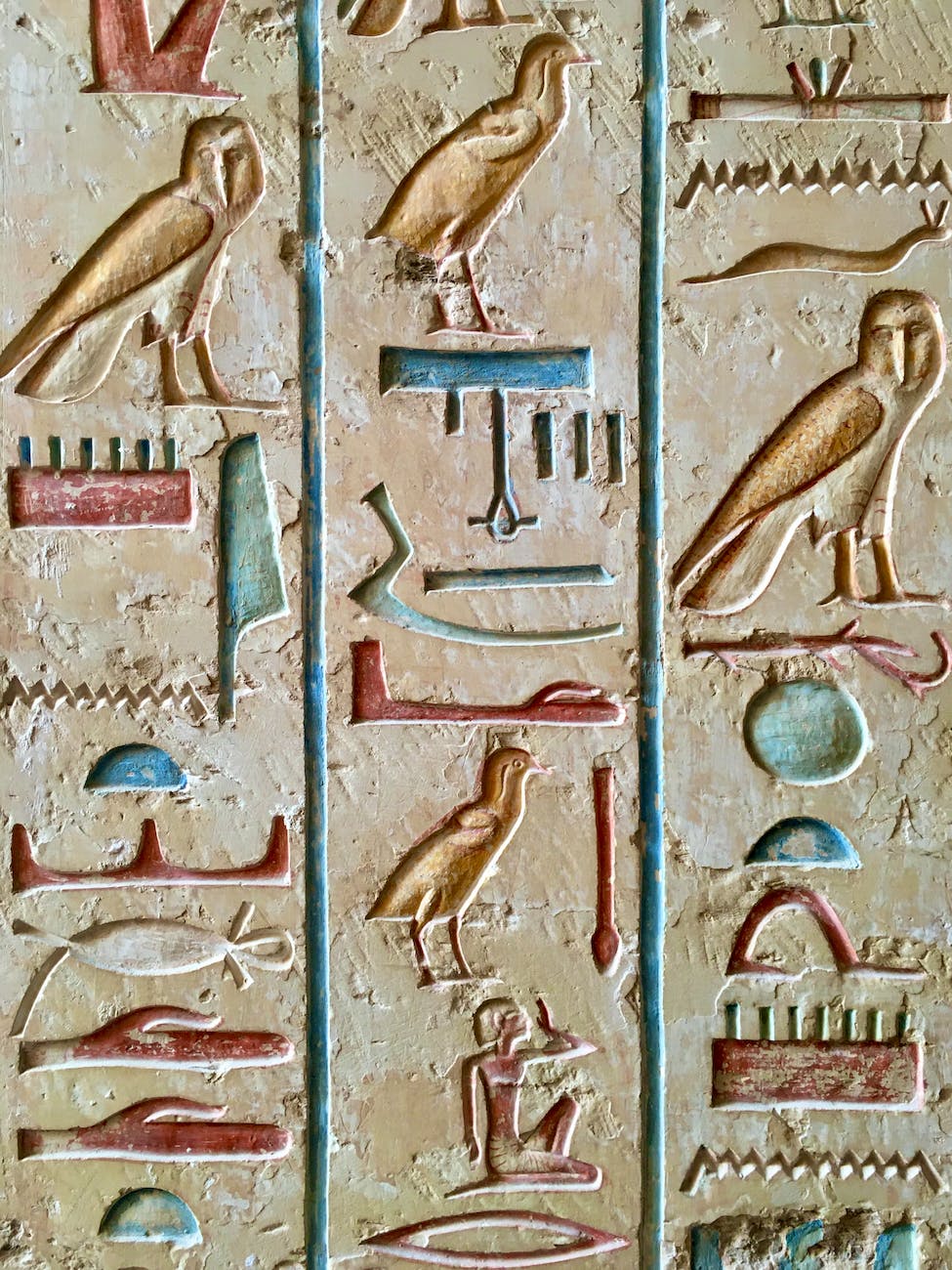
Chapter 7 – Settlement

Dancing in the Kingdom – Table of contents

Part 1 – Shadows of the Kingdom, Chapter 7 – Settlement

Courage and memory

[Bible references: Numbers 1; Deuteronomy 31:1-8; Joshua 1:1-9; Joshua 3-4; Joshua 5:13-14; Deuteronomy 6:10-12]

When the people of Israel first approached the Promised Land, twelve spies were sent out to scout out the land. Joshua and Caleb were the only two spies that did not bring back a report of discouragement. The discouragement brought by the other ten spies caused all the people of Israel to rebel against God as they forgot all the miracles of God’s provision in their flight from Egypt. This resulted in God subjecting the people of Israel to encamping in the wilderness for forty years. All the adults except for Joshua and Caleb, were subject to die in the wilderness before the people of Israel would enter the promised land.

It was therefore Joshua who was chosen to lead the people into the Promised Land at the end of the forty years. As before, the nation of Israel would encounter other people already living in the land, so Israel would need to fight for the land; it would not be easy. Before Joshua led his people into the land, God repeatedly said to Joshua, “Be strong and of good courage … do not be terrified or discouraged.” Then as a refresher, God also performed miracles as the people entered the land, causing the Jordan River to cease flowing to allow the people to cross on dry land – repeating the miracle of the parting of the sea as they fled Egypt.

Before Israel even left Egypt, the people were given gold and other wealth that was not theirs, the water from miraculously made springs and the manna that fell from the sky was not theirs. Now the homes and fields that God gave them to capture were the provision of God as well.

God’s fullness, his followers’ emptiness

[Bible references: Numbers 33:55-56; Deuteronomy 7:1-5; 12:2-3, 29-32; 6:17; Joshua 3:3; 4; 6; 10:1-15; 23-24; Isaiah 65:6-7]

God’s provision though was going to require their involvement. It would start with the way they crossed the Jordan River where the people carrying the ark needed to get their feet wet in the river before it would stop flowing. And since this time, the river would now be the boundary of their new land, the people were instructed to set up a monument of twelve stones to be a reminder God’s provision. The next miracle which came soon after was the crumbling of the walls of Jericho which occurred after seven days of marching around the city. That miracle would be followed by others as the people of Israel continued to capture the cities.

According to the message that Yahweh shared with Abraham, the entry of Israel into the Promised Land meant that the sin of the Amorites had now reached its full measure. As with the time of Noah, that full measure would now end in the destruction of the inhabitants of the land, this time by the people of Israel. The danger to Israel would be, that if the current inhabitants of the land with their idolatries and atrocities, which included sacrificing their children to be burned alive, were allowed to live among the people of Israel, the people of Israel would be tempted to also turn from God.

So, beginning at Jericho, the people of Israel to instructed to “totally destroy” (Hebrew “herem”)[1] the inhabitants of the city. This instruction would be repeated other times as well. The problem that would appear is that Israel did not always follow these instructions with the consequent result that Israel would continuously get drawn into the idolatries of the current inhabitants.

Before Joshua died, he challenged the people to serve Yahweh and the people responded that they would choose to serve Yahweh. Joshua replied that they could not serve Yahweh, the God who is so holy. Nevertheless, the people responded that they would serve Yahweh. Joshua then said that they were “witnesses against themselves.” They would be. In the end, they did not follow God’s commands to defeat the tribes in the Promised Land. They did not “completely destroy” the cities as they were told. Israel therefore allowed themselves to be subject to continual temptation to sin by turning from worshipping God and towards worshipping idols, participating in the same atrocities that God found so reprehensible.

The God of War

[Bible references: Exodus 22:21-22; Leviticus 19:33–34; Deuteronomy 10:17–19; 24:19; Joshua 6:17-21; 1 Samuel 15:1-3; Psalm 10:14–18; 68:5; 146:9; Ezekiel 47:22–23; James 1:7]

One of the troublesome tensions of the Christian faith is how to reconcile our picture of Jesus who’s come to bring us peace with the picture of the “pre-Jesus” God who seems so violent. In particular, the God who commanded Israel to “totally destroy,” to leave no one alive in the cities of the “promised land” they were to inhabit.

It has been so hard to reconcile the two images of the God, one of the Old Testament that engaged in violence and the second of one of the New Testament who came to “bring peace,” that from the earliest days of the church some Christians felt compelled to abandon the Old Testament altogether. There are several issues that come affect how we deal with this problem.

There are less differences between how God is revealed in the Old vs. New Testaments than many think. (See Chapter 2; Paradoxes and Mysteries; Gracious, Merciful and Just). If we have a problem with God in the Old Testament, then we have a problem in the New Testament as well. Both Testaments together provide the full story of the Gospel and a full picture of God.

We need to see all suffering and death in context of Jesus’ suffering and death by execution. Jesus is God the Son, present from before Creation, the God of Creation, the God of Abraham, Moses and Israel, and the God who commanded Israel to herem the people in Canaan. Jesus cannot be separated from all the activity ascribed to God’s activity in the Old Testament. The Wonderful Counselor, Mighty God, Everlasting Father, Prince of Peace that we are more comfortable dealing with, is only available because of all that He had done beginning with Creation, extending through history of the patriarchs and Israel and eventually his own incarnation, suffering and death.

We need to accept that there is much that we do not know. This comes at us a couple of different ways. We must deal with our cultural separation from the times before Jesus, there are things going on with the ancient near east culture that we don’t know. We also must deal with a knowledge of God that is far beyond ours. We need to take seriously Yahweh’s criticism of Job, and of Yahweh’s admonition to Isaiah, “my ways are higher than your ways,” we must be careful to accuse Yahweh of injustice because there is much that do not understand.

The totality of destruction implied by herem catches our attention, but this is only a specific, though perhaps extreme, case of the question, “Why does God allow bad things to happen to good people?” The answer to the everyday issue of why “innocent” people suffer, is the same answer that underlies the killing of people that we assume are innocent.

Our sanitized culture makes it difficult for us in the modern day who live in a time where we do not witness the slaughter of animals we eat. We have a hard time associating with those who lived in the time where there was the ritual slaughter of animals, not for the sake of food but for the sake of sins. We have not had to watch the slaughter of animals and contemplate the awfulness of our sin and of God’s hatred of sin because of its awful effect on us. We are then even further separated from the concept of a God so jealous for us that he would even offer himself to be slaughtered on our behalf.

Our perception is further sanitized because we live in a world that has been cleansed by the effect of the grace of Christian values (OK, we have to admit that the church has not always lived up to its professed values) and the ameliorative effects of technology and medicine. It has been the Christian value of life that confronted the once common practice of abandoning babies on the street to die and made it rare. It has been Christian values that have elevated the status of women and children. It has been Christian values that led to the development of modern science. So many of what are now commonly accepted values in Western civilization, were adopted from Christian values, but it’s easy to forget where those values came from.

Yet another level of sanitization occurs when we don’t consider the extent of our own sin and depravity in context of the extent of the holiness of God. A contrast that caused the prophet Isaiah to proclaim, “Woe is me. I am a man of unclean lips from a people of unclean lips.”

We also are forgetful of the mercies of God. 1) Jonah was perturbed when Yahweh responded to the repentance shown by the Ninevites by not bringing about the threatened destruction. 2) The mercies shown to many of the idolatrous kings of Israel when they repented.[2] 3) In the case of Israel entering the Promised Land, we don’t know what kind of warnings the Canaanites may have received prior to the “total destruction” of their cities. We do know that Yahweh patiently waited until he “sin of the Amorites would reach their full measure.” The Canaanites may have had sufficient warning to change their ways (and they had, among other abhorrent practices, that of sacrificing their children to the flames) and yet they didn’t. While we, in our time, may think of the “total destruction” as genocide, it may be instead an act of mercy – reducing the pain and suffering that would otherwise go on.

Sparing the lives of the “innocent” within the borders of the Israel did lead to the Israelites to continue the reprehensible practices of the Canaanite religions, prolonging the suffering that Yahweh wanted to put an end to. Israel’s susceptibility to fall into the sin of the nations around them. Israel was warned that allowing the original inhabitants to live alongside of them, would cause the Israelites to adopt the same abhorrent practices – which is what happened.

God had already used the forces of nature to directly carry out his herem version of justice (ex: The Great Flood which killed all people except Noah and his family, the crossing of the Red Sea in which innumerable Egyptian soldiers died). God’s commanding Israel to invoke herem was now calling Israel to act as his agent in executing a type of justice that God had already been practicing.

How innocent were the Canaanites: men, women, and children? We can’t argue from silence that the Canaanites did not have a chance to respond to God’s warnings. We do know that God waited several hundred years before executing his judgement.

It is not just in the Old Testament that we witness immense suffering. All around us today and through the years before, there has been great suffering among God’s image-bearers caused by our own violence or the violence of natural events or the violence of birth defects. All these can cause us to question, “Why, God?”

All these are various issues, and likely not the only issues, to consider while grappling both with God’s implication in violent activity and with the suffering endured by those we consider to be innocent. These issues, even all taken together, will not necessarily provide us comfortable answers. But we also need to remember, that if we have a “God” we think we totally understand, then it is not God that we are really understanding. Also, if we have a “God” that we are fully comfortable with, then we are not fully dealing with the holiness of God and the totality of our sin.

Jesus dealt with the totality of our sin by his suffering and excruciating death. It is only by the violence endured by Jesus that He has become our Prince of Peace. This is the lens through which we must see the violence around us. But even with that lens, we are not likely to have a ‘satisfactory’ answer. Even with that lens we will still struggle.

Time and time again, we see ordinary people approaching God with raw honesty about human suffering. And God responds to them, because they reflect his own lionheart that’s hell-bent against evil and death. God wants our protest against the evil and pain in this world. … To be a Christian is never to be apathetic toward evil and suffering, nor to avoid protesting God. Instead, we are told to work out our faith in “fear and trembling,” which includes unflinching lament at all the evil and death in this world. We are meant to hold our hands open in foolish faith, to watch and wait with hopeful expectation for God to show up in surprising ways—to remind us that he is good and powerful and that he will grant us his own steadfast courage. We are called to the daring and bold love of God in Jesus Christ, who stopped at nothing—not even death on a cross—to fight and win back the glory and goodness of God’s original creation.[3]

Perhaps we are meant to struggle, to lament about all that’s wrong, evil, awful, terrible, sad, and more that our hearts can bear. But in our lament, not to give up the hope that is also in our hearts, the hope that God our Father is alive, that our Father cares so deeply that He gave His Son, that miracles still do happen and that we can expect God to show up in our midst.

Judges and the Cycle of sin

[Bible references: Deuteronomy 32:28; Judges 2:11-13; 8; 17-18; 21:15, 25; 1 Samuel 4]

Because Israel had not been faithful to “totally destroy” the people whose land they conquered, the foretold consequence became true, Israel became ensnared in the horrid idol worship practices of those people. Everyone did what was right in their own eyes.

To discipline his people, God allowed Israel to be plundered by the surrounding peoples until Israel cried for mercy. God then raised up leaders called judges to successfully fight off the oppressors and Israel would respond by turning from idol worship, but only for a while. Eventually Israel would fall away from Yahweh once again and the cycle of oppression, rescue, and falling away would repeat.

God raising his people

[Bible references: 1 Samuel 1-2; Ruth 1-4; Matthew 1:1-16; Luke 3:21-38; 1 Corinthians 25; (See also, Sarah (Genesis 16-18) Rebekah (Genesis 25:19-26) Elizabeth (Luke 1:5-25))]

During the time of the judges, while the nation of Israel struggled and failed to follow God, we find that God was raising judges in response to Israel’s cry for help in their ongoing cycle of sin, God was also quietly working the background through individuals to carry out His larger plan.

During the period of the Judges, God used drought to cause Elimelech and his wife Naomi and their two sons to move to Moab. Both of her sons got married in Moab and one of them married a woman named Ruth. When Naomi’s husband and sons were tragically killed, Naomi moved back home to Israel. While Ruth could have stayed in Moab, Ruth desired to follow Naomi and particularly to follow Naomi’s God. God used that act of faith to arrange for Ruth to meet and married Boaz, and thus inserting a Moabite woman into the lineage of people who would become the ancestors of Jesus.

There is a recurring story that began in Genesis with Abraham and Sarah, where God working through women who have difficulties in pregnancy. In the time of Judges, the woman was Hannah. In her struggle to become pregnant, Hannah leaned on God. One day, while she was praying at the tabernacle, the priest, Eli, saw her and asked God to grant Hannah her wish. Shortly thereafter, Hannah became pregnant and gave birth to a son, Samuel. In an act of gratefulness, after giving birth to Samuel, Hannah committed Samuel to serve at the tabernacle with Eli. Little did Eli know at the time that God would raise up Samuel to be a priest in place of his sons. When Eli’s sons had become corrupt and unfit to serve as priests, God worked with Hannah’s fervent worship to raise up Samuel and eventually called Samuel to replace Eli as priest. Samuel ended up being a prophet for Israel and served as the last of the judges.

The Cycle of Sin Continues

[Bible references: Genesis 3; Judges 8:22-27; 17; 1 Samuel 4]

While Eli was priest, there came a time when Israel had to fight the Philistines, a nation with iron instruments that was exceedingly difficult to fight. After Israel was routed in one battle, Eli’s sons thought that the solution for victory was to take the ark with them into battle. They thought that they surely would win the battle if they carried God, whose presence was supposed to be in the ark, into battle. What they didn’t do, however, was to consult with God. Not only did Israel lose again, but Israel also lost the ark itself to the Philistines.

The mistake that Israel made was a mistake as old as Adam and Eve. We would rather have a God that we can handle rather that one we are accountable to. Want wisdom? Don’t wait for God, just eat from the tree. Want to win a battle? Don’t wait for God to lead you, take God (as the ark) with you. One of the previous judges, Gideon, would make an ephod that would become an idol for Israel. Also, in the period of the judges, a priest named Micah, would make an ephod that would also become an idol. One of the convenient things about idols is that while they may not have the power of God, they don’t make uncomfortable demands about changing our lives either.


[1] Lyon, William L. “Between History and Theology: The Problem of H9 Erem in Modern Evangelical Biblical Scholarship”

[2] Rishawy, Derek. “God’s mercies aren’t so new” 

[3] Hill, Preston. “Have Christians Forgotten How to Fight with God?”

Reflect

Joshua was certainly encouraged when the nation crossed the Jordan River on dry land just as the nation crossed the Red Sea on dry land 40 years earlier. When trying to follow God, what encourages you?

Observe

Read Deuteronomy 6:10-12. It is a good thing to have God provide for us, but what dangers are there when God does provide for us?

Reflect

Our culture has traditions like New Years’ Resolutions where we promise to make changes in our lives, yet 85% of resolutions fail.[1] What make us unsuccessful so often?

Observe

Read Deuteronomy 7:1-5.  God certainly had the power to simply wipe out all the inhabitants of the Promised Land. God did many miracles, intervening many times on Israel’s behalf. Why do you think that God had the Israelites carry out those many battles?

Reflect

What have been your conflicting ideas between the Old and New Testaments?

Observe

Read Joshua 6:17-21; 1 Samuel 15:1-3. If you think about Jesus being one part of the moving, brooding, dancing God who invoked violence in the Old Testament, how do you process that?

Reflect

Whether it’s a physical talisman or a ritual procedure or task, we find it easier to call God into the plans we already made than to humble ourselves to His plans. Think of ways that we do this.

Observe

Read Judges 2. The book of Judges is a record of our penchant to turn from God and of his patient faithfulness, continuing to rescue us despite our persistent failure. How does this cycle make you feel?

Reflect

We can get distracted by events around us and lose sight of the fact that God is always working around us, even when things seem to be in turmoil. How can that help us in our daily lives?

Observe

Read Ruth 1-4; Matthew 1:1-17. Think about the travails of Naomi and how God worked in the midst of her troubles to insert a foreign woman into Jesus’ ancestry. What does it mean that Jesus set it up so that non-Jews were part of his human ancestry?

Reflect

What kinds of changes do you need to make in your life in order to reflect the true God and not the “god” you are comfortable with?

Observe

Read Judges 8:22-27; Proverbs 2:1-8. Gideon tried to do a good thing but created a big problem. How can we avoid creating a similar problem?


[1] Tabaka, Marla. “Most People Fail to Achieve Their New Year’s Resolution. For Success, Choose a Word of the Year Instead” Inc.com  http://www.inc.com/marla-tabaka/why-set-yourself-up-for-failure-ditch-new-years-resolution-do-this-instead.html

The Tabernacle and the Law – Part 3

Dancing in the Kingdom – Table of Contents

Part 1 – Shadows of the Kingdom, Chapter 6 – A Nation Emerges

A set-apart people

[Bible references: Exodus 23; Leviticus 11, 17; Deuteronomy 14; Hebrews 4:1-13; 10:24-25]

What does it mean to be created in the image of a holy God? What do we mean when we say, “God is holy?” We first encounter the term in Genesis 2:3 when God indicates that the seventh day will be made holy, the seventh day was to be set apart from the other days. When Moses encountered God’s presence in a burning bush, Moses was told to remove his sandals because the ground was holy. It was also God’s intention to make Israel a holy nation, set apart from other nations and through which all the nations on earth would be blessed.

There were a couple of ways in which the nation of Israel would be distinguished from the nations around them, the food, and the calendar. There were some restrictions of the food they could eat such as certain meats, fish, birds, and insects, but the calendar provides the most distinguishing difference. While some cultures had recognized a 7-day calendar, it was the Israelites who set aside the seventh day of the week as a Sabbath on which no work was supposed be done. But that is not the only distinguishing characteristic of the calendar.

In the present day we have a universal calendar, and we have a priority for journalistic chronology. That is, we remember historical events on the particular day that the events happened according to our calendar. It is important for us to track events in the chronological order in which they happened. However, there are a few exceptions that we should note. Sometimes we set our remembrance day according to our convenience – for instance, we always celebrate days such as Martin Luther King’s birthday, not on his actual birth date, but always on a Monday because of our priority for extended weekends.

For the Israelite calendar, the priority was not chronology but liturgy. The remembrance days for events were not set according to the actual historical date on which they occurred but were set according to the liturgical calendar. This practice become clear when you trace out the timing of events in the Pentateuch (first five books of the Hebrew Bible) and compare them to the remembrance dates. It was more important to have events in the context of God’s activity rather than the contexts of the events themselves.

This concept provides the background for celebration of the Sabbath. The Sabbath was such an important concept for the Jews, that the account of creation in Genesis 1 was used to present the concept of Sabbath.[1] When we think about God’s creating activities, God did not need six days to carry out creation, nor did he need to rest. So why do set up the remembrance of God’s creation in a 7-day timeframe? Once again, the important point is not the chronology but the liturgy.

The important point about the creation event was not the event itself, but what it was for. The purpose of creation was to create a “temple,” a place where God could “rest,” that is, “be” with his people. That’s the main point. There are tasks to be done of course as we join God in his creative work in the universe, but the point of the tasks is to be with God. When you look at Genesis 1-2, you will notice that the first six days have a defined beginning and end, an evening, and a morning. The seventh day does not have a defined closing – that implies that we are in the seventh day. This day we are in, the age we are in, is the “day” that we “rest” with God. It was intended at the beginning that all our activities done with, at rest with, God.

This brings us to a second distinguishing characteristic of the Jewish Biblical calendar: the first month was during the spring equinox, harvesting time, whereas in the surrounding cultures the first month of the calendar was set in the fall equinox, crop planting time. The difference in meaning was that since Israel’s year started with God’s work, the year begins God’s provision of the harvest which fed the nation and provided seed for the fall. This contrasted to the surrounding cultures which began their calendar with their work, so their year began with their work that provided for the next harvest.[2]

What can be confusing is that in current practice, Jews do not use the biblical (or liturgical) calendar but the civil calendar which places the first month in the fall instead of the spring. Christians do have an equivalent practice: our civil calendar begins in January, which was set by the Roman government and coincided with Roman elections whereas some in the Christian community observe a liturgical calendar which begins in the fall with the season of Advent.

The liturgical focus of the calendar with its de-emphasis of the chronology of historical events helps explain some interesting discontinuities and apparent conflicts in the Biblical text. If we allow the events described in Exodus to be interpreted liturgically instead of chronologically, we can make better sense of the flow of Exodus.

One of the “apparent conflicts” occurs in Exodus 19, as the Israelites arrived at Mount Sinai. At the beginning of the chapter, Yahweh made a covenant similar to the one with Abraham and declared that they were to be a “kingdom of priests,” and that they were to prepare to go up the mountain after the sounding of the ram’s horn. And yet, at the end of the same chapter, Yahweh told Moses to not let the people, even the(people designated to be) priests, to go up the mountain. By noticing such apparent conflicts, we can better chronologically rearrange the events in Exodus so that they make better sense to chronologically minded folks such as we are.

A possible chronological arrangement of events looks like:[3]

  • The initial, Abrahamic-like covenant was given (including building earthen altars) followed by the Decalogue (10 Commandments)
  • The golden calf incident occurred
  • There was a covenant renewal
  • The code for priests was given along with instructions for building a tabernacle
  • Another incident with idols, this time goats, was documented
  • A Holiness code was given to the people
  • The covenant is renewed again

While the rearrangement may help us who are chronologically minded make better sense of the text, in the end we are left with Israel now being a nation with priests and the community centering its worship around a large tent called the Tabernacle. The liturgical intent of the text as it is written, is to focus on the final outcome, that Israel will be a nation with priests serving a holy God who may reside among them but who is not directly accessible.

Worship at the tabernacle was a community event. No one could do this by themselves. Different people were assigned to different tasks, which not only included direct involvement in worship but also in the care of the tabernacle and its furnishings. Even one’s individual sins required the use of priest to handle the sacrifice. Before the tabernacle, offerings could be made by anyone, but with the tabernacle, only designated priests could perform the sacrificial offerings.

This arrangement continues the pattern of representing the holiness of God in creation. God’s image-bearing creatures are set aside from all other creatures; Sinful humans are separated from the Garden of Eden; Noah and his family are set aside in the ark from all other people; Abraham is set aside from all other people to usher in the blessing of all people; Moses is set apart from the other Israelites to see God face-to-face; the Levites are the tribe set apart from the other tribes to manage the care of the tabernacle; the priests are set apart from the other Levites to carry out the rituals in the tabernacle; the Sabbath from all the other days as a reminder of God’s provision, in particular his provision for rest – and the list goes on.


[1] LeFebvre, Michael. “The Liturgy of Creation: Understanding Calendars in Old Testament Context”

[2] LeFebvre, Michael. “The Liturgy of Creation: Understanding Calendars in Old Testament Context”

[3] Sailhammer, John. “Introduction to Old Testament Theology” (Appendix b)

The Tabernacle and the Law – Part 2

Dancing in the Kingdom – Table of Contents

Part 1 – Shadows of the Kingdom, Chapter 6 – A Nation Emerges

Sacrifice and death

[Bible references: Genesis 4:4; 8:20; 36-39; Leviticus 1-7; Hebrews 7:27-28]

God also gave detailed instructions about how and when to conduct the rituals surrounding the tabernacle. Burnt offerings[1] had been offered before the tabernacle was built but now there were additional offerings to be made.[2] In the case of all the offerings, something had to die. The cost of sin was death, and it takes death to restore one’s relation with God. Moreover, the animals presented for sacrifice for the burnt offerings needed to be pure and without blemish or defect.

These “perfect” sacrifices were pointing to our ultimate need for a truly perfect sacrifice made on our behalf. The sacrifice would have to more than an animal with no visible blemishes. The sacrifice would have to be made by a perfect human whose identity would gradually prophetically be revealed … by a new “Adam” who would succeed where the first Adam failed.

Sacrificial death, though, can take a different form than we expect. In Psalm 51, David declares,

“For you will not delight in sacrifice, or I would give it; you will not be pleased with a burnt offering. The sacrifices of God are a broken spirit; a broken and contrite heart, O God, you will not despise.” (Psalm 51:16-17 ESV)

and Micah declares.

“With what shall I come before the LORD, and bow myself before God on high? Shall I come before him with burnt offerings, with calves a year old? Will the LORD be pleased with thousands of rams, with ten thousands of rivers of oil? Shall I give my firstborn for my transgression, the fruit of my body for the sin of my soul?” He has told you, O man, what is good; and what does the LORD require of you but to do justice, and to love kindness, and to walk humbly with your God?” (Micah 6:6-8, ESV)

and later, the apostle Paul declares,

I appeal to you therefore, brothers, by the mercies of God, to present your bodies as a living sacrifice, holy and acceptable to God, which is your spiritual worship. Do not be conformed to this world, but be transformed by the renewal of your mind, that by testing you may discern what is the will of God, what is good, acceptable, and perfect. (Romans 12:1-2, ESV)

I have been crucified with Christ. It is no longer I who live, but Christ who lives in me. And the life I now live in the flesh I live by faith in the Son of God, who loved me and gave himself for me. (Galatians 2:20, ESV)

These passages indicate a sacrifice of dying to oneself, of laying one’s own interests aside for the sake of another … for the sake of Christ. A sacrifice not to “make things right” with God but because things are right.


[1] Hal, Doulos. The Fire Sacrifices and Offerings of Israel – The Burnt Offering” Impact Bible.org blogs 4 Apr 2020 blogs.bible.org/the-five-fire-sacrifices-and-offerings-of-israel-the-burnt-offering. Burnt offerings are sometimes called whole offerings (because none of the offering is put aside for eating) or ascent offerings.

[2] Tam, Stephen, “The Five Offerings in the Old Testament” “The Five Offerings in the Old Testament” Moses Tabernacle 2003-2018 www3.telus.net/public/kstam/en/tabernacle/details/offerings.htm; Bible.org “The Law of Burnt Offerings” bible.org/seriespage/2-law-burnt-offerings-leviticus-11-17

Reflect

How many people are willing to die for the sake of others?

Observe

Read Psalm 51; Romans 12:1-2. We do not have a temple to make animal sacrifices. What we do have is the opportunity to offer ourselves as a daily sacrifice. What is meant by a broken spirit?

The Tabernacle and the Law – Part 1

Dancing in the Kingdom – Table of Contents

Part 1 – Shadows of the Kingdom, Chapter 6 – A Nation Emerges

The Tabernacle, shadow of something greater

[Bible references: Exodus 25-27; Numbers 2; Hebrews 8:5-6; 10:1-18]

During the time in the wilderness, the Israelites were instructed to build a tabernacle that would serve as the point of presence for Yahweh in the community. God would be seen both as an unapproachable and transcendent God[1] and as a personal, immanent God living among his people.[2] The tabernacle would serve to display the shadow of a deeper reality.

Art and artists

[Bible references: Exodus 20:4-6; 31:2-3; 35:4-9,32-35; 36:1-7]

The instructions are quite detailed. The materials used to build the tabernacle were gifts given to the Israelites as they left Egypt. Those materials were then freely shared to be used as materials used to construct the tabernacle. God dedicated the workmen for building the various parts of the tabernacle, filling them with his Spirit and then giving the skills and abilities they needed. God gave everything needed for the construction of the tabernacle. Between the detailed instructions, the materials provided by the Egyptians and the skills of the craftsmen, the tabernacle would be a beautiful work of art. Although the Israelites were told not to make graven images to worship as idols, that obviously did not mean that they couldn’t create works of art, in this case works that would be used to enable worship.

Law and Love

[Bible references: Exodus 20:1-17; Leviticus 1-7; 19:18, 34; Deuteronomy 4:27-31; 6:1-6; John 13:35; 1 Timothy 1:5]

The amount of killing carried out in the tabernacle to fulfill the necessary sacrifices would be a constant, grisly reminder of the cost of our sin. There were sacrifices to be made for many types of occasions: burnt (or ascension) offerings, sin offerings, guilt offerings and others. There was much bloodletting from the many animals sacrificed on the altar, a constant reminder of the cost of our sins.

In addition to the rules of the tabernacle, God also gave other rules that covered other areas of life. Most of us are familiar with the moral code we know as the ten Commandments, but there were many other laws that covered other situations as well. Of the 613 rules (mitzvot) that can be found,[3] they can all be summarized in the commands: Love God with all your heart, soul, mind, and strength; Love your neighbor as yourself. Whether in the ten commandments or in the 613 mitzvot, all the rules are predicated on love, thankfulness and pleasing one another. All the instructions point to practical ways for us to love God and one another.[4]


[1] The Holy of Holies could only be accessed once a year and only by the high priest.

[2] The presence of God was indicated by the pillar of fire by night and smoke by day where the people could see it. Also, Moses was able to have face-to-face contact with God.

[3] Judaism 101, “List of the 613 Commandments” Judaism 101 http://www.jewfaq.org/613.htm

[4] Isaacs, Ronald H. “Rabbinic Reasons for the Mitzvot;” Messianic Jewish Bible Society “Love and the Hebrew language” myjewishlearning.com http://www.myjewishlearning.com/article/rabbinic-reasons-for-the-mitzvot/; Levinson, John D. “The Shema and the Commandment to Love God in its ancient context” The Torah http://www.thetorah.com/article/the-shema-and-the-commandment-to-love-god-in-its-ancient-contexts

Reflect

For the nation of Israel, the tabernacle and its rituals provided a visible reminder of that the presence of God was among them, but God was still not accessible except once a year by the high priest. Does God seem like that to you?

Observe

Read Hebrews 8:5-6; 10:1-18, 1 Peter 2:9. The Tabernacle was designed to represent a greater reality. Our relationships among people also represent a greater reality. What is it?

Reflect

Arts and crafts, as long as they enhance and don’t distract from the worship of God, are useful in the worship experience. What are some ways can you express the worship of God?

Observe

Read Exodus 20:4-6; 31:2-3; 35:4-9,32-35; 36:1-7. What kinds of arts and crafts went into the construction of the tabernacle?

Reflect

If you had to live through the experience of seeing many animals slaughtered as sacrifices for the sake your sins and others’ sins, how would that affect your thinking?

Observe

Read Matthew 22:37-40. The Great Commandment is about loving God and neighbor. Keeping that commandment, is just as difficult as following the 613 other commands that can be found in the Old Testament. What do you think your life would look like if you fully lived into the Great Commandment?