Lamenting our brokenness

Dancing in the Kingdom- Table of Contents

Dancing In the Kingdom – Part 3 – Dancing in the Kingdom– Chapter 14 – Remembering our creation

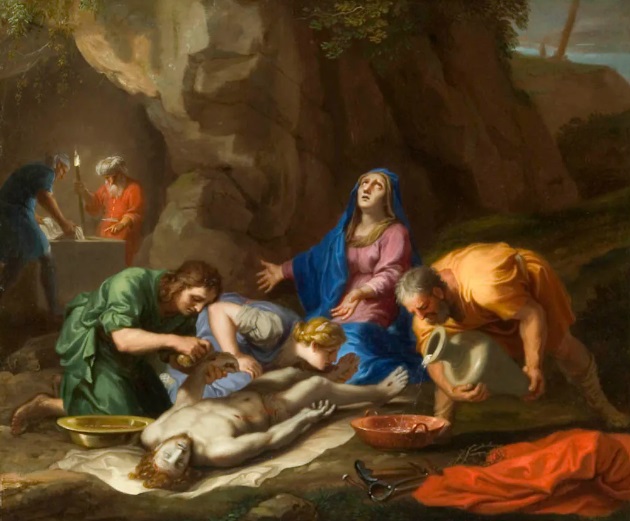
Lamenting our Brokenness[1]

[Bible references: Psalm 90; Lamentations 1-2; Matthew 26:36-46; 27:33-53; Luke 22:15; 1 Corinthians 14:12; Hebrews 12:2]

God made a good world, a world full of his glory. Sometimes, we can look at the beauty, the immenseness, the intricacy of what he has made all around us and be filled with awe and wonder. Unfortunately, what is also visible are the many ways in which things are not as they should be. As we consider all that we see and contemplate the kind of end that God intended, we find ourselves looking at a world that seems to be headed in the wrong direction. Instead of increasing shalom, there is violence, hatred, fear, disease, and brokenness. Pain. Shattered dreams. Loss of hope.

There are times when the brokenness around us and within us can overwhelm us. There may be times when God seems absent for long periods of times. This intense absence has brought some people to what they call the Dark Night of the Soul.[2]

The brokenness around us affects everyone, although some experience the brokenness more harshly than others. The Psalms are full of complaining about how the pain of sins’ consequences don’t seem to affect everyone equally. In Lamentations, that pain is captured in personification – the pain of an adulterous woman who is naked, unclean, scorned, and shamed, a victim of rape, a slave, helpless, isolated, unclean. Just as we all bear the guilt of sinful disobedience against God and neighbor. Not only do we bear the guilt of active rebellion against God, but we also bear the shame of being sinned against.

Throughout its history, the church has been concerned with the sin of people but has largely overlooked an important factor in human evil: the pain of the victims of sin. The victims of various types of wrongdoing express the ineffable experience of deep bitterness and helplessness. Such an experience of pain is called han in the Far East. Han can be defined as the critical wound of the heart generated by unjust psychosomatic repression, as well as by social, political, economic, and cultural oppression. It is entrenched in the hearts of the victims of sin and violence, and is expressed through such diverse reactions as sadness, helplessness, hopelessness, resentment, hatred, and the will to revenge.[3]

None of this is comfortable, our tendency is to use whatever devices we can to cover our feelings. We want to run and cling to the hope and joy of Christ, to rush past our uncomfortable guilt and shame. There is a part of us that would be happy to join Christ in His work in the world, as long as we can skip the confession of sin and guilt, but in doing so we would skip the richness of God’s mercy and the gift of shalom.

The depths of joy and hope are not just feelings for us to receive and enjoy. Rather, the depths of joy and hope are only found in acts of the will, in a persistent choosing to abandon our interests and instead to follow God.

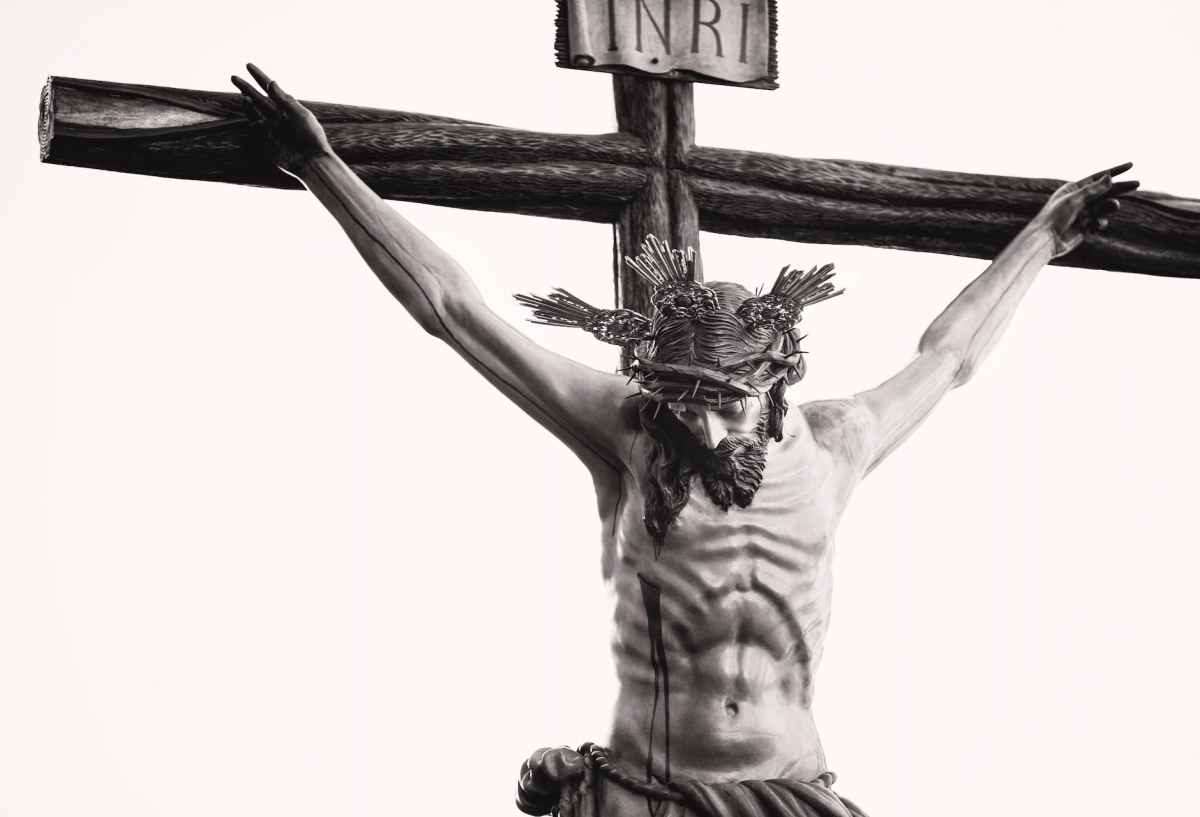
Knowing what was before Him, Jesus chose to push His glory to the side and to take on the form of a human with all its physical inconveniences, to endure the ridicule of people who were not fit to tie his sandals, to spend years training 12 disciples all of whom he knew would abandon him in the time of his greatest suffering as he endured the agony of the cross. But in all of this, as he shared the last meal with his disciples before his time of passion, he could say, “I have eagerly desired to eat this Passover with you before my suffering.” The great joy that awaited Jesus and His disciples would be preceded by deep sorrow and great suffering.

“Throughout 1946 and 1947, Mother Teresa experienced a profound union with Christ. But soon after she left the convent and began her work among the destitute and dying on the street, the visions and locutions ceased, and she experienced a spiritual darkness that would remain with her until her death. It is hard to know what is more to be marveled at: that this twentieth-century commander of a worldwide apostolate and army of charity should have been a visionary contemplative at heart; or that she should have persisted in radiating invincible faith and love while suffering inwardly from the loss of spiritual consolation” [4]

As we consider in which ways we are called to “Dance in the Kingdom” with God, we need to keep the proper perspective. God’s work is to reconcile people and all of Creation to Himself. Whatever task He gives us to engage in, it will only ever be a portion of God’s work. Whatever task He has called us to is sufficient for us and He will supply whatever we need to accomplish the tasks He has provided. While some are called to do “bigger” tasks than others, we need to humbly accept whatever tasks God has called us to do. We also need to humbly submit to our need for one another and our need to combine whatever spiritual gifts God has given to us with the gifts He has given others as we build up one another. In the task of building up one another, we need to address another humility.

Our sin and our woundedness are deeper than we imagine. As we confess and acknowledge the sins we have committed and the shame we experience when others have sinned against us, our proper response is lament. We can neither undo what we have done nor what has been done to us. But we can take the next step. The path to restoration and reconciliation leads through a lament that must confront our brokenness and acknowledge the pain. In our lament we can recognize how we are corrupted by sin and that we are accountable for all the suffering caused by our sin.

For us to experience healing of shalom, we need to acknowledge the suffering we have caused, encounter the truth about our sins, and challenge the privileges we may have had over others. Shalom requires lament, a reminder not likely needed for those whose lives are marked by the injustice thrust upon them but is likely needed for those whose lives are marked by privilege.

“Lament in the Bible is a liturgical response to the reality of suffering and engages God in the context of pain and trouble. The hope of lament is that God would respond to the human suffering that is communicated through lament.”[5]


[1] Plantinga, Cornelius. Not the Way It’s Supposed to Be Eerdmans Publishing Co – A. Kindle Edition; Wolters, Albert M. Creation Regained Biblical Basics for a Reformational Worldview  William B. Eerdmans Publishing 1985, 2005. eBook

[2] Rah, Soong-Chan, “Prophetic Lament: A Call for Justice in Troubled Times” Intervarsity Press, 2015; Zaleski, Carol. “Dark Night of Mother Theresa;” St. John of the Cross, Dark Night of the Soul First Things, www.firstthings.com/article/2003/05/the-dark-night-of-mother-teresa

[3] Park, Andrew S. “The Wounded Heart of God: The Asian Concept of Han and the Christian Doctrine of Sin” Abingdon February 1, 1993

[4] Zaleski, Carol. “The Dark Night of Mother Teresa’s Soul” First Things, www.firstthings.com/article/2003/05/the-dark-night-of-mother-teresa

[5] Rah, Soong Chan. “Prophetic Lament: A Call for Justice in Troubled Times” Intervarsity Press, 2015

Reflect

What kinds of brokenness in the world do you notice the most?  For what do you lament?

Observe

Read Psalm 90. Is there any lament that touches your heart?
Our limits

Dancing in the Kingdom- Table of Contents

Dancing In the Kingdom – Part 3 – Dancing in the Kingdom– Chapter 14 – Remembering our creation

Our Limits

[Bible References: Genesis 1-2; Deuteronomy 15:11; Psalm 40:17; 1 Corinthians 12]

As we seek to fulfill our cultural mandate, there are various constraints which control how we exercise our call.[1] First and foremost, as God’s image-bearers, we are to act in accordance with God’s character: holding to the balance and tension of acting with sovereignty and servitude, mercy and justice, playfulness, and orderliness, along with his attributes of overflowing goodness, generosity and peace, trustworthiness, faithfulness, self-sacrifice and forgiveness. Although we are not transcendent in the same way God is, as his image-bearers his character of transcendence can be reflected in the ways we manifest His other qualities: Our ability to creatively imagine the ways in which we establish dominion, live into our relationships, display fruitfulness, and fulfill our responsibilities as God’s image-bearers.

We also need to remember that there are limits with which we should exercise our responsibilities. God has given us finite resources of materials or time to work with along with the reminder of Sabbath to help us refocus, to remember that although we are designed to work that we are not designed solely for work. It is not work that gives us value, rather it is God who gives us value and our work only has value if it gives God the glory.

Part of our limits are tied to our embodiment. Our earthiness is a reminder of our dependance on the earth, each other, and God. Our earthiness should help us lean into the humility worthy of image-bearers of God. Our need to sleep is a constant reminder that we are not God who never sleeps.

The multi-faceted call God has given us, requires us as God’s stewards to weave together the call to glorify God, to bring to maturity God’s rule over the earth, to reflect God’s triunity within the community of his image-bearers. This call is not for us to fulfill individually, but rather together as the Body of Christ with whatever God provides.


[1] Theology of Work Commentary, “Genesis 1-11 and Work” Hendrickson Publishers Marketing 2015, 2016

Reflect

We have built-in limits to what we, in our bodies, can do. How do these limits remind us of our dependency on the earth where we live, on each other, and on God?

Observe

Read Deuteronomy 15:11; Ps 40:17; 1 Corinthians 12. Why do we need each other?

Our provision

Dancing in the Kingdom- Table of Contents

Dancing In the Kingdom – Part 3 – Dancing in the Kingdom– Chapter 14 – Remembering our creation

Our Provision

[Bible References: Genesis 1:29; Genesis 2:8-9; Psalm 3:5; 55:4-22; 1 Timothy 6:17-19; Hebrews 1:3; 1 Peter 4:7-11]

In all of this, as his image-bearers we are to remember that we need God’s provision to do our work. He is the creator of life and reproduction; sun, moon, earth, and stars; light and darkness; intelligence and wisdom; love, joy, and peace. He is the one who always goes before us and watches over us as a father watches his children.

Within all of these possibilities, we can work with God to fill the earth with his glory and influence people towards him. Our Cultural Mandate can be linked to the Great Commission and the task of evangelization, where we can use the full range of our abilities to point people to the God who is able to redeem us all.[1]

Unfortunately, just as we can engage in obedient culture making, we can also turn from God and engage in disobedient culture making,[2] turning ourselves and others away from God. Because of our rebellion against God, our cultural tasks can take on a different dimension.


[1] Manahan, Ronald E. “A Re-examination of the Cultural Mandate: An analysis and Evaluation of the Dominion Materials” Docsbay Grace Theological Seminary dissertation May 1982 docsbay.net/A-Re-Examination-Of-The-Cultural-Mandate

[2] Koyzis, David T. “What the Cultural Mandate is Not”  First Things www.firstthings.com/blogs/firstthoughts/2011/11/what-the-cultural-mandate-is-not

Reflect

If we base the possibilities of what we can do only our own strength and abilities, we will be limited. What stewardship project should you be considering based on what you can do with God’s help?

Observe

Read Psalm 3:5; 55:22. If we are confident that God will supply all our needs, how should we handle our possessions?

Our relationships

Dancing in the Kingdom- Table of Contents

Dancing In the Kingdom – Part 3 – Dancing in the Kingdom– Chapter 14 – Remembering our creation

Our Relationships

[Bible references: 1 Peter 4:7-11]

All of these activities are done in context of our relation to God, to each other, and to our land. God has created us in His image, in the image of a triune God in which Father, Son and Holy Spirit exist as three persons united into one. Within that framework, God created us as male and female, each created as creatures made in God’s image yet different from and interdependent upon each other. When God made a woman for Adam, He specified that the woman would be an ‘ezer kegnedo,’[1] a strength corresponding to him. God created us from the dust of the earth, so although we are stewards of the earth, we are also dependent on the earth. In the earth, God has provided for us the resources we need to do our tasks. In all these relationships, God has intended that we are to live in unity with Him, with one another and with our environment.

Over time, our unity in all these areas got more complicated as our numbers grew. We needed to create organizations which necessarily became more complex as our societies grew and as our collective impact on the earth became more substantial. We needed extra discipline to maintain our relationship with God. We also needed to develop more skills in diplomacy, administration, and hospitality as we deal with more and different people. We needed to pay closer attention to the effects of our culture on the earth and its creatures to minimize the damage from so many people using our physical resources.

All of our work, our stewardship, is intended to have a direction, to bring maturity, fruitfulness, and growth to God’s work. The work we were charged to begin in the Garden of Eden was designed to end in the filling and subduing of the earth, in the cultivation of the whole earth where heaven and earth overlap so that work and worship are the same thing.[2]


[1] God’s Word to Women. “Ezer Kenegdo” God’s Word to Women godswordtowomen.org/ezerkenegdo.htm; Francois, Mark Steven. “(Ezer Kenegdo) in Genesis 2:18” Between the Perfect and the Doomed markfrancois.wordpress.com/2013/07/22/%D7%A2%D6%B5%D7%96%D6%B6%D7%A8-%D7%9B%D6%B0%D6%BC%D7%A0%D6%B6%D7%92%D6%B0%D7%93%D6%B4%D6%BC%D7%95%D6%B9-ezer-kenegdo-in-genesis-218/

[2] Huber, Dave. “Avodah Word Study” EFCA Today Summer 2012 www.efcatoday.org/story/avodah-word-study

Observe

Read 1 Peter 4:7-11. What are we charged to do?

Our Mandate

Dancing in the Kingdom- Table of Contents

Dancing In the Kingdom – Part 3 – Dancing in the Kingdom– Chapter 14 – Remembering our creation

Our Mandate

[Bible references: Genesis 1:26-28; 2:18-25; 3:6; 39:22-23; Matthew 17:10-13; Acts 3:19-42; 1 Peter 5:10]

We have seen how our journey, the journey of God’s people, creatures made in God’s own image, began with our ordination in the Garden of Eden and we have seen what God has intended for our future. We have seen how that intention has not changed despite our rebellion which continues to this day, and how God has not ceased to work with us, His people, despite our persistent rebellion. We have seen God’s patience and tenderness in not totally abandoning us despite our rebellion and how He has called us generation after generation – from the patriarchs and prophets to the apostles and all who are called Christian – to join Him in His ongoing restoration of His Kingdom on earth.

As image-bearers, we still are charged with the work of stewarding His creation, However, we must be restored ourselves before we can fully join Him in His work. That work of restoration begins when the Holy Spirit comes within us to unite us to God and His community. That is the work God must do within us.

In the previous chapters, we have followed how God called his image-bearers to join in the work that he began and then how, through the years, his image-bearers have joined that work, sometimes successfully and sometimes not. In this chapter, as we prepare to consider how to move forward, we will revisit that multi-faceted call to rule over the earth, to be fruitful and multiply, to fill the earth and subdue it” and to cultivate[1] and keep it, to create beauty. This call to act as God’s stewards of His creation is a call to use our gifts of intelligence and creativity, to cultivate the resources of the earth to establish a godly culture and civilization. This call is sometimes called the “cultural mandate,” where our culture includes all the things we discover and make and pass on from one generation to the next: our food, language, sports, arts, businesses and their products, civic organizations, and governments, etc.

The charge to “have dominion over” and “subdue” the earth and all its creatures includes physical, cultural, and intellectual activities such as farming, mining, manufacturing, government, arts, civic organizations, education, sciences, technology, and many other activities. But the primary place of God’s kingdom is to restore the souls of men. All would be well if all souls were in right relation to God, everything else would fall into place. Evangelization of the souls of all men is the ultimate goal. But if we think of the ways in which God, out of his overflowing abundance, finally managed to touch our hearts, there were many steps and many different ways in which we were individually touched by the hand of God.

As God’s image-bearers we are uniquely equipped to imagine and discover what kind of possibilities can be made of the overflowing abundance of  God, the physical resources He has provided for us: turning grain to bread, grapes to wine, oil to energy and plastics, iron ore to steel, limestone and shale and clay to cement, and many other things we have made from many types of resources. We are uniquely equipped to imagine and discover out of God’s overflowing abundance what kinds of ways we can organize ourselves to fulfill our responsibility to subdue and cultivate the earth by creating organizations such as businesses, civic and social organizations, political parties and non-profit organizations, governments and educational and religious institutions.[2] In all of these activities we can reflect God’s knowledge and wisdom by engaging in intellectual pursuits such as reading, writing, mathematics, sciences, philosophies, language arts, history, engineering, forensics, medicine, law, etc.  


[1] Huber, Dave. “Avodah Word Study” EFCA Today Summer 2012 www.efcatoday.org/story/avodah-word-study

[2] Manahan, Ronald E. “A Re-Examination of the Cultural Mandate: An Analysis and Evaluation of the Dominion Materials” Docsbay Grace Theological Seminary dissertation May 1982 docsbay.net/A-Re-Examination-Of-The-Cultural-Mandate

Reflect

We were assigned priestly duties in the Garden of Eden. As believers, we are to be kingdom of priests. As God’s care for His Creation continues, so does our mandate. What things can you do (and are equipped to do), with God, to fulfill His mandate?

Observe

Read Genesis 1:26-28; 2:15; 39:22-23. How would the world be different if we fulfilled our duties towards creation in the same way the Joseph fulfilled his duties?

Mystery of wisdom

Dancing in the Kingdom- Table of Contents

Dancing In the Kingdom – Part 2 – The Kingdom Revealed – Chapter 13 – Distinctives within the body of Christ

Mystery of wisdom

[Bible references: Exodus 28:3; Deuteronomy 34:9; 1 Kins 3-4; 11:11-16; Psalm 49:3; 90:12; 111:10; Proverbs 1-4; 8; 1 Corinthians 1:18-31; Colossians 2:1-5; 3:15-17; James 1; 3:13-18]

The limits of reason

It is not just that the world is immensely complex, but it seems to contain unexplainable attributes like Beauty and Truth – and something about us seems designed to need to find a reason for our being and a sense of morality. The tools of philosophy and science have been very helpful in understanding our world – but those tools are limited. Philosophers are constrained by our limits to comprehend our world through using reason alone.

After surveying the significant problems we confront in trying to make sense of this world, [John] Lock remarked: “From all which it is easy to perceive what a darkness we are involved in, how little it is of Being, and the things that are, that we are capable to know.” … [Alexander] Pope concedes that this universe appears to be incoherent and ambiguous. Yet Pope insists that we have to acknowledge the frailty and fallibility of human moral and intellectual capacities in reaching this judgement. … [John Banville] . “I saw a certain kind of pathetic beauty in the obsessive search for a way to be in the world, in the existentialist search for something that would be authentic.” …  was forced to deal with the irreducible fragility and provisionality of human knowledge. … The hope of finding the Enlightenment’s Holy Grail, the crystalline clarity of rationalist certainties, gradually gave way to a reluctant realisation of the irreducible complexity of the world, which simply could not be expressed in terms of the clear and necessary ideas that the Enlightenment expected and demanded.[1]

Scientists are equally constrained by our limits to comprehend our world through measurement and experiment alone.

Those who invoke the political nostrum “follow the science” need reminding it is an activity that’s never free of value judgement … scientific findings are empirically-based descriptions of the patterns and regularities that we find in the world around us. They are not the be all and end all of explanation. . They are local explanations of aspects of the world around us, that are provisional in nature…. Science does not say anything about the ‘meaning of life’, the nature of causation, the origins of the universe, whether there is ‘free will’, etc., until its findings are combined with additional premises in an argument. Arguments, being made as they are in human language, are strictly speaking, philosophical in nature … Scientific reasoning can never prove the truth or falsity of its own assumptions (which are values), nor can it have much to say at all about normative questions, only indirectly. A scientific argument can be used to support a premise used in a philosophical argument about some conclusion, but it cannot constitute the argument.[2]

When we look to find meanings in the context of Biblical cultures, we find differences between the Hebrew and Greek cultures. While each culture has its strengths, as we talked about in “Limits of theology” (p.161), the different languages can shape our thinking by focusing on different priorities. The following table presents some of those different focus points.

Hebrew cultureGreek culture
nephesh refers to whole being (soul and body are integratednot just a soul that exists apart from the body,
shema = listen and obeyAkouo – listen, hear
objects described in terms of functionObjects describe in terms of physical description
supernatural and natural worlds are integratedsupernatural and natural worlds are separate
historical narrative is about meaninghistorical narrative is about chronological sequences
material goods measure God’s blessingsmaterial goods measure personal achievement
value is on what we dovalue is on what we think
knowledge is about ethics and moral practicesknowledge is about intellectual categories
worship was a function of service, what we do in the bodyworship was a function of service what we think

The Hebrew language has fewer words and focuses on creating stories and not creating descriptions. The fewer words that are used can have a wider range of meanings which the Hebrew writers of scripture use to create stories with intentional ambiguities and is sparse in details and descriptions. The Hebrew worldview assumes a world where the natural and supernatural are intertwined and there is an actively involved God. Hebrew ethics are focused on what is done than what is thought.

The Greek language is amenable to creating complex words and is amenable to developing philosophical and scientific thought. Greek story telling is full of details and descriptions and exact definitions. The Greek worldview separates the spiritual world and the physical world, where the spiritual world is considered the most important and that the activity of the gods does not necessarily affect events in the physical realm. Greek ethics are focused more on what is thought than what is done.

The church has been affected by the Greek way of thinking.[3] One idea, called Gnosticism, held that salvation could be obtained through secret knowledge; leading to the development of “secret” societies like the Rosicrucian’s where only those within the society have that knowledge. Another idea was dualism, where spiritual things are considered to be good and material things are considered to be bad. The consequences of that thinking have led to heretical teachings about the nature of Jesus, severe asceticism, unhealthy thinking about sexuality, neglecting our stewardship of creation, rejection of the arts, etc.

One reaction in the church against the Greek philosophies led to a type of anti-intellectualism called fideism,[4] which intended to focus exclusively on a type of faith that ignored the use of reason

The ideas of the Greek philosopher, Aristotle, would resurface later during the Renaissance led to the development of modern science.  However, the church hindered the development of astronomy for a while when it stubbornly clung to Aristotle’s geocentric view of the universe.

The limits of enlightenment[5]

[Bible references: Ps 111:10; Proverbs 2; 11:2; 1 Cor 1:18-31; James 3:13-18]

The church was involved various attempts to reclaim the glories of the past and to elevate the human condition in what used to be called the dark ages.[6] The discovery and rediscovery of the writings of Greek, Latin and Muslim philosophers and scholars enriched the thinking within the Roman empire. The sum of all these eventually led to the period of “Enlightenment.”

  1. 9th Century Renaissance.[7] Monasteries were involved in the laborious process of preserving manuscripts by hand-copying them. However, for many years, some of the Latin and Greek classic writers were neglected in favor of Christian works. Charlemagne, the king of the Holy Roman Empire, was interested in giving everyone an education that included the Roman and Greek classic writings (such as the writings of Plato and Cicero). The main impact of this renaissance was on the development of literature.
  2. 12th Century Renaissance.[8] Christians escaping the spread the Muslim empire brought new Greek and Arabic writings to the West. These included the writings of Aristotle about logic and Arabic writings about natural philosophy and Latin works about law. This renaissance led to advances in social organization, the law, technology, intellectual pursuits and attempts to make Christianity more human which led a general spirit of optimism and desires for a more personal and intense religious experience.
  3. 14th century Renaissance.[9] The continued introduction of Greek texts from Christians fleeing the Ottoman Empire combined with the advent of the printing press made possible the wide publication of Greek ideas, particularly from Plato, whose ideas that some thought were more compatible with Christianity. These discoveries combined with discontent with the church led to the development of humanism, which elevated the capacity of humans. At first, humanism was very much a Christian topic but over time, humanism became an antithesis to Christianity.
  4. 18th century Enlightenment.[10] The invention of the printing press in AD 1439 further supported the spread of science as well as humanism and would also be central to the Protestant revolution in the 1500s. During the same period, developments in shipbuilding and technology enabled the development of European empire building and the success of that contributed to the age of Enlightenment (AD 1714-1789) with the emphasis on liberty, progress and reason having priority over theology. The Enlightenment version of humanism, (different than the Christian version of humanism) stated that people are essentially good and do not need God to progressively improve over time. This version impacts even our modern-day culture and sometimes the culture within the church.

Advances in knowledge is a good thing, but knowledge constrained by human pride does not lead to wisdom. The “Enlightenment” was the name given by people who were proud of the age where God was cast off and where human knowledge replaced the wisdom of God.

Accepting paradox[11]

[Bible references: Matthew 5:6; 7:14; 11:29-30; Luke 17:10; John 6:35; Romans 3:28; Galatians 5:1; Ephesians 2:10; James 2:24]

Paradox: A seemingly absurd or contradictory statement or proposition which, when investigated, may prove to be well founded or true. (The Oxford Dictionary). A situation or statement that seems impossible or is difficult to understand because it contains two opposite facts or characteristics: (Cambridge Dictionary)

Religious truth often pivots on paradox … full truth about Jesus outruns the ability of human reason … all of the core truths of Christianity are twin realities, delicate paradoxes …it is dangerous to insist on flat yes-or-no answers to the big and perennial questions of life … we live in a fast-moving and rootless time when numerous theologians are trying to restate the Christian faith in relative and fluid terms that reflect the mood of our times more than biblical foundations (Callen, Barry L. Caught between Truths: The Central Paradoxes of Christian Faith, Emeth Press, 2007)

Embodying the gospel is … more than individualism. God is a social reality (trinity), faith should be a social reality, the best way to witness on behalf of the church is to be the church … More than rationalism. We are more than rational animals; rationality has its place but there is mystery that only faith can approach. Spiritual experience and interpretive concepts are reciprocally related. Doctrine is important but primacy is given to the transforming personal and community encounter with God in Jesus Christ … More than dualism. We are whole persons. Sin is both personal and systemic … More than knowledge. Knowledge, even biblical knowledge is not good in and of itself. Orthodoxy includes orthopraxy (Callen, Barry L. Caught between Truths: The Central Paradoxes of Christian Faith, Emeth Press, 2007)

The Bible is not written as a textbook that presents a list of topics and propositions. The views and values of the Bible are presented in the context of a story – a story of God and his image-bearers. The Bible’s focus is on relationships, and its views and values are found in the context of the stories of those relationships. Those stories sometimes reveal paradoxes.

One dimension of those paradoxes is revealed in how the values of the Bible are upside down compared to the views of the surrounding cultures. For instance, the Bible presents one God instead of many. The Bible presents a world of order which has a particular end in mind instead of repeated cycles of disorder with no end point in view.

Another dimension of those paradoxes are statements in the Bible which seem to contradict one another. Some examples are:[12]

• “We are worthless servants.” (Luke 17:10) “We are his workmanship.” (Ephesians 2:10)

• “Blessed are those who hunger.” (Matthew 5:6) “No one who comes to me will ever be hungry.” (John 6:35)

• “Take up my yoke and learn from me.” (Matthew 11:29) “Don’t submit again to a yoke.” (Galatians 5:1)

• “A person is justified by faith apart from works of the law.” (Romans 3:28) “A person is justified by works and not by faith alone.” (James 2:24)

• “My yoke is easy.” (Matthew 11:30) “How difficult the road that leads to life.” (Matthew 7:14)

Presenting values by means of paradoxes forces one to more completely understand those values by exploring them in different dimensions.


[1] McGrath, Alister. “On Truth, Mystery and the Limits of Human Understanding” Religion and Ethics www.abc.net.au/religion/on-truth-mystery-and-the-limits-of-human-understanding/10096364

[2] Copeland, Peter. “Knowing the Limits of Science” Convivium www.convivium.ca/articles/knowing-the-limits-of-science

[3] Got Questions “What is Hellenism, and how did it influence the early church?” Got Questionswww.gotquestions.org/Hellenism.html

[4] Got Questions “What is Fideism?” Got Questions www.gotquestions.org/fideism.html

[5] Dartmouth. “Medieval Book Production and Monastic Life” Dartmouth sites.dartmouth.edu/ancientbooks/2016/05/24/medieval-book-production-and-monastic-life/; Kreis, Stephen. “Lecture 26 – The 12th Century Renaissance” Mr Mccubbins Classroom folder mccubbin.weebly.com/uploads/2/3/1/5/23153786/lecture_26__the_12th_century_renaissance.pdf

[6] Hughes, Tristan. “Why Was 900 Years of European History Called ‘the Dark Ages’?” Historyhit www.historyhit.com/why-were-the-early-middle-ages-called-the-dark-ages/

[7] Kulik, Rebecca M. Carolingian Renaissance Britannica www.britannica.com/topic/Carolingian-Renaissance

[8] Reeves, Andrew. “The twelfth-century renaissance” LibreTexts, humanities human.libretexts.org/Bookshelves/History/World_History/Book%3A_World_History_-_Cultures_States_and_Societies_to_1500_(Berger_et_al.)/12%3A_Western_Europe_and_Byzantium_circa_1000-1500_CE/12.15%3A_The_Twelfth-Century_Renaissance

[9] Cartwright, Mark. “Renaissance Humanism” World Historywww.worldhistory.org/Renaissance_Humanism/

[10] Encyclopedia.com “The Renaissance and Enlightenment” Encyclopedia.com www.encyclopedia.com/humanities/encyclopedias-almanacs-transcripts-and-maps/renaissance-and-enlightenment

[11] Moen, Skip. “Paradox” Skipmoen Hebrew Word Study skipmoen.com/2020/10/paradox/

[12] Wilson, Aaron. Lifeway Research research.lifeway.com/2019/03/19/14-biblical-paradoxes-every-christian-should-know/

Reflect

Does a person need great knowledge to be wise?

Observe

Read 1 Kings 3:1-28 and 1 Kings 11:1-13. How does someone with Solomon’s wisdom make the kind of failure he did concerning women?

Mystery of faith

Dancing in the Kingdom- Table of Contents

Dancing In the Kingdom – Part 2 – The Kingdom Revealed – Chapter 13 – Distinctives within the body of Christ

Mystery of faith

[Bible references: Exodus 31:1-11; Isaiah 1:18; Romans 1; 3:24; 4:16; 5:2-21; 6:15; 11:5-6; 2 Corinthians 6:1; Galatians 5; Ephesians 1; 2 Hebrews 12:1-39]

Faith and grace

If we try to systemize grace and faith, we find some saying that God will only give some people a special grace that allows them (and only them) to have faith to receive God’s forgiveness and some will say everyone is given that grace. Fortunately, receiving God’s grace is not dependent on our understanding. We only need to acknowledge it is only by God’s grace that we can be forgiven, and it is by God’s grace that we can be saved through faith.

After we “make a decision” to receive grace through faith, some will have the attitude that, “I’m saved, there is nothing more to do.” This attitude is sometime characterized as getting “fire insurance” or a “get out of hell free” card or as “easy believism.” This puts emphasis on “making a decision to accept Christ as our Savior” as if that was the main point.

While acknowledging Jesus as our Savior is a good thing, we should not put to the side that our decision should also acknowledge that Jesus is also our Lord and therefore our decision includes following Him as a disciple.

Faith and reason

Scripture is full of exhortations for us to use our reasoning. In Isaiah 1:18, Yahweh invites us to reason together with Him. In Romans 1, Paul tells us that we can even discern the truth of God’s invisible qualities, that they are clearly seen in the world around us. The scriptures are full of examples of God pleading with us, appealing with us to do the right things.

Scripture also encourages us to walk and live by faith, to trust God by faith, to obey God by faith, that we need to come to him by faith, that our righteousness comes by faith – and that faith is having confidence in what we hope for and assurance about what we do not see.

To hold these in tension, we cannot go to either extreme of abandoning our intellect or abandoning faith, rather we must go trust God to act in the future based on what we have seen him do in the past or present.

Faith and Creeds

It would seem nice if we could make a simple statement like, “The Bible says it and I believe it,” and not be misunderstood. But it’s not so simple. That’s because the Bible is not a straightforward text of moralizing or instructions. It’s a collection of stories, poetry, bits of wisdom, letters written from one person to another or to a group, prophecy, etc.  So biblical interpretation is not a task to be done lightly. Instead, it requires that we look at every verse in the context of the passage that it’s in, who wrote it and to whom and in the context of the entirety of scripture.[1] 

To address that problem, many congregations have found it expedient to clarify what they believe by using certain creeds or statements of faith. But then we run into the problem of the creeds or statement are not saying enough about the entirety of the faith of the congregation. So other congregations avoid creedal statements altogether and simply say that the Bible as a whole describes their faith.[2]

Faith and expressions of the Gospel

Living out the Gospel can encompass all parts of our lives, but for various reasons, different parts of the church at different times have chosen to focus on different aspects of the Gospel, often creating an imbalance in how the Gospel is lived out. Overfocusing on the intellectual aspects of faith led to a movement to focus instead on internalizing one’s faith and personal walk with God. Overfocusing on one’s personal walk with God led to a movement to put more of a focus on the public aspect of faith and the need for social justice. A desire to “return” to the faith of the New Testament church led to a desire to live out the “whole Gospel,” emphasizing the power of the Spirit as expressed by miracles, healings and speaking in tongues. Of course, the “whole gospel” actually encompasses all aspects and loving God with all our hearts, minds, soul and spirit.

Faith and Art

[Bible references: Exodus 28:3; 31:1-11; 35:10-33; 1 Kings 7:13-14; Proverbs 8:30; 22:29; Isaiah 54:16; Zechariah 1:20]

Expressing our faith through art had been common since God instructed people gifted in arts and crafts to build the Tabernacle. During New Testament times, poverty and persecution limited the amount of artwork, and that artwork was largely symbolic. But after the legalization of Christianity, expressions of the faith blossomed in both art and architecture. The eastern church started to express its faith through special artwork called icons which were highly revered. However, when a volcano erupted in AD 726, superstitions within the empire created a movement to rejected artwork[3] which did not finally end until AD 834[4]. To this day, different segments of the church either accept or reject the use of artwork.

Faith and perceptions of God in the Old and New Testament

At first glance, it could seem like God in the Old Testament is different than God in the New Testament. In the Old Testament the stress seems to be on the holiness of God and his distance from us while in the New Testament the stress seems to be on the love of God and his closeness to us. God in the Old Testament seems to act violently while in the New Testament He seems to act humbly and peaceably. This apparent dichotomy has created much consternation, causing some people to reject or ignore the Old Testament and only focus on the New Testament. But God is the same today, yesterday, and tomorrow. God never changes. More careful reading will show that the Old and New Testaments are not so different, and the characteristics we see of God in one testament can be found in the other testament.


[1] The discipline of “hermeneutics” or “bible interpretation” gives guidance on how to properly interpret the scriptures.

[2] These congregations are called noncreedal congregations.

[3] iconoclasm

[4] Art in Context, “Early Christian Art – Christian Artwork and Biblical Paintings” Artincontext artincontext.org/christian-art/ ; Joy of Museums “Christian Art and Biblical Paintings” Joy of Museums joyofmuseums.com/most-popular/popular-christian-art/

Mystery of worship

Dancing in the Kingdom- Table of Contents

Dancing In the Kingdom – Part 2 – The Kingdom Revealed – Chapter 13 – Distinctives within the body of Christ

Mystery of worship

[Bible references: Deuteronomy 4:15-24; 12:1-32; Romans 12:1-21; 1 Corinthians 14:1-40; 1 Timothy 2:1-15; Hebrews 12:1-39]

What are proper ways of worship?

In Hebrew, the word for worship means “to bow down, to prostrate oneself” or to “lay flat on the ground.”  In Greek, the words for worship mean to “kiss the hand, to fall on the knees,” or to “prostrate oneself” “to pay homage” or “to render religious honor.”  These things can be done in the context of a “worship service” on a Sunday or in any activities throughout the week. Activities in work or play can be done in an attitude of worship.

There are some differences in belief about the role of arts in worship: Is music or artwork or dancing permissible, or what kind of music or artwork or dancing is permissible? Part of the differences are due to whether activities are permissive unless specified otherwise in the Bible or activities are not allowed unless specified in the Bible.[1] Some of those differences emerged in the way some of the Protestants perceived abuses of the arts in the Roman Catholic denomination. Despite these disagreements, there are some hymns that have been widely accepted across many denominations. In a similar fashion, many congregations/denominations have adopted the contemporary style music, although in some congregations that style of music has created divisions. Music can be important as an alternate means of expressing theology.

Icons are a specialized type of artwork that represent sacred objects or honored saints in the church. The icons were used as a visual method of teaching and were particularly important when literacy rates were low. Icons are meant to take the place of the physical presence of admired saints, and because of this, Roman Catholic and Orthodox congregants will bow to or kiss the icons as if they were bowing to or kissing the actual revered saints. This is not meant to worship the icons but to show respect.[2]

Prayer can be done formally, informally, individually, or corporately. There are different viewpoints about whether praying to the saints – asking them to pray for us – is acceptable. There are also differences about whether mystical experiences in prayer are proper.

What about Mary?

The mother of Jesus is in the middle of one of the great mysteries: How is it possible for the infinite God to become a human even from the point of conception? Related to that question are other questions: Why was Mary selected? How was it possible for her to conceive Jesus? Were there any special qualities for Mary to have in order to become the mother of Jesus, the Son of God? Did she actually become the Mother of God?[3]

The Roman Catholics consider that Mary was conceived without original sin.[4] Both the Roman Catholic and the Orthodox denomination’s view that Mary did not die but fell asleep,[5] and then was physically assumed into heaven.[6] The Protestants mainly reject these views and because of their reaction to the corruption of the Roman Catholic denomination have generally not held Mary in as high esteem.

What are liturgies?

Liturgy is derived from the Greek “public work” or “public ministry.” Within the church it has been usually applied to the worship service (for most congregations) on Sundays. For some congregations it specifies the service where Communion[7]  is performed. In some instances, the term has been used to specify worship services that have a formal structure. Sometimes, in order to delineate services that are more formal from services that are less formal, the terms “high church” and “low church” are used. In the “high church” setting the liturgy will be specified particularly as the Liturgy of the Word and Liturgy of the Eucharist. Used more loosely, the term can be used to specify any type of public service, whether it is in gathered worship or scattered worship,[8] whether it’s in front of other people or simply front of God (who is always there). In some evangelical denominations, liturgy is seen as something we do for God, but in other cases, liturgy is seen as a setting where God meets us, and we respond.

What about the Sabbath?

From the Creation account, we see that the point of creation was to create a temple, a place for God to be with His image-bearing creatures. The “seventh day” was meant to indicate that the temple was now complete, and that God’s image-bearing creatures could fulfill the role of being God’s representatives on earth, to take care of the earth as his priests.

Unfortunately, our human rebellion separated us from God, and our role as his stewards of his creation became corrupted. The Sabbath liturgy was introduced to Israel as a weekly reminder to them of their priority to have a relationship with God; that they, as God’s chosen nation, could rest from their weekly labor because God would provide for them. This weekly setting aside of labor was a gift from God, still enjoyed by Jews to this day.

The early church consisted of mostly Jews who still celebrated the seventh-day Sabbath, but quickly also adopted the first day, the Lord’s Day, as a celebration of the resurrection of Jesus. The Bible never required Gentiles to celebrate the Sabbath. Even if we regard the laws that applied to Noah to be also applicable to Gentiles, none of those laws prescribe Sabbath observances. As the church developed, different congregations developed different practices regarding the Sabbath. While the trend was towards Sunday gatherings to worship, some groups, who could be called Sabbatarians, applied Sabbath restrictions to Sunday. Others allowed for more freedom with a focus on the celebration of the joy of Christ’s resurrection, with the thought that all people who have the Spirit of God are Christ’s temple and we do his work each day of the week.


[1] Got Questions. “Regulative vs. normative principle of worship – which viewpoint is correct?” Got Questions www.gotquestions.org/regulative-normative-worship.html

[2] OrthodoxWiki “Veneration” OrthodoxWiki orthodoxwiki.org/Veneration

[3] OrthodoxWiki “Theotokos” OrthodoxWiki orthodoxwiki.org/theotokos

[4] Catholic Encyclopedia “Immaculate Conception” New Advent www.newadvent.org/cathen/07674d.htm

[5] OrthodoxWiki “Dormition” OrthodoxWiki orthodoxwiki.org/Dormition

[6] Sri, Edward. “The Assumption of Mary” Franciscan Spirit Blog www.franciscanmedia.org/franciscan-spirit-blog/the-assumption-of-mary

[7] Also known as the Eucharist or Thanksgiving

[8] Warren, Tish Harrison. Liturgy of the Ordinary: Sacred Practices in Everyday Life. InterVarsity Press 2016. eBook Chapter 7

Mystery of the sacraments

Dancing in the Kingdom- Table of Contents

Dancing In the Kingdom – Part 2 – The Kingdom Revealed – Chapter 13 – Distinctives within the body of Christ

Mystery of the sacraments

[Bible references: Matthew 26:17-35; Exodus 30:17-20; Mark 1:1-11; Acts 2:38, 41-42; Romans 6:1-23; 1 Corinthians 11:17-34]

Defining Sacraments

Sacraments, the rituals of belonging

“The language surrounding ‘sacraments’ did not develop in the church for some time. We hear of a ritual of baptism in the Christian community of the Acts of the Apostles, and of the ‘breaking of bread’ (Acts 2:38, 41- 42). These celebrations were called by their name, there was no generic term that grouped these experiences together. It was not until the third century that the word mysteries (Greek: ‘mysterion’), a word that the pagans used to describe rites of initiation, also began to be used to describe Christian rites. The Eastern Orthodox church still uses the term ‘mysterion’ to describe these practices.

However, in the Latin wing of the church, in order to avoid any confusion with pagan thinking the church began to use the Latin word, ‘sacramentum’ for ‘mysterion’ to describe baptism. Sacramentum was also used to describe a sacred oath of allegiance that a Roman soldier would make to the emperor. It was suggested that just as the soldier’s oath was a sign of the beginning of a new life, so too was initiation into the Christian community through baptism and eucharist.[1]

“St Augustine of Hippo in the 5th century developed the notion that a sacramentum is a sign that sanctifies – makes holy – because it is efficacious – produces the intended effect. For instance, Christ and the Holy Spirit make effective, through grace, the cleansing that water signifies in baptism. It was Augustine who called a sacrament ‘a visible sign of invisible grace.’ He also, in his letters referred to a sacramentum as a sacrum signum ‘sign of a sacred thing’ It is worth mentioning that Augustine did not consider only rituals but also acts or deeds or things that point to Christian mysteries to be sacraments – and listed over 300 such signs.[2] The Church gradually reduced this by differentiating between rituals and signs and symbols that assist people in prayer and devotion such as holy water, palms, ashes etc. These latter are sometimes called “sacramentals.”[3]

Some congregations hold that sacraments administered by the church convey, by means of the Holy Spirit, grace to the recipients while some hold that the sacraments are only outward signs of an inward grace. Other differences are whether the sacraments are an objective reality that are effective in and of themselves or whether the effectiveness of the sacraments depends on the faith response of the recipients. Either way, the purpose of the sacraments is to make people holy, to build up the body of Christ, to teach, and to give worship to God.

Since the 16th century, the Orthodox and Roman Catholics recognize seven sacraments (The Orthodox church stipulates that there are even more but does not formally name them). Protestants only recognize baptism and the Lord’s Supper as sacraments. Some Anabaptist and Brethren groups consider foot-washing to be a sacrament. “Some Protestant groups, notably the Quakers and the Salvation Army, do not use sacraments.”[4]

Baptism and the mikva’ot

The word ‘baptism’ is a transliteration of a Greek word that meant to immerse. The Old Testament introduces us to the idea that we need to be cleansed before entering the presence of God (Exodus 30:17-20). By Jesus’ time, the city of Jerusalem had many buildings with a ritual bath (mikveh) in them where people could ritually cleanse themselves by dipping themselves in the mikveh. The mikveh can signify: a collection of water, something waited for, abiding, gathering together.[5]

In the New Testament, we are introduced to John the Baptist preaching about the coming of the Lord – and it was a time when many people were expecting the coming of the Messiah. John was baptizing people as they confessed their sins and as these people were being baptized, they would have understood that they were being cleansed and being gathered together for the coming Messiah.

When Jesus was ready to begin his time of ministry, he told John to baptize him. This obviously confused John who knew that Jesus did not need to be cleansed from sin, but Jesus had come to identify himself with us in baptism.

We see the practice of adults confessing their sins and then being baptized continue throughout the New Testament. After the New Testament we now enter an era of confessing adults bringing up their children. In the Jewish tradition, baby boys would be circumcised when they were 8 days old as a way of bringing them into the Jewish community. It is not long after the New Testament times that we see parts of the church using infant baptism as a way of bringing their children into the Christian community. The infants are obviously not confessing believers but believing parents can raise them up with the hope that they will later confirm their baptism. This issue of child baptism would later become an issue that the church would divide over.

Communion and the Passover Feast

The Communion celebration, sometimes called the Eucharist (from the Greek word for grateful or thanksgiving) is tied back to the Jewish Passover Feast. The Passover Feast was a commemoration of God’s work that convinced the Egyptian Pharaoh to let the Israelite slaves to leave. God’s work was to send an angel to kill all the firstborn children of the Egyptians but to “pass over” those Israelite homes that had the blood of a perfect lamb sprinkled on the doorposts of their homes. Every year after that, the Israelites were to commemorate that event with a Passover Feast that would include eating, among other items, bread with no yeast to remember the time they had to leave in haste from Egypt. The Passover meal would be one of many celebrations in the Old Testament that pointed to their fulfillment in the New Testament times.

At the end of Jesus’ earthly ministry, he gathered with his disciples to celebrate the Passover Feast; it would be his “last supper” with them before his crucifixion. He shared with them the bread and wine, but now adding their intended significance: the bread would represent his body that would be sacrificed for the world and the wine would represent his blood shed for the world.

There are differences about whether, during the Communion service, that the bread and wine actually become transformed into Jesus body and blood, or whether his body and blood are present with the bread and wine or whether the bread and wine only metaphorically represent Jesus’ body and blood.

What are the sacraments and how do we practice them?

Sacrament is Latin translation (sacramentum) of the Greek “Mysterion,” which means mystery.  The sacraments are used to refer to different rituals/activities conducted by the church.

There is agreement about the sacraments being a sign of grace imparted to those receiving sacraments, but there is disagreement (naturally, since we’re talking about mysteries) about how that grace works. Some consider the sacraments to be an objective reality that are effective for imparting grace in and of themselves,[6] others think that the effectiveness of the sacraments to impart grace depends on the faith response of the recipients, while others think that the sacraments are more simply a sign of grace.

Since the 16th century, the Orthodox and Roman Catholic recognize seven sacraments (The Orthodox church stipulates that there are even more but does not formally name them). Protestants only recognize baptism and the Lord’s Supper as sacraments. Some Anabaptist and Brethren groups consider foot-washing to be a sacrament. “Some Protestant groups, notably the Quakers and the Salvation Army, do not use sacraments.” [7]

  • Baptism – The first step in a lifelong journey of commitment and discipleship. Immersion identifies us with the death and resurrection of Christ.
  • Eucharist (or Communion) – In a re-enactment of the Last Supper, we share elements that remind us of Jesus’ sacrifice for us. 
  • Reconciliation (or Penance) – Has three elements: conversion, confession, and celebration.
  • Confirmation – An initiation into the church. It is most often associated with the gifts of the Holy Spirit.
  • Marriage – A public sign that one gives oneself totally to this other person. It is also a public statement about God: the loving union of husband and wife speaks of family values and also God’s values.
  • Holy Orders – The priest being ordained vows to lead other Catholics by bringing them the sacraments (especially the Eucharist), by proclaiming the Gospel, and by providing other means to holiness.
  • Anointing of the Sick (Last Rites) – A ritual of healing appropriate not only for physical but also for mental and spiritual sickness.

What are the different views on communion?

There are different views on what happens to the communion elements: bread and wine become literal flesh and blood, bread and wine become spiritual flesh and blood, or the elements are simply to remind us Jesus’ sacrifice for us.[8]

There are also different views on who can take communion: whether any Christians present may participate, or only members of local congregation or denomination may participate.[9]

Do we represent Jesus’ body with leavened or unleavened bread. Do we represent Jesus’ blood with wine or grape juice? Are both elements shared or is just the bread shared? Are only designated representatives of the church allowed to administer the elements?

What are different views on baptism?

There are different views on who may be baptized:  Adults only (Believer baptism, only people old enough to confess their faith may be baptized) Infants (infants of believers are baptized as acknowledgement of the infant as a new member in the church community and in hope that they will make a commitment in the future).

There are different views of what happens during baptism: baptism overcomes original sin, frees the baptized from powers of darkness, Baptism in the Holy Spirit – When someone is saved, the Holy Spirit overcomes the person and causes that person to speak “in tongues.”

There are different views of how many times the recipient is immersed: Once (there are differences in whether the words to use are “in the name of Jesus” or “in the name of the Father, and the Son, and the Holy Spirit), Three times (once for each of the Godhead: Father, Son, Holy Spirit).

There are different views on how the baptism is performed: Immersion (recipient is completely immersed in water), Pouring (water is poured on the head of the recipient), Sprinkling (water is sprinkled on the head of the recipient).


[1] Szczesny, Mike. “[Greek] μυστήριον (mystērion), [Latin] sacramentum” Resounding the faith resoundingthefaith.com/2016/10/27/greek-%CE%BC%CF%85%CF%83%CF%84%CE%AE%CF%81%CE%B9%CE%BF%CE%BD-mysterion-latin-sacramentum/

[2] Tennent, Timothy. “The Body and The Sacraments as a Means of Grace” Seedbed seedbed.com/the-body-and-the-sacraments-as-a-means-of-grace/

[3] Catholic Answers“Sacramentals” Catholic Answers www.catholic.com/encyclopedia/sacramentals

[4] Theopedia “Sacraments” Theopedia www.theopedia.com/sacraments

[5] One for Israel. “The Jewish Roots of Baptism” One for Israel www.oneforisrael.org/bible-based-teaching-from-israel/was-baptism-originally-jewish/

[6] Theopedia “Sacramentalism”  Theopedia theopedia.com/sacramentalism; Phillips, Matthew. “Augustine, Luther, and the Sacraments” Gospel Notes steadfastlutherans.org/2013/06/augustine-luther-and-the-sacraments

[7] Theopedia “Sacraments” Theopedia www.theopedia.com/sacraments

[8] Zondervan Academic Blog “Transubstantiation, Consubstantiation, or Something Else? Roman Catholic vs. Protestant View of the Lord’s Supper” Zondervan Academic 20 Oct 2017 zondervanacademic.com/blog/transubstantiation-consubstantiation-catholic-protestant

[9] Truediscipleship “Communion – Is it Open or Closed? True Discipleship truediscipleship.com/communion-is-it-open-or-closed

Mystery of the kingdom and eschatology

Dancing in the Kingdom- Table of Contents

Dancing In the Kingdom – Part 2 – The Kingdom Revealed – Chapter 13 – Distinctives within the body of Christ

Mystery of the kingdom and eschatology

[Bible references: Isaiah 2; 60; Joel 2; Micah 4; Daniel 7; Matthew 24; Luke 17; Revelations 20]

What is the kingdom of God/Heaven?

The kingdom of Heaven refers to where Jesus reigns. Heaven has always been under his rule and when he returns and our current earth is transformed into the new earth, Jesus’ kingdom will include that as well. In the meanwhile, His kingdom includes all those who have accepted Jesus as their king. Some only apply the Kingdom of God to only the reign of God in heaven or the reign of God after earthly governments are done away with.

How and when will Jesus return?

Discussion about the end times[1] has always been problematic because of the nature of prophetic language. This has led to much contention in the church about how events will occur or have occurred. Even though Jesus has cautioned us that only the Father knows when that will happen, people have not stopped trying to “read the signs.”

The clues about the Messiah in the Old Testament were confusing to interpret. Even after the incarnation of Jesus, we know that the disciples were confused about how the events of the end times such that Jesus’ death was incomprehensible. Even after Jesus’ resurrection and ascension there was still confusion, and it took some time to sink in that Jesus’ return was not going to happen for a while.

There are a wide variety of thoughts about the Biblical prophecies concerning the end times. The questions deal with such things as: is the book of Revelation about events now past us (e.g., the destruction of Jerusalem in AD 70) or about future events or both, does the 1000 years talked about in Revelation 20:1-15 occur now or in the future and is the 1000 years literal or metaphorical, will there be a “rapture” of believers before a coming time of great tribulation, since there was no nation of Jews after the destruction of Jerusalem do the promises that applied to Israel now apply to the church – and other questions.

There are various historical factors and hermeneutical questions that led to some of the variations in the way that these questions were answered: whether the prophecies should be interpreted literally or metaphorically, whether the Old Testament laws should be kept in effect by the church, the importance of the destruction of Jerusalem in AD 70 and the consequent re-creation of the nation of Israel in AD 1948. Regardless of the way those questions are answered, the more important issue is our behavior in the present.

The role of the prophecies in the past had been to either warn people of behaviors they needed to change or to provide encouragement and hope in the times of difficulty. Wherever we stand on these prophecies, those intentions should be our focus; our behaviors in the present life and our hope to sustain us.


[1] Herrick, Greg. “9. Eschatology: End Times” Bible.org bible.org/seriespage/9-eschatology-end-times

Mystery of sin, salvation, and sanctification

Dancing in the Kingdom- Table of Contents

Dancing In the Kingdom – Part 2 – The Kingdom Revealed – Chapter 13 – Distinctives within the body of Christ

Mystery of Sin, Salvation, and Sanctification

[Bible references: Ps 38:39; Is 12:2; 25:9; Zephaniah 3:17; Matthew 26:28; Luke 24:47; John 3:16; 10:9; Acts 2:38; 4:12; Romans 5; 6:23; 1 Corinthians 1:21; 15:2; Ephesians 2:8; 2 Tim 3:15]

How do we inherit sin?

There are two main views of how we inherit sin:

  • According to ancestral sin, Adam and Eve alone bear the full responsibility and guilt for the sin in the Garden, but we inherit mortality, the tendency to sin, and alienation from God and other people. Expulsion from the Garden was to prevent the humans from being eternally separated from God.
  • According to original sin, as Adam’s ancestors we inherit not only Adams’ sinful nature but his guilt as well. Expulsion from the garden was a punishment.

What did Jesus do to allow our relationship with him to be restored?[1]

By taking on human flesh the way that Jesus did and becoming fully human, he experienced all the temptations to sin that we face, but without succumbing to them. When he died on the cross as a perfect God-Man, he was able to overcome death and offer to restore our relationship with him. Different congregations have different ideas on how this transaction was able to actually work.

  • God paid a ransom to free us. Once the ransom was paid, justice was satisfied, and God was able to free us. There is a dispute about whether the ransom was paid to God or to the Devil.[2]
  • Christ is seen as the second Adam who is victorious where Adam failed and undoes what Adam did. The atonement of Christ has reversed the course of mankind from disobedience to obedience. Christ’s life recapitulated all the stages of human life and in doing so reversed the course of disobedience initiated by Adam.[3]
  • Just as Adam’s sins were imputed to us (original sin), when Jesus died on the cross, his righteousness was imputed to us.[4]
  • Christ suffered for everyone so that the Father could forgive the ones who repent and believe. Pardon and forgiveness cannot be brought to pass unless God’s righteous obligations as Moral Governor can be satisfied. Nor can it happen unless man is willing to repent and embrace the conditions of mercy. Man must identify himself in a committal of faith to the sufferings of Christ for his sins, as the only hope of his forgiveness and spiritual restoration from a state of ruin.[5]

What is the effect of sin on our bodies and on our world?

Despite the effects of sin, that we are image-bearers of God. This view creates a positive view of our bodies and is supportive of taking healthy care of our bodies and also the environment. However, there is a viewpoint originally developed by Greek philosophy that has continued to affect the church in many ways from the beginning is the idea that only spiritual things are good and physical things are bad.[6]

In regard to the body, this dualism leads to the view that sex is sinful and a general discomfort in talking about the body, preventing the church from counteracting the influence of the culture both within and outside the congregation. This dualism has led to many other errors as well, such as focusing on heaven as our final destination instead of a new creation, the need to deny oneself physical pleasure[7] in order to pursue the spiritual, and the neglect of our roles as stewards of our physical environment.

How are we saved from the consequences of our sins?

When the first people rebelled against God, they brought the penalty of death and eternal separation from God upon themselves. As descendants of those people, we inherited the corrupt nature that causes us to sin and therefore also brings the penalty of death and separation from God upon ourselves. Our salvation is only possible because of the death and resurrection of Jesus. The gift of salvation can be received when we confess our sins, acknowledge Jesus’ death on our behalf and accept God’s forgiveness for our own sins.

That said, there are two explanations about how we are saved that depend on how we think we inherited sin.

  • According to the doctrine of ancestral sin, salvation is a process of avoiding sin and becoming more like God,[8] a process which, for those who are baptized into Christ, will continue after our death and resurrection. God did not expel Adam and Eve out of the Garden of Eden and away from the Tree of Life as a punishment, but out of compassion, so that we would not be like the fallen angels and become immortal in sin.
  • According to the doctrine of original sin, Jesus’ death is considered to have paid the penalty for our sins. By receiving his forgiveness, we are legally justified before God, and he gives us his spirit so that we can begin the process of becoming more like him.

What is the role of grace in salvation?

In Reformed theology, God gives irresistible grace to those he chose before time began and gave them the will to respond to his call to repent so that they can be forgiven, and once forgiven, God will ensure that they will persevere in the faith.

In provisional theology all men are given a grace[9] that allows them free will to respond to God’s call to repent and be saved and also have God’s assurance that he will not let us go.[10]

In Arminian and Orthodox theology, it is by our free will that we accept God’s forgiveness and then also have the free will to abandon that faith later.

What does it mean to be saved by grace and yet have expectations to live righteously?

Some Christians think that once they are converted, that is they have received Christ’s gift of salvation, then they have done all they need to do. After that, some will either forget or neglect the entire process of being a disciple of Christ leaving the question of whether they were actually converted.

Some congregations believe that more than faith is required in order to receive salvation[11] and insist that salvation has not happened unless some specific things are done. The Orthodox tradition states that salvation is a process that begins with conversion but then continues with the process of becoming more like God. The Roman Catholic and Protestant traditions state that once we have been justified, then God can set us apart to be the type of people that he has intended us to be from the beginning.[12] In this condition, we can begin the process of growing in Christ, that is, becoming more like God.

We are living in the time between the first coming of Christ, where he conquered death and sin, and His second coming, when he will transform creation with a new heaven and earth, and we will have new resurrection bodies. In this in-between time, we still are living in corrupt bodies and in an earth corrupted by sin although we may have begun the process of being transformed more into the image of Christ. This does create some confusion.

Until the final resurrection we still sin and need to regularly be in an attitude of repentance, confessing our sin and turning back to God and acknowledging our need for God’s grace so that we can also be ready to give grace to others.

The Roman Catholics emphasize our need to not only confess our sins, but to do something tangible to express our repentance[13] and need to be purified more completely before we can appear before God. This requires a temporary stay in purgatory before we are allowed into heaven.

Viewing things in a more positive light, some congregations emphasize that while we may not actually free from sinning, that our hearts have been cleansed from sin by the grace of God.[14]

Since we are under grace, do the commandments still apply to us?

We are told that those who are born “of the Spirit” are not “under the law” because Jesus fulfilled the law. However, that does not mean that the law can be ignored. In fact, not only does the law provide guidance for us, but the expectations for our behavior are even more comprehensive. The New Testament explicitly tells us that:

  • hating our brother is equivalent to murdering our brother. 
  • we should not hate our enemy but love them.
  • looking at someone with lust is like committing adultery.
  • if we are forced to go one mile, then we should go two miles.

Our motivation should not come from trying to obey the external law “written in stone” but rather from the internal desires “written in our hearts” to love – love God and to love one another. To give a few examples: we should be.

  • Not driven to obey the Commandment to keep the Sabbath, but rather encouraged to live every day to God.
  • Not driven to obey the command to tithe, but rather encouraged to be generous.
  • Not driven to obey the command to not covet, but rather encouraged to promote the welfare of others.
  • Not driven to obey commandments, but rather encouraged to express the fruits of the Spirit.
  • Not driven to obey externally given commands, but rather encouraged to grow in our internal desire to love,
  • Not driven to avoid doing wrong, but rather encouraged to delight in finding the best way to do what is right

However, the relationship of the church to the law has been a point of contention in many congregations causing many congregations to adopt a legalistic framework. There is a tendency to consider the laws we call the Ten Commandments to be unlike the other laws in the Old Testament – to be “moral laws” that still apply. The New Testament, however, has not separated out the “moral law” from the rest of the laws (sometimes called civil and ceremonial laws) in the Old Testament. Some consider the Law to be good as it guides us away from idolatry, but others view the law to be bad as we should rather be relying on grace instead of the law which is considered to be oppressive.

The Ten Commandments, as we call them, are not numbered in the original texts (Exodus 20, Deuteronomy 5) but in the Biblical text are referred to as the Decalogue, which means “ten words.”[15] This has resulted in a couple of different numbering schemes for the “ten words.” One of the variations is influenced by iconoclasm, which makes “You shall not make any graven images …” the second commandment.


[1] Soteriology is the study of how we are saved

[2] Theopedia “Ransom”  Theopedia theopedia.com/ransom

[3] Theopedia “Recapitulation theory of atonement”  Theopedia theopedia.com/recapitulation-theory-of-atonement

[4] Theopedia “Penal substitutionary atonement”  Theopedia theopedia.com/penal-substitutionary-atonement

[5] Theopedia “Governmental theory of atonement” Theopedia theopedia.com/governmental-theory-of-atonement

[6] In Persia during the third century, Mani tried to synthesize all the known religions, including Gnosticism and Christianity into a religion known as Manichaeism. Gnostics think that there is a good spiritual world, and a bad physical world (aka Dualism).

[7] New Advent “Asceticism” New Advent newadvent.org/cathen/01767c.htm

[8] Theopedia “Theosis” Theopedia www.theopedia.com/theosis

[9] Prevenient grace means the grace of God that surrounds all, and is at work in all, even before we know or care about it.

[10] Spurgeon, C.H. “The Security of Believers – or, sheep who shall never perish”  Spurgeon Gems spurgeongems.org given 5 Sept 1889 www.spurgeongems.org/sermon/chs2120.pdf

[11] Theopedia “Legalism” Theopedia theopedia.com/legalism

[12] Sanctification is the process of being set apart for God’s use.

[13] Catholic Encyclopedia “Penance” Catholic Encyclopedia catholic.com/encyclopedia/Penance

[14] Theopedia. “Wesleyan perfectionism”  Theopedia www.theopedia.com/wesleyan-perfectionism. Wesleyan perfectionism, sometimes called entire sanctification, is a view held by John Wesley that taught that Christians could to some degree attain perfection in this life.

[15] Hale, Philip. “Numbering the Decalogue, Images, and Iconoclasm: A Historical and Theological Survey”  Nebraska Lutherans for Confessional Study, July 25, 2013

Observe

Read John 3:16; 10:9; Acts 2:38. How can we be reconciled to God?

Mystery of the traditions and the Bible

Dancing in the Kingdom- Table of Contents

Dancing In the Kingdom – Part 2 – The Kingdom Revealed – Chapter 13 – Distinctives within the body of Christ

Mystery of the Traditions and the Bible

[Bible reference: Matthew 15:1-14; Mark 7:1-23; 2 Timothy 3:10-17]

What is the relation between the Bible and church traditions?

Christ came to establish the church, not the Bible. The Bible is the product of the church recognizing which of its writings should be considered to be inspired by God. Within the Orthodox and Roman Catholic traditions, there are unwritten as well as written traditions (including the Bible and other writings by the church Fathers) and both have equal weight. The Protestant denomination, reacting against the corrupted traditions of the Roman Catholic denomination, gave the Bible the authority over tradition.       

How were writings selected to get included in the Bible?

Throughout history, there were various “lists” denoting which books should be accepted as scripture.[1] Eventually, most congregations agreed on the New Testament writings, but there has been significant disagreement about which books to include in the Old Testament.

The Masoretic text is a set of writings that were preserved in oral form by the Jews until they were set in writing by Masoretes during the 6th through 10th centuries. This “Hebrew Bible” contains all the writings included in the current Protestant Bible and are arranged in three groups: the Torah, the Prophets and Writings.

The Roman Catholics and Orthodox use the Greek translations of the Hebrew scripture that were created around 200 BC.[2] The writings that are in the Septuagint that are not in the Masoretic canon but are accepted by the Orthodox as scripture are: I Esdras, Tobit, Judith, Wisdom of Solomon, Ecclesiastical by Sirach, Baruch, the Epistle of Jeremy, the First, Second and Third Books of Maccabees, and parts of Esther and Daniel. The Roman Catholic canon includes all those books except 3 Maccabees, Psalm 151, the Prayer of Manasseh in Chronicles, 1 Esdras.

The Protestants use the Masoretic texts but put the texts in the same order as the Septuagint[3].

How do we interpret the Bible?

The Bible was not constructed as a book of doctrines, but rather a collection of different types of poetry and prose: songs, wisdom literature, letters, civil and religious law and narratives, stories of God interacting with people and people trying to respond to God. More than that, each of those genres use a variety of literary techniques: hyperbole, poetry, allegories, anthropomorphisms, metaphors, etc.

That complexity, combined with the complexity of the historical context and language barriers, means that it is not straightforward as we try to use the Bible to construct theologies, statements of faith, and rules for behavior. The result is that many disagreements have arisen in how to interpret the Bible.[4] One of the current controversies has to do with that when we say that the Bible is true, how literal do we need to be in Bible interpretation.[5] That discussion is very serious as various heretical teachings have arisen when some individuals or groups put the community to the side and developed their own interpretations. For example, an individual, Marcion, rejected the Old Testament entirely and most of the New Testament except for what Paul had written.

The main types of interpretative principles used by various church communities are:

  • Interpreting the Bible according to its historical, socio-political, geographical, cultural, and linguistic / grammatical context.[6]
  • Analyzing the Bible by applying various literary genres that it uses,[7] including the differing levels of symbology, allegory, figurative language, metaphors, similes, and literal language. Also, each verse should be analyzed in context of surrounding chapter and book.
  • Presuming that the original texts of the Bible are without error or contradiction.[8]
  • Presuming that the basic message of the Bible can be easily understood by the average person.[9]
  • While some basic content can be understood by the average person, those understandings need to subject the expert knowledge of those who are trained in Bible interpretation.
  • While there are many academic disciplines used in interpreting scripture, proper interpretation can only be done by those who are spiritually discerning. The main goal of Bible study is not to gain knowledge but to gain sanctification.

How do you apply Biblical views to todays’ issues when the Bible is silent on those issues?

Particularly in regards in how to do worship, there are two main schools of thought on how to apply scripture: that we are allowed to do whatever is not specifically restricted by Scripture, or we cannot do anything that is not specifically permitted by Scripture.[10]


[1] Canonical books are the writings that are accepted as scripture from God

[2] Septuagint, a translation form Hebrew into Greek which was created by seventy-two scholars in the 2nd and 3rd century BC.

[3] Oakes, John. “When was the Old Testament Canon Decided?” Evidence for Christianity 3 Dec 2013 evidenceforchristianity.org/when-was-the-old-testament-canon-decided-was-it-at-the-council-of-jamnia

[4] The technique of interpreting the Bible is called hermeneutics, with the first step of hermeneutics being exegesis which means to interpret a text by way of a thorough analysis of its content.

[5] Christian Bible Reference Site. “Should the Bible Be Interpreted Literally?” christianbiblereference.org www.christianbiblereference.org/faq_BibleTrue.htm#:~:text=Literal%20Bible%20Interpretation%20Many%20fundamentalists%20believed%20the%20Holy,true.%20Anything%20less%20would%20be%20unworthy%20of%20God Different Church communities have different ideas on how to use a high level of literal interpretation or whether to use allegorical interpretation in various sections of Scripture; Bible Project “How To Read the Bible” Podcast Series bibleproject.com/podcast/series/how-to-read-the-bible-series

[6] Historical-grammatical Interpretation considers the historical, socio-political, geographical, cultural, and linguistic / grammatical context.

[7] Literary analysis – Each genre of Scripture (narratives, histories, prophecies, apocalyptic writings, poetry, psalms, and letters) has a different set of rules that applies to it.

[8] The principle of Inerrancy – The original autographs were without error or self-contradiction or contrary to scientific or historical truth (when the original authors intended historical or scientific truth to be portrayed).

[9] Principle of perspicuity

[10] Jackson, Wayne. “The Silence of the Scriptures: Permissive or Prohibitive”; also known as permissive view of scripture vs the restrictive view Christian Courier christiancourier.com/articles/the-silence-of-the-scriptures-permissive-or-prohibitive

Mystery of our role in the world

Dancing in the Kingdom- Table of Contents

Dancing In the Kingdom – Part 2 – The Kingdom Revealed – Chapter 13 – Distinctives within the body of Christ

Mystery of our role in the world

[Bible references: Genesis 1:26-28; 2:15; Deuteronomy 18:14-22; Proverbs 31:4-9; Isaiah 1:17-20; Jeremiah 7:16-17; 21:11-14; 22:1-5; Amos 7; Micah 6:8; 1 Corinthians 14; 2 Corinthians 6:14-17; 2 Peter 3:10-12]

What is the prophetic role of the church?

In the Old Testament, two words are used to describe the prophet. The earlier of the two is the word ro’eh, which roughly means ‘the one who sees.’ Later, the more common word used for a prophet is nabi, which can be loosely translated as ‘the one who speaks,’ particularly on behalf of another… a prophet is one who sees a different world, and says a different word … A Prophetic church … sees Jesus as King and His Kingdom arriving here and now … Speaks the truth to power …points towards the day when the Kingdom comes in fulness … [1]

As the Body of Christ, the church serves to encourage the weak, bring hope to those without hope, to “comfort the afflicted and afflict the comforted”[2], to warn the powerful, and to call all to repentance, justice, mercy, and humility.

The actual practice of the church through the years has been inconsistent. There have been times where believers were willing to speak for Christ despite the threat of death, were willing to sacrifice time and resources to provide for the poor, were willing to speak out and take action to defend the helpless. But there also have been times when believers closed their community off from outsiders, defended and encouraged the oppressors, showed hatred towards, and persecuted those who were different.

In what ways should Christians be involved in “guarding the sacred
space” [3] entrusted to us?

“Culture care is to provide for our culture’s “soul,” … a well-nurtured culture becomes an environment in which people and creativity thrive.” [4]

Our sacred space includes the “natural world” of God’s direct creation and the cultural world of the society we have created. However, those Christians who either have a Gnostic[5] of the world or who focus on the apparent destruction of the world in 2 Peter 3:10-12, there is no value in trying to redeem either the physical realm around us, or the culture around us.[6]

How should Christians respond to the community around them, particularly the unbelievers?

The caution in 2 Corinthians 6:14-17 cautioning Christians against yoking with unbelievers has led to a variety of responses. One set of responses leads to some form of separation of the church community from the surrounding culture.

  • Creating communities that are isolated in whole or part from the culture around them, such as with the Amish and Mennonites.
  • Other variants of this are the creation of monasteries or convents, where the “spiritual community” where the participants can focus on “spiritual” activities.[7]

Monastic communities were developed as a criticism of the church’s decision to become a large scale, inclusive organization.

  • Some congregations have even separated themselves from other believers whom they consider heretical, or even from other believers whom associate with any heretical congregations,[8] although some congregations desire to be cooperative in some extent with other congregations they are not in total agreement with.[9]
  • Some Christian communities are in outright opposition to the culture around them, creating a “culture war” or “Christ against culture” mentality.[10] Some Christian communities such as the Brethren, Quakers, Mennonites, Amish, Wesleyan Methodists, and Seventh Day Adventists are opposed to particular issues such as the appropriateness of Christians to be involved in the military or with violence in general[11] with others think war, or violence, is justified in certain circumstances.[12]

Moving in the other direction, congregations find themselves adopting the values of the surrounding culture,[13] sometimes to the point of adopting the power narratives of the government.

The intertwining of church and state began with Emperor Constantine, who not only allowed Christianity to be tolerated, but inserted his secular power into the church[14]. There are those who insist that secular law should conform to biblical values,[15] which can result in the conflation of nationalism with patriotism to the point of imposing some variation of Christian values on a pluralistic society.[16] This conflation happened regularly throughout history, particularly in the first millennium of the church because the religion of a nation was seen as a community value (i.e. no one had their own individual religion, the individual simply assumed the religion of the entire community). In practice, it was the local king who determined the religion of his kingdom. The linkage of nation and religion was prevalent until the end of the Holy Roman Empire and continued beyond. One variant of this viewpoint interprets the phrase, “compel them to come in,” (Luke 14:23) to authorize the use of physical force to “compel” people to become Christians.

In between those views of the separation from the state and intertwining with the state is the view that since all humans are image bearers tasked with stewardship of the world, and that we can work co-operatively with non-believers in those tasks in which we have a common interest.


[1] Packiam, Gary. “What does it mean to be a prophetic church?” ChurchLeaders churchleaders.com/pastors/pastor-articles/339974-what-does-it-mean-to-be-a-prophetic-church.html

[2] Deis, Robert. Thisdayinquotes July 30, 2020 www.thisdayinquotes.com/2020/07/comfort-afflicted-and-afflict.html  This often used phrase was originally penned by Finley Peter Dunne on Oct 5, 1902.   The full quote as Dunne wrote it is: “Th’ newspaper does ivrything f’r us. It runs th’ polis foorce an’ th’ banks, commands th’ milishy, conthrols th’ ligislachure, baptizes th’ young, marries th’ foolish, comforts th’ afflicted, afflicts th’ comfortable, buries th’ dead an’ roasts thim aftherward.” Originally published in the column, “Mr. Dooley on Newspaper publicity”

[3] Walton, John H. “The Lost Word of Adam and Eve” InterVarsity Press. 2015 Kindle Edition (pp.104-105)

[4] Fujimura, Makoto. Culture Care, “Chapter 2 Culture Care Defined” Intervarsity Press 2014

[5] Theopedia “Gnosticism” Theopedia www.theopedia.com/gnosticism

[6] The overall concept of being stewards of what God has provided for us is sometimes called “Creation Care.”

[7] McCulloch, Diarmaid. Christianity The First Three Thousand Years.  Viking Press. 2009 (p. 200)

[8] Van Gelderen, John. “Separation: Primary Vs. Secondary” Revival Focus 30 May 2018 Revival Focus www.revivalfocus.org/separation-primary-vs-secondary

[9] Theopedia “Ecumenism” Theopedia theopedia.com/ecumenism

[10] Stanley, Chris. “The 5 views of Christ and Culture” Culture Redeemed cultureredeemed.com/the-5-views-of-christ-and-culture

[11] This viewpoint is known as pacifism.

[12] Mosley, Alexander. “Just War Theory” Internet Encyclopedia of Philosophy iep.utm.edu/justwar/

[13] Theopedia “Syncretism” Theopedia theopedia.com/syncretism

[14] : McCulloch, Diarmaid. Christianity the First Three Thousand Year “Chapter 6. The Imperial Church” Viking Press. 2009 Shortly after Constantine issued the Edict of Toleration, the Church found itself embroiled in an internal dispute which caused Constantine to call a council of bishops to resolve the issue. This precedent combined with those in the Church who sought the favor of the emperor began an intertwining of church and state.

[15] Theopedia “Theonomy” Theopedia theopedia.com/theonomy

[16] Encyclopedia Britannica “Christendom”  Encyclopedia Britannia Britannica.com/place/Christendom

Reflect

How should the church be involved in taking care of our “sacred space?” Should congregations join with non-Christians in that effort?

Observe

Read Deuteronomy 18:14-22; Proverbs 31:4-9; Isaiah 1:17-20; Jeremiah 7:16-17; 21:11-14; 22:1-5; Amos 7; Micah 6:8; 1 Corinthians 14. What is the prophetic role of the church?

Mystery of our humanity

Dancing in the Kingdom- Table of Contents

Dancing In the Kingdom – Part 2 – The Kingdom Revealed – Chapter 13 – Distinctives within the body of Christ

Mystery of our humanity

[Bible references: Genesis 1:26-28; 2:18-25; Isaiah 59:1-21; Matthew 5:32; 19:4-6; John 8:31-47; Romans 5:12-21; 6:1-23; 7:1-25; 8:18-25; 12:3-8; I Corinthians 2:14; 7:1-40; 12:1-31; Ephesians 2:1-3; 4:11-16; 5:21-33; Hebrews 3:12-14; 3:4]

What is the role of spiritual gifts?

God gives spiritual gifts that to different individuals for the building of the body of Christ. These gifts include exhortation, giving, leadership, mercy, prophecy, service, teaching, administration, apostle, discernment, faith, healings, helps, knowledge, miracles, prophecy, teaching, tongues, tongues interpretation, wisdom, apostle, evangelism, pastor, prophecy, teaching, celibacy, hospitality, martyrdom, missionary, voluntary poverty. Different congregations stress different sets of gifts and some congregations will claim that some of the gifts have ceased.

What are the roles of families, marriage, and singleness?

There is a sense in which the church family transcends the biological family. The church family consists of every baptized adult, single or married and all adults can be considered as a parent to all those who are baptized after their own baptism. In a healthy congregation, the single and married adults socialize and serve together.[1]

There has been some contention regarding the roles of male and female. In some congregations, male and female are considered to be equal in all ways, but in others, they consider men and women to have equal value but complementary roles in marriage and within the congregation, where women are not allowed to have authority over men.[2]

Some congregations exalt the value of marriage and the value of procreation. Certainly, marriage reflects the Trinity, but the exaltation of marriage is sometimes done to the denigration of singleness, where the unmarried are not considered to be as mature or fulfilled as the married. In the other direction, singleness is sometimes held in high view, as the unmarried are seen as available to serve the church more whole-heartedly without the distractions that come with marriage. This view is particularly seen in the Roman Catholic denomination where convents and monasteries are available for the unmarried to serve the church and where unmarried men are available to serve as priests and bishops.

What is the role of sexuality?

Most of the church has regarded heterosexual sex within the bond of marriage and celibacy outside of marriage to be the norm, but an increasing number of congregations have become affirming of same-sex marriage. Added to that, post-modern thinking has led to the degradation of gender identification according to biological characteristics while promoting gender identification according to cultural or personal feelings. This transition has led to a rejection of the traditional male/female identification in favor of an unending array gender identities and to an increasing acceptance of transsexuality even within parts of the church.

Some congregations have fallen into the habit of choosing to simply reject people who don’t conform to the overall culture of the congregation, with this rejection being amplified by those people who don’t conform to the congregation’s sexual or gender norms. This is contrasted to other congregations that while not affirming non-heterosexual sexuality or the non-binary gender identification, desire to show acceptance to people who experience same-sex attraction or gender dysphoria without outrightly affirming same-sex marriage or gender transitioning.

How is our sexuality not just a physical issue but also a spiritual one?

There is a profound difference between human sexuality and the sexuality of other creatures. Because humans are made in the image of God, the union of husband and wife reflects the union of Christ and the church. The physical and emotional intimacy and intensity reflects of the intimacy and intensity between Christ and the church. The love and sacrifice of Christ for the church should be reflected in the love and sacrifice of the husband for his wife. The sexual union is not just a physical union, but it is a spiritual one.


[1] Hackman, Gordon. “Hauerwas on Marriage, Singleness, and the Church as First Family”North of the Tracks 3 Mar 2007 gordonhackman.blogspot.com/2007/03/hauerwas-on-marriage-singleness-and.html ; Griffith, Ryan. “Single in a Church of Families” Desiring God 16 July 2021 www.desiringgod.org/articles/single-in-a-church-of-families; Ware, Graham. “Marriage, Singleness, “Family Values,” and the Church” Pass the Salt Shaker 19 Mar 2015 www.desiringgod.org/articles/single-in-a-church-of-families; Treweek, Dani. “Singleness Lessons I Learned from the Early Church” Christianity Today 2 December 2021 www.christianitytoday.com/ct/2021/december-web-only/celibacy-singleness-early-church-lessons.html

[2] Roat, Alyssa. “What are Complementarianism and Egalitarianism? What’s the Difference?” Christianity.com www.christianity.com/wiki/christian-terms/what-are-complementarianism-and-egalitarianism-what-s-the-difference.html

Observe

Read I Corinthians 12:1-31. How does the distribution of spiritual gifts relate to the church as a body?

Mystery of the church

Dancing in the Kingdom- Table of Contents

Dancing In the Kingdom – Part 2 – The Kingdom Revealed – Chapter 13 – Distinctives within the body of Christ

Mystery of the church

[Bible references: Acts 2:42-47; 1 Corinthians 12:17, 27; 2 Corinthians 5:20; 1 Peter 2:9]

What is the church?

As commonly used in current times, the “church” is a building to go to. In biblical terms it referred to an assembly of believers (called out ones).[1] How we understand this idea can influence our behavior. There are a few biblical metaphors that describe the church.

  • The body of Christ – This metaphor brings the ideas: that Christ is the head of the church, and we are His presence in the world, that each of us has a unique role in bringing Christ’s presence in the world. Our unique roles are distinguished by the spiritual gifts imparted to each of us to enable us to build each other in our faith.
  • A holy priesthood – This metaphor brings the idea that we have a relationship with God and can act as intermediaries.
  • A temple – This metaphor describes each individual as a stone in the temple and that it is all of us together who make up the temple, that is, the place where God resides on earth.
  • Ambassadors – This metaphor highlights our role in representing God’s to those not reconciled to God.

In the beginning, the organization of the church was not given in detail but seemed to be a cohesive group that “devoted themselves to the apostles’ teaching and to fellowship, to the breaking of bread and to prayer … had everything in common … broke bread in their homes and ate together with glad and sincere hearts.”

Is the church more than a Jewish sect?

[Bible references: Romans 11:17; Ephesians 3:6]

At first the church was mainly a Jewish sect. Jesus focused his ministry within the borders of Israel and his disciples were mainly Jewish. After Jesus died, that situation did not change much until Jesus took definitive steps with Peter and Paul to reach the non-Jews (Gentiles). Until that happened, the church mainly consisted of Jews who happened to also be believers, and as Jews, kept up many Jewish practices. But when Gentiles started to be included, there was the question of whether they needed to become Jewish to belong. It took a council of the church to determine that Gentiles were not bound by the Jewish practices. But even after that council, the debate persisted.[2]

In the Old Testament, we are told that Israel will be a blessing to the rest of the world, but it was not revealed just how that would happen. In Ephesians 3, the apostle Paul explains that “through the gospel the Gentiles are heirs together with Israel, members together of one body, and sharers together in the promise in Christ Jesus.” And then in Romans 11, Paul explains that the Gentiles were “grafted” into the family of believing Jews, of whom Abraham is the root, so that the Gentiles may receive all the same blessings.

What is the visible and invisible church?

The invisible church consists of all those, past, present, and future, who have put their trust in Christ. Only God knows who they all are. The visible church is the groups of people gathered together as communities. Both believers and unbelievers may be in the visible church.

Some congregations/ denominations are very strict about how to interpret scripture and/or have a limited view of forgiveness, and so would put limits on who they would consider to be in the church.[3] Other congregations/denominations have an extreme view that all of society should be under Christian rule[4] and then misused Luke 14:23, “Go out into the highways and hedges and compel them to come in,” that they would even resort to torture in order to persuade a people to make a “confession of faith.” Then there are those who think that everyone will ultimately be saved.[5]

Who has authority in the church?

As the church grew and spread throughout the Roman Empire, the natural development was to “institutionalize” the church, trying to make the church more effective with more formal organization. While the apostles were still alive, it was possible to unify the church around the apostles, but of course that was temporary.

Over time, different governance models emerged within the church as there was no model within the church except for the synagogue. In the episcopal model, there is a single leader, or bishop, who oversees a group of congregations and selects the pastors for each congregation. In the presbyterian model, there is a “plurality” of elders, who oversee a congregation or a group of congregations – the congregation may elect their pastor, but the Presbytery has to approve whoever is selected. In the congregational model, the congregation itself is its ultimate overseer and selects its pastor.

Some congregations are independent from one another, and some are affiliated with other congregations. The affiliation may be a denomination where there is strong oversight by the denomination over the individual congregations, but some affiliations are mainly an association for the purpose of sharing resources, but the association has no oversight function.

Some congregations emphasize the importance of maintaining apostolic authority by maintaining the transfer of authority of the apostles and trace the leadership of the church from one generation to the next beginning with the apostles.[6] The Roman Catholic denomination further emphasizes their authority is transferred from the apostle Peter, whom they think was given the most authority from Jesus. Other denominations will maintain that they are apostolic because of their faithfulness to scripture and therefore to the apostolic teachings.

One issue related to authority within the church is related to gender roles. Due to apparent conflicts in some Bible passages, two main views have emerged regarding the role of women in the church On one side, there is no restriction of ministry roles because of gender, but on the other side, women are restricted from any role in which they have spiritual authority over men.

What is the role of elder, bishop, deacon, priest?

The New Testament doesn’t clearly specify how to organize a congregation and that has resulted in congregations organizing themselves in a variety of ways. The New Testament does show examples of elders (aka bishops) serving as spiritual leaders of a congregation and deacons serving the physical needs of the congregation. Priests, in the Old Testament performed duties for God on behalf of the other people. The New Testament talks about Christ being the high priest for all of us but then talks about all Christians as being priests since we all have direct access to God and our role as Christians is to present ourselves as a living sacrifice to God.

The first denominations that emerged did keep the title of a priest, no longer offering the Old Testament sacrifices but rather now sharing the sacrament of the Last Supper. The Orthodox and Catholic traditions consider the bishops who oversee the priests to be the elders of the denomination. The priests are chosen to serve the sacraments, although they also serve in other ways with deacons helping the priests in carrying out the liturgy in the worship service or serving in other ways as well. In this context, the spiritual leadership of bishops or priests is recognized by the use of honorific titles such as Reverend or Father.

Protestant traditions vary. Anglican and Episcopal congregations retain the title of priest, while in other Protestant traditions congregations are led by pastors or elders.[7]

In some congregations, the pastor is considered to be the elder and the lay leaders are considered to be deacons. In other congregations the pastor is considered to be a teaching elder (if that title is used) while the lay leaders are considered to be ruling elders, or just elders. Some congregations are governed primarily by the pastor, some by a group (plurality) of elders, and some by the congregation itself.

What is the function of a creed?

As explained at the beginning of this chapter, there is much of God that is beyond comprehension. So, when God revealed himself through the prophets, the revelations were more in the form of stories and the interactions of God with the world than a spelled-out theology. That type of revelation requires us to do some of amount of interpretation as we try to better understand God, and that process of interpretation has been the function of the church at large. However, some individuals in the church came up with teachings that seemed to be more than minor differences and actually opposed the more accepted teachings of the church. Those ideas were considered to be heretical. Over time, to combat the heresies that arose, the church developed abbreviated teachings of the church called creeds.

As conflicts within the church developed, different sets of creeds started to emerge. The Protestant section of the church caused even more divergence with the creation of more detailed creedal statements called “confessions of faith,” while other congregations claimed to be non-creedal, stating that the Bible as a whole was their creed because creedal statements are limited and could never present a comprehensive theology of the church.

How can broken people within broken congregations can be instruments of God?

[Bible references: Romans 7:7-25; 1 Timothy 5:10; 2 Timothy 2:21; 3:17; Ephesians 2:10; Colossians 1:10; Hebrews 13:21]

In this time between the Kingdom has come and is yet to come in full, even those of us who trust in Christ have wills that are internally divided between the desire to do good and the desire to do evil. Despite our brokenness, God still desires to use us to accomplish His will on earth. He did not remove the mandates given to us back in Genesis. We may be broken instruments, but God knows how to use broken instruments.

Is the church an Organism or an Organization?

[Bible references: Matthew 28:16-20; 1 Timothy 3:1-6; Titus 1:6-9; 1 Peter 5:1-3]

When Jesus gave the command to “go into all the world” he didn’t specify how to do it, particularly how they should organize themselves to do it. They were to be his body, that is, his hands, feet, legs, eyes, ears, etc. on the earth to continue to do what he had begun. He left no instructions that we know of on how to organize themselves to complete the mission.

The apostles did have the model of synagogue that they could refer to.[8] The first people they reached out to were already in synagogues. But the Bible makes no specific mention of them using that model to organize themselves. In the apostles’ letters to churches and individuals that we have preserved in the Bible, there are some details from which various organizational models have been proposed, ranging from congregation choosing their own leaders to leaders over the congregations choosing leaders for each congregation.

What the Bible is clear on, is the qualifications for those who would lead the church. Some of those qualifications are to be blameless, even tempered, hospitable, to love what is good, to be disciplined, and to encourage others with sound doctrine. The biblical focus seems not to be on how leaders organize their congregations but on the qualifications that those leaders should have.


[1] Biblehub. “1577. Ekklesia” Bible Hub biblehub.com/Greek/1577.htm

[2] Marcos, Juan. Gutierrez, Bejarano. “The Judaisms of Jesus’ Followers” (Chapter 10, The Church Fathers and Jesus Oriented Judaisms) Yaron Publishing, 2017. Nazarenes held orthodox beliefs except in their adherence to Jewish law. Not deemed heretical until the fourth century. Ebionites, possibly a splinter group from the Nazarenes held that circumcision is necessary for salvation.

[3] This “rigorist” viewpoint was held by various people such as the “Novationists” (third century) and “Donatists” (fourth century).

[4] This idea is known as Christendom. Mere Orthodoxy mereorthodoxy.com/christendom-1200-words-give-take/

[5] Encyclopedia Britannica, “Universalism” Encyclopedia Britannia www.britannica.com/place/Universalism

[6] Encyclopedia Britannia “Apostolic succession” Encyclopedia Britannia www.britannica.com/topic/apostolic-succession

[7] Whitaker, Alexander. “The Protestant Problem with Priesthood” The North American Anglican 8 June 2020 northamanglican.com/the-protestant-problem-with-priesthood; Patheos “Leadership”

[8] Burtchaell, James Tunstead. “From Synagogue to Church: Public Services and Offices in the Earliest Christian Communities” Cambridge University Press 1992 (pp.349-352)

Reflect

The quality of church governance is more dependent on the quality of the leaders than the type of governance structure. What qualities do you think church leaders should have?

Observe

Read 1 Corinthians 12:17, 27; 2 Corinthians 5:20; 1 Peter 2:9. How does the different metaphors for the church help you to understand the church?

Mystery of God

Dancing in the Kingdom- Table of Contents

Dancing In the Kingdom – Part 2 – The Kingdom Revealed – Chapter 13 – Distinctives within the body of Christ

Mystery of God

[Bible references: Deuteronomy 6:4; Isaiah 55:8; Luke 3:21-22; John 10:30; 1 Corinthians 2:11-14; Philippians 2:5-11; 1 Timothy 3:15-16; 1 Peter 4:14; 1 John 1:6-8; 2:18-22]

How is it that there is only one God and yet Jesus is God, and the Holy Spirit is God, and the Father is God?

The Bible reveals but doesn’t explain this paradox. From the beginning of the Old Testament there is an explicit teaching that “The Lord our God, the Lord is one,” a teaching that contrasted with all the other cultures around at the time. And yet, from the beginning of the Old Testament we have hints that this One God is complicated. The New Testament gets more explicit about the situation but still does not explain it. This paradox, that there was a person, God, and that there are three persons (Father, Son, Holy Spirit) who are equally God, was given a name, Trinity.[1] The Greek side of the church uses a term, “perichoresis” to describe the interpenetration, etc. of the persons of the Trinity.

But just because a name was given to this paradox did not make it easy to accept. Various explanations were given to explain how this worked and how the three persons related to each other. Discussions involved how to define terms like person, substance and nature.

The following list shows a few of some different explanations that have been espoused but are considered to be heretical:

  • The three persons are three different modes of God expressing himself,[2]
  • The belief that God is only one person,[3]
  • Jesus was created and was less than the Father,[4]
  • God the Son and God the Holy Spirit are subordinate to God the Father not merely relationally, but also in nature and being.[5] This eventually led to the belief that neither Jesus nor the Holy Spirit are truly God.[6]

How can Jesus both be God and human?

There are two views held: 1) the one person Jesus has two natures, human and divine, combined in one person, or 2) the one person Jesus has one nature in which his divinity and humanity are combined, [7] In either case Jesus is made of the same substance as God[8].

There were controversies over whether that God could have suffered,[9] that Jesus only seemed to suffer,[10] or whether a human like Mary could have given birth to God.[11] 

So exactly what is the relation of the Holy Spirit to God the Father and God the Son?

There is a question about whether the Spirit proceeds from just the Father or the Father and the Son. This question was captured in a statement in the Nicene-Constantinople Creed which originally stated, “And we believe in the Holy Spirit, the Lord, and Giver of Life, Who proceeds from the Father ….” In disagreement with the Eastern Orthodox side of the church, the Roman Catholics felt the need to add the words “and the Son.” [12]

How does one develop knowledge of God?[13]

We need to distinguish that we are not trying to know about God as much as to know God, the person. We get to know a person by more than studying about a person, but rather spending time and doing things with that person. We are not a just a student, but a disciple.

When to comes to knowing about God, we find that He has revealed himself to all people through his creation and through our ability to reason.[14] That type of knowledge is not the same as knowing God as a person. To know God as a person, we need to be in his presence and allow him to reveal himself to us. We can do this through prayer, meditation, or scripture. Sometimes God will spiritually reveal himself to us or sometimes he will act through miracles. Other times we interact with God as we do things in His name.[15]

Whether we are learning through general or special revelation,[16] in either case, we are finite creatures trying to understand the infinite God, which is a task we can only do in part. But either way, the knowledge we seek is not an end itself but is for the sake of our relationship with God.

The following examples are some of the particular ways different parts of the church have practiced the pursuit of knowing God:

  • Eastern Orthodox traditions recognize our utter limits in knowing God through negative theology – that is, God’s infinite qualities are so far from our comprehension that it makes more sense to define what we know God is not, instead of trying to define what God is.[17]
  • Many traditions, including the Eastern Orthodox, posit the impossibility of our finite minds to be able to know God by intellectual means and we need to extend our knowledge of God through various spiritual practices such as fasting, prayer and meditation.
    • In the early church, an innovation introduced by Montanus[18] promoted revelations from the Holy Spirit. This caused the church to back away from any other innovations in theology.
    • Quakers have emphasized quieting oneself and waiting for God to reveal himself through the “inner light” that is available to all people.
  • The Eastern Orthodox tradition emphasizes the necessity of becoming transformed by God to become more like him to know God.[19]
  • In a reaction to an overemphasis on knowing God through intellectual means, a movement developed which emphasized spiritual disciplines such as Bible study and prayer.[20]
  • Some in the church over-emphasized knowing God by faith, leading to an anti-intellectual strain in the church. This despite the Christian heritage which did much to support the life of the mind. Christians founded universities, were some of the first to use science to investigate the natural world and have invested much towards loving God with “all our minds.”
  • Some in the church stressed the mysteries of God and the need to develop the more mystical disciplines of prayer, meditation, and contemplation.

[1] In AD 185, Irenaeus claimed that this concept was the teaching of the apostles, but it wasn’t until AD200 that Tertullian created the term, Trinity. Tertullian was responding to the teaching of modalism.

[2] Theopedia “Modalism” Theopedia theopedia.com/modalism

[3] Theopedia “Monarchianism” Theopedia theopedia.com/monarchism

[4] Arian (AD 256–336) was a presbyter in Alexandria. He did have some success in persuading people of his view and for a while it became quite a controversy in the church, but it was eventually denounced.

[5] Theopedia “Subordinationism” Theopedia theopedia.com/subordinationism”

[6] Theopedia “Unitarianism” Theopedia theopedia.com/Unitarianism

[7] Plante, Evan. “What is the difference between Dyophysitism and Miaphysitism?” Mainsail Ministries mainsailministries.org/index.php/q-a-a-god-bible-theology-culture/105-what-is-the-difference-between-dyophysitism-and-miaphysitism.html Dyophysitism (Christ has two natures, fully human and fully God) is the view of the Protestant, Roman Catholic and Eastern Orthodox. denominations. Miaphysitism (Christ has one nature that is both human and divine) is the view of the Oriental Orthodox denomination.

[8] Homoousios – In Greek, the argument looked even more subtle. Was Jesus made of the same substance (homoousios) as God or a similar substance (homoiousios).

[9] OrthodoxWiki “Nestorianism” OrthodoxWiki orthodoxwiki.org/Nestorianism

[10] OrthodoxWiki “Docetism” OrthodoxWiki orthodoxwiki.org/Docetism

[11] Theotokos means “God-bearer”

[12] This additional phrase, referred to as the “filioque” is held by the Roman Catholics and the Protestants but the original wording is held by the Eastern Orthodox.

[13] Epistemology is the study of how we can know things.

[14] This is sometimes called “general revelation.” Trying to understand God this way can be called “natural theology.”

[15] These different ways of knowing God by being with him in these activities is sometimes called “special” or ”divine revelation.”

[16] Got Questions “What is general revelation and special revelation?” Got Questions www.gotquestions.org/general-special-revelation.html

[17] OrthodoxWiki “Apophatic theology” OrthodoxWiki orthodoxwiki.org/Apophatictheology

[18] Early Christian History “Montanus” Early Christian History www.earlychristianhistory.info/montanus.html

[19] Theopedia “Theosis” Theopedia www.theopedia.com/theosis

[20] Theopedia “Pietism” Theopedia www.theopedia.com/pietism

Reflect

We truly have reached the limitations of our knowledge of God when we consider both the concept of the Trinity and the concept of Jesus being both fully God and fully human. How do you handle that limitation?

Observe

Read Philippians 2:5-11; 1 Timothy 3:15-16; 1 John 1:6-8; 2:18-22. What does it  mean to us that God came to us in human form as Jesus?

Mysteries and distinctives

Dancing in the Kingdom- Table of Contents

Dancing In the Kingdom – Part 2 – The Kingdom Revealed – Chapter 13 – Distinctives within the body of Christ

Mysteries and distinctives

It will not be within the scope of this book to describe all the different permutations of individual congregations or denominations. It would take volumes of books to explain the current array of congregations and denominations along with the individual histories with the names of people and events that influenced their development. Instead, we will examine some of the mysteries that have been contemplated and briefly touch on some of the different ways different congregations have handled those mysteries. Appendix J shows a brief outline of church History. While the inter-relationships of the different denominations are complex, Appendix K gives a short summary to show how at least some of the major denominations relate to each other.

Interlude

Dancing in the Kingdom- Table of Contents

Dancing In the Kingdom – Part 2 – The Kingdom Revealed – Chapter 13 – Distinctives within the body of Christ

Interlude

Many years ago, I was in a committee meeting with a group of people in a congregation, when the pastor started to walk by. He turned when he saw us, walked in with a warm effusive smile, and said, “Don’t you just love the church?” Then he turned around and went on his way.

I had been involved in the church for several years at that point, had served on the Elder board of a previous congregation, but had moved and now was involved in a different congregation. I had been in church leadership for long enough to be aware of the many difficulties to be found within congregations. Leading church congregations is difficult, particularly for the pastor.

And so it was, that at that moment in time, that question pierced my heart. I was certainly devoted to the church, but love the church in the way that the question was asked? And I knew that the long-serving pastor had been facing even more difficulties than I had – but I didn’t love the church – not like that. And at that moment, I did not know how to get to that kind of love.

Many years passed after that, and that moment became long forgotten.

The church had grown in size and staff. Then one day I was one of many people who experienced a betrayal of trust that hurt very deeply, causing many people to leave the congregation. Though I didn’t leave, I was still in a deep pain that lasted for years. But in those following years, I found myself in a position where I had the opportunity to help guide the congregation through a renewal process that made it healthier – and also made me healthier.

It was after all that process, that I remembered the incident of the question, “Don’t you just love the church?” But this time, by a path I had not chosen, I could say, “Yes.” I have learned to love the church. It was within the suffering and within the acceptance that although the church had problems, I too had problems.

Whether we are inside the church or outside the church looking in, we need to be careful where we point our fingers at the problems we identify. Like many in Israel in the time of the Judges, or many Jews in the time of Jesus, we like to point to somewhere else besides ourselves, like at the government, and say we need a new government, we need a new king. But the problem is actually within each of us. We all need a new heart.

We need the courage and humility of the prophet Isaiah, who when confronted with the presence of the Almighty God, said, “Woe to me! … I am a man of unclean lips and I live among a people of unclean lips.” Isaiah stood with his people in humility.

Maybe all the pain I suffered was due to the hardness of my heart which needed softening. But it took suffering for me to learn to truly love myself which then allowed me to truly love the church. That love gives me the freedom to look at all the issues of the church in all its brokenness and accept that I stand among the brokenness. And we are all fully loved and the One who made us, loves us, and guides us (though we don’t always follow).

Sometimes I cry when reading about the cruelty committed by the church I love, because we, the church, were so swayed by idols that we forgot our first love and our desire to bear the fruits of the Spirit. I also sometimes wonder if, in the same way that people like Simeon and Anna carried the hope of the Messiah amidst an unbelieving nation, that other mostly unnamed people walk among us, carrying the hope of the gospel amidst an unbelieving church.

Yet, we have the assurance that the One who has guided us, guides us still. So, as we begin to consider the myriad ways that different congregations within the church address the questions and practices of the church and have disagreements with each other about the way to address those questions and practices, we can be confident that the one who loves us all has not abandoned us and patiently, faithfully, persistently still calls us to follow Him. We have the assurance that all of us are created in His image and are bound together with common needs, that different languages are His idea despite the apparent confusions we have in understanding one another, that He is the provider of our intellect and is able to meet us in the midst our limited understandings, and that He provides His Spirit to guide us even in the midst of our confusions.

All the obstacles we have and the messes we see are continual reminders that the hope we have is not in the seemingly desperately confused church but rather in Him who provides for and guides us.

Historical issues affecting the church

Dancing in the Kingdom- Table of Contents

Dancing In the Kingdom – Part 2 – The Kingdom Revealed – Chapter 13 – Distinctives within the body of Christ

Historical issues affecting the church

[Bible references: Matthew 5:14-16; 13; 24; 26:6-13; John 15; 17; Romans 12;  1 Corinthians 1:26-31; 3-7; Ephesians 6:10-20; Colossians 2; 1 John 4]

Overcurrents – Historical issues outside the church that impact the development of the church.

The development of the church doesn’t happen in a vacuum, it happens in the midst of governments rising and falling, conflicts within and between nations, in the culture of the people around the church influencing the culture within the church, in the plagues and catastrophes and other events that happen to society. Within those events, sometimes it’s the world that impacts the church and sometimes it is the church that impacts the culture around it.

The church initially developed during the time of Pax Romana in which a stable empire and its infrastructure enabled the missionary efforts of the apostles and others. That same empire was also responsible for various persecutions of the church. However, the response of the church to those persecutions sometimes profoundly impacted not only by those who became witnesses of God’s glory displayed by the courage of the martyrs, but also the courage of those who risked their own health and well-being to give aid to the helpless and sick.

Those persecutions unfortunately created tension within the church as it had to deal with those who succumbed to the pressure of the persecution and denied Christ (a problem that would occur in future persecutions in other places and times). Some persecutions almost totally eradicated Christian populations. This happened with the Church of the East which almost entirely disappeared in the 14th century. This happened even though the church, which was established in Persia in AD 410, grew to be the largest denomination in the world and whose influence extended to the east coast of China.

In the age of our hyper-individualism, it seems strange for us to imagine that it has been common throughout history for communities to identify themselves with a single religious identity. In the time of the early church, Christianity did not conform to the Roman religion which was cause for the persecution of the church. However, when Constantine became emperor of Rome (AD 306-337) and identified himself with Christianity, the church now found itself tied to the secular power of the government which changed dynamics within the church, with people now seeking identity with the church as a way of seeking power. Later on, as kings broke away from the empire and nation-states began to form (beginning in AD 1848), the religious ties to the state were often hijacked in order to accomplish the goals of the individual secular governments.

As the church spread, the different cultural environments and different languages spoken within the church created problems. Prominently, the Latin language and culture caused different developments than within the Greek language and culture. Emperor Constantine’s decision to create a separate capitol in Constantinople (AD 324) laid the groundwork for the creation of a bifurcated (Eastern and Western) Roman Empire. The Latin/Greek language problem worsened when the Western Roman Empire was overtaken by invaders from the north (AD 410), creating further isolation between East and West, and would eventually result in the formal East/West Schism in AD 1054.

Larger cultural events impacted the church as well. The contributions of Greek philosophers Plato and Aristotle impacted the development of science and philosophy for many years. The contributions of Greece and Rome would be redeveloped during the Middle Ages in the development of sciences, although the church’s attachment to Aristotle’s geocentrism would hinder the development of astronomy for a while.

The invention of the printing press in 1439 supported the spread of ideas in science and humanism and would also be central to the Protestant revolution in the 1500s. During the same period, developments in shipbuilding and technology enabled the development of European empire and contributed to the age of Enlightenment (1714-1789) with the emphasis on reason having priority over theology, liberty, and progress[1].

Undercurrents – Issues within the church that have had a wide impact throughout the church

Christianity introduced new ways of thinking of the world, but those ideas did not change all patterns of thinking all at once. They needed a chance to develop and mature and then over time would challenge the older ways of thinking as the new patterns were gradually absorbed. In our current post-Christian era, new ways of thinking are developing, but the pattern continues. The now older Christian ideas are providing some of the framework for the current post-Christian ideas to build on, although the Christian contributions may not be recognized.

In that regard, as we examine the patterns of thought in Christian history, we find that there are various classic Greek ideas which have influenced the church. One of the classic Greek contributions, Platonism, developed into what has been termed Gnosticism. Within Gnosticism, one idea was that salvation is obtained through secret knowledge; this has led to the development of “secret” societies like the Freemason’s where only those within the society have that knowledge. Another gnostic idea is known as dualism, where spiritual things are considered to be good and material things are considered to be bad. The consequences of that thinking have led to heretical teachings about the nature of Jesus, severe asceticism, unhealthy thinking about sexuality, neglecting our stewardship of creation, rejection of the arts, etc.

Many disagreements have occurred through the years about the role of faith in respect to reason and revelation. When trying to balance these ideas with one another, some espoused fideism (in which faith is independent of and hostile to reason), some espoused special revelation (i.e., prophecies) over rationalism, and some espoused rationalism over faith or prophecies. These imbalances eventually fed into the conflict of faith vs. science in the 1800s highlighted by Darwin’s contribution to the evolution of species.[2]

There have been various moments in church life where there seems to have been a loss of focus on how Christianity is supposed to be lived out in our daily lives. When religious practices were perceived to be over-intellectualized, various pietistic movements were started where attention was paid to the spiritual aspects of the faith and on the transformation of our daily lives.

As the church grew it was natural that different personalities combined with different languages and cultures would result in differing ideas the nature of God and practice of Christianity. After all the apostles had died, the church had to learn how to determine which differences were acceptable and which differences were not. When someone’s practices seemed inappropriate the council would generate rules to address those practices. When ideas were taught that seemed to conflict with core beliefs of the church, the council created creedal statements, such as the Apostle’s Creed or Nicene Creed. The Creeds[3] were not designed to be all-inclusive statements of belief but were rather designed to address the emerging heresies of the moment.

Church developments outside the bounds of the Roman Empire, and eventually the fracturing of the Roman Empire itself, led to the fracturing of the church as well. The difficulty and sometimes outright inability of the church to hold a single large ecumenical council representing the whole church has contributed to the many branches of the church that can be seen today.

During the era of Enlightenment, reasoning and rationality were emphasized while the supernatural was rejected. In regard to the Bible, this meant that any miraculous events described in the Bible including miracles, healings, divine revelation, or God being active in any way in the world were rejected.

There was a view which postulated that God had created the world but then let it run according to natural laws without any further interference. This same viewpoint along with the acceptance of evolution, led to an evolutionary perception of historical and social development that led to the rejection of the traditional viewpoint of biblical development. One idea that became very popular in the 1800s (and is still popular today) was the idea that the Bible was created by piecing together various texts during Israel’s time of exile.[4]

Steering Currents

We should not assume that the church is dragged helplessly by overcurrents and undercurrents. Through all those influences, the Spirit of God is at work in the church. If the church sometimes behaves badly, it is a reminder that it is not the church that is the Savior of the world, that distinction belongs to God alone. Occasionally, even the church forgets that she is in daily need of a Savior as she brings the gospel to the world. Christ is the faithful one, not the church.

Those of us who are members of the visible church don’t even know with certainty which members of the visible church truly belong to Christ and who does not. Only God knows that. Only God knows whether we have the right balance of beliefs and practices,[5] and we most likely don’t. God’s ways are higher than the ways of those who are in the church as well as outside the church. This should call us to humility. But it should also call us to assurance that God is working His plan and His church even if we are broken and sometimes failing. The hope that we bring to the world is that God still works within us despite our weakness and failures.

In our unfaithfulness, we need to remember the words of Jeremiah. After many chapters of God accusing his chosen people, Israel, of prostituting herself to the love of other gods, at the end, God said, “Return, O virgin Israel …” Again, it is our faithful Yahweh who persists in seeking and holding onto us, despite our unfaithfulness – and yet He will cleanse us and put our unfaithful ways behind us. This is the good news that the church can receive and pass on to those not yet in the church. Our faithful Yahweh has not left us or abandoned us but leads us, able to redeem us even in our rebellion.

God loves His church, and He will restore us. We are therefore in no position to not love the church that God loves. He has not abandoned us but calls us by His Spirit. I have often said, “It is a miracle that the gospel has survived the church.” It is a miracle, and the miracle continues as it already has through the centuries. God will use the church and guide the church, despite herself. And there is the promise from Jesus to His followers, “Very truly I tell you, whoever believes in me will do the works I have been doing, and they will do even greater things than these, because I am going to the Father.


[1] Martin, Bruce. “Science and Faith: The Enlightenment;” Encyclopedia.com “Enlightenment and Empire” Explorations in Life, Theology, and Creation rossway.net/science-and-faith-the-enlightenment

[2] Darwin, Charles. “On the Origin of Species” John Murray 1859

[3] See Appendix I – Creeds of the Church

[4] Graf-Wellhausen Documentary Hypothesis University of Maryland Department of Computer Science www.cs.umd.edu/~mvz/bible/doc-hyp.pdf

[5] orthodoxy and orthopraxy Learn Religion www.learnreligions.com/orthopraxy-vs-orthodoxy-95857

Observe

Read John 17:13-25. In His love towards us, God has created many things in the world for us to enjoy. However, the world’s hatred of the things of God is sometimes masked by the sweet enticements that lure us away the love of God towards the love of those things. How do we discern when we are being lured away from God?

The contributions of the church

Dancing in the Kingdom- Table of Contents

Dancing In the Kingdom – Part 2 – The Kingdom Revealed – Chapter 13 – Distinctives within the body of Christ

The contributions of the church

[Bible references: Matthew 5:13-16; Hebrews 10:19-39; James 2; 3:13–18; 1 Peter 2:11-25]

The church is the Body of Christ consisting of all, now and in the past, who have acknowledged their sins and have accepted the forgiveness that God offers through Jesus Christ. Awkwardly, we now have an assortment of organizations that label themselves this church or that church, such as the Roman Catholic Church, Protestant Church, etc. But these are only different organizations in which we can find members of the Body of Christ. For that reason, this book will use the term “church,” with a lower case “c” to refer to the entire church and use the term “Church” with an upper case “C” when referring to individual local bodies of the church.

The church consists of all those members of the Body of Christ, past or present, who may be found in any local congregation or denomination or sadly, sometimes not connected to any group of fellow believers. It is the members of this church that, driven by beliefs, have throughout history made many contributions to society in all sorts of various ways. A few examples:

Science and Education

  • Whitehead and Oppenheimer insisted that modern science could not have been born except in a Christian environment.[1] Many pioneering scientists were not only theists, but Christians: Newton, Pasteur, Kepler, Paschal, Fleming, Edwards.
  • One hundred of the first 110 universities in America were founded for the express purpose of propagating the Christian religion.[2]
  • Scientific knowledge was preserved and developed in monasteries and in the universities founded by the church during the Middle Ages.[3]
  • The Christian Missionary Society taught 200,000 to read in East Africa in one generation: Secured the abolition of widow-burning and child sacrifice, founded the educational systems in China, Japan, and Korea.[4]

Health Care

  • In AD 252, the Christians of Corinth saved the city from the plague by responding to the needs of those who were simply dragged into the street.[5]
  • Monasteries served as hospitals (treating even diseases like leprosy), places of refuge. Monasteries also developed agricultural skills and knowledge.[6]
  • During the Middle Ages, the Benedictines alone were responsible for more than two thousand hospitals in Western Europe. The first free infirmary was at Monte Cassino. The first public hospital in Western Europe. When the city of Edessa was ravaged by plague, established hospitals were open to all who were afflicted.[7]

Social Justice

  • Wilberforce, along with Buxton, Macaulay, and Clark, were all evangelicals who were converted under Wesley’s ministry, and were the top leaders in ending slavery. Anthony Ashley Cooper (Earl of Shaftesbury, self-described “Evangelical of the Evangelicals”) pioneered child-labor laws, prohibited women working in the mines, established mental health sanitarium, built parks and libraries.[8]
  • “It was extremely common in the Greco-Roman world to throw out new female infants to die from exposure, because of the low status of women in society. The church forbade its members to do so,”[9]
  • Pagan widows lost all control of their husband’s estate when they remarried, but the church allowed widows to maintain their husband’s estate,[10]
  • In the ancient world, infanticide was not only legal, but it was also applauded. It was the early Christian church that ultimately brought an end to infanticide.[11]
  • A fifth century monk, Telemachus is credited as being the pivotal force ending the gladiator spectacles,[12]
  • The respect for those who are poor and lowly, a concept embodied in the Universal Declaration of Human Rights, is based on the premise that all human lives have worth and that all lives count equally derives from Matthew 20:16 “So the last will be first, and the first last.”
  • Christians regularly and consistently cared for the poor, both Christian and non-Christian,[13]

Governance and Economics

  • The origin of the separation of church and state and the concept of limited government because the state must respect the conscience of each person comes from Matthew 22:21 – “to render to Caesar what belongs to Caesar and to God what belongs to God”
  • Theologians in the Middle Ages were the first to develop the basic rules of economics, and the monasteries spread throughout Europe were flourishing centers of business activity,[14]

The Arts

  • Shakespeare’s writings were heavily influenced by Biblical themes[15]
  • Beethoven wrote music to inspire faith[16]
  • Leonardo da Vinci created many Biblically themed works of art[17]
  • The emperor, Constantine, built monumental churches in Rome, Byzantine, and Palestine[18]

[1] Varugheses, T.V. “The Scientific Age” The Daily Hatch thedailyhatch.org/2013/10/31/was-modern-science-born-out-of-the-christian-worldview

[2] William, James. “The Social and Historical Impact of Christianity” Probe probe.org/the-social-and-historical-impact-of-christianity

[3] Flynn, John. “Christianity’s Contribution” Catholic Online 28 Nov 2007 www.catholic.org/featured/headline.php?ID=5250

[4] William, James. “The Social and Historical Impact of Christianity” probe.org/the-social-and-historical-impact-of-christianity

[5] William, James. “The Social and Historical Impact of Christianity” probe.org/the-social-and-historical-impact-of-christianity

[6] Newman, Simon. “Monasteries in the Middle Ages” The Finer Times 29 May 2012 www.thefinertimes.com/monasteries-in-the-middle-ages

[7] Hart, David Bentley. “The Ethic of Caring for the Sick” Stand to Reason www.str.org/blog/the-ethic-of-caring-for-the-sick#.XiBmNiNOnIU

[8] Turnbull, Richard. “Shaftsbury: The Great Reformer” Knowing & Doing Fall 2015 www.cslewisinstitute.org/Fall_2015_Shaftesbury_The_Great_Reformer_page1

[9] Faith Facts “The Impact of Christianity” Faith Facts www.faithfacts.org/christ-and-the-culture/the-impact-of-christianity

[10] Keller, Tim. The Reason for God: Belief in an Age of Skepticism Penguin Books 2009

[11] Silver, Sandra Sweeny. “Infanticide in the Ancient World” Early Church History earlychurchhistory.org/medicine/infanticide-in-the-ancient-world

[12] Preston, S.G. “Telemachus: The Monk Who Ended the Coliseum Games” Prayer Foundation prayerfoundation.org/favoritemonks/favorite_monks_telemachus_coliseum.htm

[13] O’Brien, Brandon J. “The Social, Economic, and Political Commitments of the Early Church” Christianity Today   www.christianitytoday.com/biblestudies/articles/spiritualformation/faithaction.html

[14] Flynn, John. “Christianity’s Contribution” www.catholic.org/featured/headline.php?ID=5250

[15] Bishop, Tom. “Shakespeare and the Bible” Academia.edu www.academia.edu/12388291/Shakespeare_and_the_Bible

[16] Mauro, JP. “The little discussed faith of Beethoven” Aleteia 12/22/19 aleteia.org/2019/12/22/the-little-discussed-faith-of-beethoven

[17] Demar, Gary. “The Impact of Christianity on the World” The American Vision 15 Dec 2009 americanvision.org/1403/impact-of-christianity-on-world

[18] Faith From Evidence “Christianity and Architecture” Faith from evidence www.faithfromevidence.org/christianity-and-architecture.html

Observe

Read Matthew 5:13-16; Hebrews 10:19-39; James 2; 3:13–18; 1 Peter 2:11-25.  How is the church encouraged to do good deeds?