Courage and memory

Dancing in the Kingdom- Table of Contents

Dancing In the Kingdom – Part 1 – Shadows of the Kingdom – Chapter 7– Settlement

Courage and memory

[Bible references: Numbers 1; Deuteronomy 31:1-8; Joshua 1:1-9; Joshua 3-4; Joshua 5:13-14; Deuteronomy 6:10-12]

When the people of Israel first approached the Promised Land, twelve spies were sent out to scout out the land. Joshua and Caleb were the only two spies that did not bring back a report of discouragement. The discouragement brought by the other ten spies caused all the people of Israel to rebel against God as they forgot all the miracles of God’s provision in their flight from Egypt. This resulted in God subjecting the people of Israel to encamping in the wilderness for forty years. All the adults except for Joshua and Caleb, were subject to die in the wilderness before the people of Israel would enter the Promised Land.

It was therefore Joshua who was chosen to lead the people into the Promised Land at the end of the forty years. As before, the nation of Israel would encounter other people already living in the land, so Israel would need to fight for the land; it would not be easy. Before Joshua led his people into the land, God repeatedly said to Joshua, “Be strong and of good courage … do not be terrified or discouraged.” Then as a refresher, God also performed miracles as the people entered the land, causing the Jordan River to cease flowing to allow the people to cross on dry land – repeating the miracle of the parting of the sea as they fled Egypt.

Before Israel even left Egypt, the people were given gold and other wealth that was not theirs, the water from miraculously made springs and the manna that fell from the sky was not theirs. Now the homes and fields that God gave them to capture were the provision of God as well.

Reflect

Joshua was certainly encouraged when the nation crossed the Jordan River on dry land just as the nation crossed the Red Sea on dry land 40 years earlier. When trying to follow God, what encourages you?

Observe

Read Joshua 1:1-9. How might the instructions to Joshua help to give him courage?

The Tabernacle, shadow of something greater

Dancing in the Kingdom- Table of Contents

Dancing In the Kingdom – Part 1 – Shadows of the Kingdom – Chapter 6– A nation emerges

The Tabernacle, shadow of something greater

[Bible references: Exodus 25-27; Numbers 2; Hebrews 8:1-18; 10:1-18]

During the time in the wilderness, God instructed the Israelites to build a tabernacle that would serve as the point of presence for Yahweh in the community. Through the tabernacle, God would be seen both as an unapproachable and transcendent God[1] and as a personal, immanent God living among his people.[2] The tabernacle would serve to display the shadow of a deeper reality.


[1] The Holy of Holies could only be accessed once a year and only by the high priest.

[2] The presence of God was indicated by the pillar of fire by night and smoke by day where the people could see it. Also, Moses was able to have face-to-face contact with God.

Reflect

For the nation of Israel, the tabernacle and its rituals provided a visible reminder of that the presence of God was among them, but God was still not accessible except once a year by the high priest. Does God seem like that to you?

Observe

Read Hebrews 8:1-18; 10:1-18. What were the Tabernacle and the Old Testament Laws designed to point to?

Discipline, Miracles, and Death

Dancing in the Kingdom- Table of Contents

Dancing In the Kingdom – Part 1 – Shadows of the Kingdom – Chapter 6– A nation emerges

Discipline, Miracles, and Death

[Bible references: Genesis 15:13-14; Exodus 7-11; 12:31-36; 13:17-22; 16; 17:1-7; 20; 32; Numbers 13-14]

Miracles abounded.

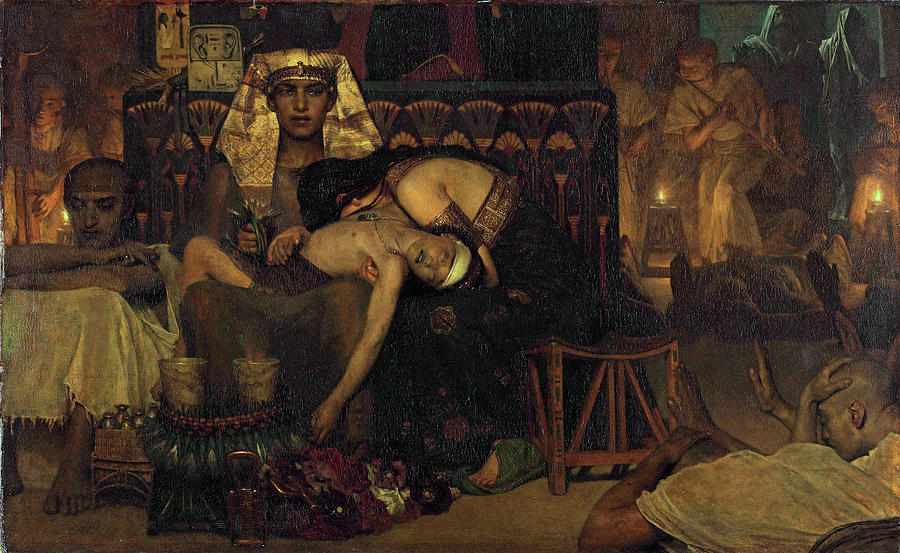
There were the ten plagues that God brought upon the Egyptian captors to show the Pharaoh that Yahweh was not just a local God in Canaan but that His power extended over all creation, even in the land of the Egyptian gods. In the process, the Pharaoh’s own heart continued to harden against Yahweh to the point where God would seal the Pharaoh’s fate and further harden the Pharaoh’s heart. In the end, it took the killing of the firstborn of Egyptian families, including the family of the Pharaoh to convince the Pharaoh to let people of Israel go. And even more, the people of Egypt also supplied the people of Israel with great wealth as they left. Some Egyptians even joined the people of Israel in their flight.

Then there was the miracles of the pillars of cloud and fire, which would continue until the nation entered the Promised Land, and the miracle which let Israel cross the Red Sea on dry land followed by the drowning of the Egyptian army. The pattern of punishing a nation that was used to discipline the people of Israel would be repeated throughout Biblical history.[1]

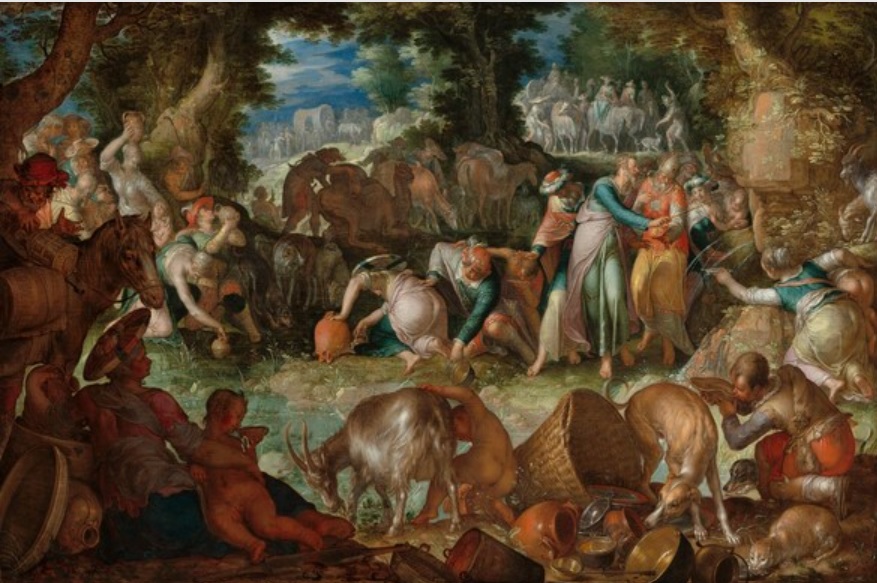
Once on their way, the Israelites experienced more miracles: a mountain enshrouded in a cloud where Yahweh talked with Moses and gave Moses the Commandments and other rules; manna and quail falling from the sky; springs of water in the desert. Despite seeing all those miracles, Israel wasn’t ready to have Yahweh lead them into the Promised Land to face the obstacles there, so God had them encamp in the wilderness for 40 years until all the adults who refused to trust Yahweh died. So many deaths must have happened, but scripture barely mentions them. Here we will see, not for the last time, that seeing miracles not only did not change hearts but that, even now, despite all the evidence that we see, that all our hearts seem predisposed to turn away from God.


[1] Ex: Egypt (Genesis 15:13-14), Babylon (Isaiah 13, 21,23),  and Assyria (Isaiah 10, 14; Zephaniah 2) were all used by God to discipline Israel

Observe

Read Exodus 8-10. In the narrative of the 10 plagues, several times we are told that Pharaoh hardened his heart, but then there came a time when Yahweh reinforced that trajectory and Yahweh hardened the Pharaoh’s heart. What kind of warning might that be?

Moses and the Exodus

Dancing in the Kingdom- Table of Contents

Dancing In the Kingdom – Part 1 – Shadows of the Kingdom – Chapter 1 – Prelude

Moses and the Exodus

[Bible references: Exodus 8-11; 14-15; Numbers 13-14; Deuteronomy 1]                                      

430 years would pass after the promise was given to Abraham, that his people, now named after his grandson, Israel, would walk out of Egypt. God told Abraham that his descendants would be enslaved in Egypt for four generations[1] before they return to the Promised Land at which time the “sin of the Amorites would be complete.”

At the scheduled time, God called Moses to lead the Israelites out of Egypt, and it would take 10 plagues, including the death of the firstborn, to convince the Pharaoh to let Israel go. Moses led the people out of Egypt by way of the “Red Sea.” The Commandments were given, and the building of the Tabernacle occurred, at Mt Sinai, location uncertain, before Israel would leave for the “Promised Land.”  When 12 spies were sent into the land, 10 of them focused on the difficulty of taking the land, inspiring fear among the people and causing God to consign Israel to wander in the wilderness for 40 years where all the adults 20 and over would die before Israel would finally go into the Promised Land.


[1] LeBrun, Ken. “The 400-Year Prophecy and the Fourth Generation”” Thoughtlines www.thoughtlines.org/2013/09/the-400-year-prophecy-and-fourth.html; BibleAsk “Did the Israelites spend 400 years in Egypt?” BibleAsk bibleask.org/did-the-israelites-spend-400-years-in-egypt/; Glatt-Gilad, David. “How Many Years Were the Israelites in Egypt?” TheTorah.com www.thetorah.com/article/how-many-years-were-the-israelites-in-egypt; Got Questions. “How many Israelites left Egypt in the exodus?” Got Questions www.gotquestions.org/Israelites-exodus.html; It would be 430 years from the time Abraham’s son Isaac was born but the time spent in Egypt would only be for four generations. Linked to that is the apparent size of the Israelite people leaving Egypt. Allowing for only 4 generations in slavery and, starting with a population of 70 people, something less than 10,000 people would have left Egypt with Moses. This helps to make sense of the Biblical events in the Promised Land and also of the archaeological evidence now available.

Reflect

Think of situations where you had to overcome fears in order to spiritually grow.

Observe

Read Genesis 15. Abram was living in the land of Canaanites which the Lord had promised to give to Abram’s descendants, but in a dream the Lord about how Abram’s descendants would first be enslaved and then return to the Promised Land, but only after “the sin of the Amorites reached its full measure. What does that say about how God works in the present day?

Exodus

Dancing in the Kingdom – Table of Contents

Part 1 – Shadows of the Kingdom, Chapter 6 – A Nation Emerges

Fullness of time

[Bible references: Genesis 15:16; Exodus 2-4; 7-11; Galatians 4:4; Ephesians 1:1-14]

The emerging story of the chosen people of God becoming a nation started slowly with Abraham, with one child of the promise, Isaac, who had two children, only one through whom the promise would come, Jacob. Finally, Jacob had thirteen children. But it would take time for that family to grow into a size that could be called a nation – and that took a couple hundred more years – in which time the “sin of the Amorites would reach their full measure.”

Although the Bible does not specifically mention it, there may have been other things that God was waiting to happen such as the development of the Israelite community and the consequent interaction of the Israelite community with the Egyptian community during the Israelite captivity. God allowed events to gradually unfold until “the fullness of time” came for God to orchestrate a dramatic release of the Israelite community. This event would serve as a foreshadowing of another event, the spiritual release of all peoples from slavery to sin.

So it was, that in the fullness of time, when the sin of the Amorites reached its full measure,[1] Yahweh called Moses to release the enslaved Israelites from Egypt to bring Israel back to the Promised Land.

Discipline, Miracles, and Death

[Bible references: Genesis 15:13-14. Exodus 7-11; 12:31-36; 13:17-22; 16; 17:1-7; 20; 32; Numbers 13-14]

Miracles abounded.

There were the ten plagues that God brought upon the Egyptian captors to show the Pharoah that Yahweh was not just a local God in Canaan but that His power extended over all creation, even in the land of the Egyptian gods. In the process, the Pharoah’s own heart continued to harden against Yahweh to the point where God would seal the Pharoah’s fate and further harden the Pharoah’s heart. In the end, it took the killing of the firstborn of Egyptian families, including the family of the Pharoah to not only convince the Pharaoh to let people of Israel go, but the people of Egypt also supplied the people of Israel with great wealth as they left, with some Egyptians joining the people of Israel in their flight.

Then there was the miracles of the pillars of cloud and fire, which would continue until the nation entered the Promised Land, and the miracle which let Israel cross the Red Sea on dry land followed by the drowning of the Egyptian army. The pattern of punishing a nation that was used to discipline the people of Israel would be repeated throughout Biblical history.[2]

Once on their way, the Israelites experienced more miracles, the mountain enshrouded in a cloud where Yahweh talked with Moses and delivered the Commandments and other rules, manna and quail falling from the sky, springs of water in the desert. Despite seeing all those miracles, Israel wasn’t ready to have Yahweh lead them into the Promised Land to face the obstacles there and so God had them encamp in the wilderness for 40 years until all the adults who refused to trust Yahweh died. So many deaths must have happened, but scripture barely mentions them. Here we will see, not for the last time, which seeing miracles not only did not change hearts but that all our hearts seem predisposed to turn away from God.


[1] cp. Galatians 4:4; Ephesians 1:10; see also White, James Emery. “Is God a Moral Monster? The Slaughter of the Canaanites” Church&Culture 22 Oct 2020 http://www.churchandculture.org/blog/2020/10/22/is-god-a-moral-monster

[2] Ex: Egypt (Genesis 15:13-14). Babylon (Isaiah 13, 21,23), Assyria (Isaiah 10, 14; Zephaniah 2)

Reflect

Often, when we are younger, we think we know everything. But most of the time, we discover over time that we need maturing – to grow in wisdom – a process that takes time and experience. What things have you learned through time and experience?

Observe

Read Galatians 4:4; Ephesians 1:3-14. We do not have God’s perspective. We don’t know why God waited so long after the time of Adam and Eve before Messiah came – the first time. We don’t know why God is waiting to return. Not with all the pain and suffering we see around us. What hints do these passages provide for us?

Reflect

We discover in the Exodus narrative, that being able to see and to live in the midst of miracles, was not sufficient to change the hearts of the people. What does that say about us?

Observe

Read Exodus 8-10. In the narrative of the 10 plagues, several times we are told that Pharoah hardened his heart, but then there came a time when Yahweh reinforced that trajectory and Yahweh hardened the Pharoah’s heart. What kind of warning might that be?