Effects of wealth and power

Dancing in the Kingdom- Table of Contents

Dancing In the Kingdom – Part 2 – The Kingdom Revealed– Chapter 10 – The Class of Apparitions

Effects of wealth and power

[Bible references: Mark 10:17-31; Luke 1:46-55]

In our current environment, we see a widening gap between the wealthy and the poor.[1] The Sadducees[2] were more identified with the rich and the politically powerful. The Pharisees were more identified with the lower and middle class and thus were more popular.


[1] Gregoire, Carolyn. “How Money Changes the Way You Think and Feel” Greater Good Magazine greatergood.berkeley.edu/article/item/how_money_changes_the_way_you_think_and_feel

[2] Riches, John. “The World of Jesus: First Century Judaism in Crisis” Cambridge University Press, 1990 (pp.59-60)

Reflect

In what ways can money affect how we think?

Observe

Read Luke 1:46-55. What does it mean that the rich are “sent away empty?”

Solomon

Dancing in the Kingdom- Table of Contents

Dancing In the Kingdom – Part 1 – Shadows of the Kingdom – Chapter 8– Kings and kingdoms

Solomon

[Bible references: Deuteronomy 17:14-17; 2 Samuel 7; 1 Kings 3:1-15; 8:27; 11:1-13; 1 Chronicles 22; 2 Chronicles 6]

Solomon had a great start. David gave him materials with which he could start building the temple. Solomon’s heart was humble enough to ask Yahweh for wisdom above all things, for which God blessed Solomon not only with great wisdom but with great wealth besides. The one weakness in all this provision was that Solomon, like other Oriental kings, accumulated wives and concubines. And because Solomon loved his wives who came from other cultures more than Yahweh, he not only tolerated their idol worship but took part in that idol worship as well. One thing that Solomon ignored despite his great wisdom, was the warning, written in Deuteronomy, for kings not to accumulate great wealth and many wives. One early sign of his failure may have occurred during his prayer of dedication for the new temple when, despite the use of wealth from donations or taxes and despite the slave labor and labor from other countries, he still said, “the temple I built.”

Reflect

By putting the love of his wives above the love of God, Solomon’s judgement became clouded. This is the problem wealth always brings us. How does this influence what you pray for?

Observe

Read 2 Chronicles 6:33. What could have been wrong about Solomon praying about the temple “I built?”

Courage and memory

Dancing in the Kingdom- Table of Contents

Dancing In the Kingdom – Part 1 – Shadows of the Kingdom – Chapter 7– Settlement

Courage and memory

[Bible references: Numbers 1; Deuteronomy 31:1-8; Joshua 1:1-9; Joshua 3-4; Joshua 5:13-14; Deuteronomy 6:10-12]

When the people of Israel first approached the Promised Land, twelve spies were sent out to scout out the land. Joshua and Caleb were the only two spies that did not bring back a report of discouragement. The discouragement brought by the other ten spies caused all the people of Israel to rebel against God as they forgot all the miracles of God’s provision in their flight from Egypt. This resulted in God subjecting the people of Israel to encamping in the wilderness for forty years. All the adults except for Joshua and Caleb, were subject to die in the wilderness before the people of Israel would enter the Promised Land.

It was therefore Joshua who was chosen to lead the people into the Promised Land at the end of the forty years. As before, the nation of Israel would encounter other people already living in the land, so Israel would need to fight for the land; it would not be easy. Before Joshua led his people into the land, God repeatedly said to Joshua, “Be strong and of good courage … do not be terrified or discouraged.” Then as a refresher, God also performed miracles as the people entered the land, causing the Jordan River to cease flowing to allow the people to cross on dry land – repeating the miracle of the parting of the sea as they fled Egypt.

Before Israel even left Egypt, the people were given gold and other wealth that was not theirs, the water from miraculously made springs and the manna that fell from the sky was not theirs. Now the homes and fields that God gave them to capture were the provision of God as well.

Reflect

Joshua was certainly encouraged when the nation crossed the Jordan River on dry land just as the nation crossed the Red Sea on dry land 40 years earlier. When trying to follow God, what encourages you?

Observe

Read Joshua 1:1-9. How might the instructions to Joshua help to give him courage?

Discipline, Miracles, and Death

Dancing in the Kingdom- Table of Contents

Dancing In the Kingdom – Part 1 – Shadows of the Kingdom – Chapter 6– A nation emerges

Discipline, Miracles, and Death

[Bible references: Genesis 15:13-14; Exodus 7-11; 12:31-36; 13:17-22; 16; 17:1-7; 20; 32; Numbers 13-14]

Miracles abounded.

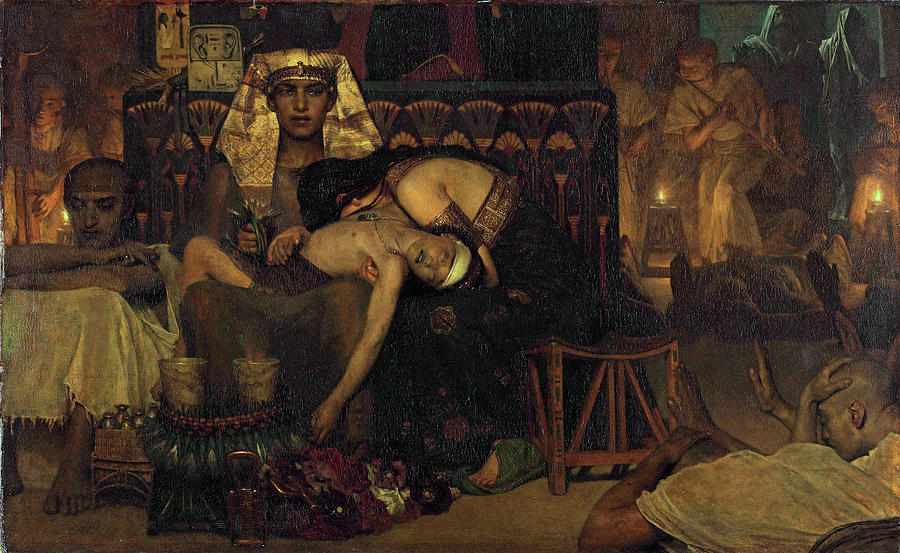
There were the ten plagues that God brought upon the Egyptian captors to show the Pharaoh that Yahweh was not just a local God in Canaan but that His power extended over all creation, even in the land of the Egyptian gods. In the process, the Pharaoh’s own heart continued to harden against Yahweh to the point where God would seal the Pharaoh’s fate and further harden the Pharaoh’s heart. In the end, it took the killing of the firstborn of Egyptian families, including the family of the Pharaoh to convince the Pharaoh to let people of Israel go. And even more, the people of Egypt also supplied the people of Israel with great wealth as they left. Some Egyptians even joined the people of Israel in their flight.

Then there was the miracles of the pillars of cloud and fire, which would continue until the nation entered the Promised Land, and the miracle which let Israel cross the Red Sea on dry land followed by the drowning of the Egyptian army. The pattern of punishing a nation that was used to discipline the people of Israel would be repeated throughout Biblical history.[1]

Once on their way, the Israelites experienced more miracles: a mountain enshrouded in a cloud where Yahweh talked with Moses and gave Moses the Commandments and other rules; manna and quail falling from the sky; springs of water in the desert. Despite seeing all those miracles, Israel wasn’t ready to have Yahweh lead them into the Promised Land to face the obstacles there, so God had them encamp in the wilderness for 40 years until all the adults who refused to trust Yahweh died. So many deaths must have happened, but scripture barely mentions them. Here we will see, not for the last time, that seeing miracles not only did not change hearts but that, even now, despite all the evidence that we see, that all our hearts seem predisposed to turn away from God.


[1] Ex: Egypt (Genesis 15:13-14), Babylon (Isaiah 13, 21,23),  and Assyria (Isaiah 10, 14; Zephaniah 2) were all used by God to discipline Israel

Observe

Read Exodus 8-10. In the narrative of the 10 plagues, several times we are told that Pharaoh hardened his heart, but then there came a time when Yahweh reinforced that trajectory and Yahweh hardened the Pharaoh’s heart. What kind of warning might that be?


Solomon

Dancing in the Kingdom – Table of contents

Part 1 – Shadows of the Kingdom, Chapter 8 – Kings and Kingdoms

[Bible references: Deuteronomy 17:14-17; 2 Samuel 7; 1 Kings 3:1-15; 8:27; 11:1-13; 1 Chronicles 22]

Solomon had a great start. David gave him materials with which he could start building the temple. Solomon’s heart was humble enough to ask Yahweh for wisdom above all things, for which God blessed Solomon not only with great wisdom but with great wealth besides. The one weakness in all this provision was that Solomon, like other Oriental kings, accumulated wives, and concubines. The problem was that Solomon loved his wives who came from other cultures more than Yahweh. Because of that, he not only tolerated their idol worship but took part in that idol worship as well. One thing that Solomon ignored despite his great wisdom, was the warning for kings not to accumulate great wealth and many wives. One early sign of his failure may have occurred during his prayer of dedication for the new temple when, despite the use of wealth from donations or taxes and despite the slave labor and labor from other countries, he still said, “the temple I built.”

Reflect

By putting the love of his wives above the love of God, Solomon’s judgement became clouded. This is the problem wealth always brings us. How does this influence what you pray for?

Observe

Read Deuteronomy 17:14-20; 1 Kings 3:4-15; 11:1-6. What did Solomon do or fail to do that caused him to fail?