Top-down strategy

Dancing in the Kingdom- Table of Contents

Dancing In the Kingdom – Part 3 – Dancing in the Kingdom– Chapter 18 – Entering the Dance

Top-down strategy

[Bible references: Numbers 22-24; Deuteronomy 8; Psalm 27; Nehemiah 1-2; 1 Timothy 4:3; stories of King David and Solomon (2 Samuel; 1 Kings 1-11)]

The top-down strategy tries to reach individuals by affecting the culture. Even if people don’t respond to the cultural change, God can be glorified by the display of his kingdom values in society.

James Hunter examined how culture changes and saw the mixed results of the bottom-up approach. He saw that some small groups of people (e.g., gays, Jews) have had a relatively large impact on the culture while larger groups (e.g., evangelicals) are losing their impact on the culture. Hunter discovered that cultures usually are changed from the top-down, most influenced by elites who are somewhat outside the center of influence but having a network of connections to other elites and who can withstand the resistance from the centers of influence.

Culture is about how societies define reality—what is good, bad, right, wrong, real, unreal, important, unimportant, and so on. This capacity is not evenly distributed in a society but is concentrated in certain institutions and among certain leadership groups and that cultural change is most enduring when it penetrates the structure of our imagination, frameworks of knowledge and discussion, the perception of everyday reality.[1]

Very few Christians are in a position to exercise a top-down strategy. The few people who do have such influence are typically subject to the temptations that come with such power, and all too often succumb to sin and become disqualified or become abusive in the exercise of such power.


[1] Hunter, James Davison. To Change the World: The Irony, Tragedy, and Possibility of Christianity in the Late Modern World. Oxford University Press 2010

Observe

Read Nehemiah 1-2. What factors were involved in Nehemiah’s influence on King Artaxerxes?

Occupy Till I Come

Dancing in the Kingdom- Table of Contents

Dancing In the Kingdom – Part 3 – Dancing in the Kingdom– Chapter 18 – Entering the Dance

Occupy Till I Come

[Bible references: Jeremiah 29; Luke 19:11-27]

On His way to Jerusalem the last time before His triumphal entry, Jesus knew the kind of expectations the people had about how the Kingdom of God would appear. To prepare them for the long wait between His resurrection and His return to fully restore the Kingdom of God, He told them a parable about a nobleman who would, before going into a far country, give his servants some money with instructions to engage in business while he was gone. The parable ended with rewards given to those who made profits and penalties for those who did not.

This then is our instruction, to make use of what God has given each of us to ‘engage in business,’ (KJV “Occupy Till I Come”) that is, we are called to help advance the kingdom until He returns.

When Jesus came two thousand years ago, he announced the beginning of a new age, “The Kingdom is here … The Kingdom of heaven is near … The Kingdom of God has come.” As disciples of Jesus we can say, “The Kingdom of God is within us.” Then, with our hearts changed by Jesus, we are charged to go and make disciples, to do justly, love mercy and to walk humbly with our God.

As we then join Jesus in bringing His kingdom into the world, we need to remember our humble estate …We cannot even change our own hearts, never mind the hearts of others. Certainly, we cannot change our culture. It is up to our Savior to change our hearts, and even more so to change the culture around us.

Jesus and his disciples lived more as servants or slaves within the Roman Empire. They had no political influence. But as the disciples lived transformed lives, living as well as preaching the Gospel, and showed the power of sacrificial love, their Spirit empowered lives opened the way for the Spirit of God to change the hearts of many throughout the Roman Empire, eventually moving the heart of a Roman Emperor, Constantine.

History has shown the mixed results of combining the power of state and church, but the teachings of Jesus have penetrated even our secular postmodern culture in ways that are not widely recognized as such. Despite the church’s own history of abusing and misusing power, Jesus’ concepts of using power to serve others, even one’s enemies still managed to occasionally penetrate the halls of power – in imperfect form to be sure, just as the ideas expressed in the Enlightenment imperfectly expressed ideas from Christianity.

“Reparations let’s say for slavery or in New Zealand reparations to the Māori or in Australia reparations to the Aboriginal even for native indigenous American Indians. And this language is actually not a historic language. This is a language since Jesus. See, because Genghis Khan never worried about reparations. He never felt he had any moral responsibility to somehow make it right for all the women he raped and all the men he killed and all the families destroyed and all the villages he burned down. We have Caesar or Alexander, they never really had remorse for anything they conquered or anything they destroyed or any people whose lives they overthrew. This concept of justice of using power well is a concept that only emerges because Jesus lived 2,000 years ago. He revolutionized the entire understanding of power. The idea that a government should actually care about its citizens is really, it’s not a historic human concept. This concept is infused by the ethics that Jesus brought to the understanding of power that it says when Jesus had all power and all authority, he ties a towel around his waist and he washes his disciples’ feet. This is a reinvention of power. … if you go back to World War II … when you look at the American response to conquering Germany and conquering Japan, and how within a decade or two, both of them became two of the greatest economies in the world … You get to see what happens when you’re conquered from a Christian mindset world with West Germany. You realize that Japan becomes one of our greatest allies. That doesn’t happen historically. You do not conquer a nation and then rebuild it to feel a moral obligation to re-establish that country better than it was before. Even what we’ve done historically has been informed by a Christian worldview. I’m not saying that England or United States or any Western nation is a Christian nation. What I’m saying is the conversations we’re having are informed by Jesus’s revolutionary, brilliant genius thoughts about power.” [1]

There are debates on the ideas expressed above, often fraught with ideas of self-interest[2] and ideology, about how to provide for populations that have experienced oppression or how to manage the after-effects of war. But these ideas and other expressions of compassion and justice – like hospitals, orphanages, the concept of “war crimes,” or the many ways to carry out “social justice” (that is, God’s expression of compassion and justice) – are ideas not found in history until God introduced them first to his chosen people, Israel, and then through the person of Jesus to His Body. As God’s image-bearers

Unfortunately. the church often abused its privilege, often succumbing to the worldly temptations of power and ignoring its mandate to steward God’s world with compassion and justice. But even though the church has stumbled, it has still managed to live out, admittedly imperfectly, its mandate of compassion and justice. And the world has noticed. Bu interestingly, many have adopted those same values even though they choose to ignore the source of our mandate.


[1] Mcmanus, Erwin. Interview with Carey Nieuwhof, CNLP 452: Erwin McManus on the Future of the Church, How to do Evangelism More Effectively, Authenticity and Reflections on Being Labeled a Heretic Carey Nieuwhof careynieuwhof.com/episode452

[2] Niebuhr, Reinhold.  “Editorial Notes” republished as Christianity and Crisis Magazine providencemag.com/2022/06/christian-realism-enlightened-self-interest-marshall-plan-emerges-reinhold-niebuhr/ 17 Jun 2022

Reflect

In what ways have you lived out a sacrificial love?

Observe

Read Jeremiah 29; Luke 19:11-27. What do we need to do to live transformed lives, living and preaching the Gospel, and show the power of sacrificial love with Spirit empowered lives?

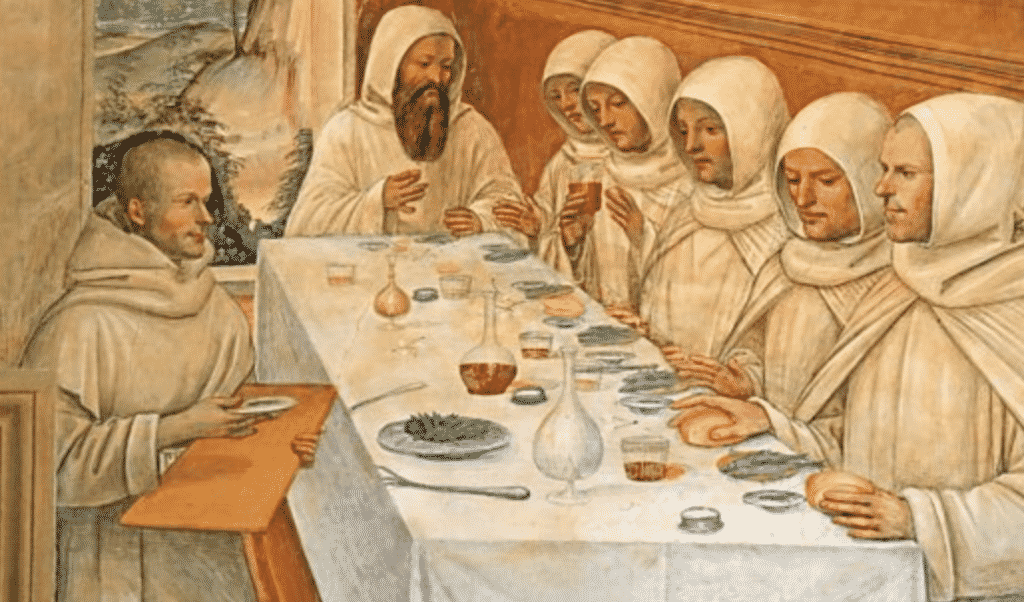
Discipline of Fasting

Dancing in the Kingdom- Table of Contents

Dancing In the Kingdom – Part 3 – Dancing in the Kingdom– Chapter 15 – Reforming our Souls

Discipline of Fasting

[Bible references: Isaiah 58:1-14; Ezra 8:21-23; Matthew 6:16-18]

By the help of the merciful Lord our God, the temptations of the world, the snares of the Devil, the suffering of the world, the enticement of the flesh, the surging waves of troubled times, and all corporal and spiritual adversities are to be overcome by almsgiving, fasting, and prayer.[1]

“More than any other Discipline fasting reveals the things that control us.” [2]

Fasting breaks up habits to let us see our lives in new ways or to enable us to pray at new times or in new ways. Because we are stopping something for a finite period of time, there’s an unfamiliarity and discomfort to it that can be very instructive, open up time for prayer, and draw us closer to God.”[3]

“In every culture and religion in history, fasting has been an instinctive and essential language in our communication with the Divine.”[4]

The pursuit of God can be described as in Psalm 37, to trust in, to delight in, to commit to, to wait on, and to be silent before the Lord; these are words of “giving up” of “going without” whatever the world offers and instead resting in God. The discipline of fasting then looks like learning to go without while learning to rest in, to fight through our appetites so that we can remain focused on the act of pursuing God and loving others, to push through our hunger pains so that we can discover we’re just fine on the other side of them, to look to God, to talk to him, to open ourselves to him in confession, to not so much as give up anything, but to commit to hearing the voice of God in our lives. The goal of fasting is to pursue God, to turn our hearts and our loves towards God and neighbor.

There are many reasons Christians are led by the Holy Spirit to the spiritual discipline of fasting, a few of them are: to strengthen one’s prayer life, to seek direction for one’s life, to express grief and loss, to seek deliverance and protection for life, to express repentance and reconciliation with God. to humble oneself, to express concern for the work of God, to minister to the needs of others, to overcome temptation and rededicate oneself to God, to express love, devotion, and worship of God, to establish rhythms between absence and abundance.

Simplicity and Gratitude can be precursors to fasting. Once we have determined how to order our lives then we are better equipped to identify those things that stand in our way and in the lives of those around us, not only the good vs. bad things, but the good things that detract us from the best things. The Gratitude for God and His provision can set our attitude in preparation for fasting.


[1] Sister Mary Sarah Muldowney The Fathers of the Church: A New Translation Writings of Saint Augustine Vol 17 Fathers of the Church 1959 Sermon 207 (p. 89)

[2] Foster, Richard J. Celebration of Discipline.  Harper & Row Publishers ©1978 (p. 48)

[3] Baab, Lynne M. “The Surprise of Fasting” Lynnebaab.com www.lynnebaab.com/blog/the-surprise-of-fasting

[4] Ryan, Thomas. The Sacred Art of Fasting: Preparing to Practice Skylight Paths 2005

Observe

Read Isaiah 58:1-14; Ezra 8:21-23; Matthew 6:16-18. The benefit of fasting does not come just from deprivation. What should accompany fasting?

The Discipline of Simplicity/Stewardship

Dancing in the Kingdom- Table of Contents

Dancing In the Kingdom – Part 3 – Dancing in the Kingdom– Chapter 15 – Reforming our Souls

Discipline of Simplicity/Stewardship

[Bible references: Genesis 1:28; Psalm 33:5; Micah 6:8; Hosea 6:6; Matthew 25:35-40; Luke 16:13; John 13:34; 1 Corinthians 3:9; 4:2; 9:24-27; 2 Corinthians 1:12; 9:6-8; Galatians 6:6; Philippians 4: 4,8-13; 1 Timothy 5:8; 6:6-10, 17-19; Hebrews 3:5; 12:1-3; James 1:17; 1 Peter 4:10; 1 John 3:17]

The central point for the Discipline of simplicity is to seek the kingdom of God and the righteousness of His kingdom first – and then everything necessary will come in its proper order.[1]

There’s no point in simplifying your life if you are steering toward an end point that doesn’t matter to begin with.[2]

My schedule is far less about what I want to get done and far more about who I want to become.[3]

“We do not mean . . . that simplicity betrays itself in no visible signs, has not its own habits, its distinguishing tastes and ways; but this outward show, which may now and then be counterfeited, must not be confounded with its essence and its deep and wholly inward source. Simplicity is a state of mind. It dwells in the main intention of our lives. A man is simple when his chief care is the wish to be what he ought to be . . . And this is neither so easy nor so impossible as one might think. At bottom, it consists in putting our acts and aspirations in accordance with the law of our being, and consequently with the Eternal Intention which willed that we should be at all.”[4]

“If you want to have a spiritual life you must unify your life. A life is either all spiritual or not spiritual at all. No man can serve two masters. Your life is shaped by the end you live for.”[5]

It is not enough to simply pare down one’s possessions or schedule, because they can become their own ends or become undone because we have not dealt with our habit of filling our time or possessions with something else. To successfully practice simplicity, we must have a clear center, a clear purpose. It is from that purpose that we can decide how to spend our time and resources so that our decisions can be based on how they fit our priorities. An indicator of whether you achieved your purpose can be if you feel fragmented and restless. Without a clear purpose, short-term distractions and pleasures can hijack our progress towards our long-term goals. Therefore, the goal of simplicity is to gain integrity of spirit, reduce temptations, distractions, and the need/desire for things so that we can better serve God.

Setting our priorities

To reach these goals, we must do less of some things but more of others. True simplicity is doing less of what matters least, and more of what matters most. You don’t just empty your life of the bad, you fill it with the good. Having a purpose allows you to discern whether a particular area of life should be constricted or expanded; purpose produces priorities. Once our priorities are set then we can make meaningful decisions about our activities. We may need to declutter our lives: we may have too many things in our home, or too many activities in our lives. What detracts our attention from our priorities? What things should we say “no” to? What habits do we have that move us from our goals?

The discipline of simplicity includes determining who we want to be and setting goals to achieve that, then setting our priorities, and then arranging our use of time, money, our spiritual gifts, and our relationships to meet those priorities. Simplicity is the essence of stewardship.

Stewarding our resources

Once we have centered ourselves and established our priorities then we can focus on how to manage the limited resources that we must accomplish the responsibilities God has given us. It is easy to get overwhelmed by all the needs we see around us in the world, it seems that there are not enough resources to meet the needs of the world. That is why we need to figure out what responsibilities God has to us individually. Then we need to trust God to provide what we need to for those responsibilities (Philippians 4:19 And my God will supply every need of yours according to his riches in glory in Christ Jesus.)

If we have set our priorities properly, then our priorities should be aligned with God’s priorities and desires. In Gen 1:28, we can see that stewardship is the first assignment God gave humans, so part of what we need to consider is what individual things that we, as individuals, have been given stewardship responsibilities over. We also need to consider God’s desires for how we carry out those responsibilities. We know that His desires are for us to love God and neighbor, act with justice and mercy, have a generous and overflowing love towards others (including our families, our fellow believers, and those in need) and to take care of the world he has provided for us.

As His stewards, we need to consider how to use the blessings God had given us, to serve in the way he would have us do so that we bring glory to Him in all that we do. We are not just a person with a vocation, or just a member of a family, or just a church member, etc. We are a who not a what. We are people created by God to be in relation with him and with others, and with multiple obligations.


[1] Foster, Richard J. Celebration of Discipline Harper & Row Publishers ©1978 (p. 75)

[2] Hybels, Bill. Simplify: Ten Practices to Unclutter Your Soul.  Tyndale Momentum 2015

[3] Hybels, Bill. Simplify: Ten Practices to Unclutter Your Soul. Tyndale Momentum 2015

[4] Wagner, Charles. The Simple Life. McClure, Phillips & Co. 1901

[5] Merton, Thomas. Thoughts in Solitude.  Farrar, Straus, and Giroux 1999

Reflect

What habits in your life move you away from pursuing God?

Observe

Read 1 Corinthians 9:24-27. How would following the advice in this passage help us to be better stewards?