Principles

Dancing in the Kingdom- Table of Contents

Dancing In the Kingdom – Part 3 – Dancing in the Kingdom– Chapter 18 – Entering the Dance

Principles

[Bible references: Genesis 1; Psalm 19:1-4; Isaiah 28:23-29; Romans 1:18-20; 2:14-15; 13:1-2; 1 Peter 2:13]

We cannot establish the kingdom of God nor overcome the powers of evil in our own power. While Jesus has overcome the powers of the world, we do not know when he will return to finish the deed to fully establish his kingdom and fully rid the world of the presence of evil. But we can continue to work on the mandates he gave us at the beginning and rephrased at the Great Commission to make disciples of all nations, teaching them to obey all that I have commanded you, which extends from our original directives to be fruitful and multiply and fill the earth, and to subdue it and rule over all the creatures.

From the beginning of the church, we can see that while some people were sent out with the express purpose of spreading the gospel, most people stayed within whatever vocation they had, living in their own communities, sharing their resources, and supporting one another. Those that stayed in their vocations, did not change their vocations although they may have changed the way they pursued their vocations.

Albert Wolters suggests several principles that can help guide the way in which we pursue our vocations:[1]

  • The universe that God created was good.
  • The structures/institutions created by people should reflect God’s character and his wisdom as revealed through creation and his word.
  • The structures/institutions created by people are vested with God’s authority.
  • The universe reveals God’s glory.
  • Wisdom is “ethical conformity to God’s creation.”
  • The will of God for our life can be known through his creation, our conscience, His word, spiritual discernment.
  • Since God’s initial creative activity in forming the universe, God has been creatively developing the universe either directly through his own work or indirectly through his people. Part of that development includes the development of societal and cultural institutions.
  • Even without the fall, people would still be expected to develop the garden and other aspects of civilization as part of our role in stewarding what God has given us
  • When Christ returns, He will restore the earth.[2]

Whether we are directly communicating the gospel in our vocation or not, we may hold the narrative of the gospel as public truth to be shared.[3] The first communicators of the gospel were eyewitnesses who could say, “That which we have seen and heard … we declare to you.” As the church, we are entrusted with the responsibility of sharing that same truth, not in a forceful way but in the way of Jesus and his apostles who affirmed what they knew and invited others to respond in dialog.


[1] Wolters, Albert M. Creation Regained: Biblical Basics for a Reformational Worldview, William B. Eerdmans Publishing 1985, 2005. eBook Chapter 2

[2] Wolters, Albert M. “Worldview and Textual Criticism in 2 Peter 3:10” Westminster Theological Journal 49 (1987) 405-413 allofliferedeemed.co.uk/Wolters/AMW2Peter3.pdf

[3] Newbigin, Leslie. . “An Introduction to the Theology of Religions: Biblical, Historical & Contemporary Perspectives” Gospel As Public Truth, Intervarsity Press 2003

Observe

Read Psalm 19:1-4. How can our work reflect the glory of God?

Ministry of Reconciliation

Dancing in the Kingdom- Table of Contents

Dancing In the Kingdom – Part 3 – Dancing in the Kingdom– Chapter 16 – Fixing our eyes

Ministry of Reconciliation

[Bible references: Matthew 10; Mark 1:40-45; 5:1-20; Acts 2:42-47; 3:20-26; 17:16-34; Romans 8:18-39; 12; 2 Corinthians 5:18-20; Ephesians 4:1-16; 6:18-20; Philippians 3:25-21; 1 Thessalonians 5:11-28; John 13:34-35; Revelation 21:1-2]

When Jesus came the first time, people were looking for a Messiah to overthrow the Roman government, but Jesus’ message was to repent and be baptized for the forgiveness of sin. That is the message we need to respond to and the message we need to bring to others. The gospel is the good news of forgiveness that we can receive if we respond by repentance. The gospel is the good news of God’s Kingdom come to earth to transform us as well as all of creation so that heaven and earth can be fully joined as God had intended from the beginning.

Once we have become transformed, we are able to invite others to repent and accept the grace of God in transforming their lives as well and then join us in the work of discipleship and restoring the world beginning with the call to reconciliation, that is to engage in the work of evangelism. Some people are better equipped to do evangelism than others, but that does not leave the rest of us with no part in the work.

Evangelism, like other aspects in the life of the church, is a work of the body of the church. It is also a work of the Spirit. Evangelism involves persuading, proclaiming, and teaching the gospel and is a call for others to come to Christ, His Body, and to discipleship. We do not convert people to Christ, which is the work of the Spirit; but we are called to join Spirit in His work in the world. The church is called to be the church and display the gospel at work; the gospel which calls us to be transformed, calls us unity with others in the body of Christ and calls us to join Christ’s work of reconciliation and restoration.

That means that we all have a part to play in the body of Christ, to help build one another up so that we may all become mature members of the body of Christ, displaying the love of the transcendent God towards each other. If we are each transformed by Christ, then we should be able to “give a reason for the hope” we have. A hope that we can hold onto even as we live amid a church that is transformed and yet broken by sin.

The call to discipleship is a call to reconcile all the parts of our lives to the Lordship of Christ. This includes not only all our relationships, particularly with those in the body of Christ, but all of our stewardship responsibilities for all of creation. The evangel, the good news, is not just that our personal relationship with God can be restored, but that all of creation will be restored.

It is for the sake of love that God suffered for us that he might redeem us. The greatest commandments that He gave to his image-bearers, were about love: loving God and loving our neighbor. The good news is about that love – a love that reaches out to us and through us amidst all our brokenness. a love expressed in word and deed.

The remaining parts of this book are about the breadth of expressing that love. Certainly, if we love someone who does has not heard the gospel, it would be loving to share that news with them. And if we are truly loving that other, the words of that news should be happening amid all we do to show that love in our deeds as well as in our words. It may be that the deeds of love will help open-up hearts to hear about that love; a love that reflects God’s prodigal love for each of us, a love that desires to take care of all that God has given us – God’s creation and God’s creatures, God’s image-bearers, and the gifts he has given each one of us. God’s extravagant love should be reflected in the way we love God with all our heart, mind, soul and strength and the way we love our neighbor as ourselves.

God’s image-bearers, the ones who call him Lord and Father, are God’s chosen vehicles to proclaim and demonstrate his love as his ambassadors. God’s proclamation and demonstration of love is not constrained by our different personalities and circumstances, for our limitations are not his limitations but rather our weaknesses are His strength, and our little demonstrations of love are the reflections of His powerful love to us and to the world.

Within ourselves, we may be small and insignificant, but we are not just isolated individuals. We are part of Christ’s body, physical manifestations of Christ

  • Past, present, and future
  • Around the world
  • In all our different ways with whatever resources Christ has given us
  • In whatever place and time he chose for us, with whatever strengths and weaknesses we have

We are the creatures whom God has empowered to rule the earth as his gardener-priests. That empowerment has not changed even though we are broken people living in a broken world. The charge he had given us still remains. Therefore, within our brokenness we need to take whatever Christ has given us and proclaim and demonstrate God’s unsurpassed, overwhelming love to the world, a love that not only wants to reconcile all people but literally all the world to Himself … to reunite heaven and earth.

 The challenge we have as God’s ambassadors, is for us to be proclaiming and living the gospel amid the cultures that are sometimes indifferent and sometimes hostile. Therefore, in our tasks, if we are to be effective ambassadors then we must be, “wise as serpents and innocent as doves,” as we try to discern how to effectively persuade others to follow Jesus. Of course, keeping in mind that it is not we who ultimately persuade others to follow Christ, rather that is the work of the Holy Spirit. But how can we participate with the Holy Spirit?

Different people are persuaded by different means. Sometimes, people are persuaded by logic as we could see in the life of the apostle Paul. Sometimes people are persuaded by personal relationships and are drawn by a personality that looks attractive as we could see in the lives of people who were drawn to Jesus. Sometimes people are persuaded by seeing something different in the life another.

With that in mind, then how do we put ourselves in the place where we are most effective? The answer is: the church. The church is the body of Christ whose members are called to build up one another and to demonstrate a love for one another such that others will recognize us as belonging to Christ. When the church gathers to worship and express it’s love to God, that same desire should lead to expressions of love to one another which pour out into love of neighbor as the church scatters during the week. That desire to love should then draw us to desire to learn how to love in the best way possible. Love leads to love. The love of God leads us to love, love of one another and a love of the world that God loves.

Exactly how that love will flow depends on the particulars of each individual in their particular circumstances. We are all born with different personalities and different bodies, and are equipped differently according to the Holy Spirit, and find ourselves in different cultures within the church and within our communities. Some individuals will find themselves in a very individual ministry and some will be called to a broader ministry to the world. Also, different church communities will even find different approaches in how they interact with the cultures around them.[1]


[1] Finn, Nathan A, Whitfield, Keith S. “Spirituality for the Sent” Chapter 5 Missional Spirituality and Cultural Engagement IVP Academic 2017

Reflect

Discipleship is a process of “being transformed” (2 Corinthians 3:18). Ultimately it is something that happens to us – but it is something we can co-operate with by engaging is spiritual disciplines. What kinds of changes need to happen in our lives that would make it natural to invite someone else into discipleship?

Observe

Read Romans 12. How do we help those around us to be reconciled to each other and to God?

Discovering how we are formed

Dancing in the Kingdom- Table of Contents

Dancing In the Kingdom – Part 3 – Dancing in the Kingdom– Chapter 15 – Reforming our Souls

Discovering how we are formed – for each other

[Bible references: Romans 12, 1 Corinthians 12, 13:1-3; Ephesians 3:6-8; Ephesians 4, 1 Peter 4:7-10]

Once we have centered ourselves on Christ and have learned to submit to God and to one another, we are in a good place to evaluate the unique ways in which God has formed us.[1] One of the more holistic tools developed by Saddleback Church provides an evaluation of several aspects of how we are formed: the spiritual gifts, the desires, the abilities, the personality, and the experience God gives us.

The reality is that much is life is filled with, “I just gotta do what I gotta do.” Parenting is like that, housekeeping is like that, etc. Diapers need to be changed, the house needs to be cleaned, the bills must be paid, grocery shopping needs to be done, etc. Much of life is filled with responsibilities that need to be done regardless of what capacity we think we may have. There may be no luxury of just doing “what I think I am best at.”

But where it is possible, when we gather in a sharing community, there is the opportunity to allocate different tasks to those people who are best equipped for it. God has intended that we be in such communities, so described in scripture as “the body of Christ,” where different people serve in different functions. At such times, there are opportunities for us to discover in what unique ways God has designed us so that we may serve each other in the best way possible.

Scripture reveals that all who are in Christ are indwelt by the Holy Spirit, and that the Spirit has given us various gifts that we can use to help build up other members of the body of Christ. A few Bible passages give us an idea of the kinds of gifts of some of these gifts, but the lists are not exhaustive: exhortation, giving. leadership, mercy, prophecy, service, teaching, administration, apostle, discernment, faith, healing, helps, knowledge, miracles, prophecy, teaching, tongues, tongues, interpretation, wisdom, evangelism, pastor, teaching, celibacy, hospitality, missionary, voluntary poverty.

One way to discover what gifts we may have, is by serving in our community. As we serve in various ways, we may discover that God has particularly blessed our service in various ways. Sometimes others may point out those abilities or gifts to us. Another way to discover our gifts is to read about those gifts and certain gifts may become apparent to us that way. Another way is to take a questionnaire and the results of that questionnaire may reveal certain gifts to us. It may be helpful to take such a questionnaire with someone else because they may have different insights into the questions.

As we mature and encounter different life experiences, we may discover that different gifts emerge or that God has provided differently for us in our different circumstances. God knows us and our circumstances and may provide differently as we change, and our circumstances change.


[1] Links to various assessment tools: Spiritual gifts: Carver, Jeff. “Spiritual Gifts Test – Adult Version”Spiritual Gifts Test spiritualgiftstest.com/spiritual-gifts-test-adult-version ; Granger Community Church. “Spiritual Gifts Test” Granger Community Church spiritualgiftstest.com/spiritual-gifts-test-landing; Ministry Tools Resource Center. “Take Online Spiritual Gifts Test Inventory Assessment” Ministry Tools Resource Center mintools.com/spiritual-gifts-test.htm; Rock Church, “Gifts Test” Rock Church giftstest.com. Personality test sites: Hayes, Robert. “The Best Free Enneagram Tests You Can Take Online” Tech Junkie www.techjunkie.com/best-free-enneagram-tests; Truity Psychometrics. “The Enneagram Personality Test” Truity Psychometrics www.truity.com/test/enneagram-personality-test; Barkers, Ewald. “Eclectic Energies Enneagram Tests (Free) Eclectic Energies www.eclecticenergies.com/enneagram/test; Shape test: Hill, Kevin M. “S.H.A.P.E. Test” Free Shape Test www.freeshapetest.com; Saddleback Church “You Were SHAPED for Serving God” Saddleback Church www.ministryideas.com/doc/shape_discovery_tool.pdf

The Discipline of Liturgy

Dancing in the Kingdom- Table of Contents

Dancing In the Kingdom – Part 3 – Dancing in the Kingdom– Chapter 15 – Reforming our Souls

Discipline of Liturgy

[Bible references: Exodus 12:1-28; Psalm 39:4-7; 90:9-12; Ecclesiastes 12:1]

I don’t know why so many Christian groups think they need to reinvent the wheel when it comes to “discipleship programs.” This time-tested annual pattern for the life of individual believers and the Church together that is focused on Christ, organized around the Gospel, and grounded in God’s grace, is sheer genius. It is simple enough for a child. It offers enough opportunities for creativity and flexibility that it need never grow old. Each year offers a wonderful template for learning to walk with Christ more deeply in the Gospel which brings us faith, hope, and love.[1]

Teaching and learning that are attuned to the spiritual power of habit recognize the power of little things, the formative power of micro practices. Little things repeated over time in community have a formative effect.[2]

In one sense, a liturgy is a ritual, or a script, used by a congregation to format its worship services. In that regard, all congregations are liturgical no matter how formal or informal. In another sense, a liturgy is a “work of the people” which emphasizes the participation of the congregation during the worship service. The goal of the liturgy is to place the whole of our lives, including our schedules, our possessions, and our efforts, in submission to Christ.

That means that we should consider not just what we do on Sundays in the corporate setting of the church, but as individuals, we have our own individual liturgies through the week as well. We should pay attention to the ‘work’ we do as individuals as we live our lives, the ways we worship as we go about our daily lives, the tasks we do and the habits we practice. How do we, in fact, place the whole of our lives, our schedules, our possessions and our efforts, in submission to Christ? That is the point of our liturgy and all the other disciplines we incorporate into our lives.

The liturgical year

The liturgical year is an ancient, time-tested method of discipleship. In addition to the weekly Lord’s Day reminder/celebration of the resurrection of Christ, the liturgical calendar provides a way of refocusing our attention on the spiritual aspects of life. The focus on the Christian story and celebrations provides an opportunity to be shaped by our counter-cultural message rather than the so-called secular message and celebrations. The liturgy of Word and Sacrament has varied through different times and places, but the ancient liturgical calendar provides one way for us to engage as in a concert in a practice that unites us to the one holy, catholic church, past, present, and future.

Sacred Time

Interestingly, the Jews have a liturgical calendar that is different than their “secular” calendar, in the same way that we keep a liturgical calendar that is different from the secular calendar. The calendar of the Canaanite culture of the Old Testament started at the beginning of the wet season which began in the fall. That was the time when seeds would be planted. The Biblical calendar starts in the spring at the beginning of the harvesting season. While the Canaanite culture begins the year with the work that they do to reap a harvest later, the Israelite culture begins their year harvesting the crops (that God provided) and from which they would have seeds to plant later. The difference highlights whose work has preeminence. The “Gentile” calendars are similar. The secular year begins in January as the date when the Roman consuls would begin their terms of office whereas, the Christian liturgical year builds our focus around the life and ministry of Jesus.

There is an intriguing way in which the Jewish culture uses its calendar compared to how we now use it. Whereas, in our present culture we, with a few exceptions, remember historical events according to the actual historical dates that event occurred set. There are exceptions, like Martin Luther King’s birthday which is set to be always celebrated on a Monday, regardless of his actual birthdate. The long weekend has preeminence over the actual birthdate.

This shift of preeminence helps explain what seems to be certain discrepancies in how things are recorded in the Bible. These apparent discrepancies include: the timing of travel to Sinai from Egypt, the construction of the tabernacle, the timing of events in Deuteronomy, even the timing of events in Holy Week. These apparent discrepancies can be explained when we look at them within the biblical framework.

The Bible’s liturgical calendar always celebrates historic events in the same way we handle our exceptions. In the Biblical framework, it is more important to remember events according to the liturgical calendar rather than the actual historic chronology, to frame events in a spiritual context rather than in an historical context.

This includes the events of creation. The modern debates concerning whether creation happened in six 24-hour earth days or six longer eras – or whatever – can be put aside as only scientific concern but not necessary as biblical concerns. The purpose of the liturgical calendar is to help us place everything, both in time and space, both physical and spiritual, in God’s domain. This includes us and the little piece of time and space that we occupy. Therefore, all things, including all our time, our possessions, and our efforts, are under the domain of God. The discipline of the liturgy then provides the larger context in which we can pursue all our spiritual disciplines


[1] Spencer, “Chaplain” Michael. Internet Monk Archives imonk.blog/2010/11/15/church-year-spirituality

[2] Smith, James K.A. “You Are What You Love: The Spiritual Power of Habit.” Brazos Press 2016. eBook

Reflect

The sacred calendar reminds us that all time is sacred. In which parts of your day are you most likely to need reminding of that sacredness?

Observe

Read Exodus 12:1-28. Yahweh is establishing a new calendar for the Israelite. What is the purpose of creating a new calendar?

Mystery of worship

Dancing in the Kingdom- Table of Contents

Dancing In the Kingdom – Part 2 – The Kingdom Revealed – Chapter 13 – Distinctives within the body of Christ

Mystery of worship

[Bible references: Deuteronomy 4:15-24; 12:1-32; Romans 12:1-21; 1 Corinthians 14:1-40; 1 Timothy 2:1-15; Hebrews 12:1-39]

What are proper ways of worship?

In Hebrew, the word for worship means “to bow down, to prostrate oneself” or to “lay flat on the ground.”  In Greek, the words for worship mean to “kiss the hand, to fall on the knees,” or to “prostrate oneself” “to pay homage” or “to render religious honor.”  These things can be done in the context of a “worship service” on a Sunday or in any activities throughout the week. Activities in work or play can be done in an attitude of worship.

There are some differences in belief about the role of arts in worship: Is music or artwork or dancing permissible, or what kind of music or artwork or dancing is permissible? Part of the differences are due to whether activities are permissive unless specified otherwise in the Bible or activities are not allowed unless specified in the Bible.[1] Some of those differences emerged in the way some of the Protestants perceived abuses of the arts in the Roman Catholic denomination. Despite these disagreements, there are some hymns that have been widely accepted across many denominations. In a similar fashion, many congregations/denominations have adopted the contemporary style music, although in some congregations that style of music has created divisions. Music can be important as an alternate means of expressing theology.

Icons are a specialized type of artwork that represent sacred objects or honored saints in the church. The icons were used as a visual method of teaching and were particularly important when literacy rates were low. Icons are meant to take the place of the physical presence of admired saints, and because of this, Roman Catholic and Orthodox congregants will bow to or kiss the icons as if they were bowing to or kissing the actual revered saints. This is not meant to worship the icons but to show respect.[2]

Prayer can be done formally, informally, individually, or corporately. There are different viewpoints about whether praying to the saints – asking them to pray for us – is acceptable. There are also differences about whether mystical experiences in prayer are proper.

What about Mary?

The mother of Jesus is in the middle of one of the great mysteries: How is it possible for the infinite God to become a human even from the point of conception? Related to that question are other questions: Why was Mary selected? How was it possible for her to conceive Jesus? Were there any special qualities for Mary to have in order to become the mother of Jesus, the Son of God? Did she actually become the Mother of God?[3]

The Roman Catholics consider that Mary was conceived without original sin.[4] Both the Roman Catholic and the Orthodox denomination’s view that Mary did not die but fell asleep,[5] and then was physically assumed into heaven.[6] The Protestants mainly reject these views and because of their reaction to the corruption of the Roman Catholic denomination have generally not held Mary in as high esteem.

What are liturgies?

Liturgy is derived from the Greek “public work” or “public ministry.” Within the church it has been usually applied to the worship service (for most congregations) on Sundays. For some congregations it specifies the service where Communion[7]  is performed. In some instances, the term has been used to specify worship services that have a formal structure. Sometimes, in order to delineate services that are more formal from services that are less formal, the terms “high church” and “low church” are used. In the “high church” setting the liturgy will be specified particularly as the Liturgy of the Word and Liturgy of the Eucharist. Used more loosely, the term can be used to specify any type of public service, whether it is in gathered worship or scattered worship,[8] whether it’s in front of other people or simply front of God (who is always there). In some evangelical denominations, liturgy is seen as something we do for God, but in other cases, liturgy is seen as a setting where God meets us, and we respond.

What about the Sabbath?

From the Creation account, we see that the point of creation was to create a temple, a place for God to be with His image-bearing creatures. The “seventh day” was meant to indicate that the temple was now complete, and that God’s image-bearing creatures could fulfill the role of being God’s representatives on earth, to take care of the earth as his priests.

Unfortunately, our human rebellion separated us from God, and our role as his stewards of his creation became corrupted. The Sabbath liturgy was introduced to Israel as a weekly reminder to them of their priority to have a relationship with God; that they, as God’s chosen nation, could rest from their weekly labor because God would provide for them. This weekly setting aside of labor was a gift from God, still enjoyed by Jews to this day.

The early church consisted of mostly Jews who still celebrated the seventh-day Sabbath, but quickly also adopted the first day, the Lord’s Day, as a celebration of the resurrection of Jesus. The Bible never required Gentiles to celebrate the Sabbath. Even if we regard the laws that applied to Noah to be also applicable to Gentiles, none of those laws prescribe Sabbath observances. As the church developed, different congregations developed different practices regarding the Sabbath. While the trend was towards Sunday gatherings to worship, some groups, who could be called Sabbatarians, applied Sabbath restrictions to Sunday. Others allowed for more freedom with a focus on the celebration of the joy of Christ’s resurrection, with the thought that all people who have the Spirit of God are Christ’s temple and we do his work each day of the week.


[1] Got Questions. “Regulative vs. normative principle of worship – which viewpoint is correct?” Got Questions www.gotquestions.org/regulative-normative-worship.html

[2] OrthodoxWiki “Veneration” OrthodoxWiki orthodoxwiki.org/Veneration

[3] OrthodoxWiki “Theotokos” OrthodoxWiki orthodoxwiki.org/theotokos

[4] Catholic Encyclopedia “Immaculate Conception” New Advent www.newadvent.org/cathen/07674d.htm

[5] OrthodoxWiki “Dormition” OrthodoxWiki orthodoxwiki.org/Dormition

[6] Sri, Edward. “The Assumption of Mary” Franciscan Spirit Blog www.franciscanmedia.org/franciscan-spirit-blog/the-assumption-of-mary

[7] Also known as the Eucharist or Thanksgiving

[8] Warren, Tish Harrison. Liturgy of the Ordinary: Sacred Practices in Everyday Life. InterVarsity Press 2016. eBook Chapter 7

The gifts of the faith

Dancing in the Kingdom- Table of Contents

Dancing In the Kingdom – Part 2 – The Kingdom Revealed – Chapter 12 – Launching the church

The gifts of the faith

[Bible references: Romans 12:1-8, 1 Corinthians 7:7-8; 12; 13:1-3; Ephesians 3:6-8; 4; 1 Peter. 4:7-11]

One way to discover what gifts we may have is by serving in our community. As we serve in various ways, we may discover that God has particularly blessed our service in various ways. Sometimes others may point out those abilities or gifts to us. Another way to discover our gifts is to read about those gifts and certain gifts may become apparent to us that way. Another way is take a questionnaire and the results of that questionnaire may reveal certain gifts to us. It may be helpful to take such a questionnaire with someone else because they may have different insights into the questions.

As we mature and encounter different life experiences, we may discover that different gifts emerge or that God has provided differently for us in our different circumstances. God knows us and our circumstances and may provide differently as we change and our circumstances change.

To strengthen the spiritual gift questionnaires, Saddleback Church has created the SHAPE assessment tool. What this tool does, is combine the spiritual gifts assessment with other things that define us: these factors are Spiritual gifts, Heart (our desires), Abilities (talents we have), Personality (who we are) and Experience (the things we’ve lived through).[1]

Scripture reveals that all who are in Christ are indwelt by the Holy Spirit, and that the Spirit has given us various gifts that we can use to help build up other members of the body of Christ. A couple of Bible passages listed in the table below mention some of these gifts (the lists are not exhaustive):

Romans 12
exhortation
giving
leadership
mercy
prophecy
service
teaching  
1 Corinthians 12
administration
apostle
discernment
faith
healing
helps
knowledge
miracles
prophecy
teaching
tongues
interpretation
wisdom
Ephesians 4
Apostle
Evangelist
Pastor
Prophecy
teaching    
Misc. Passages                                                                                celibacy (1 Cor. 7:7-8)
hospitality (1 Pet. 4:9-10)
martyrdom (1 Cor. 13:1-3)
missionary (Eph. 3:6-8)
voluntary poverty (1 Cor. 13:1-3)  
Biblical lists of spiritual gifts

[1] Saddleback Church “Shape Guides” Saddleback Church www.ministryideas.com/doc/shape_discovery_tool.pdf; Hill, Kevin M. “S.H.A.P.E. Test” Free Shape Test www.freeshapetest.com;

Reflect

What abilities do you have that benefits other people?

Observe

Read 1 Peter 4:7-11. What is our motivation for exercising our spiritual gifts?

The Spirit and the story

Dancing in the Kingdom- Table of Contents

Dancing In the Kingdom – Part 2 – The Kingdom Revealed – Chapter 12 – Launching the church

The Spirit and the Story

[Bible references: Exodus 18:13-26; Joel 2:28-32; Psalm 16; Luke 16:19-31; John 16:13; Acts 2:1-4; 6:1-7]

During Jesus’ three years of ministry, His teaching about the Kingdom of God coming to earth was accompanied by signs: miracles of healing, cleansing, and raising the dead, and by forgiveness of sins. The miracles affirmed the message. With the introduction of the church as the vehicle by which the gospel would be spread, more signs and miracles were called for.

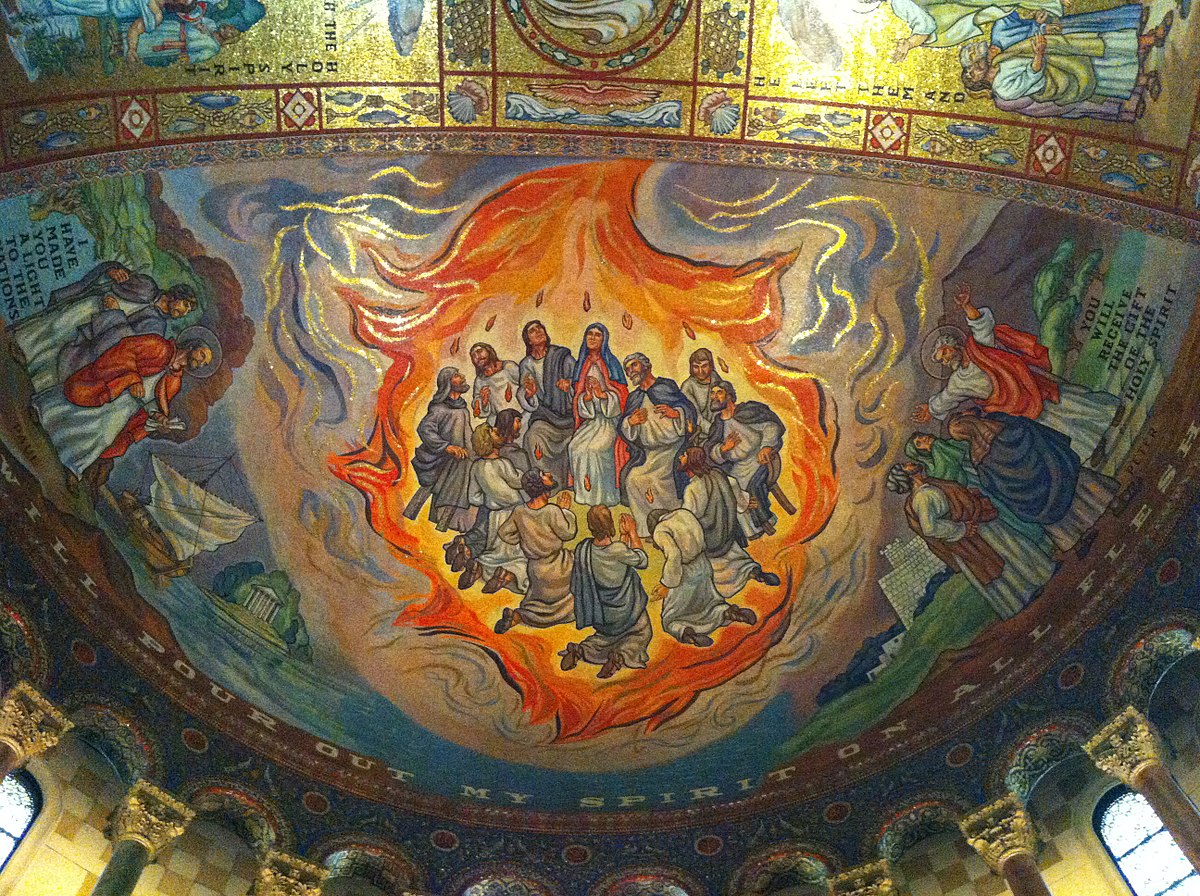
On Pentecost, Jews from all over the Roman Empire gathered in Jerusalem. Many were in the upper room with the apostles, when the Holy Spirit visibly empowered the apostles with tongues of fire, a violent wind, and the reversal of the tower of Babel as people of many different language groups were able to hear the apostles speak in their native tongues. These signs caused much excitement and wonder as the people responded to the work of God. As was true during the time of Jesus’ ministry, there were some who were ready to hear the gospel and others who were not. Those who were ready to hear the apostles’ message were able to understand the apostles’ message while those who were not ready did not understand the signs and resorted to mocking the apostles as if they were drunkards. This was no different than the time of Jesus’ ministry, the signs of the kingdom caused some to respond with increased faith while others responded with unbelief and hardened hearts.

As Jesus had promised, the Holy Spirit gave the apostles the words to explain what was happening. Peter quoted from the book of Joel about how the Spirit would be poured out causing all kinds of people to prophecy: sons and daughters, old men, and young men. Then Peter also quoted from David’s Psalms as he wove together the story of how all these things fit into the story of Jesus’ life, death, and resurrection. Those who were ready to hear the gospel asked what their response should be. Peter told them to repent, be baptized and then they too could receive the gift of the Holy Spirit. Since many of these people were from the Jewish diaspora, they, now filled with the Holy Spirit, would have been able to return to their homes to continue to spread the gospel, although it seems that some people from the diaspora stayed in Jerusalem.

We have sparse details of the life of the church, but there are a few things we know which are described quite succinctly in Acts 2:42-47:

And they devoted themselves to the apostles’ teaching and the fellowship, to the breaking of bread and the prayers. And awe came upon every soul, and many wonders and signs were being done through the apostles. And all who believed were together and had all things in common. And they were selling their possessions and belongings and distributing the proceeds to all, as any had need. And day by day, attending the temple together and breaking bread in their homes, they received their food with glad and generous hearts, praising God and having favor with all the people. And the Lord added to their number day by day those who were being saved.

With the rapid increase in disciples came some logistical problems as well. The miracles of the Spirit did not end the day-to-day problems of communicating between different cultural groups within the church. In the normal practice of sharing goods within the church and within that the need to take care of widows and orphans, there came a point where the Greek-speaking widows from outside Israel were not getting the same care as the Hebrew speaking widows. Because the apostles wanted to focus on teaching and prayer, they gathered the church to address the issue. The church resolved the issue by selecting seven men to oversee the distribution of goods. However, this would not be the last time that language and culture barriers would affect life of the church.

Observe

Read Exodus 18:13-26; Acts 6:1-7. What do these passages say about effective leadership?

The kingdom arrives

Dancing in the Kingdom- Table of Contents

Dancing In the Kingdom – Part 2 – The Kingdom Revealed – Chapter 11 – The Kingdom Enters

The Kingdom Arrives

[Bible references: Isaiah 61:1-2; Matthew 8:16, 28-34; 9:6; 10:1; 28:18; Luke 4:14, 18-19, 32; 5:21; 6:6-7; 7:1-10, 29-30; 9:1-6; John 5:14; 10:11-18; 14:9; Acts 10:38; 1 Corinthians 15:24]

When Jesus broke into history, we no longer saw the kingdom of God overlapping the earth in a place as in the Garden of Eden or a place in the Holy of Holies. This time the kingdom of God had entered by a person, Jesus, who was anointed with the power of the Spirit. His next goal then was to invade the earth with his kingdom by that same Spirit entering our lives, by the overlapping of Heaven and Earth within each of us as Heaven and Earth overlapped within Jesus.

“God’s kingdom” in the preaching of Jesus refers not to postmortem destiny, not to our escape from this world into another one, but to God’s sovereign rule coming “on earth as it is in heaven.” [1]

When Jesus began his ministry, he quoted from the book of Isaiah to declare how he had come to fulfill that prophecy. Then there were many times throughout his ministry when he declared the reason he had come.

Left to our own resources, we cannot, on our own, correct our relationship to Yahweh; we cannot find our way back to a good relationship with him. We are lost to sin and unable to find our way back to Yahweh, the good shepherd.

Even though His power was evident in the teachings alone, His power was testified to by healing all sorts of diseases[2] including physical or spiritual blindness, casting out spirits (all these things that not only Jesus did but his disciples as well), proclaiming freedom for those in prisons, and setting the oppressed free. But even above providing hope and healing, Jesus offered forgiveness for sin and admonitions to turn away from sin. Jesus came to make us whole in body, mind, and spirit, to experience shalom. Sadly, even though some Gentiles recognized Jesus’ power and authority, some of the chief priests and elders did not want to recognize it themselves, remaining trapped and oppressed in their sin.


[1] Wright, N.T. Surprised by Hope: Rethinking Heaven, the Resurrection, and the Mission of the Church Harper Collins 2008. Kindle Edition (p 19.).

[2] Walk with the WiseEvery instance of Jesus Healing in the Bible: What they all had in common” Walk with the Wise walkwiththewise.org/every-instance-of-jesus-healing-in-the-bible-what-they-had-in-common

Reflect

How do we participate with Jesus in bringing His Kingdom to the earth?

Observe

Read Matthew 10:1; 28:18-20; Luke 9:1-6. How do we participate with Jesus in bringing His Kingdom to the earth?