
Disciplines of our hearts

Dancing in the Kingdom- Table of Contents

Dancing In the Kingdom – Part 3 – Dancing in the Kingdom– Chapter 15 – Reforming our Souls

Disciplines of our hearts

[Bible references: Matthew 6:24; Romans 12:1-2; 1 Corinthians 3:16; 6:12-19; 9:25-27; 1 Timothy 4:7-8,12; 2 Timothy 3:16–17; Hebrews 4:1-11; 5:14; 2 Peter 1:3-25]

Anyone who remembers learning … remembers choosing to engage in repeated practice over and over and over precisely so that the rhythms become practices.[1]

Spiritual disciplines are personal and interpersonal practices (habits or activities – not attitudes or character qualities) that are taught or modelled in Scripture which promote spiritual growth among believers in the gospel of Jesus Christ. The spiritual disciplines derive from the gospel and take us deeper into an understanding of the gospel and they are the sufficient means by which we can know and experience God so that we can become more like Him.

“Spiritual discipline, then, is developing soul reflexes so that we know how to live. We discipline ourselves to develop soul memory in normal times so that we’ll be equipped for the times of high demand or deep crisis.”[2]

A few words of caution: Although spiritual disciplines are the means to godliness that does not mean that we are godly just because we practice them. The great error of the Pharisees was that they felt by merely doing these things they were godly. The disciplines are meant to provide opportunities for Christ to transform us – they are not meant to be a burden or an end in themselves. Although we engage in the disciplines to pursue God we should not rely on our effort or our strength, but by resting in power of the Spirit.

Although God will grant Christlikeness to us when Jesus returns, until then He intends for us to grow toward it. We aren’t merely to wait for holiness; we’re to pursue it.”[3]

“The Disciplines allow us to place ourselves before God so that he can transform us . . . The inner righteousness we seek is not something that is poured on our heads. God has ordained the Disciplines of the spiritual life as the means by which we place ourselves where he can bless us. In this regard it would be proper to speak of ‘the path of disciplined grace.’ It is ‘grace’ because it is free; it is ‘disciplined’ because there is something for us to do.” [4]

Maturity requires incremental growth, accumulation of experience

Before we begin to look at the specific disciplines available to us, we should consider their overall purpose. We are beings created in the image Christ, and although we are not Christ, we can become more like Him. Becoming like Christ is a process. We have examples all around us to show us that growth is a process. Plants start from a seed then, in time, grow and develop new parts until the plants become mature and can reproduce. The same with animals. These examples indicate to us that not only is growing a process but that there is an aspect to growth that is built in to automatically happen. Animals and plants, with proper nutrients and environment, will just naturally become mature.

Allowing intentional choices to become habits and the habits to shape our character

But image-bearers of Christ are not merely plants or animals. Our growth is dependent on the development of culture, which are aspects of our way of life that are not automatic but rather are chosen. We can make choices, moral choices, about what we think is important, to set priorities and values. Those choices started in a garden full of abundant food, but we had a choice to not eat the fruit from one particular tree, we had a choice to make based on love and obedience.

Allowing different disciplines to strengthen each other

The spiritual disciplines provide us with choices, to be intentional about how we want to grow. We will see that each discipline is dependent on the others, and each discipline can then weaken or strengthen the others. So, we may enter the disciplines at any point, but we should not neglect the others. We can choose to start from an area of strength or an area of weakness, but we should not neglect the other paths to growth.

The discipline of the soul is not disconnected from the discipline of the body

We are embodied creatures. As we engage in disciplines, we should consider the interplay of soul and body and how they affect each other. We see this effect when, on the one hand it is true that if we are feeling confident then our bodies tend to present a confident posture and on the other hand, it is also true that if we are not initially feeling confident then intentionally assuming a confident posture can produce the feeling of confidence. This leads us to the phrase, “fake it till you make it.” We should keep the interplay of spiritual and material, body, and soul, in mind as we engage in our spiritual disciplines.

Our bodies are the very temple of the Holy Spirit within us, and it is through our bodies that we exercise our faith – and through which we are capable of exercising immorality. To that end, the apostle Paul saw fit to discipline his body as part of his overall ministry.

Forming our virtues

Virtues are the qualities of Christ in our lives that are provided by Him: qualities such as compassion, kindness, humility, gentleness, patience, forgiveness. These qualities help us escape “the corruption that is in the world through lust. (KJV)” But although these qualities are given by Him, we are exhorted to strengthen those virtues with spiritual disciplines. For example, we should add virtue to our faith and virtue to our knowledge for knowledge without virtue only makes someone a walking textbook. Virtue helps add to our faith, to our knowledge, to our self-control, to our perseverance, to our godliness, to our brotherly kindness and to our brotherly love. It all hinges on godly virtues being added to our faith.

As Christians, we all want to grow in spiritual maturity and Christlikeness. Elders should be models of Christian maturity, qualified to the office primarily based on their character. While the Bible provides one quality related to skill (the ability to teach) and one related to the amount of time a man has been a Christian (not a recent convert), all the other qualifications are related to character. Yet while these traits are demanded of elders, they are not unique to elders. Elders are to be exemplars of the Christian graces which all Christians should aspire to. Every congregation is meant to be full of men and women who are above reproach, sober-minded, self-controlled, respectable, hospitable, sober, gentle, peacemaking, not lovers of money, mature, humble, and respected by outsiders.


[1] Smith, James K.A. “You Are What You Love: The Spiritual Power of Habit.” Brazos Press 2016. eBook

[2] Rumford, Douglas. SoulShaping. Tyndale House Publishers 1996

[3] Whitney, Donald S. Spiritual Disciplines for the Christian Life Navpress 2014

[4] Foster, Richard J. Celebration of Discipline Harper & Row Publishers ©1978

Observe

Read Romans 12:1-2; 1 Corinthians 9:25-27; 2 Timothy 3:16-17; Hebrews 4:9-11; 2 Peter 1:3-25. We are paradoxically called to both work and to rest. How do we do both at the same time?
Lamenting our brokenness

Dancing in the Kingdom- Table of Contents

Dancing In the Kingdom – Part 3 – Dancing in the Kingdom– Chapter 14 – Remembering our creation

Lamenting our Brokenness[1]

[Bible references: Psalm 90; Lamentations 1-2; Matthew 26:36-46; 27:33-53; Luke 22:15; 1 Corinthians 14:12; Hebrews 12:2]

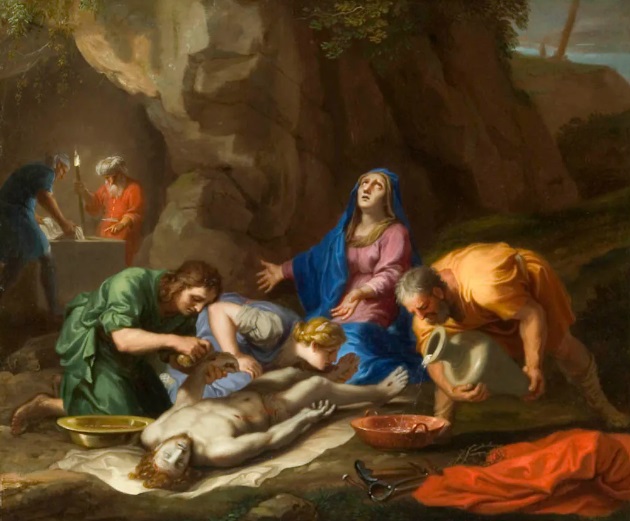
God made a good world, a world full of his glory. Sometimes, we can look at the beauty, the immenseness, the intricacy of what he has made all around us and be filled with awe and wonder. Unfortunately, what is also visible are the many ways in which things are not as they should be. As we consider all that we see and contemplate the kind of end that God intended, we find ourselves looking at a world that seems to be headed in the wrong direction. Instead of increasing shalom, there is violence, hatred, fear, disease, and brokenness. Pain. Shattered dreams. Loss of hope.

There are times when the brokenness around us and within us can overwhelm us. There may be times when God seems absent for long periods of times. This intense absence has brought some people to what they call the Dark Night of the Soul.[2]

The brokenness around us affects everyone, although some experience the brokenness more harshly than others. The Psalms are full of complaining about how the pain of sins’ consequences don’t seem to affect everyone equally. In Lamentations, that pain is captured in personification – the pain of an adulterous woman who is naked, unclean, scorned, and shamed, a victim of rape, a slave, helpless, isolated, unclean. Just as we all bear the guilt of sinful disobedience against God and neighbor. Not only do we bear the guilt of active rebellion against God, but we also bear the shame of being sinned against.

Throughout its history, the church has been concerned with the sin of people but has largely overlooked an important factor in human evil: the pain of the victims of sin. The victims of various types of wrongdoing express the ineffable experience of deep bitterness and helplessness. Such an experience of pain is called han in the Far East. Han can be defined as the critical wound of the heart generated by unjust psychosomatic repression, as well as by social, political, economic, and cultural oppression. It is entrenched in the hearts of the victims of sin and violence, and is expressed through such diverse reactions as sadness, helplessness, hopelessness, resentment, hatred, and the will to revenge.[3]

None of this is comfortable, our tendency is to use whatever devices we can to cover our feelings. We want to run and cling to the hope and joy of Christ, to rush past our uncomfortable guilt and shame. There is a part of us that would be happy to join Christ in His work in the world, as long as we can skip the confession of sin and guilt, but in doing so we would skip the richness of God’s mercy and the gift of shalom.

The depths of joy and hope are not just feelings for us to receive and enjoy. Rather, the depths of joy and hope are only found in acts of the will, in a persistent choosing to abandon our interests and instead to follow God.

Knowing what was before Him, Jesus chose to push His glory to the side and to take on the form of a human with all its physical inconveniences, to endure the ridicule of people who were not fit to tie his sandals, to spend years training 12 disciples all of whom he knew would abandon him in the time of his greatest suffering as he endured the agony of the cross. But in all of this, as he shared the last meal with his disciples before his time of passion, he could say, “I have eagerly desired to eat this Passover with you before my suffering.” The great joy that awaited Jesus and His disciples would be preceded by deep sorrow and great suffering.

“Throughout 1946 and 1947, Mother Teresa experienced a profound union with Christ. But soon after she left the convent and began her work among the destitute and dying on the street, the visions and locutions ceased, and she experienced a spiritual darkness that would remain with her until her death. It is hard to know what is more to be marveled at: that this twentieth-century commander of a worldwide apostolate and army of charity should have been a visionary contemplative at heart; or that she should have persisted in radiating invincible faith and love while suffering inwardly from the loss of spiritual consolation” [4]

As we consider in which ways we are called to “Dance in the Kingdom” with God, we need to keep the proper perspective. God’s work is to reconcile people and all of Creation to Himself. Whatever task He gives us to engage in, it will only ever be a portion of God’s work. Whatever task He has called us to is sufficient for us and He will supply whatever we need to accomplish the tasks He has provided. While some are called to do “bigger” tasks than others, we need to humbly accept whatever tasks God has called us to do. We also need to humbly submit to our need for one another and our need to combine whatever spiritual gifts God has given to us with the gifts He has given others as we build up one another. In the task of building up one another, we need to address another humility.

Our sin and our woundedness are deeper than we imagine. As we confess and acknowledge the sins we have committed and the shame we experience when others have sinned against us, our proper response is lament. We can neither undo what we have done nor what has been done to us. But we can take the next step. The path to restoration and reconciliation leads through a lament that must confront our brokenness and acknowledge the pain. In our lament we can recognize how we are corrupted by sin and that we are accountable for all the suffering caused by our sin.

For us to experience healing of shalom, we need to acknowledge the suffering we have caused, encounter the truth about our sins, and challenge the privileges we may have had over others. Shalom requires lament, a reminder not likely needed for those whose lives are marked by the injustice thrust upon them but is likely needed for those whose lives are marked by privilege.

“Lament in the Bible is a liturgical response to the reality of suffering and engages God in the context of pain and trouble. The hope of lament is that God would respond to the human suffering that is communicated through lament.”[5]


[1] Plantinga, Cornelius. Not the Way It’s Supposed to Be Eerdmans Publishing Co – A. Kindle Edition; Wolters, Albert M. Creation Regained Biblical Basics for a Reformational Worldview  William B. Eerdmans Publishing 1985, 2005. eBook

[2] Rah, Soong-Chan, “Prophetic Lament: A Call for Justice in Troubled Times” Intervarsity Press, 2015; Zaleski, Carol. “Dark Night of Mother Theresa;” St. John of the Cross, Dark Night of the Soul First Things, www.firstthings.com/article/2003/05/the-dark-night-of-mother-teresa

[3] Park, Andrew S. “The Wounded Heart of God: The Asian Concept of Han and the Christian Doctrine of Sin” Abingdon February 1, 1993

[4] Zaleski, Carol. “The Dark Night of Mother Teresa’s Soul” First Things, www.firstthings.com/article/2003/05/the-dark-night-of-mother-teresa

[5] Rah, Soong Chan. “Prophetic Lament: A Call for Justice in Troubled Times” Intervarsity Press, 2015

Reflect

What kinds of brokenness in the world do you notice the most?  For what do you lament?

Observe

Read Psalm 90. Is there any lament that touches your heart?