Personal not political

Dancing in the Kingdom- Table of Contents

Dancing In the Kingdom – Part 2 – The Kingdom Revealed – Chapter 11 – The Kingdom Enters

Personal, Not Political

[Bible references: Luke 1:26-38; 2:25-38]

When Jesus was born, Israel was a client province of the Roman Empire. This situation was far removed from their condition as an independent kingdom of David or Solomon. The current ruler, King Herod the Great, was installed by the Romans as the secular ruler of Israel while the Sanhedrin oversaw religious laws. That was the political situation. Most people thought that the Messiah would come and resolve their political problem and make the Romans go away. The real problem though, is that our main problem is not political, it’s personal, deeply personal. Jesus’ main solution then is personal and the way he arrived in the world was designed to address our personal problem.

Reflect

As you think about the types of problems you have, where do you think the problems come from?

Observe

Read Luke 1:26-38. What is ordinary and not so ordinary about Mary?

Return and Remembrances

Dancing in the Kingdom- Table of Contents

Dancing In the Kingdom – Part 1 – Shadows of the Kingdom – Chapter 9 – The Prophets and writings

Return and Remembrances

[Bible references: Deuteronomy 34:10; 2 Chronicles 36:23; Ezra 1, 2; 6; 7; 9-10; Nehemiah 1-2; Haggai; Zechariah 8; Malachi 1:6-14; 2:10-16; 3:6-9; 4:1-6]

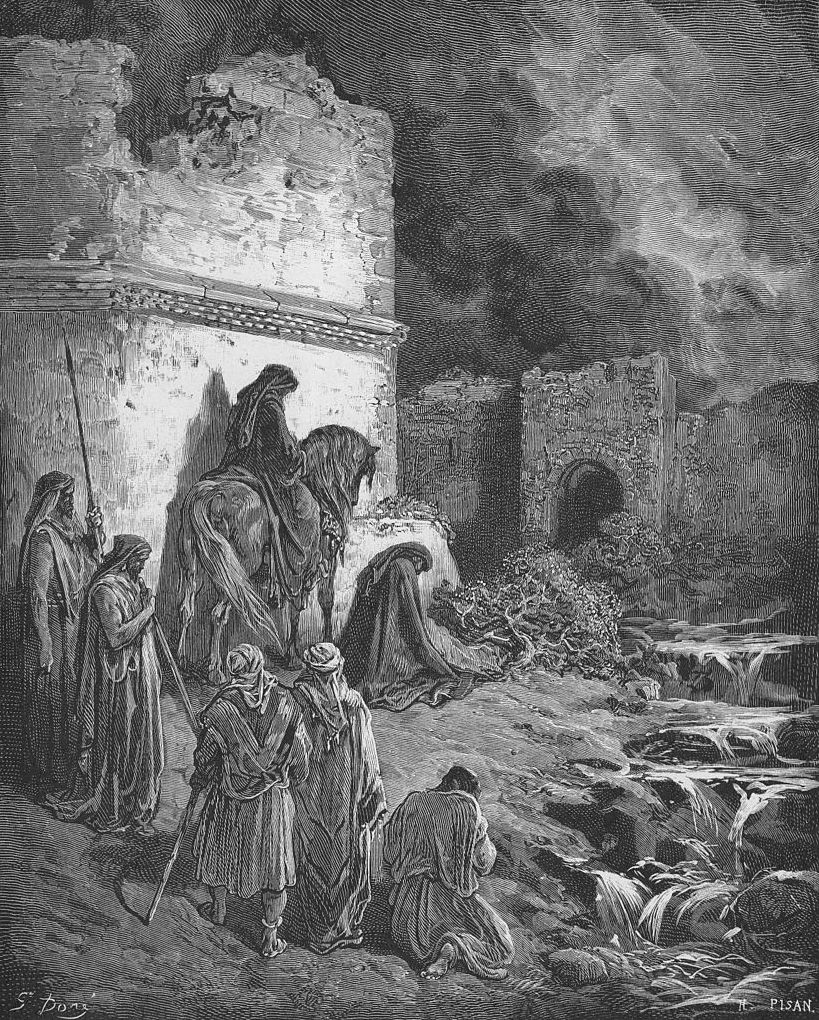
Assyria scattered the Northern Kingdom throughout their empire. Then the Babylonians overran Assyria but also captured Jerusalem and took the prominent citizens into exile. After the 70 years in captivity prescribed by God had passed, the Persians overran Babylonia, and they allowed the Jews to return to their homeland. The first batch of returnees went back with Zerubbabel to Jerusalem to rebuild the temple. A second batch would go back to Jerusalem with Ezra who confronted the Jews about their failure to keep separate from the nations around them. A while later, Nehemiah would go back to Jerusalem to rebuild the walls. And yet, with all the returnees, the majority of the Jews chose to remain in Babylonia – and even today, most Jews live outside the Promised Land.[1]

Only a remnant of Israel returned to the Land of the Promise, but the land was ruled by foreigners.  The temple was rebuilt but was only a remnant of the temple built by Solomon – which caused the people old enough to remember the former temple to weep. On the face of it, the Promise did not look promising. There must be something more. God had promised to bless the world through Abraham, but this remnant of the Davidic kingdom did not look poised to bring that promise. Israel was still waiting for the prophet “like Moses” to arrive.

But God did not choose Israel because it was the strongest kingdom. And Israel’s history is full of examples of God choosing to guide His people with the one who was thought weaker or the one who was younger. And there always seemed to be reminders that God was working in spite of Israel’s failures:

  • In a reminder of God’s provision, in all the returns to Jerusalem, the rulers of the Persian empire strongly supported the returns of the Jews who were given what they needed. God even provided prophets to encourage the Jews.
  • In a reminder of the times when contributions were needed to build the tabernacle, those who did choose to return to the Promised Land with Zerubbabel willingly contributed from the provisions given to them by the Persians to the rebuilding of the temple.
  • In a reminder of their own abilities to follow Yahweh, when the Jews first returned to the Promised Land they ended up once more intermarrying with the non-Jews and practicing their idol worship. So, when Ezra came to Jerusalem, he had to lead the Jews to repentance and to put away their foreign wives.

In the time of exile, the people of Israel compiled the writings of the prophets to serve as their scripture and discovered how to follow God without a system of animal sacrifice. In the time of their return to the promised land the people of Israel listened to that scripture and repented of their ways. And as the people of Israel waited for a prophet like Moses, God was still moving, working to fulfill His plan and His promises.


[1] Jewish Virtual Library “Vital Statistics: Jewish Population of the World (1882 – Present)” )” Jewish Virtual Library www.jewishvirtuallibrary.org/jewish-population-of-the-world

Observe

Read Malachi 4:1-6. This is the last passage written by the last prophet before Jesus would come. Even now at Passover celebrations, a place is set at the table for “Elijah.” In the Christian understanding, who is the “Elijah” that was prophesied to come?

The Tabernacle and the Temple

Dancing in the Kingdom- Table of Contents

Dancing In the Kingdom – Part 1 – Shadows of the Kingdom – Chapter 9 – The Prophets and writings

The Tabernacle and the Temple

[Bible references: I Kings 6-8; 7:13-51; 1 Chronicles 6:31-32; 2 Chronicles 6:18; Amos 9:11-15; Acts 15:1-21]

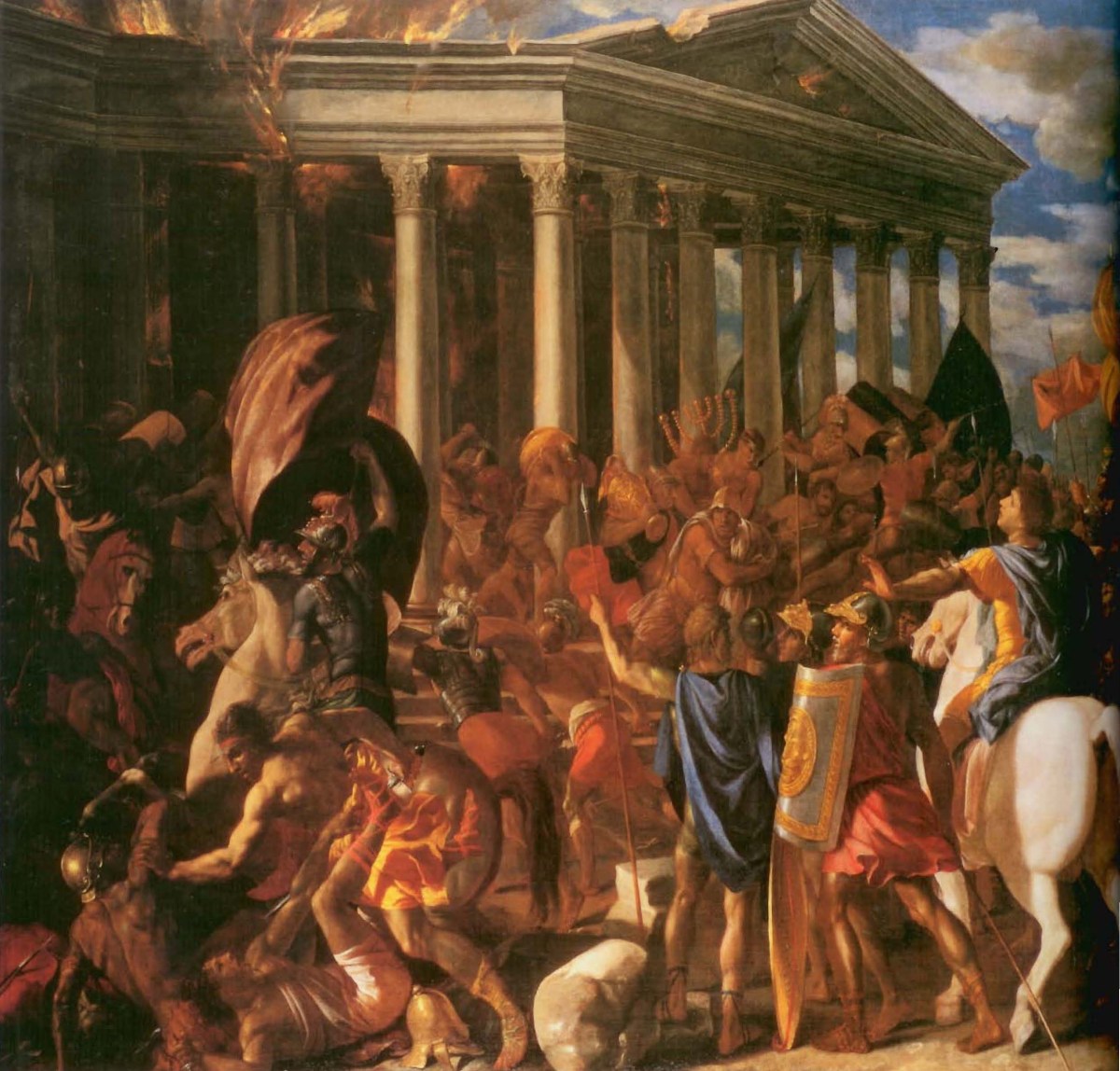
During the time of Solomon, the temple was built to replace the tabernacle. All the furnishings except the ark itself were built by a foreigner named Hiram from Tyre. The original furnishings of the tabernacle were probably put into storage in the temple. Although the temple was much more grandiose than the tabernacle, Solomon recognized that it still could not hold God. Solomon’s temple was eventually destroyed by the Babylonians.[1]

The interesting thing with this history is that during the time of King David all the rituals of Moses were carried out at the tabernacle in Gibeon where there was no ark (and therefore no “presence of God”), while the ark itself, with the presence of God, was in Jerusalem where there was a service of joy, dancing and singing instead of the ritual sacrifices. Also, the ark was no longer concealed in the Holy of Holies where there was limited access, it was now in a place where everyone could access it.

This brings us to the prophet Amos who prophesied that God was going to destroy most of Israel, except for a remnant, but that David’s tabernacle will be restored – not the one at Gibeon, not the temple Solomon built, but David’s tabernacle. This scripture passage in the Old Testament was quoted in Acts 15 where it was determined that Amos was referring to Gentiles now being accepted into the kingdom of God. The tabernacle of Moses and the temple of Solomon were restricted to the nation of Israel, but God was now going to make himself available to the whole world, Jews and Gentiles alike.


[1] Jewish Bible Quarterly “Reconstructing the Destruction of the Tabernacle at Shiloh” Jewish Bible Quarterly January – March 2016 jbqnew.jewishbible.org/jbq-past-issues/2016/441-january-march-2016/reconstructing-destruction-tabernacle-shiloh/

Observe

Read Amos 9:11-15; Acts 15:1-21. How was Amos’ prophecy used by the apostles to allow Gentiles into the church without needing to submit to Jewish practices?

The Divided Kingdom

Dancing in the Kingdom- Table of Contents

Dancing In the Kingdom – Part 1 – Shadows of the Kingdom – Chapter 8– Kings and kingdoms

The Divided Kingdom

[Bible references: I Kings 11:11-13, 26-40; 12:1-24; 2 Kings 12]

Solomon’s divided heart ended up dividing the kingdom. When Solomon’s son Rehoboam succeeded him on the throne, Rehoboam foolishly followed the advice to increase taxes, causing a revolt. Yahweh, who knows all things, had already selected Jeroboam to lead the revolt. The result was that ten tribes (the Northern kingdom, commonly called Israel) followed Jeroboam, leaving only two tribes (the Southern kingdom, commonly called Judah) to follow Rehoboam. With only a few exceptions, most of the kings in the divided kingdom participated in idolatry and the associated practices of the surrounding communities, earning God’s wrath. These two kingdoms were in continual conflict with each other until each came to an ignominious end.

Reflect

God’s discipline of Israel was a slow process as God was at work carrying out his plans for them. Does it comfort you to know that in all circumstances God is carrying out his will for you?

Observe

Read 2 Kings 12. What should we learn from Rehoboam’s mistake?

Solomon

Dancing in the Kingdom- Table of Contents

Dancing In the Kingdom – Part 1 – Shadows of the Kingdom – Chapter 8– Kings and kingdoms

Solomon

[Bible references: Deuteronomy 17:14-17; 2 Samuel 7; 1 Kings 3:1-15; 8:27; 11:1-13; 1 Chronicles 22; 2 Chronicles 6]

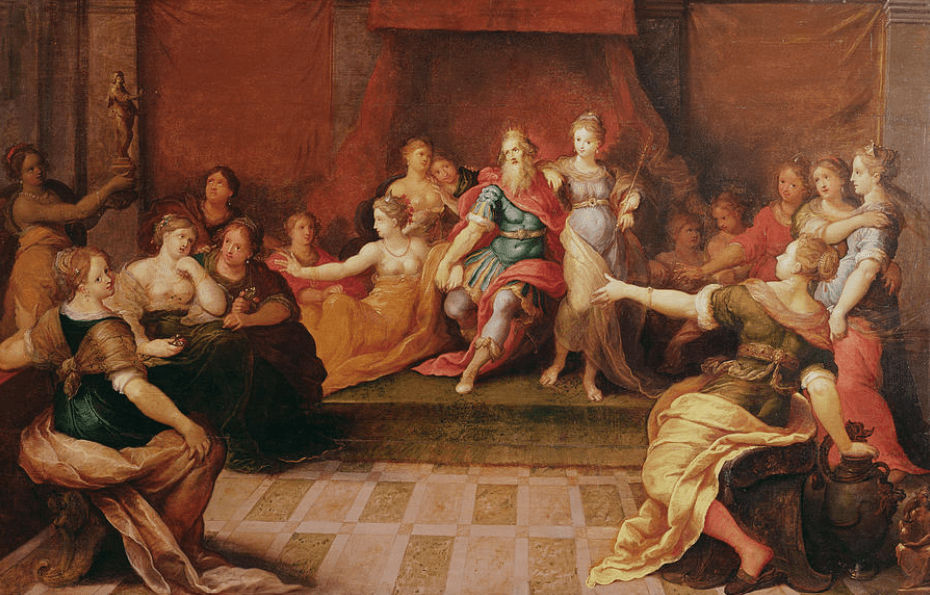
Solomon had a great start. David gave him materials with which he could start building the temple. Solomon’s heart was humble enough to ask Yahweh for wisdom above all things, for which God blessed Solomon not only with great wisdom but with great wealth besides. The one weakness in all this provision was that Solomon, like other Oriental kings, accumulated wives and concubines. And because Solomon loved his wives who came from other cultures more than Yahweh, he not only tolerated their idol worship but took part in that idol worship as well. One thing that Solomon ignored despite his great wisdom, was the warning, written in Deuteronomy, for kings not to accumulate great wealth and many wives. One early sign of his failure may have occurred during his prayer of dedication for the new temple when, despite the use of wealth from donations or taxes and despite the slave labor and labor from other countries, he still said, “the temple I built.”

Reflect

By putting the love of his wives above the love of God, Solomon’s judgement became clouded. This is the problem wealth always brings us. How does this influence what you pray for?

Observe

Read 2 Chronicles 6:33. What could have been wrong about Solomon praying about the temple “I built?”

Messy family life

Dancing in the Kingdom- Table of Contents

Dancing In the Kingdom – Part 1 – Shadows of the Kingdom – Chapter 8– Kings and kingdoms

[Bible references: Deuteronomy 17:14-20; 2 Samuel 13:1-21; 2 Samuel 13:23-29; 15:7-23]

David did have many wives and concubines, but unlike Solomon, the king who reigned after him, David’s polygamy would not lead him to worshiping other gods. The Bible doesn’t explicitly condemn David for his polygamy, but it seemed to exasperate a weakness in David. David had many children through his wives and concubines, but he failed to discipline them. His inability to discipline his sons resulted in rape of one of his daughters by one of his sons, who was murdered by another son to avenge the rape, and who then attempted to dethrone David. This all meant that the path to succession to David’s throne would not be straightforward, but in the end, David selected his son Solomon to succeed him.

Observe

Read Deuteronomy 17:14-20. What should a king do to keep himself from going astray?

Repentance

Dancing in the Kingdom- Table of Contents

Dancing In the Kingdom – Part 1 – Shadows of the Kingdom – Chapter 8– Kings and kingdoms

Repentance

[Bible references: 1 Samuel 13:14; 2 Samuel 11:1-27; 12:1-14; Psalm 51:1-19; Acts 13:22]

There were a couple of instances where David committed sin but, unlike Saul before him, David responded to Yahweh’s rebuke with repentance. The most egregious sin David committed was to have an affair with Bathsheba, the wife of one of his soldiers, getting her pregnant. Then when he failed to cover it up, he arranged for that soldier to be killed on the front lines. When the prophet, Nathan, confronted David about the sin, David repented and confessed his sin. The baby born from that affair died shortly after being born, but later David would have another child with Bathsheba, Solomon, setting up the next part of the story line.

Observe

Read 1 Samuel 13:14; Acts 13:22. Of the three kings of the united kingdom of Israel, only David had a pattern of recognizing his sins and repenting. He was also known as a man “after God’s own heart.”[1]


[1] Edmondson, Ron. “10 Reasons David is Called “A Man After God’s Own Heart” Bible Study Tools www.biblestudytools.com/blogs/ron-edmondson/10-reasons-david-is-called-a-man-after-god-s-own-heart.html; Got Questions “How could David be considered to be a man after God’s own heart?” Got Questions. www.gotquestions.org/man-after-God-heart.html

The genealogies

Dancing in the Kingdom- Table of Contents

Dancing In the Kingdom – Part 1 – Shadows of the Kingdom – Chapter 1 – Prelude

The genealogies

[Bible references: Matthew 1; Luke 3]                              

There are not many passages in the New Testament that the average person tends to gloss over, but there are two places where that happens the most. Two of the Gospels have genealogies that look very different from one another, telling the story of Jesus from different perspectives. Neither genealogy is comprehensive, they are there to establish who Jesus is through particular relationships and to give different messages. It is typical for the average reader to skip over the genealogies when they read the Bible, but sometimes the stories attached to each name make a significant point, and sometimes the names themselves give a particular message. The genealogies are designed to give particular stories.

Matthew[1]

Matthew’s genealogy tells a three-part story that begins with Abraham, uses both Jews and Gentiles, includes women, and ends with Christ.

The list

  • Waiting for the Kingdom – Abraham, Isaac, Jacob, Judah and Tamar, Perez, Hezron, Ram, Amminadab, Nahshon, Salmon and Rahab, Boaz and Ruth, Obed, Jesse, David and Bathsheba
  • The Kingdom – Solomon, Rehoboam, Abijah, Asa, Jehoshaphat, Jehoram, Uzziah, Jotham, Ahaz, Hezekiah, Manasseh, Amon, Josiah, Jeconiah
  • Waiting for the re-established kingdom – Jeconiah, Shealtiel, Zerubbabel, Abiud, Eliakim, Azor, Zadok, Achim, Eliud, Eleazar, Matthan, Jacob, Joseph, Jesus

Items of note:

  • Matthew’s genealogy, starting from Abraham, traces a line to Judah to establish royal bloodline. Matthew shows Christ as the Messiah, by tracing the legal line from Judah and then to Joseph. This genealogy established Jesus’ legal rights to the throne through Judah.
  • The genealogy includes women with interesting stories:
    • Tamar was raped by Judah.
    • Salmon had children by Rahab a Gentile who was a prostitute in Jericho.
    • Boaz’s wife was Ruth who was a Gentile.
    • David had an affair with Bathsheba, who was married to Uriah.
  • Includes all the kings of Judah. Jeconiah appears twice (was last king before exile, then was part of exile) Zerubbabel (governor of Jerusalem after the return).
Luke[2]

Luke’s genealogy tells a story that starts with Adam, the son of God and ends with Jesus, the Son of God. Luke establishes Jesus as the Son of Man and goes back through Mary’s line to Noah and then to Adam. Ancient Greek genealogies traced the father’s lineage not the mother’s—but what do you do with the unique virgin-born Jesus? Certainly, Joseph was not his father, so the only logical male name available was that of Jesus’ maternal grandfather, Heli, for he was the last man involved in the genealogical process which led to Jesus. So Heli was the father of Mary, who was the mother of Jesus.

The list

  • God, Adam, Seth, Enosh, Kenan, Mahalalel, Jared, Enoch, Methuselah, Lamech, Noah, Shem, Arphaxad, Cainan, Shela, Eber, Peleg, Reu, Serug, Nahor, Terah
  • Abraham, Isaac, Jacob, Judah, Perez, Hezron, Aminadab, Nahshon, Salmon, Boaz, Obed, Jesse, David
  • Nathan, Mattatha, Menna, Melea, Eliakim, Jonam, Joseph , Judah, Simeon, Levi, Matthat, Jorim, Eliezer, Joshua, Er, Elmadam, Cosam, Addi, Melchi, Neri, Shealtiel
  • Zerubbabel, Rhesa, Joannan, Juda, Joseph, Semein, Mattathias, Maath, Naggai, Esli, Nahum, Amos, Mattathias, Joseph,  Jannai, Melchi, Levi, Matthat, Heli, Joseph, Jesus

Items of Note:

[Bible references: Genesis 5:25; 11:12-26; Jeremiah 22:30; Matthew 1; Luke 3]                             

  • Starts from Adam instead of Abraham, traces Mary’s line to establish Son of God, includes 4 generations born in captivity,
  • Methuselah (oldest recorded age), Shem (the Semitic race),
  • If we translate, instead of transliterating the first 10 generations from Adam to Noah we can read: Man (is), Appointed, Mortal, Sorrow (but), The Blessed God, Shall come down, Teaching, His death shall bring, The despairing, Comfort and rest
  • There is an interesting prophecy in Jeremiah, where it appears to refer to termination of David’s legal line to the throne from Jeconiah onwards. Jeremiah 22:30 implies a BLOOD LINE curse on Solomon’s line. This separation of the genealogies from David resolves the prophecy. With Mary being of David’s blood line through Nathan, the Messiah is from the House of David yet avoids the curse, whilst still claiming the legal claim through Solomon’s line, through Joseph his adopted and legal father
  • The values of the letters in David’s name (dalet=4, vav=6, dalet=4) add up to 14. Matthew’s genealogy is set up in groups of 14.
  • Jeconiah was the last operative King and the first waiting King, he ends the second group, and starts the third.
  • The name Zerah: Meaning: Rising, Dawn; Etymology From the verb זרח (zarah), to rise or break out.
  • The name Perez: Meaning: A Breach: Etymology: From the verb פרץ (paras), to break through.
Mark

[Bible references: Mark 9:35]                                        

Mark is portraying Christ as a servant and so does not use a genealogy.

John

[Bible references: John 1:1-2]                                         

John shows Jesus directly to be the Son of God.


[1] In Hebrew, the Hebrew word translated as genealogies, ‘toledoth’ always denotes father/son relationships, always works forward.

[2] In Hebrew, the word ‘yaghash,’ is used to establish legal rights or obligations; in contrast, it always works backwards tracing an individual’s legal right or duty back to its source.

Observe

Read John 21:15-25.  Which disciple do you identify more with and why, Peter or John.?

Earthly kings and the rejection of God as king

Dancing in the Kingdom- Table of Contents

Dancing In the Kingdom – Part 1 – Shadows of the Kingdom – Chapter 1 – Prelude

Earthly kings and the rejection of God as king

[Bible references:1 and 2 Samuel, 1 and 2 Kings; 1 and 2 Chronicles]               

The last of judges was Samuel, who also functioned as a priest. By this point in time, Israel was convinced that their continuing problems were, of course, not themselves. They thought that their problem was that they didn’t have a king like everyone else. Actually, God was their king and Samuel was His representative. But the Israelites were not satisfied with God choosing prophets who would speak for Him. So, God gave them a king, like everyone else, Saul. While it did not take Saul a long time to turn from God so completely that God rejected him, Saul was able to reign for 40 years. David, who was described as someone after God’s own heart, replaced Saul. David expanded the kingdom from the Orontes River in the north to the Sinai peninsula in the south.[1] Solomon, building off of David’s legacy, did not focus on expanding the kingdom as much as building its wealth. Solomon’s wealth increased not only in riches of gold and silver, but also in wives and concubines. His love towards his wives and concubines overrode his love for God, so at Solomon’s death, the kingdom split in two parts.

Ten tribes who rebelled against Solomon’s son, aligned with the northern kingdom, which became named Israel.  Of the other 2 tribes, the tribe of Judah was most prominent. Both kingdoms were eventually conquered by neighboring empires: the northern kingdom by Assyria and the southern kingdom by Babylon.


[1] Archaeologists have had difficulty locating evidence of the kingdoms of David and Solomon. That is due, in part, to the Israelites tendency to adopt the customs of the Palestinian nations, making their artifacts indistinguishable from the nations they displaced.

Reflect

From what we see in the world around us, how often do people take responsibility for their own problems?

Observe

Read 1 Samuel 15:15. What’s the clue that Saul was no longer following God?