Samaritans

Dancing in the Kingdom- Table of Contents

Dancing In the Kingdom – Part 2 – The Kingdom Revealed– Chapter 10 – The Class of Apparitions

Samaritans

[Bible references: Matthew 10:5; Luke 9:51-55; 10:25-37; 17:11-19; 10:25-37; John 4:1-43]

King Omri made the city of Samaria the capital of the Northern Kingdom in the 9th century BC. The Assyrians conquered most of the Northern Kingdom in 722 BC and forced most people of the Northern into exile, never to be heard from again in history – and at the same time, Assyria repopulated the area with its own people who then intermarried with the remaining Israelites. Considered to be impure because of their intermarriage with the Assyrians, the Samaritans[1] were rejected as foreigners by the Jews returning from captivity in Babylon. This isolated the Samaritans who wanted to cling to the teachings of Moses but then consequently rejecting the further developments in the writings of the Jews and then developing their own customs, even claiming that their priests were the true descendants of the Levitical priesthood.

In response to being rejected by the main body of the Jews, around 400 BC the Samaritans built their own temple on Mount Gerizim near Shechem, the place where the tabernacle was placed after Israel entered the Promised Land. The Samaritans consider only the Torah, the five books of Moses, to be scripture, rejecting the writings or the prophets and others that the Pharisees incorporated into their scripture. Because of their close-knit community and their isolation, there is still a small community of Samaritans in existence today worshipping on Mt Gerizim.[2]

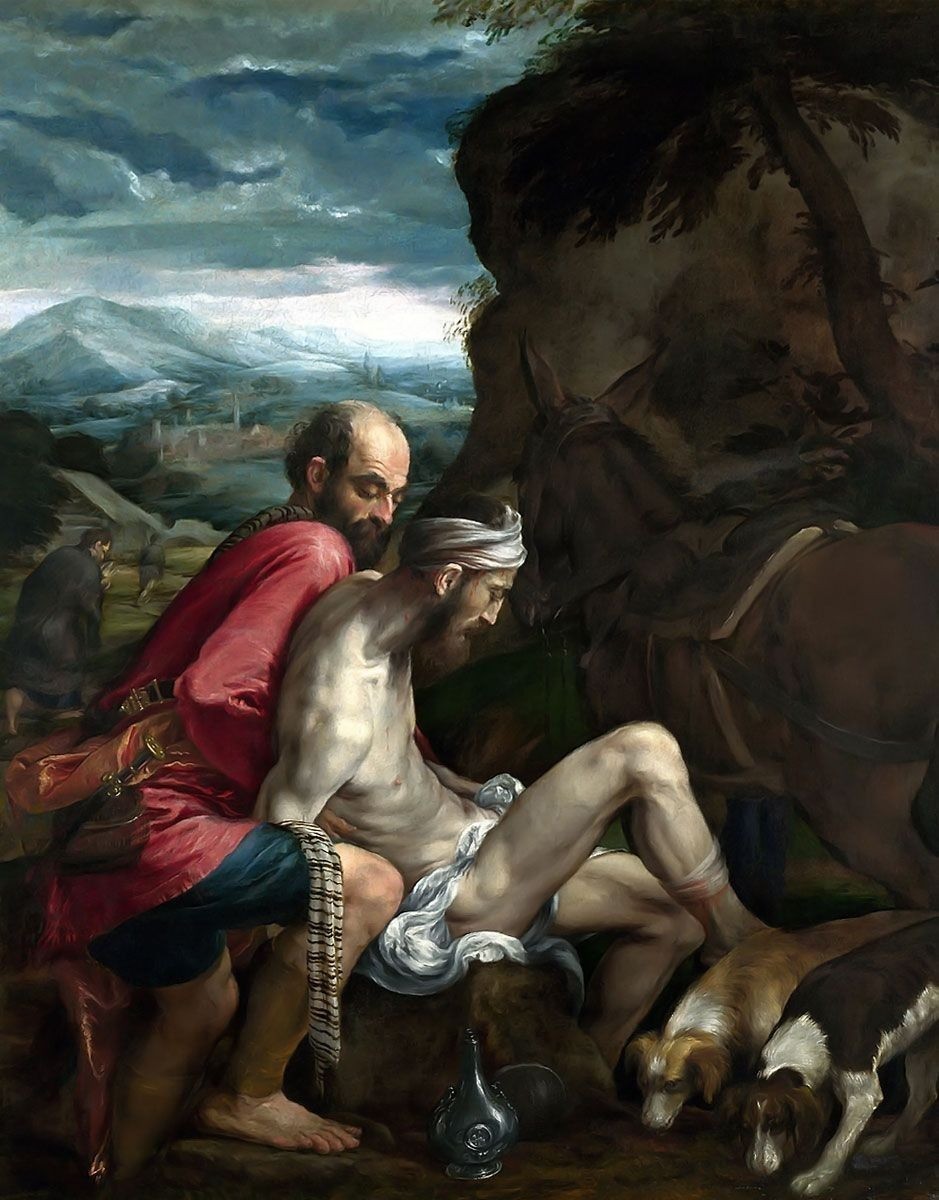
Although Jesus specified that he was sent ‘only to the lost sheep of Israel,’ he did interact a few times with others, Samaritans, and Gentiles. Samaritans and Jews normally avoided each other as they looked down on each other. When Jesus sent out the twelve apostles on an outreach mission, he specifically told them to avoid the Jews and Gentiles. Near the end of his earthly ministry as headed from Galilee, through Samaria to Jerusalem, Samaritans rebuffed his messengers. And yet on one trip from Jerusalem to Galilee he had an encounter with a Samaritan woman who was trying to draw water in the middle of the day and ended up spending two days in town. Another time the barrier also seemed to disappear when Jesus healed ten lepers and only the Samaritan leper came back to thank Jesus. When speaking to a Jewish lawyer who was trying to justify himself, Jesus shared a parable about loving neighbors and chose to show that it was a Samaritan who demonstrated love of neighbor.


[1] Riches, John. “The Word of Jesus: First -century Judaism in crisis” Chapter 1. The Political, Economic, Social, and Cultural Context of First-Century Palestinian Judaism Cambridge University Press, 1990 (p.17-18); NIV Cultural Backgrounds Study Bible eBook “Samaria and Samaritans” Zondervan 2016 (loc. 239865)

[2] UNESCO World Heritage Convention. “Mount Gerizim and the Samaritans” whc.unesco.org/en/tentativelists/5706

Reflect

How do you express love toward your neighbor?

Observe

Read John 4:1-43. What are the surprising things in this story?

Settling into the Promised Land

Dancing in the Kingdom- Table of Contents

Dancing In the Kingdom – Part 1 – Shadows of the Kingdom – Chapter 1 – Prelude

Settling into the Promised Land

[Bible references: Joshua, Judges]                                     

Moses died on the east of the Jordan River. Joshua, one of the 12 spies, led Israel into the Promised Land. After the conquest was complete, the land was divided among the 12 tribes and the tabernacle was moved to Shechem, the place where God promised his descendants would dwell, where Abraham, Sarah, Isaac, Jacob and Joseph were buried.

After Joshua’s death, no one was appointed to be the leader of the people. The people did have the Books of the Law as written by Moses to guide them. God was supposed to be their king. But particularly when things were going well, Israel was inclined to forget about God and not be obedient to the Law. To encourage Israel to return to Him, God would allow some of the neighboring tribes harass them. When things got too bad, the people would complain to God, who would raise up leaders (called judges) to help them overcome their enemies, after which Israel would remember to their old ways. The process would repeat several times.

Observe

Read Judges 2:10-19. What habits did the Israelites find hard to break? What habits are hard for you to break?

The Patriarchs

Dancing in the Kingdom- Table of Contents

Dancing In the Kingdom – Part 1 – Shadows of the Kingdom – Chapter 1 – Prelude

The Patriarchs

[Bible references: Genesis 12-50]                                    

Approximately 2000 B.C., a man named Abram[1] lived in the city of Ur (at that time a coastal city on what is now the Persian Gulf). Abram’s father took his family up the Euphrates River to the city that would be named after Abram’s brother, Haran and settled there. When Abram was 75, God called him to go to another country. When he arrived in Shechem, God told him that this would be the land given to his offspring. Abram did go down to Egypt briefly, but then returned to Shechem. By that point in time, the herds were so large that it was necessary for Abram and his nephew Lot to split up. Abram’s nephew Lot chose to move down to the valley of Sodom and Gomorrah.

When Abram was 90 years old, God told Abram that he would be the father of many nations, renaming him Abraham. But Abram would be 100 years old before his son, Isaac, was born. Abram did have a son, Ishmael, through his wife’s servant, but Ishmael would be sent away, becoming the father of the Arabs.

Isaac didn’t get married until he was 40. He was 60 by the time his only sons, the twins, Esau and Jacob were born.

Jacob had 12 sons and a daughter by 2 wives and 2 concubines. At one point, Jacob wrestled with an angel, who gave him the name, Israel (“struggles with God”).

Jacob’s son, Joseph, was sold as a slave by his brothers to a trader passing through to Egypt, where, through interesting circumstances he became 2nd in charge to the Pharaoh. Years of droughts led to Israel and his other sons moving to Egypt.


[1] To see how Biblical events fit into the history of the Middle East empires see Appendix B, “Timeline for Middle East Empires.”

Observe

Read Genesis 17. Abram was 99 years old and still had no son with his wife Sarah when God renamed him Abraham (“father of many nations.”) and then repeated his promise to Abram 24 years earlier. What does this tell you about patience and faith?