Hope in the brokenness

Dancing in the Kingdom- Table of Contents

Dancing In the Kingdom – Part 1 – Shadows of the Kingdom – Chapter 4– Retreating to chaos

Hope in the brokenness

[Bible references: Genesis 2:16-17; 3:14-15, 23; Psalm 4; 102; Isaiah 1:26; Jeremiah 29:11; Acts:318-26; Galatians 3:13-14; Ephesians 1:11-12; Romans 5:12; 8:18-3; Hebrews 1:1-4]

Grief is the normal response to loss or separation. We may grieve when we lose dreams, jobs, health, family members or friends and many other things. Death is separation. Physical death is the separation of the soul from the body. Spiritual death is the separation of the soul from God.

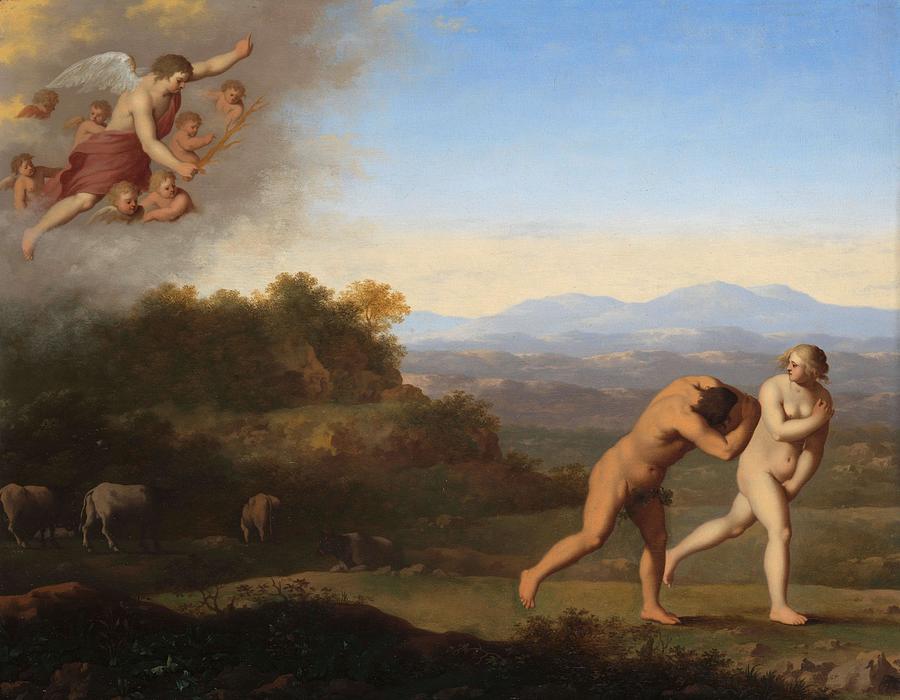
The first humans voluntarily separated themselves from God so that they could grab what they wanted. This was spiritual death. When the non-physical angels rebelled against God, they too suffered spiritual death. For the angels, the separation was permanent with no hope of reconciliation with their Creator. But the first humans were given the possibility of hope.

Humans were also physical creatures, with mortal bodies, physical bodies that could die. Indeed, the humans needed access to the Tree of Life in order to keep on living. When the humans rebelled, they immediately suffered spiritual death. When the humans were also denied access to the Tree of Life, then their physical death was ensured. Spiritual death followed by physical death. A double grief. But the double grief contained the possibility of hope.

The consequences of rebellions created a great tragedy that could not be undone, not by the image bearers. But even so, as we look around us, we can see that despite the tragedy around us, things aren’t totally bad. Even though evil is very evident around us, goodness is also evident. It is in that observation that we can glimpse the possibility of hope. Amidst the consequences of rebellion, there are hints of hope.

When God confronted the first humans with the consequences for their rebellion, He also gave them a hint of the undoing of death, a solution to the problem created by sin. This hint would only be the first of many other hints to come that we can see revealed in the Biblical text.

We can also see evidence for hope in the continued creation by God, as he continues to sustain the universe he created, continuing to create new living things, plants, and animals alike. There is also hope hidden in the mandate given to the image-bearers. Their mandate of stewardship of God’s creation was still in force, although there would now be suffering involved in the fulfillment of the mandate. There was hope hidden in the name of God’s Son.[1] There was also a strange hope in the banishment from the Tree of Life; the consequence of physical death would provide a way to free us from an eternity of being separated from God and open a way for our redemption.

The sacrifice of Jesus followed a life in which Jesus successfully waited to receive those things that His Father intended to give, resisting the temptation to grab those things for himself. In his life and death, Jesus successfully accomplished what Adam and all those who came after Adam had not.

In the beginning, we were eager to grasp for ourselves wisdom and the knowledge of good and evil on our own terms. What we didn’t plan on was the consequences that would follow. Sometimes God gives us what we think we want even though it would bring us the suffering that God was trying to steer us from. It’s a continuing pattern we see from the beginning until now, that it is not always a good thing when we get what we think we want.[2]

But Jesus life did not end with his crucifixion. Jesus’ resurrection was the proof of redemption and of the hope of restoration. Sin had corrupted all of creation and all of creation is groaning and awaiting its restoration.

The universe is not what it’s supposed to be. We are not what we are supposed to be. We are creatures created with the imprint of the image of God but broken in body, soul and spirit. Our brokenness shows up in our actions, words and thoughts. Our brokenness shows up in the way we are treated and the way we treat others. And our brokenness even shows up in the bodies we are born with. But in His death and resurrection, God is able to redeem and restore all of us, all of who we are, all of what we have done, all of what has been done to us, and even all of creation. God is able to use all of our suffering and use it for our good, making something beautiful out of what was broken.


[1] See Chapter 2, The Mystery of God’s Name

[2] See Chapter 8. Rejecting God as King

Reflect

It’s not hard to see signs of brokenness around us. Are there any signs of hope that can be seen?

Observe

Read Isaiah 1:26; Jeremiah 29:11; Matthew 17:11; Acts 3:18-26; Galatians 3:13-14; Ephesians 1:11-12;. Throughout the Bible, God has chosen to share his future plans in pieces at a time. What those plans are, have been the subject of much debate within the church. What is your understanding of God’s plans for the future?

A brief account

Dancing in the Kingdom- Table of Contents

Dancing In the Kingdom – Part 1 – Shadows of the Kingdom – Chapter 1 – Prelude

A brief account

[Bible references: Acts 17:22-31]

The following is an Extremely Brief Account of the Very Long Story.

There was, and is, and will be, a complex person we call God, who exists as three people that we have come to know as the Father, Son, and Holy Spirit. God decided that he wanted to expand the love that was shared between the Father, Son, and Holy Spirit. To that end, he created an entire universe so that on one of its planets he could create an abundance of living creatures.

On that planet, he created special creatures, humans, who were made in his image such that they could love him in the way that he loved them. This universe then, would be a form of temple, a place where God can meet with his people. The garden he placed them in was where the dimensions of heaven and earth overlapped. The garden was a place where God’s good and beautiful kingdom of heaven was fully present.

Of course, these humans were not duplicate spiritual beings who were gods themselves, but physical creatures who had enough of God’s characteristics so that they could love in the way God loved. But love is a voluntary thing that we must choose to do, we cannot love unless we have the option to not love.

God placed his first people in a garden and gave them an assignment. They were to be his representatives, priests if you will, in this garden. They were to take care of it as His representatives, His stewards in the garden. Their long-term task was to multiply and fill the earth so that the whole earth would become the place where God could meet with all his people. The entire earth was intended to be filled with God’s abundant provision for his people who would then take care of what God provided, and all the while giving and receiving and sharing the love which God would freely bestow. In this way, the kingdom of heaven would overlap with the entire kingdom of earth and God would freely mingle with his people.

The option to love or not love was provided by a test of trust. There was in the garden a tree whose fruit not only looked appealing but promised to provide the gift of all knowledge if one ate it. The humans were told to trust God and not eat the fruit of that tree. Eating that fruit would not only provide certain knowledge but would also provide death.

The results of that test are now apparent all around us. Death comes to us not only in the form of physical death, the separation of our souls from physical life, but also in the form of spiritual death, the lack of love which separates us from each other and from God. Fortunately, our current situation is not our destiny – and that is what the rest of the story is about.

God intended that death would not merely be a penalty for not trusting (or loving) but would also be the very mechanism by which he would restore us to himself. From the descendants of the first people, God separated out a family through which he would bring blessing to the entire world. Through that family that a nation would be raised and through that nation the eternal God would choose a family to accomplish the inconceivable. In that chosen family, the eternal God would cause himself to be conceived within the womb of a woman who would then give birth to a being who was both fully God and fully human. He would then be raised as a human and eventually would suffer death by execution as a human and then be resurrected as a human.

In that resurrected human body, the eternal God would return to heaven, but before doing so, he invited us, in essence, to represent Him on earth by becoming part of his body on earth. By trusting him and accepting his Spirit, we could join with him in His death and resurrection by dying to our own self-interests and uniting with his loving interests.

He then promised to return to us again in bodily form, at which time the kingdoms of heaven and earth will again overlap. Heaven will be rejoined to earth to fulfill the intention God had from the beginning. But meanwhile, in this time between His incarnation and His eventual return, we are still called to be stewards of our currently broken world, bringing slivers of the light and hope of heaven into a world now very dark with evil and suffering and pain.

Observe

Read Acts 17:22-31. How could we use Paul’s gospel message to people we speak to today?

A Brief Account

Dancing in the Kingdom – Table of Contents

Dancing In the Kingdom – Part 1 – Shadows of the Kingdom Chapter 1 – Prelude

A Brief Account

The following is an Extremely Brief Account of the Very Long Story, a summary of the Bible’s story.

There was, and is, and will be, a complex person we call God, who exists as three people that we have come to know as the Father, Son and Holy Spirit. God decided that he wanted to expand the love that was shared between the Father, Son and Holy Spirit. To that end, he created an entire universe so that on one of its planets he could create an abundance of living creatures.

On that planet, he created special creatures, humans, who were made in his image such that they could love him in the way that he loved them. This universe then, would be a form of temple, a place where God can meet with his people. The garden he placed them in was where the dimensions of heaven and earth overlapped. The garden was a place where God’s good and beautiful kingdom of heaven was fully present.

Of course, these humans were not duplicate spiritual beings who were gods themselves, but physical creatures who had enough of God’s characteristics so that they could love in the way God loved. But because love is a voluntary thing that we must choose to do, we cannot love unless we have the option to not love.

God placed his first people in a garden and gave them an assignment. They were to be his representatives, priests if you will, in this garden. They were to take care of it as His representatives, His stewards in the garden. Their long-term task was to multiply and fill the earth so that the whole earth would become the place where God could meet with all his people. The entire earth was intended to be filled with God’s abundant provision for his people who would then take care of what God provided, and all the while giving and receiving and sharing the love which God would freely bestow. In this way, the kingdom of heaven would overlap with the entire kingdom of earth and God would freely mingle with his people.

The option to love or not love was provided by a test of trust. There was in the garden a tree whose fruit not only looked appealing but promised to provide the gift of all knowledge if one ate it. The humans were told to trust God and not eat the fruit of that tree. Eating that fruit would not only provide certain knowledge but would also provide death.

The results of that test are now apparent all around us. Death comes to us not only in the form of physical death, the separation of our souls from physical life, but also in the form of spiritual death, the lack of love which separates us from each other and from God. Fortunately, our current situation is not our destiny – and that is what the rest of the story is about.

God intended that death would not merely be a penalty for not trusting (or loving) but would also be the very mechanism by which he would restore us to himself. From the descendants of the first people, God separated out a family through which he would bring blessing to the entire world. Through that family that a nation would be raised and through that nation the eternal God would choose a family to accomplish the inconceivable. In that chosen family, the eternal God would cause himself to be conceived within the womb of a woman who would then give birth to a being who was both fully God and fully human. He would then be raised as a human and eventually would suffer death by execution as a human and then be resurrected as a human.

In that resurrected human body, the eternal God would return to heaven, but before doing so, he invited us to, in essence, to represent Him on earth by becoming part of his body on earth. By trusting him and accepting his Spirit, we could join with him in His death and resurrection by dying to our own self-interests and uniting with his loving interests.

He then promised to return to us again in bodily form, at which time the kingdoms of heaven and earth will again overlap. Heaven will be rejoined to earth to fulfill the intention God had from the beginning. But meanwhile, in this time between His incarnation and His eventual return, we are still called to be stewards of our currently broken world, bringing slivers of the light and hope of heaven into a world now very dark with evil and suffering and pain.

Reflections

How do you feel in comparison to the immense size of the universe? What does it mean to you, that the universe was designed with you in mind?

Observe

Read Acts 2:22-36; 7:2-50; 10:34-43; 13:16-39; 17:22-31. These passages show the various ways the gospel was presented to various audiences. As you read through the different accounts of the gospel, what stands out to you?