Mystery of our role in the world

Dancing in the Kingdom- Table of Contents

Dancing In the Kingdom – Part 2 – The Kingdom Revealed – Chapter 13 – Distinctives within the body of Christ

Mystery of our role in the world

[Bible references: Genesis 1:26-28; 2:15; Deuteronomy 18:14-22; Proverbs 31:4-9; Isaiah 1:17-20; Jeremiah 7:16-17; 21:11-14; 22:1-5; Amos 7; Micah 6:8; 1 Corinthians 14; 2 Corinthians 6:14-17; 2 Peter 3:10-12]

What is the prophetic role of the church?

In the Old Testament, two words are used to describe the prophet. The earlier of the two is the word ro’eh, which roughly means ‘the one who sees.’ Later, the more common word used for a prophet is nabi, which can be loosely translated as ‘the one who speaks,’ particularly on behalf of another… a prophet is one who sees a different world, and says a different word … A Prophetic church … sees Jesus as King and His Kingdom arriving here and now … Speaks the truth to power …points towards the day when the Kingdom comes in fulness … [1]

As the Body of Christ, the church serves to encourage the weak, bring hope to those without hope, to “comfort the afflicted and afflict the comforted”[2], to warn the powerful, and to call all to repentance, justice, mercy, and humility.

The actual practice of the church through the years has been inconsistent. There have been times where believers were willing to speak for Christ despite the threat of death, were willing to sacrifice time and resources to provide for the poor, were willing to speak out and take action to defend the helpless. But there also have been times when believers closed their community off from outsiders, defended and encouraged the oppressors, showed hatred towards, and persecuted those who were different.

In what ways should Christians be involved in “guarding the sacred
space” [3] entrusted to us?

“Culture care is to provide for our culture’s “soul,” … a well-nurtured culture becomes an environment in which people and creativity thrive.” [4]

Our sacred space includes the “natural world” of God’s direct creation and the cultural world of the society we have created. However, those Christians who either have a Gnostic[5] of the world or who focus on the apparent destruction of the world in 2 Peter 3:10-12, there is no value in trying to redeem either the physical realm around us, or the culture around us.[6]

How should Christians respond to the community around them, particularly the unbelievers?

The caution in 2 Corinthians 6:14-17 cautioning Christians against yoking with unbelievers has led to a variety of responses. One set of responses leads to some form of separation of the church community from the surrounding culture.

  • Creating communities that are isolated in whole or part from the culture around them, such as with the Amish and Mennonites.
  • Other variants of this are the creation of monasteries or convents, where the “spiritual community” where the participants can focus on “spiritual” activities.[7]

Monastic communities were developed as a criticism of the church’s decision to become a large scale, inclusive organization.

  • Some congregations have even separated themselves from other believers whom they consider heretical, or even from other believers whom associate with any heretical congregations,[8] although some congregations desire to be cooperative in some extent with other congregations they are not in total agreement with.[9]
  • Some Christian communities are in outright opposition to the culture around them, creating a “culture war” or “Christ against culture” mentality.[10] Some Christian communities such as the Brethren, Quakers, Mennonites, Amish, Wesleyan Methodists, and Seventh Day Adventists are opposed to particular issues such as the appropriateness of Christians to be involved in the military or with violence in general[11] with others think war, or violence, is justified in certain circumstances.[12]

Moving in the other direction, congregations find themselves adopting the values of the surrounding culture,[13] sometimes to the point of adopting the power narratives of the government.

The intertwining of church and state began with Emperor Constantine, who not only allowed Christianity to be tolerated, but inserted his secular power into the church[14]. There are those who insist that secular law should conform to biblical values,[15] which can result in the conflation of nationalism with patriotism to the point of imposing some variation of Christian values on a pluralistic society.[16] This conflation happened regularly throughout history, particularly in the first millennium of the church because the religion of a nation was seen as a community value (i.e. no one had their own individual religion, the individual simply assumed the religion of the entire community). In practice, it was the local king who determined the religion of his kingdom. The linkage of nation and religion was prevalent until the end of the Holy Roman Empire and continued beyond. One variant of this viewpoint interprets the phrase, “compel them to come in,” (Luke 14:23) to authorize the use of physical force to “compel” people to become Christians.

In between those views of the separation from the state and intertwining with the state is the view that since all humans are image bearers tasked with stewardship of the world, and that we can work co-operatively with non-believers in those tasks in which we have a common interest.


[1] Packiam, Gary. “What does it mean to be a prophetic church?” ChurchLeaders churchleaders.com/pastors/pastor-articles/339974-what-does-it-mean-to-be-a-prophetic-church.html

[2] Deis, Robert. Thisdayinquotes July 30, 2020 www.thisdayinquotes.com/2020/07/comfort-afflicted-and-afflict.html  This often used phrase was originally penned by Finley Peter Dunne on Oct 5, 1902.   The full quote as Dunne wrote it is: “Th’ newspaper does ivrything f’r us. It runs th’ polis foorce an’ th’ banks, commands th’ milishy, conthrols th’ ligislachure, baptizes th’ young, marries th’ foolish, comforts th’ afflicted, afflicts th’ comfortable, buries th’ dead an’ roasts thim aftherward.” Originally published in the column, “Mr. Dooley on Newspaper publicity”

[3] Walton, John H. “The Lost Word of Adam and Eve” InterVarsity Press. 2015 Kindle Edition (pp.104-105)

[4] Fujimura, Makoto. Culture Care, “Chapter 2 Culture Care Defined” Intervarsity Press 2014

[5] Theopedia “Gnosticism” Theopedia www.theopedia.com/gnosticism

[6] The overall concept of being stewards of what God has provided for us is sometimes called “Creation Care.”

[7] McCulloch, Diarmaid. Christianity The First Three Thousand Years.  Viking Press. 2009 (p. 200)

[8] Van Gelderen, John. “Separation: Primary Vs. Secondary” Revival Focus 30 May 2018 Revival Focus www.revivalfocus.org/separation-primary-vs-secondary

[9] Theopedia “Ecumenism” Theopedia theopedia.com/ecumenism

[10] Stanley, Chris. “The 5 views of Christ and Culture” Culture Redeemed cultureredeemed.com/the-5-views-of-christ-and-culture

[11] This viewpoint is known as pacifism.

[12] Mosley, Alexander. “Just War Theory” Internet Encyclopedia of Philosophy iep.utm.edu/justwar/

[13] Theopedia “Syncretism” Theopedia theopedia.com/syncretism

[14] : McCulloch, Diarmaid. Christianity the First Three Thousand Year “Chapter 6. The Imperial Church” Viking Press. 2009 Shortly after Constantine issued the Edict of Toleration, the Church found itself embroiled in an internal dispute which caused Constantine to call a council of bishops to resolve the issue. This precedent combined with those in the Church who sought the favor of the emperor began an intertwining of church and state.

[15] Theopedia “Theonomy” Theopedia theopedia.com/theonomy

[16] Encyclopedia Britannica “Christendom”  Encyclopedia Britannia Britannica.com/place/Christendom

Reflect

How should the church be involved in taking care of our “sacred space?” Should congregations join with non-Christians in that effort?

Observe

Read Deuteronomy 18:14-22; Proverbs 31:4-9; Isaiah 1:17-20; Jeremiah 7:16-17; 21:11-14; 22:1-5; Amos 7; Micah 6:8; 1 Corinthians 14. What is the prophetic role of the church?

The darkness

Dancing in the Kingdom- Table of Contents

Dancing In the Kingdom – Part 2 – The Kingdom Revealed – Chapter 11 – The Kingdom Enters

The Darkness

[Bible references: Matthew 17:11; 27:45-46; Luke 23:43; John 16; 19:25-27; 23:44-46; Romans 1-3]

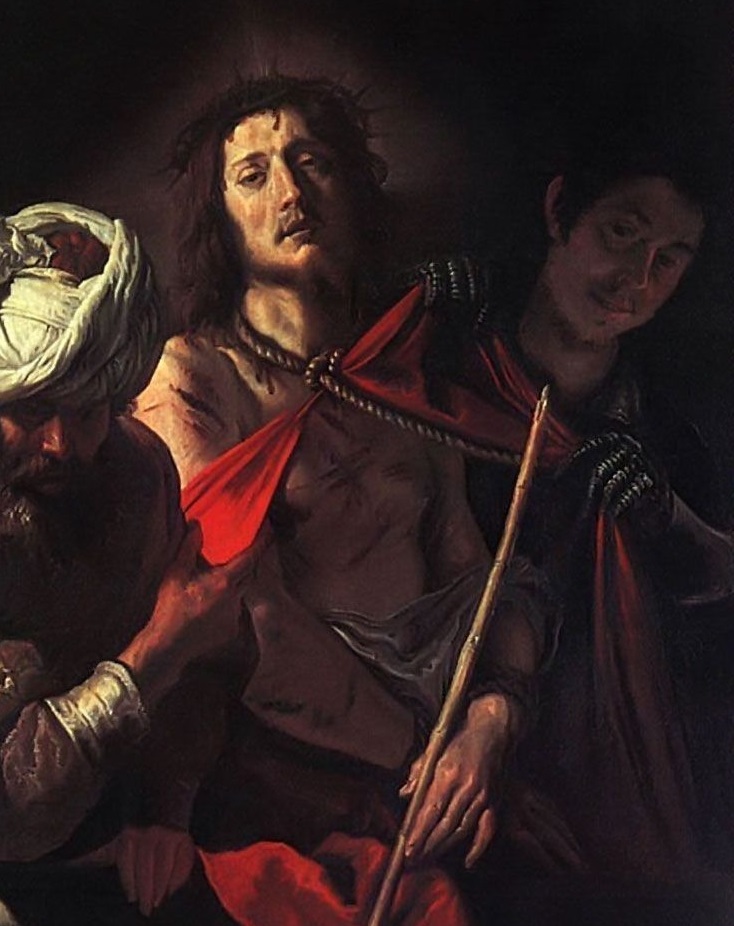
Jesus’ trials were performed in the dark of night, physically and spiritually. He was condemned by the Jewish rulers who were spiritually blind and then allowed to be crucified by the equally blind Roman rulers and even deserted by the disciples he spent three years training. He was condemned by a world who did not deserve him; the whole world was guilty of turning away from him. The world he loved, and for which he would suffer and die, was not deserving of his mercy and grace. The world itself and all the creatures who bore the image of God were corrupted by sin and truly separated from the one who never stopped loving them all. The Creator literally put his life on the line to break the hold of sin in the world so that the world and image-bearing creatures could be restored to what he had intended from the beginning.

The darkness that hung over the world at that moment was a darkness that Jesus had come to defeat. The darkness would only last for a while more. So, with that in mind, even as he was hanging on the cross, Jesus was fixed on the future. He assigned one of his disciples to take care of his mother, Mary. When one of the criminals who were crucified with him, recognized Jesus as God and confessed his guilt, Jesus assured that man, “Today you shall be with me in paradise.” Jesus had chosen to be born the same way as his image-bearing creatures so that he might come to this moment of suffering and dying on our behalf; for this was the way to defeat the hold of sin and death, not only over our lives but over all of creation as well.

Observe

Read John 16. As John is writing about these events, he is careful to detail how the events correspond to the prophecies in Scripture. What is important about making that kind of connection?

Looking back – Signs and shadows of the kingdom

Dancing in the Kingdom- Table of Contents

Dancing In the Kingdom – Part 2 – The Kingdom Revealed – Chapter 11 – The Kingdom Enters

Looking back – Signs and shadows of the kingdom

[Bible references: Genesis 6:5-7; Exodus 25:17-22; Leviticus 16; Joshua 24:19; 2 Kings 17:6; 2 Chronicles 36:17-24; Ezra 1-2; Psalm 14:2; 53:6; Isaiah 43; Jeremiah 29:10; 31:31-39; Matthew 4:12-17; Romans 7:7-24; 8:20-22; Colossians 2:16-17; Hebrews 8:5; 10:1, 5-10; Revelation 21-22]

In the beginning, God created a good earth. Within that good earth, Yahweh created a special place, the Garden of Eden, where he could meet and live with the creatures who bore his image. The Garden was a place where the heaven and earth overlapped, a place where the goodness of Yahweh overflowed, a place of shalom, a place where his image-bearers were intended to thrive and develop as co-creators with Yahweh and ultimately create a civilization that would cover all the earth to the glory of God.

“Perhaps the most fitting symbol of the development of creation from the primordial past to the eschatological future is the fact that the Bible begins with a garden and ends with a city – a city filled with “the glory and the honor of the nations.”[1]

However, the image-bearers put Yahweh’s authority to the side and rebelled against him. The rebellion disrupted the union of the Yahweh’s kingdom with his creatures and all of creation was put into disorder. Human space and Yahweh’s space were separated and all of creation was damaged, including not only the relations between Yahweh and his image-bearers but between the image-bearers themselves.

In the Bible, the themes of heaven and earth can be thought of as heaven being God’s space and the earth being the human space. It may be helpful to think of these spaces as different dimensions. In the Garden of Eden these spaces overlapped, allowing God and man could dwell together. In the garden the humans were to be partners with God taking care of this garden, however they decided to do things their own way rather than God’s. This resulted in the humans being ejected from the space where heaven and earth overlapped, and the remaining story of the Bible is about how God is once again going to bring heaven and earth back together.[2]

The image-bearers found themselves in an increasingly vicious cycle of violence and corruption causing God to restart his project by creating a great flood. Fortunately, out of his deep love for his rebellious image-bearers, Yahweh was resolved to overcome the violence and oppression and had a plan to reunite heaven and earth, extending his kingdom over all the earth.

Yahweh set processes in place that would begin with Abraham and Sarah, continue through to the other patriarchs, and then continue with the nation of Israel. Under Moses’ leadership and with the guidance of the Holy Spirit, the tabernacle was constructed to be the place where heaven and earth would overlap within the Holy of Holies. The temple was decorated and designed to make people feel like they were going back to the garden.

The difficulty was that God’s space is perfect, pure, just, and holy but the human space is full of sin and corruption. This problem was somewhat resolved through the sacrifice of animals, where the animal absorbed the sin of the people and died in their place, creating a limited clean space. Within the Holy of Holies, the mercy seat on the ark was where God’s presence would be but could only be accessed once a year by the high priest.

However, the tabernacle with all its rituals were designed to only be a shadow of things in heaven and a shadow of the things that were coming, a shadow of how Yahweh’s relationship with his image-bearers would be restored and all of earth would be joined with Yahweh’s kingdom in heaven as was intended from the beginning.

In the meanwhile, in those shadows of the coming kingdom, Yahweh worked within the nation of Israel, his chosen people, to gradually reveal signs of his intended restoration. Within those shadows, the people of Israel could see the futility of their own efforts to reconcile with Yahweh despite their denial of the reality of Joshua’s words, “You are not able to serve Yahweh.” Within those shadows, the nation of Israel would rebel against the kingship of Yahweh, rejecting his reign and insisting on creating their own kingdom, like “all the other nations.”

The nation was reminded time after time that the law was good, but they were not, that their continual animal sacrifices were never a permanent solution to reconciling with Yahweh, that they needed a redeemer, they needed a change of heart. Prophets were raised up to warn the people of the consequences of their continual rebellion, but they also delivered messages of hope that, despite their rebellion, God would restore his people to himself.

Then the promised judgment for their rebellion came: Most of the nation was lost to history as ten tribes of Israel were scattered through the Assyrian empire, which would be followed by the temple being destroyed and with a remnant of the remaining tribes being sent into exile in Babylon. If there was any hope that the ritual sacrifices at the temple could reconcile the people with Yahweh, now even that possibility was taken away. The restoration of their own kingdom seemed to be in doubt, never mind the kingdom of Yahweh.

However, the exile was promised to be temporary. After 70 years, the exiled nation had the opportunity to return to the Promised Land and rebuild the temple. Once the temple was rebuilt it was now possible for the temple worship to continue and even for their government to be restarted, although it would be under the auspices of a foreign nation. Yet in all that happened, one thing had not changed; the hearts of the image-bearers had not changed. There was still a need for a redeemer.


167 Wolters, Albert M. Creation Regained: Biblical Basics for a Reformational Worldview William B. Eerdmans Publishing 1985, 2005. eBook (Kindle Locations 581-583)

[2] Bible Project “Heaven and Earth” Bible Project thebibleproject.com/explore/heaven-earth

The plan to restore creation

Dancing in the Kingdom- Table of Contents

Dancing In the Kingdom – Part 1 – Shadows of the Kingdom – Chapter 4– Retreating to chaos

[Bible references: Genesis 3:13-15; 50:20; Isaiah 53; Micah 6:8; Zechariah 7:9; Matthew 10:28-31; Luke 19:11-27; 1 Corinthians 12; Galatians 3:13-14,23-29; Ephesians 1:11-12; Hebrews 1:1-3]

The apparent penalty for sin, physical death, was actually a blessing. Unlike the angels who rebelled against God, death provided the rebellious image-bearers a means of avoiding an eternity separated from the source of goodness and grace. But for the image-bearers, death provided a means where not only they but all of creation could be rescued from decay and death.

The plan of restoration slowly unfolded in ways that would sometimes be baffling and confusing and on a timetable that is beyond our comprehension. Over time though, God gradually revealed how he intended to restore our relation to him, to end our pain and suffering, and to overcome the evil that seems to pervade everything.

God started the process of revealing hints of how he would restore creation right at the beginning. God gave the initial clue in the curse given to the serpent, although the hint must have been a cryptic comment to His newly broken image-bearers. But since we have the privilege of looking back, we can see that God’s then cryptic reference was to the death and suffering of the character revealed in the Old Testament as the Messiah. As time went on, the Creator gradually revealed more and more clues about the plans He had to restore His creation. This gradual revelation was, and still is, a painfully slow time of waiting as we suffer the consequences of broken relations and a broken creation.

Fortunately, as we have waited in our broken universe, God’s grace has continued to intervene throughout history so that things are not as bad as they could possibly be. Our rebellion has not deterred God from providing for our everyday needs nor has he ceased to work on his plan to rejoin heaven and earth.

Meanwhile, God invites us to take part with him in the continued creation of the universe, bringing healing, health and hope directly into the midst of our now broken world, a task that he and we will continue until God fully restores his kingdom. Towards that end, he has provided spiritual gifts, gifts that we can share with one another, to build up one another and to bless the world as his ambassadors.

There are many things about the plans of God that we do not understand. God’s plans for us seem to be drawn out over a long time in which there is much suffering and pain. But even the suffering and pain we endure can be redeemed to help us become more like the Desire of our Hearts, the One who gave all Himself so that we all may become more like Him.

Reflect

What would the world look like if there was no goodness?

Observe

Read Isaiah 53. What did God need to do to restore our relation with Him?

Spurning love

Dancing in the Kingdom- Table of Contents

Dancing In the Kingdom – Part 1 – Shadows of the Kingdom – Chapter 4– Retreating to chaos

Spurning love

[Bible references: Genesis 3:1-7]

God created His image-bearing creatures so that they could receive love and respond in love. He provided those creatures with an ideal environment in which to thrive. These creatures knew the One who created and loved them and yet they chose to reject that love. As the descendants of the original image-bearers, we know that impulse all too well, the compelling urge to distrust others and to rely on our own resources, the desire to clutch power to ourselves and reject any claim to another’s authority over us. These urges and desires seem to overwhelm the opportunity to receive the love offered to us and thus removing our ability to respond by offering love.

We are marked by our continued failure to resist the temptation to grab what we want instead of waiting to receive what we want from God. In spurning God’s love, in rebelling against His authority, we break the bonds that hold us to each other and to God, and in doing so breaking what bound the Kingdom of Heaven to Creation.

In all of human history, Jesus was the only one able to successfully resist the temptation to grab for himself instead of waiting for the Father to provide. His success began the restoration of the Kingdom of Heaven on earth, a restoration that will not be complete until He comes again to fully reunite Heaven and Earth. Until heaven and earth are fully reunited, we will not fully experience the overflowing shalom that God has intended for us. Until that time, the broken earth will be separated from heaven and allowed to sink into disorder and chaos. Until that time, the overflowing goodness and shalom that God had provided will be masked by the brokenness of not just Creation but also by the brokenness of the co-creators. Look at what we have done!

We were meant to be in communion with each other and with God. We were meant to be “gardening” with God to make our place, a place of thriving and abundance in concord with the type of thriving and abundance with which God originally made the universe. God intended for us to be connected to Him and to be filled with His Spirit so that we would be fully enabled to be co-creators with Him of good works. But until then, we are in a state of rebellion, separated from the one who is the source of goodness. In that sense, we are less human than we should be.

Reflect

It seems to be part of human nature, to be suspicious of those things or those people who are different than us. The question is, when does doubting someone else’s motives become an act of sin?

Observe

Read Genesis 3:1-7. What hidden desires may cause us to distrust someone?