Beyond winsomeness

Dancing in the Kingdom- Table of Contents

Dancing In the Kingdom – Part 3 – Dancing in the Kingdom– Chapter 17 – Finding our place

Beyond winsomeness

[Bible references: Deuteronomy 18:15-19; Proverbs 21:22; Acts 3:22; 4:1-22; 12:1-19; 16:16-40; Romans 13:1-7; Ephesians 6:11-13]

Oftentimes, our first impulse when confronting evil in the world is to resort to the world’s tactics. It can seem more expedient to respond to evil with physical force or displays of anger – and there are occasions when such responses are justified – but wisdom is called for. We need to remember that our real enemy is not our “flesh and blood” fellow image-bearer but the forces of darkness. We also need to discern between when it is time for God to act and for us to act.

After David was anointed to be the future king, he had to wait several years during which period King Saul pursued David intending to kill him. Even though there were a couple of occasions when David could have killed Saul, he did not think it was his to take – he waited for the kingship to be given to him. Ever since Moses, Israel had been waiting for “one like Moses”. But David’s refusal to “take” the kingship is likely part of the reason that David was called a “man after God’s own heart,” because unlike those who came before him, he did not (at least in this case) succumb to the impulse to “see, desire, take.”

God has established government to keep the peace. What is our role if the government carries out its duty, what action should we take in support of it? What is our role if the government abuses its duty, what action should we take in opposition to it? The apostles defied the authority of the Sanhedrin and the Roman government, with God even releasing Peter from prison on one occasion and Paul in another. But on another occasion, Paul submitted to the Roman government as a means to get to Rome to continue his work there. Is there ever cause for a Christian to participate in violence? There is a debate in the Christian community about these questions that calls us to seek wisdom in our different situations.

Observe

Read Ephesians 6:11-13. How might “putting on the armor of God” help us determine when to take action or to wait for God?

The Spirit and the scattering

Dancing in the Kingdom- Table of Contents

Dancing In the Kingdom – Part 2 – The Kingdom Revealed – Chapter 12 – Launching the church

The Spirit and the Scattering

[Bible references: Acts 5:12-16; 6:1-15; 7:1-60; 8:1-3, 14-24; 10; 9:1-19; 13:16-47; 17:16-31]

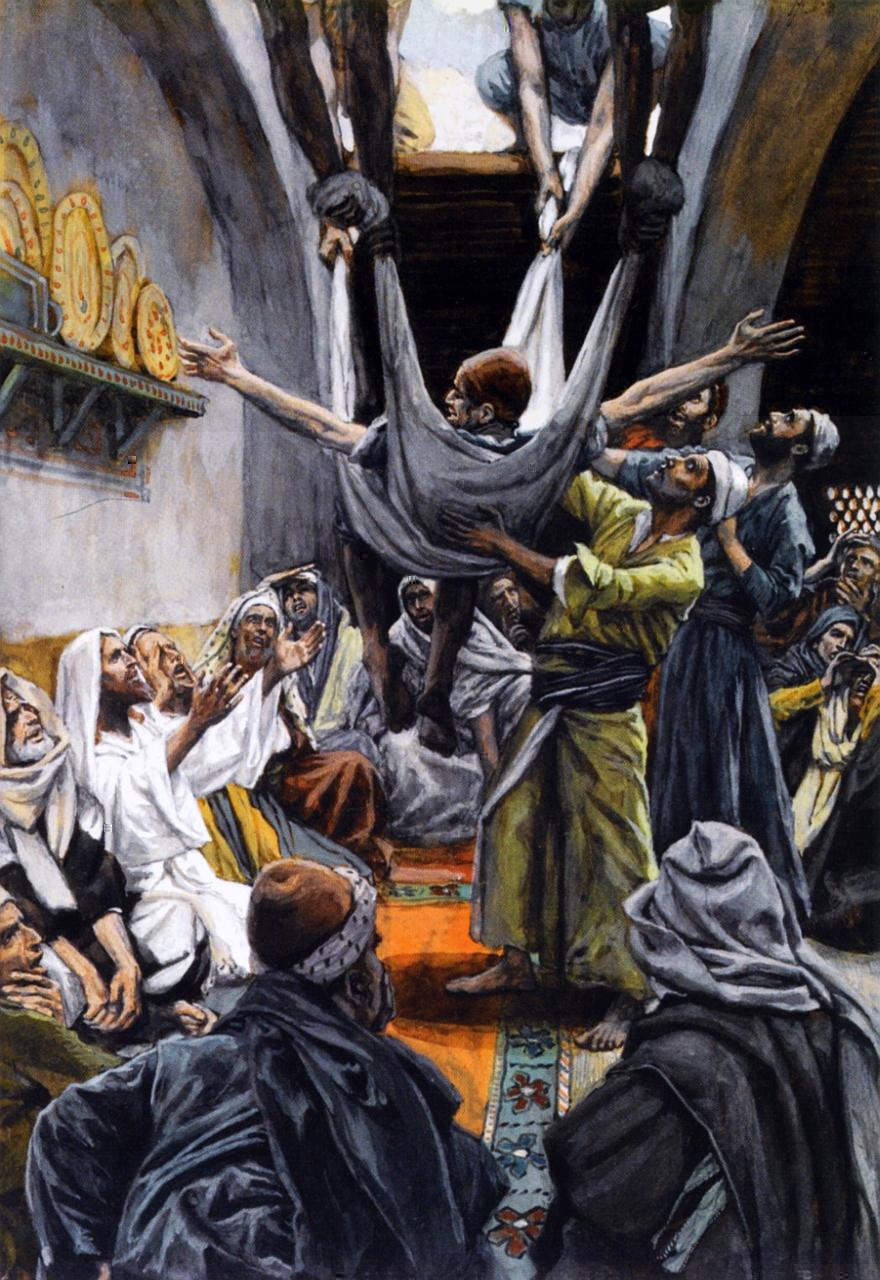
Since Jesus focused his effort almost exclusively on the Jewish population, it was natural that in the early years of the church, nearly all the believers were Jewish. It also happened that the apostles started off by focusing on the area around Jerusalem. So, while the believers were Jewish, the opposition to the believers was primarily Jewish as well; particularly, the Sanhedrin which was heavily controlled by the non-resurrection-believing Sadducees. It was difficult for the Sanhedrin to control the apostles because their miraculous healings made them exceedingly popular among the people. Even the deacon, Stephen, who was performing signs and wonders was creating a problem for the Sadducees. So some men created a conspiracy against Stephen, creating lies that resulted in Stephen becoming the first recorded martyr for the faith. Stephen was quite eloquent in defending the faith before the Sanhedrin, laying out the history of Israel and then accusing the Sanhedrin of continuing the persecution of God’s prophets. This enraged the Sanhedrin so much, that even after Stephen was put to death, the persecution of the church began in earnest, causing the first scattering of the church, although the apostles remained in Jerusalem.

With the scattering came new opportunities and challenges. When it was discovered that the Samaritans had received the gospel, the apostles gladly received the news. But when some of the Samaritans received the Holy Spirit, there were some kinds of signs (we aren’t told what they were) that excited a magician, who was one of the ones who received Christ. The magician then offered money to the apostles so that he could get the power to lay his hands on people and give them the Holy Spirit. The apostles had to strongly rebuke him. He repented – but this was a sign of how things could go astray.

After sending the gospel to the Samaritans, the next step was to reach out to the Gentiles. This step was initiated by God who first worked with the apostle Peter and a devout Gentile man named Cornelius. God had given visions to both Cornelius and Peter to create a reason for them to meet. When Cornelius visibly received the gift of the Holy Spirit, Peter was convinced that the gospel was meant for the Gentiles as well.

To further spread the gospel among the Gentiles, God called Saul, a well-educated man who was familiar not only with the Jews but also with the Gentiles. Saul was a zealous Pharisee, whose zeal originally caused him to participate in the persecution of the church, but God used that same zeal to make Saul (also called Paul) not only one of the primary missionaries to the Gentiles but also a writer of half of the documents that comprise the New Testament. Even though Saul became converted after the ascension of Jesus, it was Jesus himself who encountered Saul who was on his way to persecute the Christians, making Saul a direct witness to the ministry of Jesus.

Whether the gospel was shared with the Jews or with the Gentiles there was a story to tell. The Jews needed to understand how the story of Jesus fit into their history – their story – and the Gentiles needed to know how it fit into their story. We all have a worldview – a story of the world that we use to interpret the world around us – and the gospel is most effectively shared when there’s a way to reach inside the others’ worldview.

Observe

Read Acts 13:1647; 17:16-31. What was the difference between how Paul told the gospel to people in the synagogue vs. the people in the Athens marketplace?

Passion unto death

Dancing in the Kingdom- Table of Contents

Dancing In the Kingdom – Part 2 – The Kingdom Revealed – Chapter 11 – The Kingdom Enters

Passion unto death

[Bible references: Genesis 3:12; Matthew 16:21-23; 21:4-5; 26-27; Mark 9:30-37; Luke 22:54-62; John 1:14; 12:12-19; Romans 1:18-32; 5:20; 6:23; Ephesians 2:1-10]

There is a sense in which each moment of history is equally important to the next. Each moment is a moment which God pursues us as he guides us to our ultimate flourishing. There is no reason to suppose that our continuing flourishing will cease once heaven and earth are reunited, but we should expect that our flourishing will continue as a manifestation of his glory.

However, in our current state of affairs in which earth is broken from heaven, there are moments, epiphanies, in which heaven more noticeably breaks through. There are moments in which angels are more visible or in which Yahweh reveals himself through his prophets. Even more remarkable is the moment in which Yahweh submitted himself to taking on human form, even to the point of being conceived as an embryo inside the body of a human woman and then enduring the normal process of physically growing to become a human adult. Yet even that was not sufficient. Yahweh may have taken the form of a human, but it wasn’t a glorified human,[1] not yet the human as he intends for us to be.

To do that would require him to suffer the shame and justice that we ourselves have earned. The sin that brought us death would have to overcome by a sacrifice that would bring us life. In becoming human, Jesus identified himself with us, but in order for us to become like him he would have to make us ready to receive his spirit. We were helpless to make ourselves acceptable to God, to make ourselves free from sin and its consequences. Bonhoeffer once related his prison experience to Advent. He could not free himself – he needed someone to come from the outside to rescue him.[2] And that is our dilemma, we need someone to come from the outside to rescue us. The covenant revealed to Moses was given to increase our sin, to make it more evident than before about our inability to rescue ourselves. We were condemned by our sin to remain separated from God.

We saw in the previous chapter, that the world was very much like it is now, full of factions and frictions, the powerful and the poor, and everyone waiting and wanting the world to be a better place. The world into which Jesus was born was as broken as it is now. Jesus came into this world with a message of love and hope and with acts of healing and casting out of demons, but that would not be enough. Sin and death had a power over the world that needed to be broken. To rescue the world, to restore it to what it was intended to be, sin and death would need to be defeated. And there was no one who could carry out the rescue except God.

It was as true then as it is now, ever since Adam and Eve, people look at the problems around them and think that the problem lies somewhere else besides inside them. In particular, the more factions and frictions there are, the easier it is to find someone else to point to. So, when Jesus came, teaching, healing, and identifying with the common people more than the elite, it seemed that the more Jesus revealed himself the more the people seemed to think that Jesus would be the one – to rescue them from the Roman government.

Even Jesus’ chosen twelve disciples, the ones who would spend three years with him day and night … even they couldn’t understand the type of rescue they would need. Jesus would explain many times about what he needed to do, but the disciples couldn’t understand. The truth is, though, that even as we look back and see what Jesus had to do, we also have a hard time fully understanding just how desperately that we need rescuing. We don’t understand the depths of our own depravity.

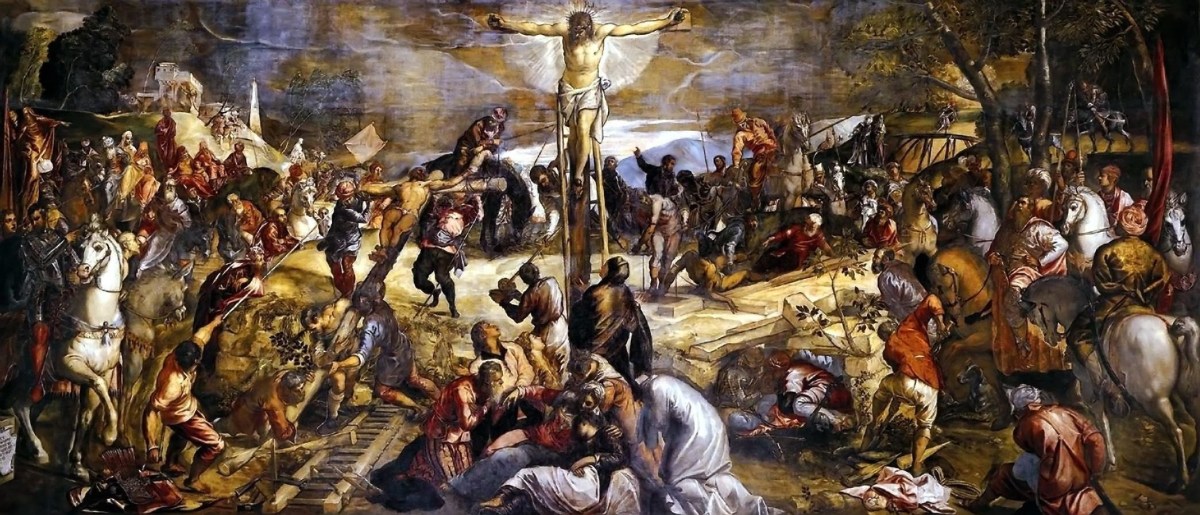
When Jesus approached Jerusalem with his disciples for the last time, some of the disciples argued about which of them was the greatest, or who would sit next to Jesus on his throne. When Jesus showed his power with his resurrection of Lazarus, the crowds got more excited about the possibility of Jesus throwing out the Roman government and then they gave him a grand entry into Jerusalem. However, Jesus refused to act as they wanted, and the crowds eventually turned against Jesus. Even one of the disciples, Judas Iscariot, gave up on Jesus and agreed to betray him to the Sanhedrin. Then, when Jesus was arrested, the rest of the disciples went into hiding. Even Peter, who tried to follow the lynching party at a distance, refused to be identified with Jesus.


[1] Got Questions “How does the Bible describe glorified bodies we will possess in heaven?” Got Questions www.gotquestions.org/glorified-bodies.html

[2] Kincaid, Elisabeth Rain, “Bonhoeffer: Advent is Like a Prison Cell” Christianity Today www.christianitytoday.com/women/2018/december/bonhoeffer-advent-is-like-prison-cell.html

Observe

Read John 12:12-19. In this scene, the crowd is expecting a rescue from the Romans,  the Pharisees are worried about their competition becoming too popular, and the disciples are not comprehending what is happening. How did the disciples eventually understand what was happening?

Personal not political

Dancing in the Kingdom- Table of Contents

Dancing In the Kingdom – Part 2 – The Kingdom Revealed – Chapter 11 – The Kingdom Enters

Personal, Not Political

[Bible references: Luke 1:26-38; 2:25-38]

When Jesus was born, Israel was a client province of the Roman Empire. This situation was far removed from their condition as an independent kingdom of David or Solomon. The current ruler, King Herod the Great, was installed by the Romans as the secular ruler of Israel while the Sanhedrin oversaw religious laws. That was the political situation. Most people thought that the Messiah would come and resolve their political problem and make the Romans go away. The real problem though, is that our main problem is not political, it’s personal, deeply personal. Jesus’ main solution then is personal and the way he arrived in the world was designed to address our personal problem.

Reflect

As you think about the types of problems you have, where do you think the problems come from?

Observe

Read Luke 1:26-38. What is ordinary and not so ordinary about Mary?

Sanhedrin

Dancing in the Kingdom- Table of Contents

Dancing In the Kingdom – Part 2 – The Kingdom Revealed– Chapter 10 – The Class of Apparitions

Sanhedrin

[Bible references: Matthew 26:59; John 11:46-57; 18:28-40]

The Sanhedrin served as a religious court for the Jewish nation. The beginnings can be traced to the seventy leaders that Moses selected to help him lead the Israelites. This council eventually developed into Great Sanhedrin who ruled over all the Jews with the Lesser Sanhedrin, councils of twenty-three judges, who ruled over the individual towns. The last Sanhedrin met in AD 358 when it was dissolved by the Byzantine emperor. There have been various attempts to restart it since the 1530’s but they have not been successful.

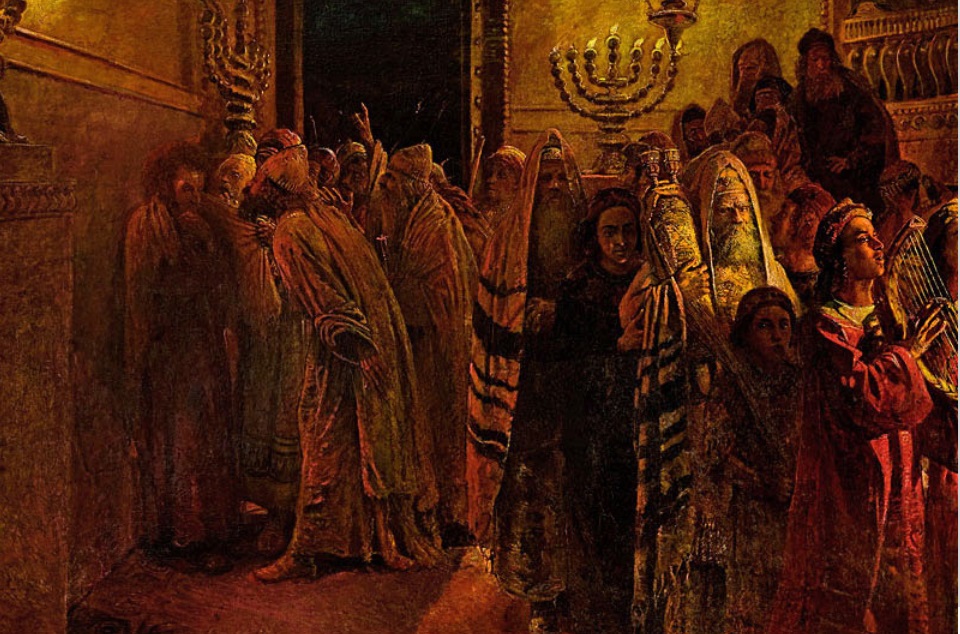
In Jesus’ time, the Sanhedrin served as a religious court while the Romans established civil laws. When Jesus was teaching in the temple courts, the Sanhedrin met to determine what to do with Jesus and made plans to arrest Jesus. It was also the Sanhedrin guards who initially arrested Jesus in the Garden of Gethsemane and brought him before the Sanhedrin for what turned out to be a mock trial. The Sanhedrin wished to put Jesus to death, but they had no authority to do that, so they sent Jesus to Pilate, the governor installed by the Romans, who was the one who ultimately authorized Jesus’ crucifixion.

Observe

Read John 18:28-40. Jesus constantly taught that his kingdom was not of this world, but he was seen as a threat by secular and religious authorities: first by King Herod and then by the Sanhedrin. Why do you think that is?

Sadducees

Dancing in the Kingdom- Table of Contents

Dancing In the Kingdom – Part 2 – The Kingdom Revealed– Chapter 10 – The Class of Apparitions

Sadducees

[Bible references: 2 Samuel 8:15-18; Ezra 7; Matthew 3:7; 16:1-11; 22:23-34; Mark 12:18; Luke 20:27; Acts 4:1; 5:17; 23:6-8]

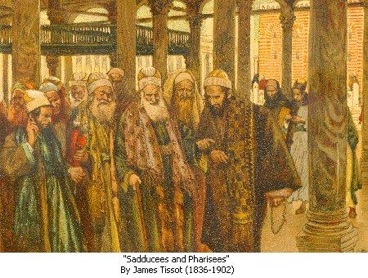
The Sadducees were priests who based their legitimacy on their descendance from Zadok, a priest who lived at the time of King David. It was the Zadokite line of priests that emigrated back to Jerusalem when Persians allowed the Israelites to return from captivity. They were intent on holding onto their power which came through the ministry of the temple. Like the Samaritans, the Sadducees regard only the writings of Moses to be scripture and they interpreted them very literally.

The corrupting influence of power caused them to cooperate with the Greeks when Israel became a client kingdom of the Greek empire. Although Pharisees were also in the Sanhedrin, the Sadducees became the prominent group controlling the Sanhedrin notably during the Greek and Roman occupation.

Because the Sadducees only included the books of Moses in the scripture, they did not develop any beliefs in the resurrection, which caused conflicts with both with Jesus and the Pharisees. The interactions that are recorded are all confrontational. There is an obvious tension between Jesus and the Sadducees. Jesus came to undergo death and resurrection and to eliminate the need for continual temple sacrifices, but the Sadducees did not believe in resurrection and their status was dependent on the continuation of the temple sacrifices. In contrast to the poor and needy ‘lost sheep of Israel,’ the Sadducees were the rich upper class. The Sadducees disappeared from history upon the destruction of the temple by the Romans in AD 70.

Observe

Read Matthew 16:5-11. What is the yeast of the Sadducees?