General Issues with Violence

Dancing in the Kingdom- Table of Contents

Dancing In the Kingdom – Part 2 – The Kingdom Revealed – Chapter 11 – The Kingdom Enters

General Issues with Violence

[Bible references: Isaiah 10:5-12; 40:1-2; 48:8-11; 55:8; Jeremiah 25:12-14; 30:24; Zechariah 1:14-15]

In many ways, our modern-day sanitized culture puts a distance between us and some of the everyday realities of violence. Some examples: Buying packaged meat from the butcher, without seeing the slaughter of the animals, People dying in the hospital and sent to the morgue instead of allowing us the honor hosting the dead at home.

For those of us who have more privileged lives where we don’t directly experience violence done to us or loved ones, many have problems with a judgmental God. But those who are oppressed and do directly experience violence done to them or their loved one’s desire God’s judgment and His righteousness.

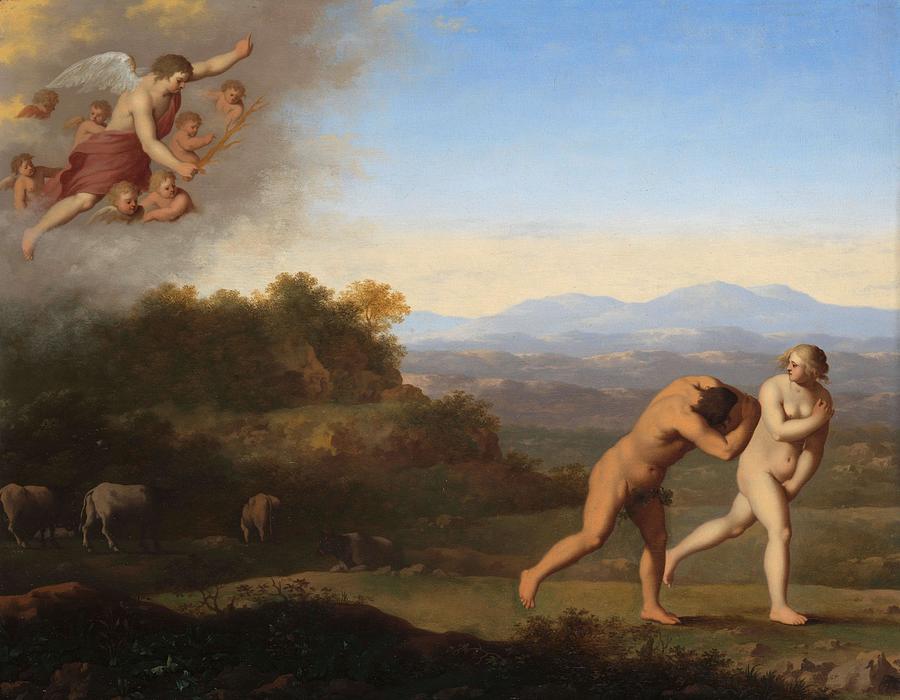
God’s acts of violence are not part of his nature but are a reaction to acts of human violence. The purpose of God’s violence is to restore justice in his creation.

When God’s assigned His image-bearers the responsibility of stewardship over His creation, that assignment did not end with our rebellion. To that end, Yahweh’s preferred method of working in the world is through His image-bearers. Even when Yahweh wishes to use violence to restore justice, He often uses human agents. Those agents however often exceed the charge given them, creating much of the abusive violence we see in the Old Testament. However, when that happens, God disciplines those same agents.

Even with all these explanations we should expect that, in the end, God’s violence is a mystery we cannot fathom. We cannot grasp why God allows violence to persist on earth.

Reflect

Is it possible for God’s justice to not use violence against those who unrepentantly use violence against God’s other image-bearers?

Observe

Read Isaiah 55:8; Jeremiah 25:12-14; 30:24. Is there a warning for all of us here?

Future Hope

Dancing in the Kingdom- Table of Contents

Dancing In the Kingdom – Part 1 – Shadows of the Kingdom – Chapter 9 – The Prophets and writings

Future Hope

[Bible references: Jeremiah 29:10-15; Jonah]

But in the end was God’s promise to restore his kingdom and bless all those who repent. One prophet was even sent to a Gentile nation to call them to repent or be destroyed. When they did repent, God held back his punishment – although history tells us that they would go back to their old ways, and eventually be destroyed. But a greater hope lay beyond that.

Reflect

Despite Israel’s constant failure, God’s plan was to discipline, not destroy, them. Their discipline would eventually be followed by God’s plan to provide the Messiah, the Savior of the world. What might that mean about God’s plan for you?

Observe

Read Jeremiah 29:10-15. The hope presented here seems to be a temporary one, but does it point to a hope beyond that?

Sacrifice and death

Dancing in the Kingdom- Table of Contents

Dancing In the Kingdom – Part 1 – Shadows of the Kingdom – Chapter 6– A nation emerges

Sacrifice and death

[Bible references: Genesis 4:4; 8:20; 36-39; Leviticus 1-7; Psalm 51; Romans 12:1-2; Hebrews 7:27-28]

God also gave detailed instructions about how and when to conduct the rituals surrounding the tabernacle. Burnt offerings[1] had been offered before the tabernacle was built but now there were additional offerings to be made.[2] In the case of all the offerings, something had to die. The cost of sin was death, and it takes death to restore one’s relation with God. Moreover, the animals presented for sacrifice for the burnt offerings needed to be pure and without blemish or defect.

These “perfect” sacrifices were pointing to our ultimate need for a truly perfect sacrifice made on our behalf. The sacrifice would have to be more than an animal with no visible blemishes. The sacrifice would have to be made by a perfect human whose identity would gradually and prophetically be revealed … a new “Adam” who would succeed where the first Adam failed.

Sacrificial death, though, can take a different form than we expect. In Psalm 51, David declares,

“For you will not delight in sacrifice, or I would give it; you will not be pleased with a burnt offering. The sacrifices of God are a broken spirit; a broken and contrite heart, O God, you will not despise.” (Psalm 51:16-17 ESV)

and Micah declares.

“With what shall I come before the LORD, and bow myself before God on high? Shall I come before him with burnt offerings, with calves a year old? Will the LORD be pleased with thousands of rams, with ten thousands of rivers of oil? Shall I give my firstborn for my transgression, the fruit of my body for the sin of my soul?” He has told you, O man, what is good; and what does the LORD require of you but to do justice, and to love kindness, and to walk humbly with your God?” (Micah 6:6-8, ESV)

and later, the apostle Paul declares,

“I appeal to you therefore, brothers, by the mercies of God, to present your bodies as a living sacrifice, holy and acceptable to God, which is your spiritual worship. Do not be conformed to this world, but be transformed by the renewal of your mind, that by testing you may discern what is the will of God, what is good, acceptable, and perfect. (Romans 12:1-2, ESV)

I have been crucified with Christ. It is no longer I who live, but Christ who lives in me. And the life I now live in the flesh I live by faith in the Son of God, who loved me and gave himself for me. (Galatians 2:20, ESV)

These passages indicate a sacrifice of dying to oneself, of laying one’s own interests aside for the sake of another … for the sake of Christ. A sacrifice not made to “make things right” with God but rather a sacrifice made because things are right.


[1] Hal, Doulos. The Fire Sacrifices and Offerings of Israel – The Burnt Offering” Impact Bible.org blogs 4 Apr 2020 blogs.bible.org/the-five-fire-sacrifices-and-offerings-of-israel-the-burnt-offering. Burnt offerings are sometimes called whole offerings (because none of the offering is put aside for eating) or ascent offerings.

[2] Tam, Stephen, “The Five Offerings in the Old Testament” Moses Tabernacle 2003-2018 www3.telus.net/public/kstam/en/tabernacle/details/offerings.htm ; Bible.org “The Law of Burnt Offerings” Bible.org bible.org/seriespage/law-burnt-offerings-leviticus-11-17

Observe

Read Psalm 51; Romans 12:1-2. We do not have a temple to make animal sacrifices. What we do have is the opportunity to offer ourselves as a daily sacrifice. What is meant by a broken spirit?

Rampant evil

Dancing in the Kingdom- Table of Contents

Dancing In the Kingdom – Part 1 – Shadows of the Kingdom – Chapter 4– Retreating to chaos

Rampant evil

[Bible references: Genesis 6, 9]

So that we can know what terrible direction we are headed without that intervening grace, God initially allowed his image-bearers to live long lifespans. It seems that long lifespans delayed the penalty of physical death such a long time that the image-bearers behaved as if there were no consequences for their God-defiant behavior. The result was rampant unrestrained evil that infected nearly everyone, causing God to send a flood to destroy all but one family. Sadly, even with that severe penalty, it would not be long before our God-defiant behavior would threaten to be our undoing again, but God would continue intervening with grace as He would gradually work out His plan to restore us to Himself beginning with the rainbow as a sign of hope.

Observe

Read Genesis 6 and 9. God sent a flood to deal with the rampant sin in the world but it wasnot long after the flood that signs of human rebellion sprung up again in Noah’s family. What kind of trajectory did this indicate for humanity?

A brief account

Dancing in the Kingdom- Table of Contents

Dancing In the Kingdom – Part 1 – Shadows of the Kingdom – Chapter 1 – Prelude

A brief account

[Bible references: Acts 17:22-31]

The following is an Extremely Brief Account of the Very Long Story.

There was, and is, and will be, a complex person we call God, who exists as three people that we have come to know as the Father, Son, and Holy Spirit. God decided that he wanted to expand the love that was shared between the Father, Son, and Holy Spirit. To that end, he created an entire universe so that on one of its planets he could create an abundance of living creatures.

On that planet, he created special creatures, humans, who were made in his image such that they could love him in the way that he loved them. This universe then, would be a form of temple, a place where God can meet with his people. The garden he placed them in was where the dimensions of heaven and earth overlapped. The garden was a place where God’s good and beautiful kingdom of heaven was fully present.

Of course, these humans were not duplicate spiritual beings who were gods themselves, but physical creatures who had enough of God’s characteristics so that they could love in the way God loved. But love is a voluntary thing that we must choose to do, we cannot love unless we have the option to not love.

God placed his first people in a garden and gave them an assignment. They were to be his representatives, priests if you will, in this garden. They were to take care of it as His representatives, His stewards in the garden. Their long-term task was to multiply and fill the earth so that the whole earth would become the place where God could meet with all his people. The entire earth was intended to be filled with God’s abundant provision for his people who would then take care of what God provided, and all the while giving and receiving and sharing the love which God would freely bestow. In this way, the kingdom of heaven would overlap with the entire kingdom of earth and God would freely mingle with his people.

The option to love or not love was provided by a test of trust. There was in the garden a tree whose fruit not only looked appealing but promised to provide the gift of all knowledge if one ate it. The humans were told to trust God and not eat the fruit of that tree. Eating that fruit would not only provide certain knowledge but would also provide death.

The results of that test are now apparent all around us. Death comes to us not only in the form of physical death, the separation of our souls from physical life, but also in the form of spiritual death, the lack of love which separates us from each other and from God. Fortunately, our current situation is not our destiny – and that is what the rest of the story is about.

God intended that death would not merely be a penalty for not trusting (or loving) but would also be the very mechanism by which he would restore us to himself. From the descendants of the first people, God separated out a family through which he would bring blessing to the entire world. Through that family that a nation would be raised and through that nation the eternal God would choose a family to accomplish the inconceivable. In that chosen family, the eternal God would cause himself to be conceived within the womb of a woman who would then give birth to a being who was both fully God and fully human. He would then be raised as a human and eventually would suffer death by execution as a human and then be resurrected as a human.

In that resurrected human body, the eternal God would return to heaven, but before doing so, he invited us, in essence, to represent Him on earth by becoming part of his body on earth. By trusting him and accepting his Spirit, we could join with him in His death and resurrection by dying to our own self-interests and uniting with his loving interests.

He then promised to return to us again in bodily form, at which time the kingdoms of heaven and earth will again overlap. Heaven will be rejoined to earth to fulfill the intention God had from the beginning. But meanwhile, in this time between His incarnation and His eventual return, we are still called to be stewards of our currently broken world, bringing slivers of the light and hope of heaven into a world now very dark with evil and suffering and pain.

Observe

Read Acts 17:22-31. How could we use Paul’s gospel message to people we speak to today?