Ministry of Reconciliation

Dancing in the Kingdom- Table of Contents

Dancing In the Kingdom – Part 3 – Dancing in the Kingdom– Chapter 16 – Fixing our eyes

Ministry of Reconciliation

[Bible references: Matthew 10; Mark 1:40-45; 5:1-20; Acts 2:42-47; 3:20-26; 17:16-34; Romans 8:18-39; 12; 2 Corinthians 5:18-20; Ephesians 4:1-16; 6:18-20; Philippians 3:25-21; 1 Thessalonians 5:11-28; John 13:34-35; Revelation 21:1-2]

When Jesus came the first time, people were looking for a Messiah to overthrow the Roman government, but Jesus’ message was to repent and be baptized for the forgiveness of sin. That is the message we need to respond to and the message we need to bring to others. The gospel is the good news of forgiveness that we can receive if we respond by repentance. The gospel is the good news of God’s Kingdom come to earth to transform us as well as all of creation so that heaven and earth can be fully joined as God had intended from the beginning.

Once we have become transformed, we are able to invite others to repent and accept the grace of God in transforming their lives as well and then join us in the work of discipleship and restoring the world beginning with the call to reconciliation, that is to engage in the work of evangelism. Some people are better equipped to do evangelism than others, but that does not leave the rest of us with no part in the work.

Evangelism, like other aspects in the life of the church, is a work of the body of the church. It is also a work of the Spirit. Evangelism involves persuading, proclaiming, and teaching the gospel and is a call for others to come to Christ, His Body, and to discipleship. We do not convert people to Christ, which is the work of the Spirit; but we are called to join Spirit in His work in the world. The church is called to be the church and display the gospel at work; the gospel which calls us to be transformed, calls us unity with others in the body of Christ and calls us to join Christ’s work of reconciliation and restoration.

That means that we all have a part to play in the body of Christ, to help build one another up so that we may all become mature members of the body of Christ, displaying the love of the transcendent God towards each other. If we are each transformed by Christ, then we should be able to “give a reason for the hope” we have. A hope that we can hold onto even as we live amid a church that is transformed and yet broken by sin.

The call to discipleship is a call to reconcile all the parts of our lives to the Lordship of Christ. This includes not only all our relationships, particularly with those in the body of Christ, but all of our stewardship responsibilities for all of creation. The evangel, the good news, is not just that our personal relationship with God can be restored, but that all of creation will be restored.

It is for the sake of love that God suffered for us that he might redeem us. The greatest commandments that He gave to his image-bearers, were about love: loving God and loving our neighbor. The good news is about that love – a love that reaches out to us and through us amidst all our brokenness. a love expressed in word and deed.

The remaining parts of this book are about the breadth of expressing that love. Certainly, if we love someone who does has not heard the gospel, it would be loving to share that news with them. And if we are truly loving that other, the words of that news should be happening amid all we do to show that love in our deeds as well as in our words. It may be that the deeds of love will help open-up hearts to hear about that love; a love that reflects God’s prodigal love for each of us, a love that desires to take care of all that God has given us – God’s creation and God’s creatures, God’s image-bearers, and the gifts he has given each one of us. God’s extravagant love should be reflected in the way we love God with all our heart, mind, soul and strength and the way we love our neighbor as ourselves.

God’s image-bearers, the ones who call him Lord and Father, are God’s chosen vehicles to proclaim and demonstrate his love as his ambassadors. God’s proclamation and demonstration of love is not constrained by our different personalities and circumstances, for our limitations are not his limitations but rather our weaknesses are His strength, and our little demonstrations of love are the reflections of His powerful love to us and to the world.

Within ourselves, we may be small and insignificant, but we are not just isolated individuals. We are part of Christ’s body, physical manifestations of Christ

  • Past, present, and future
  • Around the world
  • In all our different ways with whatever resources Christ has given us
  • In whatever place and time he chose for us, with whatever strengths and weaknesses we have

We are the creatures whom God has empowered to rule the earth as his gardener-priests. That empowerment has not changed even though we are broken people living in a broken world. The charge he had given us still remains. Therefore, within our brokenness we need to take whatever Christ has given us and proclaim and demonstrate God’s unsurpassed, overwhelming love to the world, a love that not only wants to reconcile all people but literally all the world to Himself … to reunite heaven and earth.

 The challenge we have as God’s ambassadors, is for us to be proclaiming and living the gospel amid the cultures that are sometimes indifferent and sometimes hostile. Therefore, in our tasks, if we are to be effective ambassadors then we must be, “wise as serpents and innocent as doves,” as we try to discern how to effectively persuade others to follow Jesus. Of course, keeping in mind that it is not we who ultimately persuade others to follow Christ, rather that is the work of the Holy Spirit. But how can we participate with the Holy Spirit?

Different people are persuaded by different means. Sometimes, people are persuaded by logic as we could see in the life of the apostle Paul. Sometimes people are persuaded by personal relationships and are drawn by a personality that looks attractive as we could see in the lives of people who were drawn to Jesus. Sometimes people are persuaded by seeing something different in the life another.

With that in mind, then how do we put ourselves in the place where we are most effective? The answer is: the church. The church is the body of Christ whose members are called to build up one another and to demonstrate a love for one another such that others will recognize us as belonging to Christ. When the church gathers to worship and express it’s love to God, that same desire should lead to expressions of love to one another which pour out into love of neighbor as the church scatters during the week. That desire to love should then draw us to desire to learn how to love in the best way possible. Love leads to love. The love of God leads us to love, love of one another and a love of the world that God loves.

Exactly how that love will flow depends on the particulars of each individual in their particular circumstances. We are all born with different personalities and different bodies, and are equipped differently according to the Holy Spirit, and find ourselves in different cultures within the church and within our communities. Some individuals will find themselves in a very individual ministry and some will be called to a broader ministry to the world. Also, different church communities will even find different approaches in how they interact with the cultures around them.[1]


[1] Finn, Nathan A, Whitfield, Keith S. “Spirituality for the Sent” Chapter 5 Missional Spirituality and Cultural Engagement IVP Academic 2017

Reflect

Discipleship is a process of “being transformed” (2 Corinthians 3:18). Ultimately it is something that happens to us – but it is something we can co-operate with by engaging is spiritual disciplines. What kinds of changes need to happen in our lives that would make it natural to invite someone else into discipleship?

Observe

Read Romans 12. How do we help those around us to be reconciled to each other and to God?
Discipline of Lament

Dancing in the Kingdom- Table of Contents

Dancing In the Kingdom – Part 3 – Dancing in the Kingdom– Chapter 15 – Reforming our Souls

Discipline of Lament

[Bible references: 2 Samuel 1:1-2:7; Psalm 10:1-4; 17:20; Jeremiah 4:8; Lamentations 2:5; Micah 2:4; Acts 8:2; John 11:31-33]

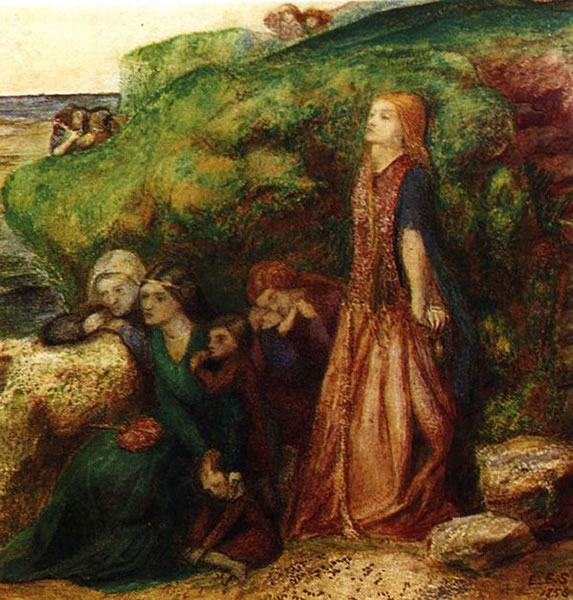
Lament is not despair. It is not whining. It is not a cry into a void. Lament is a cry directed to God. It is the cry of those who see the truth of the world’s deep wounds and the cost of seeking peace. It is the prayer of those who are deeply disturbed by the way things are… The journey of reconciliation is grounded in the practice of lament.[1]

“Lament and praise must go hand in hand. …  My tears showed me a God who was still worthy of my praise in troubled times. Lament cries out for shalom. Shalom is active and engaged, going far beyond the mere absence of conflict.… it embraces the suffering other as an instrumental aspect of well-being. Shalom requires lament.[2]

The Bible is filled with lament. When the God’s people are faced with evil, injustice, oppression and turmoil, the Biblical response is often lament. Sometimes the lament is focused on ourselves, sometimes it is focused on others. Sometimes our suffering can reveal the needs we really lack, not necessarily what we do not feel nor see. In all of this we should remember that our lament is not to inform God about our needs or wants, God already knows them, but he wants us to lament and plead so that we may kindle our hearts to stronger and greater desires.

Growing in lament helps us to see the sinful, broken world more fully as God see it, to be more fully aware of how our own sins participate in that brokenness, and to become more aware of our need for God’s justice and grace.

Rest and Remember[3]

The goal of the discipline of lament is to learn to slow down, become more aware of our own emotion and pain as well as others, so that we can learn to cry with God about the pains of suffering and injustice. Resting in God gives us the time to remember and reflect, to consider all the many we and others in the world have been hurt and treated unjustly. As we remember, we may find it helpful to turn to the Psalms. Many of the psalms are psalms of lament, sometimes ending in a declaration that God will respond. In Ps 71, suffering is not seen as a problem as God acts to restore him. As we find ourselves, crying out to God, we can find ourselves wrapped in His goodness knowing that he cares about our pain, It is then we can develop a fuller picture of God and learn to praise him with renewed joy and hope.

Repentance 

In that remembering, fused with the hope of God, we can become more fully aware of the part we ourselves have played in the world’s injustice. Repenting, confessing our role in creating pain opens the way to our own healing as well as the healing of others.

Recompense and Restitution

Our repentance turns us towards God, but we may need to consider practical steps act on our repentance and make amends with those we’ve hurt.


[1] Katongole, Emmanuel. Rice, Chris. “Reconciling All Things: A Christian Vision for Justice, Peace and Healing” Intervarsity Press, 2009

[2] Rah, Soong-Chan. “Prophetic Lament:  Call for Justice in Troubled Times” Intervarsity Press, 2015

[3] Price, Paula Francis. “Lament as a Spiritual Practice” ” Women in the Academy and Professions (intervarsity.org), February 09, 2017, thewell.intervarsity.org/spiritual-formation/lament-spiritual-practice The categories in this section are taken from this article

Observe

Read 2 Samuel 1:1-2:7. What did David do during his time of lament?

Discipline of Fasting

Dancing in the Kingdom- Table of Contents

Dancing In the Kingdom – Part 3 – Dancing in the Kingdom– Chapter 15 – Reforming our Souls

Discipline of Fasting

[Bible references: Isaiah 58:1-14; Ezra 8:21-23; Matthew 6:16-18]

By the help of the merciful Lord our God, the temptations of the world, the snares of the Devil, the suffering of the world, the enticement of the flesh, the surging waves of troubled times, and all corporal and spiritual adversities are to be overcome by almsgiving, fasting, and prayer.[1]

“More than any other Discipline fasting reveals the things that control us.” [2]

Fasting breaks up habits to let us see our lives in new ways or to enable us to pray at new times or in new ways. Because we are stopping something for a finite period of time, there’s an unfamiliarity and discomfort to it that can be very instructive, open up time for prayer, and draw us closer to God.”[3]

“In every culture and religion in history, fasting has been an instinctive and essential language in our communication with the Divine.”[4]

The pursuit of God can be described as in Psalm 37, to trust in, to delight in, to commit to, to wait on, and to be silent before the Lord; these are words of “giving up” of “going without” whatever the world offers and instead resting in God. The discipline of fasting then looks like learning to go without while learning to rest in, to fight through our appetites so that we can remain focused on the act of pursuing God and loving others, to push through our hunger pains so that we can discover we’re just fine on the other side of them, to look to God, to talk to him, to open ourselves to him in confession, to not so much as give up anything, but to commit to hearing the voice of God in our lives. The goal of fasting is to pursue God, to turn our hearts and our loves towards God and neighbor.

There are many reasons Christians are led by the Holy Spirit to the spiritual discipline of fasting, a few of them are: to strengthen one’s prayer life, to seek direction for one’s life, to express grief and loss, to seek deliverance and protection for life, to express repentance and reconciliation with God. to humble oneself, to express concern for the work of God, to minister to the needs of others, to overcome temptation and rededicate oneself to God, to express love, devotion, and worship of God, to establish rhythms between absence and abundance.

Simplicity and Gratitude can be precursors to fasting. Once we have determined how to order our lives then we are better equipped to identify those things that stand in our way and in the lives of those around us, not only the good vs. bad things, but the good things that detract us from the best things. The Gratitude for God and His provision can set our attitude in preparation for fasting.


[1] Sister Mary Sarah Muldowney The Fathers of the Church: A New Translation Writings of Saint Augustine Vol 17 Fathers of the Church 1959 Sermon 207 (p. 89)

[2] Foster, Richard J. Celebration of Discipline.  Harper & Row Publishers ©1978 (p. 48)

[3] Baab, Lynne M. “The Surprise of Fasting” Lynnebaab.com www.lynnebaab.com/blog/the-surprise-of-fasting

[4] Ryan, Thomas. The Sacred Art of Fasting: Preparing to Practice Skylight Paths 2005

Observe

Read Isaiah 58:1-14; Ezra 8:21-23; Matthew 6:16-18. The benefit of fasting does not come just from deprivation. What should accompany fasting?

Repentance

Dancing in the Kingdom- Table of Contents

Dancing In the Kingdom – Part 1 – Shadows of the Kingdom – Chapter 8– Kings and kingdoms

Repentance

[Bible references: 1 Samuel 13:14; 2 Samuel 11:1-27; 12:1-14; Psalm 51:1-19; Acts 13:22]

There were a couple of instances where David committed sin but, unlike Saul before him, David responded to Yahweh’s rebuke with repentance. The most egregious sin David committed was to have an affair with Bathsheba, the wife of one of his soldiers, getting her pregnant. Then when he failed to cover it up, he arranged for that soldier to be killed on the front lines. When the prophet, Nathan, confronted David about the sin, David repented and confessed his sin. The baby born from that affair died shortly after being born, but later David would have another child with Bathsheba, Solomon, setting up the next part of the story line.

Observe

Read 1 Samuel 13:14; Acts 13:22. Of the three kings of the united kingdom of Israel, only David had a pattern of recognizing his sins and repenting. He was also known as a man “after God’s own heart.”[1]


[1] Edmondson, Ron. “10 Reasons David is Called “A Man After God’s Own Heart” Bible Study Tools www.biblestudytools.com/blogs/ron-edmondson/10-reasons-david-is-called-a-man-after-god-s-own-heart.html; Got Questions “How could David be considered to be a man after God’s own heart?” Got Questions. www.gotquestions.org/man-after-God-heart.html

Return, Songs, Silence

Dancing in the Kingdom – Table of contents

Part 1 – Shadows of the Kingdom, Chapter 9 – The Prophets and Writings

Return

[Bible references: 2 Chronicles 36:23; Ezra 1, 2; 6; 7; 9-10; Nehemiah 1-2; Haggai; Zechariah 8; Malachi 1:6-14; 2:10-16; 3:6-9; 4:6]

Assyria scattered the Northern Kingdom then the Babylonians overran Assyria, captured Jerusalem, and took the prominent citizens into exile. After the 70 years in captivity prescribed by God had passed, the Persians overran Babylonia and allowed the Jews to return to their homeland. The first batch of returnees went back with Zerubbabel to Jerusalem to rebuild the temple. A second batch would go back to Jerusalem with Ezra who confronted the Jews about their failure to keep separate from the nations around them. A while later, Nehemiah would go back to Jerusalem to rebuild the walls. And yet, with all the returnees, the majority of the Jews chose to remain in Babylonia – and even today, most Jews live outside the Promised Land.[1]

In another reminder of God’s provision, in all the returns to Jerusalem, the rulers of the Persian empire strongly supported the returns of the Jews who were given what they needed. God even provided prophets to encourage the Jews.

In a reminder of the times when contributions were needed to build the tabernacle, those who did choose to return to the Promised Land with Zerubbabel willingly contributed from the provisions given to them by the Persians to the rebuilding of the temple.

In a reminder of their own abilities to follow Yahweh, when the Jews first returned to the Promised Land they ended up once more intermarrying with the non-Jews and practicing their idol worship. So, when Ezra came to Jerusalem, he had to lead the Jews to repentance and to put away their foreign wives.

Then, in the end, God would send one last prophet, Malachi, who had words of condemnation of Israel for all the sins committed and of the promise to restore everything because that is what he promised. After the prophet Malachi, God did not raise up another prophet for Israel until Jesus came. That prophetic silence would last four hundred years.

Songs and reflections of the heart 

[Bible references: Psalm 1, 2, 3, 8, 11, 32]

As creatures made in the image of the Creator, it is self-evident that we cannot avoid creating. We are also creatures that are born to worship, as even our popular culture makes very evident. When we put those together, we get a work like the Psalms,[2] a book of poetry which was set to music. The psalms are a collection of praise songs written by various people. They are songs that reflect the thoughts of those people experiencing life with all its emotions in a broken world.

In addition to musical notations, several psalms have notations indicating the events which inspired the writing of those psalms. Some of the psalms have notations indicating the kind of occasion that the psalms are used for. As poetry, the psalms use various poetic devices such as parallelism, acrostics, and figures of speech.[3]

The Psalms express various themes such as the character of God, the experience of people, the worship of God, lament, petitions for help, confession of sin, praise and thanksgiving, expressions of wisdom.[4] The emotions expressed in the Psalms are sometimes very raw with feelings of abandonment, questions of God’s provision, hatred, and vengeance. Yet all these expressions are included in that book of praise songs. The inclusion of the full range of human expression is an acknowledgement of the reality of the human experience and an affirmation of being honest with God about our feelings while placing all of that in the context of a just and merciful God who is worthy of praise.

The Psalms are not the only place where poetry can be found in the Old Testament. There is poetry that can also be found in various portions of other books of the Bible. There is even one book of the Bible that is entirely a poem/song, The Song of Solomon (aka Song of Songs) which is a positive and passionate expression of marital love.

In addition to the expressions of wisdom that are found in the Psalms, there are other places where expressions of wisdom are found. The pair of books, Proverbs and Ecclesiastes, show the benefits of and limits of wisdom. Solomon was the author of Ecclesiastes and was the primary author of Proverbs. In 1 Kings 3-4, Solomon requests and is granted much wisdom to rule the nation of Israel. That wisdom is reflected in Proverbs as a collection of rules to live a good life. On the other hand, Ecclesiastes reflects the limits of wisdom in finding the meaning of life.

Silence and waiting

[Bible references: Genesis 45:7; 2 Kings 19:30; Psalm 62:1]

After the time of Nehemiah and Malachi, there were no more explicit words of prophecy from Yahweh until the coming of Jesus. And in this time of silence from God, there was much turmoil.

  • The Greek Empire would overtake the Persian Empire and therefore Israel.
  • When the Greeks desecrated the temple, there was a revolt led by a Jewish family, the Hasmoneans, who successfully overthrew the Greeks. Hanukah is a celebration of the miracle that took place in the temple.[5]
  • The Roman Empire would overtake the Greek Empire and the Hasmonean kingdom in Israel. Despite the Romans taking over, the Greek language and culture became part of the infrastructure of the Roman Empire.
  • The exact origins are unknown, but some of the Jews would adopt the Greek culture, becoming Hellenized. The aristocratic leaders of these Hellenized Jews would become the Sadducees. In opposition to the corruption of Judaism brought in by the Sadducees, a group known as the Pharisees arose. These two groups were still active when Jesus broke into history.[6]

In the midst of God’s apparent silence, all this activity indicates that God is still working. Several times in the Old Testament, God pointed out that, despite everything else going on, there was still a remnant of people with which he was still working. No matter what the situation is, no matter how good or how bad things seem to be, God is always working on his plans, and he is always preparing, however quietly and behind the scenes, for the next step.


[1] Jewish Virtual Library “Vital Statistics: Jewish Population of the World (1882 – Present)” d

[2] The Hebrew name of the book is Tehillim, which means praise songs.

[3] Cole, Steven J. “Psalms An Overview: God’s Inspired Hymnbook;” Nally, Joseph R. “Overview of the Book of Psalms”

[4] Postoff, Matt. “Categorizing the Psalms” f

[5] Ross, Lesli Koppelman, “The Hasmonean Dynasty”

[6] Dixon, Austin. “History of Scribes, Pharisees, and Sadducees”

Return

Reflect

Despite the discipline of God, after the nation of Israel was allowed to return to the homeland, it still would have problems with unfaithfulness and God would stop speaking to them for 400 years. How does God speak to us today?

Observe

Read Malachi 4:1-6. This is the last passage written by the last prophet before Jesus would come. Even now at Passover celebrations, a place is set at the table for “Elijah.” In the Christian understanding, who is the “Elijah” that was prophesied to come?

Songs and reflections of the heart 

Reflect

In this day, we create songs and books of wisdom. We may not be writing scripture itself, but we are expressing ourselves in worship in the way that God has designed us. How do you express yourself to God?

Observe

Read Psalms 1, 2, 3, 8, 11, 32. These Psalms represent the some of the major types of Psalms. How would you categorize them?

Silence and waiting

Reflect

Do you see signs of God at work today?

Observe

Read 2 Kings 19:29-31; Genesis 45:4-7; Ezra 9:7-9; Isaiah 10:20-22; 11:1-10; 53. The Assyrians had already conquered the Northern Kingdom and were now surrounding the capital of the southern kingdom, Jerusalem, threatening to overwhelm it. Looking back, we now know that two hundred years later the Babylonians would succeed where the Assyrians would not. What is Yahweh’s hint of his plan?

David

Dancing in the Kingdom – Table of contents

Part 1 – Shadows of the Kingdom, Chapter 8 – Kings and Kingdoms

[Bible references: 1 Samuel 13:14; 26:11; 1 Samuel 24:1-7; 26:1-12; Acts 13:22]

Meanwhile, God had selected David, someone who was described as “a man after God’s own heart,” to be the next king. However, David’s reign did not begin until many years later. This meant there was going to be a long and difficult in-between time of testing:

  • Saul’s heart continued to be tested as he was rejected by God, but it would be a long time before the end of his reign. In the meanwhile, he had his duties to perform.
  • David had been anointed to be the next king, but it would be many years before it happened. In the meanwhile, there would be much conflict in which David had to trust God and do what he thought he needed to do. David didn’t test God by unnecessarily putting himself in harm’s way, rather he looked to God for wisdom and acted accordingly. When David had opportunities to kill King Saul, he refused to do so and instead waited for God to act.

This is the area where we typically fail: Adam and Eve could not wait for God to give them knowledge so they grabbed for it; Abraham and Sarah could not wait for God to give them a son through Sarah and so they used Hagar; Jacob could not wait for his inheritance so he and Rebekah had to trick Isaac; Moses could not wait for God to provide water by just speaking to the rock and so he had to strike it. In contrast, to be obedient, David was willing to wait for God to replace Saul and did not take advantage of the opportunities he had to kill him.

Friendship

[Bible references: 1 Samuel 18-20; Proverbs 17:17]

In this difficult period, David would form with Saul’s son, Jonathan, the best friendship he ever had. Jonathan recognized that his own father, Saul, was rejected as king, but instead of jealously trying to hold onto what he could not have, he accepted David as the heir to the throne.[1] In fact, Jonathan was crucial to David’s survival.

The war King

[Bible references: 2 Samuel 2-5, 11:1]

In time, Saul did die, and David became king, although it would be in phases. Initially there was a civil war as people that were loyal to Saul did not pledge loyalty to David but to another king. As in many conflicts, in addition to the overt conflict, there was much subterfuge and political intrigue as well which would have consequences later. Then, even after uniting the kingdom, David had to lead Israel through constant warfare as he expanded the kingdom. So even though David was called and anointed to be king, that did not mean that there was a clear path to becoming king and it did not mean that there would be no conflicts once he became king. It also did not mean that David would be perfect.

Repentance

[Bible references: 2 Samuel 12:1-14; Psalm 51:1]

There were a couple of instances where David committed sin but, unlike Saul before him, David responded to Yahweh’s rebuke with repentance. The most egregious sin David committed was to have an affair with Bathsheba, the wife of one of his soldiers, getting her pregnant. Then when he failed to cover it up, he arranged for that soldier to be killed on the front lines. When the prophet, Nathan, confronted David about the sin, David repented and confessed his sin. The baby born from that affair died shortly after being born, but later David would have another child with Bathsheba, Solomon, setting up the next story line.

Messy family life

[Bible references: Deuteronomy 17:14-20; 2 Samuel 13:1-21; 2 Samuel 13:23-29; 15:7-23]

David did have many wives and concubines, but unlike Solomon, the king who reigned after him, David’s polygamy had not led him to worshiping other gods. The Bible doesn’t condemn David for his polygamy, but it seemed to exasperate a weakness in David. David had many children through his wives and concubines, but he failed to discipline them. His inability to discipline his sons resulted in rape of one of his daughters by one of his sons, who was murdered by another son to avenge the rape, and then attempted to dethrone David. This all meant that the path to succession to David’s throne would not be straightforward, but in the end, David selected his son Solomon to succeed him.


[1] This brings to mind, a quote from a missionary, Jim Elliot. “He is no fool who gives up what he cannot keep, to gain that which he cannot lose.”