Ministry of Reconciliation

Dancing in the Kingdom- Table of Contents

Dancing In the Kingdom – Part 3 – Dancing in the Kingdom– Chapter 16 – Fixing our eyes

Ministry of Reconciliation

[Bible references: Matthew 10; Mark 1:40-45; 5:1-20; Acts 2:42-47; 3:20-26; 17:16-34; Romans 8:18-39; 12; 2 Corinthians 5:18-20; Ephesians 4:1-16; 6:18-20; Philippians 3:25-21; 1 Thessalonians 5:11-28; John 13:34-35; Revelation 21:1-2]

When Jesus came the first time, people were looking for a Messiah to overthrow the Roman government, but Jesus’ message was to repent and be baptized for the forgiveness of sin. That is the message we need to respond to and the message we need to bring to others. The gospel is the good news of forgiveness that we can receive if we respond by repentance. The gospel is the good news of God’s Kingdom come to earth to transform us as well as all of creation so that heaven and earth can be fully joined as God had intended from the beginning.

Once we have become transformed, we are able to invite others to repent and accept the grace of God in transforming their lives as well and then join us in the work of discipleship and restoring the world beginning with the call to reconciliation, that is to engage in the work of evangelism. Some people are better equipped to do evangelism than others, but that does not leave the rest of us with no part in the work.

Evangelism, like other aspects in the life of the church, is a work of the body of the church. It is also a work of the Spirit. Evangelism involves persuading, proclaiming, and teaching the gospel and is a call for others to come to Christ, His Body, and to discipleship. We do not convert people to Christ, which is the work of the Spirit; but we are called to join Spirit in His work in the world. The church is called to be the church and display the gospel at work; the gospel which calls us to be transformed, calls us unity with others in the body of Christ and calls us to join Christ’s work of reconciliation and restoration.

That means that we all have a part to play in the body of Christ, to help build one another up so that we may all become mature members of the body of Christ, displaying the love of the transcendent God towards each other. If we are each transformed by Christ, then we should be able to “give a reason for the hope” we have. A hope that we can hold onto even as we live amid a church that is transformed and yet broken by sin.

The call to discipleship is a call to reconcile all the parts of our lives to the Lordship of Christ. This includes not only all our relationships, particularly with those in the body of Christ, but all of our stewardship responsibilities for all of creation. The evangel, the good news, is not just that our personal relationship with God can be restored, but that all of creation will be restored.

It is for the sake of love that God suffered for us that he might redeem us. The greatest commandments that He gave to his image-bearers, were about love: loving God and loving our neighbor. The good news is about that love – a love that reaches out to us and through us amidst all our brokenness. a love expressed in word and deed.

The remaining parts of this book are about the breadth of expressing that love. Certainly, if we love someone who does has not heard the gospel, it would be loving to share that news with them. And if we are truly loving that other, the words of that news should be happening amid all we do to show that love in our deeds as well as in our words. It may be that the deeds of love will help open-up hearts to hear about that love; a love that reflects God’s prodigal love for each of us, a love that desires to take care of all that God has given us – God’s creation and God’s creatures, God’s image-bearers, and the gifts he has given each one of us. God’s extravagant love should be reflected in the way we love God with all our heart, mind, soul and strength and the way we love our neighbor as ourselves.

God’s image-bearers, the ones who call him Lord and Father, are God’s chosen vehicles to proclaim and demonstrate his love as his ambassadors. God’s proclamation and demonstration of love is not constrained by our different personalities and circumstances, for our limitations are not his limitations but rather our weaknesses are His strength, and our little demonstrations of love are the reflections of His powerful love to us and to the world.

Within ourselves, we may be small and insignificant, but we are not just isolated individuals. We are part of Christ’s body, physical manifestations of Christ

  • Past, present, and future
  • Around the world
  • In all our different ways with whatever resources Christ has given us
  • In whatever place and time he chose for us, with whatever strengths and weaknesses we have

We are the creatures whom God has empowered to rule the earth as his gardener-priests. That empowerment has not changed even though we are broken people living in a broken world. The charge he had given us still remains. Therefore, within our brokenness we need to take whatever Christ has given us and proclaim and demonstrate God’s unsurpassed, overwhelming love to the world, a love that not only wants to reconcile all people but literally all the world to Himself … to reunite heaven and earth.

 The challenge we have as God’s ambassadors, is for us to be proclaiming and living the gospel amid the cultures that are sometimes indifferent and sometimes hostile. Therefore, in our tasks, if we are to be effective ambassadors then we must be, “wise as serpents and innocent as doves,” as we try to discern how to effectively persuade others to follow Jesus. Of course, keeping in mind that it is not we who ultimately persuade others to follow Christ, rather that is the work of the Holy Spirit. But how can we participate with the Holy Spirit?

Different people are persuaded by different means. Sometimes, people are persuaded by logic as we could see in the life of the apostle Paul. Sometimes people are persuaded by personal relationships and are drawn by a personality that looks attractive as we could see in the lives of people who were drawn to Jesus. Sometimes people are persuaded by seeing something different in the life another.

With that in mind, then how do we put ourselves in the place where we are most effective? The answer is: the church. The church is the body of Christ whose members are called to build up one another and to demonstrate a love for one another such that others will recognize us as belonging to Christ. When the church gathers to worship and express it’s love to God, that same desire should lead to expressions of love to one another which pour out into love of neighbor as the church scatters during the week. That desire to love should then draw us to desire to learn how to love in the best way possible. Love leads to love. The love of God leads us to love, love of one another and a love of the world that God loves.

Exactly how that love will flow depends on the particulars of each individual in their particular circumstances. We are all born with different personalities and different bodies, and are equipped differently according to the Holy Spirit, and find ourselves in different cultures within the church and within our communities. Some individuals will find themselves in a very individual ministry and some will be called to a broader ministry to the world. Also, different church communities will even find different approaches in how they interact with the cultures around them.[1]


[1] Finn, Nathan A, Whitfield, Keith S. “Spirituality for the Sent” Chapter 5 Missional Spirituality and Cultural Engagement IVP Academic 2017

Reflect

Discipleship is a process of “being transformed” (2 Corinthians 3:18). Ultimately it is something that happens to us – but it is something we can co-operate with by engaging is spiritual disciplines. What kinds of changes need to happen in our lives that would make it natural to invite someone else into discipleship?

Observe

Read Romans 12. How do we help those around us to be reconciled to each other and to God?

Mystery of sin, salvation, and sanctification

Dancing in the Kingdom- Table of Contents

Dancing In the Kingdom – Part 2 – The Kingdom Revealed – Chapter 13 – Distinctives within the body of Christ

Mystery of Sin, Salvation, and Sanctification

[Bible references: Ps 38:39; Is 12:2; 25:9; Zephaniah 3:17; Matthew 26:28; Luke 24:47; John 3:16; 10:9; Acts 2:38; 4:12; Romans 5; 6:23; 1 Corinthians 1:21; 15:2; Ephesians 2:8; 2 Tim 3:15]

How do we inherit sin?

There are two main views of how we inherit sin:

  • According to ancestral sin, Adam and Eve alone bear the full responsibility and guilt for the sin in the Garden, but we inherit mortality, the tendency to sin, and alienation from God and other people. Expulsion from the Garden was to prevent the humans from being eternally separated from God.
  • According to original sin, as Adam’s ancestors we inherit not only Adams’ sinful nature but his guilt as well. Expulsion from the garden was a punishment.

What did Jesus do to allow our relationship with him to be restored?[1]

By taking on human flesh the way that Jesus did and becoming fully human, he experienced all the temptations to sin that we face, but without succumbing to them. When he died on the cross as a perfect God-Man, he was able to overcome death and offer to restore our relationship with him. Different congregations have different ideas on how this transaction was able to actually work.

  • God paid a ransom to free us. Once the ransom was paid, justice was satisfied, and God was able to free us. There is a dispute about whether the ransom was paid to God or to the Devil.[2]
  • Christ is seen as the second Adam who is victorious where Adam failed and undoes what Adam did. The atonement of Christ has reversed the course of mankind from disobedience to obedience. Christ’s life recapitulated all the stages of human life and in doing so reversed the course of disobedience initiated by Adam.[3]
  • Just as Adam’s sins were imputed to us (original sin), when Jesus died on the cross, his righteousness was imputed to us.[4]
  • Christ suffered for everyone so that the Father could forgive the ones who repent and believe. Pardon and forgiveness cannot be brought to pass unless God’s righteous obligations as Moral Governor can be satisfied. Nor can it happen unless man is willing to repent and embrace the conditions of mercy. Man must identify himself in a committal of faith to the sufferings of Christ for his sins, as the only hope of his forgiveness and spiritual restoration from a state of ruin.[5]

What is the effect of sin on our bodies and on our world?

Despite the effects of sin, that we are image-bearers of God. This view creates a positive view of our bodies and is supportive of taking healthy care of our bodies and also the environment. However, there is a viewpoint originally developed by Greek philosophy that has continued to affect the church in many ways from the beginning is the idea that only spiritual things are good and physical things are bad.[6]

In regard to the body, this dualism leads to the view that sex is sinful and a general discomfort in talking about the body, preventing the church from counteracting the influence of the culture both within and outside the congregation. This dualism has led to many other errors as well, such as focusing on heaven as our final destination instead of a new creation, the need to deny oneself physical pleasure[7] in order to pursue the spiritual, and the neglect of our roles as stewards of our physical environment.

How are we saved from the consequences of our sins?

When the first people rebelled against God, they brought the penalty of death and eternal separation from God upon themselves. As descendants of those people, we inherited the corrupt nature that causes us to sin and therefore also brings the penalty of death and separation from God upon ourselves. Our salvation is only possible because of the death and resurrection of Jesus. The gift of salvation can be received when we confess our sins, acknowledge Jesus’ death on our behalf and accept God’s forgiveness for our own sins.

That said, there are two explanations about how we are saved that depend on how we think we inherited sin.

  • According to the doctrine of ancestral sin, salvation is a process of avoiding sin and becoming more like God,[8] a process which, for those who are baptized into Christ, will continue after our death and resurrection. God did not expel Adam and Eve out of the Garden of Eden and away from the Tree of Life as a punishment, but out of compassion, so that we would not be like the fallen angels and become immortal in sin.
  • According to the doctrine of original sin, Jesus’ death is considered to have paid the penalty for our sins. By receiving his forgiveness, we are legally justified before God, and he gives us his spirit so that we can begin the process of becoming more like him.

What is the role of grace in salvation?

In Reformed theology, God gives irresistible grace to those he chose before time began and gave them the will to respond to his call to repent so that they can be forgiven, and once forgiven, God will ensure that they will persevere in the faith.

In provisional theology all men are given a grace[9] that allows them free will to respond to God’s call to repent and be saved and also have God’s assurance that he will not let us go.[10]

In Arminian and Orthodox theology, it is by our free will that we accept God’s forgiveness and then also have the free will to abandon that faith later.

What does it mean to be saved by grace and yet have expectations to live righteously?

Some Christians think that once they are converted, that is they have received Christ’s gift of salvation, then they have done all they need to do. After that, some will either forget or neglect the entire process of being a disciple of Christ leaving the question of whether they were actually converted.

Some congregations believe that more than faith is required in order to receive salvation[11] and insist that salvation has not happened unless some specific things are done. The Orthodox tradition states that salvation is a process that begins with conversion but then continues with the process of becoming more like God. The Roman Catholic and Protestant traditions state that once we have been justified, then God can set us apart to be the type of people that he has intended us to be from the beginning.[12] In this condition, we can begin the process of growing in Christ, that is, becoming more like God.

We are living in the time between the first coming of Christ, where he conquered death and sin, and His second coming, when he will transform creation with a new heaven and earth, and we will have new resurrection bodies. In this in-between time, we still are living in corrupt bodies and in an earth corrupted by sin although we may have begun the process of being transformed more into the image of Christ. This does create some confusion.

Until the final resurrection we still sin and need to regularly be in an attitude of repentance, confessing our sin and turning back to God and acknowledging our need for God’s grace so that we can also be ready to give grace to others.

The Roman Catholics emphasize our need to not only confess our sins, but to do something tangible to express our repentance[13] and need to be purified more completely before we can appear before God. This requires a temporary stay in purgatory before we are allowed into heaven.

Viewing things in a more positive light, some congregations emphasize that while we may not actually free from sinning, that our hearts have been cleansed from sin by the grace of God.[14]

Since we are under grace, do the commandments still apply to us?

We are told that those who are born “of the Spirit” are not “under the law” because Jesus fulfilled the law. However, that does not mean that the law can be ignored. In fact, not only does the law provide guidance for us, but the expectations for our behavior are even more comprehensive. The New Testament explicitly tells us that:

  • hating our brother is equivalent to murdering our brother. 
  • we should not hate our enemy but love them.
  • looking at someone with lust is like committing adultery.
  • if we are forced to go one mile, then we should go two miles.

Our motivation should not come from trying to obey the external law “written in stone” but rather from the internal desires “written in our hearts” to love – love God and to love one another. To give a few examples: we should be.

  • Not driven to obey the Commandment to keep the Sabbath, but rather encouraged to live every day to God.
  • Not driven to obey the command to tithe, but rather encouraged to be generous.
  • Not driven to obey the command to not covet, but rather encouraged to promote the welfare of others.
  • Not driven to obey commandments, but rather encouraged to express the fruits of the Spirit.
  • Not driven to obey externally given commands, but rather encouraged to grow in our internal desire to love,
  • Not driven to avoid doing wrong, but rather encouraged to delight in finding the best way to do what is right

However, the relationship of the church to the law has been a point of contention in many congregations causing many congregations to adopt a legalistic framework. There is a tendency to consider the laws we call the Ten Commandments to be unlike the other laws in the Old Testament – to be “moral laws” that still apply. The New Testament, however, has not separated out the “moral law” from the rest of the laws (sometimes called civil and ceremonial laws) in the Old Testament. Some consider the Law to be good as it guides us away from idolatry, but others view the law to be bad as we should rather be relying on grace instead of the law which is considered to be oppressive.

The Ten Commandments, as we call them, are not numbered in the original texts (Exodus 20, Deuteronomy 5) but in the Biblical text are referred to as the Decalogue, which means “ten words.”[15] This has resulted in a couple of different numbering schemes for the “ten words.” One of the variations is influenced by iconoclasm, which makes “You shall not make any graven images …” the second commandment.


[1] Soteriology is the study of how we are saved

[2] Theopedia “Ransom”  Theopedia theopedia.com/ransom

[3] Theopedia “Recapitulation theory of atonement”  Theopedia theopedia.com/recapitulation-theory-of-atonement

[4] Theopedia “Penal substitutionary atonement”  Theopedia theopedia.com/penal-substitutionary-atonement

[5] Theopedia “Governmental theory of atonement” Theopedia theopedia.com/governmental-theory-of-atonement

[6] In Persia during the third century, Mani tried to synthesize all the known religions, including Gnosticism and Christianity into a religion known as Manichaeism. Gnostics think that there is a good spiritual world, and a bad physical world (aka Dualism).

[7] New Advent “Asceticism” New Advent newadvent.org/cathen/01767c.htm

[8] Theopedia “Theosis” Theopedia www.theopedia.com/theosis

[9] Prevenient grace means the grace of God that surrounds all, and is at work in all, even before we know or care about it.

[10] Spurgeon, C.H. “The Security of Believers – or, sheep who shall never perish”  Spurgeon Gems spurgeongems.org given 5 Sept 1889 www.spurgeongems.org/sermon/chs2120.pdf

[11] Theopedia “Legalism” Theopedia theopedia.com/legalism

[12] Sanctification is the process of being set apart for God’s use.

[13] Catholic Encyclopedia “Penance” Catholic Encyclopedia catholic.com/encyclopedia/Penance

[14] Theopedia. “Wesleyan perfectionism”  Theopedia www.theopedia.com/wesleyan-perfectionism. Wesleyan perfectionism, sometimes called entire sanctification, is a view held by John Wesley that taught that Christians could to some degree attain perfection in this life.

[15] Hale, Philip. “Numbering the Decalogue, Images, and Iconoclasm: A Historical and Theological Survey”  Nebraska Lutherans for Confessional Study, July 25, 2013

Observe

Read John 3:16; 10:9; Acts 2:38. How can we be reconciled to God?

The Spirit and the scattering

Dancing in the Kingdom- Table of Contents

Dancing In the Kingdom – Part 2 – The Kingdom Revealed – Chapter 12 – Launching the church

The Spirit and the Scattering

[Bible references: Acts 5:12-16; 6:1-15; 7:1-60; 8:1-3, 14-24; 10; 9:1-19; 13:16-47; 17:16-31]

Since Jesus focused his effort almost exclusively on the Jewish population, it was natural that in the early years of the church, nearly all the believers were Jewish. It also happened that the apostles started off by focusing on the area around Jerusalem. So, while the believers were Jewish, the opposition to the believers was primarily Jewish as well; particularly, the Sanhedrin which was heavily controlled by the non-resurrection-believing Sadducees. It was difficult for the Sanhedrin to control the apostles because their miraculous healings made them exceedingly popular among the people. Even the deacon, Stephen, who was performing signs and wonders was creating a problem for the Sadducees. So some men created a conspiracy against Stephen, creating lies that resulted in Stephen becoming the first recorded martyr for the faith. Stephen was quite eloquent in defending the faith before the Sanhedrin, laying out the history of Israel and then accusing the Sanhedrin of continuing the persecution of God’s prophets. This enraged the Sanhedrin so much, that even after Stephen was put to death, the persecution of the church began in earnest, causing the first scattering of the church, although the apostles remained in Jerusalem.

With the scattering came new opportunities and challenges. When it was discovered that the Samaritans had received the gospel, the apostles gladly received the news. But when some of the Samaritans received the Holy Spirit, there were some kinds of signs (we aren’t told what they were) that excited a magician, who was one of the ones who received Christ. The magician then offered money to the apostles so that he could get the power to lay his hands on people and give them the Holy Spirit. The apostles had to strongly rebuke him. He repented – but this was a sign of how things could go astray.

After sending the gospel to the Samaritans, the next step was to reach out to the Gentiles. This step was initiated by God who first worked with the apostle Peter and a devout Gentile man named Cornelius. God had given visions to both Cornelius and Peter to create a reason for them to meet. When Cornelius visibly received the gift of the Holy Spirit, Peter was convinced that the gospel was meant for the Gentiles as well.

To further spread the gospel among the Gentiles, God called Saul, a well-educated man who was familiar not only with the Jews but also with the Gentiles. Saul was a zealous Pharisee, whose zeal originally caused him to participate in the persecution of the church, but God used that same zeal to make Saul (also called Paul) not only one of the primary missionaries to the Gentiles but also a writer of half of the documents that comprise the New Testament. Even though Saul became converted after the ascension of Jesus, it was Jesus himself who encountered Saul who was on his way to persecute the Christians, making Saul a direct witness to the ministry of Jesus.

Whether the gospel was shared with the Jews or with the Gentiles there was a story to tell. The Jews needed to understand how the story of Jesus fit into their history – their story – and the Gentiles needed to know how it fit into their story. We all have a worldview – a story of the world that we use to interpret the world around us – and the gospel is most effectively shared when there’s a way to reach inside the others’ worldview.

Observe

Read Acts 13:1647; 17:16-31. What was the difference between how Paul told the gospel to people in the synagogue vs. the people in the Athens marketplace?

The Spirit and the story

Dancing in the Kingdom- Table of Contents

Dancing In the Kingdom – Part 2 – The Kingdom Revealed – Chapter 12 – Launching the church

The Spirit and the Story

[Bible references: Exodus 18:13-26; Joel 2:28-32; Psalm 16; Luke 16:19-31; John 16:13; Acts 2:1-4; 6:1-7]

During Jesus’ three years of ministry, His teaching about the Kingdom of God coming to earth was accompanied by signs: miracles of healing, cleansing, and raising the dead, and by forgiveness of sins. The miracles affirmed the message. With the introduction of the church as the vehicle by which the gospel would be spread, more signs and miracles were called for.

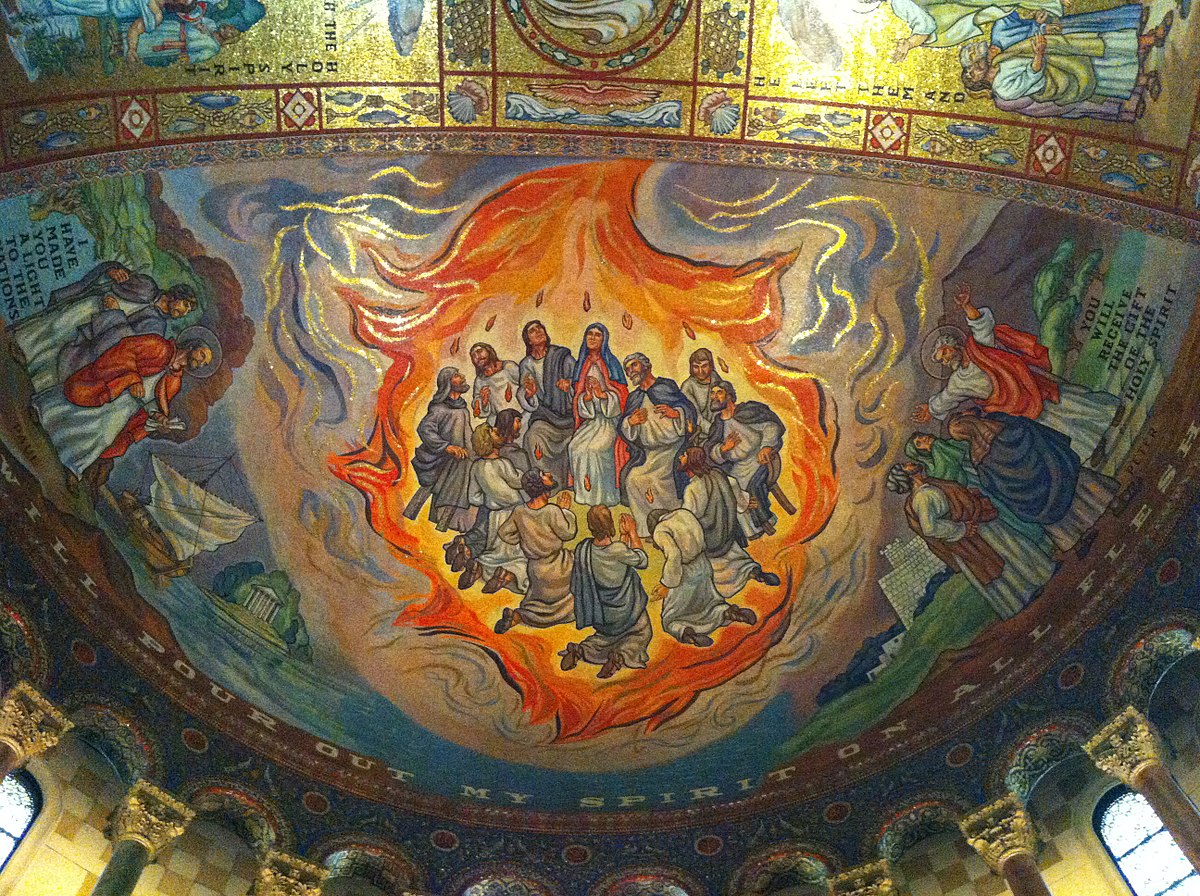
On Pentecost, Jews from all over the Roman Empire gathered in Jerusalem. Many were in the upper room with the apostles, when the Holy Spirit visibly empowered the apostles with tongues of fire, a violent wind, and the reversal of the tower of Babel as people of many different language groups were able to hear the apostles speak in their native tongues. These signs caused much excitement and wonder as the people responded to the work of God. As was true during the time of Jesus’ ministry, there were some who were ready to hear the gospel and others who were not. Those who were ready to hear the apostles’ message were able to understand the apostles’ message while those who were not ready did not understand the signs and resorted to mocking the apostles as if they were drunkards. This was no different than the time of Jesus’ ministry, the signs of the kingdom caused some to respond with increased faith while others responded with unbelief and hardened hearts.

As Jesus had promised, the Holy Spirit gave the apostles the words to explain what was happening. Peter quoted from the book of Joel about how the Spirit would be poured out causing all kinds of people to prophecy: sons and daughters, old men, and young men. Then Peter also quoted from David’s Psalms as he wove together the story of how all these things fit into the story of Jesus’ life, death, and resurrection. Those who were ready to hear the gospel asked what their response should be. Peter told them to repent, be baptized and then they too could receive the gift of the Holy Spirit. Since many of these people were from the Jewish diaspora, they, now filled with the Holy Spirit, would have been able to return to their homes to continue to spread the gospel, although it seems that some people from the diaspora stayed in Jerusalem.

We have sparse details of the life of the church, but there are a few things we know which are described quite succinctly in Acts 2:42-47:

And they devoted themselves to the apostles’ teaching and the fellowship, to the breaking of bread and the prayers. And awe came upon every soul, and many wonders and signs were being done through the apostles. And all who believed were together and had all things in common. And they were selling their possessions and belongings and distributing the proceeds to all, as any had need. And day by day, attending the temple together and breaking bread in their homes, they received their food with glad and generous hearts, praising God and having favor with all the people. And the Lord added to their number day by day those who were being saved.

With the rapid increase in disciples came some logistical problems as well. The miracles of the Spirit did not end the day-to-day problems of communicating between different cultural groups within the church. In the normal practice of sharing goods within the church and within that the need to take care of widows and orphans, there came a point where the Greek-speaking widows from outside Israel were not getting the same care as the Hebrew speaking widows. Because the apostles wanted to focus on teaching and prayer, they gathered the church to address the issue. The church resolved the issue by selecting seven men to oversee the distribution of goods. However, this would not be the last time that language and culture barriers would affect life of the church.

Observe

Read Exodus 18:13-26; Acts 6:1-7. What do these passages say about effective leadership?

The Kingdom is near again

Dancing in the Kingdom- Table of Contents

Dancing In the Kingdom – Part 2 – The Kingdom Revealed – Chapter 11 – The Kingdom Enters

The Kingdom is near again

[Bible references: Matthew 3:1-2; 4:12-17; 26:61]

There was a common message that John preached – and that Jesus preached after John was arrested, – “Repent, for the kingdom of heaven is near.” The kingdom of heaven once overlapped the earth within the Garden of Eden and then again on the mercy seat within the Holy of Holies in the tabernacle at which time we had limited access because of our sin. Before the temple was built to replace the tabernacle, there was a period during David’s reign when the ark was not kept in Moses’ tabernacle but in Jerusalem where everyone had access (See Chapter 9, The strange story of the ark and the tabernacle). When the temple was built, the ark was placed inside the Holy of Holies once again, and again, only the high priest had could have access. But now the kingdom of heaven was present within Jesus,[1] and as with David’s tabernacle, everyone would have access again.


[1] The Bible Project “Heaven and Earth” Bible Project www.pursuegod.org/biblical-themes-an-animated-explanation-of-heaven-earth

Read Matthew 26:61. Jesus refers to his body as the temple, the place where God dwells. Jesus was, of course, accessible to everyone around him. Jesus was Immanuel, God with us. Jesus’ very presence was an invasion of the Kingdom of God on earth, and whose power was shown in the healings Jesus performed. Is that presence of the kingdom available now?

Future Hope

Dancing in the Kingdom- Table of Contents

Dancing In the Kingdom – Part 1 – Shadows of the Kingdom – Chapter 9 – The Prophets and writings

Future Hope

[Bible references: Jeremiah 29:10-15; Jonah]

But in the end was God’s promise to restore his kingdom and bless all those who repent. One prophet was even sent to a Gentile nation to call them to repent or be destroyed. When they did repent, God held back his punishment – although history tells us that they would go back to their old ways, and eventually be destroyed. But a greater hope lay beyond that.

Reflect

Despite Israel’s constant failure, God’s plan was to discipline, not destroy, them. Their discipline would eventually be followed by God’s plan to provide the Messiah, the Savior of the world. What might that mean about God’s plan for you?

Observe

Read Jeremiah 29:10-15. The hope presented here seems to be a temporary one, but does it point to a hope beyond that?

Lament and Anger

Dancing in the Kingdom- Table of Contents

Dancing In the Kingdom – Part 1 – Shadows of the Kingdom – Chapter 9 – The Prophets and writings

Lament and Anger

[Bible references: Isaiah 1:2-20; 10:5-11; 13:1-22; 15:1-16:22; Isaiah 10:5-11; 66:24; Micah 5:10-15; Hosea 11:1-9; Luke 19:41-44]

God’s response to Israel’s unfaithfulness through the prophets was to lament. His lamenting included calls for Israel to repent and turn back to Him and was usually followed by anger and a promise to root out, pull down and destroy Israel or any other nation around Israel that was involved in sin.[1] Sometimes God used other nations to discipline Israel but that was usually followed with threats to those same nations for their own behavior.[2]


[1] Ex: Prophecy against Assyria (Isaiah 10:5-11), Babylon (Isaiah 13,), Moab (Isaiah 15-16) and others

[2] Enter the Bible, “Isaiah 1:29 – God’s Lament” Enter the Bible enterthebible.org/passage/isaiah-12-9-gods-lament; Banbury, Rosalind. “God Laments” Presbyterian Outlook pres-outlook.org/2021/03/horizons-8-god-laments/

Reflect

How does knowing God’s attitude towards sin affect our attitudes?

Observe

Read Hosea 11:1-9. What hope is expressed in the lament?