Relation to Yahweh

Dancing in the Kingdom- Table of Contents

Dancing In the Kingdom – Part 3 – Dancing in the Kingdom– Chapter 17 – Finding our place

Relation to Yahweh

[Bible references: Exodus 6:1-6; 1 Corinthians 13:12]

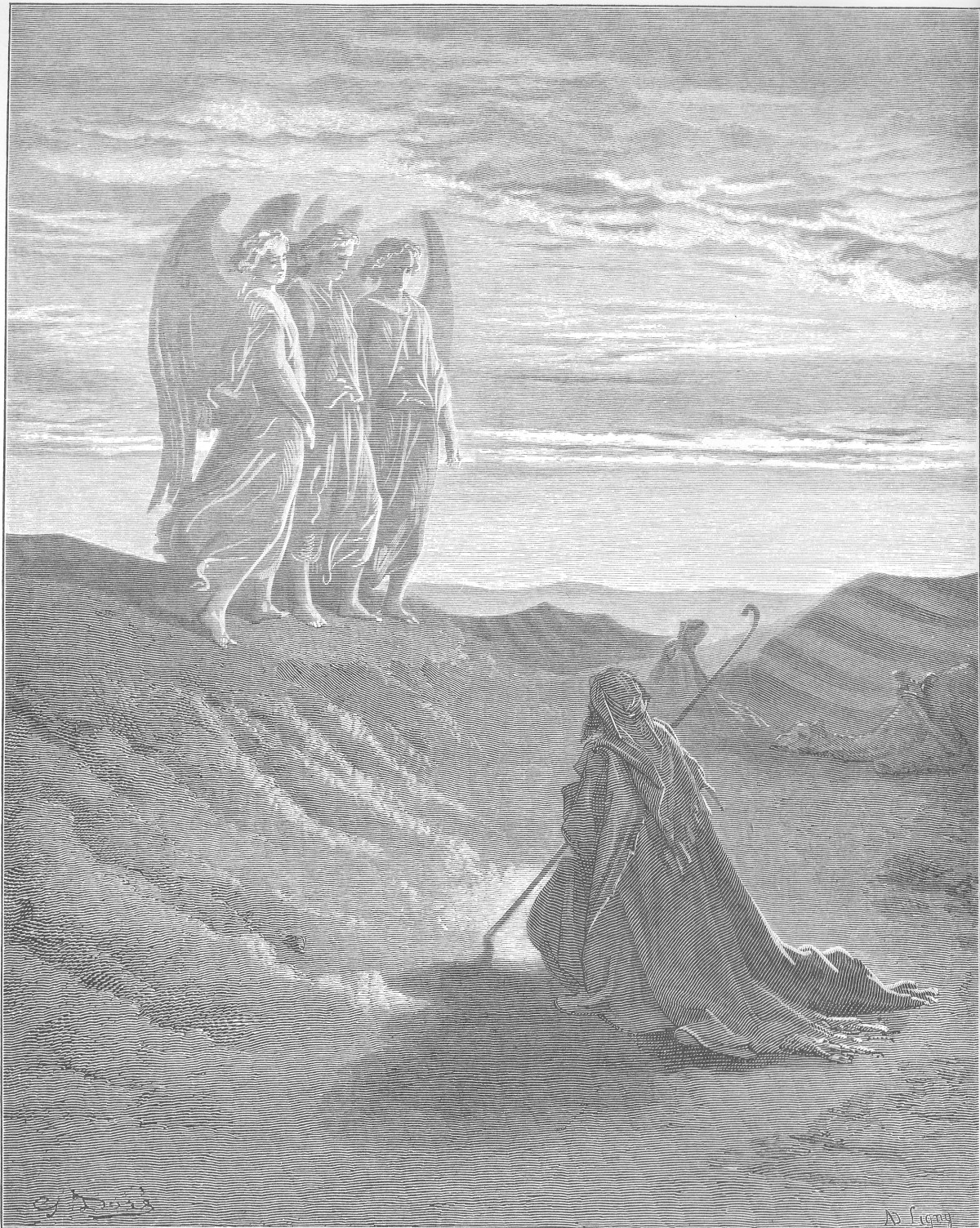
Most English translations of the Bible obscure a very significant relationship. In Exodus 6, the Creator revealed himself to Moses as Yahweh for the first time in history. Our translations mask the personal nature of the name when they translate that name with the title, LORD. However, if when reading the Old Testament replacing the word LORD with the name, Yahweh, we will discover, particularly in the Psalms, a very personal relationship between us and Yahweh.

Not only is God not some impersonal force but He is a person with whom we can have a relationship. In fact, He created us to have a special relationship with Him. As such, the meaning of our lives cannot be found solely within ourselves as if we were isolated creatures or self-contained universes. We are image-bearers of Yahweh, the person who is a community, we are designed to be people in community. And since we are created as an outpouring of the love that was shared between the Father, Son, and Holy Spirit, we should outpour that very same love in our relationship with Yahweh and with each other.

We were created to be co-creators with Yahweh. Not that we have the same kind of powers, but we can use the materials and abilities He has supplied for us to create families, cities, nations, art, tools, and many other types of things. It was intended that our creations would glorify Him.

We know that we are not able to love Yahweh in the same way He loves us. Firstly, He is the Creator, and we are the creatures. Secondly, ever since our Rebellion, we were born in a corrupt state with a tendency to rebel against our Creator. Therefore, to discover the meaning of our lives, we need to search out the essence of the love of Yahweh toward us. In Chapter 15, we explored the various spiritual disciplines which could be helpful in guiding us in the search of who Yahweh is and how he loves us.

Even though our rebellion against Yahweh has harmed our relationship with Him, he continues to love us and has made provision for our relationship with Him to be restored. It is also because of his love, that he has had great patience to endure our constant rebelling and he is constantly working to draw us back to him. Our relationship with Yahweh does not require us to do great things or to do sufficient good things to outweigh the bad things we do. We “merely” need to be born again, to have his Spirit join with our spirit. When we are born of the Spirit, that is when we are born again, then we are not only image-bearers, but children of our heavenly Father. And one day, we will know him fully even as we are fully known by Him.

Observe

Read Exodus 6:1-6. What is the difference between knowing God as “God Almighty” (El Shaddai) vs. “Yahweh?”

Discipline of Prayer

Dancing in the Kingdom- Table of Contents

Dancing In the Kingdom – Part 3 – Dancing in the Kingdom– Chapter 15 – Reforming our Souls

Discipline of Prayer

[Bible references: Matthew 6:6-7; Luke 11:11-13; Romans 8:26; Colossians 1:9-14; Philippians 4:6; 1 Thessalonians 5:17]

To have God speak to the heart is a majestic experience, an experience that people may miss if they monopolize the conversation and never pause to hear God’s responses.[1]

“We tend to use prayer as a last resort, but God wants it to be our first line of defense. We pray when there’s nothing else we can do, but God wants us to pray before we do anything at all. Most of us would prefer, however, to spend our time doing something that will get immediate results. We don’t want to wait for God to resolve matters in His good time because His idea of ‘good time’ is seldom in sync with ours.”[2]

“I think the reason we sometimes have the false sense that God is so far away is because that is where we have put him. We have kept him at a distance, and then when we are in need and call on him in prayer, we wonder where he is. He is exactly where we left him.”[3]  

 “Authentic worship will impel us to join in the Lamb’s war against demonic powers everywhere—on the personal level, on the social level, on the institutional level. Jesus, the Lamb of God, is our Commander-in-Chief. We receive his orders for service and go …”[4]

Fortunately, we have a heavenly Father who cares for us – a Father, not just a distant God, but a Father who created us so that we could share His love, a Father who desires a friendship with us, a Father who desires a partner to rule Creation with Him. The grief, sometimes overwhelming, is that we allowed sin to break our relationship with Him and break our relationship with each other and with Creation itself. The result is that we don’t talk like we should, we let shame and embarrassment get in the way of what could be a wonderful and intimate relationship.

The goal of prayer is to rebuild that relationship, to share concerns, to listen, to express our appreciation of each other, to share our feelings. We have the benefit of having a Father who already knows us better than we know ourselves, who knows our thoughts and our needs – but He still wants us to talk, to give us a chance to be honest with him (and ourselves), to confess what we need to confess, to deal with any confusions that we have. He wants us to participate with Him in bringing His kingdom into our lives and into the world, to share His love for the world and to seek justice for the oppressed, to even to bring His shalom into the world.

We have needs and the world has so many needs, that it seems that our list of petitions is overwhelming to the point where it makes us give up. But our prayer is more than a list of petitions because the God of love rules over all creation and that love brings us to express adoration and thanksgiving. And when our brokenness gets in the way of our relationship, we can bring our confessions of sin so that we may receive His overwhelming forgiveness.

Having a prayer life with a loving God should just happen, but it doesn’t and that brings us to the discipline of prayer – to help our prayer life, our talks with God, to happen despite our brokenness.

There are times when we are desperate, when we feel that we have no options … so, we pray. These are the times that St. John of the Cross said are the “dark nights of the soul.” As people of faith, we know that those “dark nights” don’t last forever. Just as surely as we experience the darkness, there is the resurrection light. These dark nights of the soul – these times of spiritual crisis – lead us closer to God. As we pray, are persistent in prayer, and are willing to be moved by the Holy Spirit through prayer? We will see that prayer changes us and help us grow to become more able to see others as God sees them.


[1] Stanley, Charles.

[2] Chambers, Oswald.

[3] Zacharias, Ravi. Has Christianity Failed You? Zondervan 2017

[4] Foster, Richard J. “Celebration of Discipline” Harper & Row Publishers ©1978 p. 173.

Observe

Read Colossians 1:9-14. For whom could you be praying this prayer?

Our relationships

Dancing in the Kingdom- Table of Contents

Dancing In the Kingdom – Part 3 – Dancing in the Kingdom– Chapter 14 – Remembering our creation

Our Relationships

[Bible references: 1 Peter 4:7-11]

All of these activities are done in context of our relation to God, to each other, and to our land. God has created us in His image, in the image of a triune God in which Father, Son and Holy Spirit exist as three persons united into one. Within that framework, God created us as male and female, each created as creatures made in God’s image yet different from and interdependent upon each other. When God made a woman for Adam, He specified that the woman would be an ‘ezer kegnedo,’[1] a strength corresponding to him. God created us from the dust of the earth, so although we are stewards of the earth, we are also dependent on the earth. In the earth, God has provided for us the resources we need to do our tasks. In all these relationships, God has intended that we are to live in unity with Him, with one another and with our environment.

Over time, our unity in all these areas got more complicated as our numbers grew. We needed to create organizations which necessarily became more complex as our societies grew and as our collective impact on the earth became more substantial. We needed extra discipline to maintain our relationship with God. We also needed to develop more skills in diplomacy, administration, and hospitality as we deal with more and different people. We needed to pay closer attention to the effects of our culture on the earth and its creatures to minimize the damage from so many people using our physical resources.

All of our work, our stewardship, is intended to have a direction, to bring maturity, fruitfulness, and growth to God’s work. The work we were charged to begin in the Garden of Eden was designed to end in the filling and subduing of the earth, in the cultivation of the whole earth where heaven and earth overlap so that work and worship are the same thing.[2]


[1] God’s Word to Women. “Ezer Kenegdo” God’s Word to Women godswordtowomen.org/ezerkenegdo.htm; Francois, Mark Steven. “(Ezer Kenegdo) in Genesis 2:18” Between the Perfect and the Doomed markfrancois.wordpress.com/2013/07/22/%D7%A2%D6%B5%D7%96%D6%B6%D7%A8-%D7%9B%D6%B0%D6%BC%D7%A0%D6%B6%D7%92%D6%B0%D7%93%D6%B4%D6%BC%D7%95%D6%B9-ezer-kenegdo-in-genesis-218/

[2] Huber, Dave. “Avodah Word Study” EFCA Today Summer 2012 www.efcatoday.org/story/avodah-word-study

Observe

Read 1 Peter 4:7-11. What are we charged to do?

Mystery of worship

Dancing in the Kingdom- Table of Contents

Dancing In the Kingdom – Part 2 – The Kingdom Revealed – Chapter 13 – Distinctives within the body of Christ

Mystery of worship

[Bible references: Deuteronomy 4:15-24; 12:1-32; Romans 12:1-21; 1 Corinthians 14:1-40; 1 Timothy 2:1-15; Hebrews 12:1-39]

What are proper ways of worship?

In Hebrew, the word for worship means “to bow down, to prostrate oneself” or to “lay flat on the ground.”  In Greek, the words for worship mean to “kiss the hand, to fall on the knees,” or to “prostrate oneself” “to pay homage” or “to render religious honor.”  These things can be done in the context of a “worship service” on a Sunday or in any activities throughout the week. Activities in work or play can be done in an attitude of worship.

There are some differences in belief about the role of arts in worship: Is music or artwork or dancing permissible, or what kind of music or artwork or dancing is permissible? Part of the differences are due to whether activities are permissive unless specified otherwise in the Bible or activities are not allowed unless specified in the Bible.[1] Some of those differences emerged in the way some of the Protestants perceived abuses of the arts in the Roman Catholic denomination. Despite these disagreements, there are some hymns that have been widely accepted across many denominations. In a similar fashion, many congregations/denominations have adopted the contemporary style music, although in some congregations that style of music has created divisions. Music can be important as an alternate means of expressing theology.

Icons are a specialized type of artwork that represent sacred objects or honored saints in the church. The icons were used as a visual method of teaching and were particularly important when literacy rates were low. Icons are meant to take the place of the physical presence of admired saints, and because of this, Roman Catholic and Orthodox congregants will bow to or kiss the icons as if they were bowing to or kissing the actual revered saints. This is not meant to worship the icons but to show respect.[2]

Prayer can be done formally, informally, individually, or corporately. There are different viewpoints about whether praying to the saints – asking them to pray for us – is acceptable. There are also differences about whether mystical experiences in prayer are proper.

What about Mary?

The mother of Jesus is in the middle of one of the great mysteries: How is it possible for the infinite God to become a human even from the point of conception? Related to that question are other questions: Why was Mary selected? How was it possible for her to conceive Jesus? Were there any special qualities for Mary to have in order to become the mother of Jesus, the Son of God? Did she actually become the Mother of God?[3]

The Roman Catholics consider that Mary was conceived without original sin.[4] Both the Roman Catholic and the Orthodox denomination’s view that Mary did not die but fell asleep,[5] and then was physically assumed into heaven.[6] The Protestants mainly reject these views and because of their reaction to the corruption of the Roman Catholic denomination have generally not held Mary in as high esteem.

What are liturgies?

Liturgy is derived from the Greek “public work” or “public ministry.” Within the church it has been usually applied to the worship service (for most congregations) on Sundays. For some congregations it specifies the service where Communion[7]  is performed. In some instances, the term has been used to specify worship services that have a formal structure. Sometimes, in order to delineate services that are more formal from services that are less formal, the terms “high church” and “low church” are used. In the “high church” setting the liturgy will be specified particularly as the Liturgy of the Word and Liturgy of the Eucharist. Used more loosely, the term can be used to specify any type of public service, whether it is in gathered worship or scattered worship,[8] whether it’s in front of other people or simply front of God (who is always there). In some evangelical denominations, liturgy is seen as something we do for God, but in other cases, liturgy is seen as a setting where God meets us, and we respond.

What about the Sabbath?

From the Creation account, we see that the point of creation was to create a temple, a place for God to be with His image-bearing creatures. The “seventh day” was meant to indicate that the temple was now complete, and that God’s image-bearing creatures could fulfill the role of being God’s representatives on earth, to take care of the earth as his priests.

Unfortunately, our human rebellion separated us from God, and our role as his stewards of his creation became corrupted. The Sabbath liturgy was introduced to Israel as a weekly reminder to them of their priority to have a relationship with God; that they, as God’s chosen nation, could rest from their weekly labor because God would provide for them. This weekly setting aside of labor was a gift from God, still enjoyed by Jews to this day.

The early church consisted of mostly Jews who still celebrated the seventh-day Sabbath, but quickly also adopted the first day, the Lord’s Day, as a celebration of the resurrection of Jesus. The Bible never required Gentiles to celebrate the Sabbath. Even if we regard the laws that applied to Noah to be also applicable to Gentiles, none of those laws prescribe Sabbath observances. As the church developed, different congregations developed different practices regarding the Sabbath. While the trend was towards Sunday gatherings to worship, some groups, who could be called Sabbatarians, applied Sabbath restrictions to Sunday. Others allowed for more freedom with a focus on the celebration of the joy of Christ’s resurrection, with the thought that all people who have the Spirit of God are Christ’s temple and we do his work each day of the week.


[1] Got Questions. “Regulative vs. normative principle of worship – which viewpoint is correct?” Got Questions www.gotquestions.org/regulative-normative-worship.html

[2] OrthodoxWiki “Veneration” OrthodoxWiki orthodoxwiki.org/Veneration

[3] OrthodoxWiki “Theotokos” OrthodoxWiki orthodoxwiki.org/theotokos

[4] Catholic Encyclopedia “Immaculate Conception” New Advent www.newadvent.org/cathen/07674d.htm

[5] OrthodoxWiki “Dormition” OrthodoxWiki orthodoxwiki.org/Dormition

[6] Sri, Edward. “The Assumption of Mary” Franciscan Spirit Blog www.franciscanmedia.org/franciscan-spirit-blog/the-assumption-of-mary

[7] Also known as the Eucharist or Thanksgiving

[8] Warren, Tish Harrison. Liturgy of the Ordinary: Sacred Practices in Everyday Life. InterVarsity Press 2016. eBook Chapter 7

Mystery of sin, salvation, and sanctification

Dancing in the Kingdom- Table of Contents

Dancing In the Kingdom – Part 2 – The Kingdom Revealed – Chapter 13 – Distinctives within the body of Christ

Mystery of Sin, Salvation, and Sanctification

[Bible references: Ps 38:39; Is 12:2; 25:9; Zephaniah 3:17; Matthew 26:28; Luke 24:47; John 3:16; 10:9; Acts 2:38; 4:12; Romans 5; 6:23; 1 Corinthians 1:21; 15:2; Ephesians 2:8; 2 Tim 3:15]

How do we inherit sin?

There are two main views of how we inherit sin:

  • According to ancestral sin, Adam and Eve alone bear the full responsibility and guilt for the sin in the Garden, but we inherit mortality, the tendency to sin, and alienation from God and other people. Expulsion from the Garden was to prevent the humans from being eternally separated from God.
  • According to original sin, as Adam’s ancestors we inherit not only Adams’ sinful nature but his guilt as well. Expulsion from the garden was a punishment.

What did Jesus do to allow our relationship with him to be restored?[1]

By taking on human flesh the way that Jesus did and becoming fully human, he experienced all the temptations to sin that we face, but without succumbing to them. When he died on the cross as a perfect God-Man, he was able to overcome death and offer to restore our relationship with him. Different congregations have different ideas on how this transaction was able to actually work.

  • God paid a ransom to free us. Once the ransom was paid, justice was satisfied, and God was able to free us. There is a dispute about whether the ransom was paid to God or to the Devil.[2]
  • Christ is seen as the second Adam who is victorious where Adam failed and undoes what Adam did. The atonement of Christ has reversed the course of mankind from disobedience to obedience. Christ’s life recapitulated all the stages of human life and in doing so reversed the course of disobedience initiated by Adam.[3]
  • Just as Adam’s sins were imputed to us (original sin), when Jesus died on the cross, his righteousness was imputed to us.[4]
  • Christ suffered for everyone so that the Father could forgive the ones who repent and believe. Pardon and forgiveness cannot be brought to pass unless God’s righteous obligations as Moral Governor can be satisfied. Nor can it happen unless man is willing to repent and embrace the conditions of mercy. Man must identify himself in a committal of faith to the sufferings of Christ for his sins, as the only hope of his forgiveness and spiritual restoration from a state of ruin.[5]

What is the effect of sin on our bodies and on our world?

Despite the effects of sin, that we are image-bearers of God. This view creates a positive view of our bodies and is supportive of taking healthy care of our bodies and also the environment. However, there is a viewpoint originally developed by Greek philosophy that has continued to affect the church in many ways from the beginning is the idea that only spiritual things are good and physical things are bad.[6]

In regard to the body, this dualism leads to the view that sex is sinful and a general discomfort in talking about the body, preventing the church from counteracting the influence of the culture both within and outside the congregation. This dualism has led to many other errors as well, such as focusing on heaven as our final destination instead of a new creation, the need to deny oneself physical pleasure[7] in order to pursue the spiritual, and the neglect of our roles as stewards of our physical environment.

How are we saved from the consequences of our sins?

When the first people rebelled against God, they brought the penalty of death and eternal separation from God upon themselves. As descendants of those people, we inherited the corrupt nature that causes us to sin and therefore also brings the penalty of death and separation from God upon ourselves. Our salvation is only possible because of the death and resurrection of Jesus. The gift of salvation can be received when we confess our sins, acknowledge Jesus’ death on our behalf and accept God’s forgiveness for our own sins.

That said, there are two explanations about how we are saved that depend on how we think we inherited sin.

  • According to the doctrine of ancestral sin, salvation is a process of avoiding sin and becoming more like God,[8] a process which, for those who are baptized into Christ, will continue after our death and resurrection. God did not expel Adam and Eve out of the Garden of Eden and away from the Tree of Life as a punishment, but out of compassion, so that we would not be like the fallen angels and become immortal in sin.
  • According to the doctrine of original sin, Jesus’ death is considered to have paid the penalty for our sins. By receiving his forgiveness, we are legally justified before God, and he gives us his spirit so that we can begin the process of becoming more like him.

What is the role of grace in salvation?

In Reformed theology, God gives irresistible grace to those he chose before time began and gave them the will to respond to his call to repent so that they can be forgiven, and once forgiven, God will ensure that they will persevere in the faith.

In provisional theology all men are given a grace[9] that allows them free will to respond to God’s call to repent and be saved and also have God’s assurance that he will not let us go.[10]

In Arminian and Orthodox theology, it is by our free will that we accept God’s forgiveness and then also have the free will to abandon that faith later.

What does it mean to be saved by grace and yet have expectations to live righteously?

Some Christians think that once they are converted, that is they have received Christ’s gift of salvation, then they have done all they need to do. After that, some will either forget or neglect the entire process of being a disciple of Christ leaving the question of whether they were actually converted.

Some congregations believe that more than faith is required in order to receive salvation[11] and insist that salvation has not happened unless some specific things are done. The Orthodox tradition states that salvation is a process that begins with conversion but then continues with the process of becoming more like God. The Roman Catholic and Protestant traditions state that once we have been justified, then God can set us apart to be the type of people that he has intended us to be from the beginning.[12] In this condition, we can begin the process of growing in Christ, that is, becoming more like God.

We are living in the time between the first coming of Christ, where he conquered death and sin, and His second coming, when he will transform creation with a new heaven and earth, and we will have new resurrection bodies. In this in-between time, we still are living in corrupt bodies and in an earth corrupted by sin although we may have begun the process of being transformed more into the image of Christ. This does create some confusion.

Until the final resurrection we still sin and need to regularly be in an attitude of repentance, confessing our sin and turning back to God and acknowledging our need for God’s grace so that we can also be ready to give grace to others.

The Roman Catholics emphasize our need to not only confess our sins, but to do something tangible to express our repentance[13] and need to be purified more completely before we can appear before God. This requires a temporary stay in purgatory before we are allowed into heaven.

Viewing things in a more positive light, some congregations emphasize that while we may not actually free from sinning, that our hearts have been cleansed from sin by the grace of God.[14]

Since we are under grace, do the commandments still apply to us?

We are told that those who are born “of the Spirit” are not “under the law” because Jesus fulfilled the law. However, that does not mean that the law can be ignored. In fact, not only does the law provide guidance for us, but the expectations for our behavior are even more comprehensive. The New Testament explicitly tells us that:

  • hating our brother is equivalent to murdering our brother. 
  • we should not hate our enemy but love them.
  • looking at someone with lust is like committing adultery.
  • if we are forced to go one mile, then we should go two miles.

Our motivation should not come from trying to obey the external law “written in stone” but rather from the internal desires “written in our hearts” to love – love God and to love one another. To give a few examples: we should be.

  • Not driven to obey the Commandment to keep the Sabbath, but rather encouraged to live every day to God.
  • Not driven to obey the command to tithe, but rather encouraged to be generous.
  • Not driven to obey the command to not covet, but rather encouraged to promote the welfare of others.
  • Not driven to obey commandments, but rather encouraged to express the fruits of the Spirit.
  • Not driven to obey externally given commands, but rather encouraged to grow in our internal desire to love,
  • Not driven to avoid doing wrong, but rather encouraged to delight in finding the best way to do what is right

However, the relationship of the church to the law has been a point of contention in many congregations causing many congregations to adopt a legalistic framework. There is a tendency to consider the laws we call the Ten Commandments to be unlike the other laws in the Old Testament – to be “moral laws” that still apply. The New Testament, however, has not separated out the “moral law” from the rest of the laws (sometimes called civil and ceremonial laws) in the Old Testament. Some consider the Law to be good as it guides us away from idolatry, but others view the law to be bad as we should rather be relying on grace instead of the law which is considered to be oppressive.

The Ten Commandments, as we call them, are not numbered in the original texts (Exodus 20, Deuteronomy 5) but in the Biblical text are referred to as the Decalogue, which means “ten words.”[15] This has resulted in a couple of different numbering schemes for the “ten words.” One of the variations is influenced by iconoclasm, which makes “You shall not make any graven images …” the second commandment.


[1] Soteriology is the study of how we are saved

[2] Theopedia “Ransom”  Theopedia theopedia.com/ransom

[3] Theopedia “Recapitulation theory of atonement”  Theopedia theopedia.com/recapitulation-theory-of-atonement

[4] Theopedia “Penal substitutionary atonement”  Theopedia theopedia.com/penal-substitutionary-atonement

[5] Theopedia “Governmental theory of atonement” Theopedia theopedia.com/governmental-theory-of-atonement

[6] In Persia during the third century, Mani tried to synthesize all the known religions, including Gnosticism and Christianity into a religion known as Manichaeism. Gnostics think that there is a good spiritual world, and a bad physical world (aka Dualism).

[7] New Advent “Asceticism” New Advent newadvent.org/cathen/01767c.htm

[8] Theopedia “Theosis” Theopedia www.theopedia.com/theosis

[9] Prevenient grace means the grace of God that surrounds all, and is at work in all, even before we know or care about it.

[10] Spurgeon, C.H. “The Security of Believers – or, sheep who shall never perish”  Spurgeon Gems spurgeongems.org given 5 Sept 1889 www.spurgeongems.org/sermon/chs2120.pdf

[11] Theopedia “Legalism” Theopedia theopedia.com/legalism

[12] Sanctification is the process of being set apart for God’s use.

[13] Catholic Encyclopedia “Penance” Catholic Encyclopedia catholic.com/encyclopedia/Penance

[14] Theopedia. “Wesleyan perfectionism”  Theopedia www.theopedia.com/wesleyan-perfectionism. Wesleyan perfectionism, sometimes called entire sanctification, is a view held by John Wesley that taught that Christians could to some degree attain perfection in this life.

[15] Hale, Philip. “Numbering the Decalogue, Images, and Iconoclasm: A Historical and Theological Survey”  Nebraska Lutherans for Confessional Study, July 25, 2013

Observe

Read John 3:16; 10:9; Acts 2:38. How can we be reconciled to God?

Reprise with variations

Dancing in the Kingdom- Table of Contents

Dancing In the Kingdom – Part 1 – Shadows of the Kingdom – Chapter 1 – Prelude

Reprise with variations

[Bible references:  Genesis 1; Psalm 8; 111; Exodus 8:16-19; John 21:1-14; Romans 8:19-22; 1 Corinthians 15; 1 Thessalonians 4; 5; 2 Peter 3; Revelation 21-22]

“The creation of the world seems to have been especially for this end, that the eternal Son of God might obtain a spouse towards whom he might fully exercise the infinite benevolence of his nature, and to whom he might, as it were, open and pour forth all that immense fountain of condescension, love, and grace that was in his heart, and that in this way God might be glorified. [1]

God created the universe for his glory, and within that, humans were created to experience the true joy of living, to bear the fruit of His nature, to reflect His presence. We are designed to be image-bearers of God himself, stewards of the creation He inserted us into as we reflect the very character of God. The exercise of stewardship is seen in the process of “subduing” and “having dominion” over the earth (its creatures and it resources), and in being “fruitful” and filling the earth. God’s initial reaction to creating us was, “It was very good.” His intent was that we would fill and take care of the earth, all the while reflecting His character to each other and to His creation.

In the beginning, heaven and earth were joined at the Garden of Eden. It was a place where the Creator could have communion with his image-bearers and walk in the garden with them. The garden was the perfect place for the image-bearers to develop and begin working out the intended future of filling the earth and ruling over it as co-regents with God.

He gave us unimaginable delight and freedom, but that very freedom He gave us was joined to a responsibility, a responsibility that was wrongly used and caused immense far-reaching damage – damage we could not possibly undo – the whole universe is groaning, waiting for to be restored. Our pride-laden rebellion damaged the relationships between each other, between us and God, between us and the world and even between heaven and earth; but God had a plan from the beginning, a plan which is now underway, to ultimately restore what was lost and undo that damage[2] and bring us to our intended destination – an earth filled with and ruled by image-bearers and where heaven and earth are rejoined so that the image-bearers can walk with God once again.

“Jesus’ own teaching during his brief public career simply reinforced the Jewish picture. He redefined a lot of ideas that were current at the time – notably, of course, kingdom of God itself, explained in many coded parables and symbolic actions that God’s sovereign, saving rule was now breaking in, even though it didn’t look like what his contemporaries had imagined and wanted.”[3]

Ultimately, we will be freed from the bondages of sin and death and all the relationships that are now damaged will be restored. In fact, in a timeline that we cannot fully grasp, God waited from the beginnings of mankind until 2000 years ago to defeat the power of sin and death and begin the process of restoring His kingdom on earth. Then He told us that someday, he will complete that process and he will return in the fullness of his glory to fully restore all things at that time. We just don’t know when that will be.

Our hope looks at the resurrection of Jesus as a harbinger of the resurrection that awaits all those of us who will be united with Him in our own transformed bodies in the new heavens and the new earth.

‘… what is the ultimate Christian hope? …what hope is there for change, rescue , transformation, new possibilities within the world in the present … if the Christian hope is for God’s new creation, for “new heavens and new earth,” and if that hope has already come to life in Jesus of Nazareth, then there is every reason to join the two questions together … “God’s kingdom” in the preaching of Jesus refers not to postmortem destiny, not to our escape from this world into another one, but to God’s sovereign rule coming “on earth as it is in heaven.” [4]

Furthermore, our hope doesn’t ask for us to simply wait for that time when the Kingdom of God is fully restored, but that we can be part of God’s plan to bring the Kingdom of God into our broken world.


[1] Edwards, Jonathan, “Works of Jonathan Edwards, Volume Two,” SERMON II. THE CHURCH’S MARRIAGE TO HER SONS, AND TO HER GOD. Ed. John E. Smith, Yale University Press, 2009(p. 62)

[2] Bible Project “Pursuing God, Heaven and Earth,” Bible Project www.pursuegod.org/biblical-themes-an-animated-explanation-of-heaven-earth

[3] Wright, N.T. “Surprised by Hope: Rethinking Heaven, The Resurrection, and the Mission of the Church” Harper Collins 2008. Kindle Edition(p. 18).

[4] Wright, N.T. “Surprised by Hope” Harper Collins 2008. Kindle Edition (pp. 4-5, 18)

Reflect

Speaking strictly from what we know from science, we seem to be random life forms on a random planet in a random spot in the universe. In that perspective, having an anthropocentric view of the universe seems absurd. But knowing what the Creator of heaven and earth has revealed to us, the universe was designed to be inhabited … by us! How does that change your view of the universe?

Observe

Read John 21:1-14. What does this passage suggest about our resurrection bodies?

Scope and direction of sin’s consequence

Dancing in the Kingdom- Table of Contents

Dancing In the Kingdom – Part 1 – Shadows of the Kingdom – Chapter 1 – Prelude

Scope and direction of sin’s consequence

[Bible references: Genesis 2:16-17; 3:14-15, 23; 6:5; Romans 8:19-28]

And so, it happened. The one thing that could create the ultimate catastrophe did happen. The good Creator, who only intended good things, allowed his image-bearers to give into their temptation, to put their own authority above His and violate the one restriction placed before them. This violation by the stewards of His creation broke everything: the relationship between themselves, the relationship between them and Him, the relationship between them and creation. All of creation was affected and is even now waiting for things to be made right again.

Everything in creation had been designed to be good, to reflect the good character of the good God. Creation was designed to be a place where God and his image-bearers could keep on creating good things and bring increasing glory to God. But now, although the ultimate structure of creation was still good, it was headed in the wrong direction. The broken universe would now cause things to move away from God’s glory.

“Anything in creation can be directed either toward ward or away from God – that is, directed either in obedience or disobedience to his law. This double direction applies not only to individual human beings but also to such cultural phenomena as technology, art, and scholarship, to such societal institutions as labor unions, schools, and corporations. and to such human functions as emotionality, sexuality, and rationality. To the degree that these realities fail to live up to God’s creational design for them, they are misdirected, abnormal, distorted. To the degree that they still conform to God’s design, they are in the grip of a countervailing force that curbs or counteracts the distortion. Direction therefore fore always involves two tendencies moving either for or against God.” [1]

In our current times, we can get things so quickly and easily compared to times in the past. We want what we want, and we want it now. Our desire to get what we want now overwhelms our capacity to think of others, as we put ourselves at the center of our part of the universe, replacing God with ourselves. In the case of the first humans, they wanted to grab knowledge and wisdom for themselves instead of waiting to receive it from God.

Everything was broken and separated from God. Spiritual death, the impaired relation between God and His image-bearers was immediate and would be mirrored by the physical death caused by separation of the people who would no longer have access to the Tree of Life. This was a great tragedy that could not be undone, not by the image bearers. But as we look around us, we can see that, despite the tragedy around us, things aren’t totally bad. Even though evil is very evident around us, there is still some goodness that is evident. It is in that observation that we can glimpse the possibility of hope.

God had ordained the penalty of death to be the consequence of turning away from him. Sin resulted in spiritual death, the immediate separation God’s image-bearers from God, nevertheless, the people did not die physically right away. Instead, what God did, was to apply discipline to his image-bearers. He also gave a hint of the solution to the problem created by sin, the first of many other hints that were to come.


[1] Wolters, Albert M. “Creation Regained: Biblical Basics for a Reformational Worldview (Kindle Locations 685-689). Kindle Edition.

Observe

Read Romans 8:19-28. How has sin affected you and the one’s you love?