Discipline of Distress

Dancing in the Kingdom- Table of Contents

Dancing In the Kingdom – Part 3 – Dancing in the Kingdom– Chapter 15 – Reforming our Souls

Discipline of Distress[1]

[Bible references: Psalm 11:1-7; 24:1-10; Acts 4:23-31]

“Whenever you are in a time of stress, you should go to the Psalms. They have a medicine for everything, they depict every situation that a human being can be in, and they’ve addressed every emotion you could ever have. They also tell you how to process that emotion or about that situation before God.” [2]

Often in times of difficulty we are prone to turn our focus on whatever it is that is bothering us. This spiritual discipline, sometimes known as “don’t waste an illness,” helps us to confront what has caused us distress, and then to use our distress as an opportunity to lean more fully on God. Instead of being preoccupied by a difficulty we can learn to become occupied with the presence of God.

There are three ways distress can affect us.

  • Distress tends to cause us to focus on the problem in front of us. Like Peter, when He saw Jesus walk on the water, tried to also walk on the water but he became distracted by the winds and waves and lost his focus on Jesus.
  • At other times, distress can make us lean into whatever means of control we have, but again, we focus on the means of control that are right in front of us, forgetting that we are not the ones really in control.
  • Also, as part of needing to control our circumstances, we may avoid acknowledging our suffering or our fears instead of being honest about them to God, which will allow those things to control us later.

When we are confronted by things that cause us distress, we can train ourselves to focus more on God than the situation immediately in front of us, to remember that the Lord is on the throne, that He knows our situation, that He is in control, and that He knows our fears and concerns, that He has a plan. In the future, we may be able to look back like Peter and Joseph and see God’s hand at work in times of distress.[3]

In difficult times, worrying may indicate that we are thinking that we know more than God about how things should be working, and we are worrying that He is not going to get it right. In fact, God may also be testing us, to help us come to grips with what is in our heart, to better understand ourselves, to grow in the faith and to examine our priorities.


[1] Keller, Tim. “Disciplines of Distress” Redeemer City to City 26 Mar 2020 redeemercitytocity.com/articles-stories/tim-keller-disciplines-of-distress

[2] Keller, Tim. “Disciplines of Distress” Redeemer City to City 26 Mar 2020 redeemercitytocity.com/articles-stories/tim-keller-disciplines-of-distress

[3] Peter is remembering that Herod, Pontius Pilate, the Gentiles, and Israelites were anointed to do what God had already predestined them to do. Gen 5:20, Joseph is telling his brothers that the very things that they had intended to do evil, God was going to use it for the good.

Observe

Read Psalm 11:1-7; 24:1-10; Acts 4:23-31. In these passages, what did the people concentrate on in their distress?

Discipline of Lament

Dancing in the Kingdom- Table of Contents

Dancing In the Kingdom – Part 3 – Dancing in the Kingdom– Chapter 15 – Reforming our Souls

Discipline of Lament

[Bible references: 2 Samuel 1:1-2:7; Psalm 10:1-4; 17:20; Jeremiah 4:8; Lamentations 2:5; Micah 2:4; Acts 8:2; John 11:31-33]

Lament is not despair. It is not whining. It is not a cry into a void. Lament is a cry directed to God. It is the cry of those who see the truth of the world’s deep wounds and the cost of seeking peace. It is the prayer of those who are deeply disturbed by the way things are… The journey of reconciliation is grounded in the practice of lament.[1]

“Lament and praise must go hand in hand. …  My tears showed me a God who was still worthy of my praise in troubled times. Lament cries out for shalom. Shalom is active and engaged, going far beyond the mere absence of conflict.… it embraces the suffering other as an instrumental aspect of well-being. Shalom requires lament.[2]

The Bible is filled with lament. When the God’s people are faced with evil, injustice, oppression and turmoil, the Biblical response is often lament. Sometimes the lament is focused on ourselves, sometimes it is focused on others. Sometimes our suffering can reveal the needs we really lack, not necessarily what we do not feel nor see. In all of this we should remember that our lament is not to inform God about our needs or wants, God already knows them, but he wants us to lament and plead so that we may kindle our hearts to stronger and greater desires.

Growing in lament helps us to see the sinful, broken world more fully as God see it, to be more fully aware of how our own sins participate in that brokenness, and to become more aware of our need for God’s justice and grace.

Rest and Remember[3]

The goal of the discipline of lament is to learn to slow down, become more aware of our own emotion and pain as well as others, so that we can learn to cry with God about the pains of suffering and injustice. Resting in God gives us the time to remember and reflect, to consider all the many we and others in the world have been hurt and treated unjustly. As we remember, we may find it helpful to turn to the Psalms. Many of the psalms are psalms of lament, sometimes ending in a declaration that God will respond. In Ps 71, suffering is not seen as a problem as God acts to restore him. As we find ourselves, crying out to God, we can find ourselves wrapped in His goodness knowing that he cares about our pain, It is then we can develop a fuller picture of God and learn to praise him with renewed joy and hope.

Repentance 

In that remembering, fused with the hope of God, we can become more fully aware of the part we ourselves have played in the world’s injustice. Repenting, confessing our role in creating pain opens the way to our own healing as well as the healing of others.

Recompense and Restitution

Our repentance turns us towards God, but we may need to consider practical steps act on our repentance and make amends with those we’ve hurt.


[1] Katongole, Emmanuel. Rice, Chris. “Reconciling All Things: A Christian Vision for Justice, Peace and Healing” Intervarsity Press, 2009

[2] Rah, Soong-Chan. “Prophetic Lament:  Call for Justice in Troubled Times” Intervarsity Press, 2015

[3] Price, Paula Francis. “Lament as a Spiritual Practice” ” Women in the Academy and Professions (intervarsity.org), February 09, 2017, thewell.intervarsity.org/spiritual-formation/lament-spiritual-practice The categories in this section are taken from this article

Observe

Read 2 Samuel 1:1-2:7. What did David do during his time of lament?

The Spirit and the story

Dancing in the Kingdom- Table of Contents

Dancing In the Kingdom – Part 2 – The Kingdom Revealed – Chapter 12 – Launching the church

The Spirit and the Story

[Bible references: Exodus 18:13-26; Joel 2:28-32; Psalm 16; Luke 16:19-31; John 16:13; Acts 2:1-4; 6:1-7]

During Jesus’ three years of ministry, His teaching about the Kingdom of God coming to earth was accompanied by signs: miracles of healing, cleansing, and raising the dead, and by forgiveness of sins. The miracles affirmed the message. With the introduction of the church as the vehicle by which the gospel would be spread, more signs and miracles were called for.

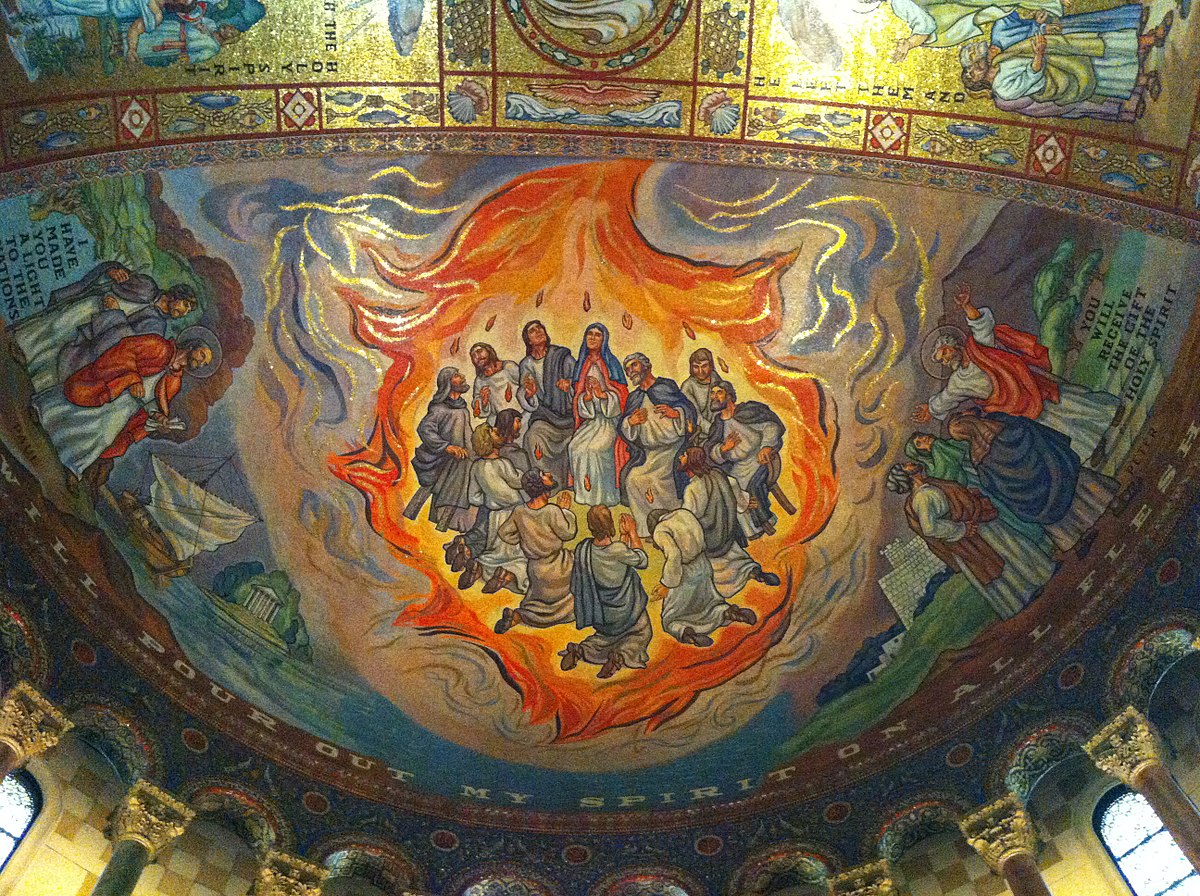
On Pentecost, Jews from all over the Roman Empire gathered in Jerusalem. Many were in the upper room with the apostles, when the Holy Spirit visibly empowered the apostles with tongues of fire, a violent wind, and the reversal of the tower of Babel as people of many different language groups were able to hear the apostles speak in their native tongues. These signs caused much excitement and wonder as the people responded to the work of God. As was true during the time of Jesus’ ministry, there were some who were ready to hear the gospel and others who were not. Those who were ready to hear the apostles’ message were able to understand the apostles’ message while those who were not ready did not understand the signs and resorted to mocking the apostles as if they were drunkards. This was no different than the time of Jesus’ ministry, the signs of the kingdom caused some to respond with increased faith while others responded with unbelief and hardened hearts.

As Jesus had promised, the Holy Spirit gave the apostles the words to explain what was happening. Peter quoted from the book of Joel about how the Spirit would be poured out causing all kinds of people to prophecy: sons and daughters, old men, and young men. Then Peter also quoted from David’s Psalms as he wove together the story of how all these things fit into the story of Jesus’ life, death, and resurrection. Those who were ready to hear the gospel asked what their response should be. Peter told them to repent, be baptized and then they too could receive the gift of the Holy Spirit. Since many of these people were from the Jewish diaspora, they, now filled with the Holy Spirit, would have been able to return to their homes to continue to spread the gospel, although it seems that some people from the diaspora stayed in Jerusalem.

We have sparse details of the life of the church, but there are a few things we know which are described quite succinctly in Acts 2:42-47:

And they devoted themselves to the apostles’ teaching and the fellowship, to the breaking of bread and the prayers. And awe came upon every soul, and many wonders and signs were being done through the apostles. And all who believed were together and had all things in common. And they were selling their possessions and belongings and distributing the proceeds to all, as any had need. And day by day, attending the temple together and breaking bread in their homes, they received their food with glad and generous hearts, praising God and having favor with all the people. And the Lord added to their number day by day those who were being saved.

With the rapid increase in disciples came some logistical problems as well. The miracles of the Spirit did not end the day-to-day problems of communicating between different cultural groups within the church. In the normal practice of sharing goods within the church and within that the need to take care of widows and orphans, there came a point where the Greek-speaking widows from outside Israel were not getting the same care as the Hebrew speaking widows. Because the apostles wanted to focus on teaching and prayer, they gathered the church to address the issue. The church resolved the issue by selecting seven men to oversee the distribution of goods. However, this would not be the last time that language and culture barriers would affect life of the church.

Observe

Read Exodus 18:13-26; Acts 6:1-7. What do these passages say about effective leadership?

Songs and reflections of the heart

Dancing in the Kingdom- Table of Contents

Dancing In the Kingdom – Part 1 – Shadows of the Kingdom – Chapter 9 – The Prophets and writings

Songs and reflections of the heart 

[Bible references: Psalm 1, 2, 3, 8, 11, 32;l Song of Songs]

As creatures made in the image of the Creator, it is self-evident that we cannot avoid creating. We are also creatures that are born to worship, as evidenced by our popular culture. When we put those together, we get a work like the Psalms,[1] a book of poetry which was set to music. The psalms are a collection of praise songs written by various people, songs that reflect the thoughts of those people experiencing life with all its emotions in a broken world.

In addition to musical notations, several psalms have notations indicating the events which inspired the writing of those psalms or the kind of occasion that the psalms are used for. As poetry, the psalms use various poetic devices such as parallelism, acrostics, and figures of speech.[2]

The Psalms express various themes such as the character of God, the experience of people, the worship of God, lament, petitions for help, confession of sin, praise and thanksgiving, expressions of wisdom.[3] The emotions expressed in the Psalms are sometimes very raw with feelings of abandonment, questions of God’s provision, hatred, and vengeance. The inclusion of the full range of human expression is an acknowledgement of the reality of the human experience and an affirmation of being honest with God about our feelings while placing all of that in the context of a just and merciful God who is worthy of praise.

The Psalms are not the only place where poetry can be found in the Old Testament. There is poetry that can also be found in various portions of other books of the Bible. There is even one book of the Bible that is entirely a poem/song, The Song of Solomon (aka Song of Songs) which is a positive and passionate expression of marital love.

In addition to the expressions of wisdom that are found in the Psalms, there are other places where expressions of wisdom are found. The pair of books, Proverbs and Ecclesiastes, show the benefits of and limits of wisdom. Solomon was the author of Ecclesiastes and was the primary author of Proverbs. In 1 Kings 3-4, Solomon requests and is granted much wisdom to rule the nation of Israel. That wisdom is reflected in Proverbs as a collection of rules to live a good life. On the other hand, Ecclesiastes reflects the limits of wisdom in finding the meaning of life.


[1] The Hebrew name of the book is Tehillim, which means praise songs.

[2] Cole, Steven J. “Psalms An Overview: God’s Inspired Hymnbook;” Nally, Joseph R. “Overview of the Book of Psalms” Bible.org bible.org/seriespage/psalms-overview-god%E2%80%99s-inspired-hymnbook 

[3] Postoff, Matt. “Categorizing the Psalms” Fellowship Bible Church of Ann Arbor 21 Nov 2014 fbcaa.org/MAPBlog/PsalmsCategories.pdf

Reflect

In this day, we create songs and books of wisdom. We may not be writing scripture itself, but we are expressing ourselves in worship in the way that God has designed us. How do you express yourself to God?

Observe

Read Song of Songs. This passage is not discussed much in the church while our culture defines sexuality on its own terms. How can the church use this book?

The Temple Maker

Dancing in the Kingdom- Table of Contents

Dancing In the Kingdom – Part 1 – Shadows of the Kingdom – Chapter 2 – The God who created

The Temple Maker

[Bible references: Genesis 1-2; Exodus 26; 1 Kings 6; Job; Psalm 8; 95; 100; 104 and others; Proverbs 8:22-31; Isaiah 44:21-28; 45:5-12; 51:4-12; 55:6-13; Matthew 26:61; I Corinthians 6:19-20; Revelation 21-22]

There has been much debate about how to interpret the creation account. There have been various attempts to understand creation as physical processes that had occurred (over shorter or longer periods, depending on your analysis) because in our current cultural context we default to thinking of creation in physical, scientific terms. But what if (surprise! surprise!) we consider the biblical text to be a theological text instead of a scientific one, about functional origins and not about material origins.[1]

The cosmos can only function as sacred space once God has inhabited it and people in his image are there. God is declaring purpose for the cosmos as an ordered space for people and as sacred space where he will dwell. This is what defines the divine activity …Adopting and promoting a vision and mission statement will not change how the institution operates. But it articulates a purpose and identity that may not have been realized or present before and proclaims that as its purpose. Genesis 1 is doing something similar. It is articulating a purpose through a mission statement (people living out their designated role as the image of God) and a vision statement (seeing the world around us as sacred space where God is living among his people and being in relationship with them). .[2]

In the last few decades, research has uncovered much more about the culture in the Ancient Near East than ever before. It has been discovered that in Ancient Near East cultures, the Genesis account would not have interpreted the creation account in terms of physical processes but rather in terms of assigning meaning and purpose. So, as we read the Creation account in Genesis 1, on the first three days the spaces of light and dark, waters above and below, and the land are being assigned a purpose. The next three days the populations of those spaces are assigned a purpose: the sun and the moon and stars, the birds and fish, the land animals.

In this perspective, the story of creation is seen more as a story about the dedication of a temple, where the universe and the world were dedicated as a sacred space, a space where God would dwell with his people. Therefore, the seventh day is when God rested from the act of dedicating the earth, which would now be the place where He would now live with his image-bearers. If you read Genesis 1-2, you will see that, unlike the other days, there is no “there was evening and there was morning.” That is because we are living in the seventh day.

The completion of God’s temple would be later remembered by the seventh day celebration of the Sabbath. Although God’s temple was completed by the seventh day, it was not a time where God ceased to do everything. The still continuing seventh day is the time when the “temple” which is our “home” is completed so that God and we, as his co-regents, can settle in and do the things that our home was designed for. Jesus in John 5:1-7 clarified this idea where he explained, “My Father is always at his work to this very day, and I too am working.” Living into this sacred space would entail us taking part with God in his continual acts of creating and sustaining the universe. That is the perspective of Eve, when she gave birth to Cain, she recognized that “I’ve created a man with Yahweh.”[3]

In Genesis 2, the focus moves to the humans God created and how they were to function in that sacred space where the Garden of Eden is the center. Genesis 2 is also where God’s name, “Yahweh,” begins to be used. Genesis 1 introduces the God as the Creator of the universe whereas Genesis 2 introduces the God who in establishing a personal relationship with the people he created uses a personal name.[4]

The cosmos that God created was intended to be a temple, the place where He would meet with his people. The temple/creation imagery permeates and unites all of scripture from the first book, Genesis, to the last book, Revelation. The temple/creation theme shows up in places like in the stories of Noah, Moses, and Abraham, in the construction of the Tabernacle and the Temple, in Job’s dialog with Yahweh, in the poetry of Psalms[5], in prophecies of Isaiah, in the body Jesus and in us as his Body and finally in the depiction of reuniting of heaven and earth. Each instance shows its own unique aspect of the temple, so that when combined with each other, they show a more complete picture of how God meets with us and provides for us and what he has intended for us. We see a complex picture of the temple as a physical place in Creation and at the same time the temple is within us, inside the bodies of all of those who call on his name. In both those cases we can see the provision of God who 1) abundantly fills all of Creation in ways that exceed our imagination and exceed the capacity of any book to tell and, 2) abundantly fills us with His strength and His Spirit so that we can fulfill the desire He has for us to “cultivate and keep” the abundant place He has provided for us.

One of the benefits of considering only the theological aspects of the Creation accounts, or the why of creation, is that we don’t have to be as highly concerned about the how of creation, or the scientific/physical accounts of creation. When scientific creation accounts are proposed and are not perceived to be correct because they don’t seem to theologically fit, we don’t need to despair. It may be that the various proposed scientific explanations simply don’t theologically fit because they just don’t or because we just don’t understand just how they could theologically fit. We know that the sciences are limited and that theories will change as more discoveries are made. Sometimes those theories may seem to move closer or further from our limited theological understandings, but our theology is not constrained by whatever the current science may indicate. In the meanwhile, we are free to explore the science and wonder in awe and marvel at just how God managed to do it all while humbly admitting that we don’t have the mind of God and how much higher his ways are than our ways.


[1] Walton, John. “The Lost World of Adam and Eve,” Proposition 3, InterVarsity Press. 2015 Kindle Edition. pp. 35-45; Driver, Cory. “Commentary on Genesis 1:1-5” Working Preacher 10 Jan 2021 www.workingpreacher.org/commentaries/revised-common-lectionary/baptism-of-our-lord-2/commentary-on-genesis-11-5-5; Carlson, Reed. “Commentary on Genesis 1:1-2:4a 12” Working Preacher Sept 2011 www.workingpreacher.org/commentaries/narrative-lectionary/creation-by-the-word/commentary-on-genesis-11-24a-5; Throntveit, Mark. “Commentary on Genesis 1:1-2:4a; or 1:1-5,26-2:4a 1 Working Preacher 1 Sept 2011 www.workingpreacher.org/commentaries/narrative-lectionary/creation/commentary-on-genesis-11-31-21-4

[2] Walton, John. “Material or Function in Genesis 1? John Walton Responds” Biologos 3 Apr 2015 biologos.org/series/reflections-on-the-lost-world-of-genesis-1-by-john-walton/articles/material-or-function-in-genesis-1-john-walton-responds

[3] Friedman, Richard Elliot, Commentary on the Torah, Harper Collins, 2003 Location 6942 of 37412

[4] There will be more discussion on that name in “Hope in the Brokenness,” Chapter 4

[5] Muran, Alexej. “The Creation Theme in Selected Psalms” Geoscience Research Institute 1 May 2015 www.grisda.org/the-creation-theme-in-selected-psalms

Reflect

Does viewing the universe as a temple affect the way we look at it?

Observe

Read Proverbs 8. This proverb personifies God’s wisdom. Read how God is describing how His wisdom is built into the very framework and fabric of this temple we call Creation. How can we sense God’s presence with us because of how His wisdom should be speaking to us?

Patterns of love

The young women will dance for joy, and the men—old and young—will join in the celebration. I will turn their mourning into joy. I will comfort them and exchange their sorrow for rejoicing. (Jeremiah 31:13, New Living Translation)

Dancing in the Kingdom- Table of Contents

Dancing In the Kingdom – Preface

Patterns of love

[Bible references: Exodus 34:6; Numbers 14:19; Deuteronomy 4:37; 5:10; 6:5; 7:8-9; 10:12, 15; 13:1-4; 30:6,16-20; 1Kings 8:23; Nehemiah 9:17, 32; Psalm 17:7; 23:6; 33:18; 36:5; 103:1-17; Lamentations 3:22, 32]

The theme is love

The hardest thing to understand is the one thing we need to understand for the world to be understandable, to make us understandable, and it provides the themes for what we write the most poetry and songs and fiction about. And it’s even the hidden feature behind many non-fiction books.

We have this desire to express love and be loved but most of the time we are confused about what love actually is. We sometimes get analytical about it but only to wind up with a mix of

  • it’s an emotion that happens to us,
  • it’s something we choose to do,
  • we just fall in it,
  • we have to grow into it

We can’t pin it down, but it’s so much of who we are that we end up writing stories about it. The interesting thing about those stories is that we are creatures who desire to love and be loved but we all seem to be broken when we try to give and receive that love.

That brings us to another thing that seems so hard. Most of us are aware of this thing called “the Bible” or “the Holy Bible” but there seem to be confusing things about that Bible that seem to lead to many ways of trying to interpret it—and if “experts” can’t agree about it what chance do most of us have?

The Bible is about love as well, but it doesn’t get analytical about it, it basically just tells stories:

  • stories about God and the creatures he designed for love,
  • the Kingdom he desired to build with them,
  • how that love got broken,
  • and how God put a plan in place to restore that love and restore His Kingdom.

From the beginning, the Bible lays out patterns of all the practical ways to live out the Christian faith today. These patterns can be followed through the Bible itself as well as through church history. At one level, those patterns make it possible for the average reader to discover the Bible’s basic meanings while, at another level, scholars can discover the Bible’s richly intricately woven literary text and its patterns of clues and links that can lead to deeper understandings of God, of His Creation and of us.

The goal is of this book is to allow a more average reader to begin to uncover some of the literary richness of the Bible and see how the patterns laid out in Genesis trace not just through the rest of the Bible but also through church history and even provide guidance for us to live today.

Once we begin the process of finding pattern and discovering their meanings, we can discover that God of Creation has provided abundant patterns that could fill an encyclopedia, more than enough to fill our lifetimes. The full complexity of who God is, of His Creation and who we are is beyond our grasp, but He created us to be His Friends and the Stewards of His Creation. We can look forward to a joyous eternity of discovering and living out all He has laid out before us.

For people who want to love

Many of us look at the Bible and we can love some things … but other things are not so easy. Most of the time we find it easy to love Jesus … most of the time. But some things that the apostle Paul writes about? And the Old Testament can be tough; some things are so violent and there are those religious practices that we can’t relate to.  Are they even relevant?

How are we to understand how the apparent conflicts in the Bible: the stories of an angry God in the Old Testament and the merciful Jesus in the New Testament, the violence in the Old Testament and the message of peace in the New Testament; a story of creation that doesn’t seem to match the findings of science; the meaning of the laws in the Old Testament when the New Testament tells us we are not under the law; why Christianity of the New Testament seems so disconnected from our Jewish roots in the Old Testament.

And then, if we can get by all that and learn how to love the Bible, how do we move beyond that and love the church when so many people over so many years seemed to do so many wrong things. And even if we manage to love some of our people in the church, all those other people in the church are hard to love. It doesn’t help that over the years it has seemed that the church has divided up into so many denominations that we can’t even count them never mind trying to get to the point where we could love them.

On top of all this, who has the time to do all the reading to put all this together enough so that we can understand how the processes God’ started with image-bearing creatures in Genesis follow through to Revelation and then through church history to the processes and problems we can follow today.

From a writer who loves

More than 45 years ago, I was, in one moment, in such a bitter spirit that my brother warned his Christian friends to stay away from me, then in another moment I found myself sneaking into his room to start reading some of my brother’s books like Basic Christianity, Mere Christianity, Knowing God, and Evidence that Demands a Verdict. Somewhere in that reading my heart softened until I acknowledged Jesus as my Lord. Somewhere in that reading I also seemed to grasp that the story of Jesus began in Genesis and that the Old and New Testaments made a complete set.

In my first year as a Christian, I found myself in a small group that took an entire year to work their way through the four-page book of Philippians because Philippians seemed to be a portal to many other parts of Scripture and also to their lives. Also, in that first year (in fact, the first semester of that year), I had a Sunday School teacher who assigned a five-page writing assignment on one of the attributes of God. I didn’t know any better about how unusual all of that was. I just soaked it all in.

Since then, I’ve had the opportunity for more than 45 years to serve the church in different ways including church governance and teaching different levels of Sunday School and Bible studies. I was ever curious to learn and to read about the Bible and the church because to me it always seemed that there must be a whole story to connect from Genesis to today even if I didn’t know all the pieces.

It seemed like such a large task. I also had a large problem which I will share later in the book. As we all know, the ones you love the most can hurt you the most. And so, in the reality of church family, as in all families, there is ample opportunity to get hurt. It is in the processing of that hurt that gave me a chance to learn how to truly love the church.

The impetus for this book started in 2017, when I participated in a 9-month (12 if you include the pre-class summer reading) journey in theology. The course was designed to provide, through group discussions, readings and practice of the spiritual disciplines an

“understanding of the scope of the Good News of Jesus Christ: By his death and resurrection, his renewing his people and the world. We want participants to see how their individual faith stories are part of the larger story of God’s redemption so that they find new freedom and boldness to serve the church and to engage every aspect of culture.”[1]

The intensive course required 4000 pages of reading, but I even read more. I also had the desire to bring this kind of knowledge to others who did not have the time for such expansive reading. It is therefore, the intention of this book to provide a manageable way for the average person to explore breadth and continuity of the biblical story, how that story has been expressed by the church through the years and how our individual stories can fits into that original story, so that we can look forward to participating with God in bringing His kingdom into the world.

This book can be read at different levels. To make this book more accessible, most theological terminology is minimized while at the same time terms that are commonly used (e.g., church, bible, etc.) are explained. People who have less background or have less time can get all the essential information by simply reading through the text without using footnotes or appendices. Those who have more background or have more time can explore the Bible references, appendices and more than 500 footnotes. Again, to make the book accessible, the footnotes point to online resources whenever possible.

For deeper exploration, discussion points are available at the end the chapters which have thought provoking questions designed for group study, challenging readers to engage scripture and their own thoughts and to share thoughtful responses within a group. This approach recognizes the value we have as interdependent parts of the Body of Christ and the value we each have as creative and capable image-bearers of God.

There is also a journal available, Dance Steps, for a day-by-day closer reading of the book and how it may apply to your life.

I bring no special academic credentials to this project. I do bring a love of the church, of teaching, and of reading widely. The research needed to create even this short book is shown by the extensive footnotes referring to experts from many different fields such as biblical studies, ancient near east languages and cultures, linguistics, church history, anthropology, psychology, science, Judaism, philosophy, etc.

I love the Bible, the church and the One who gave us both. I love reading, and teaching and the One who gave me both abilities.


[1] The class, called Brooklyn Fellows, was offered by a church network, Resurrection Brooklyn in Brooklyn NY. Special thanks to Marc Choi who led the class and my fellow students who gave their time and attention to all the necessary reading and gave their input and questions. The journey of the church network that gave rise to Brooklyn Fellows has ended, but God continues his work through those people.