Sometimes the prophet’s warnings would be not just for the kings but for everyone in the kingdom. The messages from the prophets often mixed the foretelling of the consequences for rejecting God with the hope that God will someday make things right. The most common offense cited by the prophets was the people’s lack of justice and the uselessness of their ritual sacrifices when they ignored justice. There were also diatribes against false prophets and against making idols. The most common metaphor used to describe Israel’s unfaithfulness to God and his commands was prostitution, even to the point where one prophet, Hosea, was told to marry an adulterous woman to be a visible reminder for Israel.
Observe
Read Zechariah 7. What words of warning are given to the people who were not faithful to God?
Dancing In the Kingdom – Part 1 – Shadows of the Kingdom – Chapter 8– Kings and kingdoms
Repentance
[Bible references: 1 Samuel 13:14; 2 Samuel 11:1-27; 12:1-14; Psalm 51:1-19; Acts 13:22]
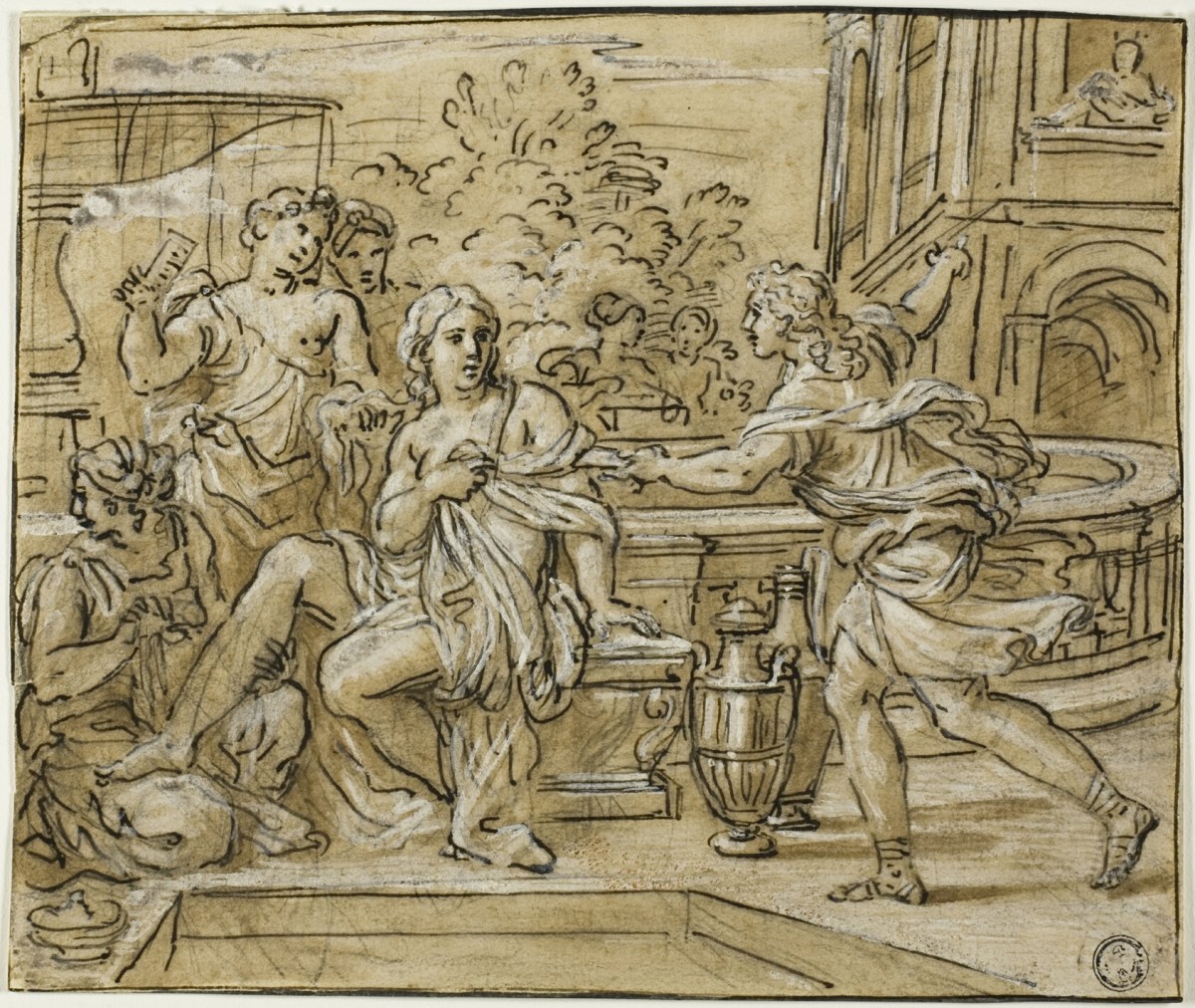
There were a couple of instances where David committed sin but, unlike Saul before him, David responded to Yahweh’s rebuke with repentance. The most egregious sin David committed was to have an affair with Bathsheba, the wife of one of his soldiers, getting her pregnant. Then when he failed to cover it up, he arranged for that soldier to be killed on the front lines. When the prophet, Nathan, confronted David about the sin, David repented and confessed his sin. The baby born from that affair died shortly after being born, but later David would have another child with Bathsheba, Solomon, setting up the next part of the story line.
Observe
Read 1 Samuel 13:14; Acts 13:22. Of the three kings of the united kingdom of Israel, only David had a pattern of recognizing his sins and repenting. He was also known as a man “after God’s own heart.”[1]
Dancing In the Kingdom – Part 1 – Shadows of the Kingdom – Chapter 1 – Prelude
Overview of the Gospels
[Bible references: Matthew, Mark, Luke, John]
The New Testament begins with a set of four biographies about Jesus. They are referred to as the Gospels of Matthew, Mark, Luke and John. It is possible to think about the Old Testament as the inspired introduction to the New Testament, foretelling of the Person, work and kingdom of Christ. Old Testament quotes, allusions, and types are woven into the Gospels.
Christ is presented as king (who rules over all things), prophet (who represents God to the church) and priest (who intercedes for the church). All the gospels record: the unique revelation of Christ, the ministry of John the Baptist, the feeding of the 5,000, Christ’s offer of Himself as King, the betrayal by Judas; the denial by Peter, the trial and crucifixion and bodily resurrection of Christ, events during the forty days of the post-resurrection ministry of Christ, the hope of His second coming.
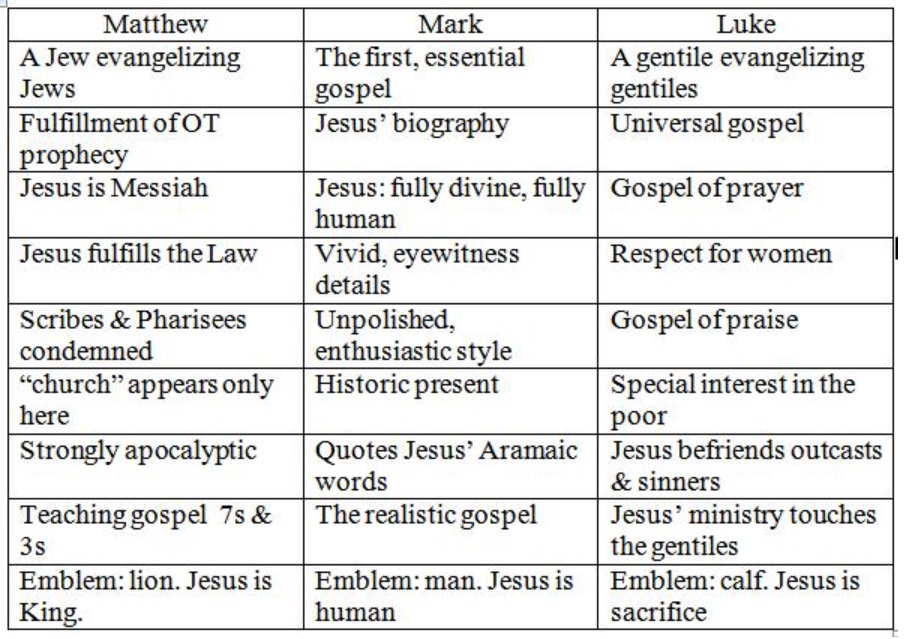
The following table shows how the Gospels tell the story of Jesus from different perspectives, each focusing on different perspectives of Jesus’ life, and each trying to give a different message about the life of Jesus.
Believe, Word of God, only begotten Son, eternal life
Focus
Jesus is the Messianic King of the promised Davidic kingdom which fulfills the Old Testament prophecies and claims
Jesus is the authoritative Son of God. He is God’s triumphant envoy come to suffer and die in order to claim victory over sin and death
Jesus is the perfect Son of Man, the Messiah prophesied by the prophets who came to save and to minister of people of all nations through the power of God the Holy Spirit
Jesus Christ is the fully divine Son of God who existed before creation. He is the true Lamb of sacrifice through whom we receive the gift of eternal life
Prominent sections
sermons
miracles
parables
teachings
Genealogy
traced to Abraham
none
traced to Adam
none
Geographic emphasis
Galilee
Galilee
Galilee
Judea
Comparison of the Gospels
Observe
Read the chart above. Which gospel is centered in Judea?


 Dancing In The Kingdom