Historical issues affecting the church

Dancing in the Kingdom- Table of Contents

Dancing In the Kingdom – Part 2 – The Kingdom Revealed – Chapter 13 – Distinctives within the body of Christ

Historical issues affecting the church

[Bible references: Matthew 5:14-16; 13; 24; 26:6-13; John 15; 17; Romans 12;  1 Corinthians 1:26-31; 3-7; Ephesians 6:10-20; Colossians 2; 1 John 4]

Overcurrents – Historical issues outside the church that impact the development of the church.

The development of the church doesn’t happen in a vacuum, it happens in the midst of governments rising and falling, conflicts within and between nations, in the culture of the people around the church influencing the culture within the church, in the plagues and catastrophes and other events that happen to society. Within those events, sometimes it’s the world that impacts the church and sometimes it is the church that impacts the culture around it.

The church initially developed during the time of Pax Romana in which a stable empire and its infrastructure enabled the missionary efforts of the apostles and others. That same empire was also responsible for various persecutions of the church. However, the response of the church to those persecutions sometimes profoundly impacted not only by those who became witnesses of God’s glory displayed by the courage of the martyrs, but also the courage of those who risked their own health and well-being to give aid to the helpless and sick.

Those persecutions unfortunately created tension within the church as it had to deal with those who succumbed to the pressure of the persecution and denied Christ (a problem that would occur in future persecutions in other places and times). Some persecutions almost totally eradicated Christian populations. This happened with the Church of the East which almost entirely disappeared in the 14th century. This happened even though the church, which was established in Persia in AD 410, grew to be the largest denomination in the world and whose influence extended to the east coast of China.

In the age of our hyper-individualism, it seems strange for us to imagine that it has been common throughout history for communities to identify themselves with a single religious identity. In the time of the early church, Christianity did not conform to the Roman religion which was cause for the persecution of the church. However, when Constantine became emperor of Rome (AD 306-337) and identified himself with Christianity, the church now found itself tied to the secular power of the government which changed dynamics within the church, with people now seeking identity with the church as a way of seeking power. Later on, as kings broke away from the empire and nation-states began to form (beginning in AD 1848), the religious ties to the state were often hijacked in order to accomplish the goals of the individual secular governments.

As the church spread, the different cultural environments and different languages spoken within the church created problems. Prominently, the Latin language and culture caused different developments than within the Greek language and culture. Emperor Constantine’s decision to create a separate capitol in Constantinople (AD 324) laid the groundwork for the creation of a bifurcated (Eastern and Western) Roman Empire. The Latin/Greek language problem worsened when the Western Roman Empire was overtaken by invaders from the north (AD 410), creating further isolation between East and West, and would eventually result in the formal East/West Schism in AD 1054.

Larger cultural events impacted the church as well. The contributions of Greek philosophers Plato and Aristotle impacted the development of science and philosophy for many years. The contributions of Greece and Rome would be redeveloped during the Middle Ages in the development of sciences, although the church’s attachment to Aristotle’s geocentrism would hinder the development of astronomy for a while.

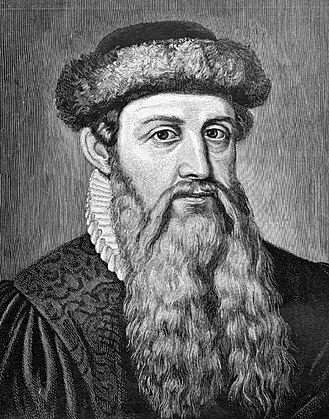
The invention of the printing press in 1439 supported the spread of ideas in science and humanism and would also be central to the Protestant revolution in the 1500s. During the same period, developments in shipbuilding and technology enabled the development of European empire and contributed to the age of Enlightenment (1714-1789) with the emphasis on reason having priority over theology, liberty, and progress[1].

Undercurrents – Issues within the church that have had a wide impact throughout the church

Christianity introduced new ways of thinking of the world, but those ideas did not change all patterns of thinking all at once. They needed a chance to develop and mature and then over time would challenge the older ways of thinking as the new patterns were gradually absorbed. In our current post-Christian era, new ways of thinking are developing, but the pattern continues. The now older Christian ideas are providing some of the framework for the current post-Christian ideas to build on, although the Christian contributions may not be recognized.

In that regard, as we examine the patterns of thought in Christian history, we find that there are various classic Greek ideas which have influenced the church. One of the classic Greek contributions, Platonism, developed into what has been termed Gnosticism. Within Gnosticism, one idea was that salvation is obtained through secret knowledge; this has led to the development of “secret” societies like the Freemason’s where only those within the society have that knowledge. Another gnostic idea is known as dualism, where spiritual things are considered to be good and material things are considered to be bad. The consequences of that thinking have led to heretical teachings about the nature of Jesus, severe asceticism, unhealthy thinking about sexuality, neglecting our stewardship of creation, rejection of the arts, etc.

Many disagreements have occurred through the years about the role of faith in respect to reason and revelation. When trying to balance these ideas with one another, some espoused fideism (in which faith is independent of and hostile to reason), some espoused special revelation (i.e., prophecies) over rationalism, and some espoused rationalism over faith or prophecies. These imbalances eventually fed into the conflict of faith vs. science in the 1800s highlighted by Darwin’s contribution to the evolution of species.[2]

There have been various moments in church life where there seems to have been a loss of focus on how Christianity is supposed to be lived out in our daily lives. When religious practices were perceived to be over-intellectualized, various pietistic movements were started where attention was paid to the spiritual aspects of the faith and on the transformation of our daily lives.

As the church grew it was natural that different personalities combined with different languages and cultures would result in differing ideas the nature of God and practice of Christianity. After all the apostles had died, the church had to learn how to determine which differences were acceptable and which differences were not. When someone’s practices seemed inappropriate the council would generate rules to address those practices. When ideas were taught that seemed to conflict with core beliefs of the church, the council created creedal statements, such as the Apostle’s Creed or Nicene Creed. The Creeds[3] were not designed to be all-inclusive statements of belief but were rather designed to address the emerging heresies of the moment.

Church developments outside the bounds of the Roman Empire, and eventually the fracturing of the Roman Empire itself, led to the fracturing of the church as well. The difficulty and sometimes outright inability of the church to hold a single large ecumenical council representing the whole church has contributed to the many branches of the church that can be seen today.

During the era of Enlightenment, reasoning and rationality were emphasized while the supernatural was rejected. In regard to the Bible, this meant that any miraculous events described in the Bible including miracles, healings, divine revelation, or God being active in any way in the world were rejected.

There was a view which postulated that God had created the world but then let it run according to natural laws without any further interference. This same viewpoint along with the acceptance of evolution, led to an evolutionary perception of historical and social development that led to the rejection of the traditional viewpoint of biblical development. One idea that became very popular in the 1800s (and is still popular today) was the idea that the Bible was created by piecing together various texts during Israel’s time of exile.[4]

Steering Currents

We should not assume that the church is dragged helplessly by overcurrents and undercurrents. Through all those influences, the Spirit of God is at work in the church. If the church sometimes behaves badly, it is a reminder that it is not the church that is the Savior of the world, that distinction belongs to God alone. Occasionally, even the church forgets that she is in daily need of a Savior as she brings the gospel to the world. Christ is the faithful one, not the church.

Those of us who are members of the visible church don’t even know with certainty which members of the visible church truly belong to Christ and who does not. Only God knows that. Only God knows whether we have the right balance of beliefs and practices,[5] and we most likely don’t. God’s ways are higher than the ways of those who are in the church as well as outside the church. This should call us to humility. But it should also call us to assurance that God is working His plan and His church even if we are broken and sometimes failing. The hope that we bring to the world is that God still works within us despite our weakness and failures.

In our unfaithfulness, we need to remember the words of Jeremiah. After many chapters of God accusing his chosen people, Israel, of prostituting herself to the love of other gods, at the end, God said, “Return, O virgin Israel …” Again, it is our faithful Yahweh who persists in seeking and holding onto us, despite our unfaithfulness – and yet He will cleanse us and put our unfaithful ways behind us. This is the good news that the church can receive and pass on to those not yet in the church. Our faithful Yahweh has not left us or abandoned us but leads us, able to redeem us even in our rebellion.

God loves His church, and He will restore us. We are therefore in no position to not love the church that God loves. He has not abandoned us but calls us by His Spirit. I have often said, “It is a miracle that the gospel has survived the church.” It is a miracle, and the miracle continues as it already has through the centuries. God will use the church and guide the church, despite herself. And there is the promise from Jesus to His followers, “Very truly I tell you, whoever believes in me will do the works I have been doing, and they will do even greater things than these, because I am going to the Father.


[1] Martin, Bruce. “Science and Faith: The Enlightenment;” Encyclopedia.com “Enlightenment and Empire” Explorations in Life, Theology, and Creation rossway.net/science-and-faith-the-enlightenment

[2] Darwin, Charles. “On the Origin of Species” John Murray 1859

[3] See Appendix I – Creeds of the Church

[4] Graf-Wellhausen Documentary Hypothesis University of Maryland Department of Computer Science www.cs.umd.edu/~mvz/bible/doc-hyp.pdf

[5] orthodoxy and orthopraxy Learn Religion www.learnreligions.com/orthopraxy-vs-orthodoxy-95857

Observe

Read John 17:13-25. In His love towards us, God has created many things in the world for us to enjoy. However, the world’s hatred of the things of God is sometimes masked by the sweet enticements that lure us away the love of God towards the love of those things. How do we discern when we are being lured away from God?

The Spirit and the power

Dancing in the Kingdom- Table of Contents

Dancing In the Kingdom – Part 2 – The Kingdom Revealed – Chapter 12 – Launching the church

The Spirit and the power

[Bible references: Genesis 25-19-21; 1 Samuel 1;1-20; 2 Samuel 7; Proverbs 2:1-5; Matthew 7:7-8; Mark 11:12-26; Luke 11:113; 12-26; John 20:21-23; 3:14-16; Acts 1:1-14; 2:1-41; 1 Peter 5:6-7]

There are remarkable parallels between Genesis 2:7 and John 20:22. We see from Chapter 2 that in Genesis 2, God breathed life into Adam who was then commissioned to take care of the sacred space that God had created. That sacred space was initially identified as the Garden of Eden, but we know from Genesis 1 that God had dedicated the entire universe as his temple. We also know that since God’s image-bearers were given the commission to “be fruitful and fill the earth” that the sacred space allotted to the care of the image-bearers was intended to be the entire earth.

After the resurrection, when Jesus met with the apostles in a locked room, He breathed on (or into) them.[1] This is the same word used in the Septuagint version of the Old Testament describing God breathing life into Adam and thereby giving him life. Immediately after this gesture, Jesus instructed the apostles to “Receive the Holy Spirit” who were then commissioned to continue the task that Jesus had begun.[2]

“The very same Greek verb (here only in N.T.) is used by the LXX. in Genesis 2:7 (Wis 15:11) of breathing life into Adam. This Gospel of the new Creation looks back at its close, as at its beginning (John 1:1), to the first Creation. We are probably to regard the breath here not merely as the emblem of the Spirit (John 3:8), but as the means by which the Spirit was imparted to them. ‘Receive ye,’ combined with the action of breathing, implies this. This is all the more clear in the Greek, because pneuma means both ‘breath’ and ‘spirit,’ a point which cannot be preserved in English; but at least ‘Spirit’ is better than ‘Ghost’ We have here, therefore, an anticipation and earnest of Pentecost; just as Christ’s bodily return from the grave and temporary manifestation to them was an anticipation of His spiritual return and abiding Presence with them ‘even unto the end of the world.’” [3]

Previously, in John’s gospel, we saw that “the Son of Man must be lifted up, that everyone who believes may have eternal life in him.” Now that Jesus was crucified and was soon ascend to heaven, the apostles were given the task of sharing the gospel so that people may believe unto eternal life. It is at this moment, in the locked room, that the apostles were given the commission to share the news of forgiveness.

Ten days after Jesus ascended, fifty days after Passover, the disciples were gathered in Jerusalem, waiting for “what the Father had promised.” It was the time of Shavuot, which was known in Greek as the Pentecost. Shavuot is one of three pilgrimage festivals where Jews are supposed to travel to Jerusalem so Jews from all over the Roman Empire were in Jerusalem.

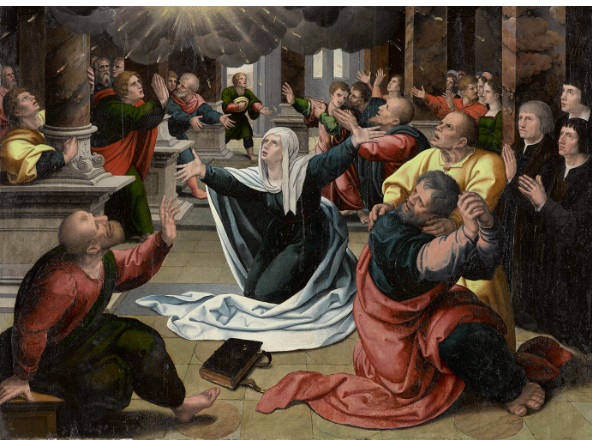
It was at this gathering that Spirit came upon the disciples in great power, revealing the fulfillment of Shavuot. While the disciples were gathered in a room, the Holy Spirit manifested himself with a great wind and tongues of fire that touched the apostles. The apostles then proceeded to prophecy and the people who were there from around the world were able to hear them speaking in their own languages. On that day 3000 people accepted Jesus as their Lord.

The full meaning of Passover and Shavuot was now revealed.

  • Jesus was executed on Passover, a holiday commemorating the celebration of freedom from slavery in Egypt which was observed by the slaying of the Passover lamb whose blood protected all the Israelites from the angel of death who had killed all the firstborn children in Egypt.
  • The miraculous outpouring of the Holy Spirit on the apostles which enabled them to speak in many different languages occurred on Shavuot, which had many different meanings for the Jews. Shavuot was associate with:

  • the giving of the commandments 50 days after the liberation from Egypt. Now the commandments were written on hearts instead of stone.
    • the first harvest of crops in the year, with those first portions being given to God, the provider of harvest. There were now 3000 souls harvested for God.
    • marriage, where Passover was considered the betrothal and Shavuot the marriage where the bride and groom commit themselves to each other. The period in-between the betrothal and marriage can be considered as a time of testing and waiting as the bride and groom prepare for life together. With His sacrifice, Jesus, the Bridegroom committed himself to the Church, His Bride.

Waiting. The virtue we want to bypass. Yet even though God has set seasons and times before us and insists on letting his ordained processes complete, from the beginning, we have wanted things immediately and we have been paying the price ever since. But there was a process God wanted to complete. After His resurrection, Jesus waited for the apostles to gather before He came to them, Jesus waited for many days to go by while He interacted with various groups of his disciples, then after His ascension, Jesus waited for his disciples to stay in Jerusalem, while they waited for the “gift His Father promised … to be baptized with the Holy Spirit.” And so, the apostles waited and prayed.


[1] Biblehub ἐνεφύσησεν Bible Hub biblehub.com/greek/enephyse_sen_1720.htm

[2] Scrivener, Glen. “What does John 20:21-23 mean” Christ the Truth christthetruth.net/2013/03/26/what-does-john-2021-23-mean; Skinner, Matt. “Commentary on John 20:19-23” Working Preacher www.workingpreacher.org/preaching.aspx?commentary_id=887; Lewis, Karoline. “Commentary on John 20:19-23” Working Preacher www.workingpreacher.org/preaching.aspx?commentary_id=76; Flattery, George. “John 20:19-23 Receive the Holy Spirit” Global Christian globalchristiancenter.com/sermons/dr-g-flattery-sermons-on-gospel-of-john/26192-john-2019-23-receive-the-holy-spirit

[3] Biblehub “John 20:22”Cambridge Bible for Schools and Colleges biblehub.com/commentaries/john/20-22.htm

Reflect

There are times when we need to take action and times when we need to wait for maturity or for “the fullness of time.” How can we discern the difference?

Observe

Read Mark 11:12-26; Luke 11:1-13. What should we expect when we pray?

Looking for Messiah

Dancing in the Kingdom- Table of Contents

Dancing In the Kingdom – Part 2 – The Kingdom Revealed – Chapter 11 – The Kingdom Enters

Looking for Messiah

[Bible references: 1 Samuel 8:5; 2 Samuel 7:12-13; Isaiah 9:6-7; 52:13-53:12; Matthew 2:2; 3:16; Luke 1:23-33; 1 Peter 2:24; John 6:15; 1 John 5:1-13]

During all the messy history, Yahweh was working to bring his plan into fruition. His end goal was to create a new heaven and a new earth but there were things that needed to happen first, including the removal of the power of sin over his people. His solution was to lay aside some of his power and enter history as a human, not only so that he could identify with his image-bearers but so that we would be challenged to choose his authority as a matter of faith – not a blind faith, but a faith based upon recognizing God’s work.

In the writings of Hebrew scripture there were clues and prophecies about the Redeemer that Yahweh would provide: the Redeemer that would be anointed by God, the Redeemer would rescue people from sin and the Redeemer would restore their relationship with Yahweh. The charts in Appendix D show many of those prophecies. These prophecies created an air of expectation. While it’s easier for us who are looking back to see how Jesus fulfilled the Old Testament prophecies, at the time that Jesus was born there were differing expectations about how those prophecies would be fulfilled.

One thousand years previous to Jesus’ birth, the Israelites thought that their problem was that they didn’t have a king “like everybody else” Now once again, many still thought that their problem was still a political one and that what they needed was the kind of Messiah that would throw out the Roman government.[1] (There were also some other various controversies swirling around which we will discuss in more detail in the next chapter.) Nevertheless, people were looking for a Messiah.


[1] Bible Study Tools “John 6:15” Bible Study Tools www.biblestudytools.com/commentaries/gills-exposition-of-the-bible/john-6-15.html

Observe

Read 2 Samuel 7:12-13; Isaiah 9:6-7; 52:13-53:12; Matt 3:16; Luke 1:23-33; 1 Peter 2:24. What kind of Messiah was expected to come?

Apocalyptism

Dancing in the Kingdom- Table of Contents

Dancing In the Kingdom – Part 2 – The Kingdom Revealed– Chapter 10 – The Class of Apparitions

Apocalypticism

[Bible references: Matthew 24:1-51; John 14; 2 Peter 3]

In our current age, there have been many groups who have forecast the end of time, and that the end times will be quite dystopian. There are also many who have claimed to be the Messiah.[1] The Essenes[2] were waiting for the Messiah to come and wipe out secular governments. The Zealots, and some Pharisees, were trying to physically push out the Romans and put a new government in place. There were over a dozen apocalyptic texts produced in the Intertestament period[3] and texts continued to be produced in the early centuries. There is widespread disagreement about the various aspects of apocalyptic prophecies, but like all prophecy there are some widely accepted principles.

Predictive prophecies can serve a number of important functions. They can glorify God by testifying to His wisdom and sovereignty over the future. Then can also assure and comfort oppressed believers and motivate people to stronger faith and deeper holiness.[4]


[1] Wikipedia “List of Messiah claimants” Wikipedia en.wikipedia.org/wiki/List_of_messiah_claimants

[2] Johnson, Paul. “History of the Jews” Harper Perennial 1987 (p.123)

[3] NIV Cultural Background Study Bible “Apocalyptic Literature” Zondervan 2016

[4] Virkler, Henry A. “Hermeneutics: Principles and Process of Biblical Interpretation” Baker Books 1981 p. 191

Observe

Read Matthew 24. According to the end of the chapter, why are we to “keep watch” regarding the day our Lord will come?

The Temple Maker

Dancing in the Kingdom- Table of Contents

Dancing In the Kingdom – Part 1 – Shadows of the Kingdom – Chapter 2 – The God who created

The Temple Maker

[Bible references: Genesis 1-2; Exodus 26; 1 Kings 6; Job; Psalm 8; 95; 100; 104 and others; Proverbs 8:22-31; Isaiah 44:21-28; 45:5-12; 51:4-12; 55:6-13; Matthew 26:61; I Corinthians 6:19-20; Revelation 21-22]

There has been much debate about how to interpret the creation account. There have been various attempts to understand creation as physical processes that had occurred (over shorter or longer periods, depending on your analysis) because in our current cultural context we default to thinking of creation in physical, scientific terms. But what if (surprise! surprise!) we consider the biblical text to be a theological text instead of a scientific one, about functional origins and not about material origins.[1]

The cosmos can only function as sacred space once God has inhabited it and people in his image are there. God is declaring purpose for the cosmos as an ordered space for people and as sacred space where he will dwell. This is what defines the divine activity …Adopting and promoting a vision and mission statement will not change how the institution operates. But it articulates a purpose and identity that may not have been realized or present before and proclaims that as its purpose. Genesis 1 is doing something similar. It is articulating a purpose through a mission statement (people living out their designated role as the image of God) and a vision statement (seeing the world around us as sacred space where God is living among his people and being in relationship with them). .[2]

In the last few decades, research has uncovered much more about the culture in the Ancient Near East than ever before. It has been discovered that in Ancient Near East cultures, the Genesis account would not have interpreted the creation account in terms of physical processes but rather in terms of assigning meaning and purpose. So, as we read the Creation account in Genesis 1, on the first three days the spaces of light and dark, waters above and below, and the land are being assigned a purpose. The next three days the populations of those spaces are assigned a purpose: the sun and the moon and stars, the birds and fish, the land animals.

In this perspective, the story of creation is seen more as a story about the dedication of a temple, where the universe and the world were dedicated as a sacred space, a space where God would dwell with his people. Therefore, the seventh day is when God rested from the act of dedicating the earth, which would now be the place where He would now live with his image-bearers. If you read Genesis 1-2, you will see that, unlike the other days, there is no “there was evening and there was morning.” That is because we are living in the seventh day.

The completion of God’s temple would be later remembered by the seventh day celebration of the Sabbath. Although God’s temple was completed by the seventh day, it was not a time where God ceased to do everything. The still continuing seventh day is the time when the “temple” which is our “home” is completed so that God and we, as his co-regents, can settle in and do the things that our home was designed for. Jesus in John 5:1-7 clarified this idea where he explained, “My Father is always at his work to this very day, and I too am working.” Living into this sacred space would entail us taking part with God in his continual acts of creating and sustaining the universe. That is the perspective of Eve, when she gave birth to Cain, she recognized that “I’ve created a man with Yahweh.”[3]

In Genesis 2, the focus moves to the humans God created and how they were to function in that sacred space where the Garden of Eden is the center. Genesis 2 is also where God’s name, “Yahweh,” begins to be used. Genesis 1 introduces the God as the Creator of the universe whereas Genesis 2 introduces the God who in establishing a personal relationship with the people he created uses a personal name.[4]

The cosmos that God created was intended to be a temple, the place where He would meet with his people. The temple/creation imagery permeates and unites all of scripture from the first book, Genesis, to the last book, Revelation. The temple/creation theme shows up in places like in the stories of Noah, Moses, and Abraham, in the construction of the Tabernacle and the Temple, in Job’s dialog with Yahweh, in the poetry of Psalms[5], in prophecies of Isaiah, in the body Jesus and in us as his Body and finally in the depiction of reuniting of heaven and earth. Each instance shows its own unique aspect of the temple, so that when combined with each other, they show a more complete picture of how God meets with us and provides for us and what he has intended for us. We see a complex picture of the temple as a physical place in Creation and at the same time the temple is within us, inside the bodies of all of those who call on his name. In both those cases we can see the provision of God who 1) abundantly fills all of Creation in ways that exceed our imagination and exceed the capacity of any book to tell and, 2) abundantly fills us with His strength and His Spirit so that we can fulfill the desire He has for us to “cultivate and keep” the abundant place He has provided for us.

One of the benefits of considering only the theological aspects of the Creation accounts, or the why of creation, is that we don’t have to be as highly concerned about the how of creation, or the scientific/physical accounts of creation. When scientific creation accounts are proposed and are not perceived to be correct because they don’t seem to theologically fit, we don’t need to despair. It may be that the various proposed scientific explanations simply don’t theologically fit because they just don’t or because we just don’t understand just how they could theologically fit. We know that the sciences are limited and that theories will change as more discoveries are made. Sometimes those theories may seem to move closer or further from our limited theological understandings, but our theology is not constrained by whatever the current science may indicate. In the meanwhile, we are free to explore the science and wonder in awe and marvel at just how God managed to do it all while humbly admitting that we don’t have the mind of God and how much higher his ways are than our ways.


[1] Walton, John. “The Lost World of Adam and Eve,” Proposition 3, InterVarsity Press. 2015 Kindle Edition. pp. 35-45; Driver, Cory. “Commentary on Genesis 1:1-5” Working Preacher 10 Jan 2021 www.workingpreacher.org/commentaries/revised-common-lectionary/baptism-of-our-lord-2/commentary-on-genesis-11-5-5; Carlson, Reed. “Commentary on Genesis 1:1-2:4a 12” Working Preacher Sept 2011 www.workingpreacher.org/commentaries/narrative-lectionary/creation-by-the-word/commentary-on-genesis-11-24a-5; Throntveit, Mark. “Commentary on Genesis 1:1-2:4a; or 1:1-5,26-2:4a 1 Working Preacher 1 Sept 2011 www.workingpreacher.org/commentaries/narrative-lectionary/creation/commentary-on-genesis-11-31-21-4

[2] Walton, John. “Material or Function in Genesis 1? John Walton Responds” Biologos 3 Apr 2015 biologos.org/series/reflections-on-the-lost-world-of-genesis-1-by-john-walton/articles/material-or-function-in-genesis-1-john-walton-responds

[3] Friedman, Richard Elliot, Commentary on the Torah, Harper Collins, 2003 Location 6942 of 37412

[4] There will be more discussion on that name in “Hope in the Brokenness,” Chapter 4

[5] Muran, Alexej. “The Creation Theme in Selected Psalms” Geoscience Research Institute 1 May 2015 www.grisda.org/the-creation-theme-in-selected-psalms

Reflect

Does viewing the universe as a temple affect the way we look at it?

Observe

Read Proverbs 8. This proverb personifies God’s wisdom. Read how God is describing how His wisdom is built into the very framework and fabric of this temple we call Creation. How can we sense God’s presence with us because of how His wisdom should be speaking to us?