Clash of empires

Dancing in the Kingdom- Table of Contents

Dancing In the Kingdom – Part 2 – The Kingdom Revealed– Chapter 10 – The Class of Apparitions

Clash of empires

[Bible references: Daniel 11]

The Promised Land was on a tract of land that served as a trade route between Africa, Asia and Europe and so was much desired by empires that emerged in that area of the world.

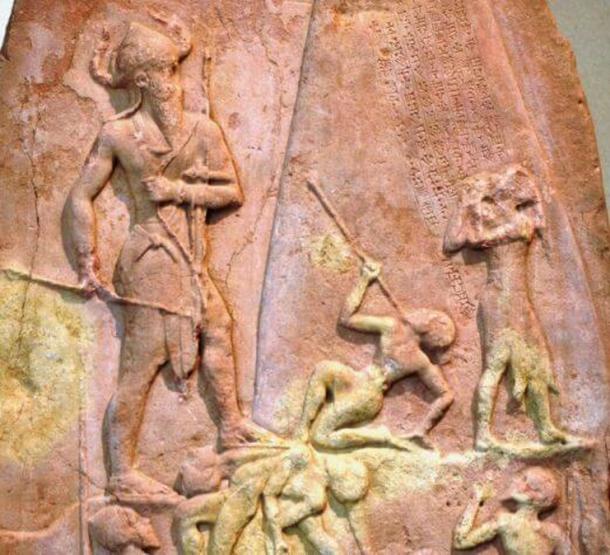
  • ASSYRIAN EMPIRE:  The Northern 10 tribes were conquered by the Assyrians (722 BC). Most of the Northern tribes were scattered throughout the Assyrian empire never to be heard from again in history, but some of the poorest were left behind. The Assyrians then brought in some of their own tribes to rule the area, diluting the culture of the conquered tribes when the remaining Israelites intermarried with the Assyrians.
  • BABYLONIAN EMPIRE: The Babylonian Empire then overtook the Assyrian empire and then conquered the Southern two tribes, Judah, and Benjamin, and in a couple of waves, took the best and brightest of those tribes into captivity in 605 BC and then in 586 BC. It was at this time that the Israelites, now predominately from the tribe of Judah, were called Jews.
  • PERSIAN EMPIRE: In 537 BC, the Persian empire then overtook the Babylonian empire and allowed the exiled Jews to return. After being settled in for many years, only of the Jews returned to the “Promised Land.” Most of the Jews decided to stay in Babylonia. So ever since the time of captivity, the majority of Jews have lived outside their homeland.
    • The Jews who returned from Babylon rejected the Samaritan Jews because the Samaritan Jews intermarried with foreigners.
    • The temple, now called the second temple, was rebuilt between 586-515 BC. The second temple was not built in as grand a fashion as the temple Solomon built. Neither did the Glory of the Lord enter the second temple as it did in the Tabernacle or in Solomon’s temple.
    • In 430 BC Nehemiah and Malachi were the last books written for the Hebrew scriptures.
  • GREEK EMPIRE:[1] The Greeks, under Alexander the Great, start their empire building in 336 BC, capturing Israel in 332 BC. Alexander tried to export the Greek language and culture[2] onto conquered territories. When Alexander died in 323 BC the Greek empire was split up under four of his generals. Israel is caught in a tug-of-war between two of the generals:
    • PTOLEMAIC EMPIRE: Ptolemy in Egypt first ruled over the Jews in 308 BC. The Ptolemaic kings, who had a great library in Egypt, added to it by commissioning a translation of the Hebrew texts (including Hebrew scriptures) in Greek– this translation, done around 250 BC is known as the Septuagint.[3]
    • SELUCID EMPIRE: In 195 BC, Seleucus ruled over Israel. When the Seleucids ruled over the Jews, they began a campaign to force the Greek culture onto the Jews and consequently trying to eliminate the Jewish culture. This eventually escalated onto desecrating the Jewish temple and then trying to force the Jewish leaders to participate by slaughtering pigs on the altar.
  • HASMONEAN KINGDOM: The effort by the Seleucids to eliminate the Jewish culture caused a rebellion in 166 BC begun by Mattathias the Hasmonean when he killed the Jew who was going to perform the sacrifice and then killed the official directing the sacrifice. Mattathias then fled into the wilderness with his family and began a rebellion which in 142 BC succeeded in overcoming the Seleucids and establishing an independent Jewish kingdom.
  • ROMAN EMPIRE: General Pompey captured Jerusalem in 63 BC. The Roman Empire continued to use Greek as the international language but did allow local cultures to persist as long as they did not oppose Roman rule.
    • The Hasmoneans were originally allowed to rule under the protection of Rome.
    • The Hasmonean dynasty ended when King Herod (the Great) was installed in 40 BC. Herod began many building projects including the rebuilding of the Temple, which began to be built in 18 BC and was not completed until after the reign of Herod the Great in AD 63

[1] Guzik, David. “Daniel 11 – Antiochus and Antichrist revisited” Enduring Word enduringword.com/bible-commentary/daniel-11; Truth According to Scripture. “Coffman’s Commentaries on the Bible, Daniel 11” Truth According to Scripture www.truthaccordingtoscripture.com/commentaries/bcc/daniel-11.php#.ZApRkkPMI2w

[2] It may surprise you that Greeks don’t call themselves “Greek”. Instead Greeks refer to themselves as “Έλληνες”— Hellenes. The word “Greek” comes from the Latin “Graeci”, and through Roman influence has become the common root of the word for Greek people and culture in most languages…. “Hellenism”, however, is something bigger. From ancient times, the language, culture, and values of the Hellenes has significantly impacted the world. Throughout history non-Hellenic people have adopted and assimilated the values and aesthetics of the Hellenes. Through this contact, the culture of the Hellenes has not only transformed other cultures, but has been transformed itself. This relationship is Hellenism. In fact, an openness to new ideas and embracing beauty and truth wherever you find it are fundamental features of Hellenism (National Hellenic Museum “What is Hellenism” )

[3] Reeves, Ryan, “What is the Septuagint?” ?”  The Gospel Coalition August 12, 2018, thegospelcoalition.org/blogs/ryan-reeves/what-is-the-septuagint

Observe

Read Daniel 11. This so accurately reflects the actual history of the Persian, Greek and Roman empires that many think it must have been written after the events occurred. But in fact, the book of Daniel was translated into the Greek version of the Bible, the Septuagint, 200 years before Christ.

Proxy wars

Dancing in the Kingdom- Table of Contents

Dancing In the Kingdom – Part 2 – The Kingdom Revealed– Chapter 10 – The Class of Apparitions

Proxy wars

[Bible references: 2 Kings 17:1-6; 25:1-21; Jeremiah 1:14-16; Daniel 1:1-6; Ezra 1:1-4; 6:12; Ephesians 6:10-20]

Since the time of Adam and Eve a war has been underway. God’s Kingdom has found itself in a war with Kingdom of darkness, battling over the souls of God’s image-bearers. We cannot directly see the clash of spiritual kingdoms, but we see it indirectly, sometimes in clashes between image-bearers and sometimes within ourselves. The apostle Paul reminds us, though, that our struggle is not against “flesh and blood” but rather the “spiritual forces of evil.”

Even so, the spiritual war is played out in the human realm where we brokenly pursue love apart from God, hoping to find love somewhere else, whether in power, traditions, possessions, other people, etc. We then find that when we look for love other places than God, we are then confronted by fears which inevitably result in clashes, especially in times of change.

A great time of change was about to occur as the time approached for Jesus’ incarnation. There were clashes between empires that overran the Promised Land, clashes between groups of people in that land, and clashes of values between and within those groups.

As the time of Jesus’ incarnation approached, the residents of the Promised Land, begin to speak Aramaic instead of the Bible’s language of Hebrew. When the Greek empire moved in it tried to supplant all the local languages and cultures, resulting in an effort to the translate all the Hebrew writings into Greek, producing among many things, the Greek version of the Hebrew scripture called the Septuagint. The Septuagint became a major reference not only for the non-Hebrew speaking Jews but also for the church, particularly as the church became more Gentile. This change accelerated the loss of the Hebrew understandings of Scripture.

When the Roman empire overtook the Greek Empire, it initially allowed the use of Greek as the international language but would set up a clash later when the empire would replace Greek with Latin as its preferred language. The changes in languages and cultures became part of the clash over which writings should be considered as part of what will be called the Old Testament scriptures.

The Greek Church maintained the use of the Septuagint as it’s Old Testament, while the Latin speaking Roman-Catholic Church used only parts of the Septuagint. Later on, the Protestants rejected the Septuagint and only used the Hebrew writings that were approved by Jews in the early centuries A.D.[1]

The books used by the Roman Catholic and Orthodox Churches but not used by the Protestants are sometimes referred to as the Apocrypha (hidden) or the Deuterocanonical (second canon) books. Although the Protestants may disagree about whether those books are inspired, there is useful information in those books that help explain the culture of the world that Jesus was born into.


[1] Nelson, Ryan. “What is the Masoretic Text? The Beginner’s Guide” The Beginner’s Guide to the Bible overviewbible.com/Masoretic-text

Observe

Read Ephesians 6:10-20. What difference does it make if you are aware that the conflicts present in the world around us are manifestations of spiritual warfare?

The Ark in the Promised Land

Dancing in the Kingdom- Table of Contents

Dancing In the Kingdom – Part 1 – Shadows of the Kingdom – Chapter 9 – The Prophets and writings

The Ark in the Promised Land

[Bible references: Joshua 4-5; Joshua 18:1; 1 Samuel 4-6; 5:1-2; 6:19; 21-22; 2 Samuel 6:5-7; 12-13; 1 Kings 8:27; 1 Chronicles 21:29; 2 Chronicles 1:13;]

After Israel entered the Promised Land, the tabernacle and all its furnishings were originally placed in Gilgal.[1] After the land was settled the tabernacle was then set up in Shiloh where it stayed for two hundred years. During the time of Samuel, Samuel’s sons, without consulting God, removed the ark from the tabernacle to take it into battle with the Philistines who not only won the battle but took the ark with them. The Philistines found that although Yahweh did not see fit to help Israel win the battle, Yahweh did create issues with the Philistines. The Philistines responded by moving the ark a couple of times, but the problems did not disappear and so the ark was sent back to Israel.

The ark initially ended up in Beth Shemesh, but after 70 people died when they tried to look in the ark, the people of Beth Shemesh sent the ark to Kiriath Jearim where it stayed for 92 years. The Bible is not explicit about when it happened, but sometime during the reign of King Saul, the tabernacle, sans the ark, was moved to Nob and then to Gibeon.

After David established the capital in Jerusalem, King David set up his own tabernacle and then moved the ark there. In moving the ark, David had to learn a lesson. He first tried to have the ark carried in a cart, but when the ark started to slip out of the cart, the people died who touched the ark to prevent it from slipping out. So, the ark ended up in Obed-Edom’s house for a while. Hophni and Phineas learned the hard way that you don’t necessarily take the presence of God when you take the ark, but David learned the hard way that you can’t ignore the presence of God when you take the ark. David was successful in moving the ark to Jerusalem after he had the ark moved according to the instructions that God had given Moses.


[1] Joshua 4-5 – Although the tabernacle is not specifically mentioned, Gilgal seems to be the place where Israel settled until the land was divided and is where Passover was celebrated. In Joshua 9, Gilgal is where the Gibeonites come to make a treaty with Israel.

Reflect

Some people use objects or rituals as “good luck charms.” How does the story of the ark relate to that? Have you used a “charm” instead seeking the will of God?

Observe

Read 1 Samuel 4:1-11; 5:1-12. Contrast how God acts differently between these two passages.

God’s fullness, his followers’ emptiness

Dancing in the Kingdom- Table of Contents

Dancing In the Kingdom – Part 1 – Shadows of the Kingdom – Chapter 7– Settlement

God’s fullness, his followers’ emptiness

[Bible references: Numbers 33:55-56; Deuteronomy 7:1-5; 12:2-3, 29-32; 6:17; Joshua 3:3; 4; 6; 10:1-15; 23-24; Isaiah 65:6-7]

God’s provision though was going to require their involvement. It would start with the way they crossed the Jordan River where the people carrying the ark needed to get their feet wet in the river before it would stop flowing. And since this time, the river would now be the boundary of their new land, the people were instructed to set up a monument of twelve stones to be a reminder God’s provision. The next miracle which came soon after was the crumbling of the walls of Jericho which occurred after seven days of marching around the city. That miracle would be followed by others as the people of Israel continued to capture the cities.

According to the message that Yahweh shared with Abraham, the entry of Israel into the Promised Land meant that the sin of the Amorites had now reached its full measure. As with the time of Noah, that full measure would now end in the destruction of the inhabitants of the land, this time by the people of Israel. The danger to Israel would be, that if the current inhabitants of the land with their idolatries and atrocities, which included sacrificing their children to be burned alive, were allowed to live among the people of Israel, the people of Israel would be tempted to also turn from God.

So, beginning at Jericho, the people of Israel to instructed to “totally destroy” (Hebrew cherem)[1] the inhabitants of the city. This instruction would be repeated other times as well. The problem that would appear is that Israel did not always follow these instructions with the consequent result that Israel would continuously get drawn into the idolatries of the current inhabitants.

Before Joshua died, he challenged the people to serve Yahweh and the people responded that they would choose to serve Yahweh. Joshua replied that they could not serve Yahweh, the God who is so holy. Nevertheless, the people responded that they would serve Yahweh. Joshua then said that they were “witnesses against themselves.” They would be. In the end, they did not follow God’s commands to defeat the tribes in the Promised Land. They did not “completely destroy” the cities as they were told. Israel therefore allowed themselves to be subject to continual temptation to sin by turning from worshipping God and towards worshipping idols, participating in the same atrocities that God found so reprehensible.


[1] Lyon, William L. “Between History and Theology: The Problem of H9 Erem in Modern Evangelical Biblical Scholarship” Florida State University, dissertation Spring 2003

Reflect

Our culture has traditions like New Years’ Resolutions where we promise to make changes in our lives, yet 85% of resolutions fail.[1] What make us unsuccessful so often?


[1] Tabaka, Marla. “Most People Fail to Achieve Their New Year’s Resolution. For Success, Choose a Word of the Year Instead” Inc.com  www.inc.com/marla-tabaka/why-set-yourself-up-for-failure-ditch-new-years-resolution-do-this-instead.html

Observe

Read Deuteronomy 7:1-5.  Why do you think that the Israelites did not follow God’s instructions about destroying their enemies?

Courage and memory

Dancing in the Kingdom- Table of Contents

Dancing In the Kingdom – Part 1 – Shadows of the Kingdom – Chapter 7– Settlement

Courage and memory

[Bible references: Numbers 1; Deuteronomy 31:1-8; Joshua 1:1-9; Joshua 3-4; Joshua 5:13-14; Deuteronomy 6:10-12]

When the people of Israel first approached the Promised Land, twelve spies were sent out to scout out the land. Joshua and Caleb were the only two spies that did not bring back a report of discouragement. The discouragement brought by the other ten spies caused all the people of Israel to rebel against God as they forgot all the miracles of God’s provision in their flight from Egypt. This resulted in God subjecting the people of Israel to encamping in the wilderness for forty years. All the adults except for Joshua and Caleb, were subject to die in the wilderness before the people of Israel would enter the Promised Land.

It was therefore Joshua who was chosen to lead the people into the Promised Land at the end of the forty years. As before, the nation of Israel would encounter other people already living in the land, so Israel would need to fight for the land; it would not be easy. Before Joshua led his people into the land, God repeatedly said to Joshua, “Be strong and of good courage … do not be terrified or discouraged.” Then as a refresher, God also performed miracles as the people entered the land, causing the Jordan River to cease flowing to allow the people to cross on dry land – repeating the miracle of the parting of the sea as they fled Egypt.

Before Israel even left Egypt, the people were given gold and other wealth that was not theirs, the water from miraculously made springs and the manna that fell from the sky was not theirs. Now the homes and fields that God gave them to capture were the provision of God as well.

Reflect

Joshua was certainly encouraged when the nation crossed the Jordan River on dry land just as the nation crossed the Red Sea on dry land 40 years earlier. When trying to follow God, what encourages you?

Observe

Read Joshua 1:1-9. How might the instructions to Joshua help to give him courage?

Discipline, Miracles, and Death

Dancing in the Kingdom- Table of Contents

Dancing In the Kingdom – Part 1 – Shadows of the Kingdom – Chapter 6– A nation emerges

Discipline, Miracles, and Death

[Bible references: Genesis 15:13-14; Exodus 7-11; 12:31-36; 13:17-22; 16; 17:1-7; 20; 32; Numbers 13-14]

Miracles abounded.

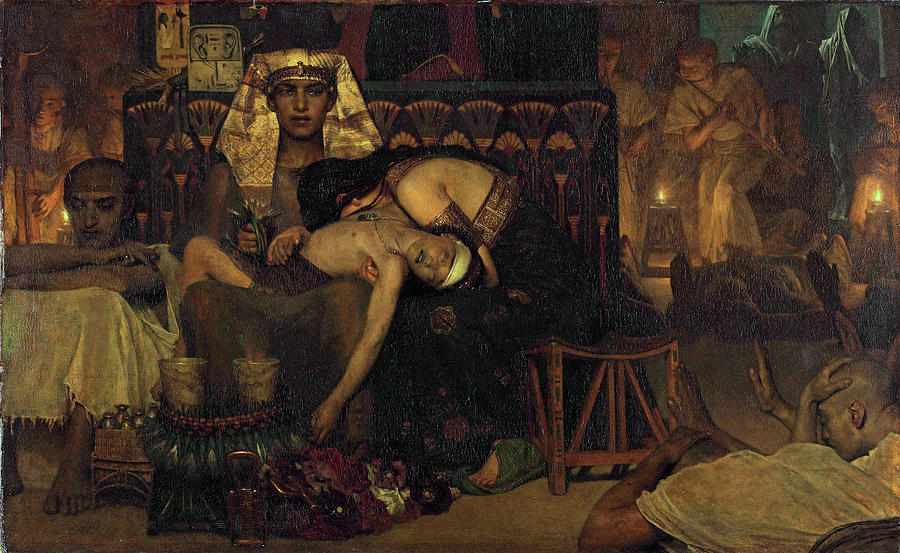
There were the ten plagues that God brought upon the Egyptian captors to show the Pharaoh that Yahweh was not just a local God in Canaan but that His power extended over all creation, even in the land of the Egyptian gods. In the process, the Pharaoh’s own heart continued to harden against Yahweh to the point where God would seal the Pharaoh’s fate and further harden the Pharaoh’s heart. In the end, it took the killing of the firstborn of Egyptian families, including the family of the Pharaoh to convince the Pharaoh to let people of Israel go. And even more, the people of Egypt also supplied the people of Israel with great wealth as they left. Some Egyptians even joined the people of Israel in their flight.

Then there was the miracles of the pillars of cloud and fire, which would continue until the nation entered the Promised Land, and the miracle which let Israel cross the Red Sea on dry land followed by the drowning of the Egyptian army. The pattern of punishing a nation that was used to discipline the people of Israel would be repeated throughout Biblical history.[1]

Once on their way, the Israelites experienced more miracles: a mountain enshrouded in a cloud where Yahweh talked with Moses and gave Moses the Commandments and other rules; manna and quail falling from the sky; springs of water in the desert. Despite seeing all those miracles, Israel wasn’t ready to have Yahweh lead them into the Promised Land to face the obstacles there, so God had them encamp in the wilderness for 40 years until all the adults who refused to trust Yahweh died. So many deaths must have happened, but scripture barely mentions them. Here we will see, not for the last time, that seeing miracles not only did not change hearts but that, even now, despite all the evidence that we see, that all our hearts seem predisposed to turn away from God.


[1] Ex: Egypt (Genesis 15:13-14), Babylon (Isaiah 13, 21,23),  and Assyria (Isaiah 10, 14; Zephaniah 2) were all used by God to discipline Israel

Observe

Read Exodus 8-10. In the narrative of the 10 plagues, several times we are told that Pharaoh hardened his heart, but then there came a time when Yahweh reinforced that trajectory and Yahweh hardened the Pharaoh’s heart. What kind of warning might that be?

Fullness of time

Dancing in the Kingdom- Table of Contents

Dancing In the Kingdom – Part 1 – Shadows of the Kingdom – Chapter 6– A nation emerges

Fullness of time

[Bible references: Genesis 15:16; Exodus 2-4; 7-11; Galatians 4:1-7; Ephesians 1:1-14]

The emerging story of the chosen people of God becoming a nation started slowly: Abraham and one child of the promise, Isaac, who had two children, only one through which the promise would come, Jacob, who then had had thirteen children. But it would take time for that family to grow into a size that could be called a nation – and that took a couple hundred more years – in which time the “sin of the Amorites would reach their full measure.”

Although the Bible does not specifically mention it, there may have been other things that God was waiting to happen such as the development of the Israelite community and the consequent interaction of the Israelite community with the Egyptian community during the Israelite captivity. God allowed events to gradually unfold until “the fullness of time” came for God to orchestrate a dramatic release of the Israelite community. This event would serve as a foreshadowing of another event, the spiritual release of all peoples from slavery to sin.

So it was, that in the fullness of time, when the sin of the Amorites reached its full measure,[1] Yahweh called Moses to release the enslaved Israelites from Egypt to bring Israel back to the Promised Land.


[1] White, James Emery. “Is God a Moral Monster? The Slaughter of the Canaanites” Church&Culture 22 Oct 2020 www.churchandculture.org/blog/2020/10/22/is-god-a-moral-monster

Reflect

Often, when we are younger, we think we know everything. But most of the time, we discover over time that we need maturing – to grow in wisdom – a process that takes time and experience. What things have you learned through time and experience?

Observe

Read Genesis 15:16; Galatians 4:1-7. What do these verses tell us about God’s sense of timing?

Dreams come true

Dancing in the Kingdom- Table of Contents

Dancing In the Kingdom – Part 1 – Shadows of the Kingdom – Chapter 5– Patriarchs

Dreams come true

[Bible references: Genesis 15:12-21; 42-46; 50:15-21]

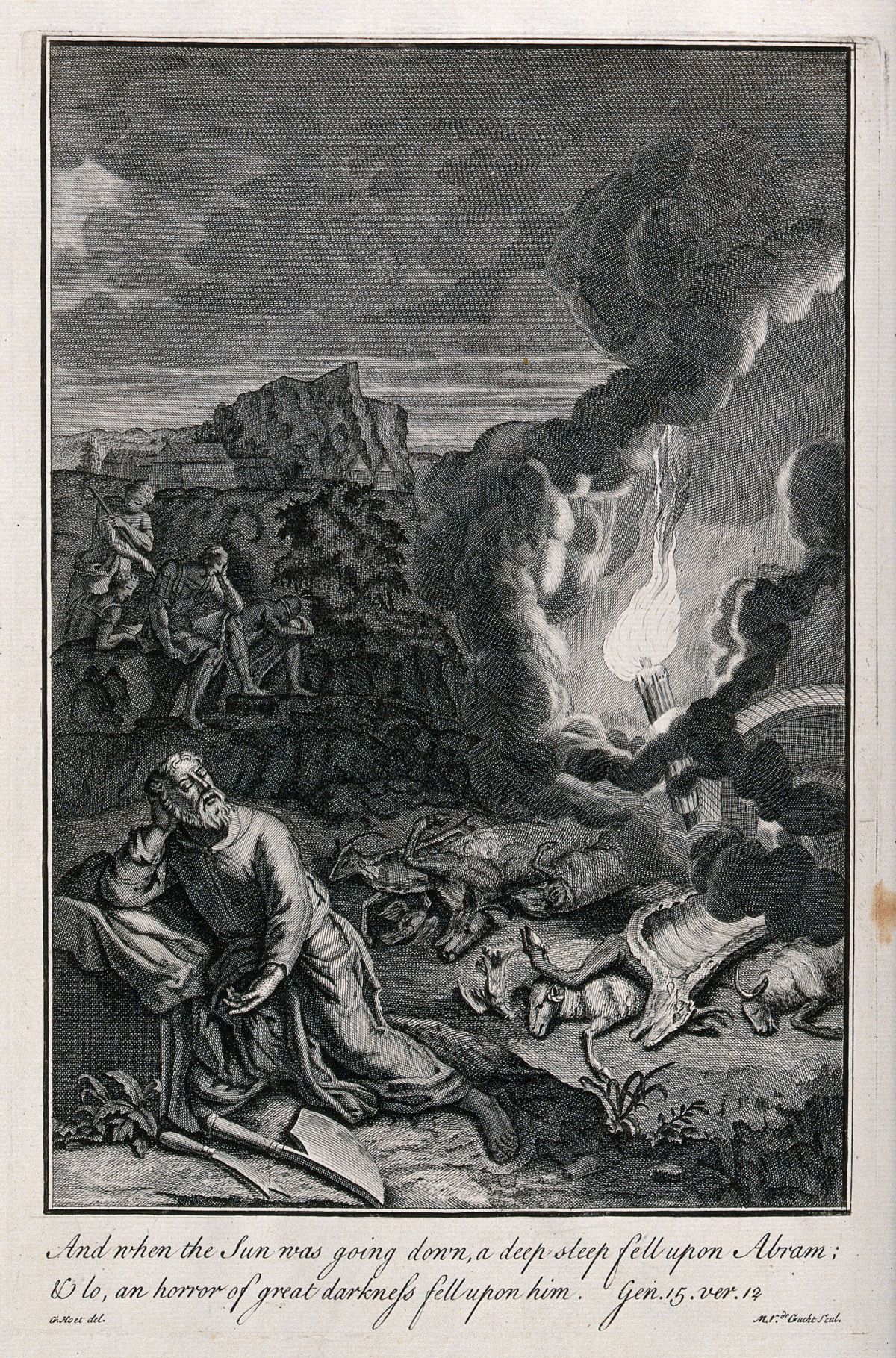
The drought extended up to the Promised Land where Israel was living. This gave the opportunity for Joseph to invite Israel and all the rest of the family to come to Egypt so that Joseph could support them. Joseph was able to see that while his brothers had intended to harm him, Yahweh was able to turn their evil intentions into a good thing. For a moment, Egypt seemed to be promising, but it wasn’t the final destination – it wasn’t the Promised Land. In fact, this provided the setting that Yahweh had revealed to Abraham in a troubling dream, that his descendants would be strangers in a land not their own and that dark times lay ahead before they would finally return to the Promised Land.

Observe

Read Genesis 50:15-21. Back in Canaan, Joseph used his dreams to put down his brothers, who responded by selling him into slavery. But when it came time for the dreams to be re-enacted in real life, he had a different attitude about those dreams. How does Joseph’s experience affect the way you view the events of life?

Walk of faith

Dancing in the Kingdom- Table of Contents

Dancing In the Kingdom – Part 1 – Shadows of the Kingdom – Chapter 5– Patriarchs

Walk of faith

[Bible references: Genesis 12:1-20; 15:1-6; 16:1-5; 17:1-14; 20:1-13; 22:1-18; 24:7; 28:16; 50:24; Romans 4:9; Hebrews 11:17]

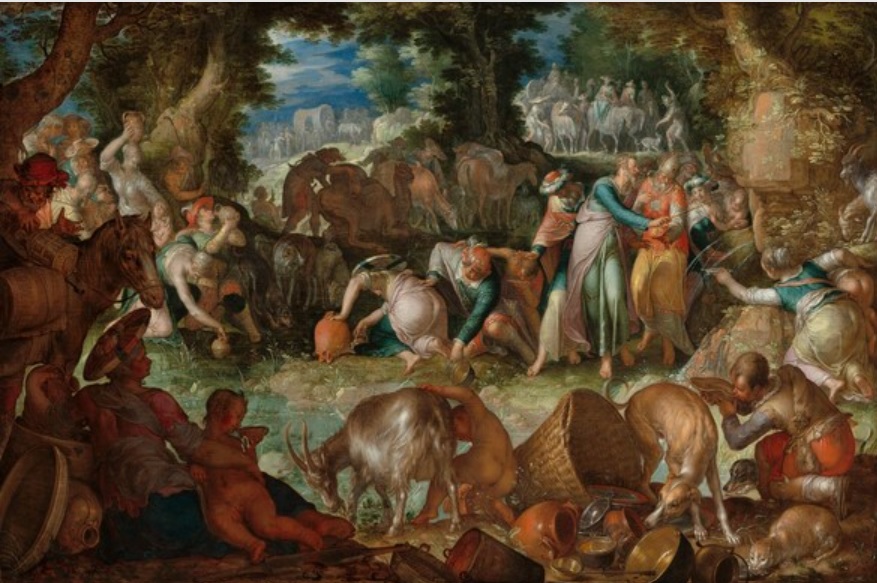
Sometime after the scattering of nations, from the line of Shem and Noah, Yahweh called a man named Abram to leave his country in the Euphrates River Valley and go to a land “I will show you.” As Abram left his home country, at the age of seventy-five, God promised not only to bless Abram and his descendants but to bless the entire world though Abram. Despite his occasional failures, Abram (later named Abraham) is noted for his faith because he believed God and showed this by being obedient in following God’s instructions even when they didn’t make sense.

When Yahweh called Abram to journey to another land, we don’t know what particular experience Abram and brother and father had with Yahweh, but Genesis 24 and 31 indicates that they all knew of knew of Yahweh, even if they thought of Yahweh as one of many gods.[1] Even so, Abram must have had great faith when he took that journey to the Promised Land?[2] Then after Abram arrived in the Promised Land, what further questions may Abram have had when he experienced a deep drought in that same land, such that he needed to take a brief trip to Egypt?

After Yahweh told Abram, that he would make a great nation from him, Abram initially expressed his faith by his obedience when he took that journey to the Promised land. Again, when Yahweh showed him the stars and told him that his descendants would be as numerous as those stars, Abram believed, and Yahweh credited that to him as righteousness. Then Yahweh reiterated the promise again when Abram was 99 years old and changed Abram’s name (which meant exalted father) to Abraham (father of many nations).

God told Abraham that a great nation would come out of him and Sarah. Yet, this did not look promising when the only son born to Abraham and Sarah was Isaac who was not even born until Abraham was one hundred years old and Sarah was ninety. No wonder that Isaac was given a name that means “laughter.”


[1] Garris, Zachary. “Did Abraham Worship Yahweh Before His Call in Genesis 12?” Knowing Scripture knowingscripture.com/articles/did-abraham-worship-yahweh-before-his-call-in-genesis-12

[2] Although the term “Promised Land” is not used directly as the place of where Abram and his descendants were called to settle down in, there are several references to the “land that is promised you.”

Observe

Read Genesis 12:1-20. This renowned Patriarch of faith, Abram, believed Yahweh, and left his homeland to some destination that Yahweh would show to him. When Abram arrived at the place Yahweh led him to, he built an altar and set up his tent. Good start at a life of faith. Sometime afterwards, Abraham winds up in Egypt where he is now afraid for his life and asks his beautiful wife Sarah to say that she’s his sister instead of his wife, so that they people won’t kill him to get her. This does lead to complications we won’t discuss here but just to point out that we, never mind Abram, are subject to a wavering faith. Do you have incidents in your life where your faith wavered?

Moses and the Exodus

Dancing in the Kingdom- Table of Contents

Dancing In the Kingdom – Part 1 – Shadows of the Kingdom – Chapter 1 – Prelude

Moses and the Exodus

[Bible references: Exodus 8-11; 14-15; Numbers 13-14; Deuteronomy 1]                                      

430 years would pass after the promise was given to Abraham, that his people, now named after his grandson, Israel, would walk out of Egypt. God told Abraham that his descendants would be enslaved in Egypt for four generations[1] before they return to the Promised Land at which time the “sin of the Amorites would be complete.”

At the scheduled time, God called Moses to lead the Israelites out of Egypt, and it would take 10 plagues, including the death of the firstborn, to convince the Pharaoh to let Israel go. Moses led the people out of Egypt by way of the “Red Sea.” The Commandments were given, and the building of the Tabernacle occurred, at Mt Sinai, location uncertain, before Israel would leave for the “Promised Land.”  When 12 spies were sent into the land, 10 of them focused on the difficulty of taking the land, inspiring fear among the people and causing God to consign Israel to wander in the wilderness for 40 years where all the adults 20 and over would die before Israel would finally go into the Promised Land.


[1] LeBrun, Ken. “The 400-Year Prophecy and the Fourth Generation”” Thoughtlines www.thoughtlines.org/2013/09/the-400-year-prophecy-and-fourth.html; BibleAsk “Did the Israelites spend 400 years in Egypt?” BibleAsk bibleask.org/did-the-israelites-spend-400-years-in-egypt/; Glatt-Gilad, David. “How Many Years Were the Israelites in Egypt?” TheTorah.com www.thetorah.com/article/how-many-years-were-the-israelites-in-egypt; Got Questions. “How many Israelites left Egypt in the exodus?” Got Questions www.gotquestions.org/Israelites-exodus.html; It would be 430 years from the time Abraham’s son Isaac was born but the time spent in Egypt would only be for four generations. Linked to that is the apparent size of the Israelite people leaving Egypt. Allowing for only 4 generations in slavery and, starting with a population of 70 people, something less than 10,000 people would have left Egypt with Moses. This helps to make sense of the Biblical events in the Promised Land and also of the archaeological evidence now available.

Reflect

Think of situations where you had to overcome fears in order to spiritually grow.

Observe

Read Genesis 15. Abram was living in the land of Canaanites which the Lord had promised to give to Abram’s descendants, but in a dream the Lord about how Abram’s descendants would first be enslaved and then return to the Promised Land, but only after “the sin of the Amorites reached its full measure. What does that say about how God works in the present day?