The Kingdom is Come and Not Yet

Dancing in the Kingdom- Table of Contents

Dancing In the Kingdom – Part 3 – Dancing in the Kingdom– Chapter 16 – Fixing our eyes

The Kingdom is Come and Not Yet

[Bible references: Matthew 6:9-13; 28:36-49; Romans 12:2; James 1:27; Revelation 21-22]

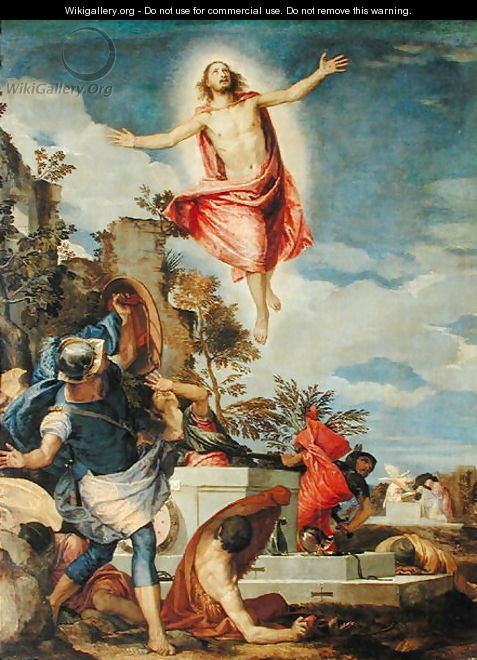
When Jesus came the first time, his healings and teachings began the ushering in of the Kingdom of God, a task He will complete when He returns to fully restore His Kingdom. When Jesus came the first time, He was resurrected, but when He comes a second time, there will be a new heaven and earth, and everyone will be resurrected. But what about now?

When Jesus ascended to heaven, he told the disciples to wait for the baptism of the Holy Spirit. It was then, through the power of the Holy Spirit, that the disciples of Jesus began the process of continuing the task of bringing Heaven to earth. In this in-between time, God is at work through the Holy Spirit, continuing to bring people to Himself, continuing to build His kingdom. The task that lies before us is to join Him in His work. The prayer He gave for us to say says, “your kingdom come, your will be done, on earth as it is in heaven.” This prayer asks that His kingdom be brought to earth, the Kingdom of justice and mercy.

Empowered by the indwelling of the Holy Spirit, it is our opportunity to do our part, with whatever ability He has given us, to work with Him in bringing His justice and mercy on earth: to look after the widows, orphans, the helpless, and the marginalized; to have compassion; to not lie about others; hate evil, love good; maintain justice in the courts; bringing the good news of Jesus to all. This is simply doing the task assigned to us from the beginning: to fill the earth and subdue it as his co-regents, to take care of the earth as farmer-priests representing Him on earth.

Our final destiny is not to a disembodied existence, but to a new, transformed body, transformed in the way that Jesus was when he was resurrected. Earth itself will also be transformed, with its corruption being removed, not back into a Garden of Eden, but into the earth as it was meant to become, filled, and civilized, with a new Jerusalem being brought from heaven to earth. We are not being sent to heaven; heaven will be coming to us.

Knowing that this end is coming upon us, in the present age we can be motivated to express our hope by living out our hope as in mentioned in The Lord’s Prayer, “thy kingdom come, thy will be done, on earth as it is in heaven.” This encourages us to do what we can to help usher in God’s kingdom now, if only in part. The full entry of the kingdom will not happen until the Lord returns and establishes a new heaven and earth, but we do not need to wait hopelessly as if there is nothing we can do. God has given everyone in his church gifts with which we can build each other up and take charge as His stewards of the earth.

But the task of transforming the earth needs to begin within us. We need to be transformed. In our sin, it is our tendency to always point to other things for the cause of the problems we see. But the cause of the corruption we see elsewhere begins with the corruption within ourselves.

“The line separating good and evil passes not through states, nor between classes, nor between political parties either – but right through every human heart…even within hearts overwhelmed by evil, one small bridgehead of good is retained. And even in the best of all hearts, there remains…an uprooted small corner of evil. [1]


[1] Solzhenitsyn, Aleksandr. “The Gulag Archipelago” Vintage Publishing 1974

Reflect

Reflect

In this time that we live in, the Kingdom of God has come but not yet completely. Our hearts reflect this time with our mixed desires – at once delighting in God’s law and at the same time waging war against that same law. The corruption in our hearts is reflected in the corruption we see in the world. How does that impact how we approach our task to join God in bringing His Kingdom into the world?

Observe

Read Revelation 21:22-24. Try to imagine what it means that “the kings of the earth will bring their splendor into the city.” What would that look like?

Discipline of Worship/Celebration

Dancing in the Kingdom- Table of Contents

Dancing In the Kingdom – Part 3 – Dancing in the Kingdom– Chapter 15 – Reforming our Souls

Discipline of Worship/Celebration

[Bible references: Deuteronomy 12; Isaiah 6:1-13; Matthew 6:25-34; John 4:23-24; Psalm 29; 95:1-7; 102; Romans 12:1-2]

“Authentic worship will impel us to join in the Lamb’s war against demonic powers everywhere—on the personal level, on the social level, on the institutional level. Jesus, the Lamb of God, is our Commander-in-Chief. We receive his orders for service and go …”[1]

 “The pervasive sinfulness of human beings becomes evident when contrasted with the radiant holiness of God. Our fickleness becomes apparent once we see God’s faithfulness. To understand his grace is to understand our guilt” [2]

God does so many things in our lives, and when we build up worship as a spiritual discipline, we learn to identify what He has done and honor him in appropriate ways. The first step it to give glory to God for all things in our lives. When we have privileges, they come from God. When we are bountiful, it comes from God. When we see something beautiful or good, we need to thank God for those things. God shows us His ways through others, and by giving Him the glory, we are worshiping him.

Another way to respond to God is to sacrifice. Sometimes honoring God means giving up things we think we’re enjoying but may not be edifying. We sacrifice our time by volunteering, and we sacrifice our money to help those in need, we sacrifice our ear to those who need us to listen. Sacrifice doesn’t always mean grand gestures. Sometimes it’s small sacrifices that allow us to worship God in our actions.

The spiritual discipline of worship can be beautiful and fun. The obvious form of worship, celebrating together and singing in church, can be a great time. Some people dance. Worshiping God can be both fun and serious. Laughter and celebration are ways to worship God.

As we practice the spiritual discipline of worship, we learn to experience God in His Glory. We easily identify His works in our lives. We seek out our time with God in prayer or conversation. We never feel alone because we always know God is right there with us. Worship is an ongoing experience and connection with God.

Worship is probably the most familiar of the Spiritual Disciplines. What does it mean to practice worship as a Spiritual Discipline? We all worship something; it’s only a question of what it will be. The number one topic of the Bible is our worship of God. The Israelites were constantly getting into trouble because of one thing — idolatry — the worship of something other than God. If we really believe that God is who he says he is then we will worship him, not out of a sense of duty, but because of who he is — then our worship will overflow into all other activities.

The celebration of worship is great when it just flows out of the moment we are in. The discipline of worship is necessary when we don’t feel the overflow but begin by forcing ourselves to begin to worship anyways. It might be that as we begin to worship our spirit will respond in earnestness. But even if our spirit does not seem to respond at the moment, we may continue the discipline because God is worthy despite how we feel.


[1] Foster, Richard. “Celebration of Discipline”  Harper & Row Publishers ©1978 p. 148

[2] Foster, Richard. “Celebration of Discipline”  Harper & Row Publishers ©1978 p. 160

Observe

Read Psalm 95; 102. These two Psalms begin from two different experiences. What do they have in common?

Discipline of Lament

Dancing in the Kingdom- Table of Contents

Dancing In the Kingdom – Part 3 – Dancing in the Kingdom– Chapter 15 – Reforming our Souls

Discipline of Lament

[Bible references: 2 Samuel 1:1-2:7; Psalm 10:1-4; 17:20; Jeremiah 4:8; Lamentations 2:5; Micah 2:4; Acts 8:2; John 11:31-33]

Lament is not despair. It is not whining. It is not a cry into a void. Lament is a cry directed to God. It is the cry of those who see the truth of the world’s deep wounds and the cost of seeking peace. It is the prayer of those who are deeply disturbed by the way things are… The journey of reconciliation is grounded in the practice of lament.[1]

“Lament and praise must go hand in hand. …  My tears showed me a God who was still worthy of my praise in troubled times. Lament cries out for shalom. Shalom is active and engaged, going far beyond the mere absence of conflict.… it embraces the suffering other as an instrumental aspect of well-being. Shalom requires lament.[2]

The Bible is filled with lament. When the God’s people are faced with evil, injustice, oppression and turmoil, the Biblical response is often lament. Sometimes the lament is focused on ourselves, sometimes it is focused on others. Sometimes our suffering can reveal the needs we really lack, not necessarily what we do not feel nor see. In all of this we should remember that our lament is not to inform God about our needs or wants, God already knows them, but he wants us to lament and plead so that we may kindle our hearts to stronger and greater desires.

Growing in lament helps us to see the sinful, broken world more fully as God see it, to be more fully aware of how our own sins participate in that brokenness, and to become more aware of our need for God’s justice and grace.

Rest and Remember[3]

The goal of the discipline of lament is to learn to slow down, become more aware of our own emotion and pain as well as others, so that we can learn to cry with God about the pains of suffering and injustice. Resting in God gives us the time to remember and reflect, to consider all the many we and others in the world have been hurt and treated unjustly. As we remember, we may find it helpful to turn to the Psalms. Many of the psalms are psalms of lament, sometimes ending in a declaration that God will respond. In Ps 71, suffering is not seen as a problem as God acts to restore him. As we find ourselves, crying out to God, we can find ourselves wrapped in His goodness knowing that he cares about our pain, It is then we can develop a fuller picture of God and learn to praise him with renewed joy and hope.

Repentance 

In that remembering, fused with the hope of God, we can become more fully aware of the part we ourselves have played in the world’s injustice. Repenting, confessing our role in creating pain opens the way to our own healing as well as the healing of others.

Recompense and Restitution

Our repentance turns us towards God, but we may need to consider practical steps act on our repentance and make amends with those we’ve hurt.


[1] Katongole, Emmanuel. Rice, Chris. “Reconciling All Things: A Christian Vision for Justice, Peace and Healing” Intervarsity Press, 2009

[2] Rah, Soong-Chan. “Prophetic Lament:  Call for Justice in Troubled Times” Intervarsity Press, 2015

[3] Price, Paula Francis. “Lament as a Spiritual Practice” ” Women in the Academy and Professions (intervarsity.org), February 09, 2017, thewell.intervarsity.org/spiritual-formation/lament-spiritual-practice The categories in this section are taken from this article

Observe

Read 2 Samuel 1:1-2:7. What did David do during his time of lament?

Discipline of Fasting

Dancing in the Kingdom- Table of Contents

Dancing In the Kingdom – Part 3 – Dancing in the Kingdom– Chapter 15 – Reforming our Souls

Discipline of Fasting

[Bible references: Isaiah 58:1-14; Ezra 8:21-23; Matthew 6:16-18]

By the help of the merciful Lord our God, the temptations of the world, the snares of the Devil, the suffering of the world, the enticement of the flesh, the surging waves of troubled times, and all corporal and spiritual adversities are to be overcome by almsgiving, fasting, and prayer.[1]

“More than any other Discipline fasting reveals the things that control us.” [2]

Fasting breaks up habits to let us see our lives in new ways or to enable us to pray at new times or in new ways. Because we are stopping something for a finite period of time, there’s an unfamiliarity and discomfort to it that can be very instructive, open up time for prayer, and draw us closer to God.”[3]

“In every culture and religion in history, fasting has been an instinctive and essential language in our communication with the Divine.”[4]

The pursuit of God can be described as in Psalm 37, to trust in, to delight in, to commit to, to wait on, and to be silent before the Lord; these are words of “giving up” of “going without” whatever the world offers and instead resting in God. The discipline of fasting then looks like learning to go without while learning to rest in, to fight through our appetites so that we can remain focused on the act of pursuing God and loving others, to push through our hunger pains so that we can discover we’re just fine on the other side of them, to look to God, to talk to him, to open ourselves to him in confession, to not so much as give up anything, but to commit to hearing the voice of God in our lives. The goal of fasting is to pursue God, to turn our hearts and our loves towards God and neighbor.

There are many reasons Christians are led by the Holy Spirit to the spiritual discipline of fasting, a few of them are: to strengthen one’s prayer life, to seek direction for one’s life, to express grief and loss, to seek deliverance and protection for life, to express repentance and reconciliation with God. to humble oneself, to express concern for the work of God, to minister to the needs of others, to overcome temptation and rededicate oneself to God, to express love, devotion, and worship of God, to establish rhythms between absence and abundance.

Simplicity and Gratitude can be precursors to fasting. Once we have determined how to order our lives then we are better equipped to identify those things that stand in our way and in the lives of those around us, not only the good vs. bad things, but the good things that detract us from the best things. The Gratitude for God and His provision can set our attitude in preparation for fasting.


[1] Sister Mary Sarah Muldowney The Fathers of the Church: A New Translation Writings of Saint Augustine Vol 17 Fathers of the Church 1959 Sermon 207 (p. 89)

[2] Foster, Richard J. Celebration of Discipline.  Harper & Row Publishers ©1978 (p. 48)

[3] Baab, Lynne M. “The Surprise of Fasting” Lynnebaab.com www.lynnebaab.com/blog/the-surprise-of-fasting

[4] Ryan, Thomas. The Sacred Art of Fasting: Preparing to Practice Skylight Paths 2005

Observe

Read Isaiah 58:1-14; Ezra 8:21-23; Matthew 6:16-18. The benefit of fasting does not come just from deprivation. What should accompany fasting?

Mystery of worship

Dancing in the Kingdom- Table of Contents

Dancing In the Kingdom – Part 2 – The Kingdom Revealed – Chapter 13 – Distinctives within the body of Christ

Mystery of worship

[Bible references: Deuteronomy 4:15-24; 12:1-32; Romans 12:1-21; 1 Corinthians 14:1-40; 1 Timothy 2:1-15; Hebrews 12:1-39]

What are proper ways of worship?

In Hebrew, the word for worship means “to bow down, to prostrate oneself” or to “lay flat on the ground.”  In Greek, the words for worship mean to “kiss the hand, to fall on the knees,” or to “prostrate oneself” “to pay homage” or “to render religious honor.”  These things can be done in the context of a “worship service” on a Sunday or in any activities throughout the week. Activities in work or play can be done in an attitude of worship.

There are some differences in belief about the role of arts in worship: Is music or artwork or dancing permissible, or what kind of music or artwork or dancing is permissible? Part of the differences are due to whether activities are permissive unless specified otherwise in the Bible or activities are not allowed unless specified in the Bible.[1] Some of those differences emerged in the way some of the Protestants perceived abuses of the arts in the Roman Catholic denomination. Despite these disagreements, there are some hymns that have been widely accepted across many denominations. In a similar fashion, many congregations/denominations have adopted the contemporary style music, although in some congregations that style of music has created divisions. Music can be important as an alternate means of expressing theology.

Icons are a specialized type of artwork that represent sacred objects or honored saints in the church. The icons were used as a visual method of teaching and were particularly important when literacy rates were low. Icons are meant to take the place of the physical presence of admired saints, and because of this, Roman Catholic and Orthodox congregants will bow to or kiss the icons as if they were bowing to or kissing the actual revered saints. This is not meant to worship the icons but to show respect.[2]

Prayer can be done formally, informally, individually, or corporately. There are different viewpoints about whether praying to the saints – asking them to pray for us – is acceptable. There are also differences about whether mystical experiences in prayer are proper.

What about Mary?

The mother of Jesus is in the middle of one of the great mysteries: How is it possible for the infinite God to become a human even from the point of conception? Related to that question are other questions: Why was Mary selected? How was it possible for her to conceive Jesus? Were there any special qualities for Mary to have in order to become the mother of Jesus, the Son of God? Did she actually become the Mother of God?[3]

The Roman Catholics consider that Mary was conceived without original sin.[4] Both the Roman Catholic and the Orthodox denomination’s view that Mary did not die but fell asleep,[5] and then was physically assumed into heaven.[6] The Protestants mainly reject these views and because of their reaction to the corruption of the Roman Catholic denomination have generally not held Mary in as high esteem.

What are liturgies?

Liturgy is derived from the Greek “public work” or “public ministry.” Within the church it has been usually applied to the worship service (for most congregations) on Sundays. For some congregations it specifies the service where Communion[7]  is performed. In some instances, the term has been used to specify worship services that have a formal structure. Sometimes, in order to delineate services that are more formal from services that are less formal, the terms “high church” and “low church” are used. In the “high church” setting the liturgy will be specified particularly as the Liturgy of the Word and Liturgy of the Eucharist. Used more loosely, the term can be used to specify any type of public service, whether it is in gathered worship or scattered worship,[8] whether it’s in front of other people or simply front of God (who is always there). In some evangelical denominations, liturgy is seen as something we do for God, but in other cases, liturgy is seen as a setting where God meets us, and we respond.

What about the Sabbath?

From the Creation account, we see that the point of creation was to create a temple, a place for God to be with His image-bearing creatures. The “seventh day” was meant to indicate that the temple was now complete, and that God’s image-bearing creatures could fulfill the role of being God’s representatives on earth, to take care of the earth as his priests.

Unfortunately, our human rebellion separated us from God, and our role as his stewards of his creation became corrupted. The Sabbath liturgy was introduced to Israel as a weekly reminder to them of their priority to have a relationship with God; that they, as God’s chosen nation, could rest from their weekly labor because God would provide for them. This weekly setting aside of labor was a gift from God, still enjoyed by Jews to this day.

The early church consisted of mostly Jews who still celebrated the seventh-day Sabbath, but quickly also adopted the first day, the Lord’s Day, as a celebration of the resurrection of Jesus. The Bible never required Gentiles to celebrate the Sabbath. Even if we regard the laws that applied to Noah to be also applicable to Gentiles, none of those laws prescribe Sabbath observances. As the church developed, different congregations developed different practices regarding the Sabbath. While the trend was towards Sunday gatherings to worship, some groups, who could be called Sabbatarians, applied Sabbath restrictions to Sunday. Others allowed for more freedom with a focus on the celebration of the joy of Christ’s resurrection, with the thought that all people who have the Spirit of God are Christ’s temple and we do his work each day of the week.


[1] Got Questions. “Regulative vs. normative principle of worship – which viewpoint is correct?” Got Questions www.gotquestions.org/regulative-normative-worship.html

[2] OrthodoxWiki “Veneration” OrthodoxWiki orthodoxwiki.org/Veneration

[3] OrthodoxWiki “Theotokos” OrthodoxWiki orthodoxwiki.org/theotokos

[4] Catholic Encyclopedia “Immaculate Conception” New Advent www.newadvent.org/cathen/07674d.htm

[5] OrthodoxWiki “Dormition” OrthodoxWiki orthodoxwiki.org/Dormition

[6] Sri, Edward. “The Assumption of Mary” Franciscan Spirit Blog www.franciscanmedia.org/franciscan-spirit-blog/the-assumption-of-mary

[7] Also known as the Eucharist or Thanksgiving

[8] Warren, Tish Harrison. Liturgy of the Ordinary: Sacred Practices in Everyday Life. InterVarsity Press 2016. eBook Chapter 7

Mystery of the church

Dancing in the Kingdom- Table of Contents

Dancing In the Kingdom – Part 2 – The Kingdom Revealed – Chapter 13 – Distinctives within the body of Christ

Mystery of the church

[Bible references: Acts 2:42-47; 1 Corinthians 12:17, 27; 2 Corinthians 5:20; 1 Peter 2:9]

What is the church?

As commonly used in current times, the “church” is a building to go to. In biblical terms it referred to an assembly of believers (called out ones).[1] How we understand this idea can influence our behavior. There are a few biblical metaphors that describe the church.

  • The body of Christ – This metaphor brings the ideas: that Christ is the head of the church, and we are His presence in the world, that each of us has a unique role in bringing Christ’s presence in the world. Our unique roles are distinguished by the spiritual gifts imparted to each of us to enable us to build each other in our faith.
  • A holy priesthood – This metaphor brings the idea that we have a relationship with God and can act as intermediaries.
  • A temple – This metaphor describes each individual as a stone in the temple and that it is all of us together who make up the temple, that is, the place where God resides on earth.
  • Ambassadors – This metaphor highlights our role in representing God’s to those not reconciled to God.

In the beginning, the organization of the church was not given in detail but seemed to be a cohesive group that “devoted themselves to the apostles’ teaching and to fellowship, to the breaking of bread and to prayer … had everything in common … broke bread in their homes and ate together with glad and sincere hearts.”

Is the church more than a Jewish sect?

[Bible references: Romans 11:17; Ephesians 3:6]

At first the church was mainly a Jewish sect. Jesus focused his ministry within the borders of Israel and his disciples were mainly Jewish. After Jesus died, that situation did not change much until Jesus took definitive steps with Peter and Paul to reach the non-Jews (Gentiles). Until that happened, the church mainly consisted of Jews who happened to also be believers, and as Jews, kept up many Jewish practices. But when Gentiles started to be included, there was the question of whether they needed to become Jewish to belong. It took a council of the church to determine that Gentiles were not bound by the Jewish practices. But even after that council, the debate persisted.[2]

In the Old Testament, we are told that Israel will be a blessing to the rest of the world, but it was not revealed just how that would happen. In Ephesians 3, the apostle Paul explains that “through the gospel the Gentiles are heirs together with Israel, members together of one body, and sharers together in the promise in Christ Jesus.” And then in Romans 11, Paul explains that the Gentiles were “grafted” into the family of believing Jews, of whom Abraham is the root, so that the Gentiles may receive all the same blessings.

What is the visible and invisible church?

The invisible church consists of all those, past, present, and future, who have put their trust in Christ. Only God knows who they all are. The visible church is the groups of people gathered together as communities. Both believers and unbelievers may be in the visible church.

Some congregations/ denominations are very strict about how to interpret scripture and/or have a limited view of forgiveness, and so would put limits on who they would consider to be in the church.[3] Other congregations/denominations have an extreme view that all of society should be under Christian rule[4] and then misused Luke 14:23, “Go out into the highways and hedges and compel them to come in,” that they would even resort to torture in order to persuade a people to make a “confession of faith.” Then there are those who think that everyone will ultimately be saved.[5]

Who has authority in the church?

As the church grew and spread throughout the Roman Empire, the natural development was to “institutionalize” the church, trying to make the church more effective with more formal organization. While the apostles were still alive, it was possible to unify the church around the apostles, but of course that was temporary.

Over time, different governance models emerged within the church as there was no model within the church except for the synagogue. In the episcopal model, there is a single leader, or bishop, who oversees a group of congregations and selects the pastors for each congregation. In the presbyterian model, there is a “plurality” of elders, who oversee a congregation or a group of congregations – the congregation may elect their pastor, but the Presbytery has to approve whoever is selected. In the congregational model, the congregation itself is its ultimate overseer and selects its pastor.

Some congregations are independent from one another, and some are affiliated with other congregations. The affiliation may be a denomination where there is strong oversight by the denomination over the individual congregations, but some affiliations are mainly an association for the purpose of sharing resources, but the association has no oversight function.

Some congregations emphasize the importance of maintaining apostolic authority by maintaining the transfer of authority of the apostles and trace the leadership of the church from one generation to the next beginning with the apostles.[6] The Roman Catholic denomination further emphasizes their authority is transferred from the apostle Peter, whom they think was given the most authority from Jesus. Other denominations will maintain that they are apostolic because of their faithfulness to scripture and therefore to the apostolic teachings.

One issue related to authority within the church is related to gender roles. Due to apparent conflicts in some Bible passages, two main views have emerged regarding the role of women in the church On one side, there is no restriction of ministry roles because of gender, but on the other side, women are restricted from any role in which they have spiritual authority over men.

What is the role of elder, bishop, deacon, priest?

The New Testament doesn’t clearly specify how to organize a congregation and that has resulted in congregations organizing themselves in a variety of ways. The New Testament does show examples of elders (aka bishops) serving as spiritual leaders of a congregation and deacons serving the physical needs of the congregation. Priests, in the Old Testament performed duties for God on behalf of the other people. The New Testament talks about Christ being the high priest for all of us but then talks about all Christians as being priests since we all have direct access to God and our role as Christians is to present ourselves as a living sacrifice to God.

The first denominations that emerged did keep the title of a priest, no longer offering the Old Testament sacrifices but rather now sharing the sacrament of the Last Supper. The Orthodox and Catholic traditions consider the bishops who oversee the priests to be the elders of the denomination. The priests are chosen to serve the sacraments, although they also serve in other ways with deacons helping the priests in carrying out the liturgy in the worship service or serving in other ways as well. In this context, the spiritual leadership of bishops or priests is recognized by the use of honorific titles such as Reverend or Father.

Protestant traditions vary. Anglican and Episcopal congregations retain the title of priest, while in other Protestant traditions congregations are led by pastors or elders.[7]

In some congregations, the pastor is considered to be the elder and the lay leaders are considered to be deacons. In other congregations the pastor is considered to be a teaching elder (if that title is used) while the lay leaders are considered to be ruling elders, or just elders. Some congregations are governed primarily by the pastor, some by a group (plurality) of elders, and some by the congregation itself.

What is the function of a creed?

As explained at the beginning of this chapter, there is much of God that is beyond comprehension. So, when God revealed himself through the prophets, the revelations were more in the form of stories and the interactions of God with the world than a spelled-out theology. That type of revelation requires us to do some of amount of interpretation as we try to better understand God, and that process of interpretation has been the function of the church at large. However, some individuals in the church came up with teachings that seemed to be more than minor differences and actually opposed the more accepted teachings of the church. Those ideas were considered to be heretical. Over time, to combat the heresies that arose, the church developed abbreviated teachings of the church called creeds.

As conflicts within the church developed, different sets of creeds started to emerge. The Protestant section of the church caused even more divergence with the creation of more detailed creedal statements called “confessions of faith,” while other congregations claimed to be non-creedal, stating that the Bible as a whole was their creed because creedal statements are limited and could never present a comprehensive theology of the church.

How can broken people within broken congregations can be instruments of God?

[Bible references: Romans 7:7-25; 1 Timothy 5:10; 2 Timothy 2:21; 3:17; Ephesians 2:10; Colossians 1:10; Hebrews 13:21]

In this time between the Kingdom has come and is yet to come in full, even those of us who trust in Christ have wills that are internally divided between the desire to do good and the desire to do evil. Despite our brokenness, God still desires to use us to accomplish His will on earth. He did not remove the mandates given to us back in Genesis. We may be broken instruments, but God knows how to use broken instruments.

Is the church an Organism or an Organization?

[Bible references: Matthew 28:16-20; 1 Timothy 3:1-6; Titus 1:6-9; 1 Peter 5:1-3]

When Jesus gave the command to “go into all the world” he didn’t specify how to do it, particularly how they should organize themselves to do it. They were to be his body, that is, his hands, feet, legs, eyes, ears, etc. on the earth to continue to do what he had begun. He left no instructions that we know of on how to organize themselves to complete the mission.

The apostles did have the model of synagogue that they could refer to.[8] The first people they reached out to were already in synagogues. But the Bible makes no specific mention of them using that model to organize themselves. In the apostles’ letters to churches and individuals that we have preserved in the Bible, there are some details from which various organizational models have been proposed, ranging from congregation choosing their own leaders to leaders over the congregations choosing leaders for each congregation.

What the Bible is clear on, is the qualifications for those who would lead the church. Some of those qualifications are to be blameless, even tempered, hospitable, to love what is good, to be disciplined, and to encourage others with sound doctrine. The biblical focus seems not to be on how leaders organize their congregations but on the qualifications that those leaders should have.


[1] Biblehub. “1577. Ekklesia” Bible Hub biblehub.com/Greek/1577.htm

[2] Marcos, Juan. Gutierrez, Bejarano. “The Judaisms of Jesus’ Followers” (Chapter 10, The Church Fathers and Jesus Oriented Judaisms) Yaron Publishing, 2017. Nazarenes held orthodox beliefs except in their adherence to Jewish law. Not deemed heretical until the fourth century. Ebionites, possibly a splinter group from the Nazarenes held that circumcision is necessary for salvation.

[3] This “rigorist” viewpoint was held by various people such as the “Novationists” (third century) and “Donatists” (fourth century).

[4] This idea is known as Christendom. Mere Orthodoxy mereorthodoxy.com/christendom-1200-words-give-take/

[5] Encyclopedia Britannica, “Universalism” Encyclopedia Britannia www.britannica.com/place/Universalism

[6] Encyclopedia Britannia “Apostolic succession” Encyclopedia Britannia www.britannica.com/topic/apostolic-succession

[7] Whitaker, Alexander. “The Protestant Problem with Priesthood” The North American Anglican 8 June 2020 northamanglican.com/the-protestant-problem-with-priesthood; Patheos “Leadership”

[8] Burtchaell, James Tunstead. “From Synagogue to Church: Public Services and Offices in the Earliest Christian Communities” Cambridge University Press 1992 (pp.349-352)

Reflect

The quality of church governance is more dependent on the quality of the leaders than the type of governance structure. What qualities do you think church leaders should have?

Observe

Read 1 Corinthians 12:17, 27; 2 Corinthians 5:20; 1 Peter 2:9. How does the different metaphors for the church help you to understand the church?

Disciplines of the faith

Dancing in the Kingdom- Table of Contents

Dancing In the Kingdom – Part 2 – The Kingdom Revealed – Chapter 12 – Launching the church

Disciplines of the faith

[Bible references: Joshua 1:8; Psalm 1:1-2; 19:14; 37:7; 40:1; 133:1; Proverbs 1:1-9; Matthew 4:19; 5:8, 14-16; 6:1-18,30-33; 9:1311:29; 12:7,32; 23:12,23; Mark 12:30; Luke 16:13; John 4:22-24; 13:1-17; 17:23; Acts 1:8; 2:42; 10:43; 13:28; 14:23; 26:18; Romans 8:25; 9:15-18; 10:14-18; 12:9-12; 13:1-5; 1 Corinthians 1:9; 13:4; 2 Corinthians 1:12; 9:6-13; 11:2-3; Ephesians 1:10; 4:2-3, 11-14; 5:1-4,21; 6:18; Philippians 1:10; 2:15; 4:4-8; Colossians 4:2-6; 1 Timothy 2:1-2; 4:1-5; 6:6-8; 2 Timothy 2:15; Hebrews 4:1-11; 12:11; 13:4; James 3:17; 4:10; 5:16; 1 Peter 4:10; 1 John 1:3-7,9]

Fruits, whether of the Spirit or of a plant, do not develop without time and nurturing. God’s intentions are clear from His design of Creation, that everything in Creation is designed to operate by built-in processes. The normality and regularity of those processes inspired Christians investigating natural phenomena to develop what we now call the modern scientific method.[1]

In the same way that natural phenomena are subject to natural processes, spiritual phenomena are subject to spiritual processes, and those processes are the normal way God chooses to work through us and grow us into creatures who increasingly resemble Him. It is therefore recognized that the most effective way for Him to work with us is for us to engage in the practice of spiritual disciplines, which are habits that we try to build into our lives which invite God to transform us. When we practice spiritual disciplines, we voluntarily make ourselves available to yield to God and to give Him the opportunity to shape us. The resulting change, our transformation, is His work. The disciplines we practice are merely the means by which we cooperate with him. There are various ways we can categorize these disciplines (inward vs. outward, etc.) although various disciplines are not perfectly one category or another. One way to categorize the disciplines, which is shown below, is to describe disciplines in which we abstain from things (disciplines of abstinence) and those in which we engage with others (disciplines of engagement).

Disciplines of Abstinence:

  • meditation (silence, solitude, journaling)[2]
  • fasting[3]
  • submission (obedience)
  • patience
  • humility
  • Sabbath (rest)
  • purity of heart (chastity)
  • secrecy
  • simplicity

Disciplines of engagement:

  • service
  • confession (self-examination)
  • worship
  • celebration[4]
  • unity
  • forgiveness
  • mercy
  • stewardship (generosity, giving)
  • fellowship
  • evangelism
  • studying the Bible
  • thanksgiving
  • prayer

We should not think of disciplines as processes which deprive us of enjoyment, or which reduce the flourishing that God has intended for us. Rather, the disciplines can make our lives more enjoyable and enhance our flourishing. Because we, like all creatures, are made in a particular way, we will be better off if we stay in the environments for which we are designed. For instance, trains are built to best run when they are on railroad tracks, off the tracks they can hardly operate, but on the tracks, they can operate at their best. In the same way, spiritual disciplines put us in the best environment for us to thrive according to the way we are designed.


[1] Hannam, James. “How Christianity led to the rise of modern science” Christian Research Institute www.equip.org/articles/christianity-led-rise-modern-science

[2] Mathis, David. “Journaling as a path to joy” Desiring God”Desiring God www.desiringgod.org/articles/journal-as-a-pathway-to-joy; Chechowich, Dr. Faye. “Journaling as a Spiritual Discipline” BibleGateway www.biblegateway.com/resources/scripture-engagement/journaling-scripture/spiritual-discipline

[3] Mathis, David “Fasting for Beginners” Desiring God 26 Aug 2015 www.desiringgod.org/articles/fasting-for-beginners

[4] Heath, Elaine. “The Spiritual Discipline of Celebration” Ministry Matters 24 Dec 2019 www.ministrymatters.com/all/entry/9930/the-spiritual-discipline-of-celebration

Reflect

Some disciplines will come easier than others, but they all need to be practiced if we are to flourish in each area. Which area do you need to grow in?

Observe

Read Joshua 1:8; Psalm 1:1-2; 19:14; 37:7; 40:1; 133:1. What are some of the disciplines that mark a life of faith?

Trustworthy and faithful

Dancing in the Kingdom- Table of Contents

Dancing In the Kingdom – Part 1 – Shadows of the Kingdom – Chapter 3 – The image-bearers

Trustworthy and faithful

[Bible references: Exodus 18:21; Deuteronomy 7:9; Psalm 86:15; 111:7; 117:2; Proverbs 20:6; Luke 16:10-12; 1 Timothy 1:15; Hebrews 11:1-40; Revelation 21:5]

We can’t seem to avoid breaking promises; whether it’s the promises  others make to us or the promises that we make to others. We usually expect broken promises from some people because we know they lack sincerity. Then sometimes we experience broken promises because things happen beyond our control, circumstances change, priorities are changed, or other things happen. Yet, in the midst of all that, we are called as God’s ambassadors to reflect his faithfulness to us. We are called to faithfulness in all things, whether it’s in truth-telling, in love, in doing good, in prayer, in doing the work of the Lord, or in confirming our calling, to mention a few. As we attempt to be faithful and trustworthy in all things and fall short – as we surely will – we can still point to the trustworthiness and faithfulness of the Lord. The point must always be to not point to ourselves but to the Lord – we are called to trust Him, be dependent on Him, put our confidence in His faithfulness and His sacrifice on our behalf.

Observe

Read Exodus 18:21; Luke 16:10-12. In what ways can we be challenged to be more faithful?

In time and In an eternal future

Dancing in the Kingdom- Table of Contents

Dancing In the Kingdom – Part 1 – Shadows of the Kingdom – Chapter 3 – The image-bearers

In time and in an eternal future

[Bible references: Genesis 2:9; Exodus 25-28; 1 Kings 5-6; Psalms 19; Ecclesiastes 3:1-22; Matthew 6:28]

Although we have not existed from all eternity, God created us with more than a mortal body. We are also endowed with a soul and a spirit that can be joined to God’s Spirit. In the present moment, our mortal bodies are created from the stuff of the earth, and we are born into particular times and places so that we may serve and enjoy God in those particular times and places.

God made us as creatures. And the good part about being a creature is we were made to be dependent upon God and, by our very design, also dependent on other people and the earth … Often what we’re missing is the good of dependence. We need to cultivate an awareness of how our dependence and our needs open avenues of love … What if we stopped thinking of life as to-dos and started thinking of it as relationships? When we’re so task-driven, it’s very hard to appreciate love, because love is incredibly inefficient … when we were younger, God didn’t expect us to be what we are now. He’s still taking his time, by his Spirit, to bring about order through developmental growth … Part of recognizing our limits is getting comfortable in God’s space and growing in dependance on him … Sometimes, I think we’re actually scared to death to pray, because if we actually take the time to get quiet, we might begin to fear that God’s not there or wonder whether he’s apathetic or just really angry. Only in prayer will we discover how compassionately God views us … cultivating the gift of encouraging and celebrating others. It’s a spiritual discipline, a healthy way of dying to yourself and encouraging others. We are all dying for someone to pay attention and notice our presence and being. When someone articulates that, it’s life-changing. [1]

Our creatureliness which sets us in a particular place and time with a particular body is an opportunity to appreciate our finiteness and God’s infiniteness, to cultivate a sense of dependence on God’s provision and our dependence on each other and within the context of those relationships to truly learn how to love.

Our creatureliness also forces us to deal with God’s ordering Creation through process. Everything, whether physical, social, emotional, intellectual, or spiritual, is controlled by processes. Sometimes we desire to bypass those processes: we want to be instantly knowledgeable and wise and experts at what we do … and not dependent on anyone else. But it was precisely that kind of desire that led to our rebellion at the beginning of humanity.

As God’s image-bearing creatures, we not only have relationships with each other but also with our Creator. In our relationships with God’s other image-bearing creatures, our love can be expressed in our opportunities to support, uplift, and encourage one other. God has no need of such support from us, but He offers us such support. When we recognize our dependence on Him, He gives us the ability to pray, to acknowledge our needs and to recognize His provision for us when He supplies our needs.

We think of prayer as mostly self-expressive—as a way to put words to our inner life … if we pray the prayers we’ve been given, regardless of how we feel about them or God at the time, we sometimes find, to our surprise, that they teach us how to believe … We sleep each night in our ordinary beds in our ordinary homes in our ordinary lives. And we do so in a universe filled to the brim with mystery and wonder. We always sleep in a crowded room in our crowded cosmos, so we ask for crazy things—that God send unimaginable supernatural beings to watch over us as we drool on our pillows … Sleep reminds us of how helpless we are, even merely to stay alive. In the Christian tradition, sleep has always been seen as a way we practice death. Both Jesus and Paul talk about death as a kind of sleep. Our nightly descent into unconsciousness is a daily memento mori, a reminder of our creatureliness, our limitations, and our weakness. [2]

As we pray in our mortal bodies, we remember that although our mortal bodies will return to the dust from which we are made, our bodies will be resurrected when heaven and earth are reunited so that we, with soul and spirit and new body, will be able to enjoy God forever into the future.

What is that phenomenon we call ‘beauty’ and why does it lie at the core of both collective civilization and individual desire, even as we value it precisely for existing outside of practicality? In his essay The Weight of Glory [A sermon given in Oxford in 1942], C.S. Lewis explains it as an echo of eternity, imprinted upon humanity as an indication of our origin and destiny.[3]

Indeed, our God is a God of beauty, and he has created us to enjoy his beauty. Art and our appreciation of it are among the great gifts God has given to us. Sure, like anything, it can be turned into an idol. But art, beauty, and appreciation for the finer things of culture are all good gifts from a good God. [4]

In the meantime, while we await for our resurrection and to “gaze on the beauty of the Lord” (Psalm 27:4), we have reminders of our connection with our transcendent God in the beauty of His Creation and in our capacity to make things of beauty. Whether the beautiful things are of our creation or the Lord’s, they reflect God’s own beauty.

The books or the music in which we thought the beauty was located will betray us if we trust to them; it was not in them, it only came through them, and what came through them was longing … they are not the thing itself; they are only the scent of a flower we have not found, the echo of a tune we have not heard, news from a country we have never yet visited … We do not want merely to see beauty … We want something else which can hardly be put into words—to be united with the beauty we see, to pass into it, to receive it into ourselves, to bathe in it, to become part of it.[5]


[1] Straza, Erin. “Learning to Love Your Limits” Christianity Today 13 Dec 2021 www.christianitytoday.com/ct/2022/january-february/youre-only-human-kelly-kapic-limits-god-design.html Interview with Covenant College theologian Kelly M. Kapic’s about his latest book, “You’re Only Human: How Your Limits Reflect God’s Design and Why That’s Good News.”

[2] Warren, Tish Harrison. “The Cosmos is More Crowded Than You Think” Christianity Today 14 Dec 2021 www.christianitytoday.com/ct/2022/january-february/prayer-night-tish-harrison-warren-angels-crowded-cosmos.html

[3] Wang, Irina “Beauty betrays eternity” Salt salt.london/articles/beauty-betrays-eternity

[4] Meuhlenberg, Bill. “Art and the Christian” Culture Watch 28 July 2011 billmuehlenberg.com/2011/07/28/art-and-the-christian/

[5] Lewis, C.S. “The Weight of Glory” Theology Nov 1941

Observe

Read Ecclesiastes 3:1-22.  In the midst of meditating on the limitations of life on earth, verse 11 slides in a reference to beauty and eternity. How does that verse impact the rest of the chapter?

Dancing through the pain

Dancing in the Kingdom- Table of Contents

Dancing In the Kingdom – Part 1 – Shadows of the Kingdom – Chapter 1 – Prelude

Dancing through the pain

[Bible references: Luke 17:20-21; Hebrews 12; Revelation 21:1-3; 22:1-5]

Right now, it might seem hard to see images of the Dance of God’s Kingdom. We look at the news and wonder where things are headed to. Sometimes we look at our own lives and wonder … If there is a God where is God? What’s His plan for the world – for the church – for us? Then we pick up a book called the Holy Bible and read the stories and wonder how they all fit together. Then we look at the church – well, churches, there are so many of them – and wonder why it’s so complicated and messy and wonder if anybody’s got it right. And, what about me, my story, my mess? How do I fit into it all that?

But hints of God’s activity with His people are there to be found. God has been working through and intervening in the lives of many people that have been dancing the Kingdom Dance through the years, bringing hope and healing to the world. Their stories can be found in the Bible and in the rest of history[1] and sometimes even inserted into the news of the day, in the middle of all the stories of our brokenness.

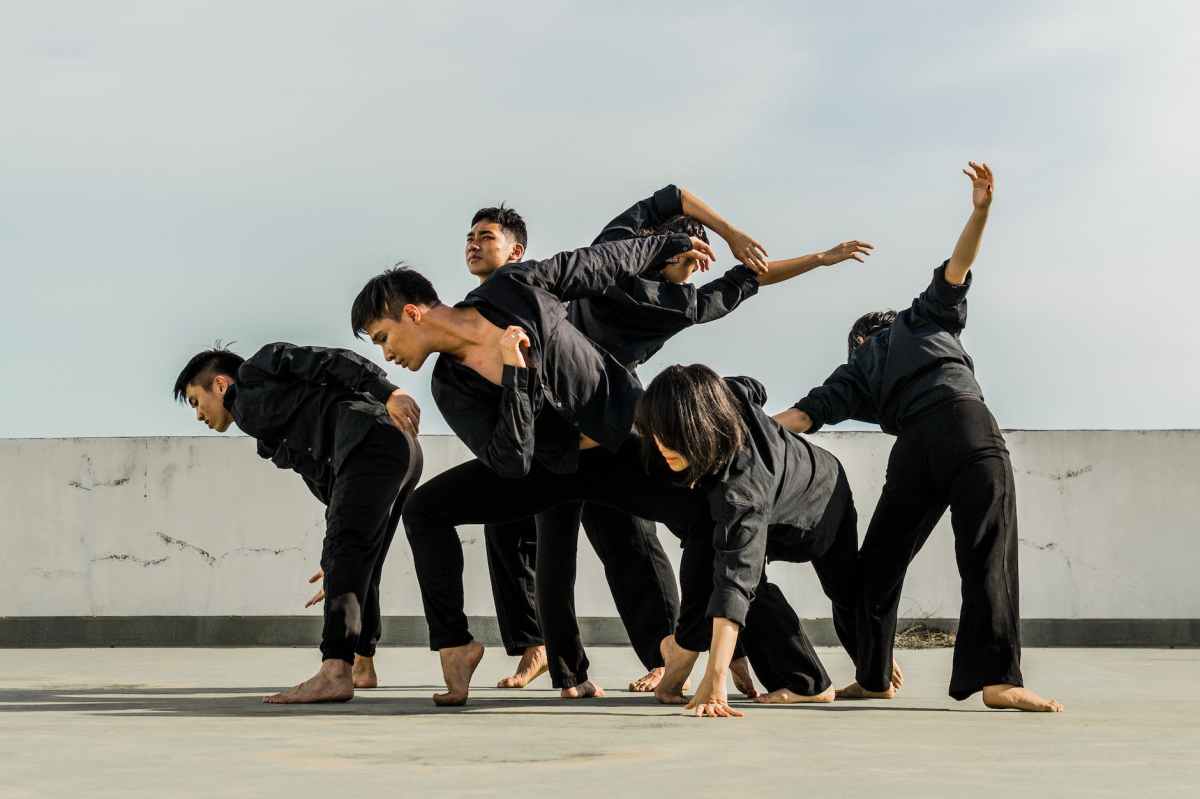
I dance because it makes me happy! My experience is that when I dance, I can express something from my heart to God that cannot be expressed in words. Dancing is a point of contact with God for me. It gives me an experience of God as the origin of creativity and beauty … “I dance because I want to spread a message of love, joy, hope and faith to the world … Among the dimensions added by the dance expression itself is the meta-message that there is room for the whole human being and life in its fullness in a Christian religious setting. Dance can teach children and adults a body-embracing way of living, believing and being in God’s world. One participant says that through dance in general, “we want to communicate heaven to people down here, the message of salvation, our freedom in God, the joy in God, and the joy of dancing with fellow Christians.” … Through dance these Christian dancers experience and practice their religion in a bodily way. This means that their spirituality takes an embodied form and that dance for them is not only a bodily practice, but also a spiritual one.[2]

Dancing seems to be a human attribute, not necessarily linked to just Christianity[3], it is a gift from God that can be used in the manner expressed here; to be a human means of expressing our God-given joy through our bodies. While dancing can be done alone, when done in community it can help to bind participants together. Joy and community are part of God’s purpose for us. We are tasked as God’s image-bearers to be his representatives and stewards. But our tasks are not to be burdensome but rather they are meant to be joyful. If you will, our tasks are meant to be a joyful dance we do with each other and with our Creator.

For us to dance the Kingdom Dance we don’t have everything figured out, He does. We don’t even have to worry about the results of the dance because the results are not dependent on us but on Him, who is working through us. As much as we have messed things up and will continue to do so, He will ultimately restore us and the rest of creation, making us all into what He had intended from the beginning.

Among all the creatures that God created, we are uniquely made, even if we are not the physical center of the universe as some people may have thought at one time. Through the pursuit of science, we now have instruments that make it very clear that we are not physically at the center of everything, not that we can prove anyway. We are only specks on a small planet spinning around a star in an apparently random solar system in an apparently random galaxy in a universe we cannot even see the edges of. Although we don’t know where the center is, the universe seems to have been created with us in mind. The properties of the universe, the physical constants, the atomic structures, were all created such that it would support our existence.[4] Interestingly, although we are creatures made of the stuff of the universe, not only can we study and reflect on the properties of that stuff, but we can also study and reflect on and even reflect the one who created us.

In the meantime, we do not know when He will return, and we find ourselves in the middle, in-between those two times, between the beginning of the restoration of God’s kingdom on earth and the time when it will be fully accomplished. In this in-between time, sometimes we see some signs of God’s restoration – and sometimes we can’t – and it’s hard to figure out what God is doing, especially when there are times that He seems to be absent. In those times, we need to call upon our faith to hold onto the hope that God is still working out His plans. We need to recall all the times that we did see Him at work, and then we also need to remember that getting to the end of the plans that He intends for us may require some pain on our part just as it required pain on His part. And like Him, our pain will be ultimately overwhelmed with the glory that will be revealed.

Our ultimate destination is not a mere returning to the way we started out, but to the full flourishing of our potential, where God will establish a kingdom of image-bearers released to display God’s character and reflect His glory.

“And salvation only does what it’s meant to do when those who have been saved, are being saved, and will one day fully be saved realize that they are saved not as souls but as wholes and not for themselves alone but for what God now longs to do through them. The point is this. When God saves people in this life, by working through his Spirit to bring them to faith and by leading them to follow Jesus in discipleship, prayer, holiness, hope, and love, such people are designed—it isn’t too strong a word—to be a sign and foretaste of what God wants to do for the entire cosmos. What’s more, such people are not just to be a sign and foretaste of that ultimate salvation; they are to be part of the means by which God makes this happen in both the present and the future. That is what Paul insists on when he says that the whole creation is waiting with eager longing not just for its own redemption, its liberation from corruption and decay, but for God’s children to be revealed.” [5]

With that in mind, we can not only wait and hope. We can participate with God in bringing His kingdom to earth and bringing a taste of healing and hope into a broken world that desperately needs it.

“Within the biblical story, the Christian discovers a constant call for justice on behalf of the weak and forgotten. In the biblical tradition, justice is an aspect of God’s shalom, a notion that carries with it the idea of completeness, soundness, well-being, and prosperity, and includes every aspect of life – personal, relational, and national.”[6]

The suffering and pain in the world can be overwhelming, challenging our ability to maintain hope and persist in our effort as we try to bring shalom. That challenge forces us to focus on the taste of shalom that God has given to us knowing that it is just a foretaste of the fullness of the shalom that awaits us in the fully restored earth.


[1] See Appendix G – The contributions of the Church for some examples

[2] Schurr, Hildegunn Marie T. “Dancing Towards Personal and Spiritual Growth” Nordic Journal of Dance – volume 3, 2012 (pp. 31-40)

[3] La Mothe, Kimerer. “The dancing species: how moving together in time helps make us human” Aeon aeon.co/ideas/the-dancing-species-how-moving-together-in-time-helps-make-us-human

[4] Slezak, Michael. “The human universe: Was the cosmos made for us?” New Scientist, 29 April 2015. www.newscientist.com/article/mg22630190-400-the-human-universe-was-the-cosmos-made-for-us

[5] Wright, N.T. Surprised by Hope, Rethinking Heaven, The Resurrection and the Mission of the Church. Harper Collins 2008. Kindle Edition

[6] Katongole, Emmanuel. Rice, Chris. “Reconciling All Things: A Christian Vision for Justice, Peace and Healing,” Intervarsity Press, 2009 (p. 72)

Reflect

Think about how the universe seems designed for us, our capacity to think about and explore it and then think about our capacity to reflect on the One who created it all. What does that suggest to you about what God has intended for us?

Observe

Read Hebrews 12. What does this passage say about how we should be living now?