
Reclaiming the institutional church

Dancing in the Kingdom- Table of Contents

Dancing In the Kingdom – Part 3 – Dancing in the Kingdom– Chapter 18 – Entering the Dance

Reclaiming the institutional church

[Bible references: Matthew 5:1-16, 38-48; Luke 6:1-49; John 13:1-17, 34-35]

There are many people who claim to love Jesus but not His church (which is his body). But we need to keep in mind that every accusation we may choose to hold against the church is against us personally. The church is comprised of sinful people, and that includes us. The church has done inappropriate things in the past and so have we. As part of our, and the church’s, sinful behavior is the ease with which we focus on the things that have gone wrong while forgetting to examine the “log” in our own eye. A quote from an old cartoon strip is appropriate here, “We have met the enemy and he is us.”[1]

The second thing we need to hold onto is that as Jesus loved the world enough to die for – and redeem – the very people who rejected him. That includes the church – which includes us. If we are commanded to love our enemies, what should our attitudes be towards the group that we are part of? It is normal for us to have higher expectations towards our own family than those who are outside the family. Because of that, it is normal for us to be disappointed by or hurt more easily by people within our family than by anyone else.

Those hurts and disappointments can lead to us overlooking all the ways in which the church has, in its broken way, still managed to fulfill at least some of the intentions God has had for the church. Within the very messiness of church history, the church had not totally neglected its ability to show love to one another and to reach in love to those outside the church. It is through the church that we have the Bible and faithful Christians through the years that created hospitals and orphanages, taken care of the widows and others who need care. It is the church that made it possible for us to hear about the gospel and respond to Christ’s invitation to follow him.

The church is the body of Christ. We serve as the hands and feet, etc. of Christ, doing together what is not possible to do by ourselves. In the apostle Paul’s articulation of the Body of Christ, he notes how we all serve as different parts of the body, helping each other grow by serving in the unique ways God has prepared for us. Furthermore, Christ has told us that we will be recognized as his disciples by how we serve one another in love. This is one of the grand themes of the Bible, God has reached out to us in love, and we can respond by loving him in return; also loving one another. It is through our reflection of his love that others will respond to God in love as well.

On this side of the second coming of Christ, we all remain broken and so our institutions will remain broken. But that does not mean that Christ is unable to use us (as individuals or as part of an institutional church) for his purposes and that does not mean that the goodness of Christ is unable to be reflected through us as individuals or groups or through the institutions we create as his co-heirs to bring mercy and justice to his image-bearers and the world he has prepared for us.

In formal or informal ways, we create the institutional church to help us more effectively serve one another within the Body of Christ and to serve others outside the Body of Christ. As we take an historical look at the expected mixed record of the Body of Christ’s broken church (and, we must remember, our personal records as well), we need to cling to Christ, His love, His sustenance, and forgiveness us for all the ways we have failed to love each other within the church and outside the church.


[1] Kelly, Walt, From a Pogo strip, 22 Apr 1970 www.thisdayinquotes.com/2011/04/we-have-met-enemy-and-he-is-us.html

Reflect

Sometimes our church organizations can be hard to love. Nevertheless, we cannot truly love Christ without loving his church. How could you better express love for your local congregation this year?

Observe

Read John 13:1-17. How can we love and serve the church as Jesus showed us?
Passion unto death

Dancing in the Kingdom- Table of Contents

Dancing In the Kingdom – Part 2 – The Kingdom Revealed – Chapter 11 – The Kingdom Enters

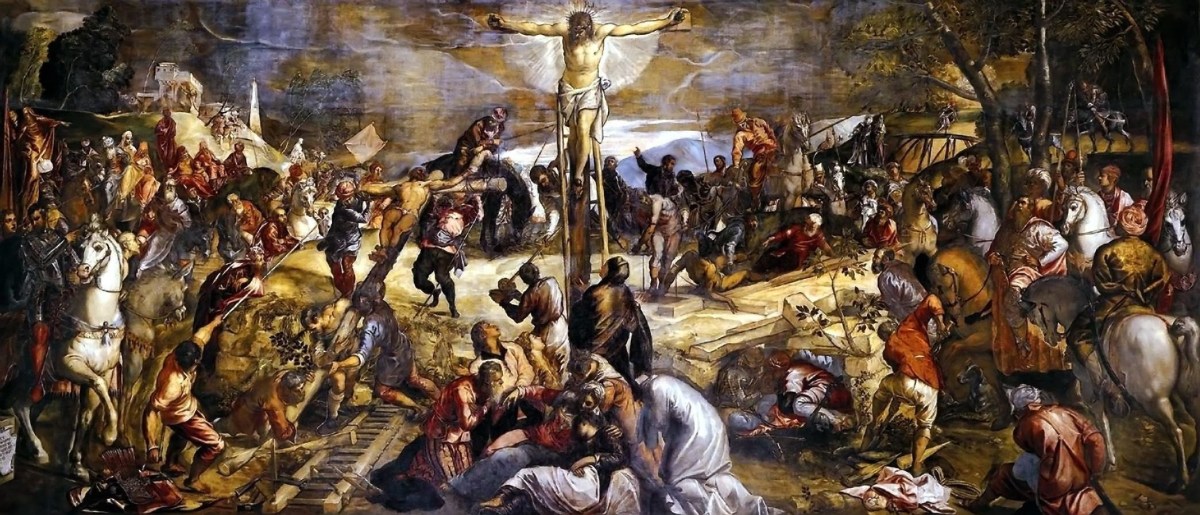
Passion unto death

[Bible references: Genesis 3:12; Matthew 16:21-23; 21:4-5; 26-27; Mark 9:30-37; Luke 22:54-62; John 1:14; 12:12-19; Romans 1:18-32; 5:20; 6:23; Ephesians 2:1-10]

There is a sense in which each moment of history is equally important to the next. Each moment is a moment which God pursues us as he guides us to our ultimate flourishing. There is no reason to suppose that our continuing flourishing will cease once heaven and earth are reunited, but we should expect that our flourishing will continue as a manifestation of his glory.

However, in our current state of affairs in which earth is broken from heaven, there are moments, epiphanies, in which heaven more noticeably breaks through. There are moments in which angels are more visible or in which Yahweh reveals himself through his prophets. Even more remarkable is the moment in which Yahweh submitted himself to taking on human form, even to the point of being conceived as an embryo inside the body of a human woman and then enduring the normal process of physically growing to become a human adult. Yet even that was not sufficient. Yahweh may have taken the form of a human, but it wasn’t a glorified human,[1] not yet the human as he intends for us to be.

To do that would require him to suffer the shame and justice that we ourselves have earned. The sin that brought us death would have to overcome by a sacrifice that would bring us life. In becoming human, Jesus identified himself with us, but in order for us to become like him he would have to make us ready to receive his spirit. We were helpless to make ourselves acceptable to God, to make ourselves free from sin and its consequences. Bonhoeffer once related his prison experience to Advent. He could not free himself – he needed someone to come from the outside to rescue him.[2] And that is our dilemma, we need someone to come from the outside to rescue us. The covenant revealed to Moses was given to increase our sin, to make it more evident than before about our inability to rescue ourselves. We were condemned by our sin to remain separated from God.

We saw in the previous chapter, that the world was very much like it is now, full of factions and frictions, the powerful and the poor, and everyone waiting and wanting the world to be a better place. The world into which Jesus was born was as broken as it is now. Jesus came into this world with a message of love and hope and with acts of healing and casting out of demons, but that would not be enough. Sin and death had a power over the world that needed to be broken. To rescue the world, to restore it to what it was intended to be, sin and death would need to be defeated. And there was no one who could carry out the rescue except God.

It was as true then as it is now, ever since Adam and Eve, people look at the problems around them and think that the problem lies somewhere else besides inside them. In particular, the more factions and frictions there are, the easier it is to find someone else to point to. So, when Jesus came, teaching, healing, and identifying with the common people more than the elite, it seemed that the more Jesus revealed himself the more the people seemed to think that Jesus would be the one – to rescue them from the Roman government.

Even Jesus’ chosen twelve disciples, the ones who would spend three years with him day and night … even they couldn’t understand the type of rescue they would need. Jesus would explain many times about what he needed to do, but the disciples couldn’t understand. The truth is, though, that even as we look back and see what Jesus had to do, we also have a hard time fully understanding just how desperately that we need rescuing. We don’t understand the depths of our own depravity.

When Jesus approached Jerusalem with his disciples for the last time, some of the disciples argued about which of them was the greatest, or who would sit next to Jesus on his throne. When Jesus showed his power with his resurrection of Lazarus, the crowds got more excited about the possibility of Jesus throwing out the Roman government and then they gave him a grand entry into Jerusalem. However, Jesus refused to act as they wanted, and the crowds eventually turned against Jesus. Even one of the disciples, Judas Iscariot, gave up on Jesus and agreed to betray him to the Sanhedrin. Then, when Jesus was arrested, the rest of the disciples went into hiding. Even Peter, who tried to follow the lynching party at a distance, refused to be identified with Jesus.


[1] Got Questions “How does the Bible describe glorified bodies we will possess in heaven?” Got Questions www.gotquestions.org/glorified-bodies.html

[2] Kincaid, Elisabeth Rain, “Bonhoeffer: Advent is Like a Prison Cell” Christianity Today www.christianitytoday.com/women/2018/december/bonhoeffer-advent-is-like-prison-cell.html

Observe

Read John 12:12-19. In this scene, the crowd is expecting a rescue from the Romans,  the Pharisees are worried about their competition becoming too popular, and the disciples are not comprehending what is happening. How did the disciples eventually understand what was happening?

Effects of wealth and power

Dancing in the Kingdom- Table of Contents

Dancing In the Kingdom – Part 2 – The Kingdom Revealed– Chapter 10 – The Class of Apparitions

Effects of wealth and power

[Bible references: Mark 10:17-31; Luke 1:46-55]

In our current environment, we see a widening gap between the wealthy and the poor.[1] The Sadducees[2] were more identified with the rich and the politically powerful. The Pharisees were more identified with the lower and middle class and thus were more popular.


[1] Gregoire, Carolyn. “How Money Changes the Way You Think and Feel” Greater Good Magazine greatergood.berkeley.edu/article/item/how_money_changes_the_way_you_think_and_feel

[2] Riches, John. “The World of Jesus: First Century Judaism in Crisis” Cambridge University Press, 1990 (pp.59-60)

Reflect

In what ways can money affect how we think?

Observe

Read Luke 1:46-55. What does it mean that the rich are “sent away empty?”