Re-envisioning our inhabited environment

Dancing in the Kingdom- Table of Contents

Dancing In the Kingdom – Part 3 – Dancing in the Kingdom– Chapter 18 – Entering the Dance

Re-envisioning our inhabited environment

[Bible references: Exodus 25:1-9; 31:1-11; 35:30-36:7; Isaiah 65:17-25; Revelation 21:24-26]

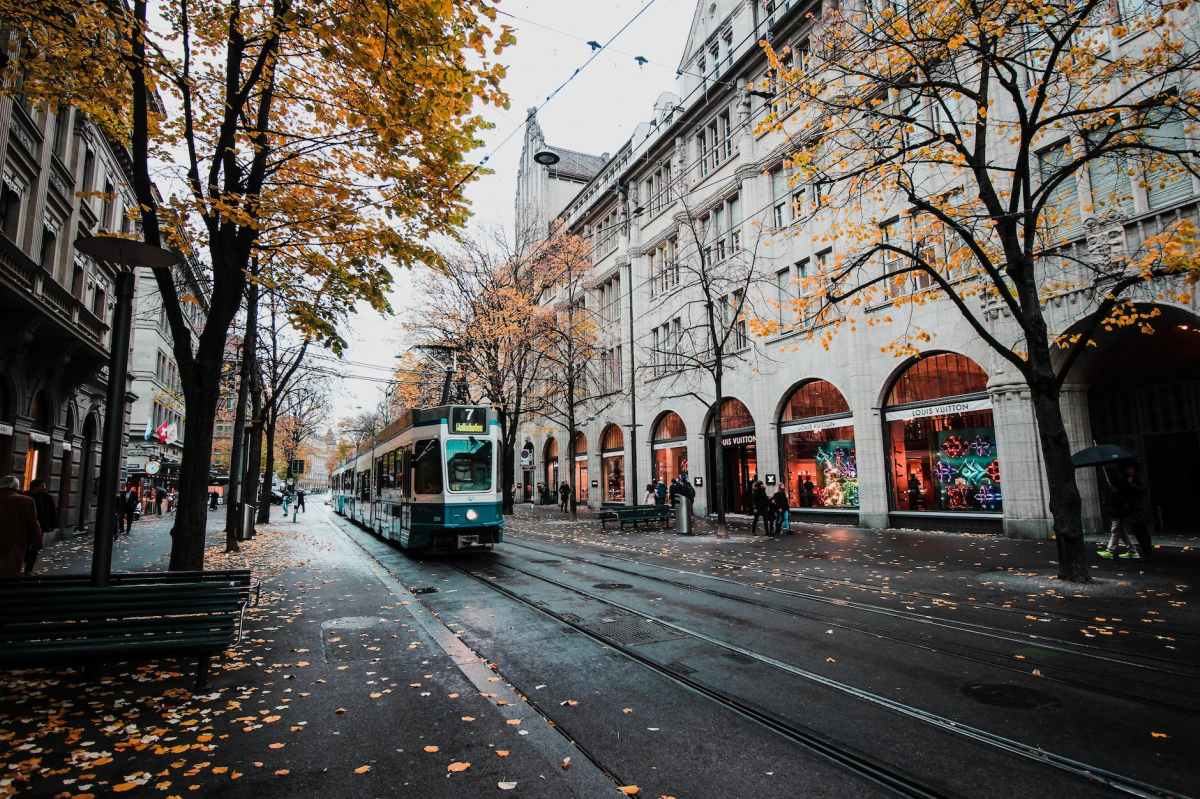
Within our given environment, we create communities, culture, and institutions to support all that. Our homes, neighborhoods, towns, and cities reflect our potential to create either beauty or corruption. The power we have as bearers of God’s image which provides our God-given ability to transcend our environment, is the source of great good or great sin.

“And decades of persuasive experiments have shown that built environments can be a factor in shaping us in ways that have significant long-term implications, in educational or workplace performance, or our physical and mental health and wellness. The point is that architecture, an integral part of essentially all cultures, is one of many interacting cultural factors—like entertainment and marketing, politics, belief systems, or charismatic individuals, for example—that together, in large and small ways, are involved in shaping behavior and who we are over a lifetime.” [1]

“On the night of May 10, 1941, with one of the last bombs of the last serious raid, our House of Commons was destroyed by the violence of the enemy, and we have now to consider whether we should build it up again, and how, and when. We shape our buildings, and afterwards our buildings shape us.”[2]

We possess the abilities to create works of art, some of which are designed simply to be enjoyed or give us cause to think and some of which have practical uses such as buildings we live, work, or play in, the outdoor areas between those buildings that can serve to connect us together, the vehicles which transport us. These practical works of art also require feats of all sorts of engineering, technical and organizational skills.

It is also clear that those same abilities are regularly misused, and our constructions look less like works of art and more like works of neglect and corruption. Instead of works which build us up and add to the flourishing of all, our works sometimes are simply not as helpful as they can be and sometimes even outrightly abuse our environment as well as our fellow humans.[3] Poor building design sped up Covid spread.[4]

 A Christian architect, Dave Greusel, suggests that we should construct our buildings with the attitude that they serve as “gifts to the community,” purposely constructed to advance God’s Kingdom, expressing grace, beauty, justice, creativity.[5] There are many different ways in which we enhance the quality of life not only within the buildings we create, but also the environment around those buildings, designing our spaces with consideration for how we live not only in, but around our buildings.

In the U.S., planning our cityscape around automobiles has seemed natural because of the way that our automotive technology has allowed us to flexibly expand in the large space afforded by our country. Sadly, that type of planning has caused us to sometimes neglect the way that life is normally lived with the communities of the city. Sometimes, it has been after the fact that cities have paid attention to how to better design the city spaces for people to navigate on foot or bicycle and to live in community.

Enacted space is “activated by the people using it.” that is, it is not enough to design particular spaces, but to make them attractive so that people use them. [6]

Additional features that can be considered for our spaces are how we situate housing for people and where they work, how we create enclosed spaces that give a sense of protection and safety, monuments that provide particular spaces with meaning and the thresholds (doorways or openings) between the building interiors and the spaces outside.[7]

“Connectivity is measured by the number of intersections per square mile. One hundred fifty connections per square-mile is considered to be the minimum for a vibrant community.” [8]


[1] Hart, Robert Lamb. “How Buildings Shape Us” Common Edge commonedge.org/how-buildings-shape-us

[2]Churchill, Winston. Made in a speech in the House of Commons on October 28,1943 about replacing the bombed-out House of Commons chamber. Quote given Automated Buildings automatedbuildings.com/news/aug20/articles/lynxspring/200721102909lynxspring.html

[3] Rethinking the Future. “Some Examples of Bad Architecture Ideas” Rethinking the Future www.re-thinkingthefuture.com/article/some-examples-of-bad-architecture-ideas; Staczek, David. “Is Bad Architecture Harmful to Our Health” Architizer architizer.com/blog/inspiration/stories/bad-architecture-harmful-to-health; Husock, Howard. “How Public Housing Harms Cities” City Journal Winter 2003 www.city-journal.org/html/how-public-housing-harms-cities-12410.html

[4] Ing, Will. Architects’ Journal 3 Oct 2021; www.architectsjournal.co.uk/news/poor-building-design-sped-up-covid-spread-says-academic 2021

[5] Greusel, Dave. “Architecture for Human Flourishing” Denver Institute for Faith and Work 15 Apr 2015 denverinstitute.org/david-greusel-architecture-for-human-flourishing-videos

[6] Jacobsen, Eric O. The Space Between  A Christian Engagement with the Built Environment” Baker Academic, 2012 (p. 17).

[7] Jacobsen, Eric O. The Space Between  A Christian Engagement with the Built Environment” Baker Academic, 2012 (Chapter 2)

[8] Jacobsen, Eric O. The Space Between  A Christian Engagement with the Built Environment” Baker Academic, 2012 (p. 43)

Reflect

As you consider the town or city you live in, what might be done better to make the places we live and work to be a gift to the entire community?

Observe

Read Isaiah 65:17-25. How can we build things that point to our future hope?
Limits of theology

Dancing in the Kingdom- Table of Contents

Dancing In the Kingdom – Part 2 – The Kingdom Revealed – Chapter 13 – Distinctives within the body of Christ

The limits of theology

[Bible references: Isaiah 55:1-13; John 8:43;21-30; 41-48; Acts 1:1-11]

The church is the body of the incomprehensible Christ, and this incomprehensibility creates tension because many of us who are in this body think we understand different aspects of God. Somehow, we end up disagreeing on issues that each of us thinks should be clear to everyone else, resulting in us taking sides and dividing because: not only can’t we understand everything about God, but we are also subject to our personal human frailties (e.g., sins, particular inclinations and weaknesses), the cultures we live in and the languages we speak (which inform the way we interpret scripture) and the events around us (e.g., wars, revolutions, politics, etc.). Those frailties have led to a rather mixed history of how the church has lived into what it knows about the gospel. Sometimes we seem like the Indian fable about six blind men and the elephant,[1] we end up seeing God from such different places that we seem to be describing a different God.

Language may not determine thought, but it focuses perception and attention on particular aspects of reality, structures and thereby enhances cognitive processes, and even to some extent regulates social relationships. Our language reflects and at the same time shapes our thoughts and, ultimately, our culture, which in turn shapes our thoughts and language.[2]

Our culture and our language are inseparably bound together, they affect how we think and how we perceive the world and, particularly, they tend to cause misunderstandings when people from two or more different language/cultural groups communicate with each other.[3] In the case of the church, there were four major languages involved at the beginning: Aramaic, the local language of the Jews in Israel and the region to its east; Greek, the international language of the Roman Empire; Latin, the legal language of the Roman Empire; and Hebrew, the language in which the Old Testament was written.

The majority of the church first developed in the Roman Empire. While the legal language of the empire was Latin, the international language of the empire was Greek, and it was Greek culture that had been strongly adopted within the empire. Even the cultural influences of Plato, Zeno, Aristotle, and Epicurus persisted affecting the development of the church and its values.

Aramaic was the language of the “Church of the East” which developed primarily outside the Roman Empire. In addition to some isolation because of the language differences, it was further isolated by being outside the Roman Empire.

Even within the same people group, misunderstandings occur when people from one time period are interpreting information from an earlier time period. All these factors were in play at the time the church was forming. For example

  • The scripture from the Old Testament was written over a 1400-year time period with different authors using different literary styles.
  • As the church grew across the world, different cultural issues arose.
  • and the New Testament documents written about them were high-context documents but were being interpreted with low-context.[4]

There are also other issues creating internal tensions within the church. We also have a natural propensity to segregate ourselves into different groups. All our communities also experience cultural changes.

The game plan for spreading the gospel throughout the world didn’t follow any typical conventions. The people Jesus selected to be apostles did not receive any training in building organizations, neither did he tell them to plan for the long-term survival of the church that they were charged to begin building. The key instruction that they did receive was “wait,” that is, wait for the Holy Spirit. Jesus may have a master plan, but he only let them know (just as he lets us know) one step at a time. Naturally then, we respond to his revealed plan only one broken step after another and, as we do, we discover our need to lean on him as we work through our frailties and sin. The plan is and was for us to follow the Great Commandment and the Great Commission and the Holy Spirit. Not much detail, no written instructions, sometimes confusing, but that was the plan. Some would characterize the apparent plan as “Love people and tell them about Jesus.”


[1] All About Philosophy “Blind Men and the Elephant” www.allaboutphilosophy.org/blind-men-and-the-elephant.htm ; Saxe, John Godfrey. “The Blind Men and the Elephant” Poetry.com www.poetry.com/poem/101535/the-blind-men-and-the-elephant

[2] Burton, Neel. “How the Language You Speak Influences the Way You Think” Psychology Today www.psychologytoday.com/us/blog/hide-and-seek/201808/how-the-language-you-speak-influences-the-way-you-think

[3] White, James Emery, “the Greek, the Latin and the Hebrew” Crosswalk.com 2 Sept 2008 www.crosswalk.com/blogs/dr-james-emery-white/the-greek-the-latin-and-the-hebrew-11581208.html; Leveridge, Aubrey Neil, “The Relationship between Language and Culture and the implications for language teaching” TEFL.net Sept 2008 www.tefl.net/elt/articles/teacher-technique/language-culture

[4] High context communication occurs when people are in a shared environment with common values, history, etc. where many things are not said because it is assumed that the other person already knows and assumes those things as well. In low context communication, there is much less assumed about what the other person knows and so many more details are included in the communication.

Observe

Read Acts 1:1-11. When it comes to leading the church, what are the strengths and weaknesses of relying on the Spirit?