Return and Remembrances

Dancing in the Kingdom- Table of Contents

Dancing In the Kingdom – Part 1 – Shadows of the Kingdom – Chapter 9 – The Prophets and writings

Return and Remembrances

[Bible references: Deuteronomy 34:10; 2 Chronicles 36:23; Ezra 1, 2; 6; 7; 9-10; Nehemiah 1-2; Haggai; Zechariah 8; Malachi 1:6-14; 2:10-16; 3:6-9; 4:1-6]

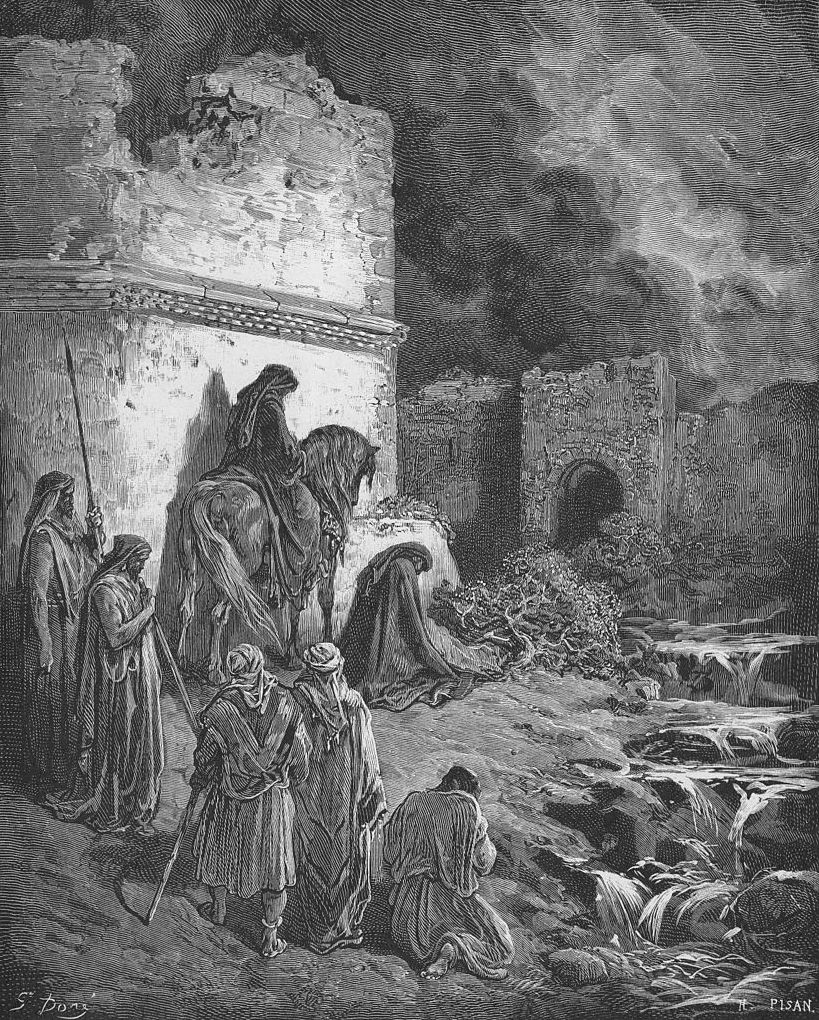
Assyria scattered the Northern Kingdom throughout their empire. Then the Babylonians overran Assyria but also captured Jerusalem and took the prominent citizens into exile. After the 70 years in captivity prescribed by God had passed, the Persians overran Babylonia, and they allowed the Jews to return to their homeland. The first batch of returnees went back with Zerubbabel to Jerusalem to rebuild the temple. A second batch would go back to Jerusalem with Ezra who confronted the Jews about their failure to keep separate from the nations around them. A while later, Nehemiah would go back to Jerusalem to rebuild the walls. And yet, with all the returnees, the majority of the Jews chose to remain in Babylonia – and even today, most Jews live outside the Promised Land.[1]

Only a remnant of Israel returned to the Land of the Promise, but the land was ruled by foreigners.  The temple was rebuilt but was only a remnant of the temple built by Solomon – which caused the people old enough to remember the former temple to weep. On the face of it, the Promise did not look promising. There must be something more. God had promised to bless the world through Abraham, but this remnant of the Davidic kingdom did not look poised to bring that promise. Israel was still waiting for the prophet “like Moses” to arrive.

But God did not choose Israel because it was the strongest kingdom. And Israel’s history is full of examples of God choosing to guide His people with the one who was thought weaker or the one who was younger. And there always seemed to be reminders that God was working in spite of Israel’s failures:

  • In a reminder of God’s provision, in all the returns to Jerusalem, the rulers of the Persian empire strongly supported the returns of the Jews who were given what they needed. God even provided prophets to encourage the Jews.
  • In a reminder of the times when contributions were needed to build the tabernacle, those who did choose to return to the Promised Land with Zerubbabel willingly contributed from the provisions given to them by the Persians to the rebuilding of the temple.
  • In a reminder of their own abilities to follow Yahweh, when the Jews first returned to the Promised Land they ended up once more intermarrying with the non-Jews and practicing their idol worship. So, when Ezra came to Jerusalem, he had to lead the Jews to repentance and to put away their foreign wives.

In the time of exile, the people of Israel compiled the writings of the prophets to serve as their scripture and discovered how to follow God without a system of animal sacrifice. In the time of their return to the promised land the people of Israel listened to that scripture and repented of their ways. And as the people of Israel waited for a prophet like Moses, God was still moving, working to fulfill His plan and His promises.


[1] Jewish Virtual Library “Vital Statistics: Jewish Population of the World (1882 – Present)” )” Jewish Virtual Library www.jewishvirtuallibrary.org/jewish-population-of-the-world

Observe

Read Malachi 4:1-6. This is the last passage written by the last prophet before Jesus would come. Even now at Passover celebrations, a place is set at the table for “Elijah.” In the Christian understanding, who is the “Elijah” that was prophesied to come?

Clash of empires

Dancing in the Kingdom- Table of Contents

Dancing In the Kingdom – Part 1 – Shadows of the Kingdom – Chapter 1 – Prelude

Clash of empires

[Bible references:1, 2 and 3 Maccabees; Lamentations 3; Matthew 3:1-12]                                      

As the era of the Old Testament ends

  • the Assyrian Empire took the tribes of Northern Kingdom into exile where they were never to be heard from again in history,
  • the Babylonian Empire conquered the Assyrian empire and then took the best and brightest of the Southern Kingdom to Babylon,
  • the Persian empire overtook the Babylonian empire and allowed those Jews to not only return to their homeland but gave them the resources to begin the rebuilding of the city of Jerusalem and the temple.
  • the Greek Empire overtook much of the world, including the Persian Empire, then imposed its culture and language on all its territories. After the death of Alexander the Great, the Greek Empire split up.
  • Israel is first controlled by the Egyptian remnant of the Greek empire where some Jews were deported to Egypt where the Greek Septuagint version of scripture was written.
  • Then Israel came under control of the Syrian remnant of the Greek Empire whose general desecrated the temple, which invoked a successful rebellion led by the Hasmonean family and Israel become independent for a few years. The Maccabee books were written in this time.
  • the Roman Empire overtook the Greek Empire but kept Greek as the common language of the Empire, which in later years would become the language the church would use to write the New Testament texts as well as many of the texts that were written by the early church Fathers.

At the time the New Testament begins, the “king of Israel” installed by the Roman Empire was King Herod the Great. All the tumult of the times created an atmosphere where there was much speculation about the end of times and the coming of the Messiah. In fact, around the time of Jesus, there were many who claimed to be the Messiah.[1]

There are up to 400 prophecies concerning Jesus that were written in the Old Testament.[2] All the way back in the third chapter of Genesis, when Adam and Eve rejected God’s authority, God started to lay out His plan to have his image-bearing creatures restored to fellowship with Him. The New Testament introduces us to John the Baptist who could be said to be last of the Old Testament style prophets. He is the one who, as foretold by the Old Testament, was sent to prepare the way for Jesus’ ministry.

The New Testament Gospels, which are biographies of Jesus, emphasize the years of Jesus’ ministry leading up to his death and resurrection.


[1] Tabor, James. “Messiahs in the Time of Jesus” This page lists 12 Messiah-claimants between 47 BC to AD 66. Taborblog, jamestabor.com/messiahs-in-the-time-of-jesus/

[2] Appendix D – Prophecies about Jesus

Observe

Read Lamentations 3. In times of silence and grief, what is a cause for hope?

Exile and return

Dancing in the Kingdom- Table of Contents

Dancing In the Kingdom – Part 1 – Shadows of the Kingdom – Chapter 1 – Prelude

Exile and return

[Bible references: Jeremiah, Lamentations, Ezekiel, Daniel, Esther, Ezra, Nehemiah]                                     

When Assyria captured the Northern kingdom, they took most of the inhabitants and scattered them throughout the empire and replaced them with people from elsewhere in the empire. The result was that the 10 northern tribes were integrated into the Assyrian empire and were never heard from again as a people group.

Babylon overran the Assyrians and also captured the Southern kingdom. The practice of the Babylonians was to take the best and brightest, bring them to their capital and train them to work for the Babylonian empire. A couple of the prominent people taken were Daniel and Ezekiel. 

Since it was primarily the people of Judah that were captured and the other kingdoms had essentially disappeared, the people of Israel now became known as Jews. It was while in captivity, that the Jews got serious about preserving their culture. It was while in captivity that they worked on 1) identifying which writings they had would be considered as scripture and 2) developing cultural patterns that would allow them to preserve their identity. It was in captivity that synagogues developed as a way of continuing to worship without the availability of the temple. Interestingly, it also showed how they knew that they could function under the Law of Moses without a temple and therefore without the system of animal sacrifices.

The Babylonian kingdom was then overrun by the Persian empire. The policy of the Persian empire was to allow the captured peoples that were exiled to Babylonia, to return to their homeland. The first returnees rebuilt the temple that was destroyed by the Babylonians, although the new temple was not as grand as it had been before. Later, Ezra would return to re-establish the Law and then Nehemiah would return to rebuild the wall around Jerusalem.

Observe

Read Jeremiah 18:1-10. How does God interact with our decisions?