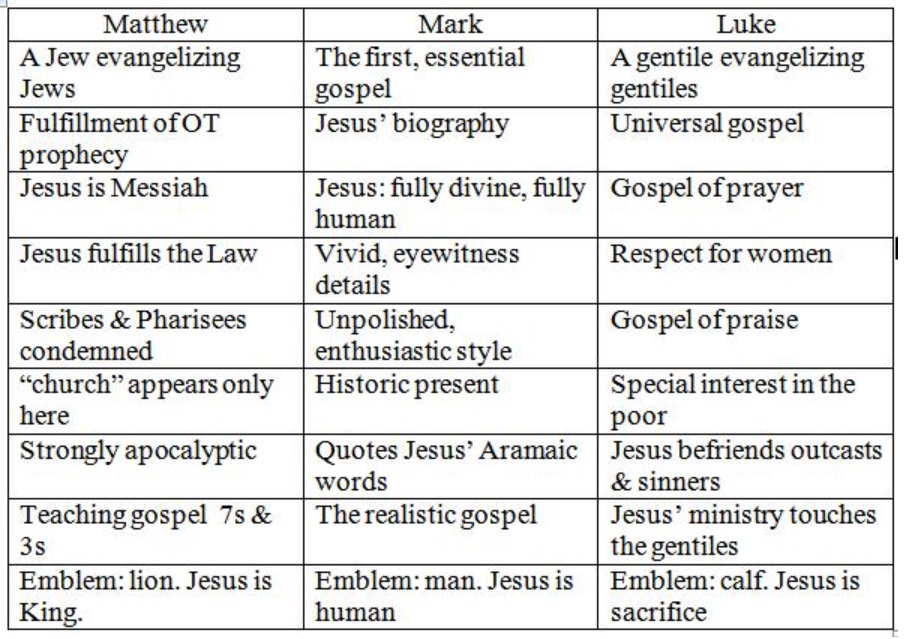
Mystery of faith

Dancing in the Kingdom- Table of Contents

Dancing In the Kingdom – Part 2 – The Kingdom Revealed – Chapter 13 – Distinctives within the body of Christ

Mystery of faith

[Bible references: Exodus 31:1-11; Isaiah 1:18; Romans 1; 3:24; 4:16; 5:2-21; 6:15; 11:5-6; 2 Corinthians 6:1; Galatians 5; Ephesians 1; 2 Hebrews 12:1-39]

Faith and grace

If we try to systemize grace and faith, we find some saying that God will only give some people a special grace that allows them (and only them) to have faith to receive God’s forgiveness and some will say everyone is given that grace. Fortunately, receiving God’s grace is not dependent on our understanding. We only need to acknowledge it is only by God’s grace that we can be forgiven, and it is by God’s grace that we can be saved through faith.

After we “make a decision” to receive grace through faith, some will have the attitude that, “I’m saved, there is nothing more to do.” This attitude is sometime characterized as getting “fire insurance” or a “get out of hell free” card or as “easy believism.” This puts emphasis on “making a decision to accept Christ as our Savior” as if that was the main point.

While acknowledging Jesus as our Savior is a good thing, we should not put to the side that our decision should also acknowledge that Jesus is also our Lord and therefore our decision includes following Him as a disciple.

Faith and reason

Scripture is full of exhortations for us to use our reasoning. In Isaiah 1:18, Yahweh invites us to reason together with Him. In Romans 1, Paul tells us that we can even discern the truth of God’s invisible qualities, that they are clearly seen in the world around us. The scriptures are full of examples of God pleading with us, appealing with us to do the right things.

Scripture also encourages us to walk and live by faith, to trust God by faith, to obey God by faith, that we need to come to him by faith, that our righteousness comes by faith – and that faith is having confidence in what we hope for and assurance about what we do not see.

To hold these in tension, we cannot go to either extreme of abandoning our intellect or abandoning faith, rather we must go trust God to act in the future based on what we have seen him do in the past or present.

Faith and Creeds

It would seem nice if we could make a simple statement like, “The Bible says it and I believe it,” and not be misunderstood. But it’s not so simple. That’s because the Bible is not a straightforward text of moralizing or instructions. It’s a collection of stories, poetry, bits of wisdom, letters written from one person to another or to a group, prophecy, etc.  So biblical interpretation is not a task to be done lightly. Instead, it requires that we look at every verse in the context of the passage that it’s in, who wrote it and to whom and in the context of the entirety of scripture.[1] 

To address that problem, many congregations have found it expedient to clarify what they believe by using certain creeds or statements of faith. But then we run into the problem of the creeds or statement are not saying enough about the entirety of the faith of the congregation. So other congregations avoid creedal statements altogether and simply say that the Bible as a whole describes their faith.[2]

Faith and expressions of the Gospel

Living out the Gospel can encompass all parts of our lives, but for various reasons, different parts of the church at different times have chosen to focus on different aspects of the Gospel, often creating an imbalance in how the Gospel is lived out. Overfocusing on the intellectual aspects of faith led to a movement to focus instead on internalizing one’s faith and personal walk with God. Overfocusing on one’s personal walk with God led to a movement to put more of a focus on the public aspect of faith and the need for social justice. A desire to “return” to the faith of the New Testament church led to a desire to live out the “whole Gospel,” emphasizing the power of the Spirit as expressed by miracles, healings and speaking in tongues. Of course, the “whole gospel” actually encompasses all aspects and loving God with all our hearts, minds, soul and spirit.

Faith and Art

[Bible references: Exodus 28:3; 31:1-11; 35:10-33; 1 Kings 7:13-14; Proverbs 8:30; 22:29; Isaiah 54:16; Zechariah 1:20]

Expressing our faith through art had been common since God instructed people gifted in arts and crafts to build the Tabernacle. During New Testament times, poverty and persecution limited the amount of artwork, and that artwork was largely symbolic. But after the legalization of Christianity, expressions of the faith blossomed in both art and architecture. The eastern church started to express its faith through special artwork called icons which were highly revered. However, when a volcano erupted in AD 726, superstitions within the empire created a movement to rejected artwork[3] which did not finally end until AD 834[4]. To this day, different segments of the church either accept or reject the use of artwork.

Faith and perceptions of God in the Old and New Testament

At first glance, it could seem like God in the Old Testament is different than God in the New Testament. In the Old Testament the stress seems to be on the holiness of God and his distance from us while in the New Testament the stress seems to be on the love of God and his closeness to us. God in the Old Testament seems to act violently while in the New Testament He seems to act humbly and peaceably. This apparent dichotomy has created much consternation, causing some people to reject or ignore the Old Testament and only focus on the New Testament. But God is the same today, yesterday, and tomorrow. God never changes. More careful reading will show that the Old and New Testaments are not so different, and the characteristics we see of God in one testament can be found in the other testament.


[1] The discipline of “hermeneutics” or “bible interpretation” gives guidance on how to properly interpret the scriptures.

[2] These congregations are called noncreedal congregations.

[3] iconoclasm

[4] Art in Context, “Early Christian Art – Christian Artwork and Biblical Paintings” Artincontext artincontext.org/christian-art/ ; Joy of Museums “Christian Art and Biblical Paintings” Joy of Museums joyofmuseums.com/most-popular/popular-christian-art/

Mystery of the sacraments

Dancing in the Kingdom- Table of Contents

Dancing In the Kingdom – Part 2 – The Kingdom Revealed – Chapter 13 – Distinctives within the body of Christ

Mystery of the sacraments

[Bible references: Matthew 26:17-35; Exodus 30:17-20; Mark 1:1-11; Acts 2:38, 41-42; Romans 6:1-23; 1 Corinthians 11:17-34]

Defining Sacraments

Sacraments, the rituals of belonging

“The language surrounding ‘sacraments’ did not develop in the church for some time. We hear of a ritual of baptism in the Christian community of the Acts of the Apostles, and of the ‘breaking of bread’ (Acts 2:38, 41- 42). These celebrations were called by their name, there was no generic term that grouped these experiences together. It was not until the third century that the word mysteries (Greek: ‘mysterion’), a word that the pagans used to describe rites of initiation, also began to be used to describe Christian rites. The Eastern Orthodox church still uses the term ‘mysterion’ to describe these practices.

However, in the Latin wing of the church, in order to avoid any confusion with pagan thinking the church began to use the Latin word, ‘sacramentum’ for ‘mysterion’ to describe baptism. Sacramentum was also used to describe a sacred oath of allegiance that a Roman soldier would make to the emperor. It was suggested that just as the soldier’s oath was a sign of the beginning of a new life, so too was initiation into the Christian community through baptism and eucharist.[1]

“St Augustine of Hippo in the 5th century developed the notion that a sacramentum is a sign that sanctifies – makes holy – because it is efficacious – produces the intended effect. For instance, Christ and the Holy Spirit make effective, through grace, the cleansing that water signifies in baptism. It was Augustine who called a sacrament ‘a visible sign of invisible grace.’ He also, in his letters referred to a sacramentum as a sacrum signum ‘sign of a sacred thing’ It is worth mentioning that Augustine did not consider only rituals but also acts or deeds or things that point to Christian mysteries to be sacraments – and listed over 300 such signs.[2] The Church gradually reduced this by differentiating between rituals and signs and symbols that assist people in prayer and devotion such as holy water, palms, ashes etc. These latter are sometimes called “sacramentals.”[3]

Some congregations hold that sacraments administered by the church convey, by means of the Holy Spirit, grace to the recipients while some hold that the sacraments are only outward signs of an inward grace. Other differences are whether the sacraments are an objective reality that are effective in and of themselves or whether the effectiveness of the sacraments depends on the faith response of the recipients. Either way, the purpose of the sacraments is to make people holy, to build up the body of Christ, to teach, and to give worship to God.

Since the 16th century, the Orthodox and Roman Catholics recognize seven sacraments (The Orthodox church stipulates that there are even more but does not formally name them). Protestants only recognize baptism and the Lord’s Supper as sacraments. Some Anabaptist and Brethren groups consider foot-washing to be a sacrament. “Some Protestant groups, notably the Quakers and the Salvation Army, do not use sacraments.”[4]

Baptism and the mikva’ot

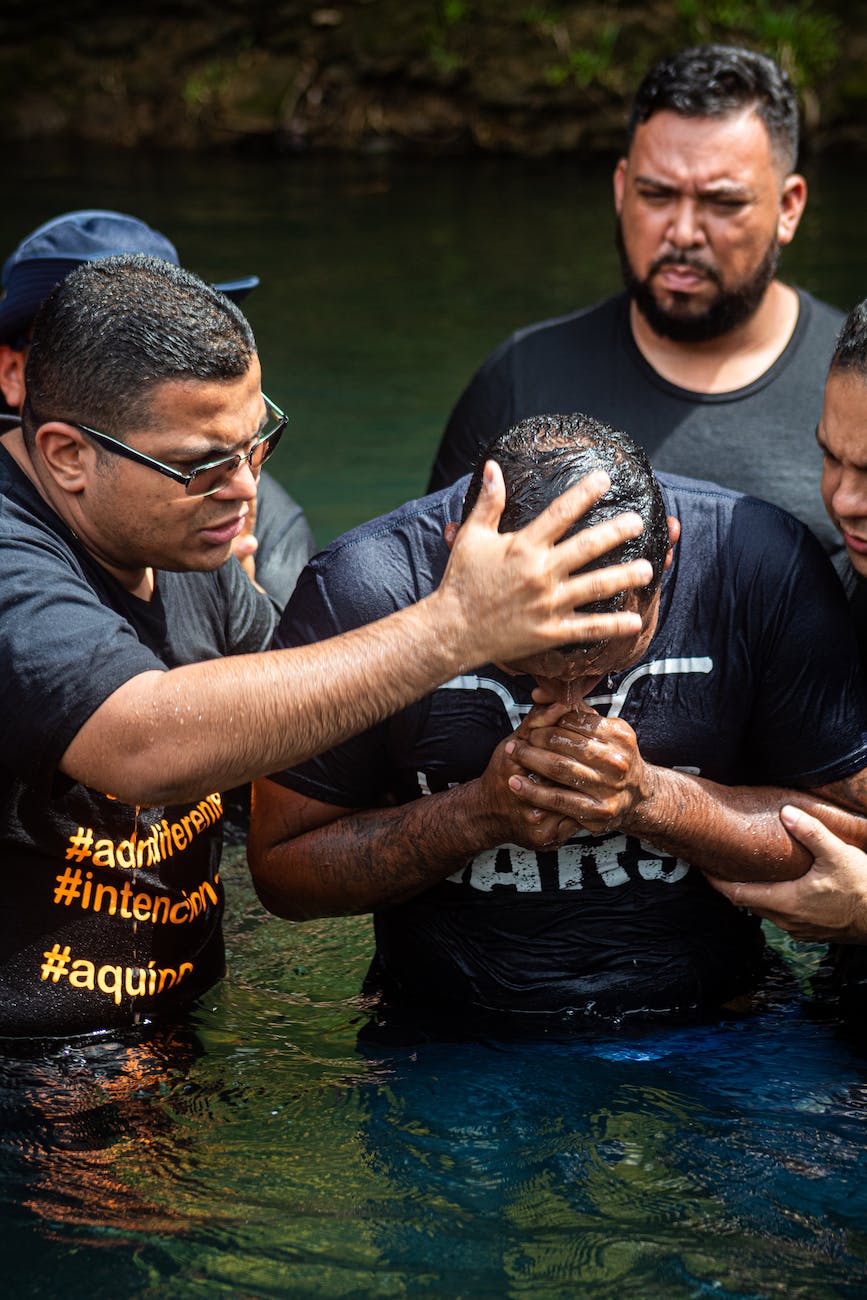
The word ‘baptism’ is a transliteration of a Greek word that meant to immerse. The Old Testament introduces us to the idea that we need to be cleansed before entering the presence of God (Exodus 30:17-20). By Jesus’ time, the city of Jerusalem had many buildings with a ritual bath (mikveh) in them where people could ritually cleanse themselves by dipping themselves in the mikveh. The mikveh can signify: a collection of water, something waited for, abiding, gathering together.[5]

In the New Testament, we are introduced to John the Baptist preaching about the coming of the Lord – and it was a time when many people were expecting the coming of the Messiah. John was baptizing people as they confessed their sins and as these people were being baptized, they would have understood that they were being cleansed and being gathered together for the coming Messiah.

When Jesus was ready to begin his time of ministry, he told John to baptize him. This obviously confused John who knew that Jesus did not need to be cleansed from sin, but Jesus had come to identify himself with us in baptism.

We see the practice of adults confessing their sins and then being baptized continue throughout the New Testament. After the New Testament we now enter an era of confessing adults bringing up their children. In the Jewish tradition, baby boys would be circumcised when they were 8 days old as a way of bringing them into the Jewish community. It is not long after the New Testament times that we see parts of the church using infant baptism as a way of bringing their children into the Christian community. The infants are obviously not confessing believers but believing parents can raise them up with the hope that they will later confirm their baptism. This issue of child baptism would later become an issue that the church would divide over.

Communion and the Passover Feast

The Communion celebration, sometimes called the Eucharist (from the Greek word for grateful or thanksgiving) is tied back to the Jewish Passover Feast. The Passover Feast was a commemoration of God’s work that convinced the Egyptian Pharaoh to let the Israelite slaves to leave. God’s work was to send an angel to kill all the firstborn children of the Egyptians but to “pass over” those Israelite homes that had the blood of a perfect lamb sprinkled on the doorposts of their homes. Every year after that, the Israelites were to commemorate that event with a Passover Feast that would include eating, among other items, bread with no yeast to remember the time they had to leave in haste from Egypt. The Passover meal would be one of many celebrations in the Old Testament that pointed to their fulfillment in the New Testament times.

At the end of Jesus’ earthly ministry, he gathered with his disciples to celebrate the Passover Feast; it would be his “last supper” with them before his crucifixion. He shared with them the bread and wine, but now adding their intended significance: the bread would represent his body that would be sacrificed for the world and the wine would represent his blood shed for the world.

There are differences about whether, during the Communion service, that the bread and wine actually become transformed into Jesus body and blood, or whether his body and blood are present with the bread and wine or whether the bread and wine only metaphorically represent Jesus’ body and blood.

What are the sacraments and how do we practice them?

Sacrament is Latin translation (sacramentum) of the Greek “Mysterion,” which means mystery.  The sacraments are used to refer to different rituals/activities conducted by the church.

There is agreement about the sacraments being a sign of grace imparted to those receiving sacraments, but there is disagreement (naturally, since we’re talking about mysteries) about how that grace works. Some consider the sacraments to be an objective reality that are effective for imparting grace in and of themselves,[6] others think that the effectiveness of the sacraments to impart grace depends on the faith response of the recipients, while others think that the sacraments are more simply a sign of grace.

Since the 16th century, the Orthodox and Roman Catholic recognize seven sacraments (The Orthodox church stipulates that there are even more but does not formally name them). Protestants only recognize baptism and the Lord’s Supper as sacraments. Some Anabaptist and Brethren groups consider foot-washing to be a sacrament. “Some Protestant groups, notably the Quakers and the Salvation Army, do not use sacraments.” [7]

  • Baptism – The first step in a lifelong journey of commitment and discipleship. Immersion identifies us with the death and resurrection of Christ.
  • Eucharist (or Communion) – In a re-enactment of the Last Supper, we share elements that remind us of Jesus’ sacrifice for us. 
  • Reconciliation (or Penance) – Has three elements: conversion, confession, and celebration.
  • Confirmation – An initiation into the church. It is most often associated with the gifts of the Holy Spirit.
  • Marriage – A public sign that one gives oneself totally to this other person. It is also a public statement about God: the loving union of husband and wife speaks of family values and also God’s values.
  • Holy Orders – The priest being ordained vows to lead other Catholics by bringing them the sacraments (especially the Eucharist), by proclaiming the Gospel, and by providing other means to holiness.
  • Anointing of the Sick (Last Rites) – A ritual of healing appropriate not only for physical but also for mental and spiritual sickness.

What are the different views on communion?

There are different views on what happens to the communion elements: bread and wine become literal flesh and blood, bread and wine become spiritual flesh and blood, or the elements are simply to remind us Jesus’ sacrifice for us.[8]

There are also different views on who can take communion: whether any Christians present may participate, or only members of local congregation or denomination may participate.[9]

Do we represent Jesus’ body with leavened or unleavened bread. Do we represent Jesus’ blood with wine or grape juice? Are both elements shared or is just the bread shared? Are only designated representatives of the church allowed to administer the elements?

What are different views on baptism?

There are different views on who may be baptized:  Adults only (Believer baptism, only people old enough to confess their faith may be baptized) Infants (infants of believers are baptized as acknowledgement of the infant as a new member in the church community and in hope that they will make a commitment in the future).

There are different views of what happens during baptism: baptism overcomes original sin, frees the baptized from powers of darkness, Baptism in the Holy Spirit – When someone is saved, the Holy Spirit overcomes the person and causes that person to speak “in tongues.”

There are different views of how many times the recipient is immersed: Once (there are differences in whether the words to use are “in the name of Jesus” or “in the name of the Father, and the Son, and the Holy Spirit), Three times (once for each of the Godhead: Father, Son, Holy Spirit).

There are different views on how the baptism is performed: Immersion (recipient is completely immersed in water), Pouring (water is poured on the head of the recipient), Sprinkling (water is sprinkled on the head of the recipient).


[1] Szczesny, Mike. “[Greek] μυστήριον (mystērion), [Latin] sacramentum” Resounding the faith resoundingthefaith.com/2016/10/27/greek-%CE%BC%CF%85%CF%83%CF%84%CE%AE%CF%81%CE%B9%CE%BF%CE%BD-mysterion-latin-sacramentum/

[2] Tennent, Timothy. “The Body and The Sacraments as a Means of Grace” Seedbed seedbed.com/the-body-and-the-sacraments-as-a-means-of-grace/

[3] Catholic Answers“Sacramentals” Catholic Answers www.catholic.com/encyclopedia/sacramentals

[4] Theopedia “Sacraments” Theopedia www.theopedia.com/sacraments

[5] One for Israel. “The Jewish Roots of Baptism” One for Israel www.oneforisrael.org/bible-based-teaching-from-israel/was-baptism-originally-jewish/

[6] Theopedia “Sacramentalism”  Theopedia theopedia.com/sacramentalism; Phillips, Matthew. “Augustine, Luther, and the Sacraments” Gospel Notes steadfastlutherans.org/2013/06/augustine-luther-and-the-sacraments

[7] Theopedia “Sacraments” Theopedia www.theopedia.com/sacraments

[8] Zondervan Academic Blog “Transubstantiation, Consubstantiation, or Something Else? Roman Catholic vs. Protestant View of the Lord’s Supper” Zondervan Academic 20 Oct 2017 zondervanacademic.com/blog/transubstantiation-consubstantiation-catholic-protestant

[9] Truediscipleship “Communion – Is it Open or Closed? True Discipleship truediscipleship.com/communion-is-it-open-or-closed

Mystery of the kingdom and eschatology

Dancing in the Kingdom- Table of Contents

Dancing In the Kingdom – Part 2 – The Kingdom Revealed – Chapter 13 – Distinctives within the body of Christ

Mystery of the kingdom and eschatology

[Bible references: Isaiah 2; 60; Joel 2; Micah 4; Daniel 7; Matthew 24; Luke 17; Revelations 20]

What is the kingdom of God/Heaven?

The kingdom of Heaven refers to where Jesus reigns. Heaven has always been under his rule and when he returns and our current earth is transformed into the new earth, Jesus’ kingdom will include that as well. In the meanwhile, His kingdom includes all those who have accepted Jesus as their king. Some only apply the Kingdom of God to only the reign of God in heaven or the reign of God after earthly governments are done away with.

How and when will Jesus return?

Discussion about the end times[1] has always been problematic because of the nature of prophetic language. This has led to much contention in the church about how events will occur or have occurred. Even though Jesus has cautioned us that only the Father knows when that will happen, people have not stopped trying to “read the signs.”

The clues about the Messiah in the Old Testament were confusing to interpret. Even after the incarnation of Jesus, we know that the disciples were confused about how the events of the end times such that Jesus’ death was incomprehensible. Even after Jesus’ resurrection and ascension there was still confusion, and it took some time to sink in that Jesus’ return was not going to happen for a while.

There are a wide variety of thoughts about the Biblical prophecies concerning the end times. The questions deal with such things as: is the book of Revelation about events now past us (e.g., the destruction of Jerusalem in AD 70) or about future events or both, does the 1000 years talked about in Revelation 20:1-15 occur now or in the future and is the 1000 years literal or metaphorical, will there be a “rapture” of believers before a coming time of great tribulation, since there was no nation of Jews after the destruction of Jerusalem do the promises that applied to Israel now apply to the church – and other questions.

There are various historical factors and hermeneutical questions that led to some of the variations in the way that these questions were answered: whether the prophecies should be interpreted literally or metaphorically, whether the Old Testament laws should be kept in effect by the church, the importance of the destruction of Jerusalem in AD 70 and the consequent re-creation of the nation of Israel in AD 1948. Regardless of the way those questions are answered, the more important issue is our behavior in the present.

The role of the prophecies in the past had been to either warn people of behaviors they needed to change or to provide encouragement and hope in the times of difficulty. Wherever we stand on these prophecies, those intentions should be our focus; our behaviors in the present life and our hope to sustain us.


[1] Herrick, Greg. “9. Eschatology: End Times” Bible.org bible.org/seriespage/9-eschatology-end-times

The context of theology

Dancing in the Kingdom- Table of Contents

Dancing In the Kingdom – Part 2 – The Kingdom Revealed – Chapter 13 – Distinctives within the body of Christ

The Context of Theology

[Bible references: Matthew 22:37-39; John 13:34-35; 15:1-17; Romans 12:3-8; 1 Corinthians 12; 13; Ephesians 4:11-16]

More than doctrine

Everybody has an opinion of some sort when it comes to ideas about God. That is, everybody practices theology. According to one classical definition, theology is “faith seeking understanding.”[1] The only question is. whether our theology is good or bad. That said, there are some who may question whether or not to make a big deal of theology because it seems to create such divisiveness and others think that we should just keep everything as simple as possible.

We were created by God with mind, body, and soul – and it is through all those means that we can come to know God. The formal field of study that we call “theology” has often been restricted to academia, focusing on the intellectual – the mind; but as beings created in the image of God it would be a mistake to restrict our theology to just our mind. It is through our whole being that we can come to know and be transformed by God. Jesus once said that this transformed people would be recognized not by their knowledge, but by their love. Although it is beneficial if our love is informed by our knowledge, love is expressed in its action. In fact, Jesus identified the greatest commandments as loving God and loving our neighbors. Therefore, the practice of following Jesus (aka discipleship) is something we practice in community.

Once we understand all this, that our understanding of God requires the effort of our whole being, then we can see that while theology may have an academic component, it is more than an intellectual exercise. In fact, our soul, or spirit, is the first place in our being to examine our theology. Our theology is lacking if our God’s love is not overflowing through us into the rest of our lives.

To evaluate what our overflowing love might look like, we can consider the descriptions we find for the “fruit of the spirit” as shown in Galatians 5 and in 1 Corinthians 13: love, joy, peace, patience, kindness, goodness, faithfulness, gentleness, and self-control, does not envy or boast, is not proud, rude or self-seeking, is not easily angered, takes no account of wrongs, takes no pleasure in evil, rejoices in truth, bears all things, believes all things, hopes all things, endures all things. We can also consider how we express our love through the various gifts of God that He provides each one of us for the purpose of building each other up in the faith: wisdom, knowledge, faith, healing, miracles, prophets, discernments, tongues and their interpretation, leadership, serving, exhortation, giving, mercy, helps apostle, prophet, pastor, teacher.

It is interesting that many non-Christians, even those with limited knowledge of the Bible or of the church, are able to critique Christians by contrasting Christians with Christ. They may possibly misunderstand Christ, but because they have been designed as image-bearers of God, even they have some basis to compare the behavior of others to Christ.

The whole of faith

Meanwhile, in this in-between time, even disciples of Jesus are affected by sin and our theology is subject to corruption. We misuse theology in various ways: sometimes using it as a tool to achieve something else such as gaining power or justifying bad attitudes (e.g., arrogance or hatred), sometimes by focusing on just the academic side while neglecting the spiritual or practical aspects; or sometimes neglecting the academic side and try to avoid the truth or complexities of theology and simply stop asking questions, preferring instead to yield to fideism, which can be described as the “exclusive or basic reliance of faith alone” [2]

A robust faith is not a blind faith, but rather a thinking faith, a faith with eyes wide open to the realities of life’s circumstances and the reality of God’s providence,[3] a faith that seeks God with our whole self: body, mind, and spirit. So, we should not ignore the academic side of our faith or our theology. The process of taking all the knowledge we have gathered about God and then using that to “build up into an organic and consistent whole all our knowledge of God and of the relations between God and the universe” is called systematic theology.[4]

The all-encompassing nature of systematic theology requires care. Scientific models are helpful in understanding natural phenomena but are limited in predicting future behavior because the models are only approximations of the phenomena they describe. Similarly, our systematic theologies are helpful in understanding the infinite God and his works, but we need to be aware of its limitations. One of those limitations is how our perceptions are influenced by our particular personality, our particular environment/culture, our particular language, and our particular historical context.[5]

The problem of the other

Ever since the creation of humanity, we have continually chosen to idolize ourselves and to not love God, which also meant we have chosen to not love others. This mindset then causes us to blame whatever problems we have on others or even to blame God. It is this sort of mindset that would cause the New Testament church to disconnect itself from its Judaic heritage, setting the church up for continued divisiveness in the future. So it is worth exploring what led to the church to the severing its Judaic roots.

We know that Jesus spoke of how scriptures – and he could only be referring to what we call the Old Testament scriptures – pointed to him and his ministry, and how he was the fulfillment of those scriptures. That would mean that Jesus’ ministry was a continuation of God’s love and grace as set out in the Old Testament. Later on, as the ministry of the church strongly expanded to Gentiles, the apostle Paul spelled out that the Gentiles in the church were like the branch of a wild olive tree being grafted into nurtured tree; the tree being the Jews that were in the church and whose roots went back to the Old Testament people of faith. Paul then warned the Gentiles not to become arrogant about any of the other branches that were broken off because God is capable of grafting the original branches back onto the tree.

As the ministry to the Gentiles proceeded and expanded, Christian Jews still met in the temple and the synagogues with the non-Christian Jews, increasing their ministry there even as many of the non-Christian Jews strongly resisted. But there were two events that would change the trajectory of the church.

In AD 66 the zealots started to revolt against the Roman government. The Christians in Jerusalem want to avoid getting caught up in the rebellions and moved to Pella, causing tension between the zealots and the Christians. After the rebellion was defeated by the Romans in AD 70, the temple was destroyed and the Jews were scattered, but now there was increased tension between the Christian and non-Christian Jews.

Later on, in AD 132, a zealot nicknamed Bar Kokhba (meaning “son of the star”) arose to start another rebellion. He, with the support of a prominent rabbi, declared himself a messiah. Now, the Christian Jews not only did not want to participate in a rebellion, but they had to refuse to acknowledge a messiah other than Jesus. And the zealots, who supported Bar Kokhba, declared Bar Kokhba as messiah, thus rejecting Jesus as messiah, which quickly led to a hardening of those non-Christian Jews against the church, making them more resistant than before to the gospel. When the Romans defeated the zealots, Jews were now banned on penalty of death, from entering Jerusalem.

After this point, when leaders in the church tried to reach the Jews with the gospel, they encountered hardened hearts. However, instead of the recognizing that it had been foretold that Jews hearts would be hardened until the time of the Gentiles was over, the leaders in the church now arrogantly hardened their own hearts and became increasingly anti-Semitic. This resulted in the church increasingly turning away from their own roots and thus becoming susceptible to increasing influence of Greek philosophy. This would create dramatic effects in the development of theology in such areas as the rejection of the human body and sexuality as evil and sinful, and the conversion of asceticism from a form of spiritual discipline to a rejection of the pleasures God created as good things.[6]

The limits of language

Early on, in church history, there was an attempt to overcome the problem of the language barrier in the church. It was thought that the church could be united if theologians across the church world could use a common theological language. This attempt in the 5th century, when the languages included Aramaic, Greek, and Latin as well as all the local languages, did make it easier to find solutions to theological problems, but the negative consequence was that differences in theological views became heightened, leading to what may be the inevitable schisms in the church.

Theologians believed that one faith has to be expressed in one language … Distortion of language, they believed, inevitably leads to distortion of the common faith … ‘Byzantine scholasticism’ emerged in the post-Cyrillian era. This shift had both positive and negative consequences. The positive ones were that theologians started speaking one language. This helped them to easier find solutions to theological problems … The negative consequences of language-centrism were that when theologians disagreed on terms or categories, the regarded their disagreements about theological formulas as essential theological difference. This became one of the most important reasons of the church schism in the post-Cyrillian era.[7]

We cannot approach any field of study as a blank slate. All of our particular factors contribute to which particular theological method people may choose to use. Charles Hodge identified three general classes of methods used within the field of systematic theology: Speculative, Mystical, and Inductive.[8] Given all of that, we can see that there can be many approaches to even framing the questions we might ask about God, never mind the types of answers towards which we may lean. Engaging in the quest of trying to understand the current multi-faceted state of the current church can be overwhelming and most people don’t have the time to study a typical church history book of 800-1000 pages. To make this task more bearable, the approach here will not be to present a comprehensive study but to develop an overview of the church by focusing on 1) the internal and external issues that affected the development of the church, and 2) the main questions that the church has asked and briefly sharing the different answers formulated by different congregations.


[1] Migliore, Daniel L. “Faith Seeking Understanding”  William B. Eerdmans Publishing, third edition. 1991

[2] Amesbury, Richard. “Fideism” Stanford Encyclopedia of Philosophy ©2016 plato.stanford.edu/entries/fideism

[3] Migliore, Daniel L. “Faith Seeking Understanding” William B. Eerdmans Publishing, third edition. 1991 (pp. 3-5)

[4] Bible Study Tools “Chapter III – Method of Theology” Bible Study Tools www.biblestudytools.com/classics/strong-systematic-theology/part-i-prolegomena/chapter-iii-method-of-theology.html

[5] Migliore, Daniel L. “Faith Seeking Understanding” William B. Eerdmans Publishing, third edition. 1991 (p.205) Confession of Jesus Christ takes place in particular historical and cultural contexts … our response to questions of who we say Jesus Christ is and how he helps us will be s shaped in important ways by the particular contexts in which these questions arise … all theology is contextual

[6] Dualism rejects the physical world as evil or not desirable. “Mystery of Wisdom.” (p. 166)

[7] Hovorun, Cyril. Studia Patristica Vol. LVIII, Volume 6: Neoplatonism and Patristics, Peters 2013.  Importance of Neoplatonism on Formation of Theological Language” (p. 17-28)

[8] Hodge, Charles, “Systematic Theology” (Chapter I: On Method) Eerdmans Publishing Company, (Chapter I: On Method) 1940

Reflect

How can love affect your ability to know someone?

Observe

Read John 15:1-17; Ephesians 4:11-16. How do these passages relate to each other?

Basics of the faith

Dancing in the Kingdom- Table of Contents

Dancing In the Kingdom – Part 2 – The Kingdom Revealed – Chapter 12 – Launching the church

Basics of the faith

[Bible references: Acts 1:12-26; 2:42-47; 4:32-37; 6:1-6; 8:14-17; 9:26-31; 11:1-18; 13:1-3; 15;1-29, 36-41; 1 Corinthians 1:10-17; 5:1-13; 6:1-11; 10:1-22; Galatians 2:1-14; 3:10-14. James 2:1-13; 3:1-12; 4:1-16; 2 Peter 2:1-22]

There are many aspects of the gospel, but it is nothing if it is not grounded in truth, about God and about us. But the truth is not the only thing, in fact, the whole truth of the gospel must be grounded in God’s character. The gospel is not just a set of facts that need an intellectual assent but good news that calls us to make an honest assessment of ourselves and to make a change of trust and allegiance.

The gospel is good news.

  • The gospel is the good news that God created us to pour his love into us.
  • The gospel is the good news that even though we are born in rebellion against God and are unable to keep doing things that separate us from him, that he has taken upon himself the punishment we deserve so that we don’t have to.
  • The gospel is the good news that when Jesus was resurrected and ascended into heaven, He went prepare a place for us there.
  • The gospel is the good news that if confess our sins then He is faithful and just and will forgive us our sins and cleanse us from all unrighteousness.
  • The gospel is the good news that once we begin our journey of trusting Jesus, then we begin the process of becoming more like Jesus.
  • The gospel is the good news that all of that and more is true.

There are various reasons that we sometimes don’t want to accept the good news. One of the biggest reasons is that we don’t want to acknowledge how bad we are and how deeply sin affects us. When we feel that way, we can start to imagine that we can balance out the good things we do with the bad things we do, and we’ll end up all right and God will be happy with that. But the gospel message is that,

  • the bad news is that our very nature is in rebellion against God and no amount of good works can make us unrebellious.
  • the bad news is that we can’t earn our way to a right relationship with God.
  • the bad news is that if we are not made right before God then we will suffer God’s judgement and wrath.
  • the good news is that Jesus paid the penalty for all our sins, past, present, and future.
  • the good news is that we can be made righteous through faith.
  • the good news is that it is by God’s grace that we are saved through faith. It is a gift – in fact, it can’t be something we earn.
  • the good news is that we only need to repent and confess our sins and receive His forgiveness.
  • the good news is that we can allow God to transform our lives and enable us to live lives that are pleasing to him.
  • the good news is that once God imparts his righteousness to us, we become his heirs.

Once we put our trust in Him, he does not automatically make us sinless. That won’t happen until he returns; and we all are resurrected with new, transformed bodies. It is through our untransformed bodies that we inherit the sin nature.

  • The good news is that the day of resurrection will happen.
  • The good news is that, between now and then, we can offer ourselves to God and He will, over time, begin the transformation process here in this life.
  • The bad news is that until then we will continue to rebel against God.
  • The good news is that in this in-between life that God can use our current struggles to strengthen us.
  • The bad news is that unbelievers will regard us as foolish.
  • The good news is that our apparent foolishness in committing our lives to Jesus is actually wisdom.

There is a lot of good news for us, and it’s based upon the truth of Jesus. Truth is important for Jesus, and in fact, he claims that He himself is the truth. The gospel is based on the truth, so it matters that we get the facts straight. That is why, one of the concerns expressed in the New Testament is the need to hold onto sound doctrine.

Read Galatians 3:1-12. What part of the gospel were the Galatians struggling with?

Assembly of God’s people

Dancing in the Kingdom- Table of Contents

Dancing In the Kingdom – Part 2 – The Kingdom Revealed – Chapter 12 – Launching the church

Assembly of God’s people

[Bible references: Isaiah 54; Matthew 5:44-48; 16:18; 18:17; 28:16-20; Luke 17:3; Acts 2:42-47; 11:22; Romans 16:5; 1 Corinthians 12; 14:19, 26, 35; Ephesians 5:32; James 5:13-20]

God did not create us to be isolated individuals. In fact, He created us in His image, a mysterious Triune God who is at once a person, God, and is also a community: God the Father, God the Son, God the Holy Spirit. To help us understand this complexity, the Bible uses a couple of metaphors that are used to describe the church. Sometimes scripture describes the church as a building of which Christ is the cornerstone, sometimes as a body with many parts that are all necessary for each other, and sometimes as a bride with Christ as the Bridegroom. All these metaphors give us different ways to think of how we connect to each other.

In the Old Testament the Hebrew word for assembly is “qahal,” and in the New Testament it’s the Greek word, “ecclesia.” In both the Old and New Testaments there were people who believed in God. These days we call the assembly of God’s people the “church,” but where did that word come from.

The word “church” is derived from the Scottish work “kirk” which is derived from the Greek word “kuriakon” which means belonging to the Lord (Greek “kyrios”). In the Bible, this word was used a couple of time to refer to “the Lord’s” supper and “the Lord’s” day.  In this same expression, sometimes the building where those “who belong to the Lord” meet is also called the church, where it’s the building that belongs to the Lord.

The word “church” is used in a variety of ways: the whole body of Christians in one city; a particular local congregation; or the whole body of believers on earth (past, present and future). Throughout this book, the word ‘church,’ using the lower case ‘c,’ refers to this whole body of believers. It might be clearer if, perhaps, we used the term am Yahweh (“people of Yahweh”) (Numbers 11:29) to refer to all believers through time, through Old and New Testaments.

There are also other words in the Bible that are used to describe Christians in general:

  • Brethren – those who belong to a spiritual brotherhood or fellowship.
  • Believers – those whose doctrine is faith in the Lord Jesus Christ.
  • Saints – Those who are consecrated to God, holy ones who are separated from the world and dedicated to God
  • The Elect – those who are chosen by God
  • Disciples – those who follow Jesus to learn from him.
  • Christians – those who belong to Christ
  • Those of the Way – those who follow Christ, live like Him

There are also metaphors used to refer to the church:

  • The Body of Christ – which refers to the many inter-related functions of the people in the church. Related to this is the way we sometimes say the church ought to be regarded more as an organism rather than an organization.
  • The Temple of God – which sometimes refers to the entire church being built on the cornerstone, “Jesus,” and sometimes to the individual believers in whom the Holy Spirit resides.
  • The Bride of Christ – which refers to the intimate relationship we all have with Jesus.
  • Pillar and buttress of the truth – which refers to the need to behave correctly and defend the truth.

All of this is to say that there are many ways to refer to “the church,” depending on what one wants to emphasize. But it is clear that the mission of “the church” is to

“Go therefore and make disciples of all nations, baptizing them in the name of the Father and of the Son and of the Holy Spirit, teaching them to observe all that I have commanded you. And behold, I am with you always, to the end of the age.” (Matt 28:19-20).

Making disciples, being a disciple, is a life-long process. It includes many things, the commands given to Adam to steward the earth and create a culture that glorifies God, all the ways in which we can love God with all our heart, mind, soul and strength, all the ways in which we can love our neighbor – and even our enemy, all the ways in which we can be a part of our church community that builds one another up, and all the ways in we can worship God in all we do.

Toward that end, God has given spiritual gifts to each one of us, so that in context of the community we can build each other up and help each other grow into the unity of the faith.

 “Local congregations … must resume the practice of making the spiritual formation of their members into Christlikeness their primary goal, the aim which every one of its activities serve” [1]

God has not supplied one person with all the gifts but has divided them among the disciples in a community so that together we might build one another up. The church is a community designed to worship together, to share the sacraments, to build one another up and hold each other accountable.

It is in the context of living in community that we can grow in love towards others as we learn to sacrifice ourselves for the sake of others, even those with whom we disagree and with those who are unable to respond equally. Our attitude should be the same as the attitude of our “good and overflowing God” to generously reach out to others with the good news of the gospel.


[1] Willhoit, James C. “Spiritual formation as if the church mattered” Willhoit, James C. “Spiritual formation as if the church mattered” Baker Academic 2008

Reflect

What groups of people do you identify with?

Observe

Read James 5:13-20. What power is there when people pray together?

The Spirit and the scattering

Dancing in the Kingdom- Table of Contents

Dancing In the Kingdom – Part 2 – The Kingdom Revealed – Chapter 12 – Launching the church

The Spirit and the Scattering

[Bible references: Acts 5:12-16; 6:1-15; 7:1-60; 8:1-3, 14-24; 10; 9:1-19; 13:16-47; 17:16-31]

Since Jesus focused his effort almost exclusively on the Jewish population, it was natural that in the early years of the church, nearly all the believers were Jewish. It also happened that the apostles started off by focusing on the area around Jerusalem. So, while the believers were Jewish, the opposition to the believers was primarily Jewish as well; particularly, the Sanhedrin which was heavily controlled by the non-resurrection-believing Sadducees. It was difficult for the Sanhedrin to control the apostles because their miraculous healings made them exceedingly popular among the people. Even the deacon, Stephen, who was performing signs and wonders was creating a problem for the Sadducees. So some men created a conspiracy against Stephen, creating lies that resulted in Stephen becoming the first recorded martyr for the faith. Stephen was quite eloquent in defending the faith before the Sanhedrin, laying out the history of Israel and then accusing the Sanhedrin of continuing the persecution of God’s prophets. This enraged the Sanhedrin so much, that even after Stephen was put to death, the persecution of the church began in earnest, causing the first scattering of the church, although the apostles remained in Jerusalem.

With the scattering came new opportunities and challenges. When it was discovered that the Samaritans had received the gospel, the apostles gladly received the news. But when some of the Samaritans received the Holy Spirit, there were some kinds of signs (we aren’t told what they were) that excited a magician, who was one of the ones who received Christ. The magician then offered money to the apostles so that he could get the power to lay his hands on people and give them the Holy Spirit. The apostles had to strongly rebuke him. He repented – but this was a sign of how things could go astray.

After sending the gospel to the Samaritans, the next step was to reach out to the Gentiles. This step was initiated by God who first worked with the apostle Peter and a devout Gentile man named Cornelius. God had given visions to both Cornelius and Peter to create a reason for them to meet. When Cornelius visibly received the gift of the Holy Spirit, Peter was convinced that the gospel was meant for the Gentiles as well.

To further spread the gospel among the Gentiles, God called Saul, a well-educated man who was familiar not only with the Jews but also with the Gentiles. Saul was a zealous Pharisee, whose zeal originally caused him to participate in the persecution of the church, but God used that same zeal to make Saul (also called Paul) not only one of the primary missionaries to the Gentiles but also a writer of half of the documents that comprise the New Testament. Even though Saul became converted after the ascension of Jesus, it was Jesus himself who encountered Saul who was on his way to persecute the Christians, making Saul a direct witness to the ministry of Jesus.

Whether the gospel was shared with the Jews or with the Gentiles there was a story to tell. The Jews needed to understand how the story of Jesus fit into their history – their story – and the Gentiles needed to know how it fit into their story. We all have a worldview – a story of the world that we use to interpret the world around us – and the gospel is most effectively shared when there’s a way to reach inside the others’ worldview.

Observe

Read Acts 13:1647; 17:16-31. What was the difference between how Paul told the gospel to people in the synagogue vs. the people in the Athens marketplace?

Recognizing the unity of Yahweh and Jesus

Dancing in the Kingdom- Table of Contents

Dancing In the Kingdom – Part 2 – The Kingdom Revealed – Chapter 11 – The Kingdom Enters

Recognizing the unity of Yahweh and Jesus

[Bible references: Genesis 3:14-15, 21; 4:13; 5:5-6; 6:5-6; 12:1-3, 16-33; Exodus 32:1-14; Judges 6:24; Psalms 29:11; 78:40; Job 42:10; Isaiah:4; 54:7-10; Jeremiah 42:10; Matthew 8:5-13; Luke 7:50; 8:48; 10:5-6; 12:49-53; John 2:13-17; 8:58; 10:30; 14:27; 16:33; 20:28; Romans 12:18-19; 2 Corinthians 5:18-19; Titus 2:13; 2 Peter 1:1; Revelation 6-10]

We need to remember that Jesus, as God, was present in whatever God was doing during the times of the Old Testament. There are various Hebrew designations for God in the Old Testament, such as Elohim or Yahweh. It remains a mystery as to whether those Hebrew names refer to all the persons together (Father, Son, and Holy Spirit) or whether they might refer to God the Father in particular. Either way, Jesus was included. On one side, anything that Yahweh did, was Jesus’ doing as well. On the other side, whatever Jesus did was the work of Yahweh as well. If Jesus was working at reconciling the world to himself from the beginning, that was the work of Yahweh as well.

While we usually have no problem seeing Jesus as a one bringing peace, Yahweh also desired peace. When Yahweh needed to discipline his people, he desired to show mercy, as well. While human sin drew the wrath of Yahweh, it also brought Yahweh sorrow. We also see that Yahweh did not correct His people when they petitioned Him to show mercy to others.

On the other side, while we usually have no problem seeing the violence of Yahweh, Jesus himself never promised not to use violence. In fact, he promised to bring division. Jesus did not admonish Roman soldiers about their jobs when he encountered them, even complementing them on their faith. At one point, Jesus even violently attacked property in the temple.

In the present time, we are instructed, if it is possible, to live peaceably with all people and that vengeance is reserved for God. But we also know, that at the end of the end times, violence will be unleashed in the final judgment.

Observe

Read Genesis 6:5-6; Matthew 8:5-13. Compare these two passages. How is God portrayed the same way in both passages?

Reflections on Violence

Dancing in the Kingdom- Table of Contents

Dancing In the Kingdom – Part 2 – The Kingdom Revealed – Chapter 11 – The Kingdom Enters

Reflections on Violence

Many people have trouble reconciling the portrait they see of God in the Old Testament versus the portrait they see in Jesus in the New Testament. The Old Testament portrait seems so violent while the New Testament portrait seems to show Jesus as non-violent even to the point of submitting to being executed. There have been various awkward responses to these seemingly disparate portraits that even include suggesting that the God of the Old Testament is a different God than the one shown in the New Testament.

Reflect

How do you perceive the different ways that God is presented in the Old and New Testaments?

The God of War

Dancing in the Kingdom- Table of Contents

Dancing In the Kingdom – Part 1 – Shadows of the Kingdom – Chapter 7– Settlement

The God of War

[Bible references: Exodus 22:21-22; Leviticus 19:33–34; Deuteronomy 10:17–19; 24:19; Joshua 6:17-21; 1 Samuel 15:1-3; Psalm 10:14–18; 68:5; 146:9; 2 Thessalonians 1:5-10; Hebrews 10:30; Revelations 19:17-21]

One of the troublesome tensions of the Christian faith is how to reconcile our picture of Jesus who’s come to bring us peace with the picture of the “pre-Jesus” God who seems so violent. In particular, the God who commanded Israel to “totally destroy,” to leave no one alive in the cities of the “Promised Land” they were to inhabit.

It has been so hard to reconcile the two images of the God, one of the Old Testament that engaged in violence and the second of one of the New Testament who came to “bring peace,” that from the earliest days of the church some Christians felt compelled to abandon the Old Testament altogether. There are several issues that affect how we deal with this problem.

There are less differences between how God is revealed in the Old vs. New Testaments than many think. (See Chapter 2; Paradoxes and Mysteries; Gracious, Merciful and Just). If we have a problem with God in the Old Testament, then we have a problem in the New Testament as well. Both Testaments together provide the full story of the Gospel and a full picture of God.

We need to see all suffering and death in context of Jesus’ suffering and death by execution. Jesus is God the Son, present from before Creation, the God of Creation, the God of Abraham, Moses and Israel, and the God who commanded Israel to cherem the people in Canaan. Jesus cannot be separated from all the activity ascribed to God’s activity in the Old Testament. The Wonderful Counselor, Mighty God, Everlasting Father, Prince of Peace that we are more comfortable dealing with, is only available because of all that He had done beginning with Creation, extending through history of the patriarchs and Israel and eventually his own incarnation, suffering and death.

We need to accept that there is much that we do not know. This comes to us in a couple of different ways. We must deal with our cultural separation from the unfamiliar ancient near east culture and a knowledge of God that is far beyond our comprehension. We also need to take Yahweh’s criticism of Job seriously, and Yahweh’s admonition to Isaiah that  “my ways are higher than your ways.” Then we also must be careful to not accuse Yahweh of injustice when there is so much that do not understand.

The totality of destruction implied by cherem catches our attention, but this is only a specific, though perhaps extreme, case of the question, “Why does God allow bad things to happen to good people?” The answer to the everyday issue of why “innocent” people suffer, is the same answer that underlies the killing of people that we assume are innocent.

Our sanitized culture makes it difficult for us in the modern day who live in a time where we do not witness the slaughter of animals we eat. We have a hard time associating with those who lived in the time when there was the ritual slaughter of animals, not for the sake of food but for the sake of sins. We have not had to watch the slaughter of animals and contemplate the awfulness of our sin and of God’s hatred of sin because of its awful effect on us. We are then even further separated from the concept of a God so jealous for us that he would even offer himself to be slaughtered on our behalf.

Our perception is further sanitized because we live in a world that has been cleansed by the effect of the grace of Christian values (OK, we have to admit that the church has not always lived up to its professed values) and the ameliorative effects of technology and medicine. It has been the Christian value of life that confronted the once common practice of abandoning babies on the street to die and made it rare. It has been Christian values that have elevated the status of women and children. It has been Christian values that led to the development of modern science. So many of what are now commonly accepted values in Western civilization, were adopted from Christian values, but it’s easy to forget where those values came from.

Yet another level of sanitization occurs when we don’t consider the extent of our own sin and depravity in context of the extent of the holiness of God. A contrast that caused the prophet Isaiah to proclaim, “Woe is me. I am a man of unclean lips from a people of unclean lips.”

We also are forgetful of the mercies of God. 1) Jonah was perturbed when Yahweh responded to the repentance shown by the Ninevites by not bringing about the threatened destruction. 2) The mercies shown to many of the idolatrous kings of Israel when they repented.[1] 3) In the case of Israel entering the Promised Land, we don’t know what kind of warnings the Canaanites may have received prior to the “total destruction” of their cities. We do know that Yahweh patiently waited until he “sin of the Amorites would reach their full measure.” The Canaanites may have had sufficient warning to change their ways (and they had, among other abhorrent practices, that of sacrificing their children to the flames) and yet they didn’t. While we, in our time, may think of the “total destruction” as genocide, it may be instead an act of mercy – reducing the pain and suffering that would otherwise go on.

Sparing the lives of the “innocent” within the borders of the Israel did lead to the Israelites to continue the reprehensible practices of the Canaanite religions, prolonging the suffering that Yahweh wanted to put an end to. Israel was susceptibility to fall into the sin of the nations around them and was warned that allowing the original inhabitants to live alongside of them, would cause the Israelites to adopt the same abhorrent practices – which is what happened.

God had already used the forces of nature to directly carry out his cherem version of justice (ex: The Great Flood which killed all people except Noah and his family, the crossing of the Red Sea in which innumerable Egyptian soldiers died). With the formation of the nation of Israel, God now had human agents to act on His behalf. When God commanded Israel to invoke cherem, they were acting as his agent to execute a type of justice that God had already been practicing.

How innocent were the Canaanites: men, women, and children? We can’t argue from silence that the Canaanites did not have a chance to respond to God’s warnings. We do know that God waited several hundred years before executing his judgement.

It is not just in the Old Testament that we witness immense suffering. All around us today and through the years before, there has been great suffering among God’s image-bearers caused by our own violence or the violence of natural events or the violence of birth defects. All these can cause us to question, “Why, God?”

These issues and many others cause us to grapple with how God is implicated in the violent activity and the suffering endured by those we consider to be innocent. We are not left with comfortable answers. But we also need to remember, that if we have a “God” we think we totally understand, then it is not God that we are really understanding. Also, if we have a “God” that we are fully comfortable with, then we are not fully dealing with the holiness of God and the totality of our sin.

Jesus dealt with the totality of our sin by his suffering and excruciating death. It is only by the violence endured by Jesus that He has become our Prince of Peace. This is the lens through which we must see the violence around us. But even with that lens, we are not likely to have a ‘satisfactory’ answer. Even with that lens we will still struggle.

Time and time again, we see ordinary people approaching God with raw honesty about human suffering. And God responds to them, because they reflect his own lionheart that’s hell-bent against evil and death. God wants our protest against the evil and pain in this world. … To be a Christian is never to be apathetic toward evil and suffering, nor to avoid protesting God. Instead, we are told to work out our faith in “fear and trembling,” which includes unflinching lament at all the evil and death in this world. We are meant to hold our hands open in foolish faith, to watch and wait with hopeful expectation for God to show up in surprising ways—to remind us that he is good and powerful and that he will grant us his own steadfast courage. We are called to the daring and bold love of God in Jesus Christ, who stopped at nothing—not even death on a cross—to fight and win back the glory and goodness of God’s original creation.[2]

Perhaps we are meant to struggle, to lament about all that’s wrong, evil, awful, terrible, sad, and more that our hearts can bear. But in our lament, not to give up the hope that is also in our hearts, the hope that God our Father is alive, that our Father cares so deeply that He gave His Son, that miracles still do happen and that we can expect God to show up in our midst.


[1] Rishawy, Derek. “God’s mercies aren’t so new”  Christianity Today 17 Mar 2020 www.christianitytoday.com/ct/2020/april/gods-mercies-arent-so-new-rishmawy.html

[2] Hill, Preston. “Have Christians Forgotten How to Fight with God?” Christianity Today 21 Dec 2021 www.christianitytoday.com/ct/2021/december-web-only/problem-of-evil-christianity-faith-wrestling-with-god.html

Reflect

What have been your conflicting ideas between the Old and New Testaments?

Observe

Read 2 Thessalonians 1:5-10; Revelations 19:17-21. Why does God’s justice need to be meted out with violence?

Body, soul and spirit

Dancing in the Kingdom- Table of Contents

Dancing In the Kingdom – Part 1 – Shadows of the Kingdom – Chapter 3 – The image-bearers

Body, soul and spirit

[Bible references: Genesis 2; Matthew 3:16-17; 19:6; Acts 2:42-47; Romans 5:5; 1 Corinthians 3:16-17; 6:19-20; 12:4-30; 2 Corinthians 9:6-8; Colossians 1:18; Revelation 21-22]

The mystery of perichoresis which tries to describe the one person God consisting of the relation of the Father, Son and Holy Spirit may very well be the best approach to understanding the mystery of God’s image-bearers. There are conflicting views on whether a person consists of a body and soul or body and spirit or body, soul, and spirit. Are we two parts or three parts then which parts? A similar issue arises in the attempts to figure out the relation between the brain and consciousness.[1] Some researchers think that consciousness is only due to biology and that we will be able to eventually build a computer with a conscious, but it is likely that the mystery of perichoresis will prevail.

As image-bearers, being created as community of male and female points one way to the community of God as Father, Son, and Holy Spirit, but also points in another way to their unity as represented by becoming “one flesh.” The term, “one flesh,” refers to the way in which the sexual union of husband and wife signifies the reconnection of Adam and Eve. Genesis 4:1 says that “Adam knew [Hebrew yada]Eve, his wife and she conceived …” The term yada is rich in meaning; it does not refer to knowing information about, but to know intimately on an emotional level. Also significantly, in the Ancient Near East, yada was used to indicate a covenant relationship.[2] All this together heightens the sexual intimacy to much more than a simple physical relationship.

In Genesis 2:22, most English translations translate the Hebrew word צלע (tsela) as “rib” but it more properly means “side.” Adam’s own words clarify that Eve came from one of his sides when he declared of his wife, “Finally, this is bone of my bone and flesh of my flesh!” (Gen 2:23). Had Eve been created from the man’s rib alone, Adam would only have been able to say that she was “bone of his bone.” As Adam’s bone and flesh, the woman is the man’s “other half.”

So, Adam’s “deep sleep” (תרדמה, tardemah) was probably like a hospital patient’s sleep via anesthesia, more like a vision in which God removed half of Adams’ body to create Eve, she is metaphorically then, Adam’s other (better?) “half”. This vision then would present the woman as an equal to Adam.[3]

So the sexual union husband and wife reunites the two halve as husband and wife become “one flesh.”[4] Our male and femaleness show us our human incompleteness without each other. The joining of the male and female bodies brings completeness.

This completeness does not just happen at a physical level. Humans are unlike all other creatures in that we are made in God’s image with body, soul and spirit, and our spirit is joined to God’s Spirit. So as husband and wife become “one flesh,” they create a living metaphor of the union of Christ with the church. The love, intensity, and passion of two different but complementary bodies united both in spirit and in “one flesh” is an extension of the perichoresis of the Trinity as the bodies of the image-bearers united in spirit with Christ become the body of Christ on earth, joined in love, intensity, and passion, enjoying the overflowing goodness and shalom that God has intended for us.

We are created body, soul, and spirit with the intention that when heaven and earth are rejoined, we will be restored body, soul, and spirit (although it will be in resurrected bodies) in the new heaven and earth. It is also through our bodies that we are restored to Christ. When he took on flesh.

God created the flesh of man, which the Son assumes in the Incarnation, all so that he might save the flesh of man.

Tertullian states this idea straightforwardly: caro salutis cardo, the flesh is the hinge of salvation …Thus, our bodies are not meat-suits to be discarded or clusters of atoms that will disintegrate and disappear. They are made to last, because God’s kingdom will last, taking up from this world all that is good and preserving it. All that is made in and through Christ – including the body – will find its ultimate meaning in him. “My soul longs, yea, faints for the courts of the Lord; my heart and flesh sing for joy to the living God” (Ps. 84:2 RSV).[5]

When fellow Christ-bearers assemble together, they are together the Body of Christ, with each person bringing different gifts to support and strengthen the others in the Body. By wedding himself to humanity, Christ truly becomes “one flesh” with them (Ephesians 5:30–32), making them his members, “the body of Christ” (1 Corinthians 12:27), with Christ as their Head (Colossians 1:18). Head and body are joined through the “bond of charity,” the love that has been “shed abroad in our hearts” by the Holy Spirit (Romans 5:5). The union of love between Head and body is so close that “Head and body speak as one,” because they are “no longer two, but one flesh” (Matthew 19:6).[6]


[1] Tolson, Jay. “Is There Room for the Soul?” CBS News 15 Oct 2006 www.cbsnews.com/news/is-there-room-for-the-soul/

[2] Hegg, Tim. “As a Covenant Term in the Bible and the Ancient Near East” Torah Resource torahresource.com/hebrew-word-yada/

[3] Schaser, Nicholas J. “Splitting the Adam” Israel Bible Weekly 23 July 2021 weekly.israelbiblecenter.com/splitting-the-adam/

[4] Schaser, Nicholas J. “Did Eve Come From Adam’s “Rib?” Israel Bible Weekly 8 May 2021 weekly.israelbiblecenter.com/eve-come-adams-rib/

[5] Franks, Angela. “What’s a Body For?” Plough Quarterly 6 Aug 2018

[6] Colbrook, Niamh. “Inhabiting Our Feeling Bodies” Comment Essay 26 Aug 2021 comment.org/inhabiting-our-feeling-bodies

Reflect

If God’s love is expressed through our current bodies which were used to shape our character, do you think that it is possible that our resurrected bodies will retain aspects of our current bodies which have shaped us in the same way that Jesus’ resurrection body still bore his scars?

Observe

Read 1 Corinthians 3:16-17; 12:4-30. Together we are God’s temple and together we share the Spirit and His gifts. What do we miss if we try to be a Christian apart from other Christians?

Trustworthy and faithful

Dancing in the Kingdom- Table of Contents

Dancing In the Kingdom – Part 1 – Shadows of the Kingdom – Chapter 2 – The God who created

Trustworthy and faithful

[Bible references: Exodus 34:6; Deuteronomy 7:9; Psalm 100; Zechariah 8; Hebrews 10:23]

God has continued to offer us lives of goodness, generosity and shalom despite our continued waywardness. Our opportunity to experience the faithfulness of God comes as we hold to his promises – and even when we fail to hold to his promises. Scripture is full of passages of God’s commitment to faithfulness despite the lack of our own[1] and those examples are helpful for us to hold onto as we experience our own trials and difficulties in life.

The faithfulness of God is starkly evident in His relationship with the people of Israel. God made a land covenant with Abraham (patriarch of many nations) and has never withdrawn what He has promised. Though the Jewish people have been scattered around the world, God promised they would return to the land He promised Abraham, Isaac, Jacob, and all their descendants (Zechariah 8:7-8).

God’s faithful promise was fulfilled in the New Testament when He sent Jesus to atone for our sins. No matter what sins we have committed, no matter how “bad” we are, God is faithful to forgive us if we accept Jesus and repent of our sins. [2]


[1] Got Questions “How Can I Trust in the Faithfulness of God” Got Questions www.gotquestions.org/faithfulness-of-God.html; Christiansen, Connie Ruth. “The Story Behind The Hymn: Great Is They Faithfulness” Independent Baptist.com /www.independentbaptist.com/great-is-thy-faithfulness1/

[2] All About God “Faithfulness of God” All About Godallaboutgod.com/faithfulness-of-god.htm

Observe

Read Zechariah 8. Zechariah’s prophecies were written it the nation of Israel many years after the nation had been taken in exile. What effect do you think these promises of God would have had on the exiles?

Gracious, merciful and just

Dancing in the Kingdom- Table of Contents

Dancing In the Kingdom – Part 1 – Shadows of the Kingdom – Chapter 2 – The God who created

Gracious, merciful and just

[Bible references: Deuteronomy 7:8; 2 Chronicles 2:11; Jeremiah 31:3;2 Samuel 24:14; Psalm 5; 85; 88; Matthew 18:21-35; Romans 9:22-24]

There is a common misunderstanding of how God is seen in the Old Testament vs. how God is seen in the New Testament. This perceived contrast has caused reactions such as thinking that there must be two different gods or the desire to ignore the Old Testament while focusing exclusively on the New Testament. It is easy to see how these misperceptions happen while looking cursorily at the Bible, but this misperception can be resolved by looking more carefully into the text. We can see that God’s love, mercy and grace is found not just in the New but also the Old Testament. We can also see that God’s wrath and justice is found not just in the Old but also in the New Testament.

God’s love, mercy and grace can be seen in the Old Testament right near the beginning.[1] There is grace in the placing the image of God on creatures that did nothing to earn it. There is mercy in the judgements meted onto Adam and Eve after their sin and grace in the provision of covering for their nakedness. While we could look at more other instances of mercy and grace in the Old Testament[2], let’s just consider the meanings of the Hebrew words that have been translated as “mercy.”[3]  One Hebrew word, “racham,” can also be translated as compassion and another word, “chesed,” can be translated as steadfast loyalty and is seen as God’s steadfast compassion and loyalty to Israel even after repeated rejections from his image-bearers.

But even beyond mercy and grace, God’s compares his love with his chosen people with the love of a husband to a wife. This Hebrew word that God often used for love, “ahavah,” refers to a giving type of love, which indeed was the way God showed his love to his chosen ones; even though time after time his people rejected him, God patiently worked through it all giving us a chance to see ourselves as we really are and the chance to put our trust in his unfailing love.

Wrath and justice in the New Testament can be seen in God’s strong desire expressed as zeal or jealousy concerning the welfare of his image bearers. In both the Old and New Testaments, God is clear about his desire for justice and righteousness. God expresses his anger very clearly when we try to cover-up our lack of justice with religious exercises or pretentiousness.

God’s response to injustice is his wrath. Although God’s wrath has been long covered by his patience and his desire that all people would come to him, his wrath will eventually be revealed when he comes back to earth to fully restore his kingdom on earth. While he cautions us to allow him to carry out vengeance, that does not mean we should not be concerned by the injustice that we see. The Greek term “dikaiosuné” which is usually translated as “righteousness” can also be translated as “justice.”[4]  Jesus exemplified justice throughout his ministry, and he encourages us to practice justice as well.

That concern for justice and desire to eliminate sin is explicitly expressed in Jesus’ statements in Matthew 10:34 (“Do not suppose that I have come to bring peace to the earth. I did not come to bring peace, but a sword.”) and Luke 12:49 (“I have come to bring fire on the earth, and how I wish it were already kindled!”). Then later in Revelation 19:11-21, however real or metaphoric this passage may seem to be, the passage clearly expresses in very warlike terms, Jesus’ concern to eliminate evil.

So, on the one hand, God’s often responds to the injustice in the world with patience and mercy – and we all need the kindness of God so that we can respond with repentance and receive forgiveness. On the other hand, God will eventually respond to unrepented injustice with righteousness, justice, and wrath.


[1] Arsenault, Bill. “Grace vs. Mercy – What’s the Difference?” Faith Island 10 Sept 2017 faithisland.org/grace/grace-vs-mercy-whats-the-difference/

[2] Forest, Joe. “A Better Way to Read the Old Testament” 29 June 2018 Instrument of Mercy instrumentofmercy.com/2018/06/29/a-better-way-to-read-the-old-testament/ ; Deem, Richard. “The Mercy of God as found in the Old Testament” God and Science www.godandscience.org/apologetics/mercy_of_god.html; Beale, Stephen. “God’s Tender Mercy in the Old Testament” Catholic Exchange 10 Feb 2021 catholicexchange.com/gods-tender-mercy-in-the-old-testament

[3] Schmalz, Matthew. “What is the true meaning of mercy?” The Conversation, College of the Holy Cross, 8 Feb 2017, theconversation.com/what-is-the-true-meaning-of-mercy-72461

[4] Foster, Robert L. “Understandings of Justice in the New Testament” Society of Biblical Literature www.sbl-site.org/assets/pdfs/TBv2i5_Fosterjustice.pdf; Grimsrud, Ted. “Justice in the New Testament” Peace Theology esuitesneakpeek.com/justice-in-new-testament

Observe

Read Deuteronomy 7:8; 2 Chronicles 2:11; Jeremiah 31:3. The Hebrew word for “love” in these passages is the same as used in the Song of Solomon describing marital love. How does that affect the way you perceive God’s mercy, grace, righteousness and wrath?

The plural God in the New Testament

Dancing in the Kingdom- Table of Contents

Dancing In the Kingdom – Part 1 – Shadows of the Kingdom – Chapter 2 – The God who created

The plural God in the New Testament

The Father, Son and Holy Spirit are all God

[Bible references: John 14:26; 1 Corinthians 1:1; 8:6; Colossians 2:9]

There is one person God (1 Corinthians 1:1) and yet there is God the Father (1 Corinthians 8:6), God the Son (Colossians 2:9) and God the Holy Spirit (John 14:26)

Father, Son and Holy Spirit are people with intellect, emotion and will

[Bible references: Genesis 1:3 Psalm 78:14; 135:14; 139:17; Isaiah 1:18; John 14:26; Romans 15:30; 1 Corinthians 1:1; 12:11; Colossians 1:16; Hebrews 12:2]

Scripture reveals that the Father (Genesis 1:3 Psalm 135:14; Isaiah 1:18), the Son (Colossians 1:16; Hebrews 12:2) and the Holy Spirit (John 14:26; Romans 15:30; 1 Corinthians 12:11) each have the property of intellect, emotions and will, which indicate that the properties of all people. We also can state that God is a person (Psalm 139:17; 78:14; 1 Corinthians 1:1)

Observe

Read John 14:26; 1 Corinthians 1:1; 8:6; Colossians 2:9. How do we explain that there is one God but the Father, Son and Holy Spirit are God?

Interlude

Dancing in the Kingdom- Table of Contents

Dancing In the Kingdom – Part 1 – Shadows of the Kingdom – Chapter 1 – Prelude

Interlude

[Bible references: Psalm 19]

As I was working one warm summer night at a convenience store with the door open, it was not unexpected to see a moth fly in through the door. Normally, moths are attracted to light sources, but this time the moth was attracted to the white top of a garbage container. The moth was distracted by the light reflected off the garbage container. That describes a lot of human behavior; we get distracted by the pretty garbage.

Since the time of Adam and Eve we’ve had the temptation to place ourselves at the center of the universe, dismissing the idea that we did not create the natural beauty of the world around us but that we can possess and control it ourselves, that we are the masters of all we see. We are tempted to dismiss the reality that we are part of a universe we did not create with the idea that we can define the universe which we think revolves around us.

In the meantime, there is a story that began long ago when God brought into being creatures made in his image, a story about his plans for those creatures, plans for them to fill the earth and making the whole earth a place of love and goodness, but a place where that love and goodness would be disrupted by our rebellion. Fortunately, that disruption did not deter God from continuing his plans for his image-bearing creatures and that story is still in the making. That story is now our story.

What can get confused is that this story is contained in the Bible which is often presented as a disconnected story. The Old and New Testaments of the Bible can seem disconnected because of the cultural barriers between us and the testaments. Some people even think the God described in the Old Testament is different from the God in the New Testament.

That disconnect is exasperated by the long and messy history of the church. The church seems very divided on how to interpret those writings and how to live into them, leaving us with a confusion of various interpretations and practices that seem to contradict one another. How is one supposed to make sense of it all?

However, it is possible to obtain a clearer understanding of how both Testaments make one cohesive story, a story into which we can fit. When we see how the unified story than runs from Creation to Revelation, we can then see how we, as part of God’s church, are intended to participate in that story. God did not need to create us or the universe, He did it out of a desire to share his love and delight. God’s creation was more an act of play than of work and He desires that we actively play with him, if you will, to dance with him in His Kingdom.

The Kingdom Dance is not meant to be a solo effort, we are to dance with God and with his people. To that end, while this book can simply be read as a solo exercise, there are additional ways to engage with the material.

  • Biblical references are provided extensively through the book. They are there to support the text. If you read them, particularly the shorter passages, take the time to slow down and let God the Spirit speak to you. The Bible has been described as ancient Jewish Meditation Literature.[1] It is best read when you give yourself time to absorb it.
  • There are extensive footnotes throughout the book. Whenever possible, I have provided hyperlinks to online materials to make the additional materials easily available to you. If you spend time investigating the footnotes, you will notice that I am not drawing from only one Christian tradition, but from a variety of them, allowing the richness of the different traditions to form a more complete story. To form a more complete story I also, particularly in the beginning, will use materials from the “Second Book of God” that is, book of Creation.[2]

“God has, in fact, written two books, not just one. Of course, we are all familiar with the first book he wrote, namely Scripture. But he has written a second book called creation.”[3]

  • For those who are not practiced in studying the Bible, Appendix A gives a summary of techniques that could be used to help understand scripture. This may prove useful for understanding when you study the Biblical references given throughout this book.
  • Reading the material with a group can make the most impact. There are questions at the end of each chapter that ask you to reflect on the material and then read related biblical passages to think more deeply about various issues. These exercises and questions will help you engage with the material by first asking you to think about how each section applies to your life and secondly to share your thoughts with others in the group so that together you can more thoughtfully “Enter the Dance” with God, with all the others that have come before, with those that are coming now and with that will continue to come until Heaven and Earth are reunited.
  • Finally, the best participation will be not to just read and reflect, but to dance the Kingdom dance with God. Part 3 of this book will suggest ways to take part in his activity in bringing healing to the world he loves, broken now but to be finally and fully restored when He rejoins heaven and earth.

The Bible is a complex collection of literature, using many literary styles and techniques and it can be difficult to understand some parts, particularly when one part seems to contradict another. I have found a useful principal in studying the Bible which I call “Conflicts are Clues” which says that any apparent conflict or confusion in Scripture should be handled as clues to look further instead of thinking that the conflicts create contradictions which reduce the integrity of the Bible.

In our age, many regard science and theology to be in conflict. In years past, however, the issue was not about conflict but about which discipline rules over or undergirds all the other disciplines. These ideas were expressed in ways such as “theology is the queen of all sciences,” “math is the queen of all sciences,” “philosophy is the queen of all sciences,” “philosophy is the handmaid of all sciences.”

The biblical perspective is that God speaks to us both through two books, the book of Creation and the Bible. Theology’s main goal is to understand spiritual reality and science’s main goal is to understand physical reality, but both fields can inform the other about the nature of God.

This principle of “Conflicts are Clues” applies not just to the “First Book of God” (that is, Scripture) but also to the “Second Book of God” (that is, Creation) which is practiced by the testing and revisions of theories, but also between the Two Books. During the course of history, the study of the Two Books got separated and some of those in science rejected Scripture and some of those who were Christian rejected science, leaving conflicts unresolved as contradictions. But moving forward, this does not prevent us from considering apparent conflicts between the books as clues to be investigated further.


[1] Bible Project “Ancient Jewish Meditation Literature” Bible Project bibleproject.com/explore/video/bible-jewish-meditation-literature-h2r/

[2] Rusbult, Craig. “How should we interpret the Two Books of God, in Scripture & Nature” American Scientific Affiliation www.asa3.org/ASA/education/origins/two-books.htm

[3] Bacon, Francis. “The Two Books of Francis Bacon of the Proficience and Advancement of Learning, Divine and Human.” The First Book. Section.VI.Paragraph.16 1605

Observe

Read Psalm 19. This Psalm captures a response to what Francis Bacon called the two books of God:  the Book of Creation and the Book of Scripture. How do you respond to the “two books”?

New Testament Church

Dancing in the Kingdom- Table of Contents

Dancing In the Kingdom – Part 1 – Shadows of the Kingdom – Chapter 1 – Prelude

New Testament Church

[Bible references: Acts 1-7]                             

Jesus’ ministry was primarily to the Jews. After Jesus resurrection and return to heaven, the disciples, following Jesus’ instructions, waited for the Holy Spirit to come upon them. That did not happen until ten days after Jesus’ ascension to heaven during the feast of Pentecost.

With the power of the Holy Spirit, the church expanded. For nearly 14 years the focus was on expanding the church through the Jewish community, so the church primarily consisted of Jews who became followers of Christ. The church then was filled with practicing Jews who were also Christians.

 But then God intervened twice to refocus the church expansion to include the Gentiles. In the first case, through visions, God arranged a meeting between the apostle Peter and a centurion named Cornelius. In the second case, God called someone who was a persecutor of the church, Saul, to be an apostle to the Gentiles.

As Gentiles came into a church filled with practicing Jews, some people in the church thought that the Gentiles should also become Jewish in order to then become Christians. But in a church council, the church confirmed that Gentiles did not have to become Jews in order to follow Christ. James, acting as the leader of the council, quoted Amos 9:11-14, to confirm the ministry to the Gentiles.

Observe

Read Acts 2:42-47; 6:1-7. What would you be willing to do in order to be in a church like the one described here?

The genealogies

Dancing in the Kingdom- Table of Contents

Dancing In the Kingdom – Part 1 – Shadows of the Kingdom – Chapter 1 – Prelude

The genealogies

[Bible references: Matthew 1; Luke 3]                              

There are not many passages in the New Testament that the average person tends to gloss over, but there are two places where that happens the most. Two of the Gospels have genealogies that look very different from one another, telling the story of Jesus from different perspectives. Neither genealogy is comprehensive, they are there to establish who Jesus is through particular relationships and to give different messages. It is typical for the average reader to skip over the genealogies when they read the Bible, but sometimes the stories attached to each name make a significant point, and sometimes the names themselves give a particular message. The genealogies are designed to give particular stories.

Matthew[1]

Matthew’s genealogy tells a three-part story that begins with Abraham, uses both Jews and Gentiles, includes women, and ends with Christ.

The list

  • Waiting for the Kingdom – Abraham, Isaac, Jacob, Judah and Tamar, Perez, Hezron, Ram, Amminadab, Nahshon, Salmon and Rahab, Boaz and Ruth, Obed, Jesse, David and Bathsheba
  • The Kingdom – Solomon, Rehoboam, Abijah, Asa, Jehoshaphat, Jehoram, Uzziah, Jotham, Ahaz, Hezekiah, Manasseh, Amon, Josiah, Jeconiah
  • Waiting for the re-established kingdom – Jeconiah, Shealtiel, Zerubbabel, Abiud, Eliakim, Azor, Zadok, Achim, Eliud, Eleazar, Matthan, Jacob, Joseph, Jesus

Items of note:

  • Matthew’s genealogy, starting from Abraham, traces a line to Judah to establish royal bloodline. Matthew shows Christ as the Messiah, by tracing the legal line from Judah and then to Joseph. This genealogy established Jesus’ legal rights to the throne through Judah.
  • The genealogy includes women with interesting stories:
    • Tamar was raped by Judah.
    • Salmon had children by Rahab a Gentile who was a prostitute in Jericho.
    • Boaz’s wife was Ruth who was a Gentile.
    • David had an affair with Bathsheba, who was married to Uriah.
  • Includes all the kings of Judah. Jeconiah appears twice (was last king before exile, then was part of exile) Zerubbabel (governor of Jerusalem after the return).
Luke[2]

Luke’s genealogy tells a story that starts with Adam, the son of God and ends with Jesus, the Son of God. Luke establishes Jesus as the Son of Man and goes back through Mary’s line to Noah and then to Adam. Ancient Greek genealogies traced the father’s lineage not the mother’s—but what do you do with the unique virgin-born Jesus? Certainly, Joseph was not his father, so the only logical male name available was that of Jesus’ maternal grandfather, Heli, for he was the last man involved in the genealogical process which led to Jesus. So Heli was the father of Mary, who was the mother of Jesus.

The list

  • God, Adam, Seth, Enosh, Kenan, Mahalalel, Jared, Enoch, Methuselah, Lamech, Noah, Shem, Arphaxad, Cainan, Shela, Eber, Peleg, Reu, Serug, Nahor, Terah
  • Abraham, Isaac, Jacob, Judah, Perez, Hezron, Aminadab, Nahshon, Salmon, Boaz, Obed, Jesse, David
  • Nathan, Mattatha, Menna, Melea, Eliakim, Jonam, Joseph , Judah, Simeon, Levi, Matthat, Jorim, Eliezer, Joshua, Er, Elmadam, Cosam, Addi, Melchi, Neri, Shealtiel
  • Zerubbabel, Rhesa, Joannan, Juda, Joseph, Semein, Mattathias, Maath, Naggai, Esli, Nahum, Amos, Mattathias, Joseph,  Jannai, Melchi, Levi, Matthat, Heli, Joseph, Jesus

Items of Note:

[Bible references: Genesis 5:25; 11:12-26; Jeremiah 22:30; Matthew 1; Luke 3]                             

  • Starts from Adam instead of Abraham, traces Mary’s line to establish Son of God, includes 4 generations born in captivity,
  • Methuselah (oldest recorded age), Shem (the Semitic race),
  • If we translate, instead of transliterating the first 10 generations from Adam to Noah we can read: Man (is), Appointed, Mortal, Sorrow (but), The Blessed God, Shall come down, Teaching, His death shall bring, The despairing, Comfort and rest
  • There is an interesting prophecy in Jeremiah, where it appears to refer to termination of David’s legal line to the throne from Jeconiah onwards. Jeremiah 22:30 implies a BLOOD LINE curse on Solomon’s line. This separation of the genealogies from David resolves the prophecy. With Mary being of David’s blood line through Nathan, the Messiah is from the House of David yet avoids the curse, whilst still claiming the legal claim through Solomon’s line, through Joseph his adopted and legal father
  • The values of the letters in David’s name (dalet=4, vav=6, dalet=4) add up to 14. Matthew’s genealogy is set up in groups of 14.
  • Jeconiah was the last operative King and the first waiting King, he ends the second group, and starts the third.
  • The name Zerah: Meaning: Rising, Dawn; Etymology From the verb זרח (zarah), to rise or break out.
  • The name Perez: Meaning: A Breach: Etymology: From the verb פרץ (paras), to break through.
Mark

[Bible references: Mark 9:35]                                        

Mark is portraying Christ as a servant and so does not use a genealogy.

John

[Bible references: John 1:1-2]                                         

John shows Jesus directly to be the Son of God.


[1] In Hebrew, the Hebrew word translated as genealogies, ‘toledoth’ always denotes father/son relationships, always works forward.

[2] In Hebrew, the word ‘yaghash,’ is used to establish legal rights or obligations; in contrast, it always works backwards tracing an individual’s legal right or duty back to its source.

Observe

Read John 21:15-25.  Which disciple do you identify more with and why, Peter or John.?

Overview of the Gospels

Dancing in the Kingdom- Table of Contents

Dancing In the Kingdom – Part 1 – Shadows of the Kingdom – Chapter 1 – Prelude

Overview of the Gospels

[Bible references: Matthew, Mark, Luke, John]

The New Testament begins with a set of four biographies about Jesus. They are referred to as the Gospels of Matthew, Mark, Luke and John. It is possible to think about the Old Testament as the inspired introduction to the New Testament, foretelling of the Person, work and kingdom of Christ. Old Testament quotes, allusions, and types are woven into the Gospels.

Christ is presented as king (who rules over all things), prophet (who represents God to the church) and priest (who intercedes for the church).  All the gospels record: the unique revelation of Christ, the ministry of John the Baptist, the feeding of the 5,000, Christ’s offer of Himself as King, the betrayal by Judas; the denial by Peter, the trial and crucifixion and bodily resurrection of Christ, events during the forty days of the post-resurrection ministry of Christ, the hope of His second coming.

The following table shows how the Gospels tell the story of Jesus from different perspectives, each focusing on different perspectives of Jesus’ life, and each trying to give a different message about the life of Jesus.

Comparison of Gospels
 MatthewMarkLukeJohn
Portrait of JesusKingServantTeacherSon of God
Original readersJewsRomansGreekschurch
Key phrasesKingdom of heaven, fulfilledKingdom of God, Immediately, nowKingdom of God, Son of manBelieve, Word of God, only begotten Son, eternal life
FocusJesus is the Messianic King of the promised Davidic kingdom which fulfills the Old Testament prophecies and claimsJesus is the authoritative Son of God. He is God’s triumphant envoy come to suffer and die in order to claim victory over sin and deathJesus is the perfect Son of Man, the Messiah prophesied by the prophets who came to save and to minister of people of all nations through the power of God the Holy SpiritJesus Christ is the fully divine Son of God who existed before creation. He is the true Lamb of sacrifice through whom we receive the gift of eternal life
Prominent sectionssermonsmiraclesparablesteachings
Genealogytraced to Abrahamnonetraced to Adamnone
Geographic emphasisGalileeGalileeGalileeJudea
Comparison of the Gospels

Observe

Read the chart above. Which gospel is centered in Judea?

Clash of empires

Dancing in the Kingdom- Table of Contents

Dancing In the Kingdom – Part 1 – Shadows of the Kingdom – Chapter 1 – Prelude

Clash of empires

[Bible references:1, 2 and 3 Maccabees; Lamentations 3; Matthew 3:1-12]                                      

As the era of the Old Testament ends

  • the Assyrian Empire took the tribes of Northern Kingdom into exile where they were never to be heard from again in history,
  • the Babylonian Empire conquered the Assyrian empire and then took the best and brightest of the Southern Kingdom to Babylon,
  • the Persian empire overtook the Babylonian empire and allowed those Jews to not only return to their homeland but gave them the resources to begin the rebuilding of the city of Jerusalem and the temple.
  • the Greek Empire overtook much of the world, including the Persian Empire, then imposed its culture and language on all its territories. After the death of Alexander the Great, the Greek Empire split up.
  • Israel is first controlled by the Egyptian remnant of the Greek empire where some Jews were deported to Egypt where the Greek Septuagint version of scripture was written.
  • Then Israel came under control of the Syrian remnant of the Greek Empire whose general desecrated the temple, which invoked a successful rebellion led by the Hasmonean family and Israel become independent for a few years. The Maccabee books were written in this time.
  • the Roman Empire overtook the Greek Empire but kept Greek as the common language of the Empire, which in later years would become the language the church would use to write the New Testament texts as well as many of the texts that were written by the early church Fathers.

At the time the New Testament begins, the “king of Israel” installed by the Roman Empire was King Herod the Great. All the tumult of the times created an atmosphere where there was much speculation about the end of times and the coming of the Messiah. In fact, around the time of Jesus, there were many who claimed to be the Messiah.[1]

There are up to 400 prophecies concerning Jesus that were written in the Old Testament.[2] All the way back in the third chapter of Genesis, when Adam and Eve rejected God’s authority, God started to lay out His plan to have his image-bearing creatures restored to fellowship with Him. The New Testament introduces us to John the Baptist who could be said to be last of the Old Testament style prophets. He is the one who, as foretold by the Old Testament, was sent to prepare the way for Jesus’ ministry.

The New Testament Gospels, which are biographies of Jesus, emphasize the years of Jesus’ ministry leading up to his death and resurrection.


[1] Tabor, James. “Messiahs in the Time of Jesus” This page lists 12 Messiah-claimants between 47 BC to AD 66. Taborblog, jamestabor.com/messiahs-in-the-time-of-jesus/

[2] Appendix D – Prophecies about Jesus

Observe

Read Lamentations 3. In times of silence and grief, what is a cause for hope?