Community of persons, not groups

Dancing in the Kingdom- Table of Contents

Dancing In the Kingdom – Part 3 – Dancing in the Kingdom– Chapter 17 – Finding our place

Community of persons, not groups

[Bible references: 1 Corinthians 12]

It would be more typical to frame our relationships in a widening circle that centers on God and ourselves, then widens to family and then widens to the church. That would certainly fit the way we normally prioritize things. This is in the context of a culture with an increasingly self-centric consumer mentality that focuses on addressing our individual needs over the needs of the community. A typical response of organizations, including the church, is to identify which groups people are in and the provide a product or service to meet that needs of those groups such as children, youth, adults, married, single, etc.

While it is proper to identify common needs of various groups, care needs to be taken that we serve as individuals serving other individuals, not as one subcommunity in the church serving another subcommunity within the church. Both those who serve and those who are served are image-bearers who are individually valuable to the God who values each of us as individuals.

Observe

Read 1 Corinthians 12. What is it that we can do as an entire Body of Christ that we cannot do well as one part of the Body by itself?

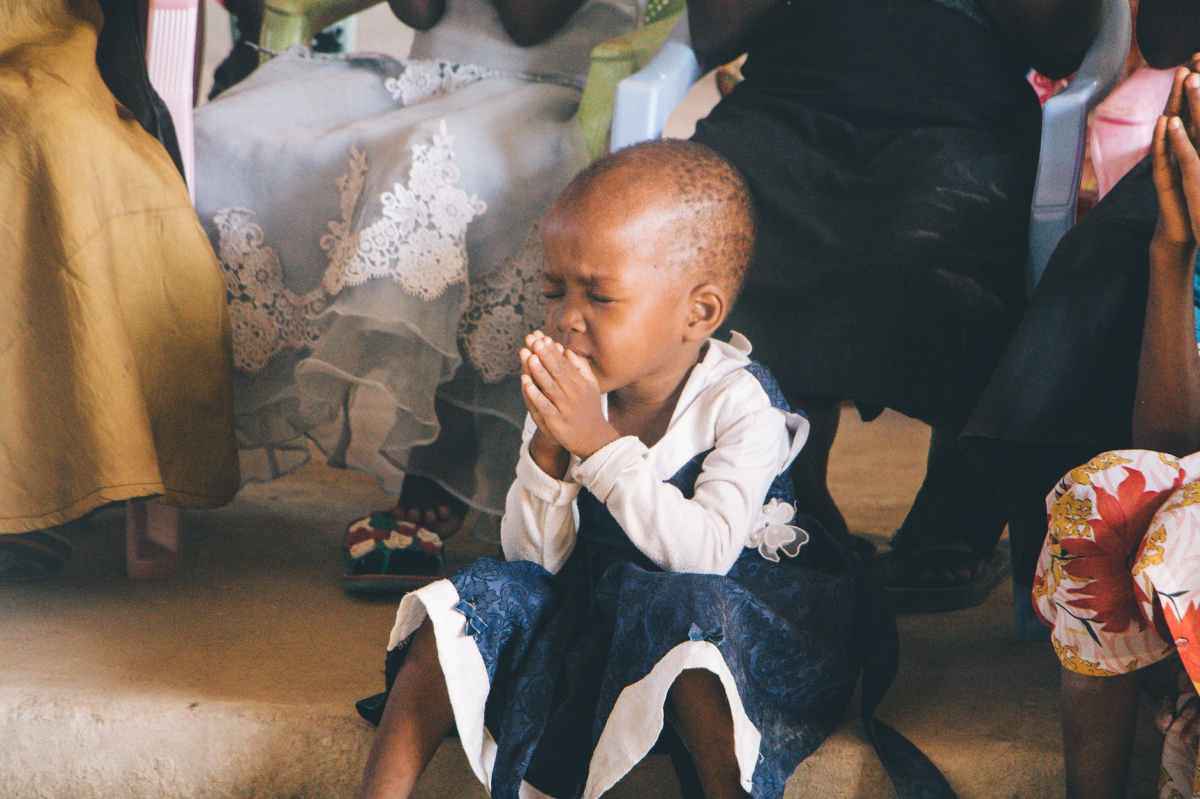
Discipline of Prayer

Dancing in the Kingdom- Table of Contents

Dancing In the Kingdom – Part 3 – Dancing in the Kingdom– Chapter 15 – Reforming our Souls

Discipline of Prayer

[Bible references: Matthew 6:6-7; Luke 11:11-13; Romans 8:26; Colossians 1:9-14; Philippians 4:6; 1 Thessalonians 5:17]

To have God speak to the heart is a majestic experience, an experience that people may miss if they monopolize the conversation and never pause to hear God’s responses.[1]

“We tend to use prayer as a last resort, but God wants it to be our first line of defense. We pray when there’s nothing else we can do, but God wants us to pray before we do anything at all. Most of us would prefer, however, to spend our time doing something that will get immediate results. We don’t want to wait for God to resolve matters in His good time because His idea of ‘good time’ is seldom in sync with ours.”[2]

“I think the reason we sometimes have the false sense that God is so far away is because that is where we have put him. We have kept him at a distance, and then when we are in need and call on him in prayer, we wonder where he is. He is exactly where we left him.”[3]  

 “Authentic worship will impel us to join in the Lamb’s war against demonic powers everywhere—on the personal level, on the social level, on the institutional level. Jesus, the Lamb of God, is our Commander-in-Chief. We receive his orders for service and go …”[4]

Fortunately, we have a heavenly Father who cares for us – a Father, not just a distant God, but a Father who created us so that we could share His love, a Father who desires a friendship with us, a Father who desires a partner to rule Creation with Him. The grief, sometimes overwhelming, is that we allowed sin to break our relationship with Him and break our relationship with each other and with Creation itself. The result is that we don’t talk like we should, we let shame and embarrassment get in the way of what could be a wonderful and intimate relationship.

The goal of prayer is to rebuild that relationship, to share concerns, to listen, to express our appreciation of each other, to share our feelings. We have the benefit of having a Father who already knows us better than we know ourselves, who knows our thoughts and our needs – but He still wants us to talk, to give us a chance to be honest with him (and ourselves), to confess what we need to confess, to deal with any confusions that we have. He wants us to participate with Him in bringing His kingdom into our lives and into the world, to share His love for the world and to seek justice for the oppressed, to even to bring His shalom into the world.

We have needs and the world has so many needs, that it seems that our list of petitions is overwhelming to the point where it makes us give up. But our prayer is more than a list of petitions because the God of love rules over all creation and that love brings us to express adoration and thanksgiving. And when our brokenness gets in the way of our relationship, we can bring our confessions of sin so that we may receive His overwhelming forgiveness.

Having a prayer life with a loving God should just happen, but it doesn’t and that brings us to the discipline of prayer – to help our prayer life, our talks with God, to happen despite our brokenness.

There are times when we are desperate, when we feel that we have no options … so, we pray. These are the times that St. John of the Cross said are the “dark nights of the soul.” As people of faith, we know that those “dark nights” don’t last forever. Just as surely as we experience the darkness, there is the resurrection light. These dark nights of the soul – these times of spiritual crisis – lead us closer to God. As we pray, are persistent in prayer, and are willing to be moved by the Holy Spirit through prayer? We will see that prayer changes us and help us grow to become more able to see others as God sees them.


[1] Stanley, Charles.

[2] Chambers, Oswald.

[3] Zacharias, Ravi. Has Christianity Failed You? Zondervan 2017

[4] Foster, Richard J. “Celebration of Discipline” Harper & Row Publishers ©1978 p. 173.

Observe

Read Colossians 1:9-14. For whom could you be praying this prayer?

The Discipline of Simplicity/Stewardship

Dancing in the Kingdom- Table of Contents

Dancing In the Kingdom – Part 3 – Dancing in the Kingdom– Chapter 15 – Reforming our Souls

Discipline of Simplicity/Stewardship

[Bible references: Genesis 1:28; Psalm 33:5; Micah 6:8; Hosea 6:6; Matthew 25:35-40; Luke 16:13; John 13:34; 1 Corinthians 3:9; 4:2; 9:24-27; 2 Corinthians 1:12; 9:6-8; Galatians 6:6; Philippians 4: 4,8-13; 1 Timothy 5:8; 6:6-10, 17-19; Hebrews 3:5; 12:1-3; James 1:17; 1 Peter 4:10; 1 John 3:17]

The central point for the Discipline of simplicity is to seek the kingdom of God and the righteousness of His kingdom first – and then everything necessary will come in its proper order.[1]

There’s no point in simplifying your life if you are steering toward an end point that doesn’t matter to begin with.[2]

My schedule is far less about what I want to get done and far more about who I want to become.[3]

“We do not mean . . . that simplicity betrays itself in no visible signs, has not its own habits, its distinguishing tastes and ways; but this outward show, which may now and then be counterfeited, must not be confounded with its essence and its deep and wholly inward source. Simplicity is a state of mind. It dwells in the main intention of our lives. A man is simple when his chief care is the wish to be what he ought to be . . . And this is neither so easy nor so impossible as one might think. At bottom, it consists in putting our acts and aspirations in accordance with the law of our being, and consequently with the Eternal Intention which willed that we should be at all.”[4]

“If you want to have a spiritual life you must unify your life. A life is either all spiritual or not spiritual at all. No man can serve two masters. Your life is shaped by the end you live for.”[5]

It is not enough to simply pare down one’s possessions or schedule, because they can become their own ends or become undone because we have not dealt with our habit of filling our time or possessions with something else. To successfully practice simplicity, we must have a clear center, a clear purpose. It is from that purpose that we can decide how to spend our time and resources so that our decisions can be based on how they fit our priorities. An indicator of whether you achieved your purpose can be if you feel fragmented and restless. Without a clear purpose, short-term distractions and pleasures can hijack our progress towards our long-term goals. Therefore, the goal of simplicity is to gain integrity of spirit, reduce temptations, distractions, and the need/desire for things so that we can better serve God.

Setting our priorities

To reach these goals, we must do less of some things but more of others. True simplicity is doing less of what matters least, and more of what matters most. You don’t just empty your life of the bad, you fill it with the good. Having a purpose allows you to discern whether a particular area of life should be constricted or expanded; purpose produces priorities. Once our priorities are set then we can make meaningful decisions about our activities. We may need to declutter our lives: we may have too many things in our home, or too many activities in our lives. What detracts our attention from our priorities? What things should we say “no” to? What habits do we have that move us from our goals?

The discipline of simplicity includes determining who we want to be and setting goals to achieve that, then setting our priorities, and then arranging our use of time, money, our spiritual gifts, and our relationships to meet those priorities. Simplicity is the essence of stewardship.

Stewarding our resources

Once we have centered ourselves and established our priorities then we can focus on how to manage the limited resources that we must accomplish the responsibilities God has given us. It is easy to get overwhelmed by all the needs we see around us in the world, it seems that there are not enough resources to meet the needs of the world. That is why we need to figure out what responsibilities God has to us individually. Then we need to trust God to provide what we need to for those responsibilities (Philippians 4:19 And my God will supply every need of yours according to his riches in glory in Christ Jesus.)

If we have set our priorities properly, then our priorities should be aligned with God’s priorities and desires. In Gen 1:28, we can see that stewardship is the first assignment God gave humans, so part of what we need to consider is what individual things that we, as individuals, have been given stewardship responsibilities over. We also need to consider God’s desires for how we carry out those responsibilities. We know that His desires are for us to love God and neighbor, act with justice and mercy, have a generous and overflowing love towards others (including our families, our fellow believers, and those in need) and to take care of the world he has provided for us.

As His stewards, we need to consider how to use the blessings God had given us, to serve in the way he would have us do so that we bring glory to Him in all that we do. We are not just a person with a vocation, or just a member of a family, or just a church member, etc. We are a who not a what. We are people created by God to be in relation with him and with others, and with multiple obligations.


[1] Foster, Richard J. Celebration of Discipline Harper & Row Publishers ©1978 (p. 75)

[2] Hybels, Bill. Simplify: Ten Practices to Unclutter Your Soul.  Tyndale Momentum 2015

[3] Hybels, Bill. Simplify: Ten Practices to Unclutter Your Soul. Tyndale Momentum 2015

[4] Wagner, Charles. The Simple Life. McClure, Phillips & Co. 1901

[5] Merton, Thomas. Thoughts in Solitude.  Farrar, Straus, and Giroux 1999

Reflect

What habits in your life move you away from pursuing God?

Observe

Read 1 Corinthians 9:24-27. How would following the advice in this passage help us to be better stewards?

Lost Sheep of Israel

Dancing in the Kingdom- Table of Contents

Dancing In the Kingdom – Part 2 – The Kingdom Revealed– Chapter 10 – The Class of Apparitions

Lost Sheep of Israel

[Bible references: Matthew 9:10-13; 10:5-6; 15:21-28; Mark 2:15-17]

In the Old Testament, the term ‘lost sheep’ initially referred to all of Israel. After the division of the kingdom, the term ‘lost sheep’ referred to the northern tribes of Israel. In the New Testament, Jesus uses the term, ‘lost sheep of Israel,’ to distinguish the people to whom his ministry would focus on. When Jesus used the term ‘lost sheep of Israel’ it is to specify that Jesus only intended, at that time, to serve the Jews in Israel, not to the Gentiles, not to the Samaritans and not to Jews that are in other countries.

Jesus’ ministry focused his efforts on the ‘lost sheep of Israel.’ The ‘lost sheep’ were people who knew they needed help, needed to be rescued from their situation and were aware of their need for healing, wholeness, and love. They were the sinners, tax-collectors, harlots, and backslidden. They found in Jesus one who loved them and did not reject them when they acknowledged their needs.

Reflect

The “lost sheep” in this case does not mean their location was unknown but that they didn’t where they were going, they did not have shepherds who knew where to lead them. Where is your life headed?

Observe

Read Matthew 9:10-13; 10:5-6. How are the “lost sheep” described?

In time and In an eternal future

Dancing in the Kingdom- Table of Contents

Dancing In the Kingdom – Part 1 – Shadows of the Kingdom – Chapter 3 – The image-bearers

In time and in an eternal future

[Bible references: Genesis 2:9; Exodus 25-28; 1 Kings 5-6; Psalms 19; Ecclesiastes 3:1-22; Matthew 6:28]

Although we have not existed from all eternity, God created us with more than a mortal body. We are also endowed with a soul and a spirit that can be joined to God’s Spirit. In the present moment, our mortal bodies are created from the stuff of the earth, and we are born into particular times and places so that we may serve and enjoy God in those particular times and places.

God made us as creatures. And the good part about being a creature is we were made to be dependent upon God and, by our very design, also dependent on other people and the earth … Often what we’re missing is the good of dependence. We need to cultivate an awareness of how our dependence and our needs open avenues of love … What if we stopped thinking of life as to-dos and started thinking of it as relationships? When we’re so task-driven, it’s very hard to appreciate love, because love is incredibly inefficient … when we were younger, God didn’t expect us to be what we are now. He’s still taking his time, by his Spirit, to bring about order through developmental growth … Part of recognizing our limits is getting comfortable in God’s space and growing in dependance on him … Sometimes, I think we’re actually scared to death to pray, because if we actually take the time to get quiet, we might begin to fear that God’s not there or wonder whether he’s apathetic or just really angry. Only in prayer will we discover how compassionately God views us … cultivating the gift of encouraging and celebrating others. It’s a spiritual discipline, a healthy way of dying to yourself and encouraging others. We are all dying for someone to pay attention and notice our presence and being. When someone articulates that, it’s life-changing. [1]

Our creatureliness which sets us in a particular place and time with a particular body is an opportunity to appreciate our finiteness and God’s infiniteness, to cultivate a sense of dependence on God’s provision and our dependence on each other and within the context of those relationships to truly learn how to love.

Our creatureliness also forces us to deal with God’s ordering Creation through process. Everything, whether physical, social, emotional, intellectual, or spiritual, is controlled by processes. Sometimes we desire to bypass those processes: we want to be instantly knowledgeable and wise and experts at what we do … and not dependent on anyone else. But it was precisely that kind of desire that led to our rebellion at the beginning of humanity.

As God’s image-bearing creatures, we not only have relationships with each other but also with our Creator. In our relationships with God’s other image-bearing creatures, our love can be expressed in our opportunities to support, uplift, and encourage one other. God has no need of such support from us, but He offers us such support. When we recognize our dependence on Him, He gives us the ability to pray, to acknowledge our needs and to recognize His provision for us when He supplies our needs.

We think of prayer as mostly self-expressive—as a way to put words to our inner life … if we pray the prayers we’ve been given, regardless of how we feel about them or God at the time, we sometimes find, to our surprise, that they teach us how to believe … We sleep each night in our ordinary beds in our ordinary homes in our ordinary lives. And we do so in a universe filled to the brim with mystery and wonder. We always sleep in a crowded room in our crowded cosmos, so we ask for crazy things—that God send unimaginable supernatural beings to watch over us as we drool on our pillows … Sleep reminds us of how helpless we are, even merely to stay alive. In the Christian tradition, sleep has always been seen as a way we practice death. Both Jesus and Paul talk about death as a kind of sleep. Our nightly descent into unconsciousness is a daily memento mori, a reminder of our creatureliness, our limitations, and our weakness. [2]

As we pray in our mortal bodies, we remember that although our mortal bodies will return to the dust from which we are made, our bodies will be resurrected when heaven and earth are reunited so that we, with soul and spirit and new body, will be able to enjoy God forever into the future.

What is that phenomenon we call ‘beauty’ and why does it lie at the core of both collective civilization and individual desire, even as we value it precisely for existing outside of practicality? In his essay The Weight of Glory [A sermon given in Oxford in 1942], C.S. Lewis explains it as an echo of eternity, imprinted upon humanity as an indication of our origin and destiny.[3]

Indeed, our God is a God of beauty, and he has created us to enjoy his beauty. Art and our appreciation of it are among the great gifts God has given to us. Sure, like anything, it can be turned into an idol. But art, beauty, and appreciation for the finer things of culture are all good gifts from a good God. [4]

In the meantime, while we await for our resurrection and to “gaze on the beauty of the Lord” (Psalm 27:4), we have reminders of our connection with our transcendent God in the beauty of His Creation and in our capacity to make things of beauty. Whether the beautiful things are of our creation or the Lord’s, they reflect God’s own beauty.

The books or the music in which we thought the beauty was located will betray us if we trust to them; it was not in them, it only came through them, and what came through them was longing … they are not the thing itself; they are only the scent of a flower we have not found, the echo of a tune we have not heard, news from a country we have never yet visited … We do not want merely to see beauty … We want something else which can hardly be put into words—to be united with the beauty we see, to pass into it, to receive it into ourselves, to bathe in it, to become part of it.[5]


[1] Straza, Erin. “Learning to Love Your Limits” Christianity Today 13 Dec 2021 www.christianitytoday.com/ct/2022/january-february/youre-only-human-kelly-kapic-limits-god-design.html Interview with Covenant College theologian Kelly M. Kapic’s about his latest book, “You’re Only Human: How Your Limits Reflect God’s Design and Why That’s Good News.”

[2] Warren, Tish Harrison. “The Cosmos is More Crowded Than You Think” Christianity Today 14 Dec 2021 www.christianitytoday.com/ct/2022/january-february/prayer-night-tish-harrison-warren-angels-crowded-cosmos.html

[3] Wang, Irina “Beauty betrays eternity” Salt salt.london/articles/beauty-betrays-eternity

[4] Meuhlenberg, Bill. “Art and the Christian” Culture Watch 28 July 2011 billmuehlenberg.com/2011/07/28/art-and-the-christian/

[5] Lewis, C.S. “The Weight of Glory” Theology Nov 1941

Observe

Read Ecclesiastes 3:1-22.  In the midst of meditating on the limitations of life on earth, verse 11 slides in a reference to beauty and eternity. How does that verse impact the rest of the chapter?